John Stossel’s interview with Bjorn Lomborg is featured in his article at Reason The Media’s Misleading Fearmongering Over Climate Change. Excerpts in italics with my bolds and added images.

“Over the last 20 years, because of temperature rises, we have seen about 116,000 more people die from heat. But 283,000 fewer people die from cold.”
United States Special Presidential Envoy for Climate John Kerry says it will take trillions of dollars to “solve” climate change. Then he says, “There is not enough money in any country in the world to actually solve this problem.”
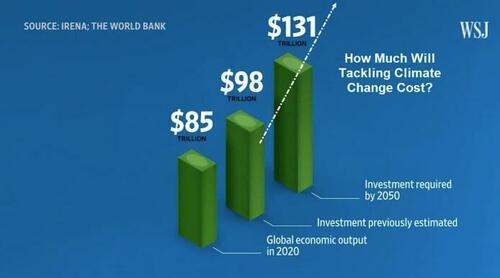
Yes, they are projecting more than 100 Trillion US$.
Kerry has little understanding of money or how it’s created. He’s a multimillionaire because he married a rich woman. Now he wants to take more of your money to pretend to affect climate change.
Bjorn Lomborg points out that there are better things society should spend money on.
Lomberg acknowledges that a warmer climate brings problems. “As temperatures get higher, sea water, like everything else, expands. So we’re going to maybe see three feet of sea level rise. Then they say, ‘So everybody who lives within three feet of sea level, they’ll have to move!’ Well, no. If you actually look at what people do, they built dikes and so they don’t have to move.”

Rotterdam Adaptation Policy–Ninety years thriving behind dikes and dams.
People in Holland did that years ago. A third of the Netherlands is below sea level. In some areas, it’s 22 feet below. Yet the country thrives. That’s the way to deal with climate change: adjust to it.
“Fewer people are going to get flooded every year, despite the fact that you have much higher sea level rise. The total cost for Holland over the last half-century is about $10 billion,” says Lomberg. “Not nothing, but very little for an advanced economy over 50 years.”
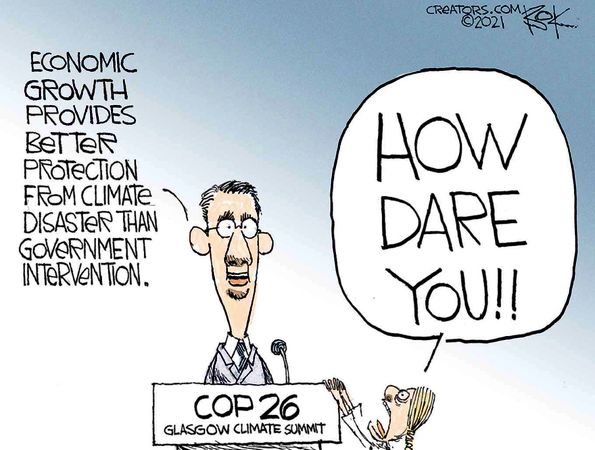
For saying things like that, Lomberg is labeled “the devil.”
“The problem here is unmitigated scaremongering,” he replies. “A new survey shows that 60 percent of all people in rich countries now believe it’s likely or very likely that unmitigated climate change will lead to the end of mankind. This is what you get when you have constant fearmongering in the media.”
Some people now say they will not have children because they’re convinced that climate change will destroy the world. Lomborg points out how counterproductive that would be: “We need your kids to make sure the future is better.”
He acknowledges that climate warming will kill people.
“As temperatures go up, we’re likely to see more people die from heat. That’s absolutely true. You hear this all the time. But what is underreported is the fact that nine times as many people die from cold…. As temperatures go up, you’re going to see fewer people die from cold. Over the last 20 years, because of temperature rises, we have seen about 116,000 more people die from heat. But 283,000 fewer people die from cold.”

A 2015 study by 22 scientists from around the world found that cold kills over 17 times more people than heat. Source: The Lancet
That’s rarely reported in the news.
When the media doesn’t fret over deaths from heat,
they grab at other possible threats.
CNN claims, “Climate Change is Fueling Extremism.”
The BBC says, “A Shifting Climate is Catalysing Infectious Disease.“
U.S. News and World Report says, “Climate Change will Harm Children’s Mental Health.”
Lomborg replies, “It’s very, very easy to make this argument that everything is caused by climate change if you don’t have the full picture.”
He points out that we rarely hear about positive effects of climate change, like global greening.
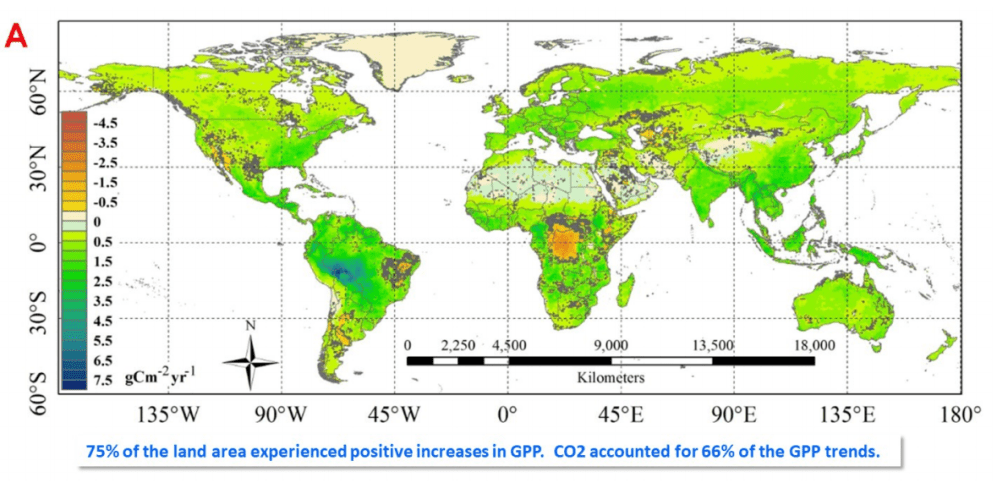
Spatial pattern of trends in Gross Primary Production (1982- 2015). Source: Sun et al. 2018.
“That’s good! We get more green stuff on the planet. My argument is not that climate change is great or overall positive. It’s simply that, just like every other thing, it has pluses and minuses…. Only reporting on the minuses, and only emphasizing worst-case outcomes, is not a good way to inform people.”

Synopsis of Lomborg’s Policy Recommendation (excerpted transcription)
If you’re a politician and you look at ten different problems, you’re natural inclination is to say, “Let’s give 1/10 to each one of them.” And economists would tend to say, “No, let’s give all of the money to the most efficient problem first and then to the second most efficient problem, and so on. I’m simply suggesting there’s a way that we could do much better with much less.
Of course if you feel very strongly about your particular area, when I come and say, “Actually, this is not a very efficient use of resources.” I get why people get upset. But for our collective good, for all the stuff that we do on the planet, we actually need to consider carefully where do we spend money well, compared to where do we just spend money and feel virtuous about ourselves.
If we spend way too much money ineffectively on climate, not only
are we not fixing climate, but we’re also wasting an enormous amount
of money that could have been spent on all these other things.
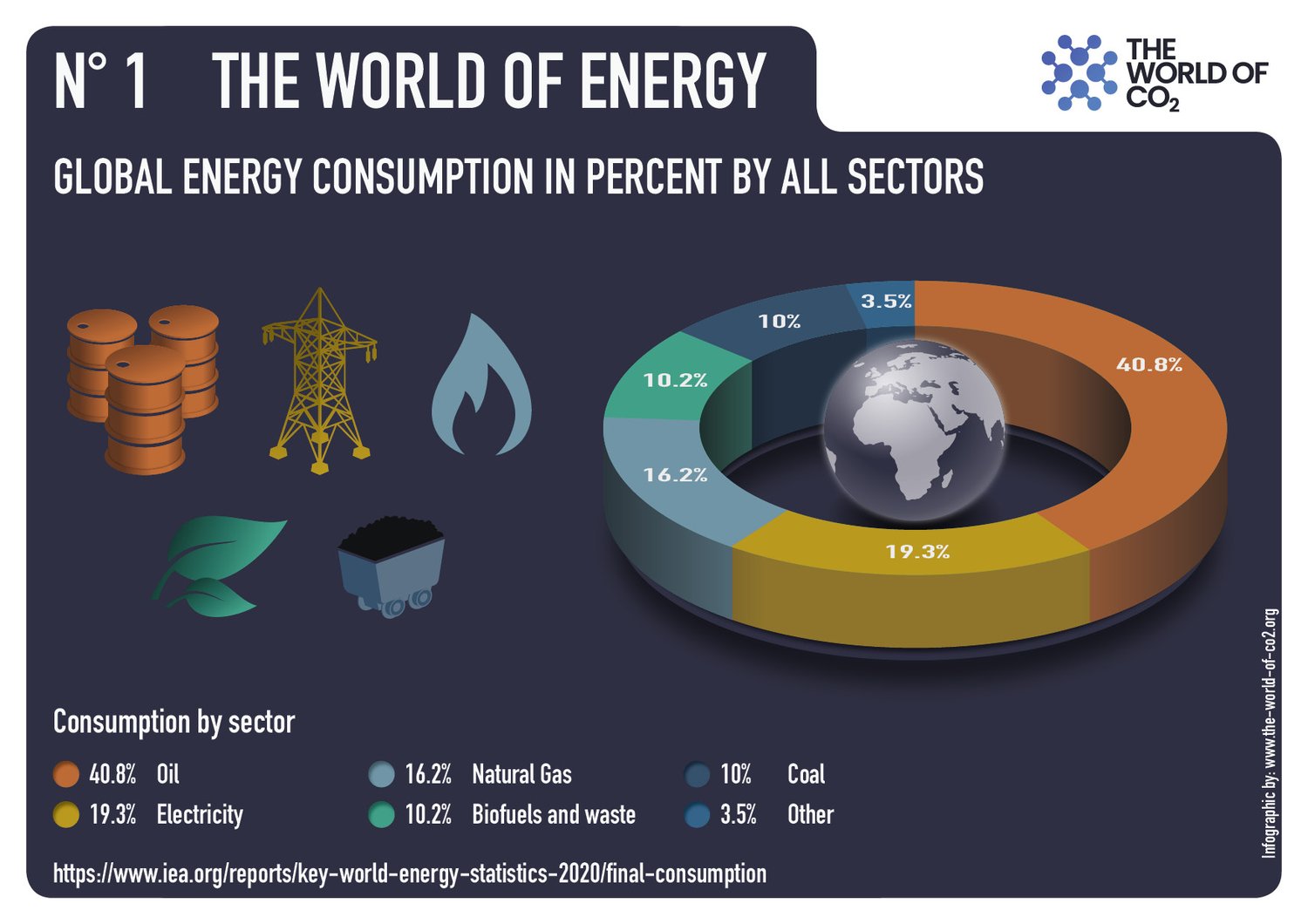
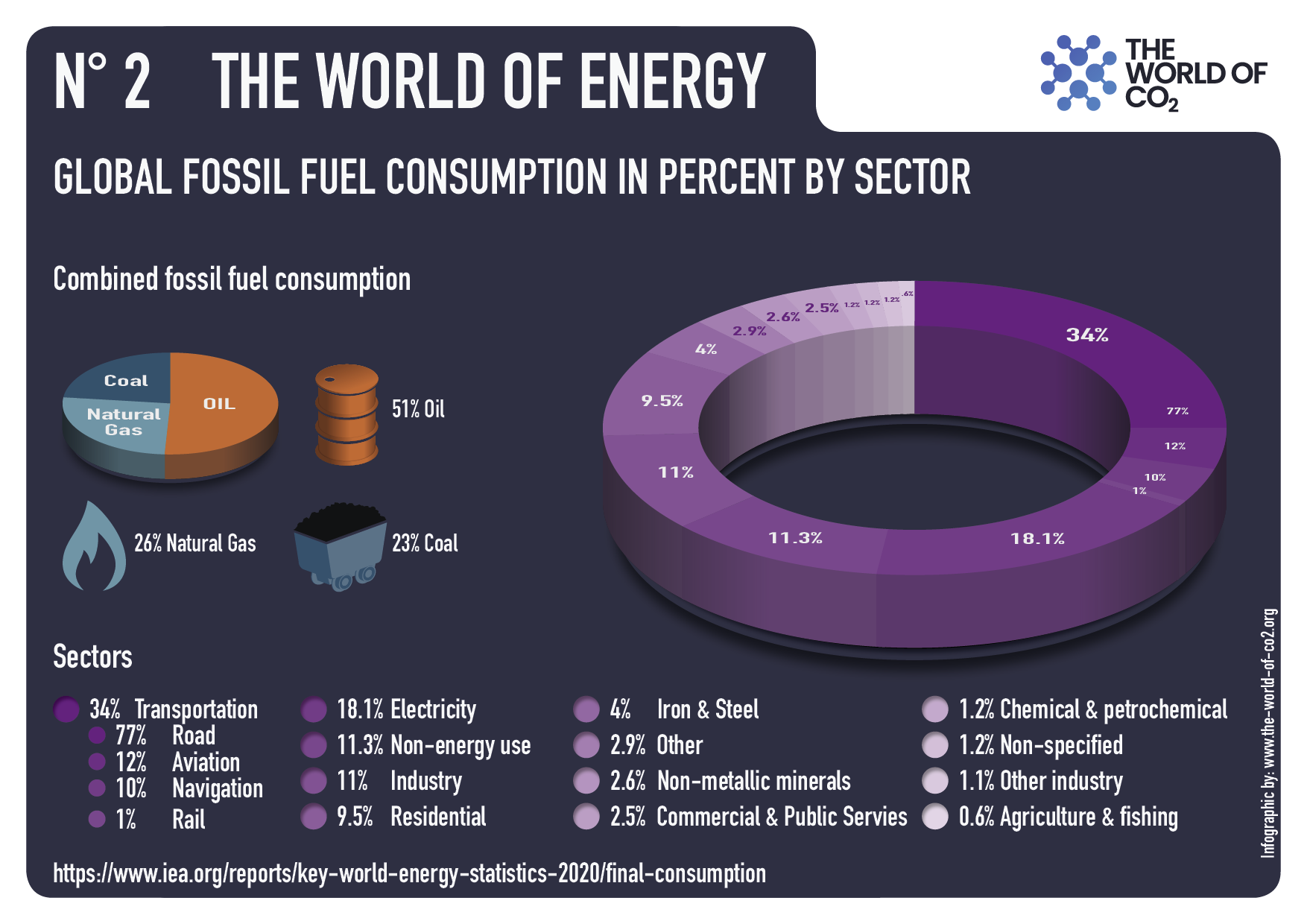
I’m simply trying to make that simple point, and I think most people kind of get that. Remember, electricity is about a fifth of our total energy consumption. So, all everybody’s talking about is all the electricity, which is the easiest thing to switch over. But we don’t know anything about how we’re going to, know very, very little about how we’re going to deal with the other 4/5. This is energy that we use on things that are very, very hard to replace. So it’s a fertilizer that keeps 4 billion people alive. Making the fertilizer. It’s steel, cement, it’s industrial processes. Most of heating we use comes from fossil fuels, most transportation, that’s fossil fuels.
Know that if the U.S. went entirely net zero today and stayed that way for the rest of the century, consider how incredibly extreme this would be. First of all, you would not be able to feed everyone in the U.S. The whole economy would break down. You wouldn’t know how to get transportation. A lot of people would freeze. Some people would fry. There would be lots and lots of problems. But even if you did this and managed to do it, the net impact, if you run it through the U.N. climate model, is that you would reduce temperatures by the end of the century by 0.3 degrees Fahrenheit. We would almost not be able to measure it by the end of the century. It would have virtually no impact.

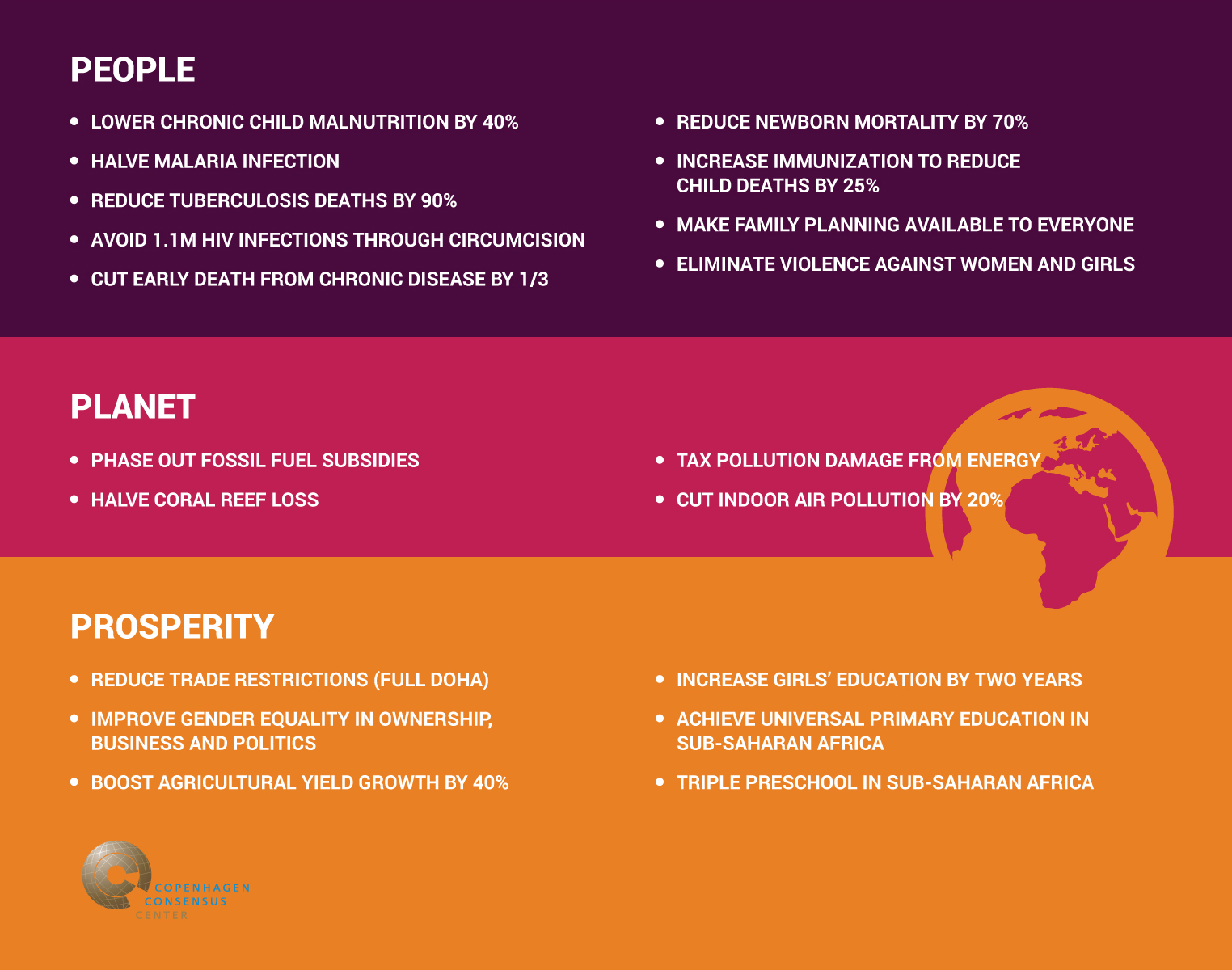
Look, again, we’re rich and so a lot of people feel like you can spend money on many different things. And that’s true. I’m making the argument that for fairly little money, we could do amazing good. If we spent $35 billion, not a trillion dollars, just $35 billion, which is not nothing. I don’t think, neither you or I have that amount of money. But, you know, in the big scheme of things, this is a rounding error. $35 billion could save 4.2 million lives in the poor part of the world, each and every year and make the poor world $1.1 trillion richer.
I think we have a moral responsibility to remember, that there are lots and lots of people, so mostly about 6 billion people out there, who don’t have this luxury of being able to think 100 years ahead and think about a little bit of a fraction of a degree, who wants to make sure that their kids are safe.
And so, the next money we spend should probably be on these very simple and cheap policies.
 Science Matters