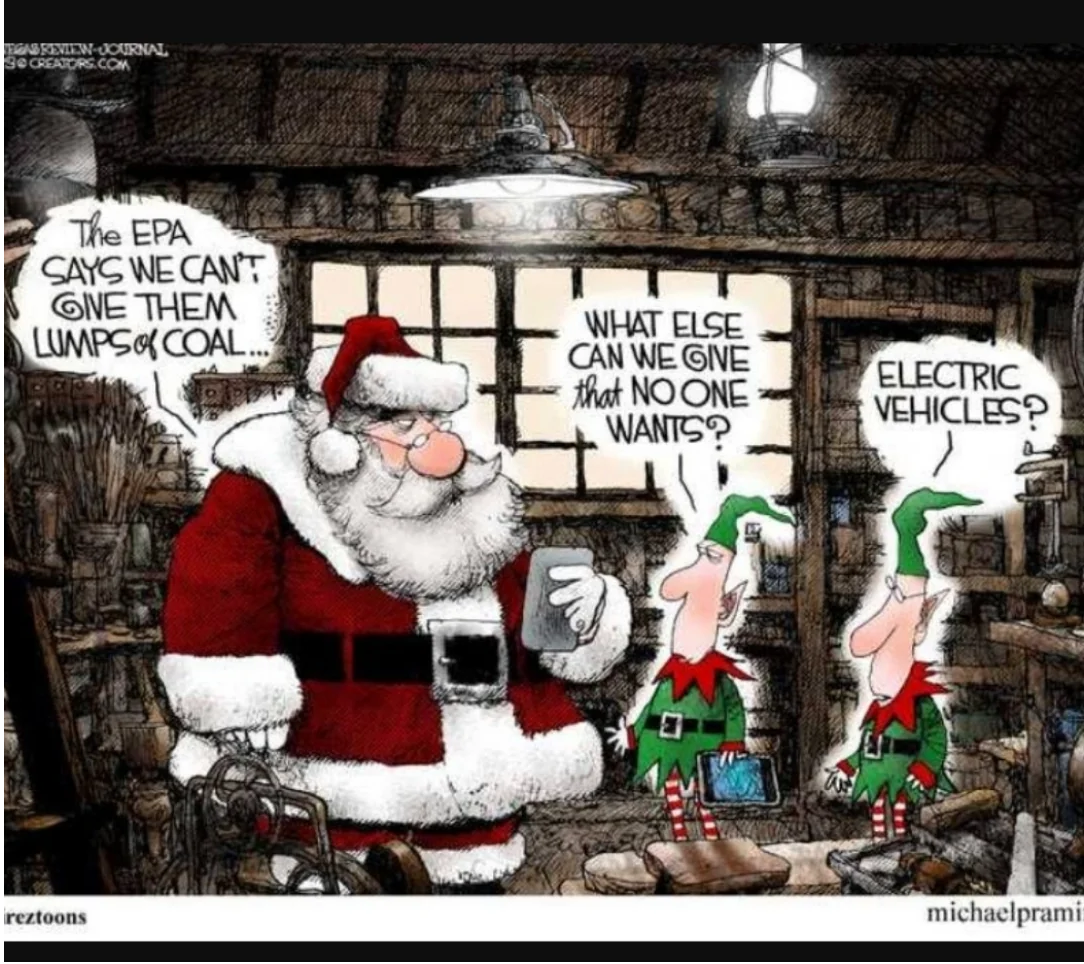
Levi Russell writes at Heartland The Rush to Force Everyone into Electric Vehicles is Imploding. Excerpts in italics with my bolds and added images.
A recently published article in the peer-reviewed academic journal Transportation Research tells us that cars, even the supposedly anointed battery electric variety, are far too convenient and that the state must be empowered to “restrict car use.” The authors tell us that converting car lanes to bus lanes have reduced car use in Oslo. No surprise there. The fact that academia is floating this sort of policy should concern anyone who has any inkling of mistrust of the federal government.
Truly our freedom of movement is in peril.
Electric vehicles are not nearly as popular as their advocates would have had us believe, as sales are now slumping in the face of rising interest rates and a lack of so-called fast chargers. As we begin to bump up against mined mineral constraints and international relations complications, there’s no doubt the cost of making these glorified toys will continue to rise. A recent Consumer Reports publication shows that, over the last 3 model years, electric vehicles are less reliable than normal gasoline and diesel vehicles. So, several states want to ban the sale of reliable, inexpensive gas and diesel cars and force us to buy less reliable electric cars. Note well that the superior reliability of hybrids is likely down to the fact that car makers who are better known for their reliability make more hybrids. There’s nothing inherent to a hybrid that would make it more reliable than a gasoline engine vehicle.
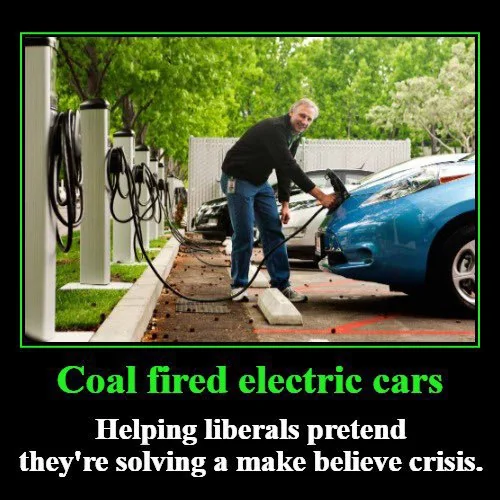
[And in addition: No one wants to buy used EVs and they’re piling up in weed-infested graveyards Fortune magazine. No One Wants Used EVs, Making New Ones a Tougher Sell Too Bloomberg ]
Even our ability to travel using air travel is under the gun. A CNN op-ed recently floated the idea of limiting air travel through the use of carbon (read: sin) passports. We will be limited to traveling based on the amount of carbon dioxide emitted during the flight. The author wants this applied to cruise ships as well. It’s not hard to see this applied to your car as well.
Of course, such rules will not apply to the super-wealthy climate grifters.
They’ll be jetting all over the globe for their very important climate conferences.
And it’s not just transportation. In September, Reuters “fact checked” a claim that US cities had agreed to limit meat consumption, finding the claim false. And yet, we are told on a nearly daily basis that eliminating beef consumption is necessary to save the planet. The sin of using coal (but not apparently to create steel) has become the sin of eating a steak. What’s next? Rice? Pork?
Beginning in 2024, the German government will empower local electricity providers to limit the flow of electricity to heat pumps and electric cars. Such limits were the stuff of alleged conspiracy theories mere months ago. Now they’re a reality. Germany’s suicidal attempt to power their grid with nothing but wind and solar, killing off their own nuclear power generation over the last 20 years, has led to energy rationing. It’s not as if this is unpredictable. The unreliability of so-called renewables is common knowledge among energy experts.
It’s sensible for those who are concerned about their ability to choose where and when they travel, what they eat, and when they turn on their heaters and air conditioners to be skeptical of every single attempt to accrue more power by state and federal governments. That skepticism should turn into activism against these power grabs. Anyone who tells you these power grabs aren’t coming is telling you not to believe your own eyes.
Postscript Absurdum
Canada poised to pass rules that all new vehicles must be zero-emissions by 2035 Source Financial Post
The act to be announced in coming days aims
to phase out the sale of new combustion vehicles
The new rules will require zero-emissions vehicles — which include battery electric, hydrogen and plug-in electric vehicles — to make up 20 per cent of all new car sales in 2026, 60 per cent in 2030 and 100 per cent in 2035, the reports said.

 Science Matters