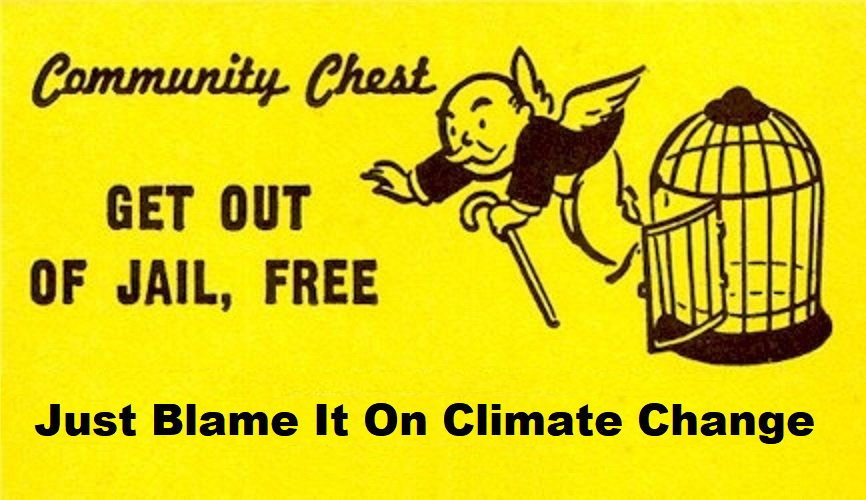
Cambridge professor Mike Hulme explains in an interview with Daily Mail Why climate change ISN’T going to end the world and why we need to stop obsessing about net-zero. Excerpts in italics with my bolds and added images. H\T John Ray
Young people are terrified that climate change will destroy Earth by the time they grow up, but the world is not actually ending, argues Cambridge professor Mike Hulme.

Humanity is not teetering on a cliff’s edge, he says,
at risk of imminent catastrophe if we don’t reach
net-zero carbon emissions by a certain date.
And he has made it his mission to call out the people who claim we are. In his most recent book, Climate Change Isn’t Everything, Hulme argued that belief in the urgent fight against climate change has shot far past the territory of science and become an ideology.
Hulme, a professor of human geography at the University of Cambridge, dubs this ideology ‘climatism,’ and he argues that it can distort the way society approaches the world’s ills, placing too much focus on slowing Earth from warming.
The problem, he said, is this narrow focus takes attention away from
other important moral, ethical, and political objectives –
like helping people in the developing world rise out of poverty.
DailyMail.com spoke with Hulme about why he thinks climatism is a problem, how it should be balanced out, and what keeps him hopeful about the future of humanity.
As with other ‘isms’ – like cubism or romanticism – ideologies provide a way of thinking about things, explained Hulme. ‘They’re like spectacles that help us to make sense of the world, according to a predefined framework or structure,’ he said
To be clear, Hulme does not claim that all ideologies are wrong. ‘We all need ideologies, and we all have them – whether you’re a Marxist or a nationalist, you’re likely to hold an ideology of some form or other,’ he added.

As Hulme sees it, many journalists, advocates, and casual observers of climate change have become devotees of climatism, inaccurately attributing many events that happen in the world as being caused by climate change.
He gives the examples of a fire, flood, or damaging hurricane. ‘No matter how complex a particular causal chain might be, it’s a very convenient shorthand to say, ‘Oh, well, this was caused by climate change,” Hulme said.
‘It’s a very shallow and simplistic way, I would argue,
to try to describe events that are happening in the world.’
Researchers have shown that warming oceans do lead to more frequent and more severe storms: Twice as many cyclones now become category 4 or 5 as they did in the 1970s, scientists have found, and Atlantic storms are three times as likely to become hurricanes.
Hulme doesn’t argue that the effects of climate change are not happening, though, just that stopping climate change won’t stop disasters from happening altogether.
‘Fundamentally, we’re going to have to deal with hurricanes, and
we’re not going to deal with them just by cutting our carbon emissions.’
The solutions, he argues, will include better forecasting, better early warning systems, better emergency plans, and better infrastructure. ‘There are all sorts of things that we can do to minimize the risks and dangers of hurricanes, that are way more effective in the short term than trying to cut our carbon emissions,’ said Hulme.
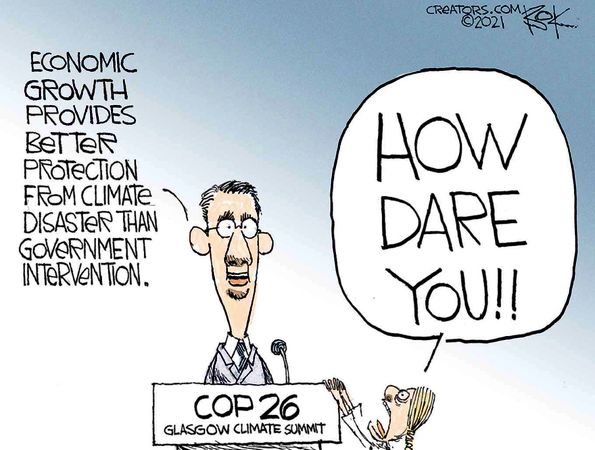
The danger of climatism, he pointed out, is that it leads people down a false chain of events: If all of these things happening in the world are caused by climate change, then all we have to do is stop climate change, and all the other things will stop themselves.
‘And that clearly is a very inadequate way of thinking about the complexities of most of the problems we we face in the world today.’ This distorted thinking can make people forget about other important concerns, he argues.
As an example, Hulme points to the UN Sustainable Development Goals (SDGs): 17 areas that the world’s governments have identified as top priorities for humanity. The SDGs include building peace and justice, eradicating poverty, reducing child mortality, and ensuring clean sanitation and water for billions of people on the planet.
If society were to put climate change priorities into their proper proportions then, Hulme said it would still be on the list. It just wouldn’t be the only item on the list, and it wouldn’t be at the top. ‘There’s 17 SDGs, and two of them are related to climate. So that begins to rebalance, or re-proportion, the amount of effort and attention we might wish to pay,’ said Hulme.
Beyond these mixed up priorities, Hulme also takes issue with what he sees as an obsession with deadlines: ‘There’s this idea of the ticking clock counting down to Ground Zero – we’ve only got five years, 10 years, two years – however long different commentators put the deadline.’

Doomsday was predicted but failed to happen at midnight.
Hulme disputed the idea that he is over-egging the pudding on climatism – after all, the whole basis of his argument is that climatists are the ones making a bigger deal out of it than they should be. ‘I’ve been observing concerns about how climate change is talked about, framed, and reacted to in public for many, many years.’ And this public framing has led to a phenomenon called ‘eco-anxiety,’ which Hulme said he sees among his students at Cambridge University
‘They have absorbed these claims of tipping points, and they take these things literally, and feel that there is no future for them because the climate is going to go out of control,’ he said. ‘They feel that it will be too late, and everything will collapse.’

 Science Matters
2 comments