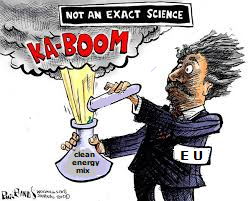
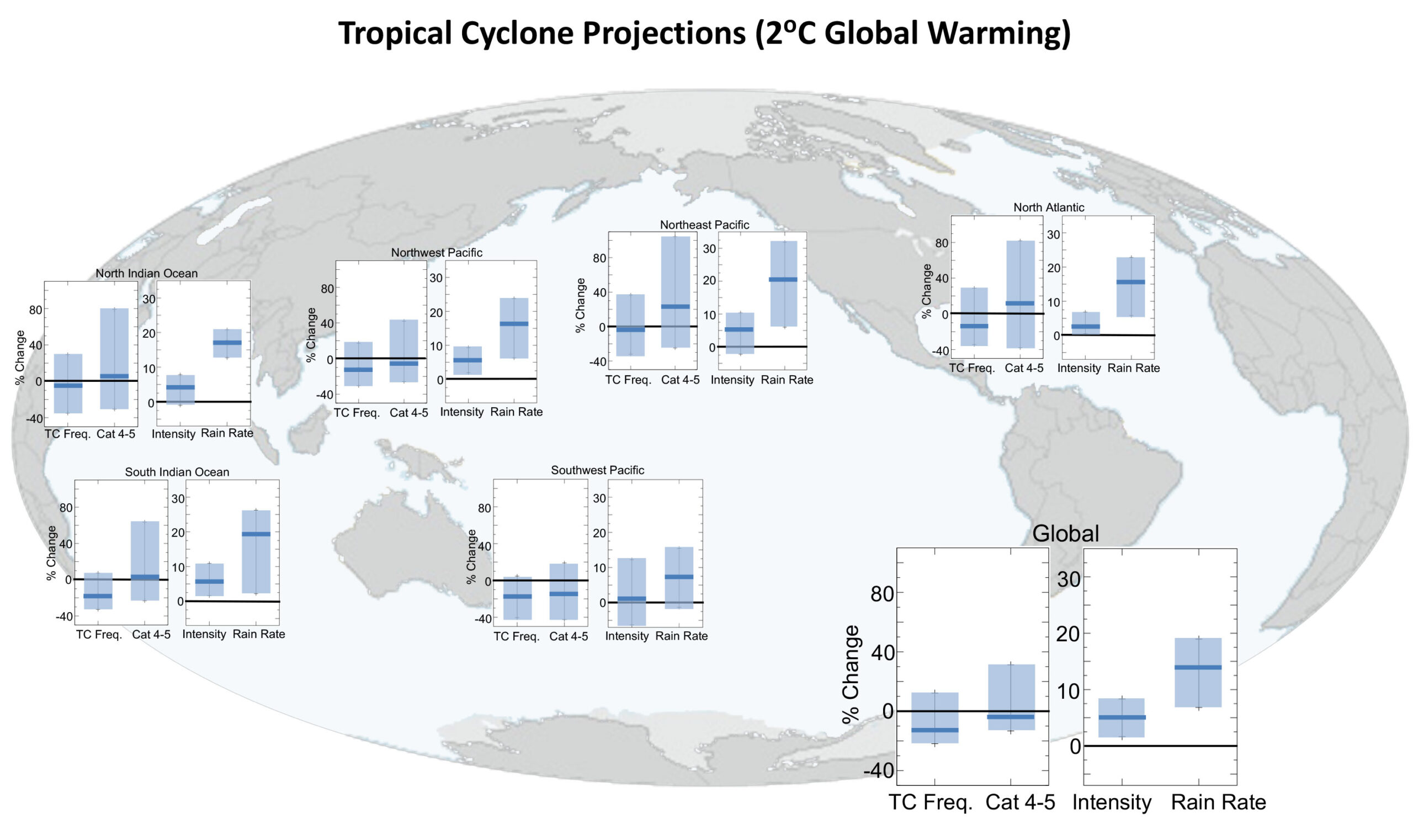
Devious Climate Attribution Studies

Patrick Brown raises the question Do Climate Attribution Studies Tell the Full Story? Excerpts in italics with my bolds and added images, his analysis concluding thusly:

How a cascade of selection effects bias
the collective output of extreme event attribution studies.

Weather and climate extremes—such as high temperatures, floods, droughts, tropical cyclones, extratropical cyclones, and severe thunderstorms—have always threatened both human and natural systems. Given their significant impacts, there is considerable interest in how human-caused climate change influences these extremes. This is the focus of the relatively new discipline of Extreme Event Attribution (EEA).

Over the past couple of decades, there has been an explosion in EEA studies focusing on (or, “triggered by”) some prior notable weather or climate extreme. Non-peer-reviewed reports from World Weather Attribution (e.g., herehere, and here) represent some of the most notable examples of these kinds of analyses, and many similar studies also populate the peer-reviewed literature. The Bulletin of the American Meteorological Society’s “Explaining Extreme Events From a Climate Perspective” annual series compiles such studies, as does the Sabin Center for Climate Change Law, and they are also synthesized in reports like those from the IPCC (IPCC WG1 AR6 Chapter 11.2.3) and the United States National Climate Assessment.

The collective output of these kinds of studies certainly gives the impression that human-caused climate change is drastically changing the frequency and intensity of all kinds of weather extremes. Indeed, Carbon Brief recently published an extensive summary of the science of EEA studies, which begins with the proclamation, “As global temperatures rise, extreme weather events are becoming more intense and more frequent all around the world.”

However, these numbers cannot be taken as an accurate quantification of the influence of climate change on extreme weather because they are heavily influenced by a cascade of selection biases originating from the physical climate system, as well as researcher and media incentives. Identifying and understanding these biases is a prerequisite for properly interpreting the collective output of EEA studies and, thus, what implications they hold for general scientific understanding, as well as political and legal questions.

The large apparent discrepancy between the size of the influence of human-caused climate change on extreme weather reported in EEA studies (like those compiled by Carbon Brief) compared to more comprehensive systematic analyses (like those compiled by the IPCC) can, in large part, be attributed to the many layers of Selection Biases that influence the EEA literature’s collective output.

Selection Bias is a broad term that refers to any bias that arises from a process that selects data for analysis in a way that fails to ensure that data is representative of the broader population that the study wishes to describe.

Selection biases in the context of EEA studies include those associated with the physical climate system itself, those concerning proclivities and incentives facing researchers/journals, and those concerning the proclivities and incentives facing the media. They include
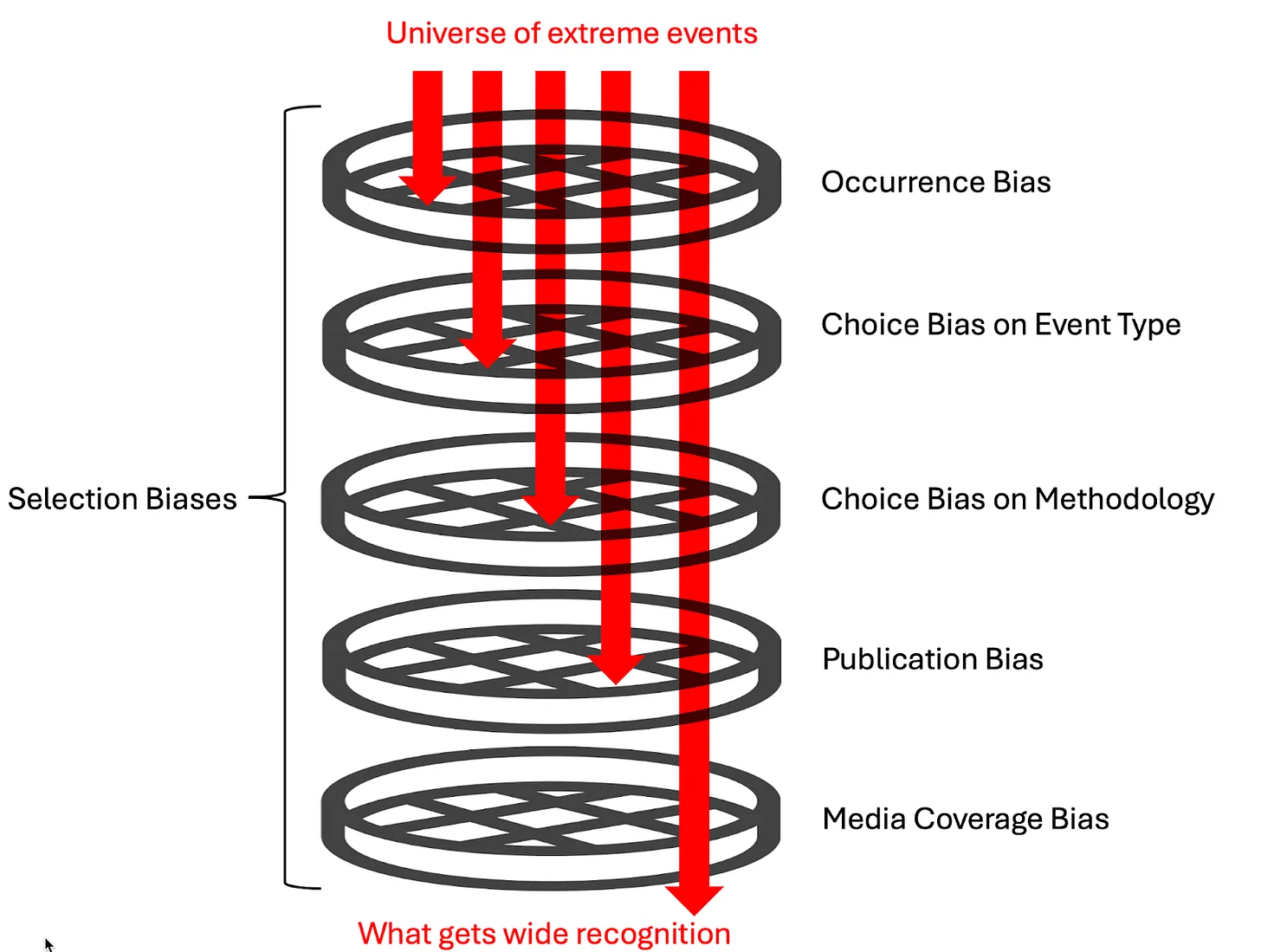
Occurrence Bias is a bias introduced by the physical climate system. Since EEA studies tend to be triggered by extreme events that have actually occurred, there is reason to believe that these studies will disproportionately sample events that are more likely than average to be exacerbated by climate change because the events occurred in the first place. Essentially, extreme events that are more likely to occur under climate change—and thus more likely to be observed—are going to be overrepresented in EEA studies, and extreme events that are less likely to occur under climate change—and thus less likely to be observed—are going to be underrepresented in EEA studies.

The map below illustrates this phenomenon. It shows changes in the magnitude of extreme drought under climate change. Specifically, it shows the fractional change in the intensity of once-per-50-year droughts (as quantified by monthly soil moisture) between a preindustrial and 21st-century run (SSP2-4.5 emissions) of the highly-regarded NCAR CESM2 Climate Model. Blue areas represent locations where the model simulates that extreme droughts become less frequent and intense with enhanced greenhouse gas concentrations, and red areas represent locations where the model simulates that extreme droughts become more frequent and intense with enhanced greenhouse gas concentrations. It is notable that overall, this model simulates that warming decreases the frequency and intensity of extreme drought in more locations than it increases it (consistent with soil moistening under warming simulated by other models).
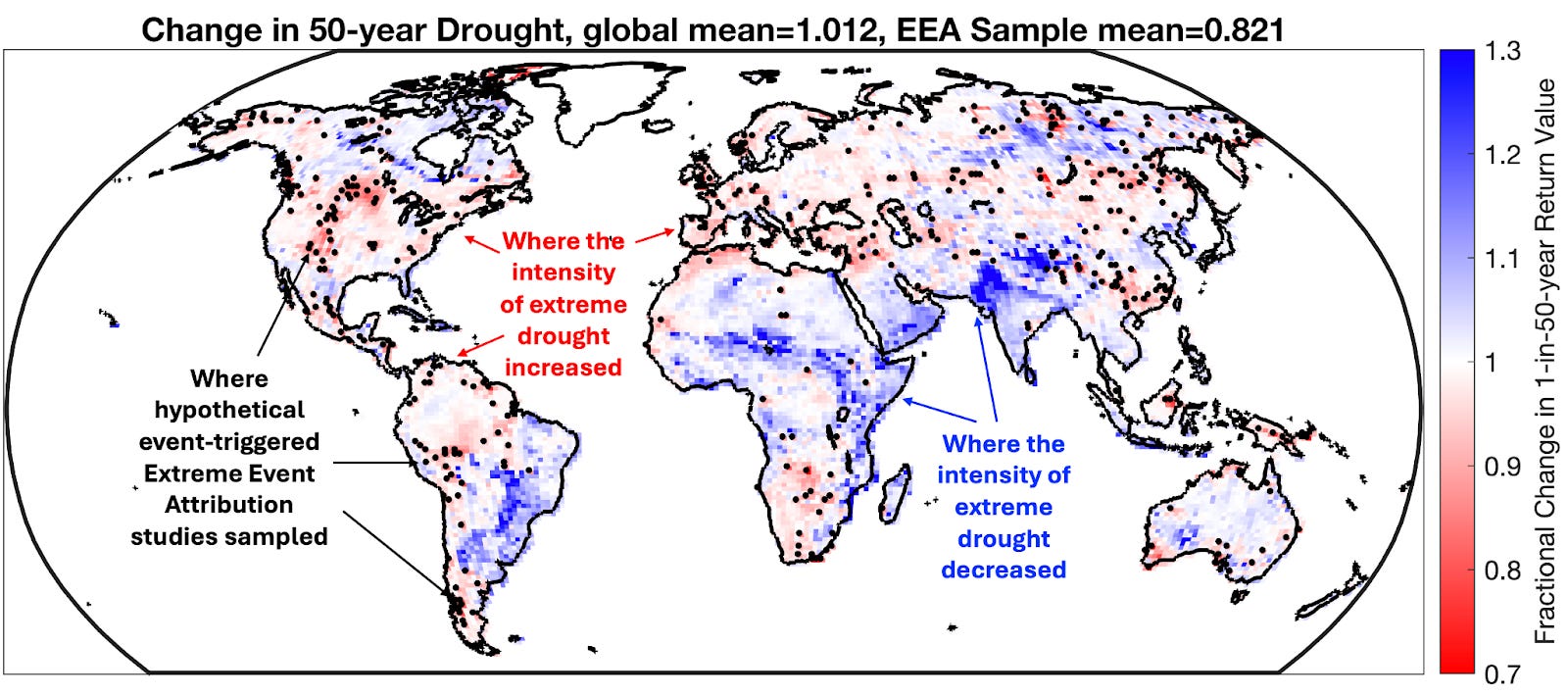
Now, here’s the kicker: The black dots show locations where once-per-50-year droughts actually occurred in the 21st-century simulation and thus represent events that would plausibly trigger EEA studies.

What do you notice about where the dots are compared to where the red is? That’s right; the simulated EEA studies overwhelmingly sample areas where droughts are getting more intense and more frequent by the very nature that those are the types of droughts that are more likely to occur in the warming climate. The result is that the EEA sample is majorly biased: warming decreased the intensity of once-per-50-year droughts by about 1% overall, but it increased their intensity within the EEA sample by 18%!

Thus, if you just relied on the EEA sample, you would come away with an
incorrect impression not only on the magnitude of change in extreme droughts
but also on the sign of the direction of change!

Choice Bias arises when researchers use prior knowledge to choose events for EEA studies that are more likely to have been made more severe by climate change. A clear example of Choice Bias pervading the Carbon Brief database is there have been 3.6 times more studies on extreme heat than there have been on extreme winter weather (205 vs. 57). Another example would be the dearth of EEA studies on extratropical cyclones (the kinds of low-pressure systems with cold and warm fronts that are responsible for most of the dramatic weather outside of the tropics). The IPCC states that the number of extratropical cyclones associated with intense surface wind speeds is expected to decrease strongly in the Northern Hemisphere with warming. Yet, it is relatively rare for EEA attribution studies to be done on these types of systems, which results in an exclusion of this good news from the EEA literature.
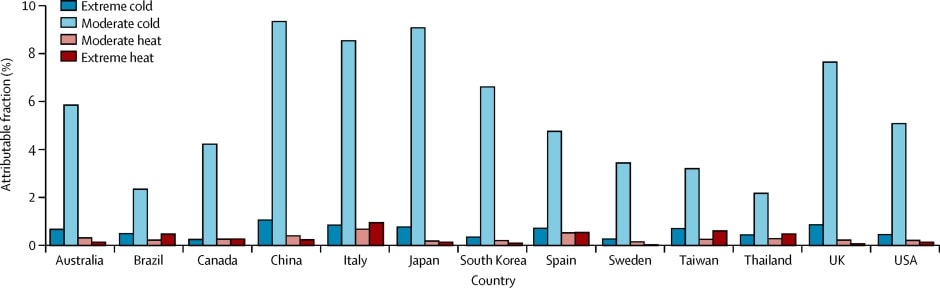
Publication Bias could be playing a role, too, where researchers are more likely to submit, and journals are likely to publish studies that report significant effects on salient events compared to studies that find null effects.
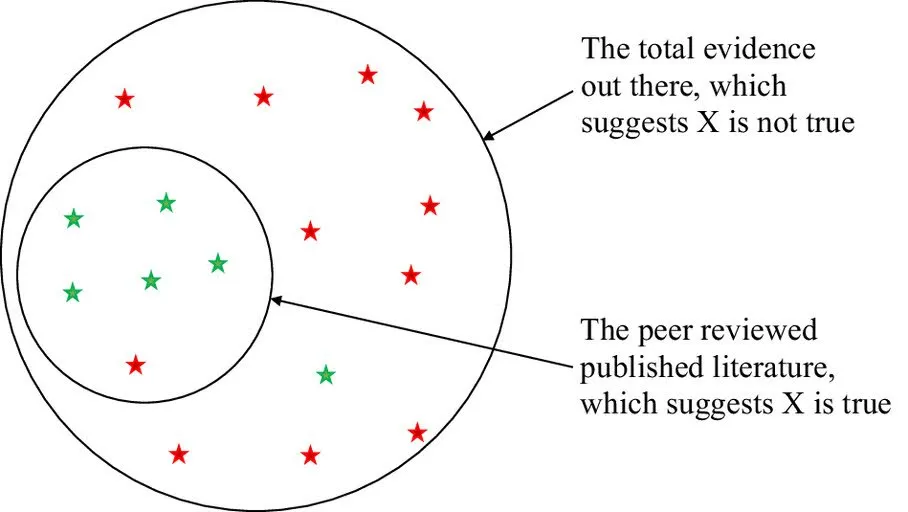
From Clark et al., 2023

Finally, the climate reporting media ecosystem is characterized by actors whose explicit mission is to raise awareness of the negative impacts of climate change, and thus, there will be a natural Media Coverage Bias with a tendency to selectively highlight EEA studies where climate change is found to be a larger driver than EEA studies that do not reach such a conclusion. These selection biases are apparent at the aggregate level, but there is also strong evidence of their presence in individual studies.
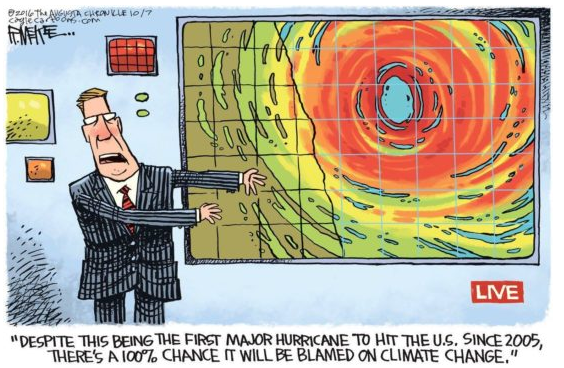
A more recent specific example suggestive of many of these dynamics is a study, Gilford et al. (2024), titled “Human-caused ocean warming has intensified recent hurricanes”. This study was conducted by three researchers at Climate Central, which summarizes the study’s findings with the following infographic:
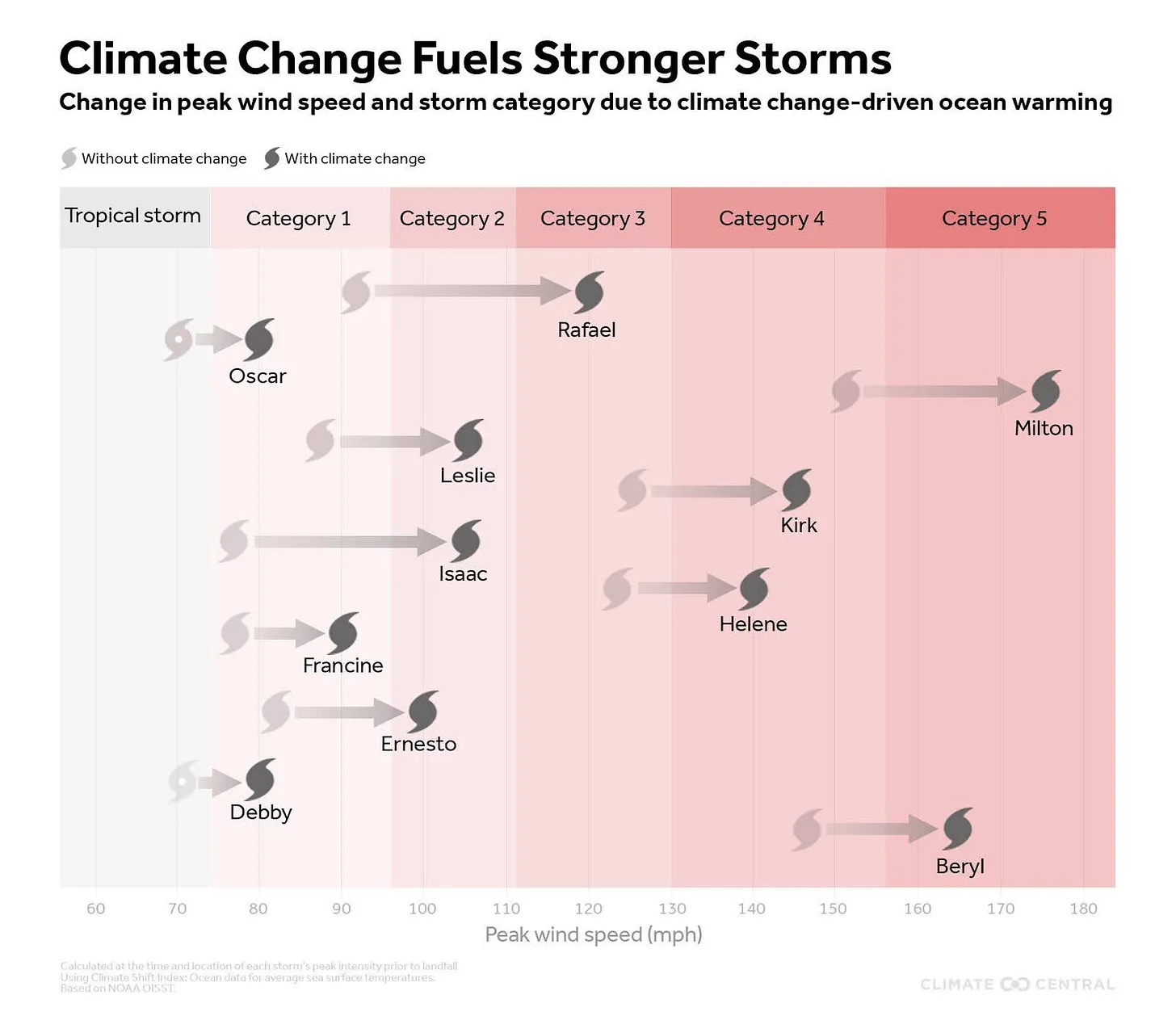
From Climate Central press release on Gilford et al. (2024).

Essentially, they claim that climate change is enhancing the intensity of all hurricanes and that the enhancement is quite large: Storms today are calculated to be an entire Category stronger than they would have been in a preindustrial climate.

This is a huge effect, and thus, if it were real, it is reasonable to expect to see clear long-term trends in metrics of tropical cyclone (hurricane) intensity like the accumulated number of major (Category 3+) hurricane days or the accumulated cyclone energy from all tropical cyclones (which is proportional to the square of hurricane windspeed accumulated over their lifetimes). However, any long-term trends in such metrics are subtle at best, both globally and over the North Atlantic.
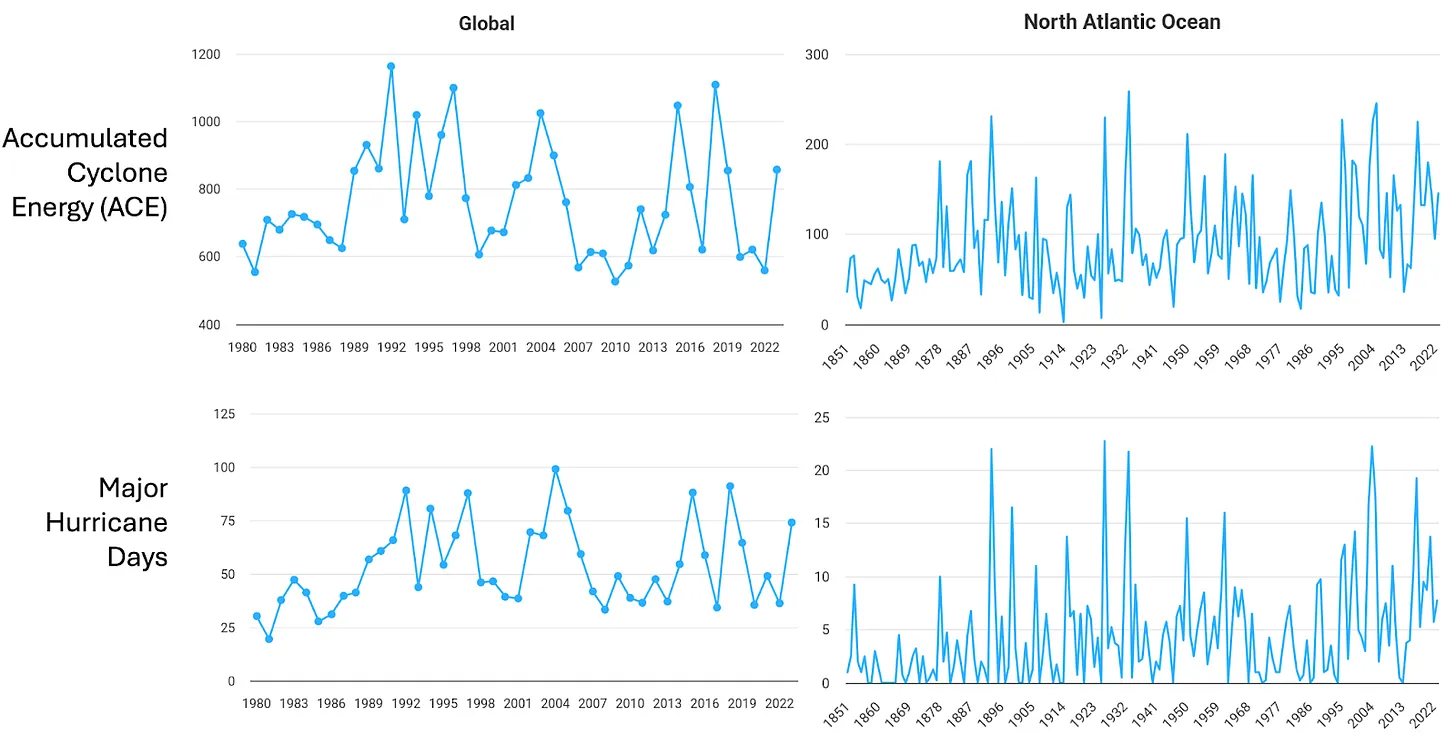
From Colorado State University Department of Atmospheric Science Tropical Meteorology Project.

So, this is a microcosm of the aforementioned apparent discrepancy between more broad quantifications of changes in extremes and their associated EEA counterparts, and again, I’d argue there are several selection biases at play affecting the production and dissemination of the EEA study.

Let’s start with Choice Bias on methodology. Human-caused warming changes the environment in some ways that work to enhance hurricanes and in other ways that diminish them. The main way that hurricanes are enhanced is via the increase in sea surface temperatures (which provides the fundamental fuel for hurricanes), and the main way that hurricanes are diminished is via changes in atmospheric wind shear and humidity.

The net result of these countervailing factors pulling in opposite directions is that we expect fewer hurricanes overall, but when hurricanes are able to form, they can be stronger than they would otherwise. These factors, though, are small relative to natural random variability, and thus, they are difficult to detect in observations.

However, the Climate Central researchers made the methodological choice
to largely exclude the influence of factors that diminish
hurricane development from the study.

Are these Choice Biases in event type and methodology an accident? There are many reasons to believe they are not.

The research paper itself spells out that the motivation of the study is to “connect the dots” between climate change and hurricanes because “landfalling hurricanes with high intensities—can act as ‘focusing events’ that draw public attention” and that “Increased attention during and in wake of storms creates opportunities for public and private discourse around climate and disaster preparedness.”
Then, there is the extensive media coverage of this study. It was picked up by 134 news outlets and ranked in the 99.95th percentile of research articles (across all journals) of similar age in terms of online attention. Further, it was immediately incorporated into seven Wikipedia articles (likely having high leverage on AI queries, which would make its findings indistinguishable from scientific “fact”). This is affected by the aforementioned Media Coverage Bias, but it is also undoubtedly directly influenced by the efforts of Climate Central, which is explicitly an advocacy organization whose self-described specialty is media placement and dissemination. 
The above sheds light on the reasons for certain choice biases in a particular study, but there is plenty of evidence that these selection biases are pervasive in the EEA field. After all, Dr. Myles Allen essentially founded the field with the motivation of answering the question, “Will it ever be possible to sue anyone for damaging the climate?”. This same motivation seems to animate many of the most high-profile scientists in the field today, like Allen’s protege, Dr. Friederike Otto (co-founder and leader of World Weather Attribution). She and her organization are frequently cited as bringing the necessary intellectual authority to credibly sue fossil fuel companies. She states the motivation of her work explicitly:

“Attributing extreme weather events to climate change, as I do
through my work as a climatologist, means we can hold
countries and companies to account for their inaction.”

Given the explicitly stated motivation of those in the EEA field, it is quite reasonable to suppose that there are major selection biases at play, and thus, it is not at all surprising that the collective output of the EEA field would look so different from more broad comprehensive assessments.


Poilievre: On Canada and US Partnership

Last week Jordan Peterson conducted the above interview What Pierre Poilievre Thinks About Donald Trump. Poilievre is the Conservative leader expected to form the next federal government in Canada.  My lightly edited transcript is below in italics with my bolds and added images. JP refers to Peterson and PP to Poilievre.

JP: Trump famously met with Trudeau and seemed to troll him quite hard. First thing, I don’t know to what degree the Canadian press picked up on this, but Trudeau wasn’t invited to stay at Mar-a-Lago and there’s 126 rooms there. So when Trump invites someone he also invites them to stay there. So you know that was a message, and then he trolled him hard. He called him the governor of America’s 51st State and let it be known that he had very little respect for him. And then he announced a 25% tariff on Canadian goods.

So I had two reactions to that. You know, because I’m no fan of Trudeau, one was amused pleasure at Trump’s vicious humor let’s say. And the other one, you know he is the leader of our primary ally and a G7 nation, and so maybe that verged on contempt. I’m not exactly sure what to make of that and I’m curious about your response, and also how you feel about negotiating a new relationship with the Americans and with the Trump Administration in particular.

PP: Well I won’t spend a lot of time on how I feel about it other than to say Trudeau is a weak leader who leads a weakened economy with a weakened dollar and a weakened border. And president Trump has a strong mandate and he he spent his life as a highly successful businessman in the most cutthroat economic environment in the world, New York City. So in construction yeah and in Chicago. This is a former businessman who can spot weakness a mile away and act on it. So it’s just humiliating for all Canadians to witness something like that, because this is our country.

But what am I going to do about it? Look, first and foremost we need to show up with strength. We have an American president who has always put America First, he’s very blunt about it. I’ll put Canada First. The good news is that there’s immense overlap in the two countries respective interests and values. We’re both liberal democracies, we both value Freedom, we both share a geography. We have our enemies and our risks and our threats are the same, so there’s no reason why we can’t both win. If you look at the history of President Trump, he negotiates very aggressively and he likes to win, but in the end he doesn’t appear to have a problem if his counterparty also wins. So I think that we can get a great deal that will make both countries safer, richer and stronger. That’s the goal that I’ll be coming with into these negotiations.

JP: Okay, so what would a great deal look like as far as you’re concerned with the Americans on the energy side. One of the things that Trump pointed to was Canada’s Trade Surplus with the US at 1 billion was his estimate.

PP: It depends how you measure it, other estimates have it at around 40 billion, but he’s right, there is a Canadian Trade Surplus with the states. And from a mercantilist point of view you can say that America has been ripped off by China and Mexico. You can see examples of a factory closing in Ohio or Pennsylvania to open in Mexico or in China. But that’s not the nature of the Canadian Trade Surplus. It’s not a matter of the Canadian economy taking American jobs, far from it.

The nature of our Trade Surplus with America is that while it is a ripoff,
it’s Canada ripping itself off and let me explain.

Our entire Trade Surplus and more is due to oil and gas because we export about $120 billion of oil and gas to the United States at enormous discounts to market price because we have been so stupid and our bureaucrats have been so obstructive and woke activists have been so fanatical that we have not been able to develop the infrastructure to refine and transport our own energy to World Markets. So we are stuck with the US; depending on the time we sell a barrel oil to the Americans for 10% up to 30 or 40% cheaper than the world price. There’s a price called western Canada select and it’s significantly lower than WTI.

Until recently at least 99% of our oil exports to America where they then get to upgrade it and resell it at enormous profits with their welders, pipe fitters and engineers making the six figure salaries that go along with that. We give all of our natural gas exports to the United States because we don’t have an an operating liquefaction terminal to send it away ourselves so they get our natural gas at massive discounts. And then they can decide if they want to liquefy and ship it off to world markets at literally five times higher.

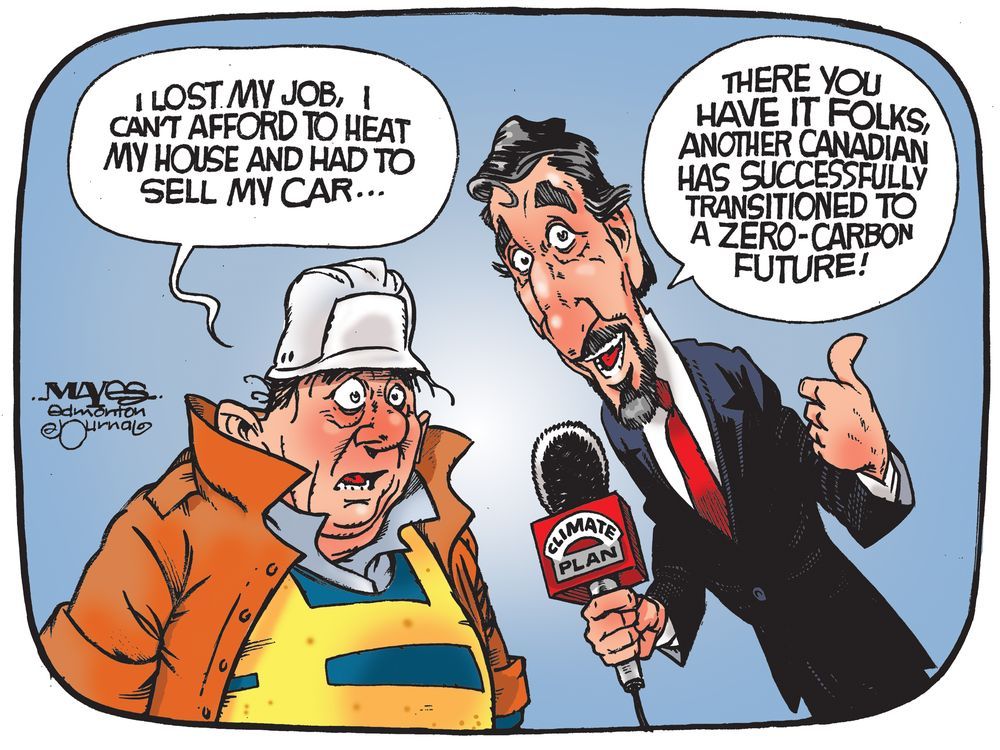
Trudeau’s “Just Transition” to Net Zero

So that is that is the trade surplus he’s talking about. Now if he were to stop that today it would mean that American workers at refineries and in other value added places would lose their jobs and Americans would pay higher energy prices. So that would not be good for America in the long run.

Being very blunt, I intend to approve refineries and LNG plants and
hopefully pipelines so that I could bring that production
back to Canada and make us more energy independent.

But in the short run if president Trump wants to make America richer the last thing he should want to do is block the underpriced Canadian energy from going into his Marketplace. In fact I would encourage him to approve the Keystone Pipeline so that we can create jobs for American workers who will build and install it, but also create much more wealth for Alberta and Saskatchewan and have their product reach tide water in the US Gulf Coast and get World prices.

So that’s an economic win. Also it’s not just oil and gas though. We have in Canada the Strategic minerals that are necessary for Warfare and for the modern digital economy that we could be exporting to the United States breaking both of our dependencies on China. We have the energy, a major Surplus of electricity, a surplus that we could even grow further that could be used for data centers that America cannot build fast enough.

So there’s enormous opportunities for both of us to get vastly richer if
we actually deepen our trade relationship rather than blocking it.

JP: Right, well it seems highly probable to me that that would be the direction that the Trump Administration would turn in if they were negotiating with people who were playing a straight game and were actually aiming for something like economic Prosperity instead of whatever the hell it is that Trudeau’s aiming for. Now you made brief reference to something quite shocking in its full import which didn’t really strike me until your comments. For example, Trudeau turned away the chancellor of Germany and the leader of Japan when they came cap in hand to Canada asking for increased Natural Gas exports over the long run. Given that we refused them, we ended up maintaining our low cost contracts with the United States and selling them all our resources at a discount.
PP: Yes, it’s enormously stupid. That’s the business case Trudeau couldn’t make. And I hate to say this, but because we have blocked LG plants and pipelines and other energy infrastructure, and because we’re giving therefore our gas to America at like a 70 or 80% discount to European and Asian prices and our oil at a discount of 20 or 30%, we’re effectively throwing money out a window. What do you do when someone throws money out a window? Stand next to the window yeah right.

So that is the true story, the pathetic story of our Trade Surplus is
that we’re actually handing over our resources stupidly.

It’s not The Americans’ fault, it’s our fault. We’re stupid and we’re going to stop being stupid when I’m prime minister. We’re going to build this infrastructure ourselves but in the meantime it would be it would be bad for American workers and consumers for the president to tariff our oil and gas.

And look, we have an integrated economy; I think an automobile crosses the Border something like eight or nine times between Ontario and the manufacturing states of the US before it becomes a finished product. Why interrupt those Supply chains? Also why not allow Americans just to have access to buying our minerals? Or better yet why don’t we process improve them here in Canada before we sell them to the United States to break dependence on hostile foreign powers?

By the way I would say to president Trump that the gains that Canada gets from increased access to the United States, I would spend largely on our Continental defense, on a more powerful Canadian military that truly secures the Arctic that protects us against terrorists and against intercontinental ballistic missiles, against threats, God forbid, from other parts of the world. We could have a bigger and more powerful military with a bigger and more powerful economy and so our interests overlap overwhelmingly.

That’s the case I would make to the incoming president
who has proven that he likes to make deals and
is good at it.


Left Coast Climate Delusion Ends in Flames

Satellite images of wildfires burning in Southern California By NBC Staff • Published January 11, 2025

Holman W. Jenkins, Jr. writes in Wall Street Journal End of a Climate Delusion.  Excerpts in italics with my bolds and added images.

Amid California’s fires, voters wake up from the dream that green pork is a solution.

CO2 emitted into the atmosphere is rapidly and, for all practical purposes, uniformly distributed around the planet.

I may be stating the obvious but it needs to be pointed out. Voters and even political leaders are surprisingly poorly informed on this point. Emissions cuts in California don’t have any significant effect on California’s climate. They also have no global effect. California’s cuts are too small relative to the global whole; they also are largely illusory.

Emitting industries leave the state. They don’t stop emitting. If California imports Canadian hydro to charge its electric vehicles, consumers elsewhere have to burn more coal and gas. If Californians drive EVs, more gasoline is free to be burned by others, releasing more CO2 that influences climate change in California and everywhere else.

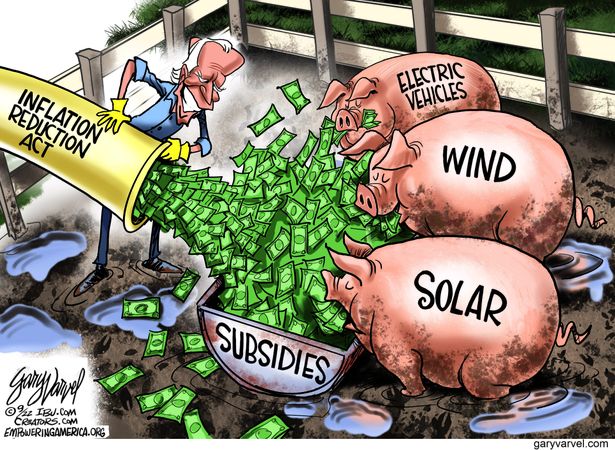
Green-energy subsidies do not reduce emissions. This will be news to millions of California voters. It contradicts a central tenet of state policy. It isn’t news to the actual enactors of these subsidies. A National Research Council study sponsored by congressional Democrats in 2008 concluded that such handouts were a “poor tool for reducing greenhouse gases” and called for carbon taxes instead.

Unfortunately, the incoming Obama administration quickly discovered it favored climate taxes only when Republicans were in charge. Backers would later engage in flagrant lying to promote Joe Biden’s Inflation Reduction Act, knowingly citing bogus predictions that its trillion-dollar spending profusion would reduce emissions.

A 2019 University of Oregon study had already revealed the empirical truth: Green energy doesn’t replace fossil fuels, it enables more energy consumption overall. That same year the EPA calculated that the potential emissions savings from subsidizing electric vehicles had been offset five times over by the pickup truck and SUV boom Team Obama facilitated to assure the success of its auto bailout.

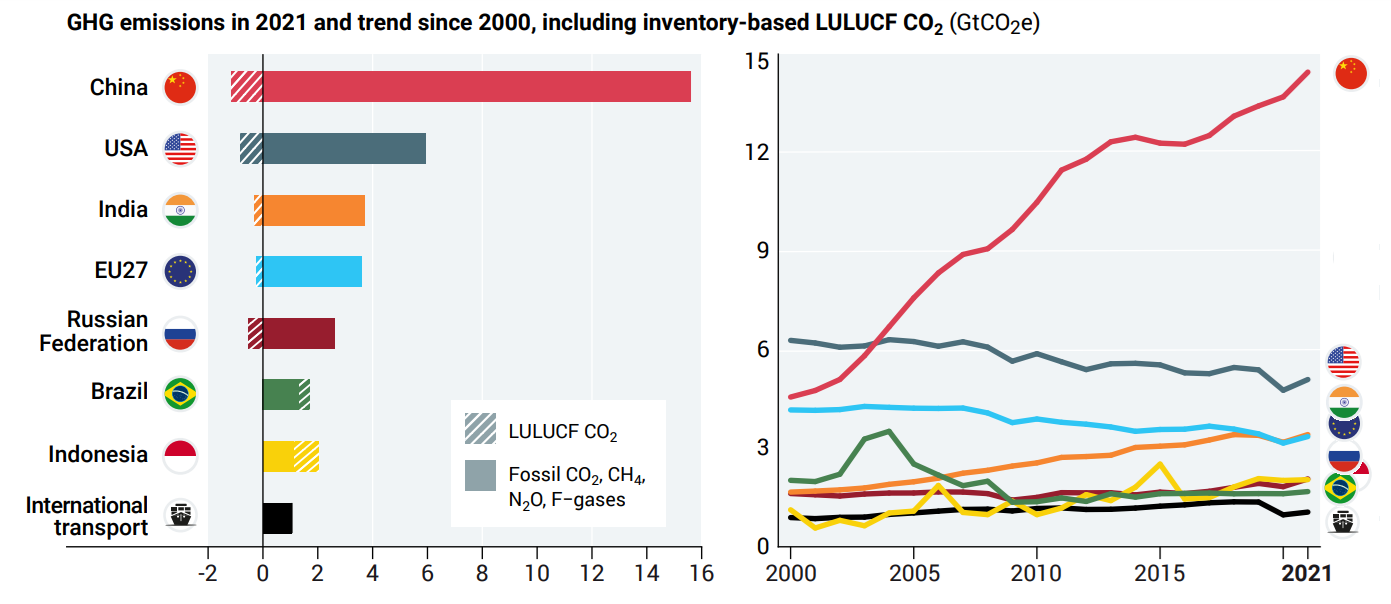
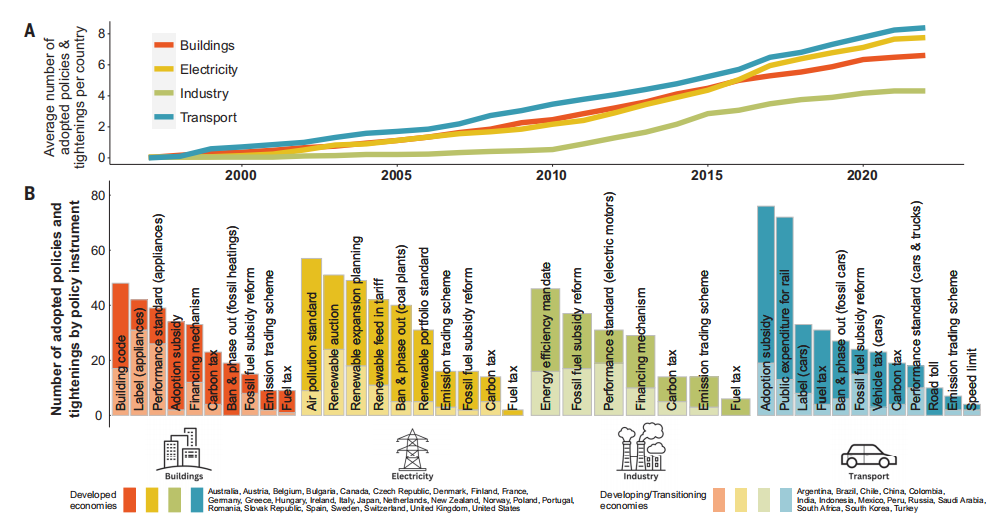
American Association for the Advancement of Science study finds that of 1,500 “climate” policies announced around the world, a mere 63, or 4%, produce any reduction in emissions.

Last year, the premier journal Science put a nail in the question: 96% of policies supported worldwide as “reducing” emissions failed to do so, consisting mostly of handouts to green-energy interests.

And yet certain Journal readers still assail me with the epithet “denier.” They confuse my criticism of Democratic hypocrisy with my imagined views on climate science. As I’ve written back to many, “Don’t think politicians haven’t figured this out about you. That’s why they can give us unsustainable corporate welfare boondoggles and call it climate policy.”

A CNN moderator Saturday urged viewers to vote in an online poll on whether the California disaster should be blamed on climate change or poor leadership. Notice the non sequitur: as if climate change is an excuse for not acting against fire risk.

By all means, let politicians proclaim a “climate crisis” or any other rhetorical flourish if it helps mobilize support for public actions that actually serve a useful purpose. But a prerevolutionary situation has been building in California for two decades, starting with the Third World blackouts in late 2000 not because of any shortage of power but because of large helpings of political cowardice.

A decision in 2019 authorized yet more Third World blackouts instead of reasonably shielding utilities from lawsuit risk over fires their power lines might be accused of contributing to. One result, predictably, has been a proliferation of backyard generators, which increase fire risk.

Californians are stuck adapting in the ways left open to them. Since 2017, half a million have fled Los Angeles County.

Two social technologies might help but the state has been intent on denying itself their advantages. One is a functioning insurance market. If you can’t afford the insurance, you can’t afford the house. Get ready, instead, for a torrent of federal and state money to help residents, some of them wealthy, rebuild in high-risk fire zones.

The other is a functioning market in water. Five gallons to produce a walnut probably isn’t tenable under any realistic system of water pricing. If water were properly valued, municipalities would also rapidly discover the logic of building aquifers to capture seasonal runoff. A thousand things would change if water were priced to flow to its most highly valued uses.

Here’s another concept: Climate change can exist and yet be an insignificant variable.

In Southern California’s Mediterranean climate, anytime 100-mile-an-hour winds start blowing embers toward densely packed housing developments, a conflagration is certain. The only answer then is to have the manpower and resources ready to put fires out as quickly as they start.

I’ve written repeatedly about climate and energy policies in the Western world being a colossal example of “sophisticated state failure,” in which attempts to address complex problems yield only a succession of boondoggles and economic crises. If California voters don’t wise up now, they never will.


Koonin: Reckless Claim of Climate Emergency

Transcript

Hubris is a Greek word that means dangerously overconfident. Based on my research, hubris fairly describes our current response to the issue of climate change.

Here’s what many people believe:

One: The planet is warming catastrophically because of certain human behaviors.
Two: Thanks to powerful computers we can project what the climate will be like
20, 40, or even 100 years from now.
Three: That if we eliminate just one behavior, the burning of fossil fuels,
we can prevent the climate from changing for as long we like.

Each of these presumptions—together, the basis of our hubris regarding the changing climate—is either untrue or so far off the mark as to be useless.

Yes, it’s true that the globe is warming, and that humans are exerting a warming influence upon it. But beyond that, to paraphrase a line from the classic movie The Princess Bride, “I do not think ‘The Science’ says what you think it says.”

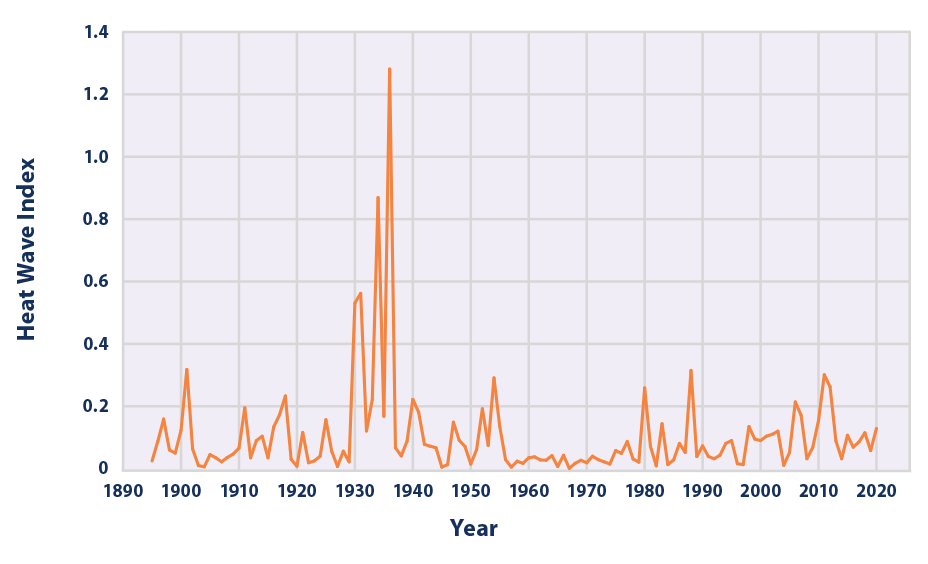
For example, government reports state clearly that heat waves in the US are now no more common than they were in 1900.

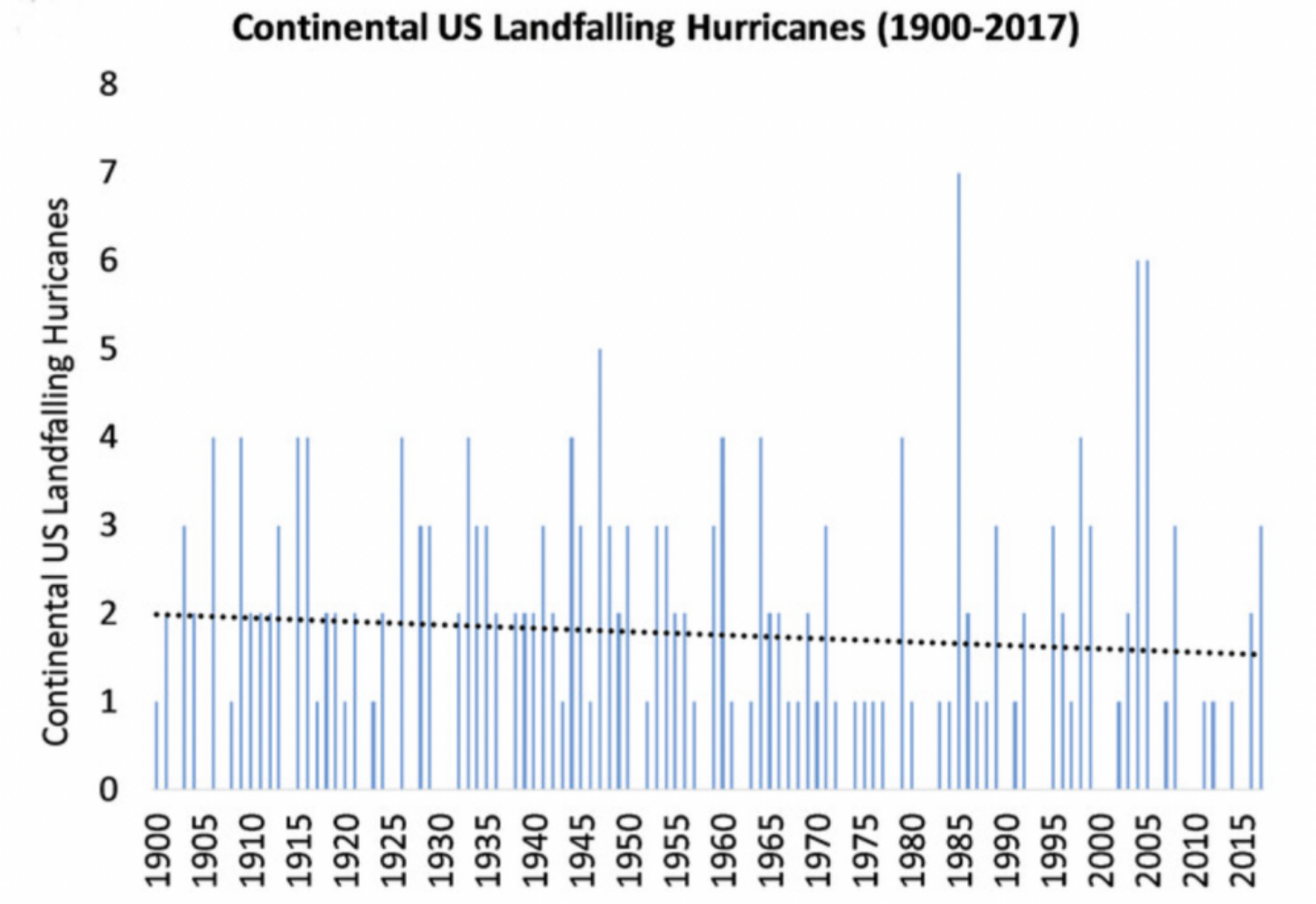
Hurricane activity is no different than it was a century ago.

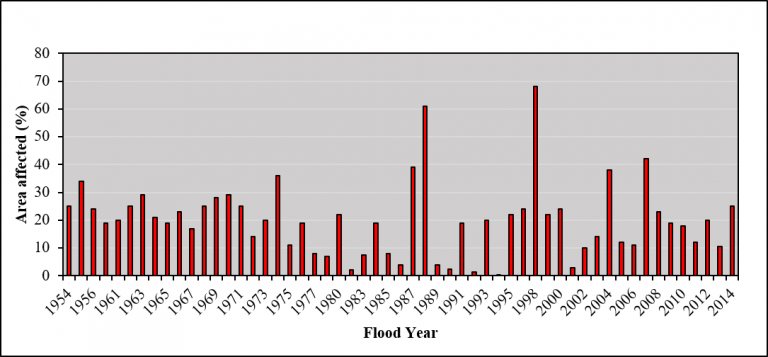
Floods have not increased across the globe over more than seventy years.

Source: Voice of International Affairs

Greenland’s ice sheet isn’t shrinking any more rapidly today than it was 80 years ago.

Why aren’t these reassuring facts better known?

Because the public gets its climate information almost exclusively from the media.

And from a media perspective, fear sells.

“Things aren’t that bad” doesn’t sell.

Very few people, and that includes journalists who report on climate news, read the actual science. I have. And what the data—the hard science—from the US government and UN Climate reports say is that… “things aren’t that bad.”

Nor does the public understand the questionable basis of all catastrophic climate change projections: computer modeling.

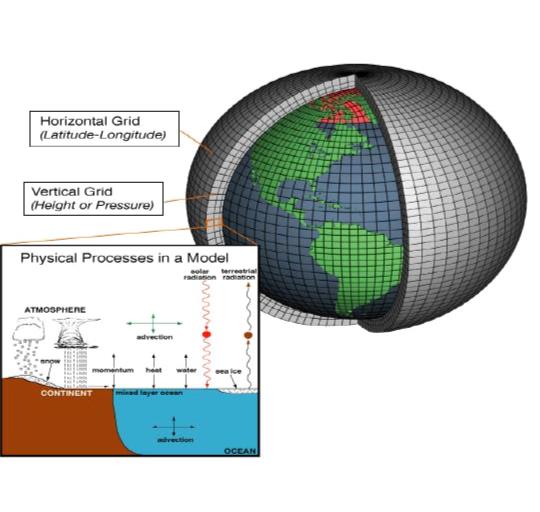
Projecting future climate is excruciatingly difficult. Yes, there are human influences, but the climate is complex. Anyone who says that climate models are “just physics” either doesn’t understand them or is being deliberately misleading. I should know: I wrote one of the first textbooks on computer modeling.

While modelers base their assumptions upon both fundamental physical laws and observations of the climate, there is still considerable judgment involved. And since different modelers will make different assumptions, results vary widely among different models.

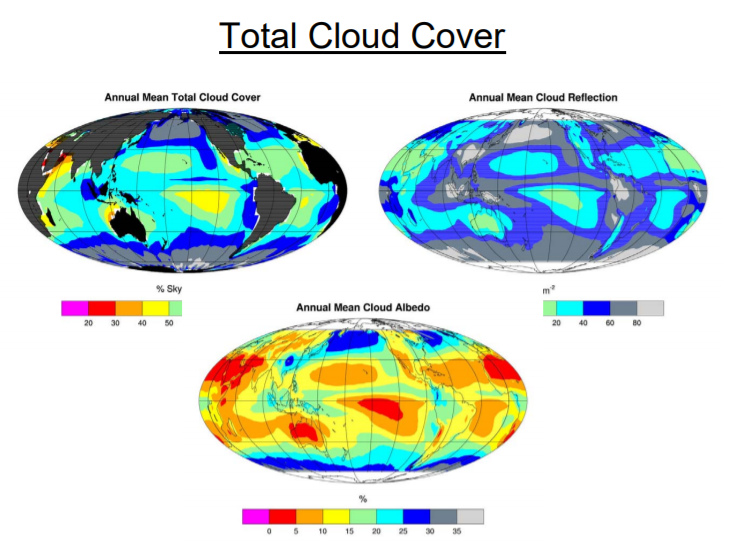
Let’s just take one simple, but significant assumption modelers must make: the impact of clouds on the climate.

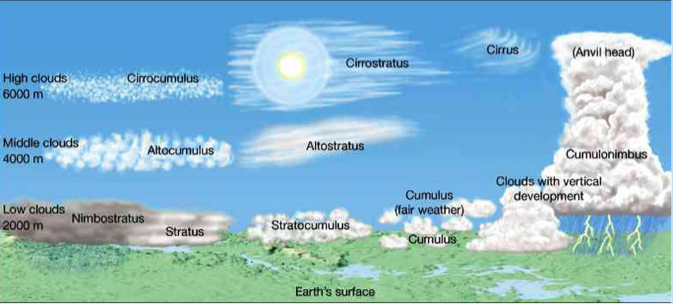
Natural fluctuations in the height and coverage of clouds have at least as much of an impact on the flows of sunlight and heat as do human influences. But how can we possibly know global cloud coverage say 10, let alone 50 years from now? Obviously, we can’t. But to create a climate model, we have to make assumptions. That’s a pretty shaky foundation on which to transform the world’s economy.

By the way, creating more accurate models isn’t getting any easier. In fact, the more we learn about the climate system, the more we realize how complex it is.

Rather than admit this complexity, the media, the politicians, and a good portion of the climate science community attribute every terrible storm, every flood, every major fire to “climate change.” Yes, we’ve always had these weather events in the past, the narrative goes, but somehow “climate change” is making everything “worse.”

Even if that were true, isn’t the relevant question, how much worse? Not to mention that “worse” is not exactly a scientific term.  And how would we make it better?  For the alarmists, that’s easy: we get rid of fossil fuels.

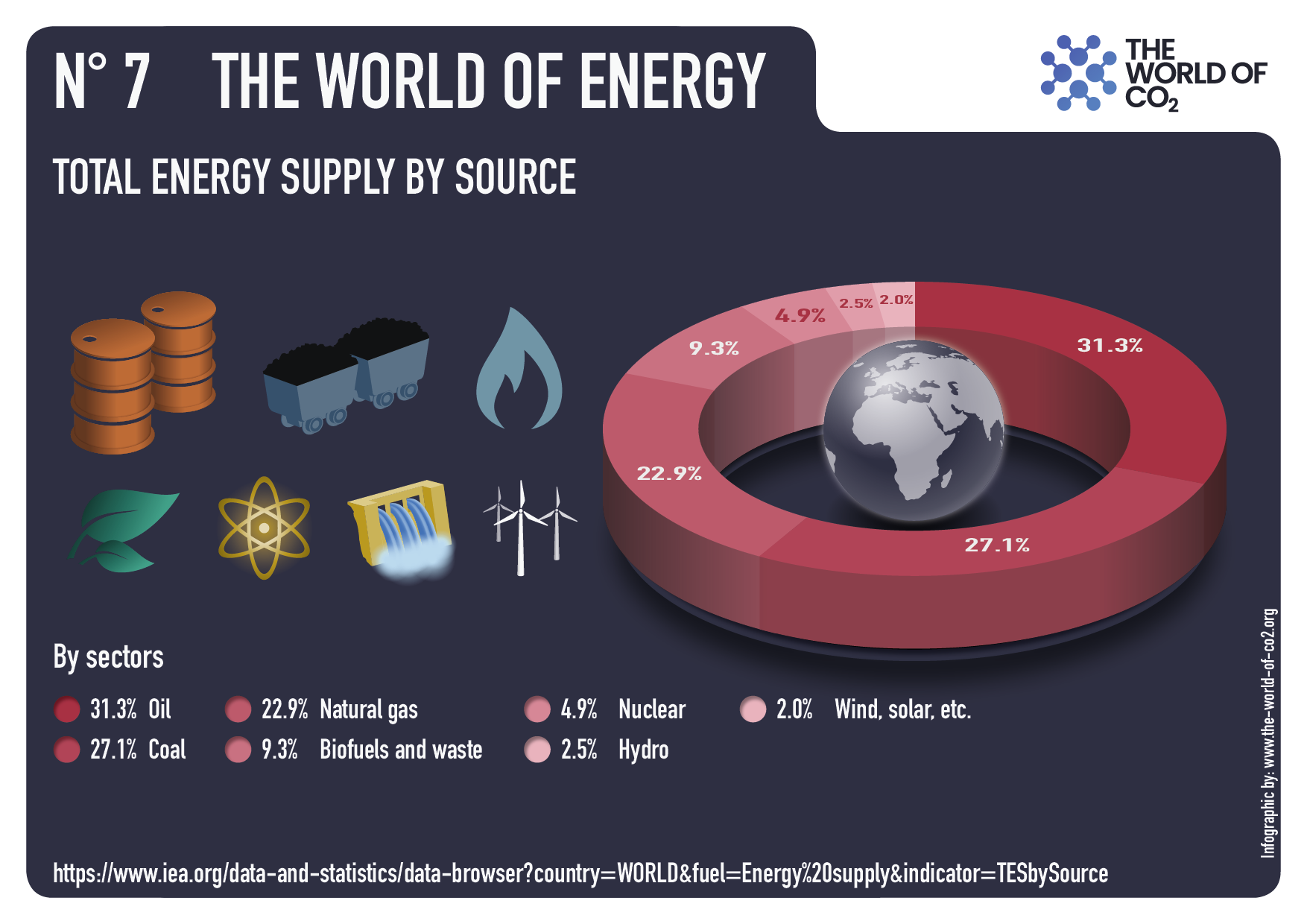
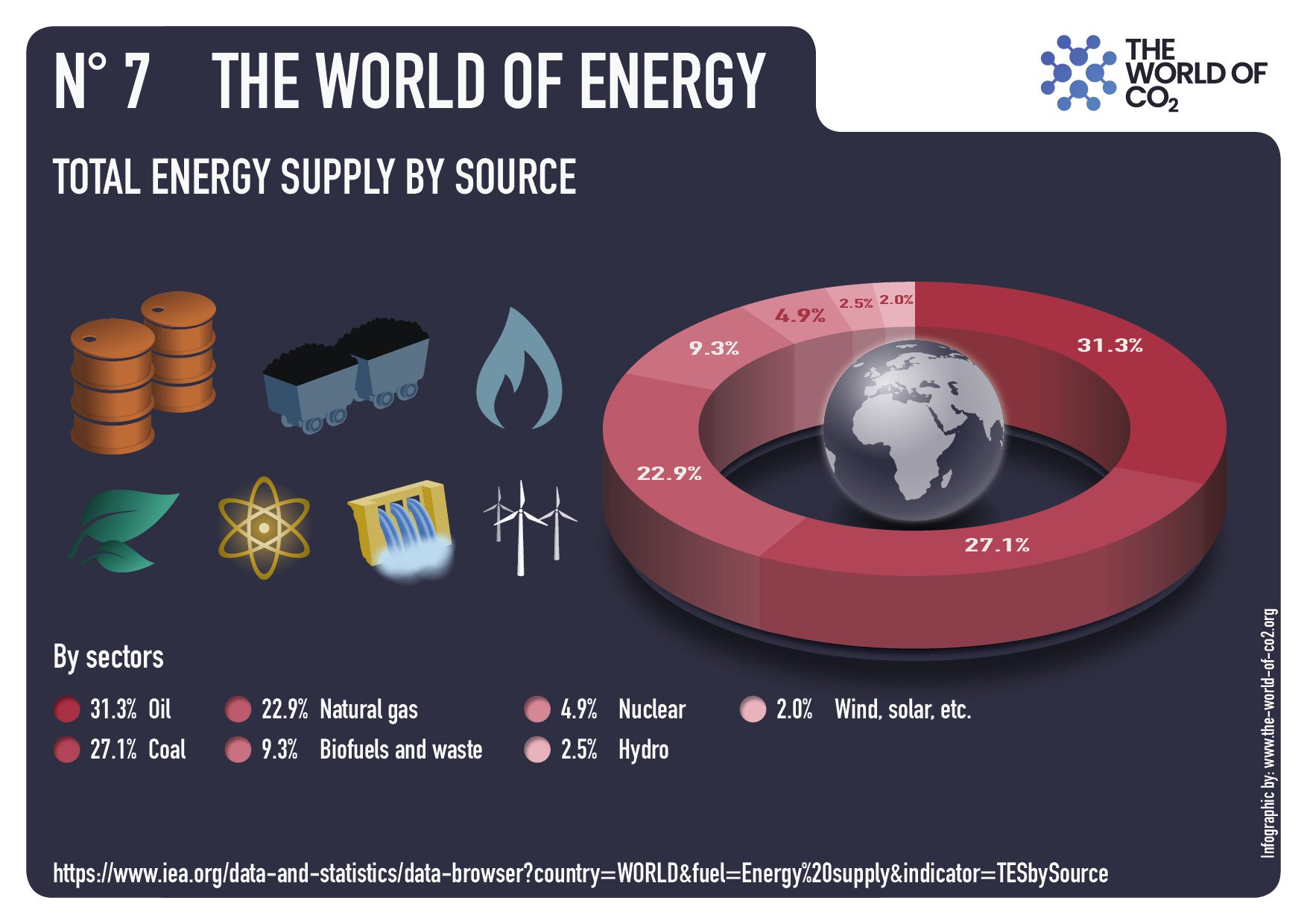
Not only is this impractical—we get over 80% of the world’s energy from fossil fuels—it’s not scientifically possible. That’s because CO2 doesn’t disappear from the atmosphere in a few days like, say, smog. It hangs around for a really long time.

About 60 percent of any CO2 that we emit today will remain in the atmosphere 20 years from now, between 30 and 55 percent will still be there after a century, and between 15 and 30 percent will remain after one thousand years.

In other words, it takes centuries for the excess carbon dioxide to vanish from the atmosphere. So, any partial reductions in CO2 emissions would only slow the increase in human influences—not prevent it, let alone reverse it.

CO2 is not a knob that we can just turn down to fix everything. We don’t have that ability. To think that we do is… hubris.

Hubris leads to bad decisions.  A little humility and
a little knowledge would lead to better ones.

I’m Steve Koonin, former Undersecretary for Science in the Obama Administration, and author of Unsettled: What Climate Science Tells Us, What It Doesn’t, and Why It Matters, for Prager University.

Addendum  Fossil Fuels and Greenhouse Gases (GHGs) Climate Science

Professors Lindzen, Happer and Koonin CO2 Coalition Paper April 2024

Table of Contents

I. THERE WILL BE DISASTROUS CONSEQUENCES FOR THE POOR, PEOPLE WORLDWIDE, FUTURE GENERATIONS AND THE WEST IF FOSSIL FUELS, CO2 AND OTHER GHG EMISSIONS ARE REDUCED TO “NET ZERO”

A. CO2 is Essential to Our Food, and Thus to Life on Earth
B. More CO2, Including CO2 from Fossil Fuels, Produces More Food.
C. More CO2 Increases Food in Drought-Stricken Areas.
D. Greenhouse Gases Prevent Us from Freezing to Death
E. Enormous Social Benefits of Fossil Fuels
F. “Net Zeroing” Fossil Fuels Will Cause Massive Human Starvation by Eliminating Nitrogen Fertilizer

II. THE IPCC IS GOVERNMENT CONTROLLED AND THUS ONLY ISSUES GOVERNMENT OPINIONS, NOT SCIENCE

III. SCIENCE DEMONSTRATES FOSSIL FUELS, CO2 AND OTHER GHGs WILL NOT CAUSE CATASTROPHIC GLOBAL WARMING AND EXTREME WEATHER

A. Reliable Science is Based on Validating Theoretical Predictions With Observations, Not Consensus, Peer Review, Government Opinion or Cherry-Picked or Falsified Data
B. The Models Predicting Catastrophic Warming and Extreme Weather Fail the Key Scientific Test: They Do Not Work, and Would Never Be Used in Science.
C. 600 Million Years of CO2 and Temperature Data Contradict the Theory That High Levels of CO2 Will Cause Catastrophic Global Warming.
D. Atmospheric CO2 Is Now “Heavily Saturated,” Which in Physics Means More CO2 Will Have Little Warming Effect.
E. The Theory Extreme Weather is Caused by Fossil Fuels, CO2 and Other GHGs is Contradicted by the Scientific Method and Thus is Scientifically Invalid


Canada’s Choice: Elite Globalist or Common Sense Canadian

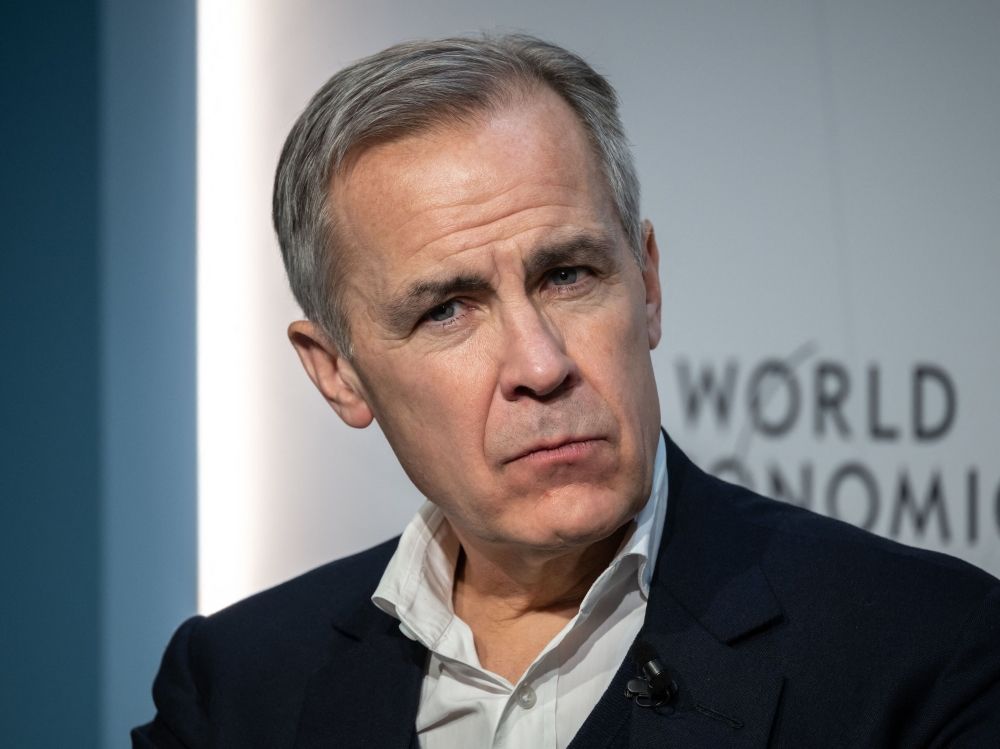
Trump will soon fill a 4-year WH vacancy known as the “Biden/Harris Administration.” Meanwhile federal governance in Ottawa is shut down by Trudeau resigning without leaving but also suspending parliament.  There being no one at the helm is eerily similar to the US adrift, and a fitting close to the Trudeau decade. Jamie Sarkonak goes to the core of the upcoming election in his National Post article It doesn’t matter to Mark Carney if Canada survives.  Excerpts in italics with my bolds and added images

As a member of the global elite, he will always be free
from the consequences of his political actions.

The problem Mark Carney, likely Liberal leader-to-be, will always run into is this: his fate doesn’t depend on a successful Canada.

Carney announced his leadership run Thursday. Odds are good he’s going to win. He’s not as recognizable as his only real competition, potential candidate and former finance minister Chrystia Freeland, but he doesn’t share her bruised record of inflating the deficit to multi-billion dollar highs, and last week’s polling shows that more people are open to voting for him than for her.

I hope he wins the party’s support. The Liberals aren’t likely to resonate with the population by running an out-of-touch cabinet minister in the next federal election — and they’re certainly less likely to do so by running an out-of-touch global elite who left small-time federal politics behind for a career at the pinnacle of international poshdom.

Yes, Carney is Canadian. But he’s also a citizen of Ireland,
and through it the European Union,
as well as a national of the United Kingdom.

He can leave this country any time he wants, and he already has: after serving as governor of the Bank of Canada from 2008 to 2013, he moved on to head the Bank of England. Now, he’s embedded in the international ecosystem as a climate finance adviser at the United Nations (among other things, he’s a strong advocate for mandatory climate disclosures by banks).

Oh, and according to his World Economic Forum bio — another mark of borderless eliteness — he is also the following: “an external member of the Board of Stripe, a member of the Global Advisory Board of PIMCO, Harvard University, Rideau Hall Foundation, Bilderberg, the boards of Bloomberg Philanthropies, the Peterson Institute for International Economics, the Hoffman Institute for Global Business and Society at INSEAD, Cultivo, as well as Senior Counsellor of the MacroAdvisory Partners, Advisor of the Watershed, and Chair of Chatham House, the Group of Thirty and also Advisory Board Chair for Canada 2020.”  Us rubes have no idea what most of that even means.

Carney might call himself an “outsider,” and it’ll be true — in the sense that he is not currently in the Trudeau government’s cabinet. But he’s still very much an elite, one who has advised the Liberal party, and one whose well-being doesn’t depend on local happiness and prosperity.

And everyone filling out a ballot next election will know it.

Different people have different terms for this. Freeland wrote a book on the new richesse mondiale, calling them plutocrats. Circa 2013, she was warning the rest of us that the global plutocracy might one day end up turning into a system of crony capitalist “insiders”; perhaps an aristocracy. Carney’s not Bill-Gates rich, but he’s still part of the global upper class.

Chrystia Freeland is also a Trustee on the WEF Board.

Former prime minister Stephen Harper put it in more digestible terms in his 2018 book, “Right Here, Right Now”: there are people who live “anywhere,” and there are people who live “somewhere.” “Anywheres” are cosmopolitan types who usually have professional, internationally oriented careers. “Somewheres” live and work closer to where they grew up, and share more of their values with people of a similar, localized background. The former tends to look down on nationalism; the latter depends on it.

Carney counts among the “anywheres” of Canadian society; yes, he’s got the passport, but he’s got more in common with a foreign banking executive who makes an annual Davos pilgrimage than he does with regular Superstore-shopping Canadians.

We “somewheres,” on the other hand, can’t just up and leave
in the face of turmoil because our entire life is here.

Our friends and families are here. Our savings and investments (if we have them) are in CAD; our partly-paid mortgages are tied to Canadian land; our children’s education depends on the quality of Canadian schools; our safety depends on Canadian laws; our job prospects suffer when low-wage foreign labour is allowed to flood our local markets. We’re not being forced to leave, but the price of relocating is prohibitively high.

Carney’s Monday appearance on Jon Stewart’s Daily Show was revealing in that way: he targeted his pre-audition pitch to the world through an American late-night show that treated him with the same humorous fascination as it would a fuzzy exotic animal. It was a soft and unserious interview because the people our former central banker is campaigning toward aren’t Canadian and aren’t witnessing the country’s dire situation firsthand.

Poilievre’s appearances on Dr. Jordan Peterson’s American-produced podcast were of a whole different category; both men are Canadian and can talk about Canadian issues with the weight and care they deserve.

None of this is to say that the upper crust of society should stay out of politics — many great leaders come from the elite class, including on the conservative side of politics. But after years of regular Canadians being the low-priority afterthought of a trust-fund supported, second-generation prime minister who seemed happiest at G7 photoshoots and Gavin-Newsom meetups, the animal spirits are hungering for a leader who truly has skin in the game.

And yes, I’d count Conservative Leader Pierre Poilievre among the “somewheres.” He’s had an entirely Canadian career, he isn’t gunning for CV-padding UN advisory roles, his ongoing career doesn’t depend on pleasing the moral sensibilities of the world’s politically active, post-national liberals, and he doesn’t seem to think that pre-election media courting should be performed for an international audience.

If the ship that is Canada starts sinking — and it’s been sitting alarmingly low in recent years most of us are going down with it. Not Carney, who has and always will have a premium life raft, ready to isolate him from the consequences of his political actions. Which is exactly why I can’t wait to see him run.

Climate False Alarms about Agriculture

Javier Vinós   @JVinos_Climate  Scientist. Molecular neurobiologist and climate researcher

Climate Lemmings


Good Reasons to Distrust Climatists

The most recent case of climatists’ bad behavior is the retraction of a peer-reviewed paper analyzing the properties of CO2 as an IR active gas, concluding that additional levels of atmospheric CO2 will have negligible effect on temperatures.  From the Daily Sceptic:

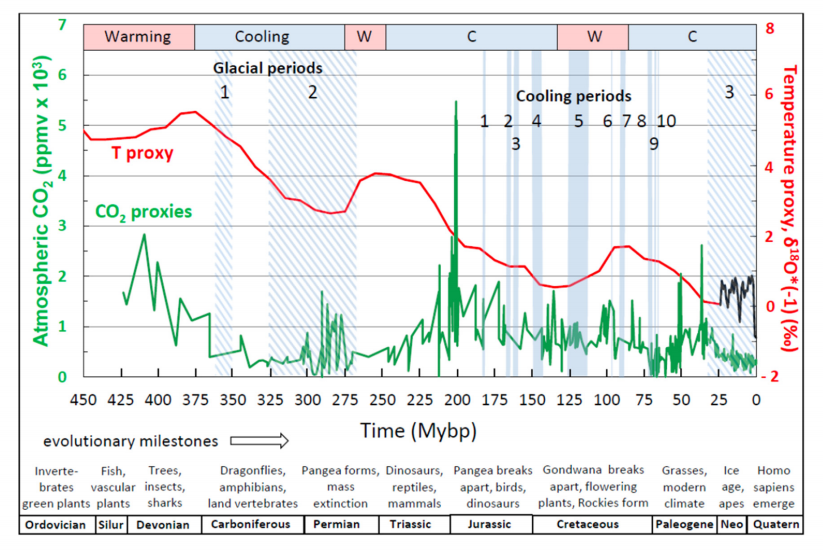
Another important paper taking issue with the ‘settled’ climate narrative has been cancelled following a report in the Daily Sceptic and subsequent reposts that went viral across social media. The paper discussed the atmospheric ‘saturation’ of greenhouse gases such as carbon dioxide and argued that higher levels will not cause temperatures to rise. The work was led by the widely-published Polish scientist Dr. Jan Kubicki and appeared on Elsevier’s ScienceDirect website in December 2023. The paper has been widely discussed on social media since April 2024 when the Daily Sceptic reported on the findings. Interest is growing in the saturation hypothesis not least because it provides a coherent explanation for why life and the biosphere grew and often thrived for 600 million years despite much higher atmospheric levels of greenhouse gases. Alas for control freaks, it also destroys the science backing for the Net Zero fantasy.

Below are some comments responding to a Quora question, text in italics with my bolds and added images:

What are some reasons why some people do not believe in climate change or global warming despite scientific evidence? Is there any additional information that could help us understand their perspective?

Answer from Mike Jonas,  M.A. in Mathematics, Oxford University, UK, 

Good scientists do not lie and cheat to protect their science, they are happy to discuss their evidence and their findings, and they always understand that everything needs to be replicable and verifiable.

When Climategate erupted on the scene, and the climate scientists behind the man-made global warming narrative were found to have lied and cheated, all honest scientists thought that would be the end of it. Instead, what happened was that those climate scientists closed ranks and carried on, supported by a massive amount of government (ie, the public’s) money. One of the first things they did was to deflect Climategate by saying the emails involved had been hacked so should be ignored, but some of the people involved confirmed that all of the emails really were genuine.

It has been about 15 years since Climategate, and study after study has shown virtually all of the components of the man-made global warming narrative to be incorrect, even that none of the computer models used by the IPCC are fit for purpose,

And yet they maintained their closed ranks,
and the government money kept pouring in.

Did you know that the IPCC does not do any research (please do check that, on their web page About – IPCC they state “The IPCC does not conduct its own research”). It is, as its name says, an inter-governmental organisation, and it is run by and for governments. They say lots of persuasive sciency things, but the simple fact is that they cherry-pick and corrupt the science to achieve their ends. Regrettably, almost all the scientific societies are on the gravy train too. This is part of what the highly respected physicist Professor Hal Lewis said in his resignation letter to the American Physical Society (APS):

It is of course, the global warming scam, with the (literally) trillions of dollars driving it, that has corrupted so many scientists, and has carried APS before it like a rogue wave. It is the greatest and most successful pseudoscientific fraud I have seen in my long life as a physicist. Anyone who has the faintest doubt that this is so should force himself to read the ClimateGate documents, which lay it bare.

I don’t believe that any real physicist, nay scientist, can read that stuff without revulsion. I would almost make that revulsion a definition of the word scientist.

So what has the APS, as an organization, done in the face of this challenge?
It has accepted the corruption as the norm, and gone along with it.

If you want to find out more about this “greatest and most successful pseudoscientific fraud”, the website Watts Up With That? is a good place to start (the fraudsters absolutely hate it), and it links to many other good websites. It has the full text of Hal Lewis’ resignation letter at:

Hal Lewis: My Resignation From The American Physical Society – an important moment in science history

Answer from Susannah Moyer

It’s curious that climate science is the rare scientific field where dissenting scientists, those with contrarian views, are unwelcome and even ostracized.

There are some well known climate scientists that have doubts about the role of CO2 and man made global warming as it pertains to global temperature. They have raised the issue that computer generated prediction models have been inaccurate in predicting temperature patterns because the modeling requires assumptions that have not been shown to be accurate.

Here is a contrarian view from climate scientists who have published climate research results in Nature, which is no small feat:

McNider and Christy are professors of atmospheric science at the University of Alabama in Huntsville and fellows of the American Meteorological Society. Mr. Christy was a member of the Intergovernmental Panel on Climate Change that shared the 2007 Nobel Peace Prize with former Vice President Al Gore.

It is not a known fact by how much the Earth’s atmosphere will warm in response to this added carbon dioxide. The warming numbers most commonly advanced are created by climate computer models built almost entirely by scientists who believe in catastrophic global warming. The rate of warming forecast by these models depends on many assumptions and engineering to replicate a complex world in tractable terms, such as how water vapor and clouds will react to the direct heat added by carbon dioxide or the rate of heat uptake, or absorption, by the oceans.

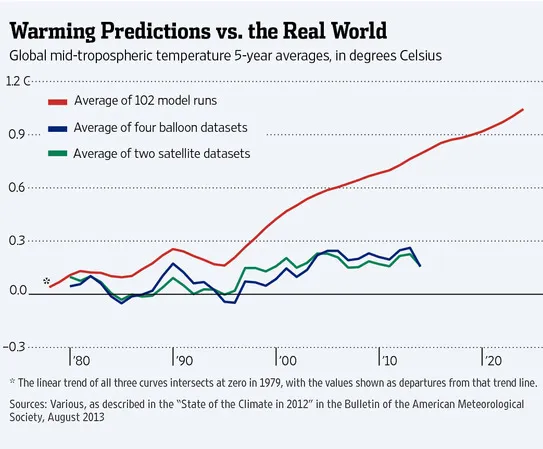
We might forgive these modelers if their forecasts had not been so consistently and spectacularly wrong. From the beginning of climate modeling in the 1980s, these forecasts have, on average, always overstated the degree to which the Earth is warming compared with what we see in the real climate.

For instance, in 1994 we published an article in the journal Nature showing that the actual global temperature trend was “one-quarter of the magnitude of climate model results.” As the nearby graph shows, the disparity between the predicted temperature increases and real-world evidence has only grown in the past 20 years.

“Consensus” science that ignores reality can have tragic consequences if cures are ignored or promising research is abandoned. The climate-change consensus is not endangering lives, but the way it imperils economic growth and warps government policy making has made the future considerably bleaker. The recent Obama administration announcement that it would not provide aid for fossil-fuel energy in developing countries, thereby consigning millions of people to energy poverty, is all too reminiscent of the Sick and Health Board denying fresh fruit to dying British sailors.

Another questioner, Dr. Koonin was undersecretary for science in the Energy Department during President Barack Obama’s first term and is currently director of the Center for Urban Science and Progress at New York University. His previous positions include professor of theoretical physics and provost at Caltech, as well as chief scientist of BP, where his work focused on renewable and low-carbon energy technologies.

But—here’s the catch—those questions are the hardest ones to answer. They challenge, in a fundamental way, what science can tell us about future climates.

Firstly, even though human influences could have serious consequences for the climate, they are physically small in relation to the climate system as a whole. For example, human additions to carbon dioxide in the atmosphere by the middle of the 21st century are expected to directly shift the atmosphere’s natural greenhouse effect by only 1% to 2%. Since the climate system is highly variable on its own, that smallness sets a very high bar for confidently projecting the consequences of human influences.

A second challenge to “knowing” future climate is today’s poor understanding of the oceans. The oceans, which change over decades and centuries, hold most of the climate’s heat and strongly influence the atmosphere. Unfortunately, precise, comprehensive observations of the oceans are available only for the past few decades; the reliable record is still far too short to adequately understand how the oceans will change and how that will affect climate.

A third fundamental challenge arises from feedbacks that can dramatically amplify or mute the climate’s response to human and natural influences. One important feedback, which is thought to approximately double the direct heating effect of carbon dioxide, involves water vapor, clouds and temperature.

Climate Science Is Not Settled

Another group questioning what some consider “settled science”:

  • Claude Allegre, former director of the Institute for the Study of the Earth, University of Paris;
  • J. Scott Armstrong, cofounder of the Journal of Forecasting and the International Journal of Forecasting;
  • Jan Breslow, head of the Laboratory of Biochemical Genetics and Metabolism, Rockefeller University;
  • Roger Cohen, fellow, American Physical Society;
  • Edward David, member, National Academy of Engineering and National Academy of Sciences;
  • William Happer, professor of physics, Princeton;
  • Michael Kelly, professor of technology, University of Cambridge, U.K.;
  • William Kininmonth, former head of climate research at the Australian Bureau of Meteorology;
  • Richard Lindzen, professor of atmospheric sciences, MIT;
  • James McGrath, professor of chemistry, Virginia Technical University;
  • Rodney Nichols, former president and CEO of the New York Academy of Sciences;
  • Burt Rutan, aerospace engineer, designer of Voyager and SpaceShipOne;
  • Harrison H. Schmitt, Apollo 17 astronaut and former U.S. senator;
  • Nir Shaviv, professor of astrophysics, Hebrew University, Jerusalem;
  • Henk Tennekes, former director, Royal Dutch Meteorological Service;
  • Antonio Zichichi, president of the World Federation of Scientists, Geneva.

Although the number of publicly dissenting scientists is growing, many young scientists furtively say that while they also have serious doubts about the global-warming message, they are afraid to speak up for fear of not being promoted—or worse. They have good reason to worry. In 2003, Dr. Chris de Freitas, the editor of the journal Climate Research, dared to publish a peer-reviewed article with the politically incorrect (but factually correct) conclusion that the recent warming is not unusual in the context of climate changes over the past thousand years. The international warming establishment quickly mounted a determined campaign to have Dr. de Freitas removed from his editorial job and fired from his university position. Fortunately, Dr. de Freitas was able to keep his university job.

This is not the way science is supposed to work, but we have seen it before—for example, in the frightening period when Trofim Lysenko hijacked biology in the Soviet Union. Soviet biologists who revealed that they believed in genes, which Lysenko maintained were a bourgeois fiction, were fired from their jobs. Many were sent to the gulag and some were condemned to death.

Why is there so much passion about global warming, and why has the issue become so vexing that the American Physical Society (APS), from which Dr. Giaever resigned a few months ago, refused the seemingly reasonable request by many of its members to remove the word “incontrovertible” from its description of a scientific issue?

There are several reasons, but a good place to start is the old question
“cui bono?” Or the modern update, “Follow the money.”


Happer: Cloud Radiation Matters, CO2 Not So Much (2025)

This month van Wijngaarden and Happer published a new paper Radiation Transport in Clouds.

Last year William Happer spoke on Radiation Transfer in Clouds at the EIKE conference, and the video is above.  For those preferring to read, below is a transcript from the closed captions along with some key exhibits.  I left out the most technical section in the latter part of the presentation. Text in italics with my bolds.
William Happer: Radiation Transfer in Clouds

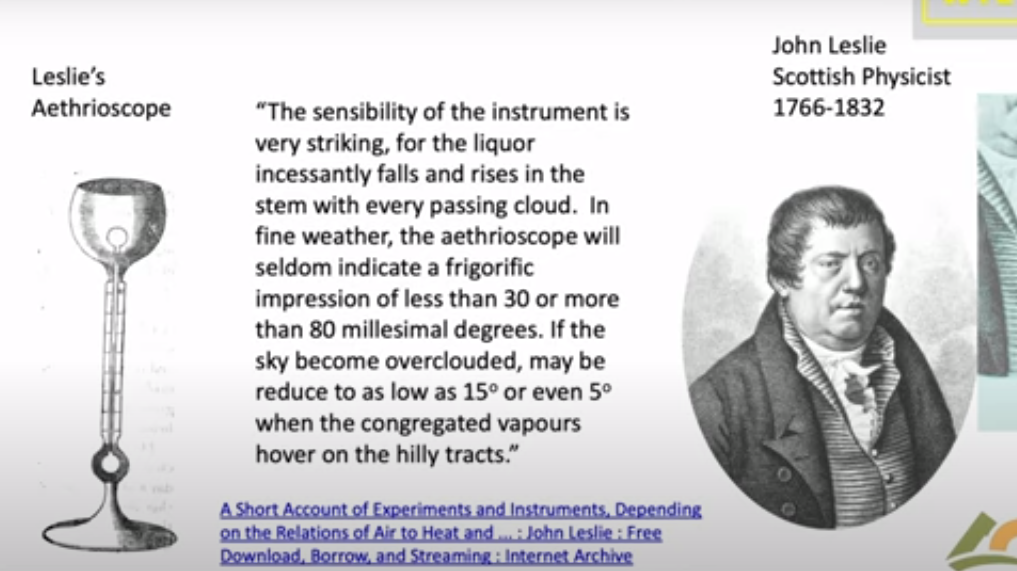
People have been looking at Clouds for a very long time in in a quantitative way. This is one of the first quantitative studies done about 1800. And this is John Leslie,  a Scottish physicist who built this gadget. He called it an Aethrioscope, but basically it was designed to figure out how effective the sky was in causing Frost. If you live in Scotland you worry about Frost. So it consisted of two glass bulbs with a very thin capillary attachment between them. And there was a little column of alcohol here.
The bulbs were full of air, and so if one bulb got a little bit warmer it would force the alcohol up through the capillary. If this one got colder it would suck the alcohol up. So he set this device out under the clear sky. And he described that the sensibility of the instrument is very striking. For the liquor incessantly falls and rises in the stem with every passing cloud. in fine weather the aethrioscope will seldom indicate a frigorific impression of less than 30 or more than 80 millesimal degrees. He’s talking about how high this column of alcohol would go up and down if the sky became overclouded. it may be reduced to as low as 15 refers to how much the sky cools or even five degrees when the congregated vapours hover over the hilly tracks. We don’t speak English that way anymore but I I love it.

The point was that even in 1800 Leslie and his colleagues knew very well that clouds have an enormous effect on the cooling of the earth. And of course anyone who has a garden knows that if you have a clear calm night you’re likely to get Frost and lose your crops. So this was a quantitative study of that.

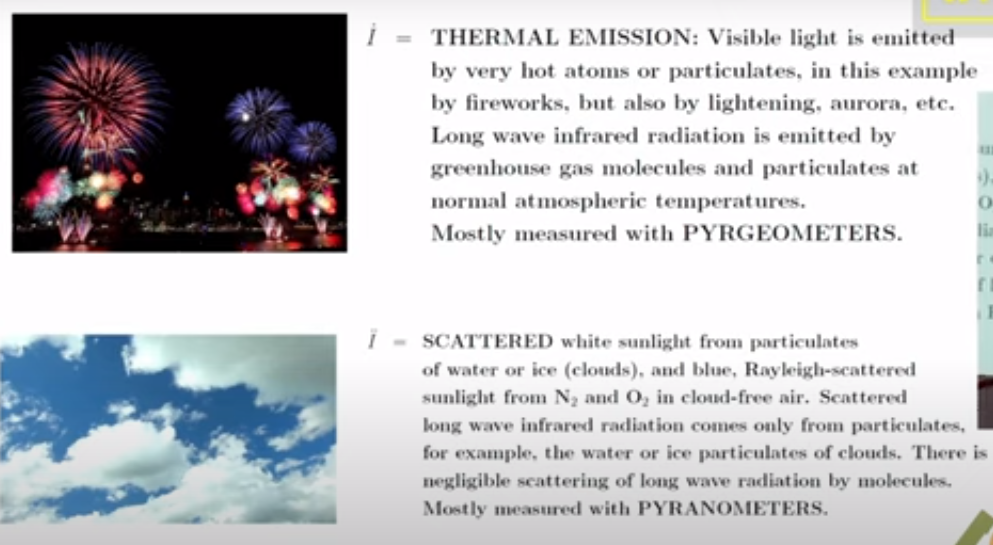
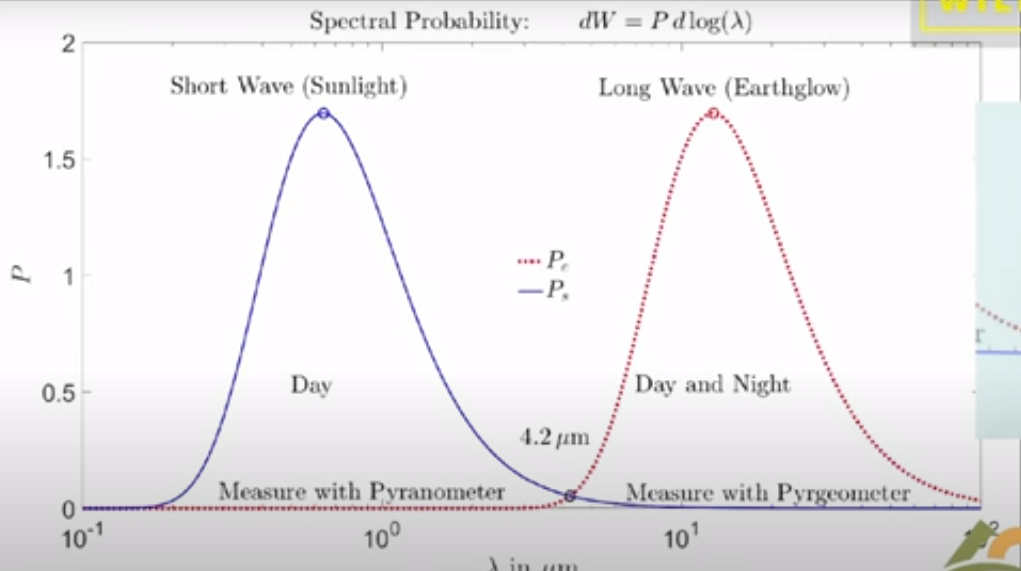
Now it’s important to remember that if you go out today the atmosphere is full of two types of radiation. There’s sunlight which you can see and then there is the thermal radiation that’s generated by greenhouse gases, by clouds and by the surface of the Earth. You can’t see thermal radiation but you you can feel it if it’s intense enough by its warming effect. And these curves practically don’t overlap so we’re really dealing with two completely different types of radiation.

There’s sunlight which scatters very nicely and off of not only clouds but molecules; it’s the blue sky the Rayleigh scattering. Then there’s the thermal radiation which actually doesn’t scatter at all on molecules so greenhouse gases are very good at absorbing thermal radiation but they don’t scatter it. But clouds scatter thermal radiation and plotted here is the probability that you will find Photon of sunlight between you know log of its wavelength and the log of in this interval of the wavelength scale.

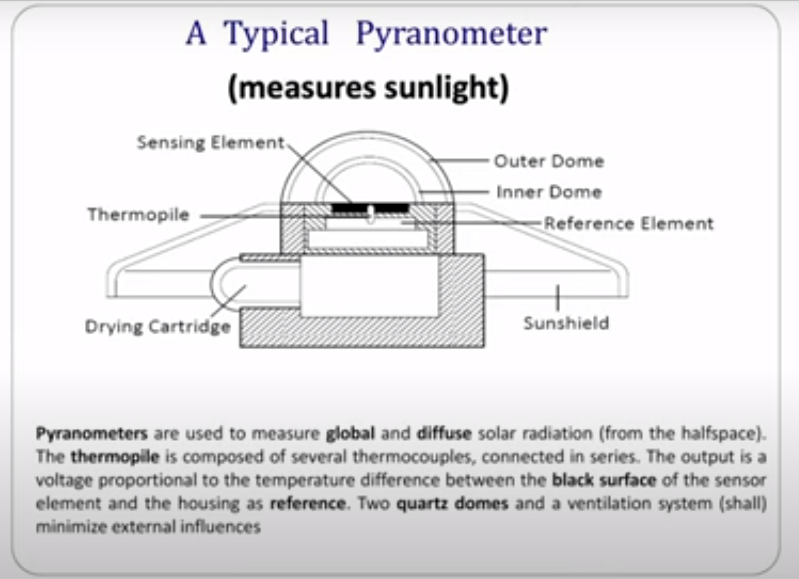
Since Leslie’s day two types of instruments have been developed to do what he did more precisely. One of them is called a pyranometer and this is designed to measure sunlight coming down onto the Earth on a day like this. So you put this instrument out there and it would read the flux of sunlight coming down. It’s designed to see sunlight coming in every direction so it doesn’t matter which angle the sun is shining; it’s uh calibrated to see them all.

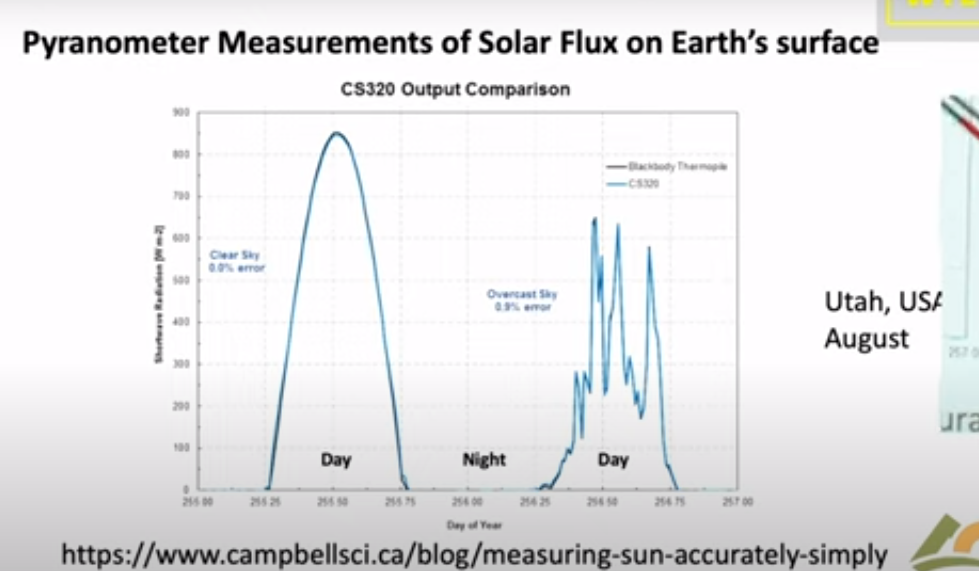
Let me show you a measurement by a pyranometer. This is a actually a curve from a sales brochure of a company that will sell you one of these devices. It’s comparing two types of detectors and as you can see they’re very good you can hardly tell the difference. The point is that if you look on a clear day with no clouds you see sunlight beginning to increase at dawn it peaks at noon and it goes down to zero and there’s no sunlight at night. So half of the day over most of the Earth there’s no sunlight in the in the atmosphere.

Here’s a day with clouds, it’s just a few days later shown by days of the year going across. You can see every time a cloud goes by the intensity hitting the ground goes down. With a little clear sky it goes up, then down up and so on. On average at this particular day you get a lot less sunlight than you did on the clear day.

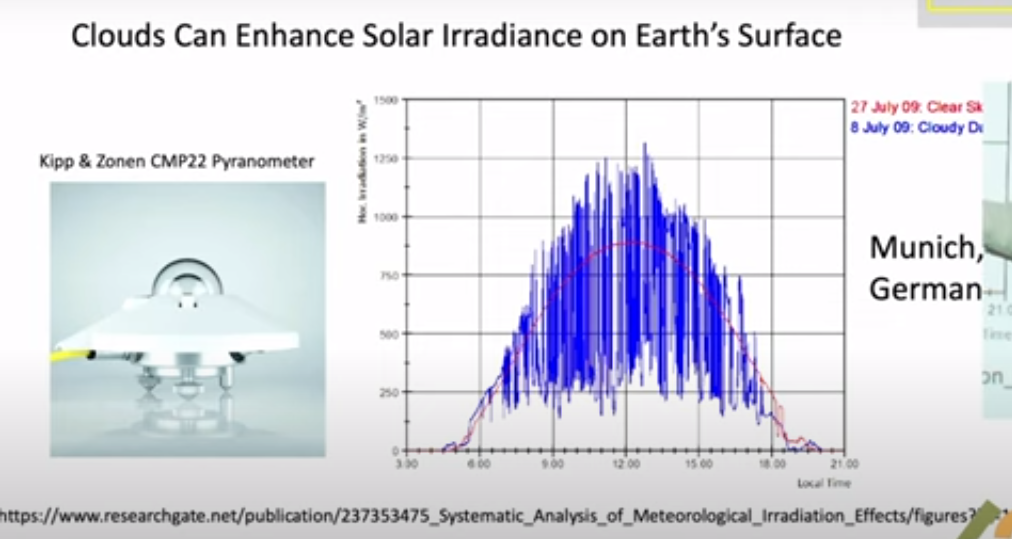
But you know nature is surprising. Einstein had this wonderful quote: God is subtle but he’s not malicious. He meant that nature does all of sorts of things you don’t expect, and so let me show you what happens on a partly cloudy day. Here so this is data taken near Munich. The blue curve is the measurement and the red curve is is the intensity on the ground if there were no clouds. This is a partly cloudy day and you can see there are brief periods when the sunlight is much brighter on the detector on a cloudy day than it is on the clear day. And that’s because coming through clouds you get focusing from the edges of the cloud pointing down toward your detector. That means somewhere else there’s less radiation reaching the ground. But this is rather surprising to most people. I was very surprised to learn about it but it just shows that the actual details of climate are a lot more subtle than you might think.

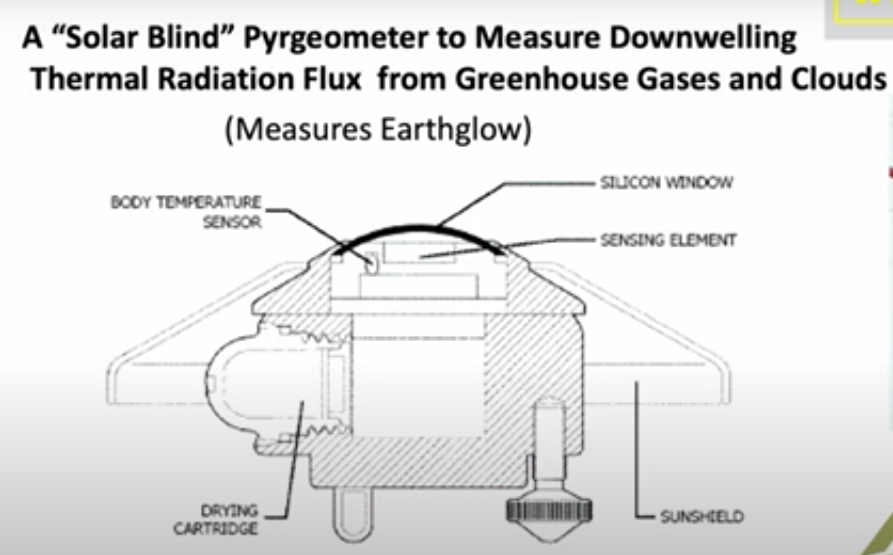
We know that visible light only happens during the daytime and stops at night. There’s a second type of important radiation which is the thermal radiation which is measured by a similar device. You have a silicon window that passes infrared, which is below the band gap of silicon, so it passes through it as though transparent. Then there’s some interference filters here to give you further discrimination against sunlight. So sunlight practically doesn’t go through this at all, so they call it solar solar blind since it doesn’t see the Sun.

But it sees thermal radiation very clearly with a big difference between this device and the sunlight sensing device I showed you. Because actually most of the time this is radiating up not down. Out in the open air this detector normally gets colder than the body of the instrument. And so it’s carefully calibrated for you to compare the balance of down coming radiation with the upcoming radiation. Upcoming is normally greater than down coming.

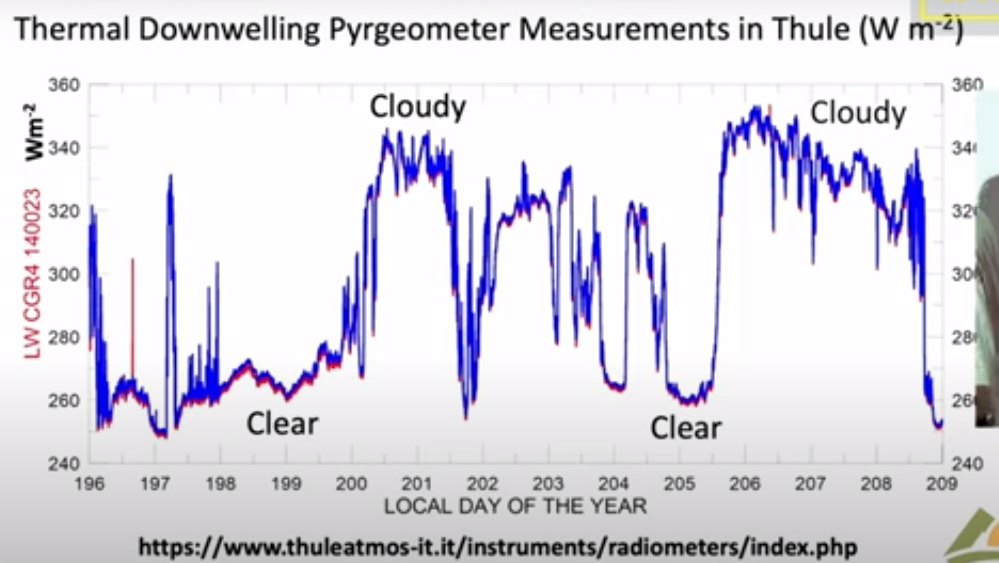
I’ll show you some measurements of the downwelling flux here; these are actually in Greenland in Thule and these are are watts per square meter on the vertical axis here. The first thing to notice is that the radiation continues day and night you can you if you look at the output of the pyrgeometer you can’t tell whether it’s day or night because the atmosphere is just as bright at night as it is during the day. However, the big difference is clouds: on a cloudy day you get a lot more downwelling radiation than you do on a clear day. Here’s a a near a full day of clear weather there’s another several days of clear weather. Then suddenly it gets cloudy. Radiation rises because the bottoms of the clouds are relatively warm at least compared to the clear sky. I think if you put the numbers In, this cloud bottom is around 5° Centigrade so it was fairly low Cloud. it was summertime in Greenland and this compares to about minus 5° for the clear sky.

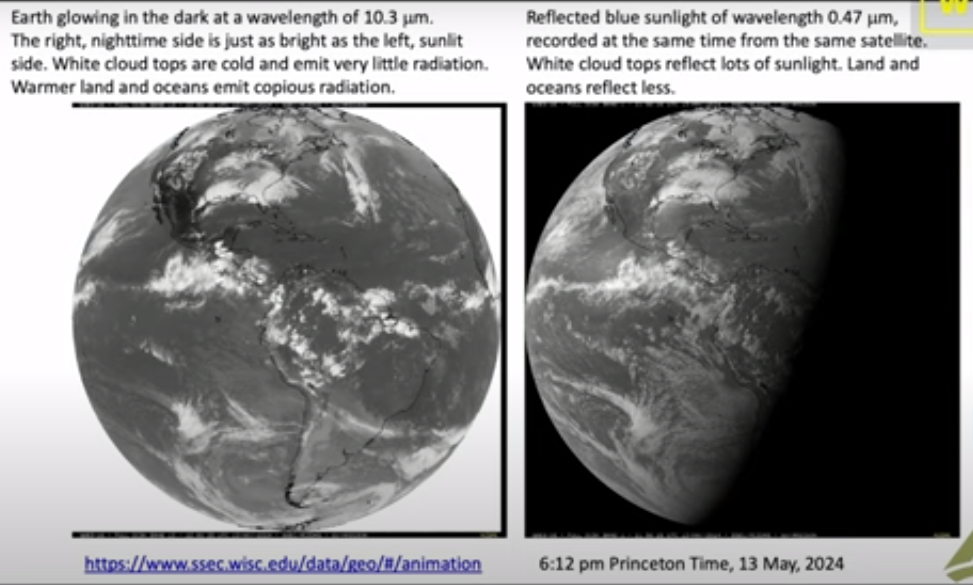
So there’s a lot of data out there and there really is downwelling radiation there no no question about that you measure it routinely. And now you can do the same thing looking down from satellites so this is a picture that I downloaded a few weeks ago to get ready for this talk from Princeton and it was from Princeton at 6 PM so it was already dark in Europe. So this is a picture of the Earth from a geosynchronous satellite that’s parked over Ecuador. You are looking down on the Western Hemisphere and this is a filtered image of the Earth in Blue Light at 47 micrometers. So it’s a nice blue color not so different from the sky and it’s dark where the sun has set. There’s still a fair amount of sunlight over the United States and the further west.

Here is exactly the same time and from the same satellite the infrared radiation coming up at 10.3 which is right in the middle of the infrared window where there’s not much Greenhouse gas absorption; there’s a little bit from water vapor but very little, trivial from CO2.

As you can see, you can’t tell which side is night and which side is day. So even though the sun has set over here it is still glowing nice and bright. There’s sort of a pesky difference here because what you’re looking at here is reflected sunlight over the intertropical Convergence Zone. There are lots of high clouds that have been pushed up by the convection in the tropics and uh so this means more visible light here. You’re looking at emission of the cloud top so this is less thermal light so white here means less light, white there means more light so you have to calibrate your thinking. to

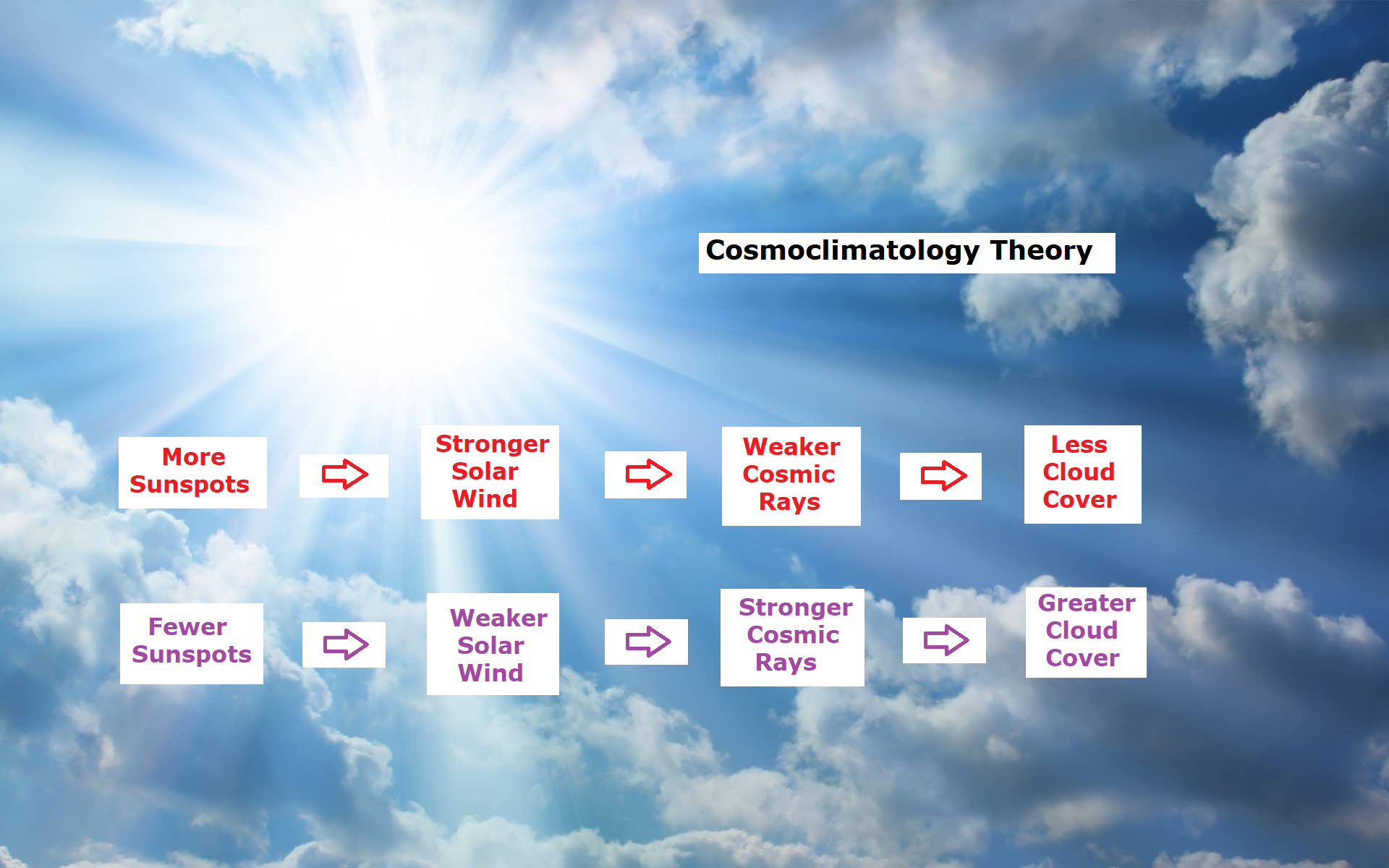
But the Striking thing about all of this: if you can see the Earth is covered with clouds, you have to look hard to find a a clear spot of the earth. Roughly half of the earth maybe is clear at any given time but most of it’s covered with clouds. So if anything governs the climate it is clouds and and so that’s one of the reasons I admire so much the work that Svensmark and Nir Shaviv have done. Because they’re focusing on the most important mechanism of the earth: it’s not Greenhouse Gases, it’s Clouds. You can see that here.

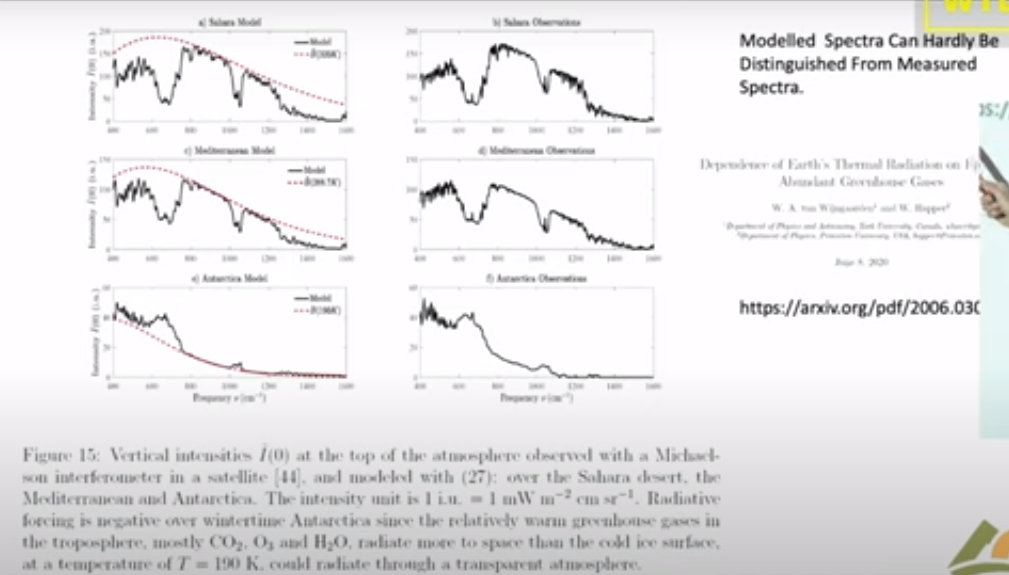
Now this is a single frequency let me show you what happens if you look down from a satellite and do look at the Spectrum. This is the spectrum of light coming up over the Sahara Desert measured from a satellite. And so here is the infrared window; there’s the 10.3 microns I mentioned in the previous slide it’s it’s a clear region. So radiation in this region can get up from the surface of the Sahara right up to outer space.

Notice that the units on these scales are very different; over the Sahara the top unit is 200, 150 over the Mediterranean and it’s only 60 over the South Pole. But at least the Mediterranean and the Sahara are roughly similar so the right side here these three curves on the right are observations from satellites and the three curves on the left are are calculations modeling that we’ve done. The point here is that you can hardly tell the difference between a model calculation and observed radiation.

So it’s really straightforward to calculate radiation transfer. If someone quotes you a number in watts per square centimeter you should take it seriously; that probably a good number. If they tell you a temperature you don’t know what to make about it. Because there’s a big step between going from watts per square centimeter to a temperature change. All the mischief in the whole climate business is going from watts per square centimeter to to Centigrade or Kelvin.

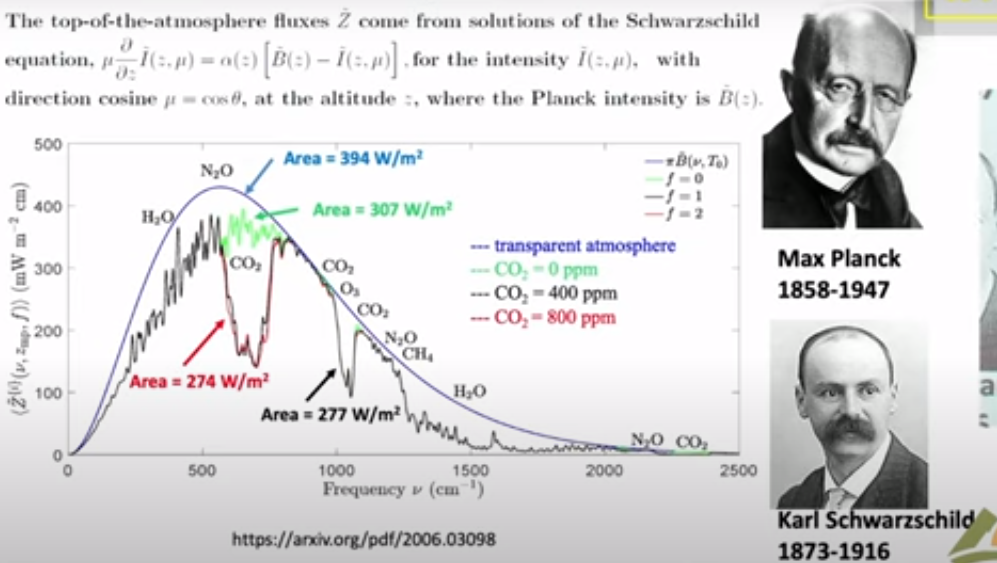
Now I will say just a few words about clear sky because that is the simplest. Then we’ll get on to clouds, the topic of this talk. This is a calculation with the same codes that I showed you in the previous slide which as you saw work very well. It’s worth spending a little time because this is the famous Planck curve that was the birth of quantum mechanics. There is Max Planck who figured out what the formula for that curve is and why it is that way. This is what the Earth would radiate at 15° Centigrade if there were no greenhouse gases. You would get this beautiful smooth curve the Planck curve. If you actually look at the Earth from the satellites you get a raggedy jaggedy black curve. We like to call that the Schwarzchild curve because Carl Schwarzchild was the person who showed how to do that calculation. Tragically he died during World War I, a Big Big loss to science.

There are two colored curves that I want to draw your attention. The green curve is is what Earth would radiate to space if you took away all the CO2 so it only differs from the black curve you know in the CO2 band here this is the bending band of CO2 which is the main greenhouse effect of CO2. There’s a little additional effect here which is the asymmetric stretch but it it doesn’t contribute very much. Then here is a red curve and that’s what happens if you double CO2.

So notice the huge asymmetry. If taking all 400 parts per million of CO2 away from the atmosphere causes this enormous change 30 watts per square meter, the difference between this green 307 and and the black 277, that’s 30 watts per square meter. But if you double CO2 you practically don’t make any change. This is the famous saturation of CO2. At the levels we have now doubling CO2, a 100% Increase of CO2 only changes the radiation to space by 3 watts per square meter. The difference between 274 for the red curve and 277 for the curve for today. So it’s a tiny amount: for 100% increase in CO2 a 1% decrease of radiation to space.

That allows you to estimate the feedback-free climate sensitivity in your head. I’ll talk you through the feedback-free climate free sensitivity. So doubling CO2 is a 1% decrease of radiation to space. If that happens then the Earth will start to warm up. But it will radiate as the fourth power of the temperature. So temperature starts to rise but if you’ve got a fourth power, the temperature only has to rise by one-quarter of a percent absolute temperature. So a 1% forcing in watts per square centimeter is a one-quarter percent of temperature in Kelvin. Since the ambient Kelvin temperature is about 300 Kelvin (actually a little less) a quarter of that is 75 Kelvin. So the feedback free equilibrium climate sensitivity is less than 1 Degree. It’s 0.75 Centigrade. It’s a number you can do in your head.

So when you hear about 3 centigrade instead of .75 C that’s a factor of four, all of which is positive feedback. So how is there really that much positive feedback? Because most feedbacks in nature are negative. The famous Le Chatelier principle which says that if you perturb a system it reacts in a way to to dampen the perturbation not increase it. There are a few positive feedback systems that we’re familiar with for example High explosives have positive feedback. So if the earth’s climate were like other positive feedback systems, all of them are highly explosive, it would have exploded a long time ago. But the climate has never done that, so the empirical observational evidence from geology is that the climate is like any other feedback system it’s probably negative Okay so I leave that thought with you and and let me stress again:

This is clear skies no clouds; if you add clouds all this does is
suppress the effects of changes of the greenhouse gas.

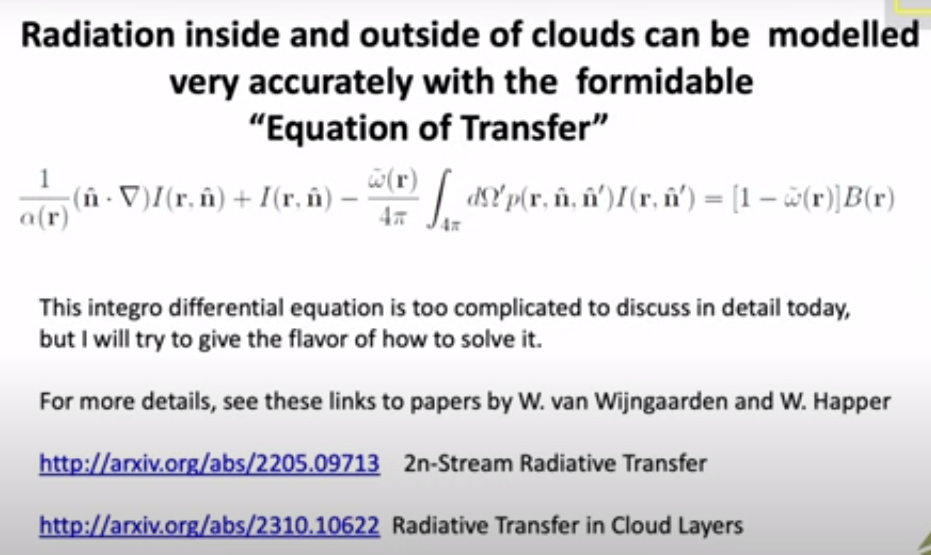
So now let’s talk about clouds and the theory of clouds, since we’ve already seen clouds are very important. Here is the formidable equation of transfer which has been around since Schwarzchild’s day. So some of the symbols here relate to the intensity, another represents scattering. If you have a thermal radiation on a greenhouse gas where it comes in and immediately is absorbed, there’s no scattering at all. If you hit a cloud particle it will scatter this way or that way, or some maybe even backwards.

So all of that’s described by this integral so you’ve got incoming light at One Direction and you’ve got outgoing light at a second Direction. And then at the same time you’ve got thermal radiation so the warm particles of the cloud are are emitting radiation creating photons which are coming out and and increasing the Earth glow the and this is represented by two parameters. Even a single cloud particle has an albedo, this is is the fraction of radiation that hits the cloud that is scattered as opposed to absorbed and being converted to heat. It’s a very important parameter for visible light and white clouds, typically 99% of the encounters are scattered. But for thermal radiation it’s much less. So water scatters thermal radiation only half as efficiently as shorter wavelengths.

The big problem is that in spite of all the billions of dollars that we have spent, these things which should be known and and would have been known if there hadn’t been this crazy fixation on carbon dioxide and greenhouse gases. And so we’ve neglected working on these areas that are really important as opposed to the trivial effects of greenhouse gases. Attenuation in a cloud is both scattering and absorption. Of course you have to solve these equations for every different frequency of the light because especially for molecules, there’s a strong frequency dependence.

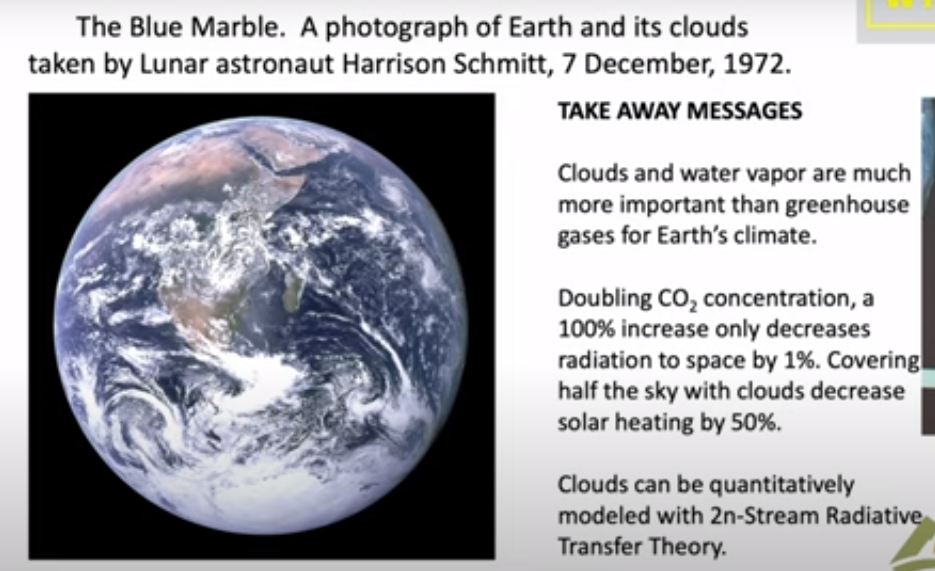
In summary,  let me show you this photo which was taken by Harrison Schmitt who was a friend of mine on one of the first moonshots. It was taken in December and looking at this you can see that they were south of Madagascar when the photograph was taken. You can see it was Winter because here the Intertropical Convergence Zone is quite a bit south of the Equator; it’s moved Way South of India and Saudi Arabia. By good luck they had the sun behind them so they had the whole earth Irradiated.

There’s a lot of information there and and again let me draw your attention to how much of the Earth is covered with clouds. So only very small parts of the Earth can actually be directly affected by greenhouse gases, of the order of half. The takeaway message is that clouds and water vapor are much more important than greenhouse gases for earth’s climate. The second point is the reason they’re much more important: doubling CO2 as I indicated in the middle of the talk only causes a 1% difference of radiation to space. It is a very tiny effect because of saturation. You know people like to say that’s not so, but you can’t really argue that one, even the IPCC gets the same numbers that we do.

And you also know that covering half of the sky with clouds will decrease solar heating by 50%. So for clouds it’s one to one, for greenhouse gases it’s a 100 to one. If you really want to affect the climate, you want to do something to the clouds. You will have a very hard time making any difference with Net Zero with CO2 if you are alarmed about the warmings that have happened.

So one would hope that with all the money that we’ve spent trying to turn CO2 into a demon that some good science has come out of it. From my point of view this is a small part of it, this scattering theory that I think will be here a long time after the craze over greenhouse gases has gone away. I hope there will be other things too. You can point to the better instrumentation that we’ve got, satellite instrumentation as well as ground instrumentation. So that’s been a good investment of money. But the money we’ve spent on supercomputers and modeling has been completely wasted in my view.

World Institutions Pushing Pseudoscience


Since 1660, Nullius in verba was the Royal Society’s motto.  “Don’t take anyone’s word for it.”

Yesterday’s post showed how American science societies have taken to parroting climatist suppositions rather than applying critical intelligence to claims of a “climate crisis.” That unquestioning attitude betrays the science method expressed in the Royal Society’s motto.  Today presents Tilak Doshi describing how the same pattern appears in international institutions supposed to be objective reporters of natural conditions. His Daily Signal article is The Climate Agenda’s March Through the Institutions: Can It Be Stopped? Excerpts in italics with my bolds and added images.

A spate of stories in the media recently provides a remarkable illustration of how the globalist policy agenda of the climate-industrial complex has captured key international institutions and perverted their original organizational aims. From initially serving broad, laudable objectives for the welfare of their constituents, these institutions have been subverted over the years to serve the insistent pseudoscientific claims of climate alarmists.

The corruption of global institutions has, in turn, led to significant opposition that is becoming apparent. There is the prospect of an incoming Trump administration that is avowedly skeptical of the claims of an alleged climate crisis and is intent on exiting the U.N.’s Paris Agreement and its “net zero by 2050” policy target for a second time. This presents a welcome challenge to these corrupt institutions.

Will President Donald Trump and some of the populist parties in Europe
be capable of countering the entrenched globalist climate agenda?

The World Bank

On Oct. 17, Oxfam published a report that shockingly found that up to $41 billion in World Bank climate finance—nearly 40% of all climate funds disbursed by the World Bank over the past seven years—is “unaccounted for between the time projects were approved and when they closed.” In other words, no one knows how the money was used. There is no paper trail revealing where the money went or what the accomplished results were.

Green cronyism, ranging from the Solyndra debacle—the waste of almost half a billion dollars of taxpayers’ money on a failed solar farm project under President Barack Obama’s watch—to President Joe Biden’s duplicitously-named Inflation Reduction Act, which will unleash an estimated $1 trillion deluge of subsidies on favored “green” industries, is nothing new. But it is instructive to trace the World Bank’s decline from its honorable founding objectives to its current status as yet another institution advocating green causes.

Dr. Jim Yong Kim, reflecting the progressive virtues of Obama, who appointed him as president of the World Bank in 2012, imposed a ban on the financing of coal-fired power stations in 2013. This was followed by a ban on investments in all new upstream oil and gas resource development projects.

The distinguished economist Deepak Lal, a former research administrator of the World Bank, remarked that Kim incredulously “over-ruled the cost-benefit estimates of coal-based power over solar and wind-based power generation produced by his own economic staff, justifying this by reference to a wish to cut global emissions of greenhouse gases.”

The World Bank’s objections to the use of fossil fuels despite their importance to economic growth and poverty alleviation—which constitute its foundational institutional objectives—can be traced to the intellectual evolution of its management under James Wolfensohn during his decade as president (1995-2005).
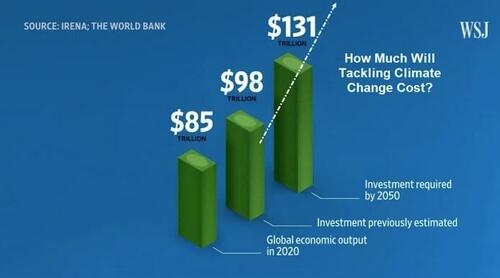
Wolfensohn traced the arc from the old regime to the new. The old was represented by the “Washington consensus” of free markets, liberal trading regimes, sound money, and entrepreneurship associated with the classical liberalism of Adam Smith.

The new intellectual environment of the World Bank’s management—personified by Joseph Stiglitz, chief economist of the World Bank (1997-2000)—was defined by the theoretical failures of the free market, especially in accounting for the alleged negative climate impacts of fossil fuel use.

Stiglitz, a climate alarmist, wrote in a 2015 court brief for a failed climate lawsuit brought on behalf of a group of children against the U.S. federal government that “fossil fuel-based economies imposed ‘incalculable’ costs on society and shifting to clean energy will pay off.” [See Climatists Make Their Case by Omitting Facts]

Rupert Darwall, a former adviser to the United Kingdom’s chancellor of the exchequer and author of “Green Tyranny,” encapsulates the betrayal of the World Bank to its founding objectives as follows:

The World Bank’s mission has been subverted by green ideologues who assert that a low-carbon world benefits the world’s poor but fail to acknowledge that making energy much more costly increases poverty. The World Bank tags itself as ‘working for a world free of poverty’ … In making its choice between development and sustainability, the World Bank has decided it is going to try and ‘save the planet’ on the backs of the poor.

Yes, those are trillions of US$ they want to spend on an imaginary crisis.

By abdicating its founding principles for alleviating global poverty, the World Bank has taken a lead role among multilateral financial institutions in denying vast financial resources to poorer countries. It has hypocritically vetoed the right of developing countries to adopt the path of economic growth and environmental improvement that the now-rich countries had taken up successfully since the Industrial Revolution two centuries ago. The World Bank’s obsessive support for intermittent, low-yield renewable energy such as solar and wind power comes at the cost of its central charter to help the poor, an outcome that can only be described as egregiously unjust.

The UN Intergovernmental Panel on Climate Change

The U.N. IPCC issued a news release on Dec. 6 prior to the start of a “scoping” meeting in Kuala Lumpur of over 230 experts from 70 countries to draft outlines of working group contributions to the U.N. IPCC’s seventh Assessment Report (to be completed in 2029).

In the press release, the IPCC claimed that human combustion of fossil fuels “has resulted in more frequent and more intense extreme weather events that have caused increasingly dangerous impacts on nature and people in every region of the world.” This is contrary to the IPCC’s position hitherto, which is that almost all types of extreme weather events cannot be attributed with confidence to human activity.

The position of the IPCC regarding the lack of any link between climate change and extreme weather events is contrary to the almost daily headlines in the mainstream media attributing specific adverse weather events to “climate change.”

The work of eminent climate policy analysts Steve Koonin and Roger Pielke Jr. has done much to expose the pseudoscientific nature of what has been called “attribution studies.” These typically involve researchers who apply their climate models and historical observations to conclude that any particular weather event (say a hurricane or a drought) was made “more likely” or “more severe” by some magnitude in percentage units due to “human influence” (referring to the combustion of fossil fuels).

Based on the dubious claims of “attribution science,” New York Gov. Kathy Hochul signed a climate law last week that will require companies operating in New York state responsible for large amounts of planet-warming pollution to contribute to climate damage repair efforts. Under the new state law, companies responsible for the bulk of emissions from 2000 to 2018 will be on the hook for some $3 billion a year over the next 25 years.

Koonin cites the World Meteorological Organization that states that “any single event, such as tropical cyclone cannot be attributed to human-induced climate change, given the state of scientific understanding.” The IPCC’s “Special Report on Extreme Events” states that “Many weather and climate extremes are the result of natural climate variability … Even if there were no anthropogenic changes in climate, a wide variety of natural weather and climate extremes would still occur.”

Nonetheless, international organizations such as the World Bank and the IPCC have been increasingly politicized to serve climate hysteria. In this context, Chris Morrison of The Daily Sceptic finds that “[f]ears are growing that the IPCC could water down or even ditch its current finding that almost all types of extreme weather events have little or no sign of past human involvement, or any going forward to 2100.”

International Energy Agency

On Dec. 23, U.S. Sen. John Barrasso, R-Wyo., ranking member of the Senate Committee on Energy and Natural Resources, released a report documenting how the International Energy Agency “has moved away from its energy security mission to become an “energy transition” cheerleader.”

The report finds that “French President [Emmanuel] Macron’s observation that IEA has become the ‘armed wing for implementing the Paris Agreement’ is regrettably true. With the many serious energy security challenges facing the world, however, IEA should not be a partisan cheerleader. What the world needs from IEA—and what it is not receiving now—is sober and unbiased analyses and projections that educate and inform policymakers and investors. IEA needs to remember why it was established and return to its energy security mission.”

The divergence of the IEA away from its original mission to advise policymakers in its member countries with sound analysis of trends in global energy supply and demand to becoming a “cheerleader” for radical net-zero emission policy targets has not gone unnoticed over recent years. I have written on the ideological approach adopted by the IEA in its advocacy for green causes herehere, and here.

When ideological advocacy becomes the measure of achievement for the IEA, the loss of credibility and soundness of its policy advice is only to be expected. The IEA’s messianic fervour for green technologies such as solar and wind power, “green” hydrogen, batteries, and electric vehicles prevents it from asking basic questions.

If it is true that drastically cutting back on fossil fuels is consistent with higher economic growth and increased productive employment, why does the IEA recommend policymakers force countries along “net-zero” pathways? Surely, if replacing fossil fuels with wind and solar energy and electric vehicles promotes growth and employment, then wouldn’t countries such as China and India naturally race toward this best of all possible worlds without expensive green subsidies and punitive anti-fossil fuel policies?

The Trumpian Revolution Looms

Nonprofit organizations reflect the needs of their funding members, and organizations such as the World Bank, IPCC, and IEA are no different. As their funding is primarily from the U.S. and the EU, it is not surprising that they manifest the “climate emergency” predilections of the Biden administration and the largely left-socialist West European governments that see climate change as an existential threat and a national security priority. In taking up the mantle of green advocacy on behalf of their paymasters, these organizations have lost all credibility as independent and objective advisors for their member countries.

The climate-industrial complex fears the prospect of the Trump administration’s pullout of the Paris Agreement for the second time. Politico, a reliable mouthpiece for the climate establishment, expressed these fears soon after Trump’s election victory: “The world is bracing for President-elect Donald Trump to withdraw the U.S. from the Paris climate agreement for the second time—only this time, he could move faster and with less restraint.” In Europe, the emergence of populist parties has been partly propelled by the widespread rejection by EU citizens of the onerous fiscal burdens imposed by green policies.

The seismic change in policy direction that a second term “drill, baby, drill” Trump administration promises for the global climate juggernaut—represented by the three leading international agencies covered here—can only be seen as hopeful as we look forward to positive developments in energy policy in 2025.