UN is sounding alarms about glaciers, and media is amplifying as usual.
Climate emergency: 2025 declared international year of glaciers, UN News
Climate change is shrinking glaciers faster than ever, AP
Glaciers Are Melting Twice as Fast as Predicted and We’re Not Ready, Science News Today
1st glacier declared dead from climate change seen in before and after images, Live Science
Nearly 40% of the world’s glaciers are already doomed, CNN
Nearly Half of Earth’s Glaciers Are Already Doomed, Even Without Future Warming, SciTechDaily
World’s Melting Glaciers Threaten Food and Water Supply for 2 Billion People, Carbon Brief
Glaciers on the Brink: UN Calls for Bold Action, Climate Fact Checks
This short video puts this alarm into perspective. Additional detail is provided by Dr. John Happs in his article Glaciers And Ice Sheets: Here Today And Here Tomorrow. Dr. Happs comments on many glaciers around the world, this post has only some excerpts in italics with my bolds and added images.
How often do the climate alarmists tell us that few glaciers still exist because of (imaginary) global warming and those that remain are rapidly melting away? Not surprisingly, the alarmists, particularly those from the media and vested interest groups, always point to the Intergovernmental Panel on Climate Change (IPCC) computer model projections, referring to one in particular–the Representative Concentration Pathway (RCP8.5.)
Even the political/ideological IPCC has sensibly branded RCP8.5 as “Highly Unlikely”
So, what are the glacier numbers?
- There are more than 200,000 alpine/valley (land-based) glaciers and many others stemming from the ice sheets of Antarctica and Greenland.
- Glaciers have advanced, retreated and halted many times over the last 400,000 years being influenced not only by temperature but also by other factors, such as wind, precipitation, altitude, latitude, aspect, topography and slope angle.
Global temperature is often promoted, usually by naïve climate alarmists, as the only important input into glacier formation, growth and retreat yet, in very dry parts of Antarctica, where low temperatures are seemingly ideal for glacier growth, the small amount of net annual precipitation results in glaciers growing very slowly, or even diminishing in size.
Glaciers can also be influenced by sublimation or the transition of a substance directly from the solid to the gas phase. Glaciers can experience this process resulting in the “evaporation” of ice, exacerbated by wind action. Sublimation can be seen in the way that ice cubes left in the freezer will shrink over time.
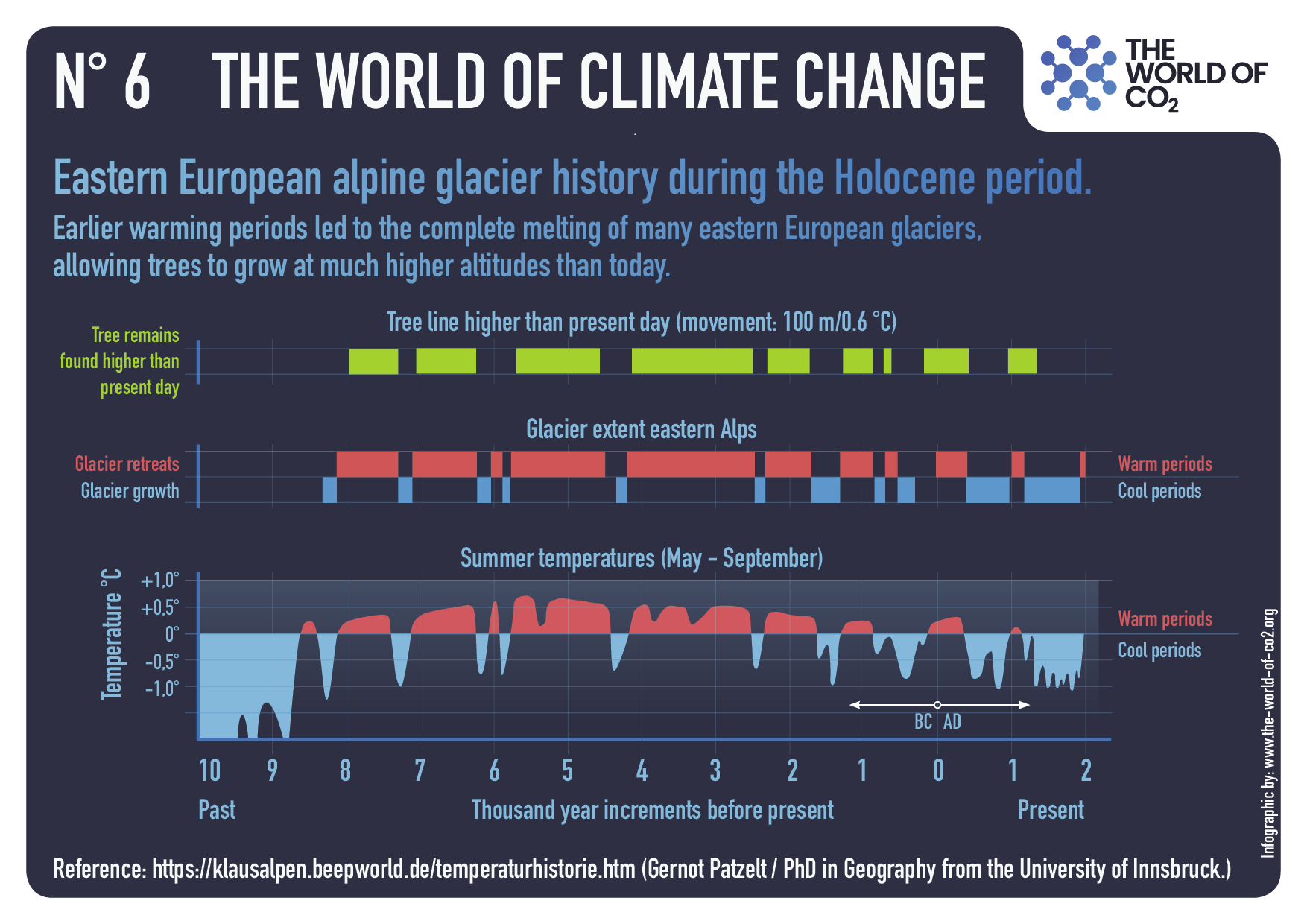
More than 18,000 glaciers have been identified across 50 World Heritage sites but this represents less than 10% of the Earth’s glaciated area. The media, climate activists and vested interest groups like to argue that all glaciers are receding because global temperature is increasing. Not surprisingly, many glaciers have been retreating since we emerged from the Little Ice Age (1250-1850), a time when many farms and houses across Scandinavia were destroyed by advancing glaciers between the 14th and 19th centuries.
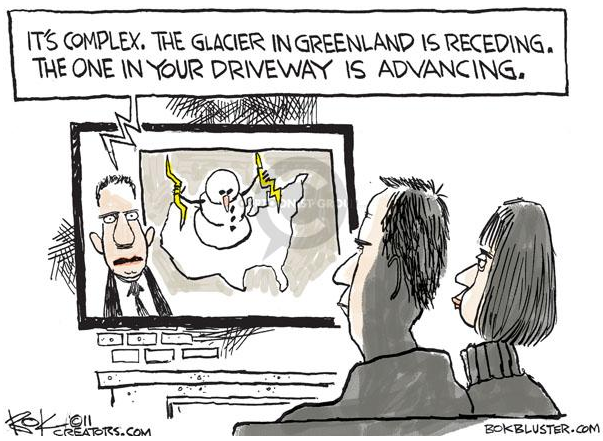
We might expect that glaciers and ice sheets would recede after the Little Ice Age yet we know that glaciers in many parts of the world are advancing, with glaciers growing in the Alps, North America, Patagonia, Antarctica, Alaska, the Himalayas, China, Iceland, Greenland, New Zealand, Norway, Antarctica and Greenland.
Where glaciers reach the sea, the media, and some tour guides, like to promote the dramatic calving-glacier image as pointing to (imaginary) global warming but fail to point out (perhaps they don’t know) that a calving glacier is the sign of an advancing inland glacier and certainly not one that is about to disappear.
In his silly, but influential, 2005 movie “An Inconvenient Truth” Al Gore said:
“Within the decade, there will be no more snows of Kilimanjaro.”
Mount Kilimanjaro is still covered in snow. See False Alarm over the Retreat of the Himalayan Glaciers
“The speed and consequences of Himalayan glacial retreat have been grossly exaggerated by the media and environmental activists.”
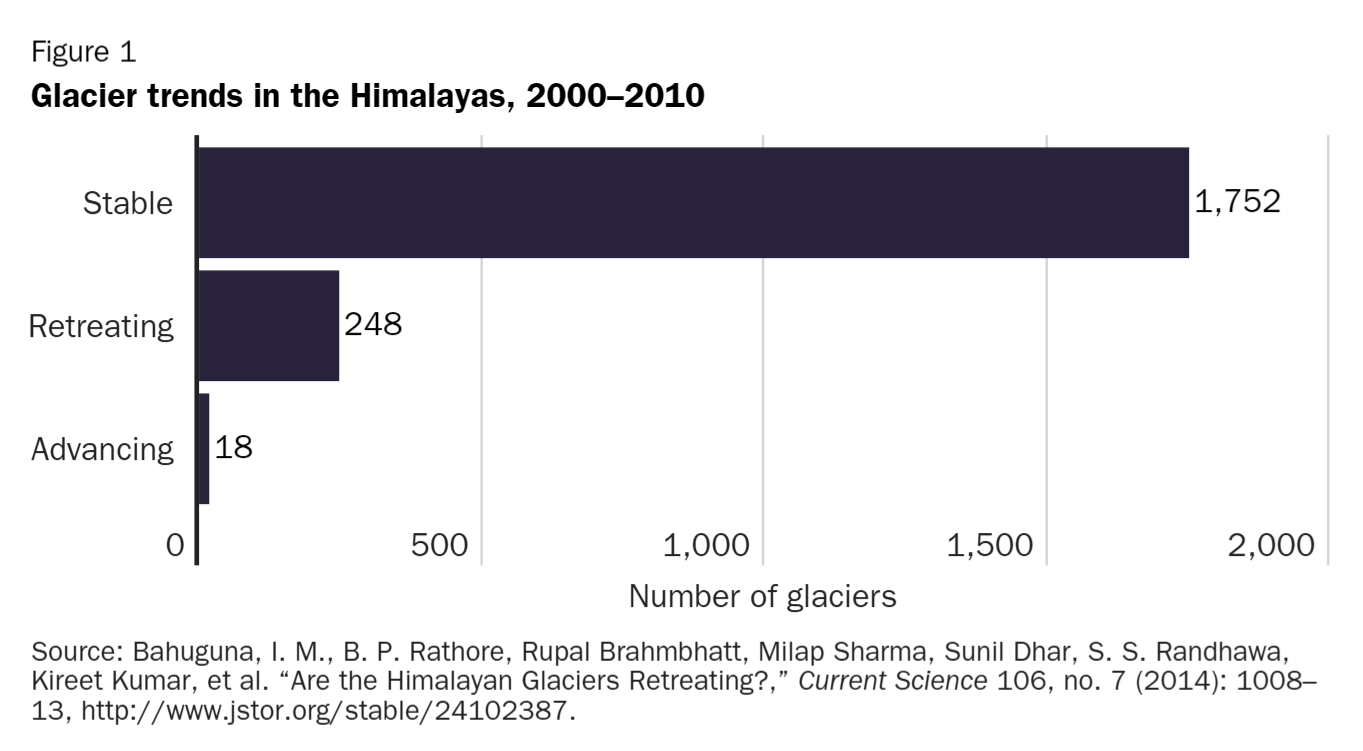
A significant proportion of Himalayan glaciers are advancing. In fact, 58% of glaciers examined in the westerly Karakoram range, a chain of snowy peaks along the border of India, Pakistan and China, were stable or advancing with annual snowfall increasing. A study of Himalayan glaciers, published in the American Meteorological Society’s Journal of Climate reported that cooler summers are failing to melt winter snows, which are themselves becoming more frequent, resulting in advancing glaciers. Source: Live Science
GLACIERS/ICE SHEETS IN ANTARCTICA
The Antarctic ice sheet is the world’s largest mass of ice covering around 14 million sq. km.
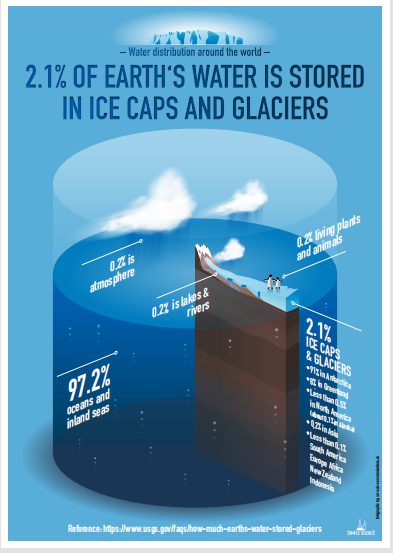
Ice sheets can be described as glaciers that cover very large areas and the most obvious examples are found in Greenland and Antarctica where around two-thirds of the Earth’s fresh water is stored.
Alarming reports that the Antarctic ice sheet is rapidly melting misrepresent the science of a very complex situation. Antarctica has been ice-covered for at least 30 million years. The ice sheet holds over 26 million gigatonnes of water (a gigatonne is a billion metric tons). If it were to melt completely, sea levels would rise 60 metres. Such a change is many millennia in the future, if it happens at all, although climate alarmists will always claim that such a response is just around the corner because of (imaginary) global warming.
Modest ice loss is normal in Antarctica. Each year in summer, more than 2,000 gigatonnes of ice is discharged in the form of melt and icebergs, while snowfall additions keep the ice mass in equilibrium.
Summary
So it is a familiar story. A complex naturally fluctuating situation, in this case glaciers, is abused by activists to claim support for their agenda. I have a lot of respect for glaciologists; it is a deep, complex subject, and the field work is incredibly challenging. And since “glacial” describes any process where any movement is imperceptible, I can understand their excitement over something happening all of a sudden.
But I do not applaud those pandering to the global warming/climate change crowd. They seem not to realize they debase their own field of study by making exaggerated claims and by “jumping the shark.”
Meanwhile real scientists are doing the heavy lifting and showing restraint and wisdom about the limitations of their knowledge.
Resources:
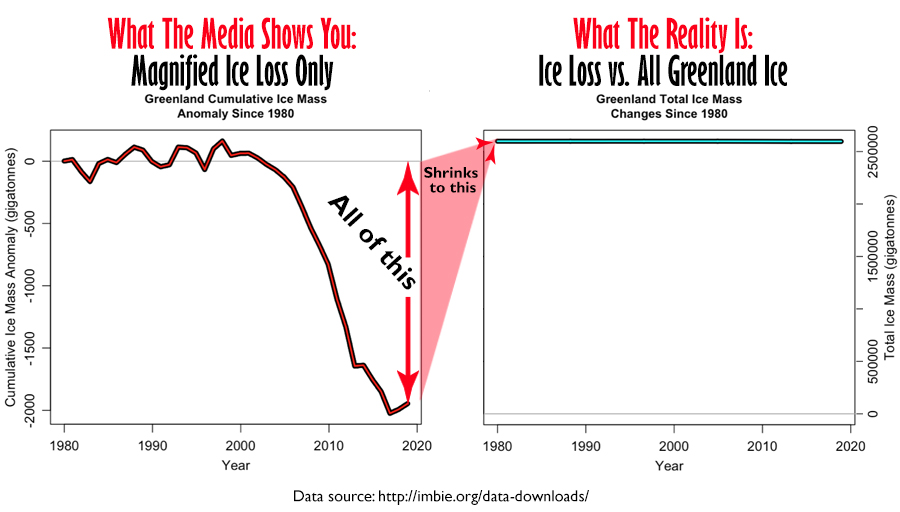
Figure 1. A comparison of presentations of satellite data capturing Greenland’s ice mass loss. The image on the right shows changes in Greenland’s ice mass relative to Greenland’s total ice mass. Sources: The data plotted in these graphs are from the Ice Sheet Mass Balance Inter-Comparison Exercise, a joint exercise by NASA and the European Space Agency.4 Graphs originally by Willis Eschenbach. Adapted and annotated by Anthony Watts.
 Science Matters
One comment