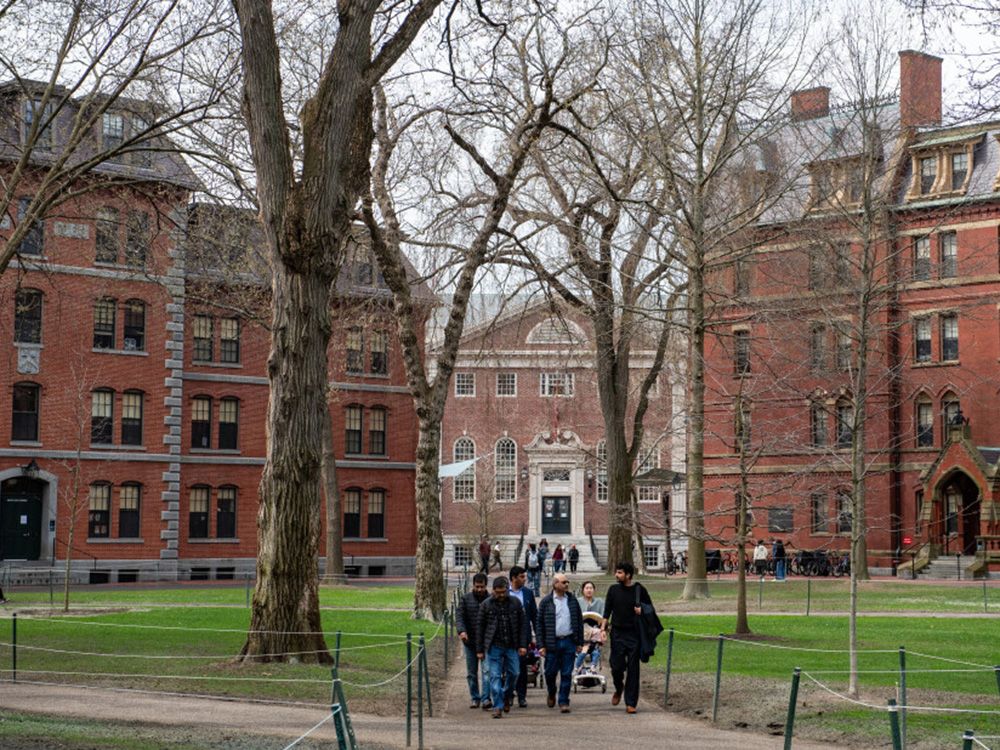
Even Harvard University is suffering from the scourge of grade inflation, according to a recent report. Photo by JOSEPH PREZIOSO/AFP via Getty Images
Chris Selley points to evidence of our youngsters dumbing down in his National Post article Who will stop our kids from getting dumber? Excerpts in italics with my bolds and added images. Later on is a post regarding the descent of youth into climate insecurity and fanaticism.
It really feels like we could be at a tipping point. We risk creating generations
of people who don’t know how to think critically, laterally, or at all.
Not-so-surprising news arrived recently from the University of California at San Diego: Academically, the kids are not all right. Not even close. “Between 2020 and 2025, the number of freshmen whose math placement exam results indicate they do not meet middle school standards grew nearly thirtyfold,” a report from the university’s senate finds. “A similarly large share of students must take additional writing courses to reach the level expected of high school graduates.”
The university launched a remedial math course in 2016, designed for “a very small number of first-year students (less than 100 students a year or around one per cent of the incoming class) who were not prepared to start in our standard precalculus courses.” As of this autumn, there were 665 students in that course, representing 8.5 per cent of the freshman class.
UCSD is no slouch in the college rankings: U.S. News and World Report pegs it as the sixth-best public university in the country, in the lofty company of Berkeley, UCLA, the University of North Carolina, and Michigan. It picks students from relatively high up the tree. And a fair few of them can’t do middle-school math.
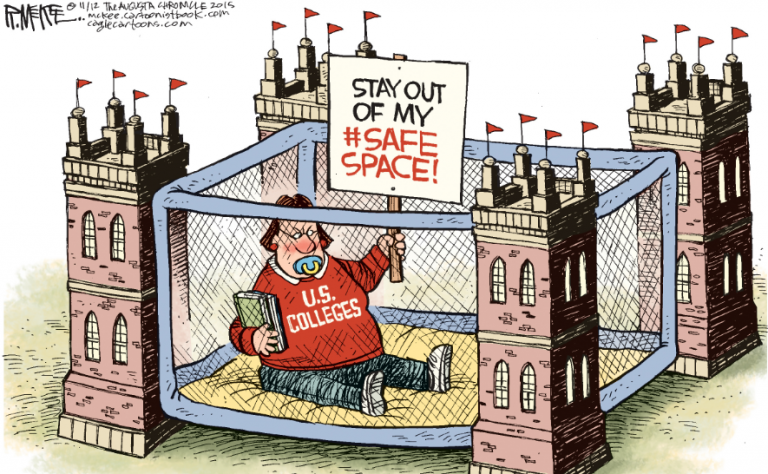
The report tags dead-obvious suspects in this crime: Against its own board of regents’ advice, the University of California system no longer uses the SAT or ACT as part of the admissions process, because standardized tests are supposedly “racist.” That means the associated colleges (including Berkeley, UCLA and UCSD) have to rely more heavily on high-school grades. But high-school grades have inflated so much in recent years that they’re largely meaningless.
And with significant numbers of kids effectively ChatGPT-ing their way
through K-12, the writing problem especially is only bound to get worse.
I’m generally not an alarmist on such matters, but it really feels like we could be at a tipping point. We risk creating generations of people who don’t know how to think critically, laterally, or at all — and couldn’t successfully articulate what they think in a work email, let alone an essay, if they had to. The most frustrating thing is how easily this all could have been avoided, and how simply it could all be solved, if only the education bureaucracy could get its act together.
The solution to the AI crisis is in-class exams, which is what 49-year-old geezers like me used to know as “exams.” Just do it, for God’s sake. The solution to the standardized-testing issue is standardized testing.
We need to permanently marginalize the well-lettered
and influential voices who see it as a form of violence.
Grade inflation is a tougher nut to crack, perhaps. It’s much easier to inflate than deflate, and the problem goes well beyond high school. Harvard University’s Office of Undergraduate Education released a report this month assailing the scourge of grade inflation at Harvard. This revelation melted some students — the cream of America’s crop, we are led to believe — into a puddle of tears, the Harvard Crimson reports.
“The whole entire day, I was crying,” one undergrad told the student newspaper of the day the report dropped. “I skipped classes on Monday, and I was just sobbing in bed because I felt like I try so hard in my classes, and my grades aren’t even the best.”
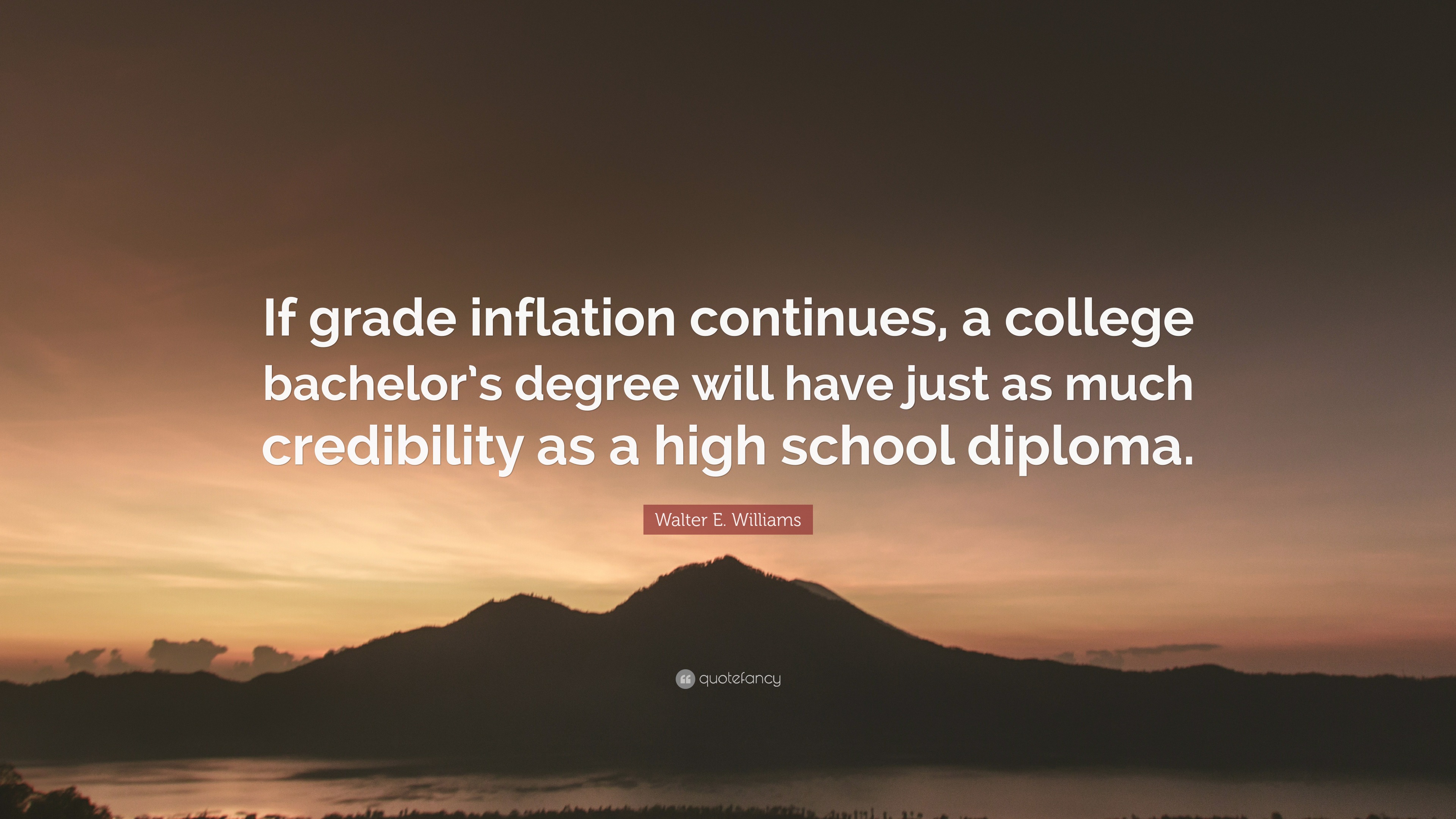
Here in Canada, the University of Waterloo was a pioneer in keeping a list of the worst grade-inflation offenders among Ontario’s high schools — a perfectly defensible practice, though Waterloo seemed almost ashamed of it. It actually went to court to prevent releasing the contents of that list under a freedom-of-information request from Global News, citing dubious concerns about privacy. Yet the people who should be most interested in such lists are students at the most grade-inflated schools and their parents; a mighty shock awaits them the first day they show up for university.
The educational damage caused by pandemic-era school closures and often-slipshod remote learning is, alas, impossible to remedy. “This year’s high-school seniors (graduating 2026) began remote learning in spring of their 6th Grade year, often one of the most critical in student development for math skills,” the UCSD report notes.

In California, as in Canada, absenteeism rates soared during the pandemic and haven’t recovered. That deficit is baked into an entire cohort of students for life, now. And in California, as in Canada, it’s the least advantaged students who took it hardest on the chin.
If there’s nothing we can do about that, we can at least make the people who cheered it on feel bad, and ensure we never again treat school closures and half-assed online learning so casually. Of all the cockamamie arguments flying around during COVID, “kids will be fine” was one of the weirdest. And “we must keep schools closed to protect our children,” who weren’t at any significant risk at all, was one of the most disreputable.
To be fair, we were flying blind in a crisis none of us had lived through before. We can’t say that about grade inflation, or cheating, or standardized testing. Those are longstanding problems that solving simply requires some grownups with an ounce or two of principle and courage to spare.
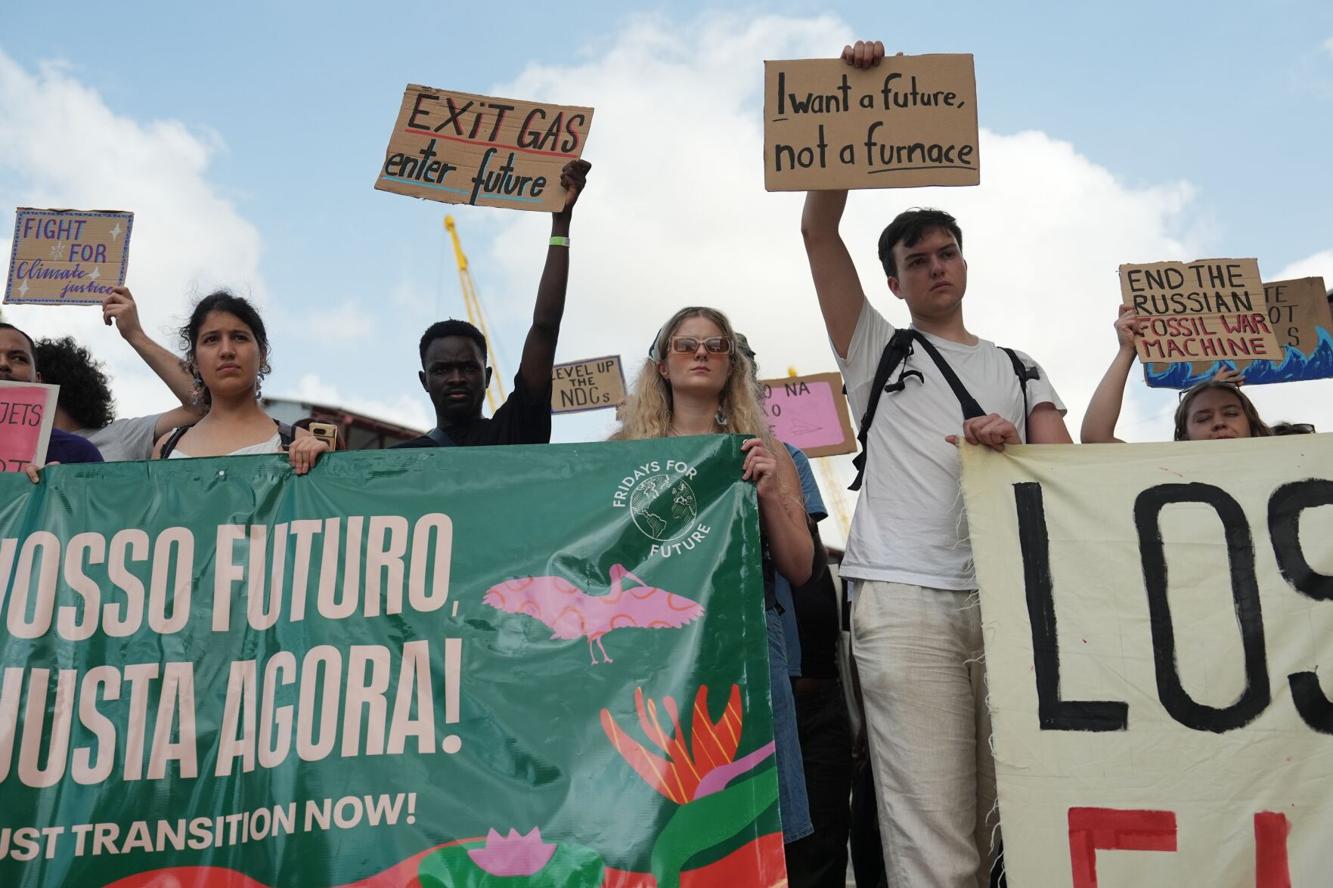
Activists participate in a youth climate demonstration during the COP30 U.N. Climate Summit, Friday, Nov. 14, 2025, in Belem, Brazil. Joshua A. Bickel – AP
Nate Myers reports from COP30: The kids are not alright: COP30’s youth-led “climate crisis” struggle. Sadly, youth lacking in critical intelligence are at risk of activists exploiting them for an agenda. Excerpts in italics with my bolds and added images.
With climate anxiety now affecting an estimated half of young people worldwide, COP30 arrived in Belém, Brazil, promising to “elevate youth voices.” What I witnessed instead, by attending some of the side events, was a well-funded pipeline of fear, guilt, and political indoctrination aimed squarely at children and teenagers who have been convinced the world is ending.
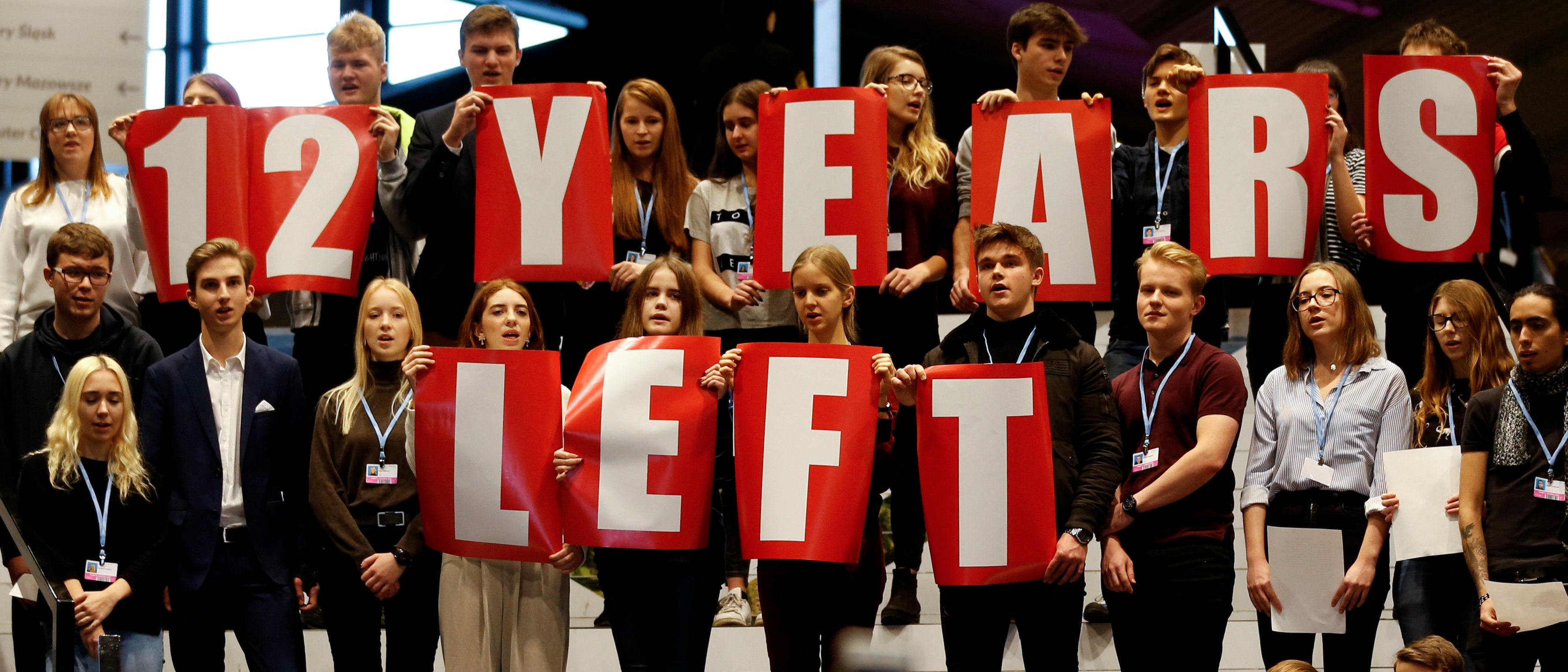
And that was in 2019!
Over several days, I sat through hours of youth-led and youth-themed panels — panels that were supposedly about empowering the next generation but in reality offered little more than emotionally charged rhetoric, self-congratulatory monologues, and wild ideological claims completely detached from scientific or historical context.
By the end, one thing was very clear: The kids are not alright,
and the adults running these sessions know exactly what they’re doing.
Inside the COP30 Youth-Centric Panels:
One of the first sessions I attended was titled “A Legacy for Children and Youth in Climate Policies.” The premise sounded harmless enough — encouraging young people to engage in politics and science. But the execution was anything but.
Representatives from Our Kids Climate, ChildFund Alliance, Child Rights International Network, and Plant-for-the-Planet took turns celebrating how many children their organizations have managed to bring into the movement and how there’s always more work to be done to make the conversation “more inclusive” to “marginalized groups.”
What they didn’t talk about were scientific principles,
energy systems, or practical solutions.
Instead, panelists repeated the talking point that “children are the most affected by climate change” — a phrase that now functions as a moral shield to deflect scrutiny. The adults paneling the discussion pontificated endlessly about “youth inclusion in climate justice,” never once explaining what “climate justice” actually means or how any of their lofty goals would be achieved. Their message was simple: get more children involved as early as possible.
The moderator even closed with an open call to bring more kids to future COPs. She wasn’t subtle about it. The aim is to expose children to the climate-justice worldview before they have the emotional maturity, economic literacy, or scientific grounding to question it — or even properly understand the conversation.
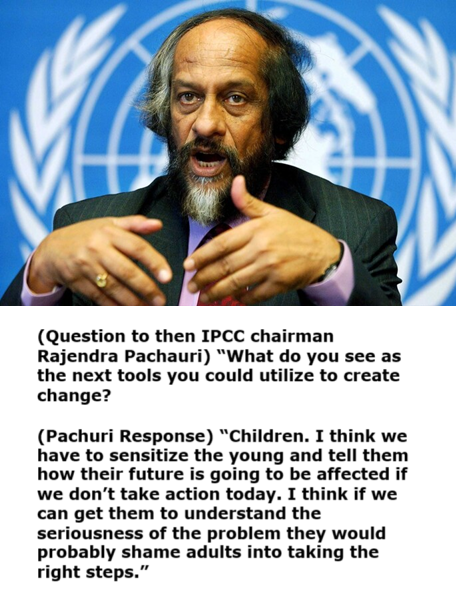
Youth-Led Climate Forum
The flagship youth session at COP30, the “Youth-Led Climate Forum,” made the earlier panels look calm by comparison. Held over the course of the week in four separate installments that felt more like struggle sessions than intellectual debate and conversation, students repeated sweeping, dramatic lines like:
“We’re just trying to save the world,” followed by, “It’s our responsibility to fix this.”
Someone has convinced these kids that the world is ending — and that they are personally responsible for preventing it. That kind of psychological burden would crush an adult, let alone a teenager.

One young woman even described how her entry into the movement began after watching the apocalyptic thriller “2012.” Sometime later, she experienced a perfectly normal flood — an event that has occurred throughout human history — and interpreted it as confirmation that the “climate crisis” was accelerating.
It was the perfect microcosm of what’s happening to young people worldwide:
propaganda scares them into believing natural disasters are unprecedented,
and any routine weather event becomes proof that doom is approaching.
A representative from World Youth for Climate Justice took it a step further, declaring:
“Countries authorizing new oil leases should be held criminally responsible.”
The entire forum was drenched in ideological buzzwords. “Solidarity” and “intersectional” were used dozens of times. References to Indigenous communities, women, and LGBTQ groups were thrown around like confetti, to the point of unintended comedy.
Yet amid all the emotional rhetoric, no one offered scientific nuance, historical context, or even a basic acknowledgment of natural climate cycles. In fact, no one cited or discussed a single statistic, figure, or model. It was all emotion, no wisdom. All fear, no facts. And these are the voices COP30 proudly elevates as the “leaders of tomorrow” — leading us to what, I wonder?
And Then Came the Demands…
To top it all off, the Child Rights International Network (CRIN) proudly released a global letter of demands allegedly “developed by young people at COP30.” They issued these demands to every nation on Earth.
Among the most extreme:
-
- End all fossil fuel leasing and extraction.
- Replace global energy systems with “justice-based alternatives.”
- Mandate climate reparations across nations and generations.
- Create youth committees with power to oversee national climate policy.
The adults behind these groups know exactly what they’re doing. No child wrote this without intense indoctrination and adult influence. The youth participants are being used — emotionally and politically — to advance an agenda they don’t fully understand.
After countless hours of youth programming at COP30, the conclusion was unavoidable:
These are scared children seeking comfort and direction — yet they’re being fed panic, ideology, and guilt. The same groups that claim to “empower” young people are the ones frightening them into the movement in the first place. That’s not stewardship. That’s emotional exploitation.
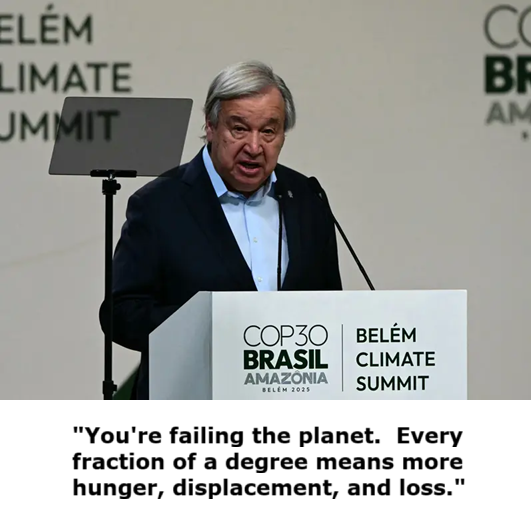

 Science Matters
The long march through the institutions has been a success.
The Greta effect in education. Nor education for autonomy
but indoctrination for left wing outcomes.
LikeLike
LikeLiked by 1 person
In France, most of my pupils don’t care until 15. Climate alarmism and the wokism stuff seems to be a failure in reaching adulthood when you start thinking about society, but without cutting the link with the idea of free meal.
And I guess this is linked to the disappearance of strong adult model and the lack of initiation to the harshness of nature.
Resulting in the vampire mentality : you work, I dream a world, I kill you if you don’t cooperate because nazi.
LikeLike
Thanks Geoffray. Meanwhile in the US:
Ford is struggling to fill 5,000 mechanic positions, despite offering salaries of $120,000 a year, due to a nationwide shortage of skilled workers in the trades. This issue reflects a broader crisis in the U.S. workforce, where there are over a million job openings in critical sectors.
LikeLike
This sure is terrible.
Do you think the issue can be solved with your current educational system ?
We often hear in France about your student leans, but don’t know much more because our journalists are pretty social democratically superficial…
LikeLike
Geoffray, the problem with universities is self-inflicted. Here is a good explanation of how costs have risen while quality has fallen.
https://academicinfluence.com/inflection/college-life/overcoming-administrative-bloat
Here’s another take on the plight of colleges and universities:
https://www.dailysignal.com/2024/05/03/can-current-universities-be-saved-should-they/
LikeLike