
Jordan Peterson explains good reasons not to trust where Carney claims to be heading, contrary to his longstanding commitments and priorities. The first video explores Carney’s stated principles in contrast to Canadian heritage. For those who prefer reading I provide a transcript with my bolds and added images.
What Carney’s Background Tells Us About His Future Steps
So, what do we say about Carney’s experience and his resume? Well, the real question is, what is he aiming at? Right, so he’s got a stellar educational background and this vast experience on the international side. But the question is, what has he concluded from that? And what has he done in consequence? And what is he planning to do in the future? Now, I read Carney’s book Values very, very carefully. And so, the reason I want to walk you through that is because that’s his carefully thought through statement of principles and aims.
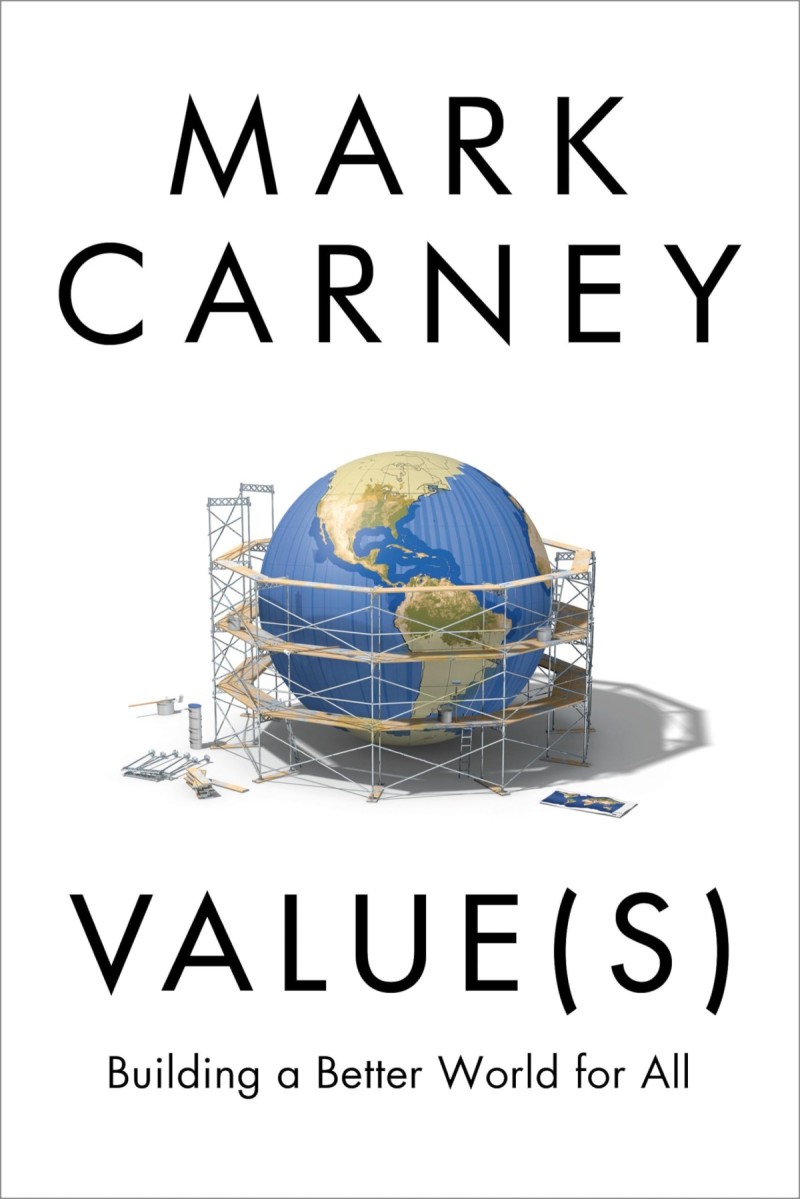
And so, it’s useful to take a person at his word on the written side. And so, I think we can derive from values what Carney’s values are, what values he thinks Canadians do and should hold, what we can conclude about what he’s already done for Canada and on the international stage, and where things are headed in the future. And so, now, the first, I’m going to take Carney’s Values book apart in two ways.
The first thing I want to tell you is what he thinks Canadians’ values are. Okay, so he’s setting himself up as an arbiter of the Canadian ethos. And to do that in his book, in the first couple of chapters, and then at the end of the book, he tells us all what makes Canada the country that it is.
And so, we want to delve into that. All right. So, Carney’s conclusion with regards to Canada’s core values are a leftist, utopian, globalist view of the Western tradition.
So, he believes, for example, that the core Canadian values are:
♦ fairness and equity,
♦ resilience and adaptability,
♦ sustainability and responsibility, and
♦ community and cooperation.
Okay, so the first thing I’d like to do, those are all terms that sound positive and that could, in principle, bring people together on the basis of a vision. Fairness and equity, resilience and adaptability, sustainability and responsibility, community and cooperation.
But the first thing I’d like to point out to all of you who are listening is that although Carney claims that those are core Canadian values, that claim is not correct. Those are core globalist, socialist, utopian, net zero promoting environmentalist values.
But the core Canadian values are actually derived from the Judeo-Christian,
Western, broadly Western, and English common law tradition.
And so, I’m going to outline what those are, just so you can see the contrast between those values, which are the true Canadian values, and Carney’s values, which have this patina or aura of high-flown positive emotion, but bear little relationship to the genuine historical reality and do not describe the values that made Canada the wealthy, free, productive, Western democracy that it is.
So, Canada is actually founded on the principles of individual liberty and rights,
the rule of law, equality and justice. And equality there doesn’t mean
equality of outcome, and it doesn’t mean economic equality.
It means equality of value before the law, and equality of opportunity, and responsibility and order. And so, those are values that are very different than the value set that Carney is putting forward. And so, then you might ask, if Carney didn’t derive what he believes Canadian values to be from the historical reality of Canada, from what source did he derive his values? Now, you also might wonder why it’s important to even delve into this.
And well, the first conclusion we could draw is that Carney wouldn’t have written a whole book about values if he didn’t think that it was important to delve into values. And he certainly wouldn’t have written a book revealing his own values if he didn’t think it was important to communicate to Canadians and people around the world what he thinks Canadian values and his values are and should be. So, my focus on values, although I certainly believe, as he does, that values are fundamentally important, I’m focusing on values because that’s the focus that Carney himself chose.
All right, so this is where we can link the facts of his resume to an analysis of his genuine motivations. So, let’s first look in more detail at how Carney translates his core values into the beginnings of policy. All right, so Carney in his book Values outlines his support for three of what I regard as the least credible ideas that have emerged on the international landscape and the intellectual landscape in the last 20 years.
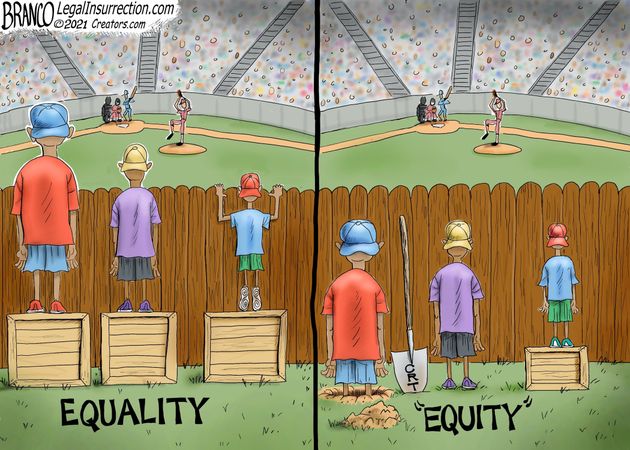
So, first of all, he’s an explicit advocate of the diversity, equity and inclusivity principles that have destroyed the modern universities, that have corrupted our judiciary and our political institutions, and that have allowed the liberals to smuggle, the modern federal liberals, to smuggle in what’s essentially a relatively radical leftist agenda under the guise of classical liberalism. Diversity, inclusivity and equity the DEI holy trinity is a political policy movement predicated on the idea that Western society, and that would include Canada, is a corrupt patriarchy in its essence that marginalizes a variety of groups and purposefully so delegitimizing them, and that the appropriate response to that is to segregate and identify people on the basis of their group identity, and that would include race and sex and gender and all the other isms, all the other ism identities that you may have heard in the last 10 years, to divide people on the basis of those identities and to privilege the marginalized, to bring them to the center.
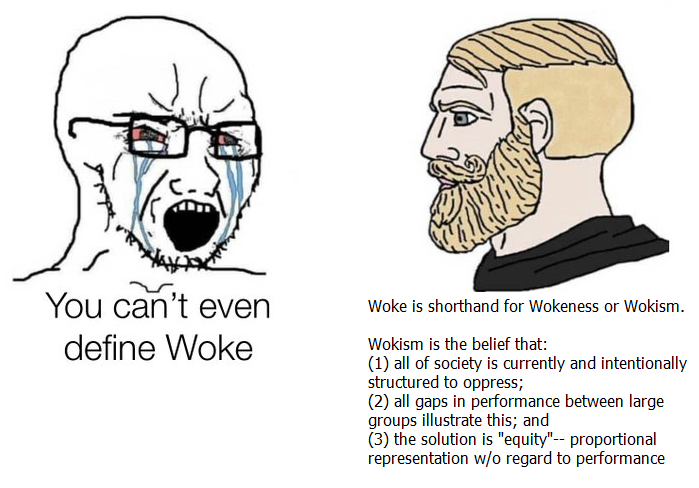
Now, some of that presumption derives from postmodern philosophy and some of it is essentially Marxist in its orientation, and so Carney’s derivation of Canadian values, when the pedal hits the metal, let’s say, or the rubber hits the road, the manner in which Carney translates his interpretation of Canadian values is the same manner that the radical leftists in the Democratic Party, for example, in the United States translated the same value propositions, and that’s to become an advocate for diversity, equity, and inclusivity, and to assume that human beings should be divided on the basis of their race and their sexual identity and their gender, etc., and that our culture is essentially oppressive at its core.

And so I believe that idea to be discreditable across multiple dimensions of analysis, and it’s certainly the case that it was roundly rejected by the American electorate in the last election cycle. And you can also see that the Democrats themselves in the United States are backpedaling rapidly on the DEI front because they realized that it’s a losing game in the short, medium, and long run. And so the first thing we might note is that when Carney is trying to formulate policy, one of the sets of policies that he put forward include this discreditable and divisive DEI formulation that’s been part and parcel of the maneuvers by intellectuals to tilt the entire political world in a radically revolutionary and leftist direction.
The second video goes into the economic and environmental dimensions of Carney’ vision.
And That’s The Utopian Vision Of Carney
So, with regards to this promised utopia of a new future, one of the things Carney says, for example, after he talks about the fact that 75% of our fossil fuel resources will have to be left in the ground, is this promised new magical utopia of renewable jobs, especially for places like Alberta. Now, he says that if we unleash innovation in the private sector, that all the problems that are associated with the transition to net zero will somehow be solved.
So, let’s see what’s happened in countries where that’s actually being attempted.
So, I think we should talk about Germany and the UK. So, Germany has been more green, arguably, than Canada, let’s say, for the last 10 years. And they’ve shut off their nuclear plants and they’ve made a transition to renewables.
And so, what’s the consequence of that? Well, one consequence is that German energy prices are now five times as expensive as they are in the US. And then you might say, well, that’s a small price to pay for saving the planet, but then we could take that apart. So, Germany is rapidly de-industrializing and their economy is tanking.
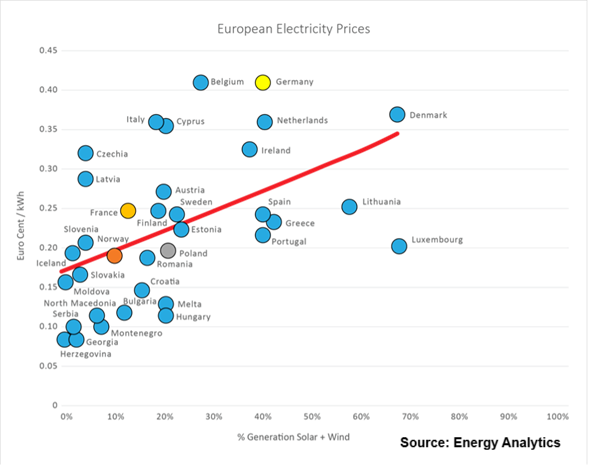
And all the industrial production that they no longer manage is only shifting to other places in the world, like China and India. So, it’s not like it’s going away, it’s just not happening in Germany. And they’re increasingly dependent on renewables, solar and wind.
And Germany isn’t one of the world’s sunniest countries and it’s also susceptible to what they call wind drought. So, there are long periods of time where the solar arrays and the windmills aren’t producing any electricity. And like zero electricity is not very much electricity.
Now, why is that a catastrophe? It’s like, well, do you want your refrigerator on or off or even more to the point, do you want to be able to go to the hospital and make sure that there’s electricity when you’re having emergency surgery, et cetera? And there are signs, for example, that places like Australia that have been moving down the renewable pathway are facing the imminent threat of rolling blackouts. And that could easily happen in places like Germany. Okay, so now the problem with renewables is that we can’t store the energy.
We don’t have the battery technology and the battery infrastructure, not even close. And it’s going to be a long time before we do at least 20 years, maybe longer than that. And so the question is, now, what do you have to do? Because renewable energy is so unreliable.
Sometimes this, like at night, the sun doesn’t shine in case you haven’t noticed and the wind stops blowing. And so then renewable production falls to zero. Now you have to have something to back that up.

And worse, you have to have something of the same size as the entire renewable grid, because otherwise it can’t handle the power demands. And so that means that as you switch to a renewable grid, you have to have another grid in place that has exactly the same capacities and it has to be not renewable. So what that means is that when you build a renewable grid, you build it in addition to the preexisting grid.
And then you might say, well, if the renewable sources aren’t producing energy, you could just turn to nuclear, but there’s a couple of problems with that. First of all, you can’t turn a nuclear power plant on and off quickly, as you might well imagine. And the Germans, for example, scuttled their nuclear plants.
And so what have they done? They’ve turned to coal burning plants. And the Germans don’t burn anthracite, which is high quality coal that doesn’t produce much particulate matter, which is like the dust pollution that would be associated with smog. And they burn lignite, which is low quality coal, and it produces a lot of particulate.
Plus it produces a lot of carbon dioxide. And so what’s happened in Germany after 10 years of green idiocy is that their power prices are five times as expensive. They’re hyper-reliant on places like Russia and the Middle East for their fossil fuel production, not least because Canada was too daft to enter into an agreement with them.
And they pollute more per unit of energy produced than they did 10 years ago. Even if you accept the environmentalist argument that carbon dioxide overproduction is an existential crisis, which it isn’t, and you say, well, something substantial needs to be done to ameliorate the threat, you have to observe that when something substantial has been done, so that’s the creation, let’s say, of a renewable power grid, the consequence is not only that the atmosphere doesn’t improve with regards to carbon dioxide proportion, but that the pollution problem actually gets much worse as well as energy becoming more expensive and unreliable. And so what? That’s what you want Carney to do for Canada.
And for Canada, there’s not a country in the world that’s more dependent fundamentally for its existence on reliable energy, because Canada is uninhabitable without an unbelievably well-developed industrial and energy infrastructure just to keep us alive when it’s 40 bloody below. And then our economy is radically dependent on our natural resource production. Now, it shouldn’t be that dependent on natural resource production because we should be doing value-added investment, for example, refining our fossil fuel resources to a higher degree than we currently do.
Most of that’s done in the United States, and we should do things to ensure that we the proper transition into a technologically driven future. But Carney says absolutely nothing about any of that in his book, Values. And so he just magically hand-waves and says, oh, well, if you unleash the private sector, there’ll be this magical net zero transformation and everyone will have much more productive jobs and the planet will be much greener and we won’t need to rely on fossil fuels.
Well, we don’t just rely on fossil fuels for energy, folks. We rely on fossil fuels to make damn near everything that we make, including our agricultural products. And so you also hear the net zero people claiming that agricultural production has to be slashed radically.
And so you can imagine what that’s going to do to food costs if you haven’t noticed. And part of the reason for that is that the fertilizers that we use, ammonia, for example, are created out of fossil fuels. And so you have no idea how much the entire economy, and so that’s your bread and butter and your house and your heating and your air conditioning and your travel and your vacations and your kid’s future.
That’s all dependent on the fossil fuel economy.

And so Carney, there’s two tacks you can take to Carney. One is either he’s learned that his net zero preoccupation was wrong, which means every single thing he thought while he was being educated and while he had his highfalutin career, every single thing he thought was radically, not only wrong, but the opposite of the truth.
That’s one conclusion. Or he still thinks what he’s always thought, which is certainly what it seems to be in his book, Values. And certainly seems to be the case with his continuing insistence that we have to hit net zero by 2050 and spend $2 trillion doing it.
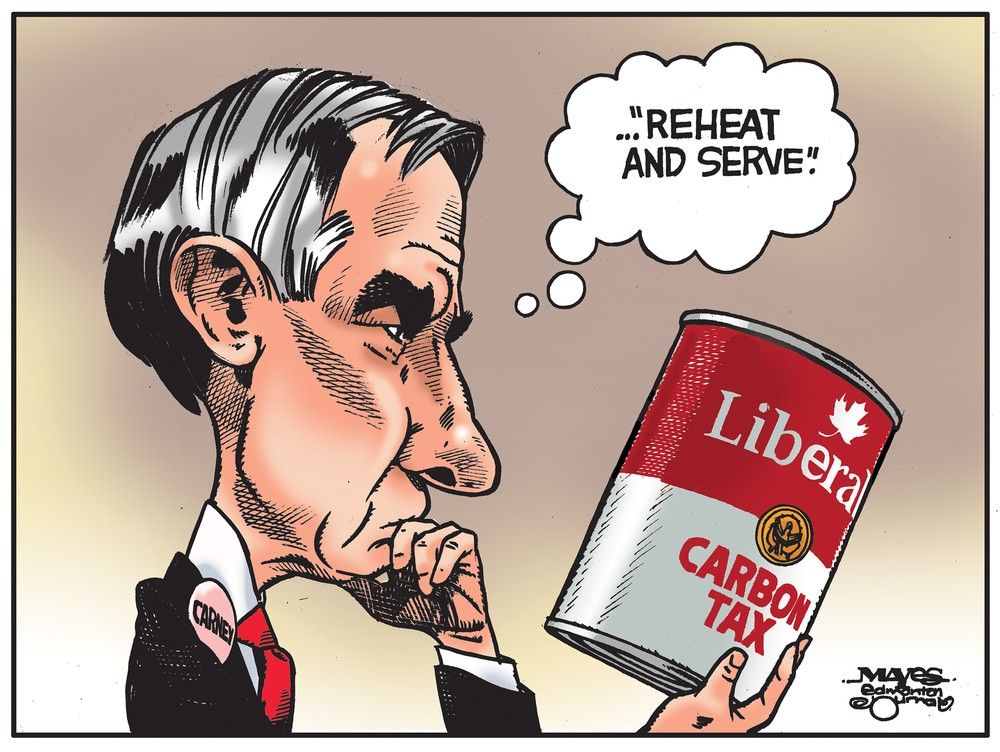
The alternative conclusion to he was just radically wrong and has learned is that he hasn’t learned a damn thing. And it’s still his fundamental axiomatic presupposition that human being industrial production leading to carbon dioxide overproduction is an existential threat that should be everyone’s top priority for every financial decision that they make and that everything should be secondary to that.
And that implies that his claim to eliminate the carbon tax, for example,
and to move Canada onto a more solid industrial footing in the future is just a lie.
So those are your options. Either he was completely wrong about everything for the last 20 years in the worst direction possible and has learned or that he hasn’t learned a damn thing and is still sticking to exactly what he wrote in his book, Values, in 2021 and exactly what he’s indicated in all of his public pronouncements.

And he’s going to act as if he’s in favor of Canadian economic development,
but he’s going to keep pursuing a net zero agenda
because that’s priority number one.
And he hopes you peasants are too stupid to understand the reality of the situation that’s in front of you. And so that’s going to mean no flights for you and no clothes for you, maybe three changes of clothing per year. Nope, only a short haul flight every three years, for example, a radical reduction in the amount of meat that you eat, a radical reduction in private car ownership.
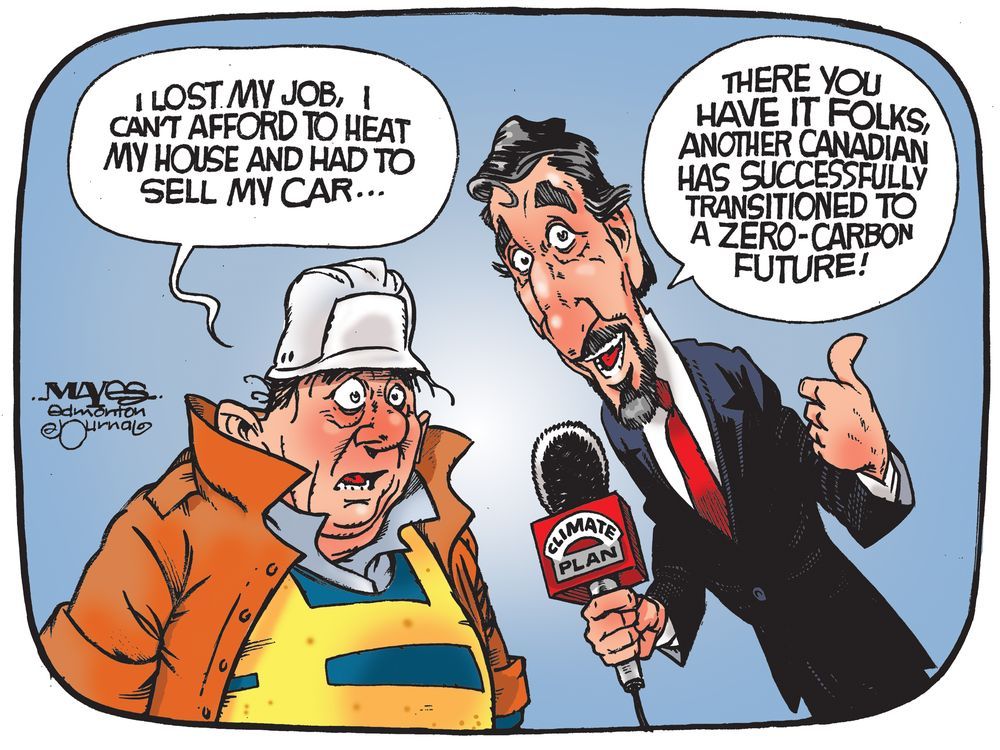
And you might think, well, that’s paranoid conspiracy theory, but you can go look at the documents of the C40 coalition of the top cities in the world and look at their aims for the next 20 years. And you can decide if they’re on the same side as Carney or whether they’re on your side. And you can draw your own conclusion because if your presumption is that the planet is facing an environmental catastrophe because of carbon dioxide production and that that’s such an emergency that we have to do every possible thing we can with every financial decision, no matter how much it costs to ameliorate it, then there’s no limit whatsoever to the amount of power that you’re willing to expend to make that happen.
And we know what’ll happen because it’s already happened to Germany and the UK and it’s happened to a large degree to Canada. And there’s no reason to assume at all that Mark Carney is a leopard who’s changed his spots. Quite the contrary.

 Science Matters
That was the USA 13 months ago.
LikeLike
Yes Mark, I remember well. Those were days like this:
LikeLike
So, there are long periods of time where the solar arrays and the windmills aren’t producing any electricity. And like zero electricity is not very much electricity.
The real net zero.
LikeLike
Just so, Oldbrew.

LikeLike