
The expected blowback from invested climatists is underway, as reported by legacy media whose bias is with the alarmists. Examples:
EPA faces lawsuit over scrapping the ‘endangerment finding,’ a pillar of climate regulation, Scientific American
E.P.A. Faces First Lawsuit Over Its Killing of Major Climate Rule, NY Times
Lawsuit: EPA revoking greenhouse gas finding risks “thousands of avoidable deaths”, arstechnica
Public health and green groups sue EPA over repeal of rule supporting climate protections, AP News
The legal battle over EPA finding is underway, Axios
U.S. environment agency sued over scrapping scientific rule behind climate protections, CBC
Etc., Etc.
Outlook for the legal proceedings is provided by David Wojick in his CFACT article EPA’s elegant arguments for endangerment repeal. Excerpts in italics with my bolds and added images. H/T Climate- Science.press

EPA’s arguments for repealing the Obama endangerment finding are simple, clear, and strong. So, they have a likely chance of winning in the Supreme Court (SCOTUS), which is where the final decision will be made.
I am working from the lengthy EPA press release which contains what amounts to a summary legal brief of the arguments.
The primary argument is legal and aimed directly at SCOTUS. The release even cites several relevant prior decisions. The gist of these decisions is that agencies cannot find new meaning in old statutes that suddenly gives them enormous new regulatory powers. Such recklessness is called regulatory overreach.

EPA’s argument is that massive overreach is precisely what the endangerment finding did, and it sure looks that way. It was not mission creep, more like mission explosion.

Gas stoves only the thin edge of the wedge.
The statute in question is Section 202(a) of the Clean Air Act which lets
EPA regulate harmful tailpipe emissions from motor vehicles.
The Obama endangerment finding is entirely based on this narrow rule.
Here is how EPA puts it:
“The agency concludes that Section 202(a) of the CAA does not provide statutory authority for EPA to prescribe motor vehicle and engine emission standards in the manner previously utilized, including for the purpose of addressing global climate change, and therefore has no legal basis for the Endangerment Finding and resulting regulations. EPA firmly believes the 2009 Endangerment Finding made by the Obama Administration exceeded the agency’s authority to combat “air pollution” that harms public health and welfare, and that a policy decision of this magnitude, which carries sweeping economic and policy consequences, lies solely with Congress. Unlike our predecessors, the Trump EPA is committed to following the law exactly as it is written and as Congress intended—not as others might wish it to be.”
This is just the sort of statutory issue the Supreme Court usually deals with.
There is an element of the endangerment finding that is so blatantly wrong that it is hilarious. I would start with it because it certainly makes EPA’s case for repeal, at least in part. EPA mentions it in passing saying this:
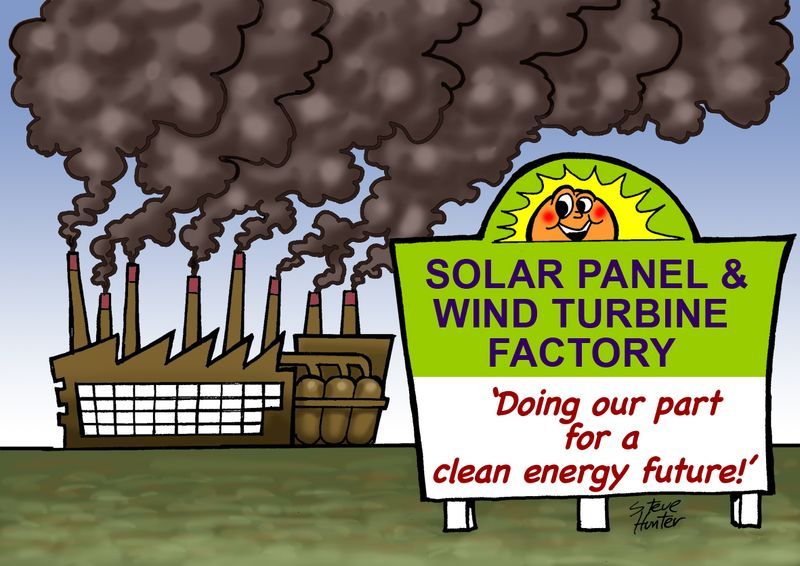
“In an unprecedented move, the Obama EPA found that carbon dioxide emissions emitted from automobiles – in combination with five other gases, some of which vehicles don’t even emit – contribute an unknown amount to greenhouse gas concentrations in the atmosphere….”
So they used the tailpipe statute to assess (and then regulate)
gases that tailpipes do not emit. There is clearly no
statutory basis for these endangerment findings.

These are not scientific issues, and SCOTUS does not normally adjudicate science. There are, however, one and a half scientific arguments in case the science comes up. That is, one argument is fully stated in the release while the other is merely alluded to.

Here is the fully stated argument:
“Using the same types of models utilized by the previous administrations and climate change zealots, EPA now finds that even if the U.S. were to eliminate all GHG emissions from all vehicles, there would be no material impact on global climate indicators through 2100.”
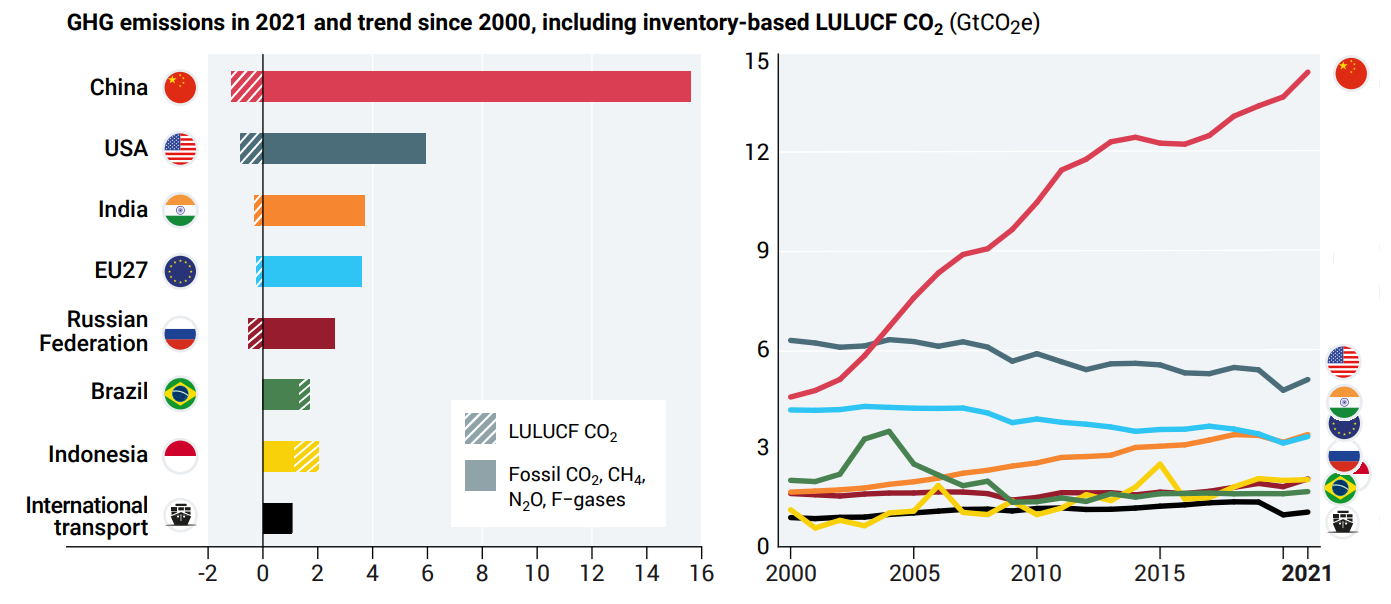
This is actually an endangerment finding, namely that there is none.
Here is the alluded to argument:
“….the Obama EPA found that carbon dioxide emissions emitted from automobiles – in combination with five other gases, some of which vehicles don’t even emit – contribute an unknown amount to greenhouse gas concentrations in the atmosphere that, in turn, play a role through varied causal chains that may endanger human health and welfare.”

Lancet: A 2015 study by 22 scientists from around the world found that cold kills over 17 times more people than heat.
The several scientific issues here are the reality of the “varied causal chains” claimed in the Obama endangerment finding. These causal issues include a great deal of alarmism.
As science, the endangerment finding is a complex attribution claim, and these are highly speculative and contentious. These causal chain issues may be elaborated in the technical support documents for the repeal. But if they are at least mentioned, as in the release, it creates a placeholder for them, in case they come up during the SCOTUS arguments.
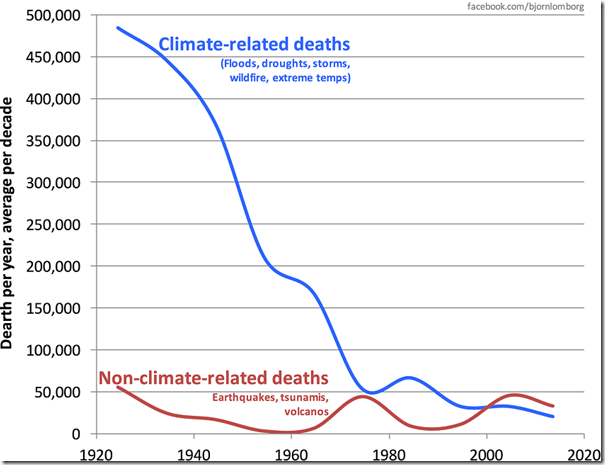
Since 1920, deaths each year from natural disasters have decreased by over 90 percent, not only as the planet has warmed, but as world population has quadrupled.
EPA has mounted some elegant arguments for repeal of the endangerment finding. Stay tuned to CFACT as this drama unfolds.
Footnote on Bjorn Lomborg’s estimates of Climate impact from reducing GHG emissions
Governments have publicly outlined their post-2020 climate commitments in the build-up to the December’s meeting. These promises are known as “Intended Nationally Determined Contributions” (INDCs).
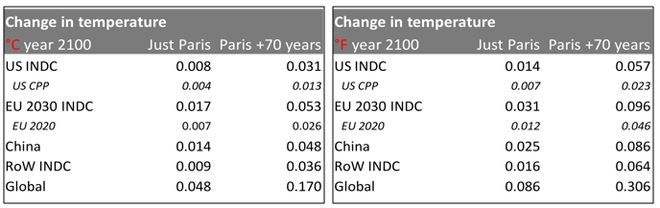
♦ The climate impact of all Paris INDC promises is minuscule: if we measure the impact of every nation fulfilling every promise by 2030, the total temperature reduction will be 0.048°C (0.086°F) by 2100.
♦ Even if we assume that these promises would be extended for another 70 years, there is still little impact: if every nation fulfills every promise by 2030, and continues to fulfill these promises faithfully until the end of the century, and there is no ‘CO₂ leakage’ to non-committed nations, the entirety of the Paris promises will reduce temperature rises by just 0.17°C (0.306°F) by 2100.
♦ US climate policies, in the most optimistic circumstances, fully achieved and adhered to throughout the century, will reduce global temperatures by 0.031°C (0.057°F) by 2100.
♦ EU climate policies, in the most optimistic circumstances, fully achieved and adhered to throughout the century, will reduce global temperatures by 0.053°C (0.096°F) by 2100.
♦ China climate policies, in the most optimistic circumstances, fully achieved and adhered to throughout the century, will reduce global temperatures by 0.048°C (0.086°F) by 2100.
♦ The rest of the world’s climate policies, in the most optimistic circumstances, fully achieved and adhered to throughout the century, will reduce global temperatures by 0.036°C (0.064°F) by 2100.
Overview in Celsius and Fahrenheit by the year 2100
 Science Matters
SCOTUS will eventually hear all this nonsense and throw it back to Congress to decide, where it belongs. Any other decision is the courts setting policy which is unconstitutional.
LikeLike
I don’t disagree, except to point out congress is even more dysfunctional. Maybe climatism will finally come to rest in peace that way–through indecision.
LikeLike