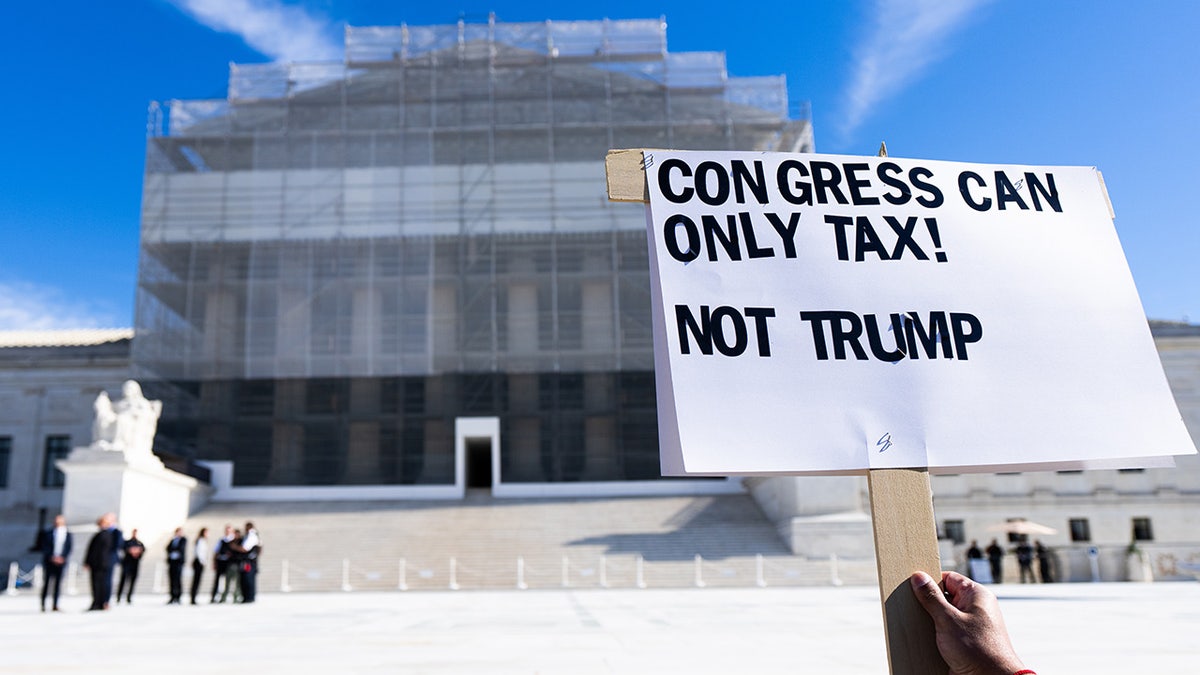
 Jeff Childers explains some hidden features of the ruling, overlooked by both cheerleaders and detractors, in his blog article Tariff Turnabout. Excerpts in italics with my bolds and added images. H/T David A.
SCOTUS struck down Trump’s IEEPA tariffs 6-3. He signed a replacement
in 90 minutes. Why this “devastating loss” was actually
a firewall, a machete, and two shields for conservatives.
Within hours of yesterday’s SCOTUS decision, the New York Times had jubilantly published no fewer than eight euphoric top-of-fold stories, and was still going strong. Democrats were sprinting (or racing their wheelchairs) to podiums to issue slaphappy praises for Justices they’ve long been complaining were Trump’s stooges. One of the Times’s tamer stories bore the gleeful headline, “The Supreme Court’s Declaration of Independence.”

The reason progressives were more excited than a new puppy yesterday is that they correctly perceive that President Trump’s tariffs are the economic engine behind America’s booming economy. Stop the tariffs, they reckon, and then the economy will fizzle out— and Trump will become a spent force. It was a good plan. Too bad it failed.
The media’s attention span is measured in picoseconds.
On the other hand, the Supreme Court is playing a long game.
This decision was a gift to the country, wrapped in a leather binder and tied with a bow. I realize that’s a bold claim given all the media’s post-touchdown celebrating, but I will explain why they’re wrong in terms that even Portland, Oregon’s residents can understand.
Far from corporate media’s simplistic analysis, this decision was a firewall, a machete, and two shields— one for President Trump and one for the Court.
In its decision yesterday, the Nation’s Highest Court seemed to hand progressives everything they’d hoped for. It clarified a badly worded trade statute called the International Emergency Economic Powers Act, or IEEPA— the legal engine powering most of Trump’s Tariff Dashboard.
Specifically, they noted that the word “tariff” does not appear anywhere in IEEPA. The majority mused that tariffs can’t just be intuited from the loose statutory language like a fortune teller predicting your Aunt Bethanie will soon make a love connection.
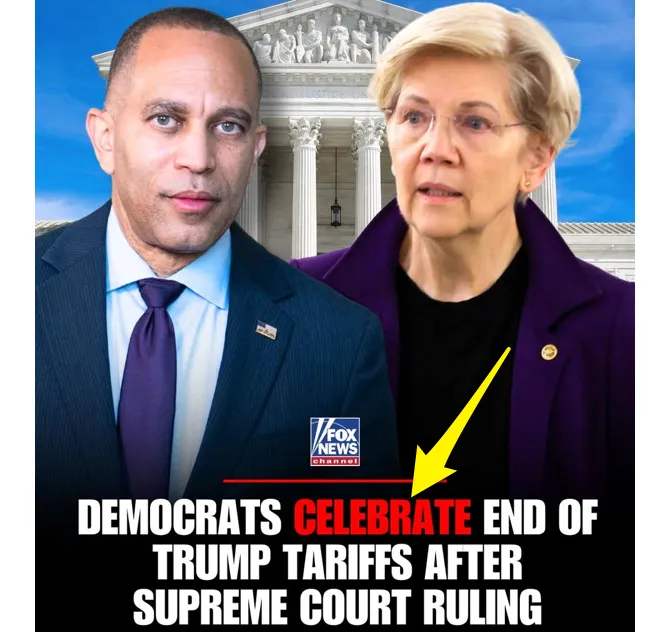
But … despite all the over-the-top rhetoric tossing around overheated phrases like “devastating blow” and “major setback,” there was a grenade in the progressive gift basket. The Supremes did not actually say Trump must shut down the Tariff Dashboard. Just the opposite. In fact, in a dissenting opinion that the President loved —Trump read parts of it aloud to reporters at an afternoon presser— Justice Kavanaugh helpfully listed four other statutes Trump could use to keep the Dashboard humming.
Before the ink was dry on the press room briefings —90 minutes after the SCOTUS order issued— Trump signed a new executive order replacing the IEEPA tariffs with Kavanaugh’s suggested alternative statutes. For good measure, Trump used one of the alternatives to impose a temporary 10% across-the-board tariff placeholder, and still had a little time left over to squeeze out a quick Truth Social post only slightly longer than The Rise and Fall of the Roman Empire.
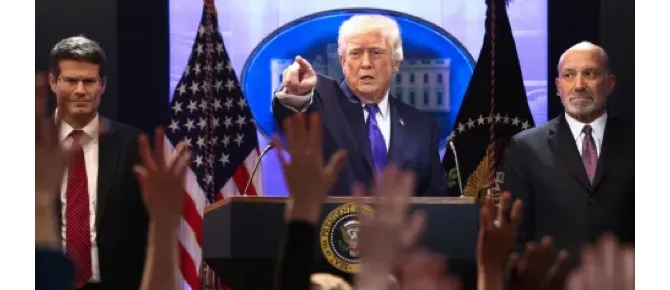
90 minutes to work up a new executive order? Come on. That was a stage wait.
They obviously had Plan B ready to go without skipping a beat.
We will focus on a key moment from November’s oral arguments that lifts the curtain, letting us see what’s really happening behind the scenes. In paraphrase, at page 69 in the transcript, Justice Gorsuch asked:
If we let THIS president use IEEPA for tariffs, what stops the NEXT president from declaring a climate emergency and taxing gas-powered pickup trucks out of existence?
Here’s the thing: don’t miss this. When Gorsuch asked him about the peril of future presidents, the DOJ’s lawyer —Trump’s lawyer— agreed. If IEEPA allows Trump tariffing, then a future Democrat president could also use it, for whatever insane progressive agenda they felt like, just by declaring a “state of emergency.” Nobody disputed that; everybody agreed.
The Firewall.
And that, as they say, was that. The ambiguously worded statute was a disaster waiting to happen, like handing a chimpanzee a live grenade, or worse, giving a toddler a permanent marker. When they stripped tariffs from IEEPA, Justices Gorsuch, Roberts, and Barrett weren’t betraying Trump. They were protecting America from the next Democrat president —a Warren or Newsom— declaring a climate emergency and using IEEPA to impose the Green New Deal by fiat. So they built a firewall.
And so here’s where we are: while the Court slowly considered it, it let President Trump use IEEPA for almost 8 months to get his Tariff Dashboard up and humming. Headline from Fortune, back in January.
But the firewall was just the appetizer.
Now behold the two shields and the machete.
The Shield for Trump.
The three rock-ribbed conservatives, Thomas, Alito, and Kavanaugh, wrote spirited dissents pre-empting Democrats from complaining that Trump’s use of IEEPA was ‘totally illegal’ and unconstitutional. In other words, three Justices made a forceful, substantive, unqualified case that the President did have tariff authority under IEEPA. Meaning, this was, at worst, a legitimate legal disagreement, and not any lawless power grab.
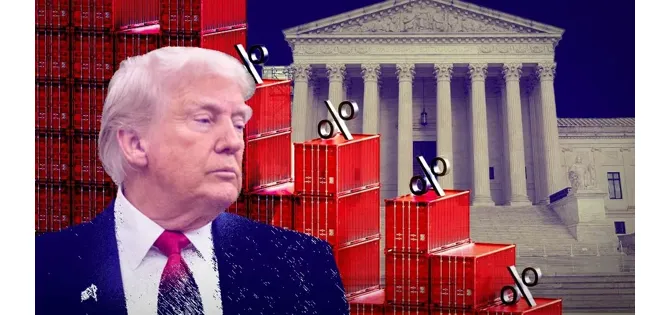
It neutralized the sting of the majority opinion. Instead of a weaponized decision rebuking Trump as an out-of-control dictator, Democrats got a 6-3 split with a 40-page dissent explaining exactly why the 2025-26 tariffs could have —in good faith— been considered legal. Womp womp.
The dissenters handed Trump an ironclad rhetorical shield
to deflect Democratic criticism over his first eight months of IEEPA tariffs.
The Shield for the Court.
The decision likewise provided SCOTUS cover for new political possibilities. Yesterday’s jubilant headlines praised the Supreme Court’s “independence,” “grit,” and “defiance.” According to corporate media, SCOTUS just handed Trump a “devastating loss.” And President Trump is earning an Oscar playing the wounded victim like nobody’s business. Wall Street Journal, yesterday:
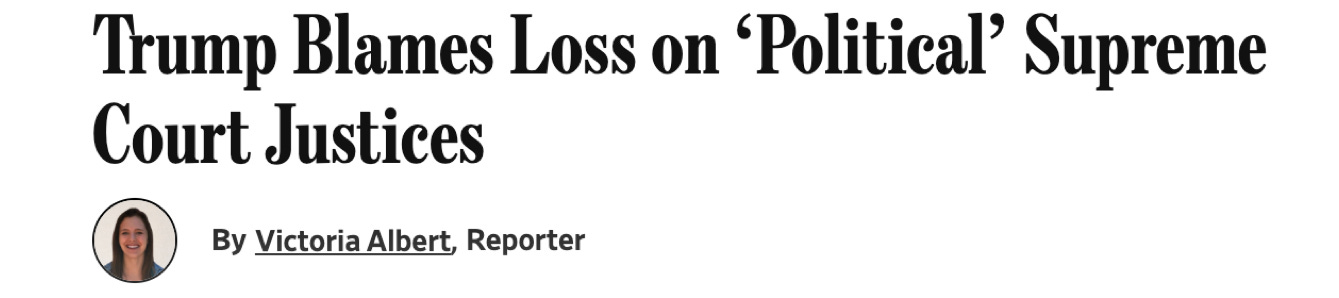
The President vented rage and vexation toward the three conservative Justices who voted against him. Meanwhile, across town, unflappable Treasury Secretary Scott Bessent sang a completely different tune. “Our estimates show that the use of Section 122 authority, combined with potentially enhanced Section 232 and Section 301 tariffs,” the Secretary calmly explained, “will result in virtually unchanged tariff revenue in 2026.”
Across the oceans, foreign countries think nothing will change either. Wall Street Journal headline, this morning:
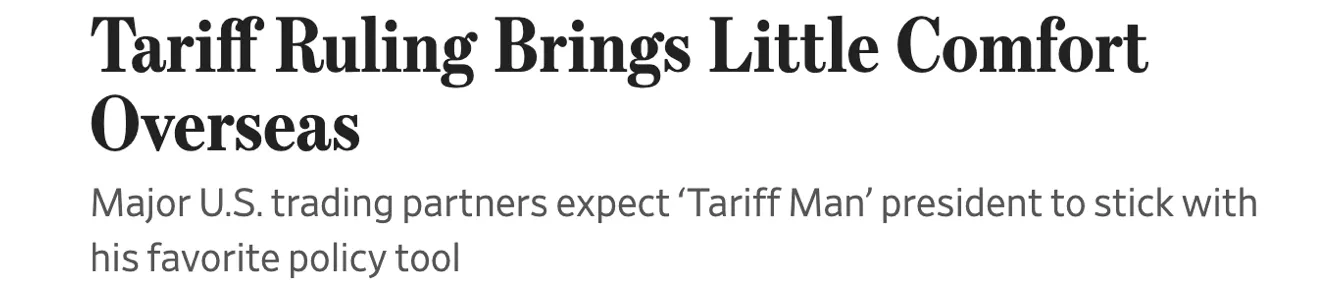
So the Court earned applause from media midwits —political capital— while not actually harming Trump’s agenda in any way.
The Machete.
The majority’s legal reason for chopping out IEEPA’s tariff power was actually another gift to conservatives— a sharpened machete. Since 2022 or so, the Court has been sharpening a legal rule called the “Major Questions Doctrine” (MQD), which basically says the Executive Branch can’t just ‘read between the lines’ or ‘fill in the gaps’ of statutes, even if they are badly written or ambiguous.
MQD is widely considered a revolutionary tool that could finally clear the ungovernable wilderness of the administrative state— a goal conservatives have longed for since the FDR days.
Even sharper after yesterday’s decision, MQD provides that if a statute doesn’t say something, executive agencies like the EPA or CDC can’t regulate into existence what are essentially new laws. For example, SCOTUS first used the muscular new version of Major Questions to strike down Biden’s OSHA mandate forcing businesses with more than 100 employees to require the jabs.
Had yesterday’s decision swung the other way, had SCOTUS let Trump extrapolate tariffs from IEEPA, it would have undermined the terrific MQD machete, which is one of the Roberts Court’s most important restrictions on future Democrat presidents. After this decision, the MQD is even stronger. Swing away, boys. Chop, chop.
Corporate media has already been calling it “Trump’s Court.” Let’s say the Court planned to rule in the President’s favor on something really big. It might need a loss on the record first, to show the Court isn’t just another rubber stamp on President Trump’s desk. Now consider what else is floating down the SCOTUS pipeline.
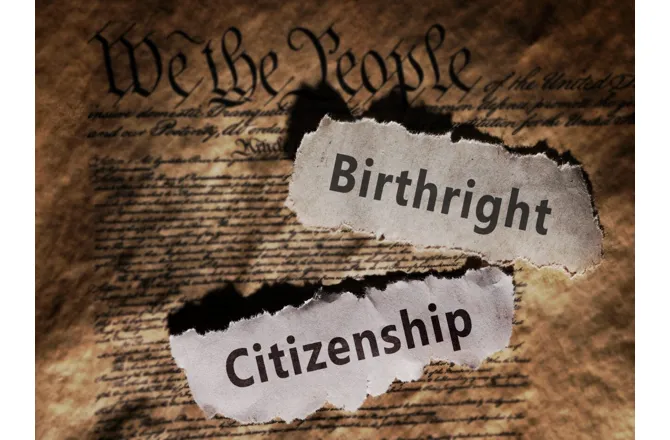
Over the next few months, the Court will make several seismic decisions:
- Birthright citizenship— which could forever end birth tourism.
- Section 2 of the Voting Rights Act— which could add up to 27 additional Republican House seats.
- Fed Independence and Firing of Agency Heads— which could give President Trump de facto control of the Federal Reserve.
The birthright case alone could reset the political board. Restricting automatic citizenship to only children of existing citizens would create a “mess,” just like the tariff decision did. And it’s coming The Center Square, yesterday:

The Democrats’ excitement is destined to be short-lived. Soon, it will be even more obvious that Trump’s tariffs are here to stay. But the lasting effects —the firewall against future Democrat presidents, a machete to chop through the administrative state, a shield protecting the next few big Trump wins— will be paying off for generations.
 Science Matters