 Gwyn Morgan reports on nonsense in Canada in his Financial Post article Net zero is dead. Why is Carney still pushing it?. Excerpts in italics with my bolds and added images.
The PM did abolish the consumer carbon tax,
though only by shifting it to businesses.
Delegates at the first World Climate Conference held in 1979 adopted a declaration calling on governments to “foresee and prevent man-made changes to the climate that might be adverse to the well-being of humanity.” It was, in effect, a declaration of war against the oil and gas industry.
At the time, I was the president of a Calgary-headquartered oil and gas company that I had co-founded, as well as volunteer-president of our industry’s public communication vehicle, the Independent Petroleum Association of Canada. My industry colleagues were reluctant to take on the global climate elite, but I believed doing so was vital to the future of our industry, which was the bedrock of western Canada’s economy. My public commentary was, of course, condemned as evidence that I was only out to save the oil and gas industry.
But it wasn’t just my responsibility as an industry leader that called me to challenge that World Climate Conference declaration. I knew that extremely hot temperatures had been occurring long before that first Kyoto conference. For example, in the 1920s European immigrants settled in the verdant grasslands of southeastern Alberta. Some of those hopeful settlers were my wife’s grandparents. A decade later, rain stopped falling and temperatures soared as high as 43 C. Hot, dry winds blew precious topsoil away, spawning choking dust storms. The “Dirty Thirties” had arrived. Starving settlers turned to eating rabbits, gophers and anything else edible they could scrounge. Parents took their kids to school in blinding dust storms, clutching fencelines and breathing through bandanas. And the wind kept blowing through the long, cold Alberta winters. Contrary to net-zero zealots’ rhetoric, half of Canada’s 20 hottest days pre-dated that 1979 World Climate Conference.
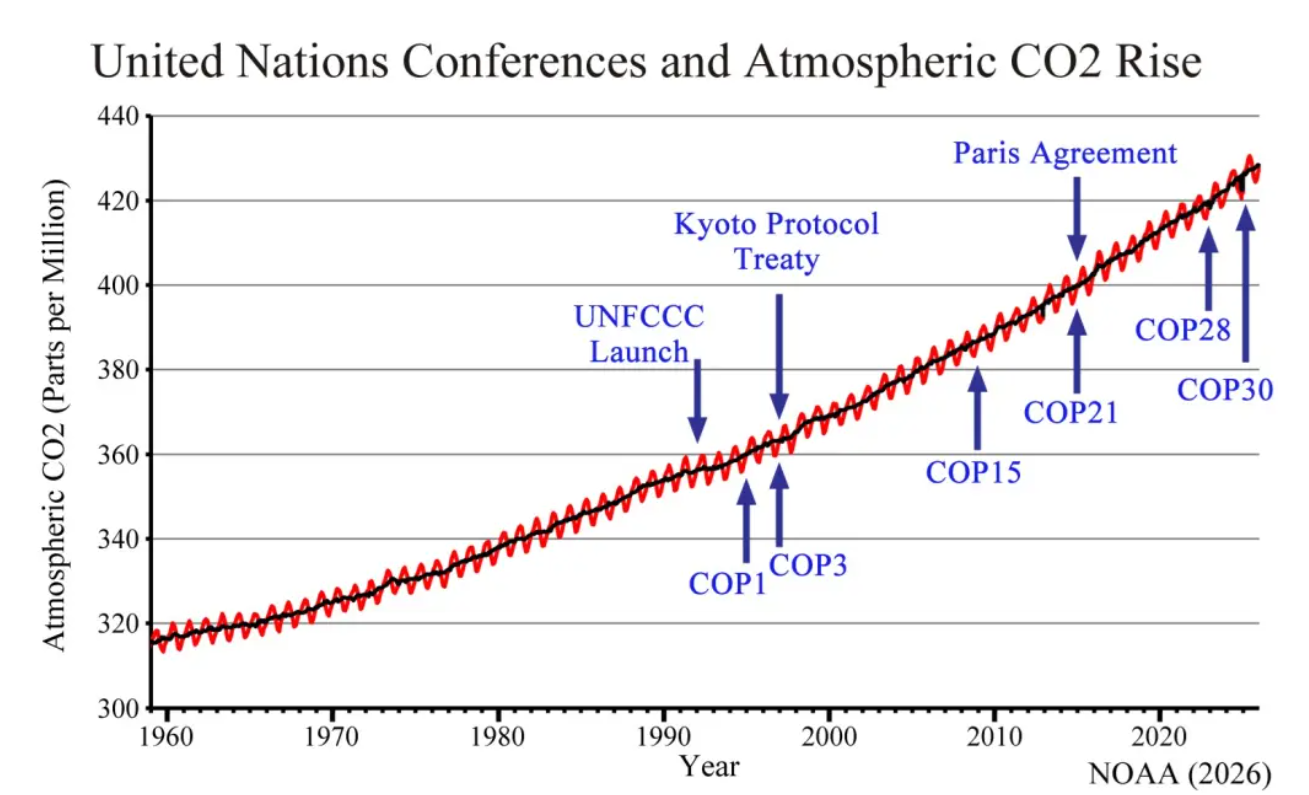
World Climate Change Conferences continued during the 1980s and 1990s, each featuring more alarmist rhetoric than the last. At the 1997 conference in Japan, 37 industrialized countries adopted the “Kyoto Protocol,” which committed them to reducing green-house gas emissions to five per cent below 1990 levels by 2012. The war on fossil fuels was on in earnest, and it was destined to escalate to ridiculous heights. At the 2012 conference in Qatar, the rich countries committed to reducing emissions by at least 18 per cent below 1990 levels by 2020.
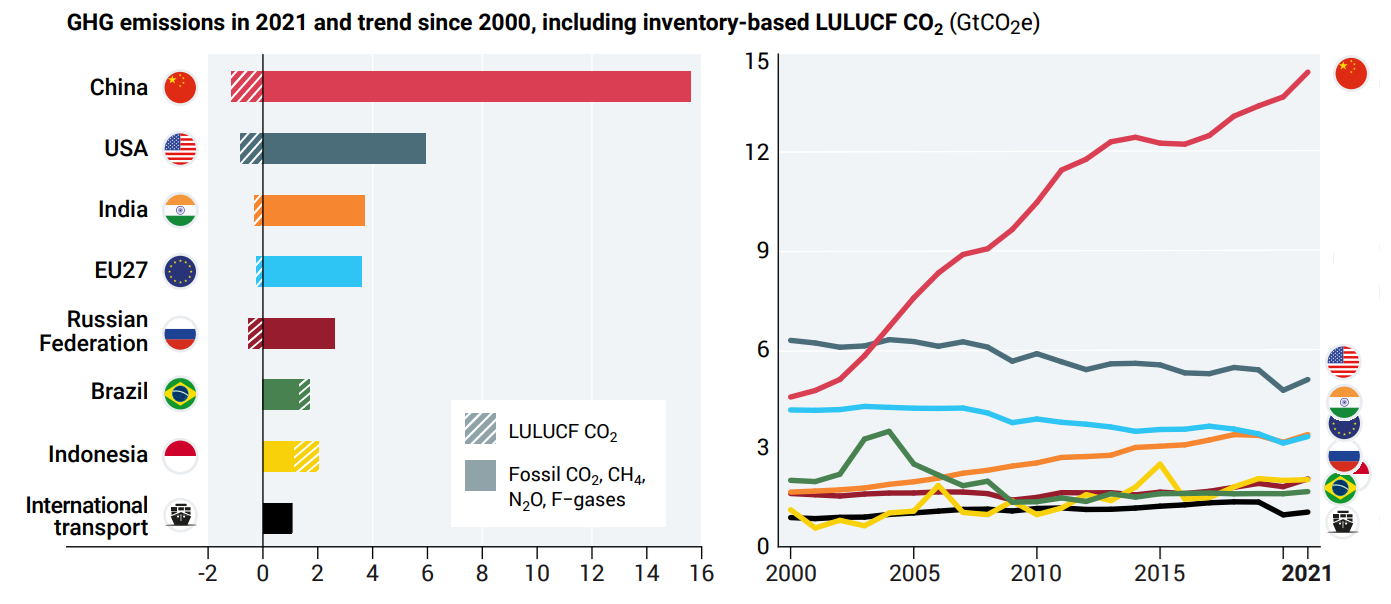
The naivety of those targets is breathtaking. Countries accounting for over half of global emissions, including China, Russia and India, continued their rapid growth without constraint. Virtually all other Asian, Middle Eastern and South American nations had no intention of playing the Kyoto game. Their emissions were going nowhere but up.
The 22nd climate conference was held in Morocco in November 2016, a year after Canadians elected the Trudeau government. In keeping with the new prime minister’s zealous embrace of the cause, environment minister Catherine McKenna led a delegation of 225, one of the largest among the 100 countries assembled. That cost taxpayers a lot in emissions-spewing flights!

Imagine our delegation’s shock when, just 24 hours after the conference opened, they heard the soon-to-be 45th U.S. president, Donald Trump, declare that man-made global warming was a “big hoax” promulgated by China and other countries wanting to steal American jobs.
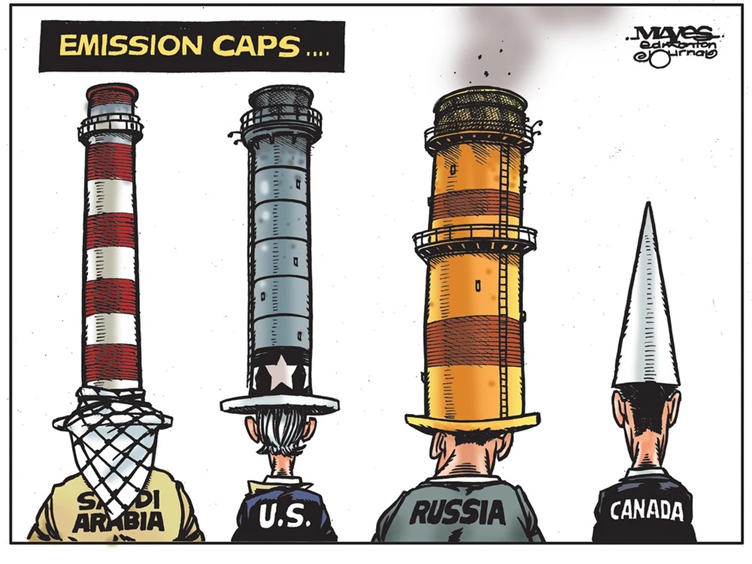
With all the major players sidelined, who was left to save the planet from climate Armageddon? Just the EU, Japan and Australia, with a combined emission share of 15 per cent. And Canada, adding our minuscule 1.6 per cent. But futility didn’t deter the Trudeau government from saddling Canadians with carbon taxes and taxpayer-funded wind and solar power subsidies in pursuit of its “net-zero” holy grail.
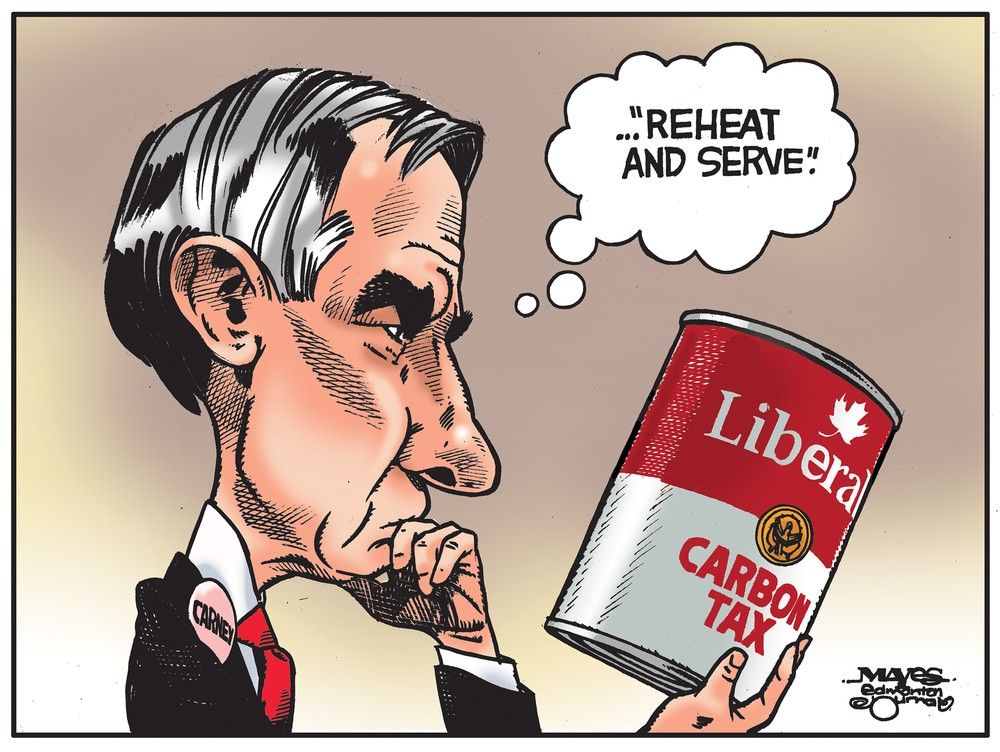
Now we have a new prime minister who is trying to appear less committed to the net-zero mission. But the transformation of the UN Secretary General’s “special envoy on climate action and finance” has been less than biblical. True, one of his first actions on taking power was to remove the despised consumer carbon tax. But that was largely sleight-of-hand, moving the tax out of public view onto beleaguered businesses already struggling with Trump tariffs.
Meanwhile, the foundations of the net-zero emissions religion are crumbling rapidly. In 2021, Microsoft founder Bill Gates wrote a pro-carbon tax book entitled “How to Avoid a Climate Change Disaster.” But four years later, in a letter published on the eve of the most recent UN COP conference, he advised, “too many resources are focused on emissions and the environment. More money should go toward improving lives and curbing disease and poverty.” And he called out the “doomsday view” of climate change, urging world leaders to make a strategic pivot and focus on issues that “have the greatest impact on human welfare.”

Net-zero fatigued Canadians should be asking their prime minister, “Why are you weakening our already struggling economy with carbon taxes and wasting taxpayer money subsidizing wind farms when it will make no perceptible difference to the global climate?” He owes them an answer.

 Science Matters
One comment