In the above brief interview Nobel Laureate John Clauser explains simply and clearly why CO2 climate hysteria is bogus. For those preferring to read, below is a transcript in italics with my bolds and added images.
Nobel Laureate John Clauser: Climate Models Miss Key Variable
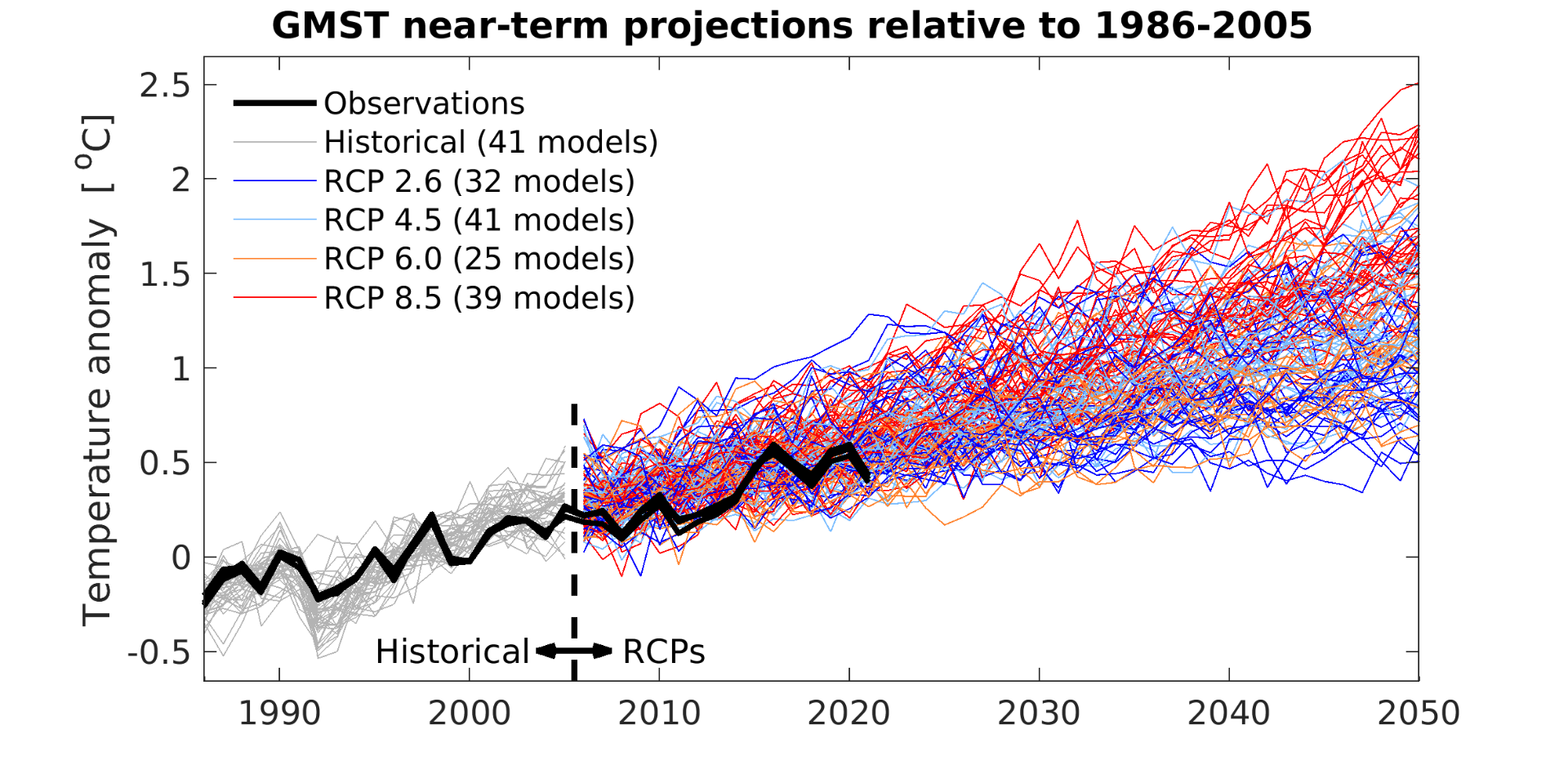
I think one of the more important things that’s happened recently is a gentleman, Steve Koonin, who was Barack Obama’s science advisor, recently published a very important seminal book called Unsettled, What Climate Science Tells Us, What It Doesn’t, and Why It Matters. It’s a very important book, and his basic message is that the IPCC has 40 different computer models, all of which are making predictions, and all of which are being quoted by the press as predicting a climate crisis apocalypse. The problem is they all are in total disagreement, violent disagreement with each other in their predictions, and not one of them is capable of predicting retroactively, of explaining the history of the Earth’s climate for the last hundred years.
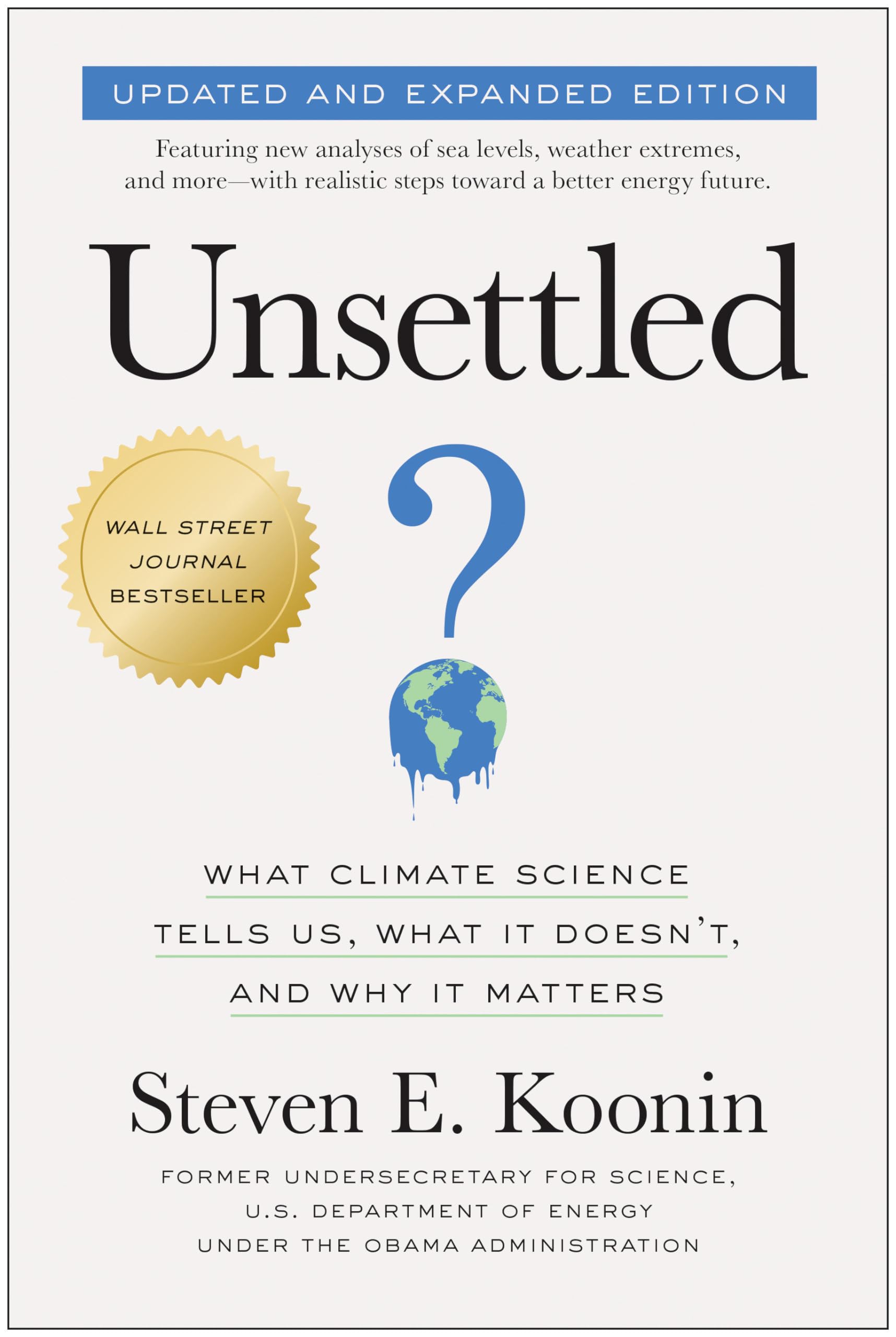
He finds this very distressing, and he then correspondingly says or believes that there is an important piece of physics that is missing in virtually all of these computer models. So what I’m adding to the mix here is I believe I have the missing piece of the puzzle, if you will, that has been left out in virtually all of these computer programs, and that is the effect of clouds. The 2003 National Academy report totally admitted that they didn’t understand it, and they made a whole series of mistaken statements regarding the effects of clouds.
If you look at Al Gore’s movie, he insists on talking about a cloud-free Earth, and the only way he can do this, he generates one from the mosaic of photos. Each one taken on a cloudless day for covering the whole Earth. That’s a totally artificial Earth, and is a totally artificial case for using a model, and this is pretty much what the IPCC and others use is a cloud-free Earth.
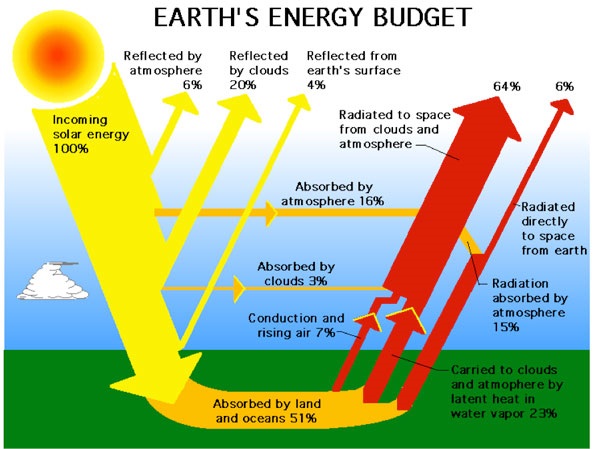
If you look at pictures of the Earth in visible light, i.e. real sunlight, which is sunlight is the stuff that heats the Earth. The infrared re-radiation is the stuff that that cools the Earth, and it’s the balance between these two that controls the Earth’s temperature, and the important piece of the puzzle that has been left out is trying to do this all with a cloud-free Earth, when the real Earth is shrouded in clouds. I have some pictures, I don’t know if you can show them, of satellite pictures of the Earth.
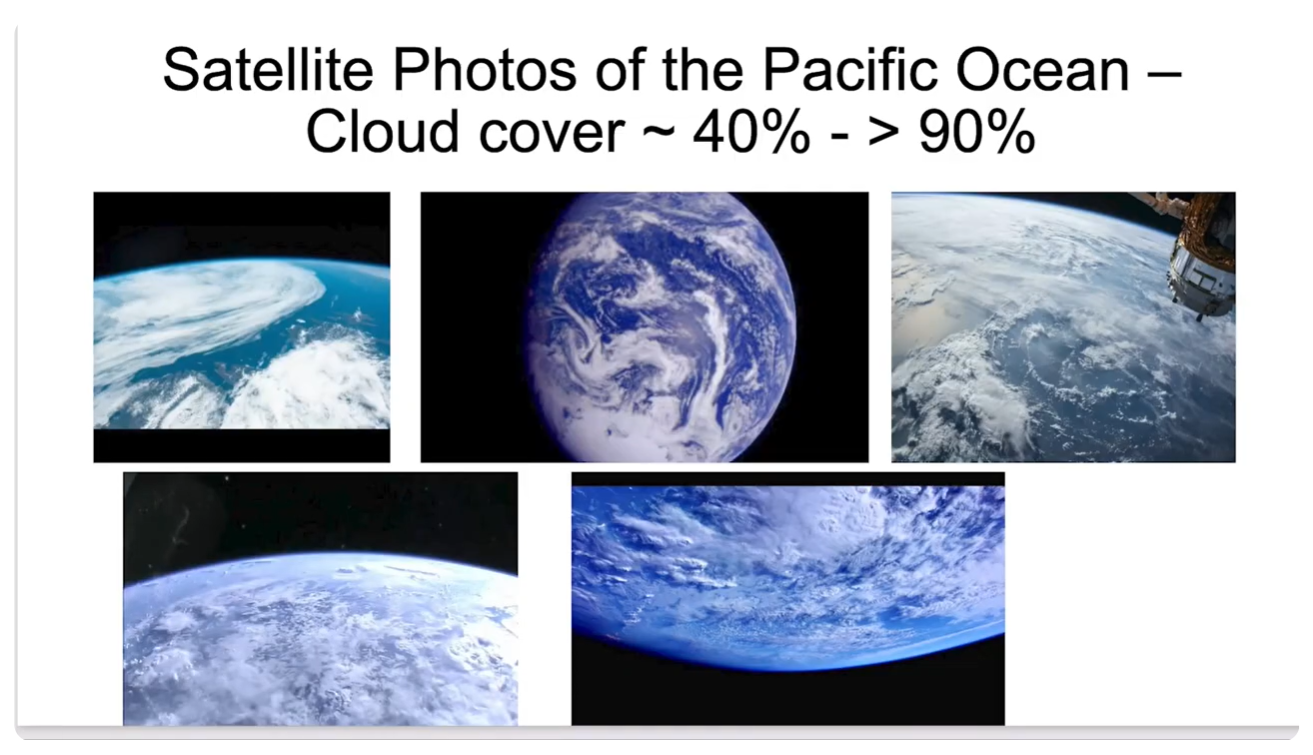
These are all freely available on NASA’s website, and they show cloud cover variations anywhere from 5 to 95 percent. Typically, the Earth is shrouded in clouds at least between a third of its area to two-thirds of its area, and it fluctuates, the cloud cover fraction fluctuates quite dramatically on daily, weekly time scales. We call this weather.

You can’t have weather without having clouds, and it is this fluctuation in cloud cover of the Earth that causes what I would refer to as sunlight reflectivity thermostat that controls the climate, controls the temperature of the Earth, and stabilizes it very powerfully and very dramatically. This mechanism, totally heretofore unnoticed, and I call it kind of an elephant in the room, hiding in plain sight that nobody seems to have noticed. I can’t imagine why not, but there were similar elephants in the room in quantum mechanics that I discovered.
So the variation in the cloud cover, the importance in the actual power balance is 200 times more powerful than the effect, the small effect by comparison of CO2. And I might add also of methane. Methane and CO2 are comparable in the total heat loss.
So let me give you an example of how this mechanism works. Okay, first off, you have to notice that the Earth is two-thirds ocean, and that’s where most of the importance of the clouds comes in. Sunlight is the heating mechanism.
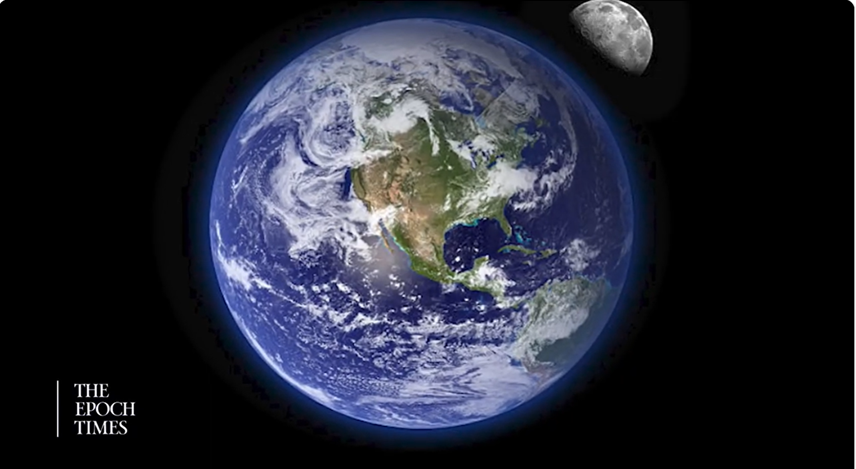
Clouds appear bright white. Ground, oceans, etc. are very dark and reflect very little light.
But clouds reflect 90% of the sunlight that hits them, gets reflected back out into space, where it no longer comes to the Earth, no longer heats the Earth. Say you only got a third of a cloud cover. So you now have lots and lots of sunlight.
Sunlight impinging on the ocean evaporates seawater. Seawater forms water vapor. The water vapor floats up into the sky and forms clouds. It forms lots and lots of clouds because the cloud creation rate is very high. But we started out with too low set of clouds, and now we have an increasing number. So now we end up with very high cloud coverage.
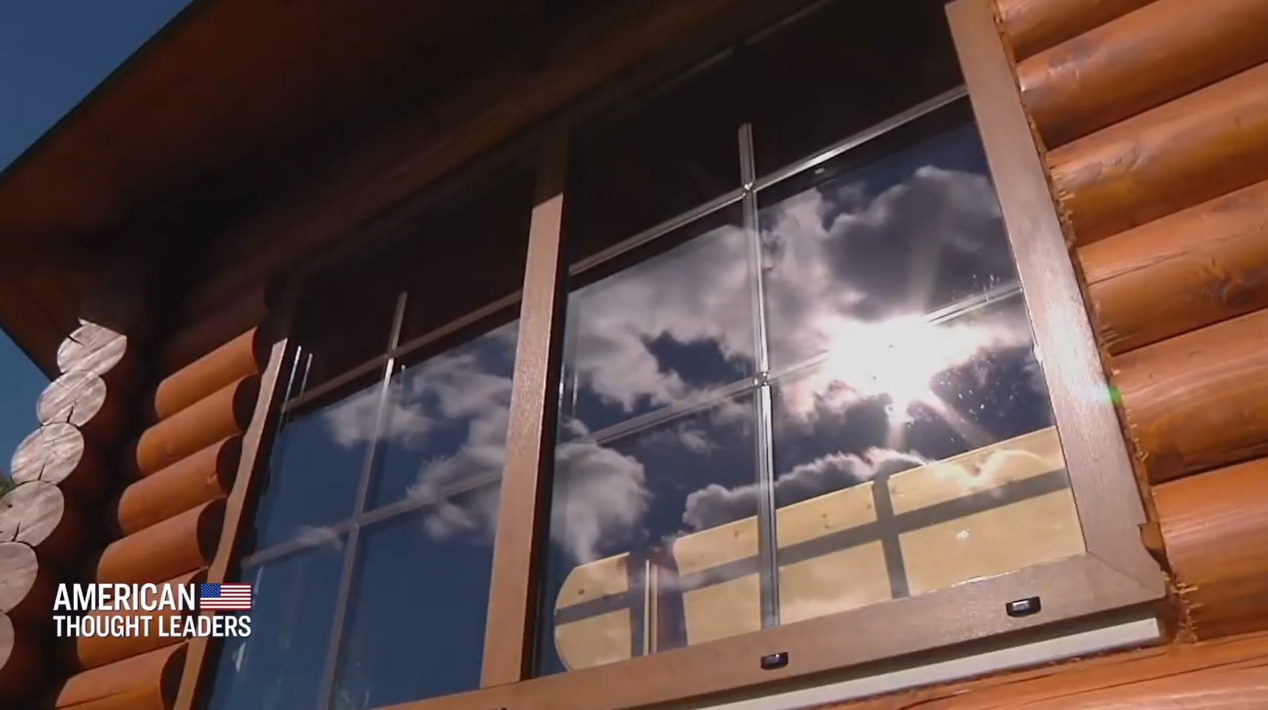
Okay, so now say it’s two-thirds. Well, let me give you an example. If you want to try to read a book on an overcast day indoors without turning the lights on, it’s just too dark. You can’t do it without turning the lights off. The question is, where did all that sunlight go? It’s coming in scattered light coming in through the window, but boy, it’s a lot darker now. So where did it go? There’s only one place.
It got scattered back out into space where it’s no longer hitting the Earth. So, okay, so we now have the total power input coming to the Earth is now much, much smaller. Okay, well, this is happening on the oceans too. If you have large cloud cover, you have a lot of shadows. Clouds create shadows. You can see this by standing and watching clouds pass over. Well, the oceans are now shadowed. The shadows don’t have enough energy to evaporate anywhere near as much water. So we have too much cloud cover.
Then we reduce the evaporation rate of water, and so that then reduces the production of cloud. So we now have these two competing clouds. Okay, so the power loss is like 104 watts per square meter when we only have a third cloud cover, and 208 watts per square meter of surface area of the Earth when we have a very low cloud cover.
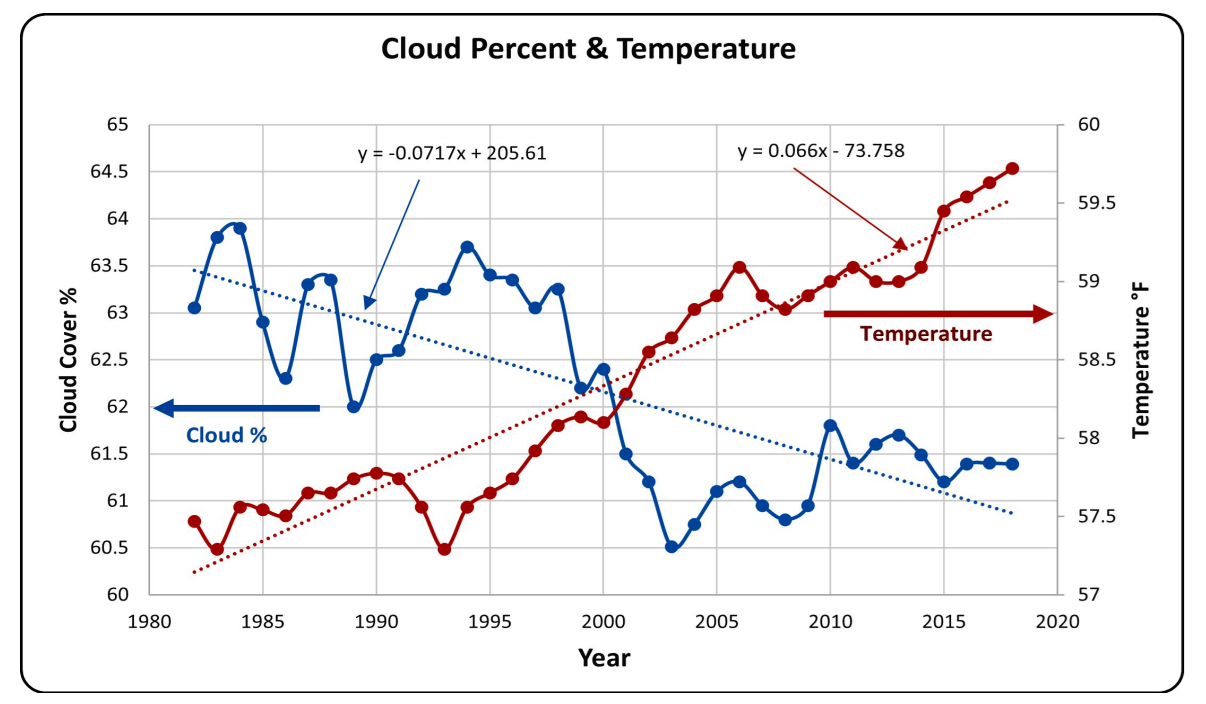
Figure 10. This graph is the cloud fraction and is set forth on the left vertical axis. The temperature is on the right vertical axis and the horizontal axis represents the observation year. The information was extrapolated from figures prepared by Hans-Rolf Dubal and Fritz Vahrenholt [37]. Source: Nelson & Nelson (2024;)
So I then assert that this is so powerful. I mean, it’s like your house has a huge furnace with a very accurate thermostat controlling its temperature, and somebody leaves a minor, a small bathroom window, and there’s a small heat leak. Would the rest of the house notice a change in temperature? None if your thermostat is working very well.
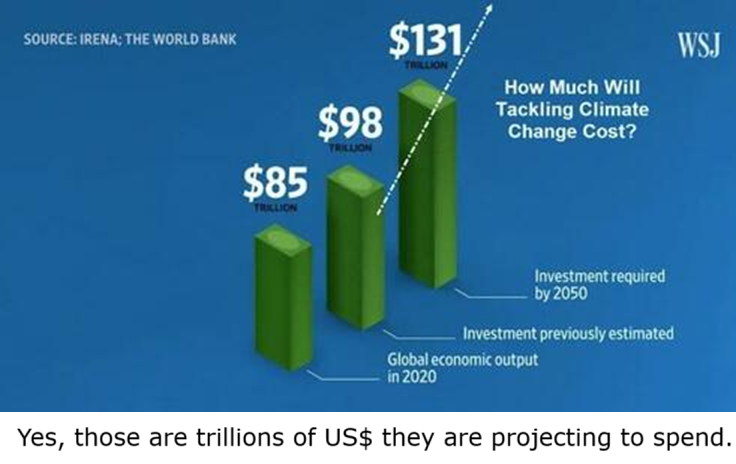
This is clearly the most important, the controlling mechanism for the Earth’s temperature and climate, and it dwarfs the effect of CO2 and methane. All the government programs that are designed to limit CO2 and methane should be immediately dropped. We’re spending trillions of dollars on this, and it’s sort of like Everett Dirksen’s famous line, you know, a trillion here, a trillion there, and pretty soon you’re talking real money.

See Also:

 Science Matters
“the difference between those is the order of 104 watts per square meter of surface area. That needs to be compared with this minuscule half a watt per square meter of surface area that CO2 contributes. So the power in this thermostat, in terms of what they refer to as radiative forcing, these are the how many watts per square meter of surface area are involved, is 200 times more powerful than the effect of CO2 and also methane, by the way.”
I think it may be far more then that. Once again residence time rules. The residence time of energy TSI entering the oceans in a cloudless sky is magnitude longe then the residence timeof the same TSI striking clouds. Thus a decrease in cloud cover has a far greater w/sq_m warming effect.
LikeLiked by 1 person
Earth is the water planet,
Noah’s flood is with us yet.
Models that don’t do clouds
Aren’t models of Planet Earth.
LikeLiked by 1 person
Clauser’s hypothesis is a control loop.
But then, what happened in 2000 with this sudden decrease in cloud cover ?
If clouds control T, what controls clouds ?
LikeLike
Geoffray, there’s some evidence that solar activity contributes to brightening and dimming, the former increasing clouds and the latter reducing clouds.
LikeLike
Thank you , Mr Clutz !
Vinos seemed to discard the Svensmark effect : during the Holocene, Earth was struck by supernova rays, and he did not see any cooling at that time (so no increased nucleation) a reason why he looked for another climate loop.
Maybe both mechanisms are at play. What a fascinating puzzle !
Recently, I’ve come across new Stefani’s papers about the planetary-solar hypothesis. Springer has many nice articles in its Solar physics collection.
LikeLike
Yes, the Stefani paper points to SSTs driving climate change and links fluctuations to solar activity as measured by the “aa” index. Several others are focusing also on SSTs, as noted in my post:
LikeLike
This is similar to what Nikolov & Zeller have been saying for several years now e.g. here…
LikeLike
True Oldbrew. At the time I celebrated the N&Z publication with this:
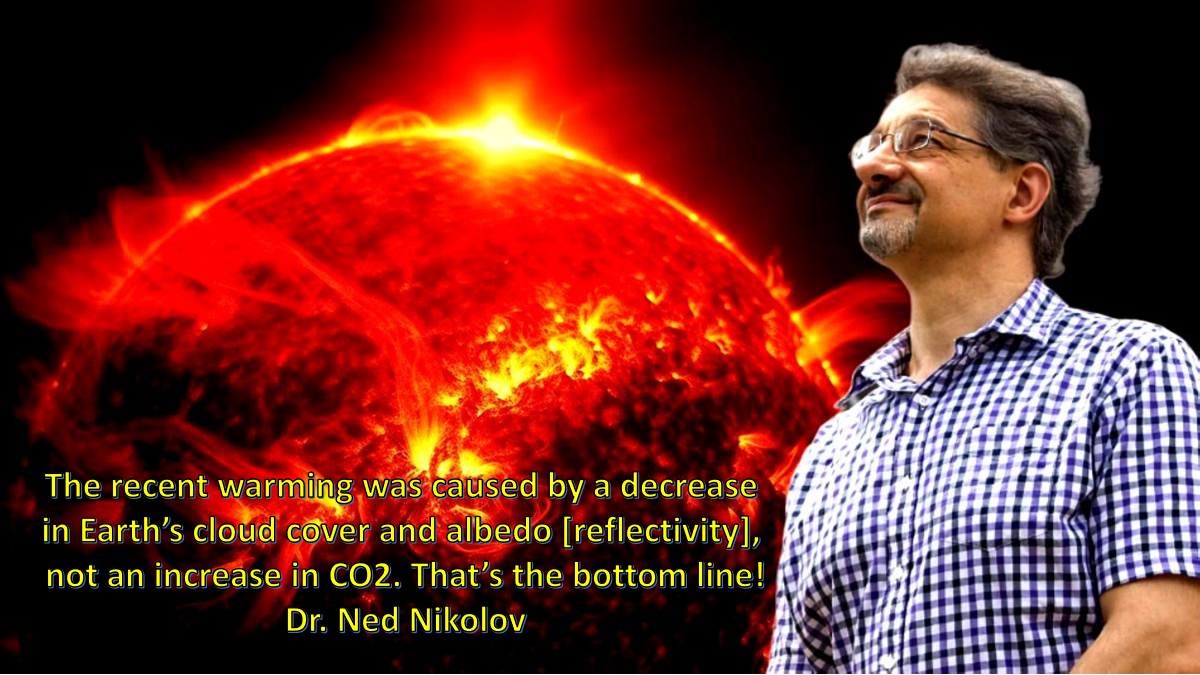
That said, I appreciate Clauser’s plain language discussion of the cloud mechanism.
LikeLike