
Ralph Alexander delves into the phony studies by worldweatherattribution.org in his GWPF paper Contorted Science: The Flawed Logic of Extreme Event Attribution. Excerpts in italics with my bolds and added images.
London, 24 March. Extreme weather attribution studies are based on flawed logic and generate misleading headlines, according to a new briefing paper from The Global Warming Policy Foundation (GWPF).
In Contorted Science: The Flawed Logic of Extreme Event Attribution, Dr. Ralph B. Alexander argues that studies attempting to link specific heatwaves, hurricanes and floods to human-caused climate change are fundamentally misleading and have been created for legal and political, rather than scientific reasons.
The paper scrutinises recent high-profile studies by World Weather Attribution and the Grantham Institute. In 2025 alone, World Weather Attribution claimed that 24 of 29 extreme events examined were made more severe or more likely by climate change.
Alexander shows how such conclusions depend heavily on climate models that struggle to reproduce historical climate patterns and assume scientists can accurately simulate a “natural” climate without human emissions.
Some key recurring weaknesses are identified within attribution studies:
- Flawed logic: attribution claims involve “begging the question”, the act of simply assuming the conclusion you are trying to investigate.
- Statistical practices that inflate headline probability claims while downplaying uncertainty.
- The neglect of historical records showing comparable extreme events long before modern emissions levels.
The report traces the growth of rapid event attribution to political frustration with the cautious conclusions of the Intergovernmental Panel on Climate Change (IPCC), which has expressed low confidence in long-term global trends for most types of extreme weather. It recognises the role of a 2012 meeting convened by the Union of Concerned Scientists. The meeting was aimed at strengthening the perceived link between extreme weather and climate change in order to pursue litigation against fossil fuel companies.
The report’s author, Ralph Alexander, said:
“Extreme event attribution studies are a blot on science, the hallmarks of which are empirical evidence and logic. Neither feature is central to attribution studies, which were created for legal and political not scientific reasons.”
Harry Wilkinson, Head of Policy at The Global Warming Policy Foundation said:
“It is disturbing that event attribution studies have got so much traction in the international media, despite their underlying flaws. This is a major scientific scandal.”
Read the full report: Contorted Science: The Flawed Logic of Extreme Event Attribution (pdf)
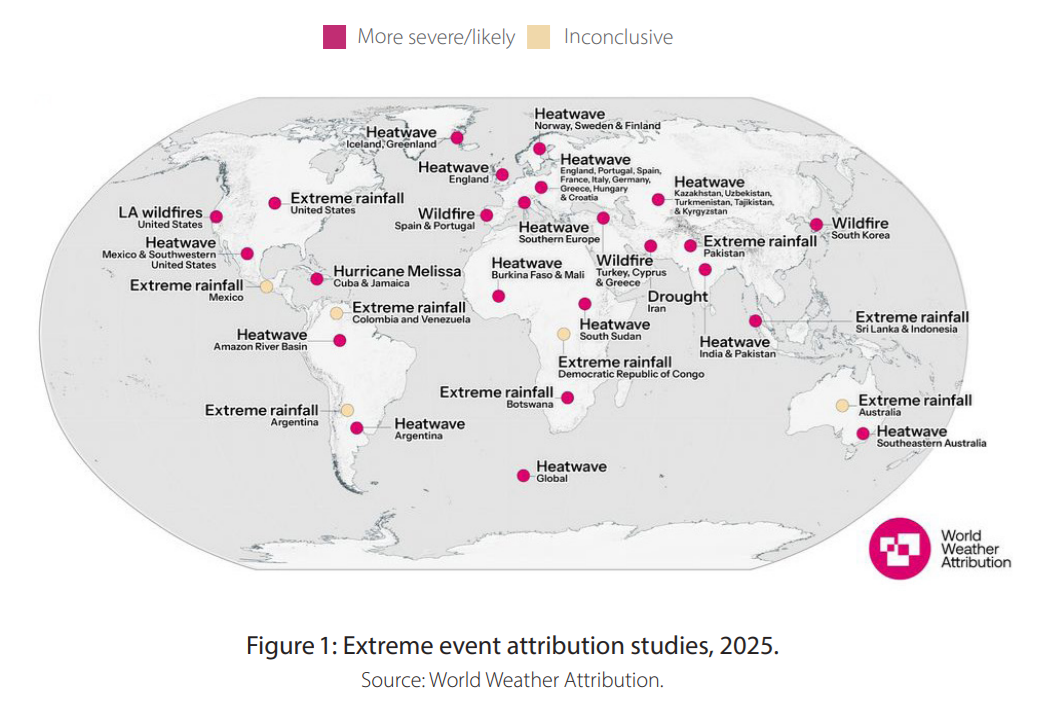
Recent event attribution studies 2025 was no exception to the ever-growing trend of assigning weather extremes to global warming: World Weather Attribution contended that 24 of 29 extreme events studied were made more severe or more likely by climate change, as indicated in Figure 1.7 That is a staggeringly large number, at a time when event attribution methodology is still highly uncertain. To begin with, attribution studies rely on computer climate models that have a dismal track record in predicting the future, or indeed of hindcasting the past. Not only do a majority of the models overestimate the warming rate, but they also wrongly predict a hot spot in the upper atmosphere that is not there, and are unable to accurately reproduce sea surface temperatures and sea-level rise.

But, more importantly, the underlying scientific basis of such studies can be questioned too, as done in a recent series of blog posts by Roger Pielke Jr., a prolific climate writer and former professor at the University of Colorado.
Pielke identifies three ‘tricks’ used in event attribution studies to justify their highly exaggerated
claims.
♦ The first, which he terms ‘attribution inflation,’ arises from mathematical sloppiness. Rounding numbers used in calculating probabilities of a particular extreme event happening, instead of retaining decimal points, can lead to inflated and misleading probabilities.
♦ The second trick, which Pielke calls ‘begging the question’ (a logical fallacy), simply assumes
the conclusion that the study seeks to prove. For example, assuming that every storm is made stronger due to warmer oceans makes it child’s play to conclude that the storm which just happened was made more likely due to climate change.
♦ The third trick, ‘ignoring evidence,’ means just that. The following sections will reveal numerous
examples.
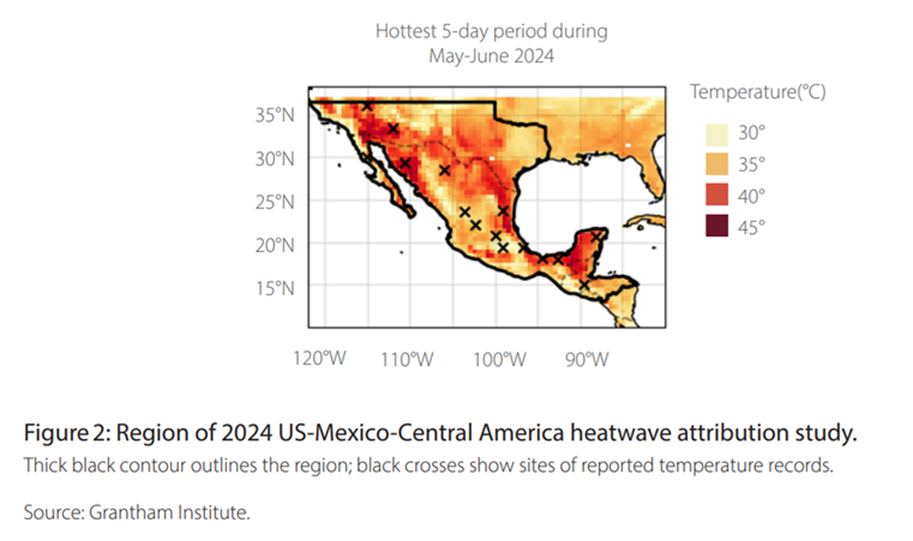
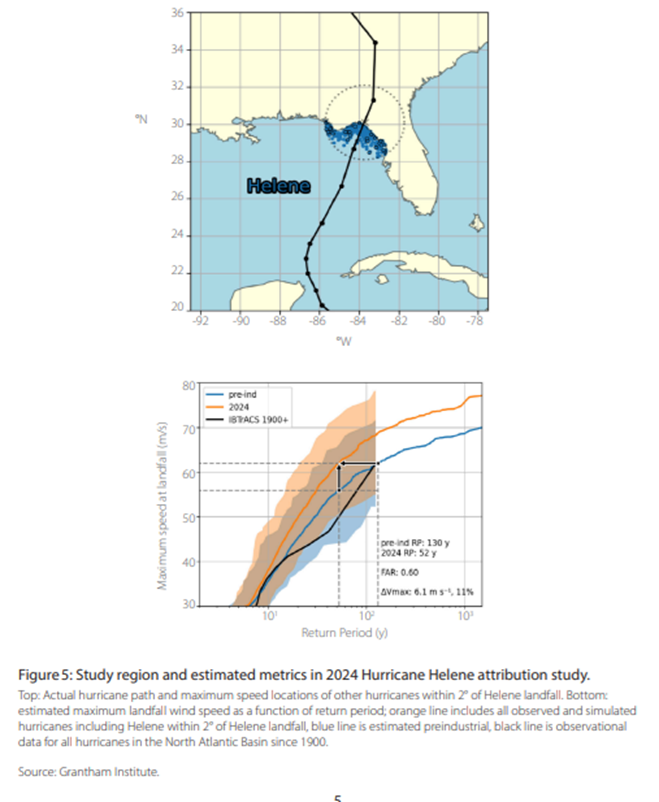
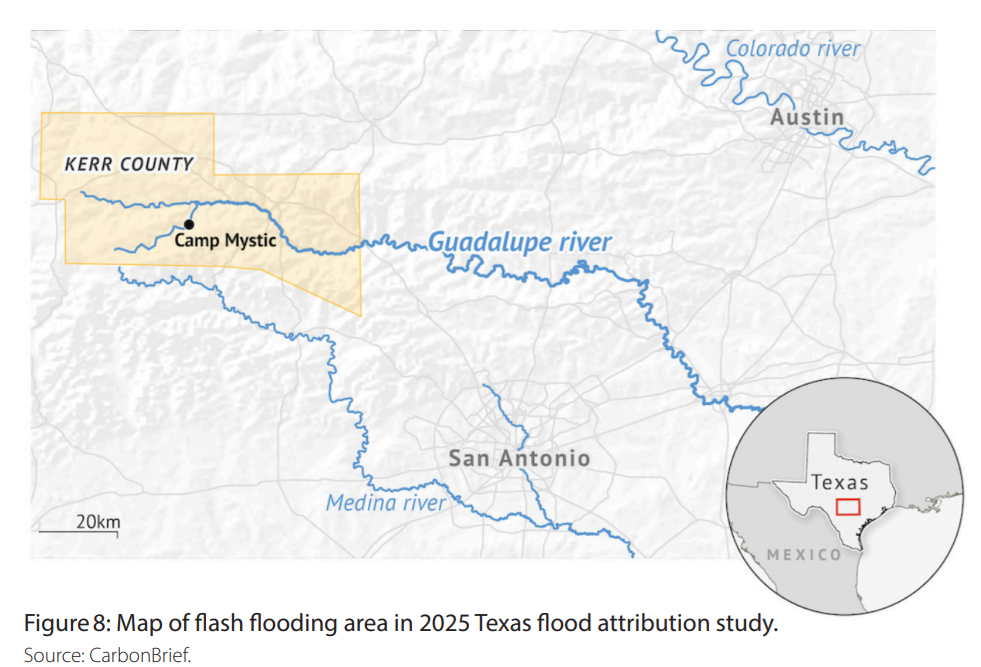
The paper goes on to deconstruct several studies including these examples:
Conclusions
Physicist Friederike Otto, WWA’s chief scientist, has stated:
Unlike every other branch of climate science or science in general, event attribution
was actually originally suggested with the courts in mind.
Apart from WWA, the US National Academies have recently established a committee to ‘examine
current scientific understanding of attribution of extreme weather events and their impacts on climate change, and consider user needs and opportunities to improve attribution science capabilities.’ Nonetheless, the committee intends to focus on the dubious science behind extreme event attribution, and not any legal ramifications.
It remains to be seen whether multiple court cases against fossil fuel companies, based on extreme event attribution, will succeed. Nevertheless, there is already a burgeoning industry of legal activists with a vested interest in exploiting so-called attribution science. By September 2024, it was estimated that 50 lawsuits had been filed by US states, counties and local governments, and about half that number in Europe and other countries.
Extreme event attribution studies are deeply flawed, with fundamental logical and methodological errors – the result of such studies being created for legal and political, not scientific, reasons. The examples presented here, involving heatwaves, hurricanes and floods, are but a few of the proliferating number of mistaken studies appearing in contemporary scientific reports.
 Science Matters