For sure you’ve seen the headlines declaring record-setting global warming heat waves in March 2026. For example from the Weather Channel:
It rewrote March record books and even topped a few April records.
Here’s our full recap on this historic early spring heat wave
and how climate change likely influenced it.
Record-breaking March heatwave, intensified by climate change, continues to shatter records across the U.S., Climate Central
Record-shattering March temperatures in Western North America virtually impossible without climate change, World Weather Attribution
2026 likely to be the Hottest year ever? If you’re like me, your response is: That’s not the way it’s going down where I live. Fortunately there is a website that allows anyone to check their personal experience with the weather station data nearby. weatherspark.com provides data summaries for you to judge what’s going on in weather history where you live. In my case a modern weather station is a few miles away March 2026 Weather History at Montréal–Mirabel International Airport. The story about March 2026 is evident below in charts and graphs from this site. There’s a map that allows you to find your locale.
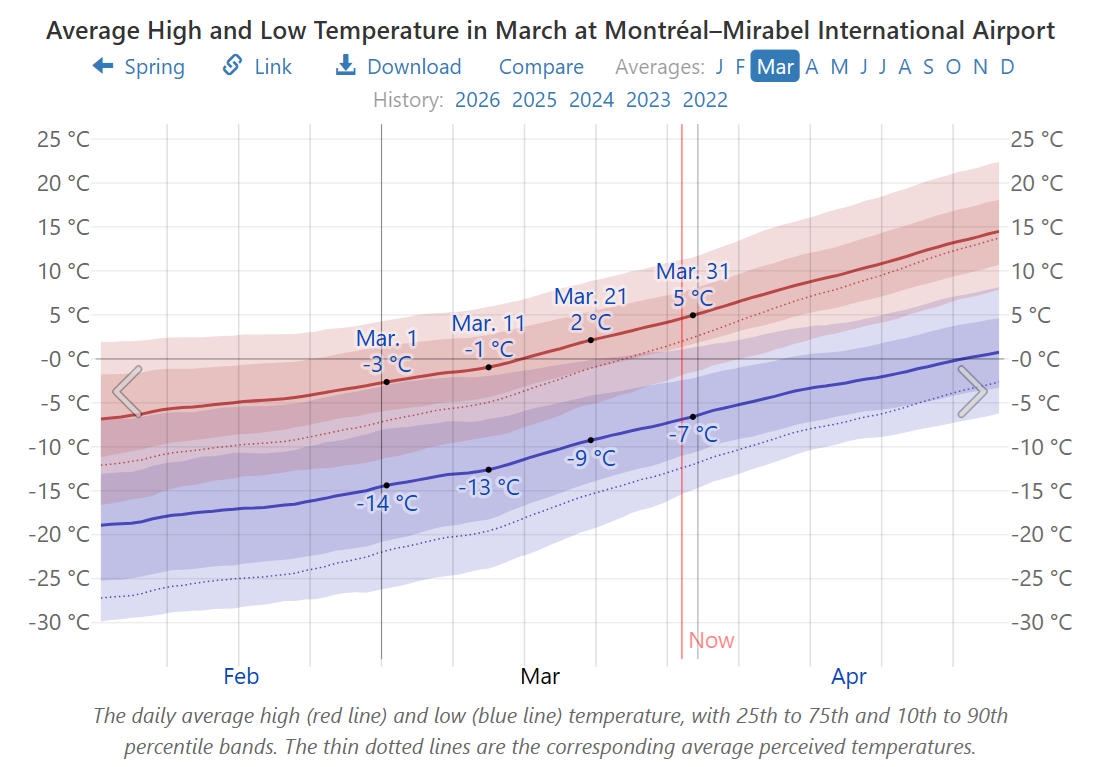
First, consider above the norms for March from the period 1980 to 2016.
Then, there’s March 2026 compared to the normal observations.
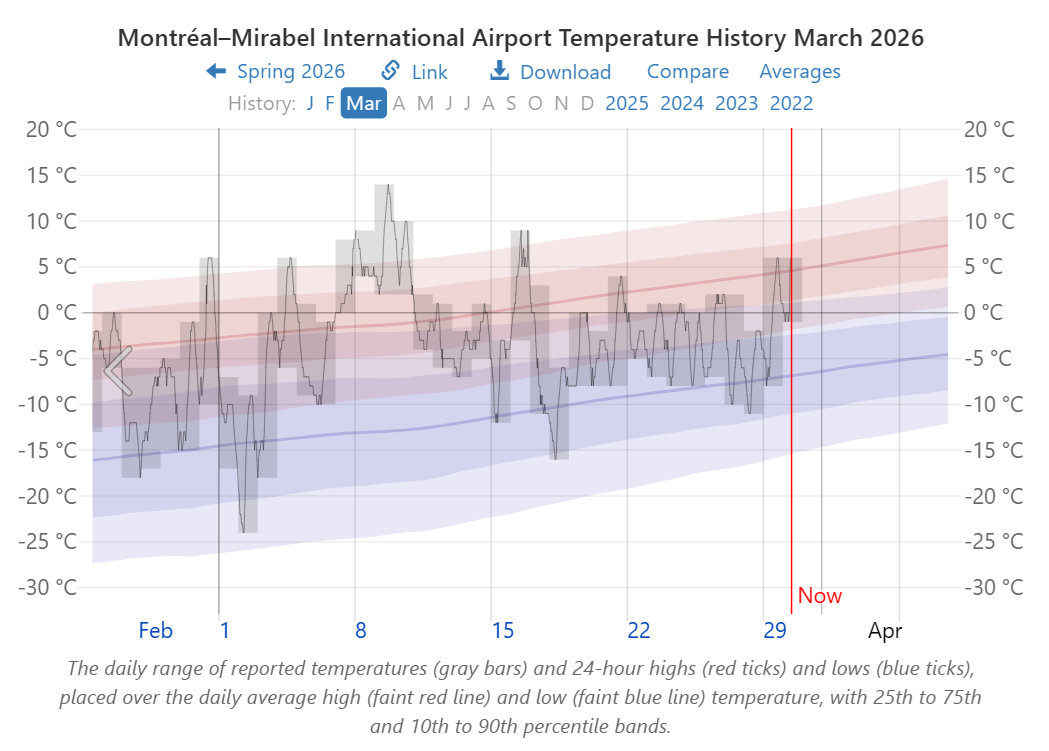
The graph shows this March had a few warm days, many days below zero and overall pretty much sub-normal. But since climate is more than temperature, consider cloudiness.
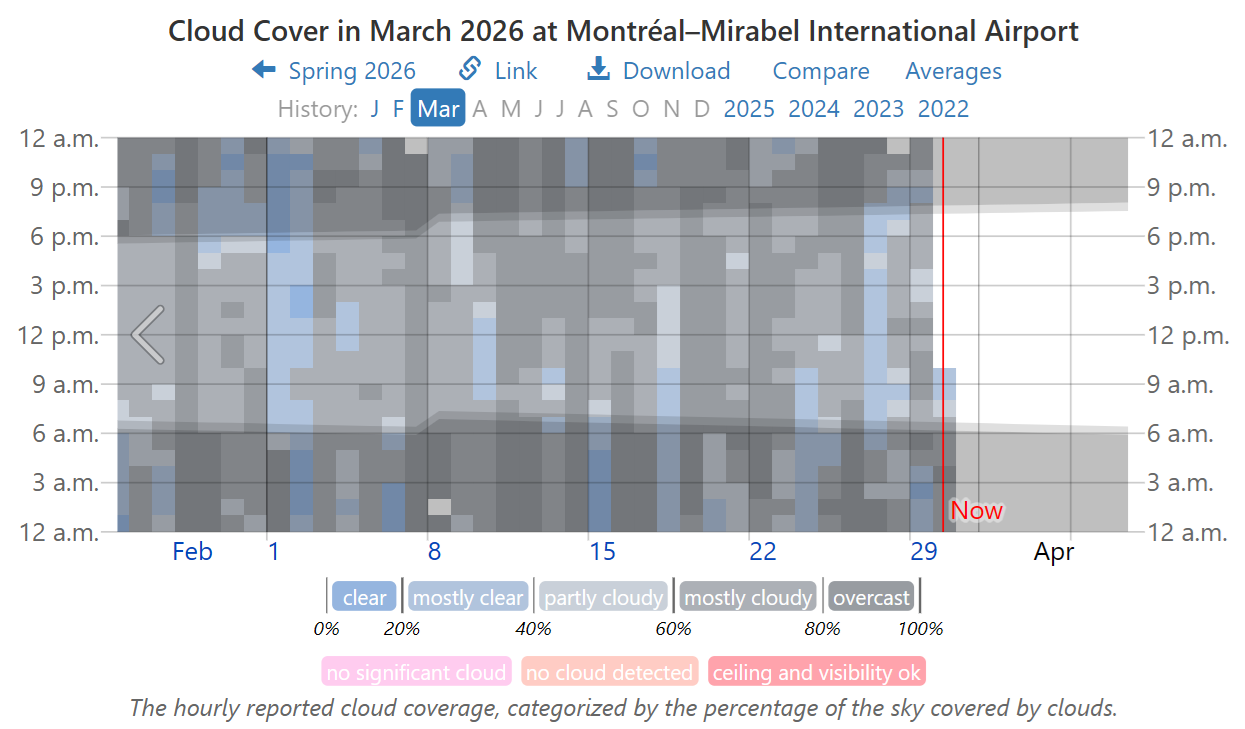
Wow, look at all that gray and just a few spots of blue. Most of the month was cloudy, which means blocking the warming sun from hitting the surface. And with all those clouds, let’s look at precipitation:
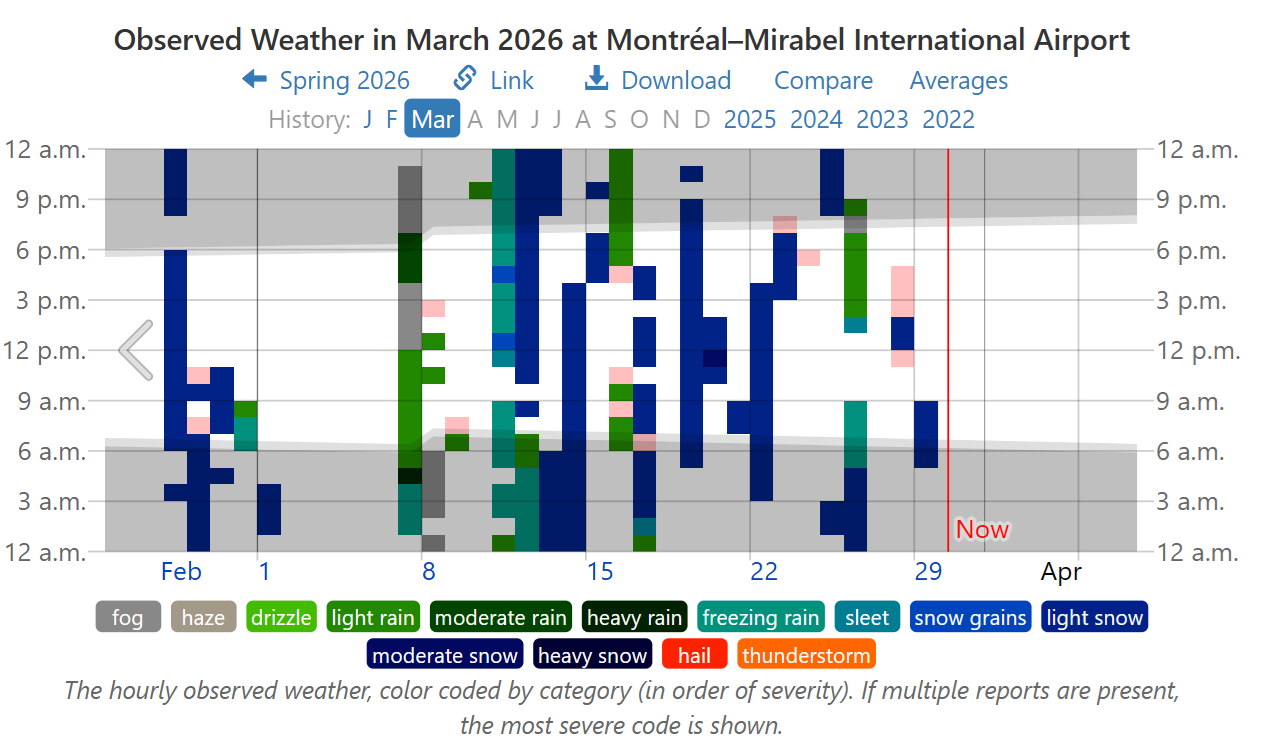
So, there were twenty-three days when it rained or snowed, including freezing rainstorms. Given what we know about the hydrology cycles, that means a lot of heat removed upward from the surface.
So the implications for March temperatures in my locale.
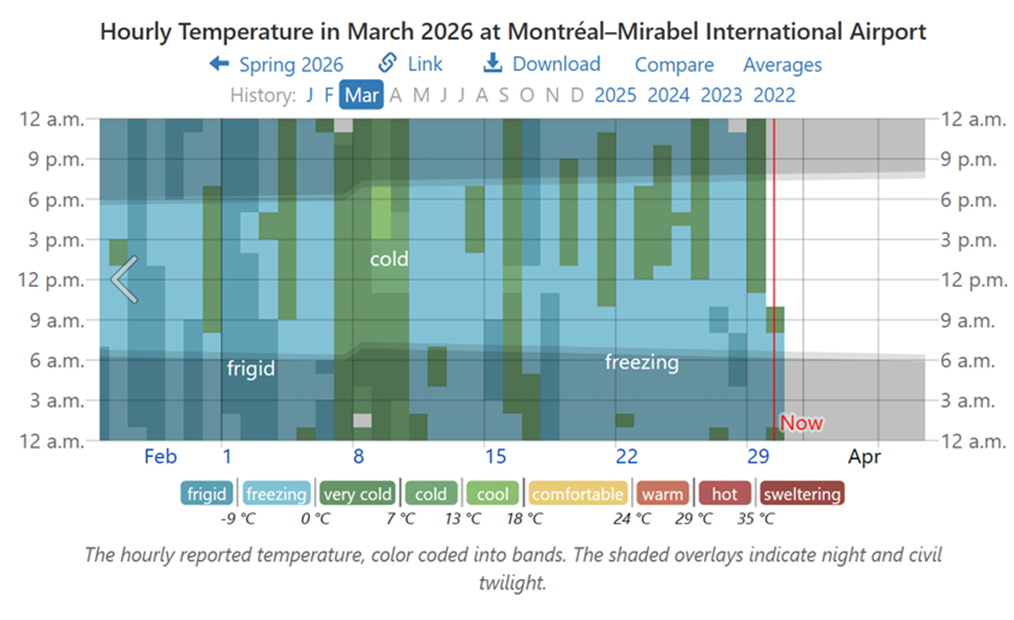
There you have it before your eyes. March is often the beginning of
spring weather, but this year was completely cold, frigid or freezing.
No sign of global warming around here.
Summary:
Claims of hottest this or that month or year are based on averages of averages of temperatures, which in principle is an intrinsic quality and distinctive to a locale. The claim involves selecting some places and time periods where warming appears, while ignoring other places where it has been cooling. Attribution studies select hot spots and exclude cold places, despite CO2 supposedly being evenly distributed.
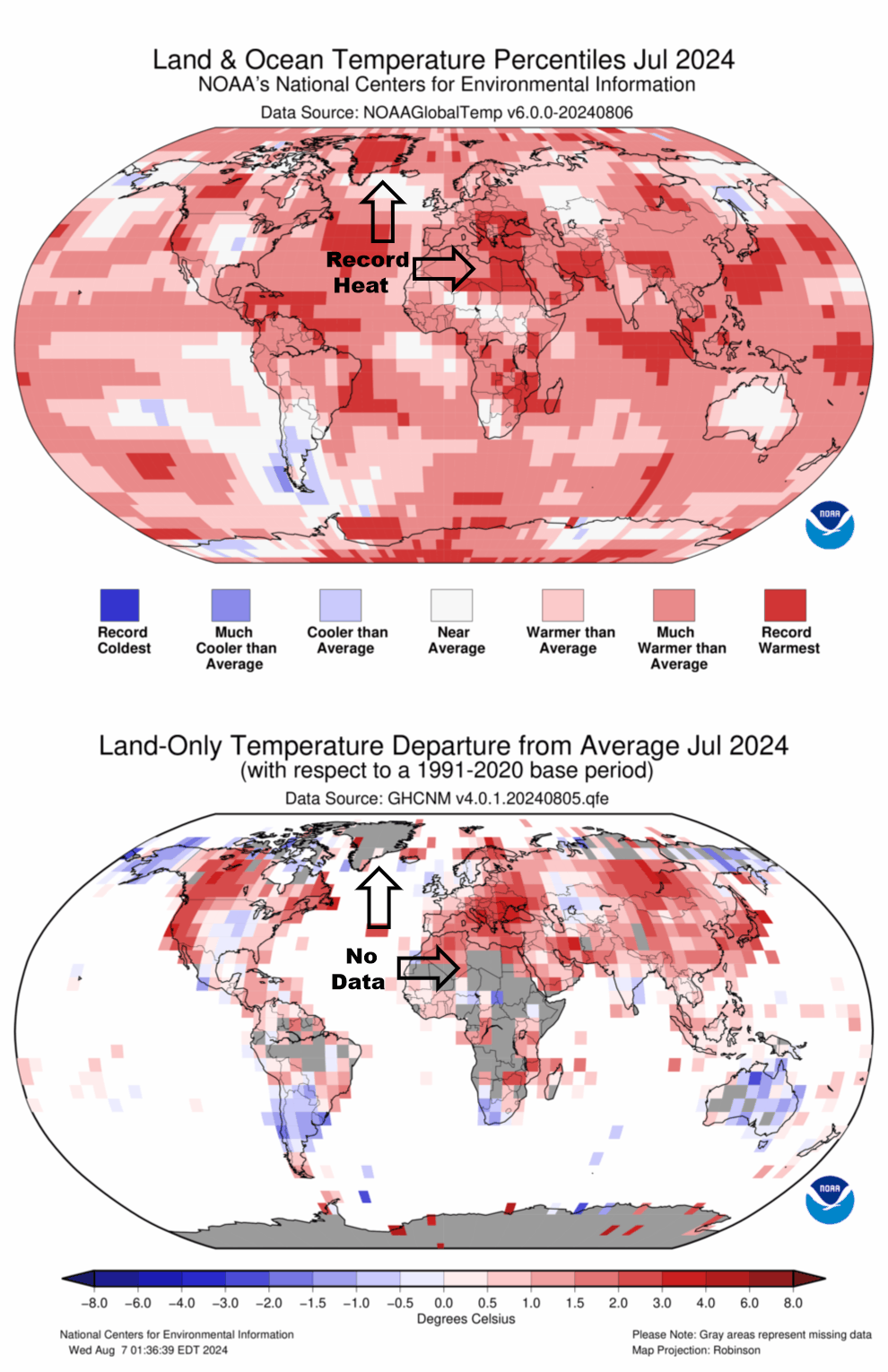
Remember: They want you to panic. Before doing so, check out what the data says in your neck of the woods. For example, NOAA declared that “July 2024 was the warmest ever recorded for the globe.”

 Science Matters