Replace Carbon Fuels with Hydrogen? Absurd, Exorbitant and Pointless
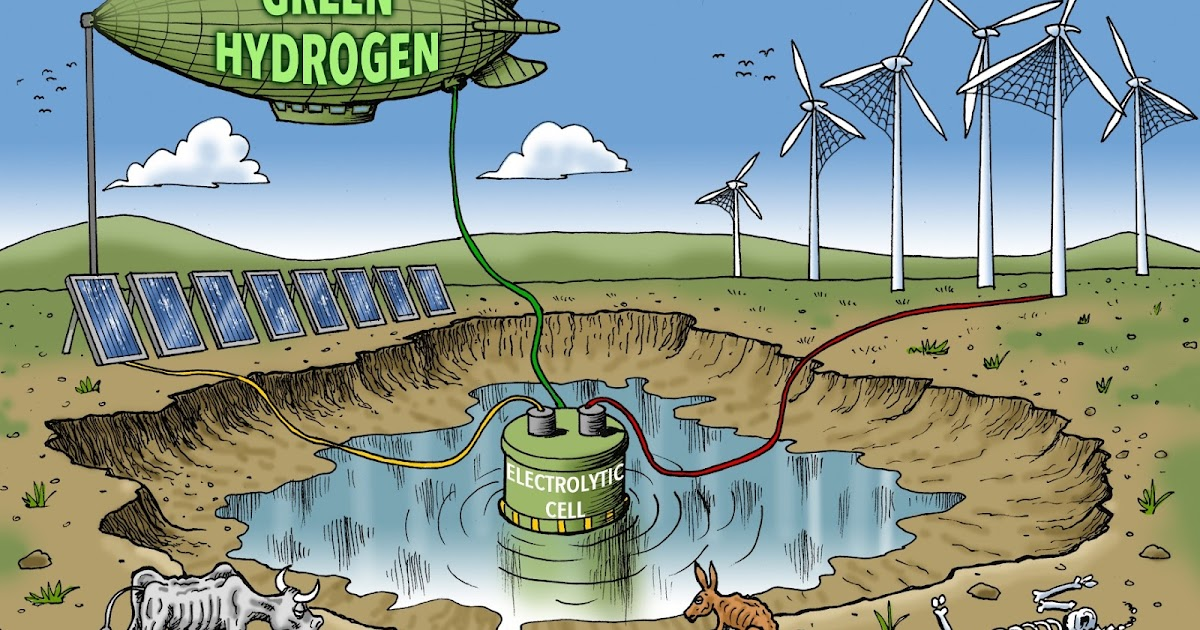
Those promoting hydrogen as a substitute for carbon fuels are blind to the physical and economic facts, as well as miscontruing CO2 as some kind of demon gas boiling the planet.  Thus their crusade is absurd, exorbitant and pointless.

Hydrogen Replacing Carbon Fuels Is Absurd

The absurdity is explained by Sabine Hossenfelder in the video below: Hydrogen Won’t Save Us. Here’s Why.  For those who prefer reading, I provide a transcript in italics with my bolds and added images.

Today I want to talk about something light. Hydrogen. Hydrogen is one of the currently most popular alternatives to fossil fuel in transport. Many companies and nations have put money into it.

In 2021, the number of hydrogen-fueled passenger cars bought in the UK was 12. Does that sound like a booming business? Not exactly. Indeed, a report from the British Science and Technology Committee that just appeared last month warned that “we do not believe that [hydrogen] will be the panacea to our problems that might sometimes be inferred from the hopes placed on it”.

Ouch. So what’s the deal with hydrogen? Hope or hype? That’s what we’ll talk about today.

Hydrogen Basics

Hydrogen is the first element of the periodic table. If you mix it with oxygen and put fire to the mixture you get water. This reaction releases energy, so if you do it under controlled conditions, you can drive a motor or turbine with it. The only exhaust you get is pure water, no carbon dioxide, no nitrogen oxides, no particulates, no radioactive waste, no chopped-up birds. It’s really difficult to complain about pure water.
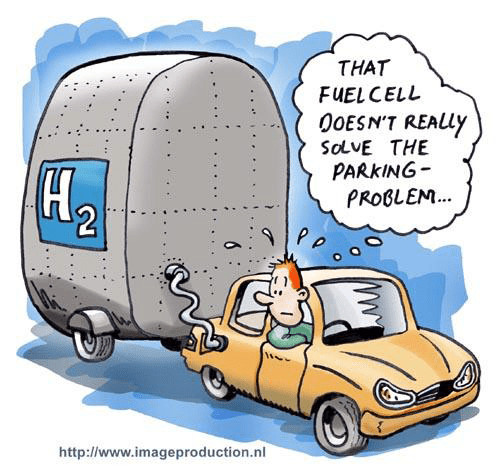
But let’s not give up that easily, certainly we can find something to complain about. For example, hydrogen is a gas that, at normal atmospheric pressure and temperature, takes up a lot of volume, and it’s somewhat impractical to drag a zeppelin behind your car. That’s why to store and transport hydrogen, one compresses it by putting it under a lot of pressure. Typically, that’s something like 700 bar, or about 700 times atmospheric pressure.

At that pressure, the energy that one gets out of one litre of hydrogen
is one sixth of the energy one gets out of one litre of gasoline.

This means if you power a car with hydrogen, one needs more litres of hydrogen than one needs litres of gasoline to cover the same distance. But litres are a measure of volume. The amount of energy you get out of hydrogen per mass is about twice as high as what you get from gasoline. Then again, since the hydrogen must be kept under high pressure hydrogen tanks tend to be heavy compared to gasoline tanks. When everything is said and done, hydrogen-powered cars end up being somewhat heavier than gasoline-powered ones, but it’s not such a big difference.

Okay, but how do you get the energy out of the hydrogen? The technology for this isn’t new, it’s been around for more than 200 years. The first hydrogen fuel cell was developed by William Grove in 1839 but it was only in the 1960s that two engineers at General Electric proposed a smart way to go about it. They developed what’s now called a Proton Exchange Membrane. Those keep the hydrogen and oxygen largely separate and allow chemical reactions only at the membrane. That way it’s much easier to control the reaction which also makes the system safer.

Those hydrogen fuel cells were then further developed by NASA. One of the first uses was on the Gemini spacecraft, which was launched in the mid-1960s. They were later also used on the Apollo spacecraft that carried astronauts to the moon and for the space shuttle. The International Space Station uses hydrogen fuel cells to generate electricity and also to produce drinking water for the astronauts on board.

The Hydrogen Market

So, hydrogen fuel cells have been around for a long time, but they’ve never been particularly popular. One of the reasons has certainly been that there was simply no need for them, because fossil fuels are considerably more convenient. Unfortunately, they have side-effects, which is why companies like Hyundai and Toyota have been selling hydrogen-fuelled cars for about a decade. BMW, Ford, and other automobile giants have plans for hydrogen cars, and some governments are looking at hydrogen to power their transit systems, for example Scotland and Germany.

The UK with its measly 12 sales in 2021, I admit, is a particularly sad example. For one thing, that’s only passenger cars. They also put about 50 hydrogen-powered busses on the road. And globally the market doesn’t look quite as dire. In total, about 16 thousand hydrogen powered cars were sold in 2021, about three thousand 500 of those in the US. The total number of new cars sold in 2021 was about 67 million, so at the moment it’s about one in four thousand new cars that’s hydrogen powered. It’s a small market, but it’s an existing market.

Some plans are extremely ambitious. For example, in May last year, the European Union rolled out a strategy called REPowerEU, with the goal of replacing up to 50 billion cubic meters per year of imported Russian gas with hydrogen. This’d mean replacing almost 10 percent of the EU’s total gas consumption with hydrogen power. That’s substantial.

It’s not only Europe. Many other countries are also investing in hydrogen production facilities, that includes Japan, Canada, Egypt, China, and the United States. For example, in March last year, the company Green Hydrogen International unveiled plans to create a plant in Texas that’ll use 60 Gigawatt of electricity from solar and wind to produce 2 point 5 billion kilograms hydrogen per year. It’ll be called Hydrogen City. And Individual companies are investing in it, too. Microsoft, for example, wants to use hydrogen fuel cells as climate-friendly backup generators for their data centres. As you see, hydrogen is booming. But.

The Colors Of Hydrogen

The first “but” that might spring to your mind is: But where does the hydrogen come from? Now, hydrogen is the most abundant element in the universe. Indeed, three quarters of all normal matter in the universe is hydrogen, but you normally can’t buy it in the supermarket. So where do you get it? Naturally occurring geological deposits of pure hydrogen are rare on Earth. Most of the hydrogen we have is bound, either in water or in methane.   And this is where the problem begins. Because you have to break those chemical bonds to get the hydrogen and that requires energy.

Hydrogen is therefore not really a source of energy, but a storage system.
You use energy to create it in its pure form, transport it,
and then you release this energy elsewhere.

How environmentally friendly this is depends strongly on where the hydrogen comes from. To keep track of this, scientists are using a color scale. You all know this, but this is YouTube, so I have to say this anyway: The hydrogen itself has always the same color, which is transparent. This color scale is just a way of keeping track of the production method.

On this color scale, the rare, naturally occurring hydrogen is white. Hydrogen obtained from water using coal or lignite has the colors black or brown, respectively. Its production emits carbon dioxide and methane; both are greenhouse gases. Grey hydrogen is derived from methane and water; this also produces carbon dioxide and usually some of the methane escapes.

At the moment, almost all hydrogen is produced in one of those ways by using fossil fuels. According to the World Energy Council, in 2019 more than 95 percent of the hydrogen worldwide was assigned one of those colors, black, brown, or grey. This releases about 830 million tons of carbon dioxide per year. That’s 2 percent of the total global emissions and about the same as air traffic.

But there are more colors on the hydrogen rainbow. Next there is blue. Like grey hydrogen, blue hydrogen is made from methane, but the carbon dioxide is stored underground and does not escape into the atmosphere. This method is currently only used for1 percent of hydrogen production, but it could be expanded. The industry association Hydrogen Council has touted blue hydrogen as a climate-friendly initiative. It’s not entirely irrelevant, so let me mention that this council was created by the oil and gas industry. Many of its members have a financial interest in switching from natural gas to hydrogen produced from natural gas.

So maybe one shouldn’t take their argument that blue hydrogen is climate-friendly for granted. Hasn’t someone looked into this? Well, since you asked, in 2021, two American researchers calculated the amount of greenhouse gases released by grey and blue hydrogen technology. They not only took carbon dioxide into account, but also methane, which is a much more potent greenhouse gas. To make comparisons easier, the greenhouse effect from methane is usually converted to a carbon dioxide equivalent, which is the amount of carbon dioxide that would have the same effect.

They came to the conclusion that grey hydrogen has a carbon dioxide equivalent of about 550 grams of carbon dioxide per kilowatt hour and blue only slightly less, 486 grams. That’s about the same as the emissions you get from using natural gas directly to generate electricity. Part of the reason blue hydrogen performs so poorly is that not all the carbon dioxide from hydrogen production is captured and stored. Another reason is that the process of storing the carbon dioxide also requires energy and leads to carbon dioxide emissions. The authors estimate that under the most favourable conditions, it might be possible to reduce those emissions to around 200 grams of carbon dioxide per kilowatt hour by using renewable energy sources. So blue hydrogen doesn’t help much with climate protection.

Then there is green hydrogen, which is produced from water using renewable energy. Again that sounds good, and again, it’s not that simple. According to a calculation by researchers from Australia, greenhouse gas emissions from green hydrogen produced with solar energy are ideally about a quarter of those from grey hydrogen. Under realistic conditions, however, they find that emissions are comparable, particularly due to fluctuations in solar radiation that make hydrogen production inefficient. There is neither data nor any study for hydrogen production from wind but you expect this method to suffer even more from fluctuations because wind is far less reliable than sunlight.

And since these methods are inefficient, they are also expensive. Indeed, producing hydrogen with solar and wind is pretty much the most expensive way you can do it, according to a review in 2019. Now maybe those costs will go down a bit as the technology improves. But seeing that the biggest problem is that energy input fluctuates I doubt it’ll become economically competitive with the “dirty” hydrogen. This problem can be fixed by using nuclear power to generate hydrogen which has been assigned the colors pink and purple. A few projects for this are underway but it’s early days and nuclear power isn’t exactly popular.

OK, so we have seen that it isn’t all that clear whether hydrogen is climate friendly, and also, it’sexpensive. And this is only the production cost. It doesn’t include the entire infrastructure that’d be necessary to fuel a fleet of hydrogen cars. Remember you have to keep the stuff at several hundred bars and you can’t just use a normal gas station for that.

Water Supply

Let’s move on to the next problem that might come to your mind: where do we get the water from? From a distance, the world has no shortage of water, but freshwater can be scarce in certain regions of the planet. According to estimates from researchers at the University of Delaware, however, water supply issues probably won’t stand in the way of a hydrogen economy. They looked at a scenario in which we replace 18 percent of fossil fuels with hydrogen, and found that this would require about 2 percent of the amount of freshwater that’s currently used for irrigation.

Watch out, this figure has a logarithmic scale. You also see on this figure that using fossil fuels requires freshwater too, for cooling, mining, hydraulic fracturing, and refining, and it’s currently actually more than the projection for hydrogen. That’s 2 percent on the global average, but in some regions the fraction can be higher. For example, estimates for Australia are that you’d need about 4% of the water amount used for irrigation. So that seems a manageable amount, but it’s something to take into account if you want to make this work.

The Cold Start Problem

Another problem with water is that it can freeze. This is why you shouldn’t leave the beer in the car in the winter. And it’s also why hydrogen fuel cells like it warm. If the temperature drops more than a few degrees below zero, the water that the fuel cells create at start will freeze immediately, which swiftly degrades the membranes and tubes. It’s known as the “Cold Start” problem of hydrogen fuel cell. And, no, you can’t just pour antifreeze into it, remember the water is created in the fuel cell. So, you’ll either have to stay in California or keep your car warm. The solution that manufacturers pursue at the moment is pre-heating systems.

Rare Metal Shortages

But the biggest problem for a hydrogen economy may be making those proton exchange membranes to begin with. It’s not because it’s so difficult, but because they’re made of platinum and iridium. Platinum you may have heard of, it’s an expensive noble metal that’s also used for jewellery. The reason it’s expensive is that it’s rare. Iridium is also a noble metal. It’s so rare that most people have never heard of it. Both of those metals are difficult to replace with anything else in the hydrogen fuel cells.

That’s a problem because it means that the entire hydrogen economy hinges on the availability of those two metals. There’s only so much of those in the world and they are only in very specific geological formations. Almost all the platinum and iridium supply comes from only three countries: South Africa, Russia, and Zimbabwe, and colonies have gone out of fashion recently. China, which has invested heavily in hydrogen technology is already feeling the consequences.

And we’ve only just barely begun with building the hydrogen economy. This issue has been highlighted recently in reports from various international organizations including the International Energy Agency and the World Bank. According to the business consulting group Wood Mackenzie, the increased demand for platinum might be manageable in the near future, but it looks like by 2030 demand for iridium will be several times higher than the supply. I don’t know much about trade, but I think this isn’t good.

It’s possible to make fuel cells somewhat more efficient and decrease the demand for those rare metals. But this situation isn’t going to change and iridium isn’t going to move to the US even if you ask it really nicely.

Have we learned nothing from the Hindenburg Disaster?

Hydrogen Embrittlement

One final problem that’s worth mentioning is that hydrogen is just nasty to deal with. Hydrogen is the smallest molecule. If you squeeze it into a tank, it’ll creep into the walls of the tank. That destroys the chemical structure of the material and makes it brittle. It’s called “hydrogen embrittlement”. For this reason, hydrogen tanks must be thick and specially coated, which makes them both heavy and expensive. Like the cold start problem, this one’s basic chemistry and isn’t going to go away. And the need to keep the hydrogen under pressure makes the stuff inconvenient to handle. The city of Wiesbaden in Germany, for example, recently retired its six new hydrogen powered buses because the filling station broke down, sinking a few million Euro.

Summary

In summary, hydrogen production at the moment has a high carbon footprint because it’s almost exclusively done using fossil fuels. Reducing the carbon footprint of hydrogen production seems difficult according to estimates, but at the moment there’s basically no real-world data. Hydrogen produced by wind and solar will almost certainly not be economically competitive with that derived from fossil fuels but using nuclear power might be an option. Building infrastructure for a transport-system based on hydrogen would eat up a lot of money. It seems that rare metal supply for hydrogen fuel cells is going to become a problem in the near future which won’t help making the technology affordable. Keeping hydrogen stored and under pressure adds to the cost and makes those systems heavy which isn’t great for transport. And finally, hydrogen-powered cars don’t like cold temperatures.

So. Well, it seems to me that the British Science and Technology committee is right. A hydrogen economy isn’t a panacea for climate change. Indeed, the French have a similar committee that likewise concluded “l’hydrogène n’est pas une solution miracle”. I must admit that I was considerably more upbeat about hydrogen before I started working on this video. How about you? Did you learn something new? Did you change your mind? Let us know in the comments.

There is also a quiz to test your comprehension of key points after watchiing or reading Is Hydrogen the Next Big Energy Source?

Summation:  The Hydrogen Crusade is absurd because hydrogen
is not an energy source, but a storage system, and
natural properties and scarcities will not be suspended
for the sake of human ambitions.

Hydrogen Replacing Carbon Fuels Is Exorbitant

Frank Lasee addresses the economics of Hydrogen fuel production and distribution in his Real Energy article Hydrogen Hubs: Without Huge Subsidies the Math Doesn’t Work. Excerpts in italics with my bolds and added images
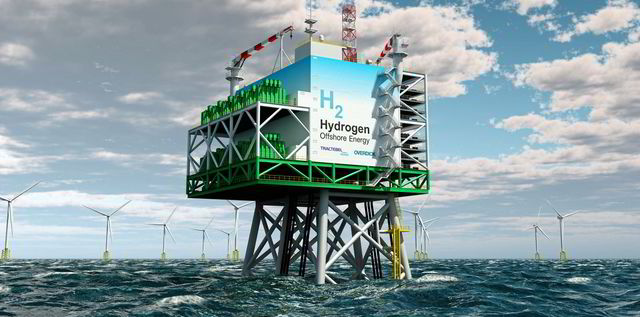
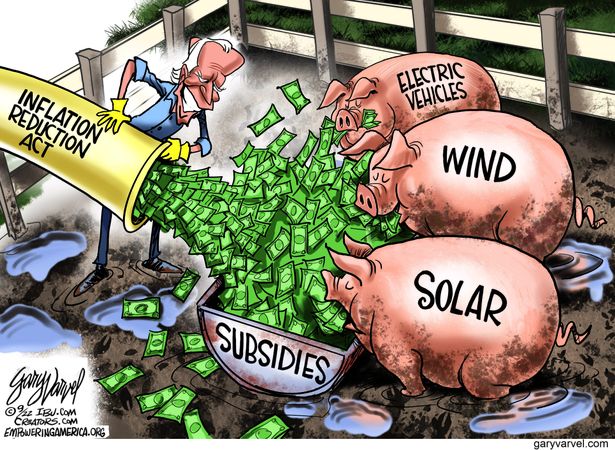
The White House has awarded $7 billion dollars of tax money for the first seven U.S. hydrogen hubs. They say it will leverage $43 billion in private money. Yet, the rules only require a 50/50 match. We are far more likely to see a $7 billion private money match. Why put more of your own money at risk than you have to?

It is risky because green hydrogen costs at least five times more to produce than the methane reforming method, which makes 95% today. That is $5 versus $1. All of the regional hydrogen infrastructure will need to be built, and the future hydrogen demand will need to be created and incentivized. Because green hydrogen still costs more. Even with upfront and downstream aggressive subsidies.

Because it is tax money we don’t have, it is added to our unprecedented $33 trillion dollar national debt. We are at an inflection point where interest payments are more than our national defense budget. Debt interest is projected to be more than a trillion dollars by the end of the decade. And the Rich Men North of Richmond just keep spending.

It costs $5 or more to produce green hydrogen through hydrolysis. Which takes super heating, electrocuting, super chilling, and compression. Then additional costs for storage and transportation before it is used somewhere.

And it needs 53 times more water than hydrogen made. Not a good idea in dry California, which is awarded $1 billion in giveaway hub money.

All of this takes lots of full-time energy. Not the part-time unpredictable electricity wind and solar make. Let’s not talk about our stressed national grid with regular blackout and shortage notices. Or the fact that 60% of the electricity made for the grid comes from coal and natural gas.

Paying for full-time and part-time generation, and thousands of miles
of transmission wires will at least triple our electric rates in no time.

This hurts the poor the most, because they use the biggest amount of their budgets on energy costs. Stressing their lives, hurting their ability to live independently. All of this, while Biden and the democrats blather about climate justice and social justice.

We are doing all this subsidizing to stop
the addition of the super plant food CO2.

That is greening our earthregrowing forests the size of France, and increasing crop yields and harvests around the world. To supposedly stop the warming of the planet that started naturally in 1850. As if we can.

The Rich Men North of Richmond are going to waste 100s of billions on green taxpayer giveaways on top of the $9.5 billion upfront hydrogen give away.

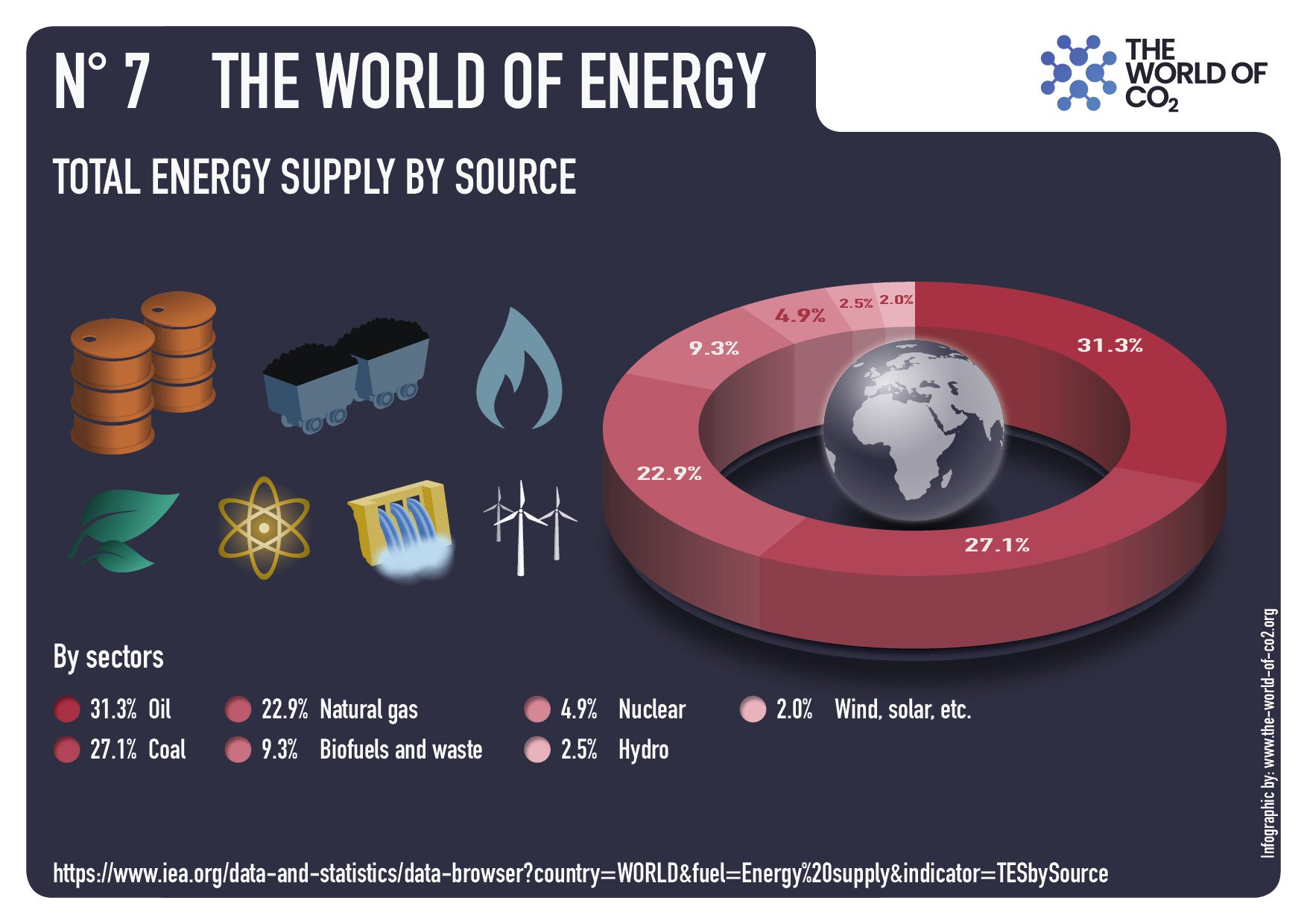
Throwing money at a climate emergency that doesn’t really exist is part of Bidenomics. Fueling inflation by spending money we don’t have, fueling high interest rates by fueling inflation. Making it difficult and expensive to harvest the fossil fuels that supply 80% of our energy. And sending 100s of billions, if not trillions, to our main rival and biggest threat, totalitarian, communist China is the Biden way.

Wind, solar, batteries, and soon EVs made in China with
forced labor, low-cost coal electricity and little environmental protections.

China burns more than half of the world’s 8.5 billion tons of coal used annually and is building hundreds of coal plants that last 50 to 75 years. I am sure they intend to use them for a few decades or 75 years.

For those that think CO2 emissions are important, China emits more than the U.S. and all the other industrialized nations combined. Including India, which is no slouch when it comes to using coal for power, getting even a larger percentage of their energy from coal than China.

We need to end this crazy fantasy of a centrally forced transition to hydrogen, wind, solar, batteries and electric vehicles. It isn’t working and is making everything more costly. Because energy is in everything we eat, buy, use, consume, even Netflix and AI.

Summation:  The Hydrogen Crusade is exorbitant because
the costs are unbearable and unsustainable,
a ruinous drain on our energy resources.
Hydrogen Replacing Carbon Fuels Is Pointless

The greatest insanity is that all of this crusade is unecessary.  The delusional premise of the Hossenfelder video is that we and the planet need saving from CO2.  When in fact throughout history, atmospheric CO2 changes lag Temperature changes on all time scales; from last month’s observations to ice cores showing climate changes over thousands and millions of years. Nothing in nature can be the cause of an effect if it occurs afterward.  A thorough debate on this issue occured recently at Dr. Judith Curry’s website Climate Etc. on the topic Causality and climate.  My synopsis is below.

I learned alot from a recent extended discussion at Climate Etc. Causality and Climate responding to a paper Demetris Koutsoyiannis et al. (2023) On Hens, Eggs, Temperatures and CO2: Causal Links in Earth’s Atmosphere.   My previous post on this paper was:

Confirmed: Temperature Drives CO2, not the Reverse

I recommend the discussion thread at climate etc. (on going) as a tutorial for the competing paradigms regarding the CO2 cycle.  I gained clarity from the lead author (a frequent and constructive participant) as well others on the core misunderstanding that has plagued such discussions for decades. Some comments are below in italics with my bolds.

First, note that the paper had a narrowly defined scope:  to demonstrate from available data that changes in atmospheric CO2 lag rather than lead temperature changes.  Because the authors recognized that this finding is contrary to IPCC consensus climate science, appendices were supplied to counter the expected objections crediting human CO2 emissions from hydrocarbons as the main, or sole source of rising CO2 since the Little Ice Age (LIA).  As Koutsoyiannis explained in a summary comment near the end:

Demetris Koutsoyiannis September 29, 2023 at 4:54 pm

I think I have rebutted all the different critiques ON MY PAPERS. I am not going to reply to critiques on any other issues related to the issue of climate. Please make your critiques SPECIFIC, by quoting phrases in my papers that you think are incorrect. And before it, please read the papers.

For example you say:

> And that would be the cause of the CO2 increase in the atmosphere?

If you read the paper you will see that we write (p. 17): *What is the cause of the modern increase in temperature? Apparently, this question is much more difficult to reply to, as we can no longer attribute everything to any single agent. We do not claim to have the answer to this question, whose study is far beyond the article’s scope. Neither do we believe that mainstream climatic theory, which is focused upon human CO2 emissions as the main cause and regards everything else as feedback of the single main cause, can explain what happened on Earth for 4.5 billion years of changing climate.*

We have proposed a necessary condition for causality, which is time precedence of the cause over the effect. I hope you accept that necessary condition, am I wrong? We make our inference based on this necessary condition. Your numbers make no reference of time succession. When you find a way to test whether the direction in time is reversed, that will be great. But for now, all this looks to me an unproven conjecture. I hope you can excuse me that, being a Greek, I have to stick to Aristotelian logic.

You also say:

> While there is an elephant in the room, human emissions that released twice as much CO2 as measured in the atmosphere…

If this is the elephant, what is (copying from our paper, p. 25), *a total global increase in the respiration rate of ΔR = 31.6 Gt C/year. This rate, which is a result of natural processes, is 3.4 times greater than the CO2 emission by fossil fuel combustion (9.4 Gt C /year including cement production)*.

My Comment: The confounding issue in all this was identified as the mistaken analogy treating CO2 fluxes as though they are cash transactions between bank accounts.  Within that notion, a natural source/sink must net out intakes and releases.  Yet as others commented, geobiologists know that both absorption and release can be increasing or can be decreasing.  The source/sinks function dynamically, not statically as assumed by the analogy.

What It Means:  CO2 flows through Dynamic Reservoirs

The other puzzle piece is described by Ed Berry following his peer-reviewed paper Nature Controls the CO2 Increase II.  A summary comment ties his analysis into the above discussion.  Early in the thread the point was made that all CO2 sources are involved in supporting the level of atmospheric concentration at any point in time. Ed Berry made this point  in this way.

He explained that when you look at the flow of carbon dioxide—”flow” meaning the carbon moving from one carbon reservoir to another, i.e., through photosynthesis, the eating of plants, and back out through respiration—a 140 ppm constant level requires a continual inflow of 40 ppm per year of carbon dioxide, because, according to the IPCC, carbon dioxide has a turnover time of 3.5 years (meaning carbon dioxide molecules stay in the atmosphere for about 3 1/2 years).  140 ppm divided by 3.5 is 40 ppm CO2.

“A level of 280 ppm is twice that—80 ppm of inflow. Now, we’re saying that the inflow of human carbon dioxide is one-third of the total. Even IPCC data says, ‘No, human carbon dioxide inflow is about 5 percent to 7 percent of the total carbon dioxide inflow into the atmosphere,’” he said.

[Today’s level of nearly 420 ppm means that 120 ppm of inflow is required annually, or 120 +2 ppm if it is to increase as it has been.  Where does 122 ppm of CO2 come from?  Well, let’s say we can count on 6 ppm of FF CO2 (5%) and  the other 116 being non-human emissions.]

Summation:  The Hydrogen Crusade is pointless because
our carbon emissions do not determine either
atmospheric CO2 or the Earth’s temperatures.

You Want It Darker? A Song for Our Time

Filmed and Edited: Michael Williams Actor: Kevin Davis Song: You Want It Darker Artist: Leonard Cohen

We filmed this Tribute to Leonard Cohen; imagining how it might have been shot if Leonard had made the music video. We hope you enjoy. Leonard passed away not long after the release of “you want it darker”

Lyrics (Also shown with Closed Captions)

If you are the dealer
I’m out of the game
If you are the healer
It means I’m broken and lame
If thine is the glory then
Mine must be the shame
You want it darker
We kill the flame

Magnified, sanctified
Be thy holy name
Vilified, crucified
In the human frame
A million candles burning
For the help that never came
You want it darker

Hineni, hineni
I’m ready, my Lord

There’s a lover in the story
But the story’s still the same
There’s a lullaby for suffering
And a paradox to blame
But it’s written in the scriptures
And it’s not some idle claim
You want it darker
We kill the flame

They’re lining up the prisoners
And the guards are taking aim
I struggled with some demons
They were middle-class and tame
I didn’t know I had permission
To murder and to maim
You want it darker

Hineni, hineni
I’m ready, my Lord

Magnified, sanctified
Be thy holy name
Vilified, crucified
In the human frame
A million candles burning
For the love that never came
You want it darker
We kill the flame

If you are the dealer
Let me out of the game
If you are the healer
I’m broken and lame
If thine is the glory
Mine must be the shame
You want it darker

Hineni, hineni
Hineni, hineni
I’m ready, my Lord


Kansas Shows the Way to Energy Freedom

Posted at Master Resource is a most encouraging development by the Kansas legislature.  The article is Kansas Energy Freedom Now! The whole story is uplifting and I will only repeat here comments on what Kansas resolved and how nearly unanimous support was achieved. Excerpts in italics with my bolds and added images.

Carrie Barth (R-Kansas, District 5) and Dennis Hedke, unapologetic supporter of the U.S. Constitution, acclaimed author of The Audacity of Freedom (2011), geophysicist, and former member Kansas House of Representatives (former Chair of the House Energy Committee), have drafted a clean and accurate Resolution for the Republican Party. This passed with overwhelming support. It appears to acknowledge that wind is not a good corporate citizen.

Representative Barth in an email:

Our Constitution of the United States gives the power to the people and states, not a dictator movement to control people. The “Green Agenda” is a joke. What they call green energy of wind and solar is anything but green other than it takes a lot of money to mine, build and construct, maintenance for the units, along with remediation when blades break off and the turbines catch on fire. It takes more green money from there to then build transmission lines that take people’s green land when eminent domain is used. Then people see transmission line tariffs on their energy bills. Oh, and wait, your rates never go down even though the energy industry tells you how cost effective it is.

I would refer to wind and solar as “brown or black energy”. They are unreliable and cause brownouts and blackouts. This hurts people, it hurts businesses, and even the ground under them turns brown.

Excerpts from the Resolution follow:

  • CO2 is not a dangerous gas, nor a pollutant, to be avoided and scare mongered.
  • The Kansas Republican Party Platform opposes efforts to force communities to engage in sustainable development guidance from the federal government or the United Nations, which are actively attacking our local communities in an effort to implement the Paris Climate Agreement
  • Kansas is not to be victimized by lobbyists guiding KS into blackouts and profiteering from subsidies, and alliances with the UN Global Agenda
  • Kansas (Republican Party) supports alternative energy, while continuing to support oil and gas reserves within the State
  • Kansas will prefer reliable and affordable energy above all
  • Kansas (Republican Party)  will reject the “UN Agenda 2030 “Sustainable Development Goals” to guide their investments in Kansas, even rewarding executives and directors with additional bonuses and stock options for implementing the global climate plan”
  • Kansas (Republican Party) will reject energy projects that are obvious land grabs, funding foreign companies with taxpayer-funded grants and tying up valuable Kansas farmland for decades with projects that no company is ultimately held responsible for decommissioning at the end of their useful lives, even violating property rights of farmers affected by the projects
  • Kansas (Republican Party) opposes so called Cap and Trade schemes

The resolution concludes:

Whereas irrefutable evidence demonstrates that ill-health effects to mankind and the environment are occurring due to the side effects of industrial scale wind installations. These occurrences are widespread, wherever these installations have been constructed;

Therefore, be it resolved, the Republican Party of Kansas, in view of the preponderance of evidence, will support candidates and legislative intent regarding energy policy that will serve to provide protection to our citizens security, physical health, financial health, access to reliable energy and property rights across all Kansas counties.

Master Resource Comment

This is the first time we have seen a legislative body, organize, and nearly 100% agree, that climate change, which it always does and has done, should not be a driver for energy policy. It is the first time we have seen in such a document, a clear rejection of industrial wind and solar profiteers, and references to the irrefutable evidence of harm to the environment, people, and a clear intention to go forward with reliable, responsible, and cost-effective energy policy, while respecting property rights.

Question:

A lot of readers will be wondering how you and Rep Barth achieved a 180-1 vote for this very clear resolution. Given that KS has a pro wind record of placing wind factories in the State, even with a Republican House and Senate, is there a catalyst for this resolution at this time and at this place? Was a lot of lobbying needed, or was this more evolutionary, organic in nature due to the fast paced media pieces on changing perspectives of “renewables and climate”?

Answer: Former Chair, Dennis Hedke:

I perceive much of the reason for the success was due to the fact that the Committee reviewing the Resolution is heavily conservative. They had to present it to the Republican Party Delegates, which are probably also more conservative leaning.

The Legislators, Carrie excluded, are a lot more squishy, caring more about holding on to their seats, than acting with resolve and principle.  There may be some renewed pressure on Legislators to resist the absolutely ridiculous reasons for being ‘green’. That remains to be seen. Many of them simply forget that “The Truth Will Set You Free”.

I forgot to answer your question about cost of electricity. My bills range from about .13/kwh to .14/kwh. Prices have increased by about 55% since wind power has been replacing coal and natural gas, commencing around 2011.

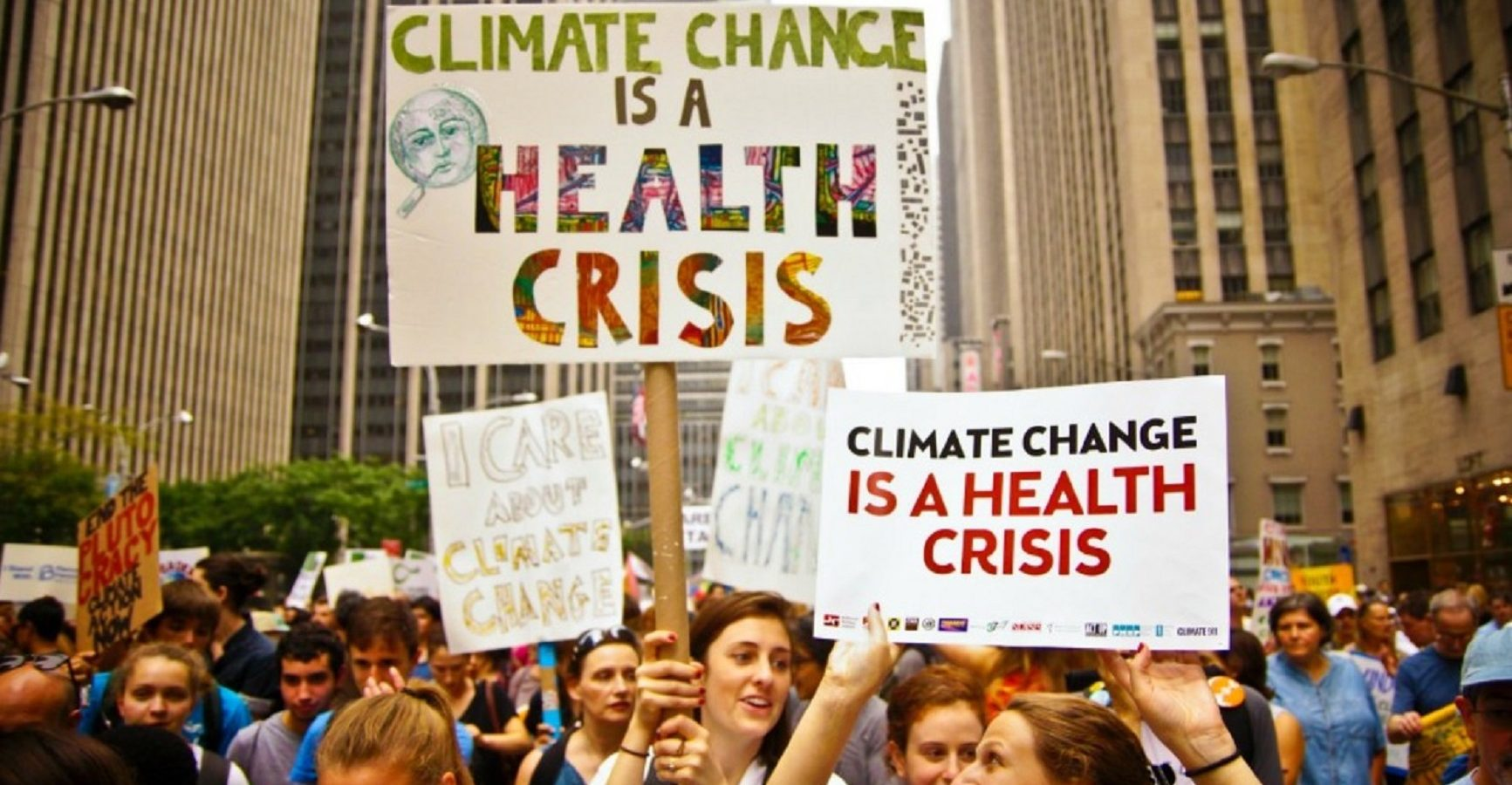
Climate Health Crisis Meme Goes Viral

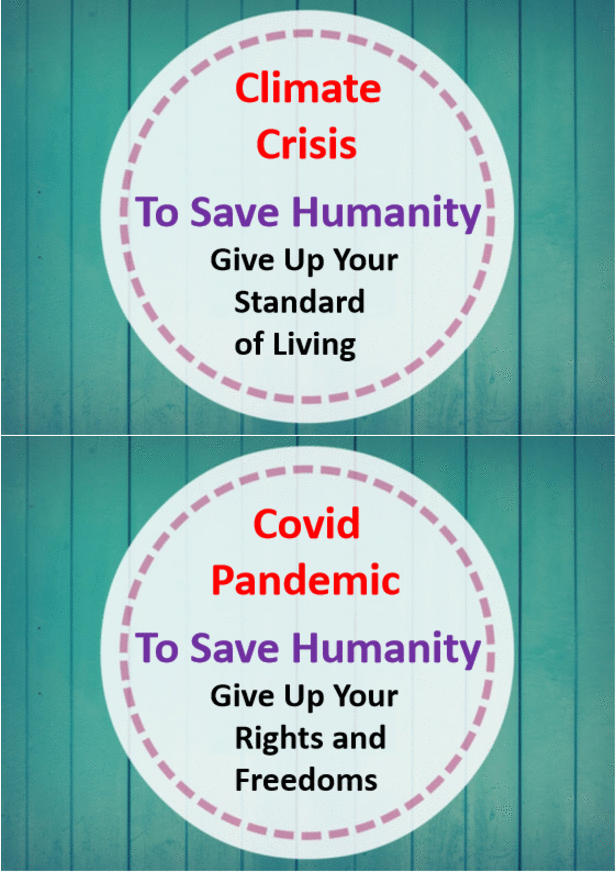
The comingling of climate and covid fears and policies is currently ramping up to warp speed across all propaganda platforms.  Kit Knightly explains the shock and awe agenda by media and governments to corral the public into submission.  His Off-Guardian article is Why are the globalists calling “Climate Change” a “Public Health Crisis”? Excerpts in italics with my bolds and added images.  H/T Tyler Durden

The answer is all to do with the pandemic treaty and climate lockdowns.

The global elite plan to introduce a near-permanent “global state of emergency” by re-branding climate change as a “public health crisis” that is “worse than covid”.  This is not news. But the ongoing campaign has been accelerating in recent weeks.

Two Sides of the Same Coin

I have written about this a lot over the last few years – see here and here and here. It started almost as soon as Covid started, and has been steadily progressing ever since, with some reports calling climate change “worse than covid”.

But if they keep talking about it, I’ll keep writing. And hopefully the awareness will spread.

Anyway, there’s a renewed push on the “climate = public health crisis” front. It started, as so many things do, with Bill Gates, stating in an interview with MSNBC in late September:

We have to put it all together; it’s not just climate’s over here and health is over here, the two are interacting

Since then there’s been a LOT of “climate change is a public health crisis” in the papers, likely part of the build-up to the UN’s COP28 summit later this year.

Following Gate’s lead, what was once a slow-burn propaganda drive has become a dash for the finish line, with that phrase repeated in articles all over the world as a feverish catechism.

It was an editorial in the October edition of the British Medical Journal that got the ball rolling, claiming to speak for over 200 medical journals, it declares it’s…

Time to treat the climate and nature crisis as one indivisible global health emergency”

Everyone from the Guardian to the CBC to the Weather Channel picked up this ball and ran with it.  Other publications get more specific, but the message is the same. Climate change is bad for the health of women, and children, and poor people, and Kenyans, and workers and…you get the idea.

And that’s all from just the last few days. It’s not only the press, but governments and NGOs too. The “One Earth” non-profit reported, two days ago:

Why climate change is a public health issue

Again, based entirely on that letter to the BMJ. The UN’s “climate champions” are naturally all over it,alongside the UK’s “Health Alliance on Climate Change”, whoever they are. [Note:  An overview of the climate medicine bureaucracy is here: https://rclutz.com/2021/09/07/here-comes-the-climate-medical-complex/%5D

Both the Red Cross and Doctors Without Borders have published (or updated) articles on their website in the last few days using variations on the phrase “The climate crisis is a health crisis.”  Local public health officials from as far apart as Western Australia and Arkansas are busy “discussing the health effects of climate change”

Tellingly, the Wikipedia article on “effects of climate change on human health” has received more edits in the last 3 weeks than the previous 3 months combined.

All of this is, of course, presided over by the World Health Organization.

On October 12th the WHO updated its climate change fact sheet, making it much longer than the previous version and including some telling new claims:

“WHO data indicates 2 billion people lack safe drinking water and 600 million suffer from foodborne illnesses annually, with children under 5 bearing 30% of foodborne fatalities. Climate stressors heighten waterborne and foodborne disease risks. In 2020, 770 million faced hunger, predominantly in Africa and Asia. Climate change affects food availability, quality and diversity, exacerbating food and nutrition crises.

Temperature and precipitation changes enhance the spread of vector-borne diseases. Without preventive actions, deaths from such diseases, currently over 700,000 annually, may rise. Climate change induces both immediate mental health issues, like anxiety and post-traumatic stress, and long-term disorders due to factors like displacement and disrupted social cohesion.”

They are tying “climate change” to anyone who is malnourished, has intestinal parasites or contaminated drinking water. As well as anyone who dies from heat, cold, fire or flood. Even mental health disorders.

We’ve already seen the world’s first “diagnosis of climate change”.
With parameters set this wide, we will see more in no time.

Just as a “Covid death” was anybody who died “of any cause after testing positive for Covid”, they are putting language in place that can redefine almost any illness or accident as a “climate change-related health issue”.

Two days ago, the Director General of the World Health Organization, the UN’s Special Envoy for Climate Change and Health and COP28 President co-authored an opinion piece for the Telegraph, headlined:

Climate change is one of our biggest health threats – humanity faces a staggering toll unless we act

The WHO Director went on to repeat the claim almost word for word on Twitter yesterday:

At the same time, the Pandemic Treaty is busily working its way through the bureaucratic maze, destined to become law sometime in the next year or so.

We’ve written about that a lot too.

    • Consider, the WHO is the only body on Earth empowered to declare a “pandemic”.
    • Consider, the official term is not “pandemic”, but rather “Public Health Emergency of International Concern”.
    • Consider, a “public health emergency of international concern”, does not necessarily mean a disease.
    • It could mean, and I’m just spit-balling here, oh, I don’t know – maybe… climate change?

Consider, finally, that one clause in the proposed “Pandemic Treaty” would empower the WHO to declare a PHEIC on “precautionary principle” [my emphasis]:

Future declarations of a PHEIC by the WHO Director-General should be based on the precautionary principle where warranted

Essentially, once the new legislation is in place, the plan writes itself:

    • Put new laws in place enabling global “emergency measures” in the event of a future “public health emergency”
    • Declare climate change a public health emergency, or maybe a “potential public health emergency”
    • Activate emergency measures – like climate lockdowns – until climate change is “fixed”

See the end game here? It’s just that simple.

Oh, and we won’t be able to complain, because “climate denial” is going to be illegal. At least, if prominent climate activists like this one get their way.  That’s only a whisper in the background right now, but it will get louder after COP28, just wait.

Until then, like I said, I’m stuck here writing forever.

Background:  Nine Elements Shared by Climate and Covid

Ramesh Thakur writes at Brownstone Institute Beware Catastrophizing Climate Models and Activists.  Excerpts in italics with my bolds and added images.

All true believers of The Science™ of climate change have taken careful note of the lessons offered by the coronavirus pandemic during 2020–22 for managing the ‘climate emergency.’ The two agendas share nine items in common that should leave us worried, very worried.

1. Elites’ Hypocrisy

The first is the revolting spectacle of the hypocrisy of the exalted elites who preach to the deplorables the proper etiquette of abstinence to deal with the emergency, and their own insouciant exemption from a restrictive lifestyle. Most recently we witnessed the surreal spectacle of Britain’s Parliament interrogating disgraced former Prime Minister Boris Johnson on allegations that he serially broke the lockdown rules he had imposed on everyone else—but not questioning the anti-scientific stupidity of the rules themselves. Possibly the most notorious American example was California Governor Gavin Newsom and his cronies dining maskless in the appropriately named French Laundry restaurant at a time when this was verboten, being served by fully masked staff.

Similarly, Prince Harry, Meghan Markle, Al Gore, and John Kerry have all been widely mocked for jetting around the world to warn people about global warming. I wonder if anyone has done a calculation of the total carbon footprint of each annual Davos gathering where CEOs, prime ministers and presidents, and celebrities fly in on private jets, are driven around in gas-guzzling limousines and preach to us on the critical urgency of reducing emissions? I understand the hookers do quite well during that week, so perhaps there is a silver lining.

2. Data Challenged Models

A second common element between Covid and climate change is the mismatch between models that inform policy and data that contradict the models. The long track record of abysmally wrong catastrophist predictions on infectious diseases from the Pied Piper of Pandemic Porn, Professor Neil Ferguson, is if anything exceeded by the failures of climate change alarmist predictions. The most recent example of the drum roll of “The end is nigh and this is absolutely your last chance to avert the end of the world from climate collapse” is yet another Chicken Little Sixth Assessment Report from the indefatigable Intergovernmental Panel on Climate Change (IPCC).

At some point the IPCC morphed from a team of scientists into activists.

“There is a rapidly closing window of opportunity to secure a liveable and sustainable future for all,” the report warns us. UN Secretary-General Antonio Guterres called it a “survival guide for humanity.” But a one-time climate action journalist-turned-sceptic, Michael Shellenberger, described the UN as a “Climate Disinformation Threat Actor.”

Calls for urgent climate action based on the language of “edging towards ‘tipping points” have been made over many years. Atmospheric scientists and former IPCC members Richard McNider and John Christy note that climate modeling forecasts have “always overstated the degree to which the Earth is warming compared with what we see in the real climate.” A few examples:

♦  In 1982, UNEP Executive Director Mostafa Tolba warned of an irreversible environmental catastrophe by 2000 without immediate urgent action.
♦  In 2004, a Pentagon report warned that by 2020, major European cities would be submerged by rising seas, Britain would be facing a Siberian climate and the world would be caught up in mega-droughts, famine and widespread rioting.
♦  In 2007, IPCC chair Rajendra Pachauri declared: “If there’s no action before 2012, that’s too late.”
♦  Most hilariously, in Montana the Glacier National Park installed “Goodbye to the glaciers” plaques, warning: “Computer models indicate the glaciers will all be gone by the year 2020.” Come 2020, all 29 glaciers were still there but the signs were gone, taken down by embarrassed park authorities.

3. No Dissent Allowed

Third, the rapidly consolidating Censorship Industrial Complex covered both agendas until Elon Musk began releasing the Twitter Files to expose what was happening. This refers to the extraordinary censorship and suppression of dissenting voices, with extensive and possibly illegal collusion between governments and Big Tech—and, in the case of the pandemic, also Big Pharma and academia.

Even truth was no defence, for example with accounts of vaccine injuries, if their effect was to promote narrative scepticism. The social media Big Tech censored, suppressed, shadow banned and slapped labels of “false,” “misleading,” “lacking context” etc. to content at variance with the single source ministries of truth. “Fact-checking” was weaponized using fresh young graduates—with no training, skills or capacity to sift between authentic and junk science—to put such judgmental stamps on pronouncements from world-leading experts in their field.

4. We Want You to Panic

Fourth, an important explanation for the spread of Covid and climate catastrophism is the promotion of fear and panic in the population as a means to spur drastic political action. Both agendas have been astonishingly successful.

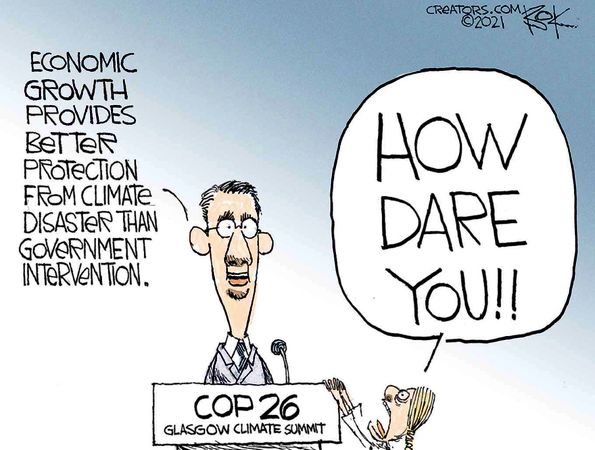
Polls have consistently shown the hugely exaggerated beliefs about the scale of the Covid threat. On climate change, the gap between the stringent actions required, the commitments made and the actual record thus far is used to create panic. The notion that we are already doomed promotes a culture of hopelessness and despair best epitomized by Greta Thunberg’s anguished cry: “How dare you” steal my dreams and childhood with empty words.”

5. Only Trust Science Authorities

A fifth common theme is the appeal to scientific authority. For this to work, scientific consensus is crucial. Yet, driven by intellectual curiosity, questioning existing knowledge is the very essence of the scientific enterprise. For the claim to scientific consensus to be broadly accepted, therefore, supporting evidence must be exaggerated, contrary evidence discredited, sceptical voices stilled and dissenters ridiculed and marginalized. This has happened in both agendas: just ask Jay Bhattacharya on one and Bjorn Lomborg on the other.

6. Government Empowers Itself

A sixth shared element is the enormous expansion of powers for the nanny state that bosses citizens and businesses because governments know best and can pick winners and losers. Growing state control over private activities is justified by being framed as minor and temporary inconveniences in the moral crusade to save Granny and the world.

Yet in both agendas, policy interventions have over-promised and under-delivered. The beneficial effects of interventions are exaggerated, optimistic forecasts are made and potential costs and downsides are discounted. Lockdowns were supposedly required for only 2-3 weeks to flatten the curve and vaccines, we were promised, would help us return to pre-Covid normalcy without being mandatory. Similarly, for decades we have been promised that renewables are getting less expensive and energy will get cheaper and more plentiful.

Yet increased subsidies are still needed, energy prices keep rising,
and energy supply gets less reliable and more intermittent.

7. Self-Inflicted Damage

Seventh, the moral framing has also been used to discount massive economic self-harm. Alongside the substantial and lasting economic damage caused by savage lockdowns to businesses and the long-term consequences of a massive printing of money, the obstinate persistence of excess deaths is painful proof of collective public health self-harm.

Similarly, the world has never been healthier, wealthier, better educated, and more connected than today. Energy intensity played a critical role in driving agricultural and industrial production that underpin the health infrastructure and comfortable living standards for large numbers of people worldwide. High income countries enjoy incomparably better health standards and outcomes because of their national wealth.

8. Elites Thrive at Others’ Expense

Eighth, government policies in both agendas have served to greatly widen economic inequalities within and among nations with fat profits for Big Pharma and rent-seeking Green Energy. A lot of money was said to be required to keep Mahatma Gandhi in the style of poverty he demanded. Similarly, a lot of money is required to support Covid and climate policy magical thinking where governments can solve all problems by throwing more money that must neither be earned nor repaid.

In the triumph of luxury politics, the costs of the rich suffused in the golden glow of virtue are borne by the poor. Should a billion more Chinese and Indians have stayed poor and destitute over the last four decades, so Westerners could feel virtuous-green? Alternatively, for post-industrial societies, climate action will require cutbacks to living standards as subsidies rise, power prices go up, reliability comes down and jobs are lost.

Attempts to assess the balance of costs and benefits of Covid and climate policies are shouted down as immoral and evil, putting profits before lives. But neither health nor climate policy can dictate economic, development, energy and other policies. All governments work to balance multiple competing policy priorities. What is the sweet spot that ensures reliable, affordable and clean energy security without big job losses? Or the sweet spot of affordable, accessible and efficient public health delivery that does not compromise the nation’s ability to educate its young, look after the elderly and vulnerable and ensure decent jobs and life opportunities for families?

9. Global Bureaucrats Gut National Sovereignty

The final common element is the subordination of state-based decision-making to international technocrats. This is best exemplified in the proliferation of the global climate change bureaucracies and the promise—threat?—of a new global pandemic treaty whose custodian will be a mighty World Health Organisation.

In both cases, the dedicated international bureaucracy will have a powerful
vested interest in ongoing climate crises and serially repeating pandemics.

October 2023 Arctic Ice Grows by Leaps

The animation shows the rapid growth of Arctic ice extent during October 2023, from day 274 to day 304, yesterday.  For all of the fuss over the September minimum, little is said about Arctic ice growing 4M km2, that’s 4 Wadhams in one month!.  Look on the left (Russian side) at the complete closing of the Northern Sea Route for shipping.

The graph below show 2023 compared to the 17 year average (2006 to 2022 inclusive), to SII (Sea Ice Index) and some notable years.

This year October added 3.95M km2 from end of September compared to an average October increase of 3.45M km2.  As of yesterday NH ice extent is 368k km2 above average and nearly 600k km2 greater than 2007.

The table below shows the distribution of ice in the Arctic Ocean basins.

Region 2023304 Ave. Day 304 2023-Ave. 2007304 2023-2007
 (0) Northern_Hemisphere 8768573 8422636  345938  8175072 593501 
 (1) Beaufort_Sea 780946 957189  -176243  1038126 -257180 
 (2) Chukchi_Sea 535578 454974  80604  242685 292894 
 (3) East_Siberian_Sea 1078989 936944  142045  835071 243917 
 (4) Laptev_Sea 897845 842696  55149  887789 10055 
 (5) Kara_Sea 655623 473780  181843  311960 343664 
 (6) Barents_Sea 121748 83466  38282  52823 68925 
 (7) Greenland_Sea 528448 412774  115675  443559 84890 
 (8) Baffin_Bay_Gulf_of_St._Lawrence 243512 256243  -12731  289374 -45861 
 (9) Canadian_Archipelago 629955 762429  -132474  817220 -187265 
 (10) Hudson_Bay 82242 69487  12754  48845 33396 
 (11) Central_Arctic 3207724 3161034  46690  3206345 1379 

Overall ice extent has 346k km2 above average or 4%.  Sizeable deficits are in Beaufort Sea and Canadian Archipelago, more than offset by surpluses in Chukchi, East Siberian, Kara and Greenland seas.


Global Demand for Carbon Fuels to Hit Record High in 2024

Tsvetana Paraskova writes at Oil Price   Excerpts in italics with my bolds.

  • A new report from the Economist Intelligence Unit shows global energy consumption rising by 1.8% in 2024, hitting a new record high.
  • Despite high prices and supply disruptions, the report shows crude oil and natural gas demand climbing in 2024.
  • Demand for renewable energy is also expected to rise in 2024, climbing by 11%

Global energy and fossil fuel consumption is set to defy wars and high prices and hit a record high level in 2024, led by strong Asian demand, the Economist Intelligence Unit said in a new report on Wednesday.  Next year, global energy consumption is expected to increase by 1.8%, according to the EIU report.  

“Despite still-high prices and unsolved supply chain disruptions, demand for fossil fuels will reach record levels, but demand for renewable energy will rise by 11%,” the authors of the report wrote.

Oil demand alone is expected to increase by 1.7% next year, per the report. Natural gas demand is set for 2.2% growth, led by Asia and the Middle East, while Europe will continue to see depressed demand as it looks to save gas and energy.

Renewable capacity additions are set for a record high this year at around 400 gigawatts (GW) and will continue to rise in 2024, according to the report. [Note that electricity generated is much lower than capacity ratings.]

Global oil demand is set to rise by 2.4 million barrels per day (bpd) to a new record-high this year and by another 2.2 million bpd next year amid an improving Chinese economy, OPEC said in its latest monthly report earlier in October, leaving its demand forecast for both 2023 and 2024 unchanged, despite fears of slowing economies and demand destruction. World oil demand is set to reach a record average of 102.1 million bpd in 2023, driven by a 2.3-million-bpd demand increase in the non-OECD region, OPEC noted.

Coal demand globally is also expected to remain at record-high levels this year, said none other than the International Energy Agency (IEA) earlier this year.

IEA Tries Self Fulfilling Prophecy Against Carbon Fuels

The IEA Reiterates Its Peak Oil Demand Prediction by Irina Slav.  Excerpts in italics with my bolds.

  • In its latest World Energy Outlook, the International Energy Agency has reiterated its claim that crude oil, natural gas, and coal will peak before 2030.
  • The agency sees the emergence of a new clean energy economy as providing hope for the way forward, emphasizing the economic case for clean energy technologies.
  • The report focuses on the importance of resilience and energy security, particularly due to the geopolitical developments currently disrupting energy markets.

Demand for oil, natural gas, and coal is set to peak before 2030, which undermines the case for increasing investment in fossil fuels.  This is one of the outtakes from the International Energy Agency’s World Energy Outlook, released earlier today.  While the agency does admit that investment in fossil fuels will remain necessary, it claims the growth era is over.

Last month, the agency’s head, Fatih Birol, wrote in an op-ed that
oil, gas, and coal demand were all going to peak before 2030
thanks to the increase in EV adoption and slower Chinese GDP growth.

According to the IEA, “The economic case for mature clean energy technologies is strong” and energy security is an increasingly important consideration, too.

“In 2020, one in 25 cars sold was electric; in 2023, this is now one in 5,” the report also said as part of its case for EVs. However, an EV sales database reveals that for the first half of this year, sales of battery electric vehicles, the true EVs, only represented a tenth of total sales. Combined with plug-in hybrids, EV sales accounted for 14.1% of total sales.

OPEC Takes a Different View

When Birol first mentioned peak oil, gas, and coal, he prompted an immediate reaction from OPEC, which slammed the head of the IEA for making unwise predictions that could threaten the world’s energy supply security.

Such narratives only set the global energy system up to fail spectacularly. It would lead to energy chaos on a potentially unprecedented scale, with dire consequences for economies and billions of people across the world,” OPEC secretary-general Haitham al-Ghais said in September.

The release of the World Energy Outlook may now prompt a similar response from OPEC, which forecast recently that demand for oil is going to continue rising at least until 2045.


No Green Energy Future Without Coal

Teresa Mull writes at American Spectator Why ‘dirty’ coal is vital to a ‘clean’ green future. Excerpts in italics with my bolds and added images.

‘Any time you have energy, you have to dig something out of the ground’

The under reported truth, however, is that coal is key to the continuation of civilization as we know it. Apart from “providing more than 36 percent of global electricity” and accounting for “nearly one-quarter of the electricity in the United States” (per the Society for Mining, Metallurgy & Exploration), coal is necessary in the production of steel and other metals and is used in the manufacturing process of other materials city folk love, including cement. Coal is also critical in bringing about the “green, renewable” future we are told is inevitable (not to mention our first-world luxuries: smartphone batteries, fluorescent lights, computer monitors, etc.).

There are fifty critical minerals and metals in our beautiful black coal, and in the clay beneath needed to produce electric vehicles, solar panels, wind turbines, rechargeable batteries, and so forth. Sarma V. Pisupati, professor of energy and mineral engineering and director of the Center for Critical Minerals at Pennsylvania State University, explains that the United States imports more than 50 percent of forty-three of those elements from other countries, and twelve of those fifty minerals are 100 percent imported.

Such a strong reliance on foreign countries, especially China, which the German Marshall Fund of the United States reports “dominates global critical mineral supply chains, accounting for approximately 60 percent of worldwide production and 85 percent of processing capacity,” is “an urgent matter of national security,” says Pisupati.

Which is where Pennsylvania — and Penn State — come in.

Data from the Pennsylvania Department of Environmental Protection (DEP) shows that “abandoned mine problem areas have been identified in forty-three of Pennsylvania’s sixty-seven counties.” Pennsylvania has some 5,000 miles worth of streams that have been polluted by acid mine drainage (AMD). In my own backyard (in Centre and Clearfield Counties), abandoned strip mines, described by our township solicitor as “lunar in nature,” are a playground for us backwoods folk. “The strippin’s” are where teenagers meet up to party under cover of steep high walls, coal refuse (or “boney”) piles and scraggly trees, side-by-side riders rip over rutted roads in packs each weekend and hillbillies sight-in their hunting rifles.

Yet in recent years, these “legacy coal mines,” as Pisupati calls them, have been garnering attention. Not because environmental agencies have seen the light about how important coal is, the strides the industry has made to purify the process, or because they’ve realized that re-mining is sometimes the only way to get to underground water discharges and address them, but because coal and its byproducts are a source of the critical elements necessary for a “greener” future.

“Because the old [pre-1977] coal mines were not under the new regulations, they were left abandoned, and there is a lot of water flowing through those old mines which gets oxidized, and there is a lot of acid coming out of that,” Pisupati says. “That acid actually brings out the rare earth elements and critical elements from the mines, so nature is doing some of this extraction for us. It could be viewed as a blessing in disguise, because right now we are importing these critical minerals from elsewhere.

“Acid mine drainage is flowing through those old mines and polluting our streams, so if we treat them to get these elements out, we’re actually doing a favor, and taxpayers don’t have to pay to clean these waters up if we generate money off of [the pollution]. There is work to be done, but it can be achieved so we can reduce our imports, we can make these materials right here, and we can clean up our environment.”

“Waste” produced from extracting and burning coal is increasingly becoming a misnomer. That “boney,” comprised of low-quality, “junk” coal mounded together with shale, clay, and other materials discarded during the mining process, for instance, is strewn in mountains, or “spoil piles,” throughout the region, “and the fly ash associated with coal-fired power plants are a potential source of critical minerals,” reports Penn State.

At one time, this low-quality coal and boney had no use and was piled up along old mines. Mountains of it literally surround my hometown. But now boney can be used in cogeneration (“cogen”) plants to generate electricity. According to Arnold, cogen plants “use fluidized bed combustors that operate at a lower temperature to capture all the sulfur.”

So if mining coal has the effect of unearthing the rare earth elements we so desperately need to combat “climate change,” and we need coal to make the cement and steel necessary to erect solar panels and wind turbines, and re-mining old abandoned mines offers the opportunity to extract even more rare earth elements while also cleaning up badly polluted lands and waters — the government should be handing out mining permits liberally, right?

“Getting remining permits is not easy,” Pisupati says.

Not only is obtaining a permit an expensive, onerous challenge, but one of the area’s few remaining coal operators likens getting a mining permit to “a criminal sentence.” It used to be that DEP inspectors would work with operators, or as a former operator puts it, “They’d tell me what we needed to do, and we’d do it.” Yet as fossil fuels, and coal in particular, are increasingly demonized, the regulatory rope tightens, unfriendly administrations impose harsh mandates.

And mining coal becomes more of a complicated, extremely costly burden
than the prosperity-generating industry that
helped the US win back-to-back world wars.

“You can’t get anything done with DEP breathing down your neck,” one coal operator tells me. “When you do get it done, it costs four times what it should and takes four times as long. And while green energy doesn’t work, and gets subsidized, we can’t survive without coal — and coal gets taxed like crazy!”

To mine coal, you see, you must first get that permit, which can take months, if not years. The engineering required to apply for the permit could run you in the hundreds of thousands of dollars, before you’ve dug so much as a shovel full of dirt.

Next, you invest millions in heavy equipment (a new Caterpillar 992 loader runs about $1.8 million — you’ll need a couple at each job site), fuel, wages, etc. You have payments on those machines and payroll to meet, so you hope your permit gets issued quickly!

Then the coal operator must post a performance bond, carefully calculated on each cubic yard of dirt he moves, combined with the prevailing price of diesel fuel. After the operator has removed the coal, but before he backfills, he must purchase and add hundreds of tons of limestone per acre to offset the possibility that he has exposed acidic rock that could affect nearby water quality. Meanwhile, his every move is scrutinized, and he is frequently fined by an overzealous career bureaucrat.

Then, if you happen to “touch” water associated with an old mine that predates the 1977 regulations, says Rachel Gleason, executive director of the Pennsylvania Coal Alliance, “You’re responsible for treating it for the rest of its life.”

“Meanwhile,” as an operator remarks, “it’s been making a mess for 100 years.”

Gleason points out that all active coal operations in Pennsylvania are fully bonded to the cost for DEP to reclaim them, to the tune of more than $1 billion. Despite the operators putting up — and risking — so much of their own fortunes, ESG initiatives inhibiting would-be operators’ abilities to get bank loans, and the fact that operators must have a proven track record to be permitted at all, there is “definitely a lot of regulatory uncertainty” that makes it “more difficult to mine, more expensive, and the [regulations] are constantly changing.

“When efforts to shut down industry outright aren’t accomplished,
they try to kill the industry with the strike of a thousand swords.”

“If you take a step forward,” an operator tells me, “the inspectors just want to push you a step back.”

Pisupati acknowledges there are “some gaps still in knowing how much we have, what we have, and where we have [it],” and that more exploration is needed to find the highest concentrations of critical elements. He says we “definitely need a project like the Manhattan Project to get out of this import-reliance situation.”

We also need to raise awareness to “every walk of life that they are using these rare earth elements in their daily life and to educate them about their importance and dependency [and how extracting them] can revitalize the entire region that is affected by abandoned coal mines,” Pisupati adds.

As for awareness, one coal operator offers this as a starting point: “Any time you have energy, you have to dig something out of the ground,” he says. “But you never see a billboard with a windmill up top and a coal mine underneath saying, ‘We’re getting our rare earths out of here for this windmill!’”


You Are the Carbon They Want to Reduce

Chris Talgo writes at American Thinker The actual ‘climate change’ agenda.  Excerpts in italics with my bolds and added images.

The latest edition of the State of the Climate Report, published this week in the journal BioScience, begins rather ominously: “Life on planet Earth is under siege. We are now in an uncharted territory.” These sentences are meant to instill abject fear and evoke a sense of doom in the general public. However, they are patently absurd and ought to be disregarded outright.

Like almost every climate change report I’ve come across, the 2023 State of the Climate Report is full of red herrings and bombastic assertions that are intended to alarm the public into believing that climate change is an existential threat that must be stopped at all costs, regardless of the collateral damage and unintended consequences that their so-called solutions would inevitably bring to bear.

But what I find most alarming about this particular report, which 15,000 scientists signed, is the anti-human and anti-progress message that lies at the heart of it.

These messages are most prevalent in the part of the report titled “Scientists’ warning recommendations,” which includes “coordinated efforts” intended to “support a broader agenda focused on holistic and equitable climate policy.”

The authors erroneously claim that “economic growth” is the driver of the climate crisis and that it prevents them from achieving their “social, climate, and biodiversity goals.” Unsurprisingly, they lay the blame on the world’s most prosperous nations, particularly those located in the “global north,” which they argue are preventing the need for “decoupling economic growth from harmful environmental impacts.” As such, they suggest we “change our economy to a system that supports meeting basic needs for all people instead of excessive consumption by the wealthy.”

As it turns out, this type of economic system has been implemented
many times over, most notably in the Soviet Union.
The results, in every single case, were downright dreadful.

In other words, these scientists dismiss the fact that economic growth under a free-market capitalist system, which has produced myriad technological advancements and innovations that have significantly improved the human experience in recent centuries, is a net positive. Casting economic growth and free enterprise in a mostly negative light is ludicrous. Thanks to economic growth over the past few decades alone, humans are living longer than ever before, in less poverty than ever before, are able to communicate across the world in the blink of an eye, and live more comfortably than ever before.

In their misguided worldview, economic growth is a net harm because it does not automatically allocate resources in an equitable manner. Spoiler alert: neither does socialism. Apparently, these scientists are unaware that as President John F. Kennedy famously put it, “a rising tide lifts all boats.”

Aside from their anti-economic growth stance, the authors also recommend “eliminating” “fossil fuels” and “transitioning away from coal” while calling for “funding to build out renewable energy capacity.” Based on statements like these, I wonder if the scientists who produce these types of reports are delusional.

If we were to eliminate fossil fuels and stop using coal as a fuel source,
the entire global economy would grind to a halt,
billions of people would suffer, and millions would die.

But maybe that is the point, or at least a part of it. One of the last recommendations the scientists make is downright chilling: “gradually decrease the human population.”

Make no mistake, for decades, climate-change zealots have been calling for degrowth and depopulation. From Paul Ehrlich to Rep. Alexandria Ocasio-Cortez (D-NY), the list is too long to catalogue. For some strange reason, this call for depopulation and degrowth is resonating across academia and the illiberal Left. Even worse, it seems to be in vogue among today’s youth.

Across the West or “global north,” birth rates have been declining precipitously. In many countries, including the United States, the birth rate has dropped below the level of replacement.

Sadly, the climate change-industrial complex, a multi-trillion-dollar money machine, has irrevocably corrupted the once-hallowed scientific community. As most scientists know, though are probably less-than-willing to go on record for fear of cancelation and loss of grants and such, climate change is not an existential threat. However, if we unflinchingly take their recommendations as gospel, and plow forward with their idiotic degrowth and depopulation agenda, you better believe humanity will face an existential crisis like none before: the possible extinction of the human species.

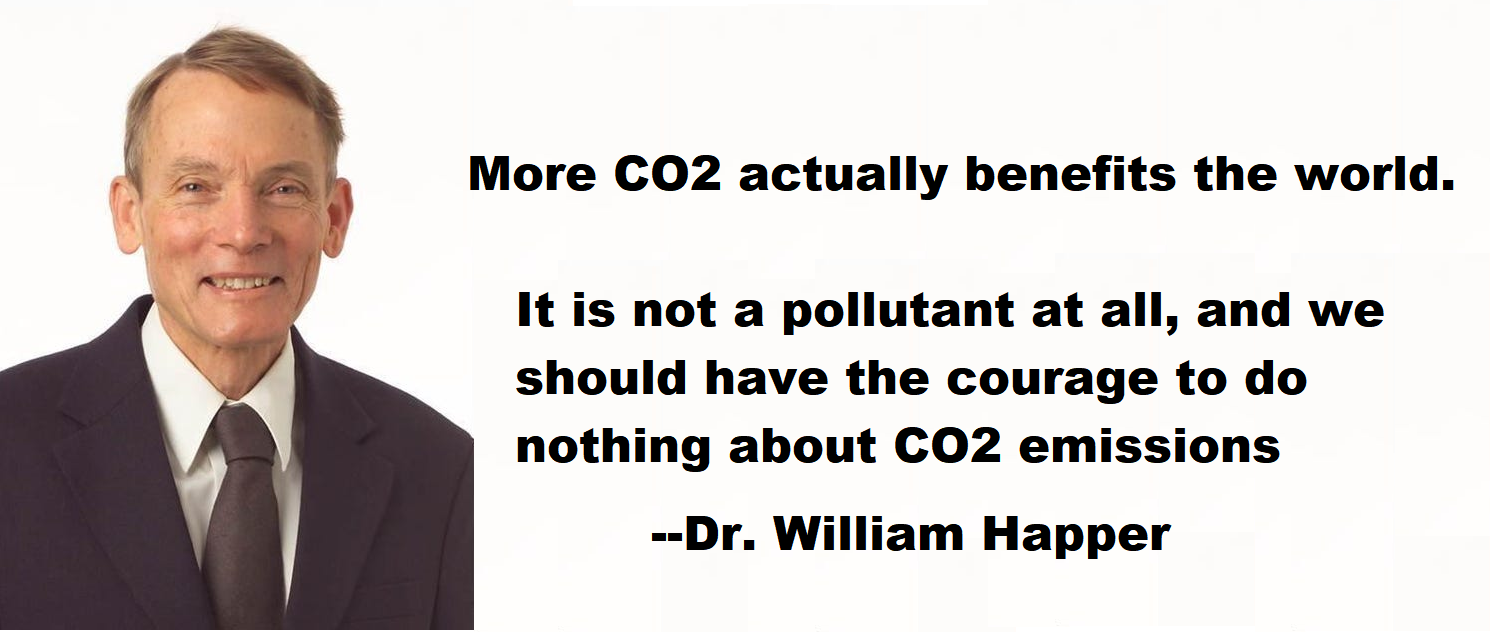
Addendum: Zero CO2 is a Suicide Pact (Dr. Happer)

Biznews published excerpts from an interview with Dr. William Happer Sign  Elimination of CO2 is a suicide pact.  Text below in italiics with my bolds and added images.

Overview

It’s safe to assume no one consciously sets out to challenge a narrative as deeply entrenched and emotionally charged as climate change. Dr William Happer, an American physicist and Professor Emeritus in the Department of Physics at Princeton University, certainly didn’t. It was only in 1991, upon Happer’s appointment by President George W Bush as director of Energy Research in the US Department of Energy, that his interaction with climate change authorities – and their refusal to engage in customary scientific debate on climate change – piqued his interest.

Thereafter, Happer was dismissed for his contrarian views and ‘head butting’ with climate change luminary Al Gore, only to be brought back to Washington by former president Donald Trump in 2018. BizNews spoke to Happer about his prodigious career and discovery that the burgeoning climate change hysteria had no scientific basis. Happer meticulously detailed why and how CO2, the “demon gas”, is not a pollutant but is essential to mankind’s prosperity.

Professor William Happer on the effect of carbon dioxide on planet Earth

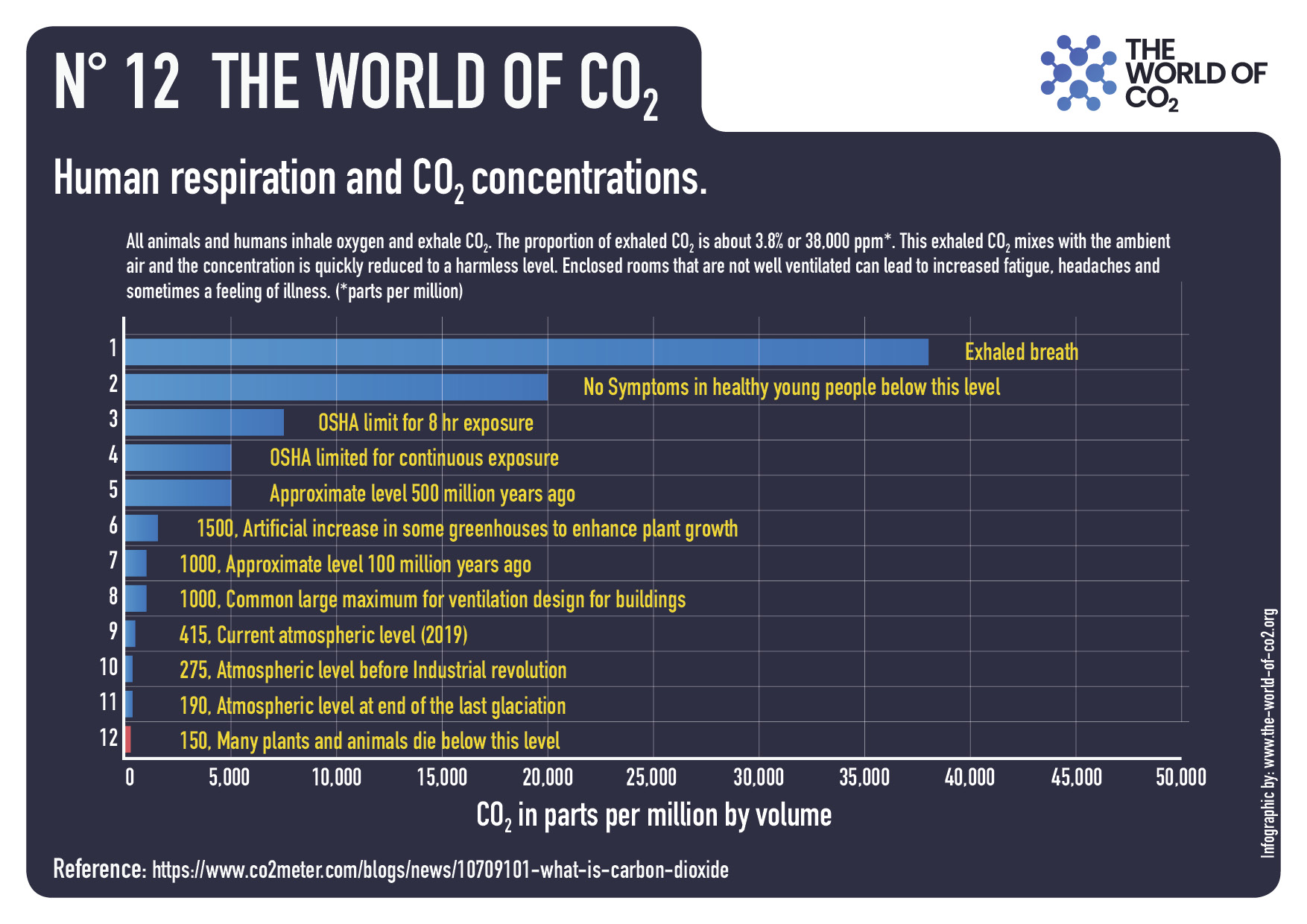
Carbon dioxide is what drives life on Earth. The growth of plants depends on carbon dioxide. The carbon dioxide in the air diffuses into the leaves of plants through little holes, and the plants combine this with water and it requires energy. This energy comes from sunlight. So, the combination of carbon dioxide, the so-called pollutant, water and sunlight is what makes life. You know, that’s what we live on. And carbon dioxide at the present time is much lower [in] concentration than has prevailed over most of geological history. [During] most of geological history, it’s pretty clear from proxy records, CO2 levels have been two or three times greater than they are now.

We probably don’t have enough fossil fuels around to restore those levels
where plants evolve and where they function best.

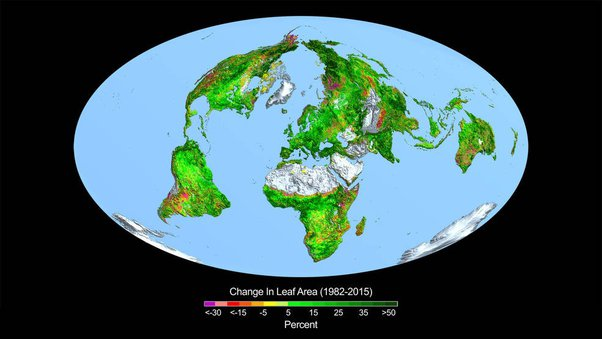
But even the relatively small increases we’ve had – from maybe 280, 300 parts per million 200 years ago to a little over 400 today – that’s not a big increase. It’s 35%, maybe. But it has caused greening all around the Earth. You can see that from satellites looking down over the last two or three decades. Earth is getting greener. Especially arid regions are getting greener. You know, the edges of the great deserts of the Earth are shrinking. They’re not growing, they are shrinking.

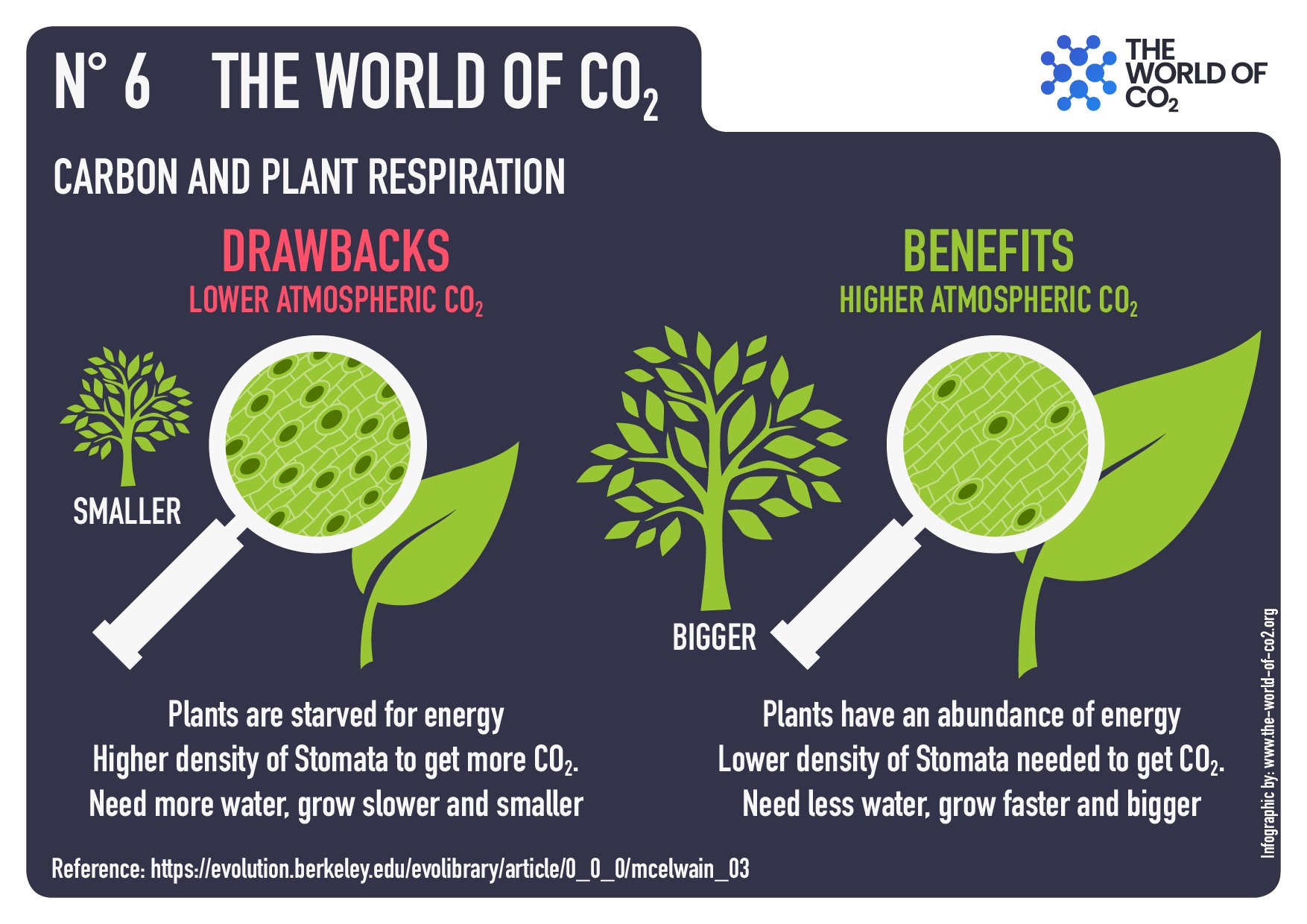
They’re shrinking because of more CO2. And the reason is that there are a number of benefits from more CO2, but one of the most important ones is that if there’s more CO2, plants can live with less water. They don’t waste as much water with more CO2 in the air, because they grow leaves with fewer holes in them so they don’t leak as much water. And the little holes, the stomata – the little mouths, that’s what it means and it’s where the CO2 comes in – don’t open as wide. So, the problem with sucking CO2 out of the air, which is what plants have to do, is for every CO2 molecule that diffuses into your leaf, you lose a hundred water molecules diffusing the other way. This is a real dilemma for the planet.

It’s true. CO2 is a greenhouse gas and it warms the Earth,
but the warming isn’t enough to matter.

It’s very small. And so, it’s probably beneficial on balance. If you double CO2, it seems like a lot, that’s a 100% increase of CO2. How much does that affect the cooling radiation that goes off to space? That sounds like a lot, but in effect it only decreases the radiation to space by 1%. So, 100% increase of CO2, 1% decrease in radiation to space. It’s a very small effect, and you don’t have to change the Earth’s temperature very much or cloudiness very much to bring it back into equilibrium with the situation before you increase the CO2.

So, it’s an ineffective climate influencer. Yet you get this demon gas that is going to cause us all to boil to death or something like that. Nothing could be further from the truth. It’s a trivial gas, but it’s very, very good for life on Earth. More CO2 has been wonderful for mankind because it helps provide the abundance of food we have today and it’s caused no harm, whatsoever.

On climate change activism having become like a religious cult

It is a religious cult for many people. Many people have stopped believing in traditional religions, you know? So, they don’t believe in God, but they need something beyond themselves to believe in. What could be more noble than saving the planet? “The planet is threatened by the demon gas CO2, so we’re going to save it.” The fact that it means essentially suicide for the human race doesn’t get into their brains. But that is what it means.

You cannot immediately eliminate CO2 and let the human population survive.
It can’t be done. So, it’s a suicide pact, you know, what is being proposed.

The movement is a joke – a little bit – but it’s not so different from a coalition of organised crime and religious fanaticism. And the religious fanatics … You know, you don’t argue with someone about their religion. This is not a joking matter. It brings crusades and religious wars and God knows what. So, that’s a big problem. There is this religious aspect; so many people now have been brainwashed into thinking there really is an emergency. And anyone who stands in the way of saving the planet is Satan incarnate. They are sincere people but they’re just badly misled.

Many of the most vociferous climate emergency folks; if you press them, they say, “Yes, the real problem is not fossil fuels, it’s human beings. You know, there are just too many people. We should not have more than a billion people.” We’re roughly eight billion now, so that means seven out of eight of us should disappear from the planet. This is extremely dangerous. It’s an evil cult.

On what has been lost owing to climate hysteria

The alarmist community recognised 20 years ago that the warming is a lot less than their models had predicted. “Just you wait,” they’d say, “Sooner or later it will warm. But in the meantime, we need something else to keep the alarm going.” And they seized on extreme weather and rising sea levels and ocean acidification… Things that really were not warming. And they changed the name from global warming to climate change because warming wasn’t going to cut it. There wasn’t enough warming.

Earth has an unstable climate which isn’t very well understood to this day, and it would be wonderful if we understood it better. But I think our ability to understand it has been set back very badly by the climate hysteria. So, what could’ve been 20, 30 years of good, basic research and real understanding of the climate has been wasted with hysteria about this false climate emergency, which does not exist. In the meantime, the real parts of the climate – which would be good to understand – have been ignored.

Sowell Exposes Social Justice Fallacies

Matthew Lau reviews Thomas Sowell’s latest book Social Justice Fallacies in a Financial Post article: No sacred cows in Thomas Sowell’s takedown of social justice fallacies.  Excerpts in italics with my bolds and added images.

In his latest book, renowned economist and author demolishes
the myths that underpin the social justice movement.

Thomas Sowell, age 93, famed economist and author of more than 40 books, last month published his latest: Social Justice Fallacies. In it he asserts plain facts such as that life is unfair and central planners are fallible, realities too often ignored or downplayed by those looking to impose top-down visions of “social justice.”

Among his targets are:

  • price controls,
  • minimum wage laws,
  • the myth that American Black poverty is due to systemic racism,
  • high marginal tax rates,
  • teachers unions’ monopoly on schooling,
  • exaggerations of income inequality by people who ignore income mobility,
  • affirmative action,
  • “sex education” in public schools (Sowell uses the scare quotes repeatedly)

To each of these and many other things, Sowell brings facts, examples, and statistics.

On the notion that the United States is a systemically racist or white supremacist society, Sowell notes that the median incomes of Americans of Chinese, Japanese, Indian and Korean ancestry are higher than those of white Americans. Citing a 2019 U.S. Census Bureau survey, he points out that “among full-time, year-round male workers, Asian Indian males earned over $39,000 a year more than white male full-time, year-round workers” — an unlikely outcome if white supremacy were pervasive.

Black family poverty has long been higher than white family poverty but, as Sowell explains, the poverty rate of Black married-couple families is consistently below the national poverty rate. “If black family poverty is caused by ‘systemic racism,’” he asks, “do racists make an exception for blacks who are married?”

Another case-closing rhetorical question from Sowell: “Are Asians ‘kept out’ of professional basketball or Californians ‘kept out’ of the National Hockey League?” In American sports, he notes, “Blacks are very over-represented in professional basketball, whites in professional tennis, and Hispanics in Major League Baseball.” There are more NHL players from Sweden than California even though Sweden is on another continent and has about one-quarter California’s population. But these facts do not mean professional sports leagues all engage in racism or other bigotry.

No affirmative action or other initiative is needed to
“correct” these unequal outcomes between groups.

If Sowell’s arguments about government economic control, race, economic disparities and other questions sound familiar, it is because he has written on these issues for decades. The same fallacies he and others have repeatedly debunked keep reappearing and need to be whacked down again and again — which Sowell continues to do.

In Social Justice Fallacies, Sowell again attacks racial preferences in university admissions, arguing that admitting minority students into university programs for which they are not academically qualified does them no favours. Black students at the 80th percentile are very good students but putting them into elite programs where their classmates are in the 99th percentile sets them up for failure. Under affirmative action, Sowell writes, most Black students admitted to the University of California (Berkeley) during the 1980s failed to graduate.

Another policy that activists promote in the name of social justice, but that hurts Blacks: minimum wage laws, which the data show significantly increase Black teenage unemployment by pricing many of them out of jobs.

There are no sacred cows in Social Justice Fallacies. Sowell argues that “surrogates who introduced ‘sex education’ into public schools in the 1960s” were pre-empting parents’ decisions about when and how to teach their children about sex. He points to data showing that before such education was introduced venereal diseases and teenage pregnancies had been declining for years, but after its introduction teenage pregnancies rapidly rose and the incidence of venereal diseases either rose or declined less rapidly than before. These facts alone do not prove causation between public school “sex education” and venereal diseases and teenage pregnancies, but they are not encouraging, either.

Explaining facts and demolishing fallacies, as Sowell does, is important. When activists distort reality by fashioning narratives to justify their top-down initiatives, they often cause more harm than the original injustices (whether real or perceived) they say they want to correct.

Citing Barack Obama’s memoir, Dreams from My Father, Sowell gives the example of a young Black man who wanted to become a pilot but decided not to pursue it because he thought the Air Force would never let a Black man fly. Sowell points out this was decades after a whole squadron of Black American fighter pilots flew in World War II.

“Whoever indoctrinated this young man,” Sowell concluded,
“did him more harm than a racist could have,
by keeping him from even trying to become a pilot.”

In Addition, Thomas Sowell’s Wisdom and Scholarship on Affirmative Action

Excerpts on Affirmative Action from The Thomas Sowell Reader 

Assumptions Behind Affirmative Action

With affirmative action suddenly coming under political attack from many directions, and with even liberals backing away from it, we need to question not only its underlying assumptions but also what some of the alternatives are.

At the heart of the affirmative action approach is the notion that statistical disparities
show discrimination. No dogma has taken a deeper hold with less evidence
—or in the face of more massive evidence to the contrary.

A recent story in the Wall Street Journal revealed that more than four-fifths of all the doughnut shops in California are owned by Cambodians. That is about the same proportion as blacks among basketball stars. Clearly, neither of these disparities is due to discrimination against whites.

Nor are such disparities new or peculiar to the United States. In medieval Europe, most of the inhabitants of the towns in Poland and Hungary were neither Poles nor Hungarians. In nineteenth-century Bombay, most of the shipbuilders were Parsees, a minority in Bombay and less than one percent of the population of India.

In twentieth-century Australia most of the fishermen in the port of Freemantle came from two villages in Italy. In southern Brazil, whole industries were owned by people of German ancestry and such crops as tomatoes and tea have been grown predominantly by people of Japanese ancestry.

Page after page—if not book after book—could be filled with similar statistical disparities from around the world and down through history. Such disparities have been the rule, not the exception.

Yet our courts have turned reality upside down and treated what happens
all over this planet as an anomaly and what is seldom found
anywhere—proportional representation—as a norm.

Why are such disparities so common? Because all kinds of work require particular skills, particular experience, particular locations and particular orientations. And none of these things is randomly distributed.

Local demagogues who thunder against the fact that Koreans run so many stores in black ghettoes merely betray their ignorance when they act as if this were something strange or unusual. For most of the merchants in an area to be of a different race or ethnicity from their customers has been common for centuries in Southeast Asia, Eastern Europe, West Africa, the Caribbean, Fiji, the Ottoman Empire and numerous other places.

When German and Jewish merchants moved into Eastern Europe in the Middle Ages, they brought with them much more experience in that occupation than that possessed by local Eastern European merchants, who were often wiped out by the new competition. Even when the competition takes place between people who are racially and ethnically identical, all kinds of historical, geographical and other circumstances can make one set of these people far more effective in some activities than the others.

Mountain people have often lagged behind those on the plains below, whether highland Scots versus lowland Scots or the Sinhalese in the highlands of Sri Lanka versus the Sinhalese on the plains. The Slavs living along the Adriatic coast in ports like Dubrovnik were for centuries far more advanced than Slavs living in the interior, just as coastal peoples have tended to be more advanced than peoples of the interior hinterlands in Africa or Asia.

Some disparities of course have their roots in discrimination. But the fatal mistake is to infer discrimination whenever the statistical disparities exceed what can be accounted for by random chance. Human beings are not random. They have very pronounced and complex cultural patterns.  These patterns are not unchanging. But changing them for the better requires first acknowledging that “human capital” is crucial to economic advancement.

Those who make careers out of attributing disparities to the wickedness of other people
are an obstacle to the development of more human capital among the poor.

There was a time, as late as the mid-nineteenth century, when Japan lagged far behind the Western industrial nations because it was lacking in the kind of human capital needed in a modern economy. Importing Western technology was not enough, for the Japanese lacked the knowledge and experience required to operate it effectively.

Japanese workmen damaged or ruined machinery when they tried to use it. Fabrics were also ruined when the Japanese tried to dye them without understanding chemistry. Whole factories were badly designed and had to be reconstructed at great cost.  What saved the Japanese was that they recognized their own backwardness—and worked for generations to overcome it.

They did not have cultural relativists to tell them that all cultures are equally valid
or political activists to tell them that their troubles were all somebody else’s fault.
Nor were there guilt-ridden outsiders offering them largess.

Affirmative action has been one of the great distractions from the real task of self-development. When it and the mindset that it represents passes from the scene, poorer minorities can become the biggest beneficiaries, if their attention and efforts turn toward improving themselves.

Unfortunately, a whole industry of civil rights activists, politicians and miscellaneous hustlers has every vested interest in promoting victimhood, resentment and paranoia instead.

Affirmative Action Around the World

While controversies rage over “affirmative action” policies in the United States, few Americans seem to notice the existence or relevance of similar policies in other countries around the world. Instead, the arguments pro and con both tend to invoke history and traditions that are distinctively American. Yet group preferences and quotas have existed in other countries with wholly different histories and traditions—and, in some countries, such policies have existed much longer than in the United States.  What can the experiences of these other countries tell us? Are there common patterns, common rationales, common results? Or is the American situation unique?

Ironically, a claim or assumption of national uniqueness is one of the most common patterns found in numerous countries where group preferences and quotas have existed under a variety of names. The special situation of the Maoris in New Zealand, based on the 1840 Treaty of Waitangi, is invoked as passionately in defense of preferential treatment there as the unique position of untouchables in India or of blacks in the United States.

Despite how widespread affirmative action programs have become, even the promoters of such programs have seldom been bold enough to proclaim preferences and quotas to be desirable on principle or as permanent features of society. On the contrary, considerable effort has been made to depict such policies as “temporary,” even when in fact these preferences turn out not only to persist but to grow.

Official affirmative action or group preference policies must be distinguished from whatever purely subjective preferences or prejudices may exist among individuals and groups. These subjective feelings may of course influence policies, but the primary focus here is on concrete government policies and their empirical consequences—not on their rationales, hopes, or promises, though these latter considerations will not be wholly ignored. Fundamentally, however, this is a study of what actually happens, rather than a philosophical exploration of issues that have been amply—if not more than amply—explored elsewhere.

The resurgence of group preferences in societies committed to the equality of individuals before the law has been accompanied by claims not only that these preferences would be temporary, but also that they would be limited, rather than pervasive. That is, these programs would supposedly be limited not only in time but also in scope, with equal treatment policies prevailing outside the limited domain where members of particular groups would be given special help.

Similar reasoning was applied in the United States to both employment and admissions to colleges and universities. Initially, it was proposed that there would be special “outreach” efforts to contact minority individuals with information and encouragement to apply for jobs or college admissions in places where they might not have felt welcome before, but with the proviso that they would not be given special preferences throughout the whole subsequent processes of acceptance and advancement.

Similar policies and results have also been achieved in less blatant ways. During the era of the Soviet Union, professors were pressured to give preferential grading to Central Asian students and what has been called “affirmative grading” has also occurred in the United States, in order to prevent excessive failure rates among minority students admitted under lower academic standards. In India, such practices have been referred to as “grace marks.” Similar results can be achieved indirectly by providing ethnic studies courses that give easy grades and attract disproportionately the members of one ethnic group. This too is not peculiar to the United States. There are Maori studies programs in New Zealand and special studies for Malays in Singapore.

In the job market as well, the belief that special concerns for particular groups
could be confined to an initial stage proved untenable in practice.

Initially, the term “affirmative action” arose in the United States from an executive order by President John F. Kennedy, who called for “affirmative action to ensure that the applicants are employed, and that employees are treated during employment without regard to race, color, creed, or national origin.” In short, there were to be no preferences or quotas at all, just a special concern to make sure that those who had been discriminated against in the past would no longer be discriminated against in the future—and that concrete steps should be taken so that all and sundry would be made aware of this.

However, just as academic preferences initially limited in scope continued to expand,
so did the concept of affirmative action in the job market.

A later executive order by President Lyndon Johnson in 1968 contained the fateful expressions “goals and timetables” and “representation.” In December 1971, yet another Nixon executive order specified that “goals and timetables” were meant to “increase materially the utilization of minorities and women,” with “under-utilization” being spelled out as “having fewer minorities or women in a particular job classification than would reasonably be expected by their availability.” Affirmative action was now a numerical concept, whether called “goals” or “quotas.”

This confident pronouncement, however, presupposed a degree of control which has proved illusory in country after country. Moreover, “when and where there is social and economic inequality” encompasses virtually the entire world and virtually the entire history of the human race. A “temporary” program to eliminate a centuries-old condition is almost a contradiction in terms.

Equality of opportunity might be achieved within some feasible span of time,
but that is wholly different from eliminating inequalities of results.

Even an approximate equality of “representation” of different groups in different occupations, institutions or income levels has been a very rare—or non-existent—phenomenon, except where such numerical results have been imposed artificially by quotas. As a massive scholarly study of ethnic groups around the world put it, when discussing “proportional representation” of ethnic groups, “few, if any societies have ever approximated this description.”

In short, the even representation of groups that is taken as a norm is difficult or impossible to find anywhere, while the uneven representation that is regarded as a special deviation to be corrected is pervasive across the most disparate societies. People differ—and have for centuries. It is hard to imagine how they could not differ, given the enormous range of differing historical, cultural, geographic, demographic and other factors shaping the particular skills, habits, and attitudes of different groups.

Any “temporary” policy whose duration is defined by the goal of achieving something that has never been achieved before, anywhere in the world, could more fittingly be characterized as eternal.


The rules of Energy Transition Club

Irina Slav lists the rules strictly followed by leaders of the Great Energy Transition at her substack Irina Slav on Energy.  Excerpts in italics with my bolds and added images.

We call them climate crusaders, climateers, a cult, and other, less polite words. Essentially, however, the transition leadership is a club and I only say this because I’m in a good mood this week, seeing as the local case of global boiling has ended for the year.

Like every club, Transition Club has rules and we all must give its members top marks for following these, not least because following these rules is often quite challenging. Here’s why.

Rule #1: We do not talk about the problems. (Unless we absolutely have to.)

The IEA this week made its fans happy by releasing a new report that said the world needed to replace and build 50 million miles of transmission lines to make the transition work.

This would only take $600 billion annually by 2030, which is double the current investment rate for transmission lines. For context, the global transmission line network is half the length the IEA says we need right now.

The expansion needs to take place by 2040 because Climate Targets. In other words, the world needs to double its transmission line network in a matter of less than 20 years… after it took a century to build all the lines we currently have. Realistic, right?

In fairness, the IEA does hint that there might be a slight problem with securing all of the raw materials necessary for this enormous undertaking. It absolutely had to admit it, what with miners crying shortage all the time, annoying people. But that cannot stop the transition. Else we get global broiling.

Rule #2: Facts are obsolete. Only the transition matters. (Until facts punch you in the face.)

The UK government had a plan to replace gas heating systems in homes with hydrogen. It even scheduled local trials to see if it would work. I know, that’s almost unheard of in transition circles but they did.  Following massive opposition from the target community, the government ditched the trial plan and started mumbling that maybe hydrogen for heating is not such a marvelous idea.

The facts: hydrogen — green hydrogen, that is — is expensive.
All hydrogen is also dangerous, which makes
the green variety even more expensive.

At the time the plans were made, these facts were shunned. The opposition of the locals in the village of Whitby, however, prompted their return to the scene, ultimately leading to this piece of news: Hydrogen for UK home heating should be ruled out, says infrastructure adviser

Summed up, the match between facts and fantasy in hydrogen sounds like this, per the FT: ““We do not see any role for hydrogen in the future of home heating,” said Nick Winser, NIC commissioner, arguing it was “simply not ready at scale” and risked being an inefficient use of green electricity.”

Rule #3: Tell a lie big enough and keep repeating it

Okay, this one is from a quote and here’s the whole quote:

“If you tell a lie big enough and keep repeating it, people will eventually come to believe it. The lie can be maintained only for such time as the State can shield the people from the political, economic and/or military consequences of the lie. It thus becomes vitally important for the State to use all of its powers to repress dissent, for the truth is the mortal enemy of the lie, and thus by extension, the truth is the greatest enemy of the State.”

It kind of feels I can add nothing constructive to this description of the climate change narrative, especially if you consider the source, which appears to be (though not verbatim, I understand) a little book called Mein Kampf. I mean, if a tactic was tried in one context and it worked splendidly, you can totally make it work in another, and I’m not being ironic. The tactic does work.

It’s only too bad “the State” cannot shield the people from
the consequences of the lie for very long.

In Europe, we are witnessing in real time how the consequences, from which governments have been unable to shield their populations, are causing a turning political tide, with voters electing parties that do not prioritise the transition.

Land area required for wind farms to power London UK.

Rule #4: If it’s failing, double down

The countries with the greatest wind and solar power generation capacity in the EU also have some of the highest electricity prices. This is a mystery to absolutely no one with rudimentary mental acuity. And yet the billions continue flowing into wind and solar. And then, once a gas crunch hits, they start flowing into households.

Wind and solar clearly cannot work at the scale their fans want them to work. It is physically and financially impossible for them to make sense at that scale at this point in time. The evidence is there on a daily basis, courtesy of Electricity Maps and, I’m sure, other real-time tracking websites.

Transition Club has no truck with evidence, however, unless it’s the right kind of evidence, such as record-setting wind/solar output for some day or another. The rest is dismissed as irrelevant, disinformation, or simply ignored. And the billions keep flowing because there are targets to be hit in wind and solar installations. Whatever it takes.

Rule #5: Words and numbers are weapons

Old but gold and put to good use by the Club. All the talk about global boiling, the highway to hell, the accelerating extreme weather, the climate catastrophe and all the rest of it are water to the Transition Club agitprop mill. It keeps the lie going.

Numbers are even better: from the 99% of climate scientists who are in agreement about the climate and related catastrophies to all the CO2 emission updates and the horrific temperature readings from this summer we get actual numbers that stoke up fears that the planet is dying and we’re on our way out with it unless we kill the oil and gas industry and go full-wind/solar.

Or unless we check how the authors of the 99% consensus study came to their conclusion and what their sample size was, what the significance of those emission updates is for the total content of CO2 in the atmosphere, and how those temperatures were measured during the summer.

Rule #6: Questions are denial

This rule evolved organically from following all the others and sprouted actual disinformation laws, at least in the EU, for now, and not-so-official reporting rules for the media that require the climate narrative to be reported as fact despite evidence to the contrary, said evidence being dismissed as science denial and denialist propaganda, even when — and perhaps especially when — it comes from actual scientists.

Apparently, these days there are two kinds of scientists,the right and the wrong kind.
The wrong kind are those asking questions,  even though
science is by definition a process that involves a lot of question-asking
.

Per the Oxford Dictionary science means “the systematic study of the structure and behaviour of the physical and natural world through observation, experimentation, and the testing of theories against the evidence obtained.”

Not in the transition era, it doesn’t. In the transition era, there is a right kind of observation and computer modelling to replace experimentation and testing of theories against evidence. Then there is the wrong kind, which is any systematic study of the physical and natural world that questions the right kind, using evidence.

Glory be to the transition.

AFP “fact check” of Clintel Climate Declaration.