Fearmongers Fan Forest Fire Flames

Playing Climate Whack-a-Mole again, this time with a recent outbreak of claims that forest fires will be worse due to climate change. For example:

Climate change found to double impact of forest fires

Over the past 30 years, human-caused climate change has nearly doubled the amount of forest area lost to wildfires in the western United States, a new study has found.

The result puts hard numbers to a growing hazard that experts say both Canada and the U.S. must prepare for as western forests across North America grow warmer and drier and increasingly spawn wildfires that cannot be contained.

The PNAS study referenced is: Impact of anthropogenic climate change on wildfire across western US forests

Abstract: Increased forest fire activity across the western United States in recent decades has contributed to widespread forest mortality, carbon emissions, periods of degraded air quality, and substantial fire suppression expenditures. Although numerous factors aided the recent rise in fire activity, observed warming and drying have significantly increased fire-season fuel aridity, fostering a more favorable fire environment across forested systems. We demonstrate that human-caused climate change caused over half of the documented increases in fuel aridity since the 1970s and doubled the cumulative forest fire area since 1984. This analysis suggests that anthropogenic climate change will continue to chronically enhance the potential for western US forest fire activity while fuels are not limiting.

It’s Not That Simple

As usual, the screaming headlines exaggerate a more complex and nuanced situation. From the study author:

“We see these big increases in fuel aridity across the Western forests” from 1984 to 2015, Dr. Abatzoglou tells the Monitor in a phone interview. “But what we find is about half, only half, not all of it, but about half of it, is attributable to the human-caused climate change.”

That means that other factors, like natural variability, have compounded with climate change to result in longer fire seasons, larger individual fires, and a ninefold increase in the area burnt over the past 30 years.

Another factor could be the amount of dry, unburned wood that has built up over decades of efforts to suppress wildfires, suggests Abatzoglou. So one solution going forward could be to allow controlled fires to burn off that tinder when conditions are wetter. “We do see a really strong coupling between climate change and forest fire in the Western United States,” he says, but “I think there may be ways to weaken that relationship” – by minimizing fuel for these massive wildfires.

h/t to Junk Science

h/t Junk Science

Case Study: Fort McMurray

That PNAS analysis is built upon climate models. On the ground, specific events show more clearly how human and natural fac tors contribute to a forest fires, and it is not so obviously linked to rising CO2.  Blair King writes about Fort McMurray at Huffington Post (here):

We Can’t Blame Climate Change For The Fort McMurray Fires

So what actually caused the fire to be so severe? Well it appears to be a combination of the effects of El Nino and historic forest management decisions. To explain: after the Slave Lake fire in 2011 the Alberta Government sought advice on the fire situation. The result was the Flat Top Complex Wildfire Review Committee Report which made a number of recommendations and concluded:

Before major wildfire suppression programs, boreal forests historically burned on an average cycle ranging from 50 to 200 years as a result of lightning and human-caused wildfires. Wildfire suppression has significantly reduced the area burned in Alberta’s boreal forests. However, due to reduced wildfire activity, forests of Alberta are aging, which ultimately changes ecosystems and is beginning to increase the risk of large and potentially costly catastrophic wildfires.

Essentially the report acknowledged that the trees surrounding Fort McMurray are hard-wired for fire and if they are not managed properly then these types of catastrophic fires will become more common. The warm weather may have accelerated the fires season, but the stage was set for such a fire and not enough work was done to avoid it.

The Haines Index

No matter how a fire ignites, a forest fire becomes dangerous because of the weather conditions allowing it to start and to grow.  The potential for forest fires is often indicated by the Haines Index (HI) that has been widely used for operational fire-weather forecasts in regions of the United States, Canada, and Australia. Several studies have shown a positive correlation between HI and observed fire activity.

An important study (here) demonstrates HI is strongly linked to ocean oscillation events such as El Nino.

The Interannual Variability of the Haines Index over North America

The Haines index (HI) is a fire-weather index that is widely used as an indicator of the potential for dry, lowstatic-stability air in the lower atmosphere to contribute to erratic fire behavior or large fire growth. This study examines the interannual variability of HI over North America and its relationship to indicators of large-scale circulation anomalies. The results show that the first three HI empirical orthogonal function modes are related respectively to El Nino–Southern Oscillation (ENSO), the Arctic Oscillation (AO), and the interdecadal sea ~ surface temperature variation over the tropical Pacific Ocean. During the negative ENSO phase, an anomalous ridge (trough) is evident over the western (eastern) United States, with warm/dry weather and more days with high HI values in the western and southeastern United States. During the negative phase of the AO, an anomalous trough is found over the western United States, with wet/cool weather and fewer days with high HI, while an anomalous ridge occurs over the southern United States–northern Mexico, with an increase in the number of days with high HI. After the early 1990s, the subtropical high over the eastern Pacific Ocean and the Bermuda high were strengthened by a wave train that was excited over the tropical western Pacific Ocean and resulted in warm/dry conditions over the southwestern United States and western Mexico and wet weather in the southeastern United States. The above conditions are reversed during the positive phase of ENSO and AO and before the early 1990s.

Forests Benefit from More CO2 and Milder Temperatures

A previous post (here) provided links to studies showing how US and other forests have generally become more healthy and resilient over recent decades.  For example:

There is strong evidence from the United States and globally that forest growth has been increasing over recent decades to the past 100+ years. Future prospects for forests are not clear because different models produce divergent forecasts. However, forest growth models that incorporate more realistic physiological responses to rising CO2 are more likely to show future enhanced growth. Overall, our review suggests that United States forest health has improved over recent decades and is not likely to be impaired in at least the next few decades.

Figure 9--Subregional Timber Supply Model projections of total hardwood and softwood removals volumes, in billion cubic feet (bcf), by private owners (where NIPF stands for nonindustrial private forest land), 1999 to 2040, under the base scenario. USDA South Region

Figure 9–Subregional Timber Supply Model projections of total hardwood and softwood removals volumes, in billion cubic feet (bcf), by private owners (where NIPF stands for nonindustrial private forest land), 1999 to 2040, under the base scenario. USDA South Region

As well, the outlook for timber production is optimistic  (here):

Although models suggest that global timber productivity will likely increase with climate change, regional production will exhibit large variability, as illustrated in Table 1. In boreal regions natural forests would migrate to the higher latitudes. Countries affected would likely include Russia and Canada. Warming could be accompanied by increased forest management in northern parts of some of these countries, particularly the Nordic countries, as increased tree growth rates are experienced. Climate change will also substantially impact other services, such as seed availability, nuts, berries, hunting, resins, and plants used in pharmaceutical and botanical medicine and the cosmetics industry, and these impacts will also be highly diverse and regionalized.

Another factor to consider is the effects of impacts other than climate change such as land-use change and tree plantation establishment. In many regions, these effects may be more important than the direct impact of climate. Indeed, over the past half-century industrial wood production has been increasingly shifting from native forests to planted forests. (my bold)

Summary

Again we see jumping to a conclusion to get a simple (simplistic) reduction of a complex reality. In legal terms, blaming forest fires on CO2 is a rush to judgment. Yes, forests are affected by more CO2 and milder temperatures. They grow stronger and more resilient to all kinds of threats, including forest fires. The incidence of forest fires is associated strongly with drier conditions resulting from ocean oscillations and accompanying atmospheric circulations. Humans play a role in land usage, timber management and fire suppression policies.

See link for more on playing Climate Whack-a-mole

Postscript:

I am proud of making a post title composed entirely of F-words.  Apologies for any problems caused to stutterers.  Old joke about the fate of a stutterer during an Air Force parachute training exercise.  All the chutes of the trainees opened, except for one man who kept falling past the others.  He was overheard saying:  “Th-th-th-th-thr-three, Fa-fa-fa-fa-fou-four, Fi-fi- . . .”

Man-Made Drought in US Southwest


Once again climatism misinforms and misdirects on environmental hazards. Now fears of long-term drought in the US Southwest are put forward and blamed on “climate change”, code for burning fossil fuels. NASA: Megadrought Lasting Decades Is 99% Certain in American Southwest 

Unsurprisingly, when you read past the headlines, you find that the real issue is man-made all right: water and land usage by growing populations of residents in the region.

Much of the Southwest relies on the Colorado River and its tributaries for some or all of its water. Beginning as a trickle seeping out of the ground above 10,000 feet, just west of the Continental Divide, the Colorado feeds critical farmland, public water supplies and helps generate hydroelectric power. Thirty to 40 million people rely on Colorado River water.

Historically, the Colorado emptied into the Gulf of California. Today, what little remains of the Colorado River when it reaches Mexico has been diverted to irrigate the farms of Mexicali Valley. The rest of the river exists mostly as a dry memory.

“The Colorado River is one of the most dammed and diverted rivers on the planet,” said Gary Wockner, executive director of Save The Colorado, in an interview with EcoWatch. “In fact, every drop of its water, over 5 trillion gallons of water per year, is diverted out and the river no longer meets the Gulf of California.”

Climate models are then employed to predict a megadrought for the region resulting from projecting several degrees of global warming.

First of all, even though the US Southwest has seen more temperature rise than other US regions, it is still the case that it is not getting hotter, it is getting milder. That is, daily maximums are trending lower, while overnight lows are rising, resulting in milder winters, earlier springs and later autumns.

But future temperature increases are not the problem, that is misdirection.  The present water shortages are totally man-made, directly resulting from failed management practices and lack of political will and leadership.

“The implications are that the river is already severely depleted and the reservoirs are at near historic lows and all the predictions are that it is going to get worse,” said Wockner. “And so people who manage water supplies need to be managing for less water.”

It is a cop-out to campaign for CO2 reduction agreements and for a cap-and-trade market (casino to replace the subprime mortgage game). Those initiatives will do nothing for water in the region. Forget “fighting climate change” and get on with adapting social and economic policies to suit the water realities that exist already.


Can’t See Forests for the Theory

Warming alarmists see no good coming out of rising CO2 and the current climate optimum, and their warnings extend to forests as well. So in love with their theory of global warming, they cannot see the forests as they are, and as documented in numerous research studies.

Claim: Forest growth is diminished by higher CO2 and warmer summers.
Fact: CO2 increases have improved forest health.

Claim: Forest areas will be hard-hit by future droughts.
Fact: No trend in droughts is discernible.

Claim: Warmer temperatures increase damage from pests and pathogens.
Fact: Enhanced CO2 is making forests more resilient to diseases and infestations.

Claim: Old growth forests will not sequester CO2 as young forests do.
Fact: Rising CO2 has given new life even to aging forests.

Basic Vegetation Biology (from Bill Illis here)

Almost ALL C3 pathway vegetation (trees, bushes, wheat, rice and 95% of all plants) are CO2-starved except in extremely high rainfall environments like tropical rain-forests. They need to keep their CO2-absorbing stomata more open to get the CO2 they need but this also leads to more loss of water through evapotranspiration.

As rainfall gets lower and lower, the 95% of plants that are C3 suffer more and more until they cannot even grow anymore. In low rainfall and low CO2, these plants are done, and the C4 pathway grasses take over. The C4 grasses are more efficient at absorbing CO2 so do not require as much rainfall. Even 10 inches per year is enough.

But take anywhere on the planet where grasses are dominant, it is because rainfall is too low for trees and bushes, combined with CO2 being too low.

Now ramp-up CO2 and the trees do better in these regions. In fact, they do better absolutely everywhere. Now ramp-up precipitation as well, as should happen in a warmer world, and we have forests everywhere and they grow better everywhere.

Go back to the little ice age, when temperatures were lower and precipitation was lower and CO2 was lower, all plants grew at a lower rate and C3 crops like vegetables, wheat and rice probably failed regularly and people died of starvation.

In the ice ages, when all these numbers were even far lower, our ancestors lived off the grassland herbivores because there were no trees or bushes and no fruit, nuts, wheat, or berries to be found. But there were lots of grass-eating herbivores like the Auroch which was the ancestor of today’s cattle. Our ice age ancestors were mainly meat-eaters.

Forests are Increasingly Healthy

Physiological and ecological factors influencing recent trends in United States forest health responses to climate change
Craig Loehle, Craig Idso, T. Bently Wigley

Highlights
• We review information on US forest health in response to climate change.
• We found that trees are tolerant of rising temperatures and have responded to rising carbon dioxide.
• No long-term trends in US drought have been found in the literature.
• CO2 tends to inhibit forest pests and pathogens.
• Projections of forest response to climate change are highly variable.

Abstract:
The health of United States forests is of concern for biodiversity conservation, ecosystem services, forest commercial values, and other reasons. Climate change, rising concentrations of CO2 and some pollutants could plausibly have affected forest health and growth rates over the past 150 years and may affect forests in the future. Multiple factors must be considered when assessing present and future forest health. Factors undergoing change include temperature, precipitation (including flood and drought), CO2 concentration, N deposition, and air pollutants. Secondary effects include alteration of pest and pathogen dynamics by climate change.

We provide a review of these factors as they relate to forest health and climate change. We find that plants can shift their optimum temperature for photosynthesis, especially in the presence of elevated CO2, which also increases plant productivity. No clear national trend to date has been reported for flood or drought or their effects on forests except for a current drought in the US Southwest. Additionally, elevated CO2 increases water use efficiency and protects plants from drought. Pollutants can reduce plant growth but concentrations of major pollutants such as ozone have declined modestly. Ozone damage in particular is lessened by rising CO2. No clear trend has been reported for pathogen or insect damage but experiments suggest that in many cases rising CO2 enhances plant resistance to both agents.

There is strong evidence from the United States and globally that forest growth has been increasing over recent decades to the past 100+ years. Future prospects for forests are not clear because different models produce divergent forecasts. However, forest growth models that incorporate more realistic physiological responses to rising CO2 are more likely to show future enhanced growth. Overall, our review suggests that United States forest health has improved over recent decades and is not likely to be impaired in at least the next few decades.

Carbon Sequestration

On the specific issue of aging forests losing their ability to absorb CO2, extensive research is reviewed at CO2 Science (here)

As important as are these facts about trees, however, there’s an even more important fact that comes into play in the case of forests and their ability to sequester carbon over long periods of time. This little-acknowledged piece of information is the fact that it is the forest itself – conceptualized as a huge super-organism, if you will – that is the unit of primary importance when it comes to determining the ultimate amount of carbon that can be sequestered on a unit area of land. And it when it comes to elucidating this concept, it seems that a lot of climate alarmists and political opportunists can’t seem to see the forest for the trees that comprise it.

That this difference in perspective can have enormous consequences was demonstrated quite clearly by Cary et al. (2001), who noted that most models of forest carbon sequestration wrongly assume that “age-related growth trends of individual trees and even-aged, monospecific stands can be extended to natural forests.” When they compared the predictions of such models against real-world data gathered from northern Rocky Mountain subalpine forests that ranged in age from 67 to 458 years, for example, they found that aboveground net primary productivity in 200-year-old natural stands was almost twice as great as that of modeled stands, and that the difference between the two increased linearly throughout the entire sampled age range.

The answer is rather simple. For any tree of age 250 years or more, the greater portion of its life (at least two-thirds of it) was spent in an atmosphere of much-reduced CO2 content. Up until 1920, for example, the air’s CO2 concentration had never been above 300 ppm throughout the entire lives of such trees, whereas it is currently 400 ppm or 33% higher. And for older trees, even greater portions  of their lives were spent in air of even lower CO2 concentration. Hence, the “intervention” that has given new life to old trees and allows them to “live long and prosper,” would appear to be the aerial fertilization effect produced by the flooding of the air with the CO2 that resulted from the Industrial Revolution and that is currently being maintained by its ever-expanding aftermath (Idso, 1995).

Based on these many observations, as well as the results of the study of Greenep et al. (2003) – which strongly suggested, in their words, that “the capacity for enhanced photosynthesis in trees growing in elevated CO2 is unlikely to be lost in subsequent generations” – it would appear that earth’s forests will remain strong sinks for atmospheric carbon far beyond the date at which the world’s climate alarmists have proclaimed they would have given back to the atmosphere most of the carbon they had removed from it over their existence to that point in time. And subsequent reports have validated this assessment.

Summary

No doubt that forests are threatened by the human race, but it has nothing to do with CO2, which trees love. Urban and agricultural encroachments can and do cause loss of forest habitats. Pests and pathogens come and go in cycles, and their impacts can be mitigated by proper forest management.

The 2015 Global Forest Resources Assessment was encouraged by the reduced rate of deforestation and the increasing quality and extent of forest management practices in many countries.

Too bad so much effort and funding is wasted on IPCC circuses.

Footnote:

For More on the Link between Forests and Precipitation see Here Comes the Rain Again

Rare Common Climate Sense

common-sense

We are so used to seeing in the media baffle-gab and gibberish  on the topic of climate change. Journalists throw around expressions that torture language, logic and science. Examples, among many others:

“battling climate change”
“unprecedented hot temperatures”
“carbon polluters”
“ocean acidification”
“heat-trapping gases”
“man-made storms”
“arctic death spiral”

So it is with surprise and delight that I can report today on that rarest of events: An impressive expression of common sense regarding climate, and from an important US federal agency at that.

It seems that a division of NOAA (National Oceanic and Atmospheric Administration) decided that some populations of whales were no longer endangered.

The National Marine Fisheries Service, a division of the National Oceanic and Atmospheric Administration, decided Wednesday that nine out of 14 populations of the whale no longer required protections under the law despite growing concerns about global warming.

Of course, environmental activists pushed back, claiming global warming threatens them.

The fisheries service in publishing the decision Thursday in the Federal Register said it was confronted repeatedly before the decision by environmental and conservation groups who said it wasn’t taking global warming seriously enough in proposing to take the whales off the list.

Common Sense on Climate

But the agency said it wasn’t going to speculate on what could happen, warning that it would not be goaded into judging the effects of global warming above what the science shows.

“We cannot merely speculate that climate change and ocean acidification contribute significantly to the extinction risk of any humpback whale [populations], but must base our listing determinations on evidence sufficient to indicate that a particular effect is likely to lead to particular biological responses at the species level,” the agency said in its final response to the climate critics.

The agency said it “evaluated the effects of climate change and ocean acidification on each humpback whale [group], as discussed in our proposed rule, but found no basis to conclude they contribute significantly to extinction risk for most [whales], now or in the foreseeable future,” according to the agency.
(Source: Obama beats back climate change advocates with whale decision)

Given this administration’s penchant to use regulations in the service of climate activism, I doubt that Obama himself had anything to do with this.  More likely, it was overlooked or considered not worth the fight.

Summary

It is good to see there are still some scientists within NOAA who have not forgotten their oceanography. Even more striking, they contend that decisions be based on the world as it is, rather than upon the world as we fear it might become.

We can only hope that their superiors in the chain of command would wake up and speak up for reason and against fear. Though it could be they will be made to walk the plank if Hillary becomes captain of the ship of state.

NOAA climate modelers discover a control knob for oceans.

For More on Extinctions and Ocean pH see:  Headlines Claim, But Details Deny


Researchers Against CO2


The media are reporting stories with a new theme: More CO2 is bad for plant life. This flies in the face of biochemistry, but the activist motivation is clear: They want people thinking CO2 is bad in every way. They don’t want the warming scare undermined by the idea that CO2 along with warming actually helps plant life and agriculture.

The current stories are coming from researchers involved with an outdoor laboratory site called Jasper Ridge, affiliated with Stanford University, my alma mater and home to famous alarmist Stephen Schneider (deceased). The headlines are occasioned by a new paper appearing Sept. 5 in the journal Proceedings of the National Academy of Sciences, authored by Chris Field, director of the Stanford Woods Institute for the Environment..

Headlines Claim, Details Deny

Headlines and claims like those below are appearing this week, but as we shall see, the details do not support the conclusions claimed; a leap of faith (bias) is required.

Warmer, wetter climate would impair California grasslands, 17-year experiment finds

“There’s been some hope that changing climate conditions would lead to increased productivity of grasses and other plants that draw down carbon dioxide from the atmosphere,” said study lead author Kai Zhu, a global ecologist and data scientist at Rice “In northern California, it was hypothesized that net grassland productivity might increase under the warmer, wetter conditions that are predicted by most long-term climate models. Our evidence disproves that idea.”

Future climate change field test doesn’t make Earth greener

Plants like carbon dioxide — the main heat-trapping gas. Some people argue that because of that, climate change isn’t so bad and will mean greener Earth.  But the experiment’s findings contradict that.  At least in the California ecosystem, plants that received extra carbon dioxide, as well as those that got extra warmth, didn’t grow more or get greener.

Future climate change field test doesn’t make Earth greener

“This experiment really puts to bed the idea of a greener hypothesis where ecosystems save us from the implications of human-induced climate change.”  Chris Field, director of the Stanford Woods Institute for the Environment.Field, whose study appears Monday in the journal Proceedings of the National Academy of Sciences, theorizes that there’s a limit to how much carbon dioxide plants can use.

The Principle of Limiting Factors

Botanists subscribe to the principle that each species has a range of conditions that it can tolerate, and each factor has an ideal level for that species.  When a factor deviates from ideal, it constrains the growth and becomes the limiting factor.

  • The following are regarded as the most important environmental factors
    ·        Temperature
    ·        Moisture supply
    ·        Radiant energy
    ·        Composition of the atmosphere
    ·        Soil aeration and soil structure
    ·        Soil reaction
    ·        Biotic factors
    ·        Supply of mineral nutrients
    ·        Absence of growth-restricting substances

The first four factors can be considered as climate factors, while the others vary for other reasons. Scientists are conducting experiments in many places to measure the effects of climate factors, both singly and in combination.

Empirical Tests of CO2 and Plant Life

With respect to CO2 the Free-Air CO2 Enrichment or FACE technology was developed as a means to enrich the air with CO2 around vegetation while having minimal effects on the surrounding microclimate. Some of those experiments were conducted on various grassland species, many of which were growing naturally in pastures. CO2 science provides details here.

Dr. Sylvan H. Wittwer, professor emeritus of horticulture at Michigan State, describes the results:

Thousands of scientific experiments have been conducted to measure the effects of carbon dioxide enrichment on specific plants. In most green plants, productivity continues to rise up to CO2 concentrations of 1,000 ppm and above. For rice, the optimal CO2 level is between 1,500 and 2,000 ppm. For unicellular algae, the optimal level is 10,000 to 50,000 ppm. Bruce Kimball, a research leader of the Water Conservation Laboratory of the U.S. Department of Agriculture in Phoenix, Arizona, has pulled together nearly 800 scientific observations from around the world measuring the response of food and flower crops to elevated CO2 concentrations. The mean (average) response to a doubling of the CO2 concentration from its current level of 360 ppm is a 32 percent improvement in plant productivity, with varied manifestations in different species.

Dr. Wittwer directed the Michigan Agricultural Experiment Station for 20 years, and chaired the Board on Agriculture of the National Research Council. He provides details on the interaction of CO2 and plants in his article Rising CO2 is Great for Plants

What’s Different about Jasper Ridge

The attempt to overturn vast evidence of CO2 benefiting the biosphere involves manipulating several factors, including non-climatic ones. Chris Field, director of the project in an interview:

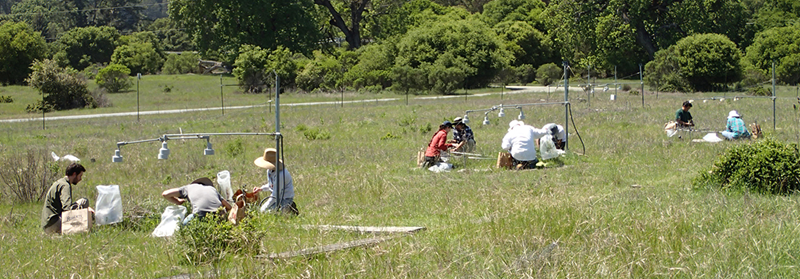
In order to create a realistic possible future environment for these grasslands, we’re manipulating four environmental factors. We’re doubling the concentration of atmospheric CO2. It’s currently about four hundred parts per million, or 0.04 percent in the atmosphere. Our targeted level for the experiments is 0.07 percent, seven hundred parts per million, which is a level that, depending on CO2 emissions, we might reach anywhere in the second half of the century.

We’re increasing the average temperature using heat lamps by about three degrees Fahrenheit. This is at the low end of the projections for the second half of the century. But it’s a practical level for us to achieve without a really massive infrastructure.

We’re also adding nitrogen pollution. It’s better known as acid rain. But it’s biologically available nitrogen that comes also from fossil fuel combustion and other industrial processes. We’re adding it at a level that’s typically experienced now in areas in Northern Europe, in the Northeastern U.S., which are relatively polluted.

The fourth environmental factor that we’re manipulating is rainfall. In general, at the worldwide scale, we know that as it gets warmer, the amount of precipitation basically has to increase because more water is evaporating from the ocean. We don’t know whether a given spot will be wetter or dryer. But by having a precipitation increase, we can untangle the interaction between the other treatments and the precipitation, and more or less create a framework where we can evaluate the impact of precipitation in each of the other factors.

The way our experiments are designed is that we have two levels of each of these four major factors, CO2, warming, Nitrogen pollution, and extra precipitation. And we have all of the different combinations of the two levels. So we have all the two treatment combinations, the three treatment combinations, and the four treatment combinations. Each of those is replicated eight times. Because we’re imposing these treatments on a natural ecosystem, we have lots and lots of variability from place to place and time to time. And the only way that we can be confident that we’re seeing the true effects of our treatments and not just environmental variability, is if we have enough replicates of each treatment that we can extract out the signal from the noise.

One of the most unexpected results we’ve had in the Jasper Ridge Global Change Experiment is the realization that under a wide range of conditions, increased atmospheric CO2 does not lead to increased plant growth. In fact, under many conditions, elevated atmospheric CO2 actually prevents plants from taking full advantage of other resources that are available in the environment. This has quite profound implications for our understanding of ecosystem response to global change and for future climate change. If plants, in fact, don’t grow more under elevated carbon dioxide, it means that atmospheric CO2 is likely to grow faster in the future than we have been anticipating. It basically puts a lot more pressure on societies to figure out how to control emissions of carbon dioxide rather than stepping back and hoping that ecosystems will help us solve the fossil fuel problem.

Once we realized this, it was really important to figure out what the mechanism was; because we know from lots of laboratory studies that the instantaneous rate of plant growth or photosynthesis almost always increases under elevated atmospheric CO2 . We did a variety of experiments that tried to infer the mechanisms from the observations that we were able to take in the existing experiment; these lines of evidence pointed to the fact that there was another mineral nutrient, another kind of fertilizer, that was required for plant growth that was preventing them from taking advantage of the elevated atmospheric CO2 and it might even be becoming less available under elevated CO2. But we couldn’t be sure unless we did a separate experiment. The evidence suggested that this limiting resource was probably phosphorus.

Summary

There you have it. The experiment confirms the principle of limiting factors. At present concentrations, rising CO2 always increases plant productivity unless another factor is sub-optimal and constrains growth. The researchers, aided and abetted by the media are spinning this to say more CO2 is not good for plants. In reality, the lack of phosphorus or other nutrients is not the fault of CO2, and will not be enhanced by somehow reducing CO2.

Dr. Wittwer’s conclusion stands: Rising CO2 is Great for Plants.

Footnote:

Crabs really love CO2 as well.

Climate Change Sniffles

Alarmists have claimed climate change is nothing to sneeze at, but once again the narrative flip-flops.  Now researchers say we will be sneezing more because (wait for it):  Rising CO2 will cause more weeds and allergies, increasing human suffering.

A brave reporter from the Weekly Standard has the story:

Alarmists: Climate Change Could Spread Ragweed! (And Good Plants, Too)

The terrible and terrifying news of impending climate-change doom continues to roll in. This week it was a study led by researchers at Britain’s University of East Anglia: “Climate Change and Future Pollen Allergy in Europe.” The scientists project that, because of rising temperatures and increased carbon dioxide in the atmosphere, “sensitization to ragweed will more than double in Europe, from 33 to 77 million people, by 2041-2060.” So go ahead and add allergy sufferers to polar bears and small island nations on the list of global warming victims.

And not just pollinating weeds. Watch out for poison ivy, too. For a decade, scientists have been warning that climate change will mean a more menacing three-leaved menace—bigger plants, with bigger leaves, and perhaps even with higher concentrations of poisonous oil.

But why all the negativity? If ragweed is spreading, it isn’t because climate change is creating conditions that exclusively benefit weeds. An atmosphere rich in carbon dioxide can have a “fertilizer effect.” Warmer temperatures can extend the growing season in cool climes. These are assumptions that are built into studies such as the new ragweed report. It’s also what goes into the poison ivy predictions—grow the stuff in greenhouse conditions and (surprise, surprise) it flourishes. Those same effects, however, will benefit a wide range of plants. Longer growing seasons and higher levels of atmospheric carbon dioxide have benefited Canadian farmers, who have been able to dramatically expand the acreage they devote to growing corn, soybeans, and other crops that used to flourish only south of the border.

Conclusion

We are constantly being told that when it comes to questions of climate we must obey Science. Could it be that scientists would enjoy greater credibility if they made a better effort to give a complete picture of the consequences of a warming world, rather than just nurturing the negatives in their own little intellectual hothouses?

For more on Agriculture and climate change see Adapting Works! Mitigating Fails.

Farmers care a lot about the weather–predictions from climate models or animal entrails, not so much.

Florida Sets Fair Weather Record

The absence of extreme weather is often called “fair weather”, so I’ll use that to describe the record number of days to pass in Florida without a hurricane making landfall anywhere in the state.  With Hermine crossing northern Florida this morning briefly at hurricane strength, the record is now set at 10 years between 2006 and 2016.

Florida Hurricanes

The chart shows the number of hurricanes making landfall in Florida in each year, the highest year being 4 such storms in 2004.  It is unprecedented to go a full decade without any hurricanes hitting Florida.  The previous lull was 7 years between 1987 to 1994.  The serious category 4 storms (max winds 125+ miles/hr) are listed below, showing how active was the previous decade.

2005 Wilma, Katrina, Dennis
2004 Ivan, Frances, Charlie
1998 Mitch, George
1995 Opal

Summary

The plateau of mild temperatures in this decade coincides with unprecedented fair weather, not extremes as alarmists claim.

The full list of tropical storms striking Florida is available at State Climate Office of North Carolina

boat-climate-change

Pleasure craft spotted in a marina near Miami.

Climates Don’t Start Wars, People Do

Once again the media are promoting a link between climate change and human conflicts. It is obvious to anyone in their right mind that wars correlate with environmental destruction. From rioting in Watts, to the wars in Iraq, or the current chaos in Syria, there’s no doubt that fighting degrades the environment big time.

What is strange here is the notion that changes in temperatures and/or rainfall cause the conflicts in the first place. The researchers that advance this claim are few in number and are hotly disputed by many others in the field, but you would not know that from the one-sided coverage in the mass media.

The Claim

Lately the fuss arises from this study: Climate, conflict, and social stability: what does the evidence say?, Hsiang, S.M. & Burke, M. Climatic Change (2014) 123: 39. doi:10.1007/s10584-013-0868-3

Hsiang and Burke (2014) examine 50 quantitative empirical studies and find a “remarkable convergence in findings” (p. 52) and “strong support for a causal association” (p. 42) between climatological changes and conflict at all scales and across all major regions of the world. A companion paper by Hsiang et al. (2013) that attempts to quantify the average effect from these studies indicates that a 1 standard deviation (σ) increase in temperature or rainfall anomaly is associated with an 11.1 % change in the risk of “intergroup conflict”.1 Assuming that future societies respond similarly to climate variability as past populations, they warn that increased rates of human conflict might represent a “large and critical impact” of climate change.

The Bigger Picture

This assertion is disputed by numerous researchers, some 26 of whom joined in a peer-reviewed comment: One effect to rule them all? A comment on climate and conflict, Buhaug, H., Nordkvelle, J., Bernauer, T. et al. Climatic Change (2014) 127: 391. doi:10.1007/s10584-014-1266-1

In contrast to Hsiang and coauthors, we find no evidence of a convergence of findings on climate variability and civil conflict. Recent studies disagree not only on the magnitude of the impact of climate variability but also on the direction of the effect. The aggregate median effect from these studies suggests that a one-standard deviation increase in temperature or loss of rainfall is associated with a 3.5 % increase in conflict risk, although the 95 % highest density area of the distribution of effects cannot exclude the possibility of large negative or positive effects. With all contemporaneous effects, the aggregate point estimate increases somewhat but remains statistically indistinguishable from zero.

To be clear, this commentary should not be taken to imply that climate has no influence on armed conflict. Rather, we argue – in line with recent scientific reviews (Adger et al. 2014; Bernauer et al. 2012; Gleditsch 2012; Klomp and Bulte 2013; Meierding 2013; Scheffran et al. 2012a,b; Theisen et al. 2013; Zografos et al. 2014) – that research to date has failed to converge on a specific and direct association between climate and violent conflict.

The Root of Climate Change Bias

The two sides have continued to publish and the issue is far from settled. Interested observers describe how serious people can disagree so frequently about such findings in climate science.

Modeling and data choices sway conclusions about climate-conflict links, Andrew M. Linke, and Frank D. W. Witmer, Institute of Behavioral Science, University of Colorado, Boulder, CO 80309-0483 here

Conclusions about the climate–conflict relationship are also contingent on the assumptions behind the respective statistical analyses. Although this simple fact is generally understood, we stress the disciplinary preferences in modeling decisions.

However, we believe that the Burke et al. finding is not a “benchmark” in the sense that it is the scientific truth or an objective reality because disciplinary-related modeling decisions, data availability and choices, and coding rules are critical in deriving robust conclusions about temperature and conflict.

After adding additional covariates (models 4 and 6), the significant temperature effect in the Burke et al. (1) model disappears, with sociopolitical variables predicting conflict more effectively than the climate variables. Furthermore, this specification provides additional insights into the between- and within-effects that vary for factors such as political exclusion and prior conflict.

Summary

Sociopolitical variables predict conflict more effectively than climate variables. It is well established that poorer countries, such as those in Africa, are more likely to experience chronic human conflicts. It is also obvious that failing states fall into armed conflicts, being unable to govern effectively due to corruption and illegitimacy.

It boggles the mind that activists promote policies to deny cheap, reliable energy for such countries, perpetuating or increasing their poverty and misery, while claiming such actions reduce the chances of conflicts in the future.

Halvard Buhaug concludes (here):

Vocal actors within policy and practice contend that environmental variability and shocks, such as drought and prolonged heat waves, drive civil wars in Africa. Recently, a widely publicized scientific article appears to substantiate this claim. This paper investigates the empirical foundation for the claimed relationship in detail. Using a host of different model specifications and alternative measures of drought, heat, and civil war, the paper concludes that climate variability is a poor predictor of armed conflict. Instead, African civil wars can be explained by generic structural and contextual conditions: prevalent ethno-political exclusion, poor national economy, and the collapse of the Cold War system.

Footnote:  The Joys of Playing Climate Whack-A-Mole

Dealing with alarmist claims is like playing whack-a-mole. Every time you beat down one bogeyman, another one pops up in another field, and later the first one returns, needing to be confronted again. I have been playing Climate Whack-A-Mole for a while, and if you are interested, there are some hammers supplied below.

The alarmist methodology is repetitive, only the subject changes. First, create a computer model, purporting to be a physical or statistical representation of the real world. Then play with the parameters until fears are supported by the model outputs. Disregard or discount divergences from empirical observations. This pattern is described in more detail at Chameleon Climate Models

This post is the latest in a series here which apply reality filters to attest climate models.  The first was Temperatures According to Climate Models where both hindcasting and forecasting were seen to be flawed.

Others in the Series are:

Sea Level Rise: Just the Facts

Data vs. Models #1: Arctic Warming

Data vs. Models #2: Droughts and Floods

Data vs. Models #3: Disasters

Data vs. Models #4: Climates Changing

Climate Medicine

Beware getting sucked into any model.

Warm is Cold, and Down is Up

Paul Homewood has a post today: Who Is Lying? John Holdren, Jennifer Francis, Or NOAA?

The issue revolves around claims of global warming changing the jet stream, resulting in extreme weather, including colder winters in the US. That’s a neat trick: Getting global warming to produce cold weather.
.
Lying presumes they know the truth and speak falsely. This is more a case of saying what they believe but being wrong. (“Love of Theory is the Root of all Evil” –William Briggs)

Seasoned meteorologist Judah Cohen of AER sees it differently.

My colleagues, at AER and at selected universities, and I have found a robust relationship between two October Eurasian snow indices and the large-scale winter hemispheric circulation pattern known as the North Atlantic or Arctic Oscillation pattern (N/AO).

The N/AO is more highly correlated with or explains the highest variance of winter temperatures in eastern North America, Europe and East Asia than any other single or combination of atmospheric or coupled ocean-atmosphere patterns that we know of. Therefore, if we can predict the winter N/AO (whether it will be negative or positive) that provides the best chance for a successful winter temperature forecast in North America but certainly does not guarantee it.

He goes on to say that precipitation is the key, not air temperatures, and ENSO is a driving force:

As long as I have been a seasonal forecaster, I have always considered El Nino/Southern Oscillation (ENSO) as a better predictor of precipitation than temperature across the Eastern US. I think this is supported by the observational or statistical analysis as well as the skill or accuracy of the climate models.

There have been recent modeling studies that demonstrate that El Nino modulates the strength and position of the Aleutian Low that then favors stratospheric warmings and subsequently a negative winter N/AO that are consistent with our own research on the relationship between snow cover and stratospheric warmings. So the influence of ENSO on winter temperatures in the Mid-Atlantic and the Northeast may be greater than I acknowledge or that is represented in our seasonal forecast model.

Summary

As Cohen’s diagram shows, there is an effect from warming, but in the stratosphere. Global warming theory claims CO2 causes warming in the troposphere and cooling in the stratosphere. So whatever is going on, it is not due to CO2.

Cohen’s interview with the Washington Post.

its-easier-to-fool-people-than-to-convince-them-that-they-have-been-fooled


Data vs. Models #3: Disasters

Addendum at end on Wildfires

Looking Through Alarmist Glasses

In the aftermath of COP21 in Paris, the Irish Times said this:

Scientists who closely monitored the talks in Paris said it was not the agreement that humanity really needed. By itself, it will not save the planet. The great ice sheets remain imperiled, the oceans are still rising, forests and reefs are under stress, people are dying by tens of thousands in heatwaves and floods, and the agriculture system that feeds 7 billion human beings is still at risk.

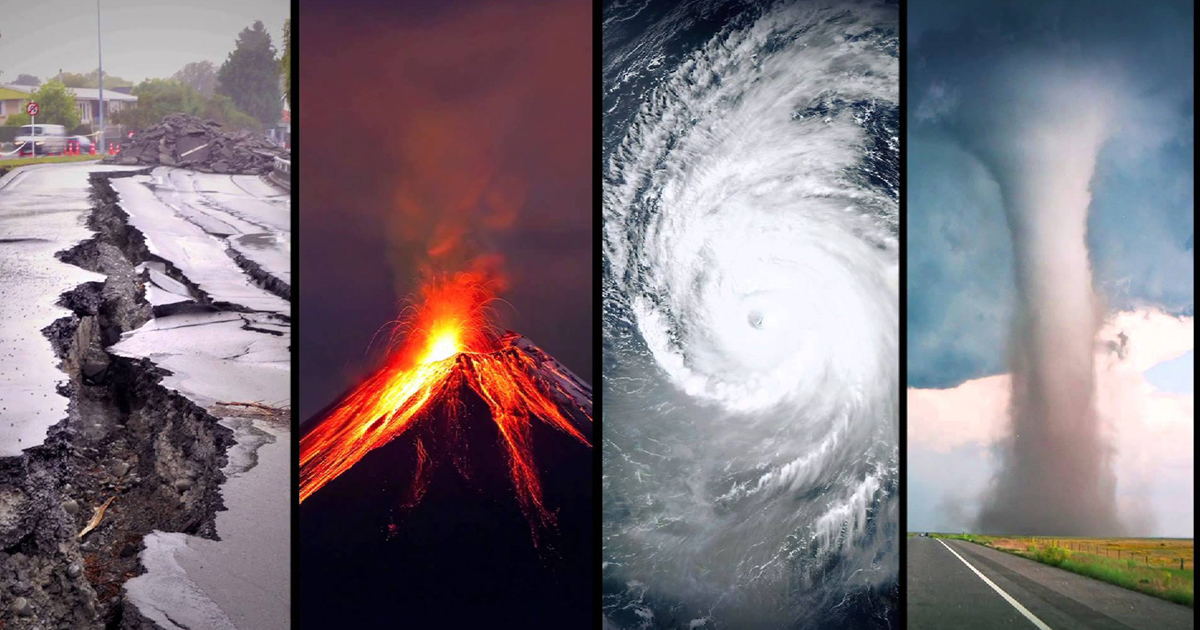
That list of calamities looks familiar from insurance policies where they would be defined as “Acts of God.” Before we caught CO2 fever, everyone accepted that natural disasters happened, unpredictably and beyond human control. Now of course, we have computer models to project scenarios where all such suffering will increase and it will be our fault.

For example, from an alarmist US.gov website we are told:

Human-induced climate change has already increased the number and strength of some of these extreme events. Over the last 50 years, much of the U.S. has seen increases in prolonged periods of excessively high temperatures, heavy downpours, and in some regions, severe floods and droughts.

By late this century, models, on average, project an increase in the number of the strongest (Category 4 and 5) hurricanes. Models also project greater rainfall rates in hurricanes in a warmer climate, with increases of about 20% averaged near the center of hurricanes.

Looking Without Alarmist Glasses

But looking at the data without a warmist bias leads to a different conclusion.

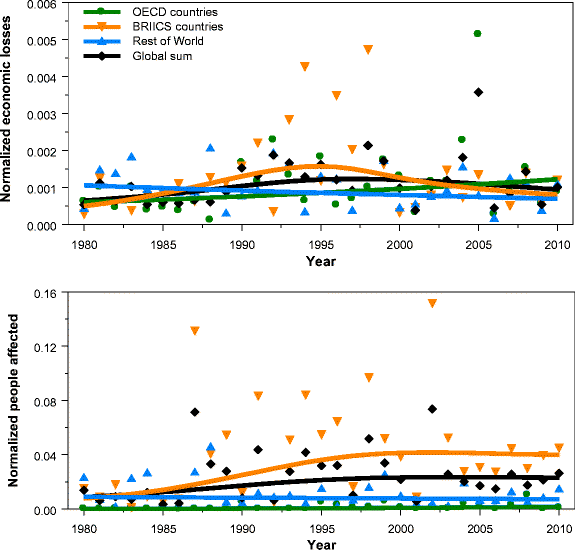
The trends in normalized disaster impacts show large differences between regions and weather event categories. Despite these variations, our overall conclusion is that the increasing exposure of people and economic assets is the major cause of increasing trends in disaster impacts. This holds for long-term trends in economic losses as well as the number of people affected.

From this recent study:  On the relation between weather-related disaster impacts, vulnerability and climate change, by Hans Visser, Arthur C. Petersen, Willem Ligtvoet 2014 (open source access here)

Data and Analysis

All the analyses in this article are based on the EM-DAT emergency database. This database is open source and maintained by the World Health Organization (WHO) and the Centre for Research on the Epidemiology of Disasters (CRED) at the University of Louvain, Belgium (Guha-Sapir et al. 2012).

The EM-DAT database contains disaster events from 1900 onwards, presented on a country basis. . .We aggregated country information on disasters to three economic regions: OECD countries, BRIICS countries (Brazil, Russia, India, Indonesia, China and South Africa) and the remaining countries, denoted hereafter as Rest of World (RoW) countries. OECD countries can be seen as the developed countries, BRIICS countries as upcoming economies and RoW as the developing countries.

The EM-DAT database provides three disaster impact indicators for each disaster event: economic losses, the number of people affected and the number of people killed. . .The data show large differences across disaster indicators and regions: economic losses are largest in the OECD countries, the number of people affected is largest in the BRIICS countries and the number of people killed is largest in the RoW countries.

Fig. 3 Economic losses normalized for wealth (upper panel) and the number of people affected normalized for population size (lower panel). Sample period is 1980–2010. Solid lines are IRW trends for the corresponding data.

Fig. 3
Economic losses normalized for wealth (upper panel) and the number of people affected normalized for population size (lower panel). Sample period is 1980–2010. Solid lines are IRW trends for the corresponding data.

The general idea behind normalization is that if we want to detect a climate signal in disaster losses, the role of changes in wealth and population should be ruled out; however, this is complicated by the fact that changes in vulnerability may also play a role. . .(After extensive research), we conclude that quantitative information on time-varying vulnerability patterns is lacking. More qualitatively, we judge that a stable vulnerability V t, as derived in this study, is not in contrast with estimates in the literature.

Climate drivers

Historic trend estimates for weather and climate variables and phenomena are presented in IPCC-SREX (2012, see their table 3-1). The categories ‘winds’, ‘tropical cyclones’ and ‘extratropical cyclones’ coincide with the ‘meteorological events’ category in the CRED database. In the same way, the ‘floods’ category coincides with the CRED ‘hydrological events’ category. The IPCC trend estimates hold for large spatial scales (trends for smaller regions or individual countries could be quite different).

The IPCC table shows that little evidence is found for historic trends in meteorological and hydrological events. Furthermore, Table 1 shows that these two events are the main drivers for (1) economic losses (all regions), (2) the number of people affected (all regions) and (3) the number of people killed (BRIICS countries only). Thus, trends in normalized data and climate drivers are consistent across these impact indicators and regions.

Summary

People who are proclaiming that disasters rise with fossil fuel emissions are flying in the face of the facts, and in denial of IPCC scientists.

Trends in normalized data show constant, stabilized patterns in most cases, a result consistent with findings reported in Bouwer (2011a) and references therein, Neumayer and Barthel (2011) and IPCC-SREX (2012).

The absence of trends in normalized disaster burden indicators appears to be largely consistent with the absence of trends in extreme weather events.

For more on attributing x-weather to climate change see: X-Weathermen Are Back

Addendum on Wildfires

Within all the coverage of the Fort McMurray Alberta wildfire, there have also been lazy journalists linking the event to fossil fuel-driven global warming, with a special delight of this being located near the oil sands.  The best call to reason has come from A Chemist in Langley, who argues for defensible science against mindless activism.  Of course, he has taken some heat for being so rational.

Here is what he said about the data and the models regarding boreal forest wildfires:

Well the climate models indicate that in the long-term (by the 2091-2100 fire regimes) climate change, if it continues unabated, should result in increased number and severity of fires in the boreal forest. However, what the data says is that right now this signal is not yet evident. While some increases may be occurring in the sub-arctic boreal forests of northern Alaska, similar effects are not yet evident in the southern boreal forests around Fort McMurray.

My final word is for the activists who are seeking to take advantage of Albertans’ misfortunes to advance their political agendas. Not only have you shown yourselves to be callous and insensitive at a time where you could have been civilized and sensitive but you cannot even comfort yourself by hiding under the cloak of truth since, as I have shown above, the data does not support your case.