Green Schemes Broken by Reality

James E. Hanley provides a roundup of failed Green expensive ventures in his Real Clear Policy article Green Projects Hit Iron Wall.  Excerpts in italics with my bolds and added images.

Developers looking to build thousands of wind turbines off the Mid-Atlantic and New England coast are coming up against a force even more relentless than the Atlantic winds: the Iron Law of Megaprojects, offering a warning of the trouble ahead for green-energy projects.

The Iron Law, coined by Oxford Professor Bent Flyvbjerg, says that “megaprojects” — which cost billions of dollars, take years to complete, and are socially transformative — reliably come in over budget, over time, over and over.

From Boston’s Big Dig to California’s high-speed rail to
New York’s 12 years-overdue and 300% over-budget East Side Access rail project,
big boondoggles routinely demonstrate the validity of the rule.

Offshore wind projects are not immune to the Iron Law, regularly experiencing vast cost overruns before a single watt is generated.

The New York state government, looking to replace oil- and gas-fired powerplants with hundreds of wind towers off Long Island, set out in 2019 to create an offshore wind supply chain from scratch, beginning with a massive state-funded turbine fabrication facility about 100 miles north of New York City on the Hudson River.

Port of Albany factory’s fate at stake as leaders race for a solution The $700 million-plus project is expected to create work for generations, but hopes are dwindling that more funding will become available

Ground still hasn’t even been broken, but the budget certainly has: The price of that Port of Albany facility has already doubled from $350 million to $700 million. An additional $100 million may be needed for equipment costs, raising the final price tag to $800 million.

It’s been billed the future hub for wind power infrastructure. So far, though, the only thing that continues to get billed over and over in recent years is the Connecticut taxpayer.

A similar situation is playing out in New London, Connecticut, where a state-funded pier facility being built to support that state’s offshore wind buildout has more than doubled in price from an original estimate of $95 million to $250 million.

Commonwealth Wind Declares that the largest offshore wind farm in the state’s pipeline “cannot be financed and built” under existing contracts,

And in Massachusetts, developer Commonwealth Wind has asked the state to scrap its power purchase guarantees and rebid the project, arguing that inflation and supply chain problems mean the project is not financially viable under its current contracts.

Big projects tend to exceed their cost projections for many reasons. One is the unanticipated, and sometimes unprecedented, complexity of these projects. Further uncertainties and costs arise from the challenge of navigating the red tape of the modern regulatory state. In addition, there is the risk of inflation for projects that take years, sometimes decades, to develop.

Underlying all these is often a failure to spend enough time on careful planning
that treats reality as a fundamental constraint.

But sometimes project sponsors may simply worry that accurate cost projections could scare away public support at the outset, and choose to employ what Prof. Flyvbjerg politely calls “strategic misrepresentation.”

As former San Francisco Mayor Willie Brown said, “If people knew the real cost from the start, nothing would ever be approved. . . . Start digging a hole and make it so big, there’s no alternative to coming up with the money to fill it in.”

If that sounds too cynical, note that the current Chair of the Connecticut Port Authority has admitted that when officials first proposed the pier facility, they already knew it would cost more than they were claiming.

Ironically, the New York and Connecticut projects aren’t even big enough to be considered megaprojects, and yet even they have run into the Iron Law of being over budget and behind schedule. The challenges won’t diminish with bigger and more ambitious green energy projects.

In New York, the state’s huge Climate Leadership and Community Protection Act — of which the Port of Albany project is the first substantial investment — is projected to cost between $270 and $290 billion. At that price it is a gigaproject composed of numerous individual megaprojects.

The benefits, mostly in the form of greenhouse gas reductions, are supposed to be up to $415 billion. But if the overall cost of the policy climbs by merely 55 percent, which is in the normal range for megaprojects (and much less than the Port of Albany cost overrun), the costs will exceed the benefits, creating a net loss for New Yorkers.

If costs balloon to twice the initial estimates, which is not uncommon, the state stands to spend more than more than a hundred billion dollars more than gained in benefits That would be a loss of over $30,000 per New York household by 2050.

And that’s assuming the benefits are as good as promised. It gets even worse if,
as is common, the benefits have been overstated.

The tale of megaprojects is a cautionary one for the whole country as we attempt to transition away from fossil fuels. Cost estimates for a nationwide transition span from $4.7 trillion to over $60 trillion – almost three times U.S. GDP. Such uncertainty should give us pause for thought before jumping wildly into the financial unknown.

If we’re not careful, we may be digging Willie Brown-style holes, and politically and financially we may find ourselves in too deep to ever get ourselves out.

We’re Betrayed by Decarbonists and Cowardly Energy Companies

Edward Ring writes at American Greatness The Corruption of Climate Science.  Excerpts in italics with my bolds.

Instead of fighting anti-civilization lunacy,
corporations are taking their money off the table,
along with their life-affirming affordable fuel.

We need to criticize the people who got us here,” says Alex Epstein, founder of the Center for Industrial Progress and author of Fossil Future. “We can’t keep treating these designated experts as real experts. They are not real experts, they are destroyers. They are anti-energy, non-experts. And that needs to be made clear.”

Epstein is right, and his advice has never been more urgent—or as difficult to make people understand. It is no exaggeration that every major institution in America has now committed itself to the elimination of affordable and abundant energy. If it isn’t stopped, this commitment, motivated by misguided concern for the planet but also by a lust for power and money and enabled by moral cowardice and intellectual negligence, will destroy Western civilization.

For over 50 years, with increasing frequency, corrupted, careerist scientists have produced biased studies that, amplified by agenda-driven corporate and political special interests, constitute a “consensus” that is supposedly “beyond debate.” We are in a “climate crisis.” To cope with this climate emergency, all measures are justifiable.  This is overblown, one-sided, distorted, and manipulative propaganda.

It is the language of authoritarians and corporatists bent on achieving
even more centralized political power and economic wealth.

It is a scam, perhaps the most audacious, all-encompassing fraud in human history. It is a scam that explicitly targets and crushes the middle class in developed nations and the entire aspiring populations in developing nations, at the same time as its messaging is designed to secure their fervent acquiescence.

What is actually beyond debate is not that we are in a climate crisis but that if we don’t stop destroying our conventional energy economy, we are going to be in a civilizational crisis.

Energy is the foundation of everything—prosperity, freedom, upward mobility, national wealth, individual economic independence, functional water and transportation infrastructure, commercial-scale agriculture, mining, and industry. Without energy, it all goes dark. And “renewables” are not even remotely capable of replacing oil, gas, coal, nuclear, and hydroelectric power. It’s impossible.

The only people who think renewables are capable of replacing conventional energy
are either uninformed, innumerate, or corrupt. Period.

But to cope with the apocalyptic messaging of climate catastrophists, it isn’t enough to debunk the potential of renewables. It is also necessary to challenge the underlying climate “science.” The biased, corrupt, unceasing avalanche of expert “studies” serving up paid-for ideas to special interests that use them as bludgeons to beat into the desired shape every relevant public policy and popular narrative. So here goes.

Biased, Flawed Studies

A new study, released May 16, deserves far more criticism than it’s going to get. Authored by seven ridiculously credentialed experts and primarily affiliated with the leftist Union of Concerned Scientists, this study has the rather innocuous title: “Quantifying the contribution of major carbon producers to increases in vapor pressure deficit and burned area in western US and southwestern Canadian forests.” Bursting with charts and equations, and too many links to corroborating sources to count, the study has all the accouterments of intimidating credibility. But serious questions may be raised as to its logic as well as its objectivity.

For starters, this study doesn’t restrict itself to “Quantifying the contribution of major carbon producers to increases in vapor pressure deficit.” The authors can’t resist attacking these “major carbon producers.” In this revealing paragraph, the study’s true intent becomes apparent: it is fodder for litigation.

To explain what the authors got wrong, it is first necessary to summarize what they did. In plain English, the authors claim that hotter summers in recent years have caused more severe forest fires in the western United States, and fossil fuel emissions are causing the hotter summers.  That’s it.

But what if it isn’t just heat, but dry heat, that is unprecedented today? What if the “vapor pressure deficit” is worse today than it has been at any time in 20 million years? That is a huge assumption, probably impossible to verify. Even if it’s true, it doesn’t make up for the study’s other flaw, which is the density of forests in California today, which is truly unprecedented. The study’s authors acknowledge they don’t take this variable into account.

In California, wildlife biologists and forest ecologists who spend their lives studying and managing these timberlands unanimously agree that tree density has increased, thanks to “non-climatic factors such as the prohibition of Indigenous burning, and legacies of fire suppression.” The increase is not subtle. Without small, naturally occurring fires that clear underbrush and smaller trees, forests become overgrown. Controlled burns and responsible logging are absolutely necessary to maintain forest health.

This is not an isolated finding. Observations of excessive tree density are corroborated by numerous studies, testimony, and journalistic investigations. Unlike the subjectively defined algorithms plugged into a climate model, excessive tree density is an objective fact, verified repeatedly by people on the ground. To imply by omission that more than tripling the density of trees across millions of acres of forest would not leave them stressed and starved for soil nutrients, sunlight, and water from rain and atmospheric moisture is scientific malpractice.

Without taking these additional factors into account, it is deceptive
to indict fossil fuel emissions for causing wildfires.

Perhaps some indirect connection can be established of debatable relevance, but for this study to assign specific percentages and acreages suggests a premeditated purpose: creating material for expert testimony for litigation against oil companies.

The monolithic alignment of the scientific and journalistic community in support of an authoritarian, utterly impractical “climate” agenda reveals a misunderstanding if not outright betrayal of scientific and journalistic core values. Both disciplines are founded on the bedrock of skepticism and debate. Without nurturing those values, the integrity of these disciplines is undermined. When it comes to issues of climate and energy policy in America, science and journalism are compromised.

Carbon Fuel Industry Fails to Step Up

The real crime, if you want to call it that, isn’t that oil and gas companies
questioned climate change theories back in the 1960s or ’70s.
It’s that they’re accepting them now.

Oil and gas companies today are not willing to challenge the climate crisis orthodoxy, or the myth of cost-effective renewables at scale. They aren’t willing to devote their substantial financial resources to debunking this agenda-driven madness that is on the verge of taking down our entire civilization. The fact that America’s oil and gas companies have adopted a strategy of appeasement is a crime against humanity. The fact that these companies are failing to make long-term investments to develop new oil and gas fields, and instead are reaping windfall profits as they sell existing production at politically inflated prices, that, too, is a crime against civilization.

Ultimately, the Union of Concerned Scientists and the major oil companies
are complicit in the destruction of America’s energy economy.

Because rather than declaring total war on these paid-for, flawed scientific studies and the special interests that fund them, oil companies will engage in theatrical litigation, knowing that the cost of settlements won’t even come close to the short-term profits to be had by slowly asset stripping their companies while selling diminishing quantities of fuel at punitive rates.

Epstein is right that we must criticize the “experts” that want to destroy human civilization with climate alarmism. But we must also recognize and criticize the institutions targeted for destruction. Instead of fighting this lunacy, they are taking their money off the table, along with their life-affirming affordable fuel, and heading for the hills.


Google Screens Your Climate Info

Jimmy Dore reports in the above video on collusion between UN and Google to control public access to climate information .  Below is a transcript from the closed captions.  JD is the host with some asides from Kurt Metzger (KM)  The UN spokesperson is Melissa Fleming (MF), United Nations Under-Secretary-General for Global Communications. Text in italics with my bolds and added images.

JD: It turns out Google is the richest company in the history of humanity–did you know that Google gets more money than Exxon, more money than Apple. They have more money than Tesla, they have a lot of money.   “Google teams up with the UN for verified climate information.” So this is an article from the United Nations, This is from April 22nd of last year.

KM: Well I hope they fight nitrogen deniers.

JD:  So I don’t know if we covered this, which is why I want to cover it now. Did you know that if you Google climate change, Google has now rigged it. It’s not just, well whatever the most popular websites are that talk about climate change come up; the order of the 10 most popular articles.

That’s not what they’re doing. They’re making sure that the popular articles don’t show up and they’re trying to control the narrative. They only want certain ones, only articles the United Nations approves of. That’s what Google’s doing.

KM  Look, millions of people around the world go to Google to get information about climate change and sustainability.  Nobody is going: What about sustainability? What about that word you just invented a couple years ago? Sustainability, sustainability.

JD:  In addition to organic search results, Google is surfacing short and easy to understand information panels and visuals on the causes and effects of climate change as well as individual actions that people can take to help tackle the climate crisis

KM  Should I glue my head to a painting?

JD:  So here is the under Secretary General for Global Communications at the UN;  ready.

MF: Served with Google for example. If you Google climate change, at the top of your search you will get all kinds of UN resources. We started this partnership when we were shocked to see that when we googled , climate change we were getting incredibly distorted information right at the top.

JD: So when she Googled climate change, she was getting a lot of articles that she didn’t agree with. They would come up because what Google is supposedly doing is just showing you what’s the most popular articles, without an editorial input. She’s saying we didn’t like that people were getting to see those articles that were popular that we disagree with. So we went to Google and we told them artificially manufacture your Google results when people Google climate change. And have these special articles that we like come up, those that push a specific agenda about climate change. And they say it right out in public, she’s saying it on camera.

KM  I’m relieved.  It was about time they started doing this, so I was happy to hear it

MF:  So we’re becoming much more proactive. You know, we own the science and we think that the world should know.

JD:  Like the Vatican, we own the science. You mean like Tony fauci did. And then he had to admit that he was lying constantly during covid because he was. We Own the science, we own the science: Nobody owns the science, science doesn’t work like that, there’s no such thing. It’s always: Question science. Science always needs to be questioned and tested, always. That’s why Einstein didn’t trust what Newton said about gravity, he had his own ideas. And now we know about E equals m c squared.

MF: And the platforms themselves also do, but again it’s a huge, huge challenge, that I think all sectors of society need to be very active in. We need total control.

JD:  We own the science sounds about right. So if you thought when you Google something you’re getting organic natural results, no you’re getting propaganda selected by people like her, articles they want you to have. They want to control your thoughts, and they are. And that’s what propaganda is. They’re all propaganda and they just brag about doing propaganda right in the open.

KM:  I’ve heard we own the Sciences, the second time I heard it that sounds like a catchphrase or something.

JD:  Someone says we own the science, we own the science. No what you own is the Google results on the science. So that means you own the conversation and the narrative in the culture. But you don’t own the science. Own the science, what kind of a thing is that to say I don’t know.


Montana Lawmakers Rein In Judicial Climatism

Mine work at Westmoreland’s Rosebud Mine near Colstrip. Credit: Alexis Bonogofsky

Montana Free Press reports on how the state legislature liberated project permitting from CO2 hysteria, and the nonsense labeling the essential trace gas as a “pollutant.” The article is Gianforte signs bill banning state agencies from analyzing climate impacts.  Excerpts in italics with my bolds and added images.

House Bill 971 comes as Montana courts are poised to consider how “clean and healthful environment” protections intersect with energy regulations.

Montana Gov. Greg Gianforte has signed into law a bill that bars the state from considering climate impacts in its analysis of large projects such as coal mines and power plants.

House Bill 971 was among the most controversial energy- and environment-related proposals before the Legislature this session, drawing more than 1,000 comments, 95% of which expressed opposition to the measure. HB 971 bars state regulators like the Montana Department of Environmental Quality from including analyses of greenhouse gas emissions and climate impacts, both within and outside Montana’s borders, when conducting comprehensive reviews of large projects.

It builds off of a decade-old law barring the state from including
“actual or potential impacts that are regional, national,
or global in nature” in environmental reviews.

Comment:  The pertinent wording appears in Part 2 of the Act:

(2) (a) Except as provided in subsection (2)(b), an environmental review conducted pursuant to subsection (1) may not include an evaluation of greenhouse gas emissions AND corresponding impacts to the climate in the state or beyond the state’s borders.

(2) (b) An environmental review conducted pursuant to subsection (1) may include an evaluation if: conducted JOINTLY by a state agency and a federal agency to the extent the review is required by the federal agency;
or the United States congress amends the federal Clean Air Act to include carbon dioxide emissions as a regulated pollutant.

Gianforte signed HB 971 into law May 10 over opposition from climate and environmental groups that had argued that the measure hinders the state’s ability to respond to the crisis of our time: the atmosphere-warming emissions of greenhouse gases that are shrinking the state’s snowpack, reducing summer and fall streamflows, and contributing to catastrophic flooding and longer, more intense wildfire seasons. Opponents had also argued that the majority of Montanans believe in human-caused climate change and want meaningful climate action.

Proponents of the measure, including its sponsor, Rep. Josh Kassmier, R-Fort Benton, argued that by pushing back on a recent ruling revoking a NorthWestern Energy gas plant permit, HB 971 underscores that it’s lawmakers, not judges, who set policy. Other proponents, including the Treasure State Resources Association and the Montana Petroleum Association, asserted that HB 971 protects state agencies from an “unworkable” mandate to measure greenhouse gas emissions and that any such regulation properly belongs under federal regulatory frameworks such as the Clean Air Act.

NorthWestern Energy Plan Building a New $250M Natural Gas Power Plant at Laurel, Montana

Gianforte spokesperson Kaitlin Price echoed this assessment in a statement to Montana Free Press.

“House Bill 971 re-established the longstanding, bipartisan policy that analysis conducted pursuant to the Montana Environmental Policy Act does not include analysis of greenhouse gas emissions,” Price said. “The bill would allow evaluation of GHGs if it is required under federal law or if Congress amends the Clean Air Act to include carbon dioxide as a regulated pollutant.”

The bill comes as a Helena judge is weighing a case brought by 16 youth plaintiffs asking the judicial branch to require the state to measure and regulate greenhouse gas emissions. That lawsuit, Held vs. Montana, is set for a 10-day hearing that will start June 12.

It also comes as the U.S. Environmental Protection Agency considers a rule that would expand regulations dealing with power plants’ emissions of greenhouse gasses. If passed, the rule would require power plants like the coal-fired plant in Colstrip to capture 90% of its carbon emissions by 2038.


Away With Self-Fullfilling Climate Prophecy

Edward Ring explains the importance of dispelling CO2 hysteria in his American Greatness article Challenging the Premise of Our Destruction.  Excerpts in italics with my bolds and added images.

Claiming that anthropogenic CO2 will not cause catastrophic climate change is a
credible, necessary point of view backed up by scientific evidence.

The most powerful and destructive perception in the world today is that using fossil fuels will cause catastrophic climate change. This belief, marketed by every major government and corporate institution in the Western world, is the foundational premise underlying a policy agenda of stunning indifference to the aspirations of ordinary people.

The war on fossil fuel is a war on freedom, prosperity, pluralism, independence, national sovereignty, world peace, domestic tranquility, and, most ironically, the environment itself. It is a war of rich against poor, the privileged against the disadvantaged, corporate monopolies against competitive upstarts, Malthusians against optimists, regulators against innovators, and authoritarians against freedom-loving people everywhere.

But this war cannot be won unless the perception is maintained. If fossil fuel is allowed to compete against other energy alternatives for customers as a vital and growing part of an all-of-the-above energy strategy, this authoritarian political agenda falls apart.

It is reasonable to question the assertion that eliminating fossil fuels will inevitably result in an impoverished society subject to punitive restrictions on individual behavior. But the numbers are compelling and can be distilled to two indisputable facts: First, fossil fuel continues to provide over 80 percent of all energy consumed worldwide. Second, if every person living on planet Earth were to consume half as much energy per year as the average American currently consumes, global energy production would need to double.

Several inescapable conclusions derive from these two facts, if one assumes that energy is the driver of prosperity. Just in case that is not obvious, imagine Americans living with half as much energy as they use today. Where would the cuts occur? Would they drive their cars half as much? Heat their homes half as much? Operate manufacturing, farming, and mining equipment half as much? They would need to do all those things and more. The economy would collapse.

These consequences don’t escape the intelligentsia who promote “net zero” policies. These consequences explain the policies they advocate. The recent promotion of “15-minute cities” that will inform rezoning and redevelopment to put all essential services within a 15-minute walk of every residence. The rise of “congestion pricing” to charge automobiles special tolls if they drive into an expanding footprint of urban neighborhoods. “Smart growth.” “Infill.” “Urban Service Boundaries.” Bike lanes. “Smart buildings,” “smart meters,” and “smart cities.”

These innovations, all in progress, only begin to describe what is coming.

By restricting new development and systematically reducing the use of fossil fuels, the global middle class will shrink instead of grow. The wealthiest elites will buy their way out of the smart slums. Everyone else will be locked down. This is how energy poverty will play out in the modern era. It cannot be emphasized enough: If energy production is restricted, this will happen. It’s algebra. It is objective fact.

Hardly less speculative is the reaction outside the Western world. What are our elites thinking? Do they intend to start World War III? Perhaps they do. Because nothing short of war is going to stop the Chinese, Indians, Indonesians, Pakistanis, Brazilians, Nigerians, or Bangladeshis from developing every source of energy they possibly can. Just those seven nations account for half the world’s population. That’s 4 billion people. Will they stop developing energy until they at least achieve half the per capita energy consumption that Americans currently enjoy? Not a chance.

Will they get there by relying exclusively on wind and solar? Dream on.

Fossil Fuel Will Not Cause a Climate Catastrophe

If you only believe half of the preceding arguments, you must realize that Americans have been backed into a corner. If anyone calls for abundant energy—or abundant anything, since energy, and fossil fuel in particular, is the prerequisite for virtually all goods and services—they are shouted down as “climate deniers.” And the way to upset the entire edifice is not to merely argue that fossil fuel is essential to the survival of civilization. Because the counterargument is that eliminating fossil fuel is essential to the survival of the planet.

That is an unwinnable argument. It is not possible to reason with an opponent of fossil fuel if you concede their fundamental premise: that burning fossil fuel will cause catastrophic climate change. You either become a “denier,” or you submit to energy poverty.

This is the tough decision facing Americans.

And it’s accurate to also say it is a decision facing Republicans since literally every prominent, mainstream, housebroken, accommodating establishment Republican will not challenge the assertion that we’re experiencing a “climate crisis,” even though most of them know better. But this should be a bipartisan issue. For Republicans, this is an opportunity to show some backbone by rejecting the most destructive and fraudulent premise of our time. In so doing, they would unify their party, attract independent voters, and realign the nation.

The irony is stupefying. Without fossil fuel, America will enter a dark age, and the only way to control a restive population that’s seen its standard of living plummet will be through the establishment of a technology-driven police state. They are the fascists. The so-called climate deniers are fighting for prosperity and freedom.

If you want to save civilization, be a denier.

Say it loud and without reservations, and say it every chance you get. Demand that politicians publicly refute climate alarmism. It isn’t necessary to claim that the powers behind the climate cult want to enslave the world. We don’t know what motivates them. Some just want to get rich on renewables. Some want to use climate change to advance American global hegemony. But all of them rely on a fundamental moral justification: By eliminating fossil fuel, we are saving the planet from certain destruction. Focusing on the possible ulterior motives of climate alarmist leaders without first challenging their core moral argument is a fool’s errand.

There are plenty of environmental challenges. Being an environmentalist is a good thing. But there has to be balance, and there has to be debate. Claiming that anthropogenic CO2 will not cause catastrophic climate change is a credible, necessary point of view backed up by scientific evidence. If more people make that claim, the climate cult can be broken, and civilization can be rescued from oblivion.

See Also A Rational Climate Policy


ESG Battle Over Italian Energy Giant

Enel, Italy’s largest energy utility is in the news with conflict over appointing a new CEO because  aspirations differ between ESG investors and the Italian government.   There are headlines like these:

Norway’s oil fund rejects Rome’s candidate for Enel chair, Financial Times

Wanted! Investors demand Italy hire renewable expert, global networker to run Enel, Zawya

Government board nominations for Enel run into opposition, msn

Enel confirms 2023 guidance, enters press blackout on nominations, Reuters

MILAN (Reuters) – Italy’s biggest utility, Enel, confirmed its full-year guidance and entered a press blackout period ahead of a May 10 shareholder vote on a challenged board shake-up.

The group, whose main shareholder is Italy’s Treasury with nearly a 24%-stake, is at the centre of a governance row that will be decided at the AGM scheduled for next Wednesday.

The Treasury has proposed a new management, putting forward a slate of six new candidates and ousting current Enel CEO Francesco Starace, who has been at the helm since 2014.

Hedge fund Covalis, which holds around 1% in Enel, presented an alternative list of nominees, criticising the process under which the government picked its candidates.  Covalis said the system that led to the government’s nominations “undermines investor confidence, erodes value and is out of line with international standards of best practice in shareholder democracy”.[Would those best practices be ESG?]

Proxy adviser Frontis Governance has urged shareholders to back the candidates promoted by Covalis and reject names put forward by the Treasury, in a report tailored for Switzerland’s Ethos, a group of pension funds and other investors.

On the financial side, Enel’s ordinary earnings before interest, taxes, depreciation and amortization (EBITDA) in the first quarter rose 22% to 5.5 billion euros above an analyst consensus of 5.4 billion euros.  Net debt at the end of March was 58.9 billion euros, down from 60.1 billion euros at the end of last year.

Starace described the results in the first three months of 2023 as outstanding and said the group had already exceeded half of its 21 billion euro ($23 billion) asset sale target unveiled last November.

The state-controlled group intends to focus its business on the core markets of Italy, Spain, the United States, Brazil, Chile and Colombia.

Wanted! Investors demand Italy hire renewable expert, global networker to run Enel,  Zawya

Expertise in renewables and an international focus are what investors want to see from a new head of state-controlled Enel, as Italy’s government screens candidates to replace the energy group’s long-serving chief executive.

Prime Minister Giorgia Meloni’s administration is determined to oust current CEO Francesco Starace, several sources told Reuters. In charge since 2014, Starace is in the crosshairs of Meloni’s inner circle as he is deemed too independent.

Meloni’s office is also concerned about the group’s debt pile. But sources familiar with the matter said that head hunters hired by the Treasury are finding it tricky to put forward potential successors with the broad range of skills required to run one of Europe’s largest utilities.

With almost 60 Gigawatt of installed capacity, Enel is one
of the world’s biggest players in renewable energy

Starace won plaudits for his commitment to green energy. However, investors and the government grew restless over a debt pile that had grown to around 60 billion euros ($65.40 billion) in 2022 from 45.5 billion in 2020, when Starace was reappointed for a third term.

The company, which has been hit by soaring gas prices and government measures capping bills to shield consumers, saw net profit slip to 5.4 billion euros last year, from 5.6 billion euros in 2021.

The new CEO should not sacrifice the group’s exposure to North America and confirm its dividend policy, a number of investors said.

“People in Italy may prefer that Enel focuses on making things as much as possible in its home country and not investing so much abroad, but the company has no choice… if it wants to attract foreign investors,” said Vincent McEntegart, multi-asset investment manager at Aegon Asset Management, an Enel shareholder with assets under management worth $311 billion.

For Enel, U.S. President Joe Biden’s green energy subsidy package could mean double digit returns in North America compared with single digit in Europe, McEntegart said, adding such returns would underpin the group’s attractive dividend policy.

Since Starace was appointed CEO in May 2014, Enel has increased its
installed renewable energy capacity to 59 GW from 36 GW at the end of 2013.

Starace’s mantra has been electrification of consumption and digitalisation of grids and he said last year he wanted to leverage a renewed focus on energy security around the world to accelerate the group’s exit from natural gas. The group currently plans to become carbon free in 2040.

“My priorities for the new CEO would be to continue to roll out renewables and accelerate the exit from gas,” Simone Siliani, the director for Italy’s Fondazione Finanza Etica, told Reuters.  Finanza Etica, which is an active investor on ESG issues, has been holding a tiny stake in Enel since 2008.

“Enel can make the difference if Italy wants to meet its decarbonisation goals,” added Siliani.

Summary: 

Once again we have climatist financiers using ESG to push zero carbon against the mission of providing secure and affordable energy that citizens need.


How Much Warming Reduction by Spending $50,000,000,000,000?

From Daily Caller:  Biden Official Speechless After John Kennedy Grills Him On Simple Question

Department of Energy Deputy Secretary David Turk testified Wednesday before the Senate committee on appropriations to discuss the 2024 budget request for the Department of Energy.

Kennedy noted the budget requests a 38% increase in green energy funding while cutting nuclear energy funding with barely an increase fossil fuel energy. Kennedy then asked Turk for an estimate of how much it would cost to be carbon neutral by 2050, with Turk refusing to provide a number. Kennedy first said Turk’s colleagues have presented a figure in the range of $50 trillion before asking how much would temperatures be affected by that massive spending.

“If you could answer my question: if we spend $50 trillion to become carbon neutral in the United States of America by 2050, you’re the deputy secretary of energy, give me your estimate of how much that is going to reduce world temperature.”

“So first of all it’s a net cost, it’s what benefits we’re having by getting our act together and reducing all of those climate benefits, we’re seeing –” Turk said before Kennedy interjected.

“I’m gonna ask again, maybe I’m not being clear: if we spent $50 trillion to become carbon neutral by 2050 in the United States of America, how much is that going to reduce world temperatures?”

“This is a global problem so we need to reduce our emissions and we need to do everything we can –”

“How much if we do our part is it going to reduce world temperatures?”

“We’re 13% of global emissions–”

“You don’t know do you?” Kennedy asked, stunning Turk who had his mouth agape. “You don’t know, do ya?”

“You can do the math–”

“You don’t know do ya Mr. Secretary?” Kennedy again asked.

“So we’re 13% of global emissions–” Turk said.

“If you know why won’t you tell me?”

“If we went to 0 that would be a 13% less pollution,” Turk said.

“You don’t know do ya? You just want us to spend $50 trillion and you don’t have the slightest idea whether it’s going to reduce world temperatures,” Kennedy said. “Now I’m all for carbon neutrality, but you’re the Deputy Secretary of the Department of Energy and you’re advocating we spend trillions of dollars to seek carbon neutrality – and this isn’t your money or my money, it’s taxpayer money – and you can’t tell me how much it’s going to lower world temperatures? Or you won’t tell me, you know but you won’t?”

“In my heart of hearts there is no way the world gets its act together on climate change unless the U.S. leads,” Turk responded, before Kennedy once again asked him for a number.

The Department of Energy is requesting $51,99 billion to, among other things, advance “critical climate goals,” according to Turk.

Bjorn Lomborg Answers the Question

From WUWT: WSJ and Lomborg show just how useless is the “Inflation Reduction Act” at tackling climate

As seen in the figure above provided by Lomborg, we get somewhere between 0.028 and 0.0009°F reduction in temperature by 2100 for about 400 billion dollars in climate spending contained in the bill.

At that rate, simple math suggests the amount of money required to achieve the much desired 1.5°C (2.7°F) reduction in temperature using the best case reduction of 0.028°F would be $38,571,428,571,428 or approximately 39 Trillion dollars. The worst-case temperature reduction of 0.0009°F would cost a staggering 1,200,000,000,000,000 dollars or ONE QUADRILLION TWO HUNDRED TRILLION DOLLARS.

To put that number in perspective, according to the World Bank, the 2020 world economy in U.S. dollars was approximately $84.7 trillion. Assuming it would actually work, to have a meaningful effect on climate, the world would have to spend about half the global annual economy for the best-case scenario. If you think inflation is bad now, just wait for those sorts of numbers.

Summary:

Even if you buy UN IPCC assumptions about reducing carbon emissions reducing global warming, the cost is outrageous for neglible benefit.  What a rip-off.


What’s Wrong With “All Cars Shall Be Electric”

First “Common Good Capitalism” is an Oxymoron

Donald J. Boudreaux explains this newly minted term and that it really means imposing choices in the marketplace.  His AIER article is What’s Called “Common Good Capitalism” Would Work Against the Common Good.  Excerpts in italics with my bolds.

The foundation upon which the case for so-called “common good capitalism” rests is rickety at best. As I explained in my previous column, the empirical claims used to justify this ill-defined version of capitalism range from questionable to downright false, while much of the economic reasoning deployed by “common good capitalists” is a nest of confusion. These flaws alone are enough to fully discredit the case for “common good capitalism.”

Yet “common good capitalism” is marred by an even deeper problem: it rejects the liberalism from which true capitalism springs, the absence of which makes impossible the operation of a dynamic market order that maximizes the prospects of individuals to achieve as many as possible of their goals.

“Common good capitalists” have in mind an economic system profoundly different from that which is championed today by liberal scholars.  What each “common good capitalist” wants is an economic system engineered to serve his or her preferred set of concrete ends. Gone would be the liberal freedom of individuals to choose and pursue their own ends. Under “common good capitalism,” everyone would be conscripted to produce and consume in ways meant to promote only the ends favored by “common good capitalists.”

Note the irony. The economic system that, say, Oren Cass claims to advocate as a means of promoting the common good is, in reality, a means of promoting only the good as conceived by Oren Cass (which, for him, consists largely of an economy with more manufacturing jobs and a smaller financial sector). The hubris here is undeniable. “Common good capitalists” not only presume to have divined which concrete ends are best to guide the actions of hundreds of millions of individuals, nearly all of whom are strangers to them, but also are so confident in their divinations that they advocate pursuing these with the use of force.


The liberal doesn’t object to attempts to persuade others to adopt different and, hopefully, better ends. By all peaceful means, do your best to persuade me to embrace, as the lodestar for my choice of concrete ends, Catholic Social Teaching, economic nationalism, Marxism, veganism, or whatever other teaching or -ism you believe best defines the common good. But do not presume that your sincere embrace of a specific system of concrete values provides sufficient warrant for you to compel me and others to behave as if we share your particular values.

To the extent that the state intrudes into market processes in order to redirect
these toward the achievement of particular ends, it replaces market
competition and cooperation with command-economy dirigisme.

Income earners are not allowed to use the fruits of their creativity and efforts as they choose. Instead, consumption ‘decisions’ will be directed by government officials. The result will be a reallocation of resources achieved through the use, mostly, of tariffs and subsidies. And by so redirecting consumption expenditures, the pattern of production will obviously also be changed from what would prevail in a free market. (In fact, the specific goal of most “common good capitalists” seems to be the achievement of a particular manner of production — for example, more factory jobs — than would arise with markets left free.)

The capitalist economy, by its very nature, is not and cannot be
a tool for achieving particular concrete outcomes.

The capitalist economy, instead, is the name that we give to that ongoing, ever-evolving, organic order of production and exchange that arises spontaneously whenever individuals are free to pursue diverse peaceful ends of their own choosing and to do so in whatever peaceful ways they think best. That the results serve the common good is clear, if by “common good” we mean the highest possible chance of as many individuals as possible to achieve as many as possible of their own individually chosen goals. But let the state attempt to constrain and contort economic activity in the pursuit of a particular set of “common” concrete ends that everyone is compelled to serve, and capitalism disappears. It is replaced by what is more accurately called “[fill in the blank]’s-particular-notion-of-the-good statism,” with the blank filled by the name of whichever “common good capitalist” happens currently to be in power.

A Case In Point:  Murphy’s Law Applies to Electric Cars and Trucks 

Forcing Consumers to Purchase Electric Vehicles: A New Low for the Biden Administration by Jonathan Lesser at Real Clear Energy. Excerpts in italics with my bolds.

If electric vehicles are so wonderful,
why are consumers and businesses being forced to buy them?

The US Environmental Protection Agency’s (EPA) new emissions standards for vehicles, released earlier this month, require manufacturers to increase overall fuel efficiency by over 25% by 2026, effectively mandating that EV’s make up two thirds of car sales. The EPA claims this will provide a total of over $1 trillion in benefits by 2055, reduce crude oil imports by 20 billion barrels, and reduce CO2 emissions by 10 billion tons.

What’s not to like? Just about everything.

Ruinous Economic Impacts

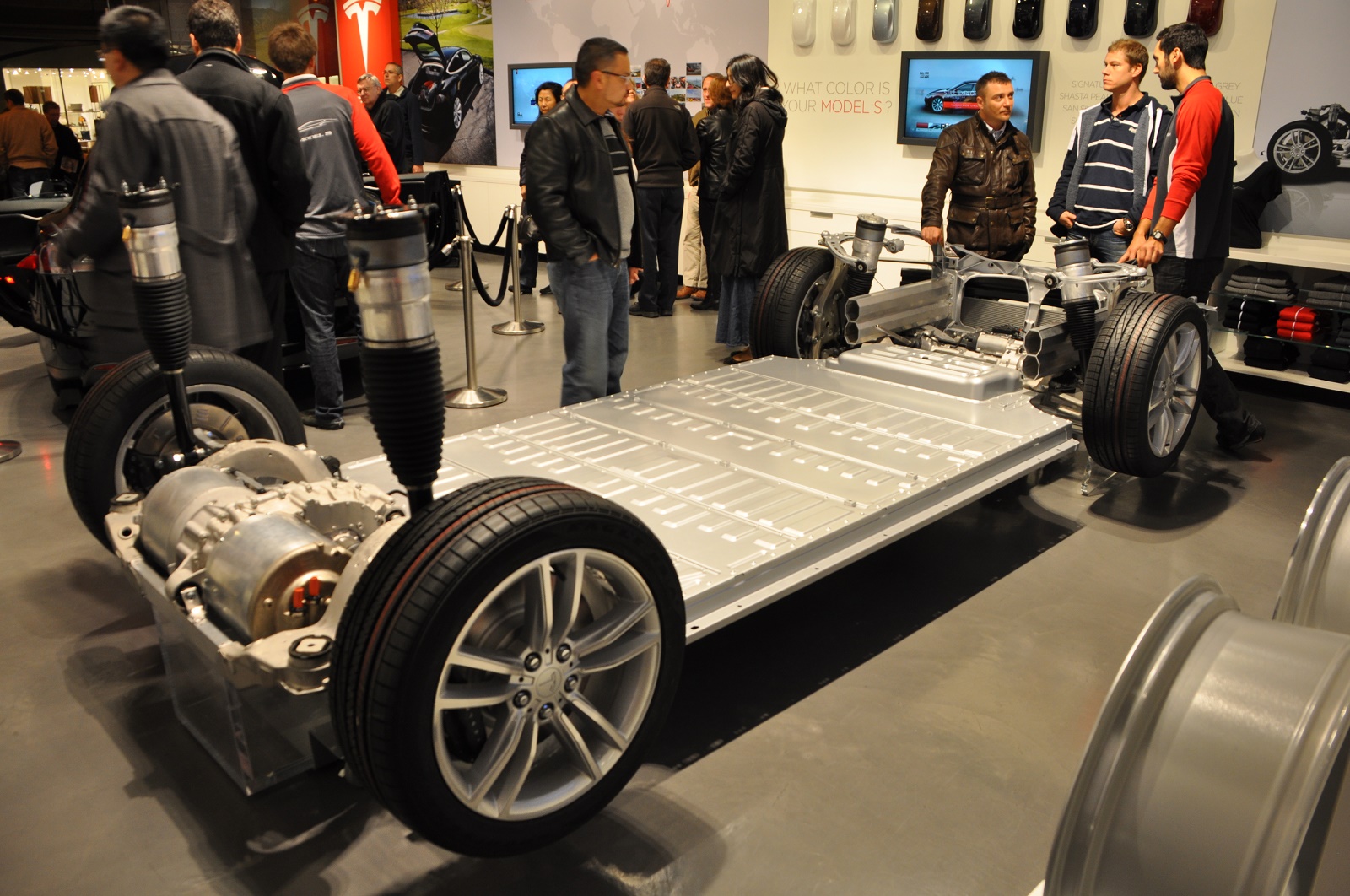
Let’s start with the economic impacts, which will be ruinous. First, the price of EVs will increase; that’s basic economics. The new rules will require that about two-thirds of the vehicles manufacturers sell are EVs. Given that most consumers do not purchase EVs, the best way to do that is to raise prices on internal combustion (ICE) vehicles until they are more costly than EVs. (Today, the reverse is true, with the average EV costing around $65,000, while the average ICE vehicle costs around $48,000.) Increasing provides an umbrella under which EV prices can be raised, too. So, if a consumer or business wants to purchase a new vehicle, they effectively will be forced to buy a more costly EV.

Battery Demand Over the Top

Second, increasing the demand for EVs will increase the demand for the materials to manufacture batteries, which are the single largest cost of an EV. Prices for rare earths, for example, have increased between 60% and 400% since 2020. Prices for lithium, the basic ingredient in most EV batteries, have increased by about 400%. Moreover, the US continues to prevent development of new mines to supply those materials. Instead, China has a stranglehold on them, and lax environmental rules to boot.

Electric Power Mostly Carbon

Then there is the electricity needed to charge those EVs, along with the charging stations in homes, apartment buildings, and on highways. Claims that this electricity will actually reduce emissions are based on huge predicted increases in wind and solar energy development. Yet, the US Energy Information Administration projects that, by 2050, wind and solar will provide only about 40% of electricity supplies. Consequently, much of the electricity needed to charge those millions of EVs will be provided by natural gas and even coal.

So, while the EPA may limit tailpipe emissions,
it will transfer many of those emissions to power plants.

Inflated Electricity Bills

Electricity costs will also increase, negating the anticipated savings from “refuelling” those EVs. That’s why the federal government has provided subsidies for wind and solar energy development for 45 years and why so many states implemented green energy mandates: developers of wind and solar could not, and still cannot, compete on price alone, despite proponents’ claims.

No Measurable Impact on Climate

But let’s suppose those hurdles magically are overcome. The environmental justification for the EPA rule is nonetheless absurd. The claimed reductions in CO2 emissions will have no measurable impact on world climate. Reducing CO2 emissions by 10 billion tons between 2027 and 2055 sounds like a lot. But world CO2 emissions were 34 billion metric tons in 2021 alone. So, over 28 years, the EPA’s proposed rule will reduce CO2 emissions by the equivalent of about four months of world CO2 emissions. And world emissions continue to increase because developing nations, especially China and India, have no intentions to restrict their economies.

Why Impose EVs?

The basic economic impacts, along with the negligible climate benefits, raise a simple question: why is the Biden Administration pursuing this EV windmill-tilting exercise? By effectively forcing consumers and businesses to purchase vehicles they do not want, the Administration will impose yet more damage on American’s standard of living, reducing mobility and raise costs.

That can’t possibly be their goal, right?

If only arm-twisting were prohibited beyond the ring.


Experts Were the Covid Crisis in 2020

John Tamny makes the case that authoritarian government is a poor substitute for free people managing themselves facing a public health threat.  He writes at Real Clear Markets Dear Washington Post Editorial Board, the Experts Were the Crisis In 2020.  Excerpts in italics with my bolds and added images.

The quote from Tolstoy’s War and Peace is a useful way to begin addressing the Washington Post editorial board’s confident assertion that “’A collective national incompetence in government’” was at the root of the U.S.’s alleged failure vis-à-vis the coronavirus in 2020. According to the Post quoting from a recently released report (“Lessons from the Covid War”), “The United States started out ‘with more capabilities than any other country in the world,’ but “it ended up with 1 million dead.” Were he still around, one guesses Tolstoy would mock the conceit of the Post’s editorialists.

That’s the case because “the thing that matters most to any man” is “the saving of his own skin.” That this needs to even be said speaks to how wrongheaded the Post’s editorial board’s approach to the virus was, and still is. It implies we have dead because government didn’t act properly, as though free people eager to live were unequal to a virus that the right kind of collective governmental action was more than equal to. Ok, but what was government going to do? Better yet, what if the virus had struck in 2015 when Barack Obama was still in the White House. What would he have done? Would he have instructed a virus that was spreading faster than the flu to take a “time out”?

The simple truth missed by the Post is that as humans
we’re wired to preserve ourselves.

On the matter of life and the presumption of death, government is excess. Whatever solution Obama might have come up with, or whatever Donald Trump did come up with, or (try not to laugh) whatever Joe Biden, Nancy Pelosi and Chuck Schumer would have done if the virus had revealed itself in 2021 would have been vastly unequal to the solutions crafted by free people.

Deep down the Post’s editorialists must know the above is true. Indeed, it’s not that the Soviet Union lacked experts, or that Cuba lacks experts now. The problem was and is that the remarkable knowledge of very few very smart people will never measure up to the collective knowledge of the citizenry. That’s why communism failed so impressively in the Soviet Union, and it’s why it fails in Cuba. Translated for those who need it, the people are the market and markets work. As I make plain in my 2021 book When Politicians Panicked, the problem was experts and politicians substituting their limited knowledge for that of the people. That was the crisis. Not so, according to the Post and the report they cite.

Supposedly the “leaders of the United States could not apply their country’s vast assets effectively enough” such that “1 million died.” Wrong. Over and over again. To see why, imagine if 10 million Americans had died in March of 2020. Can the Post editorial board think of what government might have done that would have somehow improved on a feverish individual desire to survive against long odds? The simple truth glossed over by the Post is that the more threatening a virus is (and the Post seems to view what most didn’t know they were infected with as wildly threatening), the more superfluous government action is.

Really, who reading this ever needs to be forced to avoid behavior that might result in sickness, or even death? And if the reply to this question is that some people DO need to be forced, you’re making the best case of all for unfettered freedom. Think about it. Those who reject expert opinion are the most crucial “control group” as a virus spreads. By going against the grain, we learn from their freely arrived at actions if the virus is as lethal as presumed, or not, how it spreads, how to perhaps avoid its spread, and all manner of other important bits of information suppressed by one-size-fits-all national solutions.

It cannot be stressed enough that free people crucially produce information. Instead of allowing them to produce it in abundance in 2020, the response arrived at by Democrats and Republicans was to lock people in their homes, thus blinding a nation “with more capabilities than any other country” to the best approaches to a spreading virus. Please keep all of this in mind with the report’s assertion that the “most important and fundamental misjudgment” about the virus was how it spread. You think? Of course, the muscular assertion ignores yet again that if knowing how a virus spreads is of utmost importance, the only credible answer is freedom.

Consider the latter in light of the statement of the obvious that all advances in medicine have always been born of matching doctors and scientists with the abundant fruits of wealth creation. In 2020, rather than encourage the very wealth creation that has long been the biggest foe of death and disease (by far), panicky politicians quite literally chose economic contraction as a virus mitigation strategy. Historians will marvel at the abject stupidity of the U.S. political class, but not the Post’s editorialists or the authors of a report that the editorialists remarkably find insightful.

Rather than acknowledge the obvious about government and experts as the crisis, the Post editorialists and the experts they kneel before bemoaned a national abdication of “wartime responsibilities.” One gets the feeling Tolstoy would chuckle yet again. In his words, “The course of a battle is affected by an infinite number of freely operating forces (there being no greater freedom of operation than on a battlefield, where life and death are at stake), and this course can never be known in advance; nor does it ever correspond with the direction of any one particular force.”

In short, on matters of life and death government control
is wretched, crisis-inducing excess.


Obviously Climate Policies Are Inflationary


Rupert Darwall explains how central bankers avert their eyes from the obvious in his Real Clear Energy article Inflation, Net Zero, and the Bank of England. Excerpts in italics with my bolds and added images.

A central banker tiptoes toward the inflationary consequences of Net Zero.

“What a banker,” read the unsubtle headline in the Sun. “BoE official on £190k salary says Brits must accept they’re worse off.” The Mail agreed. “BoE chief risks fury as he says Brits must accept they are poorer.” What sparked the tabloids’ outrage was a Columbia Law School podcast with Huw Pill, the Bank of England’s chief economist and a member of the Bank’s interest-rate-setting Monetary Policy Committee. Pill made the uncontroversial point that higher energy prices were making Britons worse off, but that attempts by workers and firms to recoup the real spending power they’d lost risked embedding inflation.

Pill’s analysis should have been directed at his fellow central bankers,
who let inflation slip the leash.

In his Geneva speech, Pill says that central bankers need to assess structural factors likely to prevent inflation falling back to target. “If a rise in energy prices is seen as permanent, it is more likely to trigger greater intrinsic inflation,” he argues. If it does, it would “justify a stronger tightening of monetary policy.” Not mentioned by Pill, however, are the effects of climate policy and net zero on energy costs and prices – and therefore the persistence of inflation on an economy being subjected to a multi-decadal program of decarbonization.

Climate policies drive up energy costs through two channels.

The first are policies forcing energy companies to replace hydrocarbons with inefficient, inferior lower-carbon alternatives, notably wind and solar. Were such technologies superior and capable of delivering greater efficiencies, there would be no need for government intervention promoting their adoption. The second channel is by progressively constricting the sources of energy supply, for example by Environmental, Social and Governance (ESG) investors preventing investment in new oil and gas fields, thereby increasing the market share of OPEC plus Russia.

In Britain’s case, powering past coal meant increased dependence on natural gas to keep the lights on. As Pill notes, all market transactions involve distribution of some “economic surplus” between the parties; “the more effective the seller is in extracting that economic surplus, the higher the resulting economic price will be.” Unfortunately for Britain and the rest of Europe, Vladmir Putin and Gazprom have a much better understanding of how energy markets work than Western politicians who made their continent vulnerable to surplus extraction through the myopic pursuit of net zero.

With the Bank of England, it’s not so much myopia as wilful blindness to any possibility of a link between climate policies and inflation. In a speech this month unironically asking “Climate action: a tipping point?,” Sarah Breeden, the bank’s executive director for financial stability and risk, describes its role as creating a regulatory framework that encourages markets “to allocate capital to support real economy decarbonization,” i.e., to worsen the supply constraints on hydrocarbon energy. At the November 2022 G20 meeting in Bali, Deputy Governor Sir Dave Ramsden spoke of the need to avert climate catastrophe. “Among all the shocks – many unprecedented – facing the global economy today, the challenge of climate change is the most profound and far reaching,” Sir Dave declared, in the very month it was announced that consumer price inflation in Britain had reached 11.1 percent.

From the governor on down, the Bank of England became obsessed with conjuring up specters of climate risk as threats to financial stability, all the while blanking out any possibility that climate change policy might threaten attainment of the bank’s inflation mandate. Less than two years ago, Andrew Bailey, the bank’s governor, was talking of net zero as a way of regenerating capital and raising productivity. “These positive effects should be larger in countries like the UK that are net importers of energy,” Bailey asserted – the opposite of what the bank’s chief economist is now saying.

Alarm bells should be ringing in Threadneedle Street. Giving evidence to a House of Lords inquiry on the Bank of England independence, former chancellor George Osborne cast doubt on making climate goals one of the bank’s objectives. His former Labour opponent, Ed Balls, who helped design the arrangements making the bank independent in 1997, went further, arguing that it didn’t make sense to give the bank a role for which it had no tools, and suggesting that climate had become a distraction from its core mission on price and financial stability.

Climate is worse than a distraction:
misjudgement and misanalysis of climate-change policy is a key factor
in the Bank of England losing control of inflation.