U.S. Elites $$$ Funding Overthrow of Canadian Government Policy (by force and violence)

pipeline-protest
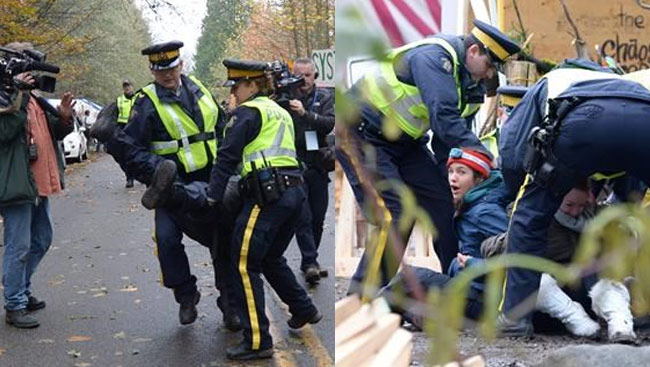
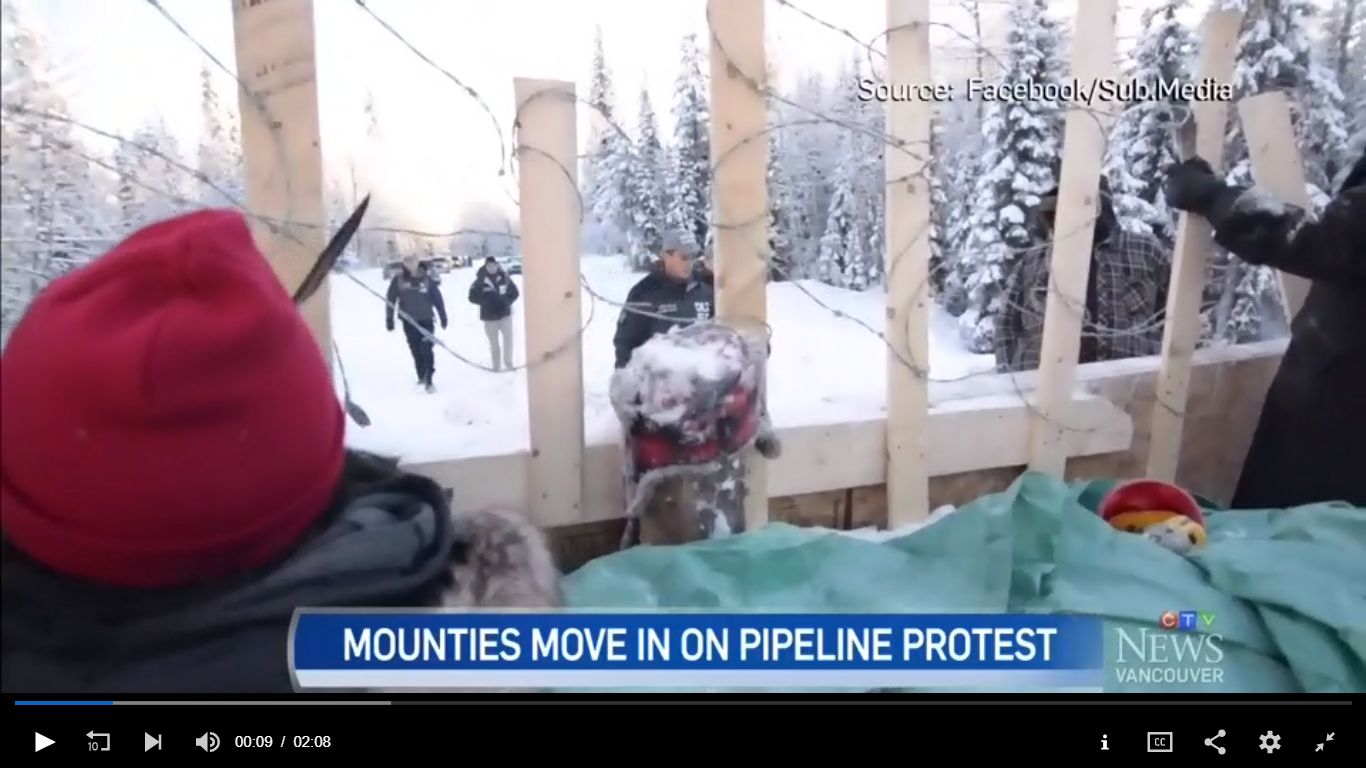
A current example of disrupting lawful development activity in Canada is the illegal protests against the LNG pipeline in BC.  Amy Judd writes at Global News RCMP arrest 14 at anti-pipeline protest in northern B.C.  Excerpts in italics with my bolds.

The RCMP say it has arrested 14 people Monday evening for allegedly violating the conditions of an interim court injunction requiring the removal of a blockade to a forest service road in northern British Columbia that is preventing access to a pipeline project.

The interim injunction issued by the B.C. Supreme Court in mid-December orders anyone who interferes with the Coastal GasLink project in and around the Morice River Bridge to remove any obstructions.

In statements issued today, the RCMP say they arrived on scene around 11 a.m. By 3 p.m., they entered the blockade, after a meeting with a number of hereditary elders and CGL failed to resolve the issue without police involvement.

By 6:45 p.m., they had made a number of arrests from the blockade set up by Gitdumt’en on Morice West Forest Service Road. RCMP also say they observed a number of fires being lit along the roadway by ‘unknown persons’, with large trees felled across the roadway.

Click on link below to watch video report.

https://webapps.9c9media.com/vidi-player/1.5.4/share/iframe.html?currentId=1580906&config=ctvnews/share.json&kruxId=ImoeZsch&rsid=ctvgmnews,ctvgmnewsglobalsuite&cid=%5B%7B%22contentId%22%3A1581681%2C%22ad%22%3A%7B%22adsite%22%3A%22ctv.ctvnews%22%2C%22adzone%22%3A%22embed%22%7D%7D%2C%7B%22contentId%22%3A1581852%2C%22ad%22%3A%7B%22adsite%22%3A%22ctv.ctvnews%22%2C%22adzone%22%3A%22embed%22%7D%7D%2C%7B%22contentId%22%3A1581754%2C%22ad%22%3A%7B%22adsite%22%3A%22ctv.ctvnews%22%2C%22adzone%22%3A%22embed%22%7D%7D%2C%7B%22contentId%22%3A1581731%2C%22ad%22%3A%7B%22adsite%22%3A%22ctv.ctvnews%22%2C%22adzone%22%3A%22embed%22%7D%7D%2C%7B%22contentId%22%3A1581603%2C%22ad%22%3A%7B%22adsite%22%3A%22ctv.ctvnews%22%2C%22adzone%22%3A%22embed%22%7D%7D%2C%7B%22contentId%22%3A1580971%2C%22ad%22%3A%7B%22adsite%22%3A%22ctv.ctvnews%22%2C%22adzone%22%3A%22embed%22%7D%7D%2C%7B%22contentId%22%3A1580906%2C%22ad%22%3A%7B%22adsite%22%3A%22ctv.ctvnews%22%2C%22adzone%22%3A%22embed%22%7D%7D%2C%7B%22contentId%22%3A1580884%2C%22ad%22%3A%7B%22adsite%22%3A%22ctv.ctvnews%22%2C%22adzone%22%3A%22embed%22%7D%7D%2C%7B%22contentId%22%3A1580579%2C%22ad%22%3A%7B%22adsite%22%3A%22ctv.ctvnews%22%2C%22adzone%22%3A%22embed%22%7D%7D%5D

In their statement, the RCMP dispute reports that they jammed communications in the area in order to prevent the media and public from communicating the unfolding situation to the outside world. They say the area is extremely remote, and even police had limited access to communication, other than their radios.

They also say reports that the Canadian Military were present are erroneous, saying they have deployed Tactical and Emergency Response Teams as part of their ‘measured and scalable approach to enforcing the court ordered injunction’.

RCMP say they set up a ‘temporary exclusion zone’, where the police do not allow access to anyone – media or otherwise – who is not part of the enforcement team.

The dispute centres around the GasLink pipeline project, which is intended to convey natural gas from fracking projects in the Peace Region to the future $40-billion LNG Canada plant in Kitimat.

The pipeline route travels through Wet’suwet’en First Nation territory, and the nation’s elected leaders signed a benefits agreement with the province for Coastal GasLink in 2014.

However, some Wet’suwet’en oppose the development and have established a years-long camp, known as Unist’ot’en, blockading the Morice River Bridge.

In December, a B.C. Supreme Court judge ruled in favour of Coastal GasLink, granting an injunction against demonstrators occupying the area around the bridge.

The order has since been expanded to include the Morice West Forest Service Road, where other Wet’suwet’en demonstrators have set up a second checkpoint known as the Gitdumt’en access point.

The protesters assert that the project is infringing Aboriginal title, citing the 1997 Delgamuukw Supreme Court of Canada ruling. The court found that the Wet’suwet’en had not given up title to 22,000 square km of territory, and demonstrators say those rights are represented by their hereditary chiefs.

RCMP say their first priority is safety but protesters say they are worried about what they call an “invasion.”

“It’s important for the government because they want the tax money coming in,” said Jeffery Brown, Chief Madeek, Head Chief of the Gidumt’en clan of the Wet’suwet’en First Nation.

“[It’s] important to get [the pipeline] through but even to get it through, there’s a moratorium on the coast to get that lifted and I’m sure they’re gonna try and do that, too.”

The RCMP issued a media release Sunday morning affirming its role in enforcing the injunction, and stating that police have been in dialogue with the camp in recent months about possible enforcement.

“We would like to emphasize that the RCMP respects the Wet’suwet’en culture, the connection to the land and traditions being taught and passed on at the camp, and the importance of the camp to healing,” states the release.

“Should enforcement take place, the RCMP will be prepared to ensure the safety of everyone involved — demonstrators, police officers, area residents, motorists, media and general public.”

The Wet’suwet’en are seeing support from across Canada and a number of events are being planned by groups standing in solidarity with them. Those events start Tuesday in Victoria and Vancouver.

Coastal GasLink says it consulted with hereditary chiefs for more than five years and secured 20 project agreements with elected First Nations councils all along the pipeline route.

“We understand that there are those that share different opinions so we want to continue to work with those individuals to find solutions,” Jacquelynn Benson of Coast GasLink said.

The company says seeking an injunction was a last resort.

Pipeline Protests Fueled by $$$ from Alarmist US Billionaires

From CBC News January 22, 2019  Debate grows over impact of American funding being directed towards Canadian environmental campaign.  Excerpts below in italics with my bolds.

Alberta at Noon host Judy Aldous spoke to researcher and blogger Vivian Krause, as well as award-winning Calgary author Chris Turner, Monday about the degree to which U.S. dollars are shaping the conversation we’re now having in Canada about building pipelines.

Krause has estimated that various U.S. funders have contributed in the neighbourhood of $40-million in recent years to hundreds of Canadian environmental and Indigenous groups. The goal is to help them spread a message about the need to land-lock Alberta crude through protests against the construction of new pipelines.

Krause believes those American dollars are financing a message that has turned the conversation around, adding topics like pipeline development have become toxic.

“The campaign has been devastating,” Krause said.

“I think the campaign is the reason why Northern Gateway was cancelled: Energy East, Keystone, Trans Mountain.

“And this is the same organization, same strategy, same funders that stopped the Mackenzie [Valley] gas pipeline. I think the coastal gas pipeline is also in serious trouble.

“I have no hope for any pipeline [being approved for development] until this campaign is brought to an end,” she said.

Turner, meanwhile, said that foundations such as the Rockefeller Brothers Fund, the Hewlett Foundation, and the U.S. environmental group the Tides Foundation have far less of ability to manipulate the environmental agenda in Canada than Krause suggests.

He didn’t disagree with the numbers but disputed Krause’s interpretation of them.

Krause said she isn’t opposed to the principle of funding environmental groups from outside the country. However, she said she feels there has been a disproportionate focus on the oilsands by American environmental activists, particularly considering the U.S. is now one of the top oil producers on the planet.

She also suggested that by turning up the heat on Canadian energy development, those same activists are enabling — or perhaps are motivated by — a desire to open up markets for American oil producers.

“But here’s the thing,” she added. “Guess whose oil is getting to market and is getting the highest prices? It’s not Canadian oil or gas. It’s American oil and gas.”

She asked why environmentalist don’t instead focus on “landlocking the development of American oil and gas.”

Summary

Hey PM Trudeau, how about a wall to protect Canadians from US billionaires funding the overthrow of our governments’ policies?  Hungary took the initiative to block socialist George Soros from subversive political activity in his homeland.  What are we waiting for?  Can we be a nation without controlling our borders?


U.S. foundations funding Canadian anti-pipeline protests

From CBC News January 22, 2019  Debate grows over impact of American funding being directed towards Canadian environmental campaign.  Excerpts below in italics with my bolds.

Alberta at Noon host Judy Aldous spoke to researcher and blogger Vivian Krause, as well as award-winning Calgary author Chris Turner, Monday about the degree to which U.S. dollars are shaping the conversation we’re now having in Canada about building pipelines.

Krause has estimated that various U.S. funders have contributed in the neighbourhood of $40-million in recent years to hundreds of Canadian environmental and Indigenous groups. The goal is to help them spread a message about the need to land-lock Alberta crude through protests against the construction of new pipelines.

Krause believes those American dollars are financing a message that has turned the conversation around, adding topics like pipeline development have become toxic.

“The campaign has been devastating,” Krause said.

“I think the campaign is the reason why Northern Gateway was cancelled: Energy East, Keystone, Trans Mountain.

“And this is the same organization, same strategy, same funders that stopped the Mackenzie [Valley] gas pipeline. I think the coastal gas pipeline is also in serious trouble.

“I have no hope for any pipeline [being approved for development] until this campaign is brought to an end,” she said.

Turner, meanwhile, said that foundations such as the Rockefeller Brothers Fund, the Hewlett Foundation, and the U.S. environmental group the Tides Foundation have far less of ability to manipulate the environmental agenda in Canada than Krause suggests.

He didn’t disagree with the numbers but disputed Krause’s interpretation of them.

Krause said she isn’t opposed to the principle of funding environmental groups from outside the country. However, she said she feels there has been a disproportionate focus on the oilsands by American environmental activists, particularly considering the U.S. is now one of the top oil producers on the planet.

She also suggested that by turning up the heat on Canadian energy development, those same activists are enabling — or perhaps are motivated by — a desire to open up markets for American oil producers.

“But here’s the thing,” she added. “Guess whose oil is getting to market and is getting the highest prices? It’s not Canadian oil or gas. It’s American oil and gas.”

She asked why environmentalist don’t instead focus on “landlocking the development of American oil and gas.”


Pascal’s Climate Wager

David Freddoso explains in the Washington Examiner Good news: Illinois will be spared when the world ends.  Excerpts in italics with my bolds.

J.B. Pritzker, the new governor of Illinois, has begun his reign with the symbolic signing of his state back on to the Paris climate agreement:

It means Illinois will abide by the Paris agreement that aims at reducing greenhouse-gas emissions by up to 28 percent by 2025. Former President Barack Obama signed the U.S. onto the Paris accord in 2016 but President Donald Trump withdrew months later.

Pritzker’s order also directs the Illinois Environmental Protection Agency to monitor the Trump administration’s environmental proposals and look for ways to “protect Illinoisans from environmental harm.”

This means Illinois will be spared when the world ends in 12 years, right? Well, no, I’m afraid it doesn’t work that way. But if you do especially want Illinois to be spared for some reason, perhaps it will at least make you feel better about yourself.

Paris was a nonbinding agreement. More importantly, its terms would not be nearly ambitious enough to save the world, were its continued existence truly threatened as some contend.

The symbolic return of the Deadbeat State to the Obama administration’s climate agreement doesn’t mean anything specific. Yes, the state government might be saddling itself with further costs it cannot afford, given its fleeing population and dwindling tax base. But the climate in Illinois will not be affected by any reforms in the U.S., because our entire economy’s worth of carbon emissions is becoming a drop in the carbon ocean of China’s and India’s growing emissions. Even if we switched 100 percent to nuclear power — the secret to France’s electrical success and the only feasible way the U.S. could ever reduce emissions on such a scale — the global threat would not diminish substantially for decades given growth in India alone (not to say that a switch to nuclear isn’t a good idea anyway).

This leaves us with a sort of reverse Pascal’s Wager. If the world is truly on its way to an end, then you’re just screwed. There’s nothing you or I can do at this point, so you might as well just enjoy your last days with the air conditioner on, not off.

If, on the other hand, the conjecture-based predictions of rapid world destruction are just so much hype, then Illinoisans can safely ignore Paris and Pritzker and consider moving to neighboring Indiana where the governor limits himself to real-world problems.

Footnote: 

Blaise Pascal (1623-1662) was a French mathematician, physicist, inventor, writer and Catholic theologian.  He asserted that the best bet is to believe and act as though God exists even though the evidence is uncertain.  The argument was based upon three premises: the first concerns the decision matrix of rewards, the second concerns the probability that you should give to God’s existence, and the third is a maxim about rational decision-making.  On Pascal’s premises, the gains from wagering for God outweighed the losses the other way.

In the field of global warming/climate change, the wager is called the “Precautionary Principle” and is preoccupied with losses not gains.  IPCC adherents argue that all will be lost unless we stop burning fossil fuels, despite: no reliable evidence anything unusual is happening in our climate; renewable power tech is immature, serving only to make affordable, reliable energy expensive and intermittent; no proof humans can control planetary climate changes.

ipcc_ransom_note

Suing Energy Companies Endangers Communities


Horace Cooper writes at RealClear Energy January 18, 2019 America’s Communities Will Suffer if Lawsuits Against Energy Producers Succeed.  Excerpts in italics with my bolds.

Lawsuit abuse is costing Americans plenty and Louisiana illustrates just how absurd it can become. Drivers in that state pay the second-highest auto insurance rates in America thanks, in part, to its minimum $50,000 claim for jury trials, which is the highest in America. Just to stay in business, auto insurers must pass along those costs to Louisiana’s drivers.

But the real canary in the coal mine is that other insurance companies have just packed up and left the state. That’s a crucially important point because a greedy group of Louisiana trial lawyers have now targeted the state’s oil and gas industry for a multi-billion-dollar shakedown. For residents, the potential consequences could not be more ominous.

Law firms have teamed up with at least six parish governments in lawsuits alleging that the energy industry alone is responsible for the state’s coastal erosion problem. Never mind the Corps of Engineers’ levee system that on one hand helps prevent the Mississippi River from flooding, but on the other, prevents soil-building silt from reaching the wetland areas. And disregard the erosion impact of hurricanes and other storms. None of that matters to the trial lawyers who would reap a huge contingency fee award if they win.

The rational business decision for oil and gas producers in a hostile and costly legal environment would be to follow the insurance companies’ example and leave the state. The cost to local communities would be on the scale of a natural disaster. For starters, consider that last year 44,580 people in the state were employed directly in oil and gas production, earning $4.3 billion annually. That’s an annual average wage of more than $96,500, nearly double the state average. That doesn’t count those who enjoy retirement benefits from the energy industry or all the other community jobs that the energy industry supports. Louisiana is a state that needs more well-paying jobs and not frivolous lawsuits that put those jobs in jeopardy.

Now consider the state’s, parishes’ and cities’ ability to fund essential services for their citizens. The oil and gas industry alone accounted for 10 to 15% of state and local tax revenues annually, on average, over the past two decades. In fiscal year 2013, for example, energy companies paid nearly $1.5 billion in state taxes, representing about 14.6% of all the taxes, licenses and fees received by the state. That same year, parishes and cities took in $410 million in ad valorem taxes from energy producers, refiners and pipeline companies. Between 2006 and 2016, the oil and natural gas industry paid $14 billion just for the opportunity to do business in the state, according to the Louisiana Department of Natural Resources. If those revenue streams dried up, tough conversations about cutbacks at schools, police departments and hospitals would be taking place. Tax increases to plug the shortfalls would be considered even as thousands hit the unemployment lines.

The magnitude of the lawsuits’ potential to visit hardship upon Louisiana’s families cannot be overstated. The shame is that the litigation is without merit. Every legitimate scientific study has concluded that there are a number of factors causing coastal erosion, most of which have nothing to do with oil and gas exploration and production. In fact, the industry is part of the solution, having donated thousands of acres for scientific coastal and environmental research and having provided 25% to 33% of the overall cost for coastal erosion prevention and restoration efforts.

The only reason the oil and gas industry is being targeted exclusively is because the greedy trial lawyers see dollar signs. But by no means, however, is litigating against oil and gas companies for cash strictly a homegrown Louisiana cottage industry. The financially struggling cities of San Francisco and Oakland recently launched a lawsuit against top energy producers for anticipated damages from climate change, only to have the judge toss the case. Other municipalities filed similar litigation and now find they have some explaining to do.

It seems the left hand isn’t watching what the far-left hand is up to. San Mateo County, California, for example, claims in its lawsuit against the energy industry that there’s a 93% risk of a devastating climate-change-related flood by 2050. Yet its municipal bond offering to potential investors dismissively notes that it’s “unable to predict whether sea-level rise or other impacts of climate change or flooding from a major storm will occur.” Such duplicity has opened the county to a potential SEC investigation for bond fraud and could result in taxpayers paying expensive legal fees.

If these baseless lawsuits by greedy plaintiff lawyers remain unchecked, it won’t be just oil and gas producers that get hurt. Consumers, taxpayers and families would also suffer the fallout. Ultimately, elected officials must be held accountable for reining in this manipulation of the courts for profit.

Horace Cooper is co-chairman of the Project 21 National Advisory Board, a senior fellow with the National Center for Public Policy Research and a legal commentator.


The Carbon Tax Shell Game


James Taylor explains current efforts to distract us with a tricky proposal. A ‘Revenue Neutral’ Carbon Tax Is a Costly Myth.  Excerpts in italics with my bolds.

The Wall Street Journal, Washington Post, and other media outlets are reporting that a bipartisan group of top economic advisors has signed a statement supporting a carbon dioxide tax that returns all revenue to the American people. Prominent signatories include Alan Greenspan, Paul Volcker, and Ben Bernanke. Expect this to be a big messaging point in the weeks and months ahead for global warming activists.

More atmospheric carbon dioxide and gradually warming temperatures have brought net benefits to human health and welfare. Yet economists like Greenspan and Bernanke, who received appointments from Republican presidents, often make the argument that they are not scientists and they are merely crafting the best economic solution to a problem that most scientists say we need to address. Even if these economists remain unconvinced that carbon dioxide emissions and modest global warming bring net benefits, there are crucial flaws in their argument for a ‘revenue neutral’ carbon dioxide tax.

Here are the three biggest flaws of a ‘revenue neutral’ carbon dioxide tax designed to appeal to Republicans and conservatives:

1. A carbon dioxide tax may be crafted to be government revenue neutral, but it cannot be crafted to be household revenue neutral. The intent and impact of a carbon dioxide tax is to raise the price of coal, natural gas, and gasoline to the point that they are more expensive than high-priced wind power, solar power, and electric vehicles powered by wind and solar. When this happens, consumers will be purchasing wind and solar power that is much more expensive than what they presently pay for coal, natural gas, and gasoline. Consumers will therefore be forced to spend substantially more money on energy and energy-related bills. Yet the wind and solar industries will pay no carbon dioxide taxes, meaning a ‘successful’ carbon dioxide tax that dramatically reduces carbon dioxide emissions will collect little tax revenue and thereafter return little money to the people. This would be ‘revenue neutral’ for government, but households will see dramatic declines in discretionary income as a result of their uncompensated higher energy bills.

2. Republicans and conservatives are negotiating against themselves, in vain, when they advocate a ‘revenue neutral’ carbon dioxide tax. Democrats, environmental activist groups, and the political Left have made it clear that they will not support or accept a ‘revenue neutral’ carbon dioxide tax. They proved this point in the state of Washington in 2016 when a ‘revenue neutral’ carbon dioxide tax was put on the ballot with support from many establishment Republicans. Democrats, environmental activist groups, and the political Left opposed the ballot initiative, stating they would only support a carbon dioxide tax that authorized government to keep the tax revenues and direct the revenue to causes supported by the environmental Left. As a result – and thankfully – the ballot initiative failed.

3. Even if Democrats, environmental activist groups, and the political Left suddenly began to support a ‘revenue neutral’ carbon dioxide tax, they would only support such a tax in addition to, rather than instead of, expensive, intrusive, command-and-control schemes. As I noted in a recent Heartland Institute Policy Brief, “Prominent global warming activist David Roberts noted in Vox that CO2 taxes ‘are good policy, an important part of the portfolio, but unlikely ever to be sufficient on their own. It’s worth getting a price on carbon anywhere it can be gotten, but climate hawks should not believe, and definitely shouldn’t be saying in public, that a carbon price is enough …’ [emphasis in the original].” I also noted from Bill McKibben, “We need to do everything. Not just a price on carbon, but dramatic subsidies for renewables to speed their spread. Not just a price on carbon, but an end to producing coal and gas and oil on public land. Not just a price on carbon, but a ban on fracking, which is sending clouds of methane into the atmosphere. Not just a price on carbon, but a dozen other major regulatory changes.”

Not only would a carbon dioxide tax be economically destructive, but Republicans and conservatives who are duped into supporting such a scheme will be getting something entirely different than what is being advertised.

See Also Carbon Pricing Angst

Money goes back to provinces, says Trudeau. Trudeau has said that the tax will start at a minimum of $10 a tonne in 2019, rising by $10 each year to $50 a tonne by 2022. “The government of Canada will return all of the money collected back to Canadians,” Trudeau said.  October 23, 2018

California Renewables to Lose PG&E $$$


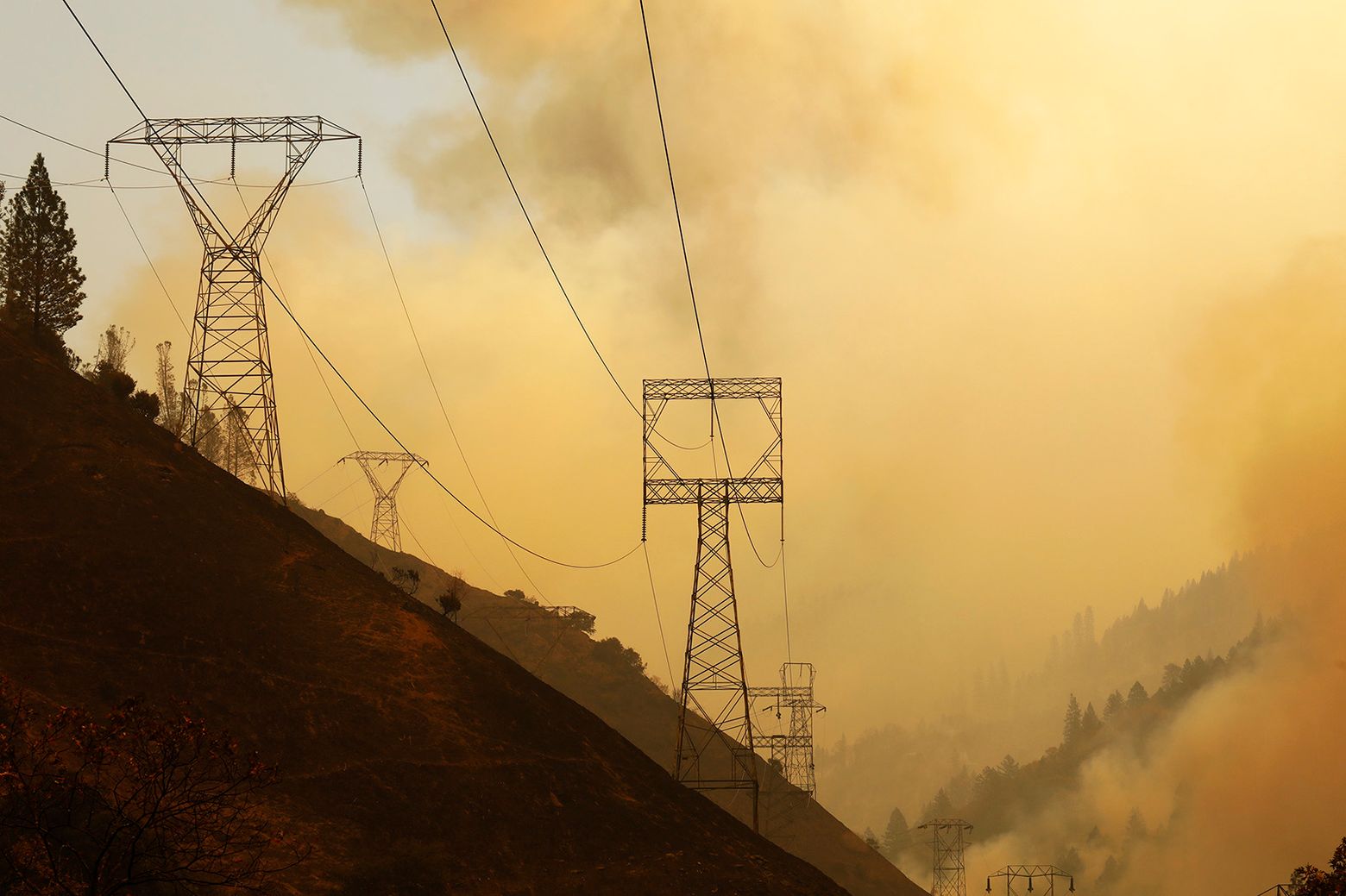
The investigation continues into the origin of the Camp fire, which some say started with a faulty PG&E wire in Pulga, California. (Carolyn Cole / Los Angeles Times / TNS)

Sammy Roth of LA Times digs deeper than others into the fallout from PG&E’s wildfire-induced bankrupcy. The article published in The Seattle Times is PG&E bankruptcy could undermine utilities’ efforts against climate change. Excerpts below with my bolds.

Solar and wind developers depend on creditworthy utilities to buy electricity from their projects under long-term contracts, but that calculus changes in a world where a 30-year purchase agreement doesn’t guarantee 30 years of payments.

The Golden State has dramatically reduced planet-warming emissions from the electricity sector, largely by requiring utilities to increase their use of solar and wind power and fund energy-efficiency upgrades for homes and businesses. Lawmakers recently set a target of 100 percent climate-friendly electricity by 2045.

But those government mandates have depended on Pacific Gas & Electric and other utilities being able to invest tens of billions of dollars in clean-energy technologies.

The massive Topaz solar farm in California’s San Luis Obispo County, an electricity supplier to PG&E owned by Warren Buffett’s Berkshire Hathaway Energy, also saw its credit rating downgraded to junk status this month, amid fears the San Francisco-based utility won’t be able to pay its bills in full.

In the short term, PG&E might stop signing renewable-energy contracts, although contracting had already slowed in the last few years as customers departed in droves for newly established local energy providers run by city and county governments. In the long term, renewable-energy developers and their lenders may hesitate to do business with PG&E — and, potentially, with other California utilities that could also face significant future wildfire costs.

“If we’re having a couple billion dollars a year of fire damage and insurance losses, quite apart from PG&E, this is going to put the entire state of California at risk,” said V. John White, executive director of the Center for Energy Efficiency and Renewable Technologies, a Sacramento-based trade group.

Renewable-energy firms were alarmed by the news of PG&E’s impending bankruptcy filing, and it’s not hard to understand why. Solar and wind developers depend on stable, creditworthy utilities to buy electricity from their projects under long-term contracts known as power-purchase agreements. They’re able to get low-cost loans to build their projects because lenders see little to no risk of a utility defaulting on those contracts.

But that calculus changes in a world where a 30-year power-purchase agreement doesn’t guarantee 30 years of payments at the agreed-upon price, said Ben Serrurier, a San Francisco-based policy manager for solar developer Cypress Creek Renewables. There’s concern in the industry that a bankruptcy court judge could order PG&E to reduce its payments to solar- and wind-project owners to help the company pay off other debts.

WIND ENERGY: Wind turbines in the Tehachapi-Mojave Wind Resource Area near the city of Mojave, California. (Brian van der Brug / Los Angeles Times / TNS)

“Once you start questioning the sanctity of contracted revenue, you begin to introduce a new risk into renewable-energy project development. So much about project development is about reducing risk so you can reduce your capital cost,” Serrurier said.

It’s not just clean-energy investments that are at risk. In another cruel bit of irony, PG&E’s bankruptcy filing could also make it more difficult for California utilities to raise the capital needed to harden their infrastructure against wildfire, said Travis Kavulla, a former president of the National Association of Regulatory Utility Commissioners who now serves as director of energy policy at the R Street Institute, a center-right think tank.

“Bankruptcies are tough. It means people may lose their pensions or get them cut. It means people who invested in projects in California, based on what they thought was a pretty airtight business model of a regulated utility, are getting stiffed,” Kavulla said. “It could create longer-running harms where California is viewed as a market to avoid investment in.”

PG&E has lurched from crisis to crisis since 2010, when one of the company’s gas pipelines exploded in a residential neighborhood in San Bruno, killing eight people. The company was ultimately fined $1.6 billion by the state regulators and $3 million by a federal judge. Last month, the California Public Utilities Commission accused PG&E of continuing to commit pipeline-safety violations in the years after the gas pipeline explosion.

More recently, deadly wildfires have made PG&E the target of raucous protests. The utility’s infrastructure was found to have sparked or contributed to more than a dozen fires that collectively killed 22 people in 2017. State investigators have yet to determine if PG&E is also responsible for 2017’s Tubbs fire, which killed an additional 22 people, and the 2018 Camp fire, which killed 86 people and destroyed most of the town of Paradise.

Some critics have called for lawmakers to break up the massive company, which serves 16 million Californians, and replace it with smaller, government-run electric utilities. But it’s not clear how feasible that would be, or whether it would accomplish anything more than transferring PG&E’s huge liabilities to local governments.Renewable-energy developers, meanwhile, see stabilizing PG&E as an urgent priority. After a series of fires devastated Northern California in October 2017, clean-energy trade groups began urging state lawmakers to help PG&E and other utilities cope with the liability that can ensue if their infrastructure sparks a fire.

In a May 2018 letter to legislative leaders last year, representatives of the solar, wind, geothermal and biomass energy industries said California must find a way to sustain financially solvent investor-owned utilities. Failure to act, they said, “imperils our markets and progress toward our climate goals.”

Ralph Cavanagh, co-director of the energy program at the Natural Resources Defense Council, described PG&E as a “tremendous asset” for meeting the state’s climate-change targets.

He said the state’s three big investor-owned utilities — which also include Southern California Edison and San Diego Gas & Electric — are crucial to making the investments needed to meet California’s ambitious climate targets, including the 100 percent clean-energy mandate and a long-term goal of cutting greenhouse-gas emissions by 80 percent below 1990 levels by 2050.

Those investments are likely to include more solar and wind farms, large-scale batteries and other energy storage technologies, and electric vehicle chargers.

“Utilities have been essential clean-energy partners. We don’t want to have to do without them, and we shouldn’t have to do it without them,” Cavanagh said. “It would be much more difficult without them.”

Cavanagh thinks state legislators should change the law so that PG&E and other utilities aren’t held liable for fires sparked by their infrastructure unless they’re found to be negligent.

California’s new Gov. Gavin Newsom could play a key role in determining how the state responds to PG&E’s bankruptcy. At a news conference Monday, he said the state is “still committed to investing in our climate goals.”

“I do not believe, based on the information that I have, that those goals will be significantly altered in the short term as it relates to existing purchases of renewable energy. We are long-term focused on all of the existing requirements that PG&E has encumbered and embraced,” Newsom said.

The Legislature already gave the investor-owned utilities a measure of relief last year by approving Senate Bill 901, which allows them to charge ratepayers for some of the costs they may incur from the 2017 fires. But it’s unclear whether lawmakers have the appetite for another bill that will inevitably be derided as a utility bailout.

A lot could depend on how the bankruptcy court judge handles the company’s existing solar and wind contracts, with developers watching to see whether the owners of those projects keep getting paid in full.

It’s also possible the effects of PG&E’s bankruptcy may not be as serious as solar and wind developers fear.

Ravi Manghani, director of energy storage at the research and consulting firm Wood Mackenzie Power and Renewables, said existing clean-energy contracts “will likely get renegotiated,” with project owners being forced to accept lower payments. But in the long run, he said, California officials “are still committed to the renewable future, and it’s not like the region’s resource and reliability needs disappear with the bankruptcy.”

Another key factor: The investor-owned utilities aren’t the only ones buying clean energy in California.

Most new contracts in recent years have actually been signed by local energy providers known as community choice aggregators, which can be formed by city and county governments whose residents are served by an investor-owned utility. The government-run power agencies decide what kind of electricity to buy for their communities and how much to charge, while investor-owned utilities continue to operate the poles and wires.

There are 19 aggregators operating in California, including Clean Power Alliance, which will begin serving nearly 1 million homes in Los Angeles and Ventura counties in February. The aggregators have signed long-term contracts for more than 2,000 megawatts of renewable energy, according to the California Community Choice Assn.

But the community choice aggregators don’t have the financial wherewithal of the investor-owned utilities, and many of them don’t have credit ratings yet, said Matt Vespa, an attorney at the environmental group Earthjustice. He likes the aggregators but doesn’t think they alone can eliminate planet-warming carbon-dioxide emissions from California’s electric grid.

“When you’re talking about the scale of what we need to do to aggressively decarbonize … they’re not in a position to finance that,” Vespa said.

Summary

California continues to serve as a learning laboratory for misguided and futile climate policies.  This time the lesson (for those with eyes to see) is to demonstrate that renewable energy programs are parasites who feast on the financial lifeblood of their host utilities until the cash is gone.

See Also:  California: World Leading Climate Hypocrite

Your Climate Beliefs Are About to be Nudged

Social psychologists are coming to the fore as the mad scientists of our age. Case in point is a recently published guide for intervening in public discourse regarding global warming/climate change. The title is a link to the paper Leveraging cognitive consistency to nudge conservative climate change beliefs by Gehlbach et al. December 12, 2018. Excerpts below with my bolds, followed by my modest suggestion for improvement.

The Rationale (Abstract)

People feel motivated to maintain consistency across many domains in life. When it comes to climate change, many find themselves motivated to maintain consistency with others, e.g., by doubting climate change to cohere with friends’ and neighbors’ beliefs. The resulting climate skepticism has derailed discussions to address the issue collectively in the United States. To counteract these social consistency pressures, we developed a cognitive consistency intervention for climate skeptics. We first demonstrated that most people share substantial faith in a variety of scientific findings, across disciplines ranging from medicine to astronomy. Next, we show that conservative participants who first acknowledge several general contributions of science subsequently report significantly stronger beliefs in climate science (as compared to conservatives who are asked only about their climate science beliefs). These findings provide an encouraging proof-of-concept for how an inclusive climate conversation might be initiated across the political divide.

The Methodology

Below are the two sets of questions put to participants, firstly on mainstream fields of science, and secondly on assertions from climate scientists.

Instructions: Please give us your opinions and thoughts about the contributions of different branches of science. (Responses on a scale of 1 to 7: 1 meaning Not at all, 7 meaning Extremely or Completely)

To what degree do you think the science of astronomy has helped us identify what other planets exist in our solar system?

How helpful do you think medical science is in advancing society’s understanding of what makes people sick?

How confident are you that the field of engineering is advanced enough to keep you safe when traveling on bridges?

How certain are you that physicists‘ theory of gravity accurately explains why objects fall when dropped?

How useful is neuroscience in helping understand the role of different areas of the brain?

To what degree do you agree with public health experts that smoking causes cancer?

How credible is the medical data that germs are a primary cause of disease?

Instructions: Please give us your opinions regarding different aspects of what scientists have concluded about climate change and global warming. (Responses on a scale of 1 to 7: 1 meaning Not at all, 7 meaning Extremely or Completely)

With how much precision has the science of climate change been able to identify the causes behind rising sea levels?

How helpful do you think climate science is in advancing society’s understanding of why the earth is getting hotter?

How confident are you that climate science is right in their theory of how greenhouse gases
trap heat?

How certain are you that global warming explains many of the new weather patterns we are seeing today?

To what extent do you agree with climate experts that humans burning fossil fuels is the major cause of our changing climate?

How useful are climate models in helping to predict how many species are likely to go extinct in the coming years?

How accurately do you think climate scientists will predict the exact number of degrees the average global temperature will change between now and the year 2050?*

How credible is the climate science data that ocean temperatures are rising?

(*Note. Questioners put the next to last question as a trap. They expected people answering honestly to be skeptical on that one.)

Results

For science in general, researchers found that regardless of social attitudes and self-identifying along a liberal/conservative axis, people of all stripes averaged about 6 on the 7 point scale. In other words, generally people expressed “very much” or “a great deal” of confidence or certainty in the assertions from various fields of science. When people were presented only the questions on global warming/climate change, the responses differed accordingly to social/political leanings:

A spotlight analysis (Spiller, Fitzsimons, Lynch, & McClelland, 2013)—with 95% confidence intervals—examining each possible political orientation shows that the treatment had a small effect on politically moderate participants’ climate science beliefs; the impact was larger formore conservative participants.

They found that liberals were accepting of global warming assertions at the same level as other scientific fields, 6 out of 7, meaning “very much” or “a great deal” of conviction. While conservatives averaged 4 out of 7, a so-so response meaning “somewhat” credible or helpful.

The big news was that conservatives could be nudged toward greater acceptance of climate assertions if they were first questioned about other science fields (where they accept at a 6 level), followed by the climate questions. In that treatment, they become more certain about climate, the theory being cognitive dissonance arises when accepting in many fields, but skeptical in one.

Nudging is a Two-Way Street

Armed with these insights, let’s see if we can nudge people toward using their critical intelligence on scientific matters. All we need are some slight improvements in the questions. Below are my proposed questionnaires to help the public with these issues.

Instructions: Please give us your opinions and thoughts about the contributions of different branches of science. (Responses on a scale of 1 to 7: 1 meaning Not at all, 7 meaning Extremely or Completely)

To what degree do you think that astrology has helped us identify how other planets affect our lives?

How helpful do you think nutritional science is in advancing society’s understanding of what are healthy and unhealthy foods?

How confident are you that the field of engineering is advanced enough to keep you safe riding in a driverless car?

How certain are you that physicists’ big bang theory accurately explains the origins of the universe?

How useful is neuroscience in helping understand human consciousness and autonomy?

To what degree do you agree with public health experts that smoking causes cancer in non-smokers?

How credible is the medical data that genes are a primary cause of disease?

(*Note. Questioners put the first question as a trap. They expect honest responders to know the difference between astrology and astronomy.)

Instructions: Please give us your opinions regarding different aspects of what scientists have concluded about climate change and global warming. (Responses on a scale of 1 to 7: 1 meaning Not at all, 7 meaning Extremely or Completely)

With how much precision has the science of climate change been able to identify the causes behind rising sea levels?

How helpful do you think climate science is in advancing society’s understanding of why the earth got hotter for awhile and then stopped?

How confident are you that climate science is right in their theory of how greenhouse gases
trap heat?

How certain are you that global warming explains many of the new weather patterns we are seeing today?

To what extent do you agree with climate experts that humans burning fossil fuels is the major cause of our changing climate?

How useful are climate models in helping to predict how many species are likely to go extinct in the coming years?

How accurately do you think climate scientists have measured the degrees of warming since 1850, the end of the Little Ice Age?*

How credible is the climate science data that ocean temperatures are rising?

(*Note. Questioners put the next to last question as a trap. They expect people to be fairly certain on that one.)

Summary

Note that none of this is about scientific reasoning. It is all about adding climate assertions into a broader set of beliefs engendered by scientists. In other words, this is not an attempt to factually prove global warming/climate change, but rather an exercise in social manipulation. As I have remarked before, Leonard Cohen explains poetically why social proof is an uncertain guide to the truth.

Lyrics:

Everybody knows that the dice are loaded
Everybody rolls with their fingers crossed
Everybody knows that the war is over
Everybody knows the good guys lost
Everybody knows the fight was fixed
The poor stay poor, the rich get rich
Thats how it goes
Everybody knows

Everybody knows that the boat is leaking
Everybody knows that the captain lied
Everybody got this broken feeling
Like their father or their dog just died
Everybody talking to their pockets
Everybody wants a box of chocolates
And a long stem rose
Everybody knows

Everybody knows that you love me baby
Everybody knows that you really do
Everybody knows that you’ve been faithful
Ah give or take a night or two
Everybody knows you’ve been discreet
But there were so many people you just had to meet
Without your clothes
And everybody knows

Everybody knows, everybody knows
Thats how it goes
Everybody knows

And everybody knows that its now or never
Everybody knows that its me or you
And everybody knows that you live forever
Ah when you’ve done a line or two
Everybody knows the deal is rotten
Old black joe’s still pickin’ cotton
For your ribbons and bows
And everybody knows

And everybody knows that the plague is coming
Everybody knows that its moving fast
Everybody knows that the naked man and woman
Are just a shining artifact of the past
Everybody knows the scene is dead
But there’s gonna be a meter on your bed
That will disclose
What everybody knows

And everybody knows that you’re in trouble
Everybody knows what you’ve been through
From the bloody cross on top of calvary
To the beach of Malibu
Everybody knows its coming apart
Take one last look at this sacred heart
Before it blows
And everybody knows

Everybody knows, everybody knows
Thats how it goes
Everybody knows

Footnote:

I doubt Leonard Cohen had climate change in mind when he wrote this masterpiece. But he did have a pertinent poetic insight; namely, that social proof is an unreliable guide to the truth.

Carbon Pricing Angst

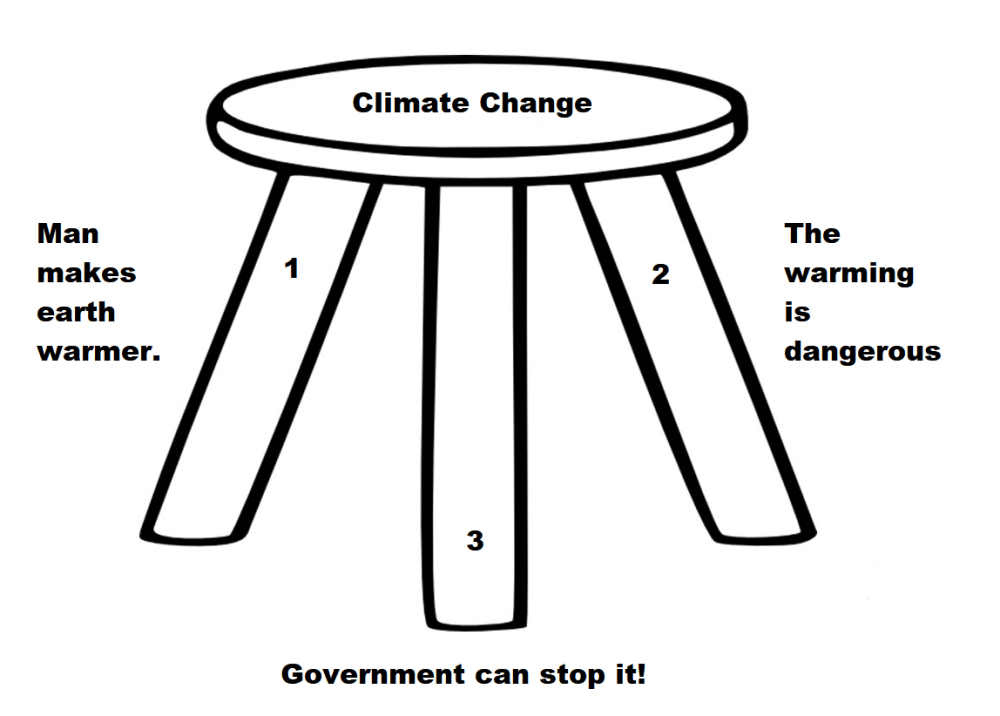
Climate stool

Context: As the image shows, alarmist/activists understand Climate Change (man made assumed) as a concept that depends on three assertions being true.  The first one is the science bit, being the unproven claim that humans make the planet warmer by burning fossil fuels.  The second one is the claim from billions of dollars invested into researching any and all negative effects from global warming, from Acne to Zika virus. The third and also necessary leg is the assertion that governments can act to prevent future warming

From time to time it is instructive to hear from those who buy into the first two, but have lost confidence in the policies proposed as remedies. Jeffrey Ball writes at Science Direct, not questioning climate science or feared impacts, but distraught about the failed efforts to do something to reduce emissions.  His article is Hot Air Won’t Fly: The New Climate Consensus That Carbon Pricing Isn’t Cutting It Excerpts in italics with my bolds.

Jeffrey Ball, a writer whose work focuses on energy and the environment, is the scholar-in-residence at Stanford University’s Steyer-Taylor Center for Energy Policy and Finance and a lecturer at Stanford Law School. He also is a nonresident senior fellow at the Brookings Institution. His writing has appeared in Foreign Affairs, Fortune, Mother Jones, The Atlantic, New Republic, The New York Times, and The Wall Street Journal, among other publications. Ball, previously The Wall Street Journal’s environment editor, focuses his Stanford research on improving the effectiveness of clean-energy investment, particularly in China.

Carbon Pricing Isn’t Cutting It

In the history of climate change, 2018 will go down as a year when certain facts finally hit home, truths inconvenient for partisans on all sides. Those on the right, at least those who have been arguing that greenhouse-gas emissions aren’t a significant problem, were forced to recognize that those emissions are causing real harm to real people right now. Those on the left, at least those who have put their faith in the promise of renewable energy to cool the planet, had to reckon with the reality that, even as those technologies boomed, carbon emissions continued to grow. And those across the political spectrum who had been calling for what seemed in theory a sensible climate policy—putting a price on carbon emissions—had to concede that their supposed solution isn’t helping much at all.

(My comment: Like so many true believers, Ball casts climate change as a political issue between left and right wings.  Note he does think we can all agree that policies are not working.)

No single event can be attributed to climate change, but scientists cite a lengthening list of unfolding events, from wildfires in California to drought in Europe to rising waters along Bangladesh, as evidence of the effects of a warming world. Even the administration of US President Donald Trump, which has rolled back myriad climate policies, noted in a November report, the latest legally mandated US National Climate Assessment, that the effects of climate change “are already being felt in communities across the country”—from intensifying flooding in the nation’s northeast region, to worsening drought in the southwestern part of the country, to rising temperatures and erosion that are damaging buildings in Alaska.

(My comment:  Ball does not acknowledge rebuttals and challenges to the recent NCA document that merely repeated claims from previous editions, and echoed the feverish exhortations from IPCC SR15.  But this  paragraph was aimed at the skeptical on the right, while soothing the believers on the left.  Let’s now get into the meat of it: Is the government stopping it?)

Renewable energy isn’t stopping that. It represented 70% of net new power-generating capacity installed globally in 2017, a stunning share that reflects falling costs and rising penetration.  Yet for all that growth, renewable energy still provided only an estimated 14% of total global energy in 2017, up about 1 percentage point from its share in 2000, because fossil-fuel energy capacity also has been increasing. Indeed, even as renewable-energy capacity hit an all-time high, energy-related carbon emissions did too. They rose 1.6% in 2017, following three years in which they were flat, and they are expected to have risen further in 2018.

Emissions are increasing even though more governments than ever before have imposed prices on carbon emissions, either levying a carbon tax or instituting a cap-and-trade system of pollution permits so that those who emit greenhouse gases have a financial incentive to reduce them. That is little wonder, given that less than 1% of global carbon emissions are subject to a price that economists peg as high enough to meaningfully curb them.

This past June, in an essay in Foreign Affairs, “Why Carbon Pricing Isn’t Working,” I cataloged evidence that carbon pricing is failing to meaningfully reduce carbon emissions around the world—from Europe, where the policy took significant hold, to California, where leading policymakers have embraced it, to China, which is in the early stages of ramping up what will be by far the biggest carbon-pricing regime on the planet. I argued that, though in theory carbon pricing makes sense, in practice it is failing, for two reasons: structurally, carbon pricing tends to constrain emissions mostly in the electricity sector, leaving the transportation and building sectors largely unaffected; and politically, even those governments that have imposed carbon prices have lacked the fortitude to set them high enough to significantly curb even electricity emissions. As a result, I wrote, “a policy prescription widely billed as a panacea is acting as a narcotic. It’s giving politicians and the public the warm feeling that they’re fighting climate change even as the problem continues to grow.” Not just ineffective, carbon pricing is proving counterproductive, because “it is reducing the pressure to adopt other carbon-cutting measures, ones that would hit certain sectors harder and that would produce faster reductions.” Among those other needed measures: phasing out coal as a power source except where it is burned with carbon-capture- and -sequestration technology, which minimizes its emissions; maintaining, rather than closing, nuclear plants; making renewable energy cheaper; and mandating greater energy efficiency.

Would that the half year since that essay was published had proven its assessment too harsh. Unfortunately, recent events and analyses have only bolstered it. Since the summer, and in the lead-up to the latest global climate-policy conference, this month in Poland, studies exploring carbon pricing’s shortcomings have begun piling up. They now amount to a new and sobering climate-literature genre.

Belief in carbon pricing was strong in 2015, when policymakers from some 190 countries issued the Paris Agreement, calling for measures to keep the increase in the average global temperature “well below” 2°C above preindustrial levels and for “pursuing efforts” to keep the rise below 1.5°C.6 Unlike prior climate agreements, notably the Kyoto Protocol, which nearly two decades earlier had pressed for emission cuts only from developed countries, the Paris Agreement included specific emission-reduction pledges even by China, India, and other developing countries, which now produce the bulk of global emissions. But the pledges countries made in Paris were voluntary rather than mandatory, and most were relatively weak. Even if countries made good on them, it was clear, the world would not cut emissions anywhere near enough to avoid crashing through the 2°C threshold.

Coming out of Paris, carbon pricing was a presumption. In 2017, a group of leading economists backed by the World Bank and called the High-Level Commission on Carbon Prices announced that meeting the Paris temperature targets would require carbon prices of US$40 to $80 per metric ton of carbon dioxide by 2020 and of $50 to $100 per ton by 2030.  But in May the World Bank reported that, though the percentage of global greenhouse-gas emissions subject to carbon prices had risen to 20%, only 3% of those emissions were priced at or above the important $40 level.  In other words, fewer than 1% of all global greenhouse-gas emissions are priced at a level likely to constrain them.

Carbon-pricing regimes are spreading, and some are being toughened, but neither is happening quickly enough to make much environmental difference. The Organization for Economic Cooperation and Development (OECD), parsing the numbers somewhat differently than does the World Bank, calculates that 76.5% all energy-related carbon dioxide emissions in OECD and Group of 20 (G20) countries either aren’t priced at all or are priced below 30 euros per metric ton of carbon dioxide, a level the OECD calls “a low-end estimate of the damage that carbon emissions currently cause.” That “carbon gap,” in OECD parlance, has narrowed by just 1 percentage point in each of the past three years—hardly a relevant climate win.

It is against this backdrop that critiques of carbon pricing have begun to accumulate. One of the more notable was published in August by the International Monetary Fund (IMF), whose head, Christine Lagarde, has been an enthusiastic supporter of carbon pricing. She called in 2017 for this response to carbon dioxide: “Price it right, tax it smart, do it now.” As the IMF’s new working paper makes clear, most carbon prices thus far imposed haven’t been right, relying on carbon taxes hasn’t been terribly smart, and, if “it” means a serious response to climate change, the world isn’t doing it now.

The authors of the IMF study used a model to project how carbon prices at two levels by 2030—$35 per metric ton of carbon dioxide and $70 per ton—would affect emissions in the G20 economies. (Few countries have imposed a carbon price anywhere near even the lower of those numbers.) The IMF model clarifies why the world’s largest economies find it so economically and politically difficult to impose a robust price on carbon, just how inadequate were the pledges most countries made in Paris, and how wrenching it will likely be even for countries that made relatively significant Paris pledges to follow through on those promises.

Carbon pricing, as I noted in Foreign Affairs in June, “works well for industries that use a lot of fossil energy, that have technologies available to them to reduce that energy use, and that can’t easily relocate to places where energy is cheaper.” That is why it tends to bite first in the electricity sector. The IMF model underscores this, concluding that the major determinant of how significantly a given carbon price will curb emissions in a given country is the extent to which that country’s electricity sector relies on coal. A $70 carbon tax, the IMF model projects, would cut emissions by significantly more than 30% in coal-dependent China, India, and South Africa; by some 15%–25% in such countries as the United States, Canada, and the United Kingdom; and by less than 15% in coal-light France and Saudi Arabia.9 (That helps explain why, among all these countries, only France has imposed a carbon price above $40 per ton. And even France has difficulty raising the effective price on carbon, as the recent Yellow Vest protests, which led France to suspend a proposed fuel-tax increase, show.)

That carbon pricing hits hardest in coal-reliant places helps explain its political difficulties. The IMF’s modeled carbon tax is particularly regressive—meaning its cost falls particularly heavily on the poorest—in China and the United States, the world’s two top carbon emitters.  (Electricity access in these two coal-heavy nations is broad, meaning the poor there tend to spend a greater portion of their income on carbon-intense power than do the rich.) Although both countries are experimenting with carbon pricing, it is little surprise that the prices in both remain low. In California, carbon prices are higher than in other parts of the United States that have implemented them, but California gets only a small amount of its electricity from coal—and most of that is imported from other states—which bolsters the point. The IMF analysis also helps clarify why China, the world’s top coal burner, proffered a relatively weak Paris pledge. Some governments are trying to counteract the regressive nature of carbon pricing by layering on structures to return all or some of the resulting revenue to consumers—a worthwhile idea. But even those structures have faced opposition in coal-reliant jurisdictions.

Even some countries whose Paris pledges were more robust are likely to have difficulty following through on them. Those pledges “might imply increases in energy prices (and burdens on vulnerable groups) that push the bounds of political acceptability,” the IMF paper notes. A meaningful reduction in carbon emissions, the IMF concludes, would require backstopping countries’ Paris pledges in two ways: by imposing carbon-price floors—levels below which countries decree that their carbon prices will not fall—and by imposing policies other than carbon pricing that force deeper cuts. Inoffensive carbon pricing alone won’t cut it.

Even extraordinarily high carbon prices are failing in important ways to spur significant carbon cuts. A piece published in Energy Policy in late June by Endre Tvinnereim and Michael Mehling explores the uninspiring example of Sweden. The small Scandinavian country has, according to the World Bank, the highest carbon price in the world, at $126 per ton, based on current currency-exchange rates.4 Yet in the quarter century between 1990, when Sweden introduced its carbon tax, and 2015, carbon emissions from Swedish road transportation fell only 4%. Meanwhile, sales in Sweden of new internal-combustion vehicles continue to rise, imposing what the authors call “carbon lock-in” from vehicles likely to remain on the road a decade or more. What’s needed, they argue, are bans on the sale of new internal-combustion cars, bans of the sort that have been proposed in such countries as China, India, France, the United Kingdom, and Norway. Pricing carbon “is useful,” they write, “but far from sufficient to achieve deep decarbonization.”

The authors are right that policies beyond carbon pricing are needed. But clarity about the goal of such policies is key. Some recent critiques of carbon pricing, at least implicitly, construe success in fighting climate change as requiring the near-total replacement of fossil fuels with renewable energy. Plenty of evidence, however, suggests that structuring the climate fight primarily as a pursuit of renewables is neither realistic nor particularly smart.

The goal in fighting climate change is not to end the use of fossil fuels. The goal is to fuel the world while cutting carbon emissions essentially to zero. That will require dramatically lowering the cost and thus boosting the penetration of renewable and other non-fossil energy sources. It also will mean ensuring that the large quantities of fossil fuels that are all but certain to continue to be burned for decades to come are burned using technologies that slash the amount of carbon dioxide their combustion coughs into the atmosphere.

The policies necessary to achieve these twin ends will be complex. A meaningful carbon price would help them, but in most of the world there is little evidence policymakers have the stomach to impose one. Climate change is real. Fighting it demands—from everyone involved—more than rhetoric. That this message is getting across is a good sign.

My Concluding Comment

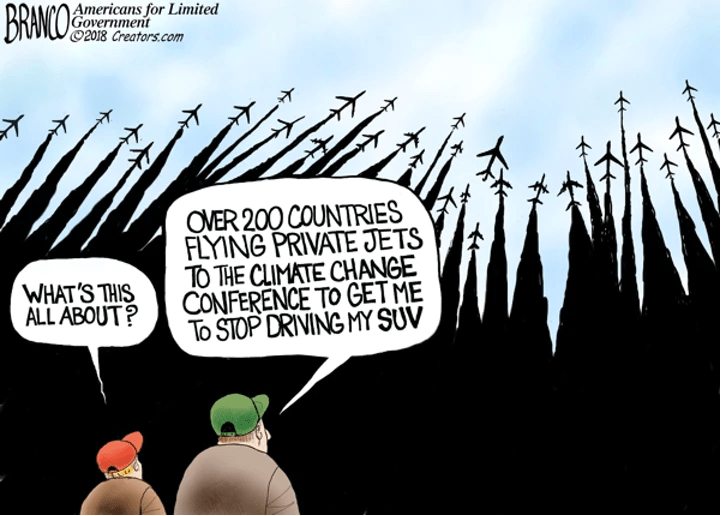
The graph illustrates the problem very clearly. Since 1994 there have been 24 Conferences of the Parties (COP), along with numerous other meetings. These UNFCCC discussions have utterly failed to reduce CO2 emissions. Yet from 2020, emissions have to drop dramatically, if we are to stand a chance of keeping global warming below 1.5°C.

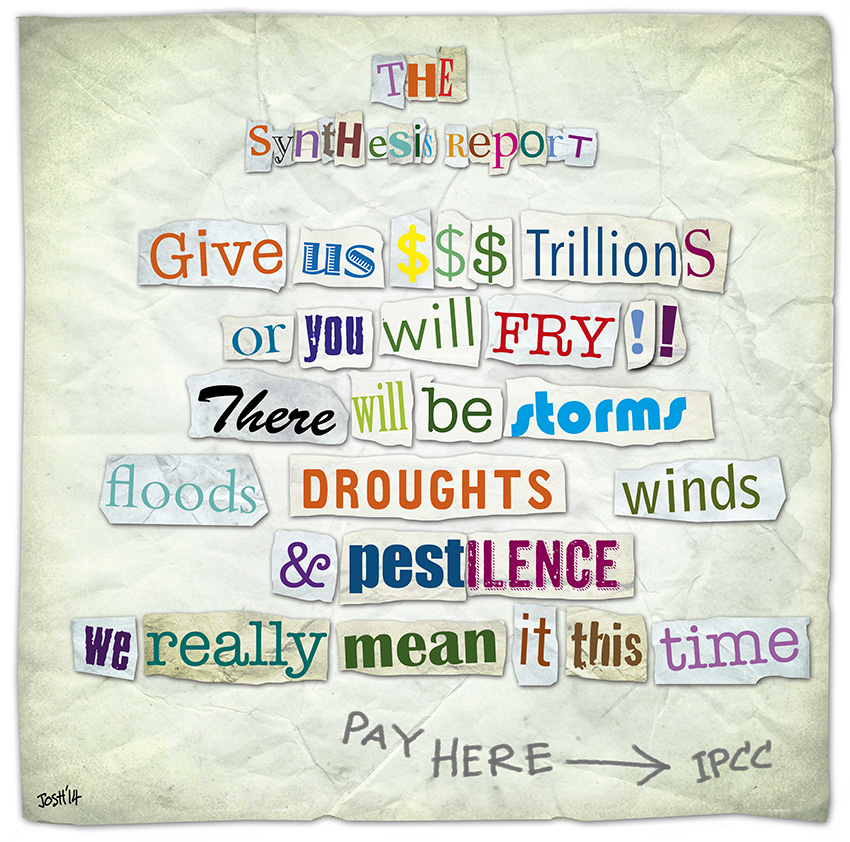
According to IPCC SR15 this will require an annual average investment of around US$2.4 trillion (at 2010 prices) between 2016 and 2035, representing approximately 2.5% of global gross domestic product (GDP). The cost of inaction and delay, however, will be many times greater. (sic).  Note:  This is referring to increasing investments in renewable energy from current US$335B per year to $2.4T.  Present global spending on Climate Crisis Inc. is estimated at nearly US$2T, not limited to renewables.  So this would double the money wasted spent on this hypothetical problem.
cop planes

After reading Ball’s assessment it is obvious that carbon pricing will only reduce emissions by crashing national economies.  The fear of CO2 leads directly to discussion of stopping modern societies in their tracks.  Talking about policies that “bite” this or that sector equates to intentionally dictating economic decline, industry by industry.  And Ball suggests that ever more intrusive bans and regulations must be added on top of higher carbon prices in order to save the planet from our way of life.

This analysis has been preceded by numerous doomsday deadlines over the decades which we have passed and not suffered in the least.  Can we finally dismiss the illusion that we humans control the temperature of the planet?  Can we stop the crazy schemes to cut our CO2 emissions, and appreciate instead the greening of the biosphere?
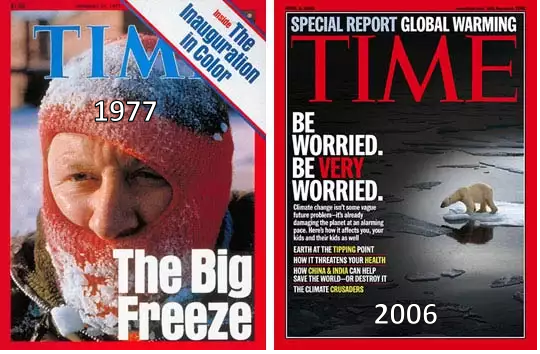
Rational public policymakers can not presume the climate will be unchanging in the future.  Our experience teaches that there will be future periods both warmer and cooler than the present.  History also shows that cold periods are the greater threat to human health and prosperity.  Instead of wasting time and resources trying to control the future weather, we should be preparing to adapt to whatever nature brings.  The priorities should be to ensure affordable and reliable energy and robust infrastructure.

See Also IPCC Freakonomics


Climate Derangement in NYC

Jude Clemente writes at Real Clear Energy One Year Later, NYC’s Climate Lawsuit Wastes Taxpayer Money Excerpts below in italics with my bolds.
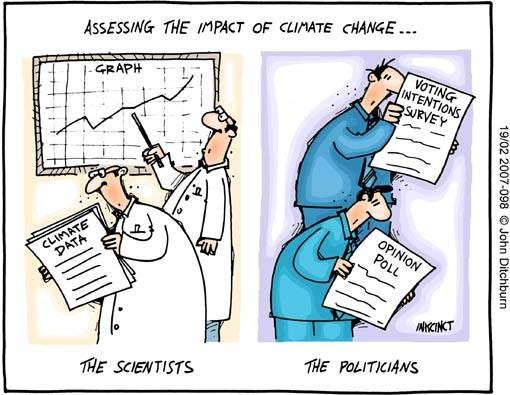
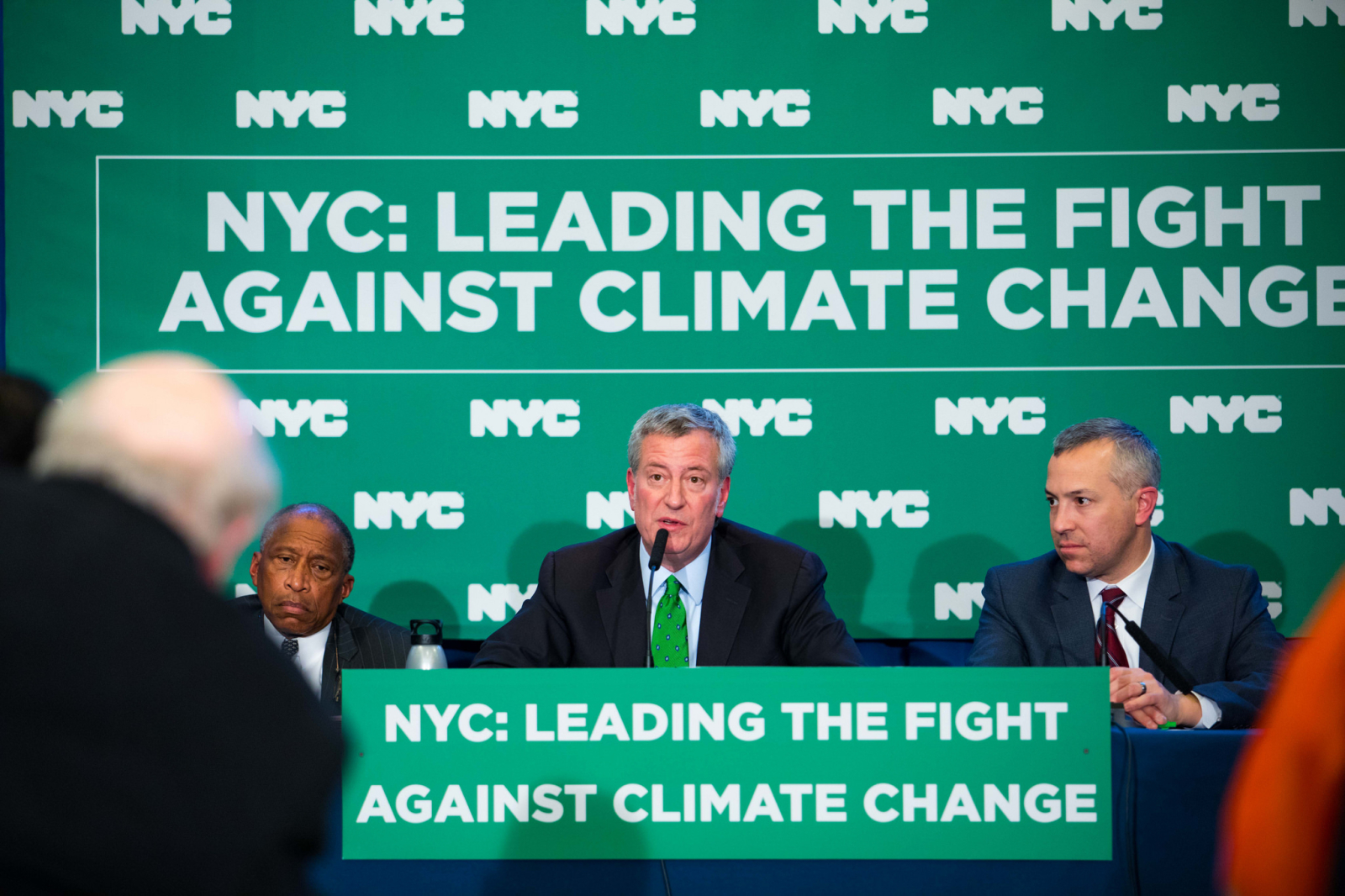
On January 10, 2018, New York City Mayor Bill de Blasio announced that he was suing five energy companies, seeking damages to pay for harm the city has faced as a result of climate change. In conjunction, the city also announced that it planned to divest its pension fund from fossil fuels. A year later, the city is seeking to revamp its legal strategy after the lawsuit’s swift dismissal in federal court and is no closer to divesting than it was before its big announcement.

While New York City has failed to achieve actionable results on these fronts, Mayor de Blasio has succeeded in one regard: boosting his liberal credentials as he contemplates a 2020 presidential run, a goal that may have been the motivation behind both announcements in the first place.

U.S. District Judge John Keenan dismissed New York City’s lawsuit shortly after it was filed, in part citing the hypocrisy of the city suing companies for producing a product it continues to rely on. “Does the city have clean hands?” Judge Keenan asked the city’s attorney, noting that Mayor de Blasio’s government, too, produces the emissions they say are responsible for the city’s climate change-related impacts.

Judge Keenan was not the first to rule in favor of the energy companies either. Less than one month before the New York City judge made his decision, U.S. District Court Judge William Alsup dismissed nearly identical lawsuits brought in California by the cities of San Francisco and Oakland. All three lawsuits are now being heard on appeal. Although, a recent change of counsel in California suggests that the New York case could stand less of chance now than it did the first time around.

In late November, the plaintiffs’ firm representing all three cities when they first filed their cases, Hagens Berman, was fired by San Francisco and Oakland and replaced with Sher Edling, Hagens Berman’s direct competitor in the climate litigation space. Mayor de Blasio, meanwhile, has continued to retain Hagens Berman, perhaps unconcerned with the final result of his case, so long as it attracts positive headlines praising his “climate leadership.”

That’s the take of at least one group who issued a statement critical of Mayor de Blasio on the anniversary of his announcement. “City officials, including Mayor de Blasio, have made clear that the true purpose of the lawsuit is to attack manufacturers and manufacturing workers,” said Linda Kelly, Senior Vice President and General Counsel of the National Association of Manufacturers.

Indeed, shortly after the city filed its climate lawsuit, Mayor de Blasio appeared as a guest on U.S. Senator Bernie Sanders’s (D-VT) podcast where he spoke about the case. “Let’s help bring the death knell to this industry that’s done so much harm,” Mayor de Blasio said of the recent announcements. His sentiments were echoed by New York City’s chief environmental lawyer, Susan Amron, who told a friendly crowd at last year’s Climate Week NYC, “[R]eally what we’re trying to do is affect the bottom line – the financial equation for the use of fossil fuels.”

This language – both from Mayor de Blasio and Amron – would seem to contradict the language of the city’s lawsuit. The case’s complaint reads, “The City does not seek to impose liability on Defendants for their direct emissions of greenhouse gases, and does not seek to restrain Defendants from engaging in their business operations.” New York City’s lawsuit explicitly denies that the city is seeking to restrict ongoing business operations, but Mayor de Blasio and Amron have both made comments publicly that imply otherwise.

Speculation that Mayor de Blasio has larger political aspirations – including a run for the White House – in his sights has been a through line throughout his tenure- a fact New Yorkers were quick to note at the time that his lawsuit was filed, calling it “more posturing than substance.” Before he seeks out Pennsylvania Avenue, however, Mayor de Blasio reportedly has room to focus on fulfilling the duties of his current office.

A recent article from The New York Times slammed “New York’s Vanishing Mayor” for being absent from work, finding that he averaged ten days in City Hall per month in 2018 and consequently “the practical mechanics of government are running less smoothly.” De Blasio responded by saying he has a “huge, ambitious agenda,” which he was working “at a great level of intensity…to get it done.”

There’s no doubt about the mayor’s ambitions, but attacking the energy companies that will keep his constituents warm through the winter and fuel his caravan of SUVs is a misguided approach to tackling climate change. There are many actions that can be taken to mitigate and address its effects. Spending taxpayer money to boost Mayor de Blasio’s national profile surely isn’t one of them.

Jude Clemente is the Editor at RealClearEnergy.

At this rate we are all going to freeze in the dark.

Climate activists versus affordable housing

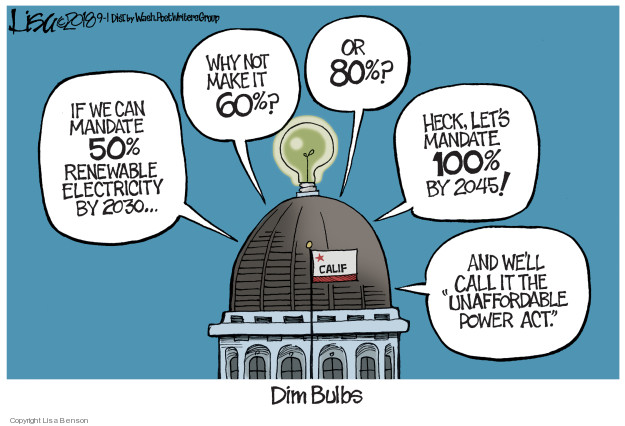
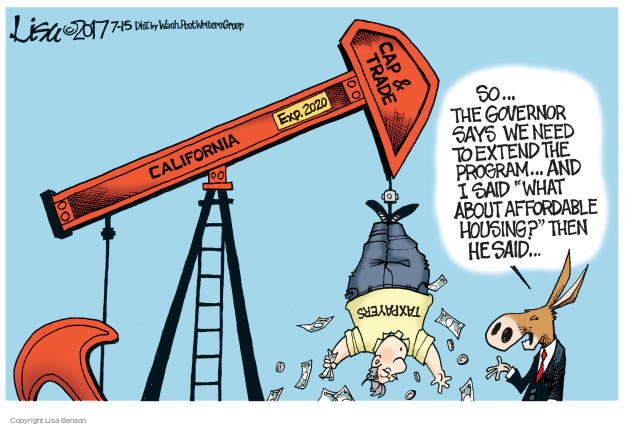
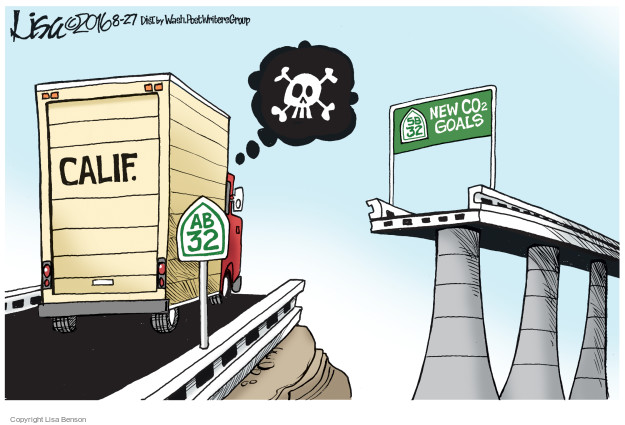
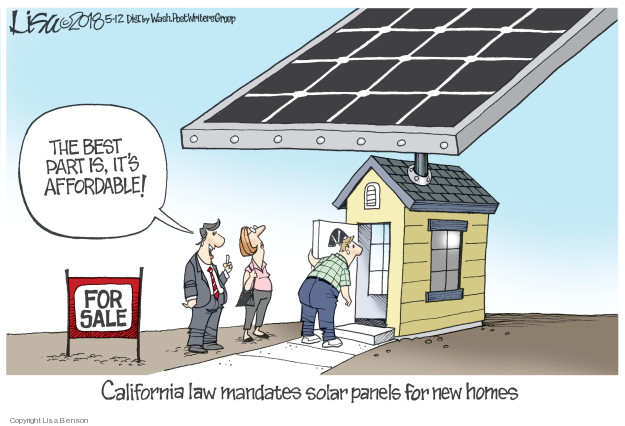
Susan Shelley writes an article with the same title at Los Angeles Daily News Climate activists versus affordable housing.  Excerpts below in italics with my bolds.. I also added some pertinent cartoons by the irrepressible Californian Lisa Benson.

In what may signal the beginning of the end of alarmism over climate change, a group of civil rights activists is suing the California Air Resources Board. The issue is CARB’s plan to reduce greenhouse gas emissions by effectively limiting new housing construction. The lawsuit says this is driving up the cost of housing, worsening poverty and particularly victimizing minority communities.

The Global Warming Solutions Act of 2006 (Assembly Bill 32), signed by Gov. Arnold Schwarzenegger, committed California to a goal of reducing statewide greenhouse gas emissions. The California Air Resources Board was required by AB 32 to write “scoping” plans every five years detailing how the specified GHG reduction targets would be met.

The 2017 scoping plan includes “guidelines” for new housing that the lawsuit calls “staggering, unlawful and racist.”

The group that is suing is called The Two Hundred. It’s a Bay Area organization made up of longtime civil rights advocates who have spent decades fighting against discrimination. They say CARB’s new GHG housing provisions have a “disparate effect on minority communities,” which is illegal and unconstitutional.

CARB’s provisions “increase the cost and litigation risks of building housing,” intentionally worsen traffic congestion and raise fuel and electricity costs, the activists contend.

The lawsuit says CARB’s scoping plan calls for new housing in “California’s existing communities (which comprise 4 percent of California’s lands).” The idea is to reduce “vehicle miles traveled” by limiting sprawl. But the civil rights activists say this is leading to resegregation of California’s urban areas as older affordable housing is demolished to make way for high-density housing that is unaffordable.

A better solution, the group says, is to build homes on land that is outside the current urban boundaries, but CARB’s 2017 scoping plan is preventing that. Its “guidelines” are helping to block new housing developments.

CARB tried unsuccessfully to get the lawsuit thrown out. Fresno County Superior Court Judge Jane Cardoza issued an order in October allowing it to go forward.

Unless there’s a settlement, the courts will decide whether “California’s climate change policies, and specifically those policies that increase the cost and delay or reduce the availability of housing, that increase the cost of transportation fuels and intentionally worsen highway congestion to lengthen commute times, and further increase electricity costs, have caused and will cause unconstitutional and unlawful disparate impacts to California’s minority populations.”

Not to mention their impact on everybody else.

There are four “GHG Housing Measures” at issue. They attempt to limit “vehicle miles traveled,” set a “net zero” GHG standard for new housing developments and add a “CO2 per capita” measurement to local “climate action plans.” There’s also a set of policies to encourage “vibrant communities.”

CARB says these “GHG Housing Measures” are only “guidelines,” but the lawsuit calls them “unlawful underground regulations” that were imposed without a formal rulemaking process.

Something else that CARB skipped, the lawsuit charges, is the legally required economic analysis that “accounts for the cost of these measures on today’s Californians.”

Yes, civil rights activists are demanding that climate regulations meet the law’s required standard of cost-effectiveness.

But California’s climate regulations can’t meet any standard of cost-effectiveness.

As the lawsuit explains it, “California’s reputation as a global climate leader is built on the state’s dual claims of substantially reducing greenhouse gas emissions while simultaneously enjoying a thriving economy. Neither claim is true.”

The statewide economic growth numbers are misleading, the lawsuit says, because the averages are boosted by capital gains in the wealthy Bay Area tech sector, while most of the state struggles with low wages and high costs. And while Californians were paying too much for housing, fuel and electricity in order to achieve greenhouse gas reductions, other states actually had greater GHG reductions without doing anything.

“California’s climate policies guarantee that housing, transportation and electricity prices will continue to rise while ‘gateway’ jobs to the middle class for those without college degrees, such as manufacturing and logistics, will continue to locate in other states,” the lawsuit states.

This is something new in California. Civil rights activists are attempting to hold climate activists accountable for worsening the housing crisis and increasing poverty.

Maybe it’s the political climate that’s changing.

Susan Shelley is an editorial writer and columnist for the Southern California News Group. Susan@SusanShelley.com. Twitter: @Susan_Shelley.