Pandemic of Misinformation

Update: Quote of the Day Dec. 23, 2020

“It’s a vaccine so safe we must be forced to take it, to fight a disease so severe we don’t know we have it without being tested.”

Scott Atlas explains at Wall Street Journal A Pandemic of Misinformation.  Excerpts in italics with my bolds.

The media’s politicization of Covid has proved deadly and puts Americans’ freedoms at risk.

America has been paralyzed by death and fear for nearly a year, and the politicization of the pandemic has made things worse by adding misinformation and vitriol to the mix. With vaccines finally being administered, we should be entering a joyous phase. Instead we endure still more inflammatory rhetoric and media distortion.

Americans need to understand three realities. First, all 50 states independently directed and implemented their own pandemic policies. In every case, governors and local officials were responsible for on-the-ground choices—every business limit, school closing, shelter-in-place order and mask requirement. No policy on any of these issues was set by the federal government, except those involving federal property and employees.

Second, nearly all states used the same draconian policies that people now insist on hardening, even though the number of positive cases increased while people’s movements were constrained, business activities were strictly limited, and schools were closed. Governors in all but a few states—Florida and South Dakota are notable exceptions—imposed curfews, quarantines, directives on group gatherings, and mask mandates.

Mobility tracking verifies that people restricted their movement. Gallup and YouGov data show that 80% to 90% of Americans have been wearing masks since early August. Lockdown policies had baleful effects on local economies, families and children, and the virus spread anyway. If one advocates more lockdowns because of bad outcomes so far, why don’t the results of those lockdowns matter?

Third, the federal government’s role in the pandemic has been grossly mischaracterized by the media and their Democratic allies. That distortion has obscured several significant successes, while undermining the confidence of ordinary Americans. Federal financial support and directives enabled the development of a massive, state-of-the-art testing capacity and produced billions of dollars of personal protective equipment. Federal agencies met all requests for supplemental medical personnel and hospital-bed capacity. Officials in the Health and Human Services Department have told me there are no unmet requests for extra resources.

The federal government also increased the protection of the elderly during late summer and fall. This effort included an intensive testing strategy for nursing-home staff and residents based on community activity, new proactive warnings to the highest-risk elderly living independently, millions of point-of-care tests and extra personal protective equipment for senior living facilities, and new alliances and financial incentives to improve nursing home infection control.

The federal government also expedited development and delivery of lifesaving drugs, such as novel antibody treatments that reduce hospitalizations of high-risk elderly by more than 70%. According to HHS, more than 200,000 doses of these monoclonal-antibody drugs have been delivered to hospitals in all 50 states. Under Operation Warp Speed, the federal government took nearly all the risk away from private pharmaceutical companies and delivered highly effective vaccines, hitting all promised timelines.

In this season when respiratory virus illnesses become more common and people move indoors to keep warm, many states are turning to more severe restrictions on businesses and outdoor activities. Yet empirical data from the U.S., Europe and Japan show that lockdowns don’t eliminate the virus and don’t stop the virus from spreading. They do, however, create extremely harmful health and social problems beyond a dramatic drop in learning, including a tripling of reported depression, skyrocketing suicidal ideation, unreported child abuse, skipped visits for cancer and other medical care.

It adds up to a future health disaster. “For younger people, the lockdowns are so harmful, so deadly, there’s really no good justification,” says Stanford’s Jay Bhattacharya, especially when considering their extremely low risk from Covid-19.

States and cities that keep their economies locked down after highly vulnerable populations have been vaccinated will be doubling down on failed policies that are destroying families and sacrificing children, particularly among the working class and poor.

The media has done its best to misinform the public with political attacks about who is to blame for this pain and misery even as it diminishes the great achievement of the new vaccines. The decline of objectivity in journalism has been evident for years. Now we see that even respected scientific journals, which are supposed to vet and publish the best objective research, have been contaminated by politics. Social media has become the arbiter of allowable discussion, while universities intimidate and suppress the free exchange of ideas necessary to uncover scientific truths.

It is not at all clear that American society with its cherished freedoms will survive, regardless of our success in defeating the pandemic threat.

Dr. Atlas served from August through November as a special adviser to the president.

See Also Science Says: Media Covid Coverage Driving US Crazy

Covid Masquerade


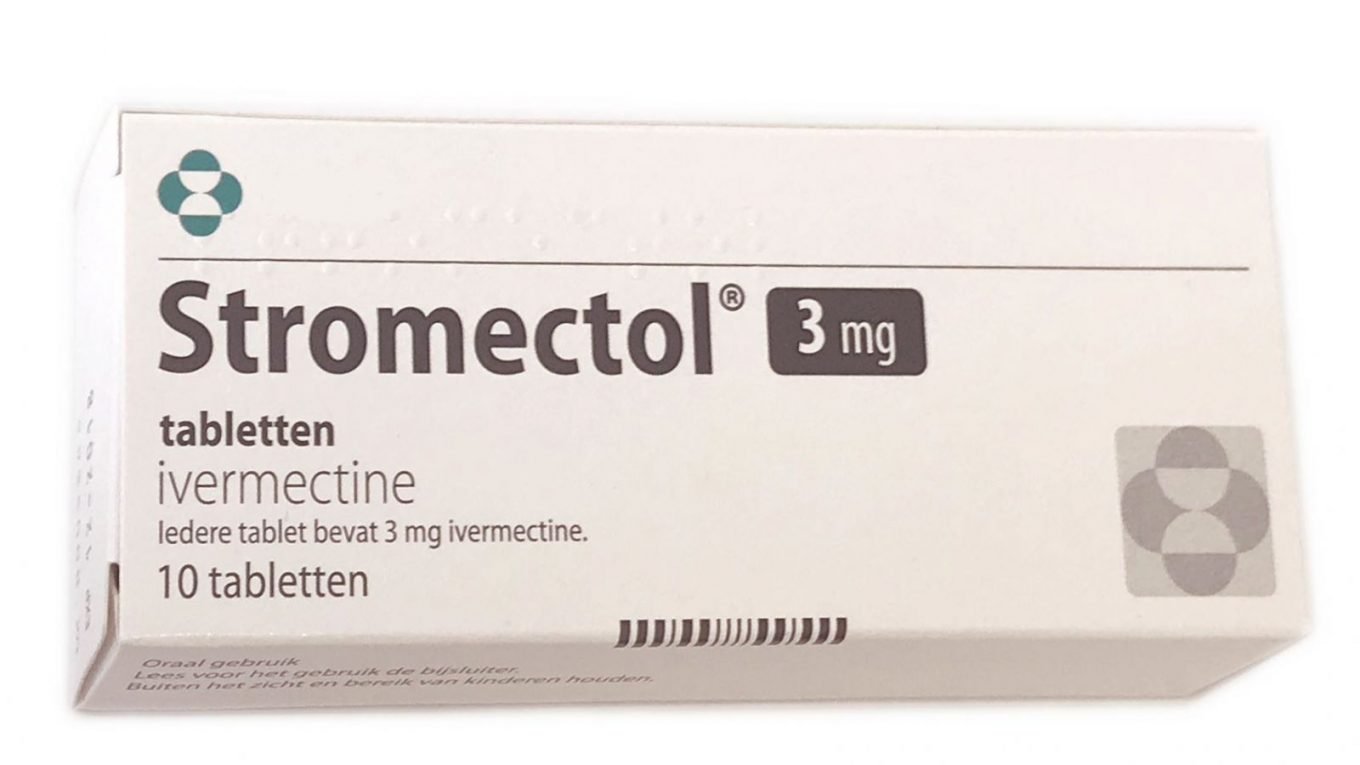
The Case for Ivermectin Covid Regimen

Physicians in many parts of the world needing inexpensive, effective Covid treatments have turned to Ivermectin with encouraging success.  This news is largely ignored, but is now being compiled and promoted by frontline medical caregivers.

Dominican Republic One Example of Ivermectin Results

For example, consider the experience of Dominican Republic, a nation whose primary industry of tourism has been decimated by the pandemic.  At newspaper Dominican Today Doctor explains 99.3% of COVID-19 patients treated with Ivermectin recovered in five days.  Excerpts in italics with my bolds.

After eight months of active clinical observation and attending about 7 thousand patients of Covid-19 in three medical centers located in Puerto Plata, La Romana, and Punta Cana, Dr. José Natalio Redondo revealed that 99.3% of the symptomatic patients who received care in his emergency services, including the use of Ivermectin, managed to recover in the first five days of recorded symptoms.

The renowned cardiologist and health manager affirmed that Ivermectin’s use against the symptoms of Covid-19 is practically generalized in the country and attributed to this factor, among others, the fact that the risk of dying from this disease in the Dominican Republic is significantly lower than in the United States.

He added that “in a therapeutic format duly tested over the years, infections have always been cured faster and leave fewer sequelae if antimicrobial treatment is applied as early as possible since this allows the use of lower doses of the selected drugs. This has been one of the dogmas that remain in our daily medical practice.”

The key is early treatment.

“From the beginning, our team of medical specialists, who were at the forefront of the battle, led by our emergency physicians, intensivists and internists, raised the need to see this disease in a different way than that proposed by international health organizations, says Dr. Redondo in his report.

And he adds that the Group’s experts proposed the urgency of reorienting the management protocols towards earlier and more timely stages. “We realized that the war was being lost because of the obsession of large groups, agencies, and companies linked to research and production of drugs, to focus their interest almost exclusively on the management of critical patients.

“Our results were immediate; the use of Ivermectin, together with Azithromycin and Zinc (plus the usual vitamins that tend to increase the immune response of individuals) produced an impressive variation in the course of the disease; it was demonstrated that 99.3% of the patients recovered quickly when the treatment was started in the first five days of proven symptoms, with an average of 3.5 days, and a fall of more than 50% in the rate and duration of hospitalizations, and reducing from 9 to 1 the mortality rate, when the treatment was started on time.”

The Global Review of Ivermectin Protocol Studies

The Front Line Covid-19 Critical Care Alliance (FLCCC) provides historical and global perspective on this treatment protocol Review of the Emerging Evidence Demonstrating the Efficacy of Ivermectin in the Prophylaxis and Treatment of COVID-19 Excerpts in italics with my bolds.

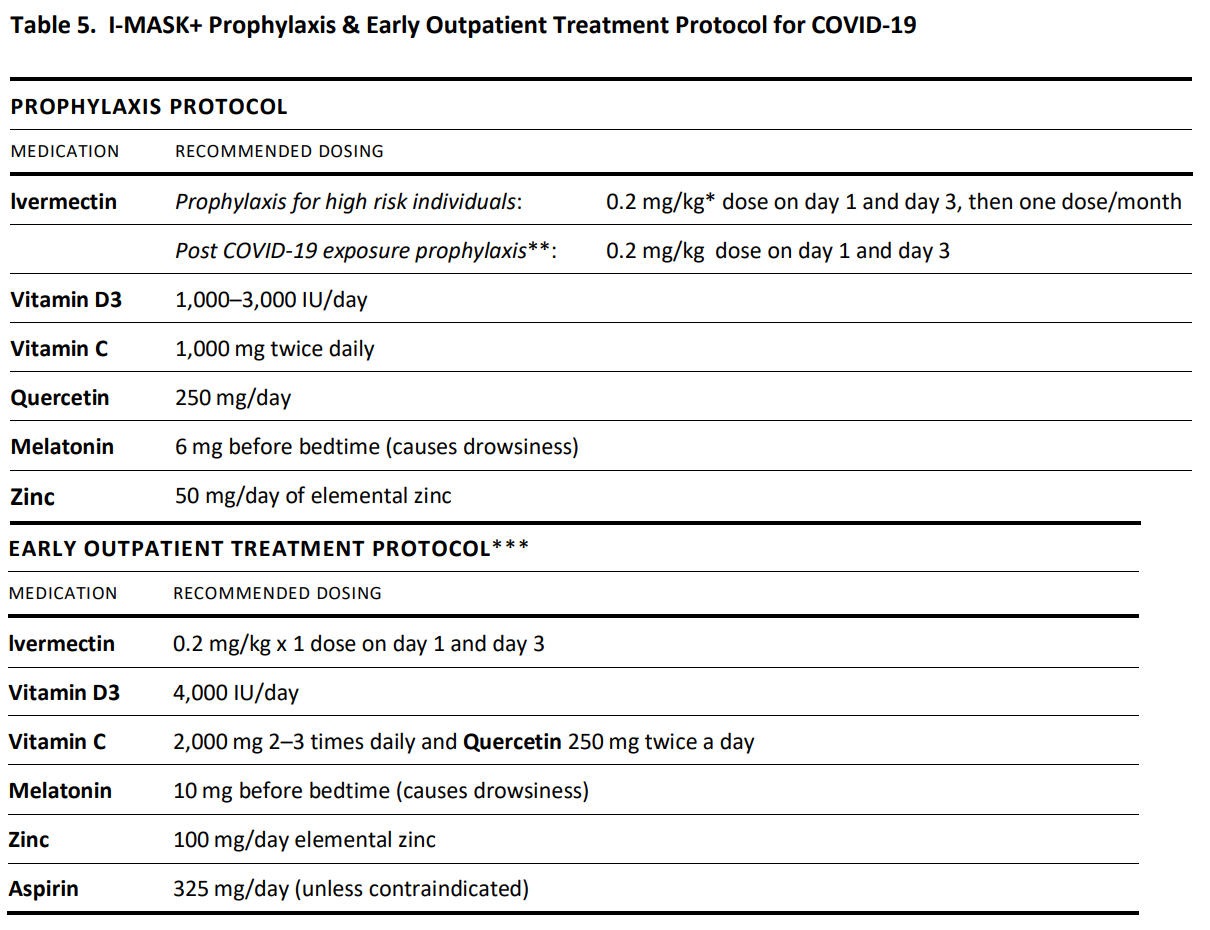
Recommended Protocol

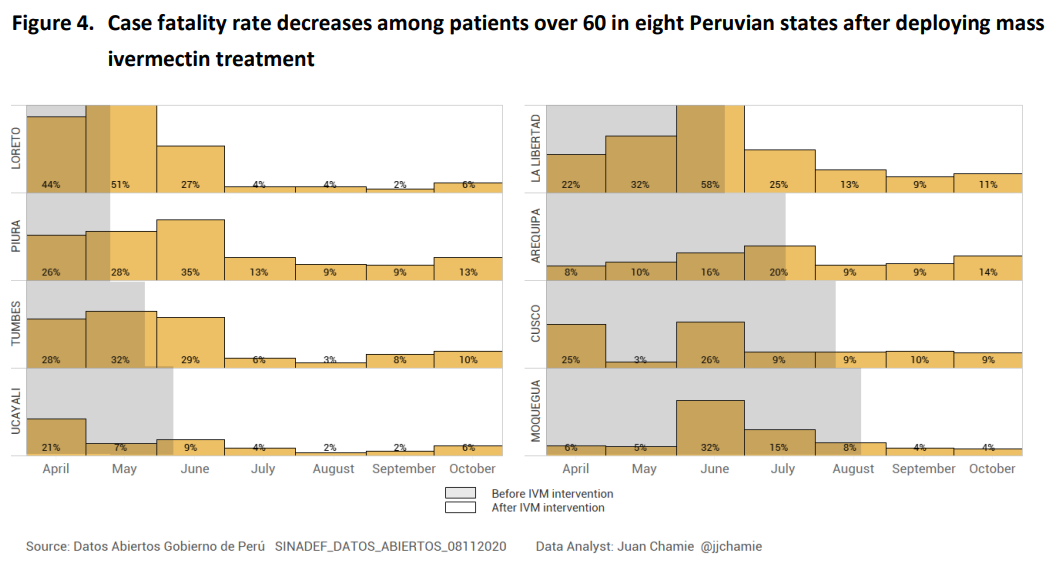
Despite the growing list of failed therapeutics in COVID-19, the FLCCC recently discovered that ivermectin, an anti-parasitic medicine, has highly potent real-world, anti-viral, and anti-inflammatory properties against SARS-CoV-2 and COVID-19. This conclusion is based on the increasing study results reporting effectiveness, not only within in-vitro and animal models, but also in numerous clinical trials from centers and countries around the world. Repeated, consistent, large magnitude improvements in clinical outcomes have now been reported when ivermectin is used not only as a prophylactic agent but also in mild, moderate, and even severe disease states from multiple, large, randomized and observational controlled trials. Further, data showing impacts on population wide health outcomes have resulted from multiple large “natural experiments” that appear to have occurred when various regional health ministries and governmental authorities within South American countries initiated “ivermectin distribution” campaigns to their citizen populations in the hopes the drug would prove effective. The tight, reproducible, temporally associated decreases in case counts and case fatality rates in each of those regions compared to nearby regions without such campaigns, suggest that ivermectin is proving to be a global solution to the pandemic. This is now further evidenced by the recent incorporation of ivermectin as a prophylaxis and treatment agent for COVID19 in the national treatment guidelines of Egypt as well as the state of Uttar Pradesh in Northern India, populated by 210 million people.

[The article provides a comprehensive review of the available efficacy data as of November 8, 2020, taken from in-vitro, animal, clinical, and real-world studies all showing the above impacts of ivermectin in COVID-19.]

The FLCCC recommendation is based on the following set of conclusions derived from the existing data, which will be comprehensively reviewed below:

1) Since 2012, multiple in-vitro studies have demonstrated that Ivermectin inhibits the replication of many viruses, including influenza, Zika, Dengue and others (19–27).

2) Ivermectin inhibits SARS-CoV-2 replication, leading to absence of nearly all viral material by 48h in infected cell cultures (28).

3) Ivermectin has potent anti-inflammatory properties with in-vitro data demonstrating profound inhibition of both cytokine production and transcription of nuclear factor-κB (NF-κB), the most potent mediator of inflammation (29–31).

4) Ivermectin significantly diminishes viral load and protects against organ damage in multiple animal models when infected with SARS-CoV-2 or similar coronaviruses (32, 33).

5) Ivermectin prevents transmission and development of COVID-19 disease in those exposed to infected patient (34–36,54).

6) Ivermectin hastens recovery and prevents deterioration in patients with mild to moderate disease treated early after symptoms (37–42,54).

7) Ivermectin hastens recovery and avoidance of ICU admission and death in hospitalized patients (40,43,45,54,63,67).

8) Ivermectin reduces mortality in critically ill patients with COVID-19 (43,45,54).

9) Ivermectin leads to striking reductions in case-fatality rates in regions with widespread use (46-48).

10) The safety, availability, and cost of ivermectin is nearly unparalleled given its near nil drug interactions along with only mild and rare side effects observed in almost 40 years of use and billions of doses administered (49).

11) The World Health Organization has long included ivermectin on its “List of Essential Medicines” (50).

Ivermectin in Post-COVID-19 Syndrome

Increasing reports of persistent, vexing, and even disabling symptoms after recovery from acute COVID-19 have been reported and which many have termed the condition as “long Covid” and patients as “long haulers”, estimated to occur in approximately 10% of cases (77–79). Generally considered as a post-viral syndrome consisting of a chronic and sometimes disabling constellation of symptoms which include, in order, fatigue, shortness of breath, joint pains and chest pain. Many patients describe their most disabling symptom as impaired memory and concentration, often with extreme fatigue, described as “brain fog”, and are highly suggestive of the condition myalgic encephalomyelitis/chronic fatigue syndrome, a condition well-reported to begin after viral infections, in particular with Epstein-Barr virus. Although no specific treatments have been identified for long COVID, a recent manuscript by Aguirre-Chang et al from the National University of San Marcos in Peru reported on the experience with ivermectin in such patients (80). They treated 33 patients who were between 4 and 12 weeks from the onset of symptoms with escalating doses of ivermectin; 0.2mg/kg for 2 days if mild, 0.4mg/kg for 2 days if moderate, with doses extended if symptoms persisted. They found that in 87.9% of the patients, resolution of all symptoms was observed after two doses with an additional 7% reporting complete resolution after additional doses. Their experience suggests the need for controlled studies to better test efficacy in this vexing syndrome.

In summary, based on the existing and cumulative body of evidence, we recommend the use of ivermectin in both prophylaxis and treatment for COVID-19. In the presence of a global COVID-19 surge, the widespread use of this safe, inexpensive, and effective intervention could lead to a drastic reduction in transmission rates as well as the morbidity and mortality in mild, moderate, and even severe disease phases.


Science Says: Media Covid Coverage Driving US Crazy

Two recent analytical studies together lead to the conclusion in the title of this post.  One is a working paper Why is All Covid 19 News Bad News? published at NBER (National Bureau of Economic Research).  The other is an article at Vox Anxiety and depression are following a remarkably similar curve to Covid-19 cases.  Excerpts are in italics with my bolds.

Malevolent Media Covid Coverage

Summary

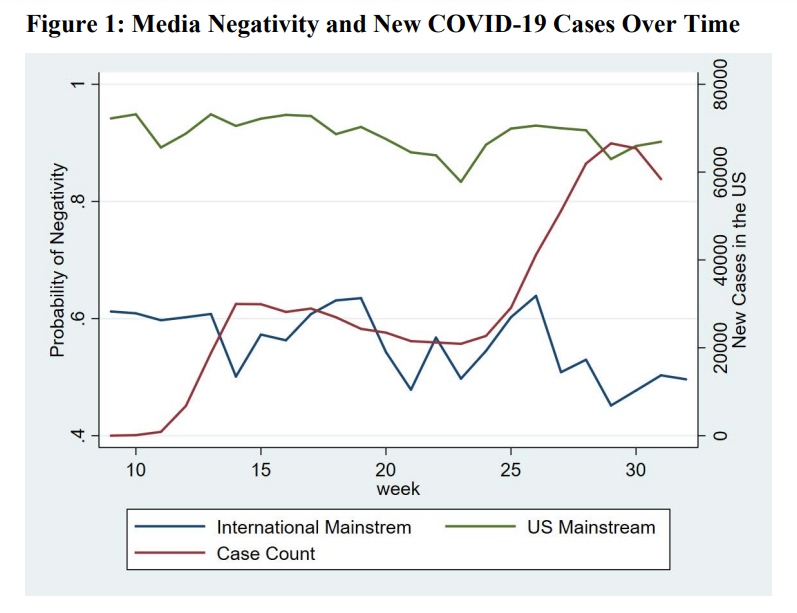
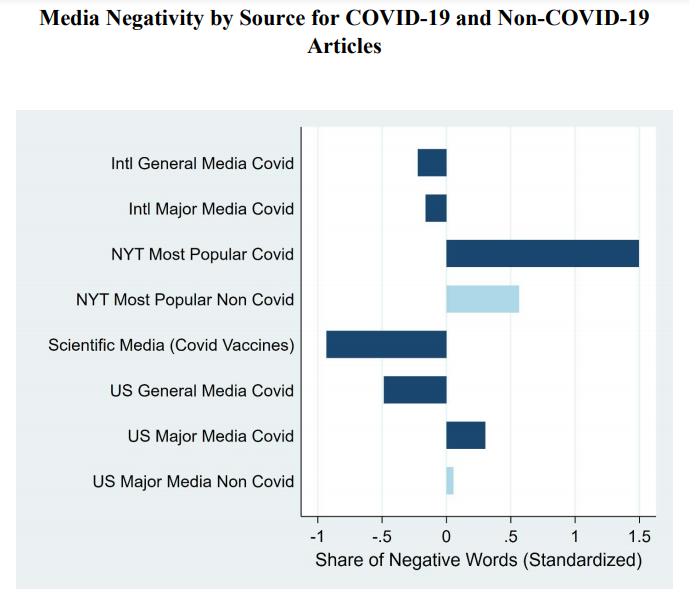
We analyze the tone of COVID-19 related English-language news articles written since January 1, 2020. Ninety one percent of stories by U.S. major media outlets are negative in tone versus fifty four percent for non-U.S. major sources and sixty five percent for scientific journals. The negativity of the U.S. major media is notable even in areas with positive scientific developments including school re-openings and vaccine trials. Media negativity is unresponsive to changing trends in new COVID-19 cases or the political leanings of the audience. U.S. major media readers strongly prefer negative stories about COVID-19, and negative stories in general. Stories of increasing COVID-19 cases outnumber stories of decreasing cases by a factor of 5.5 even during periods when new cases are declining. Among U.S. major media outlets, stories discussing President Donald Trump and hydroxychloroquine are more numerous than all stories combined that cover companies and individual researchers working on COVID-19 vaccines.

Discussion

Notes: Negativity is estimated using supervised machine learning on article phrases coupled with a training data set. Articles are manually downloaded from LexisNexis for the period January 1st, 2020 to July 31st, 2020. The red line shows the weekly average of daily confirmed new COVID-19 cases and is accessed from the New York Times website.

Figure 1 plots the time trend in media negativity for major media outlets in the U.S. (green line) and outside the U.S. (blue line) using the scale on the left. The most striking fact is that 91 percent of the U.S. stories are classified as negative whereas 54 percent of the non-U.S. stories are classified as negative. Figure 1 uses our estimated probability that an article is negative. We obtain similar results using the Hu-Liu dictionary and the fraction of words in the article that are negative.

Notes: Negativity is estimated as the fraction of negative words in the article and is standardized. Dark blue bars are for COVID related articles and light blue bars are for non-COVID related articles. The raw share of negative words is .043 with a standard deviation of .021. Negative words are defined by the Hu-Liu (1997) dictionary. Articles and transcripts are manually downloaded from LexisNexis for the period January 1st, 2020 to July 31st, 2020 and websites for Science, JAMA, The New England Journal of Medicine, The Lancet, and Nature. The New York Times website is used for the list and text of the most popular articles.

US Mental Health Linked to Covid Case Reporting

From Vox article linked above:

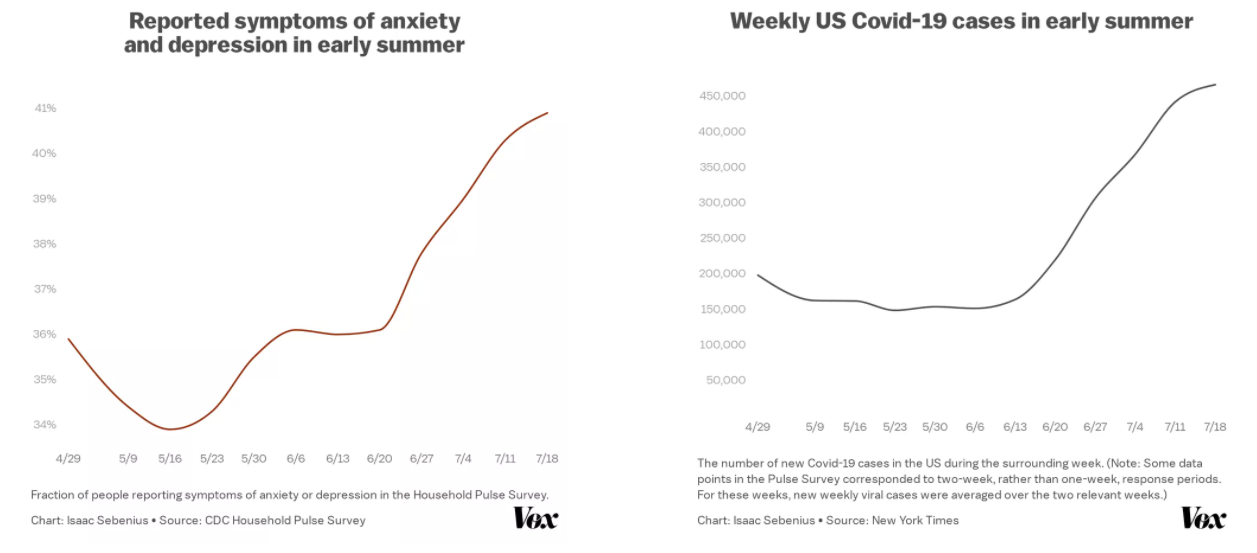
It is well documented that the coronavirus pandemic has taken a serious toll on emotional well-being. Rates of depression and anxiety in June were three to four times higher than at the corresponding point in 2019, according to the CDC, and deteriorating mental health outcomes have been similarly observed in nations across the world, among them the UK, India, and China. Rates of suicidal ideation, substance abuse, and alcohol consumption are rising steadily.

But the connection is even stronger than you might think in the US: As the number of new cases of the virus fluctuates week to week, our mental health moves in lockstep.

Data available from the Mental Health Household Pulse Survey, run by the CDC, offers a week-by-week estimate of the fraction of Americans who experienced symptoms of anxiety or depression between April 23 and July 21. Comparing this data to the weekly US coronavirus cases over the same time interval reveals an unmistakable trend: The incidence of depressive or anxious symptoms among Americans almost exactly mirrors the trajectory of the US coronavirus curve.

With an r2 value (a standard metric of correlation strength) of 0.92 between new Covid-19 cases and the incidence of anxious or depressive symptoms, the correlation between them is very, very strong.

It is always possible that any correlation could be coincidental rather than causal, or that the link could be more complicated than it seems. Indeed, June and July marked a period of increasing viral spread; one might speculate that, as the pandemic stretched on, public mental health could have correspondingly worsened simply as a function of time or some other factor.

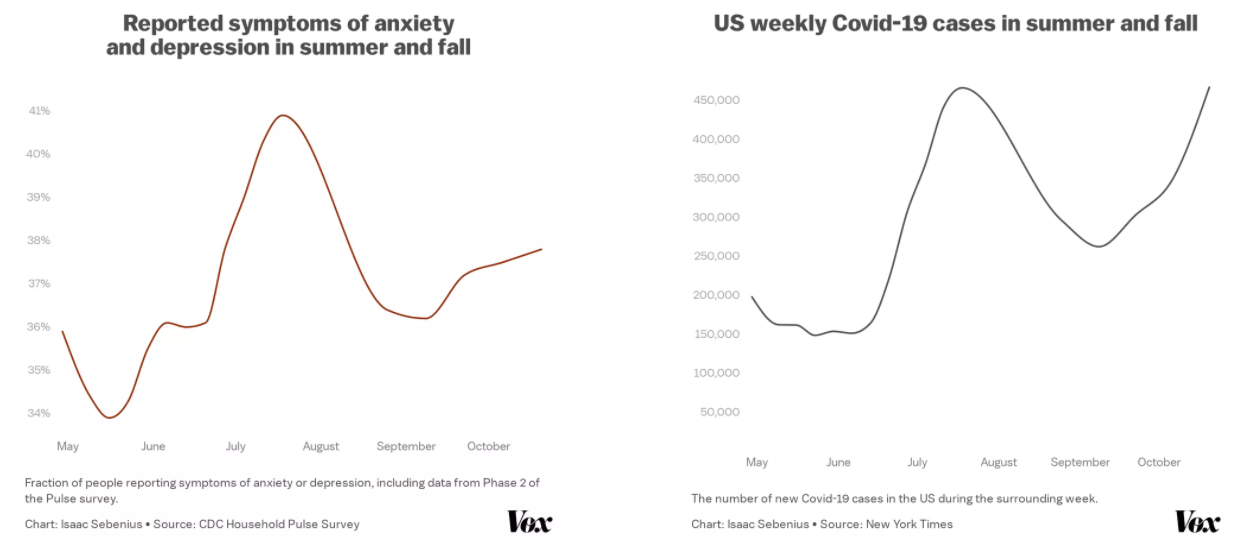
Yet data from the second phase of the Household Pulse Survey, from August through October, showed mental health continued to consistently follow fluctuations in the Covid-19 curve. After the scary viral spike in July, the number of weekly cases declined from roughly 450,000 per week at the end of July to roughly 250,000 by the end of August. And along with this period of slower viral spread, mental health outcomes markedly improved as well, reinforcing the relationship between the two.

Then again, as cases increased during September and October, mental health outcomes correspondingly worsened.

Overall, the pandemic has raised America’s baseline levels of anxiety and depression: Even at its lowest point this summer (early May), the rate of Americans reporting symptoms of anxiety or depression hovered around 34 percent, roughly three times higher than the average of 11 percent reported in a parallel study between January and June 2019.

Fluctuations above this already-high baseline could plausibly be caused, at least in part, by the severity of the pandemic at a given point in time. For example, elevated rates of viral spread directly increase the likelihood that we or someone we know will become exposed and undergo a mentally straining period of quarantining waiting for symptoms — or self-isolation while battling the new illness itself. The state of the pandemic also often determines things like freedom of mobility through lockdown measures or their absence.

Historically, imposed quarantine has been shown to dramatically affect mental health. Moreover, the perceived trajectory of the pandemic has significant repercussions for the economy and unemployment, both of which have been shown to directly impact mental health.

My Comment: 

Early on everyone wondered: What’s different about this pandemic? Some observed: It’s the first pandemic with 24/7 cable news and rampant social media. Informal surveys show that many people have few or no family, friends or associates who have gotten sick, let alone seriously ill or died from Covid19.  What we do get is a deluge of scary messaging and official warnings and restrictions that are literally driving us crazy.  

Bottom Line:  You’re on your own to keep up your spirits and fend off fears and depression.  Take care of your immune system, especially vitamins C, D and Zinc, and make every day count.


Yes, HCQ Works Against Covid19

Updated December 2020 is this report from hcqmeta.com HCQ is effective for COVID-19 when used early: meta analysis of 156 studies  (Version 28, December 4, 2020).  Excerpts in italics with my bolds.

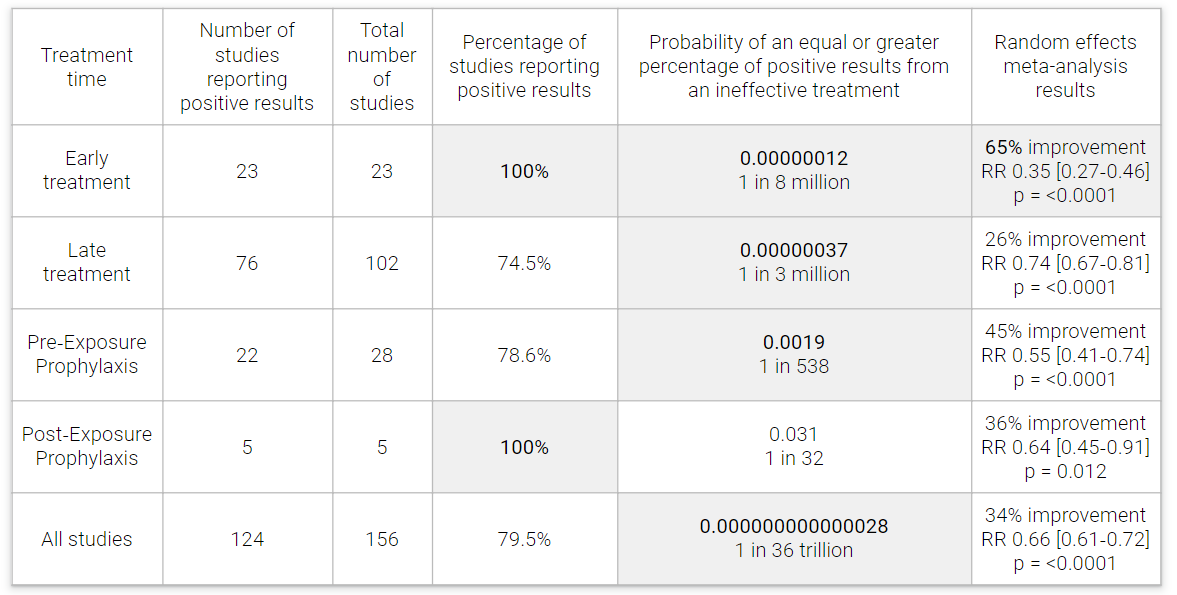
HCQ is effective for COVID-19. The probability that an ineffective treatment generated results as positive as the 156 studies to date is estimated to be 1 in 36 trillion (p = 0.000000000000028).

Early treatment is most successful, with 100% of studies reporting a positive effect and an estimated reduction of 65% in the effect measured (death, hospitalization, etc.) using a random effects meta-analysis, RR 0.35 [0.27-0.46].

100% of Randomized Controlled Trials (RCTs) for early, PrEP, or PEP treatment report positive effects, the probability of this happening for an ineffective treatment is 0.00098.

There is evidence of bias towards publishing negative results. 89% of prospective studies report positive effects, and only 76% of retrospective studies do.

Significantly more studies in North America report negative results compared to the rest of the world, p = 0.0005.

Study results ordered by date, with the line showing the probability that the observed frequency of positive results occurred due to random chance from an ineffective treatment.

We analyze all significant studies concerning the use of HCQ (or CQ) for COVID-19, showing the effect size and associated p value for results comparing to a control group. Methods and study results are detailed in Appendix 1. Typical meta analyses involve subjective selection criteria, effect extraction rules, and bias evaluation, requiring an understanding of the criteria and the accuracy of the evaluations. However, the volume of studies presents an opportunity for a simple and transparent analysis aimed at detecting efficacy.

If treatment was not effective, the observed effects would be randomly distributed (or more likely to be negative if treatment is harmful). We can compute the probability that the observed percentage of positive results (or higher) could occur due to chance with an ineffective treatment (the probability of >= k heads in n coin tosses, or the one-sided sign test / binomial test). Analysis of publication bias is important and adjustments may be needed if there is a bias toward publishing positive results. For HCQ, we find evidence of a bias toward publishing negative results.

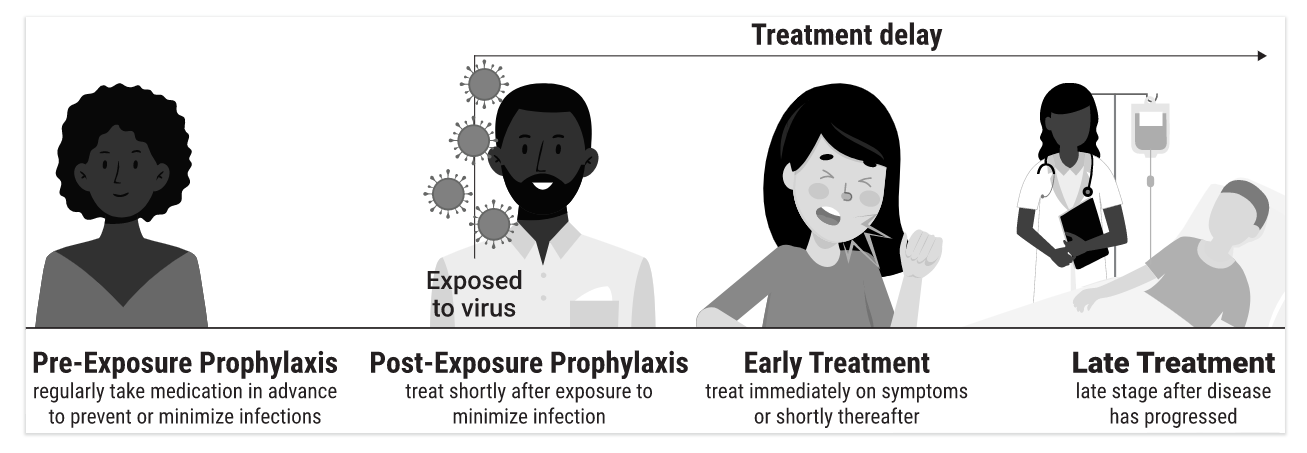
Figure 2 shows stages of possible treatment for COVID-19. Pre-Exposure Prophylaxis (PrEP) refers to regularly taking medication before being infected, in order to prevent or minimize infection. In Post-Exposure Prophylaxis (PEP), medication is taken after exposure but before symptoms appear. Early Treatment refers to treatment immediately or soon after symptoms appear, while Late Treatment refers to more delayed treatment.

Table 1. Results by treatment stage. 2 studies report results for a subset with early treatment, these are not included in the overall results.

We also note a bias towards publishing negative results by certain journals and press organizations, with scientists reporting difficulty publishing positive results [Boulware, Meneguesso]. Although 124 studies show positive results, The New York Times, for example, has only written articles for studies that claim HCQ is not effective [The New York Times, The New York Times (B), The New York Times (C)]. As of September 10, 2020, The New York Times still claims that there is clear evidence that HCQ is not effective for COVID-19 [The New York Times (D)]. As of October 9, 2020, the United States National Institutes of Health recommends against HCQ for both hospitalized and non-hospitalized patients [United States National Institutes of Health].

Treatment details. We focus here on the question of whether HCQ is effective or not for COVID-19. Significant differences exist based on treatment stage, with early treatment showing the greatest effectiveness. 100% of early treatment studies report a positive effect, with an estimated reduction of 65% in the effect measured (death, hospitalization, etc.) in the random effects meta-analysis, RR 0.35 [0.27-0.46]. Many factors are likely to influence the degree of effectiveness, including the dosing regimen, concomitant medications such as zinc or azithromycin, precise treatment delay, the initial viral load of patients, and current patient conditions.

Rx for Covid-fighting Politicians

Elected officials have become one-trick ponies.  All they know is locking people down for the sake of social distancing.  That was a reasonable strategy when the outbreak began, before the disease and its treatment was understood, and in order to protect the health care system from overload.  But now a different prescription is required, if leaders have the courage and wisdom to adapt.  Here are three recommendations that will stop the damage being done in the name of “fighting Covid19.”

1.  Do not prevent school children from training their immune systems.

Shutting schools and/or applying social distancing protocols to children are not only unnecessary, but harmful.  Stopping normal social interaction among children takes away the exposure they need to develop immunity for future outbreaks.  Donna L. Farber and Thomas Connors and Columbia University wrote Quarantine May Negatively Affect Kids’ Immune Systems. H/T Jeffrey Tucker at AIER (here).  Excerpts in italics with my bolds.

During the Covid-19 pandemic, the world is unwittingly conducting what amounts to the largest immunological experiment in history on our own children. We have been keeping children inside, relentlessly sanitizing their living spaces and their hands and largely isolating them. In doing so, we have prevented large numbers of them from becoming infected or transmitting the virus. But in the course of social distancing to mitigate the spread, we may also be unintentionally inhibiting the proper development of children’s immune systems….Immunological memory and tolerance learned during childhood serves as the basis for immunity and health throughout adulthood.

[The article then continues and actually invokes the great taboo word of our age: exposure. It’s good. Exposure is good. It is necessary. It is needed. Not bad. Good.]

However, for memory T cells to become functionally mature, multiple exposures may be necessary, particularly for cells residing in tissues such as the lung and intestines, where we encounter numerous pathogens. These exposures typically and naturally occur during the everyday experiences of childhood — such as interactions with friends, teachers, trips to the playground, sports — all of which have been curtailed or shut down entirely during efforts to mitigate viral spread. As a result, we are altering the frequency, breadth and degree of exposures that are crucial for immune memory development.

[Okay, now it is time for the writer to invoke a bit of memorable scientific knowledge. It’s a beautiful paragraph with a stunning opening sentence.]

Failing to train our immune systems properly can have serious consequences. When laboratory mice raised in nearly sterile conditions were housed together in the same cage with pet mice raised in standard conditions, some of the laboratory mice succumbed to pathogens that the pet mice were able to fight off. Additional studies of the microbiome — the bacteria that normally inhabit our intestines and other sites — have shown that mice raised in germ-free conditions or in the presence of antibiotics had reduced and altered immune responses to many types of pathogens. These studies suggest that for establishing a healthy immune system, the more diverse and frequent the encounters with antigens, the better.

Summary:  The kids are all right, let them get on with their lives for their own sakes.

2.  Count people as cases only if they are sick from a viral load.

Public health officials need to stop confusing and scaring the public with positive PCR tests.  As noted in previous posts here, PCR tests amplify a viral trace up to 35 or 40 doublings, which is too small a viral load to make the person sick or to transmit to others.  The rapid tests now available do not amplify and the protocol now should be to do antigen tests on people with symptoms to identify actual patients needing treatment and isolation.

Background posts: COVID Fearmongering With ‘Cases’ of Perfectly Healthy People

Fake Wave of False Positives

Summary:  The BinaxNOW test detects antigens — proteins unique to the virus that are usually detectable whenever there is an active infection.

3.  Implement practical effective measures to protect the vulnerable nursing home residents and staff.

Kevin Pham, MD, explains in his essay If We’re Going to Control COVID, We Need to Make This Crucial Change.  Excerpts in italics with my bolds.

According to an Associated Press report, there has been a four-fold rise in nursing home-related cases of COVID-19 since June. And CDC data shows there has been an increase of nearly 1,000 COVID-related deaths in nursing homes from September to October.

There are three ways for COVID-19 to enter a nursing home: 1.) through staff and faculty working at the facility, 2.) through visitors who enter the premises, and 3.) through forcing nursing homes to admit patients with active infections.

The disastrous effects of the latter policy is one reason that Gov. Andrew Cuomo’s New York has contributed a disproportionate share of American COVID-related deaths. Thankfully, his order was finally reversed in May.

The more recent increase in nursing home cases are likely a function of the former two ways that COVID enters a nursing home. This is where we need to focus our efforts, with refined policies.

Test nursing home visitors.

Current guidance from the Centers for Medicare and Medicaid Services restrict the number of visitors in ways that are lacking. The focus is temperature checks and screening questionnaires, as well as observing for signs or symptoms of illness.

This may have been reasonable early on in the pandemic, when any sort of a screen was better than no screen, but it’s insufficient now. We have had point-of-care testing for months now, and more recently, rapid antigen tests that require no special lab equipment, no specialized storage, not even refrigeration.

No effort should be spared in procuring what is needed to test everyone going into a nursing home, whether visitor or staff. Key to making this work: the FDA should lift restrictions requiring all tests to reviewed at a lab, so rapid tests that don’t need lab equipment can truly live up to their promise.

Stronger mitigation measures for nursing home staff.

It is likely that infected staff are driving the rise in cases, as visitations are relatively restricted. The AP report shows a proportionate increase in the number of staff cases and resident cases. This is naturally difficult to control because the staff live in the community and work in the nursing homes. Their job is vital.

The latest CMS guidance on staff testing frequency are intended to test often enough to detect cases early enough to stop transmissions, from staff to residents.

Clearly that hasn’t been enough. We need more targeted testing to detect early cases, and that has to be done every time someone leaves and reenters the nursing home. This may be difficult for some facilities, especially rural ones, that lack either financial or human resources, but again, no effort should be spared to enable nursing homes to test everyone going to visit or who works with our elders.

Ensuring a steady and abundant supply of tests is one solution, but nursing home leadership should consider providing for housing for staff for several days at a time to obviate the need to go into the community where there may be high levels of COVID-19. Such an isolation “bubble” was good enough for the National Basketball Association, so it ought to be good enough for older Americans.

If a facility cannot manage these steps on their own, they should receive help, post haste. Every mayor and governor should immediately ask nursing home leaders for their plans, and to identify any barriers. If helped is needed, they need to arrange for its provision.

Summary:  The primary focus of our COVID response should center on helping those known to be most at risk from the virus—nursing homes, the elderly and the vulnerable, and those who work with them. Anything else, especially now, would be unconscionable.


Beware the Covid Grinch

R. J. Quinn writes at The American Conservative The Greatest Scandal Of Our Lifetime.  Excerpts in italics with my bolds.  This post is prompted by an edict from the Quebec Government that citizens should continue to be under house arrest with small gatherings allowed only during 4 days Dec.24 to Dec. 27.

Elites have ignored practical scientific approaches to the virus in favor of totalitarian lockdowns which rob us of our humanity and our health.

What if I told you that thousands of lives could be saved during this pandemic if we followed the science?

Instead of following the science, governments around the world are implementing the exact opposite of effective measures to combat the pandemic. Governments and health officials from first world countries are pursuing lockdowns and advising patients to wait until their symptoms worsen before going to the hospital seeking treatment. Sadly, this is the approach many countries have taken for the COVID-19 virus. Lockdowns are destroying lives economically, mentally, and physically, while the elites are becoming richer and profiting off of the destruction of the middle class and the poor.

above-the-law-1

Also egregious is the lack of an outpatient treatment plan for people who come down with Covid. In the NIH’s recommended treatment protocol, there is no recommended treatment for non-hospitalized patients. ‘Isolate in your home and wait until your condition gets so bad you have to go to the hospital’ is the NIH’s position. A patient’s treatment only begins once they are hospitalized. This is akin to using dial-up internet compared to today’s high-speed internet. It does not have to be this way. We can effectively provide outpatient treatment care to patients with the virus in a safe and cheap manner.

Many heroic doctors are focusing on the vital task of fighting COVID-19 in the early stages of the illness. Since March, there have been copious amounts of research, studies, and treatment of patients that have shown success against the illness. Antivirals, vitamins, existing vaccines, aspirin, exercise, sleep, and proper air filtration all play a pivotal role in preventing severe cases of Coronavirus in mild to moderate patients. Prestigious doctors such as Dr. Peter McCullough of Baylor University Medical Center in Texas, and Dr. Paul Marik of the Eastern Virginia Medical School, among many others, have devised home treatment or outpatient care regimens for mild cases and prophylaxis. There have been numerous (many peer-reviewed) studies which have shown that antivirals like Hydroxychloroquine and Ivermectin are effective in combatting the illness in mild to moderate stages. Simply strengthening your immune system with vitamin D, vitamin C, Zinc, and a Zinc ionosphere (Quercetin and EGCG) along with proper exercise and rest goes a long way in preparing the body to effective combat Covid-19. Also, the MMR vaccine could provide protection from the most severe effects of Covid as well, according to doctors. While we wait for antibody cocktail treatments and a potential vaccine, these other treatments must be strongly recommended and pursued by the general public, especially those most susceptible to the illness.

Masks, social distancing, and early effective treatments are the best tools we have to combat this illness. However, this is not the case in many first world nations, including the United States. Lockdowns are considered the most important way to slow the spread of the virus. This lockdown mindset is a totalitarian mindset. It is a mindset that rejects humanity. The more humane approach is that espoused in the Great Barrington Declaration. Protect the elderly and sick in their homes while the young and healthy return to society through measured social distancing. However, the elites in most governments hate this plan because they deny that early effective treatments and strengthening of the immune system can effectively combat the virus. Lockdowns show a disregard for humanity, and the unintended consequences will be felt for decades. There is a better approach than destroying our society and our humanity. It is the approach of the Great Barrington Declaration paired with the promoting of outpatient treatments for the virus.

This is the only way for society to regain its humanity and stop the totalitarian mindset of our elites.

We are in a war with the virus. In war, urgency is a necessity. We cannot wait years for a double-blind randomized study of antivirals while thousands are being infected and being told to isolate at home until they can’t breathe and only go to the hospital when it is possibly too late. While businesses and jobs are being lost and lives are being destroyed, there is no excuse for government health organizations like the NIH to not recommend early treatment care. Dr. Peter McCullough said, “Medicine is both an art and a science. In this pandemic, we have focused on the science, in randomized trials, in a new drug development, and the body count has been through the roof. [What is needed is] clinical judgement, careful observation, being able to quickly adapt to new concepts.”

Treating COVID-19 too late is part of the lockdown mindset. By denying early outpatient treatment care, the elites are chipping away at our liberties, forming us into a submissive society where we follow everything the government says. The only problem is that the elites in these governments have been dreadfully wrong with lockdowns and not recommending outpatient treatment. Their denial of humanity and freedom to choose during this pandemic has been criminal, and we must never forget what they want and plan to do with their authoritarian mindset of complete ineptitude. This sordid tale is the greatest scandal of our lifetime.

(By Corona Borealis Studio/Shutterstock)

Bulgarians Winning Covid Fight Using HCQ+, Canadians and Americans Losers

Bulgaria is protecting health care workers and outpatients the smart way, as reported here Hydroxychloroquine for prophylaxis and treatment of COVID-19 in health care workers: Bulgaria.  Excerpts in italics with my bolds.
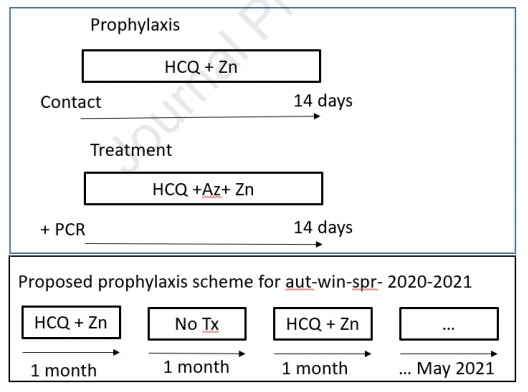
Hydroxychloroquine (HCQ) exerts antiviral effects through several mechanisms. Our initial experience suggests that HCQ could be used for prophylaxis of COVID-19 infection in health care workers (HCW) and could help to control the virus in the early disease stages. We suggest a prophylactic strategy with HCQ for autumn-winter-spring 2020-2021.

Providing adequate health care is vitally important during the COVID-19 pandemic to keep morbidity and mortality low. Health care workers (HCW) are key guarantees for this process, and they must feel safe and adequately protected, which includes reliable prophylactic measures (1).

Hydroxychloroquine (HCQ) could exert antiviral effects, essential for prophylaxis and early treatment of COVID-19, through several mechanisms: 1) endosomal pH increase, which inhibits SARS-CoV-2 entry through the host cells’ membranes; 2) inhibition of ACE2 cell receptor glycosylation, which impedes SARS-CoV-2-receptor binding; 3) blocking the transport of SARS-CoV-2 from early endosomes to endolysosomes, which prevents the release of viral genome; 4) immunomodulation; 5) limiting the post-viral cytokine-storm syndrome (2, 3).

We share the experience of the Bulgarian Cardiac Institute (BCI) regarding the use of HCQ for prophylaxis and treatment of COVID-19 in HCW.

BCI comprises seven hospitals and eight medical centers, with around 1200 HCW, covering more than two-thirds of Bulgarian territory.

Since March 2020, many of our employees were in close contact with COVID-19 cases. We offered prophylaxis with HCQ 200 mg qd for 14 days to 204 of them. 76.4% of the group (156 HCW) used HCQ and none of them presented with COVID-19 symptoms. Unfortunately, out of the rest 48 HCW that refused HCQ prophylaxis, three developed symptoms and tested positive for COVID-19.

During the last seven months, 38 HCW at BCI tested positive for COVID-19, half of them symptomatic.

We suggested the following treatment regimen as an early home-based therapy for them: azithromycin 500 mg qd; HCQ 200 mg tid and Zn up to 50 mg qd for 14 days. 33 (86.8%) of them undertook this treatment, with symptoms abolishing between 2nd and 4th day, none of them requiring hospitalization and with a negative PCR on 14th day for all.

In conclusion, our experience at BCI suggests that HCQ could possibly provide protection against infection with SARS-CoV-2 (prophylaxis), and could, if used early, help control the COVID-19 infection (treatment).

Based on this experience, we at BCI adopted a new prophylactic strategy for HCW starting from the 2nd half of October 2020. This includes alternative months of HCQ intake (200 mg qd) and months without therapy. We are planning to continue this prophylaxis regimen throughout the autumn, winter, and spring months.

See also Truth and Lies about HCQ Covid Regimen

From previous post:

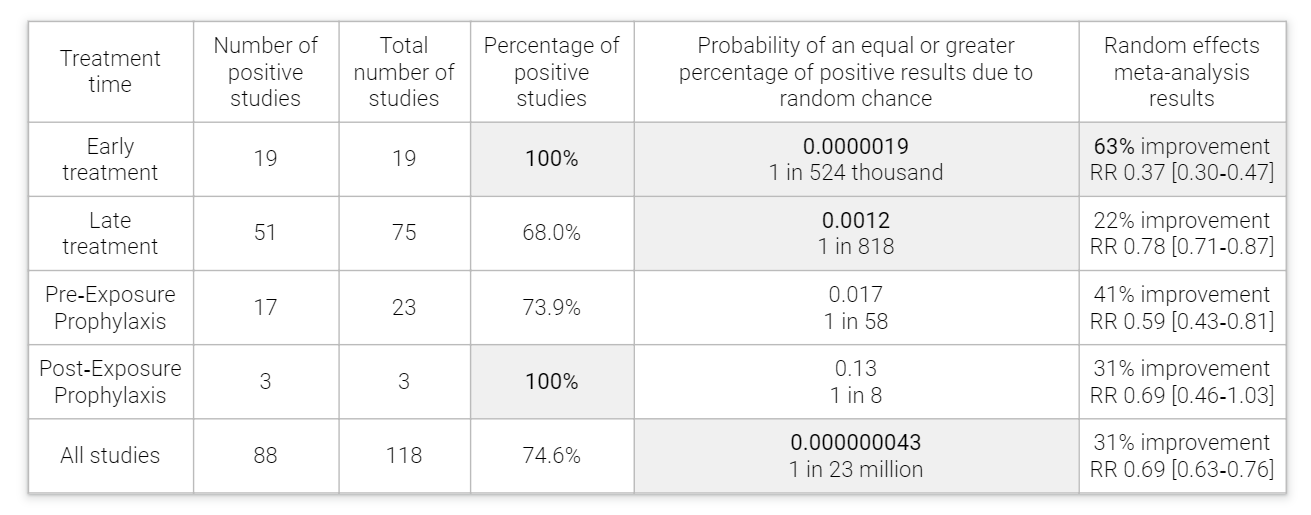
Article is HCQ is effective for COVID-19 when used early: analysis of 118 studies.  Excerpts in italics with my bolds.

HCQ is an effective treatment for COVID-19. The probability that an ineffective treatment generated results as positive as the 118 studies to date is estimated to be 1 in 23 million (p = 0.000000043).

Early treatment is most successful, with 100% of studies reporting a positive effect and an estimated reduction of 63% in the effect measured (death, hospitalization, etc.) using a random effects meta-analysis, RR 0.37 [0.30-0.47].
100% of Randomized Controlled Trials (RCTs) for early, PrEP, or PEP treatment report positive effects, the probability of this happening for an ineffective treatment is 0.002.
•There is evidence of bias towards publishing negative results. Significantly more retrospective studies report negative results compared to prospective studies, p = 0.04.
•Significantly more studies in North America report negative results compared to the rest of the world, p = 0.002.

Figure 2: Treatment stages.

Figure 2 shows stages of possible treatment for COVID-19. Pre-Exposure Prophylaxis (PrEP) refers to regularly taking medication before being infected, in order to prevent or minimize infection. In Post-Exposure Prophylaxis (PEP), medication is taken after exposure but before symptoms appear. Early Treatment refers to treatment immediately or soon after symptoms appear, while Late Treatment refers to more delayed treatment.

Table 1. Results by treatment stage. 2 studies report results for a subset with early treatment, these are not included in the overall results.

Publication bias. Publishing is often biased towards positive results, which we would need to adjust for when analyzing the percentage of positive results. Studies that require less effort are considered to be more susceptible to publication bias. Prospective trials that involve significant effort are likely to be published regardless of the result, while retrospective studies are more likely to exhibit bias. For example, researchers may perform preliminary analysis with minimal effort and the results may influence their decision to continue. Retrospective studies also provide more opportunities for the specifics of data extraction and adjustments to influence results.

For HCQ, 87.5% of prospective studies report positive effects, compared to 69.8% of retrospective studies, two-tailed z test 2.07, p = 0.04, indicating a bias toward publishing negative results.

The lack of bias towards positive results is not very surprising. Both negative and positive results are very important given the current use of HCQ for COVID-19 around the world, evidence of which can be found in the studies analyzed here, government protocols, and news reports, for example [AFP, AfricaFeeds, Africanews, Afrik.com, Al Arabia, Al-bab, Anadolu Agency, Anadolu Agency (B), Archyde, Barron’s, Barron’s (B), BBC, Belayneh, A., CBS News, Challenge, Dr. Goldin, Efecto Cocuyo, Expats.cz, Face 2 Face Africa, France 24, France 24 (B), Franceinfo, Global Times, Government of China, Government of India, GulfInsider, Le Nouvel Afrik, LifeSiteNews, Medical World Nigeria, Medical Xpress, Medical Xpress (B), Middle East Eye, Ministerstva Zdravotnictví, Morocco World News, Mosaique Guinee, Nigeria News World, NPR News, Oneindia, Pan African Medical Journal, Parola, Pilot News, Pleno.News, Q Costa Rica, Rathi, Russian Government, Teller Report, The Africa Report, The Australian, The BL, The East African, The Guardian, The Indian Express, The Moscow Times, The North Africa Post, The Tico Times, Ukraine Ministry of Health Care, Ukrinform, Vanguard, Voice of America].

We also note a bias towards publishing negative results by certain journals and press organizations, with scientists reporting difficulty publishing positive results [Boulware, Meneguesso]. Although 88 studies show positive results, The New York Times, for example, has only written articles for studies that claim HCQ is not effective [The New York Times, The New York Times (B), The New York Times (C)]. As of September 10, 2020, The New York Times still claims that there is clear evidence that HCQ is not effective for COVID-19 [The New York Times (D)]. As of October 9, 2020, the United States National Institutes of Health still recommends against HCQ for both hospitalized and non-hospitalized patients [United States National Institutes of Health].

Treatment details. We focus here on the question of whether HCQ is effective or not for COVID-19. Significant differences exist based on treatment stage, with early treatment showing the greatest effectiveness. 100% of early treatment studies report a positive effect, with an estimated reduction of 63% in the effect measured (death, hospitalization, etc.) in the random effects meta-analysis, RR 0.37 [0.30-0.47]. Many factors are likely to influence the degree of effectiveness, including the dosing regimen, concomitant medications such as zinc or azithromycin, precise treatment delay, the initial viral load of patients, and current patient conditions.

News website Panorama.it has launched a petition to get the drug hydroxychloroquine officially reinstated so that Italian doctors can once again use it with patients. If not, some of them will go ahead and use it anyway. The retracted Lancet study and trials using lethal doses(!) of HCQ were enough to get it officially banned in Italy as in other countries. Except the Italian Medicines Agency (AIFA) has not yet reapproved it, despite studies showing its effectiveness. Here are excerpts of the Change.org petition translated from Italian:

At the moment there are no treatments of proven effectiveness to be administered at home. Because the only therapy that AIFA (Italy’s Medicines Agency) had authorized at home, the one based on hydroxychloroquine, has been blocked. It happened on May 26, after the publication of a study in The Lancet, which was withdrawn 13 days later.

Meanwhile, German GPs, who had administered 1,060,000 doses of hydroxychloroquine in March, continued to prescribe it. In the United States, three states lifted the ban on the drug in early August. In China, on August 19, the National Health Commission’s guidelines continued to recommend the active ingredient for Covid 19 patients. And on September 21, The Lancet itself retraced its steps, with a study claiming that hydroxychloroquine reduces mortality.

In order to save lives, we ask AIFA to restore the use of hydroxychloroquine for home patients in the very early stages of the disease, possibly even with an emergency procedure. Otherwise, we invite the Agency to provide shared protocols of treatment practicable in the territory.

Pfizer Covid Vaccine Looking Good

Zachary Stiebera writes at Epoch Times Pfizer’s COVID-19 Vaccine Effective, Early Data Indicates.  Excerpts in italics with my bolds

COVID-19 vaccine candidate proved strongly effective in a large phase 3 study, according to results released on Nov. 9.

The results were termed as the first interim efficacy analysis and included 94 patients who had confirmed cases of COVID-19, the disease caused by the CCP (Chinese Communist Party) virus.

The results were analyzed by an independent data monitoring board. They indicate an efficacy rate above 90 percent at seven days after the second dose, New York-based Pfizer and German biotechnology company BioNTech said. That means protection is achieved 28 days after the first vaccine. The vaccination schedule is two doses.

No serious safety concerns were reported in the interim results.

Today is a great day for science and humanity. The first set of results from our Phase 3 COVID-19 vaccine trial provides the initial evidence of our vaccine’s ability to prevent COVID-19,” Dr. Albert Bourla, Pfizer chairman and CEO, said in a statement.

“The first interim analysis of our global Phase 3 study provides evidence that a vaccine may effectively prevent COVID-19. This is a victory for innovation, science and a global collaborative effort,” added professor Ugur Sahin, BioNTech co-founder and CEO.

The phase 3 trial started on July 27 and has enrolled over 43,000 patients to date.

Nearly 39,000 have received the second dose as of Nov. 8.

There are currently no approved vaccines for the CCP virus. Dozens are in development around the world.

Vice President Mike Pence called the development “HUGE News,” adding: “Thanks to the public-private partnership forged by President @realDonaldTrump, @pfizer announced its Coronavirus Vaccine trial is EFFECTIVE, preventing infection in 90% of its volunteers.”

The U.S. government reached a deal with Pfizer and BioNTech in July, agreeing to pay $1.95 billion for the first 100 million doses of BNT162, the vaccine candidate the two companies created.

Dr. Richard Hatchett, CEO of the Coalition for Epidemic Preparedness Innovations (CEPI), which has been helping fund various vaccine candidates, said the results were highly positive.

“We believe these interim results also increase the probability of success of other COVID-19 candidate vaccines which use a similar approach [pre-fusion spike as their immunogen], including all of the vaccines in the CEPI portfolio,” he said in a statement.

“If the final longer term analysis of the study data confirms this result, and if no safety issues are identified in the trial participants, this vaccine candidate will be able to seek regulatory approval.”

COVID Fearmongering With ‘Cases’ of Perfectly Healthy People

John Carpay writes at Epoch Times COVID Fearmongering With ‘Cases’ of Perfectly Healthy People. Excerpts in italics with my bolds.

Across Canada, provincial governments are imposing new lockdown restrictions that violate the Charter freedoms of Canadians to move, travel, assemble, associate and worship.

Like other provinces, Manitoba relies on COVID-19 “cases,” which include perfectly healthy people who show no symptoms of any illness, to justify the violation of Charter freedoms.

Winnipeg is merely one victim, with the government having closed movie theatres, concert halls, sports facilities, restaurant dining rooms, casinos, museums, libraries, and galleries as of Nov. 2. Citizens lack the freedom to gather in groups larger than five.

Contrary to World Health Organization recommendations, they must wear masks while exercising at gyms. Children, who face essentially no risk of harm from the virus, are to be kept in a state of fear through two-metre physical distancing at schools. Contrary to what is obviously good for public health, all group sports are prohibited, and non-emergency surgeries and diagnostic procedures have been suspended.

When it comes to shaping laws and policies, context should matter. In Manitoba over 11,000 people die each year; for the year ending June 30, 2020, it was 11,266 to be precise, according to statista.com. In the context of 11,266 deaths, 75 people have died of COVID-19, which is less than 1 percent of deaths. These 75 deaths are very sad, and so are the other 11,191 deaths from cancer, cancelled surgeries, alcoholism, drug overdoses, suicides, and other causes.

In Manitoba and elsewhere, COVID-19’s impact on life expectancy is negligible, because this virus primarily targets elderly people who are already close to death because they are sick with heart disease, emphysema, diabetes, and other serious illnesses.

How many Manitobans have died, and how many will die, because of lockdown measures?

It’s not something that Chief Provincial Public Health Officer Dr. Brent Roussin talks about. He and the politicians blithely assume, without evidence, that lockdowns do more good than harm. The number of lockdown deaths from cancelled surgeries, delayed cancer diagnosis, drug overdoses, and suicides is not yet fully known, but will likely exceed the number of COVID-19 deaths. In the United Kingdom, delays in cancer diagnosis have led to thousands of avoidable deaths and more than 59,000 years of life lost, according to a Lancet study.

The fact that death is a painful, inevitable part of life should not prevent us from taking a hard look at government policies, especially policies that might be taking more lives than the number of lives being saved.

Seven months ago, Canada’s provincial and federal governments joined other jurisdictions in accepting the predictions of Neil Ferguson of Imperial College London, who said that COVID-19 would kill millions of people. Some politicians and chief medical officers claimed that COVID-19 poses a serious threat to children, youth, and young adults, thereby ramping up the fear.

This fearmongering caused Canadians to accept significant restrictions on their Charter freedoms to move, travel, assemble, associate and worship, all for the worthy goal of “saving lives.” Lockdown harms, such as increases in drug overdoses and suicides, have been ignored or accepted, as if dying of COVID-19 is somehow worse than dying of another cause.

Media continue to hype “cases” and warn of a “second wave.” Curiously, media rarely mention the fact that COVID-19 deaths peaked in April and May, then declined drastically in June, with further declines in July and August. Government data tells us that the number of deaths in September and October is nowhere near the numbers we saw in April and May. In every province, the government’s own data shows that there is no second wave of COVID-19 deaths.

Our Charter freedoms are violated on the basis of “cases” of COVID-19. Prior to lockdowns, the word “cases” referred to people who are actually sick. But today’s “cases” include completely healthy people who simply had a positive PCR (nucleic acid-based) test, the reliability of which is in dispute, with the number of false positives as high as 90 percent.

According to a National Post article, the “reverse transcription polymerase chain reaction test, or RT-PCR — is so sensitive it can pick up debris from an old infection.” The PCR test detects genetic material as well as live virus, meaning it can be positive after the person has cleared the live organism. The article goes on to claim that “provinces are encouraging mass testing using a hyper-sensitive test that’s churning out daily case numbers, the implication being that a case always equals an active infection equals a person capable of spreading to others.” But Dr. Vanessa Allen, chief of medical microbiology at Public Health Ontario, states that “PCR picks up dead organism that is not infectious.”

As Harvard University’s Dr. Michael J. Mina explains it in the New England Journal of Medicine: “Most infected people are being identified after the infectious period has passed,” such that “thousands of people are being sent into 10-day quarantines after positive RNA tests despite having already passed the transmissible stage of infection.”

According to Dr. Jared Bullard, associate medical director of Cadham Provincial Laboratory in Winnipeg, any virus that is being picked up beyond 25 cycles is probably leftover genetic material from dead virus.

Even Dr. Anthony Fauci has confirmed that any PCR test result above a cycle threshold of 35 is too high, and only picks up dead nucleotides.

Unsurprisingly, the number of “cases” rises with the number of tests that governments conduct. For example, September saw 28,763 “cases” in Canada, as a result of testing almost two million Canadians. But what really matters is not the “cases” of perfectly healthy people, but rather the fact that 300,000 Canadians die each year, an average of 25,000 per month. In September, 171 Canadians died of COVID-19, while 24,829 Canadians died of other causes.

The 10,000 COVID-19 deaths in Canada in 2020 are not much different from the 8,500 annual flu deaths in Canada in 2018.

We need to reach immunity.  Don’t Fence Us In!

Politicians claim that the lockdowns saved many lives, but they have yet to put forward actual evidence that might support their speculation and conjecture.

With government data on COVID-19 deaths at their fingertips, why do politicians and chief medical officers impose further restrictions on our Charter freedoms? Are they listening to media fearmongering about “cases” while ignoring their own data showing that there is no “second wave” of COVID-19 deaths? Do they realize that their promotion and instigation of unfounded fear serve to generate continued acceptance of Charter violations? Or is it that they have become addicted to control?

See also Clueless Covid Policies

Clueless Covid Policies

In recent months, some demonstrators in Quebec have denounced what they consider government fear campaigns over COVID-19. The new measures included a mandatory rule on wearing masks during demonstrations. (Graham Hughes/The Canadian Press)

A previous post discussed how policymakers are imposing draconian restrictions on their citizens in a misguided attempt to stop viral infections.  The basic fallacy is this:

It seems that certain disease experts genuinely believe that they can game the reproduction rate of the virus to get it below 1, and thereby create a mathematical result that will make the virus go away.

This seems to be their goal and the metric by which they measure whether and to what extent they have achieved it. The problem is that the reproduction rate (very difficult to discern precisely) is an effect – a measurement of an evolved condition – not a cause.

Previous Post Covid Coercion in Quebec
Update:  Quebec is one example of a world wide problem:  See COVID-19 Is Also a Crisis for Democracy and Human Rights

The coronavirus pandemic began as a global health crisis. It spawned an economic crisis. Now COVID-19 is also fueling a crisis for democracy and human rights.

Leaders around the world are using the virus as cover to reduce transparency, increase surveillance, arrest dissidents, repress marginalized populations, embezzle public resources, restrict media, and undermine fair elections.


What is the Emergency Requiring Virtual Quarantine of Healthy People?

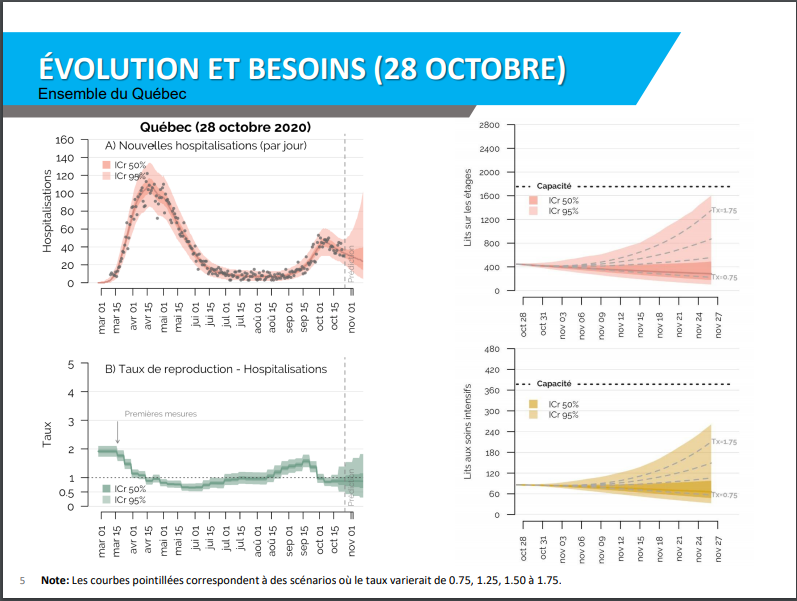
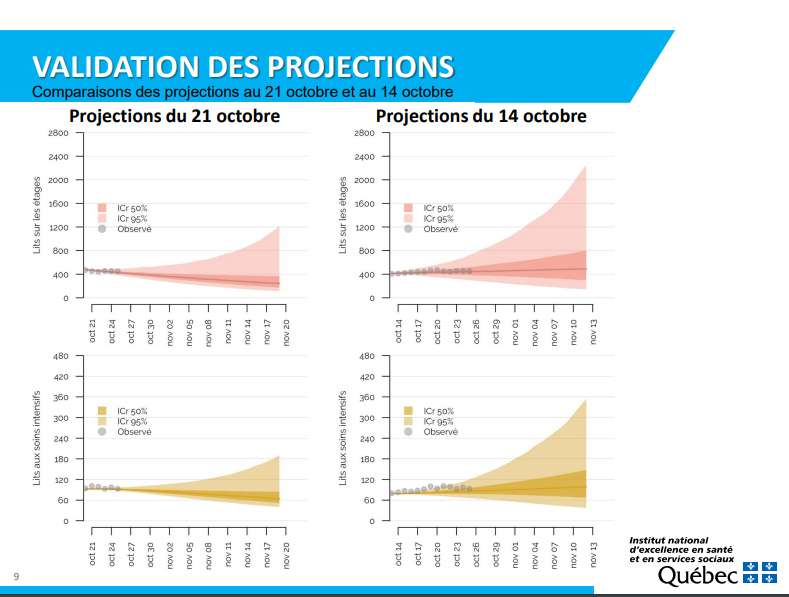
Each Friday the Quebec health research institute (INESSS) provides a statistical update of the Covid19 situation with projections regarding the key concern:  Capacity of the system to care for actual Covid cases requiring in-hospital treatment. Here is the latest information from October 28, 2020.

On the left is the history of Covid hospitalizations in Quebec to end of September.  Note admissions peaked in April around 120 per day, then dropped to 20 a day June to September.  A “second wave” was feared but the graph shows only a bump up to 50 mid October falling already.  As of Oct. 28, Quebec reported 439 people in hospital out of covid bed capacity of 1750.  In addition 88 were in ICUs out of a capacity of 380. At a 30/day new admissions rate, and assuming an average length of stay of 12 days, the net of covid beds occupied should not increase and more likely would go down.  So the projections on the right side have a wide range, but show declining numbers of Covid patients in hospital.  And as the lower right shows, demand for ICU capacity is is also expected to diminish.

On September 24, INESSS authorities said (here):

In Quebec, the hospitalization rate for COVID-19 patients has dropped sharply since the beginning of the pandemic. During the first wave, about 13 per cent of cases ended up in hospital. From Aug. 10 to Sept. 6, the rate was just 5 per cent. At a technical briefing on Wednesday, researchers and officials from Quebec’s institute of excellence in health and social services (INESSS) projected that the rate for COVID-19 patients in early September would fall again to 3.8 per cent.

The drop can be explained by the relative youth of Quebeckers contracting the virus in its second wave and their relative lack of comorbidities. By contrast, in the spring, the virus tore through long-term care homes in the province, killing 4,914 elderly residents.

As a result of this shift, Quebec will not exceed its hospital capacity of about 2,000 beds in the next four weeks, according to the INESSS projections. But officials warned that a faster spread of the virus caused by careless behaviour could still put pressure on the health care system.

Above is the outlook for October from INESSS.  For both ICU and covid hospital beds observations are tracking a forecast showing slight increases.  It appears that the precautionary principle is being applied without regard for the costs of locking down: social, economic and personal well-being seem not to be part of the equation.

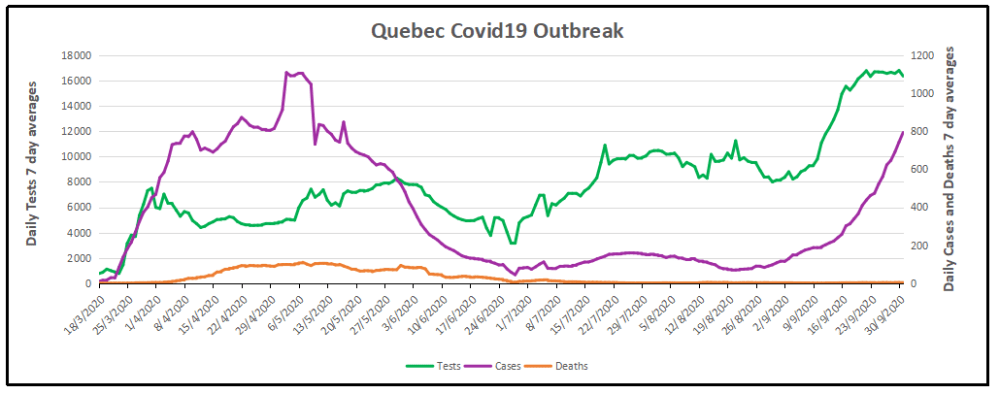
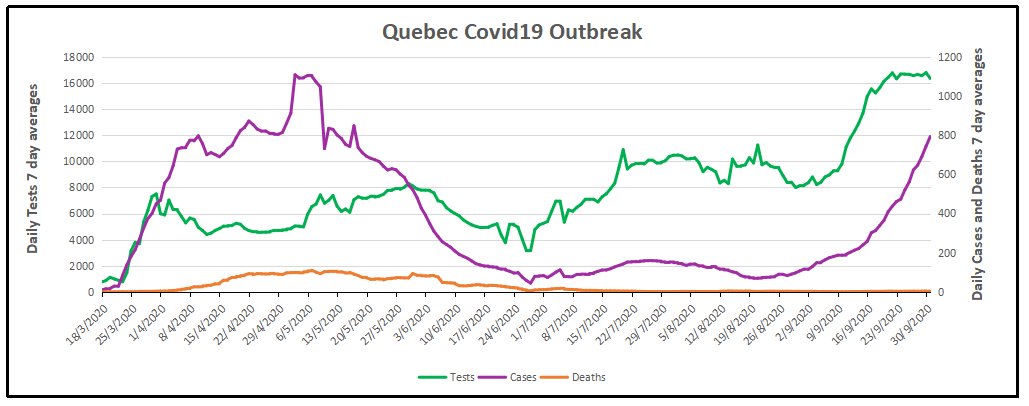
Quebec Situation Update October 1, 2020

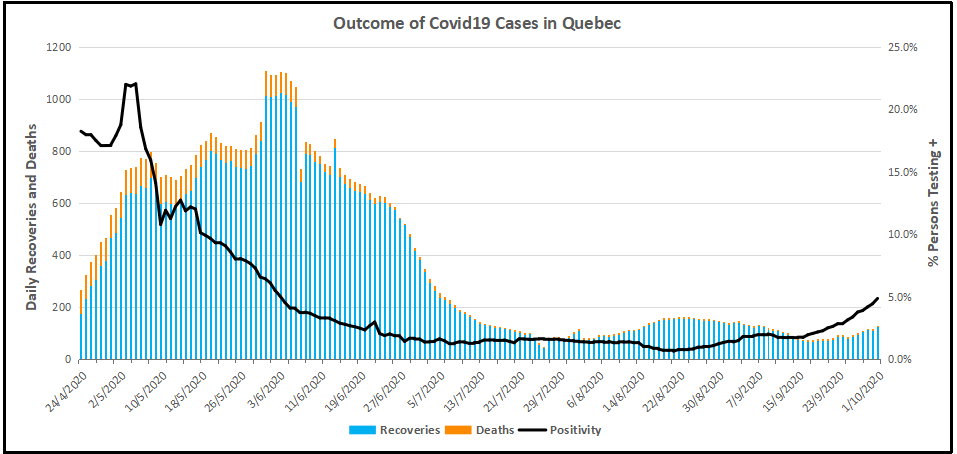
Note that testing has quadrupled since July and the number of new cases followed, especially in the last month.  Meanwhile daily deaths are unchanged at less than five a day, compared to Quebec losing 186 lives every day from all causes..  Recoveries are not reported to the public, perhaps due to the large number of people testing positive but without symptoms or only mild illness and no professional treatment.  The graph below estimates recoveries assuming that people not dying 28 days after a positive test can be counted as cured or in recovery.

Recoveries are the number of people testing positive (misleadingly termed “cases”) minus deaths 28 days later.  Obviously, the death rate was high early on, and now is barely visible.  Meanwhile the Positivity rate (% of people testing positive out of all subjects) went down to 1% for several months before rising recently.  Since there is a lag of 28 days, we don’t yet see the outcome of the rise in positives along with the increased testing.

Summary

Premier Legault and his medical advisors had done well up to now. The first goal was to prevent deaths, and that has been achieved. 186 Quebecers die every day from all causes, and now about 5 are dying having tested positive for SARS CV2. The other goal was to prevent overwhelming the health care system with Covid cases. This too is under control. On October 1, there were 276 patients hospitalized with covid, plus 46 in ICUs. The capacity is 1750 beds and 370 ICU beds. Since July there have been about 20 new admissions daily, offset by recoveries released from hospital.

Unfortunately, now the authorities have spooked themselves and applied a lockdown at the wrong time. Their goal has shifted to stopping new positives, which have increased because testing has quadrupled and positivity rates gone up from 1% to 5%. These are younger people who are not getting sick and certainly not dying from the virus. As many epidemiologists have said, you won’t get rid of this virus, you live with it by getting herd immunity, which leaves too few susceptible people for the virus to spread. If you kill off all the PME businesses and put people out of work, poverty and social decay will kill people, not to mention the interruption of medical treatments which save those with the real deadly diseases: cancers, heart, arteries, lungs, and so on.