Mann’s AMOC Collapse Hoax

Dr. Kevin E. Trenberth, a distinguished scholar at the National Center for Atmospheric Research, commented on this movie: “I don’t recall a lot except that the whole science was incredibly wrong,”, “one does not get an ice age out of global warming.”

Likely you’ve heard the recent and previous warnings from Mann and friends about the ocean conveyor belt (including the Gulf Stream) slowing down and freezing us all.  With the COP gathering next month, something scary must be proclaimed, and Global Freezing is it, replacing Global Boiling earlier this year. The declaration signed by Mann and 43 other scientists was Open Letter by Climate Scientists to the Nordic Council of Ministers, Reykjavik, October 2024. Preface:

“We, the undersigned, are scientists working in the field of climate research and feel it is urgent to draw the attention of the Nordic Council of Ministers to the serious risk of a major ocean circulation change in the Atlantic. A string of scientific studies in the past few years suggests that this risk has so far been greatly underestimated. Such an ocean circulation change would have devastating and irreversible impacts especially for Nordic countries, but also for other parts of the world.”


“Given the increasing evidence for a higher risk of an AMOC collapse, we believe it is of critical importance that Arctic tipping point risks, in particular the AMOC risk, are taken seriously in governance and policy. Even with a medium likelihood of occurrence, given that the outcome would be catastrophic and impacting the entire world for centuries to come, we believe more needs to be done to minimize this risk.”

The Warning is based on Fear, not Facts

1.  The AMOC has been stable for the last four decades.

Florida Current transport observations reveal four decades of steady state Volkov et al 2024

Abstract

The potential weakening of the Atlantic Meridional Overturning Circulation (AMOC) in response to anthropogenic forcing, suggested by climate models, is at the forefront of scientific debate. A key AMOC component, the Florida Current (FC), has been measured using submarine cables between Florida and the Bahamas at 27°N nearly continuously since 1982. A decrease in the FC strength could be indicative of the AMOC weakening. Here, we reassess motion-induced voltages measured on a submarine cable and reevaluate the overall trend in the inferred FC transport. We find that the cable record beginning in 2000 requires a correction for the secular change in the geomagnetic field. This correction removes a spurious trend in the record, revealing that the FC has remained remarkably stable. The recomputed AMOC estimates at ~26.5°N result in a significantly weaker negative trend than that which is apparent in the AMOC time series obtained with the uncorrected FC transports.

Fig. 1: The Western Boundary Time Series
observing network in the Straits of Florida.
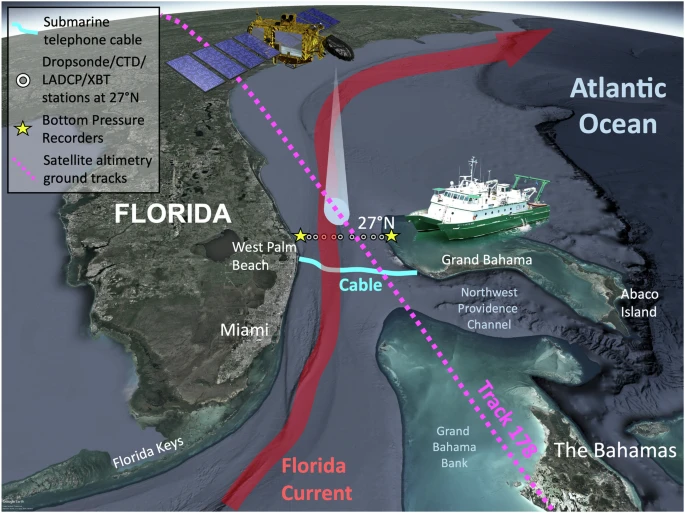
The network consists of the submarine telecommunications cable between West Palm Beach and Grand Bahama Island (cyan curve), ship sections across the Florida Current (FC) at 27°N with in situ measurements at nine stations (white circles), two bottom pressure gauges on both sides of the FC at 27°N (yellow stars), and along-track satellite altimetry measurements (magenta dotted line). CTD Conductivity-Temperature-Depth, LADCP Lowered Acoustic Doppler Current Profiler, XBT expendable bathythermograph.

Fig. 6: Florida Current (FC) volume transports corrected for
the secular change in the Earth’s Magnetic Field (EMF).
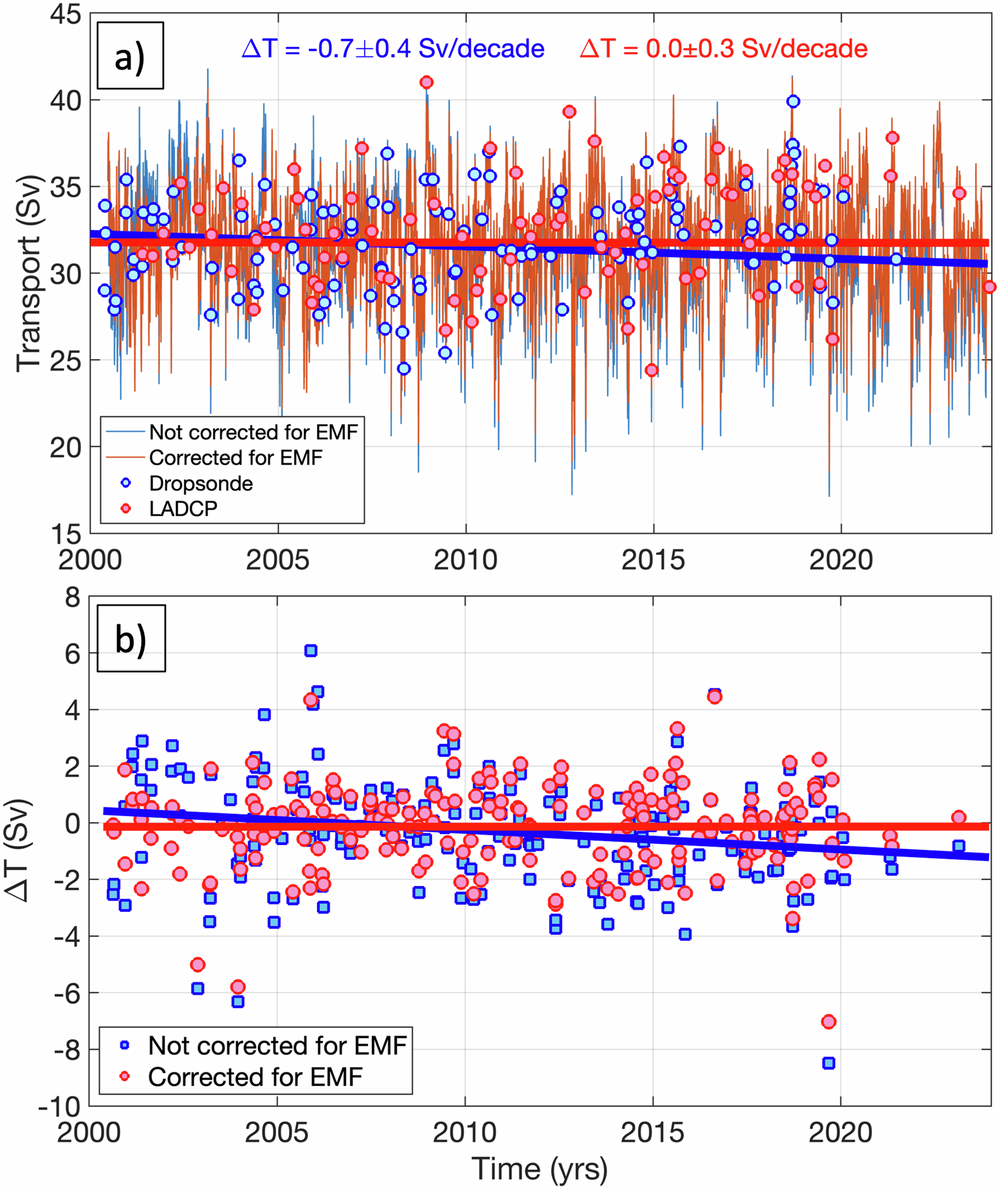
a The time series of the daily FC volume transport: (blue) not corrected for the secular change in the EMF, (red) corrected for the secular change in the EMF. The linear trends of the FC transport not corrected and corrected for the EMF are shown by the blue and red lines, respectively. b The differences between the cable and ship section transport for the cable data (blue squares) not corrected for the EMF and (red circles) corrected for the EMF. The linear trends of the differences (ΔT) not corrected and corrected for the EMF are shown by the blue and red lines, respectively.

Fig. 2: The Florida Current volume transport.
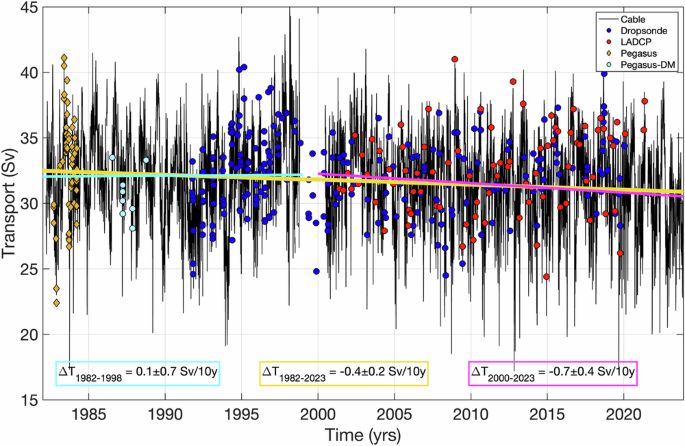
Daily transport estimates from the cable record (black; prior to corrections applied in this study); estimates from the Pegasus (orange diamonds) and Pegasus in dropsonde mode (Pegasus-DM; light blue circles) sections; estimates from the dropsonde sections (blue circles); and estimates from the Lowered Acoustic Doppler Current Profiler (LADCP) sections (red circles). The linear trends for 1982–2023, 1982–1998, and 2000–2023 periods are shown by the orange, cyan, and magenta lines, respectively.

2.  Paleo records show past AMOC changes due to seafloor shifts not climate change.

Controlling factors for the global meridional overturning circulation: A lesson from the Paleozoic, Yuan et al. 2024.

Abstract

The global meridional overturning circulation (GMOC) is important for redistributing heat and, thus, determining global climate, but what determines its strength over Earth’s history remains unclear. On the basis of two sets of climate simulations for the Paleozoic characterized by a stable GMOC direction, our research reveals that GMOC strength primarily depends on continental configuration while climate variations have a minor impact. In the mid- to high latitudes, the volume of continents largely dictates the speed of westerly winds, which in turn controls upwelling and the strength of the GMOC. At low latitudes, open seaways also play an important role in the strength of the GMOC. An open seaway in one hemisphere allows stronger westward ocean currents, which support higher sea surface heights (SSH) in this hemisphere than that in the other. The meridional SSH gradient drives a stronger cross-equatorial flow in the upper ocean, resulting in a stronger GMOC. This latter finding enriches the current theory for GMOC.

On the basis of a series of simulations for the Paleozoic, we find that the GMOC is primarily controlled by:

  • freshwater input into ocean;
  • wind-driven Ekman pumping in the midlatitudes, and
  • SH anomaly in low latitudes.

The latter two factors are especially important for the strength of the GMOC and are highly related to continental configuration. Our major conclusions find validation through Paleozoic climate simulations using the HadCM3 model by Valdes et al. (53, 67) and a non-IPCC class model, FOAM, by Pohl et al. (52) (figs. S17 and S18). This last study by Pohl et al. (52) also pointed out the unfortunate absence of proxy data for validating the direction and magnitude of the Paleozoic GMOC.

Controlling factors for the global
meridional overturning
circulation

Fig. 5. Schematic of controlling factors for the GMOC during the Paleozoic. The schematic is based on the situation for 400 Ma. Three main factors are shown, the less net precipitation in the south SH; the strong westerlies, ocean surface current, and Ekman upwelling in the midlatitude region in NH; the SSH anomaly and associated pressure anomaly in the low-latitude region.

Although there has been tremendous interest in understanding the mechanisms that govern the MOC, surface topography in the westerlies region and the presence of an open seaway in the low-latitude region were previously largely overlooked. Our study thus draws attention to how the evolution of continents in these two regions affects the strength of MOC. Our study indicates that the traditional theory for MOC misses an important element, that is, the influence of a low-latitude seaway. Previous studies either did not have such a seaway (1, 34, 43) or had a partial seaway that connected the present-day Atlantic Ocean and Pacific Ocean only (32–34). Their focus was mostly on the strength of the AMOC and mechanism invoked generally involved freshwater and salinity only (32, 33, 68), while as demonstrated above, a fully open low-latitude seaway affects the MOC in a fundamentally different way.

3.  AMOC alarm presupposes Arctic “Amplification” of Global Warming

Activist scientists claim the Arctic is warming up to five times faster than lower latitudes.  This is based on models projecting scarce temperature records great distances over the Arctic ocean drift sea ice.  There are three flaws in the arctic warming claim (from Arctic “Amplification” Not What You Think)

a. Arctic Amplification is an artifact of Temperature Anomalies

Clive Best provides this animation of recent monthly temperature anomalies which demonstrates how most variability in anomalies occur over northern continents.

b. Arctic Surface Stations Records Show Ordinary Warming
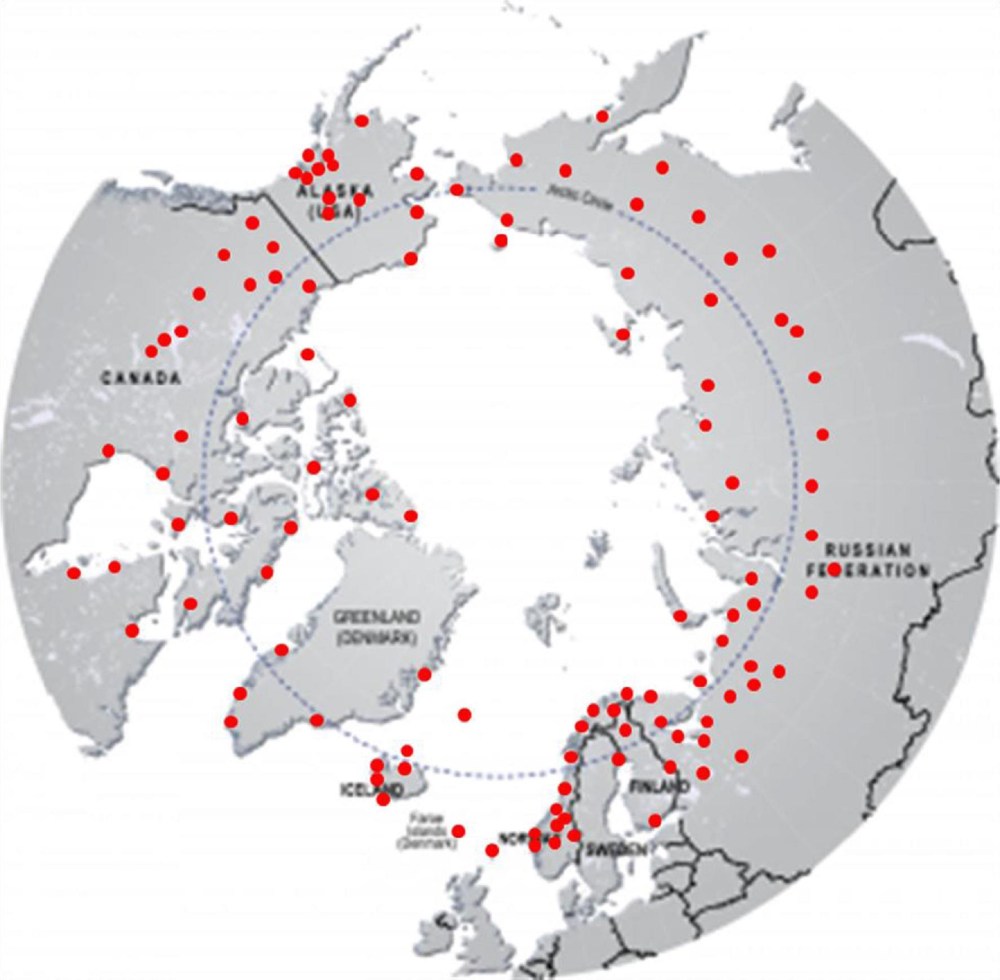
Locations of 118 arctic stations examined in this study and compared to observations at 50 European stations whose records averaged 200 years and in a few cases extend to the early 1700s.

The paper is: Arctic temperature trends from the early nineteenth century to the present W. A. van Wijngaarden, Theoretical & Applied Climatology (2015).  My synopsis: Arctic Warming Unalarming

c. Arctic Warmth Comes from Meridional Heat Transport, not CO2

4.  Hypothesis that rising CO2 will collapse the AMOC is flawed.

The “AMOC is collapsing” narrative goes like this:

Ocean circulation is driven by density differences, which depend on the salinity and the temperature of the water. Cold, salty water is heavier than warm, fresh water. When flowing water reaches Greenland, it becomes very cold and salty, causing it to sink and flow south, where the water warms and rises closer to the surface again. Some compare the process to a conveyor belt going around and around.
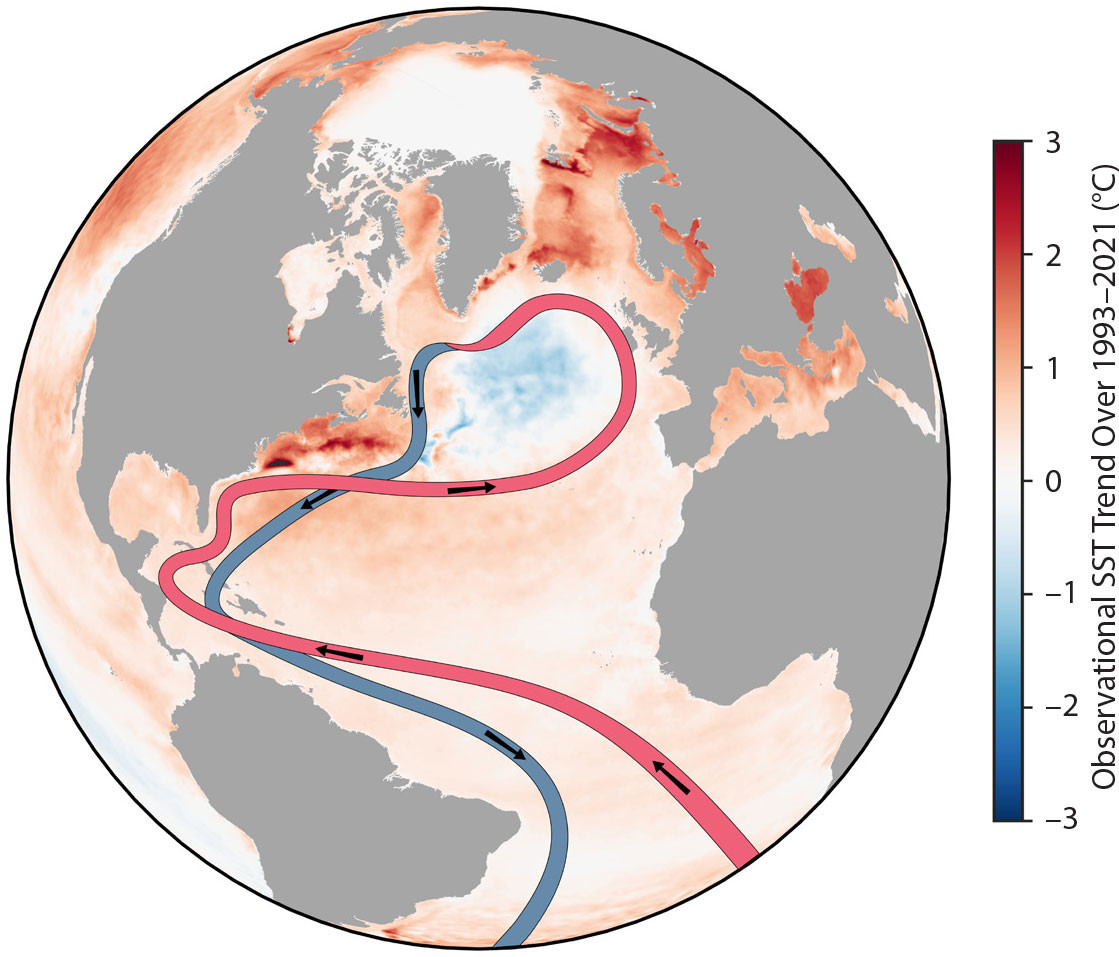
This graphic shows a highly simplified schematic of the Atlantic Meridional Overturning Circulation (AMOC) against a backdrop of the sea surface temperature trend since 1993 from the Copernicus Climate Change Service (https://climate.copernicus.eu/). Image credit: Ruijian Gou. > High res figure.

Changing the salinity of the water messes up the way the water flows. That’s why the melting of the Greenland ice sheets is a big problem: It’s injecting a ton of freshwater into the ocean far north, where the water is usually very salty. The more freshwater, the weaker the circulation—not to mention that atmospheric temperatures are also increasing, which also makes water lighter. The new study shows that if the density dynamics change enough, the conveyor belt will eventually stop moving, aka “collapse.” That means it won’t transport any water, saline, or heat across the globe.

So the scenario is that supposed amplified Arctic warming will cause iceberg calving and glacial melting, and the freshwater will slow and eventually stop the AMOC.  Firstly, the above study shows seafloor configuration has greater impact than salinity changing.  Secondly, the spread of freshwater is not so simple.

Role of the Labrador Current in the Atlantic Meridional Overturning Circulation response to greenhouse warming, Shan et al. 2024

Abstract

Anthropogenic warming is projected to enhance Arctic freshwater exportation into the Labrador Sea. This extra freshwater may weaken deep convection and contribute to the Atlantic Meridional Overturning Circulation (AMOC) decline. Here, by analyzing an unprecedented high-resolution climate model simulation for the 21st century, we show that the Labrador Current strongly restricts the lateral spread of freshwater from the Arctic Ocean into the open ocean such that the freshwater input has a limited role in weakening the overturning circulation. In contrast, in the absence of a strong Labrador Current in a climate model with lower resolution, the extra freshwater is allowed to spread into the interior region and eventually shut down deep convection in the Labrador Sea. Given that the Labrador Sea overturning makes a significant contribution to the AMOC in many climate models, our results suggest that the AMOC decline during the 21st century could be overestimated in these models due to the poorly resolved Labrador Current.

5.  The “Tipping Point” scare is unscientific.

Uncertainties too large to predict tipping times of major Earth system components from historical data, Ben-Yami et al. 2024

Abstract

One way to warn of forthcoming critical transitions in Earth system components is using observations to detect declining system stability. It has also been suggested to extrapolate such stability changes into the future and predict tipping times. Here, we argue that the involved uncertainties are too high to robustly predict tipping times. We raise concerns regarding

(i) the modeling assumptions underlying any extrapolation of historical results into the future,

(ii) the representativeness of individual Earth system component time series, and

(iii) the impact of uncertainties and preprocessing of used observational datasets, with focus on nonstationary observational coverage and gap filling.

We explore these uncertainties in general and specifically for the example of the Atlantic Meridional Overturning Circulation. We argue that even under the assumption that a given Earth system component has an approaching tipping point, the uncertainties are too large to reliably estimate tipping times by extrapolating historical information.

“The conclusions of this study are certainly in line with my understanding of the current state of the art,” says Gavin Schmidt, a climate scientist and professor at Columbia University and the director of NASA’s Goddard Institute for Space Studies (GISS). Schmidt was not involved in the new work, but has extensively researched climate variability and systems like AMOC.

I have not been impressed by previous or recent efforts to predict upcoming tipping points in either AMOC or ice sheets — there is more going on than just patterns in time series and we still don’t have sufficiently complex and calibrated models to have a robust idea of what will happen,” says Gavin Schmidt, director of NASA’s GISS.

Footnote

In researching for this post I discovered an informative website Ocean to Climate  Science news & articles on topics related to ocean and climate by oceanographer Sang-Ki Lee.  Some additional examples of studies for further reading on this issue are below.

Gulf Stream’s fate to be decided by climate ‘tug-of-war’

A stable Atlantic Meridional Overturning Circulation in a changing North Atlantic Ocean since the 1990s

Detectability of an AMOC Decline in Current and Projected Climate Changes

Global surface warming enhanced by weak Atlantic overturning circulation

Nonstationarity of the Atlantic Meridional Overturning Circulation’s Fingerprint on Sea Surface Temperature


More Political Ignorance on Energy Realities

Professor Ian Plimer schools a politico climate change “authority” in the above interview aired by Sky News Australia. For those preferring to read, a transcript is below lightly edited from the closed captions.

Climate Change authority Matt Kean, former Liberal treasurer of New South Wales, has lashed out at nuclear energy advocates, accusing them of being delay mongers trying to prevent renewables from succeeding. He labeled the push for nuclear and more gas as quote:

An illiberal drive to intervene in the market-led energy transition.”

Also he went on to say that the delay mongers have latched onto nuclear power despite the overwhelming evidence that it can only drive up energy bills, can only be more expensive and can only take too long to build this. In a cost of living crisis it seems to me that people calling for gas to be included in the capacity investment scheme are trying to stop renewables. Ian, I’m very very interested in your response to Matt K’s claims there.

Well this is just sheer stupidity. Mr Kean should know that when Finland put in its reactors, their latest reactors, the cost of electricity went down. And both the retailer and the wholesaler also had lower costs. So we have evidence very recently. The Page Research Center recently did a study on the cost of energy. This was done by Gerard Holland and he looked at solar and wind, he looked at nuclear, looked at gas and at coal.

By far the most expensive energy in Australia is solar and wind. This is considering the total costs, the land use changes, putting in the new power lines and so forth. Nuclear is quite cheap compared with that, gas is also cheap, as is coal. Coal’s the cheapest and that’s because we already have the infrastructure for coal.

Now what Mr. Kean doesn’t say is that solar and wind are not reliable, whereas nuclear, gas and coal are reliable. He also doesn’t say that solar and wind have a very short life less than 20 years. Whereas nuclear is at least 60 years for a nuclear power plant; more than 40 years for gas; more than 50 years for coal.

Moreover, he doesn’t say that our future demands for energy are going to increase enormously. We’re already using 10% of energy for data centers and with AI it’s going to be a lot higher. His real concern is that the practical economics of the nuclear lobby groups are starting to frighten renewables promoters; the practical economics of the gas groups are starting to frighten the wind and solar people.

These are the cheapest and most reliable and best forms of energy we can have in a country like Australia. And yet we’ve got all these foreign corporations who are running the solar and running the wind projects who are lining up for for their subsidies. And the subsidies make the renewable energy viable and profitable. The subsidies must keep getting renewed and he’s getting worried that that the whistle is going to be blown on this.

Worldwide, nuclear yields slightly more electricity than renewables.

We see around the world that we can have cheap reliable energy for very long periods of time from Nuclear. So I recommend that viewers look at Gerard Holland’s report from the Page Research Center. He aired these findings at the AIC conference on Tuesday, They show that we are going down the wrong path. We’ve got far too many vested interests whispering in Mr Kean’s ear. He doesn’t understand the fundamentals of energy generation and he doesn’t understand the fundamental weaknesses of solo and wind.

And I do love his comment about the illiberal drive to intervene in the market-led energy transition. When there has been so much market manipulation like the subsidies. It’s just wishful thinking to pretend that renewables are being led by the market, as though it were purely organic.

I’ve got an early Lefty losing it for you. It’s from the New Zealand greens:
Coal, don’t dig it, leave it on the ground, get with it.

What do you say to the New Zealand greens Professor Plimer. I think they’ve been taking some of Kamala Harris scripts and talking from them. I have no idea what they’re talking about. But we do know that the New Zealand coals on the west coast of South Island are exceptionally clean with very high calorific value, and very low Ash, They are prized coals.

New Zealand does have energy from other sources; from oil in and gas in the Taranaki Basin and some geothermal energy. But the New Zealand coals are some of the best in the world I have no idea what they’re trying to say except that perhaps they they want New Zealand to become even more backward.

Why They Lie About Nuclear Power

Cliff Reece reports on the reasons for anti-nuclear distortions in his Spectator Australia article  Australia is already a successful nuclear nation.  Excerpts in italics with my bolds and added images. H/T John Ray
ANSTO – the Australian Nuclear Science and Technology Organisation – recently celebrated 70 years since Australia’s nuclear age began in Sydney.  ANSTO is the home of Australia’s most significant landmark and national infrastructure for research. Thousands of scientists from industry and academia benefit from gaining access to state-of-the-art instruments every year.

Thousands of visitors, including many schoolchildren, have safely toured the site at Lucas Heights, which is located 40km southwest of the Sydney CBD. They had the opportunity to learn a great deal about nuclear science as a result of that experience.

I recently became one of those visitors when I was invited to a 3-hour escorted tour of their facilities. As former Executive Director of the National Safety Council of Australia (NSW/ACT) I was particularly interested in their WHS procedures as well as the management of waste, as the latter could impact on the wider community if poorly managed.

What impressed me most was seeing just how advanced we are as a nuclear nation. Despite being relatively small in scale compared to a full civil nuclear energy plant, it has much the same range of issues and complexities to deal with. And it certainly appears to successfully do so at both their Sydney and Melbourne campuses.

The obvious question is, why is the Albanese Labor-Greens government, together with the Teals, opposed to extending our obvious expertise into producing nuclear energy on a commercial scale, as proposed by Opposition Leader Peter Dutton’s LNP?

As you’d expect, there are a number of reasons for both their reluctance to accept nuclear despite it being cheap, reliable and emissions-free and their manic obsession with unreliable, hugely expensive, and environmentally/socially disastrous wind, solar, and battery renewables.

Political factors play a major part. The Greens and Teals are
directly opposed to nuclear, but for different reasons.

The Greens have shown beyond doubt that they want to disrupt society across as many issues as possible. They are doing this on a regular basis – even appearing to stand with crowds that hold sympathies toward recognised terrorist groups.

People who think the Greens are still a well-meaning environmental group like they were under Bob Brown are fooling themselves – they are not!

In the case of the Teals, they started life as political entities via funding from Climate 200, whose primary financial supporters are deeply entrenched in the lucrative and heavily taxpayer-subsidised renewables industry.  The Teals are ignorant pawns in the high-stakes game of climate change and the hysterical pursuit of ‘saving the planet’.

There is a lot of money involved in this issue and ordinary Australians are being played by the so-called elites, including left-wing mainstream media such as the ABC.

A good example is the almost total lack of media reporting on the very recent and hugely important US Department of Energy’s Nuclear Lift-off Report that includes significant findings:

The system cost of electricity with nuclear and renewables combination is 30 per cent lower than just renewables.

The jobs from nuclear are 50 per cent higher paying than solar or wind.

⁠⁠Nuclear provides the lowest emissions, is the most reliable form of energy production, has the lowest land use requirement, and lowest material usage.

The report also outlines a pathway for the USA to reach their ambition to triple their nuclear energy capacity by 2050, in direct contradiction of our government’s refusal to even legalise nuclear energy.

It also directly contradicts the policy position of the Albanese government.  The report debunks repeated claims that nuclear is ‘too expensive’ and will ‘increase power bills’ and outlines various other benefits of nuclear energy.

The DoE report could not disagree more with Australian anti-nuclear campaigners and the Albanese Labor-Greens government, Teals, and other sources of ignorance.

Their report also completely debunks the much-criticised report produced by CSIRO GenCost that our Minister for Climate Change and Energy, Chris Bowen, refers to constantly as his renewables crusade ‘Bible’.   This is despite the fact that the CSIRO GenCost report totally failed to accurately estimate the likely total cost of renewables compared to nuclear.

It also used in its modelling a 30-year life for a nuclear plant instead of the far more accurate 80 years. This created a false financial outcome by not comparing the total cost of nuclear with renewables over an 80-year period.

It also totally neglected the fact that waste management costs for renewables will be many times greater than for nuclear. There will be the need to replace wind turbines and solar panels three or four times during an 80-year period.  And who is going to be responsible for dismantling and disposing of the millions of components – some of which have toxic ingredients?

Many people, including some of our top scientists and engineers, believe that the CSIRO GenCost report was simply designed to support the Albanese government’s narrative as depicted in their childish three-eyed fish media splash some months ago.

‘Reckless’: Labor’s nuclear memes ‘undermine AUKUS subs deal’ Labor MPs have been accused of undermining the AUKUS submarine deal with ‘reckless’ anti-nuclear propaganda, as the Coalition calls on Anthony Albanese to rule out a scare campaign. Source: The Courier Mail

We need a government that protects our borders, controls immigration, decreases our cost-of-living, and helps young people to buy their own homes.  It’s becoming clearer on a daily basis that none of that will happen under the current Labor-Greens government.

One major impediment to reducing living expenses is the rising cost of energy.  Renewables alone will continue to increase the cost of electricity and that will in turn increase the prices paid at our shops and for commercial or residential electricity usage.

Nuclear energy will add to the range of resources available to us – as it has done in many other countries. Nuclear power plants operate in 32 countries and generate about a tenth of the world’s electricity. Most are in Europe, North America, and East Asia. The United States is the largest producer of nuclear power, while France has the largest share of electricity generated by nuclear power, at about 70 per cent.

The only way we are going to catch up with the rest of the world in relation to nuclear energy production is to replace our current government with Peter Dutton’s Liberal-National Coalition.  That might be hard to accept for some people – but it’s an undeniable fact.


Legal Fight to Stop EPA Rule Closing Power Plants

Update on ominous overreach by Biden/Harris regime comes from Just the News  While the SCOTUS denies request to block EPA power plant rule, challengers vow to continue fight.  As explained below, EPA intends to require expensive and impractical CO2 Capture and Storage on all power plants using carbon fuels, thereby forcing shutdowns. Excerpts in italics with my bolds and added images,

Analysts say that if the rule is implemented, more than 5 million
people could experience blackouts, some lasting for 41 hours.

The Supreme Court ruled against a bid to block the EPA’s power plant rule while legal challenges make their way through the courts, but West Virginia, which is leading the coalition of states challenging the rule, vows the fight isn’t over. 

In a brief order, Justices Brett Kavanaugh and Neil Gorsuch said that the applicants “have shown a strong likelihood of success on the merits as to at least some of the challenges to the” EPA’s rule.

However, the justices explained, the stay wasn’t needed because compliance requirements wouldn’t begin until June 2025, which means the applicants wouldn’t “suffer irreparable harm” before the Court of Appeals for the D.C. Circuit decides the merits of the case. Injunctive relief, such as sought here, requires clear and convincing proof that the harm be immediate and irreparable.

The lower court is expediting the case, the justices noted, meaning it would be resolved in the court’s current term. Afterward, the case would still have time to return to the Supreme Court, if it’s warranted. 

The EPA rule, which was finalized in April, requires that coal-fired power plants be fitted with carbon capture technology controlling 90% of their carbon dioxide emissions by 2039, and new gas-fired power plants will need to do the same starting in 2035, depending on the amount of runtime they have.

Energy analysts Isaac Orr and Mitch Rolling revealed that the EPA failed to do a proper analysis of the impacts of the rule, and if implemented, over 5 million people will experience blackouts, some lasting for 41 hours. While the EPA has defended the rule and argues that carbon capture is “well proven,” its own modeling showed it expected only one coal plant and no gas plants to be fitted with the technology as far out as 2055.

Two dozen states led by West Virginia filed a lawsuit against the EPA in May, arguing that the agency exceeded its authority with the rule. Utilities and industry groups also filed legal challenges to the rule. In July, the U.S. Court of Appeals for the D.C. Circuit denied the parties’ requests to block the rules while the courts considered the challenges, and the court ruled the applicants wouldn’t succeed on the merits of their case.

In court filings, the EPA noted that the lower court ruled the applicants are unlikely to succeed in arguing the agency exceeded its authority, and it stood by the rule and its carbon capture requirements, arguing that the technology has been “adequately demonstrated.”

West Virginia Attorney General Patrick Morrisey said in a
statement on the high court’s ruling that the fight isn’t over.

“This is not the end of this case: we will continue to fight through the merits phase and prove this rule strips the states of important discretion while forcing plants to use technologies that don’t work in the real world,” Morrisey said.

In 2022, the Supreme Court had sided with West Virginia and other states in a challenge to the Obama-era “Clean Power Plan.” Morrisey said that the high court had made clear limits to what the EPA can do, and the Biden administration’s “green new deal agenda” is ignoring those limits.

“This rule is yet another attempt of unelected bureaucrats to push something the law doesn’t allow,” Morrisey said.

Indiana, Alabama, Alaska, Arkansas, Florida, Georgia, Idaho, Iowa, Kentucky, Louisiana, Mississippi, Missouri, Montana, Nebraska, New Hampshire, North Dakota, Oklahoma, South Carolina, South Dakota, Tennessee, Texas, Utah, Virginia, and Wyoming joined the application to the Supreme Court.

Bureaucrats Against Democracy

David Blackmon provides the background in his Daily Caller article Bureaucrats Worry Democracy Will Get In The Way Of Their Climate Agenda.  As the above image suggests some of those in power have not shied away from acting in defiance of democratic norms. By imposing climate policies and regulations they have diminished the livelihoods and freedoms of the public they supposedly serve. Excerpts in italics with my bolds and added images.

I have frequently written over the last several years that the agenda of the climate-alarm lobby in the western world is not consistent with the maintenance of democratic forms of government.

Governments maintained by free elections, the free flow of communications and other democratic institutions are not able to engage in the kinds of long-term central planning exercises required to force a transition from one form of energy and transportation systems to completely different ones.

Why? Because once the negative impacts of vastly higher prices for all forms of energy begin to impact the masses, the masses in such democratic societies are going to rebel, first at the ballot box and if that is not allowed by the elites to work, then by more aggressive means.

This is not a problem for authoritarian or totalitarian forms of government, like those in Saudi Arabia, China and Russia, where long-term central planning projects invoking government control of the means of production is a long-ingrained way of life. If the people revolt, then the crackdowns are bound to come.

This societal dynamic is a simple reality of life that the pushers of the climate alarm narrative and forced energy transition in western societies have been loath to admit. But, in recent days, two key figures who have pushed the climate alarm narrative in both the United States and Canada have agreed with my thesis in public remarks.

In so doing, they are uttering the quiet part about
the real agenda of climate alarmism out loud.

Last week, former Obama Secretary of State and Biden climate czar John Kerry made remarks about the “problem” posed by the First Amendment to the U.S. Constitution that should make every American’s skin crawl. Speaking about the inability of the federal government to stamp out what it believes to be misinformation on big social media platforms, Kerry said: “Our First Amendment stands as a major block to the ability to be able to just, you know, hammer it out of existence,” adding, “I think democracies are, are very challenged right now and have not proven they can move fast enough or big enough to deal with the challenges that we are facing.”

Never mind that the U.S. government has long been the most focused purveyor of disinformation and misinformation in our society, Kerry wants to stop the free flow of information on the Internet.

The most obvious targets are Elon Musk and X, which is essentially the only big social media platform that does not willingly submit to the government’s demands for censoring speech.

Kerry’s desired solution is for Democrats to “win the ground, win the right to govern by hopefully having, you know, winning enough votes that you’re free to be able to, to, implement change.” The change desired by Kerry and Vice President Kamala Harris and other prominent Democrats is to obtain enough power in Congress and the presidency to revoke the Senate filibuster, pack the Supreme Court, enact the economically ruinous Green New Deal, and do it all before the public has any opportunity to rebel.

Not to be outdone by Kerry, Deputy Prime Minister Chrystia Freeland of Canada, who is a longtime member of the board of trustees of the World Economic Forum, was quoted Monday as saying: “Our shrinking glaciers, and our warming oceans, are asking us wordlessly but emphatically, if democratic societies can rise to the existential challenge of climate change.

It should come as no surprise to anyone that the central governments of both Canada and the United States have moved in increasingly authoritarian directions under their current leadership, both of which have used the climate-alarm narrative as justification. This move was widely predicted once the utility of the COVID-19 pandemic to rationalize government censorship and restrictions of individual liberties began to fade in 2021.

Two sides of the same coin.

Frustrated by their perceived need to move even faster to restrict freedoms and destroy democratic levers of public response to their actions, these zealots are now discarding their soft talking points in favor of more aggressive messaging.

This new willingness to say the quiet part out loud
should truly alarm anyone who values their freedoms.

Dearth of Green Jobs in UK

Chris Morrison provides the analysis in his Daily Sceptic article ONS Reveals the Pitiful Number of New Green Jobs Being Created in the U.K. Economy.  Excerpts in italics with my bolds and added images.

The problem with the green U.K. economy, and its associated destruction of the hydrocarbon environment, is that there are very few jobs being created. The few remaining ‘workers’ in the ruling Labour party are starting to rumble all the luxury boondoggles that are set to further decimate well-paid jobs in their communities. The figures compiled by the Office for National Statistics (ONS), trying to estimate the actual number of green jobs, are always a highly creative hoot, and the latest batch are no exception. Many jobs identified are simply displacement activity, with one repair or maintenance occupation taking over from another. Around 6% of the total are to be found in ‘environmental charities’, an interesting way to describe elite billionaire political funding to push the Net Zero fantasy. Such is the seeming desperation to rustle up a green job, the ONS even includes repairing home appliances, controlling forest fires and separating hydrogen by carbon dioxide-producing electrolysis.

The latest ‘estimates’ from the ONS cover 2021 and 2022, and they are said to show an increase in both years. But as the graph below reveals, the rises are pitiful over a decade, and the 2022 estimate of 639,000 is less than 2% of jobs in the economy as a whole.

As can be seen, environmental charities employ 40,000 people, almost as many as the 47,000 that work in renewable energy. But the charities figure does not include all those make-work jobs in environmental consultancy and education or what is described as in-house environmental activities. If all the displacement, invented or re-badged jobs in repair, electric vehicles, waste disposal, water treatment, energy efficiency, Net Zero promotion, teaching and the ubiquitous bureaucracy are rightly ignored, it is unlikely that more than 150,000 new jobs have been created.

Fairly small pickings, it might be thought, from all the cash sprayed at subsidy-hunting chancers over at least two decades. Even worse, any new jobs are easily offset by the occupations being destroyed in steel making, refining hydrocarbons, coal mining and oil and gas exploration. Fracking for gas would transform a number of deprived areas in the U.K. at little environmental cost, as it has done in the U.S. Energy security would likely be achieved, and the tax take would be considerable. But fracking is anathema to the major political parties in the U.K., except the emerging Reform party.Last week saw some real push back on the madness of Net Zero and the so-called green economy. The boss of GMB, the third largest trade union in the country, told the annual Labour party conference that its plans to decarbonise the energy network by 2030 will cost up to one million jobs, decimate working communities and push up bills for the poorest. According to Smith, Government’s plans for Net Zero were “bonkers” and “fundamentally dishonest”. In a week when it was revealed that British consumers, both industrial and private, had some of the highest electricity prices in the developed world, he charged that current energy policy amounted to virtue signalling by politicians. He accused them of exporting jobs and importing virtue because the jobs were being created abroad rather than in the U.K.

Meanwhile, a recent paper published in Science came to a damning conclusion that will not surprise sceptics, namely that 96% of climate policies over the last 25 years, ultimately designed to reduce carbon dioxide emissions, have been a waste of money. “That’s where green spin has got us,” writes George Monbiot, although these days the Guardian’s extremist-in-chief seems to have given up on all life enhancing processes that run the risk of disturbing anything on the planet. “Finally, 15 years and a trillion dollars too late, George Monbiot says what sceptics have been saying all along,” observes the sceptical journalist Jo Nova. “Nearly every single carbon reduction scheme is a useless make-work machination that creates the illusion that the government is doing something,” she says.

As we can see, the ONS survey is full of these make-work schemes providing jobs that can only exist by rigging free markets and providing eye-watering subsidies from consumers and taxpayers. As the more concerned trade unionists can see, much of the cost of these fantasy ventures falls on the poorest members of society forced to pay higher prices for many of the basic essentials of life. In addition, as we have observed, most green schemes make mugs of the wider investing public, with the RENIXX, a stock capitalisation global index of the 30 largest renewable industrial companies, showing near zero growth since it was started in 2006. None of this matters, of course, to the Mad Miliband and his weird wonks at the U.K. Department of Energy, who are ramping up ideological plans to hose cash at daft ideas like carbon capture, battery energy storage and hydrogen production.

Not only is CO2 Capture and Storage wildly impractical, its aim is to deprive the biosphere of plant food.

But all is not lost on the jobs front – opportunities must be taken when they occur. Earlier this year, Gary Smith was able to point to some new employment clearing away the animal casualties of wind farm blades. “It’s usually a man in a rowing boat, sweeping up the dead birds,” he observed.

Footnote Q & A:

Q:  What is the difference between Golf and Government?

A:  In Government you can always improve your lie.

–Anonymous Source

Resources

Climate Policies Fail in Fact and in Theory

Investors Beware Green Equipment Companies

Green Deal Cuts EU Emissions, Doubles Them Elsewhere

Investors Beware Green Equipment Companies

Steve Goreham explains in his Heartland article Why Are Renewable Equipment Companies Such Poor Investments? Excerpts in italics with my bolds and added images.

Headlines promote renewable energy equipment companies as part of efforts to transition to Net Zero carbon dioxide emissions by 2050. Wind and solar system providers, electric vehicle manufacturers, green hydrogen producers, and other green equipment firms form a growing share of world industry. But renewable equipment firms suffer poor market returns, so investors should beware.

The Renewable Energy Industrial Index (RENIXX) is a global stock index of the 30 largest renewable energy industrial companies in the world by stock market capitalization. Current RENIXX companies include Enphase Energy, First Solar, Orsted, Plug Power, Tesla, and Vestas.

IWR of Germany established the RENIXX on May 1, 2006, with an initial value of 1,000 points. This month, the RENIXX stood at 1,013 points, essentially zero value growth over the last 18 years. In comparison, the S&P 500 Index more than quadrupled over the same period. The RENIXX is down three years in a row from 2021, losing about half its value.

Wind turbine manufacturers faced serious financial challenges over the last three years, even with rising sales. Rising costs, high interest rates, and project delays continue to impact the profitability of wind projects and equipment suppliers. The stock of Denmark-based Vestas Wind Systems, the world’s largest supplier, rose only 7% over the last 16 years, and its stock price has fallen 58% from a high in 2021. Vestas struggled to make a profit in 2022 and 2023 and suspended dividends to shareholders.

Other major wind suppliers have also been poor investments for shareholders. The stock of Siemens Gamesa, the number two turbine maker, is down 65% since a peak in 2021. Gamesa reported a loss of €4.4 billion in 2023 and received a €7.5 billion bailout from the German government that same year. Other top wind suppliers suffered major stock price declines since 2021, including Goldwind of China (down 77%) and Nordex of Germany (-36%).

Some 80% of the world’s solar panels are manufactured in China and the top six suppliers reside in China. The solar panel industry is beset by overcapacity and severe competition. Stock prices of the top seven suppliers have all declined by more than 50% since 2021. The stock of U.S. firm First Solar has risen since 2021 but remains below its all-time high price reached in 2008.

Tesla, which was founded in 2003, remained the only pure-play, publicly traded EV stock until 2018. By the end of 2021, Tesla’s value had soared to over $1 Trillion, boasting a market value more than Toyota, Volkswagen, Mercedes-Benz, General Motors, Ford, BMW, and Honda combined. But Tesla is the exception.

But in most cases, electric vehicle (EV) companies have been very poor investments. Between 2020 and 2024, 31 EV companies went public on U.S. stock exchanges. Only one of these 31 companies, the Chinese firm Li Auto, saw its price rise since the initial public offering (IPO). Thirty EV firms saw their stock prices fall, most precipitously.

EV company price declines from the IPO price include Fisker (-99%), Nikola (-94%), NIO (-50%), Lucid Group (-75%), and Rivian (-88%). Six others of the 31 companies went bankrupt. Tesla and Chinese firms BYD and Li Auto are the only EV firms profitable today.

ChargePoint is the world’s largest dedicated EV charger company (behind EV manufacturer Tesla), with over 25,000 charging stations in the U.S. and Canada. ChargePoint went public in 2021 by merging with Switchback Energy Acquisition Corporation, valued at $2.4 billion. The firm’s value today is about $585 million, down 76% since 2021.  For fiscal year 2024, ChargePoint lost $458 million on revenue of $507 million.

It’s not clear that any charging company can make money. High-speed, 50-kilowatt EV chargers cost about five times as much as traditional gasoline pumps. Around 80% of EV charging is done at home, reducing the demand for public charging. ChargePoint, EVgo, Wallbox, Allego, and Blink Charging are all valued today at small fractions of their original IPO price. No EV charger firm is profitable, even after continuing to receive large government subsidies.

Plug Power is a leading supplier of hydrogen energy systems, including battery-cells for hydrogen vehicles and electrolyzers to produce green hydrogen fuel. Founded in 1997, the company went public in October 1999 at a split-adjusted price of about $160 per share.

But during its 27-year history, Plug Power has never turned a profit. According to financial reports, the firm lost $1.45 billion in 2024, up from a loss of $43.8 million in 2018. Its current stock price is under two dollars per share.

Traditional established firms are finding that renewable equipment can be poor business. In 2023, Ford lost $4.7 billion on sales of 116,000 electric vehicles, or over $40,000 per vehicle. General Electric’s wind turbine business lost $1.1 billion in 2023.

The U.S. federal government provided subsidies to renewable equipment companies of between $7 billion and $16 billion per year between 2010 and 2022. But the Cato Institute estimates that because of the passage of the Inflation Reduction Act in 2022, subsidies will skyrocket to about $80 billion in fiscal year 2025.

EIA

Without the fear of human-caused climate change and
a rising level of government subsidies and mandates,
many of these green companies would not exist.

It’s doubtful that carbon dioxide pipelines, heavy electric trucks, offshore wind systems, green hydrogen fuel equipment, and EV charging stations would be viable businesses in unsubsidized capital markets.

During this last year, leading financial firms pulled back on their climate change pledges. Bank of America, JP Morgan, State Street, and Pimco withdrew from Climate Action 100+, which seeks to force companies and investment funds to address climate issues and adopt environmental, social, and governance (ESG) policies.

But it’s difficult to invest in renewable equipment companies
when they are losing money.


Wind Power Pollution and Hypocrisy in New England

Emmett Hare reports in City Journal Wind Power Debacle in New England.  Excerpts in italics with my bolds and added images.

A fractured turbine’s blade in Nantucket is causing
ongoing problems and frustrating local residents.

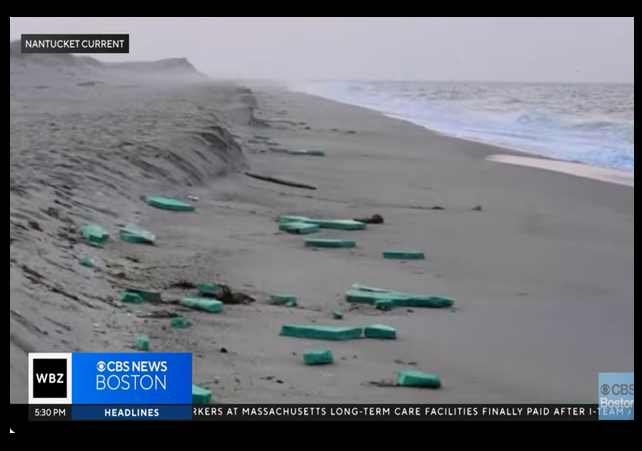
In mid-July, a blade from an offshore wind turbine operating 15 miles southwest of Nantucket fractured. A large amount of fiberglass, foam, and plastic debris fell into the ocean and began washing up on the island’s shores. The incident led to the closure of several beaches and a suspension of operations and construction for the massive Vineyard Wind project, a joint venture of Avangrid and foreign-owned Copenhagen Infrastructure Partners that has installed and operated ten of 62 planned turbines in the country’s largest wind farm.

At local meetings, Nantucket residents expressed concerns about officials’ handling of the turbine breakage and the environmental hazards of enormous fiberglass blades tumbling into the sea. In the past, they have also cited the project’s impact on marine wildlife and its visual impact on the town’s scenic beaches. A CNN report describing this “unusual and rare” event noted that the Coast Guard had retrieved a 300-foot piece of the shattered blade from local waters. The outlet reported that a spokesperson for GE Vernova, the wind-blade manufacturer, “couldn’t provide officials with the precise number of times something similar has happened at other wind farms around the world.”

Environmental groups, realizing the potential political implications of the fractured blade, downplayed the episode. The National Wildlife Federation (NWF), which avidly supports offshore wind farms, insisted that the damage was minor. “Compared to other energy disasters in the ocean like oil spills, this incident is fairly contained and easily cleaned up to prioritize the safety of marine life,” said Amber Hewett, senior director of offshore wind energy for the NWF. The Sierra Club emphasized that “the failure of a single turbine blade does not adversely impact the emergence of offshore wind as a critical solution for reducing dependence on fossil fuels and addressing the climate crisis.”

Whether the incident is “contained” remains in question. Debris from the broken turbine has been reported beyond Nantucket—in Martha’s Vineyard, Cape Cod, Rhode Island, and off the coast of Montauk, Long Island. The debris is breaking up into smaller pieces resembling shattered glass, with yet-unknown effects on Nantucket’s marine habitat. Vineyard Wind cautioned that “[m]embers of the public should avoid handling debris” and promised to “bag, track, and transport all debris to proper storage as soon as possible.” It remains to be seen whether simple avoidance will suffice, especially given the possibility of debris entering the human food chain through area fish.

The Massachusetts Clean Energy Center (MassCEC) Wind Technology Testing Center in Boston has taken delivery of a 107-meter wind turbine blade designed for GE Renewable Energy’s Haliade-X offshore wind turbine.

While this event may be “unusual and rare” in an absolute sense, many wind farms have seen broken turbines, fires, and sea-floor damage. And Nantucket’s situation is particularly dire, given that Vineyard Wind’s turbines are by far the largest ever constructed in the United States: the blade that fragmented on July 13 was over 350 feet long and weighed 57 tons.

Even when functioning as intended, wind farms can negatively affect the surrounding environment. Wildlife advocates have claimed that sonic and subsonic vibrations from the construction and operation of turbines disrupt the navigational senses of marine mammals like whales and dolphins and can cause beachings. Turbines are also responsible for the deaths of countless birds. Clammers and fishermen are wary of working in areas close to wind farms, out of concern for equipment snags on buried power lines and risks to their vessels of navigating between the turbines in bad weather.

French Fishermen Join U.S. Fishermen in Fighting Offshore Wind – IER

The Nantucket residents questioning the safety of wind turbines generally support alternative energy. Indeed, in an FAQ post on the town government’s webpage, officials made the point that allowing wind projects to avoid scrutiny might allow traditional fossil fuel producers to evade similar oversight: “If [the Bureau of Ocean Energy Management] guts the provisions of these longstanding federal laws protecting culturally and environmentally significant places to facilitate expedient green energy projects, fossil fuel developers will exploit the bad precedent to undercut regulation of harmful projects for decades to come.”

Nonetheless, the Nantucket residents have seen themselves branded as tools of the fossil-fuel industry by well-financed lobbyists and promoters of richly subsidized wind power. They have also been subject to physical attacks. At a city council meeting in Newport, Rhode Island, a field director for Climate Jobs Rhode Island, David Booth, was charged with simple assault and disorderly conduct after accosting a speaker and seizing a bag of turbine fragments that she had brought for her testimony. Booth allegedly appeared prominently in a photo on the campaign website of Rhode Island senator Sheldon Whitehouse, which was subsequently removed without comment.

Debris in the water from Vineyard turbine blade

The wind-power industry has seen some of its planned projects cancelled in recent years due to swelling production costs and local opposition to the environmental and aesthetic impact of the colossal windmills. A report published by Brown University’s Climate and Development Lab in early 2024 suggested that much of the opposition to offshore wind was rooted in “misinformation,” “[c]onspiracy theories,” and cherry-picked information supplied by “right-wing think tanks.” It might prove beyond the powers of an academic paper to convince the residents of New England and coastal states that the fiberglass and foam washing up on their beaches is nothing more than a conservative talking point.

See Also:

The Short Lives of Wind Turbines

Green Deal Cuts EU Emissions, Doubles Them Elsewhere

The news and analysis from University of Groningen is reported at Science Daily European Green Deal: A double-edged sword for global emissions.  Excerpts in italics with my bolds and added images.

Greenhouse gas emissions will fall in the EU, but rise even more elsewhere

Summary:  The European Green Deal will bring down the emission of greenhouse gases in the European Union, but at the same time causes a more than a twofold increase in emissions outside its borders.

The European Union aims to be carbon-neutral by 2050 as part of the comprehensive Green Deal that was agreed upon four years ago. However, an analysis of the policy documents outlining the practical measures of the Green Deal shows that it will decrease carbon emissions in Europe, but also increase carbon emissions outside of the EU. This increase is more than double the amount of carbon emissions saved by the Green Deal. This analysis was published in Nature Sustainability on by an international team of scientists led by Klaus Hubacek, Professor of Science, Technology and Society at the University of Groningen.

The European Green Deal is a set of policies intended to fully decarbonize Europe by 2050, but it also includes measures for clean energy production and ecological restoration. Hubacek and colleagues from the United States and China carried out full supply chain analyses of the policy documents underlying the Green Deal. Their conclusion is that the Green Deal in its current form will lead to an increase in emissions in countries outside the EU by 244.8 percent compared to the Green Deal’s carbon reduction goal in the land, land use change, and forestry sector within EU borders.

Reasons to be Skeptical of Policies

One example is the measure to increase biodiversity in Europe by planting three billion trees. ‘However, trees require a lot of land that cannot be used to produce food. That means that food must be produced elsewhere, and to do this, land must be converted into cropland. This increases the carbon dioxide emission and reduces biodiversity,‘ says Hubacek. In this way, the EU would reduce carbon emissions within its borders, but ‘export‘ them to the countries that would produce our food, for example Africa or South America.

Of course, the Green Deal does contain a paragraph forbidding the import of products (such as meat or animal feed) for which woodland is converted to farmland. Hubacek is sceptical: ‘Nothing stops these other countries from growing products for Europe on existing farmland and felling forests to produce for the local market. There are simply too many uncertainties in these types of regulations.’ The Green Deal also calls for an increase in organic farming, but this requires more farmland in Europe. Hubacek: ‘Again, there is very little information available on the impact on land use.’

No free lunch

However, the scientists did not just reveal the negative impacts of the Green Deal on the rest of the world. They also looked at different scenarios to see if overall carbon reductions could be enhanced. ‘We found one very effective way to do this.’ says Hubacek, ‘By adopting the more plant-based “planetary health diet,” it is possible to save an enormous amount of carbon emissions.’ Another measure is to phase out food-based biofuels within the EU, which would reduce the amount of farmland needed and thus save carbon emissions and prevent biodiversity loss. Also, the EU could assist developing regions to increase their agricultural efficiency, which would also reduce land use.

Although the Nature Sustainability article shows that the European Green Deal in its present form could result in a net loss for the global environment, the scientists conclude that it can be remedied. ‘By adopting the planetary health diet, which is relatively simple’, says Hubacek. However, there is one more thing that needs to change, he stresses: ‘The programme is driven by techno-optimism, but our analysis underlines that there is no free lunch. I very much doubt that “Green Growth” is possible, as everything you produce requires an input of resources. So we really need to consume less.’ There is a strong sense of urgency now that global warming seems set to surpass the 1.5 degrees from the 1995 Paris Agreement, and many other planetary boundaries are also being overstepped. Hubacek: ‘It is time to implement measures that work.’

Comment:

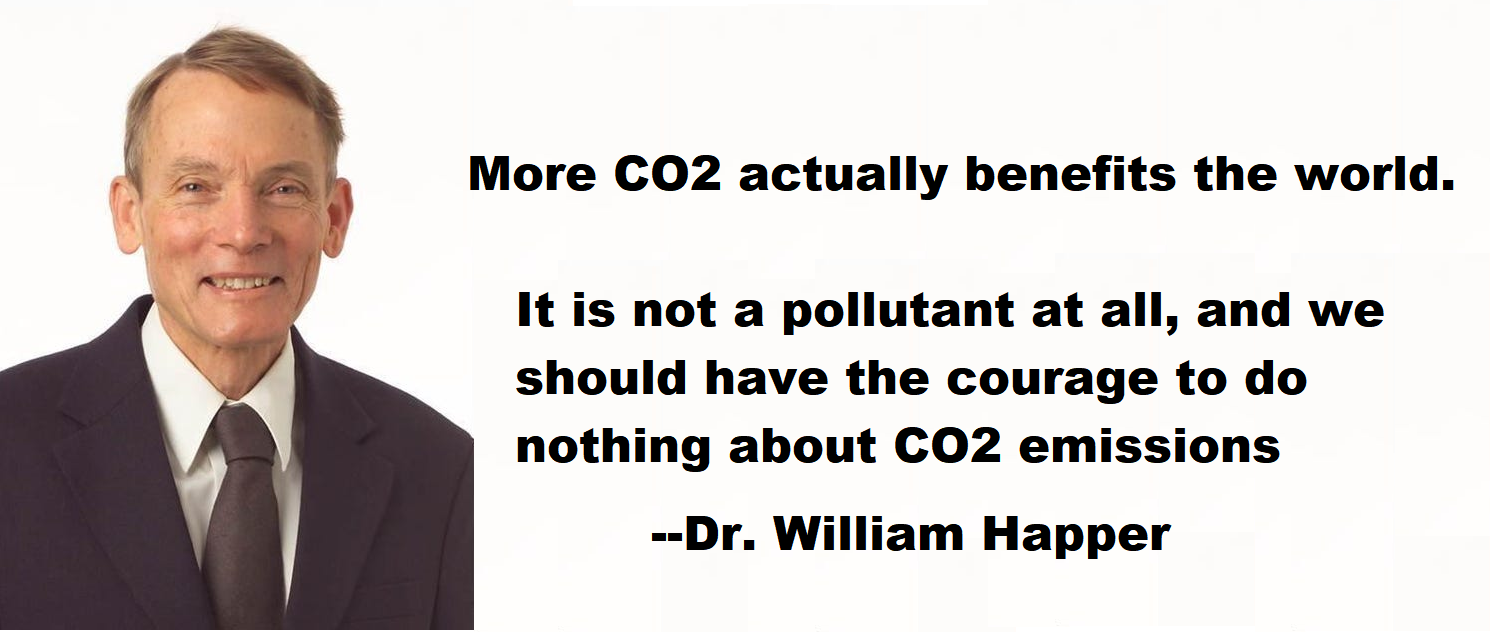
The authors share the IPCC notion of climate emergency caused by GHGs, but are practical enough to realize the proposed policies are counter productive.  I am among those who agree with Dr. Happer that the only climate crisis is coming from the torrent of ill-advised governmental policies that are not likely to reduce GHG emissions or temperatures, but will achieve great economic and social destruction.

See the series of four posts World of Hurt from Climate Policies

World of Hurt from Climate Policies-Part 1

See Also

Climate Policies Fail in Fact and in Theory


Beware “Fact Checking” by Innuendo

Kip Hansen gives the game away in his Climate Realism article Illogically Facts —’Fact-Checking’ by Innuendo.  Excerpts in italics with my bolds and added images.

The latest fad in all kinds of activism to attack one’s ideological opponents via “fact checking”.    We see this in politics and all the modern controversies, including, of course, Climate Science.

Almost none of the “fact checking sites” and “fact checking organizations” actually check facts.  And, if they accidentally find themselves checking what we would all agree is a fact, and not just an opinion or point of view, invariably it is checked against an contrary opinion, a different point of view or an alternative fact.

The resulting fact check report depends on the purposes of the fact check.  Some are done to confirm that “our guy” or “our team” is proved to be correct, or that the opposition is proved to be wrong, lying or misinformation.  When a fact is found to be different in any way from the desired fact, even the tiniest way, the original being checked is labelled a falsehood, or worse, an intentional lie. (or conversely, other people are lying about our fact!).   Nobody likes a liar, so this sort of fake fact checking accomplishes two goals – it casts doubt on the not-favored fact supposedly being checked and smears an ideological opponent as a liar.  One stone – two birds.

While not entirely new on the fact-checking scene, an AI-enhanced effort has popped to the surface of the roiling seas of controversyLogically Facts.  “Logically Facts is part of Meta’s Third Party Fact-Checking Program (3PFC) and works with TikTok in Europe. We have been a verified signatory of the International Fact-Checking Network (IFCN) since 2020 and are a member of the Misinformation Combat Alliance (MCA) in India and the European Digital Media Observatory (EDMO) in Europe.”source ]   Meta? “Meta Platforms…is the undisputed leader in social media. The technology company owns three of the four biggest platforms by monthly active users (Facebook, WhatsApp, and Instagram).” “Meta’s social networks are known as its Family of Apps (FoA). As of the fourth quarter of 2023, they attracted almost four billion users per month.”   And TikTok?  It has over a billion users.

I’m doubting that one can add up the 4 billion and the 1 billion to make 5 billion users of META and TikTok combined, but in any case, that’s a huge percentage of humanity any way one looks at it.

And who is providing fact-checking to those billion of people?  Logically Facts [LF].

And what kind of fact-checking does LF do?  Let’s look at an example that will deal with something very familiar with readers here:  Climate Science Denial.

The definition put forward by the Wiki is:

Climate change denial (also global warming denial) is a form of science denial characterized by rejecting, refusing to acknowledge, disputing, or fighting the scientific consensus on climate change.”

Other popular definitions of climate change denial include: attacks on solutions, questioning official climate change science and/or the climate movement itself.

If I had all the time left to me in this world, I could do a deep, deep dive into the Fact-Checking Industry.  But, being limited, let’s look, together, at one single “analysis” article from Logically Facts:

‘Pseudoscience, no crisis’: How fake experts are fueling climate change denial

This article is a fascinating study in “fake-fact-checking by innuendo”. 

As we go through the article, sampling its claims, I’ll alert you to any check of an actual fact – don’t hold your breath.   If you wish to be pro-active, read the LF piece first, and you’ll have a better handle on what they are doing.

The lede in their piece is this:

“Would you seek dental advice from an ophthalmologist? The answer is obvious. Yet, on social media, self-proclaimed ‘experts’ with little to no relevant knowledge of climate science are influencing public opinion.” 

The two editors of this “analysis” are listed as Shreyashi Roy [MA in Mass Communications and a BA in English Literature] and Nitish Rampal [ … based out of New Delhi and has …. a keen interest in sports, politics, and tech.]  The author is said to be [more on “said to be” in a minute…] Anurag Baruah [MA in English Language and a certificate in Environmental Journalism: Storytelling earned online from the Thompson Founation.]

Why do you say “said to be”, Mr. Hansen?  If you had read the LF piece, as I suggested, you would see that it reads as if it was “written” by an AI Large Language Model, followed by editing for sense and sensibility by a human, probably, Mr. Baruah, followed by further editing by Roy and Rampal.

The lede is itself an illogic.  First it speaks of medical/dental advice, pointing out, quite rightly, that they are different specializations.  But then complains that unnamed so-called self-proclaimed experts who LF claims “have little to no relevant knowledge of climate science” are influencing public opinion.   Since these persons are so-far unnamed, LF’s AI, author and subsequent editors could not possibly know what their level of knowledge about climate science might be.

Who exactly are they smearing here?

The first is:

“One such ‘expert,’ Steve Milloy, a prominent voice on social media platform X (formerly Twitter), described a NASA Climate post (archive) about the impact of climate change on our seas as a “lie” on June 26, 2024.”

It is absolutely true that Milloy, who is well-known to be an “in-your-face” and “slightly over the-top” critic of all things science that he considers poorly done, being over-hyped, or otherwise falling into his category of “Junk Science”, posted on X the item claimed. 

LF , its AI, author and editors make no effort to check what fact/facts
Milloy was calling a lie, or to check NASA’s facts in any way whatever.

You see, Milloy calling any claim from NASA “a lie” would be an a priori case of Climate Denial: he is refuting or refusing to accept some point of official climate science.

Who is Steve Milloy? 

Steve Milloy is a Board Member & Senior Policy Fellow of the Energy and Environment Legal Instituteauthor of seven books and over 600 articles/columns published in major newspapers, magazines and internet outlets.  He has testified by request before the U.S. Congress many times, including on risk assessment and Superfund issues.  He is an Adjunct Fellow of the National Center for Public Policy Research.

“He holds a B.A. in Natural Sciences, Johns Hopkins University; Master of Health Sciences (Biostatistics), Johns Hopkins University School of Hygiene and Public Health; Juris Doctorate, University of Baltimore; and Master of Laws (Securities regulation) from the Georgetown University Law Center.”

It seems that many consider Mr. Milloy to be an expert in many things.

And the evidence for LF’s dismissal of Milloy as a “self-proclaimed expert”  having “little to no relevant knowledge of climate science”?  The Guardian, co-founder of the climate crisis propaganda outfit Covering Climate Nowsaid “JunkScience.com, has been called “the main entrepôt for almost every kind of climate-change denial”” and after a link listing Milloy’s degrees, pooh-poohed him for “lacking formal training in climate science.”  Well, a BA in Natural Sciences might count for something. And a law degree is not nothing. The last link which gives clear evidence that Milloy is a well-recognized expert and it is obvious that the LF AI, author, and editors either did not read the contents of the link or simply chose to ignore it.

Incredibly, LF’s next target is “… John Clauser, a 2022 Nobel Prize winner in physics, claimed that no climate crisis exists and that climate science is “pseudoscience.” Clauser’s Nobel Prize lent weight to his statements, but he has never published a peer-reviewed paper on climate change.“

LF’s evidence against Clauser is The Washington Post in an article attacking not just Clauser, but a long list of major physicists who do not support the IPCC consensus on climate change:  Willie Soon (including the lie that Soon’s work was financed by fossil fuel companies) , Steve Koonin, Dick Lindzen and Will Happer.   The Post article fails to discuss any of the reasons these esteemed, world-class physicists are not consensus-supporting club members. 

Their non-conforming is their crime.  No facts are checked.

LF reinforces the attack on world-renown physicists with a quote from Professor Bill McGuire:  “Such fake experts are dangerous and, in my opinion, incredibly irresponsible—Nobel Prize or not. A physicist denying anthropogenic climate change is actually denying the well-established physical properties of carbon dioxide, which is simply absurd.”

McGuire, is not a physicist and is not a climate scientist, but has a PhD in Geology and is a volcanologist and an IPCC contributor.   He also could be seen as “lacking formal training in climate science.”

But, McGuire has a point, which LF, its AI and its human editors seem to miss, the very basis of the CO2 Global Warming hypothesis is based on physics, not based on what is today called “climate science”. Thus, the physicists are the true experts . (and not the volcanologists….)

LF then launches into the gratuitous comparison of “fake experts” in the anti-tobacco fight, alludes to oil industry ties, and then snaps right to John Cook.

John Cook, a world leader in attacking Climate Change Denial, is not a climate scientist.  He is not a geologist, not an atmospheric scientist, not an oceanic scientist, not a physicist, not even a volcanologist.   He  “earned his PhD in Cognitive Science at the University of Western Australia in 2016”.

The rest of the Logically Facts fake-analysis is basically a re-writing of some of Cook’s anti-Climate Denialists screeds.  Maybe/probably resulting from an AI large language model trained on pro-consensus climate materials.  Logically Facts is specifically and openly an AI-based effort.

LF proceeds to attack a series of persons, not their ideas, one after another:  Tony Heller, Dr. Judith Curry, Patrick Moore and Bjørn Lomborg.

The expertise of these individuals in their respective fields
are either ignored or brushed over.

Curry is a world renowned climate scientist, former chair of the School of Earth and Atmospheric Sciences at the Georgia Institute of Technology.  Curry is the author the book on Thermodynamics of Atmospheres and Oceans, another book on Thermodynamics, Kinetics, and Microphysics of Clouds, and the marvelous groundbreaking Climate Uncertainty and Risk: Rethinking Our Response.  Google scholar returns over 10,000 references to a search of “Dr. Judith Curry climate”.

Lomborg is a socio-economist with an impressive record, a best selling author and a leading expert on issues of energy dependence, value for money spent on international anti-poverty and public health efforts, etc.   Richard Tol, is mention negatively for daring to doubt the “97% consensus”, with no mention of his qualifications as a Professor of Economics and a Professor of the Economics of Climate Change.

Bottom Line:

Logically Facts is a Large Language Model-type AI, supplemented by writers and editors meant to clean-up the mess returned by this chat-bot type AI.    Thus, it is entirely incapable to making any value judgements between repeated slander, enforced consensus views, the prevailing biases of scientific fields and actual facts.  Further, any LLM-based AI is incapable of Critical Thinking and drawing logical conclusions.

In short, Logically Facts is Illogical.

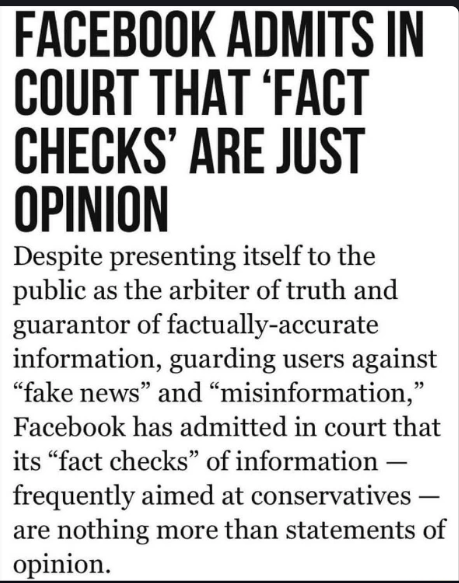
Defence offered by Facebook in Stossel defamation lawsuit.