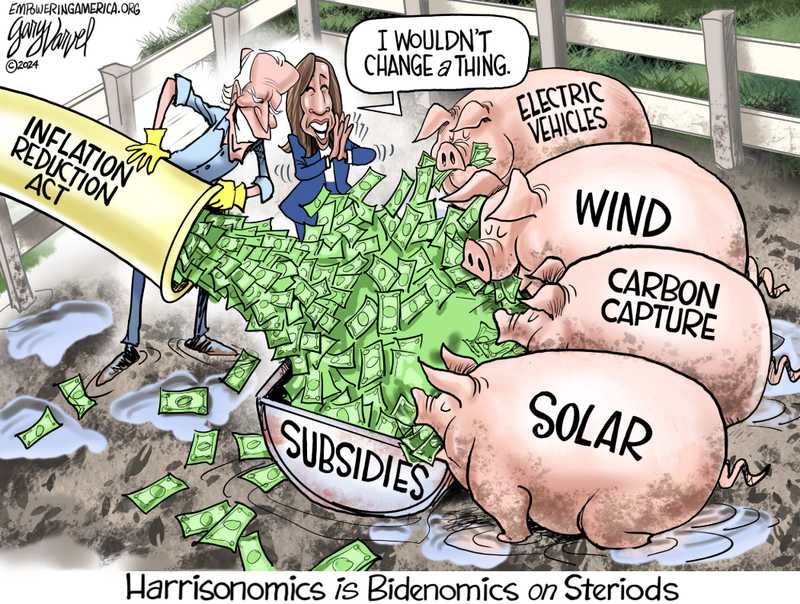

The House committee’s portion of the Republicans’ big party-line bill
also includes expedited permitting for gas exports and other projects.
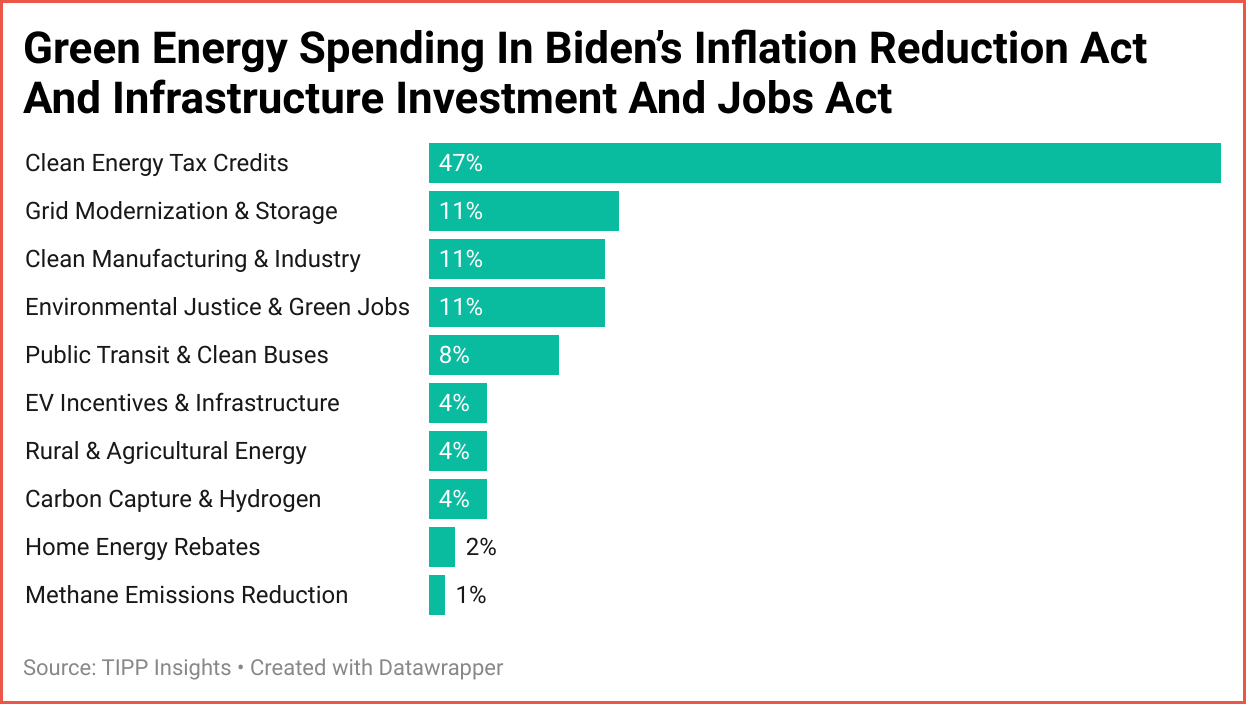
The House Energy and Commerce Committee’s section of the Republicans’ party-line megabill includes billions of dollars in clawbacks from a host of Inflation Reduction Act programs.
The legislation — up for markup Tuesday — would affect the Department of Energy’s Loans Program Office, EPA’s Greenhouse Reduction Fundand many other climate law initiatives, according to text released Sunday night.
Chair Brett Guthrie (R-Ky.) said the climate law repeals would add up to $6.5 billion in savings. He said the unobligated balances represented “the most reckless parts of the engorged climate spending in the misnamed Inflation Reduction Act.”
“The 2024 election sent a clear signal that Americans are tired of an extreme left-wing agenda that favors wokeness over sensible policy and spurs price increases,” Guthrie said in a Sunday Wall Street Journal op-ed.
Guthrie said the administration “has already reversed President Biden and Democrats’ electric-vehicle mandates and natural-gas export ban; now it’s Congress’s turn.”
Guthrie told committee Republicans on a call Sunday thatthe overall legislation — including changes to Medicaid — would create more than $900 billion in savings, according to POLITICO.
A committee spokesperson said “the bill specifically rescinds funding leftover from nine of the Biden Administration’s IRA renewable energy and electrification subsidy programs at the Department of Energy — saving taxpayers money and allowing for deficit reduction.”
Department of Energy
The legislation would scrap “the unobligated balance” of IRA funding for the Loans Program Office and money dedicated to transmission projects.
The LPO received over $35 billion from the climate law, while DOE’s Grid Deployment Office got around $3 billion as part from the IRA’s “Transmission Facility Financing” section.
Republicans will also try to rescind IRA funds boosting a number of other DOE programs, including initiatives on advanced vehicle manufacturing, energy infrastructure reinvestment financing, tribal energy loan guarantees and state-based efficiency grants. Those programs, in total, received around $8.3 billion from the climate law.
The committee, however, did not make clear just how much leftover funding is available to repeal after the Biden administration pushed to get as much as possible out the door.
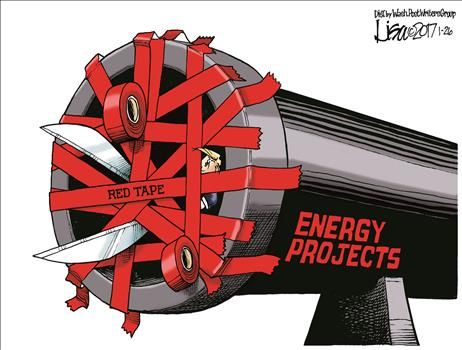
Outside of IRA programs, the legislation would accelerate permitting for infrastructure projects through new fees, something similar to the Natural Resources Committee text and what Democrats have called a pay-to-play scheme.
One Energy and Commerce provision, for example, would allow DOE to automatically deem a potential liquefied natural gas export facility to be in the “public interest” — normally a key regulatory hurdle — if the applicant pays a one-time fee of $1 million.
Another provision would allow other natural gas infrastructure developers to receive an “expedited permitting process” from the Federal Energy Regulatory Commission under the Natural Gas Act if the applicants pays $10 million or 1 percent of the project’s projected cost.
The proposal eyes permitting being completed within a year and would exempt projects from certain litigation. A similar timeline and fee would apply to carbon dioxide, oil and hydrogen pipeline permitting.
The legislation would also rescind congressionally appropriated funding outside of the IRA for key DOE programs, including around $401 million from the Office of Energy Efficiency and Renewable Energy and around $260 million from DOE’s State and Community Energy Programs.
It would grant $2 billion for the department to refill the Strategic Petroleum Reserve, a longtime objective of Republicans to shore up the nation’s energy security.
EPA
The bill text confirmed a longtime promise from Energy and Commerce leaders that they would target unobligated balances from the EPA’s Greenhouse Gas Reduction Fund, a $27 billion IRA program designed to support clean energy projects particularly in low-income and disadvantaged communities.
Outside of the Greenhouse Gas Reduction Fund, the plan would repeal a variety of IRA programs designed to reduce air pollution at schools and ports, reduce emissions from diesel engines and construction materials, and promote carbon monitoring initiatives.
And, as expected, the legislation takes aim at the Inflation Reduction Act’s methane fee. That program is designed to reduce methane leaks from natural gas infrastructure. Congress, through the Congressional Review Act, already repealed EPA regulations implementing the fee.
The legislation would also roll back two regulations on emissions from passenger vehicles. Gone would be the latest corporate average fuel economy, or CAFE, standards issued by the National Highway Traffic Safety Administration and EPA’s newest multipollutant emissions standards for model years 2027 and later, requiring significant reductions in greenhouse gas and pollutant emissions from light-duty and medium-duty vehicles.
Republicans went further in their targeting of Biden-era vehicle policies with a proposed repeal of $600 million in grants and rebates to states, municipalities tribes and nonprofits to expand the use of zero-emission vehicles.
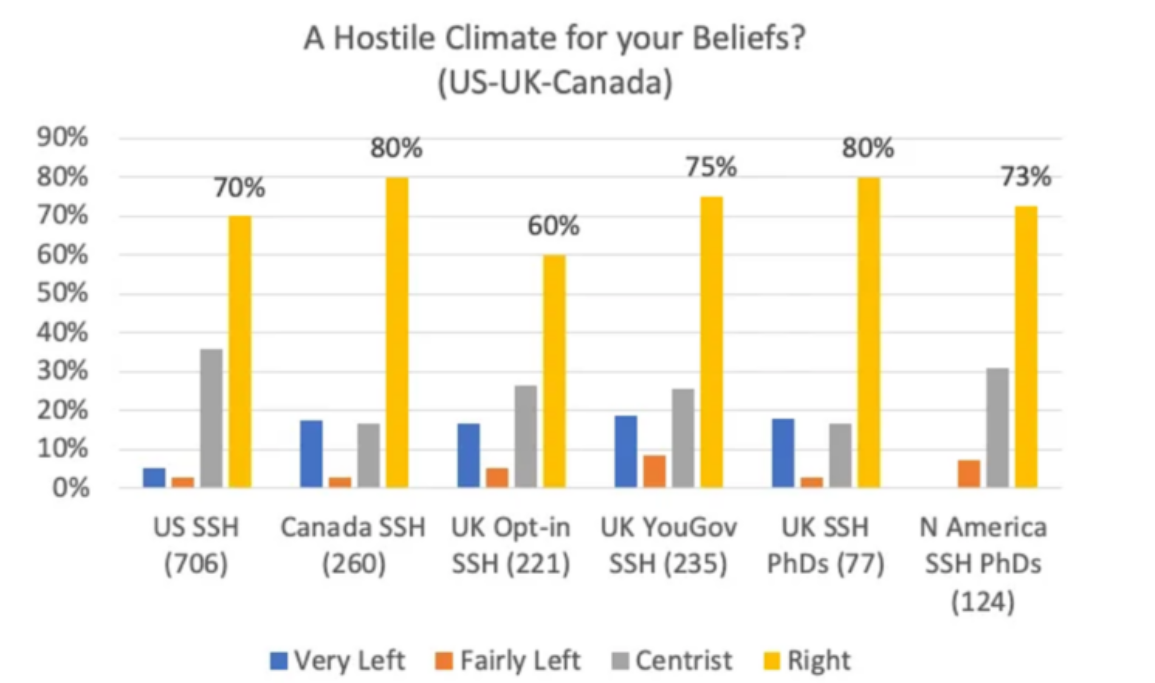
Research by U.K. politics professor Eric Kaufmann (top left) showed that 80 percent of Canada’s right-leaning academics report a hostile environment for their beliefs. The proportion was the same in the UK and was 70 percent in the U.S. In all three countries, the percentage of “very left” academics reporting hostility towards their beliefs was less than 20 percent.
The administration holds many cards,
and it seems determined to play them all.
The universities have compromised themselves with the alliance they have formed with the Democratic Party and their dependency on taxpayer funds provided by Democrats, Independents, and Republicans alike. Universities should not have let themselves become so attached to any political party or ideological point of view, lest they compromise the intellectual integrity of their institutions or jeopardize the taxpayer funding that they badly need. But that is precisely what has happened at Harvard, Columbia, Northwestern, and other leading institutions. It is something the Trump administration hopes to change.
Trump has said that he wants to use the lever of federal funding to force university leaders to confront several issues: the lack of intellectual diversity on their campuses, with upward of 80 percent of faculty members identifying as liberals or progressives, and less than 2 percent as conservatives; the refusal to enforce race- and gender-blind civil rights laws, and the continued use of preferences in admissions and employment, in violation of the 2023 Supreme Court decision in Students for Fair Admissions v. Harvard University; the failure to protect the rights of Jewish students amid demonstrations on campus of anti-Semitism and hatred of Israel; administrative “bloat,”reflected in how college campuses today employ more administrators than professors teaching courses; tuition increases that far outpace inflation, leading to ever more student borrowing and debt underwritten by federal loan programs; and the continued presence of ideological departments and programs on campuses that do not allow for diversity of intellectual approaches.
The Trump administration has tried to influence institutions by freezing payment of federal funds, but there is a more effective way to do this—one less likely to cause mayhem in scientific programs and medical schools and less prone to being overturned by the courts: Trump should use the leverage of prospective grants to induce institutions to abide by federal law and begin reforming their internal operations.
These institutions will come back to the federal government every year with proposals for new funding. The Trump administration is not required to make new awards to these institutions. These can be made on the condition that the institutions are taking concrete steps to reform themselves. If they thumb their noses at Trump, then the administration can decide that grants and contracts that have gone to Harvard, Columbia, and Johns Hopkins in the past might be given in the future to the University of Alabama, Ohio State, or the University of Montana. Such a redistribution of federal funds might even bring about a useful realignment in the scientific prestige of American universities, as some move down and others move up the reputational ladder.
Some of Trump’s goals in regard to higher-education reform are already subsumed undergrant participation agreements that institutional representatives must sign before federal departments can sign off on grants and awards. Those agreements oblige recipients to comply with provisions of the Civil Rights Act (1964), the Title IX educational amendments (1972), and other regulations in regard to discrimination by age and handicap status. In light of the Supreme Court decision in the SFFA v. Harvard case, along with Trump’s executive orders in regard to civil rights, those agreements oblige recipient institutions to abandon all preference programs, including DEI programs created to advance preferences in university life. More than a few institutional representatives will have a hard time signing these agreements going forward because of lingering preference programs on their campuses. In any case, the administration can supplement those agreements with addenda that include other issues it wants universities to address.
The questions asked of institutional representatives might include:
Does the institution pledge to abide by federal civil rights laws that forbid group preferences in admissions and employment?
Has the institution taken steps to guarantee the rights of Jewish students against attacks arising out of anti-Semitism or hatred of Israel?
What steps has the institution taken to create greater intellectual diversity on its campus?
Has the institution adopted measures to reduce the number of administrators on campus and to eliminate administrative departments that try to enforce group preferences in violation of federal law?
Has the institution limited tuition increases to the level of inflation in order to reduce expenses for students?
These questions should clarify the choice Trump is asking these institutions to make:
either change current practices or forgo federal research funds.
Over the four years of this second Trump administration, such an approach might have genuine and constructive consequences for the operation of American universities. Will Johns Hopkins University spurn $3.3 billion in federal grants next year in order to preserve its DEI bureaucracy? Will NYU give up $879 million in research grants next year in order to maintain its gender studies programs, or programs in the law school that advocate for group preferences? Universities may have to make hard choices between future federal funding and ideological programs currently in place.
This is precisely what liberals, feminists, and other activists did in the 1970s when they forced universities to sign “affirmative action” pledges, which soon turned into agreements to enforce group preferences in faculty hiring and employment. That approach evolved into the campaign for diversity later in that decade, when the Supreme Court ruled that preferences might be used to advance diversity in colleges and universities, and more recently into the DEI crusade that emerged in the wake of the George Floyd incident. That crusade proved to many that the entire enterprise had gone way too far. After five decades, with much academic mischief to show for it, the approach has hit a wall with the Trump administration.
Harvard and other universities are likely to find that they
are fighting a losing battle against the federal government.
Harvard has an endowment of $53 billion, by far the largest among the nation’s universities, but that’s little more than a rounding error in the government’s $7 trillion budget. Here the government negotiates from a strong position because, while federal grants loom large in university budgets, they are only a small fraction of the government’s budget.
The government has other weapons at its disposal. There is the tax exemption, for starters, which, if lost, will mean that schools cannot receive tax-deductible donations.. The government can stop the flow of international students to the schools, a move that would be costly in terms of foregone tuition payments. Trump can also ask Congress to slap a hefty tax on university endowments, another step his administration is already considering. At some point, Harvard and other elite institutions will have to sue for peace rather than continue an argument they cannot win.
In any case, the Trump administration holds many cards in this showdown with the universities, and it seems ready to play them all.
The Democrats passed the Orwellian named inflation Reduction Act (IRA) without a single Republican vote. They told us that it would be a $369 billion spending package. In fact, it could cost nearly $5 trillion adding to our debt.
The United States now has a $36.5 trillion national debt,
with a trillion dollars in annual interest payments.
The money for the IRA is all borrowed money. It causes more unnecessary energy spending, driving up electric rates and increasing inflation. This overspending is unsustainable and harmful to the United States; inflation is putting pressure on families’ budgets.
The subsidies in the IRA are incredible. Wind and solar get a 50 percent tax credit to build and a 30 percent subsidy for the electricity they produce. Trump and Congress need to end these subsidies. Not only for wind and solar, but for all the other supposedly green initiatives, like battery factories, electric vehicle manufacturing components, and hydrogen. We simply can’t afford it.
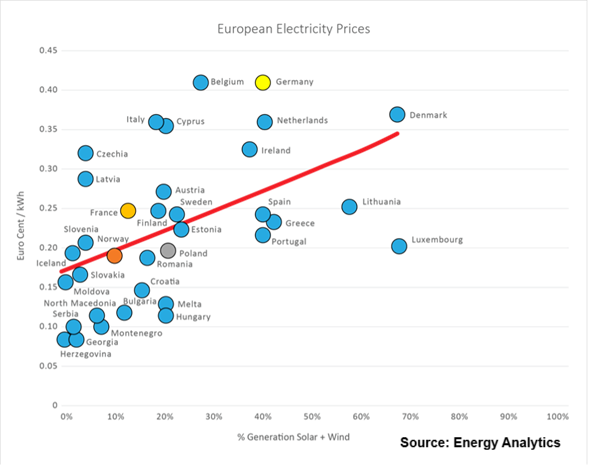
This “green” borrowing is driving up our electric rates. Because wind and solar power are part-time and intermittent, they cannot provide full-time, keep the lights on all the time electricity generation. They do not replace any natural gas, coal, or nuclear power they just add costs.
It is like a household that has two on demand gas cars that serve their needs. They think they can save money with another car. Because of the 50 percent tax subsidies and propaganda they buy a solar car.
They find that the solar car doesn’t work the first and last hour of the day, or when it is raining, or cloudy and not at night. The sun isn’t powerful enough. They learn they cannot replace any of their gas cars with the solar car.
So, they buy a wind car that only works the 30 percent of the time the wind blows. They find they can’t get home from their kids’ soccer game or from work because the wind stopped blowing.
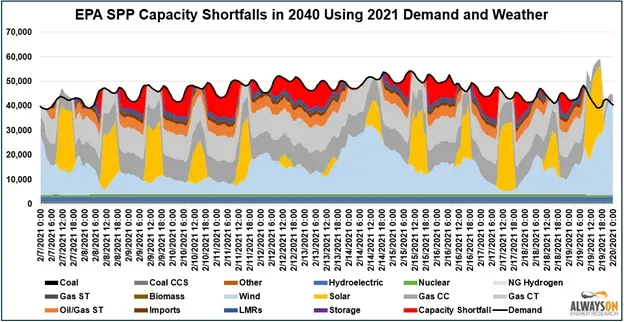
Capacity shortfall events – or blackouts – in Southwest Power Pool (SPP) when we modeled EPA’s proposal for carbon mandates, stemming from the agency’s use of 80% or higher capacity values for solar energy.
They are now paying for four cars instead of two. This is exactly what is happening to our electric grid. We are paying for a full-time and part-time electricity production.
To make matters worse, the way that regional transmission organizations (RTOs) pay for our electricity doesn’t allow us to realize any savings from the heavily subsidized wind and solar generation.
The industry calls it take and pay. The most expensive form of electricity the RTO purchases is what they pay all electricity providers. This means that there is no savings from wind and solar for electric consumers, only increased costs.
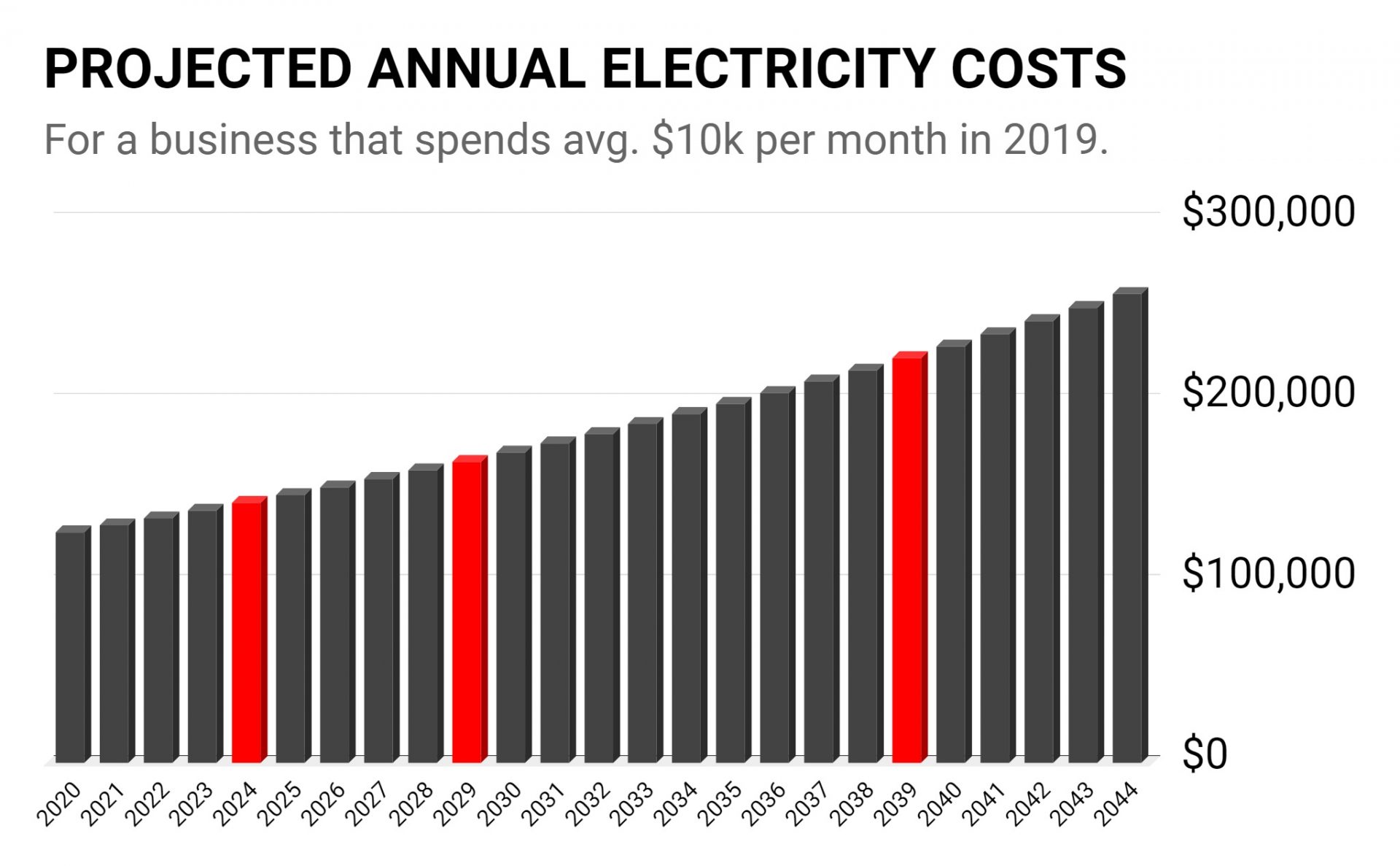
Projected Business Electricity Expenses in California based on increasing commercial rates.
No other industry pays the highest bid price to all suppliers, regardless of what they bid. But that’s what they do in the electric world. We are paying higher electricity rates because of this practice.
This begs for state legislative action to correct this expensive payment scheme.
Wind and solar further drive up the price of electricity because they require many miles of expensive transmission wires and displace full-time electric generation. Forcing it to run less than it would if they were not on the electric grid.
As natural gas and coal power plants run more part-time, every electron they sell must have a higher price to cover their costs. Their maintenance costs will only increase, too, because they were never designed to run intermittently.
Trump understands that wind and solar drive up the cost of our electricity, particularly offshore wind, which costs five times more than natural gas electricity, and are built in hurricane alley. What could go wrong? The simple answer is to stop subsidizing all electric generation with our borrowed inflation causing tax dollars. And states should end favorable regulations that require the purchase of wind and solar first.
There are 21 House Republicans that have signed a letter sayingthey don’t want to repeal the IRA, even though they didn’t vote for it. Because it is fostering wasteful pretend “green” spending in their districts. Clever Democrats have the bulk of the spending going into these Republican districts in order to preserve this green slush fund.
President Trump needs to use his considerable persuasion and political muscle to end this Democrat boondoggle, which adds to our $36.5 trillion national debt.
Frank Lasee is a former Wisconsin state senator and former member of Governor Scott Walker’s administration. The district he represented had two nuclear power plants, a biomass plant and numerous wind towers. He has experience with energy, the environment, and the climate. You can read more energy and climate information at www.truthinenergyandclimate.com which Frank leads.
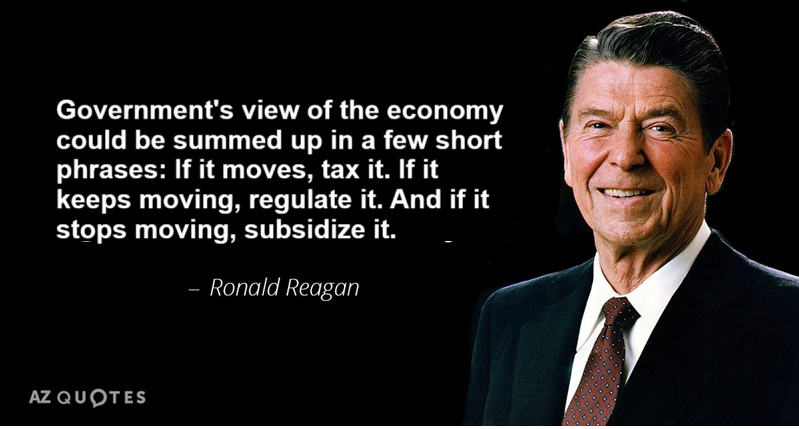
Zero-Based Budgeting (ZBB) is a particular approach to managing organizational resources which I have known from previous consulting experience. It doesn’t take a rocket scientist (although Doge has at least one of them) to know that branches of a bureaucracy grow like topsy driven by internal incentives. The game is played by finding a new territory to regulate and add it to the mission scope to justify the added people, dollars and facilities. Managers increase their power, prestige and salaries by adding staff and resources, the bigger the agency budget the better. As one Doge leader put it, government only ratchets upward, nothing is ever taken away.
Now that the US is the nation with world’s largest debt, there is no option other than to ratchet downward by streamlining and rightsizing focusing on the essentials, and discarding the rest.
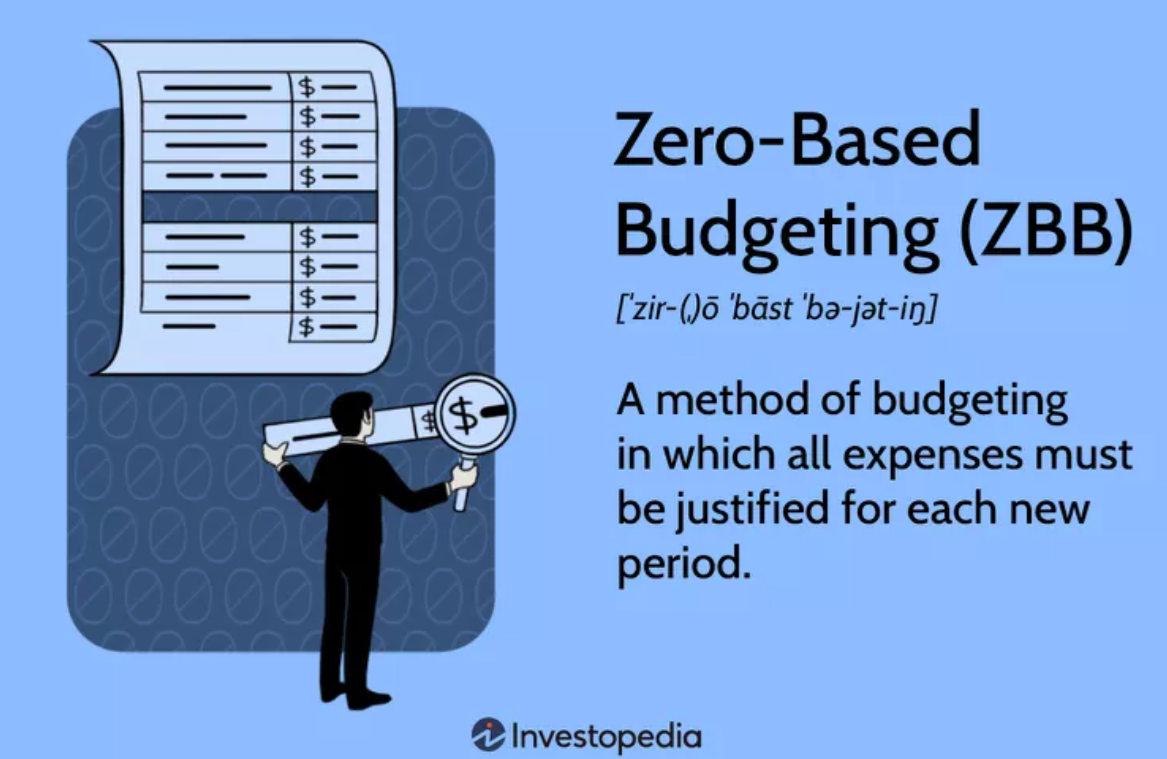
What is ZBB method for meeting the desperate need to trim the US federal government. (Source: Investopedia)
How Zero-Based Budgeting (ZBB) Works
ZBB allows top-level strategic goals to be implemented into the budgeting process by tying them to specific functional areas of the organization. Costs can then be first grouped and then measured against previous results and current expectations.
Zero-Based Budgeting vs. Traditional Budgeting
Traditional budgeting calls for incremental increases over previous budgets such as a 2% increase in spending. Zero-based budgeting requires a justification of both old and new expenses.
Traditional budgeting also only analyzes new expenditures. ZBB starts from zero and calls for a justification of old, recurring expenses in addition to new expenditures. Zero-based budgeting aims to put the onus on managers to justify expenses. It drives value for an organization by optimizing costs, not just revenue.
What Are the Advantages of Zero-Based Budgeting?
Zero-based budgeting starts from scratch, analyzing each granular need of the company instead of using the incremental budgeting increases found in traditional budgeting. This essentially allows for a strategic, top-down approach to analyze the performance of a given project
Zero-based budgeting offers several advantages, including focused operations, lower costs, budget flexibility, and strategic execution. The highest revenue-generating operations come into greater focus when managers think about how each dollar is spent. Lowered costs may result because zero-based budgeting may prevent the misallocation of resources that can happen over time when a budget grows incrementally.
The way forward is explained in the Executive Orderissued April 9, 2025, with this intent:
Section 1. Purpose
In our country, laws are supposed to provide the certainty and order necessary to foster liberty and innovation. Instead, our vast regulatory structure often serves to constrict ordered liberty, not promote it. The United States Code itself is more than 60,000 pages. But unelected agency officials write most of the complex, legally binding rules on top of that, often stretching these statutory provisions beyond what the Congress enacted.
In particular, the previous administration added more pages to the Federal Register than any other in history, with the result that the Code of Federal Regulations now approaches a staggering 200,000 pages. These regulations linger in such volume that serious reexamination seldom occurs. This regime of governance-by-regulator has imposed particularly severe costs on energy production, where innovation is critical. The net result is an energy landscape perpetually trapped in the 1970s. By rescinding outdated regulations that serve as a drag on progress, we can stimulate innovation and deliver prosperity to everyday Americans.
This order directs certain agencies to incorporate a sunset provision into their regulations governing energy production to the extent permitted by law, thus compelling those agencies to reexamine their regulations periodically to ensure that those rules serve the public good.
Trump’s tariffs will work — but they’ll work
even better with the Federal Reserve’s help.
Trump’s tariffs are not designed to encourage Americans to borrow money and maximize their consumption. Nor are they designed to encourage participation in speculative stock market or real estate bubbles. America’s free trade policies encouraged such excesses after the end of the Cold War, and we can’t stand a repeat of the folly. While his critics wrongly invoke the Smoot-Hawley tariff failures of 1930, Trump’s emerging tariff policies, particularly if combined with the appropriate monetary policy, will have much better results and Make America Great Again.
As Trump’s tariffs are implemented, they will generate revenue for the federal government and encourage investment in atrophied as well as cutting-edge sectors of the American economy. In addition, they will increase the quantity and quality of jobs available for Americans as a whole, will persuade (and are already persuading) our trading partners to adopt fairer and less predatory trading regimes, will arrest a possible slide into recession, and will get our economy moving toward our long-term growth potential of 3 percent (or more) GDP growth per year.
President Trump says “tariff” is one of his favorite words, and historical evidence indicates tariffs work. They worked for the Chinese this century, they worked for the Japanese after World War II, and they worked for the U.S. and Germany in the late 19th century. Back then, American and German growth rates and economic vibrancy radically outstripped the growth rates and economic vibrancy of a free-trading Britain, which, after abandoning its early 19th-century tariffs, adopted the free trade nostrums of David Ricardo and slipped into decline.
One of the few instances when tariffs failed was during the Smoot-Hawley tariff episode at the beginning of the Great Depression. But there are special circumstances surrounding the imposition of the Smoot-Hawley tariffs that the free-traders hesitate to mention. When the United States raised the Smoot-Hawley tariffs, the U.S. was the world’s greatest creditor, and by raising the tariffs, we prevented others from selling us things so they could make money and pay us back. When they didn’t pay us back, it collapsed the global financial system and helped usher in the Great Depression.
Obviously, today the circumstances are reversed. The United States is now the world’s largest debtor. If we can’t pay back our debts, the global financial system will collapse, which would be disastrous for the entire world.
Trump’s tariff medicine will put us on a diet, help us produce more,
diminish inflation, and position us to manage and decrease our debt.
Thus, Trump’s tariffs are not only good for Americans, but they are also good for everybody else across the world. While the Smoot-Hawley tariffs were bad, Trump’s tariffs are good because the relative financial position of the U.S. vis-à-vis the rest of the world is now reversed. This fact must not be overlooked when assessing the wisdom of Trump’s tariffs versus the folly of Smoot-Hawley.
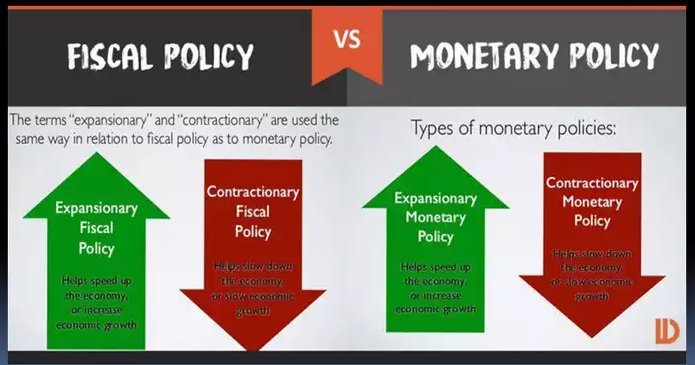
Furthermore, as Ben Bernanke, the former chairman of the Federal Reserve, taught us, at root, it was not the Smoot-Hawley tariffs that sparked the Great Depression. It was a monstrous policy misstep on the part of the Federal Reserve Open Market Committee. On the eve of the Great Depression, the Fed raised rates and pursued a contractionary monetary policy when it should have cut rates and pursued an expansionary monetary policy.
Trump’s trade policies are necessary and on target.
The uncertainty lies with the Fed.
How long until Jerome Powell and his companions stop gazing in the rearview mirror and look through the windshield instead? When they do, they will see that inflationary pressures are subsiding and that circumstances call for rate cuts and other expansionary monetary policies. They will cease fighting the last economic war and join the fray in fighting the current one.
With Trump’s tariffs, America’s future is bright. Realistically, the path forward will be more pleasant if the Fed cuts rates sooner rather than later.
Van Mobley is a professor at Concordia University Wisconsin.
A recent post by The Hill, “Disaster as Trump’s energy policy totally disregards climate change,” claims that President Donald Trump is implementing “irrational and profoundly destabilizing energy policies” by prioritizing traditional energy and deprioritizing renewables, leading to increases in weather disasters. This is false on all fronts.
♦ Data show that weather is not becoming more extreme. ♦ There is no evidence that the growth in wind and solar power has done or can do anything to alter the course of climate change. ♦ Trump’s America First agenda promotes energy dominance, focusing energy reliability and abundant, secure, domestic supplies. Trump’s energy plan is a stabilizing factor in energy costs.
William Becker, a former regional director at the U.S. Department of Energy during the Obama administration, makes many false claims in a rapid-fire fashion in his post in The Hill. For brevity’s sake and as a matter of focus, this Climate Realism post focuses on one segment of his article:
While we can thank fossil fuels for the lifestyles and conveniences most Americans enjoy today, the legacy of their long dominance is the destabilization and degradation of environmental systems critical to life. The atmosphere is one of those systems. Unprecedented weather extremes are the result of dumping fossil-fuel pollution into it. As the dumping continues, weather disasters become more frequent and destructive. The American people have been hit by an average of 23 major weather disasters (those with damages exceeding $1 billion) annually over the last five years, compared to only nine in the previous 45.
Every point Becker made in this statement after the opening clause of the first sentence is false. It is true that we can thank fossil fuels for our lifestyles and not just conveniences but essentials for modern life.
It is false that fossil fuel use is causing unprecedented weather extremes, and that they are becoming more frequent and destructive.
Becker, who currently runs a climate policy lobbying organization, uses a deceptive metric for calculating increasing weather disasters, which looks at the monetary value of losses due to weather. Becker does not attempt to claim that these weather events are becoming more frequent or extreme themselves – because they aren’t. Data on the most common weather extremes like hurricanes and wildfires show no increase, as Climate Realism has covered dozens of times. Instead, Becker cites misleading calculations of billion-dollar price tags from weather damage.
Scientist Roger Pielke, Jr., a professor emeritus at the University of Colorado Boulder, explains the misuse of the “billion dollar disaster” metric as a proof for dangerous climate change. He has called the U.S. National Climate Assessment (NCA) is “a national embarrassment,” for using that misleading metric, explaining that the NCA overestimated the number of disasters by a factor of three by re-counting individual events when they struck multiple states. So, if a hurricane passed through Florida, then into Georgia and South Carolina, the NCA would count this as three separate “billion dollar disasters” – even if the hurricane did not cause a billion dollar in of losses in each state it struck.
In reality, populations have increased in states like California and Florida, which are prone to extreme weather. More infrastructure has been built in susceptible areas, so there is more to annihilate when a storm strikes. To the extent that there has been any rise in billion dollar costs attributable to extreme weather events, as estimated by Becker and the sources he uses, it is due, not to changes in weather, but rather a well-known phenomenon labeled the “expanding bulls-eye effect,” which Climate Realism has discussed dozens of times previously, such as here.
Going further, an analysis from Pielke, Jr. of insurance data presented in another Climate Realism post disputes the claim that the costs of natural disasters, when measured fairly, have risen. Relative to global GDP, the trend in property losses has declined as the Earth has modestly warmed over the last several decades. (See the graph, below)
Graph: Global disaster losses as a proportion of global GDP.
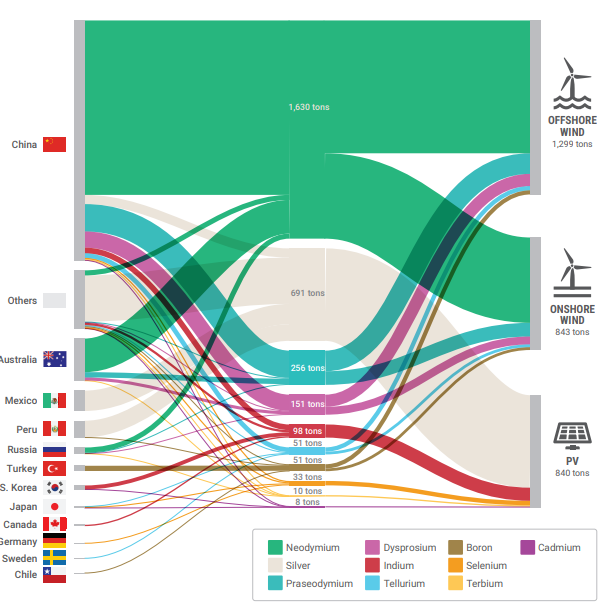
Becker’s additional claim that Trump’s focus on reliable energy rather than intermittent renewables will raise costs and result in less energy security, is as false as his claims about worsening disaster costs. The wind and solar technologies that Becker promotes rely heavily on materials and technologies produced by foreign powers that are not friendly to the United States, like China.
A grid powered by wind and solar is not cheaper than gas, it isn’t even cheaper than nuclear. A study by energy modelers at Always On Energy Research found that wind and solar both suffer from massive costs associated with the overbuilding necessary to overcome the intermittency issue. Load balancing, using battery storage, carries very high costs, as well. These make nuclear less expensive per megawatt hour than existing wind or solar, despite high upfront costs.
Similarly for fossil fuels, full system LCOE show that wind and solar in Texas costs far more per megawatt hour than nuclear, coal (of which the United States has hundreds of years of domestic supply that isn’t dependent on foreign sources), or the cheapest source – natural gas, which is also sourced domestically.
Grid stability is damaged by high penetration of solar and wind and the closure of traditional energy, according to utility companies and federal energy regulators.
Almost every claim made in Becker’s article in The Hill is provably wrong. The post is long on hyperbole and misinformation, but short on facts and data. Real world weather data shows no increase in extreme weather, incidences of weather disasters, or weather disaster costs as a percentage of economic growth. Trump’s reliability focused, America First, energy policy will not harm our energy security or the planet, but it will buttress the United States against the hostile intentions of any foreign government that might use our dependence on them for renewable energy materials and technology to extort economic or geopolitical concessions. It will also allow the U.S. to become energy dominant, a force for good in the world by supplying our abundant domestic energy supplies to allies, especially to developing countries in need of reliable energy sources to bring their populations out of energy poverty.
There is a lot of anxiety, misconceptions and distortions about Doge, or Department of Government Efficiency. The above interview with members of the team and their leader Elon Musk gives everyone an inside view of what the work is, who is doing it and why, and what is at stake for citizens and taxpayers. For those who prefer reading, below is a transcript lightly edited from the closed captions with my added images. BB is Bret Baier of Fox News and EM is Elon Musk. Baier introduces other participants by name and background.
BB: Thanks for having us and doing this I know there’s a lot of interest in Doge. Let me start with you Elon: What are what are the budgetary savings goals and and how much do you think you’ve achieved so far?
EM: Our goal is to reduce the deficit by a trillion dollars. So from a nominal deficit of 2 trillion, it is to cut the deficit in half to 1 trillion. Or looking at it in total federal spending, to drop the federal spending from 7 trillion to Six Trillion. We want to reduce the spending by eliminating waste. And to reduce the spending by 15%, which seems really quite achievable.
The government is not efficient, and there’s a lot of a lot of waste and fraud, so we feel confident that a 15% reduction can be done without affecting any of of the critical government services, and in fact making them better.
BB: I’m going talk to all the guys here about the specifics. But for you what’s the most astonishing thing you found out in this process?
EM: The sheer amount of waste and fraud in the government. It is astonishing, it’s mind-blowing. We routinely encounter wastes of a billion dollars or more just casually. For example, there was a simple survey that was literally a 10 questions survey, that you could do with Survey Monkey costing about $10,000. The government was being charged almost a billion dollars for that. A billion dollars for a simple online survey with questions like: Do you like the national park? And then there appears to be no feedback loop for what would be done with that survey. So the survey would just go for nothing.
BB: You technically are a special government employee and you’re supposed to be 130 days. Are you going to continue past that or what do you think you’re going to do?
EM: Well I think we will have accomplished most of the work required to reduce the deficit by a trillion dollars within that time frame.
BB: So in that time frame and and the process is a report at some point?
EM: Not really a report we are cutting the waste and fraud in real time. So every day that passes our goal is to reduce the the waste and fraud by $4 billion a day, every day 7 days a week, and so far we are succeeding.
BB: I’m going to talk of the specifics but there there obviously are Doge critics who are reading all kinds of stuff. Obviously lawmakers on the other side of the aisle are attacking you. And they characterize the approach as: Fire, Ready and then Aim. And how do you approach that, how do you respond to that?
EM: Well I do agree that we actually want to be careful in the cuts, so we want to measure twice if not thrice and cut once. That actually is our approach. They may characterize it as shooting from the hip, but it is anything but that. It’s not say that we make we don’t make mistakes. If we were to approach this with the standard of making no mistakes at all, that would be like saying someone in baseball has got to bat a thousand. That’s impossible, so when we do make mistakes we correct them quickly and we we move on.
BB: Some people say this shouldn’t take a rocket scientist, but Steve Davis you are a rocket scientist. Used to be and now essentially you’re the Chief Operating Officer of Doge day-to-day operations, fair to say. So how did you end up here, what’s the biggest challenge you see?
SD: The reason I’m here, which is probably the same for many, is that I think the goal is incredibly inspiring. I think most of the taxpayers in the country would agree that to have the country going bankrupt would be a very bad thing, and therefore keeping the country from going bankrupt is a good thing. So all of us are willing to kind of put our lives on hold in order to do this. I think the thing that’s special right now is we actually believe there’s a chance to succeed. There’s an Administration that’s supportive and a great cabinet and just a great group that will actually make success a possible outcome. Given the inspiring Mission and given the non-zero chance of success it it was worth doing.
EM: Let me reemphasize that point that the success of Doge is only possible with President Trump and with the outstanding cabinet that he selected. It would be impossible without the support of the president and the cabinet.
BB: But you’re finding the money, I mean it’s big numbers right?
SD: Yeah like Elon said the minimum impulse bit is often a billion dollars. So for example the $830 million which was the online survey. That’s an enormous amount of money that wouldn’t have been found if the Doge team wasn’t working with in that case the Department of Interior. But then taking it one step further Doge then publishes these things on our website for maximum transparency. It would have been impossible for the general public to have seen that. Now anyone can just log into doge.gov anytime and see these payments. They’re not yet in real time, they’re close but they’ll probably be in real time within the next few weeks.
BB: But the process still involves Congress right, at some level?
EM: We try to keep Congress as informed as possible. The law does say that money needs to be spent correctly; it should not be spent fraudulently or wastefully. It’s not contrary to Congress to avoid waste and fraud, it is consistent with the law and consistent with Congress. And we’ve seen actually great support at least from the Republican side of the house and occasionally some Democrats too.
You know it’s nice to see people cross the aisle once in a while. But usually when they attack Doge, they never attack any of the specifics. They’ll say what we’re doing is somehow unconstitutional or illegal or whatever. We’re saying, well which line of the cost savings do you disagree with and they can’t point to any. And we list them all on on doge.gov and and the Doge handle on X. And you’ll see just outrageous things, one outrageous thing after another.
BB: Joe Gebbia, besides Elon you’re one of several billionaires, being co-founder of Airbnb, and you wanted to help out.
JG: I bumped into Anthony Elon probably back in February and they told me something about a mine that dealt with retirement and they said they needed somebody to help out to fix retirement in the government. I loved the challenge so I jumped on board. And it turns out there is actually a mine in Pennsylvania that houses every paper document for the retirement process in the government.
Now picture this giant cave has 22,000 filing cabinets stacked 10 high to house 400 million pieces of paper. It’s a process that started in the 1950s and largely hasn’t changed in the last 70 years. As we dug into it we found retirement cases that had so much paper they had to fit it on a shipping pallet. So the process takes many months and we’re going to make it just some days.
So this will be an online digital process that will take just a few days at most. And I really think you know it’s an injustice to civil servants who are subjected to these processes that are older than the age of half the people watching your show tonight. We really believe that the government can have an Apple Store-like experience: beautifully designed, great user experience, modern systems.
BB: Because right now it’s by hand?
EM: Yes the the retirement process is all by paper literally with people carrying paper and manilla envelopes into this gigantic mine. So they can’t retire more than a certain number every month about 8,000 a month. That’s how we discovered it. We were saying, well let’s encourage voluntary retirement; they said, well the most they could do is 8,000 a month. And even in normal circumstances it can take 6 to 9 months just to just to have your retirement paperwork processed, and they often get the calculations wrong.
So we’re wondering, why would it take so long to retire? Ad they say, well because of the mine. “What do you mean a mine, what’s a mine got to do with retiring?” And that’s where we discovered that all the retirement stuff is done still done by paper in a process that looks identical to what occurred in the 1950s. If you compare a snapshot of the mine when it first started in the 50s to today, it looks the same.
BB: It’s amazing, so how long do you think it’ll take to turn over?
JG: We’re working as fast as we can. Probably next couple months we’ll have this this overhauled, and you know I really think again, why are we subjecting our federal workers to processes that they actually have to go through a training just to retire from the government. There’s a whole training program that people have to go through in order to retire, I think we can do better for them.
BB: Arum Moghaddassi, Doge engineer. You go into these places, one of the more than a dozen engineers, the first people to go into the agencies and view the computer data sets. Tell me what you’re finding, and for people who don’t understand how that process works, explain it for them.
AM: I’ll say the first thing that got me really excited about Doge was learning basically the state of government computers. By some estimates, government costs about hundred billion dollars and it’s funding systems are over 50 years old. In the case of something like Social Security or the IRS the really critical systems are old. They cost a lot of money to maintain and the efforts to improve them are often very delayed. So I thought, I’m a software engineer, maybe that could make a difference here, and that’s really what inspired me at a high level.
BB: There’s a lot of mystery about social security and a lot of words about it. Here’s what Democrats have been saying about: it’s absurd that Elon Musk is trying to eliminate billions of dollars from Social Security. Elon Musk and president Trump have set their sights on cutting Social Security their goal is clear: destroy Social Security from within. You’re in the building, I mean you’re in the computers. What’s happening there, what are you doing?
AM: Yeah it doesn’t line up with my experience on the ground. And I’ll say the two improvements that we’re trying to make to Social Security are helping people that legitimately get benefits, protect them from fraud that they experience every day on a routine basis. And also make the experience better. I’ll give you one example which is at Social Security. One of the first things we learned is that they get phone calls every day of people trying to change direct deposit information. So when you want to change your bank account you can call Social Security. We learned 40% of the phone calls that they get are from fraudsters; 40%, that’s right, almost half.
EM: Yes and they steal from people their Social Security. What happens is they they call in, they claim to be a retiree, then they convince the Social Security person on the phone to change where the money is flowing. It actually goes to some fraudster. This is happening all day, every day. And then somebody doesn’t receive their social security, and it’s because of of all the the fraud loopholes in the Social Security System.
BB: How do you reassure people that what you all are doing is not going to affect their benefit benefits?
EM: No. In fact what what we’re doing will help their benefits. Legitimate people as a result of the work of Doge will receive more Social Security not less. I want to emphasize that as a result of the work of Doge legitimate recipients of Social Security will receive more money not less money. Let the record show that I said this and it will be proven out to be true.
BB: Let’s check back on this in the future. So from Washington post: The Social Security Administration website crashed four times in 10 days this month because the servers were overloaded, blocking millions of retirees and disabled veterans from logging into their online accounts. People freaked out. Is that going to change?
EM: Yes we’re going to make sure that the website stays online.
BB: But I mean is it a result of going in there, something you’re doing?
SD: No no. The amount of issues with the social security system are enormous. As an example there are over 15 million people that are over the age of 120 that are marked as alive in the social security system. That’s an accurate figure. This has been something that’s been identified as a problem. Again it’s a pre-existing problem since 2008 at least from an IG report. So there were some great people working at the Social Security Administration that found this in 2008.
And nothing was done, so that 15 to 20 million Social Security numbers that were clearly fraudulent were floating around. That can be used only for bad intentions, there’d be no way to use those for good intentions. One of the things the Doge team is doing is carefully and and very methodically looking at those and making sure that any fraudulent ones are eliminated.
BB: Brad Smith working at HHS and obviously another element is Medicare and Medicaid. What are you finding?
Brad: Well I’d say there’s a couple things we’re really committed to in our work at HHS. Number one is making sure we continue to have the best biomed research in the world, and number two is making sure what president Trump has said over and over again, that we 100% protect Medicare and Medicaid. But there’s a lot of opportunity.
If I take NIH as an example today, if you’re an NIH researcher and you get a $100 Grant at your University today you get to spend 60 of that and your University spends 40 of that. The policy we’re proposing is that you get to spend 85 of that and your University spends 15. So that’s more money going directly to the scientists who are discovering new cures.
Another example at NIH is today they have 27 different centers that got created over time by Congress. And they’re typically by disease state or body system. There’s 700 different IT systems today at NIH, 700 different IT software systems. They can’t speak to each other so they don’t talk and they have 27 different CIOs. When you think about making great medical discoveries you have to connect the data. But with 27 Chief Information officers and most people are non-technical. So there’s a lot of opportunity which will make science better not worse.
EM: When I say that our job is tech support I really mean it. Yeah we have to fix the computers: if the computers can’t talk to each other you can’t get research done; if the computers can’t stay online people won’t receive their social security. So we have here a bunch of failing computer systems that are preventing people from receiving their benefits, that are preventing people from accessing needed research resources. Computer systems that are extremely vulnerable to fraud. And we’re fixing it.
BB: Does that include AI, does that include kind of changing the system overall? I guess that’s what people are afraid of: they don’t know what this is all looking like and is it going to affect me in the long term.
EM: It’s going to affect people very positively. The changes that we’re doing here will ensure the solvency of the government of the United States of America. We’re trying to ensure that people do receive their benefits in the future. And you can only receive your benefits if the the country is operating in a in a healthy and competent way.
BB: Anthony Armstrong, Doge office of personnel management, Morgan Stanley Banker M&A guy, you know money and this is a lot of money sloshing around.
AA: There’s a lot of money sloshing around; there’s a lot of money sloshing out the door. If you look at the federal government and the way the workforce works, it’s really a one-way ratchet over decades. It’s only going up, you never take anything away. So that leaves you with duplicative functions, it leaves you with overstaffing and it leaves you with functions in the wrong places.
So a couple of examples of duplicative function. Brad mentioned 27 CIOs, if you had kept going with Brad he probably he would talk about the Communications office. I think you’ve got 40 distinct Communications offices in in HHS. Yeah 40 and that’s not unusual by by the way. And multiple offices like that are not making anyone healthy. This is not about the employees. There’s many many hardworking, well-meaning people who took these jobs. The jobs were out there, they applied for them, they took them and they’re doing what’s there. It’s just that they’re duplicating the efforts of 40 offices. So you’ve got that and you’ve got overstaffing.
A good example of overstaffing would be the IRS having 1,400 people who are dedicated to provisioning laptops and and cell phones. If you join the IRS you get a laptop and a cell phone you’re provisioned. If each of those IRS officers or employees provisioned two employees per day you could provision the entire IRS in a little more than a month. So 12 times a year. It makes no sense why you have would 1400 people whose only job it is to give out a laptop and a phone, when the whole IRS could be handled once a month.
So that doesn’t that doesn’t make any sense and president Trump’s been very clear: scalpel not hatchet. And that’s the way it’s it’s getting done, and once those decisions are made, there’s a very heavy focus on being generous, being caring, compassionate and treating everyone with dignity and respect. If you look at how people have started to leave the government it is largely through voluntary means. There’s voluntary early retirement, there’s voluntary separation payments. We put in place deferred resignation the 8-month severance program. So there’s a very heavy bias towards programs that are long-dated that are generous that allow people to exit and go and get a new job in the private sector.
You’ve heard a lot of news about RIFs, about people getting fired at at this moment in time. Less than 0.15 of the federal Workforce has actually been given a RIF notice, so mostly they’ve selected if they’re leaving. Basically almost no one’s gotten fired is what we’re saying.
BB: Tom Krause, working at Treasury you are having access to the payment system that oversees all the outgoing payments. Essentially those payments were going places we didn’t know where they were going right?
TK: Unfortunately that’s the case. You know as an ex CFO of a big public tech company, really what we’re doing is applying public company standards to the federal government. And it is alarming how the financial operations and financial management is set up today. There actually is really only one bank account that’s used to disperse all monies that go out of the federal government. One bank account that is a big, big one. A couple weeks ago it had $800 billion, but it’s the treasury general account.
When you hear some of my colleagues here talking about fraud, you have to ask: well why is this allowed to happen. At a financial level well it’s actually quite simple but alarming. The treasury up until now and thanks to president Trump we’re fixing this in fact there’s an executive order that he just signed which is protecting America’s bank account because it really is the taxpayers money.
You know we’re changing the culture because the culture has been not a lot of caring and not a lot of commitment to doing what’s right. Relative to financial operations there’s $500 billion dollars of fraud every year, there’s hundreds of billion dollars of improper payments and we can’t pass an audit. The Consolidated financial report is produced by Treasury and we cannot pass it on, we have material weaknesses. That means if I were a public company CFO I would effectively be removed if I couldn’t file financial statements. I couldn’t issue securities of course since we can’t pass an audit.
EM: Right the federal government cannot pass an Audit. It’s impossible in fact. In order to pass an audit you need the information necessary to pass an audit. You need to have the payment codes, you need to have the payment explanation and you need to have a person you can contact to understand why that payment was made. None of those things were mandatory, yeah until just recently. In just the last few weeks we’re serving 580 plus agencies, and up until very recently they effectively could say make the payment and treasury just sent it out as fast as possible, no verification
And so we’re doing what any household would do. But imagine you’re a household with a bank account and everyone has the ATM card connected to that account, everyone has a checkbook on that account. It’s not just your children, not just your parents; it’s your in-laws it’s your extended family, and they all can go to the account and disperse funds no questions asked. No justification, no verification.
BB: Tyler Hassen, Interior Department, you’re a former Oil Company CEO. You’re reviewing contracts before they’re approved for funding, what are you finding?
TH: Well Elon and Steve kind of stole my thunder, but I actually found that customer service survey contract. I actually have an example of one right here, I was able to do this in high school, I found it that bad. I found it on the weekends because under the Biden Administration there was no departmental oversight within the Department of Interior whatsoever, none. We are now reviewing every single contract, every single Grant, and when things come to my attention that don’t make sense I’m bringing then to secretary Burgum. He has been fantastic, he’s a businessman and very supportive of Doge. It’s been wonderful to work with him.
BB: The battle has decades of buildup between government and business, which you guys are. Is that like a train hitting each other, I mean it it seems like it’s pretty disruptive.
EM: Well this is a revolution and it might be the might be the biggest revolution in government since the original Revolution. But at the end of the day America is going to be in much better shape. America will be solvent, the critical programs that people depend upon will work and and it’s going to be a fantastic future. Are we going to get a lot of complaints along the way, absolutely. You know one of the things I learned at PayPal was this: who complains the loudest and with the most amount of fake righteous indignation, the fraudsters, that’s a tell. NGOs that are crazy like the the $2 billion the Stacy AB NGO that basically didn’t exist and suddenly gets $2 billion awarded from the federal government. Why? And there are many cases like that.
BB: I think that most people Common Sense wise would say the Fraud’s got to end. They’re concerned about the 94-year-old grandmother who misses a check or somehow doesn’t get what she’s supposed to get.
EM: Right and what we’re trying to say is actually that the 94-year-old grandmother as a result of Doge’s work is going to get her check. She’s not going to be robbed by fraud like she’s getting robbed today. And the solvency of the federal government will ensure that she continues to receive those Social Security checks. And that Medicare continues to work without which we’re all doomed. The reason we’re doing this is because unless we do it America’s going to go insolvent, we’re going to go bankrupt and nobody’s going to get anything.
BB: Why are you guys all doing it? I mean you can pipe up but it you don’t have to be here, right. I mean you don’t you don’t have to be doing this.
TK: I am blessed with four children, my wife and I, but we have a real fiscal crisis and and this is not sustainable. And what’s worse, for my children and everyone else’s children, we are burdening them with that debt and it’s only going to grow.
BB: There’s not a lot of hierarchy here. You guys are kind of all approaching it in different silos but with the same kind of goal right. This is really Silicon Valley private sector colliding with government.
SD: Yeah exactly we’re headed in a bad path but that the chance of success exists. And just in my head right now is a fairly mundane issue that is very illustrative, namely credit cards. There are in the federal government around 4.6 million credit cards for around 2.3 to 2.4 million employees. This doesn’t make sense. So all the teams have worked on this with the agencies and said: Do you need all of these credit cards; are they being used; can you tell us physically where they are.
BB: I hope they’re getting frequent flyer points.
SD: Actually on a different note the rewards program the federal government has is actually not very good but that’s a whole other negotiation story. But so far the teams have worked together and they’ve reduced it from 4.6 million to to 4.3 million so we’re taking it easy. But clearly there should not be more credit cards than there are people.
BB: Yeah Joe middle level employees, are they seeing a benefit to being empowered by taking out bureaucracy?
JG: I mean absolutely I mean I think what you’re seeing is taking the best of Silicon Valley in the business world and bringing it into the government. We’re bringing the best practices and the best methodologies and people are inspired, especially on the retirement process which I can speak to. They’ve been trying to modernize and get off of paper since early 2000s not very successfully. Every attempt has gone over budget and been cancelled because it was not successful.
And so I showed up and I feel like I’m here because it’s an interesting problem, we can use design to solve it and good engineering, and really create a better experience for everybody.
EM: We’re talking about elementary Financial controls that are necessary for any company to function. If a commercial company operated the way the federal government does, then it would immediately go bankrupt, it would be delisted, and the officers would be arrested. The changes we’re putting in place will enable the federal government to pass an audit. It will enable taxpayers to know where the money is going, and know that their hard-earned tax dollars are being spent well.
One way that the government is defrauded is because the computer systems don’t talk to each other. The fraud comes when someone exploits that Gap to take advantage. For example there were over $300 million of small business administration loans that have been given out to people under the age of 11. Well actually to add up, it’s 300 million under the age of 11, and over 300 million to over the age of 120. Definitely small business loans correct. Yet the oldest American is 114 years old. So it’s safe to say if their age is 115 or above they’re fake or they should be in the book of World Records. And we should not be giving out um loans to babies, yet the youngest recipient of a small business administration loan is a 9-month year old, which is a very precocious baby.
Obviously it was just fraudulent. They are doing terrible things. They actually will see that a kid’s been born, they will steal that kid’s social security number and then take out a loan and and leave that kid with a with a bad credit rating. Terrible Things are being done is what we’re saying and the reason this is happening is because the the two systems are not talking to each other.
AA: So you don’t know at the small business administration that you’re giving a loan to a 9-month-old, which happened in one case, because you’re not cross referencing that with the Social Security Administration data that has birth dates. That very very simple fix eliminates tremendous fraud. And there are multiple systems across the government where the systems are not speaking with one another. Just solving that simple problem would solve a huge amount of fraud.
EM: One of the the key tricks that the fraudsters pull is that they will use the fact that someone is marked as live. Since that social security number is marked as live in Social Security, they then can get disability and unemployment insurance benefits for a dead person because the databases don’t talk to each other. So the person is falsely marked alive in Social Security, so the fraudster can get benefits from a dead person. This is happening all the time at scale.
BB: We didn’t talk about any plans to approach cuts at the Pentagon, you’re in there.
EM: You know the Pentagon has not passed an audit in a very long time. Crazy as it sounds they will lose 20 $30 billion a year and they literally don’t know where it went. Senator Collins was telling me about how she gave the Navy $112 billion for extra submarines and got zero extra submarines. When she held a hearing and asked where did the 112 billion go, they didn’t know.
BB: Are you surprised at some of the legal efforts and some of the judges that have weighed in. There’s about eight or 10 now of these cases that are at least temporary holds and they’re being challenged by the DOJ. Are you surprised by that push back?
EM: Well the DC circuit is notorious for having a a very far-left bias and when you look at the people close to some of these judges, people who are working at these NGOS, they’re the ones getting this money. Does that seem like a system that lacks corruption?
BB: It sounds like corruption to me. Last thing do you guys all see this as a patriotic duty? Is that really what this is about?
TH: It’s essential I do 100%. I was running five businesses in Houston and I left that. I left great people to do this. And my wonderful wife said go for it and here I am. I feel like this is me giving back to the country. If we don’t do this we’re sunk. Unless this exercise is successful the ship of America will sink, that’s why we’re doing it.
BB: Well gentlemen I really appreciate the time today and hopefully it took some of the myth and mystery out of Doge and what’s happening behind the scenes. Thank you. We asked on X your platform for some for some questions and here is uh C. Sperling: Are they happy with the speed at which they’re making changes? Are there any changes they would like to make but haven’t yet?
EM: Well in the context of the government we’re moving like lightning. In the context of what I’m used to moving it’s slower than I’d like. So what seems like incredibly fast action by government standards is slower than I’d like, to be totally Frank. But what we are all making solid progress on a very sort of thorny problem, a tough problem really. It’s kind of like painful hard work to reconcile all of the government databases to eliminate the waste and fraud. These databases don’t talk to each other and that’s really the biggest vulnerability for fraud. Painful as it is, it has to be done and will greatly improve the efficiency of the government systems.
A tattered Canadian flag is shown on top of a building in downtown Calgary on Friday, Jan. 17, 2025 where the U.S. Consulate is located. Photo by Jim Wells/Postmedia
Sunday’s edition of the Financial Times included the oft-made observation that Canada is brimming with potential, and the oft-made conclusion that this country would be much better off if it simply developed its God-given gifts.
The article, Unlocking Canada’s Superpower Potential by Tej Parikh, made the bullish case for this country’s future prospects: Canada is geographically huge and loaded with natural resources — on paper, at least, it has the makings of an actual global superpower.
“‘Canada absolutely has potential to be a global superpower,’ but the nation has lacked the visionary leadership and policy framework to capitalise on its advantages.”
It was, with gentle vagueness, a condemnation of the federal Liberal government and what is now being called Canada’s “lost decade”: a period of 10 years in which the current government ratcheted up onerous environmental and Indigenous-consultation requirements and, where ministerial approvals are concerned, delayed decisions, all geared at keeping undeveloped parts of Canada in their natural state.
Terms like “circular economy” and “just transition” are the Liberal synonyms for this no-growth agenda, which has delivered us a fraction of a percentage of GDP growth per capita from 2014 to the end of 2024 — a time period in which peer countries have managed double-digits.
For anyone who missed out on all the bad governance robbing Canadians of superpower prosperity, this brief video exposes the crimes against the citizenry. For those who prefer reading, I provide below a transcript from the closed captions.
Transcript
This is Alberta the fourth largest Province and home to about 4.6 million people. It ranks third in GDP just behind Quebec and first in GDP per capita primarily off the back of oil and gas extraction. While its discovery in the first half of the 20th century has brought Canada riches, for reasons from political to economic it never reached its full potential as an energy superpower, and Canadians as a whole lose out. We’ll be diving into how its energy policies have evolved and the path it is on whether for natural gas, nuclear, hydrogen and more.
Canada has the third largest proven oil reserves and by most estimates in the top 20 in terms of natural gas reserves. It is a top 10 producer of oil and gas, meaning it is engaged in extracting processing and supplying of these resources for domestic production.
Natural Gas
For natural gas exports it is in the top six,all of which goes to the US via pipelines. To export across water requires Investments to build liquid natural gas or LNG facilities to cool the gas into a liquid state in a process called liquefaction. In 2024 the the first export terminal will finally be completed in Kitimat BC called LNG Canada with gas coming through the coastal gas tank pipeline set to complete after 5 years of construction and a price tag that jumped from 6.6 billion to 14.5 billion.
But don’t expect other facilities to be constructed anytime soon. On February 9th 2022, 2 weeks before the Russian invasion of Ukraine, the federal and Quebec governments rejected approval of an LNG plant in Saguenay that would have allowed for the export of Western Natural Gas to European markets.
They cited increased greenhouse gas emissions
and lack of social responsibility.
While most of the natural gas is located in Northern Alberta and BC in the Montney formation, there is also gas in the Atlantic provinces. However New Brunswick, Newfoundland and Labrador, and Nova Scotia have all banned the process of fracking used for shale gas development over safety fears, thereby losing out on tens of billions of economic potential. Ironically the same provinces import a lot of natural gas extracted from the US through the process of fracking,Quebec also has natural gas resources but in April 2022 banned all oil and gas extraction in the province.
This means not only are pipelines from western Canada rejected from going through Quebec, natural gas extraction and export facilities in these provinces have been rejected as well. The demand if not met by Canada will be filled by other countries that might not share the same values nor care about the environment, with the jobs, millions in royalties and taxes going elsewhere. Since 2011, of the 18 proposed LG export projects including five on the East Coast. only the Kitimat project has proceeded with the others being cancelled, blocked or abandoned.
While the US in the same time frame has built seven LG facilities, five more under construction and approved 15, enabling them to go from a net importer to a top three exporter in the world. Australia has 10 LG facilities with the majority built in the 2010s helping to satisfy energy demand from Asian countries and to help them move away from coal. Qatar too has benefited greatly from extracting its resources as European countries look for alternatives to Russian gas.
These three countries have all signed decades-long deals to supply natural gas. Yet when Japan, South Korea, and Germany showed interest in Canadian LG, the Prime Minister said, “There has never been a strong business case.” While critics point out that natural gas is a fossil fuel contributing to greenhouse gas emissions, it emits 40% less than coal and 30% less than oil.
Nuclear Energy
We can’t talk about energy policy without mentioning nuclear, because it does not emit greenhouse gases while being a reliable source of energy, not dependent on the wind blowing or the sun shining. Currently nuclear supplies 58% of Ontario’s electricity needs and 15% Nationwide with all but one of the 19 nuclear reactors. The one located outside of Ontario is in New Brunswick. No new reactors have been completed since 1993. Meanwhile coal is still used to generate 6% of Canada’s electricity needs despite the country having the third largest uranium reserves, the fuel needed for reactors.
But on September 19th 2023, Canada did reach a $3 billion deal to finance nuclear power . . .in Romania. In fairness this deal does support the export of made in Canada Candu style reactors. An industry in which historically Canada has been a leader. Any discussion should include nuclear, as one of the trends in the nuclear industry is small modular reactors or SMRs which should be easier to manufacture and transport enabling its use in remote regions.
Hydrogen
Another Trend that the federal government has prioritized in the 2023 budget relates to hydrogen. 16.4 billion has been allocated over 5 years for “clean” Technologies and “clean” hydrogen tax credits, which are subsidies for costs in setting up equipment to produce green hydrogen. When the German Chancellor Olaf Schultz arrived in Canada in August 2022 asking for LNG, Canada instead offered green hydrogen created by wind turbines generating electricity to perform electrolysis by splitting water to produce hydrogen. It is both inefficient and expensive to produce green hydrogen meaning there is little business case for it without subsidies, since more than 99% of hydrogen is currently produced using fossil fuel. While green hydrogen will likely play a role in industrial processes, such as replacing coal used in steel production or creating ammonia in fertilizer production, its role in transportation is likely negligible. Furthermore using hydroelectricity, nuclear or natural gas to create hydrogen plays into Canada’s strengths in a way that solar or wind does not, as we’ll see shortly.
Solar and Wind
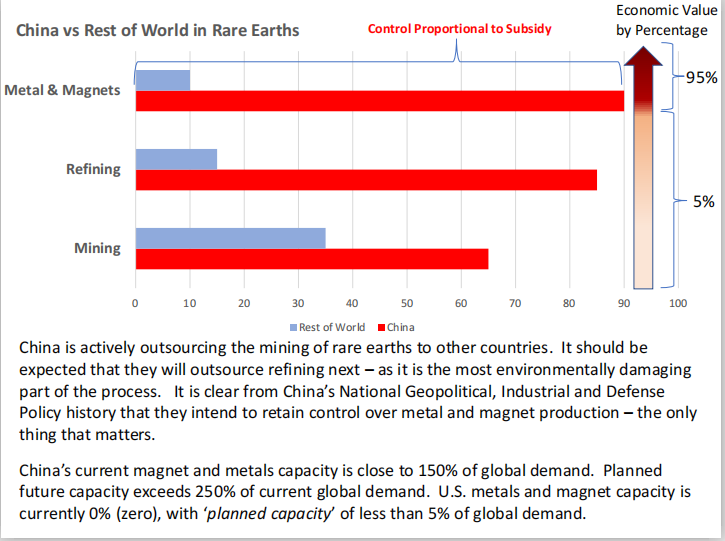
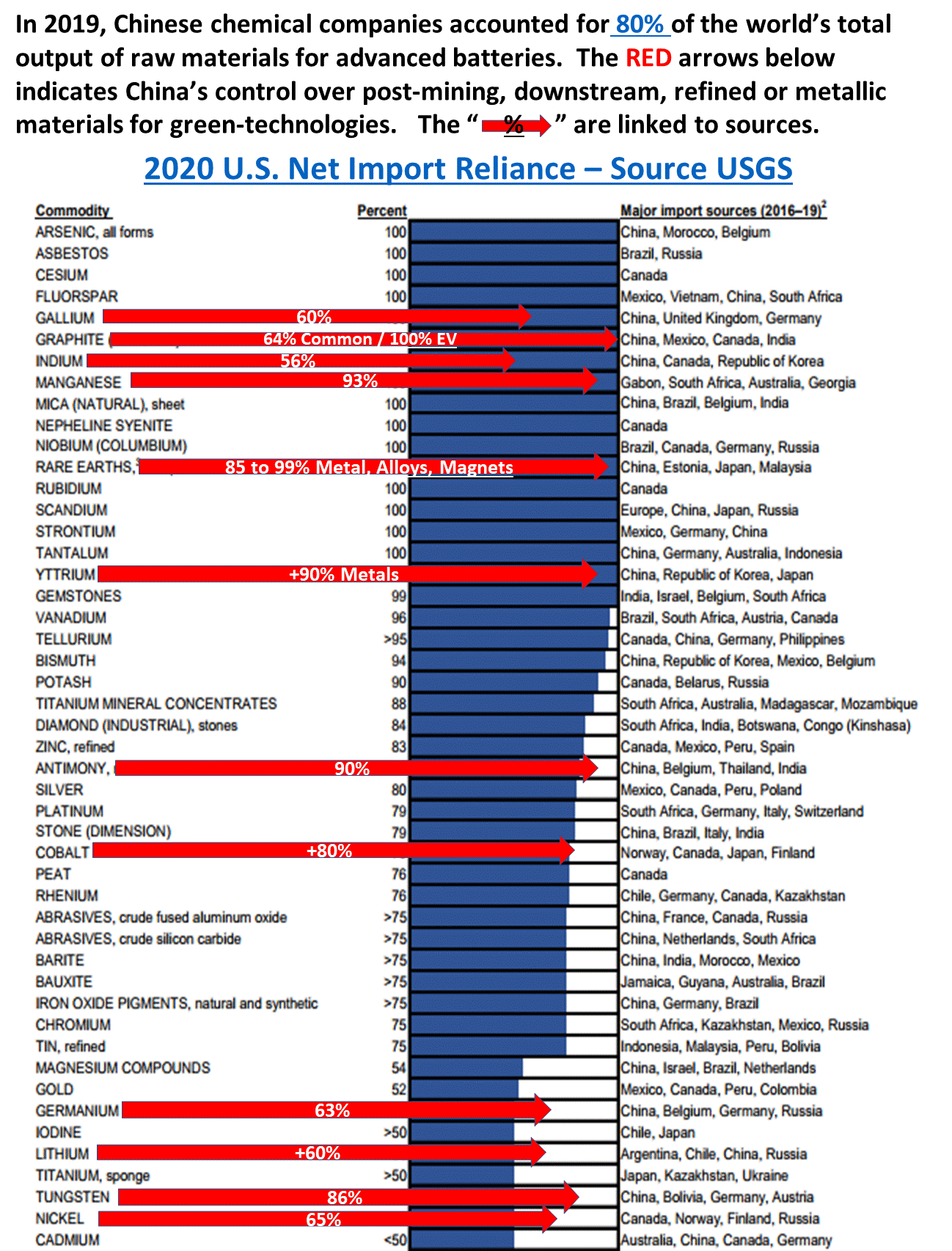
A big part of Canada’s net zero emissions by 2050 plan involves solar and wind energy, yet one of the biggest beneficiaries of that shift would be China given its dominance in the Clean Energy Solution space, whether solar panels, wind turbines or EVS. From the mineral extraction to the processing, refining and Manufacturing, there is much demand for critical minerals like copper cobalt nickel lithium and Rare Earth elements chromium zinc and aluminum. China owns stakes in many mines around the world including Canadian ones extracting these minerals to control the supply chain. According to 2022 data from the International Energy Agency, their share of refining is 35% for nickel, 60% for lithium, 70% for Cobalt and a whopping 90% for Rare Earth.
This dependence on one country means the power to squeeze Supply or raise prices at any moment, which is a big reason why on August 16th 2022 the Biden Administration signed the ironically named Inflation Reduction Act which provides 369 billion of funding for clean energy projects. The intention is to not only reshore to the US but also Near shore or Friend shore to allies like Canada, Whether in mining of critical minerals to manufacturing.
Canada acted decisively a few months later in the same year to force
three Chinese companies to sell their stakes in Canadian mining companies
. . . Oh wait just kidding.
In all seriousness the country and especially Quebec can play a role in the supply chain so long as projects can be approved in a timely manner which really is the underlying theme of this video. Having these minerals also incentivizes battery and auto manufacturing companies to invest in factories, helped massively by subsidies of course. 13 billion over 10 years is what took Volkswagen to commit to a battery plant in Southern Ontario. Likewise 15 billion in subsidies was committed for a Stellantis LG battery plant in Windsor and other projects like this. That’s a lot of money with these two subsidy awardsnot expected to break even for 20 years according to the Parliamentary budget office. And that’s if these Legacy auto companies like Stellantis and Volkswagen will be relevant by that time.
That’s the kind of energy policy decisions made in Canada in recent times,
and why we haven’t leveraged our natural resources into Superpower.
Mark Carney’s Climate Obsession Worse than Trudeau’s
The future of Canada’s badly governed energy sector is further threatened by replacing Trudeau with Carney. Terry Newman explains in his National Post article Mark Carney’s climate obsessions will put Trudeau to shame. Excerpts in italics with my bolds and added images.
Don’t trust his pledge to turn Canada into an energy superpower
For all of Carney’s supposed superior knowledge of the world and markets, the art of provincial negotiations and incentives for private investment in natural resources appears to have already escaped his grasp. There’s evidence to suggest this is because, at heart, Carney is likely to be a fully fledged ESG prime minister (ESG being short for environmental, social, and governance principles being imposed on business).Unfortunately, everything Carney’s said and done up until this point suggestsnot only that he’d fail to unite Canadian provinces to create this energy super-economy, but that’s he’s not actually interested in doing so in the first place.The Liberal party may have a new face, but Carney’s insistence on keeping an emissions cap and industrial carbon tax in place — both products of Justin Trudeau’s Liberal government — doesn’t invoke much confidence in his energy superpower plan.
Since the Liberals came to power in 2015, they implemented the Impact Assessment Act, which slowed approvals, the federal industrial carbon pricing system (2018) and the oil and gas emissions cap (slated for 2026) — all with the goal of reducing greenhouse gas emissions from the oil and gas sector to net zero by 2050.
Since 2015, many projects have been stalled or cancelled, including theNorthern Gateway Pipeline (cancelled by government in 2016, citing a federal ban on tanker traffic and Indigenous opposition); theEnergy East Pipeline(cancelled by the company in 2017, citing regulatory hurdles and low oil prices);Pacific NorthWest LNG(cancelled in 2017 due to market conditions and regulatory delays); theMacKenzie Valley Pipeline (cancelled in 2017 due to low gas prices and regulatory uncertainty);Énergie Saguenay LNG (cancelled in 2021, rejected by Quebec government over emissions concerns, not challenged by the federal government);Bay du Nord Offshore Oil (shelved in 2022, citing high costs and regulatory uncertainty); Teck Frontier Mine(cancelled in 2020, amid climate policy debates); and the Keystone XL Pipeline(cancelled 2021, due to failure to secure a U.S. permit and Canadian regulatory costs).
The only thing that’s changed about the Liberal party is the addition of Carney, and his record suggests that he will be driven by climate policy, at least as much as the Liberals have been, and potentially much more so. He was, not so long ago, the United Nations’ special envoy on climate action and finance and he founded and co-chaired the Glasgow Financial Alliance for Net Zero (GFANZ), resigning on Jan. 15, the day before he threw his hat into the Liberal leadership race.
These roadblocks long predate Carney’s ascension, and he has yet to explain how the Liberal government suddenly has either the ability or desire to address them.
Where’s the evidence Carney will be less stringent on energy projects and, therefore, better for the Canadian economy than his predecessor? If anything, especially given his longstanding ESG obsessions, all evidence appears to point to the contrary — that Mark Carney could be even more dedicated to strangling Canada’s resource economy than Trudeau.
Outsourcing your malicious behavior is no longer
a get-out-of-consequences-free card
This should be especially bad news for any of the dark-money groups that have quietly been ramping up violence against politically expedient targets — say, Tesla, for example.
What could a North Dakota jury judgment handed down against Greenpeace over a pipeline have to do with dark money politics-for-hire across the country? Quite a lot, actually.
At issue were the pipeline protests in North Dakota like the one where environmental activists cared so DAMNED much about the land that it took a state of emergency and the Army Corps of Engineers to avert an environmental catastrophe:
“Warm temperatures have accelerated snowmelt in the area of the Oceti Sakowin protest camp … Due to these conditions, the governor’s emergency order addresses safety concerns to human life as anyone in the floodplain is at risk for possible injury or death,” said the statement.
However, “the order also addresses the need to protect the Missouri River from the waste that will flow into the Cannonball River and Lake Oahe if the camp is not cleared and the cleanup expedited,” the statement read.
…Just how much waste and trash did the environmentally conscious DAPL protesters leave? “Local and federal officials estimate there’s enough trash and debris in the camp to fill about 2,500 pickup trucks,” reported AP.
Not surprisingly, months-long protests are chosen because they can cause both damage and harm, depending on the group, the tactics, and their intent.
The owner and operator of the pipeline, who lost an enormous contract as a result of their actions, took the protesters to court. They suffered serious financial harm and those who caused it should bear the responsibility for making them whole. Modern notions of protest notwithstanding, that’s how the court system was designed.
When they took to court Greenpeace and the Red Warrior Camp
(who the plaintiff claimed was their proxy)
on exactly this principle, the jury agreed.
After two days of deliberation, the New York Times reported, the jury returned the verdict. Energy Transfer, the owner and operator of the pipeline, filed the lawsuit in North Dakota state court against Greenpeace and Red Warrior Camp, which Energy Transfer claimed was a front for Greenpeace, and three individuals.
The lawsuit alleges that Greenpeace had engaged in a misinformation campaign with mass emails falsely claiming that the Dakota Access Pipeline would cross the sovereign land of the Standing Rock Sioux Tribe. In court filings, Energy Transfer claimed protesters engaged in a campaign of “militant direct action,” including trespassing on the company’s property, vandalizing construction equipment, and assaulting employees and contractors. —JustTheNews
This comes at a very bad time for violent leftwing activists. For years, the establishment left has been somewhere between indifferent to, or even happy to seeviolence on the streets, so long as that violence aligns with causes on the political left.
You never hear the kind of breathless language the establishment left uses when describing, for example ‘the Proud Boys’ when they describe, say, Antifa, BLM, Jayne’s Revenge (violent abortion activists), Palestinian Protesters, trans extremists, or (now) anti-Tesla crowds embracing forms of violence ranging from rioting on the streets, storming a building and threatening a young woman inside it, holding universities hostage, or vandalizing/firebombing Christian pro-life institutions, threatening churches, or most recently attacking anyone or anything with a Tesla connection.
The one thing so many of these movements including the current organized attacks against Tesla — have in common is copious amounts of financial backing. Efforts like what we have seen in DOGE, not to mention an FBI interested in prosecuting such crimes instead of helping them raise bail money — will be a game-changer on the investigation side of this problem.
AG Bondi, and those working with her have made it clear that investigating these fire bombings (and the SWAT-ings) will be treating the use of incendiary devices under statutes listing such actions as a federal crime punishable by up to 20 years in prison.
If the logic of this Greenpeace case is extended to culpability of the Dark Money orgs who have been using third-party agitator groups as arm’s-length shock troops for hire that give them a plausible deniability…
… this North Dakota ruling may set a precedent that says otherwise. One that other groups who have been harmed by political activism over the last number of years might play ‘follow the money’ with in seeking the redress of their harms.
Elon seems to think the breadcrumbs for a lot of the dark money issues will take us back to familiar names like ‘Act Blue’ or ‘Arabella Advisors’. If the early clues at DOGE, and the mayhem unfolding at Act Blue are any indicator, he could be on to something there.
It would take some imaginative thinking to come up with deterrents to a purely mercenary cause-of-the-day agitator group than the twin prongs of drying up the money supply and dropping the perpetrators in a hole where they can be completely forgotten about by society for a decade or two.
And if the feds draw the same inference with criminal culpability
that the jury in North Dakota just did?
Those media establishment types who were publicly giddy about Biden’s use of RICO statutes to take down Trump will soon be choking on their words and looking to bury records of their public statements cheering the Trump team prosecutions.
A plethora of insane energy policy proposals are touted by clueless politicians, including the recent Democrat candidate for US President. So all talking heads need reminding of some basics of immutable energy physics. This post is in service of restoring understanding of fundamentals that cannot be waved away.
The Key to Energy IQ
This brief video provides a key concept in order to think rationally about calls to change society’s energy platform. Below is a transcript from the closed captions along with some of the video images and others added.
We know what the future of American energy will look like. Solar panels, drawing limitless energy from the sun. Wind turbines harnessing the bounty of nature to power our homes and businesses. A nation effortlessly meeting all of its energy needs with minimal impact on the environment. We have the motivation, we have the technology. There’s only one problem: the physics.The history of America is, in many ways, the history of energy. The steam power that revolutionized travel and the shipping of goods. The coal that fueled the railroads and the industrial revolution. The petroleum that helped birth the age of the automobile. And now, if we only have the will, a new era of renewable energy.Except … it’s a little more complicated than that. It’s not really a matter of will, at least not primarily. There are powerful scientific and economic constraints on where we get our power from. An energy source has to be reliable; you have to know that the lights will go on when you flip the switch. An energy source needs to be affordable–because when energy is expensive…everything else gets more expensive too. And, if you want something to be society’s dominant energy source, it needs to be scalable, able to provide enough power for a whole nation.Those are all incredibly important considerations, which is one of the reasons it’s so weird that one of the most important concepts we have for judging them … is a thing that most people have never heard of. Ladies and gentlemen, welcome to the exciting world of…power density.Look, no one said scientists were gonna be great at branding. Put simply, power density is just how much stuff it takes to get your energy; how much land or other physical resources. And we measure it by how many watts you can get per square meter, or liter, or kilogram – which, if you’re like us…probably means nothing to you.So let’s put this in tangible terms. Just about the worst energy source America has by the standards of power density are biofuels, things like corn-based ethanol. Biofuels only provide less than 3% of America’s energy needs–and yet, because of the amount of corn that has to be grown to produce it … they require more land than every other energy source in the country combined. Lots of resources going in, not much energy coming out–which means they’re never going to be able to be a serious fuel source.Now, that’s an extreme example, but once you start to see the world in these terms, you start to realize why our choice of energy sources isn’t arbitrary.Coal, for example, is still America’s second largest source of electricity, despite the fact that it’s the dirtiest and most carbon-intensive way to produce it. Why do we still use so much of it? Well, because it’s significantly more affordable…in part because it’s way less resource-intensive.An energy source like offshore wind, for example, is so dependent on materials like copper and zinc that it would require six times as many mineral resources to produce the same amount of power as coal. And by the way, getting all those minerals out of the ground…itself requires lots and lots of energy.Now, the good news is that America has actually been cutting way down on its use of coal in recent years, thanks largely to technological breakthroughs that brought us cheap natural gas as a replacement. And because natural gas emits way less carbon than coal, that reduced our carbon emissions from electricity generation by more than 30%.In fact, the government reports that switching over to natural gas did more than twice as much to cut carbon emissions as renewables did in recent years. Why did natural gas progress so much faster than renewables? It wasn’t an accident.Energy is a little like money: You have to spend it to make it. To get usable natural gas, for example, you’ve first got to drill a well, process and transport the gas, build a power plant, and generate the electricity. But the question is how much energy are you getting back for your investment? With natural gas, you get about 30 times as much power out of the system as you put into creating it. By contrast, with something like solar power, you only get about 3 1/2 times as much power back.
Replacing the now closed Indian Point nuclear power plant would require covering all of Albany County NY with wind mills.
Hard to fuel an entire country that way. And everywhere you look, you see similarly eye-popping numbers. To replace the energy produced by just one oil well in the Permian Basin of Texas–and there are thousands of those–you’d need to build 10 windmills, each about 330 feet high. To meet just 10% of the country’s electricity needs, you’d have to build a wind farm the size of the state of New Hampshire. To get the same amount of power produced by one typical nuclear reactor, you’d need over three million solar panels, none of which means, by the way, that we shouldn’t be using renewables as a part of our energy future.But it does mean that the dream of using only renewables is going to remain a dream,
at least given the constraints of current technology. We simply don’t know how
to do it while still providing the amount of energy that everyday life requires.No energy source is ever going to painlessly solve all our problems. It’s always a compromise – which is why it’s so important for us to focus on the best outcomes that are achievable, because otherwise, New Hampshire’s gonna look like this.
Addendum from Michael J. Kelly
Energy return on investment (EROI)The debate over decarbonization has focused on technical feasibility and economics. There is one emerging measure that comes closely back to the engineering and the thermodynamics of energy production. The energy return on (energy) investment is a measure of the useful energy produced by a particular power plant divided by the energy needed to build, operate, maintain, and decommission the plant. This is a concept that owes its origin to animal ecology: a cheetah must get more energy from consuming his prey than expended on catching it, otherwise it will die. If the animal is to breed and nurture the next generation then the ratio of energy obtained from energy expended has to be higher, depending on the details of energy expenditure on these other activities. Weißbach et al. have analysed the EROI for a number of forms of energy production and their principal conclusion is that nuclear, hydro-, and gas- and coal-fired power stations have an EROI that is much greater than wind, solar photovoltaic (PV), concentrated solar power in a desert or cultivated biomass: see Fig. 2.In human terms, with an EROI of 1, we can mine fuel and look at it—we have no energy left over. To get a society that can feed itself and provide a basic educational system we need an EROI of our base-load fuel to be in excess of 5, and for a society with international travel and high culture we need EROI greater than 10. The new renewable energies do not reach this last level when the extra energy costs of overcoming intermittency are added in. In energy terms the current generation of renewable energy technologies alone will not enable a civilized modern society to continue!