A recent post by The Hill, “Disaster as Trump’s energy policy totally disregards climate change,” claims that President Donald Trump is implementing “irrational and profoundly destabilizing energy policies” by prioritizing traditional energy and deprioritizing renewables, leading to increases in weather disasters. This is false on all fronts.
♦ Data show that weather is not becoming more extreme. ♦ There is no evidence that the growth in wind and solar power has done or can do anything to alter the course of climate change. ♦ Trump’s America First agenda promotes energy dominance, focusing energy reliability and abundant, secure, domestic supplies. Trump’s energy plan is a stabilizing factor in energy costs.
William Becker, a former regional director at the U.S. Department of Energy during the Obama administration, makes many false claims in a rapid-fire fashion in his post in The Hill. For brevity’s sake and as a matter of focus, this Climate Realism post focuses on one segment of his article:
While we can thank fossil fuels for the lifestyles and conveniences most Americans enjoy today, the legacy of their long dominance is the destabilization and degradation of environmental systems critical to life. The atmosphere is one of those systems. Unprecedented weather extremes are the result of dumping fossil-fuel pollution into it. As the dumping continues, weather disasters become more frequent and destructive. The American people have been hit by an average of 23 major weather disasters (those with damages exceeding $1 billion) annually over the last five years, compared to only nine in the previous 45.
Every point Becker made in this statement after the opening clause of the first sentence is false. It is true that we can thank fossil fuels for our lifestyles and not just conveniences but essentials for modern life.
It is false that fossil fuel use is causing unprecedented weather extremes, and that they are becoming more frequent and destructive.
Becker, who currently runs a climate policy lobbying organization, uses a deceptive metric for calculating increasing weather disasters, which looks at the monetary value of losses due to weather. Becker does not attempt to claim that these weather events are becoming more frequent or extreme themselves – because they aren’t. Data on the most common weather extremes like hurricanes and wildfires show no increase, as Climate Realism has covered dozens of times. Instead, Becker cites misleading calculations of billion-dollar price tags from weather damage.
Scientist Roger Pielke, Jr., a professor emeritus at the University of Colorado Boulder, explains the misuse of the “billion dollar disaster” metric as a proof for dangerous climate change. He has called the U.S. National Climate Assessment (NCA) is “a national embarrassment,” for using that misleading metric, explaining that the NCA overestimated the number of disasters by a factor of three by re-counting individual events when they struck multiple states. So, if a hurricane passed through Florida, then into Georgia and South Carolina, the NCA would count this as three separate “billion dollar disasters” – even if the hurricane did not cause a billion dollar in of losses in each state it struck.
In reality, populations have increased in states like California and Florida, which are prone to extreme weather. More infrastructure has been built in susceptible areas, so there is more to annihilate when a storm strikes. To the extent that there has been any rise in billion dollar costs attributable to extreme weather events, as estimated by Becker and the sources he uses, it is due, not to changes in weather, but rather a well-known phenomenon labeled the “expanding bulls-eye effect,” which Climate Realism has discussed dozens of times previously, such as here.
Going further, an analysis from Pielke, Jr. of insurance data presented in another Climate Realism post disputes the claim that the costs of natural disasters, when measured fairly, have risen. Relative to global GDP, the trend in property losses has declined as the Earth has modestly warmed over the last several decades. (See the graph, below)
Graph: Global disaster losses as a proportion of global GDP.
Becker’s additional claim that Trump’s focus on reliable energy rather than intermittent renewables will raise costs and result in less energy security, is as false as his claims about worsening disaster costs. The wind and solar technologies that Becker promotes rely heavily on materials and technologies produced by foreign powers that are not friendly to the United States, like China.
A grid powered by wind and solar is not cheaper than gas, it isn’t even cheaper than nuclear. A study by energy modelers at Always On Energy Research found that wind and solar both suffer from massive costs associated with the overbuilding necessary to overcome the intermittency issue. Load balancing, using battery storage, carries very high costs, as well. These make nuclear less expensive per megawatt hour than existing wind or solar, despite high upfront costs.
Similarly for fossil fuels, full system LCOE show that wind and solar in Texas costs far more per megawatt hour than nuclear, coal (of which the United States has hundreds of years of domestic supply that isn’t dependent on foreign sources), or the cheapest source – natural gas, which is also sourced domestically.
Grid stability is damaged by high penetration of solar and wind and the closure of traditional energy, according to utility companies and federal energy regulators.
Almost every claim made in Becker’s article in The Hill is provably wrong. The post is long on hyperbole and misinformation, but short on facts and data. Real world weather data shows no increase in extreme weather, incidences of weather disasters, or weather disaster costs as a percentage of economic growth. Trump’s reliability focused, America First, energy policy will not harm our energy security or the planet, but it will buttress the United States against the hostile intentions of any foreign government that might use our dependence on them for renewable energy materials and technology to extort economic or geopolitical concessions. It will also allow the U.S. to become energy dominant, a force for good in the world by supplying our abundant domestic energy supplies to allies, especially to developing countries in need of reliable energy sources to bring their populations out of energy poverty.
There is a lot of anxiety, misconceptions and distortions about Doge, or Department of Government Efficiency. The above interview with members of the team and their leader Elon Musk gives everyone an inside view of what the work is, who is doing it and why, and what is at stake for citizens and taxpayers. For those who prefer reading, below is a transcript lightly edited from the closed captions with my added images. BB is Bret Baier of Fox News and EM is Elon Musk. Baier introduces other participants by name and background.
BB: Thanks for having us and doing this I know there’s a lot of interest in Doge. Let me start with you Elon: What are what are the budgetary savings goals and and how much do you think you’ve achieved so far?
EM: Our goal is to reduce the deficit by a trillion dollars. So from a nominal deficit of 2 trillion, it is to cut the deficit in half to 1 trillion. Or looking at it in total federal spending, to drop the federal spending from 7 trillion to Six Trillion. We want to reduce the spending by eliminating waste. And to reduce the spending by 15%, which seems really quite achievable.
The government is not efficient, and there’s a lot of a lot of waste and fraud, so we feel confident that a 15% reduction can be done without affecting any of of the critical government services, and in fact making them better.
BB: I’m going talk to all the guys here about the specifics. But for you what’s the most astonishing thing you found out in this process?
EM: The sheer amount of waste and fraud in the government. It is astonishing, it’s mind-blowing. We routinely encounter wastes of a billion dollars or more just casually. For example, there was a simple survey that was literally a 10 questions survey, that you could do with Survey Monkey costing about $10,000. The government was being charged almost a billion dollars for that. A billion dollars for a simple online survey with questions like: Do you like the national park? And then there appears to be no feedback loop for what would be done with that survey. So the survey would just go for nothing.
BB: You technically are a special government employee and you’re supposed to be 130 days. Are you going to continue past that or what do you think you’re going to do?
EM: Well I think we will have accomplished most of the work required to reduce the deficit by a trillion dollars within that time frame.
BB: So in that time frame and and the process is a report at some point?
EM: Not really a report we are cutting the waste and fraud in real time. So every day that passes our goal is to reduce the the waste and fraud by $4 billion a day, every day 7 days a week, and so far we are succeeding.
BB: I’m going to talk of the specifics but there there obviously are Doge critics who are reading all kinds of stuff. Obviously lawmakers on the other side of the aisle are attacking you. And they characterize the approach as: Fire, Ready and then Aim. And how do you approach that, how do you respond to that?
EM: Well I do agree that we actually want to be careful in the cuts, so we want to measure twice if not thrice and cut once. That actually is our approach. They may characterize it as shooting from the hip, but it is anything but that. It’s not say that we make we don’t make mistakes. If we were to approach this with the standard of making no mistakes at all, that would be like saying someone in baseball has got to bat a thousand. That’s impossible, so when we do make mistakes we correct them quickly and we we move on.
BB: Some people say this shouldn’t take a rocket scientist, but Steve Davis you are a rocket scientist. Used to be and now essentially you’re the Chief Operating Officer of Doge day-to-day operations, fair to say. So how did you end up here, what’s the biggest challenge you see?
SD: The reason I’m here, which is probably the same for many, is that I think the goal is incredibly inspiring. I think most of the taxpayers in the country would agree that to have the country going bankrupt would be a very bad thing, and therefore keeping the country from going bankrupt is a good thing. So all of us are willing to kind of put our lives on hold in order to do this. I think the thing that’s special right now is we actually believe there’s a chance to succeed. There’s an Administration that’s supportive and a great cabinet and just a great group that will actually make success a possible outcome. Given the inspiring Mission and given the non-zero chance of success it it was worth doing.
EM: Let me reemphasize that point that the success of Doge is only possible with President Trump and with the outstanding cabinet that he selected. It would be impossible without the support of the president and the cabinet.
BB: But you’re finding the money, I mean it’s big numbers right?
SD: Yeah like Elon said the minimum impulse bit is often a billion dollars. So for example the $830 million which was the online survey. That’s an enormous amount of money that wouldn’t have been found if the Doge team wasn’t working with in that case the Department of Interior. But then taking it one step further Doge then publishes these things on our website for maximum transparency. It would have been impossible for the general public to have seen that. Now anyone can just log into doge.gov anytime and see these payments. They’re not yet in real time, they’re close but they’ll probably be in real time within the next few weeks.
BB: But the process still involves Congress right, at some level?
EM: We try to keep Congress as informed as possible. The law does say that money needs to be spent correctly; it should not be spent fraudulently or wastefully. It’s not contrary to Congress to avoid waste and fraud, it is consistent with the law and consistent with Congress. And we’ve seen actually great support at least from the Republican side of the house and occasionally some Democrats too.
You know it’s nice to see people cross the aisle once in a while. But usually when they attack Doge, they never attack any of the specifics. They’ll say what we’re doing is somehow unconstitutional or illegal or whatever. We’re saying, well which line of the cost savings do you disagree with and they can’t point to any. And we list them all on on doge.gov and and the Doge handle on X. And you’ll see just outrageous things, one outrageous thing after another.
BB: Joe Gebbia, besides Elon you’re one of several billionaires, being co-founder of Airbnb, and you wanted to help out.
JG: I bumped into Anthony Elon probably back in February and they told me something about a mine that dealt with retirement and they said they needed somebody to help out to fix retirement in the government. I loved the challenge so I jumped on board. And it turns out there is actually a mine in Pennsylvania that houses every paper document for the retirement process in the government.
Now picture this giant cave has 22,000 filing cabinets stacked 10 high to house 400 million pieces of paper. It’s a process that started in the 1950s and largely hasn’t changed in the last 70 years. As we dug into it we found retirement cases that had so much paper they had to fit it on a shipping pallet. So the process takes many months and we’re going to make it just some days.
So this will be an online digital process that will take just a few days at most. And I really think you know it’s an injustice to civil servants who are subjected to these processes that are older than the age of half the people watching your show tonight. We really believe that the government can have an Apple Store-like experience: beautifully designed, great user experience, modern systems.
BB: Because right now it’s by hand?
EM: Yes the the retirement process is all by paper literally with people carrying paper and manilla envelopes into this gigantic mine. So they can’t retire more than a certain number every month about 8,000 a month. That’s how we discovered it. We were saying, well let’s encourage voluntary retirement; they said, well the most they could do is 8,000 a month. And even in normal circumstances it can take 6 to 9 months just to just to have your retirement paperwork processed, and they often get the calculations wrong.
So we’re wondering, why would it take so long to retire? Ad they say, well because of the mine. “What do you mean a mine, what’s a mine got to do with retiring?” And that’s where we discovered that all the retirement stuff is done still done by paper in a process that looks identical to what occurred in the 1950s. If you compare a snapshot of the mine when it first started in the 50s to today, it looks the same.
BB: It’s amazing, so how long do you think it’ll take to turn over?
JG: We’re working as fast as we can. Probably next couple months we’ll have this this overhauled, and you know I really think again, why are we subjecting our federal workers to processes that they actually have to go through a training just to retire from the government. There’s a whole training program that people have to go through in order to retire, I think we can do better for them.
BB: Arum Moghaddassi, Doge engineer. You go into these places, one of the more than a dozen engineers, the first people to go into the agencies and view the computer data sets. Tell me what you’re finding, and for people who don’t understand how that process works, explain it for them.
AM: I’ll say the first thing that got me really excited about Doge was learning basically the state of government computers. By some estimates, government costs about hundred billion dollars and it’s funding systems are over 50 years old. In the case of something like Social Security or the IRS the really critical systems are old. They cost a lot of money to maintain and the efforts to improve them are often very delayed. So I thought, I’m a software engineer, maybe that could make a difference here, and that’s really what inspired me at a high level.
BB: There’s a lot of mystery about social security and a lot of words about it. Here’s what Democrats have been saying about: it’s absurd that Elon Musk is trying to eliminate billions of dollars from Social Security. Elon Musk and president Trump have set their sights on cutting Social Security their goal is clear: destroy Social Security from within. You’re in the building, I mean you’re in the computers. What’s happening there, what are you doing?
AM: Yeah it doesn’t line up with my experience on the ground. And I’ll say the two improvements that we’re trying to make to Social Security are helping people that legitimately get benefits, protect them from fraud that they experience every day on a routine basis. And also make the experience better. I’ll give you one example which is at Social Security. One of the first things we learned is that they get phone calls every day of people trying to change direct deposit information. So when you want to change your bank account you can call Social Security. We learned 40% of the phone calls that they get are from fraudsters; 40%, that’s right, almost half.
EM: Yes and they steal from people their Social Security. What happens is they they call in, they claim to be a retiree, then they convince the Social Security person on the phone to change where the money is flowing. It actually goes to some fraudster. This is happening all day, every day. And then somebody doesn’t receive their social security, and it’s because of of all the the fraud loopholes in the Social Security System.
BB: How do you reassure people that what you all are doing is not going to affect their benefit benefits?
EM: No. In fact what what we’re doing will help their benefits. Legitimate people as a result of the work of Doge will receive more Social Security not less. I want to emphasize that as a result of the work of Doge legitimate recipients of Social Security will receive more money not less money. Let the record show that I said this and it will be proven out to be true.
BB: Let’s check back on this in the future. So from Washington post: The Social Security Administration website crashed four times in 10 days this month because the servers were overloaded, blocking millions of retirees and disabled veterans from logging into their online accounts. People freaked out. Is that going to change?
EM: Yes we’re going to make sure that the website stays online.
BB: But I mean is it a result of going in there, something you’re doing?
SD: No no. The amount of issues with the social security system are enormous. As an example there are over 15 million people that are over the age of 120 that are marked as alive in the social security system. That’s an accurate figure. This has been something that’s been identified as a problem. Again it’s a pre-existing problem since 2008 at least from an IG report. So there were some great people working at the Social Security Administration that found this in 2008.
And nothing was done, so that 15 to 20 million Social Security numbers that were clearly fraudulent were floating around. That can be used only for bad intentions, there’d be no way to use those for good intentions. One of the things the Doge team is doing is carefully and and very methodically looking at those and making sure that any fraudulent ones are eliminated.
BB: Brad Smith working at HHS and obviously another element is Medicare and Medicaid. What are you finding?
Brad: Well I’d say there’s a couple things we’re really committed to in our work at HHS. Number one is making sure we continue to have the best biomed research in the world, and number two is making sure what president Trump has said over and over again, that we 100% protect Medicare and Medicaid. But there’s a lot of opportunity.
If I take NIH as an example today, if you’re an NIH researcher and you get a $100 Grant at your University today you get to spend 60 of that and your University spends 40 of that. The policy we’re proposing is that you get to spend 85 of that and your University spends 15. So that’s more money going directly to the scientists who are discovering new cures.
Another example at NIH is today they have 27 different centers that got created over time by Congress. And they’re typically by disease state or body system. There’s 700 different IT systems today at NIH, 700 different IT software systems. They can’t speak to each other so they don’t talk and they have 27 different CIOs. When you think about making great medical discoveries you have to connect the data. But with 27 Chief Information officers and most people are non-technical. So there’s a lot of opportunity which will make science better not worse.
EM: When I say that our job is tech support I really mean it. Yeah we have to fix the computers: if the computers can’t talk to each other you can’t get research done; if the computers can’t stay online people won’t receive their social security. So we have here a bunch of failing computer systems that are preventing people from receiving their benefits, that are preventing people from accessing needed research resources. Computer systems that are extremely vulnerable to fraud. And we’re fixing it.
BB: Does that include AI, does that include kind of changing the system overall? I guess that’s what people are afraid of: they don’t know what this is all looking like and is it going to affect me in the long term.
EM: It’s going to affect people very positively. The changes that we’re doing here will ensure the solvency of the government of the United States of America. We’re trying to ensure that people do receive their benefits in the future. And you can only receive your benefits if the the country is operating in a in a healthy and competent way.
BB: Anthony Armstrong, Doge office of personnel management, Morgan Stanley Banker M&A guy, you know money and this is a lot of money sloshing around.
AA: There’s a lot of money sloshing around; there’s a lot of money sloshing out the door. If you look at the federal government and the way the workforce works, it’s really a one-way ratchet over decades. It’s only going up, you never take anything away. So that leaves you with duplicative functions, it leaves you with overstaffing and it leaves you with functions in the wrong places.
So a couple of examples of duplicative function. Brad mentioned 27 CIOs, if you had kept going with Brad he probably he would talk about the Communications office. I think you’ve got 40 distinct Communications offices in in HHS. Yeah 40 and that’s not unusual by by the way. And multiple offices like that are not making anyone healthy. This is not about the employees. There’s many many hardworking, well-meaning people who took these jobs. The jobs were out there, they applied for them, they took them and they’re doing what’s there. It’s just that they’re duplicating the efforts of 40 offices. So you’ve got that and you’ve got overstaffing.
A good example of overstaffing would be the IRS having 1,400 people who are dedicated to provisioning laptops and and cell phones. If you join the IRS you get a laptop and a cell phone you’re provisioned. If each of those IRS officers or employees provisioned two employees per day you could provision the entire IRS in a little more than a month. So 12 times a year. It makes no sense why you have would 1400 people whose only job it is to give out a laptop and a phone, when the whole IRS could be handled once a month.
So that doesn’t that doesn’t make any sense and president Trump’s been very clear: scalpel not hatchet. And that’s the way it’s it’s getting done, and once those decisions are made, there’s a very heavy focus on being generous, being caring, compassionate and treating everyone with dignity and respect. If you look at how people have started to leave the government it is largely through voluntary means. There’s voluntary early retirement, there’s voluntary separation payments. We put in place deferred resignation the 8-month severance program. So there’s a very heavy bias towards programs that are long-dated that are generous that allow people to exit and go and get a new job in the private sector.
You’ve heard a lot of news about RIFs, about people getting fired at at this moment in time. Less than 0.15 of the federal Workforce has actually been given a RIF notice, so mostly they’ve selected if they’re leaving. Basically almost no one’s gotten fired is what we’re saying.
BB: Tom Krause, working at Treasury you are having access to the payment system that oversees all the outgoing payments. Essentially those payments were going places we didn’t know where they were going right?
TK: Unfortunately that’s the case. You know as an ex CFO of a big public tech company, really what we’re doing is applying public company standards to the federal government. And it is alarming how the financial operations and financial management is set up today. There actually is really only one bank account that’s used to disperse all monies that go out of the federal government. One bank account that is a big, big one. A couple weeks ago it had $800 billion, but it’s the treasury general account.
When you hear some of my colleagues here talking about fraud, you have to ask: well why is this allowed to happen. At a financial level well it’s actually quite simple but alarming. The treasury up until now and thanks to president Trump we’re fixing this in fact there’s an executive order that he just signed which is protecting America’s bank account because it really is the taxpayers money.
You know we’re changing the culture because the culture has been not a lot of caring and not a lot of commitment to doing what’s right. Relative to financial operations there’s $500 billion dollars of fraud every year, there’s hundreds of billion dollars of improper payments and we can’t pass an audit. The Consolidated financial report is produced by Treasury and we cannot pass it on, we have material weaknesses. That means if I were a public company CFO I would effectively be removed if I couldn’t file financial statements. I couldn’t issue securities of course since we can’t pass an audit.
EM: Right the federal government cannot pass an Audit. It’s impossible in fact. In order to pass an audit you need the information necessary to pass an audit. You need to have the payment codes, you need to have the payment explanation and you need to have a person you can contact to understand why that payment was made. None of those things were mandatory, yeah until just recently. In just the last few weeks we’re serving 580 plus agencies, and up until very recently they effectively could say make the payment and treasury just sent it out as fast as possible, no verification
And so we’re doing what any household would do. But imagine you’re a household with a bank account and everyone has the ATM card connected to that account, everyone has a checkbook on that account. It’s not just your children, not just your parents; it’s your in-laws it’s your extended family, and they all can go to the account and disperse funds no questions asked. No justification, no verification.
BB: Tyler Hassen, Interior Department, you’re a former Oil Company CEO. You’re reviewing contracts before they’re approved for funding, what are you finding?
TH: Well Elon and Steve kind of stole my thunder, but I actually found that customer service survey contract. I actually have an example of one right here, I was able to do this in high school, I found it that bad. I found it on the weekends because under the Biden Administration there was no departmental oversight within the Department of Interior whatsoever, none. We are now reviewing every single contract, every single Grant, and when things come to my attention that don’t make sense I’m bringing then to secretary Burgum. He has been fantastic, he’s a businessman and very supportive of Doge. It’s been wonderful to work with him.
BB: The battle has decades of buildup between government and business, which you guys are. Is that like a train hitting each other, I mean it it seems like it’s pretty disruptive.
EM: Well this is a revolution and it might be the might be the biggest revolution in government since the original Revolution. But at the end of the day America is going to be in much better shape. America will be solvent, the critical programs that people depend upon will work and and it’s going to be a fantastic future. Are we going to get a lot of complaints along the way, absolutely. You know one of the things I learned at PayPal was this: who complains the loudest and with the most amount of fake righteous indignation, the fraudsters, that’s a tell. NGOs that are crazy like the the $2 billion the Stacy AB NGO that basically didn’t exist and suddenly gets $2 billion awarded from the federal government. Why? And there are many cases like that.
BB: I think that most people Common Sense wise would say the Fraud’s got to end. They’re concerned about the 94-year-old grandmother who misses a check or somehow doesn’t get what she’s supposed to get.
EM: Right and what we’re trying to say is actually that the 94-year-old grandmother as a result of Doge’s work is going to get her check. She’s not going to be robbed by fraud like she’s getting robbed today. And the solvency of the federal government will ensure that she continues to receive those Social Security checks. And that Medicare continues to work without which we’re all doomed. The reason we’re doing this is because unless we do it America’s going to go insolvent, we’re going to go bankrupt and nobody’s going to get anything.
BB: Why are you guys all doing it? I mean you can pipe up but it you don’t have to be here, right. I mean you don’t you don’t have to be doing this.
TK: I am blessed with four children, my wife and I, but we have a real fiscal crisis and and this is not sustainable. And what’s worse, for my children and everyone else’s children, we are burdening them with that debt and it’s only going to grow.
BB: There’s not a lot of hierarchy here. You guys are kind of all approaching it in different silos but with the same kind of goal right. This is really Silicon Valley private sector colliding with government.
SD: Yeah exactly we’re headed in a bad path but that the chance of success exists. And just in my head right now is a fairly mundane issue that is very illustrative, namely credit cards. There are in the federal government around 4.6 million credit cards for around 2.3 to 2.4 million employees. This doesn’t make sense. So all the teams have worked on this with the agencies and said: Do you need all of these credit cards; are they being used; can you tell us physically where they are.
BB: I hope they’re getting frequent flyer points.
SD: Actually on a different note the rewards program the federal government has is actually not very good but that’s a whole other negotiation story. But so far the teams have worked together and they’ve reduced it from 4.6 million to to 4.3 million so we’re taking it easy. But clearly there should not be more credit cards than there are people.
BB: Yeah Joe middle level employees, are they seeing a benefit to being empowered by taking out bureaucracy?
JG: I mean absolutely I mean I think what you’re seeing is taking the best of Silicon Valley in the business world and bringing it into the government. We’re bringing the best practices and the best methodologies and people are inspired, especially on the retirement process which I can speak to. They’ve been trying to modernize and get off of paper since early 2000s not very successfully. Every attempt has gone over budget and been cancelled because it was not successful.
And so I showed up and I feel like I’m here because it’s an interesting problem, we can use design to solve it and good engineering, and really create a better experience for everybody.
EM: We’re talking about elementary Financial controls that are necessary for any company to function. If a commercial company operated the way the federal government does, then it would immediately go bankrupt, it would be delisted, and the officers would be arrested. The changes we’re putting in place will enable the federal government to pass an audit. It will enable taxpayers to know where the money is going, and know that their hard-earned tax dollars are being spent well.
One way that the government is defrauded is because the computer systems don’t talk to each other. The fraud comes when someone exploits that Gap to take advantage. For example there were over $300 million of small business administration loans that have been given out to people under the age of 11. Well actually to add up, it’s 300 million under the age of 11, and over 300 million to over the age of 120. Definitely small business loans correct. Yet the oldest American is 114 years old. So it’s safe to say if their age is 115 or above they’re fake or they should be in the book of World Records. And we should not be giving out um loans to babies, yet the youngest recipient of a small business administration loan is a 9-month year old, which is a very precocious baby.
Obviously it was just fraudulent. They are doing terrible things. They actually will see that a kid’s been born, they will steal that kid’s social security number and then take out a loan and and leave that kid with a with a bad credit rating. Terrible Things are being done is what we’re saying and the reason this is happening is because the the two systems are not talking to each other.
AA: So you don’t know at the small business administration that you’re giving a loan to a 9-month-old, which happened in one case, because you’re not cross referencing that with the Social Security Administration data that has birth dates. That very very simple fix eliminates tremendous fraud. And there are multiple systems across the government where the systems are not speaking with one another. Just solving that simple problem would solve a huge amount of fraud.
EM: One of the the key tricks that the fraudsters pull is that they will use the fact that someone is marked as live. Since that social security number is marked as live in Social Security, they then can get disability and unemployment insurance benefits for a dead person because the databases don’t talk to each other. So the person is falsely marked alive in Social Security, so the fraudster can get benefits from a dead person. This is happening all the time at scale.
BB: We didn’t talk about any plans to approach cuts at the Pentagon, you’re in there.
EM: You know the Pentagon has not passed an audit in a very long time. Crazy as it sounds they will lose 20 $30 billion a year and they literally don’t know where it went. Senator Collins was telling me about how she gave the Navy $112 billion for extra submarines and got zero extra submarines. When she held a hearing and asked where did the 112 billion go, they didn’t know.
BB: Are you surprised at some of the legal efforts and some of the judges that have weighed in. There’s about eight or 10 now of these cases that are at least temporary holds and they’re being challenged by the DOJ. Are you surprised by that push back?
EM: Well the DC circuit is notorious for having a a very far-left bias and when you look at the people close to some of these judges, people who are working at these NGOS, they’re the ones getting this money. Does that seem like a system that lacks corruption?
BB: It sounds like corruption to me. Last thing do you guys all see this as a patriotic duty? Is that really what this is about?
TH: It’s essential I do 100%. I was running five businesses in Houston and I left that. I left great people to do this. And my wonderful wife said go for it and here I am. I feel like this is me giving back to the country. If we don’t do this we’re sunk. Unless this exercise is successful the ship of America will sink, that’s why we’re doing it.
BB: Well gentlemen I really appreciate the time today and hopefully it took some of the myth and mystery out of Doge and what’s happening behind the scenes. Thank you. We asked on X your platform for some for some questions and here is uh C. Sperling: Are they happy with the speed at which they’re making changes? Are there any changes they would like to make but haven’t yet?
EM: Well in the context of the government we’re moving like lightning. In the context of what I’m used to moving it’s slower than I’d like. So what seems like incredibly fast action by government standards is slower than I’d like, to be totally Frank. But what we are all making solid progress on a very sort of thorny problem, a tough problem really. It’s kind of like painful hard work to reconcile all of the government databases to eliminate the waste and fraud. These databases don’t talk to each other and that’s really the biggest vulnerability for fraud. Painful as it is, it has to be done and will greatly improve the efficiency of the government systems.
A tattered Canadian flag is shown on top of a building in downtown Calgary on Friday, Jan. 17, 2025 where the U.S. Consulate is located. Photo by Jim Wells/Postmedia
Sunday’s edition of the Financial Times included the oft-made observation that Canada is brimming with potential, and the oft-made conclusion that this country would be much better off if it simply developed its God-given gifts.
The article, Unlocking Canada’s Superpower Potential by Tej Parikh, made the bullish case for this country’s future prospects: Canada is geographically huge and loaded with natural resources — on paper, at least, it has the makings of an actual global superpower.
“‘Canada absolutely has potential to be a global superpower,’ but the nation has lacked the visionary leadership and policy framework to capitalise on its advantages.”
It was, with gentle vagueness, a condemnation of the federal Liberal government and what is now being called Canada’s “lost decade”: a period of 10 years in which the current government ratcheted up onerous environmental and Indigenous-consultation requirements and, where ministerial approvals are concerned, delayed decisions, all geared at keeping undeveloped parts of Canada in their natural state.
Terms like “circular economy” and “just transition” are the Liberal synonyms for this no-growth agenda, which has delivered us a fraction of a percentage of GDP growth per capita from 2014 to the end of 2024 — a time period in which peer countries have managed double-digits.
For anyone who missed out on all the bad governance robbing Canadians of superpower prosperity, this brief video exposes the crimes against the citizenry. For those who prefer reading, I provide below a transcript from the closed captions.
Transcript
This is Alberta the fourth largest Province and home to about 4.6 million people. It ranks third in GDP just behind Quebec and first in GDP per capita primarily off the back of oil and gas extraction. While its discovery in the first half of the 20th century has brought Canada riches, for reasons from political to economic it never reached its full potential as an energy superpower, and Canadians as a whole lose out. We’ll be diving into how its energy policies have evolved and the path it is on whether for natural gas, nuclear, hydrogen and more.
Canada has the third largest proven oil reserves and by most estimates in the top 20 in terms of natural gas reserves. It is a top 10 producer of oil and gas, meaning it is engaged in extracting processing and supplying of these resources for domestic production.
Natural Gas
For natural gas exports it is in the top six,all of which goes to the US via pipelines. To export across water requires Investments to build liquid natural gas or LNG facilities to cool the gas into a liquid state in a process called liquefaction. In 2024 the the first export terminal will finally be completed in Kitimat BC called LNG Canada with gas coming through the coastal gas tank pipeline set to complete after 5 years of construction and a price tag that jumped from 6.6 billion to 14.5 billion.
But don’t expect other facilities to be constructed anytime soon. On February 9th 2022, 2 weeks before the Russian invasion of Ukraine, the federal and Quebec governments rejected approval of an LNG plant in Saguenay that would have allowed for the export of Western Natural Gas to European markets.
They cited increased greenhouse gas emissions
and lack of social responsibility.
While most of the natural gas is located in Northern Alberta and BC in the Montney formation, there is also gas in the Atlantic provinces. However New Brunswick, Newfoundland and Labrador, and Nova Scotia have all banned the process of fracking used for shale gas development over safety fears, thereby losing out on tens of billions of economic potential. Ironically the same provinces import a lot of natural gas extracted from the US through the process of fracking,Quebec also has natural gas resources but in April 2022 banned all oil and gas extraction in the province.
This means not only are pipelines from western Canada rejected from going through Quebec, natural gas extraction and export facilities in these provinces have been rejected as well. The demand if not met by Canada will be filled by other countries that might not share the same values nor care about the environment, with the jobs, millions in royalties and taxes going elsewhere. Since 2011, of the 18 proposed LG export projects including five on the East Coast. only the Kitimat project has proceeded with the others being cancelled, blocked or abandoned.
While the US in the same time frame has built seven LG facilities, five more under construction and approved 15, enabling them to go from a net importer to a top three exporter in the world. Australia has 10 LG facilities with the majority built in the 2010s helping to satisfy energy demand from Asian countries and to help them move away from coal. Qatar too has benefited greatly from extracting its resources as European countries look for alternatives to Russian gas.
These three countries have all signed decades-long deals to supply natural gas. Yet when Japan, South Korea, and Germany showed interest in Canadian LG, the Prime Minister said, “There has never been a strong business case.” While critics point out that natural gas is a fossil fuel contributing to greenhouse gas emissions, it emits 40% less than coal and 30% less than oil.
Nuclear Energy
We can’t talk about energy policy without mentioning nuclear, because it does not emit greenhouse gases while being a reliable source of energy, not dependent on the wind blowing or the sun shining. Currently nuclear supplies 58% of Ontario’s electricity needs and 15% Nationwide with all but one of the 19 nuclear reactors. The one located outside of Ontario is in New Brunswick. No new reactors have been completed since 1993. Meanwhile coal is still used to generate 6% of Canada’s electricity needs despite the country having the third largest uranium reserves, the fuel needed for reactors.
But on September 19th 2023, Canada did reach a $3 billion deal to finance nuclear power . . .in Romania. In fairness this deal does support the export of made in Canada Candu style reactors. An industry in which historically Canada has been a leader. Any discussion should include nuclear, as one of the trends in the nuclear industry is small modular reactors or SMRs which should be easier to manufacture and transport enabling its use in remote regions.
Hydrogen
Another Trend that the federal government has prioritized in the 2023 budget relates to hydrogen. 16.4 billion has been allocated over 5 years for “clean” Technologies and “clean” hydrogen tax credits, which are subsidies for costs in setting up equipment to produce green hydrogen. When the German Chancellor Olaf Schultz arrived in Canada in August 2022 asking for LNG, Canada instead offered green hydrogen created by wind turbines generating electricity to perform electrolysis by splitting water to produce hydrogen. It is both inefficient and expensive to produce green hydrogen meaning there is little business case for it without subsidies, since more than 99% of hydrogen is currently produced using fossil fuel. While green hydrogen will likely play a role in industrial processes, such as replacing coal used in steel production or creating ammonia in fertilizer production, its role in transportation is likely negligible. Furthermore using hydroelectricity, nuclear or natural gas to create hydrogen plays into Canada’s strengths in a way that solar or wind does not, as we’ll see shortly.
Solar and Wind
A big part of Canada’s net zero emissions by 2050 plan involves solar and wind energy, yet one of the biggest beneficiaries of that shift would be China given its dominance in the Clean Energy Solution space, whether solar panels, wind turbines or EVS. From the mineral extraction to the processing, refining and Manufacturing, there is much demand for critical minerals like copper cobalt nickel lithium and Rare Earth elements chromium zinc and aluminum. China owns stakes in many mines around the world including Canadian ones extracting these minerals to control the supply chain. According to 2022 data from the International Energy Agency, their share of refining is 35% for nickel, 60% for lithium, 70% for Cobalt and a whopping 90% for Rare Earth.
This dependence on one country means the power to squeeze Supply or raise prices at any moment, which is a big reason why on August 16th 2022 the Biden Administration signed the ironically named Inflation Reduction Act which provides 369 billion of funding for clean energy projects. The intention is to not only reshore to the US but also Near shore or Friend shore to allies like Canada, Whether in mining of critical minerals to manufacturing.
Canada acted decisively a few months later in the same year to force
three Chinese companies to sell their stakes in Canadian mining companies
. . . Oh wait just kidding.
In all seriousness the country and especially Quebec can play a role in the supply chain so long as projects can be approved in a timely manner which really is the underlying theme of this video. Having these minerals also incentivizes battery and auto manufacturing companies to invest in factories, helped massively by subsidies of course. 13 billion over 10 years is what took Volkswagen to commit to a battery plant in Southern Ontario. Likewise 15 billion in subsidies was committed for a Stellantis LG battery plant in Windsor and other projects like this. That’s a lot of money with these two subsidy awardsnot expected to break even for 20 years according to the Parliamentary budget office. And that’s if these Legacy auto companies like Stellantis and Volkswagen will be relevant by that time.
That’s the kind of energy policy decisions made in Canada in recent times,
and why we haven’t leveraged our natural resources into Superpower.
Mark Carney’s Climate Obsession Worse than Trudeau’s
The future of Canada’s badly governed energy sector is further threatened by replacing Trudeau with Carney. Terry Newman explains in his National Post article Mark Carney’s climate obsessions will put Trudeau to shame. Excerpts in italics with my bolds and added images.
Don’t trust his pledge to turn Canada into an energy superpower
For all of Carney’s supposed superior knowledge of the world and markets, the art of provincial negotiations and incentives for private investment in natural resources appears to have already escaped his grasp. There’s evidence to suggest this is because, at heart, Carney is likely to be a fully fledged ESG prime minister (ESG being short for environmental, social, and governance principles being imposed on business).Unfortunately, everything Carney’s said and done up until this point suggestsnot only that he’d fail to unite Canadian provinces to create this energy super-economy, but that’s he’s not actually interested in doing so in the first place.The Liberal party may have a new face, but Carney’s insistence on keeping an emissions cap and industrial carbon tax in place — both products of Justin Trudeau’s Liberal government — doesn’t invoke much confidence in his energy superpower plan.
Since the Liberals came to power in 2015, they implemented the Impact Assessment Act, which slowed approvals, the federal industrial carbon pricing system (2018) and the oil and gas emissions cap (slated for 2026) — all with the goal of reducing greenhouse gas emissions from the oil and gas sector to net zero by 2050.
Since 2015, many projects have been stalled or cancelled, including theNorthern Gateway Pipeline (cancelled by government in 2016, citing a federal ban on tanker traffic and Indigenous opposition); theEnergy East Pipeline(cancelled by the company in 2017, citing regulatory hurdles and low oil prices);Pacific NorthWest LNG(cancelled in 2017 due to market conditions and regulatory delays); theMacKenzie Valley Pipeline (cancelled in 2017 due to low gas prices and regulatory uncertainty);Énergie Saguenay LNG (cancelled in 2021, rejected by Quebec government over emissions concerns, not challenged by the federal government);Bay du Nord Offshore Oil (shelved in 2022, citing high costs and regulatory uncertainty); Teck Frontier Mine(cancelled in 2020, amid climate policy debates); and the Keystone XL Pipeline(cancelled 2021, due to failure to secure a U.S. permit and Canadian regulatory costs).
The only thing that’s changed about the Liberal party is the addition of Carney, and his record suggests that he will be driven by climate policy, at least as much as the Liberals have been, and potentially much more so. He was, not so long ago, the United Nations’ special envoy on climate action and finance and he founded and co-chaired the Glasgow Financial Alliance for Net Zero (GFANZ), resigning on Jan. 15, the day before he threw his hat into the Liberal leadership race.
These roadblocks long predate Carney’s ascension, and he has yet to explain how the Liberal government suddenly has either the ability or desire to address them.
Where’s the evidence Carney will be less stringent on energy projects and, therefore, better for the Canadian economy than his predecessor? If anything, especially given his longstanding ESG obsessions, all evidence appears to point to the contrary — that Mark Carney could be even more dedicated to strangling Canada’s resource economy than Trudeau.
Outsourcing your malicious behavior is no longer
a get-out-of-consequences-free card
This should be especially bad news for any of the dark-money groups that have quietly been ramping up violence against politically expedient targets — say, Tesla, for example.
What could a North Dakota jury judgment handed down against Greenpeace over a pipeline have to do with dark money politics-for-hire across the country? Quite a lot, actually.
At issue were the pipeline protests in North Dakota like the one where environmental activists cared so DAMNED much about the land that it took a state of emergency and the Army Corps of Engineers to avert an environmental catastrophe:
“Warm temperatures have accelerated snowmelt in the area of the Oceti Sakowin protest camp … Due to these conditions, the governor’s emergency order addresses safety concerns to human life as anyone in the floodplain is at risk for possible injury or death,” said the statement.
However, “the order also addresses the need to protect the Missouri River from the waste that will flow into the Cannonball River and Lake Oahe if the camp is not cleared and the cleanup expedited,” the statement read.
…Just how much waste and trash did the environmentally conscious DAPL protesters leave? “Local and federal officials estimate there’s enough trash and debris in the camp to fill about 2,500 pickup trucks,” reported AP.
Not surprisingly, months-long protests are chosen because they can cause both damage and harm, depending on the group, the tactics, and their intent.
The owner and operator of the pipeline, who lost an enormous contract as a result of their actions, took the protesters to court. They suffered serious financial harm and those who caused it should bear the responsibility for making them whole. Modern notions of protest notwithstanding, that’s how the court system was designed.
When they took to court Greenpeace and the Red Warrior Camp
(who the plaintiff claimed was their proxy)
on exactly this principle, the jury agreed.
After two days of deliberation, the New York Times reported, the jury returned the verdict. Energy Transfer, the owner and operator of the pipeline, filed the lawsuit in North Dakota state court against Greenpeace and Red Warrior Camp, which Energy Transfer claimed was a front for Greenpeace, and three individuals.
The lawsuit alleges that Greenpeace had engaged in a misinformation campaign with mass emails falsely claiming that the Dakota Access Pipeline would cross the sovereign land of the Standing Rock Sioux Tribe. In court filings, Energy Transfer claimed protesters engaged in a campaign of “militant direct action,” including trespassing on the company’s property, vandalizing construction equipment, and assaulting employees and contractors. —JustTheNews
This comes at a very bad time for violent leftwing activists. For years, the establishment left has been somewhere between indifferent to, or even happy to seeviolence on the streets, so long as that violence aligns with causes on the political left.
You never hear the kind of breathless language the establishment left uses when describing, for example ‘the Proud Boys’ when they describe, say, Antifa, BLM, Jayne’s Revenge (violent abortion activists), Palestinian Protesters, trans extremists, or (now) anti-Tesla crowds embracing forms of violence ranging from rioting on the streets, storming a building and threatening a young woman inside it, holding universities hostage, or vandalizing/firebombing Christian pro-life institutions, threatening churches, or most recently attacking anyone or anything with a Tesla connection.
The one thing so many of these movements including the current organized attacks against Tesla — have in common is copious amounts of financial backing. Efforts like what we have seen in DOGE, not to mention an FBI interested in prosecuting such crimes instead of helping them raise bail money — will be a game-changer on the investigation side of this problem.
AG Bondi, and those working with her have made it clear that investigating these fire bombings (and the SWAT-ings) will be treating the use of incendiary devices under statutes listing such actions as a federal crime punishable by up to 20 years in prison.
If the logic of this Greenpeace case is extended to culpability of the Dark Money orgs who have been using third-party agitator groups as arm’s-length shock troops for hire that give them a plausible deniability…
… this North Dakota ruling may set a precedent that says otherwise. One that other groups who have been harmed by political activism over the last number of years might play ‘follow the money’ with in seeking the redress of their harms.
Elon seems to think the breadcrumbs for a lot of the dark money issues will take us back to familiar names like ‘Act Blue’ or ‘Arabella Advisors’. If the early clues at DOGE, and the mayhem unfolding at Act Blue are any indicator, he could be on to something there.
It would take some imaginative thinking to come up with deterrents to a purely mercenary cause-of-the-day agitator group than the twin prongs of drying up the money supply and dropping the perpetrators in a hole where they can be completely forgotten about by society for a decade or two.
And if the feds draw the same inference with criminal culpability
that the jury in North Dakota just did?
Those media establishment types who were publicly giddy about Biden’s use of RICO statutes to take down Trump will soon be choking on their words and looking to bury records of their public statements cheering the Trump team prosecutions.
A plethora of insane energy policy proposals are touted by clueless politicians, including the recent Democrat candidate for US President. So all talking heads need reminding of some basics of immutable energy physics. This post is in service of restoring understanding of fundamentals that cannot be waved away.
The Key to Energy IQ
This brief video provides a key concept in order to think rationally about calls to change society’s energy platform. Below is a transcript from the closed captions along with some of the video images and others added.
We know what the future of American energy will look like. Solar panels, drawing limitless energy from the sun. Wind turbines harnessing the bounty of nature to power our homes and businesses. A nation effortlessly meeting all of its energy needs with minimal impact on the environment. We have the motivation, we have the technology. There’s only one problem: the physics.The history of America is, in many ways, the history of energy. The steam power that revolutionized travel and the shipping of goods. The coal that fueled the railroads and the industrial revolution. The petroleum that helped birth the age of the automobile. And now, if we only have the will, a new era of renewable energy.Except … it’s a little more complicated than that. It’s not really a matter of will, at least not primarily. There are powerful scientific and economic constraints on where we get our power from. An energy source has to be reliable; you have to know that the lights will go on when you flip the switch. An energy source needs to be affordable–because when energy is expensive…everything else gets more expensive too. And, if you want something to be society’s dominant energy source, it needs to be scalable, able to provide enough power for a whole nation.Those are all incredibly important considerations, which is one of the reasons it’s so weird that one of the most important concepts we have for judging them … is a thing that most people have never heard of. Ladies and gentlemen, welcome to the exciting world of…power density.Look, no one said scientists were gonna be great at branding. Put simply, power density is just how much stuff it takes to get your energy; how much land or other physical resources. And we measure it by how many watts you can get per square meter, or liter, or kilogram – which, if you’re like us…probably means nothing to you.So let’s put this in tangible terms. Just about the worst energy source America has by the standards of power density are biofuels, things like corn-based ethanol. Biofuels only provide less than 3% of America’s energy needs–and yet, because of the amount of corn that has to be grown to produce it … they require more land than every other energy source in the country combined. Lots of resources going in, not much energy coming out–which means they’re never going to be able to be a serious fuel source.Now, that’s an extreme example, but once you start to see the world in these terms, you start to realize why our choice of energy sources isn’t arbitrary.Coal, for example, is still America’s second largest source of electricity, despite the fact that it’s the dirtiest and most carbon-intensive way to produce it. Why do we still use so much of it? Well, because it’s significantly more affordable…in part because it’s way less resource-intensive.An energy source like offshore wind, for example, is so dependent on materials like copper and zinc that it would require six times as many mineral resources to produce the same amount of power as coal. And by the way, getting all those minerals out of the ground…itself requires lots and lots of energy.Now, the good news is that America has actually been cutting way down on its use of coal in recent years, thanks largely to technological breakthroughs that brought us cheap natural gas as a replacement. And because natural gas emits way less carbon than coal, that reduced our carbon emissions from electricity generation by more than 30%.In fact, the government reports that switching over to natural gas did more than twice as much to cut carbon emissions as renewables did in recent years. Why did natural gas progress so much faster than renewables? It wasn’t an accident.Energy is a little like money: You have to spend it to make it. To get usable natural gas, for example, you’ve first got to drill a well, process and transport the gas, build a power plant, and generate the electricity. But the question is how much energy are you getting back for your investment? With natural gas, you get about 30 times as much power out of the system as you put into creating it. By contrast, with something like solar power, you only get about 3 1/2 times as much power back.
Replacing the now closed Indian Point nuclear power plant would require covering all of Albany County NY with wind mills.
Hard to fuel an entire country that way. And everywhere you look, you see similarly eye-popping numbers. To replace the energy produced by just one oil well in the Permian Basin of Texas–and there are thousands of those–you’d need to build 10 windmills, each about 330 feet high. To meet just 10% of the country’s electricity needs, you’d have to build a wind farm the size of the state of New Hampshire. To get the same amount of power produced by one typical nuclear reactor, you’d need over three million solar panels, none of which means, by the way, that we shouldn’t be using renewables as a part of our energy future.But it does mean that the dream of using only renewables is going to remain a dream,
at least given the constraints of current technology. We simply don’t know how
to do it while still providing the amount of energy that everyday life requires.No energy source is ever going to painlessly solve all our problems. It’s always a compromise – which is why it’s so important for us to focus on the best outcomes that are achievable, because otherwise, New Hampshire’s gonna look like this.
Addendum from Michael J. Kelly
Energy return on investment (EROI)The debate over decarbonization has focused on technical feasibility and economics. There is one emerging measure that comes closely back to the engineering and the thermodynamics of energy production. The energy return on (energy) investment is a measure of the useful energy produced by a particular power plant divided by the energy needed to build, operate, maintain, and decommission the plant. This is a concept that owes its origin to animal ecology: a cheetah must get more energy from consuming his prey than expended on catching it, otherwise it will die. If the animal is to breed and nurture the next generation then the ratio of energy obtained from energy expended has to be higher, depending on the details of energy expenditure on these other activities. Weißbach et al. have analysed the EROI for a number of forms of energy production and their principal conclusion is that nuclear, hydro-, and gas- and coal-fired power stations have an EROI that is much greater than wind, solar photovoltaic (PV), concentrated solar power in a desert or cultivated biomass: see Fig. 2.In human terms, with an EROI of 1, we can mine fuel and look at it—we have no energy left over. To get a society that can feed itself and provide a basic educational system we need an EROI of our base-load fuel to be in excess of 5, and for a society with international travel and high culture we need EROI greater than 10. The new renewable energies do not reach this last level when the extra energy costs of overcoming intermittency are added in. In energy terms the current generation of renewable energy technologies alone will not enable a civilized modern society to continue!
Mark Carney, governor of the Bank of England (BOE), reacts during a news conference at the United Nations COP21 climate summit at Le Bourget in Paris, France, on Friday, Dec. 4, 2015. Photo by Chris Ratcliffe/Bloomberg
The soon-to-be prime minister’s plan for net-zero banking
would have devastated the country
Conservative leader Pierre Poilievre is very concerned about financial conflicts of interest that new Liberal leader (and our next prime minister) Mark Carney may be hiding. But I’m far more concerned about the one out in the open: Carney is now supposed to act for the good of the country after lobbying to defund and drive out of existence Canada’s oil and gas companies, steel companies, car companies and any other sector dependent on fossil fuels. He’s done this through the Glasgow Financial Alliance for Net Zero (GFANZ), which he founded in 2021.
Carney is a climate zealot. He may try to fool Canadians into thinking he wants new pipelines, liquified natural gas (LNG) terminals and other hydrocarbon infrastructure, but he doesn’t. Far from it. He wants half the existing ones gone by 2030 and the rest soon after.
He has said so, repeatedly and emphatically. He believes that the world “must achieve about a 50 per cent reduction in emissions by 2030” and “rapidly scale climate solutions to provide cleaner, more affordable, and more reliable replacements for unabated fossil fuels.” (By “unabated” he means usage without full carbon capture, which in practice is virtually all cases.) And since societies don’t seem keen on doing this, Carney created GFANZ to pressure banks, insurance companies and investment firms to cut off financing for recalcitrant firms.
“This transition to net zero requires companies across the whole economy to change behaviors through application of innovative technologies and new ways of doing business” he wrote in 2022 with his GFANZ co-chairs, using bureaucratic euphemisms to make his radical agenda somehow seem normal.
The GFANZ plan they articulated that year put companies intofour categories. Those selling green technologies or engaged in work that displaces fossil fuels would be rewarded with financing from member institutions. Those still using fossil fuels, or have investments in others that do, but are committed to being “climate leaders” and have set a path to net-zero, would also still be eligible for financing, as would those that do business with “high-emitting firms” but plan to reach net-zero targets on approved timelines. Companies that own or invest in high-emitting assets, however, would operate under a “managed phaseout” regime and could even be cut off from investment capital.
What are “high-emitting assets”? Carney’s group hasn’t released a complete list, but a June 2022 report listed some examples: coal mines, fossil-fuel power stations, oil fields, gas pipelines, steel mills, ships, cement plants and consumer gasoline-powered vehicles. GFANZ envisions a future in which the finance sector either severs all connections to such assets or puts them under a “managed phaseout” regime, which means exactly what it sounds like.
So when Carney jokingly suggested it won’t matter if his climate plan drives up costs for steel mills because people don’t buy steel, he could have added that there likely won’t be any steel mills before long anyway. If his work as prime minister echoes his work as GFANZ chair, we can expect steel mills to be phased out, along with cars, gas-fired power plants, pipelines, oil wells and so forth.
Mark Carney, former Co-Chair of GFANZ, accompanied by (from left) Ravi Menon, Loh Boon Chye, and Yuki Yasui, at the Singapore Exchange, for the GFANZ announcement on the formation of its Asia-Pacific (APAC) Network.
GFANZ boasts at length about its members strong-arming clients into embracing net-zero. For instance, it extols British insurance multinational Aviva for its climate engagement escalation program: “Aviva is prepared to send a message to all companies through voting actions when those companies do not have adequate climate plans or do not act quickly enough.”
To support these coercive goals, Carney’s lobbying helped secure a requirement in Canadafor banks, life insurance companies, trust and loan companies and others to develop and file reports disclosing their “climate transition risk,” set out by the federal Office of the Superintendent of Financial Institutions (OSFI).
The rule, Guideline B-15 on Climate Risk Management, was initially published in 2023 and requires federally regulated financial institutions (other than foreign bank branches) to conduct extensive and costly research into their holdings to determine whether value may be at risk from future climate policies. The vagueness and potential liabilities created by this menacing set of expectations could push Canada’s largest investment firms to eventually decide it’s easier to divest altogether from fossil fuel and heavy industry sectors, furthering Carney’s ultimate goal.
Yet Carney will become prime minister just when Canadians face a trade crisis that requires the construction of new coastal energy infrastructure to ensure our fossil fuel commodities can be exported without going through the United States. He has said he would take emergency measures to support“energy projects,” but I assume he means windmills and solar panels. He has not (to my knowledge) said he supports pipelines, LNG terminals, fracking wells or new refineries. Unless he disowns everything he has said for years, we must assume he doesn’t.
Canadian journalists should insist he clear this up. Ask Carney if he supports the repeal of OSFI’s Climate Risk Management guideline. Show Carney his GFANZ report. Ask him, “Do you still endorse the contents of this document?” If he says yes, ask him how we can build new pipelines and LNG terminals, expand our oil and gas sector, run our electricity grid using Canadian natural gas, heat our homes and put gasoline in our cars if banks are to phase out these activities.
If he tries to claim he no longer endorses it,
ask him when he changed his mind,
and why we should believe him now.
The media must not allow Carney to be evasive or ambiguous on these matters. We don’t have time for a bait-and-switch prime minister. If Carney still believes the rhetoric he published through GFANZ, he should say so openly, so Canadians can assess whether he really is the right man to address our current crisis.
Now that Trump’s EPA is determined to reconsider its past GHG Endangerment Finding, it’s important to understand how we got here. First of all there was the EPA’s theory basis for the finding:
The 3 Lines of Evidence can all be challenged by scientific studies since the 2009 ruling. The temperature records have been adjusted over time and the validity of the measurements are uncertain. The issues with climate models give many reasons to regard them as unfit for policy making. And the claim that rising CO2 caused rising Global Average Surface Temperature (GAST) is dubious, both on grounds that CO2 Infrared activity declines with higher levels, and that temperature changes precede CO2 changes on all time scales from last month’s observations to ice core proxies spanning millennia.
Thus all the arrows claiming causal relations are flawed. The rise of atmospheric CO2 is mostly nature’s response to warming, rather than the other way around. And the earth warming since the Little Ice Age (LIA) is a welcome recovery from the coldest period in the last 10,000 years. Claims of extreme weather and rising sea levels ignore that such events are ordinary in earth history. And the health warnings are contrived in attributing them to barely noticeable warming temperatures.
Background on the Legal Precedents
This post was triggered by noticing an event some years ago. Serial valve turner Ken Ward was granted a new trial by the Washington State Court of Appeals, and he was allowed to present a “necessity defense.” This astonishingly bad ruling is reported approvingly by Kelsey Skaggs at Pacific Standard Why the Necessity Defense is Critical to the Climate Struggle. Excerpt below with my bolds.
A climate activist who was convicted after turning off an oil pipeline won the right in April to argue in a new trial that his actions were justified. The Washington State Court of Appeals ruled that Ken Ward will be permitted to explain to a jury that, while he did illegally stop the flow of tar sands oil from Canada into the United States, his action was necessary to slow catastrophic climate change.
The Skaggs article goes on to cloak energy vandalism with the history of civil disobedience against actual mistreatment and harm. Nowhere is it recognized that the brouhaha over climate change concerns future imaginary harm. How could lawyers and judges get this so wrong? It can only happen when an erroneous legal precedent can be cited to spread a poison in the public square. So I went searching for the tree producing all of this poisonous fruit. The full text of the April 8, 2019, ruling is here.
My perusal of the text led me to the section where the merits are presented.
The typical climate necessity argument is straightforward. The ongoing effects of climate change are not only imminent, they are currently occurring; civil disobedience has been proven to contribute to the mitigation of these harms, and our political and legal systems have proven uniquely ill-equipped to deal with the climate crisis, thus creating the necessity of breaking the law to address it. As opposed to many classic political necessity defendants, such as anti-nuclear power protesters, climate activists can point to the existing (rather than speculative) nature of the targeted harm and can make a more compelling case that their protest activity (for example, blocking fossil fuel extraction) actually prevents some quantum of harm produced by global warming. pg.78
What? On what evidence is such confidence based? Later on (page 80), comes this:
Second, courts’ focus on the politics of climate change distracts from the scientific issues involved in climate necessity cases. There may well be political disagreement over the realities and effects of climate change, but there is little scientific disagreement, as the Supreme Court has noted.131
131 Massachusetts v. E.P.A., 549 U.S. 497, 499 (2007) (“The harms associated with climate change are serious and well recognized . . . [T]he relevant science and a strong consensus among qualified experts indicate that global warming threatens, inter alia, a precipitate rise in sea levels by the end of the century, severe and irreversible changes to natural ecosystems, a significant reduction in water storage in winter snowpack in mountainous regions with direct and important economic consequences, and an increase in the spread of disease and the ferocity of weather events.”).
The roots of this poisonous tree are found in citing the famous Massachusetts v. E.P.A. (2007) case decided by a 5-4 opinion of Supreme Court justices (consensus rate: 56%). But let’s see in what context lies that reference and whether it is a quotation from a source or an issue addressed by the court. The majority opinion was written by Justice Stevens, with dissenting opinions from Chief Justice Roberts and Justice Scalia. All these documents are available at sureme.justia.com Massachusetts v. EPA, 549 U.S. 497 (2007)
From the Majority Opinion:
A well-documented rise in global temperatures has coincided with a significant increase in the concentration of carbon dioxide in the atmosphere. Respected scientists believe the two trends are related. For when carbon dioxide is released into the atmosphere, it acts like the ceiling of a greenhouse, trapping solar energy and retarding the escape of reflected heat. It is therefore a species—the most important species—of a “greenhouse gas.” Source: National Research Council:
National Research Council 2001 report titled Climate Change: An Analysis of Some Key Questions (NRC Report), which, drawing heavily on the 1995 IPCC report, concluded that “[g]reenhouse gases are accumulating in Earth’s atmosphere as a result of human activities, causing surface air temperatures and subsurface ocean temperatures to rise. Temperatures are, in fact, rising.” NRC Report 1.
Calling global warming “the most pressing environmental challenge of our time,”[Footnote 1] a group of States,[Footnote 2] local governments,[Footnote 3] and private organizations,[Footnote 4] alleged in a petition for certiorari that the Environmental Protection Agency (EPA) has abdicated its responsibility under the Clean Air Act to regulate the emissions of four greenhouse gases, including carbon dioxide. Specifically, petitioners asked us to answer two questions concerning the meaning of §202(a)(1) of the Act: whether EPA has the statutory authority to regulate greenhouse gas emissions from new motor vehicles; and if so, whether its stated reasons for refusing to do so are consistent with the statute.
EPA reasoned that climate change had its own “political history”: Congress designed the original Clean Air Act to address local air pollutants rather than a substance that “is fairly consistent in its concentration throughout the world’s atmosphere,” 68 Fed. Reg. 52927 (emphasis added); declined in 1990 to enact proposed amendments to force EPA to set carbon dioxide emission standards for motor vehicles, ibid. (citing H. R. 5966, 101st Cong., 2d Sess. (1990)); and addressed global climate change in other legislation, 68 Fed. Reg. 52927. Because of this political history, and because imposing emission limitations on greenhouse gases would have even greater economic and political repercussions than regulating tobacco, EPA was persuaded that it lacked the power to do so. Id., at 52928. In essence, EPA concluded that climate change was so important that unless Congress spoke with exacting specificity, it could not have meant the agency to address it.
Having reached that conclusion, EPA believed it followed that greenhouse gases cannot be “air pollutants” within the meaning of the Act. See ibid. (“It follows from this conclusion, that [greenhouse gases], as such, are not air pollutants under the [Clean Air Act’s] regulatory provisions …”).
Even assuming that it had authority over greenhouse gases, EPA explained in detail why it would refuse to exercise that authority. The agency began by recognizing that the concentration of greenhouse gases has dramatically increased as a result of human activities, and acknowledged the attendant increase in global surface air temperatures. Id., at 52930. EPA nevertheless gave controlling importance to the NRC Report’s statement that a causal link between the two “ ‘cannot be unequivocally established.’ ” Ibid. (quoting NRC Report 17). Given that residual uncertainty, EPA concluded that regulating greenhouse gas emissions would be unwise. 68 Fed. Reg. 52930.
The harms associated with climate change are serious and well recognized. Indeed, the NRC Report itself—which EPA regards as an “objective and independent assessment of the relevant science,” 68 Fed. Reg. 52930—identifies a number of environmental changes that have already inflicted significant harms, including “the global retreat of mountain glaciers, reduction in snow-cover extent, the earlier spring melting of rivers and lakes, [and] the accelerated rate of rise of sea levels during the 20th century relative to the past few thousand years … .” NRC Report 16.
In sum—at least according to petitioners’ uncontested affidavits—the rise in sea levels associated with global warming has already harmed and will continue to harm Massachusetts. The risk of catastrophic harm, though remote, is nevertheless real. That risk would be reduced to some extent if petitioners received the relief they seek. We therefore hold that petitioners have standing to challenge the EPA’s denial of their rulemaking petition.[Footnote 24]
In short, EPA has offered no reasoned explanation for its refusal to decide whether greenhouse gases cause or contribute to climate change. Its action was therefore “arbitrary, capricious, … or otherwise not in accordance with law.” 42 U. S. C. §7607(d)(9)(A). We need not and do not reach the question whether on remand EPA must make an endangerment finding, or whether policy concerns can inform EPA’s actions in the event that it makes such a finding. Cf. Chevron U. S. A. Inc. v. Natural Resources Defense Council, Inc., 467 U. S. 837, 843–844 (1984). We hold only that EPA must ground its reasons for action or inaction in the statute.
My Comment: Note that the citations of scientific proof were uncontested assertions by petitioners. Note also that the majority did not rule that EPA must make an endangerment finding: “We hold only that EPA must ground its reasons for action or inaction in the statute.”
From the Minority Dissenting Opinion
It is not at all clear how the Court’s “special solicitude” for Massachusetts plays out in the standing analysis, except as an implicit concession that petitioners cannot establish standing on traditional terms. But the status of Massachusetts as a State cannot compensate for petitioners’ failure to demonstrate injury in fact, causation, and redressability.
When the Court actually applies the three-part test, it focuses, as did the dissent below, see 415 F. 3d 50, 64 (CADC 2005) (opinion of Tatel, J.), on the State’s asserted loss of coastal land as the injury in fact. If petitioners rely on loss of land as the Article III injury, however, they must ground the rest of the standing analysis in that specific injury. That alleged injury must be “concrete and particularized,” Defenders of Wildlife, 504 U. S., at 560, and “distinct and palpable,” Allen, 468 U. S., at 751 (internal quotation marks omitted). Central to this concept of “particularized” injury is the requirement that a plaintiff be affected in a “personal and individual way,” Defenders of Wildlife, 504 U. S., at 560, n. 1, and seek relief that “directly and tangibly benefits him” in a manner distinct from its impact on “the public at large,” id., at 573–574. Without “particularized injury, there can be no confidence of ‘a real need to exercise the power of judicial review’ or that relief can be framed ‘no broader than required by the precise facts to which the court’s ruling would be applied.’ ” Warth v. Seldin, 422 U. S. 490, 508 (1975) (quoting Schlesinger v. Reservists Comm. to Stop the War, 418 U. S. 208, 221–222 (1974)).
The very concept of global warming seems inconsistent with this particularization requirement. Global warming is a phenomenon “harmful to humanity at large,” 415 F. 3d, at 60 (Sentelle, J., dissenting in part and concurring in judgment), and the redress petitioners seek is focused no more on them than on the public generally—it is literally to change the atmosphere around the world.
If petitioners’ particularized injury is loss of coastal land, it is also that injury that must be “actual or imminent, not conjectural or hypothetical,” Defenders of Wildlife, supra, at 560 (internal quotation marks omitted), “real and immediate,” Los Angeles v. Lyons, 461 U. S. 95, 102 (1983) (internal quotation marks omitted), and “certainly impending,” Whitmore v. Arkansas, 495 U. S. 149, 158 (1990) (internal quotation marks omitted).
As to “actual” injury, the Court observes that “global sea levels rose somewhere between 10 and 20 centimeters over the 20th century as a result of global warming” and that “[t]hese rising seas have already begun to swallow Massachusetts’ coastal land.” Ante, at 19. But none of petitioners’ declarations supports that connection. One declaration states that “a rise in sea level due to climate change is occurring on the coast of Massachusetts, in the metropolitan Boston area,” but there is no elaboration. Petitioners’ Standing Appendix in No. 03–1361, etc. (CADC), p. 196 (Stdg. App.). And the declarant goes on to identify a “significan[t]” non-global-warming cause of Boston’s rising sea level: land subsidence. Id., at 197; see also id., at 216. Thus, aside from a single conclusory statement, there is nothing in petitioners’ 43 standing declarations and accompanying exhibits to support an inference of actual loss of Massachusetts coastal land from 20th century global sea level increases. It is pure conjecture.
The Court ignores the complexities of global warming, and does so by now disregarding the “particularized” injury it relied on in step one, and using the dire nature of global warming itself as a bootstrap for finding causation and redressability.
Petitioners are never able to trace their alleged injuries back through this complex web to the fractional amount of global emissions that might have been limited with EPA standards. In light of the bit-part domestic new motor vehicle greenhouse gas emissions have played in what petitioners describe as a 150-year global phenomenon, and the myriad additional factors bearing on petitioners’ alleged injury—the loss of Massachusetts coastal land—the connection is far too speculative to establish causation.
From Justice Scalia’s Dissenting Opinion
Even on the Court’s own terms, however, the same conclusion follows. As mentioned above, the Court gives EPA the option of determining that the science is too uncertain to allow it to form a “judgment” as to whether greenhouse gases endanger public welfare. Attached to this option (on what basis is unclear) is an essay requirement: “If,” the Court says, “the scientific uncertainty is so profound that it precludes EPA from making a reasoned judgment as to whether greenhouse gases contribute to global warming, EPA must say so.” Ante, at 31. But EPA has said precisely that—and at great length, based on information contained in a 2001 report by the National Research Council (NRC) entitled Climate Change Science:
“As the NRC noted in its report, concentrations of [greenhouse gases (GHGs)] are increasing in the atmosphere as a result of human activities (pp. 9–12). It also noted that ‘[a] diverse array of evidence points to a warming of global surface air temperatures’ (p. 16). The report goes on to state, however, that ‘[b]ecause of the large and still uncertain level of natural variability inherent in the climate record and the uncertainties in the time histories of the various forcing agents (and particularly aerosols), a [causal] linkage between the buildup of greenhouse gases in the atmosphere and the observed climate changes during the 20th century cannot be unequivocally established. The fact that the magnitude of the observed warming is large in comparison to natural variability as simulated in climate models is suggestive of such a linkage, but it does not constitute proof of one because the model simulations could be deficient in natural variability on the decadal to century time scale’ (p. 17).
“The NRC also observed that ‘there is considerable uncertainty in current understanding of how the climate system varies naturally and reacts to emissions of [GHGs] and aerosols’ (p. 1). As a result of that uncertainty, the NRC cautioned that ‘current estimate of the magnitude of future warming should be regarded as tentative and subject to future adjustments (either upward or downward).’ Id. It further advised that ‘[r]educing the wide range of uncertainty inherent in current model predictions of global climate change will require major advances in understanding and modeling of both (1) the factors that determine atmospheric concentrations of [GHGs] and aerosols and (2) the so-called “feedbacks” that determine the sensitivity of the climate system to a prescribed increase in [GHGs].’ Id.
“The science of climate change is extraordinarily complex and still evolving. Although there have been substantial advances in climate change science, there continue to be important uncertainties in our understanding of the factors that may affect future climate change and how it should be addressed. As the NRC explained, predicting future climate change necessarily involves a complex web of economic and physical factors including: Our ability to predict future global anthropogenic emissions of GHGs and aerosols; the fate of these emissions once they enter the atmosphere (e.g., what percentage are absorbed by vegetation or are taken up by the oceans); the impact of those emissions that remain in the atmosphere on the radiative properties of the atmosphere; changes in critically important climate feedbacks (e.g., changes in cloud cover and ocean circulation); changes in temperature characteristics (e.g., average temperatures, shifts in daytime and evening temperatures); changes in other climatic parameters (e.g., shifts in precipitation, storms); and ultimately the impact of such changes on human health and welfare (e.g., increases or decreases in agricultural productivity, human health impacts). The NRC noted, in particular, that ‘[t]he understanding of the relationships between weather/climate and human health is in its infancy and therefore the health consequences of climate change are poorly understood’ (p. 20). Substantial scientific uncertainties limit our ability to assess each of these factors and to separate out those changes resulting from natural variability from those that are directly the result of increases in anthropogenic GHGs.
“Reducing the wide range of uncertainty inherent in current model predictions will require major advances in understanding and modeling of the factors that determine atmospheric concentrations of greenhouse gases and aerosols, and the processes that determine the sensitivity of the climate system.” 68 Fed. Reg. 52930.
I simply cannot conceive of what else the Court would like EPA to say.
Conclusion
Justice Scalia laid the axe to the roots of this poisonous tree. Even the scientific source document relied on by the majority admits that claims of man made warming are conjecture without certain evidence. This case does not prove CAGW despite it being repeatedly cited as though it did.
2025 The Legal Landscape Has Shifted For EPA
But much has changed in the legal landscape in recent years that will give opponents to Zeldin’s effort an uphill battle to fight. First is the changed make-up of the Supreme Court. When the Massachusetts v. EPA case was decided in 2007, the Court was evenly divided, consisting of four conservatives, four liberals, and Anthony Kennedy, a moderate who served as the Court’s “swing vote” in many major decisions. Kennedy was the deciding vote in that case, siding with the four liberal justices.
But conservatives hold an overwhelming 6-3 majority on today’s Supreme Court. While Chief Justice John Roberts and Associate Justice Amy Coney Barrett have occasionally sided with the Court’s three liberal justices in a handful of decisions, there is little reason to think that would happen in a reconsideration of the Massachusetts v. EPA case. That seems especially true for Justice Roberts, who wrote the dissenting opinion in the 2007 decision.
The Supreme Court’s 2024 decision in the Loper Bright Industries v. EPA case could present another major challenge for Zeldin’s opponents to overcome. In a 6-3 decision in that case, the Court reversed the longstanding Chevron Deference legal doctrine.
As I wrote at the time, [w]hen established in 1984 in a unanimous, 6-0 decision written by Justice John Paul Stevens, Chevron instructed federal courts to defer to the judgment of legal counsel for the regulatory agencies when such regulations were challenged via litigation. Since that time, agencies focused on extending their authority well outside the original intents of the governing statutes have relied on the doctrine to ensure they will not be overturned.
The existence of the Chevron deference has worked to ensure the judiciary branch of government has also been largely paralyzed to act decisively to review and overrule elements of the Biden agenda whenever the EPA, Bureau of Land Management or other agencies impose regulations that may lie outside the scope and intent of the governing statutes. In effect, this doctrine has served as a key enabler of the massive growth of what has come to be known as the US administrative state.
The question now becomes whether the current Supreme Court with its strong conservative majority will uphold its reasoning in Massachusetts v. EPA in the absence of the Chevron Deference.
The Bottom Line For Zeldin And EPA
Opponents of the expansion of EPA air regulations by the Obama and Biden presidencies have long contended that the underpinnings for those actions – Massachusetts v. EPA and the 2009 endangerment finding – were a classic legal house of cards that would ultimately come falling down when the politics and makeup of the Supreme Court shifted.
Trump and Zeldin are betting that both factors are now in favor of these major actions at EPA. Only time, and an array of major court battles to come, will tell. [Source: David Blackmon at Forbes]
Footnote:
Taking the sea level rise projected by Sea Change Boston, and through the magic of CAI (Computer-Aided Imagining), we can compare to tidal gauge observations at Boston:
As Bloomberg reported, EU is attempting to force climate risk and ESG reporting on the whole world, not just its member nations.
As trans-Atlantic relations grow increasingly fraught, Europe’s ESG regulations are becoming yet another flashpoint that threatens to sour ties.
The American Chamber of Commerce to the European Union (AmCham EU) says proposed revisions to the bloc’s environmental, social and governance rules don’t adequately protect US interests. The complaint is part of a growing US response to Europe’s ESG framework. Republican lawmakers call the rules “hostile” and warn that America’s jurisdictional sovereignty is at stake, while Commerce Secretary Howard Lutnick has said he’s willing to consider “trade tools” to retaliate.
The European Commission proposed changes last week that would rein in the scope of two major ESG laws: the Corporate Sustainability Reporting Directive and the Corporate Sustainability Due Diligence Directive. However, big international companies with business in the EU would still have to comply.
The upshot is that non-EU companies risk being ensnared by the bloc’s ESG rules, even for products that aren’t sold in the EU, said Kim Watts, senior policy manager for AmCham EU, whose members include Ford Motor Co., Exxon Mobil Corp. and Amazon.com Inc.
AmCham is worried that the EU “is going too far on extraterritoriality,” she said in an interview.
It’s a complaint that’s being backed up in even stronger terms by GOP members of Congress. In a letter sent shortly after the European Commission published its proposed revisions to the bloc’s ESG rules, the US lawmakers wrote to Treasury Secretary Scott Bessent and National Economic Council Director Kevin Hassett, warning of the “profound” implications of Europe’s due diligence directive for US businesses.
The lawmakers stated: “CSDDD imposes stringent due diligence requirements on in-scope companies, mandating the evaluation of supply chains to identify, mitigate, and eliminate human rights and environmental abusesas defined by United Nations (UN) and Organisation for Economic Cooperation and Development (OECD) principles.
“Furthermore, US firms will face increased litigation risks and potential enforcement actions from EU member states, with penalties under the Directive reaching up to 5% of a company’s global turnover.
“However, these principles have not been ratified by Congress, raising concerns about the legitimacy of EU enforcement against US companies based on these principles. Additionally, small businesses that supply larger companies will also be affected, even if their operations are solely within the US compliance efforts will require significant resource allocation, diverting funds away from critical areas such as research and development, talent acquisition, and investment.
Direct government funding of science has to end.
Here is why, and what should replace it.
Some are making a big deal of a new paper in which “researchers found that between 1994-2023 not one of the 82 ‘climate science’ papers they identified had a financial or non-financial COI disclosure from at least one author.”
For the last decade, or more, I have been waving my arms around like a deranged monkey shouting that scientists, ante-Trump, did not view money from the government as tainted, biased, interested, dirty, suspicious or, especially, obliging. Instead, they thought of it as a natural and expected reward from the god Beneficence, i.e. Government, giving his people what they deserved, and they deserved because they were smart and spoke the right beliefs. They constantly told each other they were smart, anyway. And awarded credentials to each other to verify it.
Point is, when the moola was from Beneficence,
scientists saw NO conflict of interest.
They could not conceive of it existing. They thought their payoff was natural. And that was just as true when the money came from Beneficence’s brother god NGO. From the same source quoted above: “The research also found that:
“funding from NGOs was a significant predictor of studies reporting a positive association between climate change and hurricane behavior.”
No kidding.
How is it scientists claim purity, innocence, and disinterestedness when it is they themselves who hop on the Acela to DC and sit on the government committees that decide who gets the grant money from Beneficence? Of course the government has interest in the outcomes of research! How could they not? They asked for the research done specifically. They culled from consideration all proposals that were deemed hostile, inadequate, or politically incorrect. They, in cooperation with the gift getters, chose who lived and who died by the grant. Then Beneficence paid out! The government also asked for regular updates on the work which they asked and paid for.
I become exasperated every time I discuss this topic because I can’t see how this is not obvious. But it isn’t! We saw last week the (now)3,400+ scientists who rage-signed a petition purportedly against Musk, but really to signal the scientists’ waning respect and fear over loss of all that free money they felt they so richly deserved.
Every source of money, save exceedingly rare completely
anonymous no-known-source gifts, has an interest.
When the sole source of funding, or near enough, is the government, the government thus has total interest and total control over the course of science. And those scientists who participate in the process, especially those who serve on grants committees, become part of the government, even though they hold no official position.
This system would be wonderful if the government was truly beneficent and wise. It is not. It is neither. I need only say to you DIE, “pregnant men”, “climate change”, “women in STEM”—and these are only a fraction of what has gone wrong—to prove that single-source behemoth control of science funding leads to absurdities.
And arrogance. Scientists in universities grew, as Eisenhower warned, too used to the largess, too hubristic over the “we pay; you do” system. That is not my phrase, but The Atlantic’s. They report on growing alarm over the new administration breathing Reality back into science (purging DIE), and from the loss of funds (like overhead). They say “The government has funded science and then largely left well enough alone.” This is as false as “pregnant men”. The government funded what it wanted! And it got what it wanted. They didn’t just leave pools of money from which scientists came and freely grazed. They controlled who got every cent.
Scientists are right to be frightened. The new small cuts should only be the start.
The entire grants apparatus, except perhaps for rare special exceptions (which I am not here prepared to name), ought to be dismantled. There are too many scientists, fed by too much money, which leads to too much bad science, which drags the entire system down. I have written about this scores of times and won’t justify that opinion more here.
Notice I do not say “do not fund science”. I say the government grants system ought to be abolished. Here are some ideas what could replace it.
If every source of money is interested, then spread the interest around so it’s not concentrated to serve one cracked master. This reduces the chance science becomes degraded and cancerous and calcified as it now is.
I’ve already written a good deal of science can be shunted to private interests, who are free to pursue that which interests them. That is the most obvious route. Pharmaceuticals rely on this, and they ain’t hurtin’ (Trump will soon sign an executive order banning p-values). Stop counting on universities to churn ideas which private interests might use. Instead, do it yourself, homegrown. A larger spend up front, but an even larger return on investment at the end.
Patronage is a traditional route. The best off should indulge in noblesse oblige. Which, of course, many do. But they give the money to universities, which are corrupted to the bone, not least because of all the government money, but also because of misguided Equality (too many kids go to university), and managerialism (universities have more administrators than professors). If, and once, universities are restored to their former glory, the rich can return and have buildings named after them.
For now, fund individual scientists,
who can be anywhere and not just campus bound.
Or not just for now, but forever. This is the idea of Jacob Shell. He would give university scientists large salaries, and no grants. See if you’re not crying “Amen!” at the end of this:
Academic freedom of inquiry is the opposite of the grant system. The two cannot cohabitate the same cosmos. Because academic grants exist, nobody in the academy is really intellectually free. If academics were really intellectually free, then there could not be such a thing as an academic grant.
Scientists would use their own money, however obtained, to fund their own research. Which would be whatever they wanted it to be. Or not. Groups of scientists could form bands and pool their money to do more expensive research. If they wanted. Or not.
This brilliant idea results immediately in far fewer scientists, which brings freedom. It instantly reduces publish or perish, since scientists won’t have to grub for grants. The breathing room bought by this is wonderful to imagine. If this is done at universities, the extra money to pay scientists would have to come from firing administrators and asssistants to the asssistant Deans. A giddy thought.
It’s not that scientists won’t have to beg for money from someone. It’s that they will have to beg from someones. It spreads the interest around. The system becomes more adversarial and independent and thus creative. It would indeed result in a reduction of science. That is a blessing.
It forces the government, which would be out of the business of funding scientists, to find scientists which support whatever programs the government loves, and convince those who have money to fund these scientists. That requires real work, and will be forever a path to corruption. But a tangled one, which slows the rot. Now, government pays scientists directly to give them the support for The Science, so politicians and announce “Follow The Science!” and pretend there is no taint.
Science needs to feel the pain of hugeous cuts. Pain is necessary to grow.
If anybody reading this has access to our new rulers,
get them not just to cut overhead, but cut it all.
In March last year, the Securities and Exchange Commission issued its climate risk disclosure rule, called “The Enhancement and Standardization of Climate-Related Disclosures for Investors.”
It requires companies to report enormously costly and voluminous data on their carbon dioxide and other greenhouse gas (GHG) emissions. With this rule, the SEC seeks “to achieve the primary benefits of GHG emissions disclosure” for investors, including disclosure of “risks associated” with regulations such as President Biden’s “commitments to reduce economy-wide net greenhouse gas emissions … to reach net zero emissions by 2050.”
It will flood investors with pages upon pages of information. As to costs, the SEC’s own numbers found that the proposed rule would increase annual compliance costs from $3.8 billion to $10.2 billion, a $6.4 billion rise — more than all the accumulated SEC disclosure rules’ costs from SEC’s initiation in the 1930s to date – combined. Even though the final rule’s cost is less, the numbers indicate the order of magnitude. It may signal what the ultimate cost of future environmental disclosures would be, in addition to the ensuing fossil fuel divestment.
The SEC assumes, like many, the Intergovernmental Panel on Climate Change claim the “evidence is clear that carbon dioxide (CO2) is the main driver of climate change,” including, the SEC asserts, “higher temperatures, sea level rise, and drought”, as well as “hurricanes, floods, tornadoes, and wildfires.”
However, the little-known accurate science is totally contrary to the SEC’s and IPCC’s premise. Co-authorWilliam Happer, an emeritus physics professor at Princeton, explains below how carbon dioxide and other GHGs do not cause any increased climate related risks. The SEC’s and IPCC’s claim is scientifically false.
Thus, the SEC rule would compel companies to disclose scientifically false and misleading information about carbon dioxide and other GHG’s role in climate-related risks to investors. Accordingly, the SEC rule must be rescinded by the Trump Administration or ruled invalid by the courts, whichever is sooner.
Co-author Happer explains the accurate science in detail in a 28 page comment on the proposed SEC rule with Richard Lindzen, an emeritus physics professor at MIT. The comment explains why there are no added climate related risks caused by carbon dioxide. (The other greenhouse gases such as methane and nitrous oxide are too small to have any significant effect on the environment).
The SEC totally ignored and did not respond to the comment.Three of the many scientific reasons elaborated in the comment are:
First, Carbon Dioxide Now and at Higher Levels is a Weak Greenhouse Gas, So Reducing It to Net Zero Will Have a Negligible Effect on Temperatures
As a GHG, carbon dioxide’s ability to raise Earth’s temperature decreases rapidly as the atmospheric concentration increase. The science is complex, but the scientific conclusion is simple. At today’s level of about 400 parts per million (ppm) and higher, large increases of carbon dioxide will cause negligible warming of the Earth.
The well-established theory of atmospheric heat transfer allows computing what happens when carbon dioxide’s concentration in the atmosphere increases, for example, doubling from today’s approximately 400 ppm to 800 ppm. As to temperature, the result would be only a minuscule effect on temperature because carbon dioxide is now, and at higher levels, a weak greenhouse gas. Lindzen and Happer state:
“From now on … we could emit as much CO2 as we like, with little warming effect.” This also means that “our emissions from burning fossil fuels could have little impact on global warming. There is no climate emergency. No threat at all.”
As to food, carbon dioxide creates more food when its level in the atmosphere increases. Doubling carbon dioxide from 400 ppm to 800 ppm would increase the amount of food available to people worldwide by roughly 40%, with a negligible effect on temperature.
Further, never mentioned, is that reducing carbon dioxide to Net Zero will reduce the amount of food available worldwide.
Second. The EPA’s MAGICC Model Confirms Carbon Dioxide Now and at Higher Levels is a Weak Greenhouse Gas, So Reducing It to Net Zero Will Have a Negligible Effect on Temperatures
The Environmental Protection Agency often uses a model for predicting temperature effects called the Model for Assessment of Greenhouse Gas-Induced Climate Change (MAGICC). Our comment explains the MAGICC model confirms our conclusion:
“Reducing the current 40 Gigaton CO2 annual emissions worldwide and the 6 Gigaton annual U.S. CO2 emissions to ‘net zero’ would cause only tiny changes of … Earth’s surface temperature.”
Third. 600 Million Years of Carbon Dioxide Data Also Confirms Carbon Dioxide Now and at Higher Levels is a Weak Greenhouse Gas, So Reducing It to Net Zero Will Have a Negligible Effect on Temperatures
Our comment presents 600 million years of data on temperature and carbon dioxide levels that shows an inverse relationship most of the time. “For hundreds of millions of years, temperatures were low when CO2 levels were high, and temperatures were high when CO2 levels were low.”
“When CO2 was record high of about 7,000 ppm, temperatures were at a record low.”
Thus 600 million years of data also confirms carbon dioxide is now a weak greenhouse gas that cannot and does not drive climate change.
Finally, our comment details why the rule if adopted would help cause disastrous consequences for the poor, people worldwide, and future generations of Americans because it would reduce the amount of carbon dioxide in the atmosphere and the use of fossil fuels.
Therefore, science contradicts the SEC and IPCC’s premise that carbon dioxide and other greenhouse gases introduce climate-related risks. Such assumptions are scientifically false. Thus requiring companies to report their GHG data to investors interested in climate change would require them to report false and misleading information.
Accordingly, the new SEC leadership should immediately rescind its climate-related risks disclosure rule, or the courts should rule it invalid, whichever is sooner.
Finally, there are, of course, nature caused climate-related risks. For nature, the SEC explained, “it has required disclosure of certain environmental matters for the past 50 years,” including “disclosure of climate-related risks and their impacts on a registrant’s business or financial condition.”
Thus, the SEC has already taken care of them. Nothing else need be done.



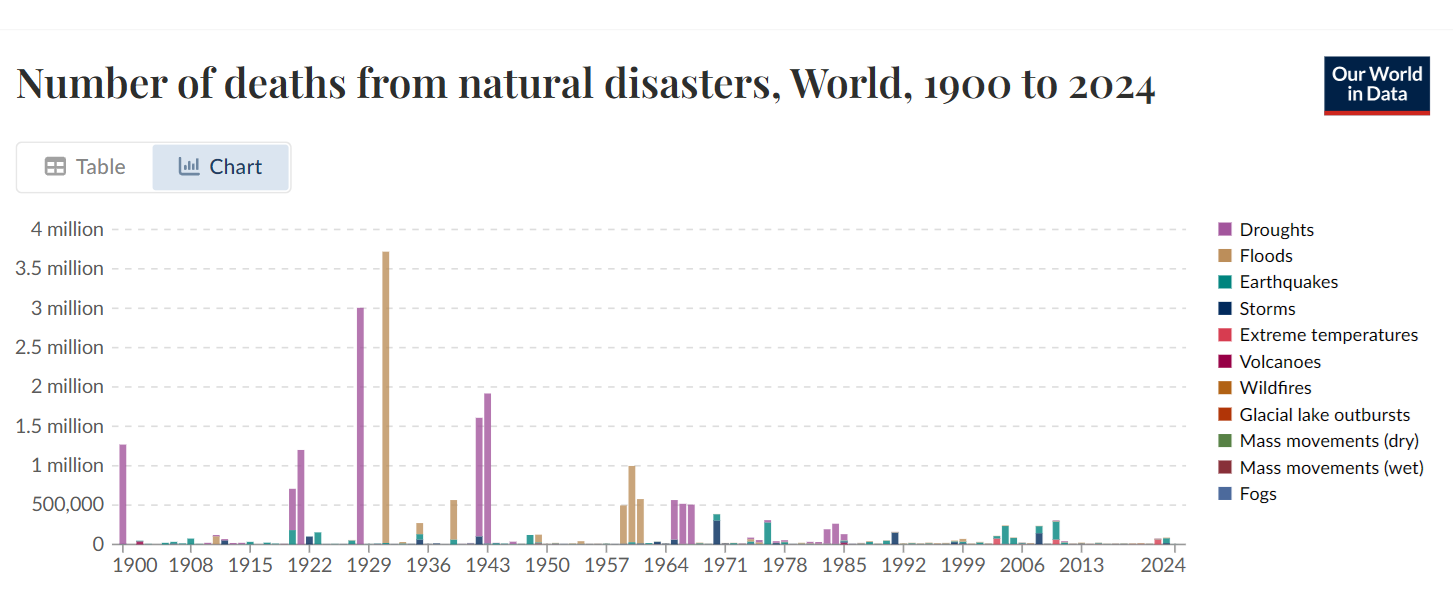

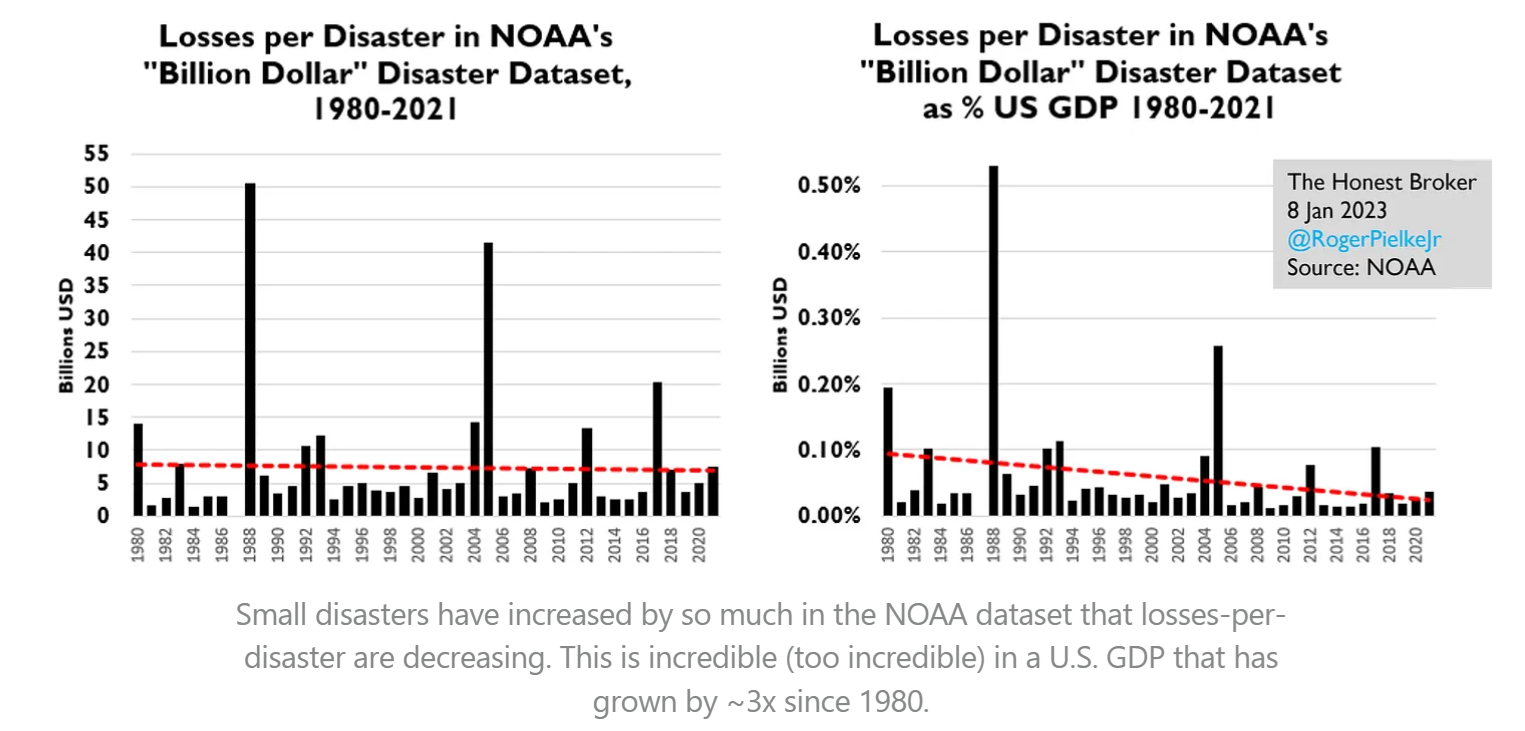
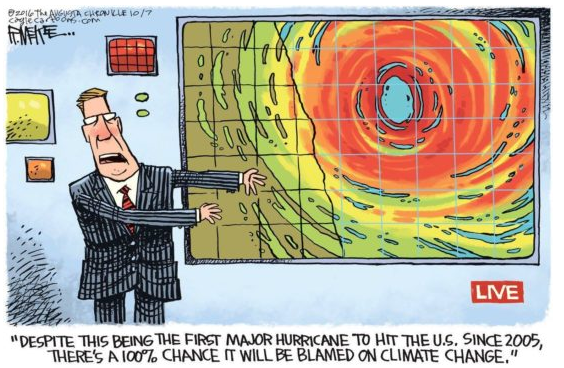
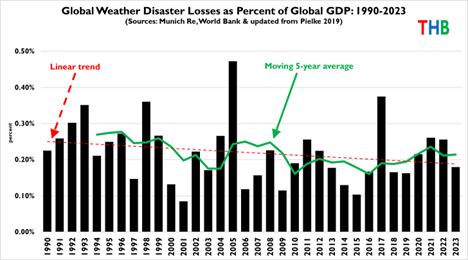

 Similarly for fossil fuels,
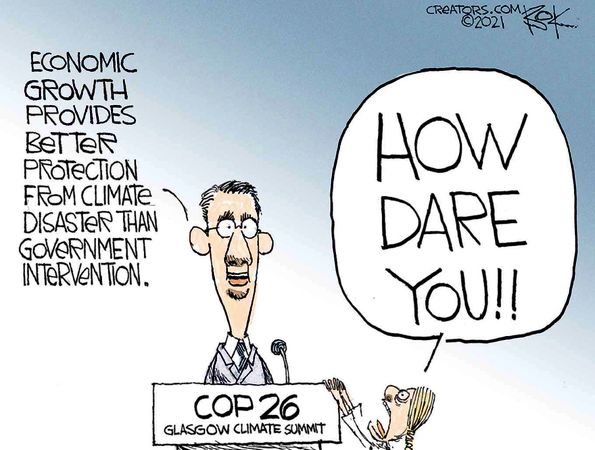




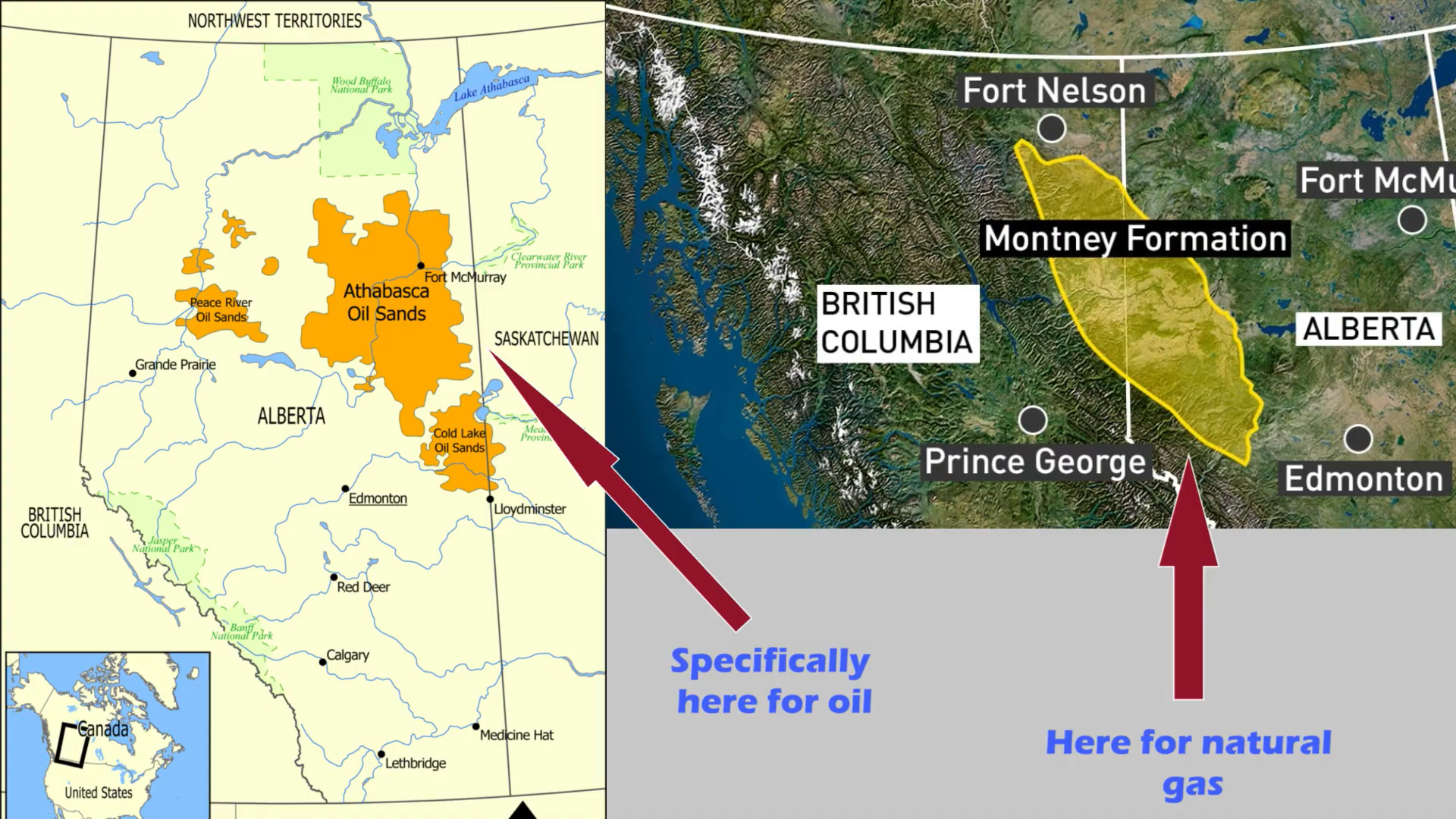
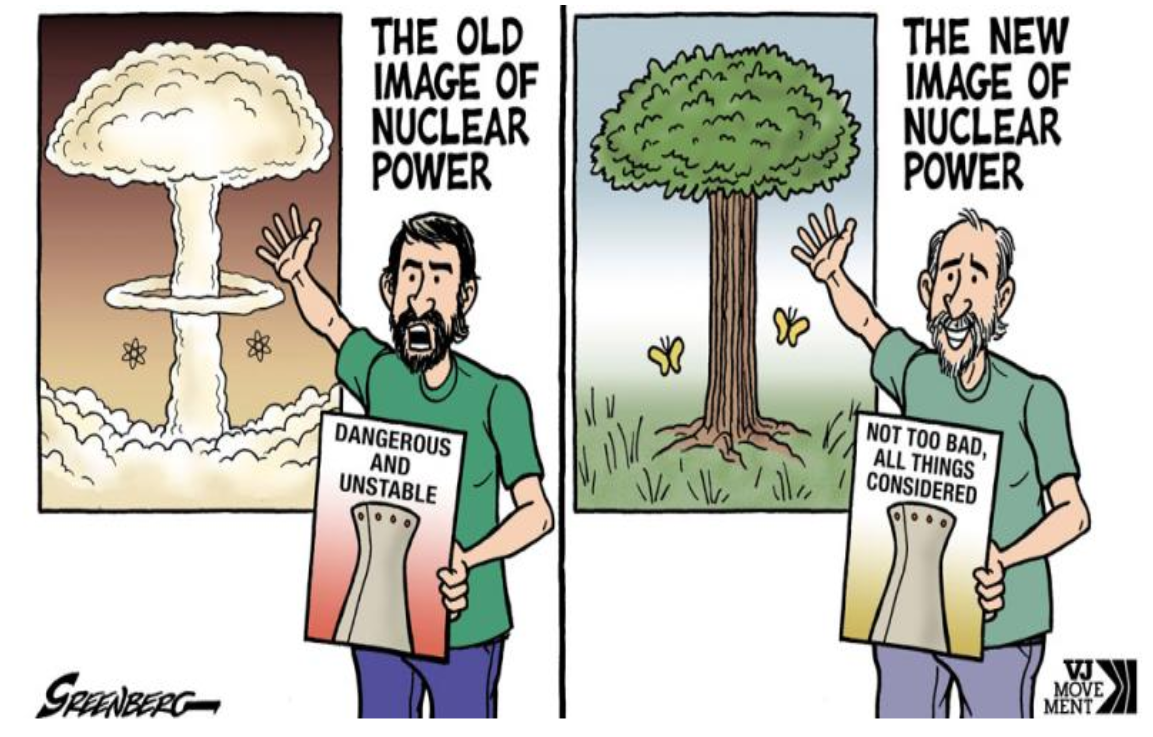
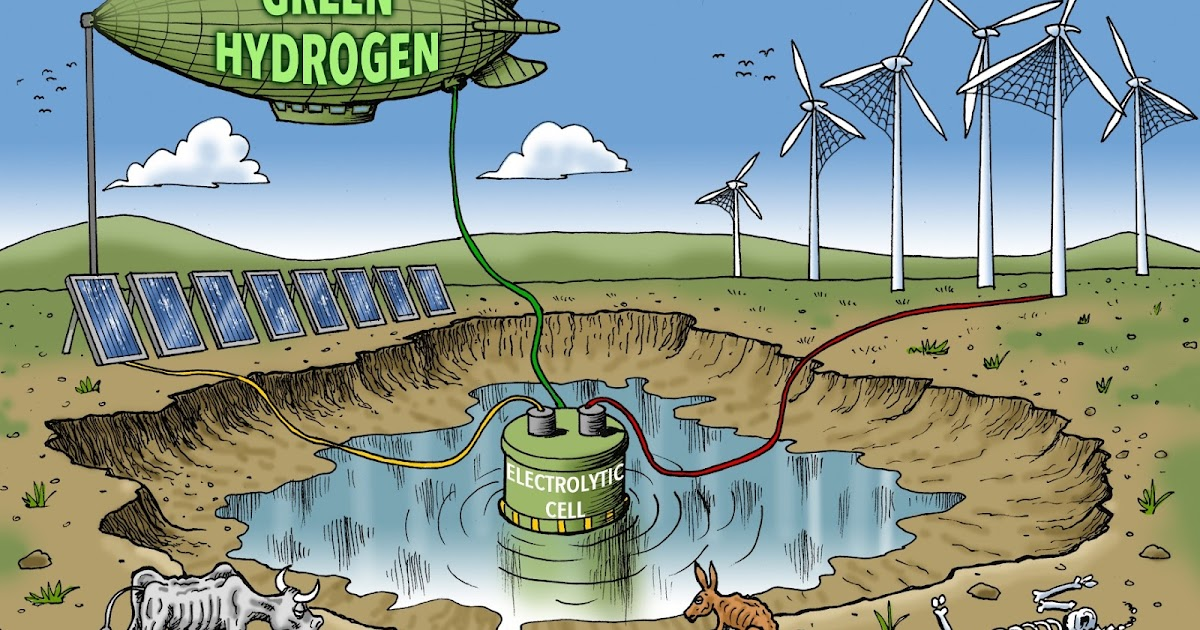


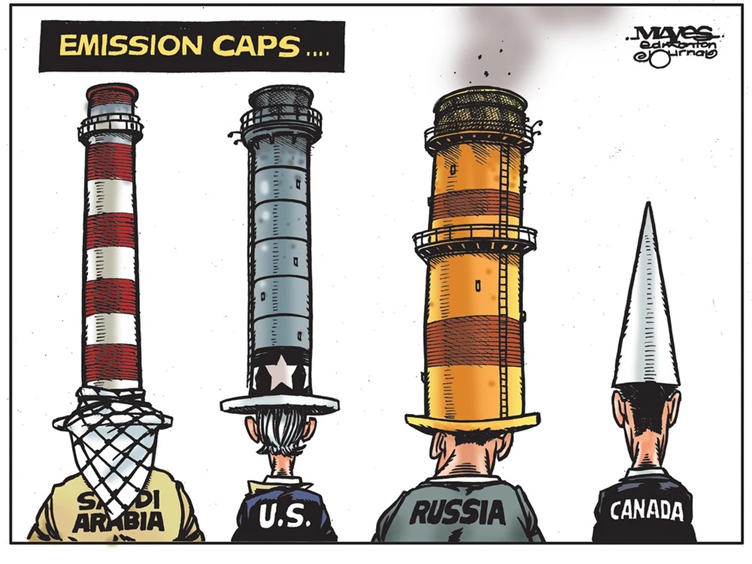 The Liberal party may have a new face, but Carney’s insistence on keeping an emissions cap and industrial carbon tax in place — both products of Justin Trudeau’s Liberal government — doesn’t invoke much confidence in his energy superpower plan.







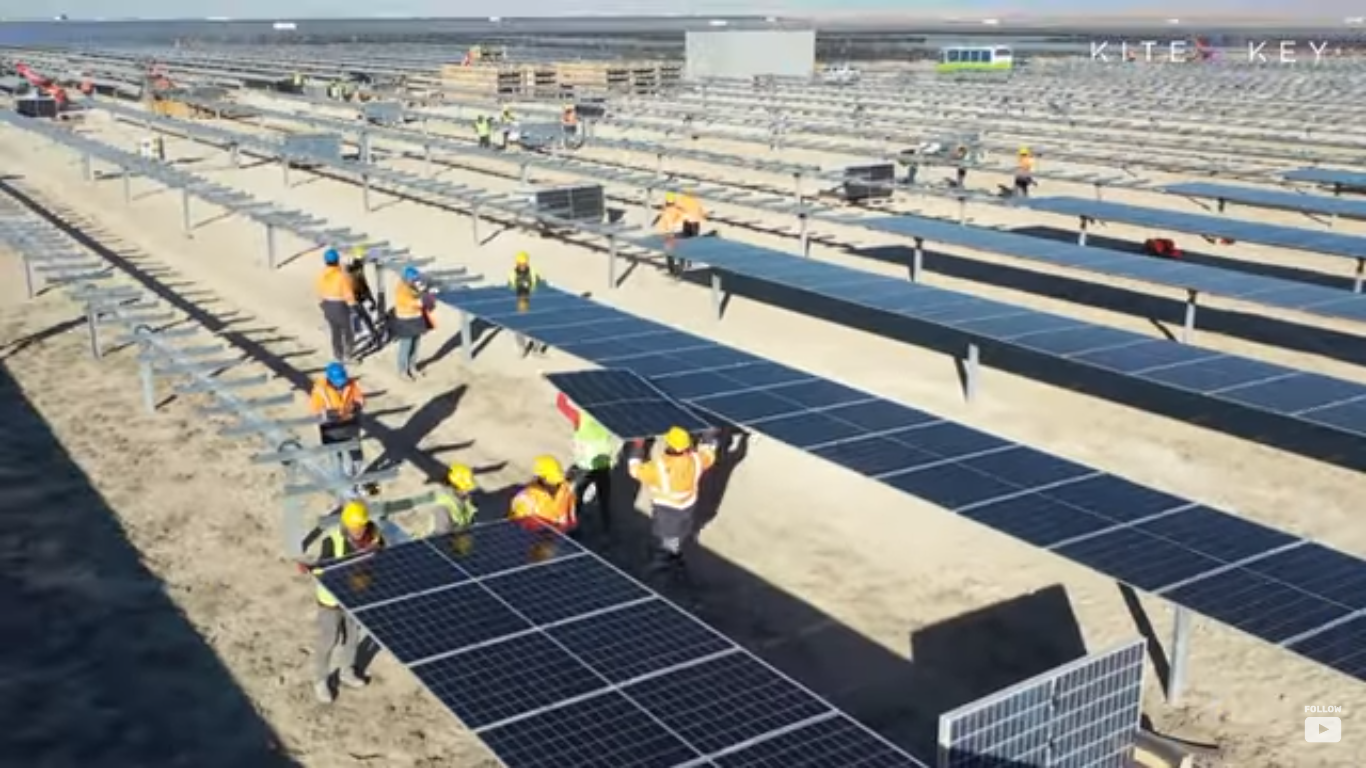
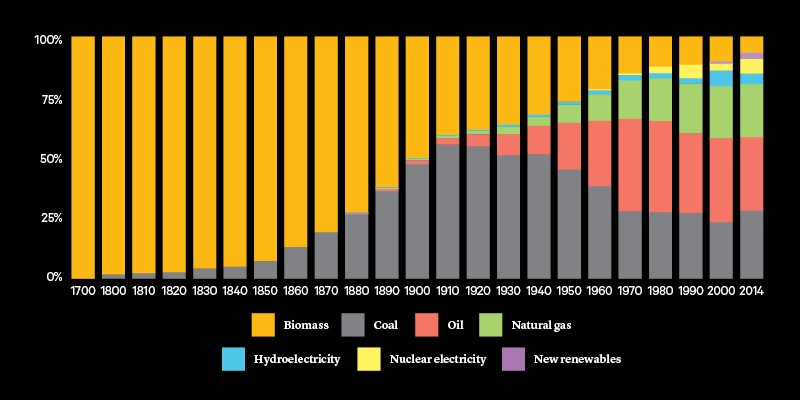 The history of America is, in many ways, the history of energy. The steam power that revolutionized travel and the shipping of goods. The coal that fueled the railroads and the industrial revolution. The petroleum that helped birth the age of the automobile. And now, if we only have the will, a new era of renewable energy.


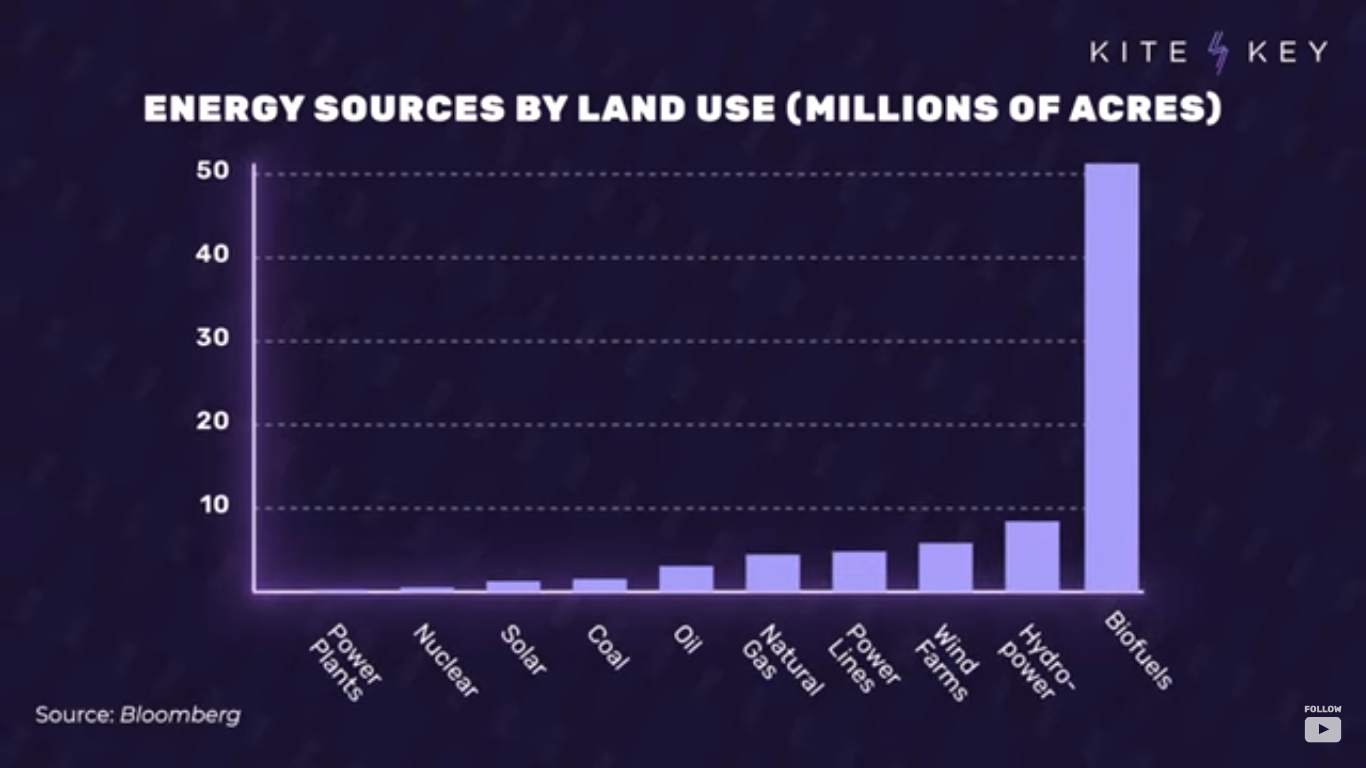
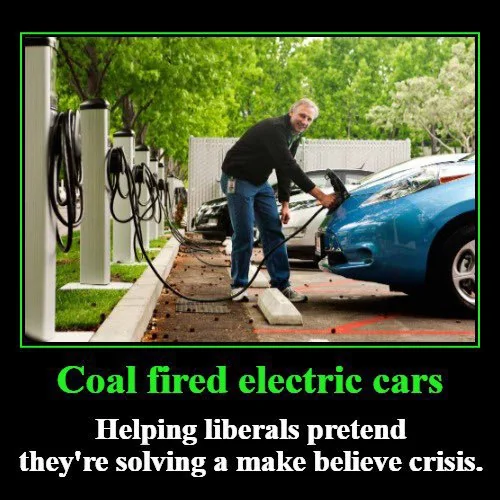
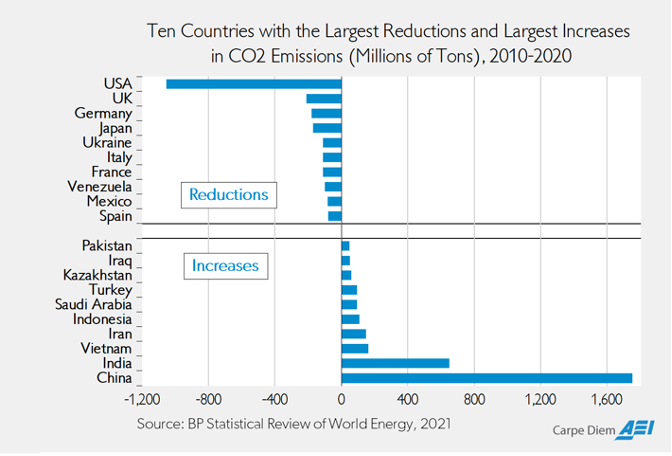 In fact, the government reports that switching over to natural gas did more than twice as much to cut carbon emissions as renewables did in recent years. Why did natural gas progress so much faster than renewables? It wasn’t an accident.
Energy is a little like money: You have to spend it to make it. To get usable natural gas, for example, you’ve first got to drill a well, process and transport the gas, build a power plant, and generate the electricity. But the question is how much energy are you getting back for your investment? With natural gas, you get about 30 times as much power out of the system as you put into creating it. By contrast, with something like solar power, you only get about 3 1/2 times as much power back.
In fact, the government reports that switching over to natural gas did more than twice as much to cut carbon emissions as renewables did in recent years. Why did natural gas progress so much faster than renewables? It wasn’t an accident.
Energy is a little like money: You have to spend it to make it. To get usable natural gas, for example, you’ve first got to drill a well, process and transport the gas, build a power plant, and generate the electricity. But the question is how much energy are you getting back for your investment? With natural gas, you get about 30 times as much power out of the system as you put into creating it. By contrast, with something like solar power, you only get about 3 1/2 times as much power back.
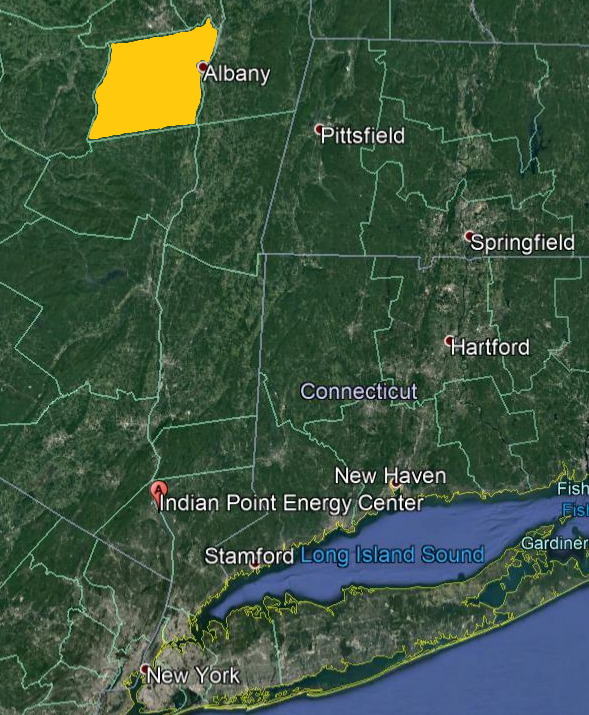
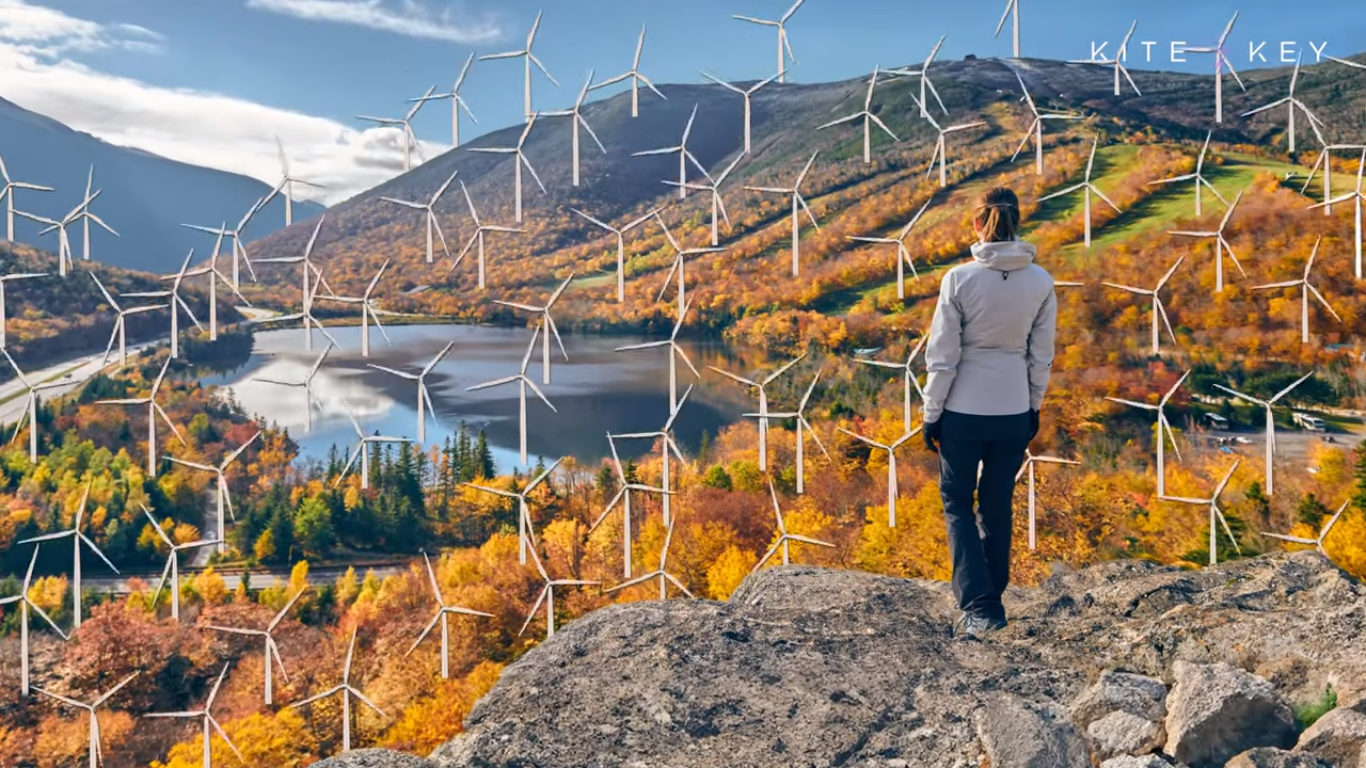

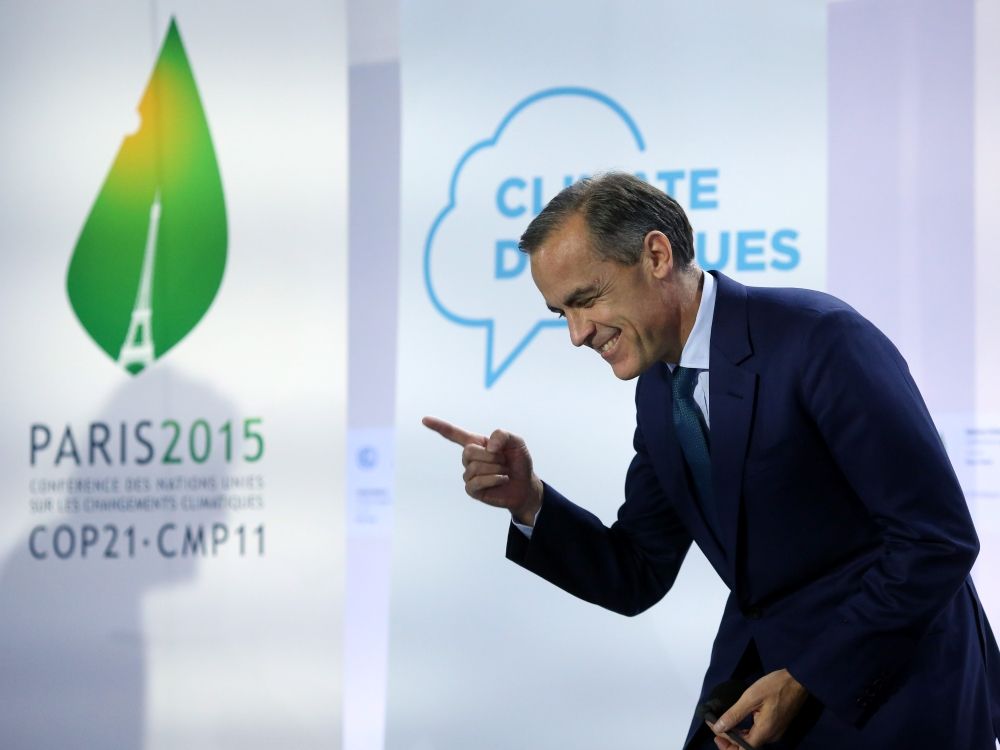



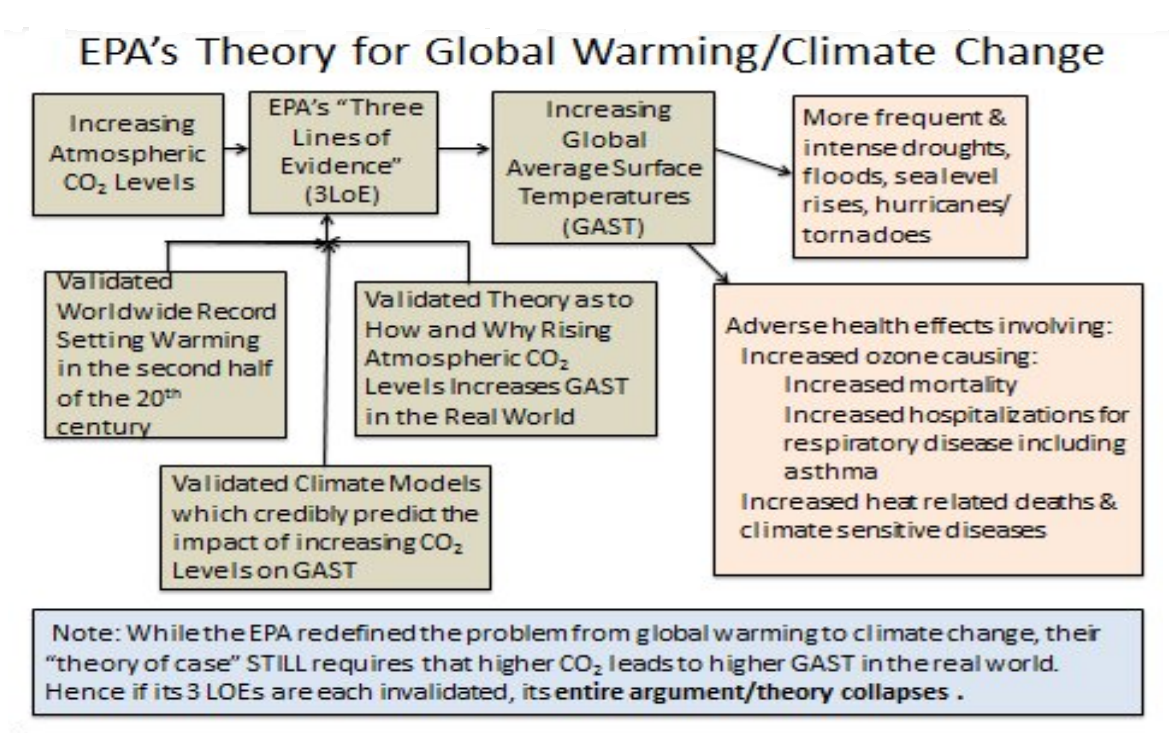

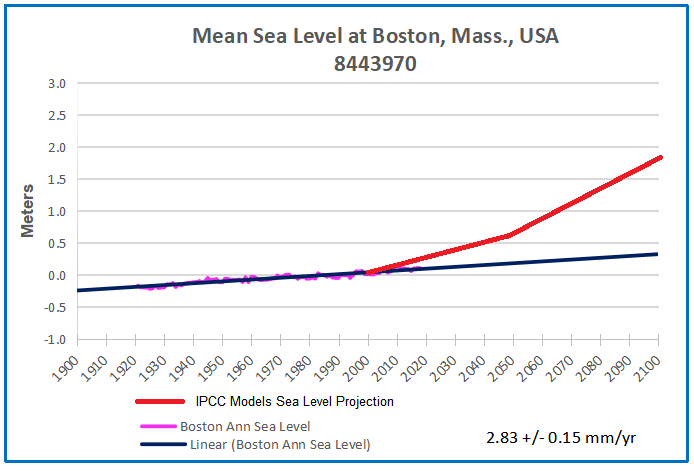


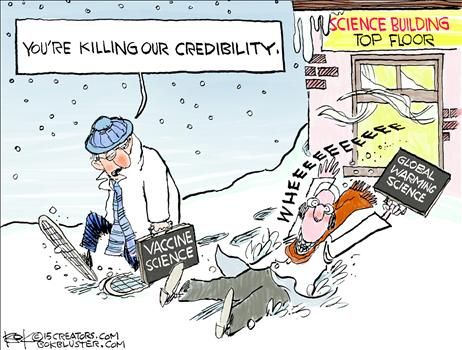
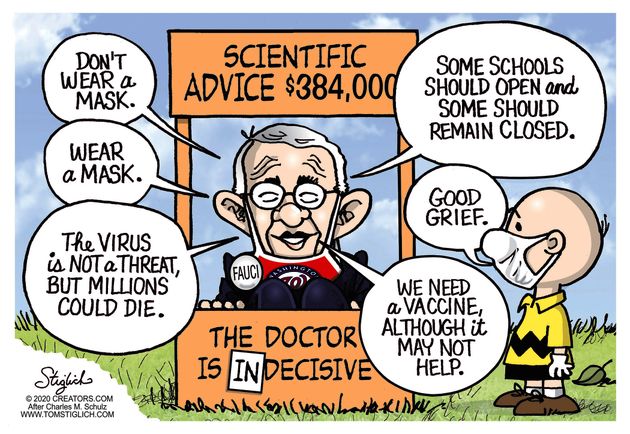






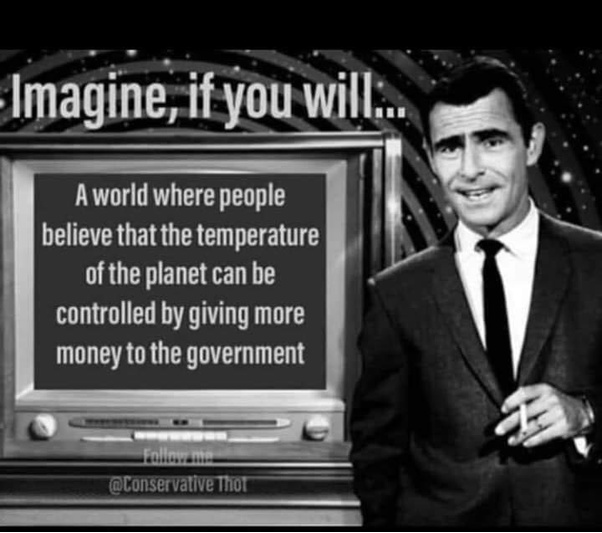
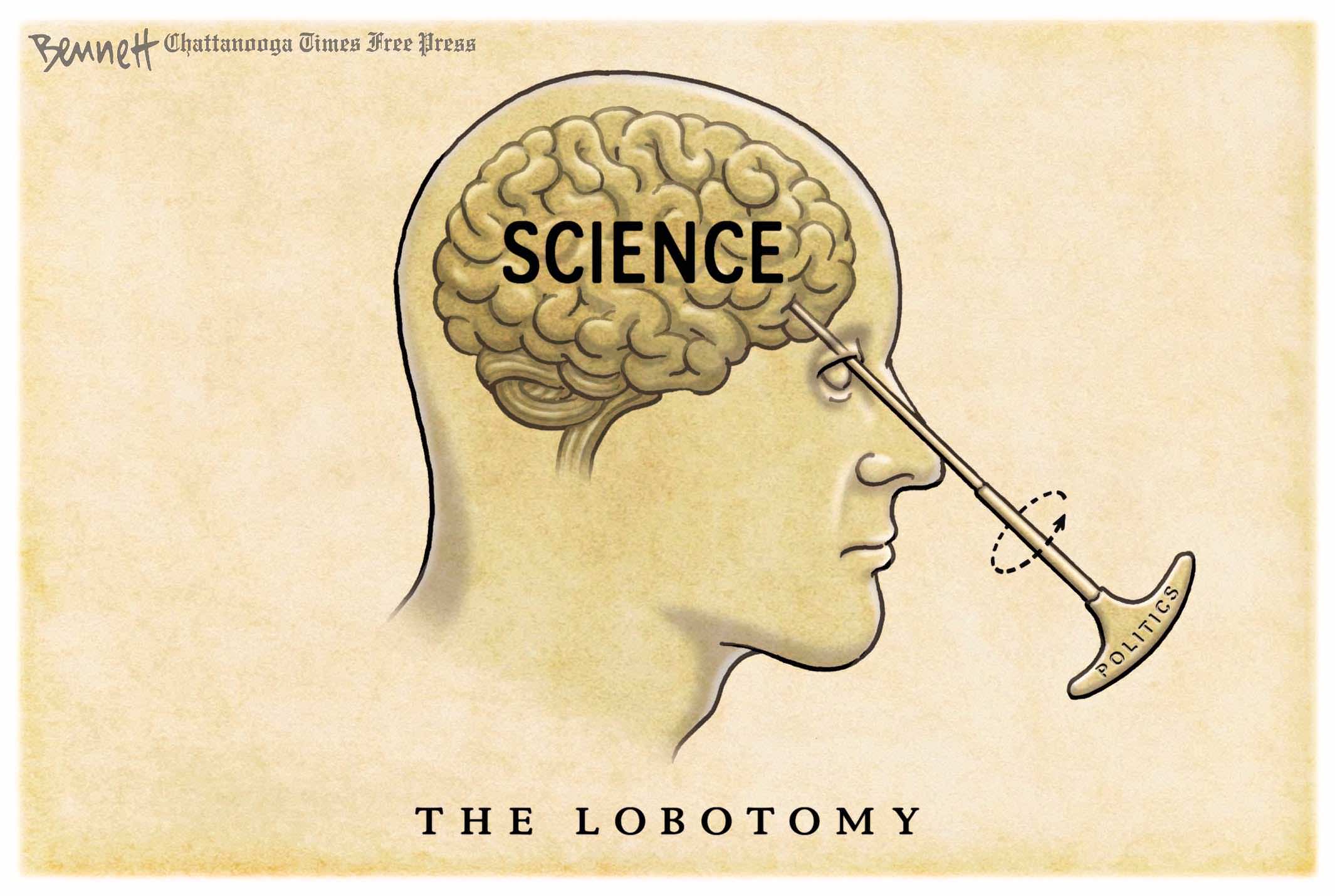
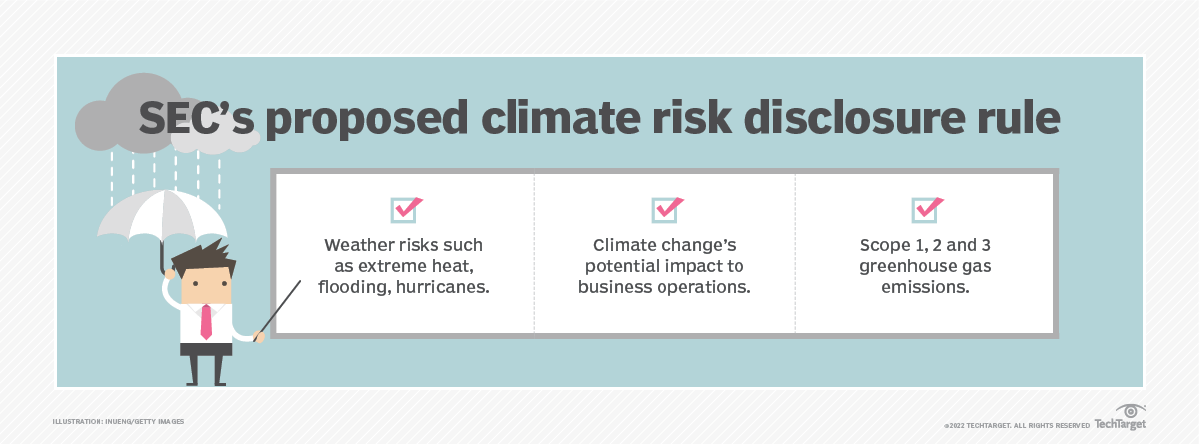


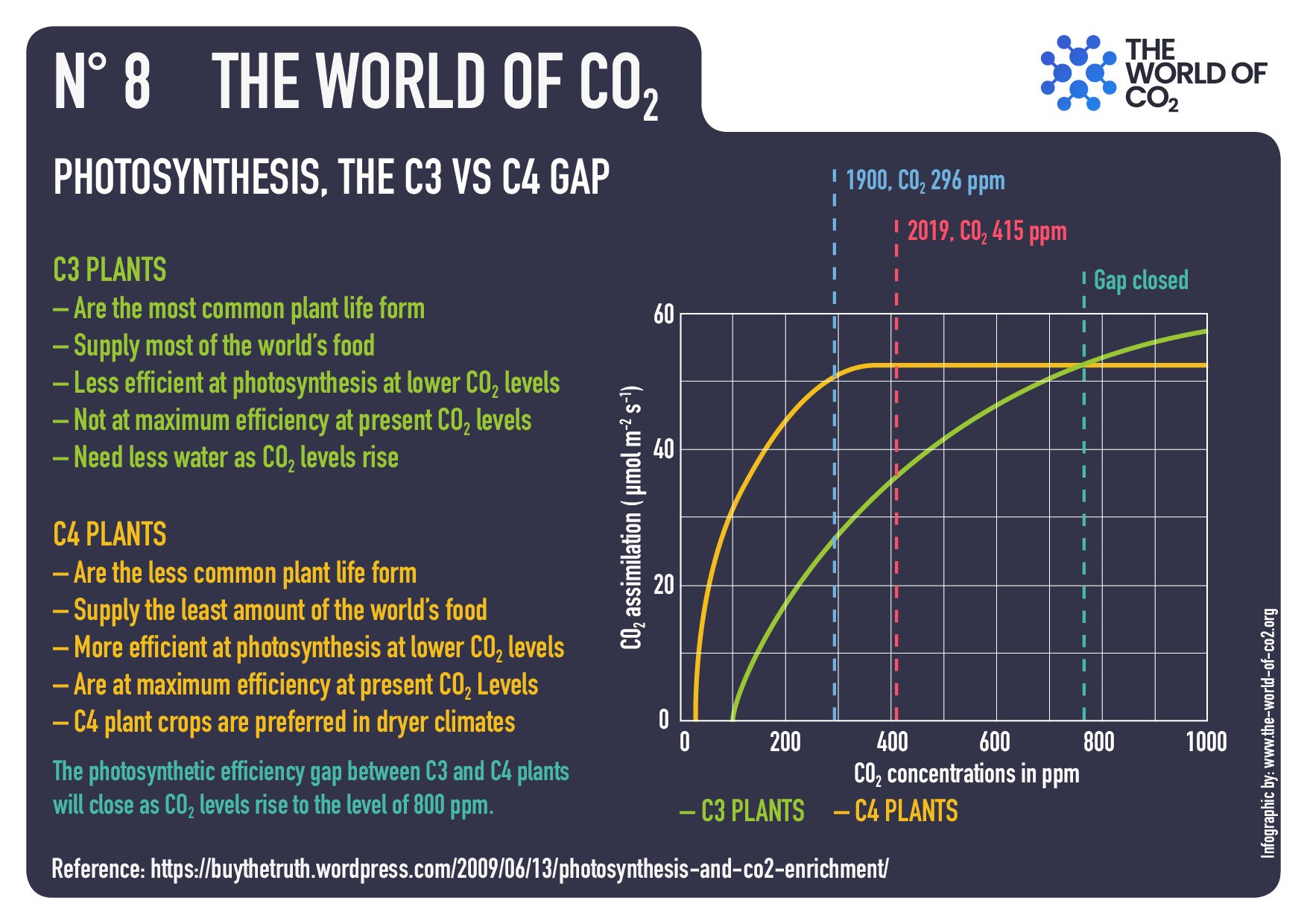
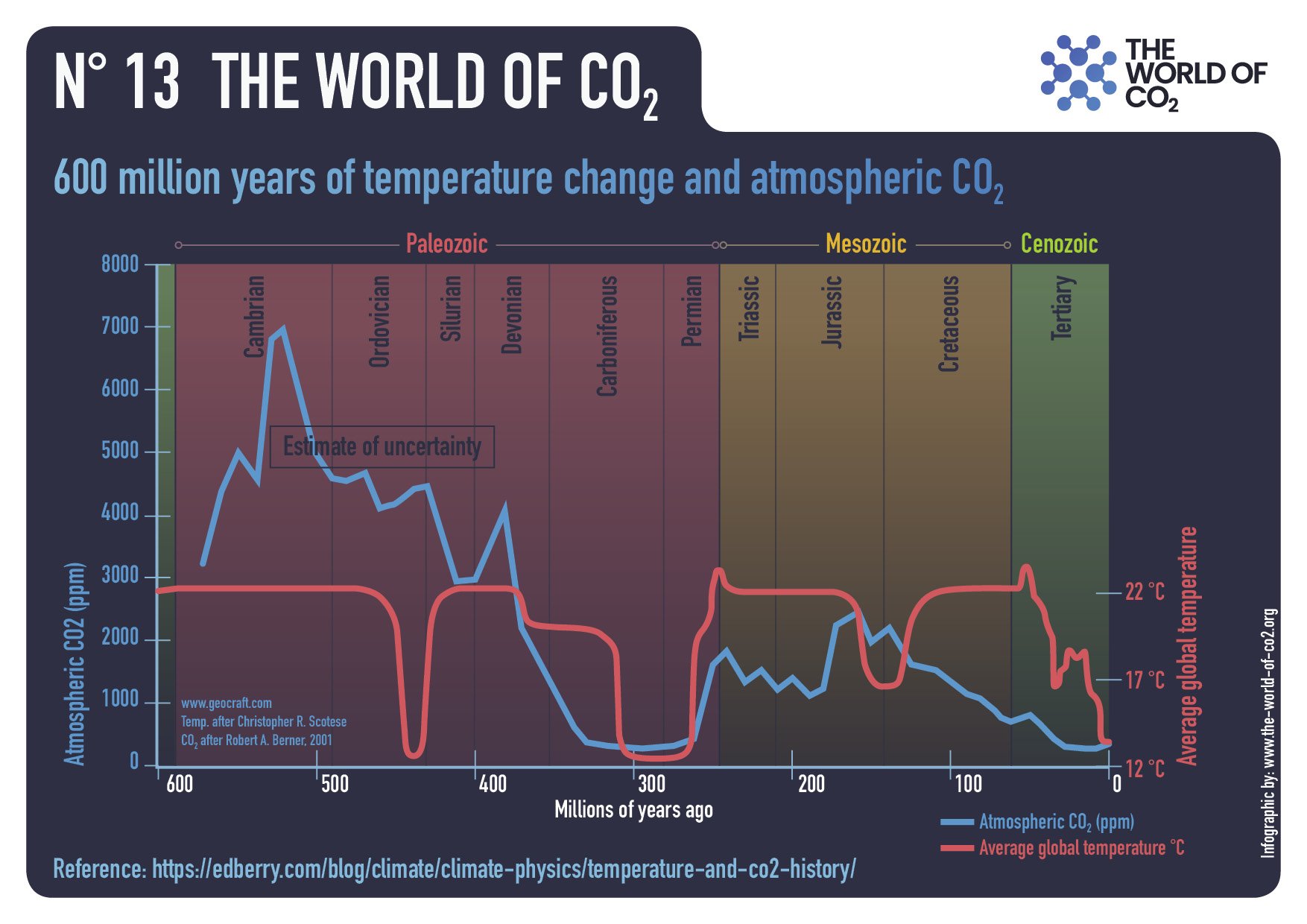
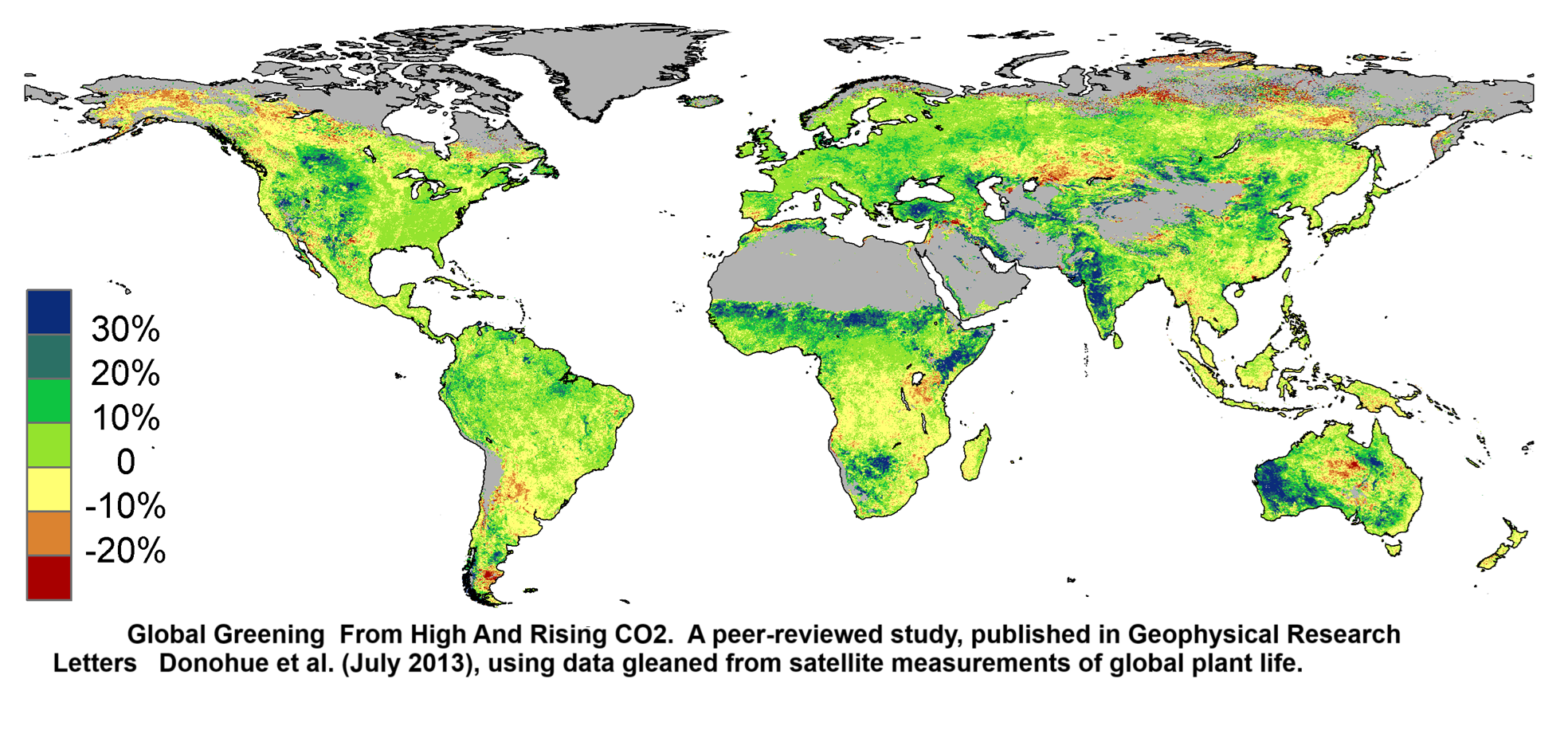
 Science Matters