How Wasteful is Green Energy? Count the Ways

Waste #1:  Money Spent, Projects Unknown

“Oxfam finds that for World Bank projects, many things can change during implementation. On average, actual expenditures on the Bank’s projects differ from budgeted amounts by 26–43% above or below the claimed climate finance. Across the entire climate finance portfolio, between 2017 and 2023, this difference amounts to US$24.28–US$41.32 billion,” the report states.

No information is available about what new climate actions were supported and which planned actions were cut. Now that the Bank has touted its focus on understanding and reporting on the impacts of its climate finance, it is critical to stress that without a full understanding of how much of what the Bank claims as climate finance at the project approval stage becomes actual expenditure, it is impossible to track and measure the impacts of the Bank’s climate co-benefits in practice.”

“Oxfam’s report doesn’t suggest funds are missing but points to a transparency issue that makes it difficult to know precisely what the Bank is delivering in terms of climate finance: where it’s going and what it’s supporting.”

Thus, “contrary to claims online,” it’s not missing. It’s just not accounted for! At this point, I’m not sure which is the bigger racket: dubious national or supranational funding of projects that fall loosely under the aegis of purported climate change mitigation, or fact-checking. At least this can be said about fact-checking: It costs a hell of a lot less.

Waste #2:  Money Spent, Projects Dicey

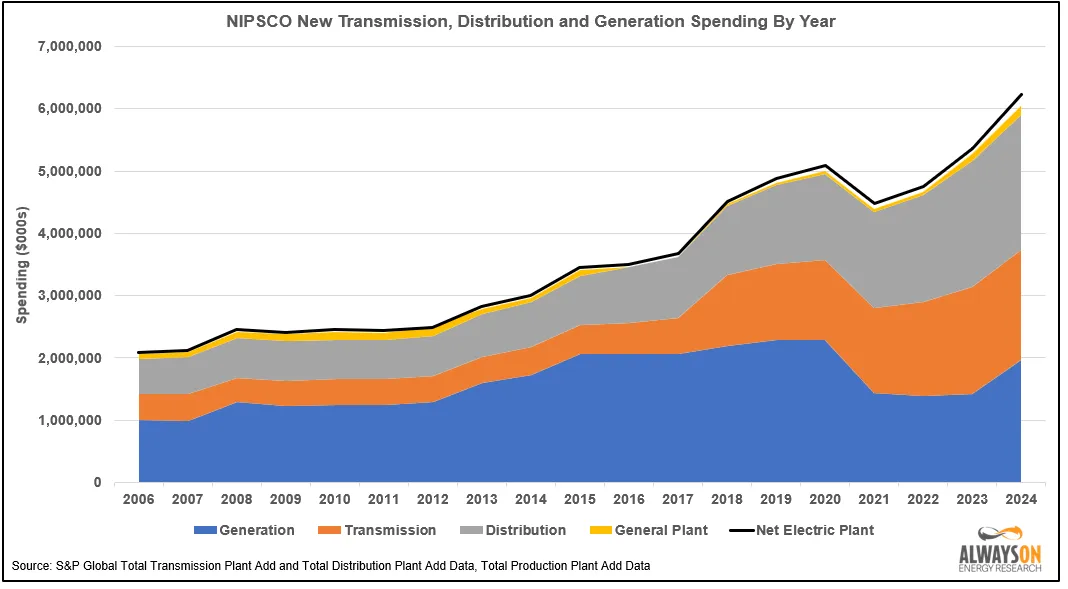
For an idea of how much money is being gambled on Green Energy or “CleanTech” projects here is a chart for North America from The Big Green Machine:

How Risky are these projects? An article at Mish Talk explores the question: How Many More Ridiculous Green Energy Projects Will Fail? Excerpts in italics with my bolds and added images.

The answer is all of them, in due time. Here are the latest spectacular failures.

Birds Fry Every Two Minutes

It took 10 years, and hundreds-of-thousands of dead birds, before
the Ivanpah Solar Electric Generating System in California would meet its fate.

Now finally here in 2025 it seems the reckoning has begun. The Las Vegas Review-Journal notes in an editorial that “a major California utility —  Pacific Gas & Electric — announced that it will no longer buy power from the Ivanpah solar plant off Interstate 15 near the Nevada-California border. As a result, two of the plant’s three towers will shut down next year — and the third will probably follow.”

Performance has proven so poor that PG&E has exercised its right to terminate the contract, about which negotiations have been completed; there is no doubt that towers 1 and 3 will cease operations within roughly a year. And it appears to be the case that Edison too wants out: “the utility is in ‘ongoing discussions’ with the project’s owners and the federal government over ending the utility’s contract.”

New Jersey Reaps the Wind, Again

It’s not just solar. Also note that Shell just backed out of a wind-energy project despite huge subsidies.

Another offshore wind development stalled this week off the Jersey shore, making it the latest of three such projects to fail despite generous terms from the state. Energy giant Shell wrote off its 50% stake in Atlantic Shores, choosing to take a $1 billion impairment instead of complete the 2,800 megawatt wind farm. New Jersey’s Board of Public Utilities canceled its request for a wind-energy provider, leaving the unfinished project with no prospective customer.

Ratepayers can rejoice. Atlantic Shores would have charged about three times the market price for the power it generated, according to a review by Whitestrand Consulting. That would have raised electricity rates by 11% for residents and 13% to 15% for businesses, forcing them to overpay by $48 billion over the wind farm’s lifetime.

Waste # 3 A Mountain of Unrecyclable Waste

The Institute for Energy Research notes Broken Windmill Blade Closes Nantucket Beaches

A massive wind turbine blade shattered offshore Massachusetts causing extensive debris, which shut down beaches on Nantucket Island and caused serious concern to fishermen, who worried that the debris could damage their boats. The failure of the massive blade and the resulting debris caused the federal Bureau of Safety and Environmental Enforcement to suspend operations at Vineyard Wind until it could be determined whether the “blade failure” impacts other turbine blades on the development of the offshore wind farm. Power production has been suspended and installation of new wind turbine construction is on hold. And as more green energy trash washes ashore the local town is considering litigation. The facility’s massive wind turbines began sending electricity to the grid this past winter.

Thousands of Old Wind Turbine Blades Pile Up in West Texas Officials in Sweetwater say an out-of-state company has made their town a dump for the seldom-seen trash created by renewable energy.

Wind turbine blades are made from fiberglass, or fiber reinforced plastic, and cannot be recycled. The Biden-Harris administration has not indicated what or who it expects to deal with the mountain of waste that will result when thousands of turbine blades reach the end of their useful lives in 20 to 25 years, or in many cases less. In fact, wind blades are piling up in Texas and Iowa without proper disposal. Massive wind graveyards, for example, have popped up on the outskirts of Sweetwater, Texas. The pile of wind blades covers more than thirty acres, in stacks rising as high as basketball backboards.

Waste #4 Money Spent, Operational Failures

Economic Reality

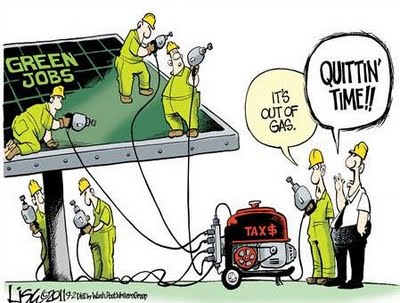
Let’s return to economic reality.  None of these projects are profitable, even with subsidies. That’s why they fail.  Meanwhile, consumers face monstrous hikes in energy bills to pay for these boondoggles as mounds of unrecyclable garbage piles up in massive wind graveyards.

The Green Machine provides the project categories in colors denoting Batteries, EVs, Solar and Wind.

The BESS Failure Incident Database provides a record of costly problems with Battery Energy Storage Systems (BESS)

Figure 1. A breakdown of the stationary energy storage failure events from the above table.

EV Boosters reports EV Business Failures Abound

The Chinese electric vehicle (EV) boom has turned into a dramatic shakeout. Around 2018, China had more than 500 EV startups registered. These included everything from serious automotive disruptors to local government-backed ventures that never made it past the prototype phase. What do we mean by “EV startup”? In this context, it includes any newly registered Chinese company involved in the design, development, or production of new energy vehicles (NEVs) — including electric, plug-in hybrid and hydrogen cars. Many were speculative projects, created quickly to benefit from generous state subsidies, often with minimal automotive expertise. While a few had serious ambitions and advanced prototypes, the vast majority never got a vehicle on the road. By 2025, only around 100 of these brands remain active. Analysts from McKinsey predict that by 2030, fewer than 50 Chinese EV companies will survive. This is not just a story of collapse, but also of market maturation, consolidation, and strategic realignment.

SolarInsure Lists the Many Solar Business Failures

Major Solar Bankruptcies as of September 2025 Include:

Waste #5 Green Hydrogen Projects–Absurd, Exorbitant and Pointless

The map above from IEA shows more than 2200 hydrogen fuel projects around the world, intending to replace hydrocarbon fuels to save the planet.  They dream of being operational by 2030 claiming that real world obstacles will be overcome if enough taxpayer dollars are thrown at the problems.  The whole notion is fantastic (in the literal sense) for reasons detailed in a previous post.

Inside the Hydrogen Fuel Project Bubbles

An update on project cancellations comes from Hydrogen Newsletter The Green Hydrogen Reckoning: An Analysis of Project Cancellations

Project Name / Identifier Lead Company / Developer(s) Location  Announced Capacity / Scale Project Status Date of Announcement / Status Change
Arizona Hydrogen Project Fortescue Arizona, USA 80 MW electrolyzer, 11,000 t/yr H2 Cancelled (Post-FID) Jul-25
PEM50 Project Fortescue Gladstone, Australia 50 MW PEM electrolyzer Cancelled (Post-FID) Jul-25
H2OK Project Woodside Energy Oklahoma, USA 60 t/d liquid H2 Cancelled Jul-25
Massena Green Hydrogen Plant Air Products Massena, New York, USA $500M, 35 t/d liquid H2 Cancelled Feb-25
Mississippi Clean Hydrogen Hub Hy Stor Energy Mississippi, USA >1 GW electrolyzer capacity reservation Cancelled Sep/Oct 2024
HyGreen Teesside Project BP Teesside, UK 500 MW green hydrogen Cancelled Mar-25
Australian Renewable Energy Hub BP Australia $36 billion green hydrogen facility Exited Jul-25
Low-Carbon Hydrogen Plant Shell West Coast, Norway Not specified Cancelled Sep-24
Clean Hydrogen to Europe Equinor / Shell Norway to Germany 10 GW blue hydrogen export Scrapped Sep-24
German Steel Plant Conversion ArcelorMittal Germany Two plants, €2.5 billion plan Shelved Jun-25
Global Green Hydrogen Target Iberdrola Global 350,000 tons/yr target Scaled Back Mar-24
Green Hydrogen Production Target Repsol Spain 2.5 GW target Scaled Back Feb-25
Green Energy Hub LEAG Eastern Germany “One of Europe’s largest” Postponed Indefinitely Jun-25
Porvoo Renewable Hydrogen Neste Porvoo, Finland Not specified Withdrew from investment Oct-24
Port Pirie Green Hydrogen Plant Trafigura South Australia, Australia A$750 million Abandoned Mar-25
Queensland Liquefied H2 Plant QLD Gov’t, Kansai Electric, Iwatani Queensland, Australia A$12.5 billion, 200 t/d Funding Pulled 2025
Project Coyote Fortescue British Columbia, Canada $2 billion H2/ammonia facility Cancelled Sep-24

The above table provides a non-exhaustive but representative catalogue of the major green hydrogen projects that have been cancelled, postponed, or significantly scaled back between 2023 and mid-2025, illustrating the global scale of this market recalibration.

With Wind and Solar More Is Less

At their Energy Bad Boys website Mitch Rolling and Isaac Orr published More is Less with Wind and Solar.  Excerpts in italics with my bolds and added images.

Capacity Values of Wind and Solar Plummet as Penetration Increases

With all the talk about needing to dramatically increase power supplies to meet the growing demand from data centers, as well as for anticipated electric vehicle adoption and other electrification efforts, it’s time to highlight one glaring reality of filling that demand with wind and solarthe reality of diminishing returns.

As in: the more intermittent capacity you add, the less capacity value you get from it. When it comes to wind and solar, more is less.

How it Works

Electric grids and utilities across the country assign reliability ratings to wind and solar resources—called capacity values—and these values diminish to almost zero as the system adds more wind and solar.

This reality is lost on—or intentionally obfuscated by—many wind and solar advocates who like to brag about current high capacity values for wind and solar without mentioning the fact that these values plummet as you add more wind and solar to the grid.

What Are Capacity Values?

The term “capacity value” is defined by the National Renewable Energy Laboratory (NREL) as “the contribution of a power plant to reliably meeting demand. Capacity value is the contribution that a plant makes toward the planning reserve margin…”

Basically, capacity values are percentages of total installed capacity for each energy source that electric grids believe they can reliably count on to meet demand. It reflects the idea that while every energy source has a maximum capacity that it can reach under ideal conditions, not every energy source can reliably perform at these ratings at any given time and when needed.

Limitations of current capacity value methods

Current methodologies for calculating wind and solar capacity values have several limitations that need to be considered when referencing them as reliability metrics.

The first limitation is that they are dependent on existing resources already on the grid. This means that if the generation makeup of the grid changes dramatically, as is happening on power systems across the country, this will have a significant negative impact on the capacity values of wind and solar.

Furthermore, they are also dependent on current load profiles, which are also anticipated to change in major ways with the emergence of data center load growth.

Finally, many capacity values are based on average performance, and not during the highest stress hours for maintaining system reliability, such as peak demand or net peak demand (demand minus wind and solar generation). As a result, capacity values may not assess the reliability of wind and solar when they are needed most, which can lead to an overreliance on them for meeting peak and net peak demand.
Wind and solar capacity values plummet as the system adds more

Now that the basics are out of the way, let’s discuss the reality that many wind and solar advocates avoid: that every megawatt of wind and solar added to the system is less reliable than the one before it.

Wind and solar capacity values fall as more of these resources are added to the grid because their output patterns are often correlated—the sun sets over an entire continent or concentrated wind turbines experience a wind droughtand they are non-dispatchable. As a result, adding more of the same variable resource reaches a point where the resource does not meaningfully contribute to reliability.

Referring back to the methods above, this means that the more wind and solar you add, the less the load can increase on the system or the less perfect capacity can be removed, thus increasing the denominator of the equation at a higher rate than the numerator.

This is reflected by diminishing capacity values for wind and solar in several major regional transmission operators (RTOs) in the country, which we detail below.

Map of Diminishing Capacity Values for Major RTOs

For a summary comparison, the map above shows the current capacity values of wind and solar in major RTOs across the country and how they are all expected to decline in the future as more are added to the system.

Midcontinent Independent System Operator (MISO)

In almost every season for wind and solar capacity values plummet and reach as low as .4 percent for solar in winter and 8.6 percent for wind in fall by 2043. The one exception to this is wind in the summer months, which actually increases from 8 percent in 2025/26 to 11.5 percent in 2030 before falling again to 8.9 percent by 2043. Still not a great reliability rating compared to coal, gas, hydro, and nuclear, which range from 64 percent to 95 percent in every single season.

In its 2024 Regional Resource Assessment, MISO explains that even though wind and solar will make up the vast majority of installed capacity in the future, reliable/accredited capacity will still be made up of primarily thermal resources.

Pennsylvania-New Jersey-Maryland (PJM)

PJM shows a similar story. While onshore wind and offshore wind begin at 41 percent and 68 percent, respectively, in the 2027/28 planning year, these resources drop to 19 percent and 26 percent by 2035/36.  Solar already starts at a low capacity value, dropping from 7—9 percent in 2027/28 to 6—7 percent by 2035/36. PJM explains:

-The ratings for the two solar classes remain stable at low values during the entire period due to the high level of winter risk

-The ratings for the two wind classes decrease significantly due to a gradual shift in winter historical performance patterns driving the winter risk in the model (as shown in the above tables)

Electric Reliability Council of Texas (ERCOT)

ERCOT shows a similar effect as more wind and solar are added to the system, as the same trend can be seen in the following charts.  As you can see, as more solar is added to the grid, the ELCCs drop to the 0—2 percent range, even with significant amounts of wind capacity on the grid.  Similarly, as more wind is added to the ERCOT system, wind ELCCs drop into the 5—10 percent range.

We hear a lot about the complementary nature of wind and solar generation in ERCOT. While this is true to some extent, these results show that even this has its limits when relying on large amounts of wind and solar capacity for meeting demand because complementary generation won’t always be the case, and there will be times when both resources perform poorly at the same time.

Southwest Power Pool (SPP)

For Southwest Power Pool, solar values are fairly high at the moment, ranging from 55 percent to 74 percent, because it has very few solar resources on the grid, while wind is much lower, ranging from 19 percent to 26 percent, because it is already saturated with wind resources.

Conclusion

The trend is simple enough to catch—the more wind and solar are added, the less valuable every additional MW becomes to the grid. The New York ISO (NYISO) makes the case clear in its 2023-2042 System & Resource Outlook report:

One complex challenge that needs to be considered beyond 2040 is the relative ineffectiveness of new solar and wind resources to contribute during periods of reliability risk after a significant amount of capacity has been built.

This is an important reality to remember when wind and solar advocates try to present intermittent resources as reliable energy sources that are able to meet the power demand needs of the future.

The fact is that not only are wind and solar already intermittent and unreliable,
but they have diminishing returns as you add more of them.

As usual, we end with the recommendation of not only keeping our existing thermal fleet in operation for as long as possible, because they are often the most affordable and reliable power plants on the system, but also bringing back recently retired facilities and building new ones on top of it.

Texans, Don’t Mess With Emissions Reductions

Gregory Wrightstone writes at Lone Star Standard; Texans should stop spending on fake climate crisis.  Excerpts in italics with my bolds and added images.

Boasting that Texas “has built more wind power than any state and is a top contender for the most solar power,” Texas Tribune article bemoans a decline in federal subsidies for such energy sources and a potential loss of “billions in investments and thousands of jobs.”

Interestingly, the writers focus on business interests of the climate industrial complex and ignore the stated reason for subsidies – to avoid supposed catastrophic global warming. Planetary health – purported to be threatened by industrial emissions of carbon dioxide (CO2) – was not even an afterthought in the handwringing over wind and solar financial fortunes.

Regardless, Texans face no such peril and the billions already spent on “green” obsessions in the Lone Star State are for naught. “There is no evidence of a climate crisis in Texas and none can be reasonably expected,” says a report, “Texas and Climate Change,” recently published by the CO2 Coalition, Fairfax, Virginia.

Both the Fifth National Climate Assessment (NCA5) and a Texas A&M University report predict harm to Texans from human-induced warming. Climate change is “putting us at risk from climate hazards that degrade our lands and waters, quality of life, health and well-being, and cultural interconnectedness,” according to NCA5.

In contradicting those findings, the CO2 Coalition analyzed data from the National Oceanic and Atmospheric Administration (NOAA), U.S. Environmental Protection Agency (EPA), NASA, U.S. Department of Agriculture, reports published in peer-reviewed journals and others.

“The temperature in Texas has shown no unprecedented or unusual warming, despite increasing atmospheric carbon dioxide,” says the CO2 Coalition report. “Recent temperatures in Texas are similar to those found more than 100 years ago.”

In fact, the annual number of 100-degree days in Texas has an overall decreasing trend.

While some have claimed a connection between climate change and July’s tragic flooding in central Texas, no scientific basis for such a link exists. Though extreme, the flooding was not a first.

According to Harris County meteorologist Jeff Lindner, the July 4th flood of the Guadalupe River at Kerrville peaked at 34.29 feet, making it the third-highest flood on record for the city. The 2025 flood crest trails the 39.0-foot flood crest from 1932 and the 37.72-foot flood crest from in 1987.

“Over the last 28 years, flash floods, while varying greatly from year to year, have actually been in slight decline,” the CO2 Coalition report found.

Precipitation data from the U.S. Historical Climatology Network indicate that Texas has experienced a very slight increase (1 to 2 inches annually) in precipitation since 1895, which is contrary to the predictions of significant increases in rainfall from climate alarmists. If anything, the modest increase in Texas precipitation should have beneficial effects on the state’s agricultural yields.

As for drought – the primary scourge of crops throughout the world – government data show no discernable trend in the severity of arid spells in Texas, which is a direct contradiction to claims of increasing drought by both the Texas A&M report and NCA5.

Similarly rebutting the fearmongering of alarmists, the CO2 Coalition report found no increasing trends for wildfires, hurricanes and tornadoes.

With respect to tornadoes, the U.S., including Texas, has seen a decades-long decline in the most violent of twisters. The likely reason is a warming Earth – a natural phenomenon following the end of the Little Ice Age – reduces the temperature differentials between regions inside and outside equatorial regions that drive storms.

Like the rest of the world, Texas has experienced record-breaking growth in crop production over the last several decades. This is no coincidence, as research shows every increase of 1 part per million (ppm) in CO2 concentration boosts yields of corn and wheat by 0.4% and 1%, respectively. Based on these metrics, the 140-ppm increase in CO2 since the beginning of the Industrial Revolution has led to increases of 56%, 84% and 140% in corn, soybeans and wheat, respectively.

CO2 is necessary for life on Earth, and reducing emissions of the gas would be harmful to vegetation, including forests, grasslands and agricultural crops.

Even if Texas could stop emitting CO2, the amount of atmospheric warming averted would be only 0.0093 degrees and 0.0237 degrees by 2050 and 2100, respectively. These changes are negligible and cannot be felt or measured.

If the reason for spending on Texas climate policy were to enrich wind and solar developers, then, yes, lamentations over the demise of subsidies are understandable. However, there is no basis for spending a cent on a fake crisis – and certainly not on technologies that offer no benefit.

Anti-Tornado Tech Better Than Mitigation?

Gregory Wrightstone is a geologist; executive director of the CO2 Coalition, Fairfax, Va.; author of “Inconvenient Facts: The Science That Al Gore Doesn’t Want You to Know” and “A Very Convenient Warming: How modest warming and more CO2 are benefiting humanity.”

CO2 Coalition Texas Report is here.  My snyopsis is :

No Climate Crisis in Texas

New England Facing Energy Crisis, Worries About Bugs

Linnea Lueken explains the false alarm in her Climate Realism article Climate Change Is Not Causing New England’s ‘Creepy’ Bacteria and Bugs, Boston Globe.  Excerpts in italics with my bolds and added images.

The Boston Globe posted an article titled “Climate change is bringing creepy — and dangerous — bacteria, bugs, and viruses to New England,” claiming that global warming is “fueling an increase in bacteria and disease” in New England. The headline and the attached story are highly misleading. For things like mosquito-borne illness, mosquitos carrying diseases previously thrived even in New England in previous centuries, with 20th century human intervention wiping them out, not temperature changes. Also, bacteria in waterways are a seasonal phenomenon which has always existed.

The Real New England Crisis is Green Agenda Attack on Electricity Supply

Source: granitegeek, Concord Monitor

Daniel Turner explains in his Real Clear Energy article The Green Agenda Turned New England Into an Energy Price Punchline.  Excerpts in italics with my bolds and added images.

Fall is here, the leaves are changing, the temperature is dropping and sadly New England families know the routine.

Every month, the electric bill arrives, and it’s larger than the month before. The region pays more for electricity than almost anyone else in America—higher than the national average and, outside of Alaska and Hawaii, higher than anywhere else in the country. This is not a coincidence. It is the inevitable result of politicians who pushed the risky and unreliable green agenda while forcing reliable power plants off the grid.

Here’s an inconvenient history lesson. When Joe Biden took office, electricity in New England cost 20.7 cents per kilowatt-hour. By the time he left, it was more than 28.2 cents. That’s a staggering spike of more than 36% in just four years. Hundreds of dollars gone from family budgets and small businesses every single year. For working households already feeling the squeeze of Biden’s inflation, it can mean the difference between savings and debt, between heating a home and keeping it uncomfortably cold.

October 2022 generation in New England, by fuel source

And the blame is clear. The forced closure of coal, oil, and natural gas plants in the name of “climate progress” is why rates are climbing. In 2022, Massachusetts Senators Elizabeth Warren and Ed Markey traveled to Somerset to celebrate the shutdown of traditional energy plants. They smiled for the cameras, congratulated themselves on a “victory,” and then went back to Washington while families were left to pay the tab.

First came the celebration, but now we see the deflection. Four Democratic senators, including Warren and Markey, recently wrote a letter to the Trump administration suddenly pretending to care about rising electricity bills. It is political theater and nothing more. They didn’t care when they cheered the closures in 2022, and they don’t care now. New England’s families are stuck with the consequences of the green agenda they applauded; they just want to escape the blame.

Project abandoned in 2017 after New York blocked planning and permit processes.

Let’s be clear: This cascade of closures started when Joe Biden was vice president and accelerated under his presidency. Nearly 400 fossil fuel plants have been shuttered across the country since 2010, including almost 300 coal plants. In the Northeast alone, names like Indian Point in New York, Eagle Point in New Jersey, Schiller Station in New Hampshire, and Canal Station in Massachusetts have been crossed off the map. Each closure meant fewer megawatts of reliable power and higher bills for families.

 Project abandoned in April 2016

The problem is not complicated. Shutting down affordable, always-on power and replacing it with expensive, intermittent sources like wind and solar leads to higher prices. Add the surge in demand from artificial intelligence data centers, which analysts say could double electricity consumption by 2030, and the consequences are obvious: higher costs, weaker reliability, and a grid at the breaking point.

There is a way out of this crisis, but it requires real action, not pointless blaming. My organization, Power The Future, lays out the steps in our recent report.

♦  First, use the Defense Production Act to treat grid reliability as the national security issue it is, and direct resources to keep critical plants online.
♦  Second, build new fossil fuel plants—modern natural gas and coal facilities that can deliver decades of dependable, affordable power.
♦  Third, halt premature closures until replacement capacity is running, not just promised on paper. And fourth, expand the capacity of existing coal plants, many of which are running below potential thanks to political limits, to quickly add thousands of megawatts back to the grid.

These are not radical ideas. They are common sense. They put working families, not political slogans, at the center of energy policy. They recognize that you cannot run a 21st-century economy on wishful thinking, photo-ops, and subsidies for technology that fails when the wind doesn’t blow, or the sun doesn’t shine.

Too many of New England’s “leaders” in Washington have turned their states into punchlines of America’s power prices. Working families deserve leaders who care more about their constituents’ bills than their standing with environmental activists. They deserve an energy policy grounded in reality, not ideology.

If you want to know who killed affordable power in New England, it wasn’t President Trump and it wasn’t the utility companies. All you need to do is just look at who popped the champagne when the plants closed.


Why Fossil Fuels Still Rule

Kite & Key explain in their video, transcript in italics with my bolds and added images.

Tech executives.  Heads of state.  Brilliant scientists and engineers.

They’re some of the most talented and respected individuals in the world — and, in recent years, they’ve all come together behind a common purpose.

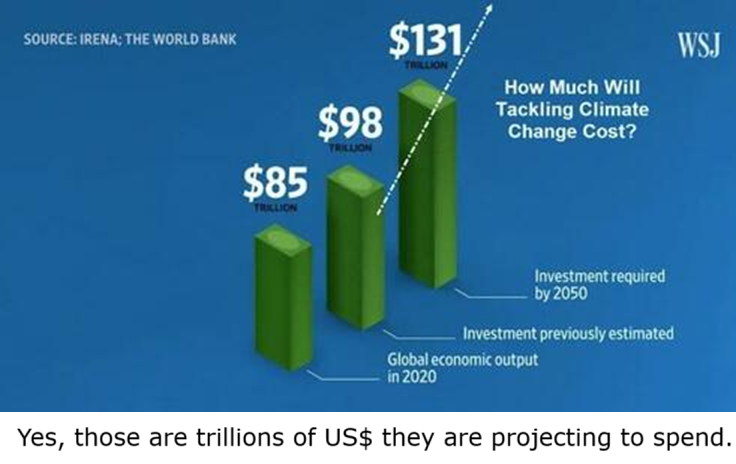
They’ve marshaled their talents — and trillions of dollars in cashto move the world beyond the era of fossil fuels.

What can you accomplish when you have that much talent working towards a single goal?

Would you believe … almost nothing?

In recent years, the world has gone to extraordinary lengths to break its dependence on fossil fuels.

We’ve signed international treaties.

We’ve started enormous government programs.

We’ve launched corporate sustainability initiatives.

We’ve vandalized Stonehenge.

Not sure why that last one was necessary. Druids are about as low-carbon as they come.

Now, what do we have to show for all of these efforts to move beyond fossil fuels?

Well, it’s not nothing. But if you squint even just a little … it looks like nothing.

Here’s what we mean. Between 2015 and 2023, the world invested over $12 trillion in alternative energy. By the end of that period, we were investing nearly double as much in alternatives as we were in fossil fuels.i

And the consequences of all that effort?

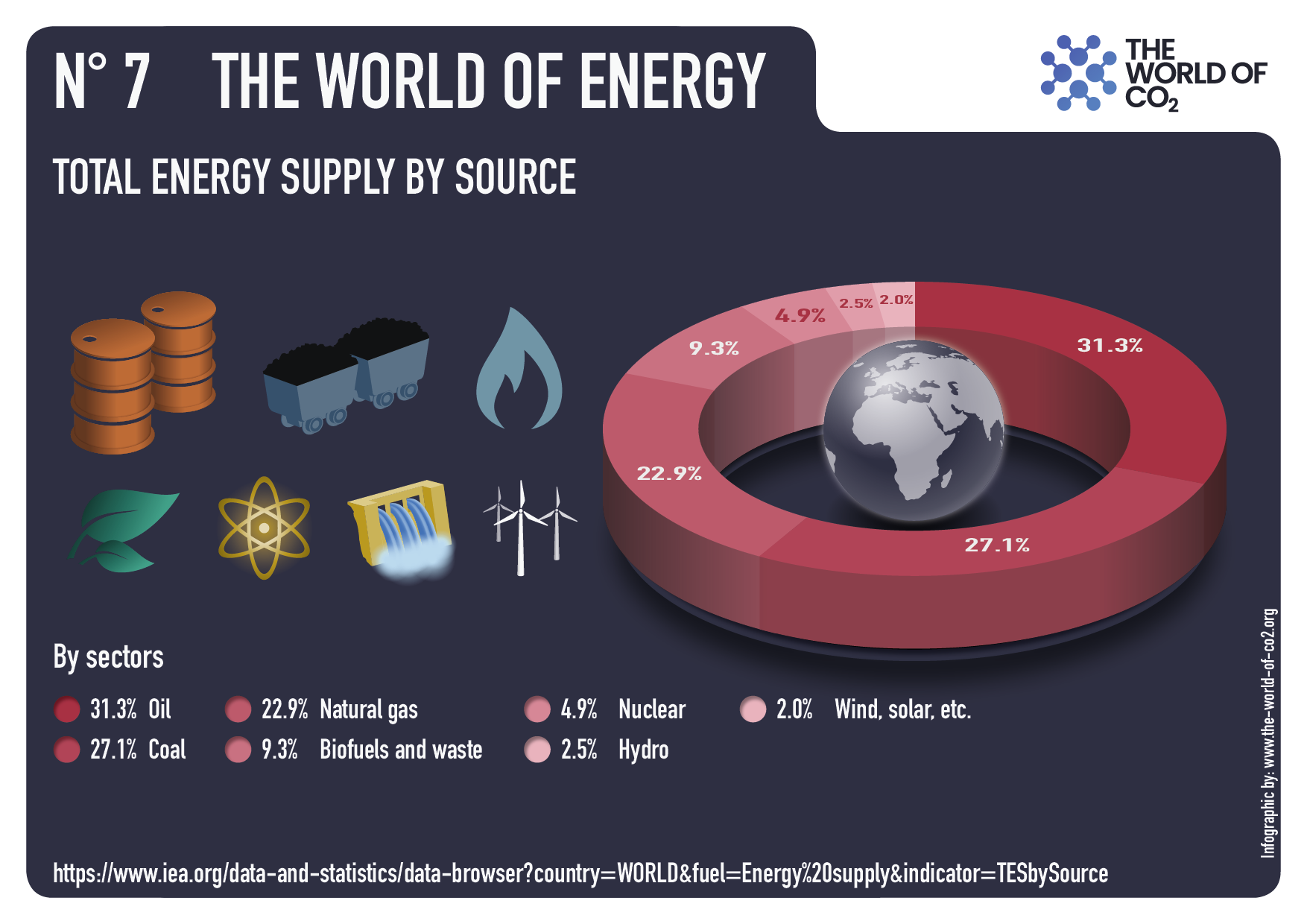
Well, according to the International Energy Agency, in the decade from 2013 to 2023 the percentage of global energy derived from fossil fuels declined from 82 percent … to 80 percent.ii

Since 1965 oil, gas and coal (FF, sometimes termed “Thermal”) averaged 88% of PE consumed, ranging from 93% in 1965 to 81% in 2024. Source: Energy Institute

Now, none of this is to make fun of these efforts. The people behind these initiatives are often very, very smart. Which ought to make us even more curious about why they’re still not able to move the needle much.

Why, despite all their efforts, do fossil fuels continue to be the world’s primary energy sources?

Well, here’s the thing: It’s not because of a lack of money or initiative.
It’s because of the way energy actually works.

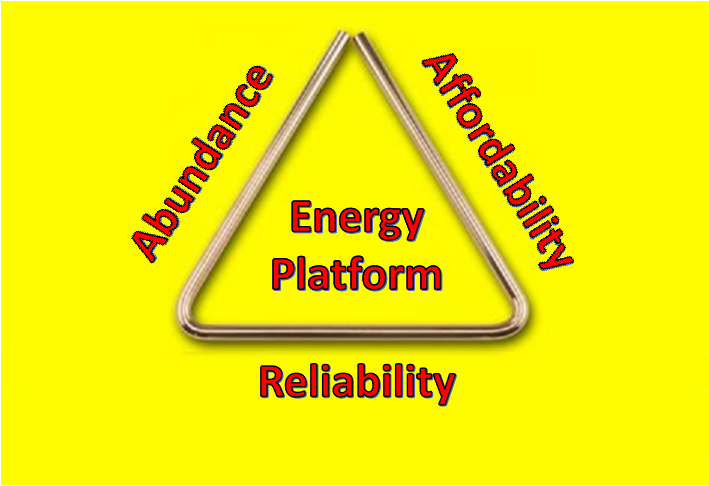
Because basically our entire existence — lighting and heating our homes, traveling to work, getting food onto the shelves of your grocery store — is dependent on energy, we need our power sources to be reliable, affordable, and abundant.  And on that front … fossil fuels have proven hard to beat.

There are a lot of reasons for that, but here are three of the biggest ones.

First: efficiency. Fossil fuels allow you to get a lot of energy out of very little material.

For example, to generate as much energy as you get from just one oil well in the Permian Basin of West Texas you’d need to build 10 windmills, each about 330 feet high.iii And because demand is only going up — the world uses 40 percent more energy now than it did just 20 years agoiv — we’re deeply dependent on whichever sources can give us the most bang for our buck.

To replace the electricity from now closed Indian Point nuclear plant would require covering Albany County with wind turbines.

Second: reliability. Energy buffs like to talk about something called the capacity factor, which in plain English means the amount of time a power source can generate its maximum amount of power. For solar, it’s less than 25 percent of the time. For wind, it’s about 34 percent. By contrast, coal is at over 42 percent and natural gas is at essentially 60 percent.v

Third: storage. Fossil fuels are easy and cheap to store, which is necessary to make sure you’ve got enough supply to know the lights will stay on.

How cheap? The costs of storing a barrel of oil or the equivalent amount of natural gas is about $1 a month. For coal, it’s even cheaper.vi To store the same amount of energy from wind or solar — which would require a lithium battery — costs 30 times as much.vii

All of which is to say that when you look at the physics and the economics
— you can start to see why America still gets more than
80 percent of its energy from fossil fuels.
viii

Which, by the way, is pretty standard for wealthy countries: They talk a lot about renewables, but when it comes right down to it?

The U.K. gets about 75 percent of its energy from fossil fuels. As does Germany. In Japan it’s over 83 percent. In Australia it’s 85 percent.ix Not because they aren’t trying to move away from fossil fuels, but because they’re coming up against the reality that fossil fuels are the only sources that can give them as much power as their countries need.

There is, however, at least one noteworthy counterexample: France, which, as of 2023, relies on fossil fuels for less than 50 percent of its energy needs.x How do they do that? Well, here’s the catch: It’s not because of things like wind and solar. France gets over 1/3 of its power from nuclear, a carbon-free energy source that can run at full power over 92 percent of the time.xi

Which is an interesting idea … that the world’s wealthy democracies are largely ignoring. In fact, of the 61 new nuclear reactors currently being built around the world, 29 of them are in China.xii And many of the rest are in places like Bangladesh, Turkey, and Egypt.

But there’s one other factor we have to take into consideration when we think about why fossil fuels have endured — and it’s a big one. When we talk about energy, many of us think in terms of electricity. But in reality, America’s single largest use of energy is for transportation. And nearly 90 percent of that energy comes from oil.xiii

Why? Well, for a clarifying example, think about the journey of a package that you buy online. Maybe it comes from overseas on a cargo ship or, if you’re really fancy, a plane. It gets sent to a warehouse, loaded onto a truck, sent off to a series of processing centers, and then arrives seamlessly … on your neighbor’s porch, for some reason.

Now, this process is invisible to most of us, but if we tried to dramatically change the fuel sources involved … well, let’s just say we’d notice.

Want that package to come on an electric plane? Given the current limits of the technology, it could travel a distance of about 30 miles.xiv

Want it to cross the ocean on a battery-powered cargo ship? The journeys those vessels take can run anywhere from 15 to 50 days.xv The biggest battery available could get you … one day of power.xvi Which would ensure your package was speedily delivered to the bottom of the Western Pacific.

Want an electric big rig to move your package across the country? Because they can travel less than half as far as a normal truck before they have to recharge, are three times as expensive to buy, and would require trucking companies to roughly double their number of both drivers and vehicles, your package would arrive much later and be way more expensive.xvii

In fact, it’s estimated that moving to all-electric trucking would be so costly that on its own it’d create a one percent increase in inflation for the entire country.xviii

Bottom line: The decisions as to which energy sources we rely on aren’t arbitrary.
The world as we know it is powered by reliable fuel sources like
natural gas, oil, and — when we’ll allow it — nuclear.

Plenty of people would like to move beyond those sources in theory. But when they experienced what the world actually looks like without them — higher prices, slower travel, less reliable electricity — chances are there’d be a lot fewer takers.

Except the Druids. These dudes would be fine.

See Also

Why Dislike Solar Power

Post on X by Chris Martz. In italics with my bolds and added images.

Why do I dislike solar so much? Because solar farms are a giant waste of land and natural resources. Let’s do some math.

To replace now closed Indian Point nuclear power plant would
require covering Albany county with solar panels.

A single 1,000-megawatt (MWe) nuclear reactor occupies ~1 mi² (640 acres) of land. Nuclear also has a capacity factor of 0.923, meaning a reactor will generate ~92.3% of the maximum theoretical amount of electrical energy in a year that it could have.

https://energy.gov/ne/articles/what-generation-capacity Thus, a 1,000-MWe reactor will produce ~8.08 terawatt-hours (TWh) of electricity per year, enough to power over 770,000 homes throughout the course of a year (assuming Americans purchase an average of 10.5 MWh per household per year).

🏠💡= [1,000 MW × (24 hours / day) × (365 days / year) × 0.923] / 10.5 MWh ≈ 770,046 homes On the contrary, a solar photovoltaic (PV) farm requires 5-10 acres per MW (we’ll assume an average of 7.5) Solar PV has a capacity factor of 0.234. Thus, a 1,000-MWe solar farm occupies ~7,500 acres of land, but it would only power ~195,223 homes assuming, once again, Americans purchase 10.5 MWh of electricity per year, on average.

🏠💡= [1,000 MW × (24 hours / day) × (365 days / year) × 0.234] / 10.5 MWh ≈ 195,223 homes So, you’d need ~4,000 MWe of installed solar capacity to power the same number of homes as a single 1,000 MWe nuclear power station, and ~46.2× the land area, not including the land required for enough battery storage. But, it gets even worse if you factor the battery storage required. Solar PV’s average output is 234 MW.

🔅= 1,000 MW × 0.234 = 234 MW per hour OR 5,616 MWh per day OR 39,312 MWh per week For a week’s worth of battery backup, it would require an additional 23,587.2 acres of land (assuming battery storage requires 0.6 acres /

Rooftop solar is fine. Installing it on the roofs of homes, stores, warehouses, etc. can be useful. But, doing this is not.

Snow covered solar panels at University of MIchigan.

See Also

Green Energy Companies Going Down the Drain

Three reports provide data on hollowing out the alternative energy (non-hydrocarbon) sector.  Firstly an update from E2 $22 Billion in Clean Energy Projects Cancelled in First Half of 2025; $6.7 Billion Cancelled in June.  Excerpts in italics with my bolds and added images.

Clean Economy Works | total projects cancelled, closed,
downsized by sector Aug. 2022-June 2025

*totals will not match overall figures as some projects are categorized into multiple sectors

Businesses canceled, closed, and scaled back more than $22 billion worth of new factories and clean energy projects in the first half of 2025 after cancelling another $6.7 billion in June alone, according to E2’s latest monthly analysis of clean energy projects tracked by E2 and the Clean Economy Tracker.

The latest wave of cancellations — affecting five battery, storage, and electric vehicle factories in Colorado, Indiana, Michigan, New York, and Oregon — follows growing uncertainty among businesses as Congress was making the final push to effectively end federal clean energy tax credits. More than 5,000 jobs were lost to the cancellations and scales backs in June, bringing the total number of jobs lost to abandoned projects in 2025 to 16,500.

June’s cancellations were led by major automakers scaling back electric vehicle production investments. General Motors cancelled a $4.3 billion plan to expand its Orion plant in Michigan to build new electric pickups and instead shift its investments there to build 8-cylinder gas vehicles. Additionally, Toyota scaled back a $2.2 billion plan to retool a manufacturing plant in Indiana that was going to build a new three-row electric SUV, consolidating production to its Georgetown, Kentucky plant instead.

Cancellations, Closures, Downsizes

This tracking includes all projects, plants, operations, or expansions that were cancelled or closed since passage of the IRA in August 2022. This does not include announced layoffs that are not associated with a project downsizing unless there is a stated decease in production output. This list also does not include the transfer of project ownership, if production will continue under the new ownership, power purchasing agreements, or other similar type of announcements. Project delays or idling of facilities are not included unless there in an announced decrease in production or investment or unless the project will need to be restarted to proceed in the future.

A second report is from Big Green Machine  CLEAN ENERGY MANUFACTURING: TRUMP 47+ 7 MONTHS.  Excerpts in italics with my bolds and added images.

What has happened to investment in US clean energy manufacturing and supply chains since Trump took office on January 20, 2025?  Our Trump + 7 month tracker below was updated on August 20, 2025. You can also read our 6-month report below or download the report.

The Big Green Machine: Trump + 6 months report (released on July 29, 2025, based on data through July 20, 2025).

Since Donald Trump took office on January 20, 2025, newly announced investments in clean energy manufacturing projects have slowed dramatically, while the number of projects that have been paused, canceled, or closed has skyrocketed. Projects are being paused, cancelled, and closed at a rate 6 times more than during the same period in 2024 and 30 times more than during the same period in 2023.

The Big Green Machine tracks investments in the supply chain, from mine to factory, in the wind, solar, batteries, and electric vehicle industries. Over the past six months, 26 projects, totaling $27.6 billion in capital investment and creating 18,849 jobs, have been paused, canceled, or closed. During the same period, 29 new projects were announced, adding up to $3.0 billion in capital investment and 8,334 jobs.

This marks a dramatic reversal from the first six months of 2024. During that period, 54 new projects adding up to $15.9 billion in capital investment and 25,942 new jobs were announced. In comparison, 8 projects adding up to $4.1 billion in capital investment and 3,820 jobs were paused, canceled, or closed during the first six months of 2024.

That does not mean all activity in the clean energy sector has stopped. Since Trump took office, many previously announced projects have broken ground, started pilot production, or moved into full production. By our count, 39 projects adding up to $21.1 billion in capital investment and 25,269 jobs have advanced in the past six months. But the projects that are advancing are, on average, smaller in size than the projects that are slowing.

Other patterns are emerging with respect to which projects are advancing or slowing. Not surprisingly, projects counting on federal support in the form of loans and grants are more likely to be slowing. In addition, our tracking shows that projects located in communities with lower median household incomes and communities classified as disadvantaged are seeing a higher proportion of slowed projects, meaning that communities in need of opportunity are losing out.

Unlike the two above reports focusing on 2025 contractions, the third report from Canary media details the green energy bloodbath last year The cleantech companies that didn’t make it through 2024. Excerpts in italics with my bolds and added images.

From carbon removal startups to solar icons, the climate world saw a number of corporate flameouts this year. Here are some takeaways and lessons learned.

Examples included (among many others)

Solar sunsets

Arguably the most shocking cleantech corporate demise of 2024 was that of SunPower, a solar industry icon that grew from humble startup roots to a valuation in the billions, only to file for bankruptcy in August. Even as solar installations smash records in the U.S. and the federal government channels capital into onshoring solar panel production, SunPower found itself undone by China’s industrial policy might and its own boardroom missteps. High interest rates and other policy headwinds, like California’s NEM 3.0, didn’t help.  Also Ubiquitous Energy, Toledo Solar

Solar installer bloodbath

High interest rates and rooftop solar incentive shifts in leading states rippled through the long tail of residential solar installers and led to scores of bankruptcies in the past two years, an unprecedented collapse.

Here are a few of the larger casualties from this year: Sunworks, a residential and commercial solar installer, filed for bankruptcy in February. Founded in 2002, Sunworks had developed 224 megawatts of solar projects across 15 states and employed 640 people. Titan Solar operated in 16 states and abruptly shut down its operations in June. Utah-based residential solar company Lumio filed for bankruptcy in September.

Energy storage setbacks 

Armed with billions in investor capital, scores of storage startups have been aiming to dethrone energy stalwarts like lithium-ion and diesel generators — but in the words of The Wire’s Omar Little, ​If you come at the king, you best not miss.”

These companies missed.  Sweden’s Northvolt, once valued by investors at almost $12 billion, filed for bankruptcy in November in the year’s biggest battery bust.  Ambri, an energy storage aspirant with technology based on the research of MIT professor Donald Sadoway, declared bankruptcy in May.  Richmond, California–based Moxion Power laid off 101 workers in June and shuttered its doors, following a wave of hype for its 75-kilowatt portable lithium-ion batteries that it hoped would replace diesel generators.  Two other notable failures in the storage sector:  Ionic Materials, a 40-person MIT spin-out developing battery materials, Australian flow battery firm Redflow.

Removing carbon one VC dollar at a time 

Running Tide was the largest marine carbon-removal startup and the first to sell ocean carbon credits. Its initial plan of removing carbon dioxide from the atmosphere and sequestering it in the ocean by growing and sinking kelp morphed into sinking wood chips coated with lime-kiln dust. Running Tide announced that it was folding in June after raising more than $54 million.

Unsustainable aviation

Chasing a clean fuels breakthrough, Fulcrum BioEnergy promised to transform municipal waste into sustainable aviation fuel through a low-emissions gasification process. Instead, the company incinerated hundreds of millions in funding from BP, United Airlines, Cathay Pacific, and Japan Airlines — and hundreds of millions more in municipal bondsThe firm ceased operations in May.  Also Universal Hydrogen 

Charger bankruptcy

Tritium, a major provider of high-speed EV chargers, went bust in April but found a buyer for its insolvent business in India-based Exicom, which claims it will keep Tritium’s U.S. factory in business. Tritium has sold roughly 13,000 chargers in 47 countries and claimed a 30 percent U.S. market share for direct-current fast chargers in 2023.

Zero to 60 and back to zero with EVs

Luxury EV maker Fisker went bankrupt again; electric-van maker Arrival went bankrupt and sold its assets to another struggling EV maker, Canoo, which is currently furloughing employees; Cake, a Swedish e-motorcycle startup, sold 6,000 bikes but filed for bankruptcy in February after raising more than $75 million.

ArcimotoFaraday FutureMullen Automotive, and Workhorse Group are publicly traded EV companies but are facing delisting warnings, paltry revenue, and valuations that are rapidly approaching zero. Nikola stock is down by 90 percent year to date.

Comment

These reports are from green energy enthusiasts and promoters, expressing concerns without questioning the so-called transition to zero carbon.  They really do want to pave farmland over with solar and wind installations.  The rest of us understand that the whole green economy notion is delusional and needs dismantling ASAP.  The creative destruction of these misbegotten enterprises is a step in the right direction.

Update Aug. 11: Relieving US Grid from Wind and Solar Risks


Update August 11, 2025 Shares of Orsted, the world’s largest offshore wind developer, plummeted today.

Orsted shares crashed more than 25% on Monday morning, after the wind farm developer said it plans a 60 billion Danish kroner ($9.4 billion) rights issue, following a “material adverse development” in the U.S. market.

The company said this turn of events left it unable to raise funds from a planned partial divestment of its Sunrise Wind project off the coast of New York.

Given the market conditions, Orsted’s board of directors decided to end the process of selling a stake in Sunrise Wind, which would have provided the “required strengthening” of its capital structure to support its investment and business development programs. Source: CNBC

Orsted had planned to sell part of its Sunrise Wind project off the coast of New York to free up capital.  However, recent adverse developments in the US offshore wind sector have made completing the partial divestment on favourable terms impossible, the company said.  This setback means Orsted will have to fully fund the construction of Sunrise Wind itself, creating an additional 40 billion kroner in financing needs. The project has already been hit by supply chain and construction delays that caused hundreds of millions of dollars in impairments. 

Gary Abernathy reports on progress securing the U.S. grid from the load of entanglements from adding wind and solar power supplies.  His Empowering America article is Climate Science is Not the Law in the U.S.  Exerpts in italics with my bolds and added images.

While not everyone is on board with President Trump’s “America First” philosophy, its importance when it comes to energy is brought into sharp focus when considering where the U.S. would be if it capitulated to the whims of global organizations like the United Nations or obeyed the verdicts of world courts.

The frightening attitudes of believers in global rule were recently on display courtesy of a New York Times opinion piece headlined “Climate Science is Now the Law,” penned by three writers who are all part of something called the Center for International Environmental Law. In their article, the authors claim, “The science on climate change has long been settled. Now the law is, too.”  [See post: ICJ Issues Biased Advice on Climate Change]

At about the same time that the International Court of Overstep was issuing its decree for nations to kneel at the feet of the wind and solar gods, the Trump administration took another giant leap in its race to reverse Biden’s disastrous energy policies. On July 7, the Energy Department unveiled its “Report on Evaluating U.S. Grid Reliability and Security,” as required under President Trump’s April executive order to examine the topic.  DOE reported:

“This methodology equips DOE and its partners with a powerful tool to identify at-risk regions and guide federal interventions to prevent power outages, accelerate data center deployment, and ensure the grid keeps pace with explosive load growth driven by artificial intelligence and reindustrialization.”

Rather than follow international directives and judgments to rid itself of energy sources like natural gas, which is necessary to power technology, manufacturing and the coming AI data centers, the DOE is, fortunately, doing the exact opposite. Among the biggest DOE findings:

    • If current plant retirement schedules and incremental additions remain unchanged “most regions will face unacceptable reliability risks within five years.”
    • Radical change is necessary because otherwise, the magnitude of projected demand from AI data centers and other manufacturing “cannot be met with existing approaches to load addition and grid management.
    • The coal and gas plant retirements previously planned by 2030 “could lead to significant outages when weather conditions do not accommodate wind and solar generation.”
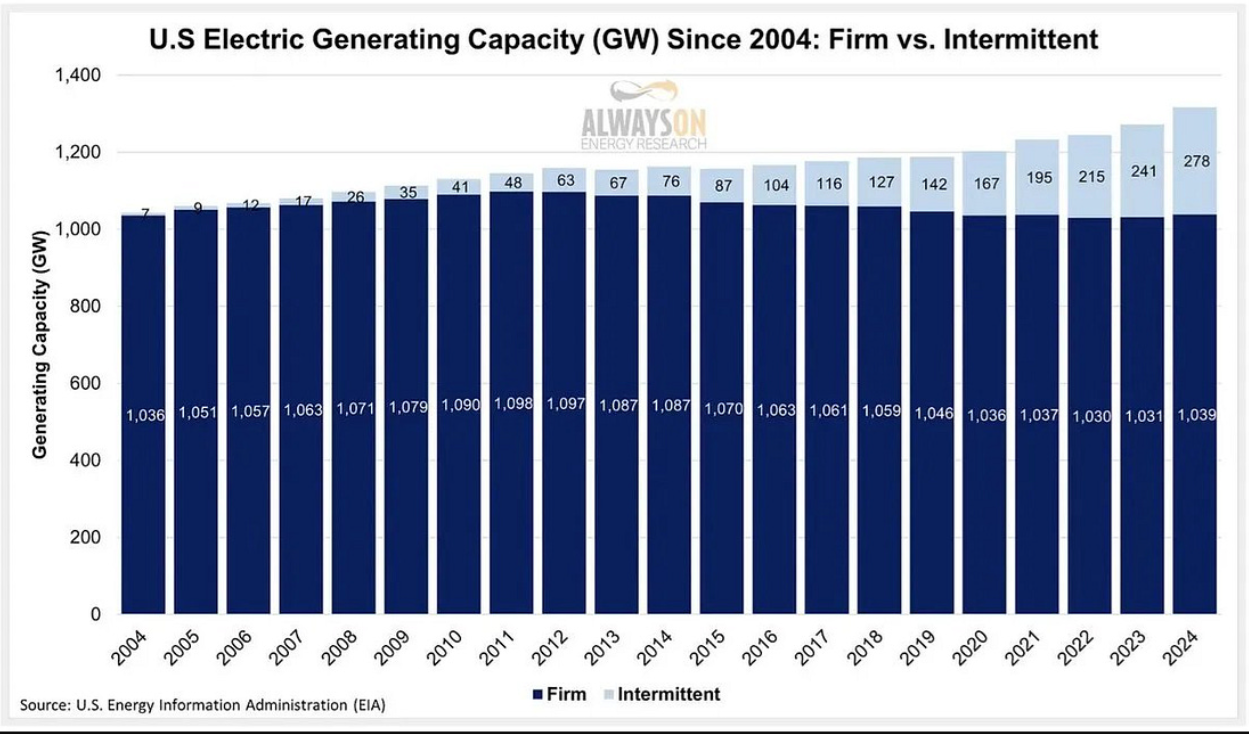
    • Even with plans to replace 104 gigawatts of plant retirements with 209 gigawatts of new generation by 2030, “only 22 (gigawatts) come from firm baseload generation sources,” meaning that “the model found outage risk in several regions rises more than 30-fold.” (A gigawatt is equal to 1 billion watts.)

In other words, replacing firm baseload sources like natural gas with alternative sources like wind or solar is not an apples-for-apples proposition, since “renewables” put the grid at greater risk. Establishing arbitrary end dates for our most affordable and reliable energy sources is both illogical and reckless.

On the heels of the international court’s irresponsible and (thankfully) unenforceable decree, and the DOE’s astute recommendation to do the opposite of what the court prescribed, came a story from Reuters declaring that the Trump administration’s actions to end or curtail Biden-era subsidies and credits for “renewables” are, fortunately, having an impact.  Boom fades for US clean energy as Trump guts subsidies

“Singapore-based solar panel manufacturer Bila Solar is suspending plans to double capacity at its new factory in Indianapolis. Canadian rival Heliene’s plans for a solar cell facility in Minnesota are under review. Norwegian solar wafer maker NorSun is evaluating whether to move forward with a planned factory in Tulsa, Oklahoma. And two fully permitted offshore wind farms in the U.S. Northeast may never get built,” the news agency reported.

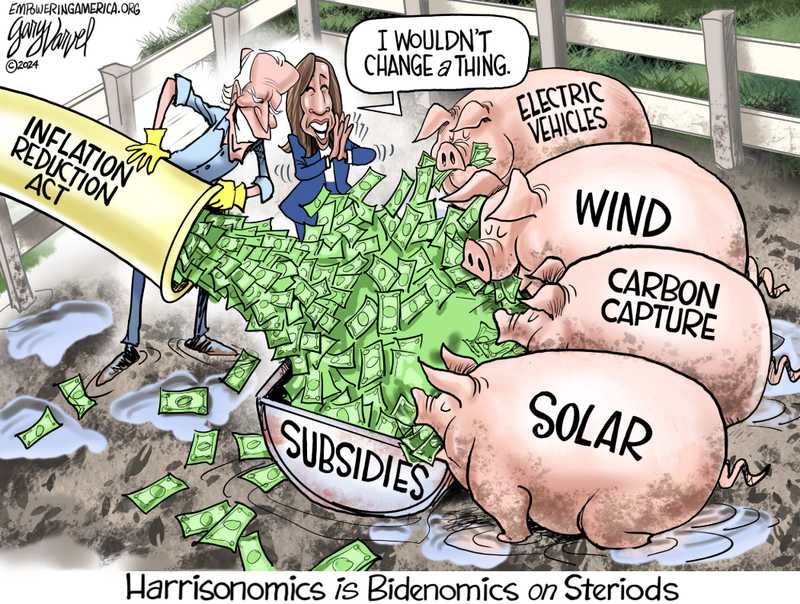
These are among the major clean energy investments now in question after Republicans agreed earlier this month to quickly end U.S. subsidies for solar and wind power as part of their budget megabill, and as the White House directed agencies to tighten the rules on who can claim the incentives that remain.

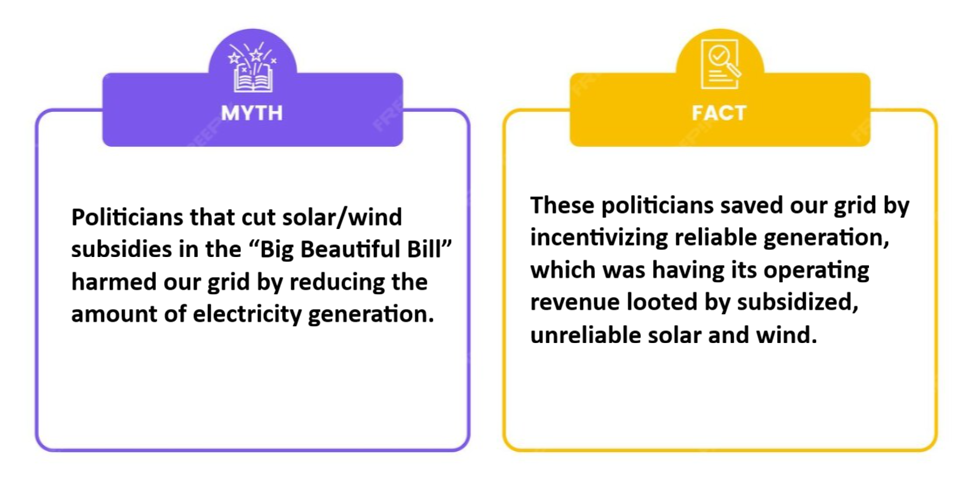
The key provision in the new law is the accelerated phase-out of 30% tax credits for wind and solar projects: it requires projects to begin construction within a year or enter service by the end of 2027 to qualify for the credits. Previously the credits were available through 2032.

The policy changes have also injected fresh doubt about the fate of the nation’s pipeline of offshore wind projects, which depend heavily on tax credits to bring down costs. According to Wood Mackenzie, projects that have yet to start construction or make final investment decisions are unlikely to proceed.

Two such projects, which are fully permitted, include a 300-megawatt project by developer US Wind off the coast of Maryland and Iberdrola’s 791 MW New England Wind off the coast of Massachusetts.
Neither company responded to requests for comment.

President Trump is putting America first and leading an energy renaissance that should be in full bloom on our nation’s 250th birthday on July 4, 2026. It’s difficult to imagine a greater Independence Day gift to the American people than freedom from the cold, dark landscape that would result from following the directives of global agencies and the rulings of international courts.

Postscript: Saving U.S. Farmland from Transmission Lines

Robert Bryce adds the canceling of transmission lines dedicated to wind and solar power in his blog article Transmission Unplugged.

From Missouri and Colorado to Germany and Spain,
high-voltage transmission projects are being stopped by
fierce local opposition, soaring costs, and permitting delays.

The Grain Belt Express project aimed to carry wind-generated electricity from Kansas to the Indiana-Illinois border. Map credit: grainbeltexpress.com

Invenergy neglected to mention that if the project gets built, it will saddle ratepayers with about $500 million in costs to integrate the power it will be delivering into grids on the eastern end of the line. In other words, Invenergy wants to build a merchant high-voltage transmission line and force its way onto the US electric grid. But it doesn’t want to pay any of the costs that its project will impose on the system. Furthermore, Grain Belt Express has faced fierce opposition in Missouri for more than a decade. Earlier this month, Missouri Attorney General Andrew Bailey announced a civil investigation into Invenergy for its “misleading claims and a track record of dishonesty” about the project.

Last week, the Department of Energy gave Polsky some high-amperage clarity from the Trump administration when it canceled a $4.9 billion loan guarantee for the Grain Belt Express that the agency’s Loan Programs Office made last November in the waning days of the Biden administration.

The DOE said it killed the loan deal “to ensure more responsible stewardship of taxpayer resources.”

Relieving US Grid from Wind and Solar Risks


Gary Abernathy reports on progress securing the U.S. grid from the load of entanglements from adding wind and solar power supplies.  His Empowering America article is Climate Science is Not the Law in the U.S.  Exerpts in italics with my bolds and added images.

While not everyone is on board with President Trump’s “America First” philosophy, its importance when it comes to energy is brought into sharp focus when considering where the U.S. would be if it capitulated to the whims of global organizations like the United Nations or obeyed the verdicts of world courts.

The frightening attitudes of believers in global rule were recently on display courtesy of a New York Times opinion piece headlined “Climate Science is Now the Law,” penned by three writers who are all part of something called the Center for International Environmental Law. In their article, the authors claim, “The science on climate change has long been settled. Now the law is, too.”  [See post: ICJ Issues Biased Advice on Climate Change]

At about the same time that the International Court of Overstep was issuing its decree for nations to kneel at the feet of the wind and solar gods, the Trump administration took another giant leap in its race to reverse Biden’s disastrous energy policies. On July 7, the Energy Department unveiled its “Report on Evaluating U.S. Grid Reliability and Security,” as required under President Trump’s April executive order to examine the topic.  DOE reported:

“This methodology equips DOE and its partners with a powerful tool to identify at-risk regions and guide federal interventions to prevent power outages, accelerate data center deployment, and ensure the grid keeps pace with explosive load growth driven by artificial intelligence and reindustrialization.”

Rather than follow international directives and judgments to rid itself of energy sources like natural gas, which is necessary to power technology, manufacturing and the coming AI data centers, the DOE is, fortunately, doing the exact opposite. Among the biggest DOE findings:

    • If current plant retirement schedules and incremental additions remain unchanged “most regions will face unacceptable reliability risks within five years.”
    • Radical change is necessary because otherwise, the magnitude of projected demand from AI data centers and other manufacturing “cannot be met with existing approaches to load addition and grid management.
    • The coal and gas plant retirements previously planned by 2030 “could lead to significant outages when weather conditions do not accommodate wind and solar generation.”
    • Even with plans to replace 104 gigawatts of plant retirements with 209 gigawatts of new generation by 2030, “only 22 (gigawatts) come from firm baseload generation sources,” meaning that “the model found outage risk in several regions rises more than 30-fold.” (A gigawatt is equal to 1 billion watts.)

In other words, replacing firm baseload sources like natural gas with alternative sources like wind or solar is not an apples-for-apples proposition, since “renewables” put the grid at greater risk. Establishing arbitrary end dates for our most affordable and reliable energy sources is both illogical and reckless.

On the heels of the international court’s irresponsible and (thankfully) unenforceable decree, and the DOE’s astute recommendation to do the opposite of what the court prescribed, came a story from Reuters declaring that the Trump administration’s actions to end or curtail Biden-era subsidies and credits for “renewables” are, fortunately, having an impact.  Boom fades for US clean energy as Trump guts subsidies

“Singapore-based solar panel manufacturer Bila Solar is suspending plans to double capacity at its new factory in Indianapolis. Canadian rival Heliene’s plans for a solar cell facility in Minnesota are under review. Norwegian solar wafer maker NorSun is evaluating whether to move forward with a planned factory in Tulsa, Oklahoma. And two fully permitted offshore wind farms in the U.S. Northeast may never get built,” the news agency reported.

These are among the major clean energy investments now in question after Republicans agreed earlier this month to quickly end U.S. subsidies for solar and wind power as part of their budget megabill, and as the White House directed agencies to tighten the rules on who can claim the incentives that remain.

The key provision in the new law is the accelerated phase-out of 30% tax credits for wind and solar projects: it requires projects to begin construction within a year or enter service by the end of 2027 to qualify for the credits. Previously the credits were available through 2032.

The policy changes have also injected fresh doubt about the fate of the nation’s pipeline of offshore wind projects, which depend heavily on tax credits to bring down costs. According to Wood Mackenzie, projects that have yet to start construction or make final investment decisions are unlikely to proceed.

Two such projects, which are fully permitted, include a 300-megawatt project by developer US Wind off the coast of Maryland and Iberdrola’s 791 MW New England Wind off the coast of Massachusetts.
Neither company responded to requests for comment.

President Trump is putting America first and leading an energy renaissance that should be in full bloom on our nation’s 250th birthday on July 4, 2026. It’s difficult to imagine a greater Independence Day gift to the American people than freedom from the cold, dark landscape that would result from following the directives of global agencies and the rulings of international courts.

Postscript: Saving U.S. Farmland from Transmission Lines

Robert Bryce adds the canceling of transmission lines dedicated to wind and solar power in his blog article Transmission Unplugged.

From Missouri and Colorado to Germany and Spain,
high-voltage transmission projects are being stopped by
fierce local opposition, soaring costs, and permitting delays.

The Grain Belt Express project aimed to carry wind-generated electricity from Kansas to the Indiana-Illinois border. Map credit: grainbeltexpress.com

Invenergy neglected to mention that if the project gets built, it will saddle ratepayers with about $500 million in costs to integrate the power it will be delivering into grids on the eastern end of the line. In other words, Invenergy wants to build a merchant high-voltage transmission line and force its way onto the US electric grid. But it doesn’t want to pay any of the costs that its project will impose on the system. Furthermore, Grain Belt Express has faced fierce opposition in Missouri for more than a decade. Earlier this month, Missouri Attorney General Andrew Bailey announced a civil investigation into Invenergy for its “misleading claims and a track record of dishonesty” about the project.

Last week, the Department of Energy gave Polsky some high-amperage clarity from the Trump administration when it canceled a $4.9 billion loan guarantee for the Grain Belt Express that the agency’s Loan Programs Office made last November in the waning days of the Biden administration.

The DOE said it killed the loan deal “to ensure more responsible stewardship of taxpayer resources.”

Wanted: More Energy Sanctuary States Like Louisiana

Larry Behrens explains the trail blazing move in his Real Clear Energy article Did Louisiana Just Become America’s First Energy Sanctuary State? Excerpts in italics with my bolds and added images.

While states like California fumble and self-destruct, Louisiana is doing
something revolutionary: standing up to the Green New Scam.

In a move that should inspire every state in the country, Louisiana has passed a groundbreaking law that flips the script on failed renewable mandates. Let’s call it what it is — a common-sense energy sanctuary law. Instead of forcing families and businesses to pay more for unreliable energy from foreign supply chains, Louisiana is now legally prioritizing energy that’s affordable, reliable, and made in America.

That’s not just common sense — it’s leadership.

The technical name is Act 462, but it might well be called “Louisiana’s Energy Independence Act” because it does something no Renewable Portfolio Standard (RPS) has ever done: it puts working families first. It defines energy not by whether it checks a political box, but by whether it keeps the lights on and bills low. In fact, the law goes so far as to define dispatchable and reliable energy in statute, mandating that Louisiana’s grid must prioritize sources that stabilize voltage, ramp up when needed, and avoid dependence on “foreign adversary nations.”

That’s a direct shot at the China-backed solar and wind lobby — and it’s about time.

This policy shift couldn’t come at a better moment. New data shows that the states most committed to Renewable Portfolio Standards — California, Hawaii, Massachusetts, New York — are now suffering the highest and fastest-growing electricity rates in the nation. According to the U.S. Energy Information Administration and ElectricChoice’s latest June 2025 numbers:

  • Hawaii’s electricity rate is 42.34¢/kWh — a staggering 228% above the national average.
  • Massachusetts sits at 31.22¢/kWh — up 142%.
  • And California, the poster child of the Green New Scam, is at 30.55¢/kWh — 137% higher than average.

What do these states have in common? They all have binding RPS mandates and have shut down reliable fossil fuel power plants that once powered homes and industries affordably. In California alone, plants like Alamitos, Potrero, and Huntington Beach were taken offline — all while the state imported Chinese-made solar panels and offshore wind turbines with price tags subsidized by taxpayers.

And the results? Sky-high bills, rolling blackouts,
and dependence on intermittent power that collapses
when the sun doesn’t shine or the wind doesn’t blow.

Meanwhile, Louisiana — a state with no binding RPS and an energy mix that includes natural gas — enjoys rates nearly 9% below the national average. It’s joined by other affordable states like North Dakota, Nebraska, and South Carolina — none of which have mandatory green energy quotas.

So yes, Louisiana is charting a new path, and the rest of the country should follow. The message of Louisiana’s Energy Independence Act is simple: energy policy should serve people, not political agendas. By prioritizing affordability and reliability, Louisiana levels the playing field and forces every source of energy — whether gas, coal, solar, or wind — to compete based on merit, not mandates.

And for working families? That’s a win every single time.

Let the climate activists whine. Let the solar lobby scream. Louisiana just showed the country what energy leadership looks like — and it starts by saying no to the Green New Scam and yes to the people who actually pay the bills.

Other states should take note. The future isn’t in chasing unicorns. It’s in putting common sense and the American worker back at the center of energy policy.