Little Tin Gods


The audio track is a song for our times: Little Tin Gods by Don Henley from his album End of the Innocence.

“A new age is dawning
On fewer than expected
Business is usual”
That’s how the headline read
Some shaky modern saviors
Have now been resurrected
In all this excitement
You may have been misled

People want a miracle
They say “Oh Lord, can’t you see us?
We’re tryin’ to make a livin’ down here
And keep the children fed”
But, from little dark motel rooms
to “Six Flags Over Jesus”
“How are the mighty fallen”
So the Bible said

You don’t have to pray to a little tin god
Step out of the way for a little tin god
You might fear the reaper, you might fear the rod
But you never have to get down on your knees
You don’t have to holler, “please, please”
No, you never have to get down on your knees
For a little tin god

The cowboy’s name was “Jingo”
And he knew that there was trouble
So in a blaze of glory
He rode out of the west
No one was ever certain
What it was that he was sayin’
But they loved it when he told them
They were better than the rest

But you don’t have to pray for a little tin god
Step out of the way for a little tin god
You might hate the system, hate the job
But you never have to get down on your knees
You don’t have to holler, “please, please”
No, you never have to get down on your knees
For a little tin god

Throw down a rope from heaven
And lead the flock to water
The man in the middle would have you think
That you have no other choice
But to wander in the wilderness
Of all the upturned faces
If you stop and listen long enough
You will hear your own small voice

But you don’t have to pray to a little tin god
Step out of the way for a little tin god
You might fear the reaper, fear the rod
But you never have to get down on your knees
You don’t have to holler, “please, please”
No, you never have to get down on your knees
You don’t have to holler, “please, please”
You never have to get down on your knees
For a little tin god


IMF Mad Hatters’ Notion of Hydrocarbon “Subsidies”


The recent IMF updated report on fossil fuel subsidies took on the appearance of the Mad Hatter’s tea party (Alice in Wonderland) when you look into what is claimed to be subidizing hydrocarbon energy.  Robert Lyman explains the tricks and dishonesty running through this ongoing narrative against conventional energy sources, while ignoring the massive taxpayer direct funding of wind and solar power.  His Financial Post article is Most fossil-fuel ‘subsidies’ aren’t actually subsidies.  Excerpts later on with my bolds and added images.  But my overview of the context for these remarks.

Context–Back to Basic Terms

Climate activists and renewables lobbyists are acting like Mad Hatters, twisting language and logic to pursue their agendas. Let there be some common sense injected here.

A subsidy would be when the government takes money that has been taxed, borrowed, or printed, and pays it to some company like Solyndra to do something that the market does not support. Often these subsidies subsidize technologies that do not exist and may never exist (and they say WE ignore the laws of physics.)

In contrast, a tax reduction is NOT a subsidy. A tax credit says an industry gets to keep more of its own money that it has produced selling a product people want and need in the free market.

There is a huge difference between a law that lets you keep more of your own money; and another law that actually gives you someone else’s money. The two are not the same thing. Actually, the oil industry pays higher taxation rates than other industries and subsidizes the government with the billions it pays in taxes, not the other way around.

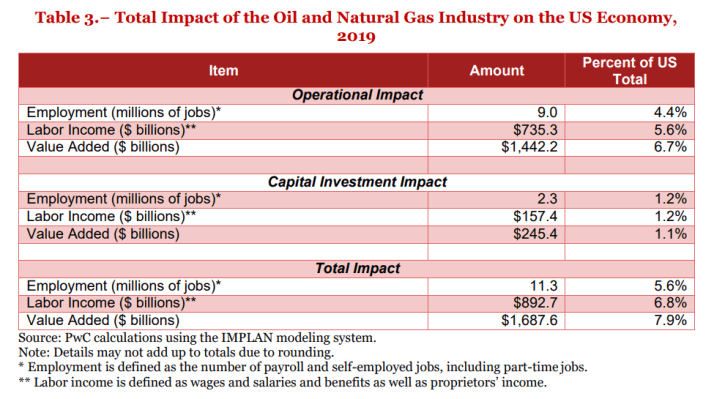
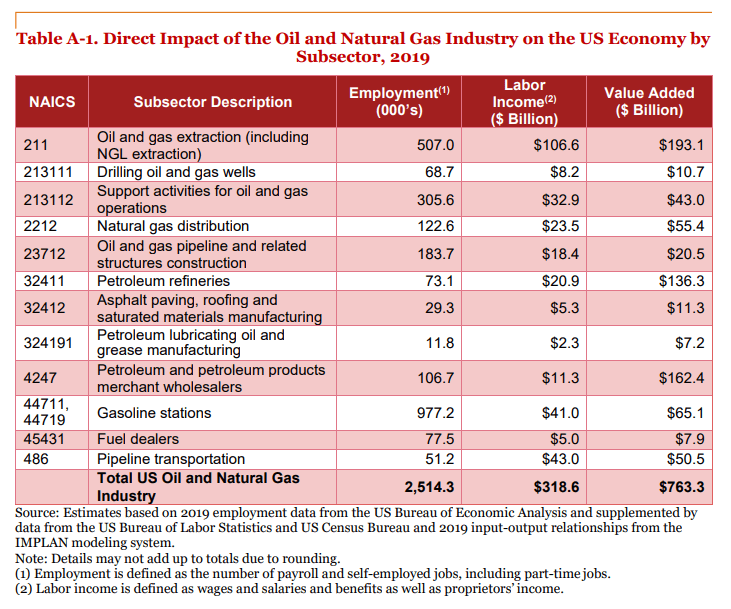
There are also billions more in economic benefit to the nation from the jobs they create and the increased mobility and productivity people enjoy by using our transportation system based on hydrocarbon fuels.

The Big Lie:  IMF counts not charging companies the full costs of global warming
as a subsidy. Common sense says it isn’t

Economists are used to having their terminology misinterpreted, co-opted and misused, usually in the interests of politics. One of the most common words to suffer this fate is “subsidy.” The Gage Canadian dictionary defines a subsidy as “a grant or contribution of money, especially one made by a government.” Economists would agree with that definition. Governments, on the other hand, rarely acknowledge that they subsidize anything. They “invest” — though, curiously, they seldom refer to the rate of return on their investments.

I was reminded of all this by the news last week that the International Monetary Fund (IMF) has published an updated version of its 2015 Working Paper on global and country-level subsidies for fossil fuels. According to the paper, total global subsidies “surged to a record $7 trillion last year,” equivalent to 7.1 per cent of world GDP. The paper’s authors estimate that scrapping these subsidies would: prevent 1.6 million premature deaths annually, raise government revenues by $4.4 trillion and put emissions on track to reaching official global warming targets. An annex to the report indicates that in 2020 Canada’s subsidies to fossil fuels were US$64 billion, or 3.8 per cent of GDP.

The paper’s extraordinary findings are almost entirely the result of how it defines “subsidy.”
It divides subsidies to fossil fuels into “explicit” and “implicit” subsidies.

Subsidies Wordplay

Explicit subsidies are the kind economists and ordinary people would recognize as subsidies: grants to cover some portion of the costs of production, as well as tax incentives and deductions (e.g., capital cost allowances) to fossil fuel producers for such things as investing in exploration and development.

By contrast, “implicit” subsidies are defined as “under-charging” producers for the environmental costs they generate from their exploration and production activities and consumers for perceived environmental costs not adequately covered by various consumption taxes (e.g., sales taxes, value-added taxes and carbon taxes).

So when, for instance, a country fails to impose a consumption tax high enough
to cover the perceived costs to society of climate change, congestion or
local pollution, the paper would classify that as a subsidy.

The working paper indicates that explicit global subsidies were US$450 billion in 2020, or six per cent of the total. Most of these are actually so-called tax expenditures: tax credits or deductions for investments in high-risk exploration and development activities, similar to those provided to firms in other sectors of the economy.

94% of Hydrocarbon “Subsidies’ Actually “Externalties”

That leaves the 94 per cent of subsidies that were what the paper refers to as “externalities.” Let’s be clear. Externalities are not subsidies. They are a cost or benefit of an economic activity that affects a third party not directly related to that activity. The cost is not always evident, nor is it clear by what mechanisms such costs and benefits should be shared. While the paper does not break down the percentages attributed to externalities, its 2015 predecessor estimated that the costs of global warming were 37 per cent, local air pollution 13 per cent, congestion 32 per cent, vehicle accidents five per cent and road damage two per cent. In effect, the paper is arguing that not making the fossil fuel industry pay the full cost of global warming constitutes a subsidy to the industry. The same for its not paying the full cost of local air pollution or of traffic congestion or road deaths, and so on. Attribution of any of these costs to fossil fuels is highly questionable, but one obvious question is why fossil fuels are to blame for road congestion. If all vehicles were electric, would there be no congestion?

The vast majority of what the paper calls “subsidies” thus relate to charges not imposed for the harmful external effects of consuming fossil fuels, especially in oil-producing countries that choose to impose lower excise and sales taxes on gasoline and other fuels. The paper finds that East Asia and the Pacific regions account for almost half of total global energy subsidies. In effect, the report concludes that the prices of energy should be substantially raised for the world’s poor. This, of course, was not noted in the media summaries of the paper.

The paper did not explain how it calculated Canada’s 2020 subsidies to fossil fuels but, given its general analysis, one can only assume it was based on the judgment that fossil fuel costs to consumers were not high enough. But in 2018, total taxes on gasoline alone were roughly $24 billion. One has to wonder how the IMF’s math figures that this, and the more recent increases in carbon taxes, still constitute under-charging for externalities.

A final difficulty with the IMF paper is that it excludes any consideration of the positive externalities from reliance on fossil fuels. They are the most secure, affordable, storable, and reliable energy sources we have, and the ones upon which the remarkable advances in the global economy over the last century have been based. That is well worth bearing in mind as we consider the meaning of “subsidy.”

Summary

The Mad Hatters turn things upside down. Society is subsidized and made wealthy by fossil fuels, not the other way around. Some of that wealth is being diverted to renewable energy companies who do not create enough value to be in business without direct payments of tax dollars. They prove it by declaring bankruptcy when their subsidies are reduced.  Worse, hooking up wind and solar intermittent power to electrical grids adds more cost and unreliability than the renewable power is worth.

Read More about Energy Subsidies Abuse

The Appalling Truth About Energy Subsidies at Euan Mearns

Renewable Energy Cost Explosion: €25,000 euros for each German family of four  Daniel Wetzel, Die Welt (translation by GWPF)

What’s an Oil Subsidy? Heritage Foundation

Net Subsidy Analysis: A Better Way to Assess Government Energy Policy MasterResource

Why the Best Path to a Low-Carbon Future is Not Wind or Solar Power Brookings Institution

Killing the Energy Goose Science Matters

At its prime, the Carrizo Plain (S. California) was by far the largest photovoltaic array in the world, with 100,000 1′x 4′ photovoltaic arrays generating 5.2 megawatts at its peak. The plant was originally constructed by ARCO in 1983 and was dismantled in the late 1990s. The used panels are still being resold throughout the world.

At its prime, the Carrizo Plain (S. California) was by far the largest photovoltaic array in the world, with 100,000 1′x 4′ photovoltaic arrays generating 5.2 megawatts at its peak. The plant was originally constructed by ARCO in 1983 and was dismantled in the late 1990s. The used panels are still being resold throughout the world.


Green Energy Grinding to a Halt

Green Energy Activists are hitting hard realities, as summarized by Jonathan Lesser at New York Post Why wind and solar power are running out of juice.  Excerpts in italics with my bolds and added images

Green energy and the push to electrify everything have been in the news recently but for all the wrong reasons. Instead of the green energy nirvana politicians and green energy advocates have promised, economic and physical reality has begun to set in.

Painful Green Economics

Start with the economic realities of Wind Energy

The result: Even while Siemens Energy CEO Christian Bruch insists that “energy transition without wind energy does not work,” 2022 saw 16% less new wind-power capacity than in 2021, according to the American Clean Power Association.

Wind turbine manufacturers like Siemens and General Electric have reported huge losses for the first half of this year, almost $5 billion for the former and $1 billion for the latter. Among other problems, turbine quality control has suffered, forcing manufacturers such as Siemens and Vestas to incur costly warranty repairs.

In Europe, offshore wind output has been less than promised, while operating costs have been much higher than advertised. Offshore wind developers in Europe and the US are canceling projects because of higher materials and construction costs.

In Massachusetts, Avangrid, the developer of the 1,200 MW Commonwealth Wind project paid $48 million to get out of its existing contract to sell power to ratepayers. That way, the company can rebid the project next year at an even higher price.

Close by, the developers of the 1,200 MW SouthCoast Wind Project off Martha’s Vineyard will pay about $60 million to exit their existing contract.
Rhode Island Energy, the state’s main electric utility, recently rejected the second Revolution Wind Project because the contract price was too high.

And Ørsted, the Danish government-owned company that is developing the Southfork Wind and Sunrise Wind projects off Long Island — as well as the Ocean Wind project off the New Jersey coast — last week announced that, without additional subsidies and higher contract prices, it will have to write-off billions of dollars in potential losses.

In New Jersey, the legislature passed a law in July, which is likely unconstitutional, to bail out Ørsted. The legislation will award the company with several billion dollars of investment tax credits that were supposed to go to consumers.

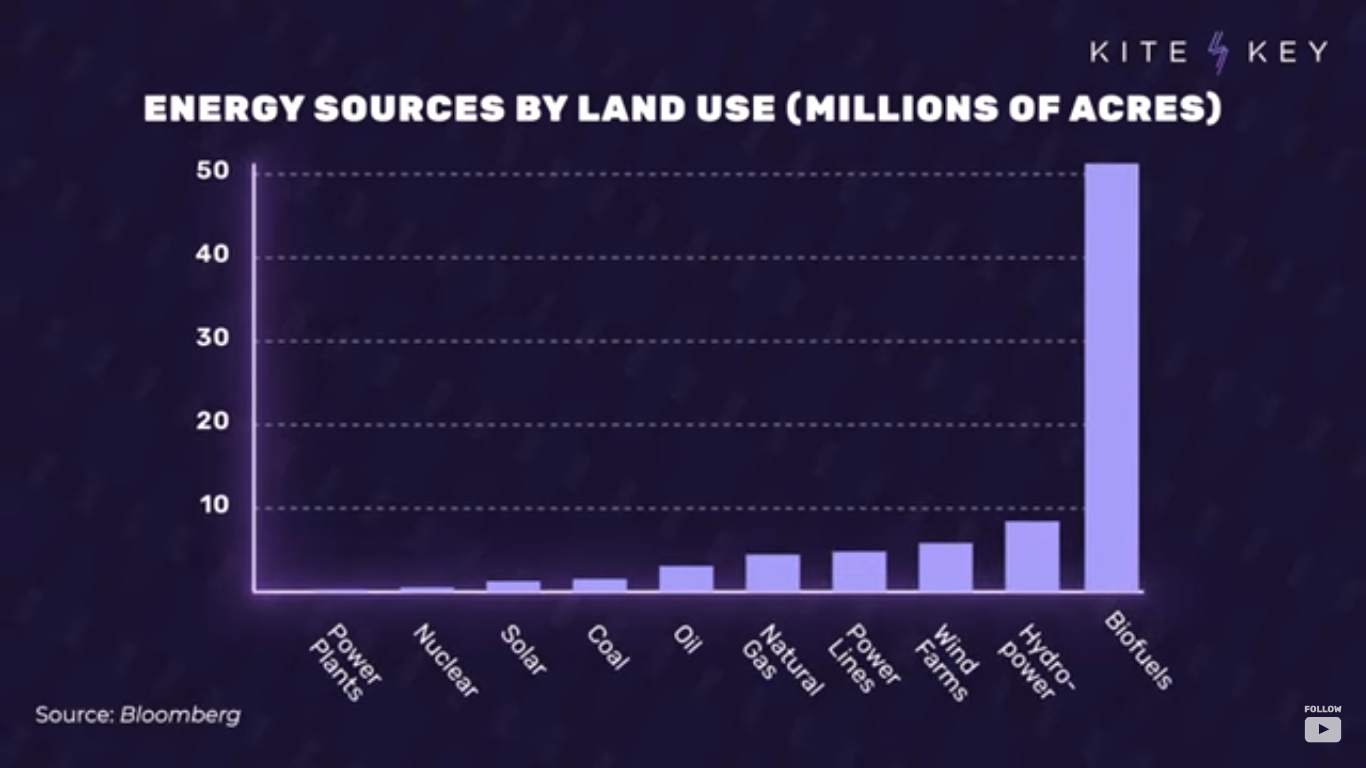
Few Hosts for Land-Gobbling Wind and Solar Projects

Back on dry land, opposition to siting land-gobbling wind and solar projects continues to grow.

Local governments in Iowa, Illinois, and Ohio have all rejected or restricted projects. Rural communities, it seems, do not want to host massive turbine farms — nor the high-voltage transmission lines needed to deliver electricity to power-hungry cities.

Electric Vehicles Leaking Money

Then there are electric vehicles.

Ford, which has bet heavily on its electric Lightning pickup and Mustang and received a $9.2 billion government-subsidized loan in January, revealed that it has lost $60,000 for every EV it sold in the first half of this year.

Rivian, another EV company, managed to reduce its losses per EV to around $33,000, a big improvement over the $67,000 loss per EV in the first quarter of the year.

Proterra, a Bay Area-based manufacturer of electric buses and batteries that had a $10 million loan forgiven by the Biden Administration, just filed for bankruptcy.

Alternative Energy Madness

Like the wizard in The Wizard of Oz, alternative energy proponents claim these are just temporary little potholes on the road to economic and climate nirvana — all of which can be filled with more money through renegotiated power purchase contracts and more zero-emissions mandates.

Alternative energy madness – and that’s what it is – has had its biggest impact in California.  But New York and New Jersey have adopted most of that state’s mandates.

Sales of new internal combustion vehicles will be banned beginning in 2035 in the states. All of the electricity sold to retail consumers will have to be “zero-emissions.”

Homeowners and building owners will be forced to replace gas- and oil-burning space and water heaters with electric heat pumps.   And, gas stoves will be regulated out of existence.

Carbon Taxes Draining Wallets

New York also will soon implement another California import: a carbon “cap-and-invest” program, which will impose a tax on fossil fuels sold by wholesalers and utilities.  The billions of dollars collected each year will provide a green slush fund, allowing the governor and legislators to hand out money to their politically favored cronies, as has so often been the case in the past.

Washington State began its “cap-and-invest” program in January of this year.  Modeled after California’s, Governor Jay Inslee promised the program would have “minimal impact, if any. We are talking about pennies.”

Instead, the program has raised gasoline prices – almost 50 cents per gallon so far this year. Washington State now claims the honor of having the highest gasoline prices in the nation: In Seattle, for example, the average price of regular gasoline is over $5 per gallon.

Of course, the entire point of the program was to raise gasoline and fossil fuel prices to encourage consumers to switch to electric vehicles, mass transit, electric heat pumps, and so forth.

But politics being what it is, Governor Inslee, along with environmentalists and legislative proponents, now blames greedy oil companies for the price increases.  ‘We won’t stand for’ corporate greed,” the Governor said at a July 20, 2023, press conference.

Once New York’s cap-and-invest program starts, probably next year, you can expect a similar outcome: higher gasoline and diesel prices, higher prices for natural gas and fuel oil used to heat homes and apartment buildings, and endless political demagoguery denouncing it all.

And Basic Physics Stand in the Way

As the push toward electric-everything powered by green energy barrels along, proponents also refuse to confront basic physical realities.

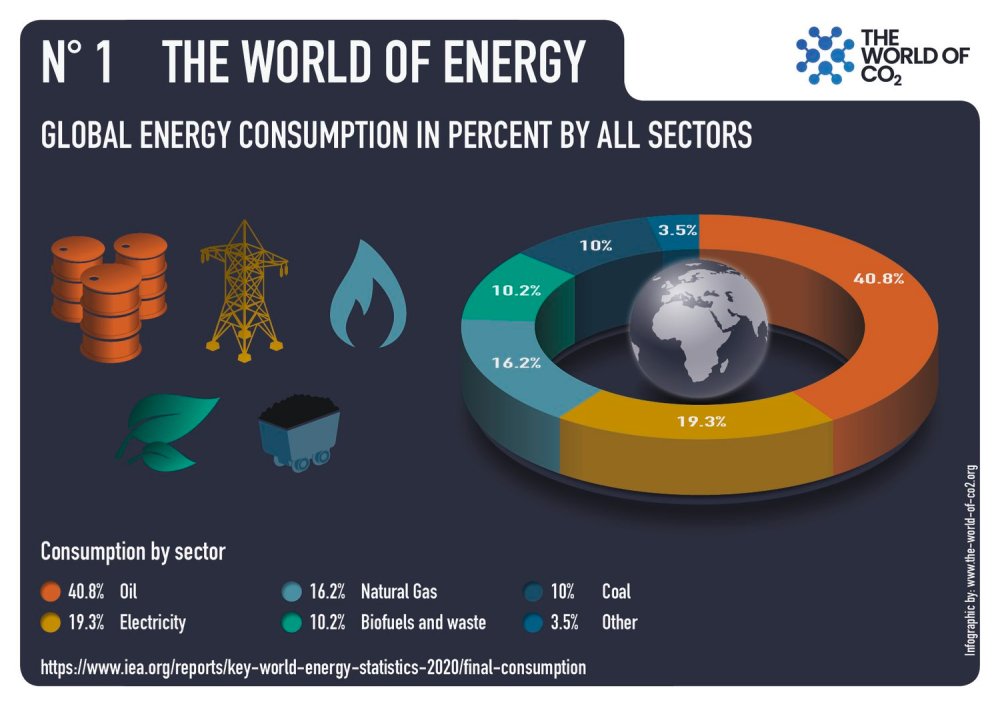
Electricity accounts for just one-sixth of all energy use. The rest is fossil fuels consumed for transportation, space and water heating, and manufacturing. Convert everything to electricity and electricity consumption will increase. A lot.

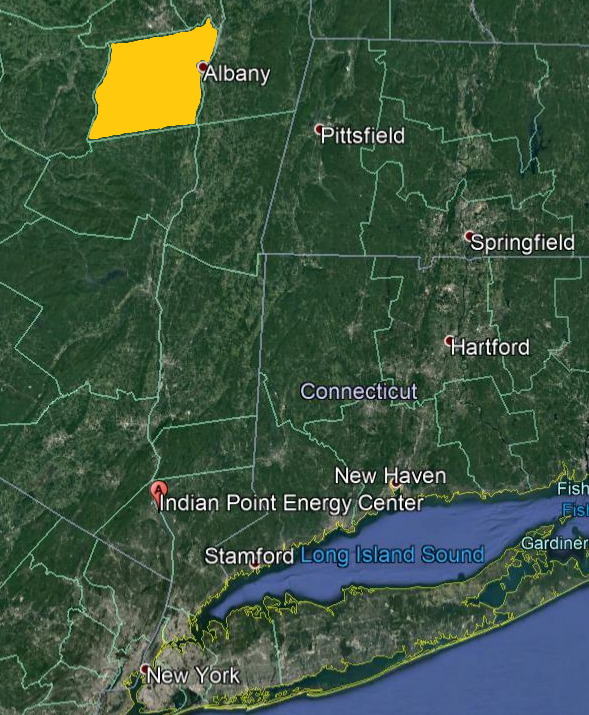
According to the New York Climate Action Committee’s Final Scoping Plan, New York will meet that increased demand by building almost 15,000 MW of offshore wind, like the Southfork Wind and Sunrise Wind projects, and over 40,000 MW of solar panels. (By comparison, the emissions-free Indian Point Nuclear Plant, which former Governor Cuomo forced to close, had a capacity of just over 1,000 MW.)

Because the wind doesn’t always blow and the sun doesn’t always shine, keeping the lights on will require far more backup resources. This “reserve margin” – basically, the amount of generating capacity available to step in and meet electric demand – will need to increase from the current 20% to over 100%.

In other words, for every MW of generating capacity in 2040,
there will have to be an equal amount or more in reserve
.

That’s like having to buy a second car and keep it idling all the time in case the first one won’t start. The Scoping Plan claims this will be accomplished by building over 20,000 MW of so-called “dispatchable emissions-free generating resources” (DEFRs) and installing over 12,000 MW of battery storage.

Transition Plans Depend on Green Fantasies

Those claims are fantasy.

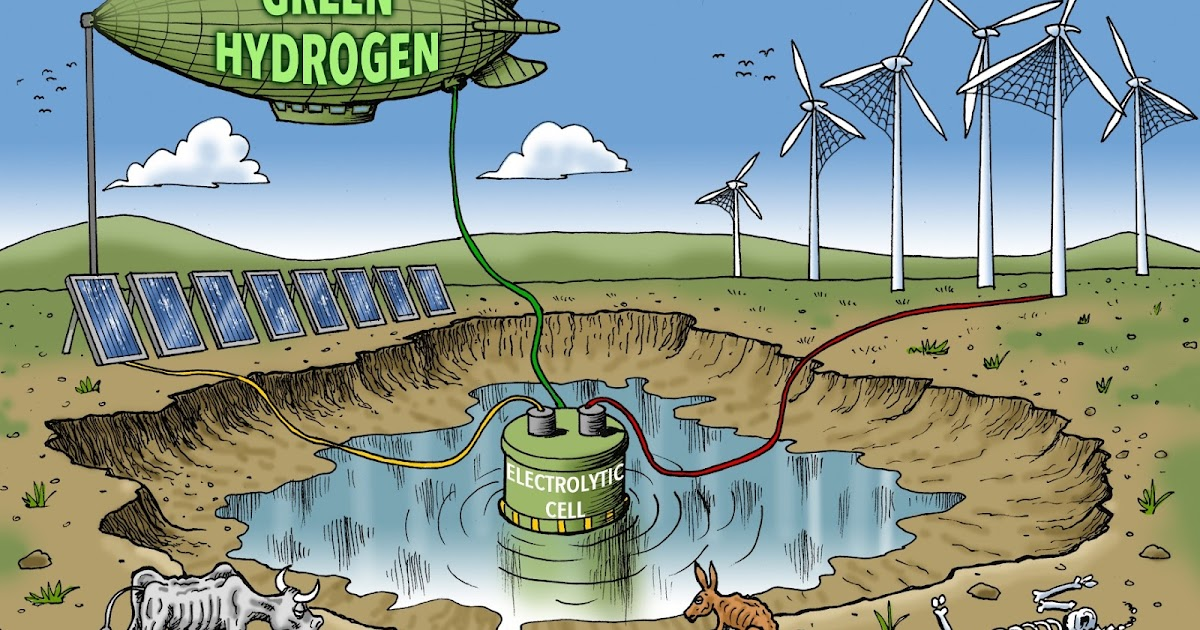
Start with DEFRs, which are generators that burn pure hydrogen manufactured from surplus wind and solar power. They have yet to be invented (we repeat – they do not yet exist). Nor do any large-scale commercial plants to manufacture green hydrogen exist either.

Hydrogen cannot be transported in existing natural gas pipelines. An entirely new infrastructure will need to be built.

Assuming a new technology will be invented by whatever date politicians decree is foolish. That’s not how technology works. Just ask everyone working on commercial fusion power, which has been just 30 years off for the last 50 years.

As for battery storage, 12,000 MW will provide at most 48,000 megawatt-hours of actual electricity. That may sound like a lot but based on the New York Independent System Operator’s (NYISO) most recent forecast, on a windless and cold winter evening in 2040, it would keep the lights on for only one hour.

The materials requirements for batteries also are staggering, which is one reason why replacing existing internal combustion cars and trucks will be impossible. Batteries require large quantities of cobalt, much of which is now mined in the Congo using child and slave labor. They also require lots of graphite, most of which comes from China – the same with the rare minerals needed for wind turbines and solar panels.

Much Pain for a Drop in the Bucket

Ultimately, nothing New York does will have any measurable impact on world climate because the state’s carbon emissions are minuscule compared to the 35 billion metric tons of total global emissions. As long as China, which accounts for almost one-third of world energy-related carbon emissions, India, and other developing nations focus policies on economic growth, rather than cutting emissions, New York’s efforts will have no environmental value.

Nuclear Energy Denial

Nevertheless, if politicians and environmentalists were serious about zero-emissions goals, they would abandon the electrification mandates, and abandon reliance on wind, solar, battery storage, DEFRs, green hydrogen, and other unrealistic and unreliable energy sources.

Instead, they would embrace the one existing technology that dare not speak its name: nuclear power. Unlike wind and solar, nuclear plants run all the time. New, small modular reactors will offer greater safety, lower costs, and easy scalability to meet increased electricity demand.

Storing spent fuel is a political issue, not a technological one, for which the best solution is to recycle and reuse it, as France has done for the last half-century without incident. The country is also developing a permanent storage site for nuclear waste that can no longer be reprocessed.

The economist Herb Stein once quipped that anything that cannot go on forever, won’t.

That’s true of New York’s current alternative energy madness.
It won’t save the world, but it will grind down the state’s economy
and its residents until the folly is too great to ignore.

Jonathan Lesser is the president of Continental Economics and an adjunct fellow with the Manhattan Institute.


Big Wind Decimates Balsa Farmers

Amazon rain forest devastated to mount monstrous virtue signalling prayer wheels elsewhere. Stop the subsidies and the devastation from wind “farms.”

From The Defender Wind Energy’s Dirty Secret: Deforestation of the Amazon and Devastation of Indigenous Communities.  Excerpts in italics with my bolds.  H/T mohandeer

Booming demand for balsa wood, used to make turbine blades for wind energy,
is ravaging Amazon forests and indigenous communities —
in the name of “green power.”

Story at a glance:

  • The rapid expansion of wind energy has led to increasing demand for windmills and balsa wood to build them.
  • The tropical tree is facing exploitation and being cleared from Amazon forests, causing potentially more environmental problems than the windmills it creates can solve.
  • Wind turbine blades can be up to 328 feet (100 meters) long; each blade requires 150 cubic meters of balsa wood, which is several tons.
  • China is a major consumer of balsa wood, purchasing 85% of Ecuador’s exports in 2020.
  • The Open Democracy video, “A Green Paradox,” documents how the rush for balsa wood to create “green” wind energy has destroyed local indigenous communities and decimated ecosystems.

Balsa, a tree that’s native to South America, is a coveted resource. Growing up to 98 feet (30 meters) and ready for harvesting in just three to four years from planting, balsa holds the promise for high profits for those who grow them.

Adding to its value, balsa wood is flexible and light yet very strong, making it an ideal material for manufacturing bridges, skis, boats and wind turbine propellers.

In an ironic tragedy, however, the rapid expansion of wind energy has led to
increasing demand for windmills and balsa wood to build them
.

Now, the tropical tree is facing exploitation and being cleared from Amazon forests, causing potentially more environmental problems than the windmills it creates can solve.  

Logging Amazon rainforests to create massive wind turbine propellers is the opposite of sustainable. Meanwhile, birds and bats — many species of which are already endangered — are suffering. It’s estimated that 600,000 to 949,000 bats, and up to 679,000 birds, are killed annually by wind turbines in the U.S.

But the number of wind turbines has increased significantly since these estimates were calculated, which means many more are probably affected. Areas, where wind farms are built, are also in peril, as the giant structures have a significant socio-economic impact.

As it stands, wind energy is falling into the trap of many “green” initiatives before it,
claiming to offer a solution to save the planet
while instead helping to destroy it.

European Energy Suffering, Now Hydro and Nuclear

Irina Slav explains at Oil Price Europe’s Energy Troubles Continue: Hydro And Nuclear Output Declining.  Excerpts in italics with my bolds.

♦  Europe’s hydro and nuclear output is declining, leading to more energy troubles.
♦  Renewables are struggling to fill the gap as wind and solar output increase.
♦  The EU may require increased LNG imports from the US to meet energy demands.

Last year, Europe was on the brink of an energy breakdown as Russian gas flows dried up and most of Europe doubled down on renewable energy.

The renewable energy bet paid off, in a way. Solar and wind electricity generation in Europe hit a record in 2022. In fact, for the first time in history, wind and solar together produced more electricity than natural gas-fired power plants.

There was just one problem with that. Lower hydro and nuclear output
more than wiped out the significance of that record output.

Droughts were severe in Europe last year. They threatened major trade routes such as the Rhein in Germany and the Po in Italy. And they also caused severe declines in hydropower electricity output. For example, in Spain, hydropower output dropped by almost half because of the droughts. All this might repeat this year as well.

Meanwhile, nuclear wasn’t doing so swell, either. France suddenly found that years of underinvestment in maintenance would have consequences: emergency reactor shutdowns for repairs and maintenance.

The problems cost EDF a massive annual loss of $19 billion as half of its reactors had to be shut down for maintenance. Most blamed the pandemic, but nuclear experts such as Mark Nelson saw the roots of the problem much further into the past when France decided to bet on renewables over nuclear.

That might have been the case in 2022, but this year things are different. Wind and solar are still producing electricity at a record rate, it appears, but declines in hydropower and nuclear output are so severe they are more than offsetting those record output rates, Reuters’ Gavin Maguire reported in a recent column.

Maguire noted that Europe managed to boost its wind and solar power capacity by 9 percent last year to 57.29 GW, which was a record high. At the same time, however, the troubles of hydro and nuclear dragged total electricity generation down and are still doing it.

Over the first quarter, European power generation stood at 1,213 terrawatt-hours, which was 6.4 percent lower than output for the first quarter of 2023. That’s according to climate change advocacy Ember. According to Maguire, this is not necessarily alarming in itself. This time last year, Europe was coming out of pandemic lockdowns, and demand was soaring.

Where things could become problematic is later in the year as business activity across the continent begins to rebound after the energy crunch of last year, the Reuters columnist noted. And most of the Russian gas that was available last year is no longer an option.

French nuclear is a major source of hope, but it will be a while yet before output recovers. At the moment, French nuclear power plants are producing 17.5 percent less than the average output rate for 2020 and 2021. That’s down from 23 percent for last year, so there is some progress, and that’s a good sign.

Hydro is trickier because, although to a lesser extent than wind and solar, hydro is weather-dependent. With Europe’s mild winter that saw a lot less snow than usual, a repeat of last year’s drought is not out of the question. In fact, it is a distinct possibility.

What this means is that Europe may need to import a lot more LNG from its new top supplier, the United States. Some have worried that the EU is building too much LNG import infrastructure that would become stranded assets before too long, but right now, those assets appear to be vital for the bloc’s energy survival.

Energy Doublethink Update April 14, 2023

First from the Zero Carbon zealots at Resilience Record clean-power growth in 2023 to spark ‘new era’ of fossil fuel decline.  Excerpts in italics with my bolds and added images.

The power sector is about to enter a “new era of falling fossil generation” as coal, oil and gas are pushed out of the grid by a record expansion of wind and solar power, according to new analysis by climate thinktank Ember.

Wind and solar power reached a record 12% of global electricity generation last year, according to Ember’s global electricity review 2023. This drove up the overall share of low-carbon electricity to almost 40% of total generation.

With even faster growth set to continue this year, Ember says 2022 is likely to mark a “turning point” when global fossil fuel electricity generation peaked and began to fall.

The thinktank forecasts that, by the end of 2023, more than 100% of the growth in electricity demand will be covered by low-carbon sources.

Experts broadly agree that global electricity generation needs to be completely decarbonised by 2040 if the world is to stay on track for its climate targets.

OTOH we have:

This month a 2023 US Energy Outlook from EIA (Energy Information Agency).  Excerpts in italics with my bolds.

Our projected growth in associated natural gas production is mainly driven by three trends:

♦  Rising oil prices support increased production from unconventional oil formations with significant natural gas volumes.
♦  Many unconventional oil wells are aging, and as these wells age, they tend to produce a higher ratio of natural gas relative to oil.
♦  Associated natural gas resources are becoming more economical, driven in part by provisions in the IRA, which creates penalties for venting and flaring methane and encourages producers to capture more natural gas from oil formations.

We project that associated natural gas production will increase from 7.2 Tcf in 2025 to 8.8 Tcf in the United States by 2050 in the AEO2023 Reference case. In the AEO2023 High Oil Price case, associated natural gas production peaks at 13.6 Tcf in 2035, accounting for 30% of the total domestic natural gas supply. By contrast, in the AEO2023 Low Oil Price case, associated natural gas production falls to 4.2 Tcf by 2050.

Strong continuing international demand for petroleum and other liquids will sustain U.S. production above 2022 levels through 2050, according to most of the cases we examined in our Annual Energy Outlook 2023 (AEO2023). We project that the United States will continue to be an integral part of global oil markets and a significant source of supply in these cases, as increased exports of finished products support U.S. production.

In our AEO2023, we explore long-term energy trends in the United States and present an outlook for energy markets through 2050. We use different scenarios, or cases, to understand how varying assumptions about the future could affect energy trends. These cases include:

  • The Reference case, which serves as a baseline, or benchmark, case. It reflects laws and regulations adopted through mid-November 2022 but assumes no new laws or regulations in the future. It also assumes the Brent crude oil price reaches $101 per barrel (b) (in 2022 dollars) by 2050.
  • The High Oil and Gas Supply case, which assumes 50% more ultimate recovery per well for tight oil, tight gas, or shale gas in the United States compared with the Reference case. It also assumes 50% more undiscovered U.S. oil and natural gas resources and 50% more effective technological improvements than in the Reference case.
  • The Low Oil and Gas Supply case, which assumes 50% less ultimate recovery per well and undiscovered sources, and 50% more effective technological advancement than the Reference case.
  • The High Oil Price case, which assumes the price of Brent crude oil reaches $190/b (in 2022 dollars) by 2050.
  • The Low Oil Price case, which assumes the price of Brent crude oil reaches $51/b (in 2022 dollars) by 2050.

Although domestic consumption of petroleum and other liquids does not increase through 2040 across most cases, production of U.S. petroleum and other liquids remains high because of more exports of finished products. In the High Oil Price case, increased production leads to the most U.S. exports among all cases over the projection period at 9.13 million barrels per day (b/d) by 2050, more than double the 3.9 million b/d exported in 2022. The Low Oil Price case shows the opposite trend with the least 2050 export volumes of 407,000 b/d, nearly 90% less than 2022 exports.

Electric Power Outlook

The figure above illustrates the relationship between installed capacity (left panel) and electricity generation (right panel). Because wind, solar, and nuclear have the lowest operating costs, their electricity generation over time mirrors their trend in installed capacity: slightly declining for nuclear, and increasing for wind and solar. By contrast, natural gas and coal have higher operating costs, and so their generation can vary over time depending on demand levels and the relative operating cost of other technologies.

In our March Short-Term Energy Outlook, we forecast the wind share of the U.S. generation mix will increase from 11% last year to 12% this year. We forecast that the solar share will grow to 5% in 2023, up from 4% last year. The natural gas share of generation is forecast to remain unchanged from last year (39%); the coal share of generation is forecast to decline from 20% last year to 17% in 2023.

The electric power sector includes electric utilities and independent power producers. It does not include generators in the industrial, commercial, or residential sectors, such as rooftop solar panels installed on homes or businesses or some combined-heat-and-power systems.

Comment:

The statement above concerning capacity and operating costs is simplistic, and could be misleading.  EIA actually has a more realistic method of comparing power sources.  Example below:

EIA has developed a dual assessment of power plants using both Levelized Cost and Levelized Avoided Costs of Electricity power provision. The first metric estimates output costs from building and operating power plants, and the second estimates the value of the electricity to the grid.

More detailed discussion here:

Cutting Through the Fog of Renewable Power Costs


Don’t Buy Green Hydrogen Hype

Frank Lasee gives the game away in his Real Clear Energy article The Expensive Impossibility of Green Hydrogen From Part-Time Wind and Solar.  Excerpts in italics with my bolds and added images.

There has been some new thinking from the anti-CO2 religionists. The fact that the world is desperately short of lithium and cobalt for electric vehicle batteries, at the scale they want to force, is dawning on them. There isn’t enough and likely will not be enough in the coming decades to meet the electric batteries demand. Certainly not enough for grid scale electric batteries too.

The climate alarmists haven’t let the facts get in the way of their unrealistic green fantasy of averting climate doom with part-time wind and solar. That it could somehow replace all the coal, oil, and natural gas we use, which provide us with 80% of our energy.

Except one huge, huge problem. Wind and solar produce little or no energy 70% of the time.  Reliable, full-time, on demand electricity keeps the heat going and the lights on when it is dark, and the wind is not blowing.

The new expensive, impractical, and impossible federal $9.5 billion
hydrogen subsidies talking point is wasted spending.

Green hydrogen made from wind and solar is not practical and is a very expensive form of energy storage and transport.  Hydrogen is not a fuel. Hydrogen must be created; it must be made from another energy source, just as electricity must be made from other energy.

No one is making green hydrogen at scale because it is difficult, expensive and requires major factories. Spoiler alert, there isn’t excess “green” energy – wind and solar – to make hydrogen with.

Green hydrogen requires 13 times more water than hydrogen produced.

Sea water must be desalinated first for an added cost. More water is needed for cooling. So, it is a good idea to locate hydrogen facilities near abundant water, not in the chronically short of water western U.S.

Then the water must be heated to 2,000 degrees and electrocuted. Then the hydrogen must be super chilled to near absolute zero. Then it’s compressed to 10,000 psi, three times the psi of an average scuba tank.

Then you have usable hydrogen- liquid, super- cold, compressed hydrogen.
This is an expensive energy-intensive process.

The insurmountable problem with this process is that it cannot be turned on an hour after sunrise and an hour before sunset when solar panels provide the electricity. Or turned on when the wind blows and turned off when the wind stops.

Without some other energy storage device to store the “over-produced” wind and solar electricity, making green hydrogen is impossible. The costs of over-building wind and solar, then adding batteries to provide a steady stream of 24/7 electricity to make “green” hydrogen is astronomical. And in 25 years when the wind towers and solar panels wear out, or when the batteries need to be replaced every 10 years, you need to essentially start over.

Green hydrogen sounds good. And there is a well-funded industry
of selling it and obscuring the truth.

They have to cover up the facts and mislead people in order for the government and investor gravy train to keep them in business.

Canada and Germany Sign Agreement to Enhance German Energy Security with Clean Canadian Hydrogen August 2022

Don’t fall for the green or the pink hydrogen hype. It just doesn’t make sense. Apply a little common sense and critical thinking and you will join me in opposing this waste of money.

The hydrogen lobby duped congress to provide $9.5 billion for hydrogen hubs. Even red states who know this is a boondoggle are attempting to land this federal largesse.

Because it will create jobs with borrowed taxpayer money. I remind you that the US is $31 trillion in debt, with estimates it will balloon to over $50 trillion over the next decade.

These hydrogen jobs will last only as long as the subsidies do. Then like the Obama U.S. solar revolution, they will go bankrupt.

Frank Lasee is a former Wisconsin state senator and former member of Governor Scott Walker’s administration. The district he represented had two nuclear power plants, a biomass plant and numerous wind towers. He has experience with energy, the environment, and the climate. You can read more energy and climate information at http://www.truthinenergyandclimate.com which Frank leads.


Energy Doublethink

Doublethink: The power of holding two contradictory beliefs in one’s mind simultaneously, and accepting both of them.

Michael Lynch provides the latest doublethink example regarding global energy in his Forbes article International Energy Week Is A Lesson In Cognitive Dissonance. Excerpts in italics with my bolds and added images.

A climate activists from the Extinction Rebellion group.. (Photo by JUSTIN TALLIS / AFP) (Photo by … [+]AFP VIA GETTY IMAGES

The slogan for London’s prestigious International Energy Week now going on is “Transitioning out of Crisis,” reflecting the focus of the conference on the post-Ukrainian-War energy industry and the transition to renewables. As their website says, it is “the global conference focused on transitioning out of the geopolitical and environmental crises facing energy….Climate change impacts and projections are worsening; international prices post-COVID are volatile and hitting consumers hard; and the effects of Russia’s devastating invasion of Ukraine are rippling out across the global economy. The energy transition offers enduring solutions, some immediate, others longer-term.”

Most of dozen primary speakers are from the renewable energy industry, or renewable/low carbon executives in the fossil fuel industry, with only two ‘pure’ oil executives, the CEOs of BP and Petronas. Presumably, the organizers would argue, the future is a transition to renewable and low-carbon energy, thus the emphasis.

But at the same time, though, we had industry executives commenting: “Demand is expected to hit record levels in the second half of the year,” Vitol Chief Executive Officer Russell Hardy said in a Bloomberg Television interview. “The prospect of higher prices in the second half of the year, in the sort of $90-$100 range, is a real possibility.” International Energy Week Returns to London With Talk of $100 Oil – Bloomberg

Cognitive dissonance is the holding of contradictory views:
expecting higher fossil fuel demand while arguing that the crisis is heralding
an accelerated energy transition seems a perfect example.

The lesson of the current energy crisis is not that acceleration of the transition is needed, but that renewables are not capable of stepping up in a crisis and that consumers cherish cheap energy much more than ‘clean’ energy. Imagining a conference that provides much more realistic assessments of our energy future is easy; imagining those arguments given serious consideration by most media and pundits, not so much.

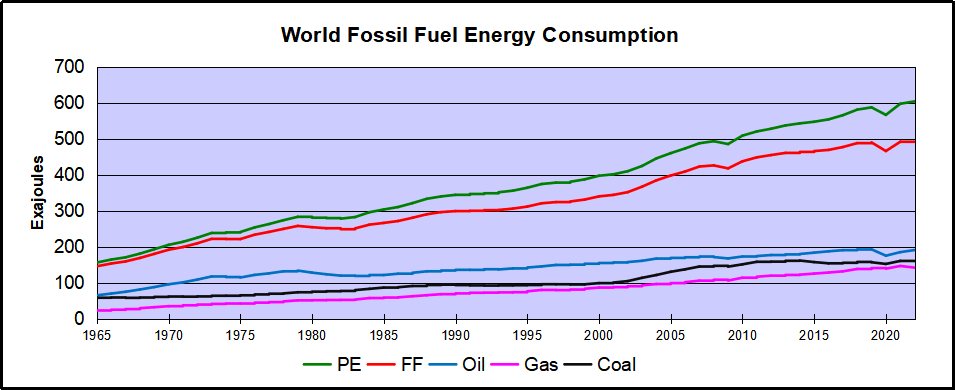
As I have written recently, oil prices could be higher later this year, but they could also be lower, depending on what happens to supply from Russia, Iran, Venezuela, Angola, Libya and Nigeria, not necessarily in that order. But record levels of demand are much more certain for the simple fact that the heavy investments in renewables and electric vehicles have had marginal impact to date on oil demand, or fossil fuel demand overall, as the figure below shows.

Global Energy Consumption in Exajoules THE AUTHOR FROM BP DATA.

Careful scrutiny does show a couple instances when demand fell, namely the 2008 financial crisis and the 2020 pandemic, however, it seems unlikely that policy-makers will promote those as solutions to climate change.

To paraphrase the famous quote from the Vietnam War,
“We have to destroy the economy in order to save it.”

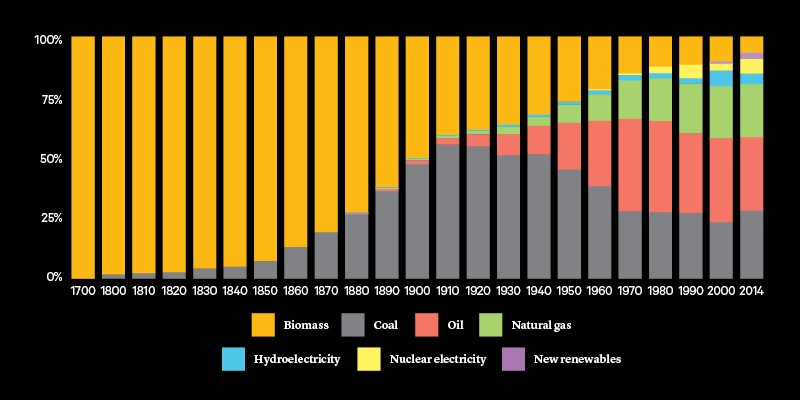
To date, it appears that renewables have largely supplemented not replaced fossil fuel consumption, despite large-scale investments and much enthusiasm about the glowing success and prospects for the renewable industry (including electric vehicles). This resembles past transitions where consumption of the dominant fuel such as coal does not disappear but new demand is met from its successor, such as oil and gas.

One problem with the conference’s approach is the long-standing tendency
for pundits to embrace consensus, sometimes without regard for reality.

One famous energy pundit in 1983 remarked “But then, in late 1981 and early 1982, U.S. consumers, encouraged by some unknowing writers and economists, began to believe that OPEC members were no longer able to hold up oil prices and that all of America’s energy problems were over. This misperception, which was encouraged by the desire for a simple view and a simple solution, obscured the nature of the energy situation.”[emphasis added; citation from “A Cautionary Tale for Oil Companies Navigating the Energy Transition,” on realclearenegy.com Cautionary Tale for Oil Companies in the Energy Transition | RealClearEnergy] Two years later, the price collapsed and remained low for fifteen years, as if a host of experts had not predicted otherwise.

Additionally, at most conferences the ‘sexy’ is favored over the boring. This is reminiscent of the way Enron was the darling of the media for its insistence that “Vertically integrated behemoths like ExxonMobilXOM -1.9% Corp. (XOM ), whose balance sheet was rich with oil reserves, gas stations, and other assets, were dinosaurs to a contemptuous Skilling.” (emphasis added; source ibid) Speeches hailing the coming of the ‘virtual corporation’ proliferated—until Enron collapsed in scandal and bankruptcy.

Larry Goldstein and I have written about the possible failure of the energy transition, but it is hardly a popular view. Like Midas’ barber, we could be whispering into a hole in the ground: the potential failure is not so much secret as unwanted.

Perhaps there should be a sequel to “An Inconvenient Truth,”
focusing on the difficulties of the transition and the potential that it would not
live up to even the more modest expectations of some advocates.

This probably sounds like the many eccentrics who point out that the scientific community has often been wrong, for example, refusing to accept the theory of continental drift. But that doesn’t mean that the scientific consensus should be ignored, rather that skeptical views should be considered rather than rejected out of hand. And by considered, I do not mean cherry-picking opposite views as evidence. (Something my peak oil critics often did.)

See Also 2022 Update: Fossil Fuels ≠ Global Warming


World Energy Wake Up Call

Are we heading toward an all-renewable energy future, spearheaded by wind and solar? Or are those energy sources wholly inadequate for the task? Mark Mills, Senior Fellow at the Manhattan Institute and author of The Cloud Revolution, compares the energy dream to the energy reality. How Much Energy Will the World Need?

Video Transcript

We’re headed toward an exciting all-renewable energy future. Wind and solar will power the world of tomorrow.

And tomorrow isn’t far off!……..

…It’s time to wake up.

You’re having a dream.

Here’s the reality.

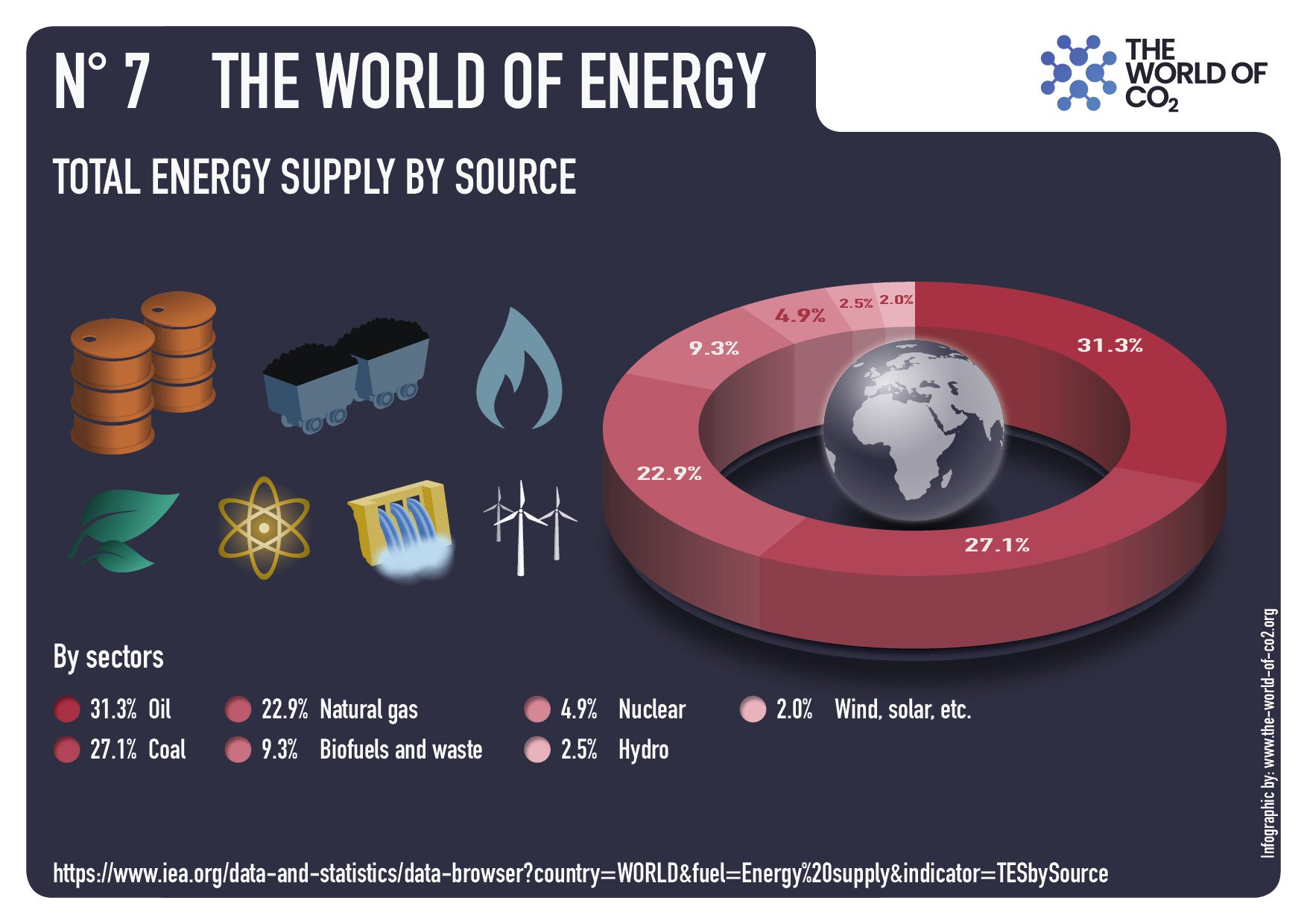
Oil, natural gas, and coal provide 84% of all the world’s energy. That’s down just two percentage points from twenty years ago.

And oil still powers nearly 97% of all global transportation.

Contrary to headlines claiming that we’re rapidly transitioning away from fossil fuels, it’s just not happening. Two decades and five trillion dollars of governments “investing” in green energy and we’ve barely moved the needle.

This was supposed to be easy. Why is it so hard?

In a word: rocks.

To get the same amount of energy from solar and wind that we now get from fossil fuels, we’re going to have to massively increase mining.

By more than 1000%.

This isn’t speculation. This is physics.

Copper, iron ore, silicon, nickel, chromium, zinc, cobalt, lithium, graphite, and rare earth metals like neodymium. We need them all.

And then those metals and materials have to be turned into motors, turbine blades, solar panels, batteries, and hundreds of other industrial components. That also takes lots of energy, which requires even more mining.

As a World Bank study put it, these green “technologies … are in fact significantly more material intensive” than our current energy mix. That may be the understatement of the century: raw materials account for 50-70% of the costs to manufacture both solar panels and batteries.

Until now it hasn’t really mattered that much because wind and solar still account for only a few percentage points of the global energy supply. They’re an applause line for environmentalists—not a major energy player. And it’s unlikely they will be in the foreseeable future.

But for the sake of argument, let’s say we sharply ramp up mining. Where would these new mines be located?

Well, for one, China.

That country is today the single largest source for most of our critical energy materials. The United States is not only a minor player but is dependent on imports for 100% of 17 critical minerals. Do we want to give China more political and economic leverage? Europe has made itself dependent on Russia for 40% of its natural gas. How well has that worked out?

Ironically, we have all the minerals we need right here in North America.

But good luck trying to get them out of the ground.

Proposals to build mines in the United States and, increasingly almost everywhere else, meet fierce opposition if not outright bans. To give just one example, in 2022 the Biden Administration canceled a proposed copper and nickel mine in northern Minnesota. This was after years of delays, navigating a maze of environmental regulations.

Yes, the same environmentalists and green-leaning politicians who tout all the benefits of electric cars are the same people who make mining the materials essential to build those cars—like copper and nickel—all but impossible.

Try to square that circle.

So far, we’ve only talked about today’s energy needs. What about tomorrow’s?

Future energy demand will be far greater than today’s. That’s been true for the entire history of civilization. The future will not only have more people but also more innovations. And entrepreneurs have always been better at inventing new ways to use energy than to produce it.

It’s obvious but worth stating: Before the invention of automobiles, airplanes, pharmaceuticals, or computers, there was no energy needed to power them.

And as more people become more prosperous, they’ll want the things others already have—from better medical care to vacations to cars.

In America, there are about 80 cars for every 100 citizens. In most of the world, it’s about five per hundred citizens.

Over 80% of air travel is for personal purposes. That’s two billion barrels of oil a year.

Hospitals use 250% more energy per square foot than an average commercial building.

And the global information infrastructure—the Cloud— already uses twice as much electricity as the entire country of Japan, the world’s third-largest economy. The massive data centers at the heart of the Cloud alone consume almost 10 times more electricity than the world’s 10 million electric cars.

E-commerce has taken off and is propelling record growth in warehouses, increasingly filled with energy-hungry robots. America’s truck freight index more than doubled in the past decade to deliver the goods to and from those warehouses.

These are today’s known trends. While we can’t predict the future, we can predict there’ll be more innovation—in robotics, drones, quantum computing, biotechnology. And new industries not yet imagined.

All of it will require more energy—a lot more.

Fossil fuels, nuclear energy, and yes, renewables will be required.

But if you think we can get it all from wind and solar, dream on.

I’m Mark Mills, senior fellow at the Manhattan Institute, for Prager University.

See Also

West’s Obsession with EV Tech Puts China in World Driver Seat

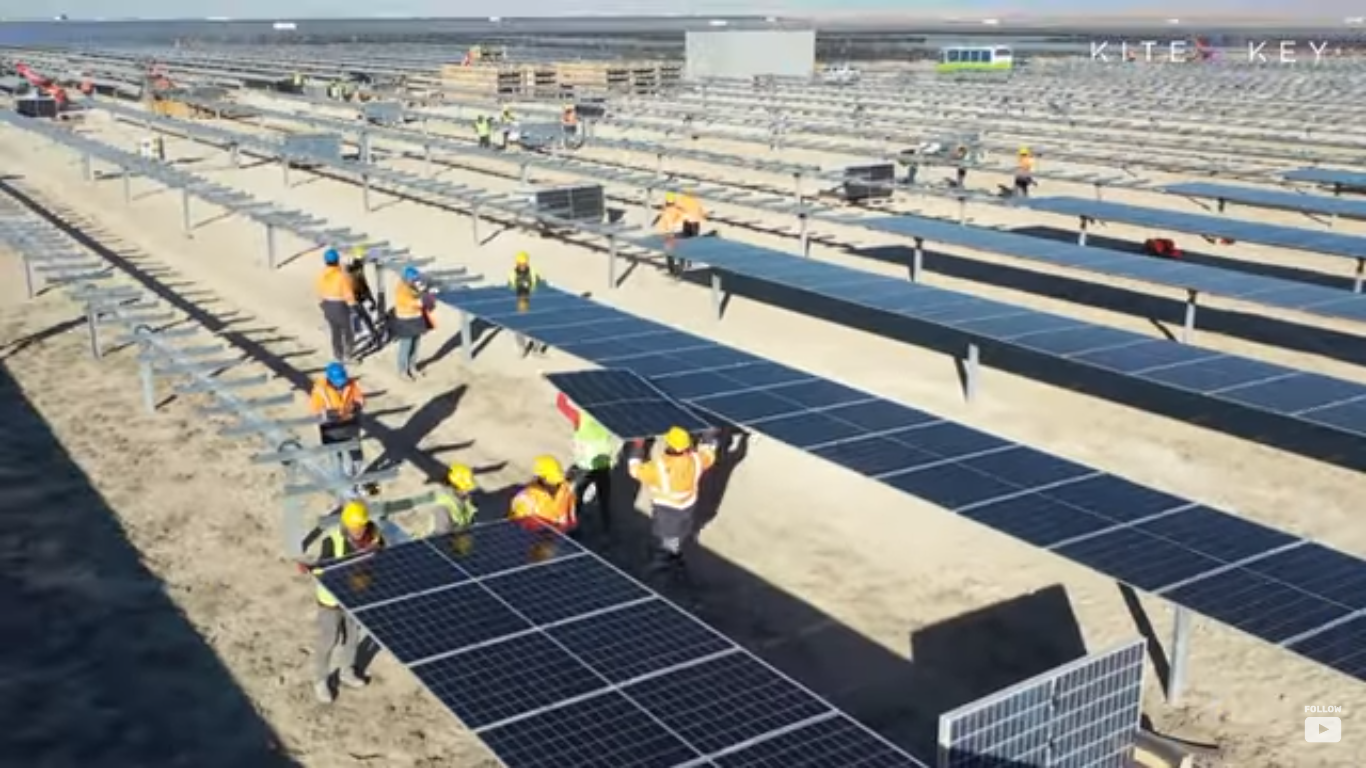
Southwestern Solar: Bright Shining Disappointment

Solar farms in Southwest USA from Solar Energy Maps

D. Dowd. Muska reports in his National Review article A Bright Shining Disappointment.  Excerpts in italics with my bolds and added images.

Solar has failed in the Southwest.  In the ’70s, it all seemed so simple.

President Carter issued a proclamation declaring the sun “an inexhaustible source of clean energy.” A joint resolution of Congress predicted that “the development of solar technologies will provide an abundant, economical, safe, and environmentally compatible energy supply.” Robert Redford assured Americans that “the sun will always work” and “never increase its price on a heating bill.”

But nearly 50 years later, solar’s failure is blindingly clear. The Southwest Public Policy Institute, where I serve as a senior fellow, recently explored the contribution sunshine makes to utility-scale electricity generation in eight states: Oklahoma, Texas, New Mexico, Colorado, Utah, Arizona, Nevada, and California. What we discovered was jarring.

In the Southwest, solar generates a mere 6.4 percent of utility-scale power (power from facilities where total generation capacity is one megawatt or greater), despite the region enjoying the sunniest skies in America. While California (16.7 percent) and Nevada (14.4 percent) had the heaviest solar shares, the drop-off in the other states we studied was profound: Utah (8.1 percent), Arizona (5.5 percent), New Mexico (5.0 percent), Texas (3.1 percent), and Colorado (3.0 percent). Coming in last — and by a country mile — was the Sooner State, at a miniscule 0.1 percent.

These disappointing figures are all the more perplexing when one considers the massive level of government succor that has flowed the solar industry’s way since the late 1970s, the era of Annie Hall, the Bee Gees, and the Star Wars Holiday Special. In 2012, an audit by the Government Accountability Office found that federal agencies have overseen hundreds of “initiatives that support solar energy across the four key federal roles”: R&D; “fleets and facilities,” “commercialization and deployment,” and “regulation, permitting, and compliance.” For decades, wildly generous tax credits have been offered at the federal and state levels. And in the late 1990s, lawmakers began to adopt renewable portfolio standards, which required power suppliers to generate or purchase “green” electricity. In Arizona, 15 percent of power must satisfy these standards by 2025. In Nevada, the rule is 50 percent by 2030. And in New Mexico, all electricity is mandated to be “zero carbon” by 2045.

Enjoying both free fuel and government-conferred advantages, solar power should play a leading role in the Southwest. Yet it doesn’t.

This indicates that solar’s problems are fundamental. As the Institute for Energy Research recently noted, sunlight is “relatively weak because it must first pass through the atmosphere, which protects the Earth from the sun’s intensity.” In 2015, a study by the Massachusetts Institute of Technology described the solar radiation that reaches us as suffering from “low energy density.” In addition, even the most-efficient photovoltaic panels in common use today convert far more solar irradiance to heat than electricity.

Intermittency, in energy journalist Robert Bryce’s opinion, is another “killer drawback” for solar: “Lower power output on cloudy days and during the winter — and zero output at night — means that solar power facilities must be paired with expensive batteries or conventional power plants in order to prevent blackouts or brownouts.”

“Free” fuel, it turns out, isn’t so free. As the Manhattan Institute’s Mark P. Mills explained:

Claims that wind, solar, and EVs have reached cost parity with traditional energy sources or modes of transportation are not based on evidence. Even before the latest period of rising energy prices, Germany and Britain — both further down the grid transition path than the U.S. — have seen average electricity rates rise 60%-110% over the past two decades. The same pattern is visible in Australia and Canada. It’s also apparent in U.S. states and regions where mandates have resulted in grids with a higher share of wind/solar energy. In general, overall U.S. residential electricity costs rose over the past 20 years.

But those rates should have declined because of the collapse in the cost of natural gas and coal — the two energy sources that, together, supplied nearly 70% of electricity in that period. Instead, rates have been pushed higher thanks to elevated spending on the otherwise unneeded infrastructure required to transmit wind/solar-generated electricity, as well as the increased costs to keep lights on during “droughts” of wind and sun that come from also keeping conventional power plants available (like having an extra, fully fueled car parked and ready to go) in effect by spending on two grids.

Then there’s the NIMBYs. Utility-scale solar, in community after community,
faces resistance from locals.

In November, the Roswell Daily Record reported that a New Mexico regulatory agency “voted against three proposed [solar] projects after hearing objections from county residents.” Issues raised included fencing that “will deter from scenic views and hurt property values” and “concerns that the panels contain hazardous substances.” According to The Durango Herald, residents near Hesperus, Colo., have banded together to fight a photovoltaic project, citing concerns about “water runoff” and “direct loss of 1,900 acres of elk habitat.”

In short, solar has not been shining very bright since it came on the scene in the ’70s. Indeed, even in the sun-drenched Southwest, solar has proven inefficient, unreliable, and — when all costs are considered — expensive. That should be a warning:

If it struggles here, in ideal conditions, how well
can it be expected to perform in the rest of the country?

D. Dowd. Muska is a senior fellow at the Southwest Public Policy Institute, a research institute dedicated to improving the quality of life in the American Southwest by formulating, promoting and defending sound public policy solutions.

When it opened in 2014, the Ivanpah Solar Power Facility was the world’s largest solar thermal power station, covering 4000 acres in the Mohave desert. While Ivanpah was supposed to be the future of clean energy, it seems that the rate at which it burns fossil fuel might actually outweigh any environmental benefits of solar power production.