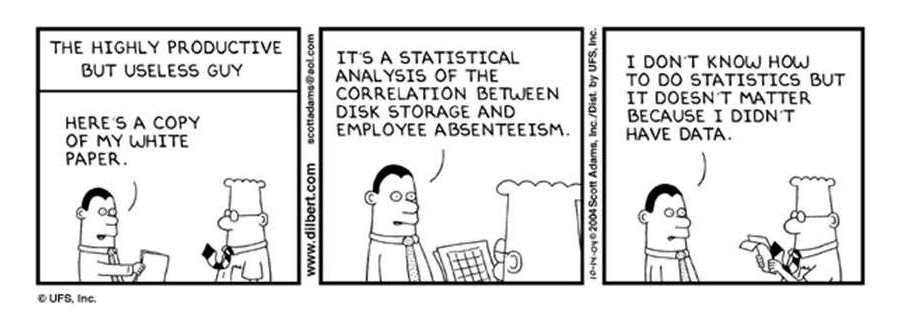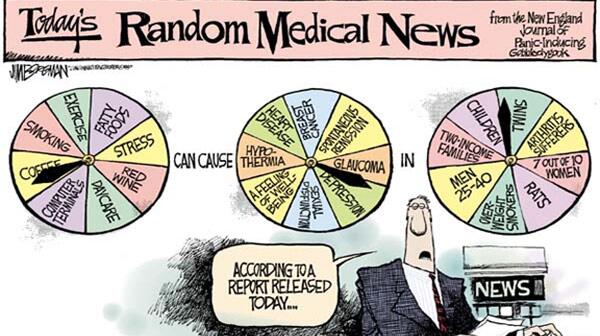
Sloppy Science + Bad Reporting = Fake Scare


Abusing science to incite fear is not confined to global warming/climate change. Medical science has also been debased by taking up the appeal to public alarm. The current example being exploitation of ovarian cancer, as explained by Warren Kindzierski writing in Financial Post How weaselly science and bad reporting consistently find cancer links that don’t exist  (Weaselly: Stretching facts with the use of such words as ‘this could,’ ‘can,’ ‘may,’ ‘might,’ ‘probably,’ ‘likely’ cause cancer)

Last month, the Quebec court authorized a class-action suit against two brands of baby powder that alleges that regular use of talc powder by women in their genital area is linked to a higher risk of ovarian cancer. Part of the allegations relate to claims that an ovarian cancer risk from powdered talc use is demonstrated by nearly four decades of scientific studies. Cosmetic talc has certainly been the subject of much scientific debate, study and, increasingly, legal challenge.

However, the cosmetic talc-ovarian cancer link is commonly misunderstood. Published biomedical studies cover both sides, suggesting a talc-ovarian cancer link and showing no link. Even today in prominent journals, letters to the editor — penned by scientists — rage back and forth, defending their studies or attacking the other side’s studies.

Now this is civilized, real science.

This bouncing back and forth of positive versus negative effects between talc and ovarian cancer is referred to as “vibration of effects” by John Iaonnidis, a professor of medicine and of health research and policy at Stanford University. Studies vary depending on how they are done. Why is this? Well, getting scientists to agree on important things like methods, what data to use and how to analyze and interpret effects from subtle human exposures is next to impossible. It would be no problem if one were studying cancer risks in populations receiving large exposures over long durations; but such situations are non-existent.

The truth is that the ability of any biomedical method, epidemiology included, to discriminate cancer risks in people from small exposures to a physical or chemical agent does not exist.

Most cancers are caused by a number of factors. As a result, establishing cancer causation is complex — unless a particular risk factor is overwhelming. Epidemiology studies cannot and do not realistically replicate this complexity, at least not very well. That is why the U.S. National Institutes of Health and the National Cancer Institute lists a number of key risk factors for ovarian cancer and talc is not one of them.

The institute states that it is not clear whether talc affects ovarian cancer risk. An expert U.S. cosmetic-ingredient review panel assessed the safety of cosmetic talc in 2015. It thoroughly analyzed numerous studies investigating whether or not a relationship exists between cosmetic use of talc in the perineal area and ovarian cancer. The panel determined that these studies do not support a causal link. They also agreed that there is no known physiological mechanism by which talc can plausibly migrate from the perineum to the ovaries. The news coverage of the lawsuit has been silent on that evidence.

Part of the public’s misunderstanding about talc comes from scientists offering opinions about cancer from small exposures. Too many scientists use weasel words to stretch facts: “This could,” “can,” “may,” “might,” “probably,” “likely” cause cancer. Flimsy so-called evidence from their studies that suffer from vibration of effects and their speculations are voraciously inhaled by naïve journalists. Stretched facts miraculously get reported as facts to the public — or worse, misused for litigation purposes.

The woman’s bathroom is a chemical exposure chamber with literally dozens of cosmetic products used at various times. Both skin contact and inhalation regularly occur with grooming products. However, repeated uses of small amounts of cosmetic talc or any other cosmetic product do not amount to overwhelming exposures despite the claims of some scientists and media. Overwhelming exposures — the ones that cause effects — are those that occur with laboratory rats and mice. Underwhelming exposures are what occur to people in the real world.

It is highly speculative that repeated use of small amounts of cosmetic talc is a definitive cause of ovarian cancer. It is not a definitive cause; it is only suggestive. Prominent organizations such as the U.S. National Cancer Institute and expert panels should make clear statements about such cancer risks, but they do not. Selective methods in epidemiology studies, speculation by scientists and inaccurate reporting by news media are ingredients used to transform weak suggestive evidence from underwhelming cosmetic talc exposure into something that is mistakenly claimed to be harmful for the public.

And that is why we end up with class action suits against cosmetic companies.

Warren Kindzierski is an associate professor in The School of Public Health at the University of Alberta.

Head, Heart and Science Updated

A man who has not been a socialist before 25 has no heart. If he remains one after 25 he has no head.—King Oscar II of Sweden

H/T to American Elephants for linking to this Jordan Peterson video:  The Fatal Flaw in Leftist Thought.  He has an outstanding balance between head and heart, and also applies scientific analysis to issues, in this case the problem of identity politics and leftist ideology.

As usual Peterson makes many persuasive points in this talk.  I was struck by his point that we have established the boundary of extremism on the right, but no such boundary exists on the left.  Our society rejects right wingers who cross the line and assert racial superiority.  Conservative voices condemn that position along with the rest.

We know from the Soviet excesses that the left can go too far, but what is the marker?  Left wingers have the responsibility to set the boundary and sanction the extremists.  Peterson suggests that the fatal flaw is the attempt to ensure equality of outcomes for identity groups, and explains why that campaign is impossible.

From Previous Post on Head, Heart and Science

Recently I had an interchange with a friend from high school days, and he got quite upset with this video by Richard Lindzen. So much so, that he looked up attack pieces in order to dismiss Lindzen as a source. This experience impressed some things upon me.

Climate Change is Now Mostly a Political Football (at least in USA)

My friend attributed his ill humor to the current political environment. He readily bought into slanderous claims, and references to being bought and paid for by the Koch brothers. At this point, Bernie and Hilliary only disagree about who is the truest believer in Global Warming. Once we get into the general election process, “Fighting Climate Change” will intensify as a wedge issue, wielded by smug righteous believers on the left against the anti-science neanderthals on the right.

So it is a hot label for social-media driven types to identify who is in the tribe (who can be trusted) and the others who can not.  For many, it is not any deeper than that.

The Warming Consensus is a Timesaver

My friend acknowledged that his mind was made up on the issue because 95+% of scientists agreed. It was extremely important for him to discredit Lindzen as untrustworthy to maintain the unanimity. When a Warmist uses: “The Scientists say: ______” , it is much the same as a Christian reference: “The Bible says: _______.” In both cases, you can fill in the blank with whatever you like, and attribute your idea to the Authority. And most importantly, you can keep the issue safely parked in a No Thinking Zone. There are plenty of confusing things going on around us, and no one wants one more ambiguity requiring time and energy.

Science Could Lose the Delicate Balance Between Head and Heart

Decades ago Arthur Eddington wrote about the tension between attitudes of artists and scientists in their regarding nature. On the one hand are people filled with the human impulse to respect, adore and celebrate the beauty of life and the world. On the other are people driven by the equally human need to analyze, understand and know what to expect from the world. These are Yin and Yang, not mutually exclusive, and all of us have some of each.

Most of us can recall the visceral response in the high school biology lab when assigned to dissect a frog. Later on, crayfish were preferred (less disturbing to artistic sensibilities). For all I know, recent generations have been spared this right of passage, to their detriment. For in the conflict between appreciating things as they are, and the need to know why and how they are, we are exposed to deeper reaches of the human experience. If you have ever witnessed, as I have, a human body laid open on an autopsy table, then you know what I mean.

Anyone, scientist or artist, can find awe in contemplating the mysteries of life. There was a time when it was feared that the march of science was so advancing the boundaries of knowledge that the shrinking domain of the unexplained left ever less room for God and religion. Practicing scientists knew better. Knowing more leads to discovering more unknowns; answers produce cascades of new questions. The mystery abounds, and the discovery continues. Eddington:

It is pertinent to remember that the concept of substance has disappeared from fundamental physics; what we ultimately come down to is form. Waves! Waves!! Waves!!! Or for a change — if we turn to relativity theory — curvature! Energy which, since it is conserved, might be looked upon as the modern successor of substance, is in relativity theory a curvature of space-time, and in quantum theory a periodicity of waves. I do not suggest that either the curvature or the waves are to be taken in a literal objective sense; but the two great theories, in their efforts to reduce what is known about energy to a comprehensible picture, both find what they require in a conception of “form”.

What do we really observe? Relativity theory has returned one answer — we only observe relations. Quantum theory returns another answer — we only observe probabilities.

It is impossible to trap modern physics into predicting anything with perfect determinism because it deals with probabilities from the outset.
― Arthur Stanley Eddington

Works by Eddington on Science and the Natural World are here.

Summary

The science problem today is not the scientists themselves, but with those attempting to halt its progress for the sake of political power and wealth.

Eddington:
Religious creeds are a great obstacle to any full sympathy between the outlook of the scientist and the outlook which religion is so often supposed to require … The spirit of seeking which animates us refuses to regard any kind of creed as its goal. It would be a shock to come across a university where it was the practice of the students to recite adherence to Newton’s laws of motion, to Maxwell’s equations and to the electromagnetic theory of light. We should not deplore it the less if our own pet theory happened to be included, or if the list were brought up to date every few years. We should say that the students cannot possibly realise the intention of scientific training if they are taught to look on these results as things to be recited and subscribed to. Science may fall short of its ideal, and although the peril scarcely takes this extreme form, it is not always easy, particularly in popular science, to maintain our stand against creed and dogma.
― Arthur Stanley Eddington

But enough about science. It’s politicians we need to worry about:

Footnote:

“Asked in 1919 whether it was true that only three people in the world understood the theory of general relativity, [Eddington] allegedly replied: ‘Who’s the third?”

Postscript:  For more on how we got here see Warmists and Rococo Marxists.

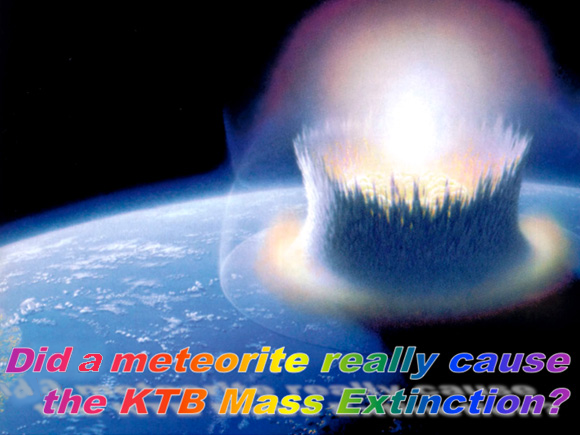
Chicxulub asteroid Apocalypse? Not so fast.

The Daily Mail would have you believe Apocalyptic asteroid that wiped out the dinosaurs 66 million years ago triggered 100,000 years of global warming
Chicxulub asteroid triggered a global temperature rise of 5°C (9°F).

This notion has been around for years, but dredged up now to promote fears of CO2 and global warming. And maybe it’s because of a new Jurassic Park movie coming this summer.  But it doesn’t take much looking around to discover experts who have a sober, reasonable view of the situation.

Princeton expert Gerta Keller, Professor of Geosciences at Princeton, has studied this issue since the 1990s and tells all at her website CHICXULUB: THE IMPACT CONTROVERSY Excerpts below with my bolds.

Introduction to The Impact Controversy

In the 1980s as the impact-kill hypothesis of Alvarez and others gained popular and scientific acclaim and the mass extinction controversy took an increasingly rancorous turn in scientific and personal attacks fewer and fewer dared to voice critique. Two scientists stand out: Dewey McLean (VPI) and Chuck Officer (Dartmouth University). Dewey proposed as early as 1978 that Deccan volcanism was the likely cause for the KTB mass extinction, Officer also proposed a likely volcanic cause. Both were vilified and ostracized by the increasingly vocal group of impact hypothesis supporters. By the middle of the 1980s Vincent Courtillot (Physique de Globe du Paris) also advocated Deccan volcanism, though not as primary cause but rather as supplementary to the meteorite impact. Since 2008 Courtillot has strongly advocated Deccan volcanism as the primary cause for the KTB mass extinction.

(Overview from Tim Clarely, Ph.D. questioning the asteroid) In secular literature and movies, the most popular explanation for the dinosaurs’ extinction is an asteroid impact. The Chicxulub crater in Mexico is often referred to as the “smoking gun” for this idea. But do the data support an asteroid impact at Chicxulub?

The Chicxulub crater isn’t visible on the surface because it is covered by younger, relatively undeformed sediments. It was identified from a nearly circular gravity anomaly along the northwestern edge of the Yucatán Peninsula (Figure 1). There’s disagreement on the crater’s exact size, but its diameter is approximately 110 miles—large enough for a six-mile-wide asteroid or meteorite to have caused it.

Although some of the expected criteria for identifying a meteorite impact are present at the Chicxulub site—such as high-pressure and deformed minerals—not enough of these materials have been found to justify a large impact. And even these minerals can be caused by other circumstances, including rapid crystallization4 and volcanic activity.

The biggest problem is what is missing. Iridium, a chemical element more abundant in meteorites than on Earth, is a primary marker of an impact event. A few traces were identified in the cores of two drilled wells, but no significant amounts have been found in any of the ejecta material across the Chicxulub site. The presence of an iridium-rich layer is often used to identify the K-Pg (Cretaceous-Paleogene) boundary, yet ironically there is virtually no iridium in the ejecta material at the very site claimed to be the “smoking gun”!

In addition, secular models suggest melt-rich layers resulting from the impact should have exceeded a mile or two in thickness beneath the central portion of the Chicxulub crater. However, the oil wells and cores drilled at the site don’t support this. The thickest melt-rich layers encountered in the wells were between 330 and 990 feet—nowhere near the expected thicknesses of 5,000 to 10,000 feet—and several of the melt-rich layers were much thinner than 300 feet or were nonexistent.

Finally, the latest research even indicates that the tsunami waves claimed to have been generated by the impact across the Gulf of Mexico seem unlikely.

Summary from Geller

The Cretaceous-Tertiary boundary (KTB) mass extinction is primarily known for the demise of the dinosaurs, the Chicxulub impact, and the frequently rancorous thirty years-old controversy over the cause of this mass extinction. Since 1980 the impact hypothesis has steadily gained support, which culminated in 1990 with the discovery of the Chicxulub crater on Yucatan as the KTB impact site and “smoking gun” that proved this hypothesis. In a perverse twist of fate, this discovery also began the decline of this hypothesis, because for the first time it could be tested directly based on the impact crater and impact ejecta in sediments throughout the Caribbean, Central America and North America.

Two decades of multidisciplinary studies amassed a database with a sum total that overwhelmingly reveals the Chicxulub impact predates the KTB mass extinction. It’s been a wild and frequently acrimonious ride through the landscape of science and personalities. The highlights of this controversy, the discovery of facts inconsistent with the impact hypothesis, the denial of evidence, misconceptions, and misinterpretations are recounted here. (Full paper in Keller, 2011, SEPM 100, 2011).

Chicxulub Likely Happened ~100,000 years Before the KTB Extinction
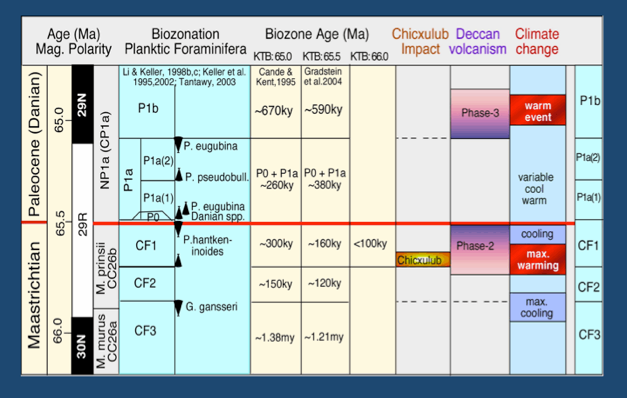
Figure 42. Planktic foraminiferal biostratigraphy, biozone ages calculated based on time scales where the KTB is placed at 65Ma, 65.5Ma and 66Ma, and the relative age positions of the Chicxulub impact, Deccan volcanism phases 2 and 3 and climate change, including the maximum cooling and maximum warming (greenhouse warming) and the Dan-2 warm event relative to Deccan volcanism.

Most studies surrounding the Chicxulub impact crater have concentrated on the narrow interval of the sandstone complex or so-called impact-tsunami. Keller et al. (2002, 2003) placed that interval in zone CF1 based on planktic foraminiferal biostratigraphy and specifically the range of the index species Plummerita hantkeninoides that spans the topmost Maastrichtian. Zone CF1. The age of CF1 was estimated to span the last 300ky of the Maastrichtian based on the old time scale of Cande and Kent (1995) that places the KTB at 65Ma. The newer time scale (Gradstein et al., 2004) places the KTB at 65.5Ma, which reduces zone CF1 to 160ky.

By early 2000 our team embarked on an intensive search for impact spherules below the sandstone complex throughout NE Mexico. Numerous outcrops were discovered with impact spherule layers in planktic foraminiferal zone CF1 below the sandstone complex and we suggested that the Chicxulub impact predates the KTB by about 300ky (Fig. 42; Keller et al., 2002, 2003, 2004, 2005, 2007, 2009; Schulte et al., 2003, 2006).

Time scales change with improved dating techniques. Gradstein et al (2004) proposed to place the KTB at 65.5 Ma, (Abramovich et al., 2010). This time scale is now undergoing further revision (Renne et al., 2013) placing the KTB at 66 Ma, which reduces zone CF to less than 100ky. By this time scale, the age of the Chicxulub impact predates the KTB by less than 100ky based on impact spherule layers in the lower part zone CF1. See Fig. 42 for illustration.

Unfortunately, this wide interest rarely resulted in integrated interdisciplinary studies or joint discussions to search for common solutions to conflicting results. Increasingly, in a perverse twist of science new results became to be judged by how well they supported the impact hypothesis, rather than how well they tested it. An unhealthy US versus THEM culture developed where those who dared to question the impact hypothesis, regardless of the solidity of the empirical data, were derided, dismissed as poor scientists, blocked from publication and getting grant funding, or simply ignored. Under this assault, more and more scientists dropped out leaving a nearly unopposed ruling majority claiming victory for the impact hypothesis. In this adverse high-stress environment just a small group of scientists doggedly pursued evidence to test the impact hypothesis.

No debate has been more contentious during the past thirty years, or has more captured the imagination of scientists and public alike, than the hypothesis that an extraterrestrial bolide impact was the sole cause for the KTB mass extinction (Alvarez et al., l980). How did this hypothesis evolve so quickly into a virtually unassailable “truth” where questioning could be dismissed by phrases such as “everybody knows that an impact caused the mass extinction”, “only old fashioned Darwinian paleontologists can’t accept that the mass extinction was instantaneous”, “paleontologists are just bad scientists, more like stamp collectors”, and “it must be true because how could so many scientists be so wrong for so long.” Such phrases are reminiscent of the beliefs that the Earth is flat, that the world was created 6000 years ago, that Noah’s flood explains all geological features, and the vilification of Alfred Wegner for proposing that continents moved over time.

Update Published at National Geographic February 2018 By Shannon Hall Volcanoes, Then an Asteroid, Wiped Out the Dinosaur

What killed the dinosaurs? Few questions in science have been more mysterious—and more contentious. Today, most textbooks and teachers tell us that nonavian dinosaurs, along with three-fourths of all species on Earth, disappeared when a massive asteroid hit the planet near the Yucatán Peninsula some 66 million years ago.

But a new study published in the journal Geology shows that an episode of intense volcanism in present-day India wiped out several species before that impact occurred.

The result adds to arguments that eruptions plus the asteroid caused a one-two punch. The volcanism provided the first strike, weakening the climate so much that a meteor—the more deafening blow—was able to spell disaster for Tyrannosaurs rex and its late Cretaceous kin.

A hotter climate certainly helped send the nonavian dinosaurs to their early grave, says Paul Renne, a geochronologist at the University of California, Berkeley, who was not involved in the study. That’s because the uptick in temperature was immediately followed by a cold snap—a drastic change that likely set the stage for planet-wide disaster.

Imagine that some life managed to adapt to those warmer conditions by moving closer toward the poles, Renne says. “If you follow that with a major cooling event, it’s more difficult to adapt, especially if it’s really rapid,” he says.

In this scenario, volcanism likely sent the world into chaos, driving many extinctions alone and increasing temperatures so drastically that most of Earth’s remaining species couldn’t protect themselves from that second punch when the asteroid hit.

“The dinosaurs were extremely unlucky,” Wignall says.

But it will be hard to convince Sean Gulick, a geophysicist at the University of Texas at Austin, who co-led recent efforts to drill into the heart of the impact crater in Mexico. He points toward several studies that have suggested that ecosystems remained largely intact until the time of the impact.

Additionally, a forthcoming paper might make an even stronger case that the impact drove the extinction alone, notes Jay Melosh, a geophysicist at Purdue University who has worked on early results from the drilling project. It looks as though the divisive debate will continue with nearly as much ferocity as the events that rocked our world 66 million years ago.

Summary:

So if the Chicxulub asteroid didn’t kill the dinosaurs, what did? Paleontologists have advanced all manner of other theories over the years, including the appearance of land bridges that allowed different species to migrate to different continents, bringing with them diseases to which native species hadn’t developed immunity. Keller and Addate do not see any reason to stray so far from the prevailing model. Some kind of atmospheric haze might indeed have blocked the sun, making the planet too cold for the dinosaurs — it just didn’t have to have come from an asteroid. Rather, they say, the source might have been massive volcanoes, like the ones that blew in the Deccan Traps in what is now India at just the right point in history.

For the dinosaurs that perished 65 million years ago, extinction was extinction and the precise cause was immaterial. But for the bipedal mammals who were allowed to rise once the big lizards were finally gone, it is a matter of enduring fascination.

This science seems as settled as climate change/global warming, and with many of the same shenanigans.
Saving the Internet is like Saving the Climate


Some striking parallels appear in the fights over “net neutrality” and “climate change.” Firstly, both issues are mostly political. Politicians like those above alarmed over the internet are the same ones alarmed about the climate.  (Pictured are Democrat senators Franken, Sanders, Booker and Markey.)

Then there is the comparison that both concerns involve a fear of the future. Impressionable youngsters and others have been told they have a right to a “stable climate” and to “net neutrality.” Advocates ignore how benign and conveniently warming has been our climate since 1850, but assure us that extreme heat and dire consequences surely lie ahead. The same politicians ignore the fact the internet worked amazing well prior to the Obama 2015 Internet Order, and brought great innovation and affordable services without heavy-handed regulations.

The proposed policies are also comparable. Evil corporations can not be trusted to deal fairly with their customers and must be controlled by government bureaucracy. Laws must be written to dictate to network operators what they can offer and what prices they can demand. Fossil fuel producers must be hounded, sued, taxed, and constrained by any means possible.

Also underneath the simplistic political positions, there are technical complexities and realities overlooked in the rush to enact “solutions.” I have read and posted a lot on global warming/climate change and know how unfounded are the alarmist claims. So I am inclined to be skeptical when the same people harp about the internet.

In the last few days, some things appear true to me. Prior to 2015 the FCC  classified the internet as a Title I service and all the growth and innovation happened under that “light-touch” regulation. The 2015 FCC Internet Order under the Obama administration reclassified the Internet as Title II, mandating “heavy-handed” regulation, including price controls and even the potential for taxes to pay for regulatory costs. This move was justified to protect consumers against discrimination by providers.  That order is now being repealed by the present Trump-appointed FCC head.

Skeptics pointed at the time that Title II worked extremely well to protect telephone monopolies and prevent innovation for decades. Notice that AT&T is in full support of restoring Title II regulation. Smart phones and Voice Over Internet escaped Title II regulation, and who knows what future inventions will come without government interference.

We can also see virtue signaling on display in both campaigns. The Senate action this week is unlikely to succeed, but the point was always to rally the faithful for the mid-term elections. Underneath the feel-good notion of net neutrality is the impulse to control and limit choices by putting bureaucrats in charge.

Everyone wants the same thing: Free competition so that the best ideas and services can rise and prosper, privacy so that personal information can not be exploited against one’s interests, and freedom to choose and to pay accordingly. But how to get there? Going back to the 2010 FCC Internet Order is a good start, which is the result of the recent FCC decision.

In both climate and internet issues, there are important matters to address by means of facts and analysis rather than knee-jerk politics. Rolling out widely accessible broadband networks is expensive and won’t happen if builders and operators are unprofitable. And based on past experience, it will also not work as a government project. As for climate, officials should be more humble. No one knows what future weather will be, and most likely there will be both periods colder and warmer than the present. The proper role of government is not to attempt control of the weather, but to prepare for the contingencies with robust infrastructure and reliable, affordable energy.

Some sources:

Forbes:  The FCC’s Net Neutrality Repeal: The End Of The Internet Or A Path To A Legislative Compromise?

Mediashift: Your Guide to Net Neutrality (2018 Edition) 

Boston Globe:  The real reason the Net neutrality fight goes on

American Consumer Institute:  Did the FCC Lie about Net Neutrality? (2015)

Forbes:  Am I The Only Techie Against Net Neutrality? (2014)

Journal on Telecom and High Tech Law:  Unintended Consequences of Net Neutrality Regulation   (2007)


EU Joins Alarmist Beehive

Update April 28, 2018

The European Union has decided to ban bee-killing pesticides

This post is about bees since they are also victims of science abuse by environmental activists, aided and abetted by the media. The full story is told by Jon Entine at Slate Do Neonics Hurt Bees?  Researchers and the Media Say Yes. The Data Do Not.
A new, landmark study provides plenty of useful information. If only we could interpret it accurately. Synopsis below.

Futuristic Nightmare Scenarios

“Neonicotinoid Pesticides Are Slowly Killing Bees.”

No, there is no consensus evidence that neonics are “slowly killing bees.” No, this study did not add to the evidence that neonics are driving bee health problems. And yet . . .

Unfortunately, and predictably, the overheated mainstream news headlines also generated a slew of even more exaggerated stories on activist and quack websites where undermining agricultural chemicals is a top priority (e.g., Greenpeace, End Times Headlines, and Friends of the Earth). The takeaway: The “beepocalypse” is accelerating. A few news outlets, such as Reuters (“Field Studies Fuel Dispute Over Whether Banned Pesticides Harm Bees”) and the Washington Post (“Controversial Pesticides May Threaten Queen Bees. Alternatives Could Be Worse.”), got the contradictory findings of the study and the headline right.

But based on the study’s data, the headline could just as easily have read: “Landmark Study Shows Neonic Pesticides Improve Bee Health”—and it would have been equally correct. So how did so many people get this so wrong?

trampoline-judges-sydney-olympics

Bouncing off a database can turn your perspective upside down.

Using Data as a Trampoline rather than Mining for Understanding

This much-anticipated two year, $3.6 million study is particularly interesting because it was primarily funded by two major producers of neonicotinoids, Bayer Crop Science and Syngenta. They had no involvement with the analysis of the data. The three-country study was led by the Centre for Ecology and Hydrology, or CEH, in the U.K.—a group known for its skepticism of pesticides in general and neonics in particular.

The raw data—more than 1,000 pages of it (only a tiny fraction is reproduced in the study)—are solid. It’s a reservoir of important information for entomologists and ecologists trying to figure out the challenges facing bees. It’s particularly important because to date, the problem with much of the research on neonicotinoids has been the wide gulf between the findings from laboratory-based studies and field studies.

Some, but not all, results from lab research have claimed neonics cause health problems in honeybees and wild bees, endangering the world food supply. This has been widely and often breathlessly echoed in the popular media—remember the execrably reported Time cover story on “A World Without Bees.” But the doses and time of exposure have varied dramatically from lab study to lab study, so many entomologists remain skeptical of these sweeping conclusions. Field studies have consistently shown a different result—in the field, neonics seem to pose little or no harm. The overwhelming threat to bee health, entomologists now agree, is a combination of factors led by the deadly Varroa destructor mite, the miticides used to control them, and bee practices. Relative to these factors, neonics are seen as relatively inconsequential.

The Bees are all right. Carry on.

Disparity between Field and Lab Research (sound familiar?)

Jon Entine addressed this disparity between field and lab research in a series of articles at the Genetic Literacy Project, and specifically summarized two dozen key field studies, many of which were independently funded and executed. This study was designed in part to bridge that gulf. And the devil is in the interpretation.

Overall, the data collected from 33 different fields covered 42 analyses and 258 endpoints—a staggering number. The paper only presented a sliver of that data—a selective glimpse of what the research, in its entirety showed.

What patterns emerged when examining the entire data set? . . . In sum, of 258 endpoints, 238—92 percent—showed no effects. (Four endpoints didn’t yield data.) Only 16 showed effects. Negative effects showed up 9 times—3.5 percent of all outcomes; 7 showed a benefit from using neonics—2.7 percent.

As one scientist pointed out, in statistics there is a widely accepted standard that random results are generated about 5 percent of the time—which means by chance alone we would expect 13 results meaninglessly showing up positive or negative.

Norman Carreck, science director of the International Bee Research Association, who was not part of either study, noted, the small number of significant effects “makes it difficult to draw any reliable conclusions.”

Moreover, Bees Are Not in Decline

The broader context of the bee health controversy is also important to understand; bees are not in sharp decline—not in North America nor in Europe, where neonics are under a temporary ban that shows signs of becoming permanent, nor worldwide. Earlier this week, Canada reported that its honeybee colonies grew 10 percent year over year and now stand at about 800,000. That’s a new record, and the growth tracks the increased use of neonics, which are critical to canola crops in Western Canada, where 80 percent of the nation’s honey originates.

Managed beehives in the U.S. had been in steady decline since the 1940s, as farm land disappeared to urbanization, but began stabilizing in the mid-1990s, coinciding with the introduction of neonicotinoids. They hit a 22-year high in the last count.

Global hive numbers have steadily increased since the 1960s except for two brief periods—the emergence of the Varroa mite in the late 1980s and the brief outbreak of colony collapse disorder, mostly in the U.S., in the mid-2000s.

Conclusion

So the bees, contrary to widespread popular belief, are actually doing all right in terms of numbers, although the Varroa mite remains a dangerous challenge. But still, a cadre of scientists well known for their vocal opposition to and lobbying against neonics have already begun trying to leverage the misinterpretation of the data. Within hours of the release of the study, advocacy groups opposed to intensive agricultural techniques had already begun weaponizing the misreported headlines.

But viewing the data from the European study in context makes it even more obvious that sweeping statements about the continuing beepocalypse and the deadly dangers to bees from pesticides, and neonicotinoids in particular, are irresponsible. That’s on both the scientists, and the media.

Summary

The comparison with climate alarmism is obvious. The data is equivocal and subject to interpretation. Lab studies can not be replicated in the real world. Activists make mountains out of molehills. Reasonable balanced analysts are ignored or silenced. Media outlets proclaim the end of life as we know it to capture ears and eyeballs for advertisers, and to build their audiences (CNN: All the fear all the time”). Business as usual for Crisis Inc.

Update April 29

Entine posted regarding the just announced full  EU ban: Global consensus finds neonicotinoids not driving honeybee health problems—Why is Europe so determined to ban them?

The whole article is enlightening, and especially this part describing the research protocols:

“The BRGD (Bee Research Guidance Document) insists that, in order to be considered valid, field experiments must demonstrate that 90 percent of the hive has been exposed to the neonic. The biggest problem with this is that there are generally no neonic residues detectable in crops by the time bees are foraging on them, and if there are residues, the amount is miniscule.”

“The authors of the 2017 CEH study (cited by innumerable reporters as condemning neonics) noted that neonic “residues were detected infrequently and rarely exceeded [1.5 parts per billion].” (To put 1.5 parts per billion in context, the EPA has determined that levels below 25 parts per billion have no effect at all on bees.)”

“At the same time, the bee-hive is a dynamic community and has a considerable capacity to detoxify itself from contaminants. So even the vanishingly small quantities brought into the hives by foragers might very well be wholly or partially eliminated before researchers could test for them.”

“The BRGD thus presents those researchers with a Catch 22: In order to meet the 90th percent exposure requirement they would have to massively over-treat their crops with neonics, creating a foraging environment that simply would not occur in real life. But this defeats the entire purpose of a Tier III field trial, which is to recreate realistic, controlled conditions to see how bees are affected—or not—in the real world. The BRGD requirement has the effect of ‘forcing’ certain pesticides to fail or the studies that don’t comply are invalidated.”


In California Everything Causes Cancer, So Labels Say

Best attempt at a scary cup of coffee.

An update on left coasters freaking out about cancerous items is provided by Sara Chodosh in Popular Science California needs to stop saying everything causes cancer

Unsurprisingly, it is the nanny state doing the fear mongering. Excerpts below with my bolds.

You may have heard that coffee gives you cancer. Or that everything gives you cancer—if you live in California.

The reason: Proposition 65. It’s a California state law that requires businesses with 10 or more employees to provide reasonable warning about the use of any chemicals the state has decided could cause cancer, birth defects, or other reproductive harm. One of these chemicals is acrylamide, which a rodent study pinned as a possible carcinogen. It’s found in almost everything that’s cooked at a high temperature. And because a particularly litigious law firm recently sued the state for not properly warning residents about acrylamide in coffee, California is now on the verge of requiring all coffee shops and manufacturers to include a warning on the beverage that it may cause cancer.

The problem, of course, is that coffee doesn’t cause cancer. Acrylamide might cause cancer at very high doses, but the amount that you’ll find in your food is harmless. You’ve actually been unintentionally eating it for your whole life, because it’s in everything from potato chips to roasted asparagus.. .No human studies suggest it’s carcinogenic at any realistic dose.

But coffee is only the beginning.

By California’s logic, all sorts of things should have warning labels. We wanted to make a joking list of ridiculous items that would need a cautionary sign according to Prop 65—but then we did our research. Turns out the state of California already slaps a warning on just about everything. Here’s just a small sample of things that could kill you out west:

Tiffany lamps
In order to abide by Prop 65’s rule on lead in furniture, Tiffany-style lamps have to have a warning label. The ornate lampshades have lead in them, and since lead is carcinogenic (weakly, but still!), they have to get a label. We do worry about lead paint in houses, because the flakes can get onto the floor and babies love putting stuff on the floor into their mouths, but lead in a lamp is usually encased or otherwise pretty solid. All the same, don’t let your kid (or your spouse) lick a lampshade or an electrical wire.

Amusement parks
The metal dust and diesel fumes given off by your favorite amusement park rides could give you cancer, and the state of California needs you to know. Also, the food you eat there might be fried, which could give you more cancer, and you might drink a beer there which also could give you cancer. The whole park is basically a death trap. Spending a day in Disneyland isn’t likely to expose you to enough of any of the worrisome chemicals to cause harm, but the warning does make one wonder why, if amusement parks are so hazardous, Californians aren’t jumping to protect the people who work there every day.

Hotels
Sometimes people smoke in hotels. They also drink alcoholic beverages. Both of these things can give you cancer, and so whenever you enter a hotel (or “other lodging establishment”) you must be warned. California hotels now often carry an actual warning label advising you about these dangers (yes, seriously), lest you wander into one unwittingly.

Boats
Engine exhaust from your “recreational vehicle”—along with the carbon monoxide and other engine-related chemicals—poses you a threat. Therefore, your boat must carry a warning label that advises you to avoid exposure to everything the boat does. If you’re thinking “but cars do that too,” don’t worry: passenger vehicles also carry the warning.

Wooden furniture and flooring
When wooden furniture is made, from sofas to bed frames there tends to be some wood dust. You know, because it’s made of wood. But wood dust is dangerous, and it doesn’t matter that it’s really only a problem if you regularly inhale the levels of wood dust that sawmill workers are exposed to. Furniture that might still contain wood dust has to carry a label all the same.

Tuna
Mercury can cause birth defects, and therefore all fish high in mercury (like tuna, but also swordfish, marlin, king mackerel, and tilefish) falls under the Prop 65 guidelines. You definitely shouldn’t be eating a ton of fish while pregnant, but most of us should be more worried about mercury poisoning, which anyone can get from consuming too much fish—not that Prop 65 warns you about that.

Pumpkin puree
Apparently there’s acrylamide in your pumpkin pie and you’ve been eating it for years. California’s got your back.

Potatoes
According to the state of California, we should all be soaking our potatoes in water for 15 to 30 minutes before cooking them, and we should never fry or roast them to a deep golden brown. We should carefully make them a light brown so as to avoid the acrylamide produced in the cooking process. So… have fun with that.

All alcohol
It’s well-known that consuming lots of alcohol on a regular basis increases your risk of cancer. Alcohol doesn’t give you cancer, but it can make you more likely to get it. A few beers a week—or maybe even a glass of wine a day—isn’t going to do you in, but high daily consumption can certainly push a person’s risk of getting cancer higher. Studies suggest that increased alcohol consumption might even be (partly) to blame for the rise in colorectal cancer in young people. So if we’re going to applaud California for any of their labels, it’ll be for this one. Licking lamps and driving boats probably won’t give you cancer, but a life of alcoholism might. Will a label on alcohol do more than teach people to tune out cancer risk warnings? Unclear. But it’s true we should all try to keep our drinking in moderation.

Look: no lifestyle can protect you from every kind of cancer. Genetic mutations are an inevitability, and cancer can strike anyone. You can certainly decrease your risk, mainly by not smoking or being overweight, since those two factors contribute to many cancer cases. You can exercise regularly, eat a balanced diet, and try not to drink too much. But at the end of the day, you shouldn’t be making every tiny decision based on whether it might contribute to your cancer risk—because simply being alive and having cells that continue to replicate puts you at risk of developing the disease. So sit back, relax, and do the best you can with the body you’ve got. And have a nice cup of coffee while you’re at it.

Weird Liberal Science

Now this one I take personally having earned a degree in Organic Chemistry. Alex Beresow exposes a liberal journalist who disparages all chemicals with no comprehension of the science. In this case Nicholas Kristof demonstrates how his employer, the New York Times, misleads and spreads irrational fears in its mission to sell copies to its clientèle on the upper west side of NYC.  He seems to be channeling Rachel Carson (Silent Spring) who wrote about carcinogens everywhere as she was dying of the disease.

The article is NYT’s Nicholas Kristof Would Flunk An 8th Grade Science Test Excerpts below with my bolds.

It’s often helpful for journalists who do not have specialized knowledge of complex scientific topics to write about them anyway, because if they can understand them and figure out how to communicate them, they can perform a tremendous public service. However, if journalists don’t take the time to understand complex topics and get the very basics wrong, they do the public a massive disservice and end up looking like buffoons.

Which brings us to veteran New York Times columnist Nicholas Kristof, who studied law and fancies himself an expert in chemistry and toxicology. Chemists and toxicologists disagree.

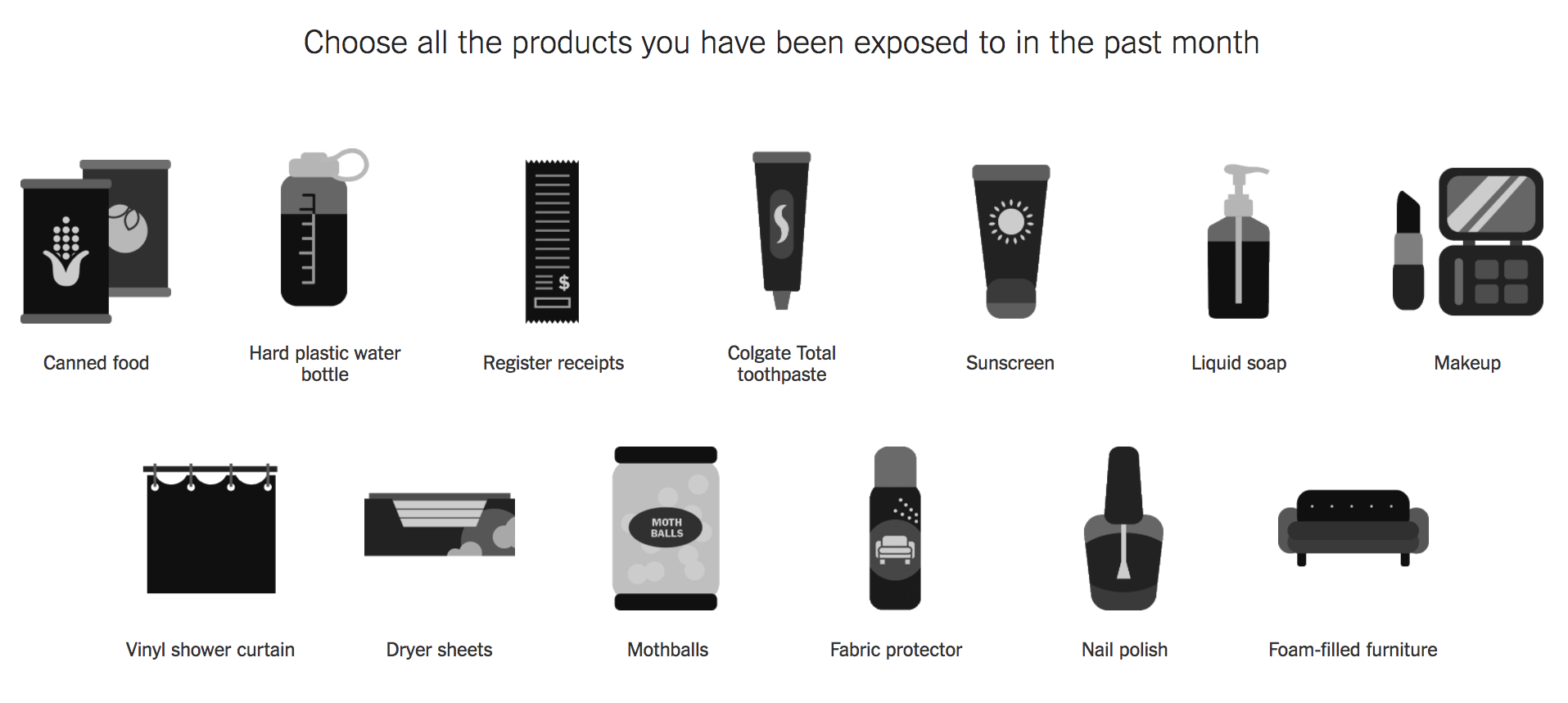
His latest diatribe — which was easily and thoroughly debunked by my colleagues Dr. Chuck Dinerstein and Ana Dolaskie — begins with the single most shameless act of fearmongering I have ever seen from a major media outlet. He shows a bunch of common household products, all of which are perfectly safe, and asks, “What poisons are in your body?”

Look at all these lethal things: toothpaste, soap, shower curtains. It’s amazing we all aren’t dead yet. Mr. Kristof’s “research” — if you can even call it that — relied heavily on well-known anti-science activists, such as the Environmental Working Group.

When we criticized his scientific ignorance, Mr. Kristof doubled down, as the scientifically ignorant always do.

It’s interesting that his immediate defense is to lie about his writings. He isn’t only afraid of endocrine disruptors; he’s afraid he’ll get cancer from popcorn, and he’s worried that some enigmatic chemicals somewhere out there are causing diabetes, obesity, and autism. This level of paranoia is what we would expect from a chemtrail conspiracy theorist, not a public intellectual.

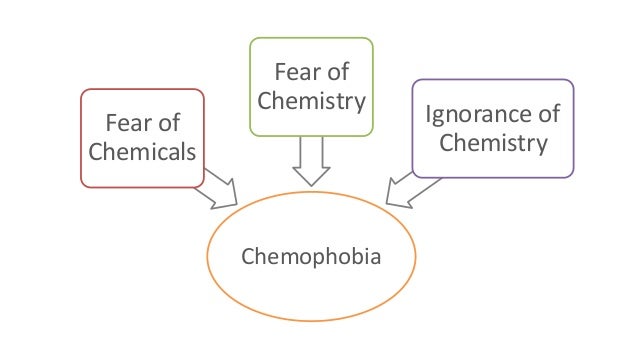
Mr. Kristof’s reference to DES is typical chemophobic scaremongering. He points out a chemical that really is bad (DES), which in his mind justifies his demonization of every other chemical of which he is afraid. That’s the chemistry equivalent of saying that all Muslims are suspicious because 9/11 happened.

Mr. Kristof has demonstrated time and again that he is entirely ignorant of the basic principles of chemistry and toxicology. And given that he has been widely criticized from all sorts of science writers, he’s also completely impervious to being educated by actual experts.

Consider what Deborah Blum, a chemistry writer, wrote about him:

“Whenever Nicholas Kristof writes a piece about the evil, awful world of chemicals out there, I feel a twitchy need to kick something. Or someone. Possibly right there in The New York Times newsroom.”

In perhaps the biggest indication that Mr. Kristof is fundamentally anti-science, he ignores evidence that he dislikes. That’s utterly taboo for scientists, but par-for-the-course for NYT op-ed columnists. Writing in Forbes, Trevor Butterworth says:

“[Kristof] applies no statistical or experimental criticism to these studies: they always “really” find what they claim to have found; and he seems unaware of the many non-industry funded studies or regulatory agency assessments that contradict them. There is no mention, for instance, of the 15-page point-by-point rebuttal written by the Food and Drug Administration to the Natural Resources Defense Council’s petition to ban BPA, a rebuttal which relies, primarily, on non-industry funded research.

Chemjobber, a blog that promotes jobs in chemistry, had this to say of Mr. Kristof:

“I am a little at wit’s end to understand how to help intelligent people like Mr. Kristof see past their clear fear of chemicals, the distrust they have of chemical companies and their seeming dismissal of regulatory agencies. It seems to me that he is all too credulous to the claims of organizations like the Silent Spring Institute that are incentivized to generate as much fear and doubt around chemicals as possible. “

The New York Times Has Only One Editorial Standard

The real problem is that the New York Times has only one editorial standard: To publish whatever sells more copies to their Upper West Side clientele. That means throwing biotechnology and chemistry under the bus while embracing organic food, acupuncture, and other forms of witchcraft.


Everything Americans Know about Science in Brief

NASA scientists at work in the 1960s.

This is a reblog of an article at Popular Science Everything Americans know about science in seven graphs. It is a report on how the country stacked up in a recent National Science Foundation quiz. Text and images below with my bolds.

Every two years, a couple thousand lucky Americans get to take a science quiz. The National Science Foundation surveys the representative sample to see how much they (and, by extension, we) all understand about science and technology. And it’s not just for fun. The NSF has a vested interest in figuring out what Americans know, think, and understand about the scientific world so they can construct policies in line with our collective reasoning. So once it’s collected, this survey data gets compiled and put it into one big report.

Of course, no survey can perfectly capture how well a person understands science. A few questions can’t distill that kind of information; scientific literacy is less about memorizing specific facts than it is understanding how to interpret evidence. But these tests can help us get a snapshot of what Americans do know, and how our understanding is changing.

Here’s how we did:

CLIMATE CHANGE Data from NSF (some totals don’t equal 100% due to rounding) Infographic by Sara Chodosh

More Americans than ever think climate change poses a real threat to the environment, though the proportion who feel it’s not that bad has stayed around 15 percent. It seems to be the undecided who have come around, not the outright deniers. And unfortunately, the survey also found that only 6 in 10 think global warming is caused by humans—though on the bright side, that’s the highest number ever. (Note: Taking the 50% who think climate change is dangerous times 60% blaming humans gives 30% with the CAGW opinion.  The number could be higher if the concerned people also blame humans at a higher rate).

SCIENTIFIC CONCEPTS Data from NSF (some totals don’t equal 100% due to rounding) Infographic by Sara Chodosh

Testing “understanding” of scientific concepts requires some careful finagling. We’ll let you be the judge of how well NSF did. Here are the two-part questions used, which respondents had to get entirely right to receive credit:

Probability A doctor tells a couple that their genetic makeup means that they’ve got one in four chances of having a child with an inherited illness. (1) Does this mean that if their first child has the illness, the next three will not have the illness? and (2) Does this mean that each of the couple’s children will have the same risk of suffering from the illness?

Answer: (1) No (2) Yes

Experiment (1) Two scientists want to know if a certain drug is effective against high blood pressure. The first scientist wants to give the drug to 1,000 people with high blood pressure and see how many of them experience lower blood pressure levels. The second scientist wants to give the drug to 500 people with high blood pressure and not give the drug to another 500 people with high blood pressure, and see how many in both groups experience lower blood pressure levels. Which is the better way to test this drug?

(2) Why is it better to test the drug this way?

Answer: The second way, because a control group is used for comparison.

**Scientific Study **(1) When you read news stories, you see certain sets of words and terms. We are interested in how many people recognize certain kinds of terms. First, some articles refer to the results of a scientific study. When you read or hear the term scientific study, do you have a clear understanding of what it means, a general sense of what it means, or little understanding of what it means? (2) (If “clear understanding” or “general sense” response) In your own words, could you tell me what it means to study something scientifically?
Answer: Formulation of theories/test hypothesis, experiments/control group, or rigorous/systematic comparison.

SCIENTIFIC FACTS Data from NSF (some totals don’t equal 100% due to rounding) Infographic by Sara Chodosh

Despite the wayward influence of Journey to the Center of the Earth, apparently the best-known fact is that the center of the Earth is hot (far too hot to be hospitable, at least). We also seem well-versed in plate tectonics, and about 3 in 4 Americans have figured out that the Earth goes around the Sun. But only 1 in 2 know that it takes a year.

Not included here are the questions about evolution and the big bang. The NSF found a small change in those questions had a huge impact on the answers. Adding “according to the theory of evolution” or “according to astronomers” increased the proportion answering correctly to each question. A 2016 study found a similar phenomenon, but substituting a question asking about elephant evolution rather than human—people seemed to understand elephant origins better than human ones. And that suggests that it’s not that people can’t or don’t grasp the theory of evolution, it’s that sometimes scientific principles conflict with a person’s beliefs—and sometimes the beliefs win out.

Note: Beliefs also pertain to socio-political movements advancing their agenda using science to persuade.  Lysenkoism in the USSR was one example, and the UNIPCC is another. Additional questions in the linked article show such influences, once you understand environmentalism as a quasi-religious construct.

How Dangerous are GMOs?
Concern over genetically modified food is on the rise, despite the fact that 88 percent of National Academies of Science, Engineering, and Medicine members think they’re safe. Other surveys suggest the public isn’t well-informed about the actual technology involved in creating these crops, which means views are shaped by general perception and worldview rather than scientific evidence.

How Dangerous are Nuclear Power Stations to the Environment?
The younger you are, the more you think nuclear power stations harm the environment. Accordingly, fewer and fewer Americans support using nuclear energy, though 30 percent still want to prioritize fossil fuel development over alternative energy. Oddly, Gallup data suggests that the nuclear accident at Fukushima didn’t change perspectives much, which could mean that other factors—like “energy prices and perceived abundance of energy sources”—are a bigger priority than safety.

How Dangerous are Air and Water Pollution?
Education doesn’t have much of an impact on understanding that water and air pollution are dangerous. And really, why would it? The vast majority of people, including adults who dropped out of high school, think that both forms of environmental damage are dangerous (though apparently a graduate degree teaches you to feel it’s more extreme danger).

How Scientific is Astrology?
Americans have been waffling about astrology for as long as the NSF has been asking about it. There is, for the record, no true scientific basis for astrology, though there is plenty of evidence that horoscopes only feel like they’re accurate, even when they aren’t. Seminal research from the ‘70s and ‘80s showed that horoscopes are so general that everyone will identify the same personality description as their own, as long as it’s labeled with their astrological sign. Take away that Libra title at the top, and your previously perfect personality description will suddenly feel alien.

Footnote:

Some time ago the Onion Magazine article New Report Finds Americans Most Interested In Science When Moon Looks Different Than Usual revealed that Americans interest in science is capricious.

ARLINGTON, VA—Explaining that readership of science-related articles and discussion of scientific concepts tends to surge at such times, a report released Thursday by the National Science Foundation confirmed that Americans are most interested in science when the moon looks different than normal. “According to our findings, citizens are never more engaged by scientific disciplines than when the moon does not look like it regularly does—for example, when it becomes big or bright,” read the report in part, which added that while the nation’s interest in science is typically fairly minimal and consistent when the moon is its usual size and color, as soon as these properties of the moon differ in a noticeable way, millions of Americans begin displaying a desire to learn and share scientific knowledge. “The moon is ordinarily white and relatively small, and science is not on most people’s minds. However, when the moon is no longer white and small, and instead happens to be large, reddish, temporarily darkened, or any combination of those things, people generally want to know more about the methodological study of natural phenomena. Of course, once the moon goes back to the way it normally looks, interest in how the universe works drops back to baseline levels.” The report went on to mention that major changes to the Earth appeared not to garner Americans’ interest at all.

For more satirical input from the Onion see US Students Improving Math


Everybody Knows (The Climate Fix Is In)

Lyrics:

Everybody knows that the dice are loaded
Everybody rolls with their fingers crossed
Everybody knows that the war is over
Everybody knows the good guys lost
Everybody knows the fight was fixed
The poor stay poor, the rich get rich
Thats how it goes
Everybody knows

Everybody knows that the boat is leaking
Everybody knows that the captain lied
Everybody got this broken feeling
Like their father or their dog just died
Everybody talking to their pockets
Everybody wants a box of chocolates
And a long stem rose
Everybody knows

Everybody knows that you love me baby
Everybody knows that you really do
Everybody knows that you’ve been faithful
Ah give or take a night or two
Everybody knows you’ve been discreet
But there were so many people you just had to meet
Without your clothes
And everybody knows

Everybody knows, everybody knows
Thats how it goes
Everybody knows

And everybody knows that its now or never
Everybody knows that its me or you
And everybody knows that you live forever
Ah when you’ve done a line or two
Everybody knows the deal is rotten
Old black joe’s still pickin’ cotton
For your ribbons and bows
And everybody knows

And everybody knows that the plague is coming
Everybody knows that its moving fast
Everybody knows that the naked man and woman
Are just a shining artifact of the past
Everybody knows the scene is dead
But there’s gonna be a meter on your bed
That will disclose
What everybody knows

And everybody knows that you’re in trouble
Everybody knows what you’ve been through
From the bloody cross on top of calvary
To the beach of Malibu
Everybody knows its coming apart
Take one last look at this sacred heart
Before it blows
And everybody knows

Everybody knows, everybody knows
Thats how it goes
Everybody knows

Footnote:

I doubt Leonard Cohen had climate change in mind when he wrote this masterpiece.  But he did have a pertinent poetic insight; namely, that social proof is an unreliable guide to the truth.

Climate Scientist Sues Over Hurt Feelings

Article By Alex Berezow — November 2, 2017 at American Council on Science and Health (ACSH) entitled:

Climate Scientist Mark Jacobson Sues Journal For $10M Over Hurt Feelings  Excerpts below with my bolds.

ACSH has been around since 1978. We have never seen anything like this.

Climate scientist Mark Z. Jacobson of Stanford University has sued the National Academy of Sciences, which publishes the prestigious journal PNAS, for publishing an article that disagreed with him. The lawsuit claims that Dr. Jacobson was libeled and slandered. He is suing to get the journal to retract the article.  For his hurt feelings and bruised ego, he also wants a big bag of money, $10 million to be precise

Let’s set aside the scientific arguments in this debate, which revolve around the feasibility of 100% renewable energy. Smart people can disagree about whether that is a technologically and economically achievable goal. The way smart (and mature) people handle their disagreements is in the pages of a peer-reviewed scientific journal. But, apparently, that’s no longer how things operate in our litigious society.

Dr. Jacobson published a paper in PNAS that other scientists found faulty. So, they published a rebuttal, which concluded that Dr. Jacobson’s analysis “involves errors, inappropriate methods, and implausible assumptions.” While this is considered rather harsh language for the scientific literature, critiquing the work of others occurs as a matter of routine. Indeed, questioning another scientist’s conclusions is a healthy and integral part of the pursuit of knowledge.

The ACSH article goes into the details and statements that suggest Jacobson’s hurt feelings are driving his actions.  But I want to put this dispute in a larger context.  For this is a powerful example of the misuse of scientific models that goes on flagrantly in climate science, but also in other fields.  The only difference here is Jacobson’s extreme measure of going to the courts to defend his model.  For background, consider the notion of Chameleon Models, a term invented by Paul Pfleiderer  (also of Stanford), and see how it applies to this conflict.

Chameleon2

Paul Pfleiderer has done a public service in calling attention to
The Misuse of Theoretical Models in Finance and Economics (here)
h/t to William Briggs for noticing and linking

He coins the term “Chameleon” for the abuse of models, and explains in the abstract of his article:

In this essay I discuss how theoretical models in finance and economics are used in ways that make them “chameleons” and how chameleons devalue the intellectual currency and muddy policy debates. A model becomes a chameleon when it is built on assumptions with dubious connections to the real world but nevertheless has conclusions that are uncritically (or not critically enough) applied to understanding our economy. I discuss how chameleons are created and nurtured by the mistaken notion that one should not judge a model by its assumptions, by the unfounded argument that models should have equal standing until definitive empirical tests are conducted, and by misplaced appeals to “as-if” arguments, mathematical elegance, subtlety, references to assumptions that are “standard in the literature,” and the need for tractability.

Chameleon Climate Models

Pfleiderer is writing about his specialty, financial models, and even more particularly banking systems, and gives several examples of how dysfunctional is the problem. As we shall see below, climate models are an order of magnitude more complicated, and abused in the same way, only more flagrantly.

As the analogy suggests, a chameleon model changes color when it is moved to a different context. When politicians and activists refer to climate models, they assert the model outputs as “Predictions”. The media is rife with examples, but here is one from Climate Concern UK

Some predicted Future Effects of Climate Change

  • Increased average temperatures: the IPCC (International Panel for Climate Change) predict a global rise of between 1.1ºC and 6.4ºC by 2100 depending on some scientific uncertainties and the extent to which the world decreases or increases greenhouse gas emissions.
  • 50% less rainfall in the tropics. Severe water shortages within 25 years – potentially affecting 5 billion people. Widespread crop failures.
  • 50% more river volume by 2100 in northern countries.
  • Desertification and burning down of vast areas of agricultural land and forests.
  • Continuing spread of malaria and other diseases, including from a much increased insect population in UK. Respiratory illnesses due to poor air quality with higher temperatures.
  • Extinction of large numbers of animal and plant species.
  • Sea level rise: due to both warmer water (greater volume) and melting ice. The IPCC predicts between 28cm and 43cm by 2100, with consequent high storm wave heights, threatening to displace up to 200 million people. At worst, if emissions this century were to set in place future melting of both the Greenland and West Antarctic ice caps, sea level would eventually rise approx 12m.

Now that alarming list of predictions is a claim to forecast what will be the future of the actual world as we know it.

Now for the switcheroo. When climate models are referenced by scientists or agencies likely to be held legally accountable for making claims, the model output is transformed into “Projections.” The difference is more than semantics:
Prediction: What will actually happen in the future.
Projection: What will possibly happen in the future.

In other words, the climate model has gone from the bookshelf world (possibilities) to the world of actualities and of policy decision-making.  The step of applying reality filters to the climate models (verification) is skipped in order to score political and public relations points.

The ultimate proof of this is the existence of legal disclaimers exempting the modelers from accountability. One example is from ClimateData.US

Disclaimer NASA NEX-DCP30 Terms of Use

The maps are based on NASA’s NEX-DCP30 dataset that are provided to assist the science community in conducting studies of climate change impacts at local to regional scales, and to enhance public understanding of possible future climate patterns and climate impacts at the scale of individual neighborhoods and communities. The maps presented here are visual representations only and are not to be used for decision-making. The NEX-DCP30 dataset upon which these maps are derived is intended for use in scientific research only, and use of this dataset or visualizations for other purposes, such as commercial applications, and engineering or design studies is not recommended without consultation with a qualified expert. (my bold)

Conclusion:

Whereas some theoretical models can be immensely useful in developing intuitions, in essence a theoretical model is nothing more than an argument that a set of conclusions follows from a given set of assumptions. Being logically correct may earn a place for a theoretical model on the bookshelf, but when a theoretical model is taken off the shelf and applied to the real world, it is important to question whether the model’s assumptions are in accord with what we know about the world. Is the story behind the model one that captures what is important or is it a fiction that has little connection to what we see in practice? Have important factors been omitted? Are economic agents assumed to be doing things that we have serious doubts they are able to do? These questions and others like them allow us to filter out models that are ill suited to give us genuine insights. To be taken seriously models should pass through the real world filter.

Chameleons are models that are offered up as saying something significant about the real world even though they do not pass through the filter. When the assumptions of a chameleon are challenged, various defenses are made (e.g., one shouldn’t judge a model by its assumptions, any model has equal standing with all other models until the proper empirical tests have been run, etc.). In many cases the chameleon will change colors as necessary, taking on the colors of a bookshelf model when challenged, but reverting back to the colors of a model that claims to apply the real world when not challenged.

A model becomes a chameleon when it is built on assumptions with dubious connections to the real world but nevertheless has conclusions that are uncritically (or not critically enough) applied to understanding our economy. Chameleons are not just mischievous they can be harmful − especially when used to inform policy and other decision making − and they devalue the intellectual currency.

Thank you Dr. Pfleiderer for showing us how the sleight-of-hand occurs in economic considerations. The same abuse prevails in the world of climate science.


Paul Pfleiderer, Stanford University Faculty
C.O.G. Miller Distinguished Professor of Finance
Senior Associate Dean for Academic Affairs
Professor of Law (by courtesy), School of Law

Postscript:  Now we have a scientist whose model has been reality tested and found wanting by others. His response is filing a lawsuit to make the criticism go away, and to levy a penalty so heavy that no model would ever again be challenged. Onward into the post-modern abyss.

Footnote:

There are a series of posts here which apply reality filters to attest climate models.  The first was Temperatures According to Climate Models where both hindcasting and forecasting were seen to be flawed.

Others in the Series are:

Sea Level Rise: Just the Facts

Data vs. Models #1: Arctic Warming

Data vs. Models #2: Droughts and Floods

Data vs. Models #3: Disasters

Data vs. Models #4: Climates Changing