Italian Climate Conference Cancelled Lest Skeptics be Heard

As reported by Robert Wade at Climate Etc.. Cancel culture in climate change a major scientific conference was cancelled because one of 14 papers to be presented was critical of global warming theory.  As Wade stated:

A microcosm on the ‘morality’ of cancel culture: the aborted conference on ‘Global Warming: Mitigation Strategies’, hosted by the Italian scientific academy the Lincei.

Naturally it seems the skeptical paper is nowhere to be found, but the same authors wrote in 2019 to the political leaders of Italy with their concerns, likely a synopsis of their findings.  The text in English comes from an article Top Italian Scientists Debunk “Man-made Global Warming” at Friends of Science.  Here is what alarmists found so offensive. Excerpts in italics with my bolds.

PETITION ON ‘MAN-MADE GLOBAL WARMING’
To Your Excellences:

President of the Republic

President of the Senate

President of the Chamber of Deputies

President of the Council

PETITION ON ‘MAN-MADE GLOBAL WARMING’

We the undersigned, citizens and scientists, warmly invite our political leaders to adopt environmental protection policies consistent with scientific knowledge. It is particularly urgent to combat pollution where it occurs as indicated by the best available science. In this regard, it is deplorable to see delay in reducing anthropogenic pollutant emissions in both land and sea using the rich knowledge made available by the world of research.

However, we must become aware that carbon dioxide itself is not a pollutant. On the contrary, it is indispensable for life on our planet.

In recent decades, the thesis has spread that the heating of the Earth’s surface of around 0.9° C observed from 1850 onwards would be anomalous and caused exclusively by human activities, particularly by CO2 emissions from the use of fossil fuels in the atmosphere. This is the anthropic global warming thesis promoted by the United Nation’s Intergovernmental Panel on Climate Change (IPCC). They claim it will produce environmental changes so serious as to cause enormous damages in an imminent future unless drastic and expensive mitigation measures are not immediately adopted. In this regard, many nations around the world have joined programs to reduce carbon dioxide emissions and are also pressed by a relentless propaganda to adopt increasingly demanding programs whose implementation place heavy burdens on the economies of individual member states.

They claim that climate control, and therefore the “salvation” of the planet,
would depend on it

However, the anthropic origin of global warming is an unproven hypothesis deduced only from some climate models, that is, from complex computer programs called General Circulation Models.

On the contrary, the scientific literature has increasingly highlighted the existence of a natural climatic variability that such models are unable to reproduce. This natural variability explains a substantial part of the global warming observed since 1850. Therefore, the anthropic responsibility for climate change observed in the last century is unjustifiably exaggerated and the corresponding catastrophic predictions are unrealistic.

The climate is the most complex system on our planet and so needs to be addressed with methods that are adequate and consistent with its level of complexity. Climate simulation models do not reproduce the observed natural variability of the climate, and in particular, do not reconstruct the warm periods of the last 10,000 years. These periods were repeated about every thousand years and include the well-known Medieval Warm Period, the Roman Hot Period, and generally warm periods during the Holocene Optimal. These past periods were also warmer than the present period despite their CO2 concentration being lower than the current one while related to the millennial cycles of solar activity. The models do not reproduce these effects.

It should be remembered that the heating observed since 1900 actually started in the 1700s, i.e., at the minimum of the Little Ice Age, the coldest period of the last 10,000 years (corresponding to the millennial minimum of solar activity, which astrophysicists call Maunder Minimal Solar). Since then, solar activity, following its millennial cycle has increased by heating the earth’s surface. Furthermore, the models fail to reproduce the known climatic oscillations of about 60 years. These were responsible, for example, for a warming period (1850-1880) followed by a cooling period (1880-1910), a heating (1910-40), a cooling (1940-70) and a new warming period (1970-2000) similar to that observed 60 years earlier. The following years (2000-2019) did not see the increase, predicted by the models, of about 0.2° C per decade, but a substantial climatic stability sporadically interrupted by the rapid natural oscillations of the equatorial Pacific Ocean, known as the El Nino Southern Oscillations, like the one that led to temporary warming between 2015 and 2016.

The media also claim that extreme events such as hurricanes and cyclones have increased at an alarming rate. Instead, like many climate systems, these events have been modulated since the aforementioned 60-year cycle. For example, if we consider the official data from 1880 on tropical Atlantic cyclones that hit North America, they appear to have a strong 60-year oscillation correlated with the Atlantic Ocean’s thermal oscillation called Atlantic Multidecadal Oscillation. The peaks observed per decade are compatible with each other in the years 1880-90, 1940-50 and 1995-2005. From 2005 to 2015, the number of cyclones decreased precisely following the aforementioned cycle. Thus, in the period 1880-2015, there is no correlation between the number of cyclones (which oscillates) and CO2 (which increases monotonically).

The climate system is not yet sufficiently understood. Although it is true that CO2 is a greenhouse gas, according to the same IPCC, the climate’s sensitivity to a CO2 increase in the atmosphere is still extremely uncertain. It is estimated that a doubling of the concentration of atmospheric CO2 from the roughly pre-industrial 300 ppm to 600 ppm can raise the average temperature of the planet from a minimum of 1° C to a maximum of 5° C. This uncertainty is enormous. In any case, many recent studies based on experimental data estimate that climate sensitivity to CO2 is considerably lower than estimated by IPCC models.

Now then, it is scientifically unrealistic to attribute to humans the responsibility for the warming observed from the past century to today. Therefore, the alarmist forecasts are not credible because they are based on models whose results contradict the experimental data. All the evidence suggests that these models overestimate the anthropic contribution and underestimate the natural climatic variability, especially the one induced by the sun, moon, and ocean oscillations.

Finally, the media spread the message that there would be an almost unanimous agreement among scientists with regard to the anthropic cause of the current climate change, and that therefore the scientific debate on this point is closed. However, first of all, we must understand that the scientific method dictates that it is facts, rather than the number of adherents, that turn a conjecture into a consolidated scientific theory.

At any rate, the alleged consensus does not exist. In fact, there is a remarkable variability of opinions among specialists – climatologists, meteorologists, geologists, geophysicists, astrophysicists – many of whom recognize that an important natural contribution to global warming was observed from the pre-industrial period and even from the post-war period to this day. There have also been petitions signed by thousands of scientists who have expressed dissent with the conjecture on anthropic global warming. These include the one promoted in 2007 by the physicist F. Seitz, former president of the American National Academy of Sciences, and the one promoted by the Non-governmental International Panel on Climate Change (NIPCC) whose 2009 report concludes that, “Nature, not human activity, rules the climate.”

In conclusion, given the crucial importance of fossil fuels for the energy supply of humanity, we suggest that we do not adhere to policies of uncritical reduction of carbon dioxide emissions into the atmosphere on the illusory pretense of governing the climate.

Rome, June 17, 2019

PROMOTING COMMITTEE

1. Uberto Crescenti, Professor Emeritus of Applied Geology, University G. D’Annunzio, Chieti-Pescara, former Dean and President of the Italian Geological Society.

2. Giuliano Panza, Professor of Seismology, University di Trieste, Accademia dei Lincei and Accademia dei XL (Italy’s National Academy of Sciences), 2018 International Award from the American Geophysical Union.

3. Alberto Prestininzi, Professor of Applied Geology, University La Sapienza, Roma, former Scientific Editor in Chiefof IJEGE international journal and Director of the Italy’s Research Center for Prediction and Control of Geological Risks.

4. Franco Prodi, Professor of Atmospheric Physics, University of Ferrara.

5. Franco Battaglia, Professor of Physical Chemistry, University of Modena; Galileo Movement 2001.

6. Mario Giaccio, Professor of Technology and Economy of Energy Sources, University G. D’Annunzio, Chieti-Pescara, former President of the Department of Economics.

7. Enrico Miccadei, Professor of Physical Geography and Geomorphology, University G. D’Annunzio, Chieti-Pescara

8. Nicola Scafetta, Professor of Atmospheric Physics and Oceanography, University Federico II, Napoli.

[The eight scientists above were joined by an additional 84 signatories to the petition.Their names are included in the linked friends of science article.]
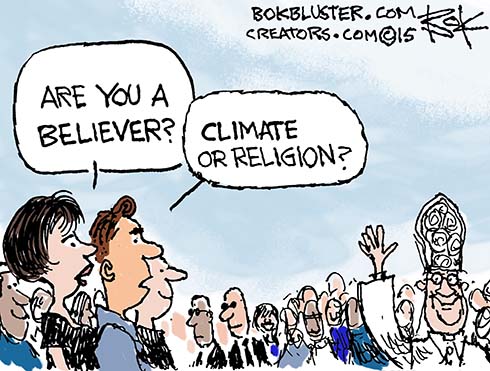
 

Biden Preaches Climatism

Spencer Brown reports at TownHall Biden Declares Climate Change a Pressing Issue After 48 Years in Government.  Excerpts in italics with my bolds.

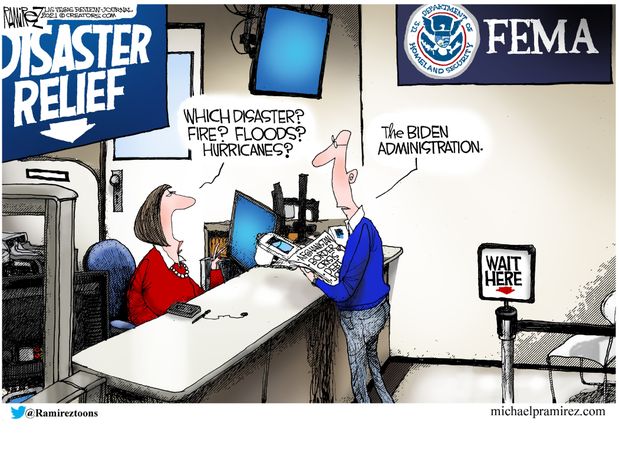
Flanked by New York Governor Kathy Hochul (D), Senate Majority Leader Chuck Schumer (D-NY), Senator Kirsten Gillibrand (D-NY), Mayor Bill de Blasio (D), and other local officials, President Biden stood atop Ida’s flotsam to call for radical policies allegedly aimed at addressing climate change.

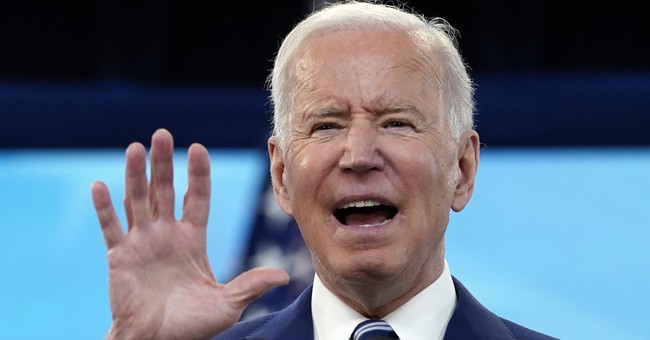
Beginning with some confusion as to whose congressional district he was in, Biden said “It’s about time we step up” to confront climate change, despite his more than four decades serving in the Senate and White House that apparently failed to accomplish anything meaningful on the climate change front.

“People are beginning to realize this is much much bigger,” he explained of the weather that he says is the result of climate change before he criticized “a whole segment of our population” that he believes is denying climate change. “They don’t understand,” he added. “I think we’ve all seen even the climate skeptics are seeing” that so-called extreme weather is proof of climate change.

“Climate change poses an existential threat,” said Biden, raising his voice. “It’s here, it’s not going to get any better,” he added while insisting “we can stop it from getting worse.” If the Left’s climate agenda isn’t accomplished, Biden threatened, “the storms are gonna get worse and worse and worse.”

For his own record, then-Senator Biden voted against more stringent fuel efficiency standards a handful of times. And Biden’s words Tuesday suggest his time as Vice President in the Obama administration accomplished little to nothing. After all, if American policy could save the planet, wouldn’t eight years of Obama and Biden in the White House — which included negotiating the Paris Climate Agreement — have mitigated damage like that he spent Tuesday surveying?

“We’ve gotta listen to the scientists and economists,” Biden admonished. “They tell us this is code red.”  “The world is in peril,” Biden claimed, insisting “that’s not hyperbole.”

Among Biden’s recommendations to solve the climate change he lamented is to, “by 2020, make sure all of our electricity is zero emissions,” a deadline we passed nine months ago.

“We’re here, we’re not going home until this gets done, we’re not leaving,said Biden shortly before departing to board Air Force One to travel home to the White House.

Earlier during his Tuesday tour of damage from the remnants of Hurricane Ida, Biden was heckled by a local resident who yelled “Resign, you tyrant” as Biden walked nearby.


Here Comes the Climate-Medical Complex

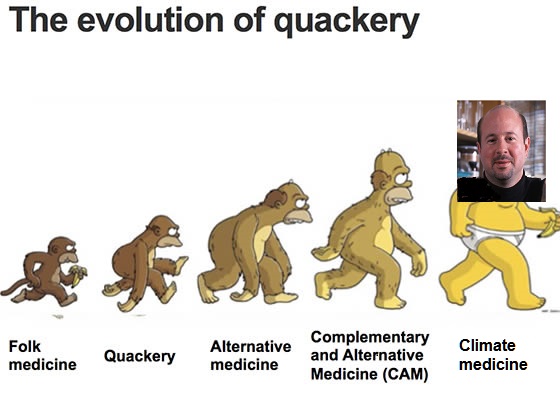
Climate Quakery

With Glasgow COP26 on the horizon, and public health officials savoring the power and social control they gained during the pandemic, medical journals are trumpeting claims  that climate change is an international public health crisis.  For example, in just one day from my news reader:

Over 200 medical journals cosign ‘catastrophic harm to health’ warning New York Post

More Than 230 Medical Journals: Climate Crisis Is “Greatest Threat to Global Public Health” Slate

In unprecedented bid, health science journals unite and call for ambitious climate action ZME Science

Report: More Than 200 Health Journals Call For Urgent Action on Climate Crisis Library Journal

Global health journals unite to demand climate action from world leaders Irish Examiner

Climate change will be ‘catastrophic’ for world’s health CGTN

UN climate chief: No country is safe from global warming Associated Press

220+ Medical Journals Unite to Demand Urgent Action on Climate Emergency Common Dreams

Health Experts Call Global Warming Greatest Health Threat Newsy

Climate change causing ‘catastrophic harm to health,’ experts warn euronews

Over 230 health journals call for urgent action to tackle climate crisis The Independent

Climate crisis poses global health risk, warn more than 200 health journals Silicon Republic

So there you have it all:  global warming, climate change, climate crisis, climate emergency.  James Joyner is skeptical of this call to arms, writing at outside the beltway Doctors Weigh in on Climate Change Because why the hell not. Excerpts in italics with my bolds.

Some 230 medical journals have cross-published an open letter calling climate change the “greatest” threat to global health. One can read the op-ed at, among lots of places, the New England Journal of Medicine. It reads, in part,

Health is already being harmed by global temperature increases and the destruction of the natural world, a state of affairs health professionals have been bringing attention to for decades. The science is unequivocal: a global increase of 1.5° C above the pre-industrial average and the continued loss of biodiversity risk catastrophic harm to health that will be impossible to reverse. Despite the world’s necessary preoccupation with Covid-19, we cannot wait for the pandemic to pass to rapidly reduce emissions.

Reflecting the severity of the moment, this editorial appears in health journals across the world. We are united in recognizing that only fundamental and equitable changes to societies will reverse our current trajectory.

And it includes calls for drastic measures to mitigate these risks:

Equity must be at the center of the global response. Contributing a fair share to the global effort means that reduction commitments must account for the cumulative, historical contribution each country has made to emissions, as well as its current emissions and capacity to respond. Wealthier countries will have to cut emissions more quickly, making reductions by 2030 beyond those currently proposed and reaching net-zero emissions before 2050. Similar targets and emergency action are needed for biodiversity loss and the wider destruction of the natural world.

To achieve these targets, governments must make fundamental changes to how our societies and economies are organized and how we live.

The current strategy of encouraging markets to swap dirty for cleaner technologies is not enough. Governments must intervene to support the redesign of transport systems, cities, production and distribution of food, markets for financial investments, health systems, and much more. Global coordination is needed to ensure that the rush for cleaner technologies does not come at the cost of more environmental destruction and human exploitation.

Many governments met the threat of the Covid-19 pandemic with unprecedented funding. The environmental crisis demands a similar emergency response. Huge investment will be needed, beyond what is being considered or delivered anywhere in the world. But such investments will produce huge positive health and economic outcomes. These include high-quality jobs, reduced air pollution, increased physical activity, and improved housing and diet. Better air quality alone would realize health benefits that easily offset the global costs of emissions reductions.

So, here’s the thing. I’ve long been persuaded that climate change is a serious problem. While I’m skeptical of many of the specific cures being proposed—and especially of our ability to act collectively across the globe to enact them—it’s obvious that significant response is required.

But why are medical doctors, who have no more expertise on these matters than I do, pretending that they have useful expertise to offer here? Their opinions on public policy regarding transportation infrastructure, emissions, equity, and the like are no more valuable than those of television repairmen or cable television installers.

Literally the only thing in the editorial that falls into their expertise is this paragraph:

The risks to health of increases above 1.5° C are now well established. Indeed, no temperature rise is “safe.” In the past 20 years, heat-related mortality among people over 65 years of age has increased by more than 50%. Higher temperatures have brought increased dehydration and renal function loss, dermatological malignancies, tropical infections, adverse mental health outcomes, pregnancy complications, allergies, and cardiovascular and pulmonary morbidity and mortality. Harms disproportionately affect the most vulnerable, including children, older populations, ethnic minorities, poorer communities, and those with underlying health problems.

To the extent that the health implications are under-reported and highlighting them is helpful in signaling the urgency of the problem, it’s useful for medical journals to leverage their prestige to do so. But why the hell should we care what physicians think about the other issues escapes me.

Philip Greenspun questions the doctors’ motivation in writing at his blog Unable to cure COVID-19, physicians turn to planetary physics.  Excerpts in italics with my bolds.

Editors of 220 leading medical, nursing and public-health journals from around the world called for urgent action on climate change, in a joint editorial published on Sunday.

The editorial, which appeared in journals including the New England Journal of Medicine, the British Medical Journal and The Lancet, warns that current efforts aren’t enough to address health problems resulting from rising global temperatures caused by emissions of carbon dioxide and other greenhouse gases.

“It is an unusual happening and it is driven by unusual circumstances,” Dr. Eric J. Rubin, editor in chief of the New England Journal of Medicine, said of the editorial. “It is evident that climate change is a problem. What is less evident to people is that it is a public-health problem, not just a physical catastrophe.”

I showed the article to a medical school professor friend: “Since doctors can’t help COVID-19 patients, they need something to stay relevant.”

I remain just as confused as ever about why people who predict impending climate doom also worry about COVID-19. Regardless of coronapanic level and government action or inaction, there is no country in which more than 1 percent of people have died with a COVID-19 tag (stats by country). If something like 50 percent of humans will soon be killed by climate change, absent some sort of dramatic coordinated action by all of the world’s nations (unprecedented in the history of humanity), why spend a huge amount of attention, time, effort, and money on COVID-19?

Maybe doom isn’t impending? The article itself contains enough information to predict certain doom. We are 1.1 degrees C warmer than 150 years ago:  Greenhouse-gas emissions from human activity have raised global temperatures by 1.1 degrees C since the Industrial Revolution began in the mid-19th century, according to scientific studies.

In the excerpt above, the article tells us that 1.5 degrees C is where Mother Earth will strike back by killing many or most of her human parasites. But if the mechanism by which we got to 1.1 degrees warmer is the greenhouse effect from CO2, isn’t it certain that there will be an additional 0.4 degrees of warming? Even if human C02 emissions went to zero tomorrow, wouldn’t there be enough CO2 in the atmosphere to keep us on the Venusian trajectory?

If the authors believe their own cited science, shouldn’t their recommendation be to shut down most health care services and put the money (20% of U.S. GDP!) into CO2 vacuums?

Background from previous post on Climate Medicine

As Richard Lindzen predicted, everyone wants on the climate bandwagon, because that is where the power and money is.  Medical scientists are pushing for their share of the pie, as evidenced by the Met office gathering on Assessing the Global Impacts of Climate and Extreme Weather on Health and Well-Being (following Paris COP).


Of course, they are encouraged and abetted by the IPCC.

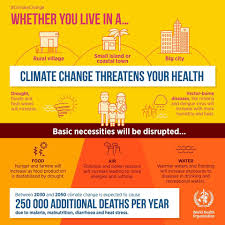
climate health threat

From the Fifth Assessment Report:

Until mid-century, projected climate change will impact human health mainly by exacerbating health problems that already exist (very high confidence). Throughout the 21st century, climate change is expected to lead to increases in ill-health in many regions and especially in developing countries with low income, as compared to a baseline without climate change (high confidence). By 2100 for RCP8.5, the combination of high temperature and humidity in some areas for parts of the year is expected to compromise common human activities, including growing food and working outdoors (high confidence). {2.3.2}

In urban areas climate change is projected to increase risks for people, assets, economies and ecosystems, including risks from heat stress, storms and extreme precipitation, inland and coastal flooding, landslides, air pollution, drought, water scarcity, sea level rise and storm surges (very high confidence). These risks are amplified for those lacking essential infrastructure and services or living in exposed areas. {2.3.2}

Feared Climate Health Impacts Are Unsupported by Scientific Research

NIPCC has a compendium of peer-reviewed studies on this issue and provides these findings (here)

Key Findings: Human Health
• Warmer temperatures lead to a decrease in temperature-related mortality, including deaths associated with cardiovascular disease, respiratory disease, and strokes. The evidence of this benefit comes from research conducted in every major country of the world.

• In the United States the average person who died because of cold temperature exposure lost in excess of 10 years of potential life, whereas the average person who died because of hot temperature exposure likely lost no more than a few days or weeks of life.

• In the U.S., some 4,600 deaths are delayed each year as people move from cold northeastern states to warm southwestern states. Between 3 and 7% of the gains in longevity experienced over the past three decades was due simply to people moving to warmer states.

• Cold-related deaths are far more numerous than heat-related deaths in the United States, Europe, and almost all countries outside the tropics. Coronary and cerebral thrombosis account for about half of all cold-related mortality.

• Global warming is reducing the incidence of cardiovascular diseases related to low temperatures and wintry weather by a much greater degree than it increases the incidence of cardiovascular diseases associated with high temperatures and summer heat waves.

• A large body of scientific examination and research contradict the claim that malaria will expand across the globe and intensify as a result of CO2 -induced warming.

• Concerns over large increases in vector-borne diseases such as dengue as a result of rising temperatures are unfounded and unsupported by the scientific literature, as climatic indices are poor predictors for dengue disease.

• While temperature and climate largely determine the geographical distribution of ticks, they are not among the significant factors determining the incidence of tick-borne diseases.

• The ongoing rise in the air’s CO2 content is not only raising the productivity of Earth’s common food plants but also significantly increasing the quantity and potency of the many healthpromoting substances found in their tissues, which are the ultimate sources of sustenance for essentially all animals and humans.

• Atmospheric CO2 enrichment positively impacts the production of numerous health-promoting substances found in medicinal or “health food” plants, and this phenomenon may have contributed to the increase in human life span that has occurred over the past century or so.

• There is little reason to expect any significant CO2 -induced increases in human-health-harming substances produced by plants as atmospheric CO2 levels continue to rise.

Source: Chapter 7. “Human Health,” Climate Change Reconsidered II: Biological Impacts (Chicago, IL: The Heartland Institute, 2014).
Full text of Chapter 7 and references on Human health begins pg. 955 of the full report here

ambulance chasers

Summary

Advances in medical science and public health have  benefited billions of people with longer and higher quality lives.  Yet this crucial social asset has joined the list of those fields corrupted by the dash for climate cash. Increasingly, medical talent and resources are diverted into inventing bogeymen and studying imaginary public health crises.

Economists Francesco Boselloa, Roberto Roson and Richard Tol conducted an exhaustive study called Economy-wide estimates of the implications of climate change: Human health

After reviewing all the research and crunching the numbers, they concluded that achieving one degree of global warming by 2050 will, on balance, save more than 800,000 lives annually.

Not only is the warming not happening, we would be more healthy if it did.

Oh, Dr. Frankenmann, what have you wrought?

Footnote:  More proof against Climate Medicine

From: Gasparrini et al: Mortality risk attributable to high and low ambient temperature: a multicountry observational study. The Lancet, May 2015

Cold weather kills 20 times as many people as hot weather, according to an international study analyzing over 74 million deaths in 384 locations across 13 countries. The findings, published in The Lancet, also reveal that deaths due to moderately hot or cold weather substantially exceed those resulting from extreme heat waves or cold spells.

“It’s often assumed that extreme weather causes the majority of deaths, with most previous research focusing on the effects of extreme heat waves,” says lead author Dr Antonio Gasparrini from the London School of Hygiene & Tropical Medicine in the UK. “Our findings, from an analysis of the largest dataset of temperature-related deaths ever collected, show that the majority of these deaths actually happen on moderately hot and cold days, with most deaths caused by moderately cold temperatures.”

Then in 2017, Lancet set the facts aside in order to prostrate itself before the global warming altar:

Christiana Figueres, chair of the Lancet Countdown’s high-level advisory board and former executive secretary of the UN Framework Convention on Climate Change, said, “The report lays bare the impact that climate change is having on our health today. It also shows that tackling climate change directly, unequivocally and immediately improves global health. It’s as simple as that.’’

Resilient Arctic Ice September 2021

The animation shows Arctic ice extents on day 248 in 2007 (matching 14 year average), then the same day in 2019, 2020, and yesterday in 2021.  Note that Hudson Bay upper left is open water, and below that Baffin Bay next to Greenland is also ice-free.  In the center Canadian Archipelago holds a lot of ice, especially this year.  Also unusual in 2021 is ice covering Svalbard lower right all the way to Europe mainland.  Also upper right 2021 shows ice in Chukchi touching Russian coastline.

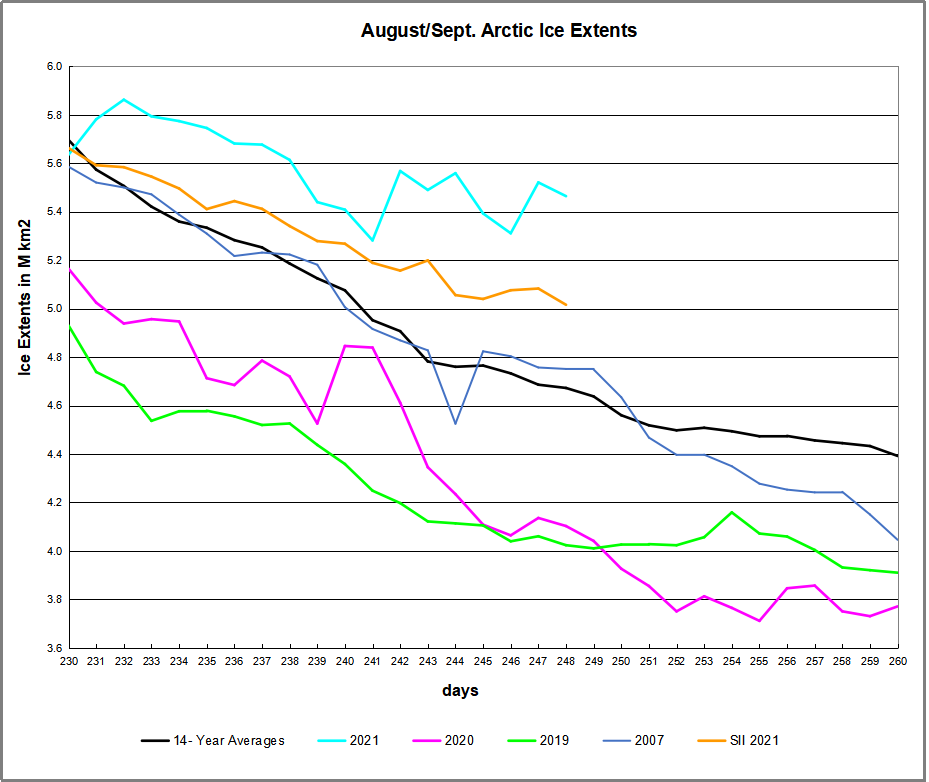
The graph above shows mid-August to mid-Sept daily ice extents for 2021 compared to 14 year averages, and some years of note.  During the 17 days from August 18 to yesterday, the black  line shows Arctic Ice extent declined on average by 1M km2 (1 Wadham).  Meanwhile the cyan line shows MASIE 2021 ice extents lost only 171k km2, and Sea Ice Index (SII) in orange lost 317k km2. Note on day 230 all three lines started at the same value.

Why is this important?  All the claims of global climate emergency depend on dangerously higher temperatures, lower sea ice, and rising sea levels.  The lack of additional warming is documented in a post Adios, Global Warming

The lack of acceleration in sea levels along coastlines has been discussed also.  See USCS Warnings of Coastal Flooding

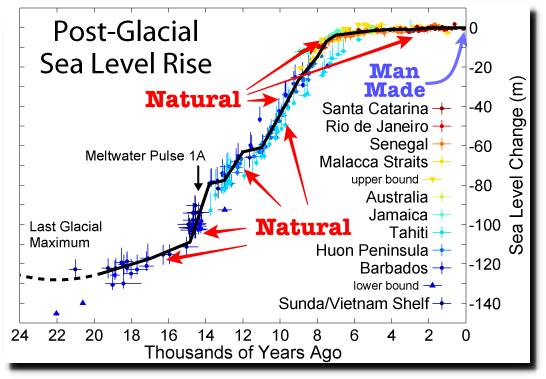
Also, a longer term perspective is informative:

post-glacial_sea_levelThe table below shows the distribution of Sea Ice across the Arctic Regions, on average, this year and 2007.

Region 2021248 Day 248 Average 2021-Ave. 2007248 2021-2020
 (0) Northern_Hemisphere 5464375 4672631 791744 4751076 713299
 (1) Beaufort_Sea 798213 522472 275741 665051 133162
 (2) Chukchi_Sea 524060 202259 321800 116358 407702
 (3) East_Siberian_Sea 408523 310662 97862 6329 402195
 (4) Laptev_Sea 51574 143286 -91712 280600 -229026
 (5) Kara_Sea 122087 30192 91896 103072 19015
 (6) Barents_Sea 18 15631 -15612 10766 -10748
 (7) Greenland_Sea 98270 176374 -78104 334524 -236254
 (8) Baffin_Bay_Gulf_of_St._Lawrence 16983 23131 -6148 31787 -14804
 (9) Canadian_Archipelago 440366 288302 152064 270755 169612
 (10) Hudson_Bay 39285 15338 23947 29961 9324
 (11) Central_Arctic 2963852 2944150 19702 2900617 63235

The overall surplus to average is 792k km2, (+17%).  Note large surpluses of ice in BCE (Beaufort, Chukchi and East Siberian seas).  Meanwhile Laptev on the Russian coast melted out early, as has Greenland Sea.  Kara and CAA (Canadian Arctic Archipelago) are holding considerable ice.  We are about 12 days away from the annual minimum mid September, but at this point it appears that extents will be much greater than the last two years.

See also Abundant August Arctic Ice with 2021 Minimum Outlook

bathymetric_map_arctic_ocean


Illustration by Eleanor Lutz shows Earth’s seasonal climate changes. If played in full screen, the four corners present views from top, bottom and sides. It is a visual representation of scientific datasets measuring Arctic ice extents.

Yes, Daily Mail, You are Discredited by Fake IVM Story

97178-ivermectin

Daily Mail, along with other legacy news published this:

Overdoses from anti-parasite drug ivermectin overwhelm rural Oklahoma hospitals – leaving gunshot victims waiting for emergency rooms

Hospitals in rural southeast Oklahoma are struggling with a surge of ivermectin overdose patients
♦ So many patients are coming in with overdoses of the horse-grade medicine that other serious injuries – like gunshot wounds – have to wait
Ivermectin is FDA approved for human use fighting some parasite-related conditions, but has not demonstrated that it can fight viruses in humans
♦ Many are purchasing versions of the drug meant for horses and other large animals, where doses are dangerous for humans

Rolling Stone, who was also taken in published the facts in this correction:

UPDATE: Northeastern Hospital System Sequoyah issued a statement: Although Dr. Jason McElyea is not an employee of NHS Sequoyah, he is affiliated with a medical staffing group that provides coverage for our emergency room. With that said, Dr. McElyea has not worked at our Sallisaw location in over 2 months. NHS Sequoyah has not treated any patients due to complications related to taking ivermectin. This includes not treating any patients for ivermectin overdose. All patients who have visited our emergency room have received medical attention as appropriate. Our hospital has not had to turn away any patients seeking emergency care. We want to reassure our community that our staff is working hard to provide quality healthcare to all patients. We appreciate the opportunity to clarify this issue and as always, we value our community’s support.”

This cynical, outrageous media campaign appeared in a previous post:  No, Guardian, Ivermectin Not Discredited by Elgazzar Retraction

The hits against Ivermectin keep on coming.  Dr. Colleen Aldous and Dr. Warren Parker explain this latest smear campaign in their article Ivermectin — front-line doctors vs bureaucrats.  Excerpts in italics with my bolds.

Given the safety profile of Ivermectin, there is nothing to lose and there’s a good possibility of saving many lives and slowing the pandemic

The Ivermectin battle of ideologies on safety and efficacy pits a group of doctors who deal with dying patients every day against bureaucrat academic clinicians. These academic clinicians have dismissed all evidence, favouring a single, large randomised trial that is entirely appropriate for novel drug development but not for pandemics.

This is akin to a person suffering a heart attack and refusing to be taken to hospital in a Toyota, choosing to wait for a Rolls-Royce.

If science is pure, there should not really be a debate, but there is, and it’s purely on the interpretation of science. The Ivermectin meta-analyses have shown that subjectivity in science does happen, something the layperson is made to believe is not possible.

Unfortunately, scientific fraud has also muddied the picture on both sides of the Ivermectin divide. The Elgazzar Ivermectin study, which showed Ivermectin to be highly effective, has been removed from the preprint website for unethical scientific reporting. If this is found to be true it is unforgivable and the authors need to be dealt with.

I’ve no doubt that this will be used to discredit Ivermectin, but it is one of many trials showing efficacy and will be shown to have little weight in the meta-analyses. Just because one lawyer is guilty of corruption does not mean all lawyers are corrupt. In the same vein, a study published in leading medical journal Lancet, showed that hydroxychloroquine as a treatment for Covid-19 was associated with an increased risk of death in patients hospitalised with the disease. However, it was found to be fraudulent and the Lancet was forced to retract the paper.

Bias can come in selecting studies to include in the analysis and the interpretation of the results. Ivermectin can be shown to work by a careful selection of studies that support it. It can be discredited by selecting studies that show it is ineffective.

The SA National Essential Medicines List Committee (NEMLC), which has published its methods on its website, has produced an in-house rapid-review on Ivermectin, which continues to find that Ivermectin should not be used outside clinical trials. This review is not peer-reviewed. The scientific community emphasises the importance of peer-review publication, but our regulatory authorities seem not to. To illustrate the degree of subjectivity, I was in a meeting with one of the authors from the Bryant paper and a NEMLC member. In the discussion the latter stated that while they are aware of the work done in their preprint paper, they disagree with it. Simple!

The methods used in the Ivermectin meta-analyses by Bryant et al are exact. They have a very low risk of bias in themselves. Meta-analyses pool data from several studies to report for a larger sample size than the studies themselves. The heterogeneity of the studies is addressed with rigorous methods to reduce the effect of bias from the individual studies. Bryant et al have careers in data and research analysis. They have prepared decision-to-treat recommendations for international and country-level health bodies.

Their analysis included 24 randomised controlled trials that showed both positive and negative outcomes. The recommendation, among others, is that with moderate certainty Ivermectin could reduce mortality by an average of 62%. Moderate certainty means there is a good chance it is effective to this level.

From looking at their methods in their peer-reviewed publication I believe the selection and interpretation of results were unbiased and currently provide us with recommendations that are more than sufficient to validate the positive effects of Ivermectin for treating Covid-19.

Simply put, SA’s response is now guided by the recommendations of an in-house team over a peer-reviewed, rigorously prepared meta-analysis. The NEMLC document is the guidance observed by all health department facilities and also some private hospitals.

Concerning the Ivercor-Covid-19 trial, it’s a pity all those who have stated that this study is proof that Ivermectin doesn’t work did not read the paper in its entirety. The authors themselves declare in the limitations of their research that the doses given are were low.

As the pandemic has progressed, experience on the ground has shown that Ivermectin is effective at higher doses. Initial recommended doses were low, having been informed by the dosages for anti-parasite treatment. Unfortunately, many trials that are now being run or are completed are using low doses based on earlier assumptions. Even the upcoming Oxford Principle trial of Ivermectin follows low dose regimes that may be insufficient to show effect.

The Lopez-Medina study in Colombia is also often cited as demonstrating that Ivermectin is ineffective. Yet it was so fraught with protocol violations that I would not have submitted the article for publication if I were the principal investigator.

The NEMLC has put the health of our people at risk by recommending against the use of Ivermectin even though it is legally available in SA for off-label use or in the compassionate use programme. Proper evidence-based medicine involves looking at all current evidence conscientiously, not just at a few trials.

During the latter half of the last century our ways of doing science have developed in times of stability and relative prosperity. However, we are in chaos now. We need new thinking. Those in authority are still pushing for their conventional methods for science, which insists that “reality must obey our models… otherwise reality cannot be correct”.

We need more than just a few clinical experts making decisions for our country now that we are hitting this third wave. I believe it is time to put together a multidisciplinary team to examine the arguments of those saying that the totality of evidence points to the necessity of making a Type 1 decision now, roll out Ivermectin.

Given the safety profile of Ivermectin, with nearly 4bn doses given since the 1980s, there is nothing to lose. At worst, it would be like taking an aspirin to ease pain for a bee sting. It won’t harm, but it may help.

If Ivermectin is used, there is a good possibility of saving many lives and slowing down the pandemic. But suppose we have to wait for that elusive large double-blind, randomised control trial (the Rolls-Royce) that will provide the ultimate certainty of the gold standard. In that case, there may be many thousands of unnecessary deaths still to come.

• Dr Aldous is a professor and healthcare scientist at the University of KwaZulu-Natal Medical School, where she runs the doctoral academy at the College of Health Sciences. She has published over 130 peer-reviewed articles in rated journals. Dr Parker, an international public health specialist, has worked in more than 20 countries on health and development concerns, with a focus on translating research into strategic policy.

Footnote:  The Bryant et al. meta-analysis study is discussed here:  Ivermectin Invictus: The Unsung Covid Victor

Why Can’t They See that HCQ or Ivermectin + nutritional supplements
is the missing public health pillar?

Pillars Needed Missing

Japanese Medical Chairman Doubles Down on IVM

In February 2021, Dr. Ozaki Chairman of the Tokyo Medical Association declared that Japan’s physicians should get a greenlight to prescribe IVM (Ivermectin) at the first sign of SARS CV infections.

Now in August, Tokyo Medical Association chairman Haruo Ozaki reiterated that ivermectin should be widely used and said that his early recommendations have not been heeded in Japan.  See Lifesite article August 30, 2021 Japanese medical chairman doubles down on ivermectin support after early calls went ignored.  Excerpts in italics with my bolds

In an interview with the The Yomiuri Shimbun on August 5, Ozaki spoke in detail about his opinion that ivermectin should be used in Japan and said that his early calls for usage have seemingly not been heeded.

He stated that there is evidence from multiple countries that ivermectin has proven effective for patients diagnosed with COVID: “I am aware that there are many papers that ivermectin is effective in the prevention and treatment of [coronavirus], mainly in Central and South America and Asia.”

Chairman Ozaki stated that despite evidence suggesting the efficacy of ivermectin, it is difficult to obtain the medication. He added that while ivermectin’s established effectiveness is increasingly clear, the U.S. company that manufactures the drug, Merck & Co., Inc., have currently limited distribution because they claim that the drug is ineffective at treating COVID.

“With the view that it is not effective for the treatment and prevention of sickness, there is an intention that it should not be used for anything other than skin diseases such as psoriasis.”

This has led to a situation where, according to Ozaki, “Even if a doctor writes a prescription for ivermectin, there is no drug in the pharmacy.” He said that this has rendered the drug practically “unusable.”

He contends that the fact that supply has been stopped by Merck & Co. is evidence that it does in fact work at treating COVID: “But (Merck) says that ivermectin doesn’t work, so there shouldn’t be any need to limit supply. If it doesn’t work, there’s no demand. I believe it works, so block supply. It looks like you are.”

He said that he “also told the Japan Olympic Committee that ivermectin should be used effectively when holding the Tokyo Olympics. But the government didn’t do anything.”

He addressed the reluctance on behalf of the medical establishment in using ivermectin to treat COVID. He said “there are problems for researchers in academia and professors in universities. Many do not do anything by themselves, but they are of the opinion of international organizations such as the WHO and large health organizations in the United States and Europe that ‘it is not yet certain whether ivermectin will work for the [coronavirus].’”

“We don’t do it on our own initiative, but only on the opinions of others. Why don’t we try to see for ourselves why ivermectin works? It is deplorable that there are critics, researchers, and scholars who are constantly criticizing without doing anything. I hope that Japanese academics will contribute more actively.”

Evidence that ivermectin is effective in treating COVID has been well attested in developing nations where vaccines are not widely distributed. Another study in France also suggested that ivermectin ought to be used as a remedy for COVID.

On May 25, the Indian Bar Association served a legal notice to Dr. Soumya Swaminathan, a Chief Scientist for the World Health Organization (WHO), relating to the harm she allegedly caused the people of India by campaigning against the use of ivermectin.

In Mexico city, a home-treatment-kit, including ivermectin was created, for its 22 million-strong population on December 28, 2020, following a spike in cases of COVID-19. Also, doctors were encouraged to use Ivermectin and other therapeutic drugs in their practice when dealing with COVID-positive patients. The effort resulted in a 52–76 percent reduction in hospitalizations, according to research by the Mexican Digital Agency for Public Innovation (DAPI), Mexico’s Ministry of Health, and the Mexican Social Security Institute (IMSS).

Following that came a public statement by another prominent Japanese physician, Dr. Kazuhiro Nagao, who appeared on Japanese television proposing that COVID-19 should be treated as a Class 5 illness as opposed to its current classification as a Class 2. In Japan, illnesses are categorized by a classification system; approaching COVID as a Class 5 illness would mean that it could be treated like a seasonal flu.

Dr. Nagao said he has used Ivermectin as an early treatment for over 500 COVID patients with practically a 100% success rate, and that it should be used nationwide.

About the effectiveness of Ivermectin in treating COVID patients, he said: “It starts being effective the very next day… My patients can reach me by message 24/7 and they tell me they feel better the next day.”

Nagao was asked by the TV anchor when patients should take Ivermectin if diagnosed with COVID-19. He replied: “The same day, I mean if you are infected today, you take it today… It is a medication that should be given for mildly ill patients. If you give it to hospital patients, it’s too late. This is also the case for the majority of drugs… So you have to give Ivermectin. I am asking our Prime Minister Suga to distribute this drug ‘made in Japan’ on a large scale in the country.

He added that four pills should be distributed to everyone in the country, so that people can take them “as soon as you are infected.”

Footnote: 

As Dr. Ozaki suggests Big Pharma wants to banish any treatments that are cheap and effective. Doing the math:

An Ivermectin course for COVID is less than twenty dollars.

A course of REMDESEVIR is currently right at $8800.00 dollars. (and often doesn’t work)

An outpatient treatment with monoclonal antibodies is right at $23,000.00 – 25,000.00 dollars with all the infusion costs added.

That’s not to mention obscene vaccine profits.

Exposed: Ballot Trafficking in Georgia and Arizona

Ballot Drop Box in Georgia, USA

Exclusive — True The Vote Conducting Massive Clandestine Voter Fraud Investigation

True The Vote organization has spent the last several months since late last year collecting more than 27 terabytes of geospatial and temporal data—a total of 10 trillion cell phone pings—between Oct. 1 and Nov. 6 in targeted areas in Georgia, Arizona, Michigan, Wisconsin, Pennsylvania, and Texas. The data includes geofenced points of interest like ballot dropbox locations, as well as UPS stores and select government, commercial, and non-governmental organization (NGO) facilities.

“From this we have thus far developed precise patterns of life for 242 suspected ballot traffickers in Georgia and 202 traffickers in Arizona,” True The Vote’s document says. “According to the data, each trafficker went to an average of 23 ballot dropboxes.

In other words, what the document says is that True The Vote was able to take cell phone ping data on a mass wide scale and piece together that several people—suspected ballot harvesters—were making multiple trips to multiple drop boxes, raising potential legal questions in a number of these states.

From there, the document continues, True The Vote gathered surveillance video on the drop boxes in Georgia and is attempting to gather similar such surveillance video from other states. The document states that True The Vote has obtained one full petabyte of surveillance footage on drop boxes—two million minutes of video—which it says is broken into 73,000 individual video files. The group is expected to begin releasing some of these videos, which purportedly show the same people going multiple times to the same drop boxes, in the coming weeks.

“We are building out video stories and have compiled videos of individuals stuffing ballot dropboxes with stacks of ballots, individuals depositing ballots in multiple dropboxes, unauthorized coordination between government workers engaged in the exchange of ballots, and several other tranches of video that capture unusual patterns such as the wearing of gloves to deposit ballots, taking pictures of ballot deposits, etc.,” True The Vote’s document says.

As for states other than Georgia, True The Vote’s document says that the status of such surveillance video is as of now unclear. “Video availability in other states is undetermined; open records requests submitted consistently since January continue to be met with conflicting communications and stalls,” True The Vote’s document says.

The group says also that it has at least three teams of analysts combing through the raw data and the surveillance video seeking out individual stories and other trends, and that it has been in contact with federal and state law enforcement in various states on what it has found and determined already.

There are several reasons why this revelation about True The Vote’s effort is significant. First and foremost, these revelations come amid several ongoing so-called “audits” in a number of states like Arizona nationally—the results of the Arizona audit are imminently expected—and other efforts by some allies of former President Donald Trump to continue the push for illuminating what happened in the 2020 presidential election. Most of the aforementioned have either not been fruitful, or perhaps have even damaged the former president’s cause by either not being factual or by being incomplete in their nature or for other reasons which cast doubt on their credibility. This self-described effort from True The Vote could change the discussion by providing proof—complete with cell phone data and surveillance video—of allegedly illegal activity that could lead to much more drastic action by law enforcement or political leaders in these various states.

These revelations could be coming amid a renewed push from national Democrats in Washington, DC, to pass some form or another of a federal election takeover plan – whether it be HR1, S1, or a new push for the John Lewis Voting Rights Act, which was HR4 in the last Congress. So far this year, such efforts by Democrats have failed and stalled out in the evenly-divided U.S. Senate as the filibuster has prevented their passage.


Biden Wrong, SCOTUS Right re Texas Fetal Heartbeat Law

The best discussion comes from Josh Blackman’s article at Newsweek The Supreme Court Could Not ‘Block’ Texas’ Fetal Heartbeat Law | Opinion. Josh Blackman is a constitutional law professor at the South Texas College of Law Houston and the co-author of An Introduction to Constitutional Law: 100 Supreme Court Cases Everyone Should Know. He explains why the ruling is more about overinflated expectations of judicial authority than about the issue of abortion itself.  Excerpts in italics with my bolds.

On Wednesday, the U.S. Supreme Court declined to intervene in a challenge to S.B. 8, Texas’ new abortion law. This unique statute empowers private citizens to sue those who perform or facilitate abortions. President Biden ripped the 5-4 decision, charging that the conservative justices followed “procedural complexities” “rather than use its supreme authority to ensure justice.”

© Kevin Dietsch/Getty Images A person walks on the steps of the U.S. Supreme Court on September 02, 2021 in Washington, DC

Biden is wrong. The Court has no sweeping, majestic power to “ensure justice.” Indeed, it is a myth that courts can “strike down” laws at all. Rather, judges have a very limited power: to enjoin specific government officials from enforcing laws against specific litigants. The judiciary cannot simply erase statutes from the book. And when the government plays no role at all in enforcing a statute—as with S.B. 8—courts cannot “block” that law from going into effect.

In future cases, the courts can assess the constitutionality of S.B. 8. For now, the Supreme Court was right to reject the premature challenge.

In recent years, abortion laws in Texas have all met a similar fate. At each session, the conservative legislature imposes a suite of new restrictions on abortion. But before the law even goes into effect, Planned Parenthood and other abortion providers sue the Texas attorney general. Federal judges in Austin agree, and prevent the attorney general from enforcing the law. And as the litigation drags on for years, all the way up to the Supreme Court, the law remains a dead letter.

But this session, Texas tried something new. S.B. 8 allows private citizens to sue those who perform abortions. The government itself is expressly barred from enforcing the law.

With a clever flip, S.B. 8 spiked Planned Parenthood’s playbook. It is now impossible to sue the attorney general, because the attorney general cannot enforce the law. The law can only be enforced by millions of Texans. And there is no way to know in advance who would sue which abortion providers. So Planned Parenthood tried a different strategy: It sued Judge Jackson of Tyler, Texas, who might one day hear a case involving S.B. 8.

This suit never made any sense. Judges do not enforce laws. They can only adjudicate specific disputes between plaintiffs and defendants. If a Texan actually sued Planned Parenthood for performing a seven-week abortion, the judge would have to dismiss that suit. After all, S.B. 8 expressly stipulates that citizens’ suits must comply with Roe v. Wade. And you don’t sue a judge to stop him from hearing a case in the first place. You let him decide and then appeal, if need be.

Despite these problems, a federal judge in Austin still ruled that Planned Parenthood could sue Judge Jackson. The Austin court was poised to block Judge Jackson from even accepting a case emanating from S.B. 8. But the U.S. Court of Appeals for the Fifth Circuit promptly put that federal court’s proceedings on hold. Planned Parenthood then filed an emergency appeal to the Supreme Court.

This appeal was doomed from the start. Because Planned Parenthood only sued one judge, the Supreme Court could only have issued an order against that single jurist. No other judge in Texas was a named party to the case. An order against Judge Jackson would have been meaningless for Planned Parenthood, as all other judges in the state would have been able to accept suits based on S.B. 8. The abortion rights group was stuck.

Late Wednesday evening, the Supreme Court split 5-4. The majority opinion was joined by Justices Clarence Thomas, Samuel Alito, Neil Gorsuch, Brett Kavanaugh and Amy Coney Barrett. The conservative quintet recognized that Planned Parenthood likely could not prevail. The justices explained that “federal courts enjoy the power to enjoin individuals tasked with enforcing laws, not the laws themselves.” In short, the justices cannot erase S.B. 8 from the statute books. They can only prevent a specific person—in this case, Judge Jackson—from hearing a case involving S.B. 8 against Planned Parenthood and other groups. That’s it. Even then, the Supreme Court recognized that the suit against Judge Jackson was on shaky ground, as “it is unclear whether” he “can or will seek to enforce the Texas law against” the abortion clinics.

The Supreme Court could not, as President Biden suggested, exercise “supreme authority to ensure justice could be fairly sought.” No such power exists. In this case, the Court could only enter an order against one state judge—and that judge had no role in actually enforcing the law. The justices were absolutely correct for declining to intervene.

Indeed, this case should have been unanimous. Alas, it was not. Chief Justice John Roberts and the Court’s three progressives each wrote separate dissents. Chief Justice Roberts would have “grant[ed] preliminary relief to preserve the status quo ante.” But a remedy to preserve the status quo ante would be impossible in this case, which only concerned Judge Jackson. Roberts wrote that he would “preclude enforcement of S.B. 8 by” Judge Jackson. But, again, Judge Jackson cannot actually enforce the law in the first place. The chief justice, usually a stickler for procedure, was willing to invent new procedural rules to stop what he saw as an “unprecedented” law.

Justice Sonia Sotomayor made similar mistakes in her own dissent. She said the “Court should have stayed implementation of” S.B. 8. But courts cannot block laws. Courts can only prevent specific parties from enforcing the law against specific litigants. None of the dissenters had any clue how to actually stop S.B. 8—not even Justice Elena Kagan, a brilliant former civil procedure professor. She had bupkus. Indeed, Chief Justice Roberts acknowledged that Texas “may be correct.”

Why, then, did the dissenters offer a remedy that simply could not be granted? This quartet endorsed President Biden’s mythical account of the Supreme Court.

At least three of the four dissenters deeply felt that this law was substantively unjust, so there must be a way to stop it. But not every alleged wrong has a remedy in federal court. In time, actual Texans will file suit against abortion clinics, and those who fund the organizations. And the courts can then decide, at that time, if those suits are consistent with Roe v. Wade and its progeny.

But for now, the Supreme Court was right to stay on the sidelines.

Footnote:

Regarding the delusion of judicial authority for social engineering, do read Francis Menton’s expose of the same mythology running rampant in Europe with respect to global warming/climate change (not to mention genderism and diversity).  More On European Climate Change Litigation: These People Are Crazy

And once again Team Biden acts to divide and destroy anything they touch.  How prescient was I when creating this image a year ago.


Covid19–You’re Safer than You Think

The political and media messaging about the coronavirus prevents the citizenry from connecting the dots and realizing how fear is exaggerated in order to impose social controls.  Let’s put the pieces together.

1.  Natural Immunity is as Good or Better Than Vaccine Immunity

Michael Nadler explains at American Thinker Director of the National Institutes of Health grossly misstates the science on vaccination vs. natural immunity.  Excerpts in italics with my bolds.

On the August 12, 2021 Special Report, Bret Baier asked NIH director Francis Collins: “Can you definitely say to somebody that the vaccine provides better protection than the antibodies you get from actually having had COVID-19?”

Dr. Collins replied to Bret and the almost 2 million viewers of Special Report:

“Yes, Bret, I can say that. There was a study published by CDC just ten days ago in Kentucky, and they looked specifically at people who had had natural infection and people who had been vaccinated and then ended up getting infection again. So what was the protection level? It was more than two-fold better for the people who had had the vaccine in terms of protection than people who had had natural infection. That’s very clear in that Kentucky study. You know that surprises people. Kind of surprised me that the vaccine would actually be better than natural infection. But if you think about it, it kinda makes sense[.] … That’s a settled issue.”

I was one of those who did find this quite surprising, given my familiarity with studies such as this one from the Cleveland Clinic and my basic understanding of how immunity is conferred by mRNA vaccines versus the natural immunity arising from prior infection.

However, based on the unequivocal statement on national TV by Dr. Collins, a highly respected scientist leading one of our nation’s pre-eminent public health agencies, that the issue is settled, I adjusted my thinking about vaccine immunity versus natural immunity from prior infection.

Fast-forward to the following night’s Special Report to watch and listen to Admiral Brett Giroir, former assistant secretary for health during the Trump administration while concurrently serving in several other public health positions. Dr. Giroir responded to a question about the confusion that arose from Dr. Collins’s conversation on Special Report the night before. He pointed out that Dr. Collins’s statement the previous night about the superiority of vaccine immunity over natural immunity and his citation of the Kentucky/CDC study as evidence were “factually incorrect.”

It is worth watching the whole conversation, but key points made by Dr. Giroir include the following:

It has not been shown that natural immunity, the immunity you have after infection, is any inferior to the immunity you have after vaccination. And, in fact, there is growing evidence that natural immunity lasts a long time and is highly protective against infection and hospitalization[.] … The study that Dr. Collins quoted did not have anything to do with people who had been vaccinated or who had natural immunity. What it proved [is] that if you were previously infected, your chance of getting COVID in the middle of Delta in Kentucky was about 1 in a thousand to get COVID again. If you got vaccinated that dropped it to 1 in 2500 so that’s a reduction but still your risks were very, very low[.] … This does not deal with people who were naturally immune vs. vaccinated. That’s a whole different question and it begs the question about whether you have antibodies, is that as good as being vaccinated? And the data right now pretty much say it is.

To clarify, the CDC published a report on a Kentucky study of people who had previously been infected with COVID-19. The study addressed the question of whether being vaccinated after already being infected provides additional protection; and the findings suggest that vaccination does provide additional protection when added to immunity provided by previous natural infection. But Dr. Collins relied on this study to make a definitive statement in response to an entirely different question: whether vaccination of people who were not previously infected provides better protection than does immunity obtained from previous infection. This study sheds absolutely no light on that question.

Given the factually incorrect statements made by the head of the NIH on national TV, we are left to wonder how much we can trust about what our highest-level public health officials tell us. And when they do mislead us, is it intentional, is it carelessness in communications, or is it because they are mistaken in their understanding of the science? In the case of Dr. Collins’s statement on Special Report, all but the most cynical have to conclude it is the third.

This then raises the question as to how such an eminent scientist can get it so wrong. This is a much tougher question to answer without discussing the issue directly with Dr. Collins. I would speculate that we have a case of confirmation bias, the tendency to interpret new evidence as confirmation of one’s existing beliefs or theories. What might the source of this bias be?

The Biden administration has made vaccination numbers a key measure of its progress in leading the fight against COVID-19, as it should. However, in order to keep the public focused on vaccination as a universal necessity, and in its apparent approval of vaccine mandates, the public health bureaucracy has been quite conspicuous in minimizing any mention of the role, effectiveness, and extent of natural immunity arising from previous infection.

According to a number of outside experts such as Marty Makary, “[r]equiring the vaccine in people who are already immune with natural immunity has no scientific support.” So as part of the public health bureaucracy which is invested in President Biden’s objective of universal vaccination, Dr. Collins might easily have misread the Kentucky/CDC study as strong evidence that natural immunity is not nearly as effective as vaccination.

In this regard, I don’t hold the CDC blameless. For example, I’m not sure if the CDC has even acknowledged studies like the one at the Cleveland Clinic showing strong protection due to natural immunity arising from previous infection. And particularly after Dr. Collins’s misreading, it would behoove the CDC to add a statement in the Summary or Discussion sections of its report on the Kentucky study making it clear that it does not address the question of the relative effectiveness of vaccination vs. natural immunity.

2.  One of Three Americans Have Natural Immunity

Columbia Public Health published this report One in Three Americans Already Had COVID-19 by the End of 2020.  Excerpts in italics with my bolds.

Undocumented Infections Accounted for Estimated Three-Quarters of Infection Last Year

A new study published in the journal Nature estimates that 103 million Americans, or 31 percent of the U.S. population, had been infected with SARS-CoV-2 by the end of 2020. Columbia University Mailman School of Public Health researchers modeled the spread of the coronavirus, finding that fewer than one-quarter of infections (22%) were accounted for in cases confirmed through public health reports based on testing.

The study is the first to comprehensively quantify the overall burden and characteristics of COVID-19 in the U.S. during 2020. The researchers simulated the transmission of SARS-CoV-2 within and between all 3,142 U.S. counties using population, mobility, and confirmed case data.

The portion of confirmed cases reflected in the study’s estimates, i.e. the ascertainment rate, rose from 11 percent in March to 25 percent in December, reflecting improved testing capacity, a relaxation of initial restrictions on test usage, and increasing recognition, concern, and care-seeking among the public. However, the ascertainment rate remained well below 100 percent, as individuals with mild or asymptomatic infections, who could still spread the virus, were less likely to be tested.

“The vast majority of infections were not accounted for by the number of confirmed cases,” says Jeffrey Shaman, PhD, professor of environmental health sciences at Columbia University Mailman School of Public Health. “It is these undocumented cases, which are often mild or asymptomatic infections, that allow the virus to spread quickly through the broader population.”

Comment:  

A person infected but without enough viral load to be sick is not likely to be contagious.  The exception is the first few days for someone who goes on to be severely ill afterward. All of these people (infected but not “cases”) had immune systems that stopped the virus from replicating in their bodies.  Ironically, had they been subjected to PCR tests, they would have shown as positives, and then mislabeled as “cases” despite their wellness.

Because of the political drive to vaccinate everyone, the powers-that-be deny that nearly a third of the population is already blessed with immunity without being vaccinated.  And this goes without considering the evidence that youngsters’ immune systems are superior to adults when it comes to coronaviruses (SARS-CV2 being the fifth one in circulation).  Superior here means preventing illness severe enough to be life-threatening, or to require hospital or extended care.  Neither vaccines nor natural immunities prevent infections, only limit the effects to runny noses and/or coughs.

For a discussion of natural immunity mechanisms see SARS Cross-Immunity from T-cells

3.  Vaccine Mandates Are Not Justified

Evidence is building that immunity after infection is superior to vaccine-induced immunity.  This Israeli study is a recent example: Comparing SARS-CoV-2 natural immunity to vaccine-induced immunity: reinfections versus breakthrough infections.  Excerpts below with my bolds.

Background Reports of waning vaccine-induced immunity against COVID-19 have begun to surface. With that, the comparable long-term protection conferred by previous infection with SARS-CoV-2 remains unclear.

Methods We conducted a retrospective observational study comparing three groups: (1)SARS-CoV-2-naïve individuals who received a two-dose regimen of the BioNTech/Pfizer mRNA BNT162b2 vaccine, (2) previously infected individuals who have not been vaccinated, and (3) previously infected and single dose vaccinated individuals. Three multivariate logistic regression models were applied. In all models we evaluated four outcomes: SARS-CoV-2 infection, symptomatic disease, COVID-19-related hospitalization and death. The follow-up period of June 1 to August 14, 2021, when the Delta variant was dominant in Israel.

Results SARS-CoV-2-naïve vaccinees had a 13.06-fold (95% CI, 8.08 to 21.11) increased risk for breakthrough infection with the Delta variant compared to those previously infected, when the first event (infection or vaccination) occurred during January and February of 2021. The increased risk was significant (P<0.001) for symptomatic disease as well. When allowing the infection to occur at any time before vaccination (from March 2020 to February 2021), evidence of waning natural immunity was demonstrated, though SARS-CoV-2 naïve vaccinees had a 5.96-fold (95% CI, 4.85 to 7.33) increased risk for breakthrough infection and a 7.13-fold (95% CI, 5.51 to 9.21) increased risk for symptomatic disease. SARS-CoV-2-naïve vaccinees were also at a greater risk for COVID-19-related-hospitalizations compared to those that were previously infected.

Conclusions This study demonstrated that natural immunity confers longer lasting and stronger protection against infection, symptomatic disease and hospitalization caused by the Delta variant of SARS-CoV-2, compared to the BNT162b2 two-dose vaccine-induced immunity. Individuals who were both previously infected with SARS-CoV-2 and given a single dose of the vaccine gained additional protection against the Delta variant.

Martin Kulldorf of Harvard weighs in:

“In Israel, vaccinated individuals had 27 times higher risk of symptomatic COVID infection compared to those with natural immunity from prior COVID disease [95%CI:13-57, adjusted for time of vaccine/disease]. No COVID deaths in either group.”

Jon Miltimore draws the implications: Harvard Epidemiologist Says the Case for COVID Vaccine Passports Was Just Demolished. Excerpts in italics with my bolds.

A Death Blow to Vaccine Passports?

The findings come as many governments around the world are demanding citizens acquire “vaccine passports” to travel. New York City, France, and the Canadian provinces of Quebec and British Columbia are among those who have recently embraced vaccine passports.

Meanwhile, Australia has floated the idea of making higher vaccination rates a condition of lifting its lockdown in jurisdictions, while President Joe Biden is considering making interstate travel unlawful for people who have not been vaccinated for COVID-19.

Vaccine passports are morally dubious for many reasons, not the least of which is that freedom of movement is a basic human right. However, vaccine passports become even more senseless in light of the new findings out of Israel and revelations from the CDC, some say.

Harvard Medical School professor Martin Kulldorff said research showing that natural immunity offers exponentially more protection than vaccines means vaccine passports are both unscientific and discriminatory, since they disproportionately affect working class individuals.

“Prior COVID disease (many working class) provides better immunity than vaccines (many professionals), so vaccine mandates are not only scientific nonsense, they are also discriminatory and unethical,” Kulldorff, a biostatistician and epidemiologist, observed on Twitter.

Nor is the study out of Israel a one-off. Media reports show that no fewer than 15 academic studies have found that natural immunity offers immense protection from COVID-19.

The Bottom Line

Vaccine passports would be immoral and a massive government overreach even in the absence of these findings. There is simply no historical parallel for governments attempting to restrict the movements of healthy people over a respiratory virus in this manner.

Yet the justification for vaccine passports becomes not just wrong but absurd in light of these new revelations.

People who have had COVID already have significantly more protection from the virus than people who’ve been vaccinated. Meanwhile, people who’ve not had COVID and choose to not get vaccinated may or may not be making an unwise decision. But if they are, they are principally putting only themselves at risk.


Abundant August Arctic Ice with 2021 Minimum Outlook

The images above come from AARI (Arctic and Antarctic Research Institute) St. Petersburg, Russia. Note how the location of remaining ice at end of August varies greatly from year to year.  The marginal seas are open water, including the Pacific basins, Canadian Bays (Hudson and Baffin), and the Atlantic basins for the most part.  As discussed later on, other regions retain considerable ice at the annual minimum, with differences year to year.

The annual competition between ice and water in the Arctic ocean is approaching the maximum for water, which typically occurs mid September.  After that, diminishing energy from the slowly setting sun allows oceanic cooling causing ice to regenerate. Those interested in the dynamics of Arctic sea ice can read numerous posts here.  This post provides a look at end of August from 2007 to yesterday as a context for anticipating this year’s annual minimum.  Note that for climate purposes the annual minimum is measured by the September monthly average ice extent, since the daily extents vary and will go briefly lowest on or about day 260. In a typical year the overall ice extent will end September slightly higher than at the beginning.

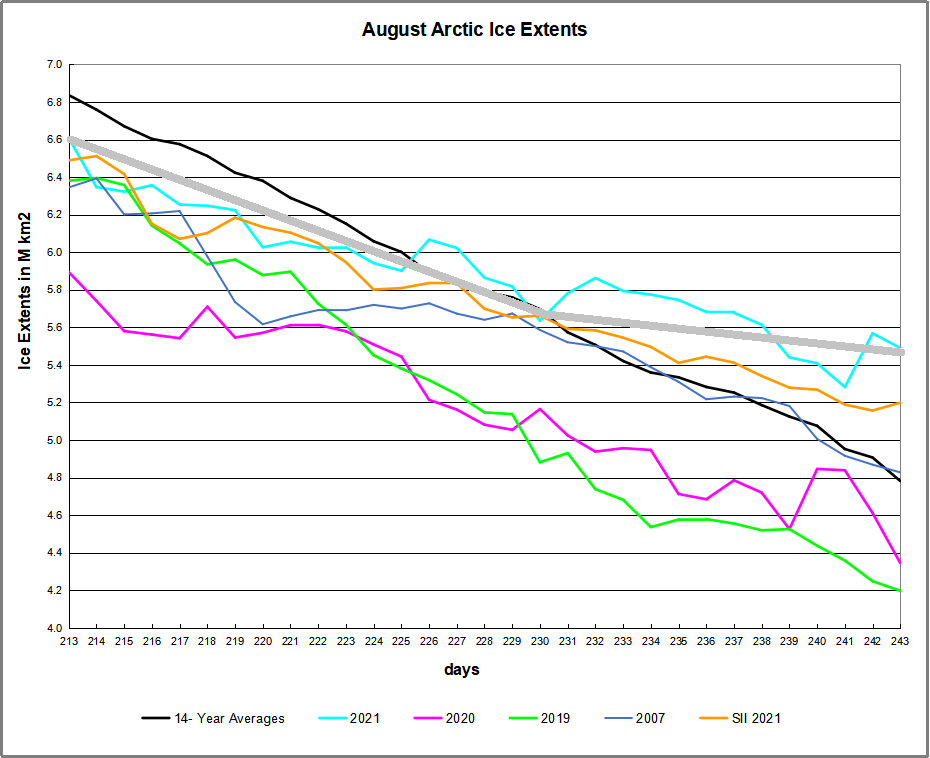
The melting season in August up to yesterday shows 2021 melted slower than average and the month end extents were much higher than average.  I have added a hockey stick to dramatize the abundance of August Arctic ice this year.


Firstly note that on average August ice declines 205k km2 but in 2021 only 112k km2 was lost. The decline in Sea Ice Index in orange  was only slightly more, 130k km2.  The table for day 243 show how large are the 2021 surpluses and how the ice is distributed across the various seas comprising the Arctic Ocean. Since 2007 was the same as average, 2020 day 243 is shown for comparison.  The surplus this year over last is more than 1 Wadham.

Region 2021243 Day 243 Average 2021-Ave. 2020243 2021-2020
 (0) Northern_Hemisphere 5489976 4823907 666069 4345398 1144577
 (1) Beaufort_Sea 855409 543972 311437 763281 92128
 (2) Chukchi_Sea 573897 221139 352758 212438 361459
 (3) East_Siberian_Sea 454688 337359 117328 176996 277692
 (4) Laptev_Sea 24500 164608 -140107 1029 23471
 (5) Kara_Sea 120346 41181 79165 23958 96387
 (6) Barents_Sea 598 20645 -20047 0 598
 (7) Greenland_Sea 63956 172538 -108583 192361 -128406
 (8) Baffin_Bay_Gulf_of_St._Lawrence 16313 26222 -9909 5016 11297
 (9) Canadian_Archipelago 431968 300878 131089 273116 158852
 (10) Hudson_Bay 44909 23291 21618 23611 21298
 (11) Central_Arctic 2902324 2971236 -68912 2672904 229421

The main deficits to average are in Laptev and Greenland Seas, overcome by surpluses almost everywhere, especially in BCE (Beaufort, Chukchi, East Siberian seas), Kara and Canadian Archipelago.  And as discussed below, the marginal basins have little ice left to lose.

The Bigger Picture 

We are close to the annual Arctic ice extent minimum, which typically occurs on or about day 260 (mid September). Some take any year’s slightly lower minimum as proof that Arctic ice is dying, but the image above shows the Arctic heart is beating clear and strong.

Over this decade, the Arctic ice minimum has not declined, but since 2007 looks like fluctuations around a plateau. By mid-September, all the peripheral seas have turned to water, and the residual ice shows up in a few places. The table below indicates where we can expect to find ice this September. Numbers are area units of Mkm2 (millions of square kilometers).

Day 260 14 year
Arctic Regions 2007 2010 2014 2015 2016 2017 2018 2019 2020 Average
Central Arctic Sea 2.67 3.16 2.98 2.93 2.92 3.07 2.91 2.97 2.50 2.90
BCE 0.50 1.08 1.38 0.89 0.52 0.84 1.16 0.46 0.65 0.89
LKB 0.29 0.24 0.19 0.05 0.28 0.26 0.02 0.11 0.01 0.16
Greenland & CAA 0.56 0.41 0.55 0.46 0.45 0.52 0.41 0.36 0.59 0.46
B&H Bays 0.03 0.03 0.02 0.10 0.03 0.07 0.05 0.01 0.02 0.04
NH Total 4.05 4.91 5.13 4.44 4.20 4.76 4.56 3.91 3.77 4.39

The table includes two early years of note along with the last 7 years compared to the 14 year average for five contiguous arctic regions. BCE (Beaufort, Chukchi and East Siberian) on the Asian side are quite variable as the largest source of ice other than the Central Arctic itself.   Greenland Sea and CAA (Canadian Arctic Archipelago) together hold almost 0.5M km2 of ice at annual minimum, fairly consistently.  LKB are the European seas of Laptev, Kara and Barents, a smaller source of ice, but a difference maker some years, as Laptev was in 2016.  Baffin and Hudson Bays are inconsequential as of day 260.

For context, note that the average maximum has been 15M, so on average the extent shrinks to 30% of the March high before growing back the following winter.  In this context, it is foolhardy to project any summer minimum forward to proclaim the end of Arctic ice.

Resources:  Climate Compilation II Arctic Sea Ice