
New York City Covered in Thick Smoke from Western USA and Canada Wildfires
The Wild Weather meme has gone viral, along with the usual suspects claiming it’s climate change. Just in the last 24 hours:
Extreme weather is terrorizing the world. It’s only just begun. Yahoo
Heatwaves are one of the deadliest hazards to emerge in extreme weather, and they’re occurring on a global scale.
After Earth’s hottest week on record, extreme weather surprises everyone — even climate scientists CBC.ca
This past week was the Earth’s hottest on record, as extreme weather from wildfires to floods ravaged various corners of the world. Here’s a closer look at what’s happening.
There’s no escaping climate change as extreme weather events abound The Washington Post
Extreme weather highlights need for greater climate action: WMO UN News Centre
Scorching temperatures are engulfing large parts of the Northern hemisphere, while devastating floods triggered by relentless rainfall have disrupted lives and livelihoods, underscoring the urgent need for more climate action,
White House details ‘extreme heat strategy’ amid blistering temperatures in U.S. City News
Crippling heat waves are an annual fixture in the United States — but it’s not every day the White House announces a detailed strategy to confront them. So far, it’s been an extreme-weather summer
U.S. lays out extreme heat plan amid record temperatures. What about Canada? Global News
Like in the U.S., the federal government in Canada has staked much of its reputation on enunciating and enacting a comprehensive response to climate change.
NASA climate adviser warns extreme weather events will persist if temps keep rising. wusf.usf.edu
With much of the U.S. facing extreme weather, NASA chief scientist and senior climate adviser Kate Calvin talks to NPR’s A Martinez about what we can expect as global temperatures continue to rise.
What this summer’s extreme weather events mean for humanity. Public Radio International
As the worldwide heat record fell last week, the acute effects are emerging quickly. Extreme weather events are proliferating across the globe.
Floods, tornadoes, heat: more extreme weather predicted across US. The Guardian
Over a third of Americans under extreme heat warnings as Vermont, still recovering from historic flooding, prepares for more storms
More than 40% of Californians say they were affected by recent extreme weather, poll finds Yahoo Canada Sports
An overwhelming majority of respondents say climate change is impacting their community, but are less confident in government’s readiness to respond.
El Niño is back: Surging temperatures bring extreme weather and threaten lives Euronews
“Early warnings and anticipatory action of extreme weather events associated with this major climate phenomenon are vital to save lives and livelihoods.” Rising sea temperatures are already …
Cities fight to keep the lights on in extreme weather events Politico Europe
More intense and longer-lasting heat waves are a challenge for the electricity grids that power Europe’s urban centers.
Heat: 3 in 4 Californians say climate change is contributing to the state’s extreme weather events East Bay Times
With a heat wave approaching that could send inland temperatures soaring this weekend to more than 105 degrees, a new poll shows Californians’ concerns are rising about climate change and its connections to extreme weather.
Extreme Weather Bakes the South, Soaks the Northeast The Globe and Mail
This extreme weather from coast to coast: Is it ‘a new abnormal’? Yahoo News Canada
Wildfire smoke engulfed the iconic skyline of New York, blotting out the Empire State Building in a dystopian orange haze. A massive heat dome broke temperature records in Texas, straining the power grid and killing 13 people.
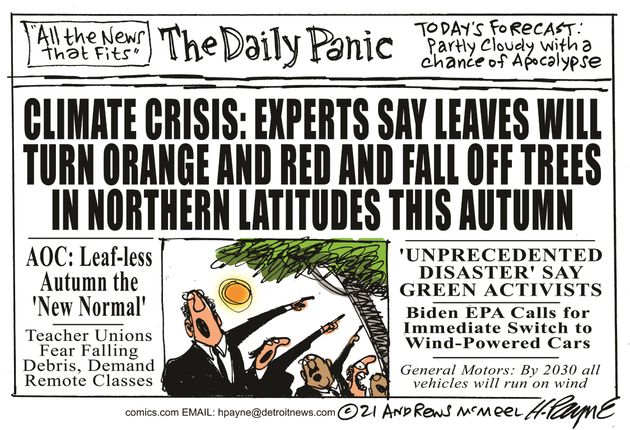
This seasonal outbreak of distressing media hype deserves a rational response, so I am reposting wise words from meteorologist Cliff Mass from summer 2021.
Reality Check on Extreme Weather Claims
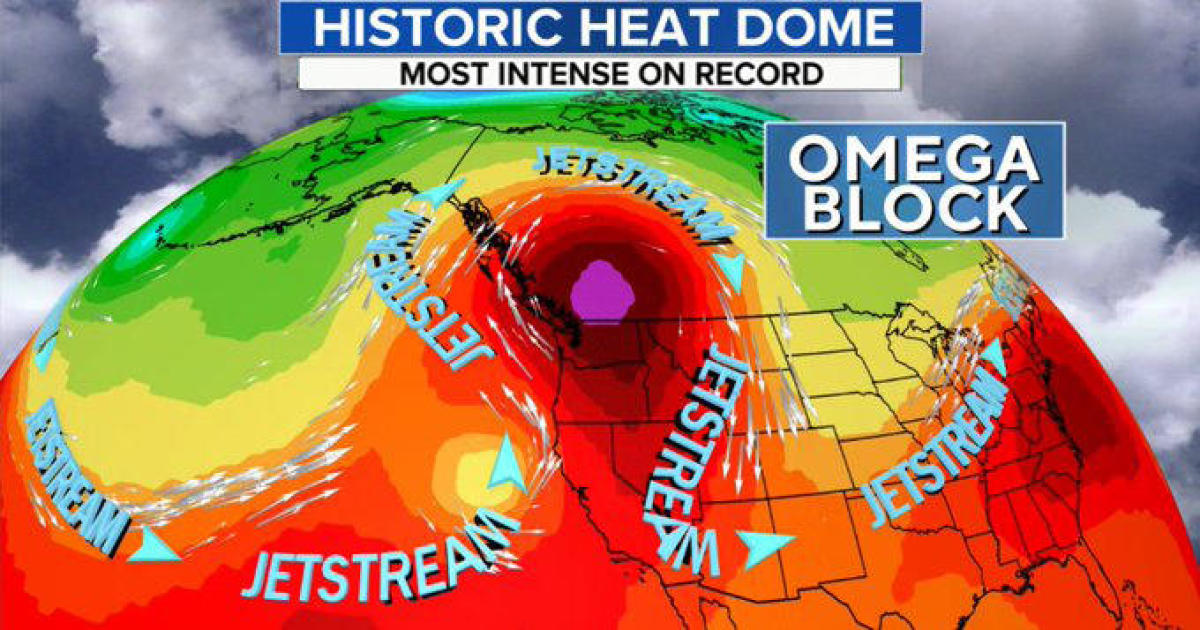
CBS News headline was: ‘Pacific Northwest heat wave would have been “virtually impossible” without climate change, experts say.’
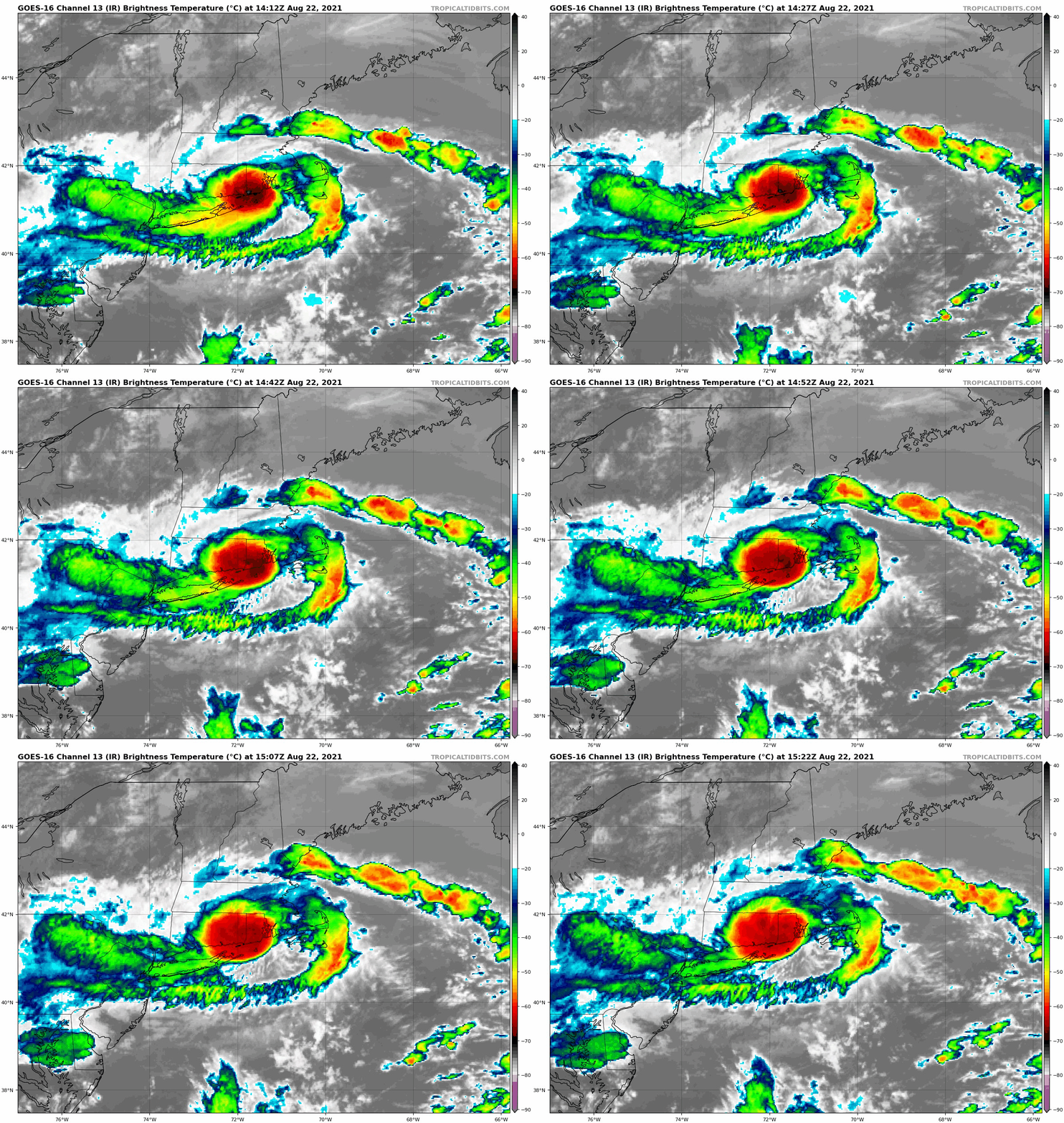
Eric Felton provides a useful reprise of the campaign to exploit a recent Washington State heat wave for climate hysteria mongering. His article at Real Clear Investigations is Does Climate Change Cause Extreme Weather Now? Here’s a Scorcher of a Reality Check. This discussion is timely since you can soon expect an inundation of hype saying our SUVs caused whatever damage is done by Hurricane (or Tropical Storm) Henri, shown below approaching Long Island and New England. Excerpts from Felton’s article are below in italics with my bolds.
The Pacific Northwest was hit with a record-shattering heat wave in June, with temperatures over 35 degrees higher than normal in some places. On June 28, Portland, Ore., reached 116 degrees. Late last week the region suffered another blast of hot weather, with a high in Portland of 103 degrees. The New York Times didn’t hesitate to pronounce the region’s bouts of extreme weather proof that the climate wasn’t just changing, but catastrophically so.
To make that claim, the Times relied on a “consortium of climate experts” that calls itself World Weather Attribution, a group organized not just to attribute extreme weather events to climate change, but to do so quickly. Within days of the June heat wave, the researchers released an analysis, declaring that the torrid spell “was virtually impossible without human-caused climate change.”
World Weather Attribution and its alarming report were trumpeted by Time magazine, touted by the NOAA website Climate.gov , and featured by CBS News, CNBC, Scientific American, CNN, the Washington Post, USAToday, and the New York Times, among others.
The group’s claim that global warming was to blame was perhaps less significant than the speed with which that conclusion was provided to the media. Previous efforts to tie extreme weather events to climate change hadn’t had the impact scientists had hoped for, according to Time, because it “wasn’t producing results fast enough to get attention from people outside the climate science world.”
“Being able to confidently say that a given weather disaster was caused by climate change while said event still has the world’s attention,” Time explained, approvingly, “can be an enormously useful tool to convince leaders, lawmakers and others that climate change is a threat that must be addressed.” In other words, the value of rapid attribution is primarily political, not scientific.
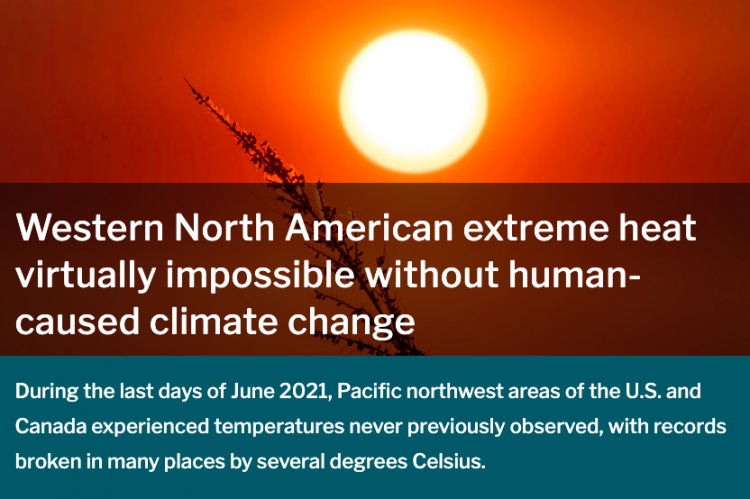
World Weather Attribution was organized to quickly attribute extreme weather events to climate change. World Weather Attribution
Inconveniently for World Weather Attribution, an atmospheric scientist with extensive knowledge of the Pacific Northwest climate was actively running weather models that accurately predicted the heatwave. Cliff Mass rejected the notion that global warming was to blame for the scorching temperatures. He calculated that global warming might have been responsible for two degrees of the near 40-degree anomaly. With or without climate change, Mass wrote, the region “still would have experienced the most severe heat wave of the past century.”
Mass has no shortage of credentials relevant to the issue: A professor of atmospheric sciences at the University of Washington, he is author of the book “The Weather of the Pacific Northwest.”
Mass took on the World Weather Attribution group directly: “Unfortunately, there are serious flaws in their approach.” According to Mass, the heatwave was the result of “natural variability.” The models being used by the international group lacked the “resolution to correctly simulate critical intense, local precipitation features,” and “they generally use unrealistic greenhouse gas emissions.”
WWA issued a “rebuttal” calling Mass’ criticisms “misleading and incorrect.” But the gauntlet thrown down by Mass did seem to affect WWA’s confidence in its claims. The group, which had originally declared the heatwave would have been “virtually impossible without human-caused climate change,” altered its tone. In subsequent public statements, it emphasized that it had merely been making “best estimates” and had presented them “with the appropriate caveats and uncertainties.” Scientists with the attribution group did not respond to questions about Mass’s criticisms posed by RealClearInvestigations.
But what of the group’s basic mission, the attribution of individual weather events to climate change? Hasn’t it been a fundamental rule of discussing extreme temperatures in a given place not to conflate weather with climate? Weather, it is regularly pointed out, refers to conditions during a short time in a limited area; climate is said to describe longer-term atmospheric patterns over large areas.
Until recently, at least, climate scientists long warned against using individual weather events to ponder the existence or otherwise of global warming. Typically, that argument is used to respond to those who might argue a spate of extreme cold is reason to doubt the planet is warming. Using individual weather events to say anything about the climate is “dangerous nonsense,” the New Scientist warned a decade ago.
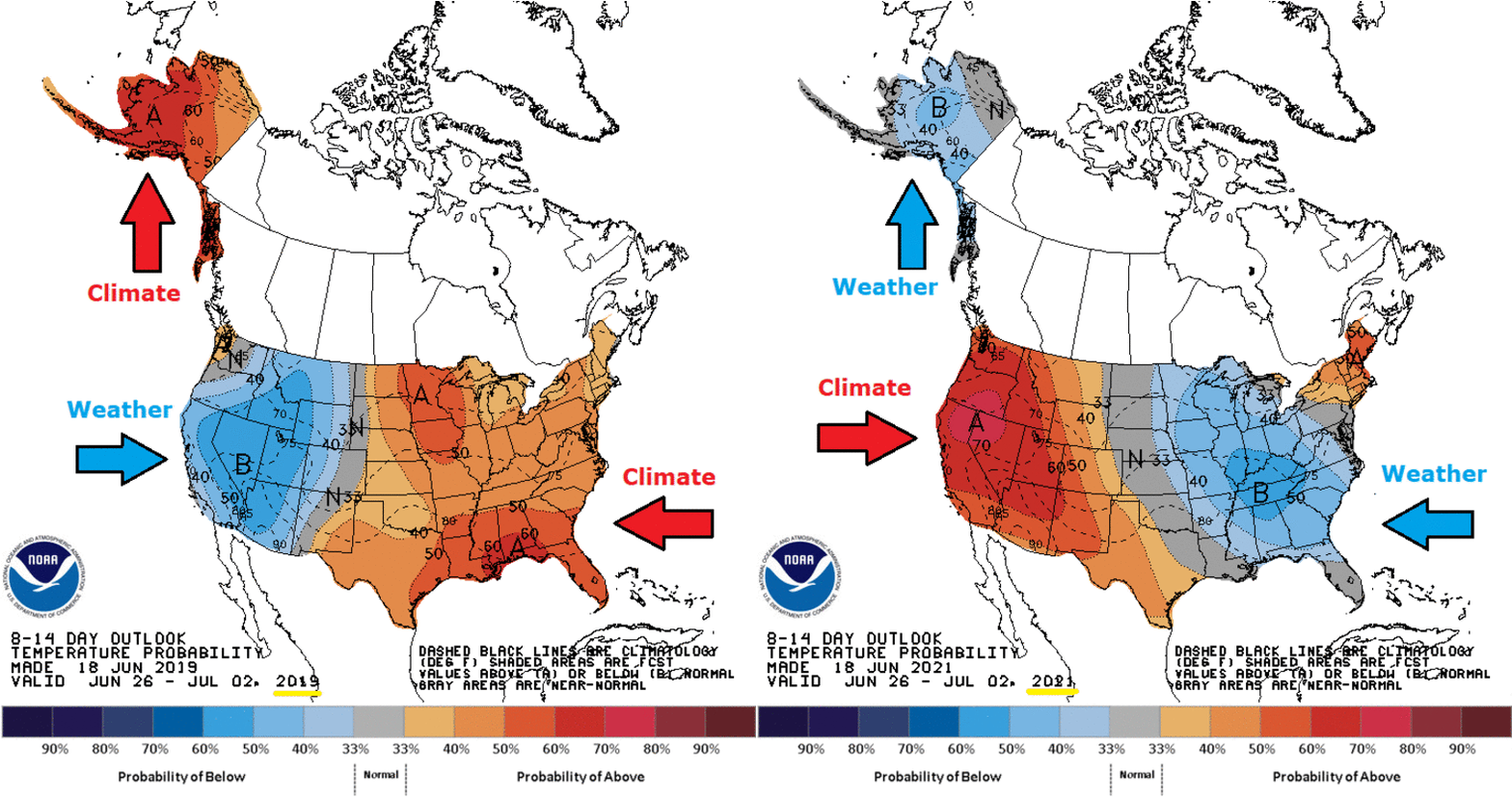
Perhaps, but it happens all the time now that climate advocates have found it to be an effective tool. In 2019, The Associated Press-NORC Center for Public Affairs Research and the Energy Policy Institute at the University of Chicago found that three-fourths of those polled said their views about climate change had been shaped by extreme weather events. Leah Sprain, in the book “Ethics and Practice in Science Communication,” says that even though it may be legitimate to make the broad claim that climate change “may result in future extreme weather,” when one tries “arguing weather patterns were caused by climate change, things get dicey.” Which creates a tension: “For some communicators, the ultimate goal – mobilizing political action – warrants rhetorical use of extreme weather events.” But that makes scientists nervous, Sprain writes, because “misrepresenting science will undermine the credibility of arguments for climate change.”
Which is exactly what happened with the World Weather Attribution group, according to Mass: “Many of the climate attribution studies are resulting in headlines that are deceptive and result in people coming to incorrect conclusions about the relative roles of global warming and natural variability in current extreme weather,” he wrote at his blog. “Scary headlines and apocalyptic attribution studies needlessly provoke fear.”
The blogging professor laments that atmospheric sciences have been “poisoned” by politics. “It’s damaged climate science,” he told RCI.
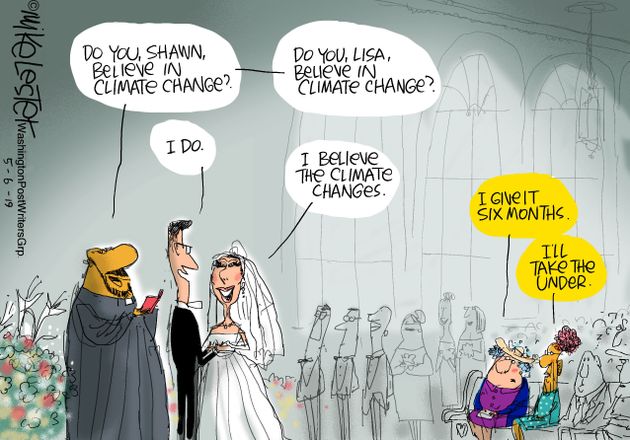
And not just politics – Mass also says that the accepted tenets of global warming have become a sort of religion. Consider the language used, he says, such as the question of whether one “believes” in anthropogenic climate change. “You don’t believe in gravity,” he says. The religious metaphor also explains why colleagues get so bent out of shape with him, Mass says: “There’s nothing worse than an apostate priest.”
That goes even for those who are merely mild apostates. Mass doesn’t dispute warming, he merely questions how big a problem it is. “We need to worry about climate change,” he has said. “But hype and exaggeration of its impacts only undermine the potential for effective action.”
For a more in depth look at the the science of attributing causes of extreme weather events, see:

 Science Matters
Reblogged this on Climate Collections.
LikeLike