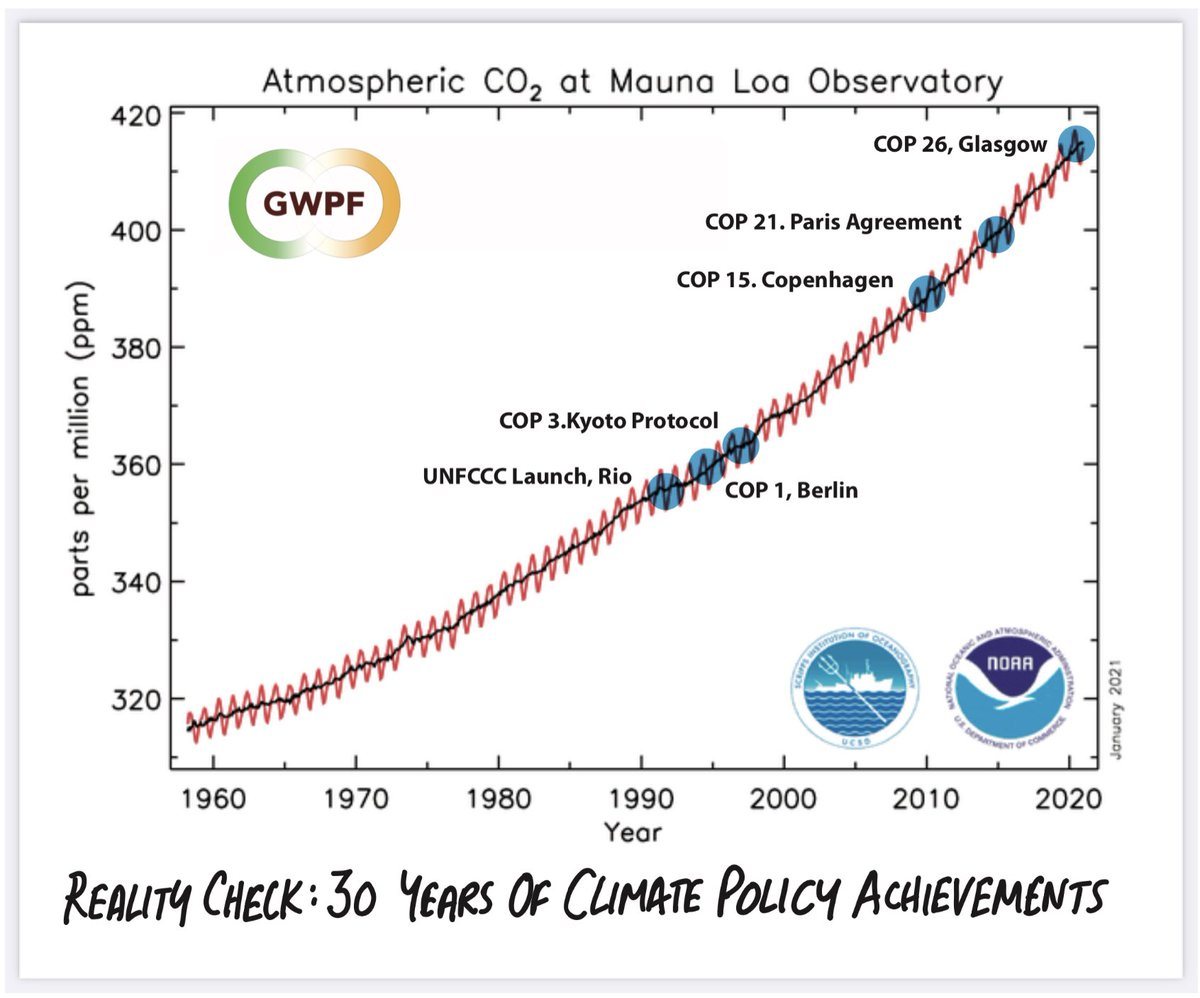
Following the Africa Climate Summit in Nairobi this month, I am reposting a pertinent article regarding the world of hurt caused by misguided governmental policies driven by CO2 hysteria.
This is a fourth post toward infographics exposing the damaging effects of Climate Policies upon the lives of ordinary people. (See World of Hurt Part 1 , Part 2, and Part 3 ) And all of the pain is for naught in fighting against global warming/climate change, as shown clearly in the image above. This post presents graphics to illustrate the fourth of four themes:
- Zero Carbon Means Killing Real Jobs with Promises of Green Jobs
- Reducing Carbon Emissions Means High Cost Energy Imports and Social Degradation
- 100% Renewable Energy Means Sourcing Rare Metals Off-Planet
- Leave it in the Ground Means Perpetual Poverty
The War Against Carbon Emissions Diminishes Efforts to Lift People Out of Poverty
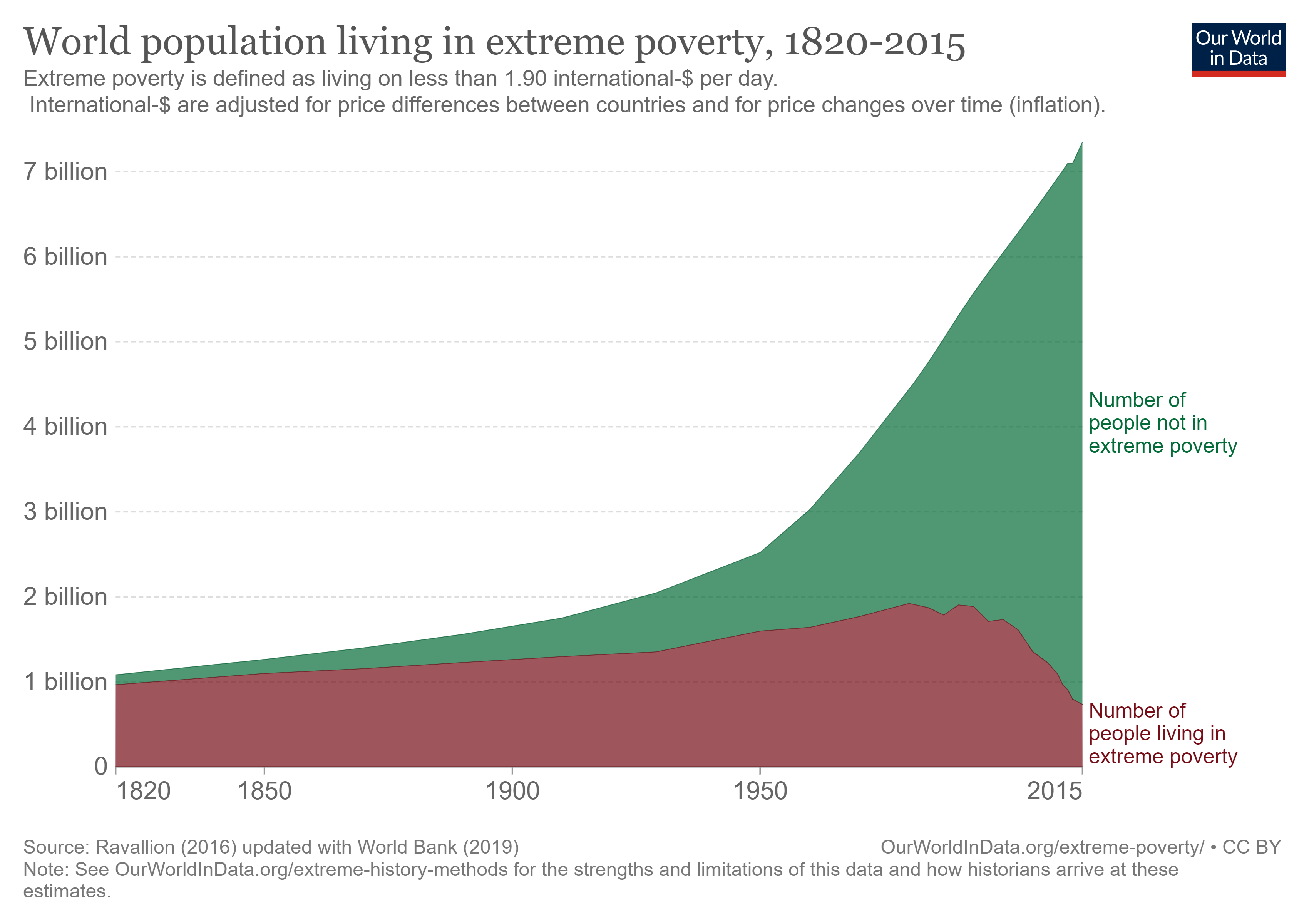
The OurWorldinData graph shows how half a billion people have risen out of extreme poverty in recent decades. While much needs to be done, it is clear that the world knows the poverty factors to be overcome.
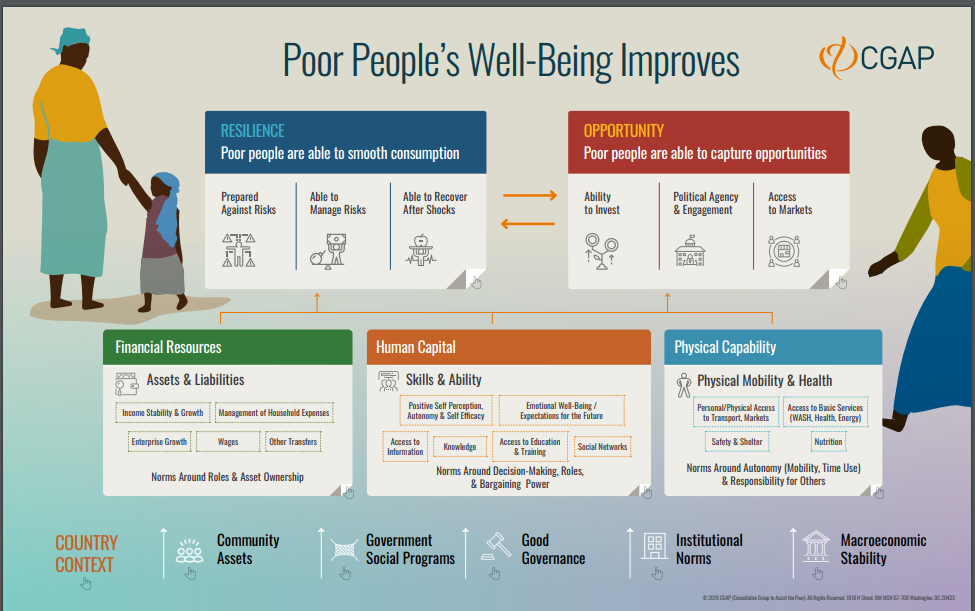
That comprehensive diagram from CGAP shows numerous elements that contribute to rising health and prosperity, but there is one resource underlying and enabling everything: Access to affordable, reliable energy. From Global Energy Assessment:
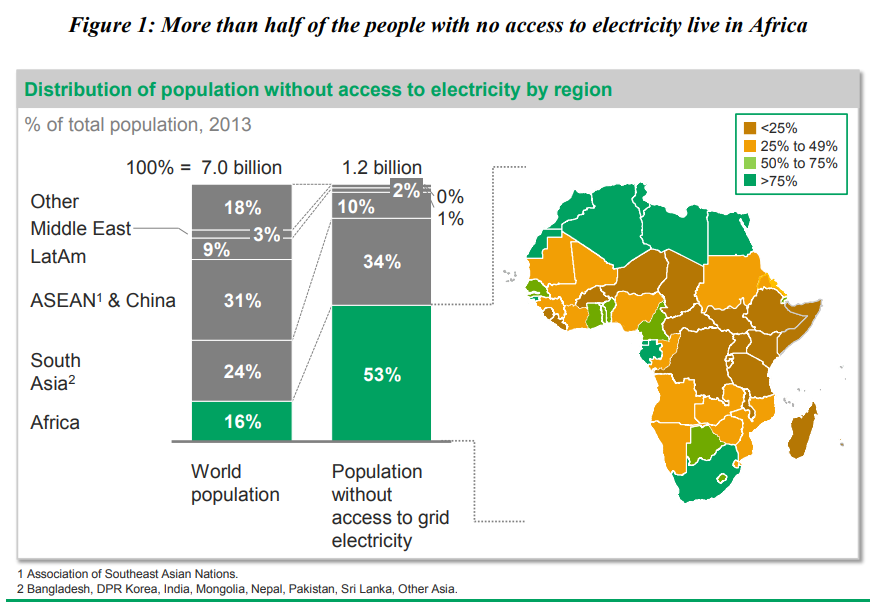
“Access to cleaner and affordable energy options is essential for improving the livelihoods of the poor in developing countries. The link between energy and poverty is demonstrated by the fact that the poor in developing countries constitute the bulk of an estimated 2.7 billion people relying on traditional biomass for cooking and the overwhelming majority of the 1.4 billion without access to grid electricity. Most of the people still reliant on traditional biomass live in Africa and South Asia.
The relationship is, in many respects, a vicious cycle in which people who lack access to cleaner and affordable energy are often trapped in a re-enforcing cycle of deprivation, lower incomes and the means to improve their living conditions while at the same time using significant amounts of their very limited income on expensive and unhealthy forms of energy that provide poor and/or unsafe services.”
The moral of this is very clear. Where energy is scarce and expensive, people’s labor is cheap and they live in poverty. Where energy is reliable and cheap, people are paid well to work and they have a better life.
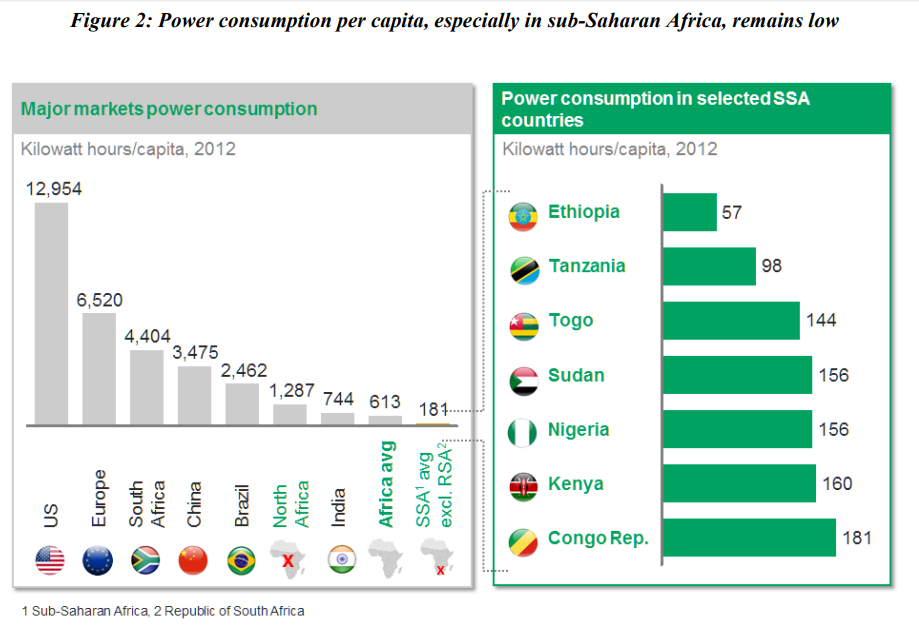
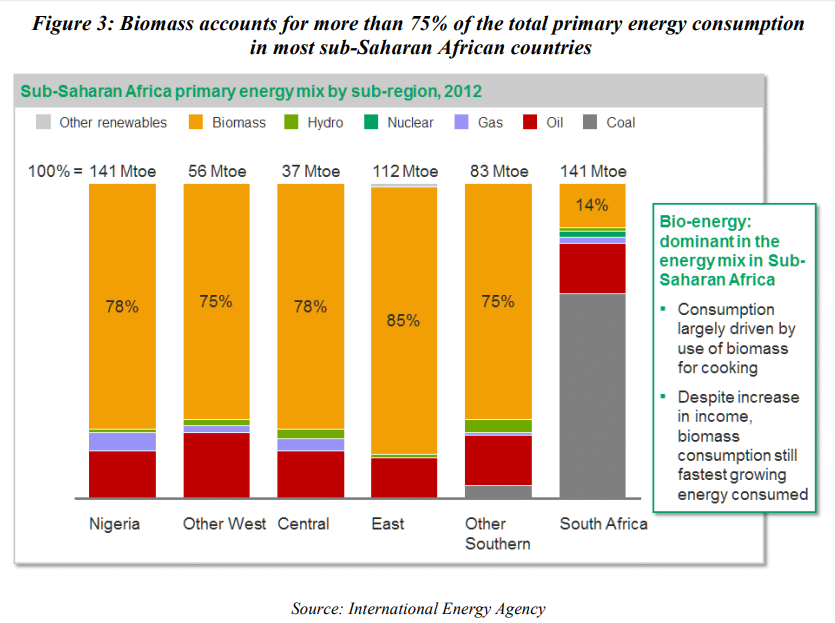
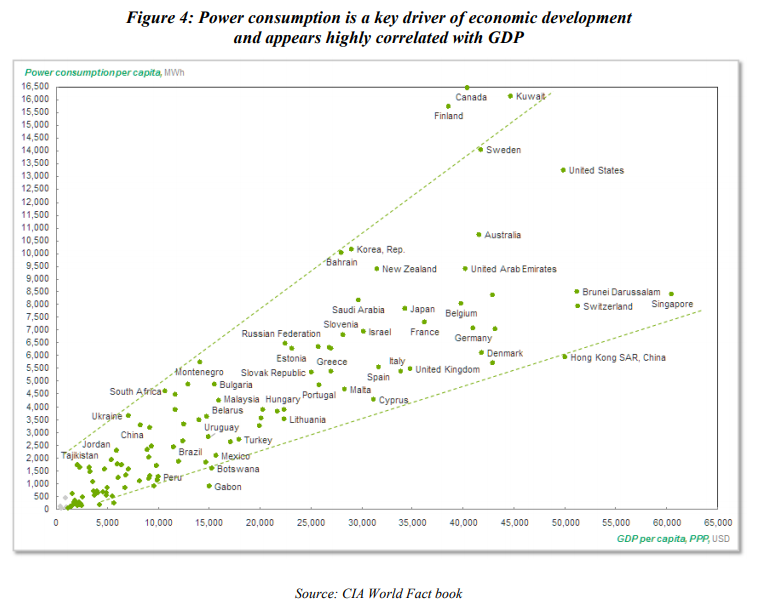
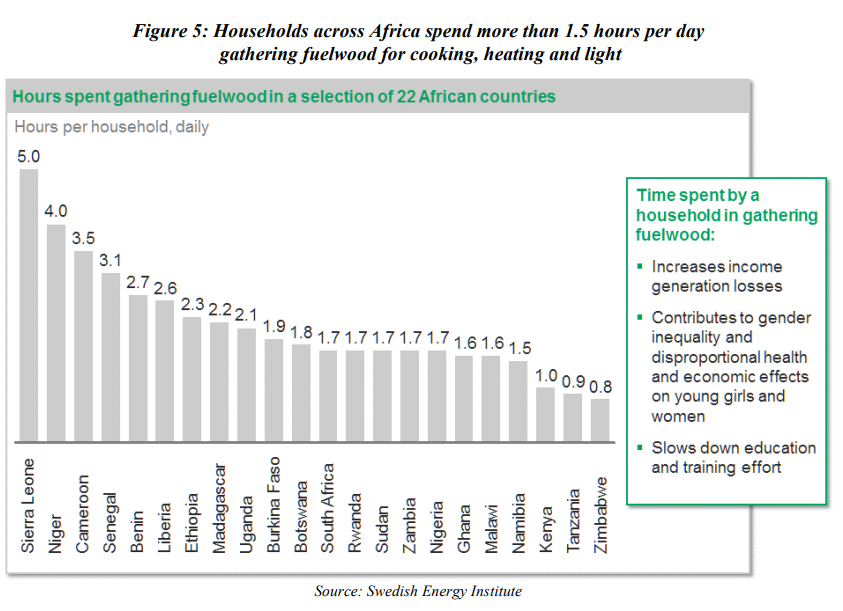

How Climate Policies Keep People Poor
Note that the vision for 100% access to electric power was put forward by the African Development Bank in 2016. (Above slides come from The Bank Group’s Strategy for The New Deal on Energy for Africa 2016 – 2025). Instead of making finances available for such a plan, an International Cabal organized to deny any support for coal, the most available and inexpensive way to electrify Africa.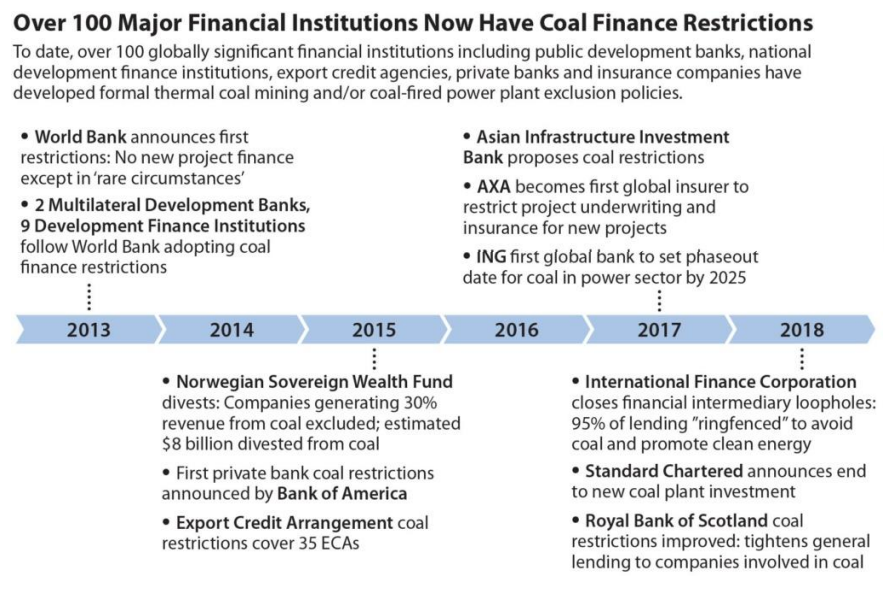 This is an organized campaign to deny coal-fired power anywhere in the world, despite coal being the starting point in the development pathway for every modern society, and currently the success model for Asia, and China in particular. [Note in Figure 3 above that South Africa, the most advanced of African nations gets the majority of its power from coal.] The chart above comes from IEEFA 2019 report Over 100 Global Financial Institutions Are Exiting Coal, With More to Come. Their pride in virtue-signaling is expressed in the subtitle:
Every Two Weeks a Bank, Insurer or Lender Announces New Restrictions on Coal.
How Climate Policies Waste Resources that could Improve Peoples’ Lives
The Climate Crisis Industry costs over 2 Trillion US dollars every year, and is estimated to redirect 30% of all foreign aid meant for developing countries into climate projects like carbon offsets and off-grid wind and solar.
A much better plan is put forward by the Copenhagen Consensus Center. A panel of social and economic development experts did cost/benefit analyses of all the Millenium Goals listed by the UN working groups, including climate mitigation and adaption goals along with all the other objectives deemed desirable. They addressed the question:
What are the best ways of advancing global welfare, and particularly the welfare of developing countries, illustrated by supposing that an additional $75 billion of resources were at their disposal over a 4‐year initial period?
These challenges were examined:
- Armed Conflict
- Biodiversity
- Chronic Disease
- Climate Change
- Education
- Hunger and Malnutrition
- Infectious Disease
- Natural Disasters
- Population Growth
- Water and Sanitation

Imagine how much good could be done by diverting some of the trillions wasted trying to bend the curve at the top of the page?
 Science Matters
a great article that applies to anyone poor anywhere IMO:
LikeLike
I’ve shared this article with some friends. One of them found it difficult to accept the declines in extreme poverty. Another thought it was attributable to “electrification.” The Global Energy Assessment seemed focused on better energy, better utilization thereof and better affordability: I know poor indoor air quality from smoldering biomass cooking firers is a major cause of illness , I know that synthetic fertilizers increase agricultural yield. I also know that contaminated drinking water is another root cause for poor health and increased mortality. I know that limited access to health care is yet another factor. I know that all of these areas have shown significant progress. has been made that collectively contributed to the the declines in extreme poverty.
It would have been ideal if the graph showing the declines in extreme poverty was stacked to illustrate all these factors but alas, it wasn’t. If you happen to have date illustrating other positive factors for the declines in extreme poverty, I would greatly appreciate if you could share them with me.
LikeLike
Mark, thanks for digging into this. Maybe this report will help:
https://www.worldbank.org/en/news/press-release/2022/10/05/global-progress-in-reducing-extreme-poverty-grinds-to-a-halt
LikeLike
That’s an interesting update: https://www.worldbank.org/en/news/press-release/2022/10/05/global-progress-in-reducing-extreme-poverty-grinds-to-a-halt
The plot thickens.and blame can be laid. Bidenomics? Yeah sure but maybe Trump too ; at least to a lesser degree?
LikeLike
Actually, much of the progress appears in China and India, if NYT can be believed:
“Though poverty has declined everywhere, China and India, the world’s most populous countries, account for a vast majority of the progress. China’s economic growth, spurred by reforms that opened its economy to trade and improved agricultural productivity, as well as foreign direct investment, gave the government the means to reduce poverty.
The government provided free elementary education for all children and financed major construction projects to bring electricity and clean water to rural areas. People moved from the countryside to coastal cities, where they worked in factories and sent money home. Government-sponsored programs moved more than a million people — some reluctantly — from the drought-stricken desert to newly built villages closer to roads and water.”
“China’s G.D.P. rose an annual average of 9.5 percent for 40 years, in what the World Bank called “the fastest sustained expansion by a major economy in history.” (That economic growth also contributed to carbon emissions, but that’s another story.)
“When countries see sustained economic growth, you also see declining absolute poverty,” said Charles Kenny, a researcher at the Center for Global Development, a nonprofit think tank. “It’s as close to a universal law as we have.”
The most recent World Bank figures show just 0.3 percent of China’s rural population living under $1.90 a day.”
“China’s story is unique, but poverty has been declining in much of the rest of the world, too. Mexico and Brazil raised living standards by giving money to the poor and requiring only regular health checkups and school attendance for children in return. Dozens of other countries have tried similar programs. Though these initiatives can’t replace sweeping economic growth, they, as well as programs like meals in school and social pensions, can have significant effects: The World Bank estimates that social safety net programs are responsible for 36 percent of the global reduction in extreme poverty.”
LikeLike