UAH: El Nino Warming Peaks August 2023

The post below updates the UAH record of air temperatures over land and ocean. Each month and year exposed again the growing disconnect between the real world and the Zero Carbon zealots.  It is as though the anti-hydrocarbon band wagon hopes to drown out the data contradicting their justification for the Great Energy Transition.  Yes, there is warming from an El Nino buildup coincidental with North Atlantic warming, but no basis to blame it on CO2.  

As an overview consider how recent rapid cooling  completely overcame the warming from the last 3 El Ninos (1998, 2010 and 2016).  The UAH record shows that the effects of the last one were gone as of April 2021, again in November 2021, and in February and June 2022  At year end 2022 and continuing into 2023 global temp anomaly matched or went lower than average since 1995, an ENSO neutral year. (UAH baseline is now 1991-2020).
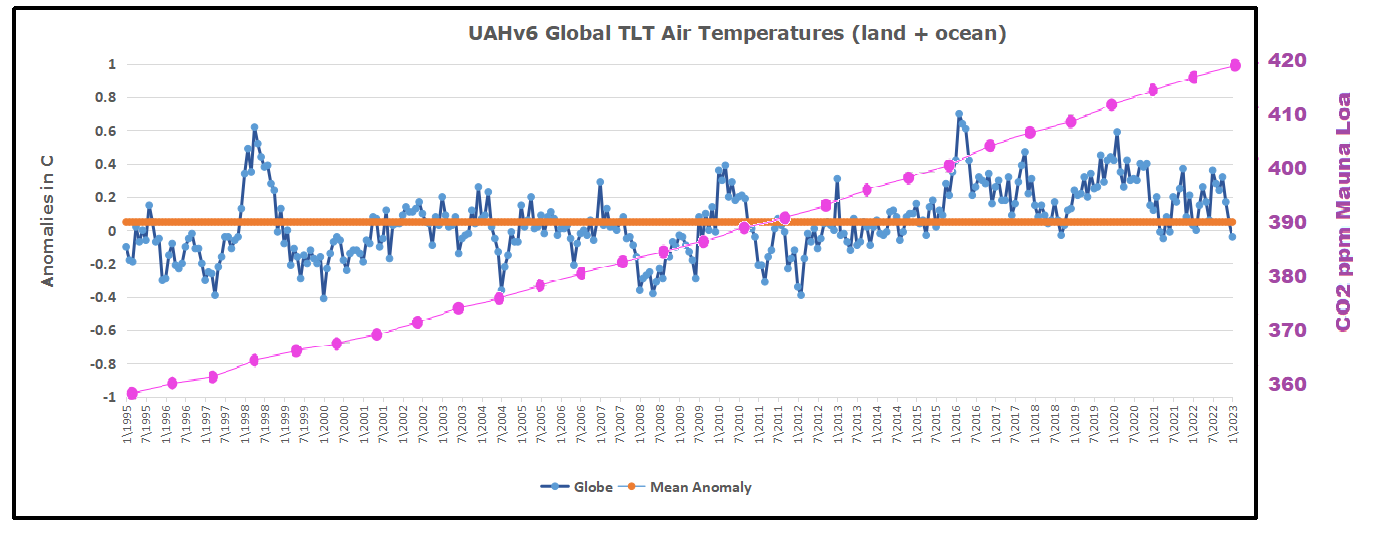
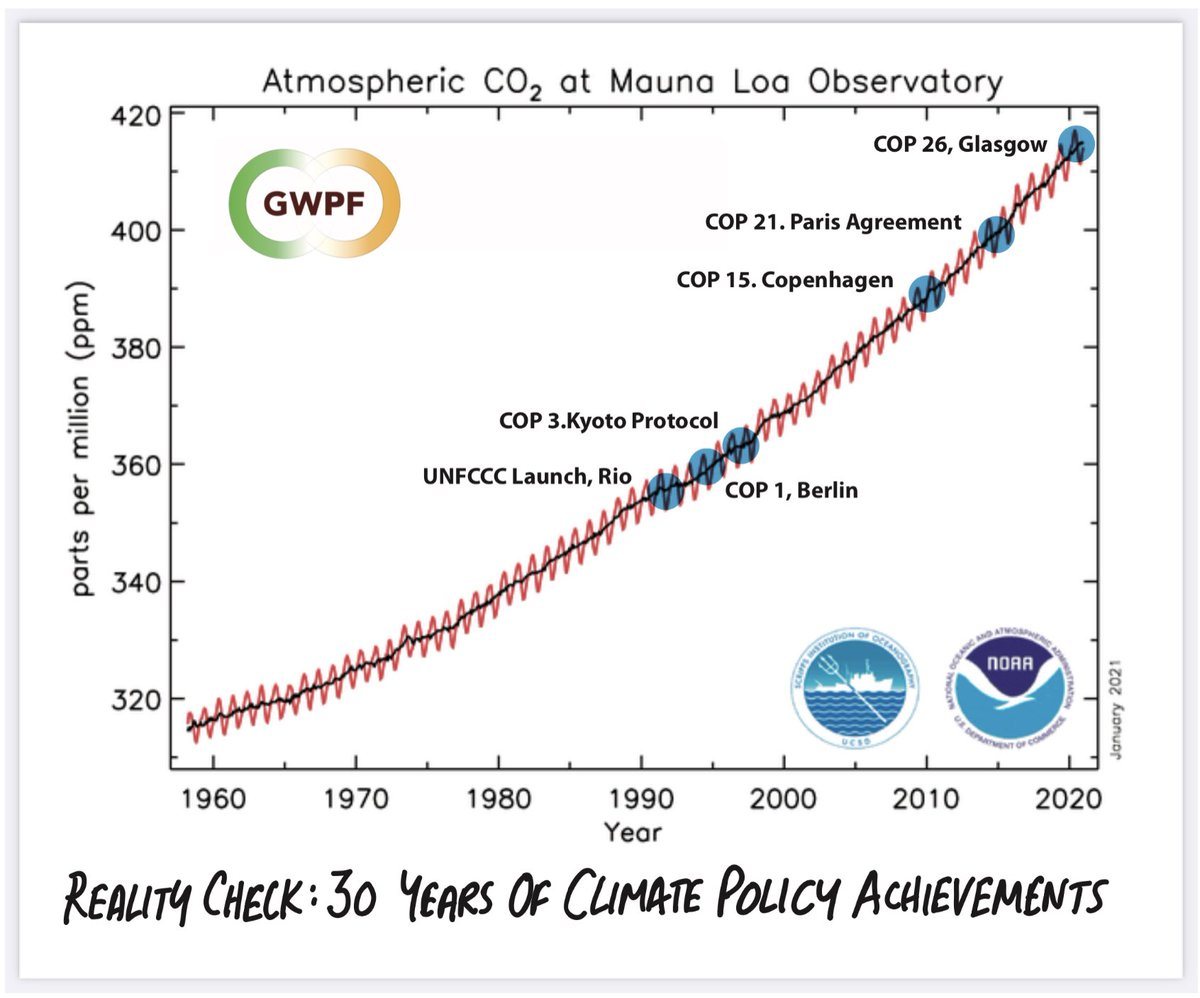
For reference I added an overlay of CO2 annual concentrations as measured at Mauna Loa.  While temperatures fluctuated up and down ending flat, CO2 went up steadily by ~60 ppm, a 15% increase.

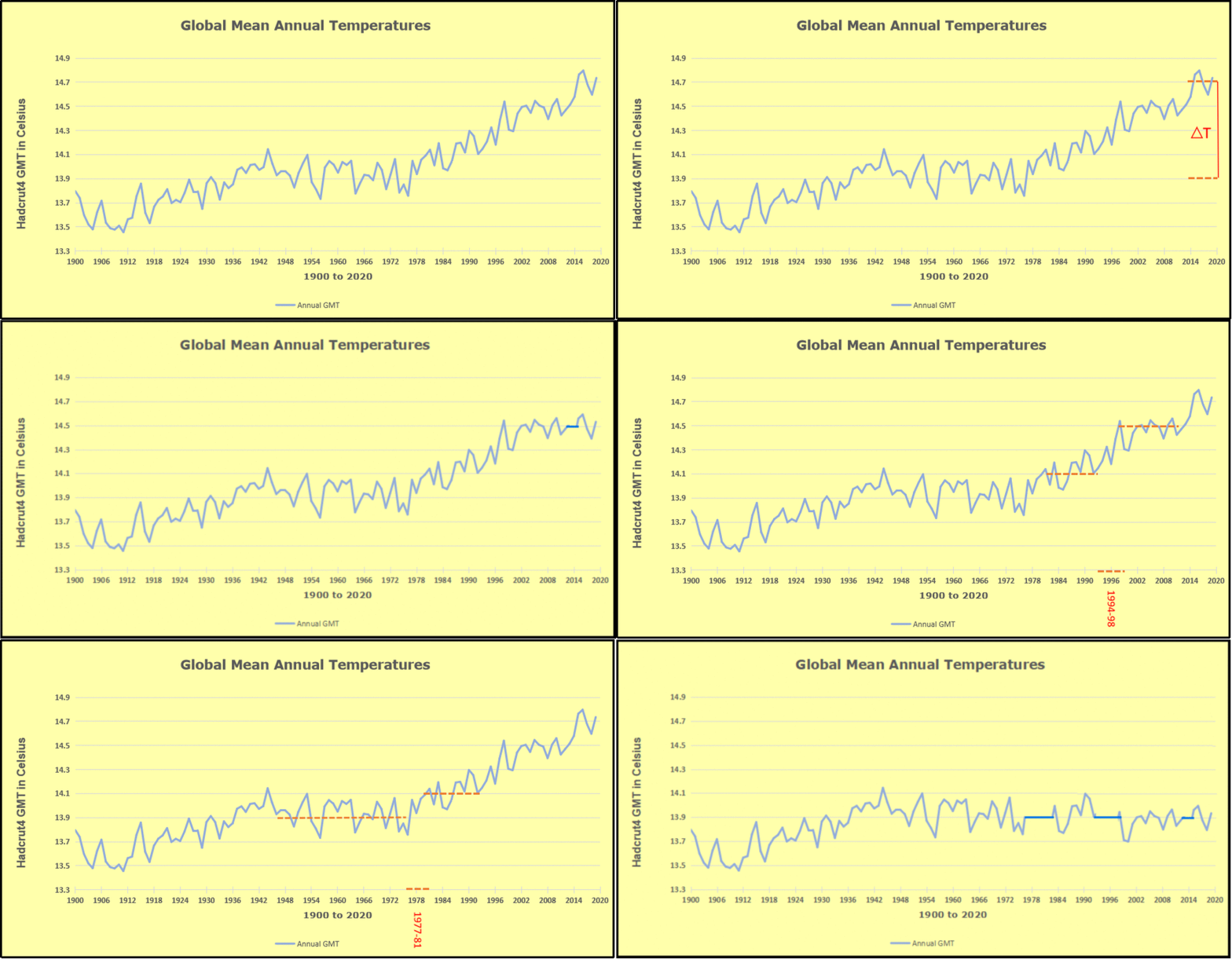
Furthermore, going back to previous warmings prior to the satellite record shows that the entire rise of 0.8C since 1947 is due to oceanic, not human activity.
gmt-warming-events

The animation is an update of a previous analysis from Dr. Murry Salby.  These graphs use Hadcrut4 and include the 2016 El Nino warming event.  The exhibit shows since 1947 GMT warmed by 0.8 C, from 13.9 to 14.7, as estimated by Hadcrut4.  This resulted from three natural warming events involving ocean cycles. The most recent rise 2013-16 lifted temperatures by 0.2C.  Previously the 1997-98 El Nino produced a plateau increase of 0.4C.  Before that, a rise from 1977-81 added 0.2C to start the warming since 1947.

Importantly, the theory of human-caused global warming asserts that increasing CO2 in the atmosphere changes the baseline and causes systemic warming in our climate.  On the contrary, all of the warming since 1947 was episodic, coming from three brief events associated with oceanic cycles. 

Update August 3, 2021

Chris Schoeneveld has produced a similar graph to the animation above, with a temperature series combining HadCRUT4 and UAH6. H/T WUWT
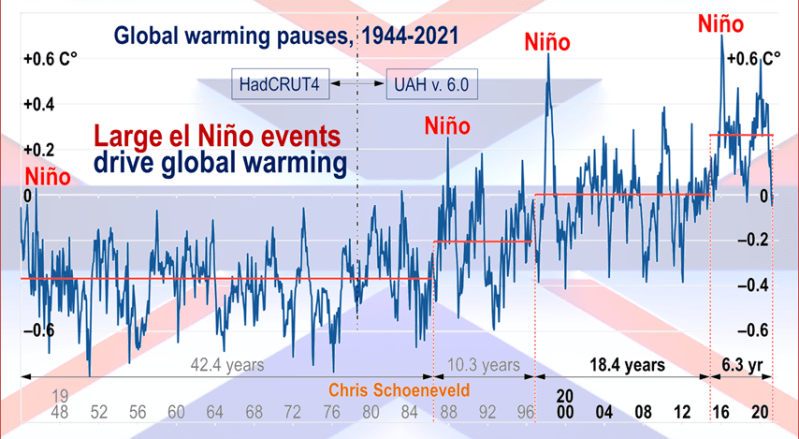
image-8


mc_wh_gas_web20210423124932

See Also Worst Threat: Greenhouse Gas or Quiet Sun?

August 2023 Update El Nino plus North Atlantic Set Summer High

banner-blog

With apologies to Paul Revere, this post is on the lookout for cooler weather with an eye on both the Land and the Sea.  While you will hear a lot about 2020-21 temperatures matching 2016 as the highest ever, that spin ignores how fast the cooling set in.  The UAH data analyzed below shows that warming from the last El Nino had fully dissipated with chilly temperatures in all regions. After a warming blip in 2022, land and ocean temps dropped again with 2023 starting below the mean since 1995.  Now in August EL Nino has peaked with a major Tropical ocean air spike in concert with North Atlantic high temps.

UAH has updated their tlt (temperatures in lower troposphere) dataset for August 2023. Posts on their reading of ocean air temps this month preceded updated records from HadSST4.  I last posted on SSTs using HadSST4 World’s Oceans Warming July 2023. This month also has a separate graph of land air temps because the comparisons and contrasts are interesting as we contemplate possible cooling in coming months and years. Sometimes air temps over land diverge from ocean air changes.  For example in May 2023, ocean temps in all regions moved upward, while Tropical and NH land air temps dropped sharply. 

In August, as shown later on, Global ocean air reached a slightly higher peak led by NH, but with Tropics easing down. OTOH  Land air temps moderated, with a NH rise offset by a drop in SH. along with slightly lower Tropics.  Thus the land + ocean Global UAH temperature is now nearly matching the 2016 peak.

Note:  UAH has shifted their baseline from 1981-2010 to 1991-2020 beginning with January 2021.  In the charts below, the trends and fluctuations remain the same but the anomaly values change with the baseline reference shift.
Presently sea surface temperatures (SST) are the best available indicator of heat content gained or lost from earth’s climate system.  Enthalpy is the thermodynamic term for total heat content in a system, and humidity differences in air parcels affect enthalpy.  Measuring water temperature directly avoids distorted impressions from air measurements.  In addition, ocean covers 71% of the planet surface and thus dominates surface temperature estimates.  Eventually we will likely have reliable means of recording water temperatures at depth.

Recently, Dr. Ole Humlum reported from his research that air temperatures lag 2-3 months behind changes in SST.  Thus the cooling oceans now portend cooling land air temperatures to follow.  He also observed that changes in CO2 atmospheric concentrations lag behind SST by 11-12 months.  This latter point is addressed in a previous post Who to Blame for Rising CO2?

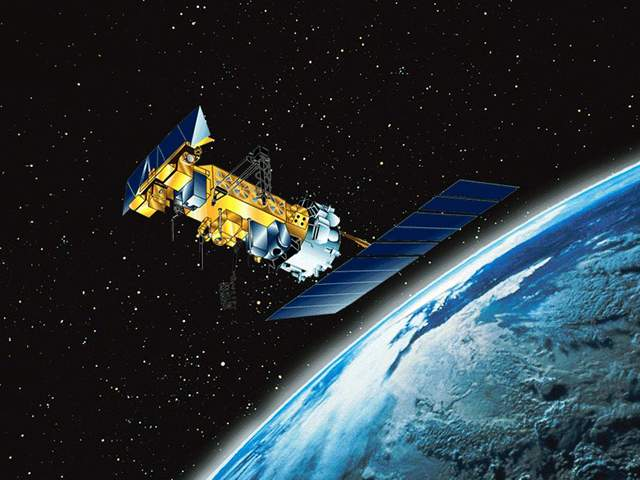
After a change in priorities, updates are now exclusive to HadSST4.  For comparison we can also look at lower troposphere temperatures (TLT) from UAHv6 which are now posted for August.  The temperature record is derived from microwave sounding units (MSU) on board satellites like the one pictured above. Recently there was a change in UAH processing of satellite drift corrections, including dropping one platform which can no longer be corrected. The graphs below are taken from the revised and current dataset.

The UAH dataset includes temperature results for air above the oceans, and thus should be most comparable to the SSTs. There is the additional feature that ocean air temps avoid Urban Heat Islands (UHI).  The graph below shows monthly anomalies for ocean air temps since January 2015.

Note 2020 was warmed mainly by a spike in February in all regions, and secondarily by an October spike in NH alone. In 2021, SH and the Tropics both pulled the Global anomaly down to a new low in April. Then SH and Tropics upward spikes, along with NH warming brought Global temps to a peak in October.  That warmth was gone as November 2021 ocean temps plummeted everywhere. After an upward bump 01/2022 temps reversed and plunged downward in June.  After an upward spike in July, ocean air everywhere cooled in August and also in September.   

After sharp cooling everywhere in January 2023, all regions were into negative territory. Note the Tropics matched the lowest, but since have spiked sharply upward +1.25C, with the largest increases in May, June and July 2023.  NH also warmed 0.6C in the last 3 months, while SH ocean air rose 0.5C since February. Global Ocean air August 2023 is now matching 2016, which had higher Tropics and NH peaks followed by cooling.  The strength of the El Nino will determine the latter half of this year.

Land Air Temperatures Tracking Downward in Seesaw Pattern

We sometimes overlook that in climate temperature records, while the oceans are measured directly with SSTs, land temps are measured only indirectly.  The land temperature records at surface stations sample air temps at 2 meters above ground.  UAH gives tlt anomalies for air over land separately from ocean air temps.  The graph updated for August is below.


Here we have fresh evidence of the greater volatility of the Land temperatures, along with extraordinary departures by SH land.  Land temps are dominated by NH with a 2021 spike in January,  then dropping before rising in the summer to peak in October 2021. As with the ocean air temps, all that was erased in November with a sharp cooling everywhere.  After a summer 2022 NH spike, land temps dropped everywhere, and in January, further cooling in SH and Tropics offset by an uptick in NH. 

Remarkably, in 2023, SH land air anomaly shot up 1.5C, from  -0.56C in January to +0.93 in July, then dropped to 0.53 in August.  Tropical land temps are up 1.3 since January and NH Land air temps rose 0.8. The consolidated rise resembles the upward spikes starting in September 2015.

The Bigger Picture UAH Global Since 1980


The chart shows monthly Global anomalies starting 01/1980 to present.  The average monthly anomaly is -0.06, for this period of more than four decades.  The graph shows the 1998 El Nino after which the mean resumed, and again after the smaller 2010 event. The 2016 El Nino matched 1998 peak and in addition NH after effects lasted longer, followed by the NH warming 2019-20.   An upward bump in 2021 was reversed with temps having returned close to the mean as of 2/2022.  March and April brought warmer Global temps, later reversed.

With the sharp drops in Nov., Dec. and January 2023 temps, there was no increase over 1980. Now in 2023 the buildup to the August peak exceeds the sharp April peak of the El Nino 1998 event. It is matching the February peak in 2016.  Where it goes from here, up or down, remains to be seen.

TLTs include mixing above the oceans and probably some influence from nearby more volatile land temps.  Clearly NH and Global land temps have been dropping in a seesaw pattern, nearly 1C lower than the 2016 peak.  Since the ocean has 1000 times the heat capacity as the atmosphere, that cooling is a significant driving force.  TLT measures started the recent cooling later than SSTs from HadSST3, but are now showing the same pattern. Despite the three El Ninos, their warming has not persisted prior to 2023, and without them it would probably have cooled since 1995.  Of course, the future has not yet been written.
 

Climatism Based on History of Errors

Yong Tuition is an extensive series of videos by a math and physics tutor whose professional identity is Y. C. Zhong based in Queensland Australia. The recent video below briefly covers the history of climatism describing several errors that have rendered the hypothesis untenable. For those who prefer to read I provide a transcript from the closed captions in italics with my bolds.  At the end is a synopsis of a linked June 2023 paper published by Y.C. Zhong in Progress in Physics.

Welcome to Yong Tuition. Let’s continue discussing basic issues in atmospheric physics that you may or may not know but would be delighted to. Watch this short talk in plain language for ordinary people. Please Like, make Comment, Subscribe, and activate your Bell so that you wouldn’t miss any development and dramas in my ongoing climate research.

Greenhouse effect has been taught at schools, frequently heard in the mass media, superficially explained by many climate believers, and occasionally discussed by well-trained climate researchers and theoretical physicists. But what can you remember the most?

♦  The 33 K global warming by the greenhouse gases?
♦  The perfectly right CO2 concentration 300 ppm just before the Industrial Revolution?
♦  The stratospheric cooling predicted by Manabe and Wetherald in 1967?
♦  The runway greenhouse effect advocated by James Hanson for his grandchildren?

I will consider them all in light of the latest zero surface (radiation) hypothesis as you might have known by now. By the way, the zero surface radiation hypothesis is actually not merely a hypothesis. Rather, it is a direct corollary from the zeroth law of thermodynamics. So, are you ready? Let’s go and have fun.

In history, Fourier was one of the first thinkers who thought the apparent diurnal temperature difference between the Earth and the moon might be due to the atmosphere. Instead of developing a thermodynamic model, he drew people’s attention to a possible obscure radiation by the Earth’s surface apart from that from the Sun.

in 1836, Pouillet, another Frenchman, argued that the equilibrium temperature of the atmosphere must be higher than the temperature of outer space but lower than the temperature of the Earth’s surface, which is not true unless he meant the average temperature of the atmosphere.

In 1861, Tyndall first observed the infrared absorption by gases in a pipe, including water vapor and CO2, by using boiling water as a source, called the Leslie Cube. All of a sudden, the radiative transfer in the atmosphere had become the focus of the studying climate, while Fourier’s thermal insulator atmosphere was gradually forgotten.
In particular,Tyndall’s observation has been interpreted as a direct evidence for the atmospheric infrared absorption from the surface of the Earth, often called the terrestrial radiation, although the source was separated from the gas pipe in Tyndall’s experiment. In other words, the gas and the infrared source had different temperatures. It is due to this subtle difference, I believe, that the time bomb was installed at the core of climate modeling by many.

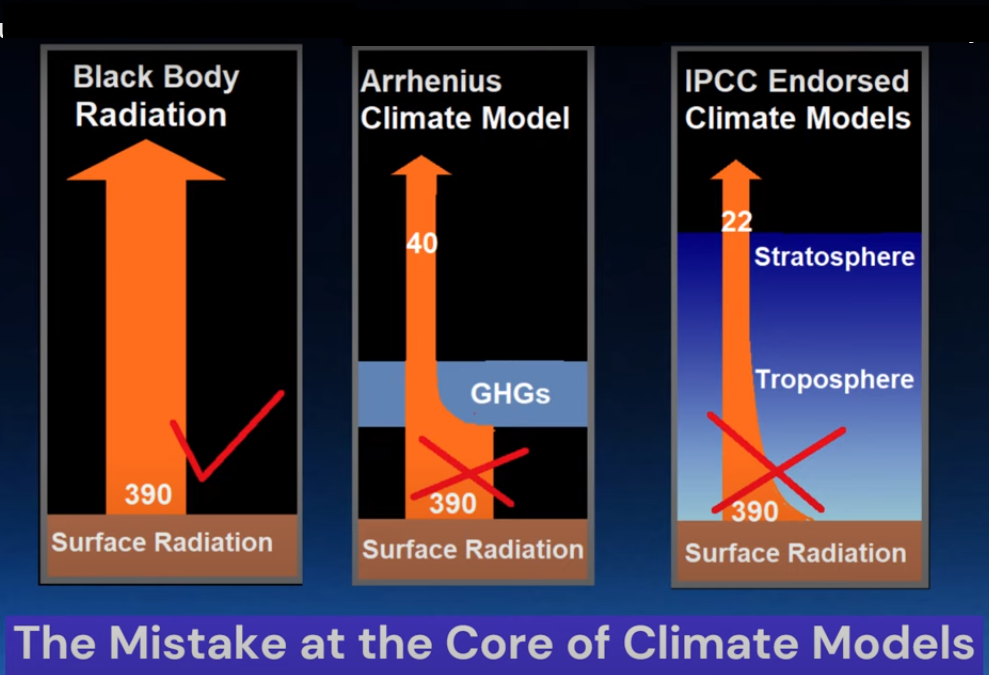
In 1896, Arrhenius proposed his climate model in line with this misconception by merely considering the so-called radiative equilibrium. To do so, he was obliged to physically separate the gaseous model atmosphere and the condensed matter surface of the Earth. As a result, he completely omitted thermal conducting, convection, and mass transfer between the surface and the atmosphere as shown in this diagram.

This is the first problem of the greenhouse effect hypothesis. As a result, it has been taken for granted by many climate researchers that the surface must constantly emit infrared radiation at the intensity around 390 watt per meter-squared as a black body does, from which over 95 percent of the terrestrial radiation was assumed to be absorbed by water vapor, CO2, and ozone in the atmosphere. While the radiative equilibrium formulated by Arrhenius is called the greenhouse effect, these infrared absorbers in the atmosphere are now called the greenhouse gases.

How does the greenhouse effect work? Here is a diagram from an online talks by Sara Harris, which represent the typical viewpoint of the consensus on this issue. First, Sara was correct to conclude the global mean surface temperature should be 288 K in the absence of the atmosphere, by treating the Earth as a black body. Then, by adding a reflective layer, but without any infrared absorbers hovering about the black body, she obtained the surface temperature would be 255 K. So far, this number 255K, instead of 288 K, has been widely considered as the surface temperature in the absence of the greenhouse gases.

This is the second problem of the greenhouse effect hypothesis. By adding the infrared absorbers, or the so-called greenhouse gases, it was argued by both Sara Harris and Sabine Hossenfelder that the CO2 can block the upward surface radiation and re-emit back to the surface. As a result, the cold surface could be heated up by the greenhouse gases. What A Magical Tale for children!

So, they claimed quantitatively that the surface temperature would reach to exactly 288 K when the CO2 concentration was 300 ppm. This is known as the Greenhouse Effect Type 1, in which the CO2 concentration 300 ppm seems just perfectly right in raising the surface temperature exactly by 33 K, together with the water vapor of course.

This is the third problem of the greenhouse effect hypothesis. Based on this problematic idea, it was speculated that the radiative equilibrium in the climate system would be destroyed whenever the CO2 concentration in ppm is different from the magic number 300. This speculation is called greenhouse effect type 2.

In history, both Arrhenius and Manabe and of course his supervisor Wetherald based on this idea to predict both the possible global warming and the global cooling when the CO2 concentration is doubled or halved, respectively. What could happen to air temperature near the ground? I’m sure you must have been told many times, 1.5 K, 3.6 K, or even 7 K by the end of this century, or even recently the Earth is getting boiling. “Yes and it’s the area, the era of global boiling has arrived.”

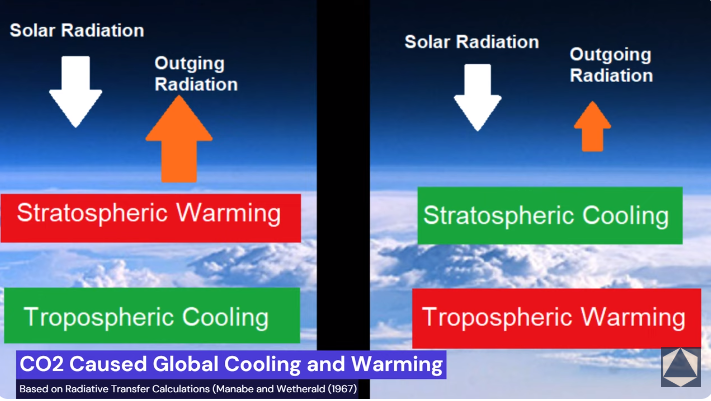
But how did the climate researchers get these numbers? In short, based on stratospheric cooling. Back in the 1960s, it was first predicted, by calculations, by Manabe and Wetherald that the stratosphere, which is above the troposphere, might become colder as the CO2 concentration increased over there. Hence the term stratospheric cooling became a fashion, even Freeman Dyson talked about it. “For the stratospheric cooling is something we really know a lot about, because that’s easy to calculate. It’s a direct effect of carbon dioxide which cools the stratosphere just by radiation. It’s independent of weather and it’s very large….” although he distanced himself from this notion during his final years on this planet.
Why cooling instead of warming? Well, they argued that if any atmospheric constituent emits, the space around them would become colder because some thermal energy is being sent away, although they didn’t say where the thermal energy comes from. If it is true the outgoing infrared radiation by our planet would be reduced because, according to Stefan-Boltzmann law, the atmospheric radiation intensity is proportional to its temperature to the power of four. This idea is indicated by the green curve here which represents the outer flow infrared radiation, but notice the electromagnetic waves are described as a kind of fluid in space, which is absurd by the way.

The tale continues. In a long run, an imbalance in radiation in the stratosphere would occur above the tropopause, just the isothermic layer immediately above the troposphere. By treating electromagnetic waves as a kind of moving heated fluid, of course, one could argue that the air temperature in the troposphere would increase, because more incoming heated fluid than the outgoing fluid as shown in this diagram.

Nowadays, it is believed by many that the global warming between two and seven Kelvin would be just a matter of time and humans’ reaction. Furthermore, as the CO2 concentration continues increasing, there is another alarming scenario namely the run(a)way greenhouse effect. As you know, a runway in an airport is used for an airplane to take off from the ground to the sky, the runway used in front of the greenhouse effect here is a metaphor for extremely rising global warming due to increasing CO2 that might completely vaporize water in the ocean and the turns the Earth into a Venus-like planet, sounds horrible.

Nevertheless, all of the predicted climate scenarios associated with either the radiative equilibrium or radiative imbalance have been formulated based on the strong and constant surface infrared radiation at its thermal equilibrium temperature. This would be true if, and only if, the condensed-matter surface could be physically isolated from the emitting layer of the greenhouse gases as Arrhenius suggested over a century ago.

So, what are the repercussions when there is no such a surface radiation? First, without the surface radiation, therefore, it can be foreseen that the infrared absorption by the so-called greenhouse gases would be significantly reduced no matter how much CO2 is in the atmosphere. Second, without the surface radiation upward all the time, the surface temperature can be stabilized with the least action given the internal and external heat sources.

Think about it. No radiation absorption by CO2 from the surface, no downward back radiation by the greenhouse gases, the efficiency of the climate system would be much higher which would be the First Choice by the nature. Recently, however, Sabine Hosenfelder told her viewers and fans that it is the absorbed infrared radiation by the greenhouse gases from the surface that can keep the surface warm and stable. “The incoming radiation from the Sun goes through the atmosphere and hits the surface. It’s converted into infrared radiation and that heats the atmosphere from below…”

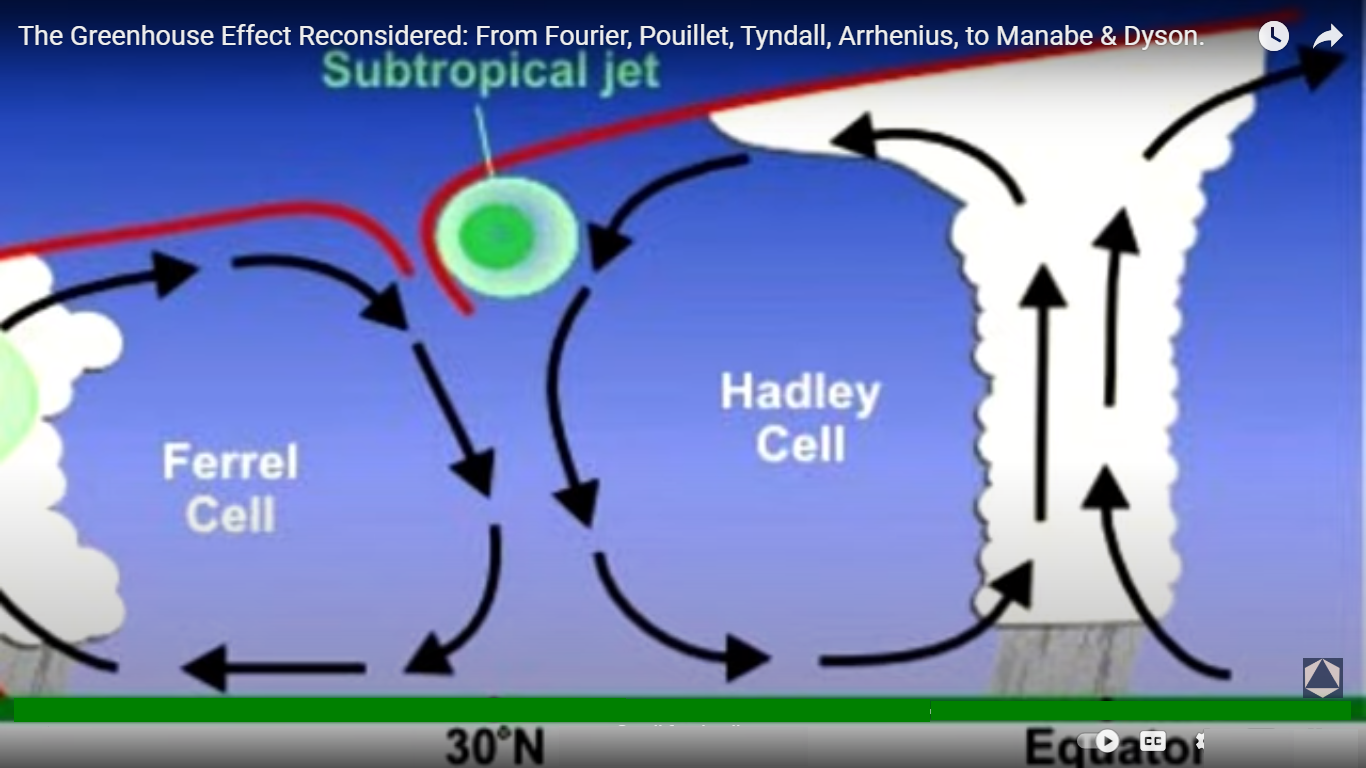
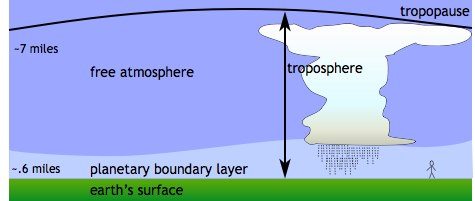
But this can hardly be true. The troposphere is in fact warmed up by means of general circulation of the air that is driven by gravity-constraint convection and pressure-difference driven advection. None of them are radiative processes. She might have convinced herself by analogy of caloric theory for heat and phlogiston for fire.

Similarly, the runway greenhouse effect is as absurd as to use a paper bag to contain a fire, even Sir John Houghton, the former chairman of the IPCC Scientific Advisory Group, thought it was unlikely.

Third, return to the greenhouse effect type 1. If there is no surface infrared radiation, how can CO2 make the tropospheric warmer by blocking nothing? This implies CO2 and other so-called greenhouse gases can hardly act like a blanket to keep the surface warm, just as one cannot keep his body warm in the winter night by hanging his blanket at the roof.

Many people nowadays might have only thought of fishes in water, but forgotten that, like fishes, we humans are also submerged in the sea of air, rather than a vacuum. Indeed, it is nitrogen and oxygen molecules in the air layer physically attached to the surface that keeps the surface temperature stable day and night.

Fourth. Let me talk about the predicted stratospheric cooling by Manabe and Wetherald. Recently, I have evaluated their published data and found the imbalance in the outgoing radiation is just 1.2 watt per meter square due to CO2 doubling, which is three times less than the value 3.7 watt per meter square used by the IPCC and many climate researchers. I will discuss this in detail soon.

Basically, this implies either the CO2 concentration in the stratosphere or the CO2 emissivity was overestimated by Manabe and Wetherald. This new finding seems consistent with Manabe’s recently remarks on the observed stratospheric cooling. In the lower parts of the stratosphere the observed cooling could be partially due to ozone. Besides, to me, it would appear strange why there was no reported observation in the higher altitudes where they predicted stratospheric cooling to be more significantly much larger and hence easier to be measured.

Fifth. Using the original definition of radiative forcing, RF equal to I sub s minus OLR, it is apparent that the radiative forcing would be always equal to the OLR, the outgoing long wave radiation, in magnitude though opposite in sign when the surface radiation is zero. Or the sum of radiative forcing and the OLR is zero.

What does this mean? Simple. The so-called “greenhouse effect” simply denotes the total absorbed solar radiation by the atmosphere, including the solar radiation at the surface that is completely transformed into the internal thermal energy of the atmosphere by convection, conduction, and the mass transfer involving latent heat. Whenever the planet is overheated, the OLR is spontaneously turned on. So, no surface radiation blocking, no back radiation into the surface. Above all, the “radiative forcing” actually originates from the radiation by the sun rather than from the surface. If you can understand this logic, then you won’t have much trouble to explain those problems listed above.

Problem 1. Like other careless climate researchers, both Sabine and Sara made the same terrible mistake. How? Because they must have naively thought the real atmosphere and the surface could be physically separated as Arrhenius first suggested.

Problem 3. Because they imagined global warming by the greenhouse effect type 1 is just a 10 K rather than 33 K, to use CO2 concentration 300 ppm as just the right number is just a joke, isn’t it? As I noticed that Sabine Hossenfelder has tried to make her talks humorous, I hope one day she would tell her fans that she was kidding. It’s unlikely though, as she has become a saleswoman rather than a professional researcher.

In summary, the presence of the Real atmosphere on the Real surface implies they are at thermal equilibrium, which was first overlooked by Pouillet in 1836 and the climate researchers after him. No surface radiation appears as the natural choice for the climate stability. Any surplus in the infrared absorption by the atmosphere can be spontaneously emitted to space rather than making the surface warmer. As I said earlier, no one can contain a fire by using a paper bag. Thank you for your viewing. 

Y.C. Zhong Letter to Progress in Physics June 2023

Calculation of Outgoing Longwave Radiation in the Absence of Surface Radiation of the Earth Y. C. Zhong ERICHEN Consulting, Queensland, Australia.

Abstract

Based on the observed equilibrium at the surface of the earth, it is argued that almost no infrared radiation would be emitted by the surface of the earth that is in physical contact with the nearest isothermic air layer. By assuming the outgoing longwave radiation is the cumulative upward thermal radiation by the air, an analytic formula with four dependent observables is proposed which is used for the first time to calculate the effective air emissivities at different lapse rates in the troposphere. Given the observed global mean outgoing longwave radiation 239W m−2and the stable tropospheric lapse rate 6.5 Tkm−1, the calculated effective air emissivity near the surface is 0.135, in agreement with early experimental observations.

Discussion and conclusion

To explore the implications of the zero surface radiation hypothesis, the outgoing thermal radiation by the air is formulated and quantitatively calculated in the absence of the surface infrared radiation. Based on the calculation, it appears that long-term global climate stability might be simply explained in relation to the tropospheric lapse rate, adjustable by changing the water vapor in the troposphere, that provides a natural mechanism to control the OLR for the earth to re-emit the absorbed solar radiation back to outer space while keeping the global mean surface temperature constant.

Further, it is revealed that the four coupled variables, namely OLR, effective air emissivity, the tropospheric lapse rate, and the surface temperature, are linearly dependent on each other, as shown in (10) and (11). So far, the linear dependence of the monthly mean OLR on the sea surface temperature (SST )has been observed on several locations [7]. But the theoretical interpretations in terms of water vapor feedback and speculated emergent properties seem complicated and confined to the cloud-free observations [8]. By way of contrast, (11) is simply deduced from the hypothesis that the surface radiation is zero.

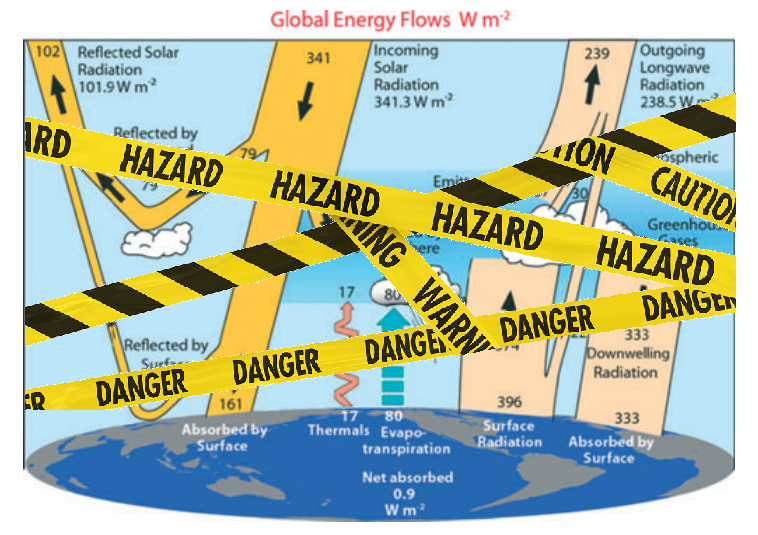
Without invoking the greenhouse effect, it seems the current global energy balance can be quantitatively explained, i.e. the solar shortwave radiation at the surface, 161 W m−2, is completely transferred into the atmosphere by means of convection and conduction. And then is thermally radiated by the atmosphere into outer space, together with the shortwave absorption by the atmosphere at 78 W m−2. Which makes the OLR at the top of the atmosphere equal to 161 +78 =239 W m−2 as observed [3].

Further experimental observations both in lab and in space are necessary for further evaluating this proposed description with fundamental implications for understanding the long-term global climate stability.

See Also:

Sun and Water Drive Climate, Not Us

IMF Mad Hatters’ Notion of Hydrocarbon “Subsidies”


The recent IMF updated report on fossil fuel subsidies took on the appearance of the Mad Hatter’s tea party (Alice in Wonderland) when you look into what is claimed to be subidizing hydrocarbon energy.  Robert Lyman explains the tricks and dishonesty running through this ongoing narrative against conventional energy sources, while ignoring the massive taxpayer direct funding of wind and solar power.  His Financial Post article is Most fossil-fuel ‘subsidies’ aren’t actually subsidies.  Excerpts later on with my bolds and added images.  But my overview of the context for these remarks.

Context–Back to Basic Terms

Climate activists and renewables lobbyists are acting like Mad Hatters, twisting language and logic to pursue their agendas. Let there be some common sense injected here.

A subsidy would be when the government takes money that has been taxed, borrowed, or printed, and pays it to some company like Solyndra to do something that the market does not support. Often these subsidies subsidize technologies that do not exist and may never exist (and they say WE ignore the laws of physics.)

In contrast, a tax reduction is NOT a subsidy. A tax credit says an industry gets to keep more of its own money that it has produced selling a product people want and need in the free market.

There is a huge difference between a law that lets you keep more of your own money; and another law that actually gives you someone else’s money. The two are not the same thing. Actually, the oil industry pays higher taxation rates than other industries and subsidizes the government with the billions it pays in taxes, not the other way around.

There are also billions more in economic benefit to the nation from the jobs they create and the increased mobility and productivity people enjoy by using our transportation system based on hydrocarbon fuels.

The Big Lie:  IMF counts not charging companies the full costs of global warming
as a subsidy. Common sense says it isn’t

Economists are used to having their terminology misinterpreted, co-opted and misused, usually in the interests of politics. One of the most common words to suffer this fate is “subsidy.” The Gage Canadian dictionary defines a subsidy as “a grant or contribution of money, especially one made by a government.” Economists would agree with that definition. Governments, on the other hand, rarely acknowledge that they subsidize anything. They “invest” — though, curiously, they seldom refer to the rate of return on their investments.

I was reminded of all this by the news last week that the International Monetary Fund (IMF) has published an updated version of its 2015 Working Paper on global and country-level subsidies for fossil fuels. According to the paper, total global subsidies “surged to a record $7 trillion last year,” equivalent to 7.1 per cent of world GDP. The paper’s authors estimate that scrapping these subsidies would: prevent 1.6 million premature deaths annually, raise government revenues by $4.4 trillion and put emissions on track to reaching official global warming targets. An annex to the report indicates that in 2020 Canada’s subsidies to fossil fuels were US$64 billion, or 3.8 per cent of GDP.

The paper’s extraordinary findings are almost entirely the result of how it defines “subsidy.”
It divides subsidies to fossil fuels into “explicit” and “implicit” subsidies.

Subsidies Wordplay

Explicit subsidies are the kind economists and ordinary people would recognize as subsidies: grants to cover some portion of the costs of production, as well as tax incentives and deductions (e.g., capital cost allowances) to fossil fuel producers for such things as investing in exploration and development.

By contrast, “implicit” subsidies are defined as “under-charging” producers for the environmental costs they generate from their exploration and production activities and consumers for perceived environmental costs not adequately covered by various consumption taxes (e.g., sales taxes, value-added taxes and carbon taxes).

So when, for instance, a country fails to impose a consumption tax high enough
to cover the perceived costs to society of climate change, congestion or
local pollution, the paper would classify that as a subsidy.

The working paper indicates that explicit global subsidies were US$450 billion in 2020, or six per cent of the total. Most of these are actually so-called tax expenditures: tax credits or deductions for investments in high-risk exploration and development activities, similar to those provided to firms in other sectors of the economy.

94% of Hydrocarbon “Subsidies’ Actually “Externalties”

That leaves the 94 per cent of subsidies that were what the paper refers to as “externalities.” Let’s be clear. Externalities are not subsidies. They are a cost or benefit of an economic activity that affects a third party not directly related to that activity. The cost is not always evident, nor is it clear by what mechanisms such costs and benefits should be shared. While the paper does not break down the percentages attributed to externalities, its 2015 predecessor estimated that the costs of global warming were 37 per cent, local air pollution 13 per cent, congestion 32 per cent, vehicle accidents five per cent and road damage two per cent. In effect, the paper is arguing that not making the fossil fuel industry pay the full cost of global warming constitutes a subsidy to the industry. The same for its not paying the full cost of local air pollution or of traffic congestion or road deaths, and so on. Attribution of any of these costs to fossil fuels is highly questionable, but one obvious question is why fossil fuels are to blame for road congestion. If all vehicles were electric, would there be no congestion?

The vast majority of what the paper calls “subsidies” thus relate to charges not imposed for the harmful external effects of consuming fossil fuels, especially in oil-producing countries that choose to impose lower excise and sales taxes on gasoline and other fuels. The paper finds that East Asia and the Pacific regions account for almost half of total global energy subsidies. In effect, the report concludes that the prices of energy should be substantially raised for the world’s poor. This, of course, was not noted in the media summaries of the paper.

The paper did not explain how it calculated Canada’s 2020 subsidies to fossil fuels but, given its general analysis, one can only assume it was based on the judgment that fossil fuel costs to consumers were not high enough. But in 2018, total taxes on gasoline alone were roughly $24 billion. One has to wonder how the IMF’s math figures that this, and the more recent increases in carbon taxes, still constitute under-charging for externalities.

A final difficulty with the IMF paper is that it excludes any consideration of the positive externalities from reliance on fossil fuels. They are the most secure, affordable, storable, and reliable energy sources we have, and the ones upon which the remarkable advances in the global economy over the last century have been based. That is well worth bearing in mind as we consider the meaning of “subsidy.”

Summary

The Mad Hatters turn things upside down. Society is subsidized and made wealthy by fossil fuels, not the other way around. Some of that wealth is being diverted to renewable energy companies who do not create enough value to be in business without direct payments of tax dollars. They prove it by declaring bankruptcy when their subsidies are reduced.  Worse, hooking up wind and solar intermittent power to electrical grids adds more cost and unreliability than the renewable power is worth.

Read More about Energy Subsidies Abuse

The Appalling Truth About Energy Subsidies at Euan Mearns

Renewable Energy Cost Explosion: €25,000 euros for each German family of four  Daniel Wetzel, Die Welt (translation by GWPF)

What’s an Oil Subsidy? Heritage Foundation

Net Subsidy Analysis: A Better Way to Assess Government Energy Policy MasterResource

Why the Best Path to a Low-Carbon Future is Not Wind or Solar Power Brookings Institution

Killing the Energy Goose Science Matters

At its prime, the Carrizo Plain (S. California) was by far the largest photovoltaic array in the world, with 100,000 1′x 4′ photovoltaic arrays generating 5.2 megawatts at its peak. The plant was originally constructed by ARCO in 1983 and was dismantled in the late 1990s. The used panels are still being resold throughout the world.

At its prime, the Carrizo Plain (S. California) was by far the largest photovoltaic array in the world, with 100,000 1′x 4′ photovoltaic arrays generating 5.2 megawatts at its peak. The plant was originally constructed by ARCO in 1983 and was dismantled in the late 1990s. The used panels are still being resold throughout the world.


History Shows Today’s Ocean at Cool End of Range

You may have heard claims recently that the ocean is now “boiling”.  Fortunately, a world expert in ocean heat uptake provides a deep dive into oceanic temperature history, thereby putting that fear to rest.

Geoffrey Gebbie of Woods Hole Oceanographic Institution has published an highly informative study Combining Modern and Paleoceanographic Perspectives on Ocean Heat Uptake in Annual Review of Marine Science (2021).  H/T Kenneth Richard.  Below are the main findings, along with some excerpts in italics with my bolds, explaining some oceanography for the rest of us.

The large climatic shifts that started with the melting of the great ice sheets have
involved significant ocean heat uptake that was sustained over centuries and millennia,
and modern-ocean heat content changes are small by comparison.

Abstract

Monitoring Earth’s energy imbalance requires monitoring changes in the heat content of the ocean. Recent observational estimates indicate that ocean heat uptake is accelerating in the twenty-first century. Examination of estimates of ocean heat uptake over the industrial era, the Common Era of the last 2,000 years, and the period since the Last Glacial Maximum, 20,000 years ago, permits a wide perspective on modern-day warming rates. In addition, this longer-term focus illustrates how the dynamics of the deep ocean and the cryosphere were active in the past and are still active today. The large climatic shifts that started with the melting of the great ice sheets have involved significant ocean heat uptake that was sustained over centuries and millennia, and modern-ocean heat content changes are small by comparison.

Objective

This review seeks to put the most recent ocean heat uptake estimates of 0.5–0.7 W m−2 into the context of longer (multidecadal to millennial) timescales. Such timescales put a wider perspective on present-day heat uptake. In addition, the dynamics of these longer timescales may still have some expression today. This research direction leads to the long temperature time series of paleoceanographic proxies that predate the instrumental record. Ocean heat uptake over the last deglaciation (∼20,000–10,000 years ago) and the Common Era (previous two millennia) will serve as examples to explore the longer-timescale dynamics of ocean heat uptake.

Common Era Evolution of Mean Ocean Temperature

The Ocean2k global-mean SST compilation is derived from 57 marine proxy records that, in aggregate, show a statistically significant cooling trend from 700 to 1700 CE over the MCA–LIA transition (Medieval Climate Anomaly, Little Ice Age). The data compilation contains a time series of 200-year averages that have been nondimensionalized. Here, we dimensionalize the values with the recommended values of McGregor et al. (2015) to obtain temperature anomalies, and the inferred global-mean surface cooling over the MCA–LIA transition is near the high end of the expected 0.4–0.6°C range (Figure 4a).

Figure 4  The Common Era. (a) The evolution of Ocean2k SST (blue circles, with σ/2 error bars) and mean ocean temperature, , as inferred from noble-gas measurements (red circles, with σ/2 error bars), the Gebbie & Huybers (2019) Common Era inversion (red line), and a power-law estimate (black line, with 2σ error shown in gray), referenced to global-mean SST in 1870. (b,c) Average ocean heat uptake over a running 50-year interval (panel b) and a 500-year interval (panel c) plotted from the Gebbie & Huybers (2019) inversion (red line) and a power-law estimate (black line, with 1σ error shown in gray). Heat uptake is expressed in terms of an equivalent planetary energy imbalance. Abbreviation: SST, sea-surface temperature.

One realization of the Common Era was produced by an inversion that attempted to reconstruct the three-dimensional evolution of oceanic temperature anomalies over the last 2,000 years (Gebbie & Huybers 2019). The inversion fits an empirical ocean circulation model to modern-day tracer observations, historical temperature observations from the HMS Challenger expedition of 1872–1876 (Murray 1895), and the global-mean Ocean2k SST. The resulting ocean temperature evolution is dominated by the propagation of surface climate anomalies from the MCA and LIA into the subsurface ocean, where the propagation is coherent for several centuries (red line in Figure 4a). Although the Gebbie & Huybers (2019) inversion was not constrained with oceanic power laws, the resulting mean ocean temperature is consistent with a power-law estimate over the Common Era.

Early-twenty-first-century SST may already be warmer than MCA SST, but it is
less likely that modern mean ocean temperature has surpassed MCA values.

From the Gebbie & Huybers (2019) inversion, it was inferred that the MCA ocean stored 1,000 ZJ more than the ocean of the year 2000, and that the ∼500 ZJ of heat uptake during the modern warming era is just one-third of what is required to reach MCA levels. Amplification of the high-latitude SST signal relative to the global mean can produce a greater MCA–LIA mean ocean cooling, which explains the greater MCA heat content relative to the present day. When considering the range of Common Era scenarios consistent with a power law, however, some cases are admitted where the MCA and the present day have similar oceanic heat content.

Deep-Ocean Heat Uptake During Modern Warming

Figure 6  Ocean heat uptake below 2,000-m depth, in terms of a planetary energy imbalance, for 50-year averages given by Zanna et al. (2019) (blue line), Gebbie & Huybers (2019) (red line), and the power-law estimate from this review (black line, with 2σ error in gray). An observational estimate (purple, with 2σ error bar) for 1990–2010 is also included (Purkey & Johnson 2010).

The confidence in upper-ocean heat content during the modern warming era starkly contrasts with the remaining uncertainties in heat content below 2,000-m depth (Figure 6). Observational estimates have indicated a deep-ocean heat uptake of 68 ± 61 mW m−2 (2σ) when differencing hydrographic sections between 1990 and 2010 (Purkey & Johnson 2010, Desbruyères et al. 2017). Estimation of deep-ocean heat uptake over the entire instrumental era relies to a greater extent on circulation models. Simulations of modern warming that are initialized from equilibrium in 1870 suggest that heat penetrates downward (Gregory 2000) and that average deep-ocean heat uptake is small over 50-year time intervals (Zanna et al. 2019). These estimates would not capture ongoing trends from the earlier Common Era, if any existed. An inversion that accounts for the LIA found a deep-ocean heat loss of 80 mW m−2 early in the modern warming era (Gebbie & Huybers 2019), and our power-law estimate suggests that an even greater cooling is possible, although the uncertainties are large. These discrepancies highlight the ongoing effect that Common Era variability could play in the modern-day ocean. Unfortunately, recent observations do not appear to be sufficient to distinguish between these scenarios, as they all suggest a weak deep-ocean heat uptake in the early twenty-first century.

Deep-ocean cooling could exist as the result of
disequilibrium between the upper and deep ocean.

Oceanic disequilibrium exists at a range of spatial and temporal scales, from local, short-term variability to longer-term changes that are anticipated to generally have greater spatial extent. Oceanic disequilibrium has been anticipated as a result of the 1815 Tambora (Stenchikov et al. 2009) and 1883 Krakatoa (Gleckler et al. 2006) volcanic eruptions and their lingering effects on energy imbalance. More generally, ocean disequilibrium can result from the differing adjustment times of the interior ocean to surface forcing, where the deep-ocean response may take longer than 1,000 years (e.g., Wunsch & Heimbach 2008). Accordingly, some influence of changes in surface climate over the last millennium is potentially present today. The most isolated waters of the mid-depth Pacific, for example, should still be adjusting to the MCA–LIA transition. In this scenario, these deep waters are cooling, but they are anomalously warm due to the residual influence of the MCA. 

The degree to which the ocean’s long memory affects today’s ocean is uncertain due to difficulties in integrating state-of-the-art circulation models over the entire Common Era. An accurate assessment may also require a model that can skillfully predict ocean circulation changes in both the past and the future. The climate history of the Common Era should also be better constrained by recovering additional observations, such as historical subsurface temperature observations and paleoceanographic data. Proper inference of climate sensitivity depends on the past oceanic heat uptake, which this review suggests is tied to the long timescale of deep-ocean dynamics.

Do notice the scale on the left axis. As though we can measure the whole ocean (71% of earth surface) to 0.05 C. It’s a formula converting zettajoules to temp change.


Climate Ambulance Chasers

Holman Jenkins reports at WSJ Maui Sees Off the Climate-Change Ambulance Chasers.  Excerpts in italics with my bolds and added images.  H/T  climate depot

Making climate policy the answer to weather risks
is a distraction & fraud on the public

It was modestly funny when Hurricane Sandy, after it came ashore in 2012, had to be hurriedly renamed Superstorm Sandy (a title with no formal meteorological meaning) because it was no longer a hurricane.

Local politicians blabbed in the aftermath about climate change to help unlock Obama disaster aid, and also to duck questions about inadequate preparation. But the storm itself was no different from many that had battered the Northeastern seaboard for centuries. The difference was how many people and structures were in its path.

Nothing is funny in the aftermath of the Maui wildfire, which swept through a town and killed at least 115. But it’s noteworthy that Joe Biden refrained from his usual clamor about a climate crisis. He didn’t even mention the word climate in his speech when visiting the island.

Perhaps Mr. Biden’s off-key anecdote about a kitchen fire at his Delaware home was his ad-lib substitution. Whatever the reason, his aides apparently understood that climate talk would come across as criminal and cowardly in the face of the true causes of the Maui disaster.

High winds are a common occurrence. Dry conditions are a common occurrence.
Invasive grasses taking over abandoned pineapple and sugar plantations
were a known menace, complicated by unhelpful land-use policy.

Emergency sirens weren’t sounded. Water wasn’t available due to political squabbles over allocation rights. The local utility was instructed by Hawaii’s Legislature to meet ambitious renewables targets rather than spend on reducing fire risk. Firefighters reportedly left the scene early believing they had extinguished the initial blaze.

Maui itself is an island surrounded by the Pacific Ocean, with vagaries
more immediate and potent than any caused by a 0.3% fluctuation
in the planet’s long-term energy balance due to atmospheric CO2.

Blue-green algae gave us oxygen to breathe and yet we don’t blame blue-green algae for everything oxygen-breathing organisms do. Likewise, nothing very useful comes from trying to explain every weather-related misfortune in terms of human-caused carbon dioxide in the atmosphere.

Weather is a product of climate, we should specify; our climate is currently influenced by atmospheric CO2 of 419 parts per million.

But hurricanes, fires, floods and heat waves also occurred when the concentration
was 280 parts per million, and tended to claim more lives than they do now.

Whatever man’s role in climate change, whatever the merits of regulating CO2, making climate policy the answer to weather risks is a distraction and fraud on the public. Nearly one-third of all greenhouse gases have been released since Al Gore won his 2007 Nobel Peace Prize for a climate movie. These emissions have an estimated half-life in the atmosphere of 120 years. Your electric car isn’t going to change that.

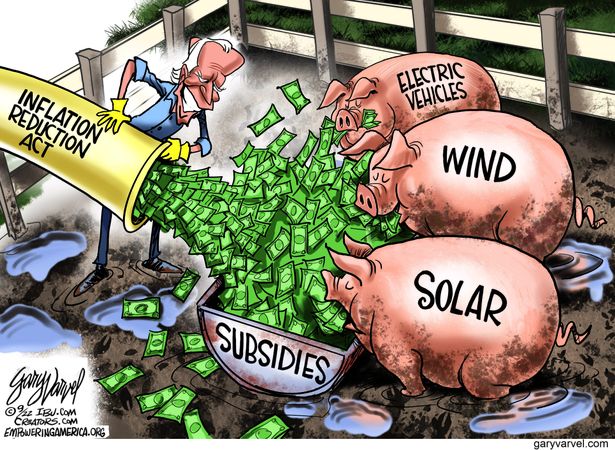
By now, though, activists and lobbyists have a picture on the wall, blown up to five times life-size, of a certain type of voter willing to believe anything, even that Joe Biden’s pork-ridden Inflation Reduction Act meaningfully addresses a warming planet.

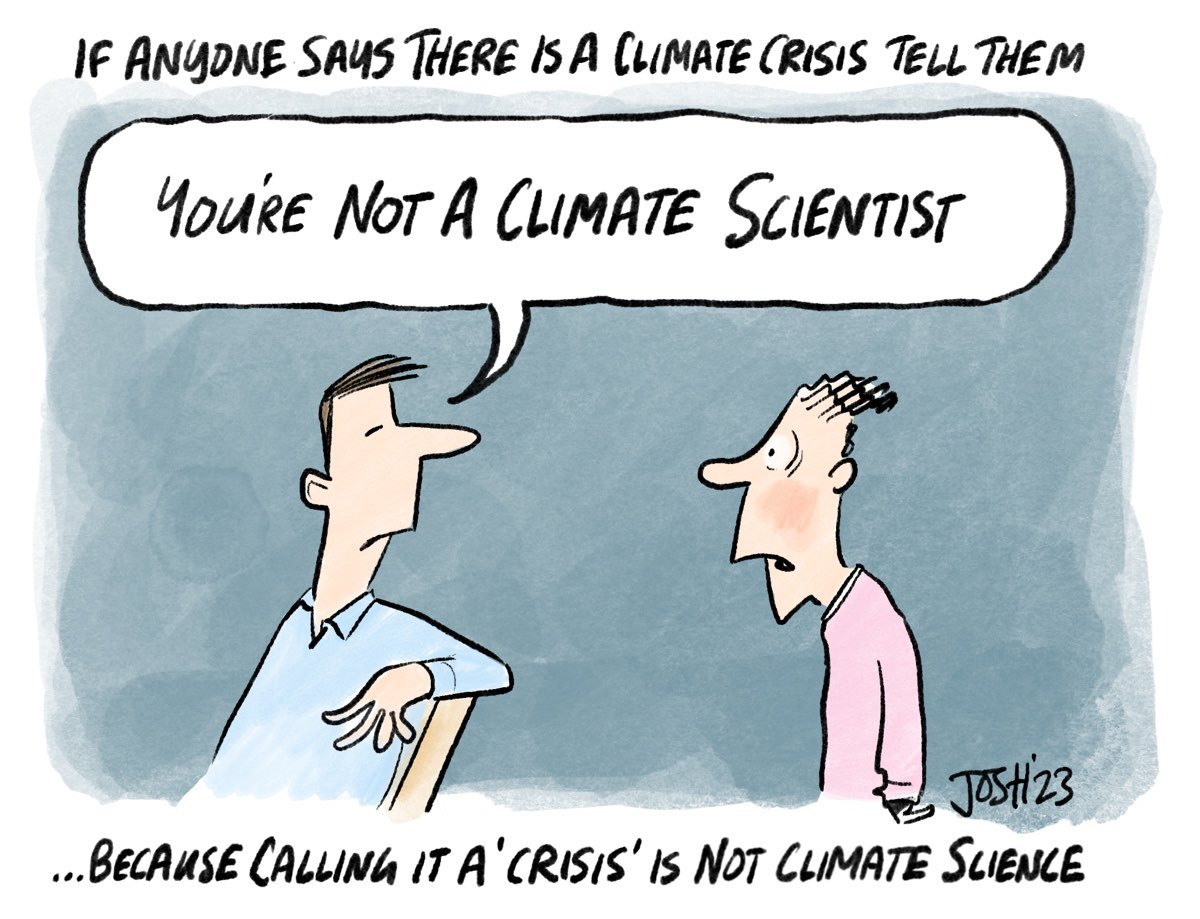
Meanwhile, a Nobel Prize laureate in physics who decries the “application of scientific disinformation for opportunistic purposes” can expect to be disinvited from giving a speech to the International Monetary Fund, as the 2022 laureate John Clauser recently was. His offending words, which are hard to dispute in the dictionary sense: “I believe that climate change is not a crisis” (emphasis added).

A crisis, after all, usually calls for concerted, immediate action. Why is it that nothing is ever seriously proposed or enacted, including Mr. Biden’s bag of handouts for “green” energy interests, that would actually have a detectable effect on weather and climate now or in the future?

To stress something not usually emphasized, the science is still largely a science of computer simulations. For now, though, it suggests a relatively manageable human adaptation to a slowly warming planet, mainly through everyday decisions about where and how to live, build and work. Once again, a weather-related disaster is too important to cheapen for the sake of the ‘narrative.”

Green Energy Grinding to a Halt

Green Energy Activists are hitting hard realities, as summarized by Jonathan Lesser at New York Post Why wind and solar power are running out of juice.  Excerpts in italics with my bolds and added images

Green energy and the push to electrify everything have been in the news recently but for all the wrong reasons. Instead of the green energy nirvana politicians and green energy advocates have promised, economic and physical reality has begun to set in.

Painful Green Economics

Start with the economic realities of Wind Energy

The result: Even while Siemens Energy CEO Christian Bruch insists that “energy transition without wind energy does not work,” 2022 saw 16% less new wind-power capacity than in 2021, according to the American Clean Power Association.

Wind turbine manufacturers like Siemens and General Electric have reported huge losses for the first half of this year, almost $5 billion for the former and $1 billion for the latter. Among other problems, turbine quality control has suffered, forcing manufacturers such as Siemens and Vestas to incur costly warranty repairs.

In Europe, offshore wind output has been less than promised, while operating costs have been much higher than advertised. Offshore wind developers in Europe and the US are canceling projects because of higher materials and construction costs.

In Massachusetts, Avangrid, the developer of the 1,200 MW Commonwealth Wind project paid $48 million to get out of its existing contract to sell power to ratepayers. That way, the company can rebid the project next year at an even higher price.

Close by, the developers of the 1,200 MW SouthCoast Wind Project off Martha’s Vineyard will pay about $60 million to exit their existing contract.

Rhode Island Energy, the state’s main electric utility, recently rejected the second Revolution Wind Project because the contract price was too high.

And Ørsted, the Danish government-owned company that is developing the Southfork Wind and Sunrise Wind projects off Long Island — as well as the Ocean Wind project off the New Jersey coast — last week announced that, without additional subsidies and higher contract prices, it will have to write-off billions of dollars in potential losses.

In New Jersey, the legislature passed a law in July, which is likely unconstitutional, to bail out Ørsted. The legislation will award the company with several billion dollars of investment tax credits that were supposed to go to consumers.

Few Hosts for Land-Gobbling Wind and Solar Projects

Back on dry land, opposition to siting land-gobbling wind and solar projects continues to grow.

Local governments in Iowa, Illinois, and Ohio have all rejected or restricted projects. Rural communities, it seems, do not want to host massive turbine farms — nor the high-voltage transmission lines needed to deliver electricity to power-hungry cities.

Electric Vehicles Leaking Money

Then there are electric vehicles.

Ford, which has bet heavily on its electric Lightning pickup and Mustang and received a $9.2 billion government-subsidized loan in January, revealed that it has lost $60,000 for every EV it sold in the first half of this year.

Rivian, another EV company, managed to reduce its losses per EV to around $33,000, a big improvement over the $67,000 loss per EV in the first quarter of the year.

Proterra, a Bay Area-based manufacturer of electric buses and batteries that had a $10 million loan forgiven by the Biden Administration, just filed for bankruptcy.

Alternative Energy Madness

Like the wizard in The Wizard of Oz, alternative energy proponents claim these are just temporary little potholes on the road to economic and climate nirvana — all of which can be filled with more money through renegotiated power purchase contracts and more zero-emissions mandates.

Alternative energy madness – and that’s what it is – has had its biggest impact in California.  But New York and New Jersey have adopted most of that state’s mandates.

Sales of new internal combustion vehicles will be banned beginning in 2035 in the states. All of the electricity sold to retail consumers will have to be “zero-emissions.”

Homeowners and building owners will be forced to replace gas- and oil-burning space and water heaters with electric heat pumps.   And, gas stoves will be regulated out of existence.

Carbon Taxes Draining Wallets

New York also will soon implement another California import: a carbon “cap-and-invest” program, which will impose a tax on fossil fuels sold by wholesalers and utilities.  The billions of dollars collected each year will provide a green slush fund, allowing the governor and legislators to hand out money to their politically favored cronies, as has so often been the case in the past.

Washington State began its “cap-and-invest” program in January of this year.  Modeled after California’s, Governor Jay Inslee promised the program would have “minimal impact, if any. We are talking about pennies.”

Instead, the program has raised gasoline prices – almost 50 cents per gallon so far this year. Washington State now claims the honor of having the highest gasoline prices in the nation: In Seattle, for example, the average price of regular gasoline is over $5 per gallon.

Of course, the entire point of the program was to raise gasoline and fossil fuel prices to encourage consumers to switch to electric vehicles, mass transit, electric heat pumps, and so forth.

But politics being what it is, Governor Inslee, along with environmentalists and legislative proponents, now blames greedy oil companies for the price increases.  ‘We won’t stand for’ corporate greed,” the Governor said at a July 20, 2023, press conference.

Once New York’s cap-and-invest program starts, probably next year, you can expect a similar outcome: higher gasoline and diesel prices, higher prices for natural gas and fuel oil used to heat homes and apartment buildings, and endless political demagoguery denouncing it all.

And Basic Physics Stand in the Way

As the push toward electric-everything powered by green energy barrels along, proponents also refuse to confront basic physical realities.

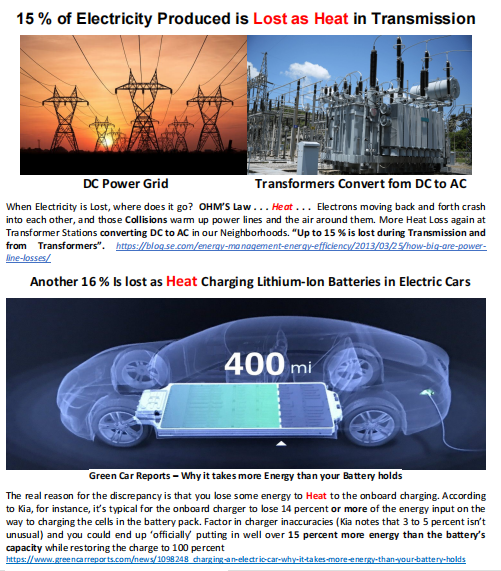
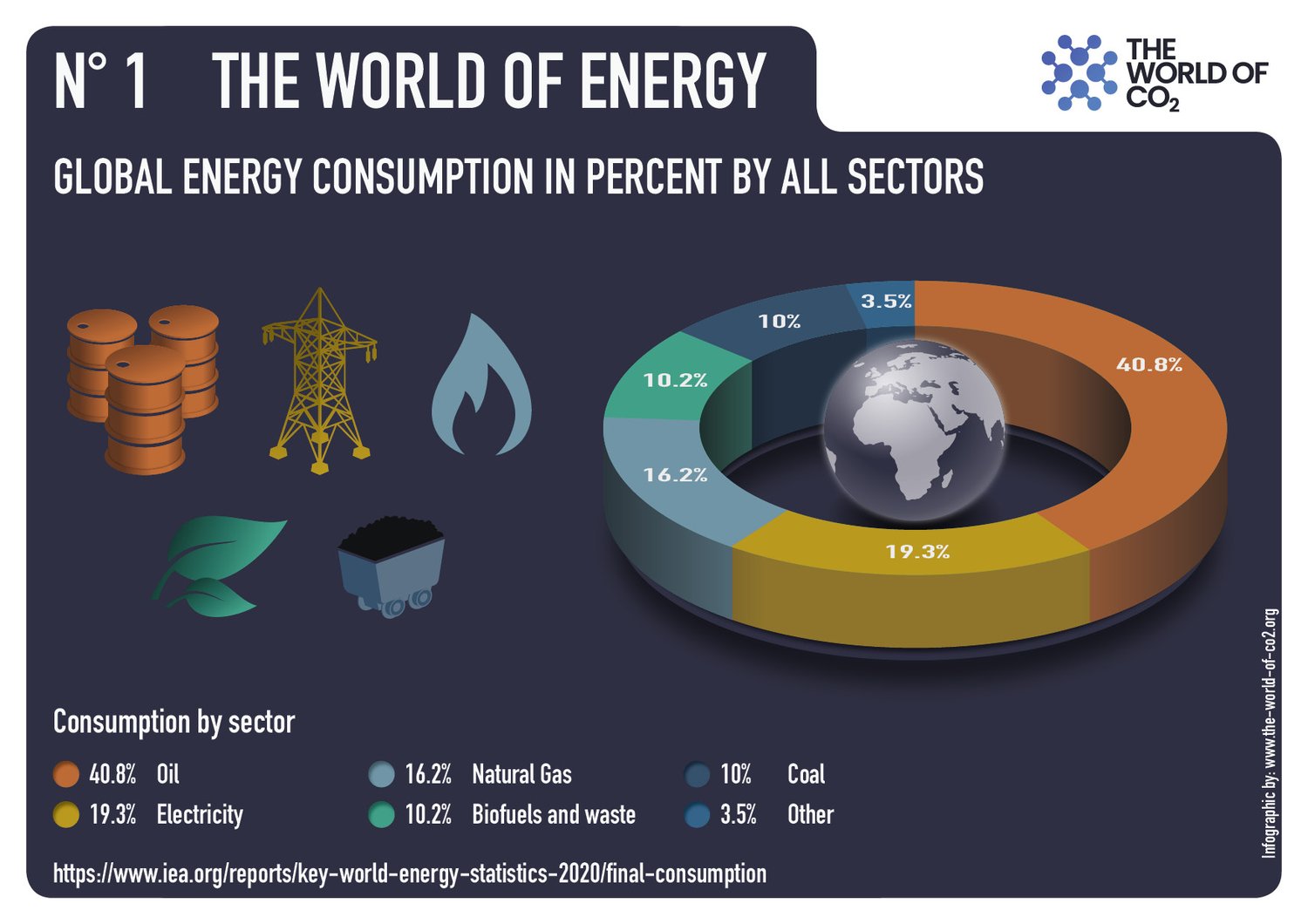
Electricity accounts for just one-sixth of all energy use. The rest is fossil fuels consumed for transportation, space and water heating, and manufacturing. Convert everything to electricity and electricity consumption will increase. A lot.

According to the New York Climate Action Committee’s Final Scoping Plan, New York will meet that increased demand by building almost 15,000 MW of offshore wind, like the Southfork Wind and Sunrise Wind projects, and over 40,000 MW of solar panels. (By comparison, the emissions-free Indian Point Nuclear Plant, which former Governor Cuomo forced to close, had a capacity of just over 1,000 MW.)

Because the wind doesn’t always blow and the sun doesn’t always shine, keeping the lights on will require far more backup resources. This “reserve margin” – basically, the amount of generating capacity available to step in and meet electric demand – will need to increase from the current 20% to over 100%.

In other words, for every MW of generating capacity in 2040,
there will have to be an equal amount or more in reserve
.

That’s like having to buy a second car and keep it idling all the time in case the first one won’t start. The Scoping Plan claims this will be accomplished by building over 20,000 MW of so-called “dispatchable emissions-free generating resources” (DEFRs) and installing over 12,000 MW of battery storage.

Transition Plans Depend on Green Fantasies

Those claims are fantasy.

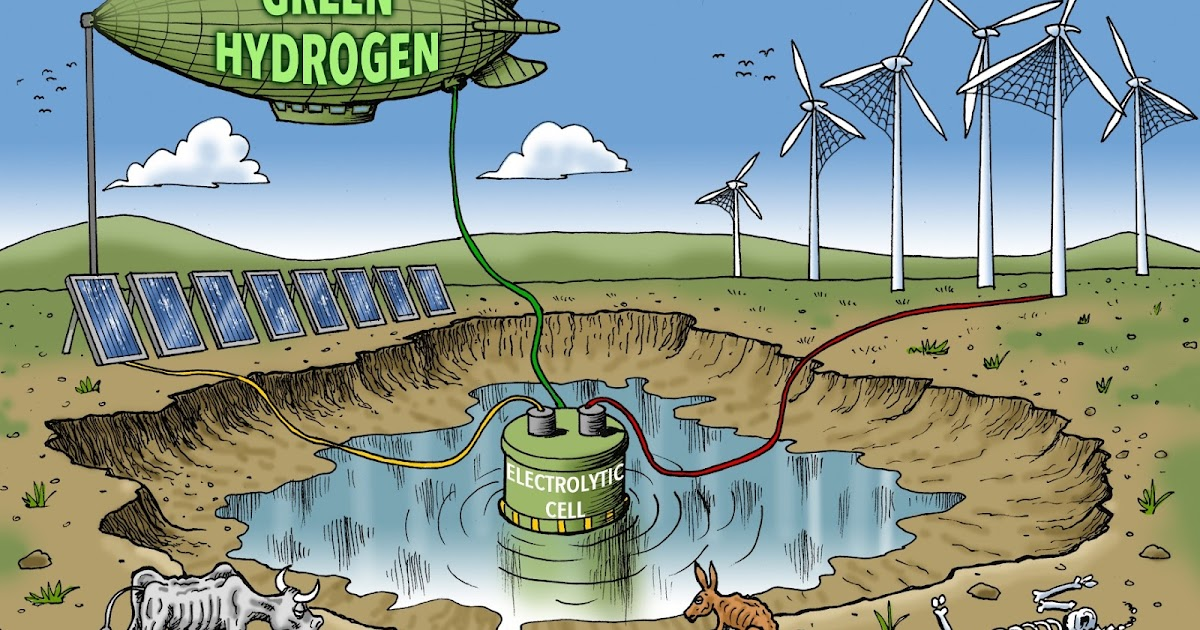
Start with DEFRs, which are generators that burn pure hydrogen manufactured from surplus wind and solar power. They have yet to be invented (we repeat – they do not yet exist). Nor do any large-scale commercial plants to manufacture green hydrogen exist either.

Hydrogen cannot be transported in existing natural gas pipelines. An entirely new infrastructure will need to be built.

Assuming a new technology will be invented by whatever date politicians decree is foolish. That’s not how technology works. Just ask everyone working on commercial fusion power, which has been just 30 years off for the last 50 years.

As for battery storage, 12,000 MW will provide at most 48,000 megawatt-hours of actual electricity. That may sound like a lot but based on the New York Independent System Operator’s (NYISO) most recent forecast, on a windless and cold winter evening in 2040, it would keep the lights on for only one hour.

The materials requirements for batteries also are staggering, which is one reason why replacing existing internal combustion cars and trucks will be impossible. Batteries require large quantities of cobalt, much of which is now mined in the Congo using child and slave labor. They also require lots of graphite, most of which comes from China – the same with the rare minerals needed for wind turbines and solar panels.

Much Pain for a Drop in the Bucket

Ultimately, nothing New York does will have any measurable impact on world climate because the state’s carbon emissions are minuscule compared to the 35 billion metric tons of total global emissions. As long as China, which accounts for almost one-third of world energy-related carbon emissions, India, and other developing nations focus policies on economic growth, rather than cutting emissions, New York’s efforts will have no environmental value.

Nuclear Energy Denial

Nevertheless, if politicians and environmentalists were serious about zero-emissions goals, they would abandon the electrification mandates, and abandon reliance on wind, solar, battery storage, DEFRs, green hydrogen, and other unrealistic and unreliable energy sources.

Instead, they would embrace the one existing technology that dare not speak its name: nuclear power. Unlike wind and solar, nuclear plants run all the time. New, small modular reactors will offer greater safety, lower costs, and easy scalability to meet increased electricity demand.

Storing spent fuel is a political issue, not a technological one, for which the best solution is to recycle and reuse it, as France has done for the last half-century without incident. The country is also developing a permanent storage site for nuclear waste that can no longer be reprocessed.

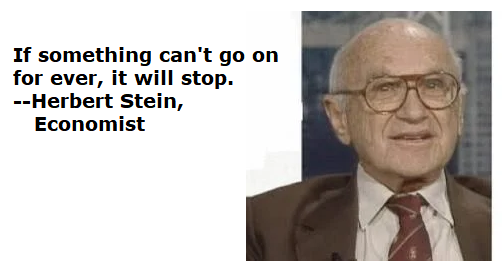
The economist Herb Stein once quipped that anything that cannot go on forever, won’t.

That’s true of New York’s current alternative energy madness.
It won’t save the world, but it will grind down the state’s economy
and its residents until the folly is too great to ignore.

Jonathan Lesser is the president of Continental Economics and an adjunct fellow with the Manhattan Institute.


Australia Academy of Science Now a Woke Joke

The GBR is the largest reef system on Earth and runs for over 1,400 miles down the eastern side of Australia.

Peter Ridd explains at Spectator Australia The astonishingly woke Australian Academy of Science.  Excerpts in italics with my bolds and added images

The Australian Academy of Science (AAS) recently released a report Reef Futures Roundtable, which is ostensibly about the doomed Great Barrier Reef. However, the report only demonstrates that the AAS, Australia’s peak science body, has become not just unscientific, but anti-scientific. Perhaps unsurprisingly, it has also become astonishingly Woke.

The AAS report predictably concluded that the Great Barrier Reef
could already be ‘irreversibly’ damaged.

The fact that UNESCO has just declared it not endangered did not rate a mention, and neither did the latest two years of statistics showing the reef is at record high coral levels. Remarkably, the report does not contain a single fact or figure to support any of its claims about the reef – except the area of the reef is 340,000 square kilometres. There are no figures, no percentages.

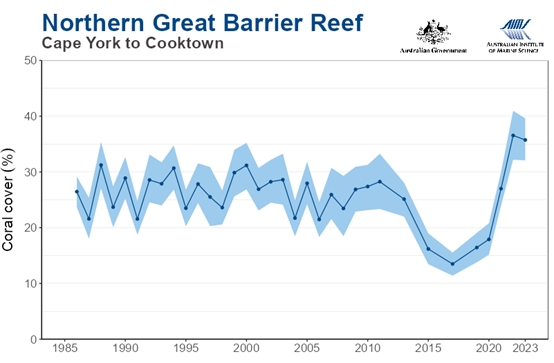
The recovery in the northern GBR actually started around 2017. Last year the coral declined slightly from 36.5% to 35.7%, and was easily within the margin of error calculated by the AIMS. Typhoon Tiffany passed through at the end of the previous reporting season, and could have been responsible for some loss. Central and Sounthern sections of GBR showed similar gains.

Nowhere does it mention that coral grows 30 per cent faster for every degree increase in water temperatures. Or that there is 100 per cent more coral on the reef today than in 2012. Or that just 1 per cent of the reef has the potential to be impacted by farm sediment, fertiliser or pesticides, even in the slightest way. Or that the sea level has fallen by 1 metre in the last 5,000 years.

The problem with this completely unanalytical approach
is seen in the ‘interventions’ it recommends to fix the reef.

Their impracticality is breathtaking. For example, it suggests ‘solar radiation management’ – shading the reef from the sun with man-made fog and clouds to prevent the water heating up and causing coral bleaching. The only number cited in the entire report – the area of the reef, which is as big as Germany – should have given them a hint that this is crazy. How are you going to make a cloud as big as Germany and keep it anchored over the reef for the whole summer over the next few hundred years? And you will also have to stop hot water flowing into the reef from the Coral Sea at the same time. That would require a dam 2,000 kilometres long and 100 metres high.

While a simple calculation is all that is required to reveal the absurdity of this idea, modern science is full of people who are almost completely non-quantitative and, as such, impractical and virtually useless as scientists.

Next there is rubble stabilisation. The supposed experts worry that the Great Barrier Reef will break up from climate change. Each of the 3,000 reefs is an almost solid lump of calcium carbonate rock (fragments of coral glued together over eons) a few kilometres wide and 100 metres high. How this is going to be broken up by some climate change magic is unexplained. But even if that were to happen, are they seriously suggesting we can wire it back together with steel reinforcing and concrete? Just do the calculation on how much concrete and steel this would entail.

The unscientific nature of the AAS report is largely a result of its anti-scientific approach. The report is actually a parody of wokeness and romantic mythology. This starts with the way the roundtable committees of ‘experts’, whom they questioned about the reef, were formed. Each roundtable had two chairs, a non-Indigenous chair, and a specially selected Aboriginal and Torres Strait Islander chair. The romantic mythology about the special knowledge of any person with Indigenous heritage pervades the entire document, and starts in the foreword by the head of the AAS.

As the Academy approached the task of planning this project it became immediately obvious that there was no separating nature and culture when it comes to the GBR. Land and sea cannot be separated. No priority can be selected on an ecological basis alone. Having a Traditional Knowledges co-Chair in each roundtable allowed for different sources of knowledge to be shared and to form a basis for a number of the observations featured in this report.

Having a diversity of ideas and scientific thought would have gone some of the way to curing the AAS of the groupthink which renders its report risible. And the views and experience of people from the coral islands of the Torres Straits and northern Great Barrier Reef could have been used to great effect. These people tend to be deeply practical about the reef – like almost all seafaring people who live and work on the reef. And practical people know you cannot bolt the reef, which is the size of Germany, down to the seafloor.

But selecting people for their ‘roundtables’ on the basis of their ethnicity
rather than their scientific or real-world experience
is a fundamentally anti-scientific approach.

But it gets worse. The dearth of statistics about the reef are made up for by an abundance of data on the gender identification of all those who participated in the ‘roundtables’. There is also the Indigenous percentage. And not just of those who participated, but also of those who were invited to participate but did not. One could quibble and point out that those claiming to be male or female added up to exactly 100 per cent in all categories, indicating a terrifying lack of diversity on the LGBQTI+++ spectrum. But there is no question, on the important matters for the Woke brigade, that this report is brimming with instructive statistics.

The AAS ascribes such importance to facts and figures on gender and race,
but not to scientific facts.

This demonstrates it is anti-science. Science is about evidence and logic. It does not matter whether one is male or female or whatever else, it is still impossible to make clouds as big as Germany for the next hundred years. That is called a fact, and facts do not vary with race, gender, or any ideology.

I have been saying for some time that many of our science institutions have become totally untrustworthy. By its wilful abandonment of quantitative analysis, the AAS has destroyed its reputation as a source of useful scientific advice. The media loves a bad news story – they should focus on what has happened to a once-esteemed organisation.

The Australian Academy of Science is now a joke.

Peter Ridd is an Adjunct Fellow at the Institute of Public Affairs.

See Also Barrier Reef Great Again

Recently I watched an extraordinary netflix documentary which took us on a journey discovering the rich variety of reef life, including microscopic creatures not shown in videos before. It was highly educational and thoroughly delightful . . . until suddenly it wasn’t. Spoiler Alert: Puff returns as an adult to the reef where he was born after leaving it to mature in a mangrove marsh. Alas, he finds the coral dead and blackened, and the narrator warns us: Warming oceans killed the reef and we must change the way we live for the sake of Puff and the other reef creatures. There may have been more to the fire and brimstone ending, but I was so turned off that I turned it off.

Coral at the Great Barrier Reef (GBR) faces another year of exile from the climate scare headlines with news that the record levels reported in 2021-22 have been sustained in the latest annual period to May 2023. A small drop in the three main areas of the reef was well within margin of error territory, with the Australian Institute of Marine Science (AIMS) reporting that regional average hard coral cover in 2022-2023 was similar to last year at 35.7%. Most reefs underwent little change during the year.

September Outlook Arctic Ice 2023

2023: August Report from Sea Ice Prediction Network

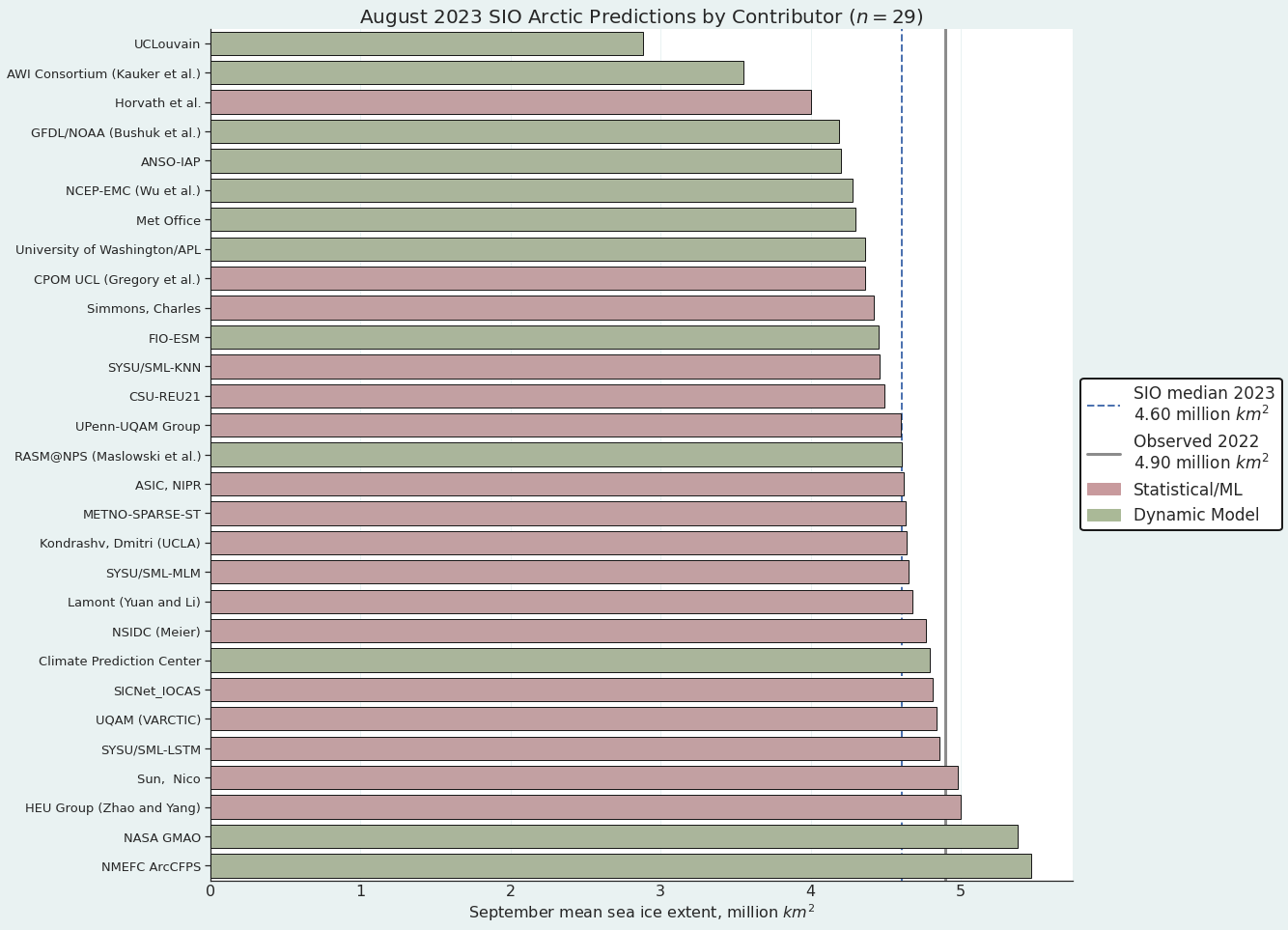
The August median forecasted value for pan-Arctic September sea-ice extent is 4.60 million square kilometers with interquartile values of 4.35 and 4.80 million square kilometers, while individual forecasts range from 2.88 to 5.47 million square kilometers. We note that the lowest two forecasts predict a new record September sea-ice extent value (current record is September 2012, with a sea-ice extent of 3.57 million square kilometers), but these forecasts are outliers relative to the other contributions.

These are predictions for the September 2023 monthly average ice extent as reported by NOAA Sea Ice Index (SII). This post provides a look at the 2023 Year To Date (YTD) based on monthly averages comparing MASIE and SII datasets. (17 year average is 2006 to 2022 inclusive).


The graph puts 2023 into recent historical perspective. Note how 2023 was slightly below the 17-year average for the first 5 months, then recovered to match average in May and has maintained or exceeded average through August. The outlier 2012 provided the highest March maximum as well as the lowest September minimum, coinciding with the Great Arctic Cyclone that year.  2007 began the period with the lowest minimum except for 2012.  SII 2023 was running below MASIE except for May/Juneand is currently just below MASIE 2007 and 2012.

The table below provides the numbers for comparisons (all are M km2)

Monthly MASIE 2023 SII 2023 MASIE -SII MASIE 2023-17 YR AVE SII 2023-17 YR AVE MASIE 2023-2007
Jan 13.579 13.347 0.232 -0.207 -0.250 -0.183
Feb 14.481 14.177 0.304 -0.207 -0.292 -0.171
Mar 14.655 14.440 0.215 -0.212 -0.248 0.032
Apr 13.979 13.992 -0.013 -0.120 -0.025 0.283
May 11.866 12.159 -0.293 -0.742 -0.492 -0.561
June 11.044 10.963 0.081 0.242 0.099 0.218
July 8.431 8.183 0.248 0.152 0.150 0.439
Aug 5.825 5.561 0.264 -0.062 -0.083 0.241

The first two columns are the 2023 YTD shown by MASIE and SII, with the MASIE surpluses in column three.  Column four shows MASIE 2023 compared to MASIE 17 year average, while column five shows SII 2023 compared to SII 17 year average.  YTD August both MASIE and SII are very slightly below average. The last column shows MASIE 2017 holding an August surplus of 241k km2 over 2007.

Summary

The experts involved in SIPN are expecting SII 2023 September to be higher than 2007 and somewhat lower than 2022.  The way MASIE is going, this September looks to be nearly average unless some bad weather intervenes.  While the daily minimum for the year occurs mid September, ice extent on September 30 is typically slightly higher than on September 1.

Footnote:

Some people unhappy with the higher amounts of ice extent shown by MASIE continue to claim that Sea Ice Index is the only dataset that can be used. This is false in fact and in logic. Why should anyone accept that the highest quality picture of ice day to day has no shelf life, that one year’s charts can not be compared with another year? Researchers do this, including Walt Meier in charge of Sea Ice Index. That said, I understand his interest in directing people to use his product rather than one he does not control. As I have said before:

MASIE is rigorous, reliable, serves as calibration for satellite products, and continues the long and honorable tradition of naval ice charting using modern technologies. More on this at my post Support MASIE Arctic Ice Dataset

MASIE: “high-resolution, accurate charts of ice conditions”
Walt Meier, NSIDC, October 2015 article in Annals of Glaciology.

Londoners Vs. ULEZ Cameras

Background: 

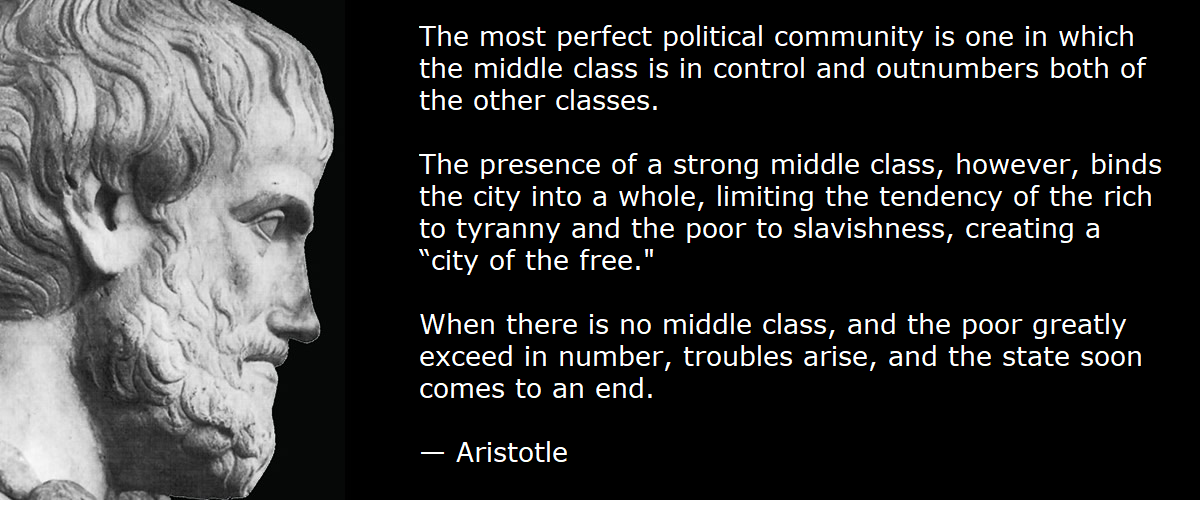
Remember that the World Bank recognizes personal mobility as the defining characteristic of the Middle Class.  Also recall that as Aristotle stated, the Middle Class is the social buffer against tryanny by the elite and slavery of the poor.

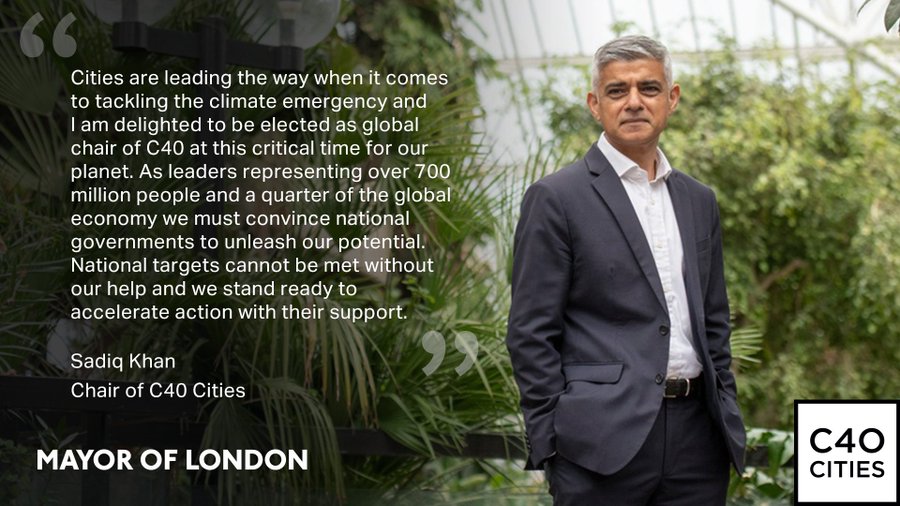
Finally, be informed that C40 is a global network of mayors of the world’s leading cities that are united in action to confront the climate crisis. It was founded in 2005 as C20, and has since expanded to its current network of 96 cities, including London.  More at Daily Sceptic The Green Globalists Behind Ulez – and What They Have Planned Next  (Of course our virtue signalling Montreal Mayor Plante is all in on imposing ULEZ here.)

Freedom Fighters Take to the Streets of London

Within this context comes the report that Londoners are conducting an organized attack on the ULEZ cameras placed to enforce fines for people straying from their home neighborhood. The Remix News article is Hundreds of ULEZ cameras destroyed by vigilante group following wider London roll-out.  Excerpts in italics with my bolds. H/T Tyler Durden

The group intent on disrupting London Mayor Sadiq Khan’s green vehicle tax
has received some political support despite its criminal activity.

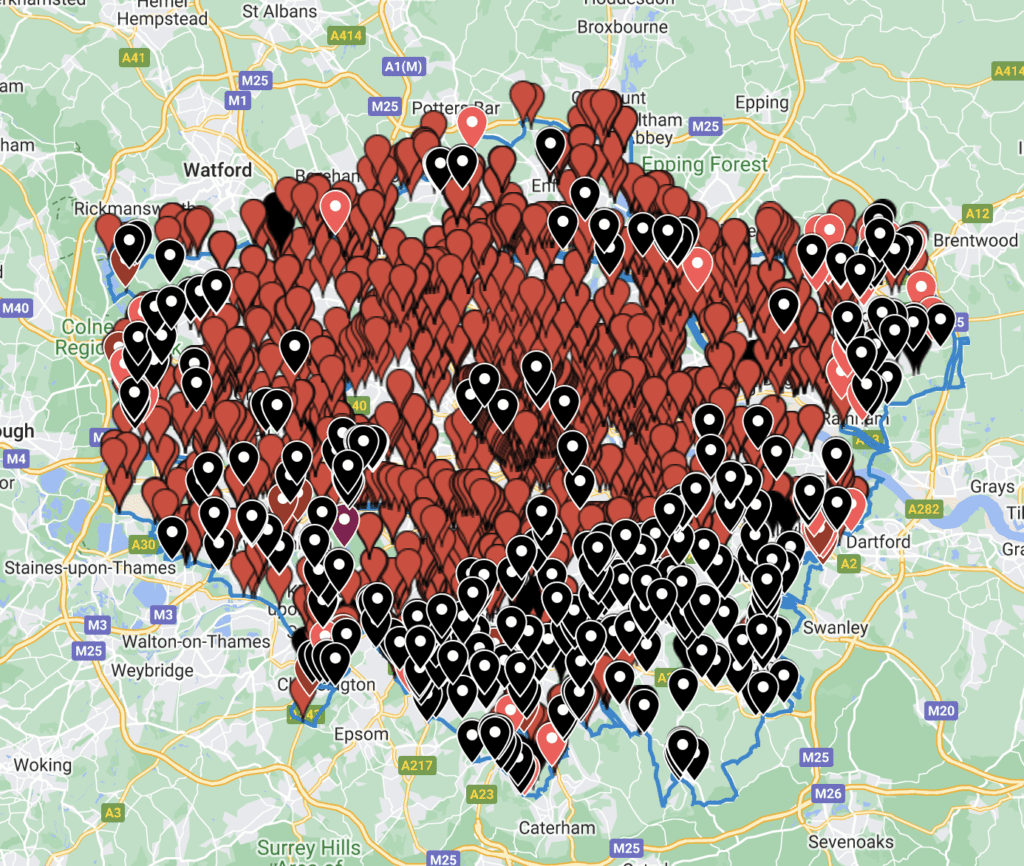
Hundreds of Ultra Low Emission Zone (ULEZ) cameras have been vandalized by a vigilante group that opposes the controversial scheme, which extended across wider London this week and charges road users for traveling in non-compliant vehicles.

The scheme is part of London Mayor Sadiq Khan’s green agenda to enhance the air quality across the U.K. capital; however, many critics of its extension into London’s suburbs consider it to be a regressive tax and cash grab that will hit working families the hardest.

A vigilante group known as the Blade Runners has been targeting newly installed cameras across the capital in a bid to disrupt the implementation of ULEZ as much as possible, and hundreds of cameras have already been hit.

Prior to the roll-out, which came into force on Tuesday, around 500 cameras had been marked as out of action or damaged, according to a map the vigilante group promoted. Many of the cameras targeted were located in London’s southeast with 156 of the 185 cameras around the districts of Sydenham and Sidcup being hit, as well as 18 of the 22 cameras installed in Bromley.

The camera map, published on a popular anti-ULEZ Facebook page, allows users to update it when a camera has been rendered out of action. The black pins represent cameras that are now missing or damaged.

In the southeast town of Orpington, just two of the new number plate recognition cameras were in working order on the day of the ULEZ expansion after vigilantes smashed, spray-painted, or cut the wires of 14 cameras on a single road.

Video footage and photographs of disruptors vandalizing the cameras have been published on social media, much to the delight of those critical of the scheme.

One camera was even installed just meters from a crematorium in order to
pick up funeral-goers, a camera that was swiftly taken care of by locals.

Despite their criminal activity, the vigilantes have received political support, including from a former Conservative Party leader and cabinet minister, Sir Iain Duncan Smith, who insisted he was “happy” for Londoners to fight back because “they are facing an imposition that no one wants and they have been lied to about it.”

“A lot of people in my constituency have been cementing up the cameras or putting plastic bags over them,” he said. “The actions you are seeing show how angry people are at what is being imposed on them. Sadiq Khan has gerrymandered all the information – people have had enough.”

Last November, Khan announced the extension to the scheme, which had previously been reserved for central London, to all London boroughs despite overwhelming opposition to the plan.

It is the latest in a continuous assault by Khan on motorists, following the installation of Low Traffic Neighbourhoods (LTNs), extensive road-narrowing, and the excessive expansion of 20-mph zones.

When he was heckled at a public event back in March over the ULEZ roll-out, Khan suggested that those who opposed the plans were “far-right,” a remark that was met by derision and booing from the Question Time audience.