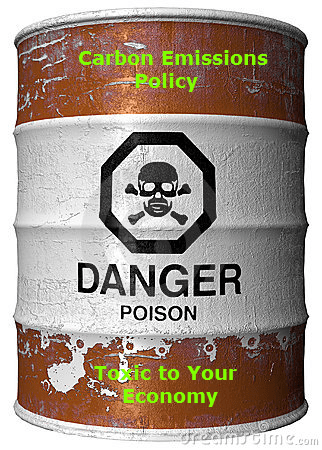
 Jock Finlayson describes how climate change policies are depleting Canadians’ financial means in his article Millions of Canadians May Face ‘Energy Poverty’. Excerpts in italics with my bolds and added images.
The term “energy poverty” is not yet part of day-to-day political debate in Canada, but that’s likely to change in the next few years. In Europe, the high and rising cost of energy has become a political lightning rod in several countries including Britain and France. Something similar may be in store for Canada.
The Trudeau government and some of the provinces are
aggressively pursuing the holy grail of decarbonization.

To achieve this, they’re engineering dramatic increases in carbon and other taxes on fossil fuels and promising to pour vast sums of money into building new electricity generation and transmission infrastructure to help reduce reliance on oil, refined petroleum products, natural gas and coal. Both strategies point to higher energy costs.

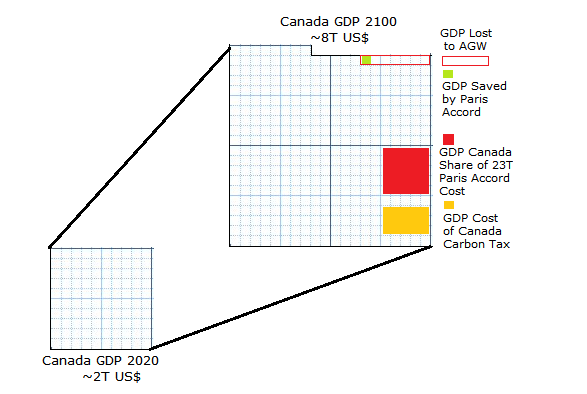
Tax advocates say it is a small % of GDP. But it is still $10 Billion extracted from Canadian households
The Trudeau government has legislated a national minimum carbon tax set to reach $170 per tonne of emissions by 2030, up from $50 in 2022 and $65 currently. Ottawa has also imposed a “clean fuel standard” that will further raise the cost of fuel. These policies are driven by concerns over climate change, which is a risk, to be sure, but so is the prospect of rapidly escalating energy prices for Canadian households and businesses.
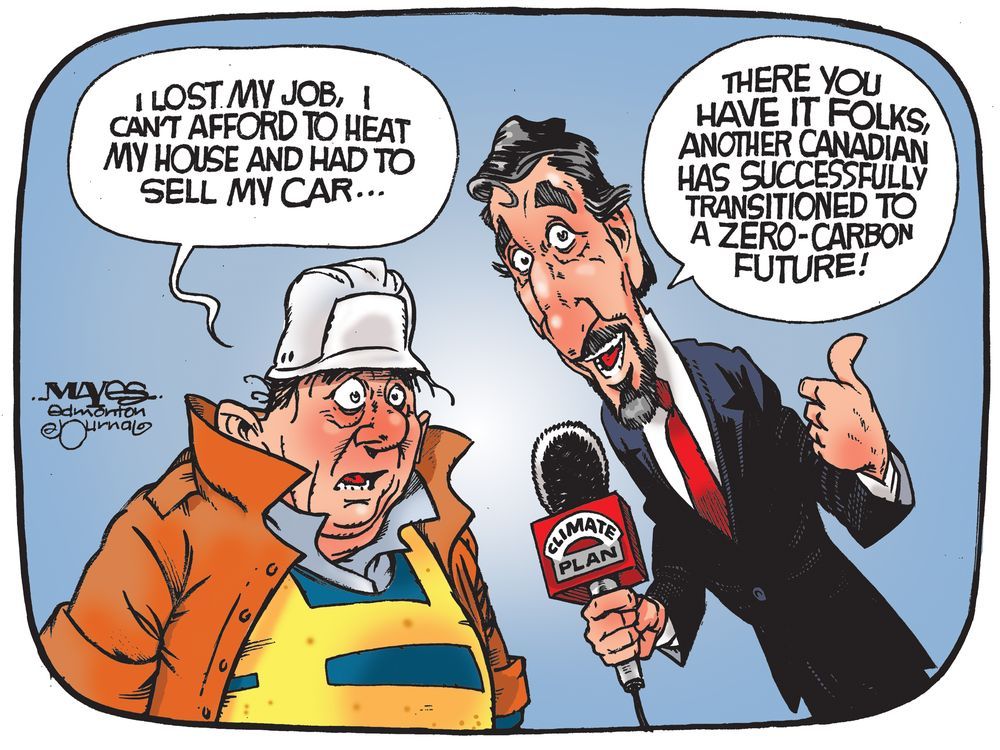
Energy poverty arises when households and families must devote a significant fraction of their after-tax income to cover the cost of energy used for transportation, home heating and cooking, and the provision of electricity. In 2022, the United Kingdom government estimated that 13.4 percent of households were in energy poverty, which it defined as needing to spend more than 10 percent of income to cover the cost of directly consumed energy.

There’s no single agreed methodology for assessing the prevalence of energy poverty. A recent Canadian study reports that in 2017, between 6 percent and 19 percent of Canadian households experienced some form of energy poverty, with an above-average incidence in rural areas, Atlantic Canada and among people living in older single-family homes. If accurate, this finding suggests that many more Canadians will soon become acquainted with the term as taxes on fossil fuels climb and governments impose new regulations affecting the energy efficiency of buildings, vehicles, industrial equipment, appliances and agricultural operations.
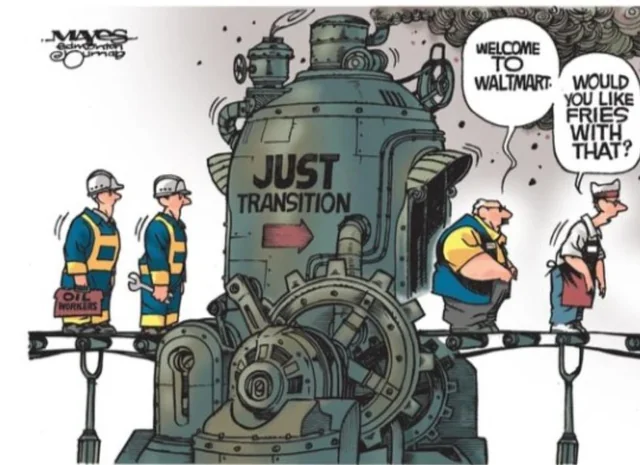
Canada is blessed with plentiful and diverse supplies of energy. Over time, we have become an important global producer and exporter of energy, with oil, natural gas and electricity together expected to account for one-quarter of Canada’s merchandise exports in 2023. Canada is also an intensive consumer of energy, in part because of our cold climate, dispersed population and relatively high living standards.

80% of the Other Renewables is solid biomass (wood), which leaves at most 1% of Canadian total energy supply coming from wind and solar.
End-use energy demand in Canada is around 13,000 petajoules. Of this, industry is responsible for about half, followed by transportation, residential buildings, commercial buildings and agriculture. Refined petroleum products—all based on oil—are the largest fuel type consumed in Canada (around 40 percent of the total), followed by natural gas (36 percent) and electricity (16 percent). Biofuels and other smaller sources comprise the rest. These data underscore Canadians’ overwhelming dependence on fossil fuels to meet their energy needs.
Politicians in a hurry to slash greenhouse gas emissions via higher taxes
and more regulations must be alert to the risk that millions of Canadians
could find themselves in energy poverty by the end of the decade.
Jock Finlayson is a Senior Fellow at the Fraser Institute.
See Also Canada Budget Officer Quashes Climate Alarm
 Science Matters
Hi again Ron, I have a positive little story for you here. New Zealand has just had it’s general election, and down on the southwest coast of the south island (thats coal country) a politician by the name of Maureen Pugh has won re-election. Maureen’s constituency consist of Coalminers and farmers.(NZ, like Canada, has significant fossil-fuel resources to the extent that we could be energy-independent) Last year Maureen got blasted by the media and her party leader(who told her she needed “re-education”) for saying publicly that there was doubt about the UN’s CO2 scare stories. I had contacted Maureen after I saw her being lambasted for her views, offering to be her source of “real” climate info. She was very pleased to accept and we had been communicating regularly (I live in the north island). Mainly I was sending her your posts in small doses,sort of “bullet-points” that she could use to defend her position.Not graphs and data, just defendable statements about climate. (Maureen is a politician, not a mathematician.) Then , just before the election, Maureen’s adult daughter sickened then died of cancer. Maureen asked to be left alone at this time, what with the upcoming election and the loss of her daughter she just had too much on her plate. But when I read your post about the UN IPCC backtracking on RCP8.5 and RCP6, I re-established contact to inform her, pointing out that all funding, grant-money, research, predictions,Govt actions and proposals that had been based on those scenarios was now what you and I always knew them to be. Utter bullshit. Of couse there has been ABSOLUTELY NO reporting of the binning of the RCP scenarios in Govt. -funded New Zealand mainstream media, or questioning of the vast amounts of money already wasted on these stupid scenarios. Maureen got back to me straight away,and we have resumed our arrangement. She asked me to send her a link or contact relating to the IPCC backdown. So once again Ron, your succinct summaries will be an important source of talking points for a “denier” politician in the little country of New Zealand..I never put my own spin onto your posts when I send them to her,I just slim them down a little . So please keep up your good work Ron, you have at least one politician in the world who appreciates the job you are doing. Thanks Ron. Cheers, Sammy Lyle.
LikeLike
https://www.the-world-of-co2.org/co2
Do forward this link to Mrs Maureen, some of the basics on C02. A wealth of informative charts all fact checked and referenced.
Wonderful to hear this story!
LikeLiked by 1 person