 Global News reports Federal Court finds Emergencies Act for ‘Freedom Convoy’ violated Charter. Excerpts in italics with my bolds and added images.
The Federal Court has ruled the Trudeau government’s decision to invoke the Emergencies Act during the so-called “Freedom Convoy” that descended on Ottawa in 2022 violated the Charter of Rights and Freedoms.
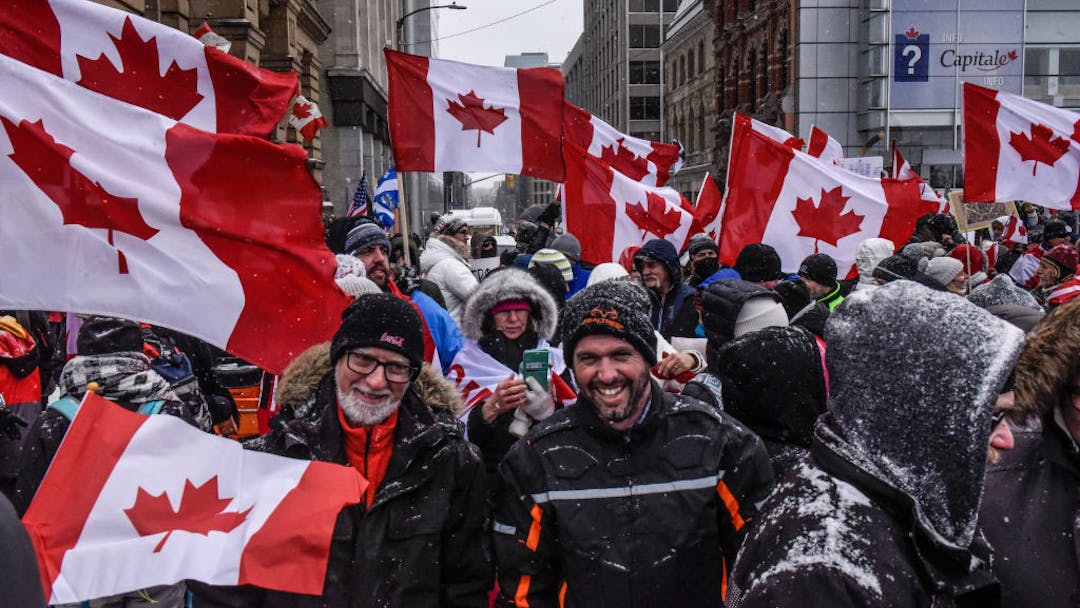
In his ruling, Justice Richard G. Mosley said the move was “unreasonable” and outside the scope of the law. Mosley is a 21-year veteran of the Federal Court and is a respected voice on national security legal matters. He has weighed in on some of the most high-profile recent cases in Canadian intelligence, including a 2016 decision that found CSIS had been illegally storing Canadians’ communication data for more than a decade.
The case was brought forward by the Canadian Civil Liberties
Association (CCLA), the Canadian Constitution Foundation,
Canadian Frontline Nurses and a handful of individuals.
Mosley wrote, “I have concluded that the decision to issue the Proclamation does not bear the hallmarks of reasonableness — justification, transparency and intelligibility — and was not justified in relation to the relevant factual and legal constraints that were required to be taken into consideration.”
“I think it’s in the interest of this government and future governments and all Canadians that the threshold to invoke the Emergencies Act remains high and that it is truly, as Justice Mosley says, a legislation of last resort,” CCLA lawyer Ewa Krajewska told Global News.
Deputy Prime Minister Chrystia Freeland says that Ottawa will appeal the ruling. “We respect very much Canada’s independent judiciary, however we do not agree with this decision, and respectfully we will be appealing it,” Freeland said at the cabinet retreat in Montreal.
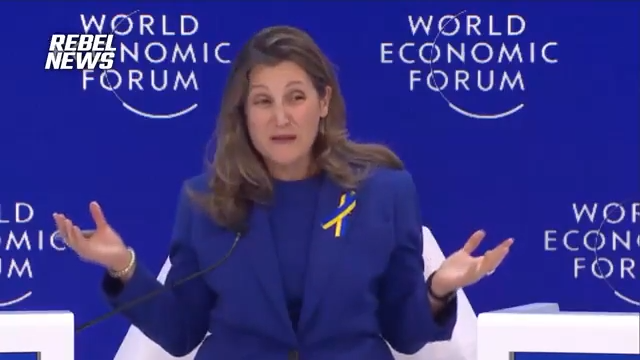
Yes, that’s Canada’s Deputy Prime Minister, Chrystia Freeland calling for imposing unfathomable costs on Canadians to solve an imaginary problem (Climate Change). She also serves on WEF Board of Trustees.
‘The decision follows an application for judicial review launched by the Canadian Constitution Foundation, the Canadian Civil Liberties Association, and several other applicants in 2022 after the emergency measures were used to end the Freedom Convoy protests in Ottawa. The measures controversially allowed the government to freeze the bank accounts of protesters, conscript tow truck drivers, and arrest people for participating in assemblies the government deemed illegal.”
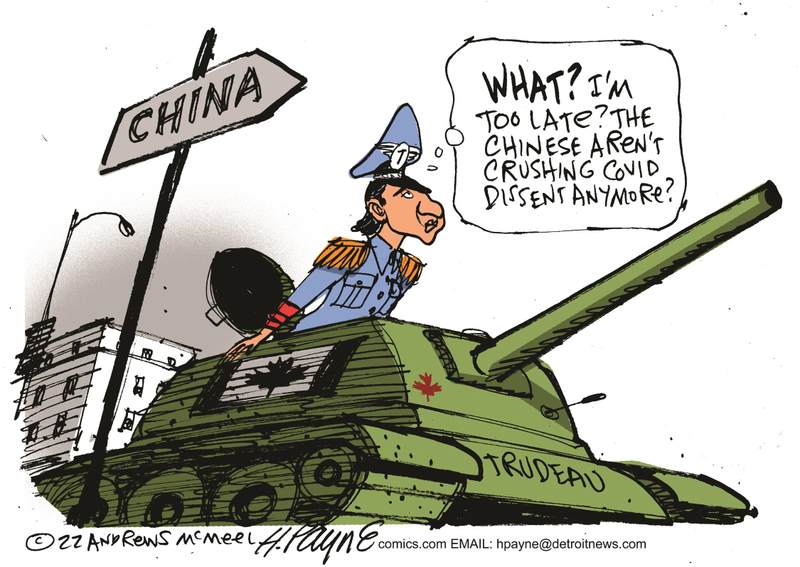
The document is a remarkable window into the advice Trudeau was getting from the public service during the crisis. Cabinet documents are very rarely released, and even the censored version contained some revelations.
For instance, it shows PCO was in active talks with the Canadian Armed Forces (CAF)
about how the military might assist in ending the protests should they be required.
The PCO memo revealed on Tuesday also notes that while Premier Doug Ford was an enthusiastic supporter of Trudeau invoking emergency powers, other premiers were more skeptical.
“A large number of other premiers expressed concern about the need to act carefully to avoid enflaming the underlying sentiment they considered to lie behind the protest, which they linked to public health measures including vaccine mandates,” the document read. “These premiers were not seeing the local manifestations of this movement yet in their jurisdiction.”
Quebec Premier François Legault “had a strong negative reaction to the proposal, saying that he would oppose the application of federal emergency legislation in Quebec,” where the memory of Trudeau’s father invoking the War Measures Act during the FLQ crisis is still alive.
Will Trudeau Finally Pay a Political Price for His Bad Governance? We certainly hope so.
 Science Matters
One comment