Three days after he was confirmed as US Secretary of Energy, Chris Wright was interviewed on CNBC Squawk Box by Brian Sullivan. The video clip above and one at the end provide his view of the way forward for US energy. For those who prefer to read, I provide a transcript in italics from the closed captions, lightly edited with my bolds and some added images. Brian refers to interviewer Brian Sullivan and Chris to Secretary Wright.
Brian: Let’s get to the topical issues, price of oil. The president says drill, baby, drill. You’re a guy that ran a fracking company. How do we balance out ringing down the price of gasoline, adding to US production, but yet not destroying the oil and gas investments as well? The CNBC audience talks about and looks at that every day.
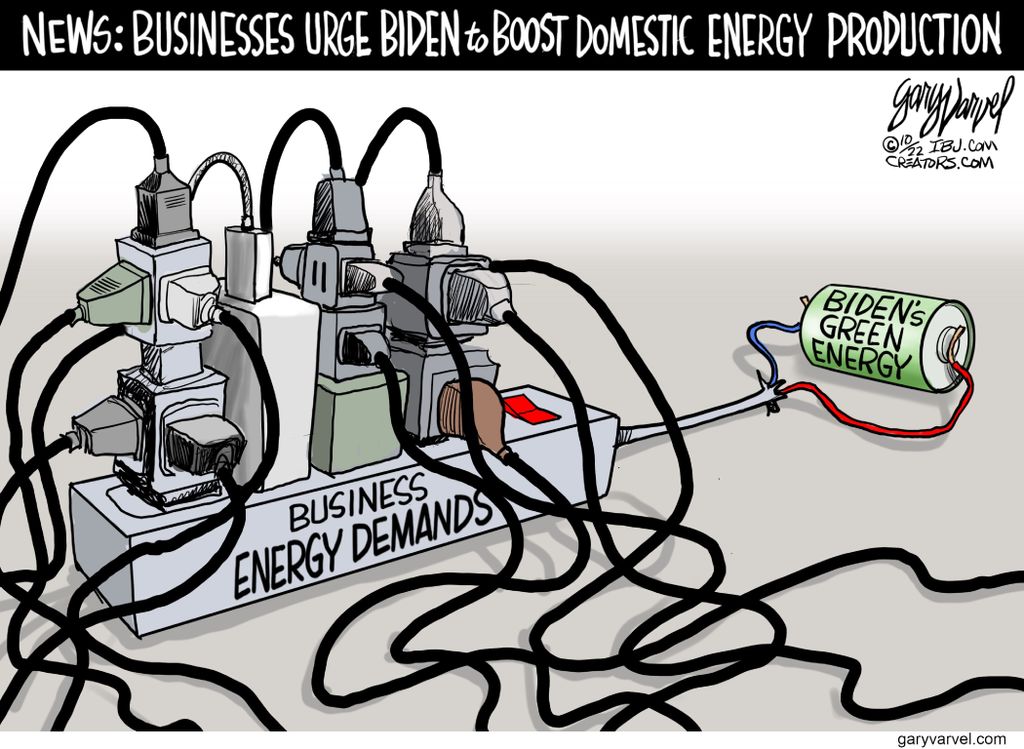
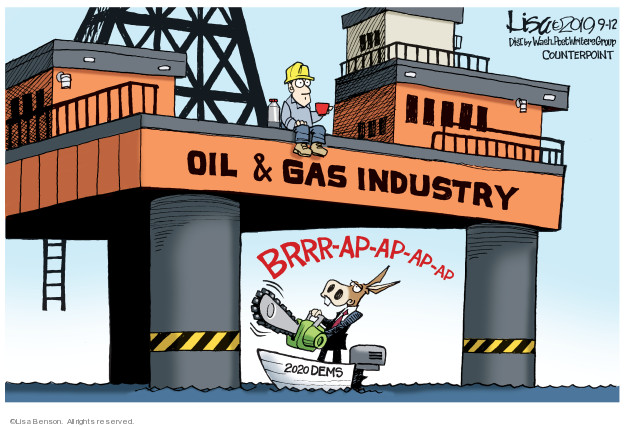
Chris: Yeah, of course it’s a business and prices are dictated by supply and demand. But we’ve had four years of an administration that’s done everything it could to raise the cost to produce a barrel of oil. “We’re not sure if you can get a permit to drill here” or “It’s going to take 18 months. You’ve got uncertainty. You’ve got to build pipelines or gathering lines to move that product to market. “Well, we’re not sure if you can do that. You’ve got to do another study, or another this or that.” So when you add to costs of course you hurt the economics.

Now we’re going to have a more efficient operating environment. I think we’re going to see some efficiencies from scale, some efficiencies from certainty and from more credible Capital Markets. We’ve tried to starve the oil and gas industry globally, somehow thinking that’s going to help climate change. There’s been a lot of nonsense. And I think the agenda of this administration, this president, is to bring back common sense.
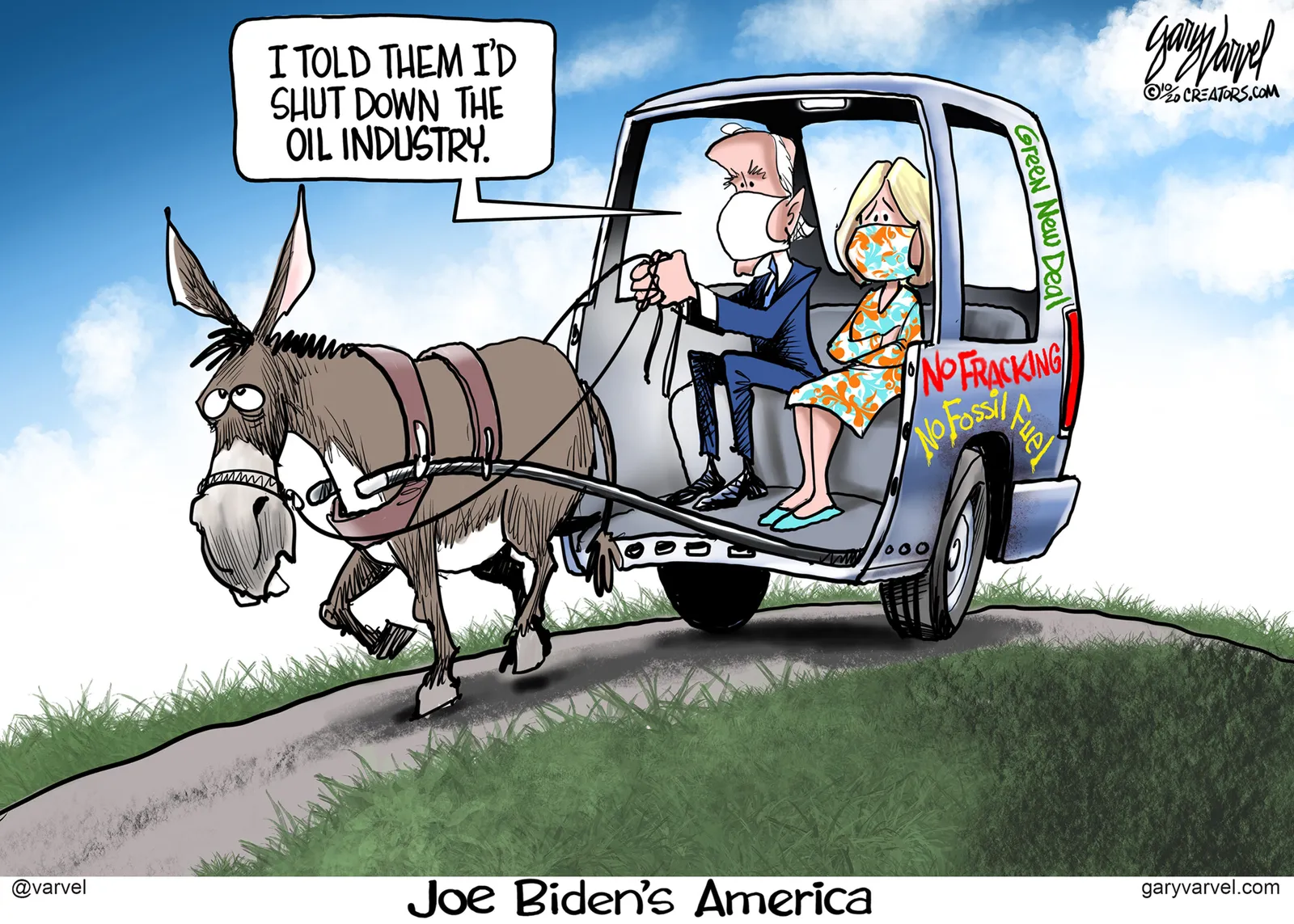
Brian: Can we have lower oil and gas prices and still have stocks that are not much lower than they are right now?
Chris: Oh, absolutely. Look, if you lower the cost of operations, there’s a lot of fat in the cost of operations. If you lower the cost of operations that’s going to flow through to lower prices but not necessarily lower profits.

Rough Seas for Captains of Industry
Brian: And that margin you think can remain steady and thus hold up because you were the CEO of a publicly traded company and on the board of another publicly traded company, which you have now left.
Chris: Absolutely. And look, it’s capitalism and business is driven by profit motives that have driven innovation, that have driven efficiency and driven improvements in our system. And that’s exactly what we want going forward in nuclear and natural gas and oil and geothermal, whatever it is.
Brian: Just before this interview we were talking about tariffs and the impact. They were showing health and beauty stocks down 25%. We know there’s a pause on the potential Canada tariffs, there’s 4.4 million barrels a day we bring in from Canada on average. Much of that goes to where you’re from, the Rocky Mountains, the Denver area, the upper Midwest. What is your view on potential 10% tariffs? If it does happen, what is going to happen to US oil and gasoline prices?
Chris: Well, look. Obviously the Canadian energy system is built and integrated with the United States energy system. Those pipelines come to US refineries that are tuned to refine that heavier, more viscous crude that Canada produces. I don’t think we’re going to see that change. As the president has said, this is a drug war. This is about concerns and security at our border. This is to get everyone’s attention and focus on how can we reduce criminals and fentanyl and drugs that are a threat to American security coming in our borders. I think things are moving in a productive direction.
Brian: It doesn’t sound like you think the tariffs would ultimately occur.
Chris: I don’t know what the future will bring there, but I know we’ve got very productive dialogues right now.
Brian: I’m sure you have many friends in Canada, as do I. And you know, they’re angry about this. They said, “Well, you know what? If they want to tariff our oil, let’s just ship it to Vancouver and we’re going to sell it overseas. I would call that the nuclear option. Do you see anything like that occurring if the tariffs were to occur, Mr. Secretary?
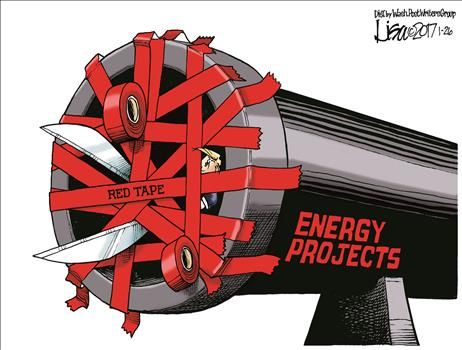
Chris: It’s hard to build new pipeline capacity. Canada does have a West Coast pipeline, which is running today and exporting oil to Asia. But that’s 10% or less of Canadian oil production. But look, this president is aggressive. He doesn’t like the status quo. He wants to change things and improve things. We had a lot of noise and sound and fury last time he was president about tariffs and inflation. Inflation averaged less than 2% in the four years he was president.
His agenda is to lower prices and better American lives, and
I don’t see any reason to believe think that’s not going to happen.
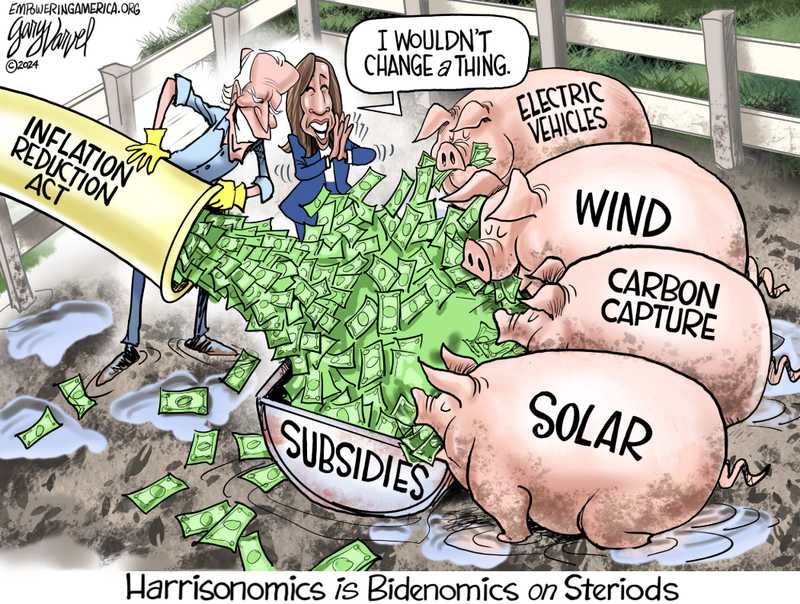
Brian: You mentioned climate a couple of minutes ago. Coming into this Administration, one of the big question marks is: What will happen to the loans and the grants and the IRA Inflation Reduction Act monies that may be already committed to wind, to solar. This matters to CNBC’s audience. In the stock market, a lot of these companies have seen their share price decline by a lot. What is your view on the Inflation Reduction Act and wind and solar projects, and the monies that are required to produce them?
Chris: So look, I’m in this chair three days now. One of the things we are doing is looking at all the projects that are out there. Where are the commitments? Where are the uncommitted funds? What’s the best use to grow the supply of affordable, reliable, secure American energy? Tremendous opportunities there. So there’s upside here as well.
But one thing I will say, Brian, we will not follow the German model. And I think the last administration wanted to go down that road. Germany spent a half a trillion dollars, made their electricity 2 to 3 times more expensive, and they produce 20% less electricity today than they did 15 years ago. We’re not going to go down that road.
We want affordable, reliable, secure energy and
reindustrialization of America, not De-industrialization of America.
Brian: Well, that’s something I’ve obviously personally reported on many times for CNBC. Been over there, seen what’s happened. So just to be clear, because let’s be honest, a lot of Wall Street makes a lot of money investing in wind and solar and even nuclear. You were on the board of a nuclear company. So final question. Should we say that that it’s possible big wind and solar projects are still going to be okay, that they’re not going to be starved of Funds under this administration? What’s the what’s the money situation regarding some of these renewable wind and solar and nuclear type energy programs?

Chris: Look, I think you’re going to see continued development in the United States of all of these energy sources. But obviously, a flow of funds from this administration is all going to be about not what the energy technology is, but will it increase the supply of affordable, reliable, secure energy?
Will it better the lives of American consumers and
encourage businesses to build things in America?
Brian: Well, finally, on building things. The first new nuclear plant in the United States just opened up last year in Georgia, took about 20 plus years to build way over budget. You’re a nuclear guy. You were on the board of Anglo until you resigned that seat. What is the future of nuclear in the United States? Some say it’s the future. Others say way too doggone expensive up front, doesn’t pay off.

Chris: I think the future is very bright, very bright. It’s an energy dense technology that gives reliable energy at all times, with a small amount of land and a small amount of materials. Do we need innovation? Do we need some government out of the way to make it work economically? Absolutely. But that’s what America is about.
Brian: Exclusive interview with the new Secretary of Energy on Day three, Christopher Wright. Thank you very much for your time here.

 Science Matters
One comment