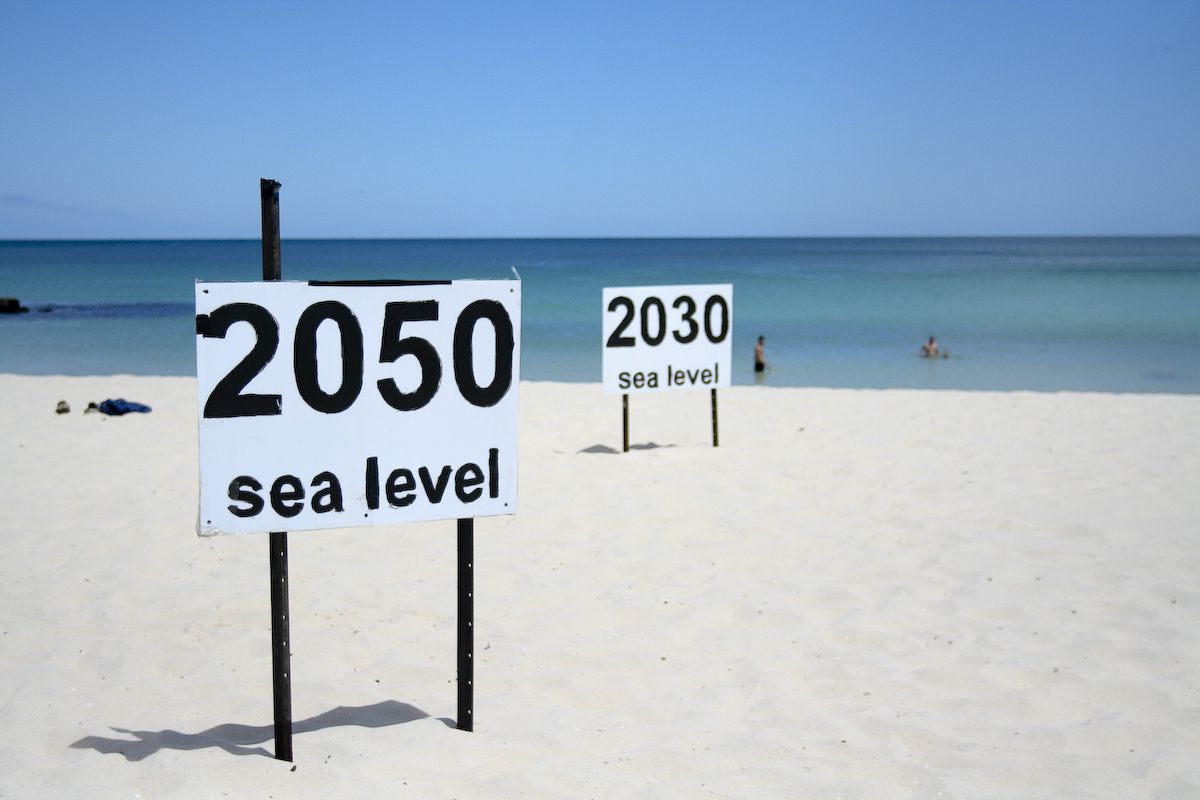
 From Inside Climate News comes this example, New Study Projects Climate-Driven Flooding for Thousands of New Jersey Homes.
Sea-level rise threatens coastal communities even if global emissions drop.
Of course the alarm is picked up everywhere:
As Summer Approaches, New Jersey’s Shore Towns Confront an Unrelenting Foe: Sea Level Rise Inside Climate News
US East Coast faces rising seas as crucial Atlantic current slows, New Scientist
Sea level rise creates a crisis at US coasts: What to know, USA Today
Map Shows US Cities Where Sea Level Rise Is Accelerating, Newsweek
Global sea levels are rising faster and faster. It spells catastrophe for coastal towns and cities, CNN
Etc., Etc., Etc.
A previous post documented this pattern, of which we have this fresh example. Let’s start with the tidal gauge at Atlantic City, New Jersey.
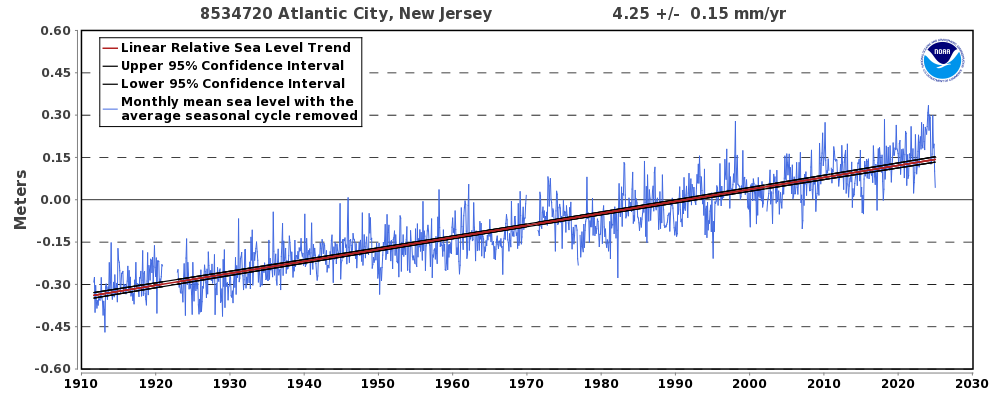
It presents a long record of steadily rising levels for more than a century. The rate is 4.25 mm per year, or a rise of about 1 inch every six years. The lie is in attributing all of that to sea level rising, and adding in burning of hydrocarbons as the cause. What’s left out is the well known and documented subsidence of land along the US Eastern seaboard.

Vertical land motion (VLM) across the US Atlantic coast (a) Estimated VLM rate. The circles show the location of GNSS validation observations color-coded with their respective vertical velocities. (b) Histogram comparing GNSS vertical rates with estimated VLM rates. The standard deviation (SD) of the difference between the two datasets is 1.3 mm per year. (c) Land subsidence (representing negative VLM) across the US Atlantic Coast.
The black rectangles indicate the extent of study areas for Chesapeake Bay area and Georgia, South Carolina, and North Carolina (GA-SC-NC) area shown in Fig. 4. State Codes: ME Maine, NH New Hampshire, VT Vermont, MA Massachusetts, RI Rhode Island, NY New York, PA Pennsylvania, NJ New Jersey, WV West Virginia, OH Ohio, DE Delaware, VA Virginia, NC North Carolina, SC South Carolina, GA Georgia, and FL Florida. National, state, and great lakes boundaries in a, c are based on public domain vector data by World DataBank (https://data.worldbank.org/) generated in MATLAB.
Abstract from paper Hidden vulnerability of US Atlantic coast to sea-level rise due to vertical land motion
The vulnerability of coastal environments to sea-level rise varies spatially, particularly due to local land subsidence. However, high-resolution observations and models of coastal subsidence are scarce, hindering an accurate vulnerability assessment. We use satellite data from 2007 to 2020 to create high-resolution map of subsidence rate at mm-level accuracy for different land covers along the ~3,500 km long US Atlantic coast. Here, we show that subsidence rate exceeding 3 mm per year affects most coastal areas, including wetlands, forests, agricultural areas, and developed regions. Coastal marshes represent the dominant land cover type along the US Atlantic coast and are particularly vulnerable to subsidence. We estimate that 58 to 100% of coastal marshes are losing elevation relative to sea level and show that previous studies substantially underestimate marsh vulnerability by not fully accounting for subsidence.
A further reference to causes of land subsidence:
Land subsidence, in particular, deserves special attention because it can significantly magnify the relative sea-level rise (RSLR) to several times beyond the global average sea-level rise, which usually amounts to just a few mm/yr on its own (Shirzaei et al. 2021). Land subsidence results from various factors encompassing both natural processes and human activities that operate at local or regional scales (Ohenhen et al., 2023). Globally, groundwater extraction is the primary cause of land subsidence (Coplin and Galloway, 1999;Shastri et al., 2023).
Finally, we can observe that the Atlantic City sea level rise of 4.25 mm per year measured at the gauge is close to the subsidence rate shown in the right hand panel. So yes, authorities in that area need to address the problem with hydro engineering and zoning laws. But no, reducing CO2 emissions is not the solution.

See Also:
 Science Matters
One comment