Rupert Darwall examines when and why the world has gone wrong this century, pinpointing a fundamental error needing correction. Excerpts of the transcript are in italics lightly edited with my bolds and added images. [MM refers to the interviewer, Maggie Miller, and RD refers to Rupert Darwall.]
MM: I’m joined now by Rupert Darwall, author of The Age of Error, Net Zero and The Destruction of the West. Thank you for joining me here today. Although you’re not a speaker here at this event I feel like your book speaks to what we are talking about. So it’s important to take some time to discuss this. For those who might be unfamiliar, would you talk about your book and what are the key takeaways?
RD: Yes, going back in time a bit, I had this sensation where I didn’t understand the way things were going in the world. Perhaps other people might have a a similar kind of feeling. And then the penny dropped. We live in an age of error. And once you understood that, everything started to fall in place. As a result of that, I decided to write a book on the age of error, which is essentially what the book’s about.
MM: When you think about the age of error, when do you think it began, can you set a date to that precisely?
RD: Yes I think I can. Because in 2006 there was the meeting of the G8 which was in St Petersburg hosted by Vladimir Putin. And the leaders of the west along with Vladimir Putin signed up to a document called the St. Petersburg Principles of Energy Security. In that document the leaders of the west said that that they needed to invest trillions of dollars across all the value chain, the whole oil and gas value chain.
We can see there in the summer of 2006, the leaders of the west understood energy realism. This was a realistic response to what was happening in the first decade of the 21st century. Oil prices had been rising quite strongly. Since the 1980s there had been a two decade run of falling energy prices that started to reverse. And higher energy prices were of course causing real concern to the economy and also to energy security.

So in 2006 we can say that was energy realism. People such as the leaders of the west had their heads screwed on straight. By 2009, after the global financial crisis of 2008 and the election of Barack Obama also in 2008, we then had the L’Aquila G8 meeting. And there the leaders of the west signed up to a green recovery and the realism that you’d seen three years earlier had completely gone. So yes one can date this really quite precisely.
MM: Sounds very interesting. What would you say is the biggest error that the west has made?

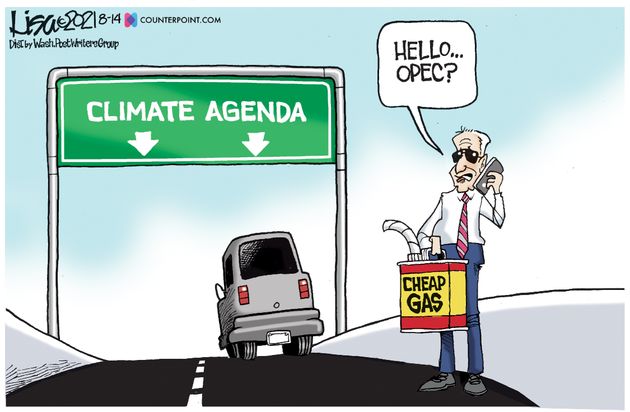
RD: I think the biggest error is personified by John Kerry. People like John Kerry believe that history is over, that is the history of the rise and fall and competition of great powers is over. And now the world together faces the prospect of climate catastrophe, a planetary catastrophe. So that the world must come together, bury their rivalries. We all come together at the Paris climate conference and we agree to decarbonize.

That to my mind is the biggest error of the age because history has not ended. Geopolitics still continues. We saw that in 2014 when Vladimir Putin seized Crimea, and most of all we saw that in February 2022 when he invaded Ukraine. And the error is that by believing in the catastrophe vision of the world, you will lose the geopolitics. Because there is no way that you can decarbonize your economy and still compete in a geopolitical world. You will basically lose, the west will lose to China.

MM: So what are the consequences for America and Europe?

RD: I would distinguish between America and Europe because after the financial crisis one thing that America had one thing going for it, which was a really really big thing, that was hydraulic fracturing and horizontal drilling– the shale revolution. And that turbocharged economic growth in the years following the financial crisis. It was driven a lot by falling energy prices and by the shale revolution.
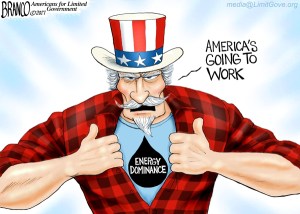
Europe on the other hand has really strongly embraced net zero. It really believes that decarbonization is the path to economic growth and that is a complete fantasy. You can’t do both. You cannot have economic growth and at the same time starve yourself of of energy.
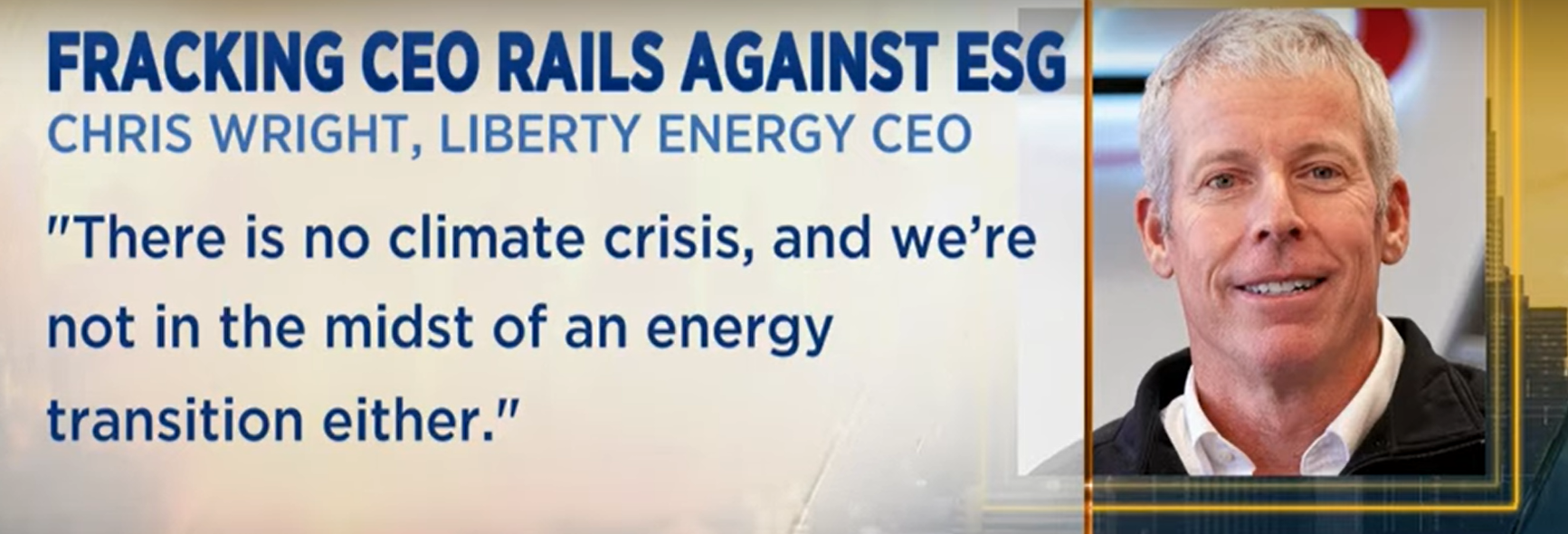
So I think America is in a different position because of the energy revolution, and moreover there’s always been a debate in America about climate change. So there’s always been a strong trend to towards energy realism, which obviously one sees now very strongly in in the Trump administration. Figures like Chris Wright personify energy realism and and the energy opportunity.

Europe has real real deep, deep problems, since it has drunk from the well of net zero very deeply. And it’s going to take a lot to get it off. I mean by a lot, it’s going to take very high prices, very weak economy. It simply can cannot generate the resources it needs to defend itself from a more aggressive Russia.
MM: What are you looking forward to now, what have you set your sight on?
RD: In terms of the book, I’ve written 17 chapters and the book will be 20 chapters. I’m looking forward to putting finish on chapter 20 and submitting the manuscript. Getting the book out is important because I think it speaks very strongly to the current situation we’re in.

 Science Matters