
Joe Oliver writes at Financial Post And suddenly, climate change hysteria is gone. Excerpts in italics with my bolds and added images.
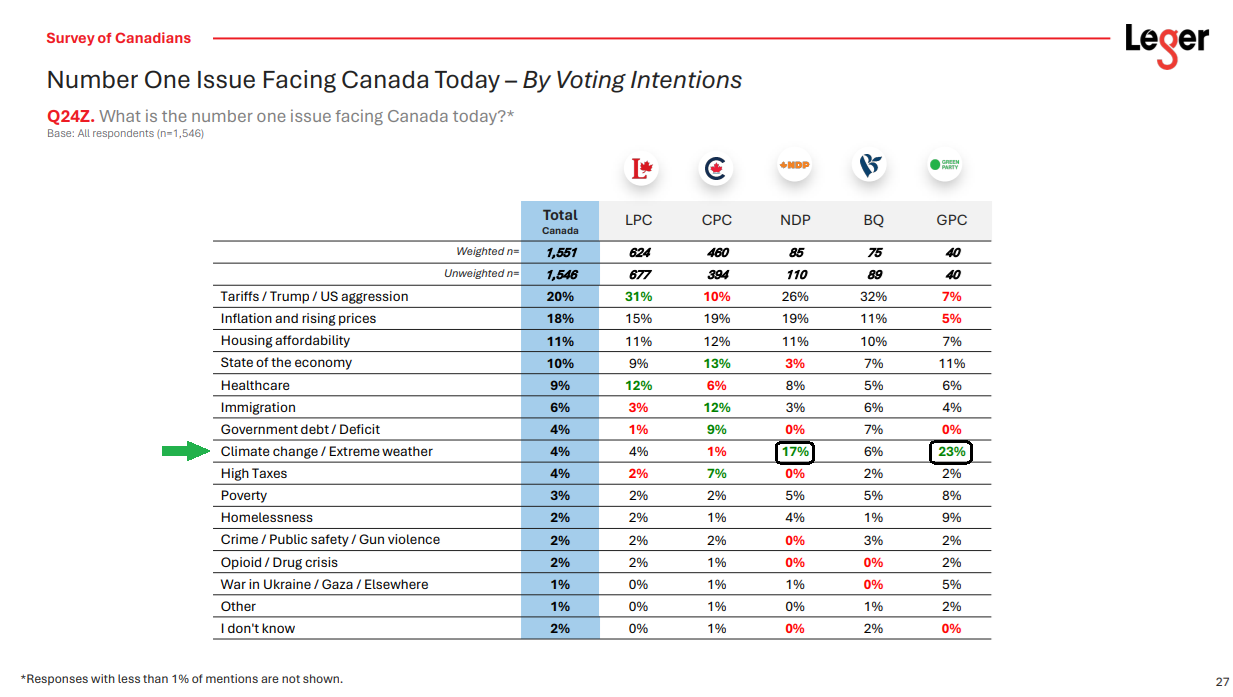
Only 4% of Canadians think climate change is our top problem.
But many of them are hard-core activists ready to block projects.
Over the past several months, public concern about climate change has declined dramatically, replaced by newfound enthusiasm for the development of Canada’s vast oil and gas reserves. The federal government is now under mounting political pressure to expedite the construction of pipelines to tidewater that will bring economic growth, employment, energy security and funding for social programs or tax relief.
What caused the sharp reversal in public opinion?
And will the government actually deliver?
Prime Minister Mark Carney has long championed climate catastrophism and a commitment to net zero, both in his various jobs on the world stage and in his 2021 book, Values. After entering politics, however, he has embraced fossil fuels, and the legacy media have joined him in a head-spinning abandonment of its obsessive focus on global warming’s alleged existential threat to humanity. Whether Carney’s transformation reflects transitory political expediency or is an overdue acknowledgment of economic and scientific reality is now key to Canada’s economic prospects.

Over the past four decades, incessant advocacy from the scientific establishment, media and opinion leaders made first global warming and then climate change the consensus view. Deviation jeopardized reputations and careers, especially for scientists and academics, who risked losing funding or even their jobs. It was no surprise, then, that in 2022, 73 per cent of Canadians believed we were confronting a climate emergency. But now, according to a recent Leger poll, only four per cent say climate change is the number one issue facing Canada.
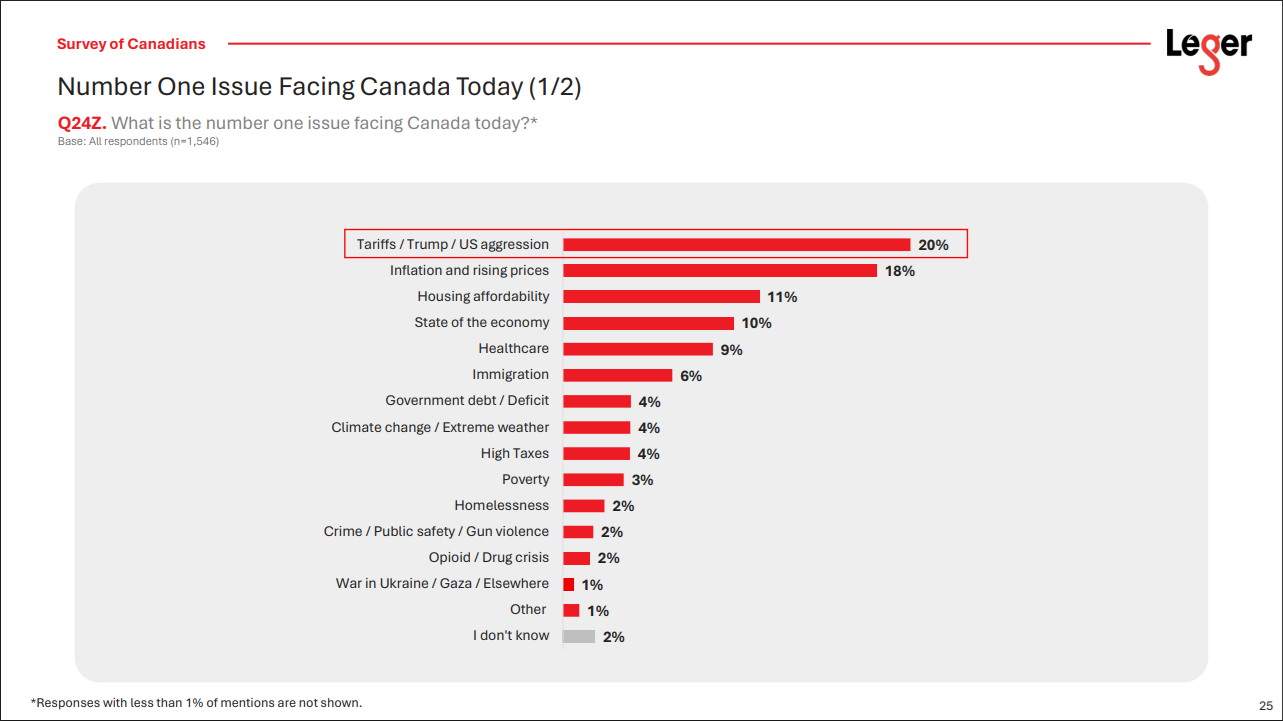
President Donald Trump’s shocking tariffs and 51st-state talk have diverted Canadians’ attention from climate change. And so have the exorbitant costs of green policies, the growing realization that nothing Canada does can measurably impact global temperatures, and the fact that green policies either weren’t adopted in many countries or have became politically toxic in countries where they were. Despite literally trillions of dollars being spent globally on reducing emissions, hydrocarbons still account for over 80 per cent of the world’s primary energy.
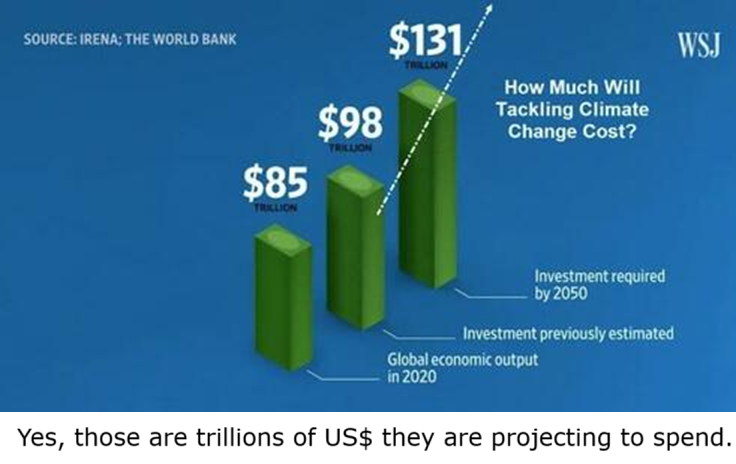
According to McKinsey, achieving net zero globally by 2050 would cost the Western countries a prohibitive $275-550 trillion. That makes it politically untenable.
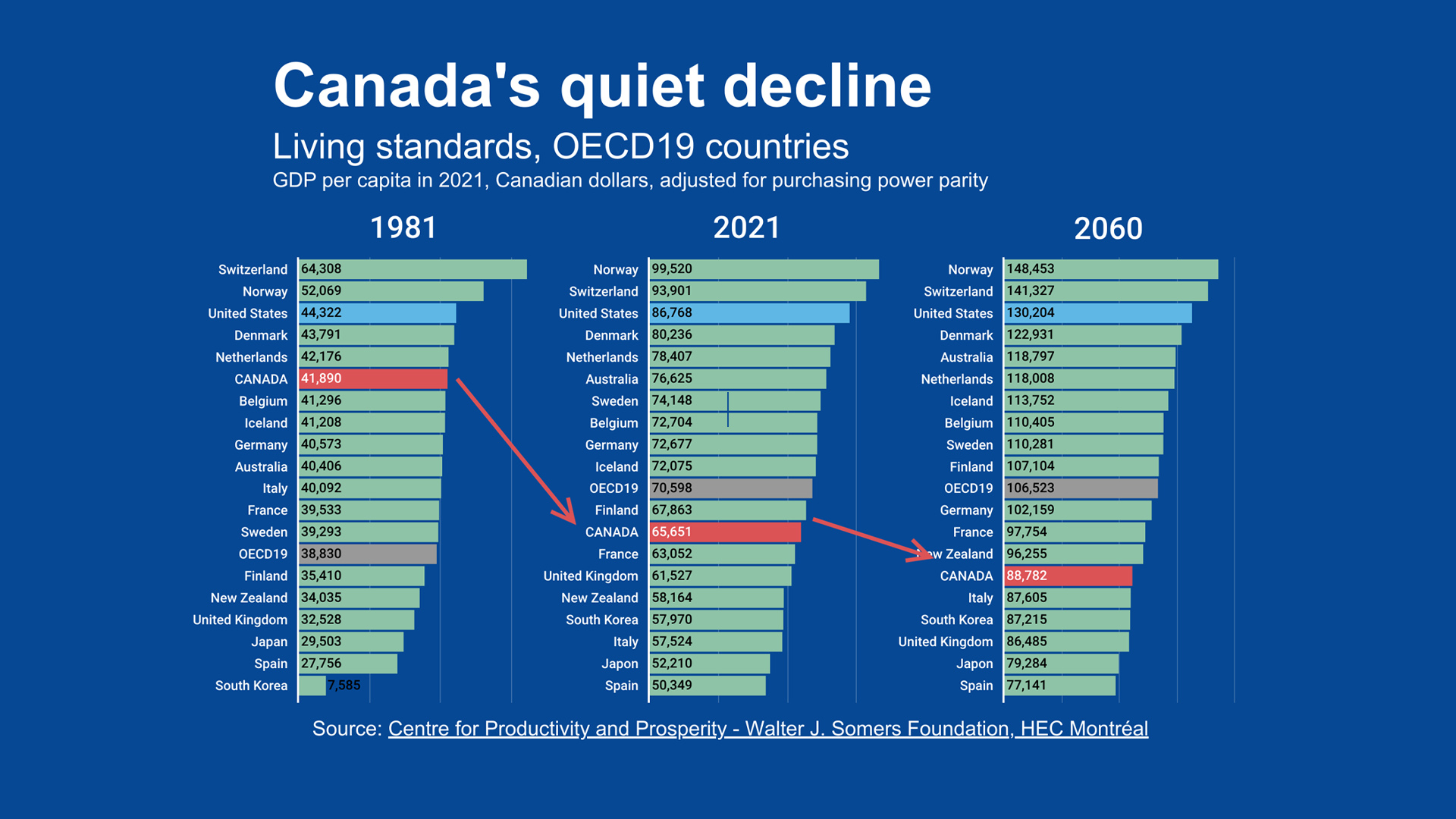
Wall Street Journal columnist Andy Kessler recently argued that green policies are largely responsible for European GDP falling from equal to American in 2008 to just two-thirds of it today. Soaring energy prices have led to de-industrialization, compounding the effects of high taxes and social spending, intrusive regulations and a protected workforce. Canada also, and for similar reasons, suffered a lost decade: growth of just half a per cent in real GDP per capita — compared with 20.7 per cent in the U.S.
And maybe the public has finally become skeptical of endless prophecies of impending disasters: “endangered” polar bears almost tripled in the past 50 years; hundreds of Pacific islands have increased in land size; death from extreme weather decreased by 99 per cent in the past 100 years; nine times as many people die from the cold as the heat; and so on. The Little Ice Age ended in the late 19th century with a gradual rise in temperatures — if not, we would still be in an ice age. Yet just 14 months ago, UN Climate Change Executive Secretary Simon Stiell said we had only two years to save the planet.

Future psychologists, economists and historians will examine the early 21st-century phenomenon of collective climate hysteria, what drove it, what ended it (if it has ended) and what damage it wrought. One thing is all but certain: there will be no admission of guilt for the enormous harm inflicted on Canada and other economies. Although the public has moved on, a hard-core group of climate militants is prepared to exploit every legal and regulatory impediment to resource development in Canada. The federal government will have to use all its legislative and executive authority to push the new energy projects it says it favours through to completion. Only then will Canadians know whether Mark Carney has truly changed his core beliefs.
See Also
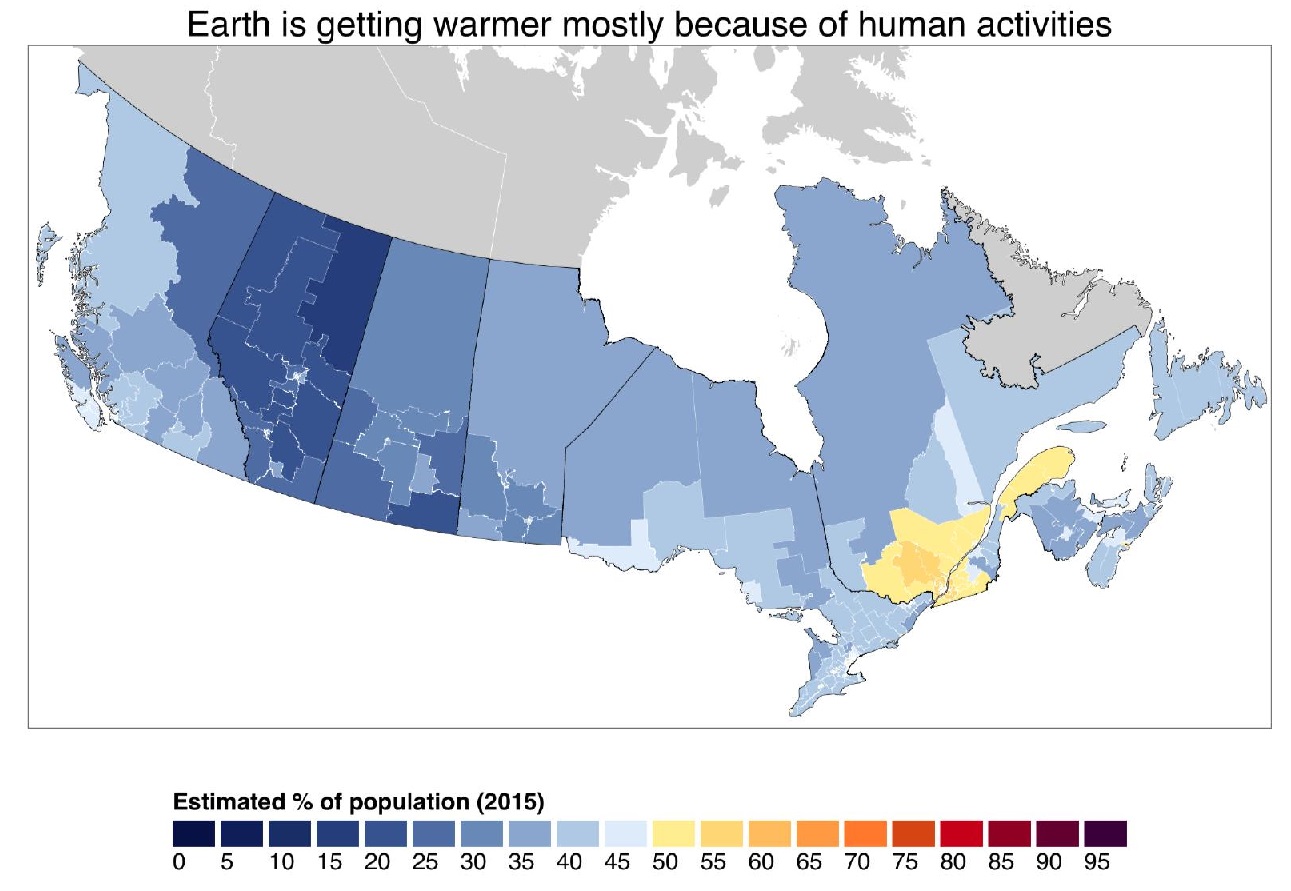
In 2015 Canadians were asked:
1. “From what you’ve read and heard, is there solid evidence that the average temperature on earth has been getting warmer over the past four decades?”
Yes
No
Don’t Know (volunteered)
2. [If yes, solid evidence] “Is the earth getting warmer mostly because of human activity such as burning fossil fuels or mostly because of natural patterns in the earth’s environment?”
Human Activity
Natural Patterns
Combination (volunteered)
Not sure / Refused (volunteered)
So the 79% who said there’s solid evidence of warming the last 40 years got a followup question: mostly caused by human activity or mostly natural? Slightly more than half said mostly human, thus a result of 44% believing both that it is warming and that humans are mostly to blame.
 Science Matters
“Only 4% of Canadians think climate change is our top problem.“
Since humans appeared over 100 000 years ago, we have nicely adapted to our surroundings. That’s one of our key features. It’s funny to see that there are many today that are not capable of much …
LikeLike
Thanks Sasjal for commenting. Adapting is the right thing to do about weather and climate, but it is not popular.
LikeLike