John Stossel Goes Off on Big Green Racketeers

H/T Mark Krebs, who commented:  This 5-minute by the great John Stossel packs a punch. Like me, he’s a recovering environmentalist who is still a conservationist but has become sick and tired of the manner in which huge elitist tax-exempt NGOs have used the cause to empower and enrich themselves.

For those who prefer reading, below in italics is the transcript from closed captions with my bolds and added images.

Climate change. We are seeing the impacts more and more each day.
So, what are you doing about it? Our future is on the line.

You can help save the world, say these environmental groups, just donate!The first thing that comes up on their websites is donate. Donate.

Why is it so important to donate to this fundraiser for Greenpeace?
Because it’s too hot, because it’s too cold, because it rains, because it doesn’t.
So, give us money. Money.

Your gift will help NRDC come to the defense of polar bears.
To get more money they lie. They are facing extinction in this century.
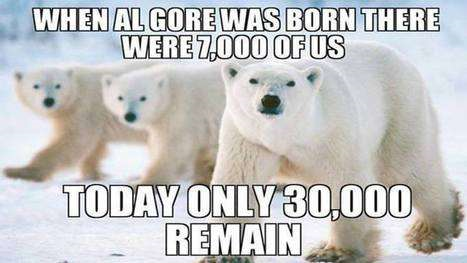
They say polar bears are disappearing. They aren’t.

They claim bees are dying off. Greenpeace set itself a challenge to put a stop to the deaths of thousands of bees. But bees are doing fine.

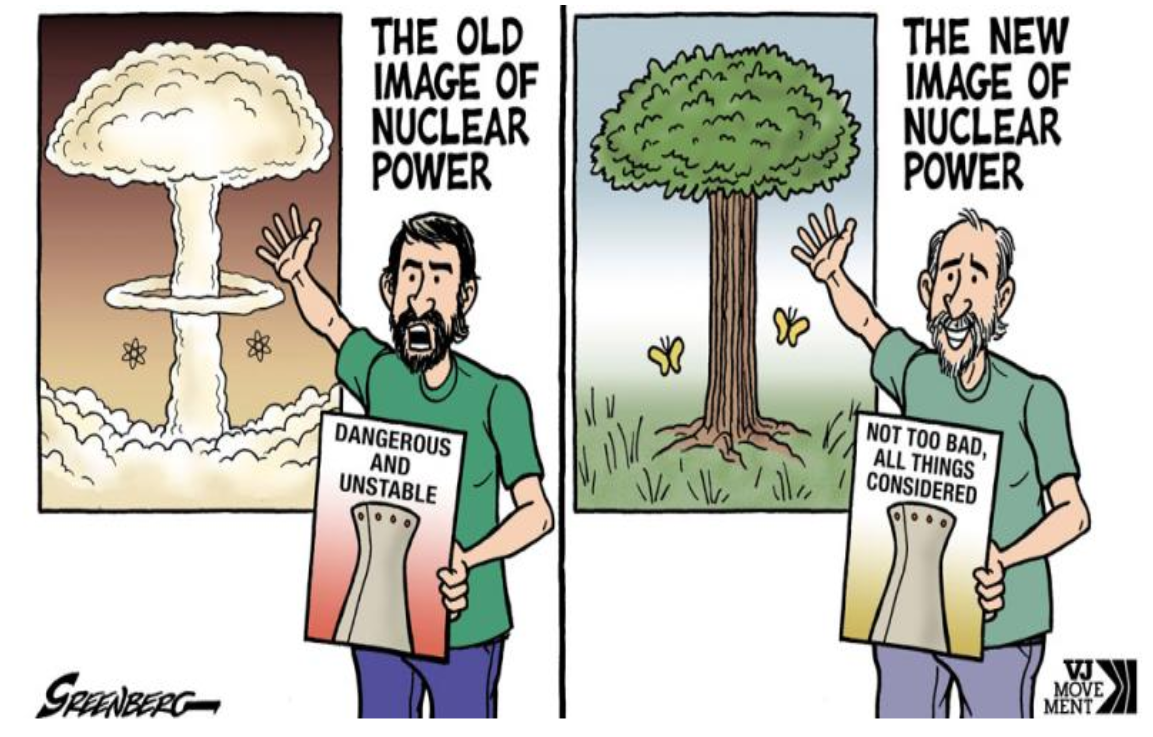
Environmental groups claim nuclear energy is dirty and dangerous, when it’s better than alternatives.

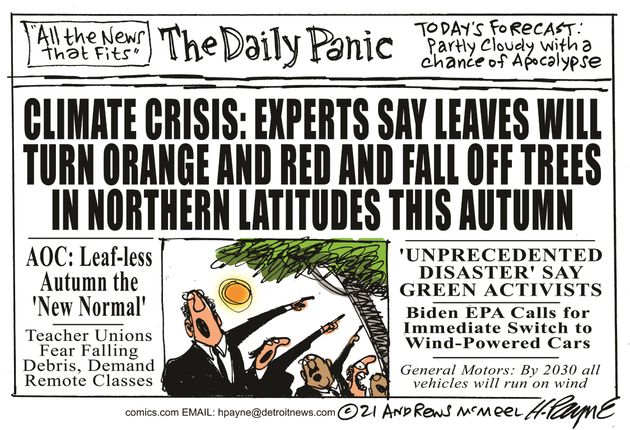
They call climate change an existential threat. It’s a problem, but not existential.  These scares drive donations.

Science writer Jon Entine.
They always feel that the only way they can talk about environmental issues is to frame it with hysteria, crisis. But they’re not trying to trick people. They believe it.

Sometimes they believe it. But they also recognize that hysteria generates donations and the oxygen for these organizations is money donated by people who think they’re doing good.

So, you give billions to these groups. Insufficient attention has been made to following the money.

Physicist Mark Mills.
The environmental industrial complex actually has more money in the PR game, in the lobbying game, than the real industry. The media portray the activists as plucky underdogs, the little guy. But they’re not.
Greenpeace pulls in more than $400 million a year and they want more.

Our fundraisers are doing street or door fundraising. They pay young people to accost you.
Even if it’s only two or three people each day, knowing that they’re gonna be giving to Greenpeace for a hell of a long time.

Some of your millions in donations to the World Wildlife Fund help pay for its 250,000 sq foot headquarters with, as they proudly put it, a “stunning eight-story, sky-lit atrium.” They call this, “wise use of donated funds.”  Support WWF’s global conservation work. That’s just 40 cents a day.

The Natural Resources Defense Council spends some of your millions on galas with fashion brands and celebrities, who also make ads for them. This is our moment!  Give to the Sierra Club and you can attend their lavish ball here.

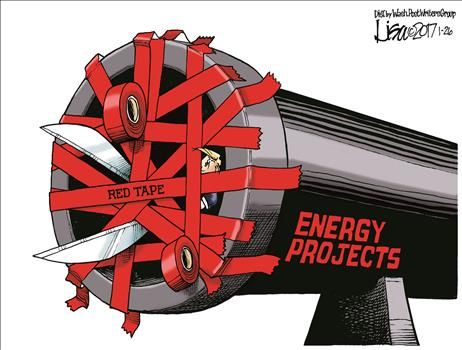
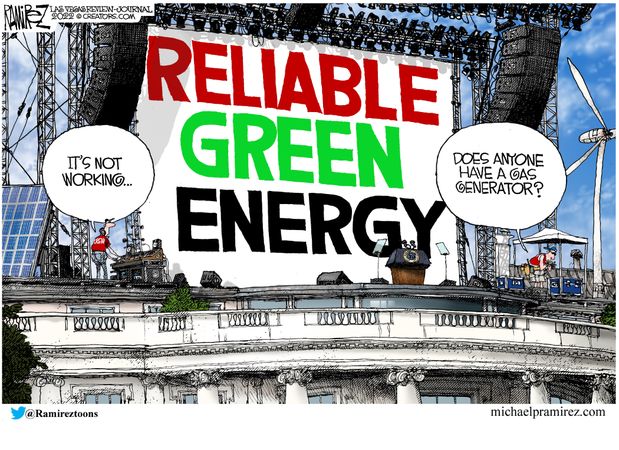
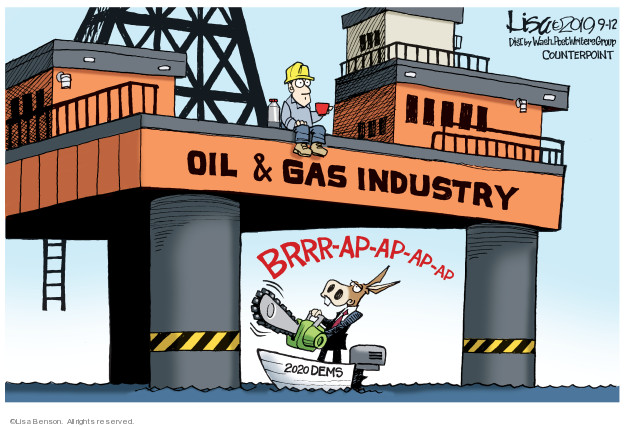
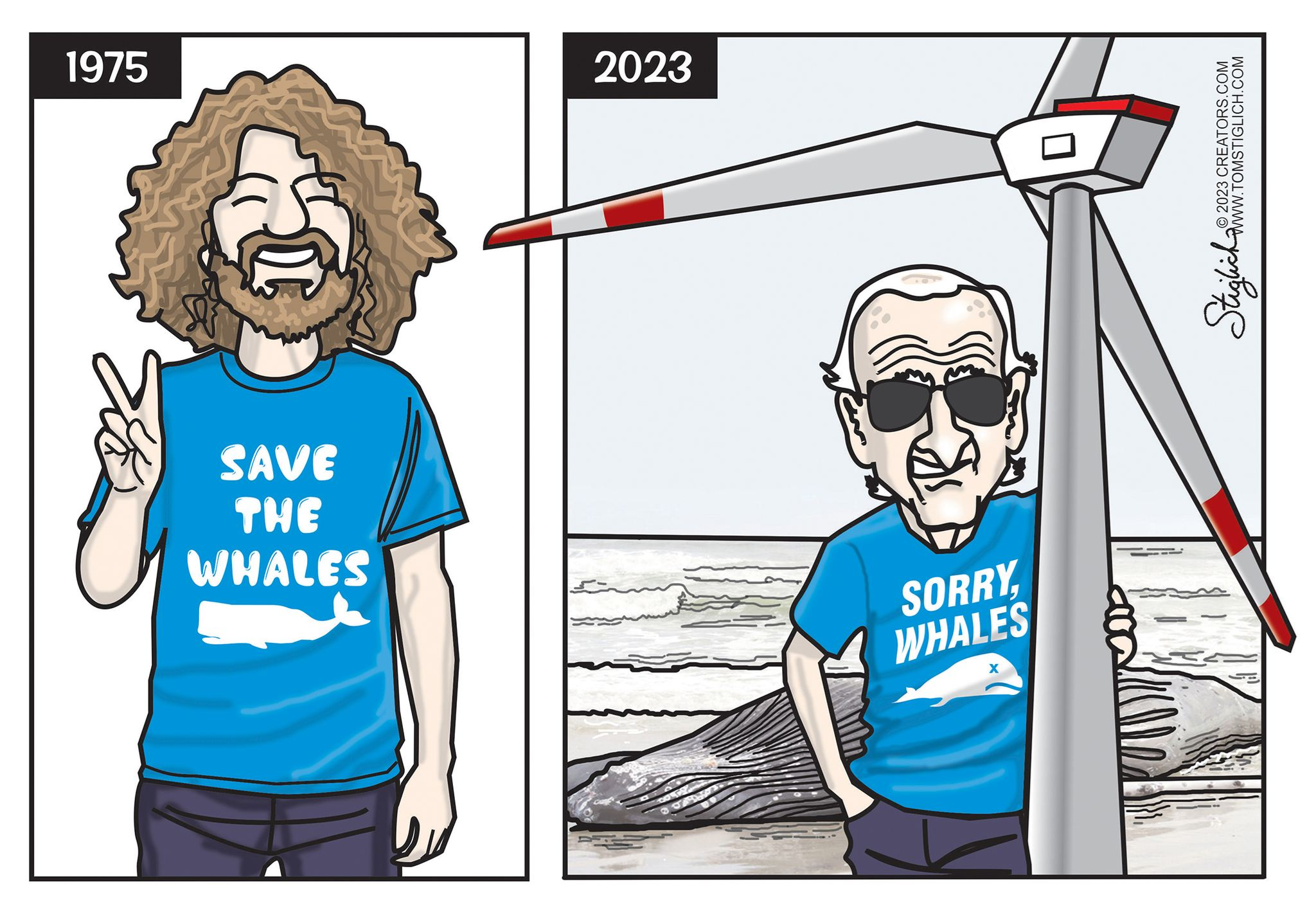
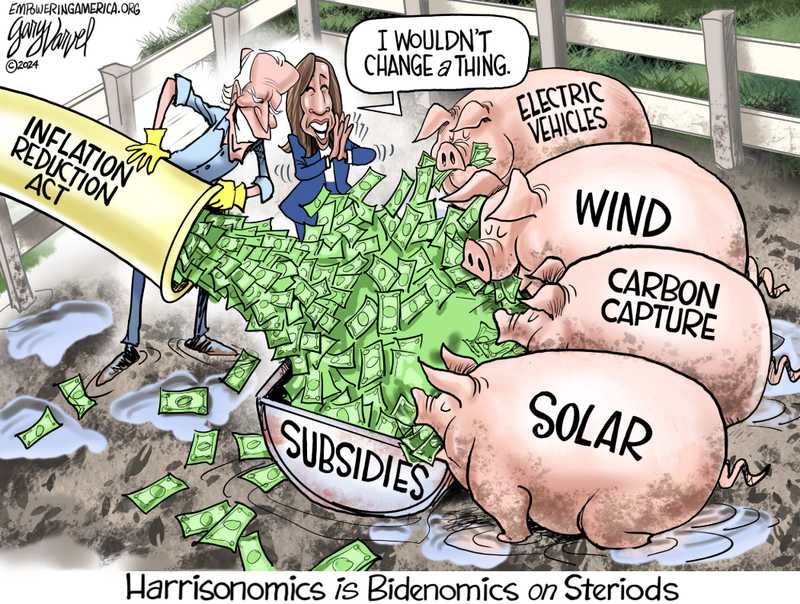
The so-called environmentalists are now the big guys, rolling in money.  It’s bad enough that they lie to us and get paid. Worse is the damage they do.  They block progress. They have billions of dollars to not build a thing, but just to oppose building things.

There’s a rich sense of irony there. Irony because while they say they’ll save the bees. Ultimately that donation goes to a lawyer suing someone, preventing you from using gasoline.

Some of your money does go to people cleaning parks or rivers, but groups like the NRDC and Sierra Club spend millions more on lawsuits.

In the past year our legal team has stopped thousands of miles of fossil fuel pipelines and dozens of large power plants.

We have the Sierra Club active in every state, actively suing. A natural gas pipeline that was supposed to span 3 states has been cancelled. Environmentalists sued to stop it.

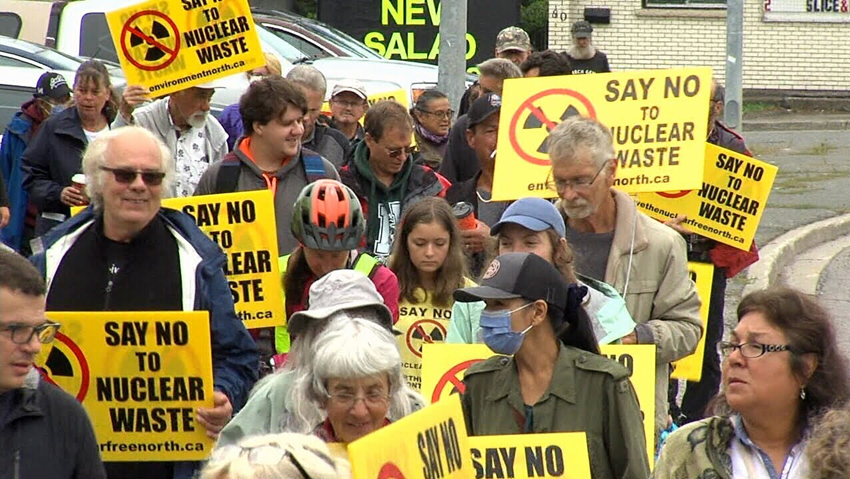
They sue to stop nuclear power. They even oppose solar projects and wind farms.
It’s that apparatus that’s keeping us from building.

It used to be NIMBY, not in my backyard. Now it’s BANANA.
Build absolutely nothing anywhere near anyone.

And unfortunately, what that means is we don’t get the lifestyle that we want.

If you wanted to build a new house, for example, what kind of permits do you have to get?
Who do you have to talk to? Is the Sierra Club gonna sue you for building the wrong thing?

I’m ashamed that I once fell for their scams. Years ago my TV station ran ads promoting my alarmist environmental reporting. Now I realize that what today’s big environmental groups mostly do is stop progress and make lawyers richer.

We invited the groups to come here and explain to me why I’m wrong.  Defend your work.
Not one would agree.

I still want to ask them how they justify making it so hard for people to build anything.
It’s a shame because really when I think about what America could be, what we could be building, we could be so prosperous, so much more prosperous than we are.

See Also:

Time for Billionaires to Fund Climate and Social Realism

Abolishing the Climate Politico-Legal-Media Complex


June 2025 Ocean SSTs: NH Warms, SH Cools

The best context for understanding decadal temperature changes comes from the world’s sea surface temperatures (SST), for several reasons:

  • The ocean covers 71% of the globe and drives average temperatures;
  • SSTs have a constant water content, (unlike air temperatures), so give a better reading of heat content variations;
  • A major El Nino was the dominant climate feature in recent years.

HadSST is generally regarded as the best of the global SST data sets, and so the temperature story here comes from that source. Previously I used HadSST3 for these reports, but Hadley Centre has made HadSST4 the priority, and v.3 will no longer be updated.  HadSST4 is the same as v.3, except that the older data from ship water intake was re-estimated to be generally lower temperatures than shown in v.3.  The effect is that v.4 has lower average anomalies for the baseline period 1961-1990, thereby showing higher current anomalies than v.3. This analysis concerns more recent time periods and depends on very similar differentials as those from v.3 despite higher absolute anomaly values in v.4.  More on what distinguishes HadSST3 and 4 from other SST products at the end. The user guide for the current version HadSST4.1.1.0 is here.   The charts and analysis below is produced from the current data.

The Current Context

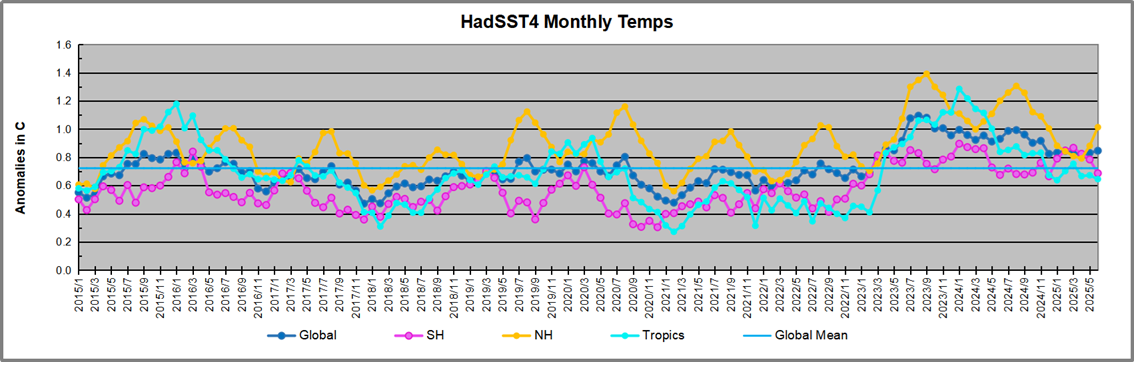
The chart below shows SST monthly anomalies as reported in HadSST4 starting in 2015 through June 2025. A global cooling pattern is seen clearly in the Tropics since its peak in 2016, joined by NH and SH cycling downward since 2016, followed by rising temperatures in 2023 and 2024 and cooling in 2025.

Note that in 2015-2016 the Tropics and SH peaked in between two summer NH spikes.  That pattern repeated in 2019-2020 with a lesser Tropics peak and SH bump, but with higher NH spikes. By end of 2020, cooler SSTs in all regions took the Global anomaly well below the mean for this period.  A small warming was driven by NH summer peaks in 2021-22, but offset by cooling in SH and the tropics, By January 2023 the global anomaly was again below the mean.

Then in 2023-24 came an event resembling 2015-16 with a Tropical spike and two NH spikes alongside, all higher than 2015-16. There was also a coinciding rise in SH, and the Global anomaly was pulled up to 1.1°C last year, ~0.3° higher than the 2015 peak.  Then NH started down autumn 2023, followed by Tropics and SH descending 2024 to the present. After 12 months of cooling in SH and the Tropics, the Global anomaly came back down, led by NH cooling the last 8 months from its 1.3C peak in August, down to 0.8C in March and April.  Remarkably, April 2025 SST anomalies in all regions and globally are the coolest since March 2023.  May showed little change in the Global anomaly, while in June declines in SH along with the Tropics mostly offset an upward bump in NH.

Comment:

The climatists have seized on this unusual warming as proof their Zero Carbon agenda is needed, without addressing how impossible it would be for CO2 warming the air to raise ocean temperatures.  It is the ocean that warms the air, not the other way around.  Recently Steven Koonin had this to say about the phonomenon confirmed in the graph above:

El Nino is a phenomenon in the climate system that happens once every four or five years.  Heat builds up in the equatorial Pacific to the west of Indonesia and so on.  Then when enough of it builds up it surges across the Pacific and changes the currents and the winds.  As it surges toward South America it was discovered and named in the 19th century  It iswell understood at this point that the phenomenon has nothing to do with CO2.

Now people talk about changes in that phenomena as a result of CO2 but it’s there in the climate system already and when it happens it influences weather all over the world.   We feel it when it gets rainier in Southern California for example.  So for the last 3 years we have been in the opposite of an El Nino, a La Nina, part of the reason people think the West Coast has been in drought.

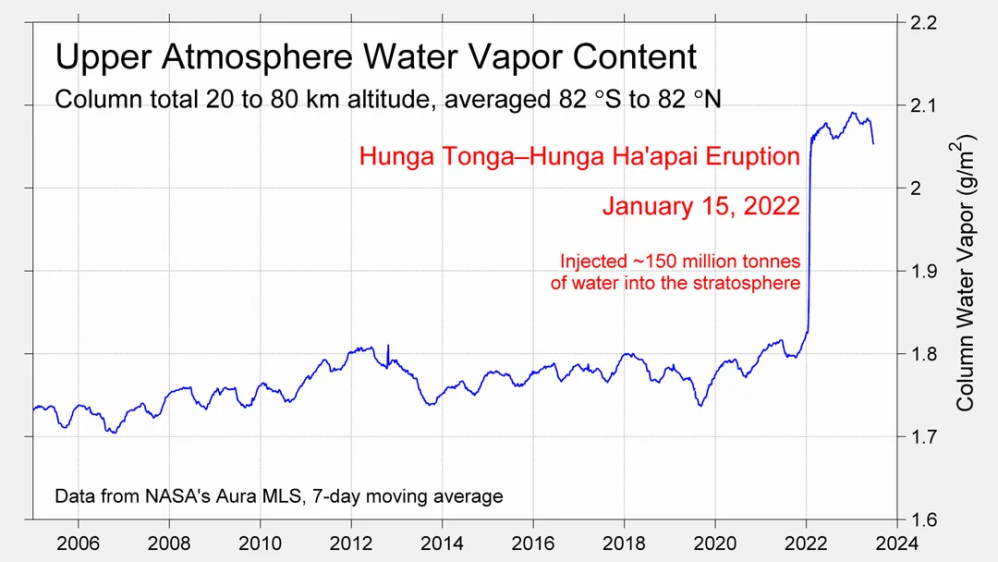
It has now shifted in the last months to an El Nino condition that warms the globe and is thought to contribute to this Spike we have seen. But there are other contributions as well.  One of the most surprising ones is that back in January of 2022 an enormous underwater volcano went off in Tonga and it put up a lot of water vapor into the upper atmosphere. It increased the upper atmosphere of water vapor by about 10 percent, and that’s a warming effect, and it may be that is contributing to why the spike is so high.

A longer view of SSTs

To enlarge, open image in new tab.

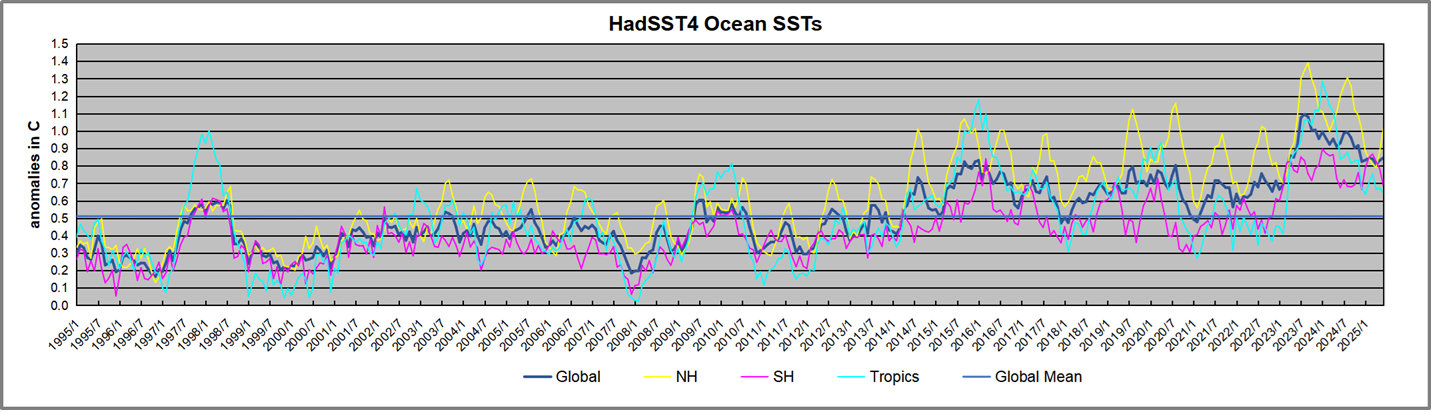
The graph above is noisy, but the density is needed to see the seasonal patterns in the oceanic fluctuations.  Previous posts focused on the rise and fall of the last El Nino starting in 2015.  This post adds a longer view, encompassing the significant 1998 El Nino and since.  The color schemes are retained for Global, Tropics, NH and SH anomalies.  Despite the longer time frame, I have kept the monthly data (rather than yearly averages) because of interesting shifts between January and July. 1995 is a reasonable (ENSO neutral) starting point prior to the first El Nino.

The sharp Tropical rise peaking in 1998 is dominant in the record, starting Jan. ’97 to pull up SSTs uniformly before returning to the same level Jan. ’99. There were strong cool periods before and after the 1998 El Nino event. Then SSTs in all regions returned to the mean in 2001-2.

SSTS fluctuate around the mean until 2007, when another, smaller ENSO event occurs. There is cooling 2007-8,  a lower peak warming in 2009-10, following by cooling in 2011-12.  Again SSTs are average 2013-14.

Now a different pattern appears.  The Tropics cooled sharply to Jan 11, then rise steadily for 4 years to Jan 15, at which point the most recent major El Nino takes off.  But this time in contrast to ’97-’99, the Northern Hemisphere produces peaks every summer pulling up the Global average.  In fact, these NH peaks appear every July starting in 2003, growing stronger to produce 3 massive highs in 2014, 15 and 16.  NH July 2017 was only slightly lower, and a fifth NH peak still lower in Sept. 2018.

The highest summer NH peaks came in 2019 and 2020, only this time the Tropics and SH were offsetting rather adding to the warming. (Note: these are high anomalies on top of the highest absolute temps in the NH.)  Since 2014 SH has played a moderating role, offsetting the NH warming pulses. After September 2020 temps dropped off down until February 2021.  In 2021-22 there were again summer NH spikes, but in 2022 moderated first by cooling Tropics and SH SSTs, then in October to January 2023 by deeper cooling in NH and Tropics.

Then in 2023 the Tropics flipped from below to well above average, while NH produced a summer peak extending into September higher than any previous year.  Despite El Nino driving the Tropics January 2024 anomaly higher than 1998 and 2016 peaks, following months cooled in all regions, and the Tropics continued cooling in April, May and June along with SH dropping.  After July and August NH warming again pulled the global anomaly higher, September through January 2025 resumed cooling in all regions, continuing February through April 2025, with little change in May and June despite upward bumps in NH.

What to make of all this? The patterns suggest that in addition to El Ninos in the Pacific driving the Tropic SSTs, something else is going on in the NH.  The obvious culprit is the North Atlantic, since I have seen this sort of pulsing before.  After reading some papers by David Dilley, I confirmed his observation of Atlantic pulses into the Arctic every 8 to 10 years.

Contemporary AMO Observations

Through January 2023 I depended on the Kaplan AMO Index (not smoothed, not detrended) for N. Atlantic observations. But it is no longer being updated, and NOAA says they don’t know its future.  So I find that ERSSTv5 AMO dataset has current data.  It differs from Kaplan, which reported average absolute temps measured in N. Atlantic.  “ERSST5 AMO  follows Trenberth and Shea (2006) proposal to use the NA region EQ-60°N, 0°-80°W and subtract the global rise of SST 60°S-60°N to obtain a measure of the internal variability, arguing that the effect of external forcing on the North Atlantic should be similar to the effect on the other oceans.”  So the values represent SST anomaly differences between the N. Atlantic and the Global ocean.

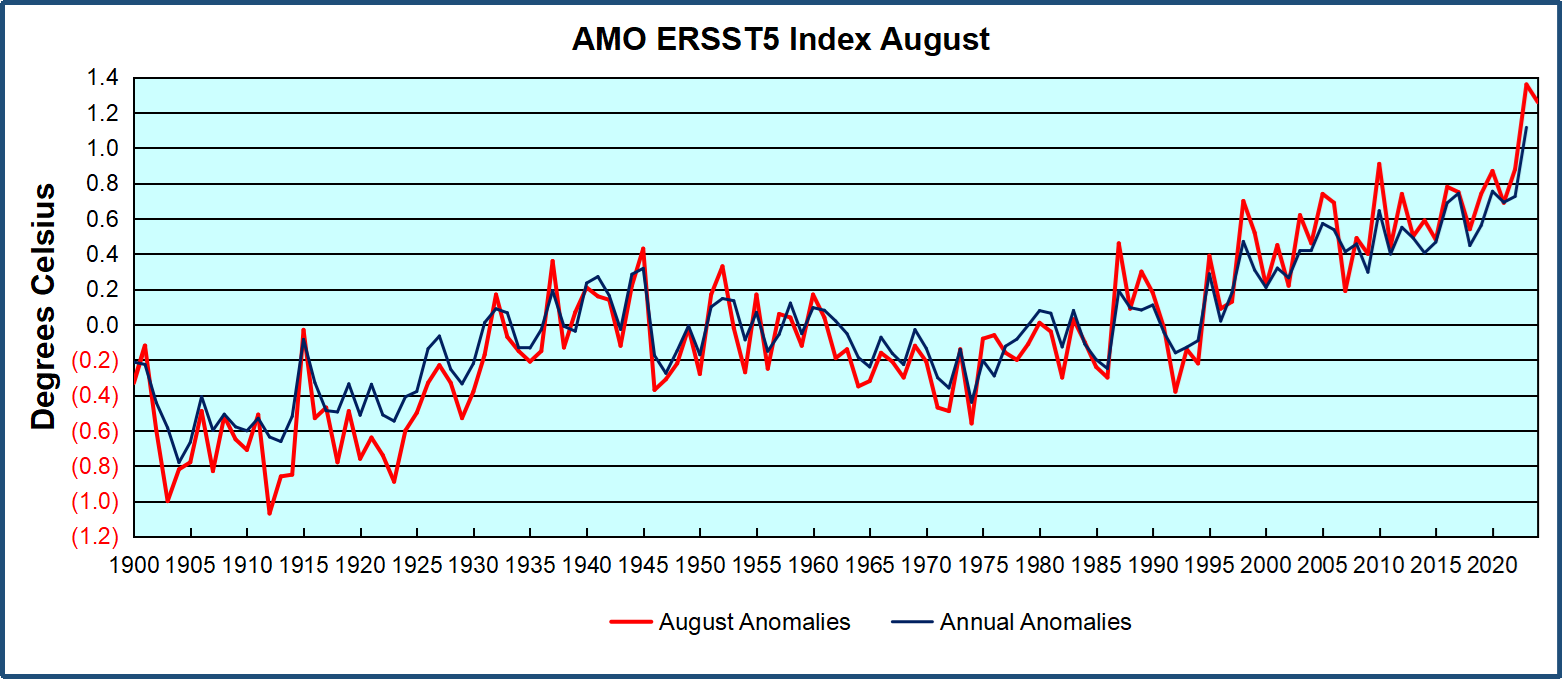
The chart above confirms what Kaplan also showed.  As August is the hottest month for the N. Atlantic, its variability, high and low, drives the annual results for this basin.  Note also the peaks in 2010, lows after 2014, and a rise in 2021. Then in 2023 the peak was holding at 1.4C before declining.  An annual chart below is informative:

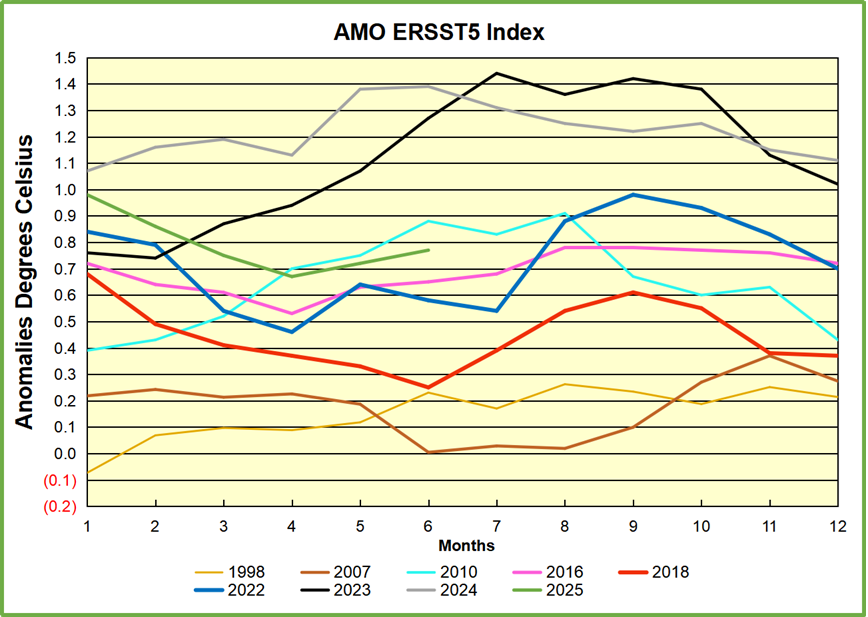
Note the difference between blue/green years, beige/brown, and purple/red years.  2010, 2021, 2022 all peaked strongly in August or September.  1998 and 2007 were mildly warm.  2016 and 2018 were matching or cooler than the global average.  2023 started out slightly warm, then rose steadily to an  extraordinary peak in July.  August to October were only slightly lower, but by December cooled by ~0.4C.

Then in 2024 the AMO anomaly started higher than any previous year, then leveled off for two months declining slightly into April.  Remarkably, May showed an upward leap putting this on a higher track than 2023, and rising slightly higher in June.  In July, August and September 2024 the anomaly declined, and despite a small rise in October, ended close to where it began.  Note 2025 started much lower than the previous year and is headed sharply downward, well below the previous two years, now in May and June aligning with 2010.

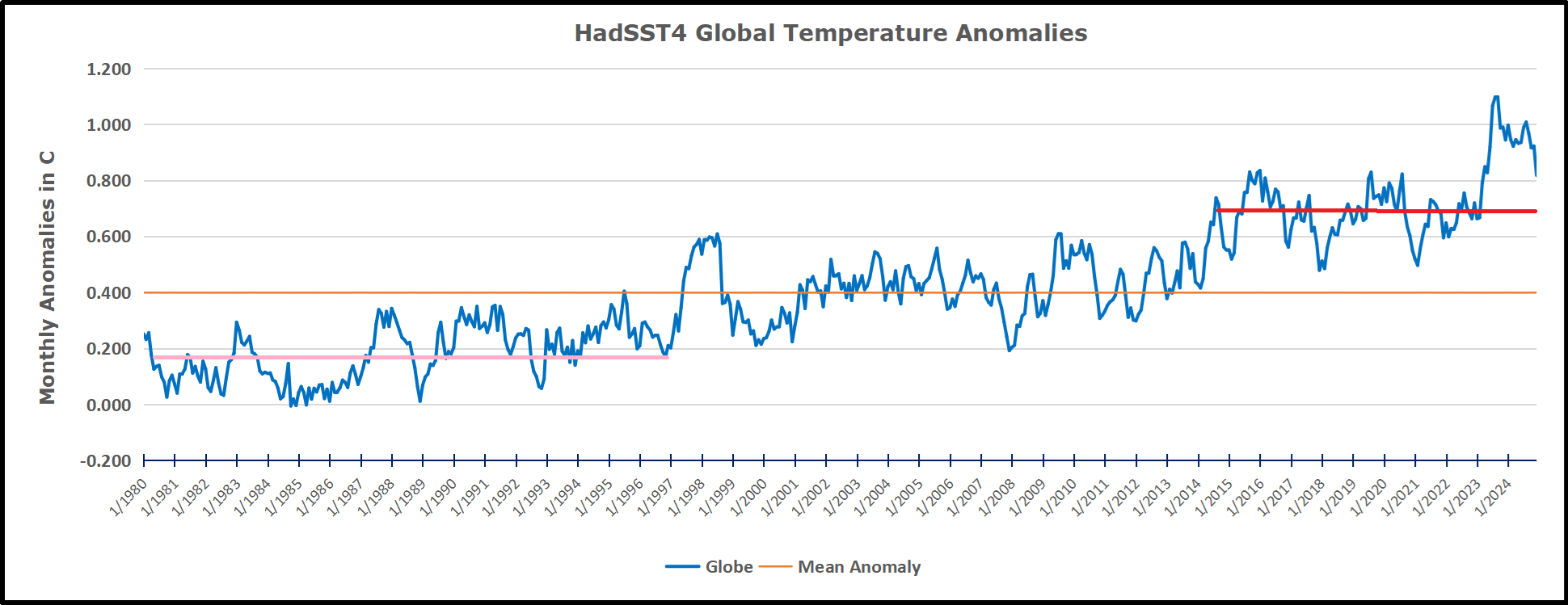
The pattern suggests the ocean may be demonstrating a stairstep pattern like that we have also seen in HadCRUT4.

The purple line is the average anomaly 1980-1996 inclusive, value 0.17.  The orange line the average 1980-2024, value 0.4, also for the period 1997-2012. The red line is 2013-2024, value 0.67. As noted above, these rising stages are driven by the combined warming in the Tropics and NH, including both Pacific and Atlantic basins.

Curiosity:  Solar Coincidence?

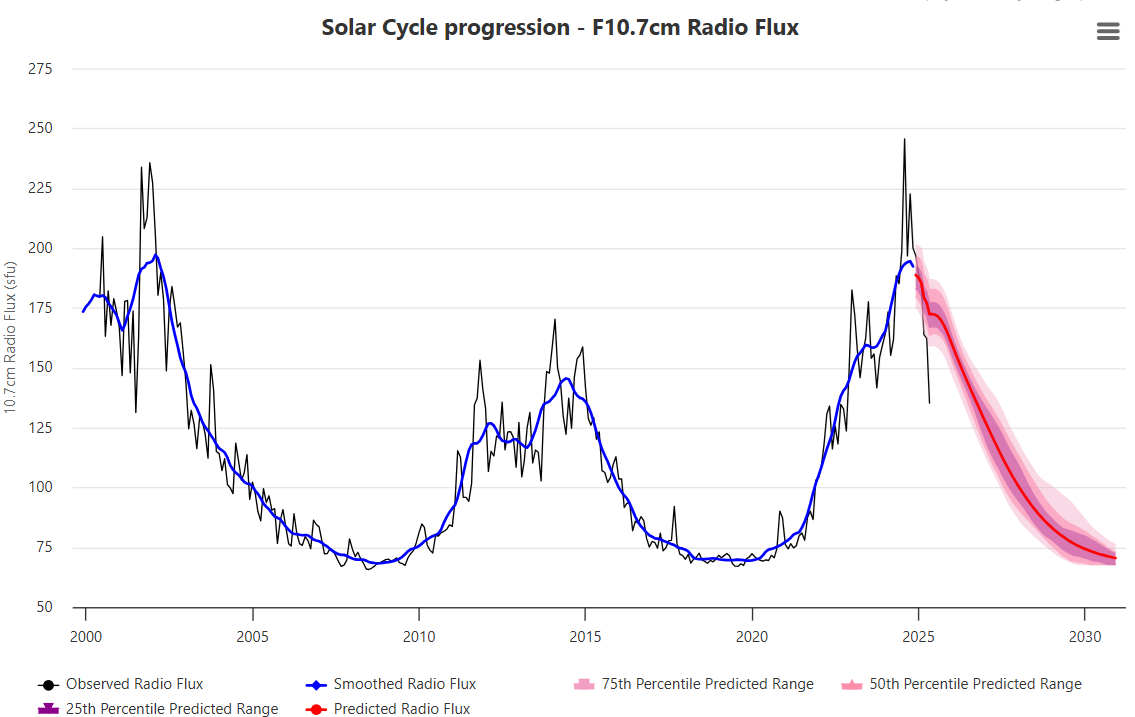
The news about our current solar cycle 25 is that the solar activity is hitting peak numbers now and higher  than expected 1-2 years in the future.  As livescience put it:  Solar maximum could hit us harder and sooner than we thought. How dangerous will the sun’s chaotic peak be?  Some charts from spaceweatherlive look familar to these sea surface temperature charts.

Summary

The oceans are driving the warming this century.  SSTs took a step up with the 1998 El Nino and have stayed there with help from the North Atlantic, and more recently the Pacific northern “Blob.”  The ocean surfaces are releasing a lot of energy, warming the air, but eventually will have a cooling effect.  The decline after 1937 was rapid by comparison, so one wonders: How long can the oceans keep this up? And is the sun adding forcing to this process?

Footnote: Why Rely on HadSST4

HadSST is distinguished from other SST products because HadCRU (Hadley Climatic Research Unit) does not engage in SST interpolation, i.e. infilling estimated anomalies into grid cells lacking sufficient sampling in a given month. From reading the documentation and from queries to Met Office, this is their procedure.

HadSST4 imports data from gridcells containing ocean, excluding land cells. From past records, they have calculated daily and monthly average readings for each grid cell for the period 1961 to 1990. Those temperatures form the baseline from which anomalies are calculated.

In a given month, each gridcell with sufficient sampling is averaged for the month and then the baseline value for that cell and that month is subtracted, resulting in the monthly anomaly for that cell. All cells with monthly anomalies are averaged to produce global, hemispheric and tropical anomalies for the month, based on the cells in those locations. For example, Tropics averages include ocean grid cells lying between latitudes 20N and 20S.

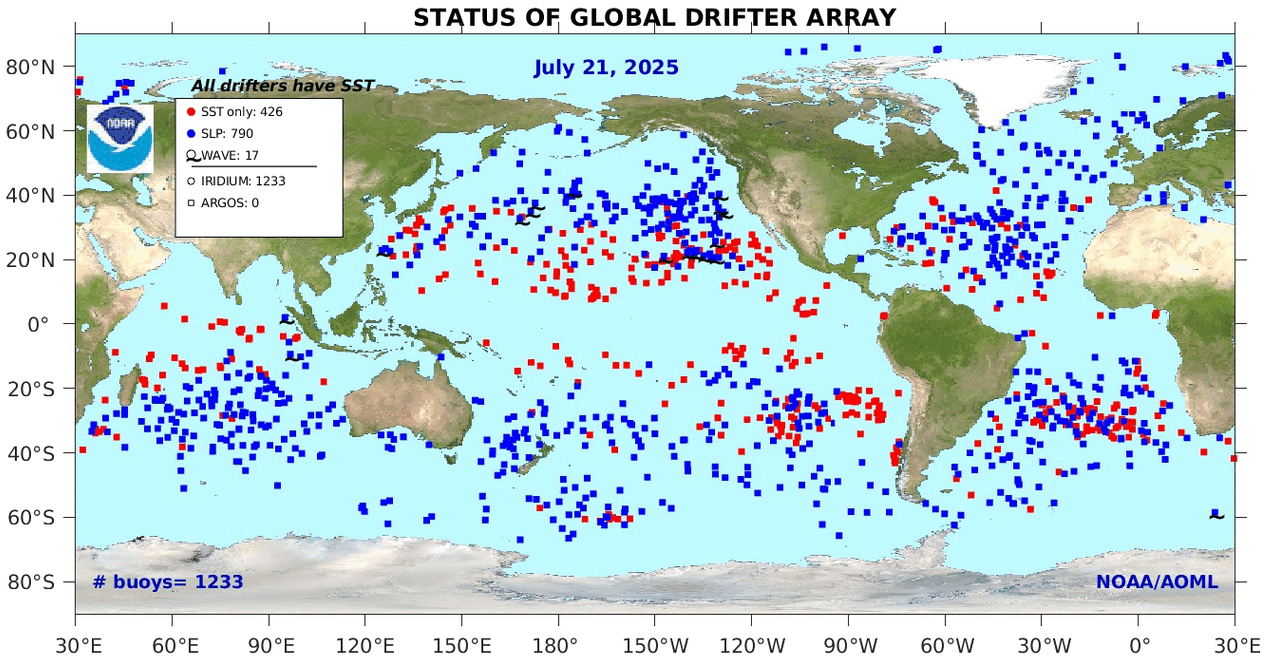
Gridcells lacking sufficient sampling that month are left out of the averaging, and the uncertainty from such missing data is estimated. IMO that is more reasonable than inventing data to infill. And it seems that the Global Drifter Array displayed in the top image is providing more uniform coverage of the oceans than in the past.

uss-pearl-harbor-deploys-global-drifter-buoys-in-pacific-ocean

USS Pearl Harbor deploys Global Drifter Buoys in Pacific Ocean

Arctic Ice Melting 4 Days Faster Mid-July 2025

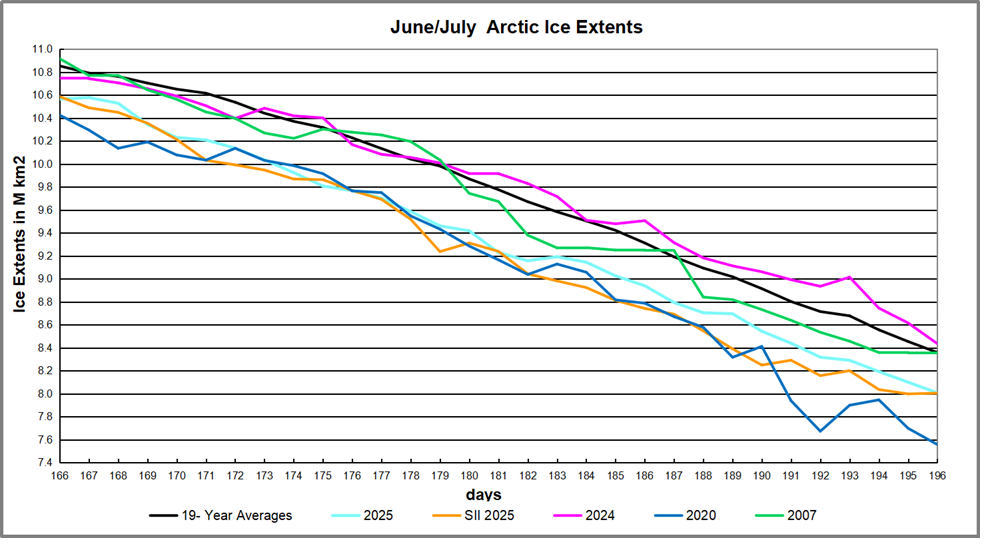
After a sub-par March maximum, by end of May 2025 Arctic ice closed the gap with the 19-year average. Then in June the gap reopened and in July the melting pace matched the average, abeit four days in advance of average.

During this period the average year loses ~2.5M km2 of ice extent.   MASIE on day 166 was ~300k km2 down, and the gap increased to almost 550k km2 by June 30 (day 181). The deficit to average then reduced to ~350k km2, which persisted over the last 12 days

including yesterday, day 196. The graph shows MASIE 2025 matching the average on day 192, four days in advance.

The regional distribution of ice extents is shown in the table below. (Bering and Okhotsk seas are excluded since both are now virtually open water.)

Region 2025196 Day 196 2025-Ave. 2020196 2025-2020
 (0) Northern_Hemisphere 8007061 8358377 -351316 7556873 450188
 (1) Beaufort_Sea 1022304 866531 155773 931056 91248
 (2) Chukchi_Sea 718615 643869 74745 612932 105683
 (3) East_Siberian_Sea 976061 921340 54721 659117 316945
 (4) Laptev_Sea 645741 559270 86471 174286 471454
 (5) Kara_Sea 153545 360645 -207100 159679 -6134
 (6) Barents_Sea 14342 56080 -41738 39446 -25105
 (7) Greenland_Sea 387402 402761 -15359 400498 -13096
 (8) Baffin_Bay_Gulf_of_St._Lawrence 268783 311662 -42878 232167 36616
 (9) Canadian_Archipelago 630633 711293 -80660 733866 -103233
 (10) Hudson_Bay 155460 349275 -193815 520027 -364567
 (11) Central_Arctic 3032353 3171652 -139299 3093040.21 -60687

The table shows  the two largest deficits, the Atlantic Kara basin combined with Hudson Bay, exceed the total difference from average. In addition are lower ice extents in Central Arctic and Canadian Archipelago, offset by surpluses in Beaufort Sea and other Eurasian shelf basins.  Note that Hudson Bay with 350k km2 average ice extent yesterday will have less than 100k in three weeks.

Why is this important?  All the claims of global climate emergency depend on dangerously higher  temperatures, lower sea ice, and rising sea levels.  The lack of additional warming prior to 2023 El Nino is documented in a post NH and Tropics Lead UAH Temps Lower May 2025.

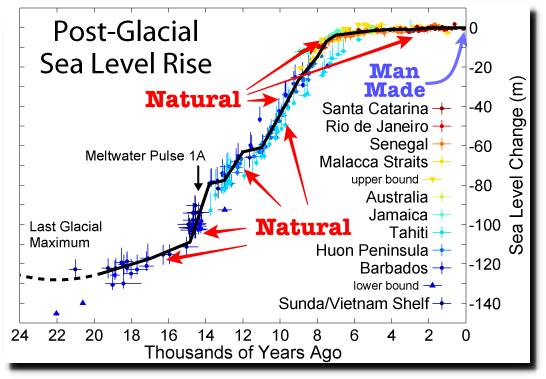
The lack of acceleration in sea levels along coastlines has been discussed also.  See Observed vs. Imagined Sea Levels 2023 Update

Also, a longer term perspective is informative:

post-glacial_sea_level

The Big Beautiful Win for Rational Climate Policies

With Congress passing the One Big Beautiful Bill Act into US law, let’s consider the policy implications going forward.  Also note the irony of the previous Biden administration BBBA (Build Back Better Act) which failed:

Speaker Mike Johnson listed 25 Trump Executive Orders now codified into law by Congress (highlighted are those most related to climate policies):

  1. Securing our Borders
  2. Declaring a National Emergency at the Southern Border
  3. Protecting the American People Against Invasion
  4. Ending Taxpayer Subsidization of Open Borders
  5. Restricting the Entry of Foreign Nationals to Protect the United States from Foreign Terrorists and other National Security and Public Safety Threats
  6. Implementing the President’s DOGE Cost Efficiency Initiative
  7. Protecting America’s Bank Account Against Fraud, Waste and Abuse
  8. Continuing the Reduction of the Federal Bureaucracy
  9. Stopping Waste, Fraud and Abuse by Eliminating Information Silos
  10. Iron Dome for America
  11. Unleashing American Drone Dominance
  12. Restoring America’s Maritime Dominance
  13. Unleashing American Energy
  14. Reinvigorating America’s Beautiful Clean Coal Industry
  15. Unleashing Alaska’s Extraordinary Resource Potential
  16. Declaring a National Energy Emergency
  17. Immediate Measures to Increase American Mineral Production
  18. Immediate Expansion of American Timber Production
  19. Clarifying the Military’s Role in Protecting the Territorial Integrity of the United States
  20. Keeping Americans Safe in Aviation
  21. Improving Education Outcomes by Empowering Parents, States and Communities
  22. Reforming Accreditation to Strengthen Higher Education
  23. Establishing the President’s Make America Healthy Again Commission
  24. Further Amendment to Duties Addressing the Synthetic Opioid Supply Chain in the People’s Republic of China as Applied to Low-Value Imports
  25. The Organization for Economic Cooperation and Development Global Tax Deal
  26. Enforcing the Hyde Amendment
  27. Celebrating America’s 250th Birthday — Garden of Heroes
  28. Making the District of Columbia Safe and Beautiful

I used perplexity.ai to answer two questions about what impact to expect from this Development.  Text in italics with my bolds, two edits and added images.

Several Trump Executive Orders since January 2025
have directly targeted climate change policies
at both the federal and state levels.

Rescinding Biden-Era Climate Orders: Trump issued an executive order revoking all previous administration executive orders related to climate change, the clean energy transition, and climate finance. This included:  the cancellation of national and sectoral climate targets, such as net zero by 2050, 100% electric vehicle sales by 2035, and the revocation of the National Climate Task Force and the State Department’s Climate Change Support Office.

Declaring a National Energy Emergency: An executive order declared a national emergency on energy, prioritizing fossil fuel development, including in previously protected areas like Alaska. It directed agencies to expedite energy permitting and infrastructure, and to use emergency authorities to facilitate new energy projects, especially for oil, gas, coal, and critical minerals.

Disbanding the Social Cost of Greenhouse Gases Group: The “Unleashing American Energy” executive order disbanded the Interagency Working Group on the Social Cost of Greenhouse Gases, excluding its work from government policy and directing agencies to consider eliminating the social cost of carbon from regulatory decisions.

Blocking State Climate Change Policies: In April 2025, Trump signed an executive order instructing the U.S. Attorney General to identify and take action against state and local laws that address climate change, ESG initiatives, environmental justice, and carbon emissions. The order specifically targeted state policies that mandate clean energy, impose carbon fees, or hold fossil fuel companies accountable for climate impacts.

Promoting Coal and Grid Reliability: Additional executive orders promoted coal mining and coal-based power, particularly for AI data centers, and emphasized strengthening the reliability and security of the electric grid. These actions are expected to increase emissions from the power sector.

Rolling Back Wind Energy Initiatives: Trump withdrew the Outer Continental Shelf from wind energy leasing, paused project approvals, and directed a review of federal wind leasing and permitting practices.

Halting Federal Climate Funding: The administration paused disbursements of funds appropriated through the Inflation Reduction Act and the Bipartisan Infrastructure Law that support climate initiatives, including electric vehicle charging infrastructure.

Challenging State Authority: The executive orders aim to preempt or invalidate state-level climate actions, especially those seen as burdensome to domestic energy production. States like California, New York, and Vermont, with aggressive climate policies, are specifically mentioned as targets of these federal actions.

These orders collectively represent a broad effort to reverse federal and state climate change policies, prioritize fossil fuel development, and roll back regulations and incentives for clean energy and emissions reduction.

With Trump’s executive orders on climate and energy
now codified as law by Congress,
the following effects are taking place.

Federal Climate Programs Rolled Back: The new laws have solidified the rollback of key federal climate and clean energy initiatives, including the dismantling of the Inflation Reduction Act’s (IRA) climate provisions, elimination of the Justice40 commitment, and withdrawal from the Paris Agreement. Federal agencies are now required by law to halt or redirect funding away from climate-focused programs and environmental justice initiatives.

Permitting and Environmental Review Weakened Reformed: The codified laws have overhauled the National Environmental Policy Act (NEPA) process, prioritizing rapid permitting for energy (especially fossil fuel) projects and rescinding previous NEPA regulations. This accelerates approvals for oil, gas, and infrastructure projects, often at the expense of environmental review and public input from decarbonizing activists.

Electric Vehicle and Clean Energy Incentives Cut: The laws have ended or severely restricted federal incentives for electric vehicles (EVs), including tax credits and mandates. California’s authority to set stricter emissions standards has been revoked, and other states cannot enforce more aggressive climate policies than federal standards.

Wind and Solar Tax Credits Limited: Although a last-minute legislative compromise allowed renewable projects a one-year window to claim tax credits, Trump’s executive order—now backed by law—directs the Treasury to sharply restrict eligibility. Only projects with substantial physical progress will qualify, making it harder for wind and solar developers to access these credits and reducing the financial viability of new clean energy projects.

Social Cost of Carbon Eliminated: The laws have abolished the use of the “social cost of greenhouse gases” in federal decision-making. Agencies are directed to ignore or eliminate this metric from permitting and regulatory processes, undermining the rationale for regulating greenhouse gas emissions.

Endangerment Finding Under Review: The EPA is required to review the 2009 Endangerment Finding (the scientific and legal basis for regulating greenhouse gases under the Clean Air Act). If overturned or weakened, this could eliminate the EPA’s authority to regulate carbon emissions from vehicles and industry.

Preemption of State Climate Laws: The Attorney General is now legally empowered to challenge and potentially invalidate state and local climate change laws that are viewed as restricting domestic energy production or conflicting with federal policy. This targets states like California and New York, threatening their ability to set independent climate standards.

International Climate Commitments Withdrawn: The United States has formally withdrawn from the Paris Agreement and ceased all international climate finance, isolating the U.S. from global climate efforts and reducing international pressure for domestic climate action.

These changes, now enshrined in law, represent a comprehensive reversal of previous federal and state climate change policies, prioritizing fossil fuel development and deregulation while sharply curtailing support for clean energy and emissions reduction.

The legal codification makes these policy shifts more durable
and harder for future administrations to quickly reverse.


Why Shut Down US gov climate websites

July news is full of reports decrying the shuttering of federal government climate websites with headlines like these:

Top Website for Crucial U.S. Climate Information Goes Dark, Scientific American

Nation’s top climate science assessments removed from federal websites, UPI

Major climate change reports are removed from US websites, Los Angeles Daily News

etc., etc. etc.

Part of the missing context is this July 7 report:

Agencies plan to decommission hundreds of .gov websites following GSA review

Thomas Shedd, commissioner of GSA’s Technology Transformation Services, directed
agencies to eliminate the “low-hanging fruit” of unnecessary federal websites.

In an analysis led by the General Services Administration, the 24 largest departments and agencies inventoried more than 7,200 total websites. Documents obtained by Federal News Network show agencies plan to eliminate 332 of those websites — less than 5% of their total web presence.

According to documents obtained by Federal News Network, Thomas Shedd, commissioner of GSA’s Technology Transformation Services, said the “low-hanging fruit” of websites to cut include standalone sites for agency blogs, photo galleries and forums that would be housed elsewhere.

GSA also directed agencies to eliminate sites for events or initiatives that haven’t been relevant for a number of years, as well as standalone sites for “niche topics or working groups.”

Climate Doctrine Promoted at NASA, NOAA and Climate.gov

NASA

2024 is the Warmest Year on Record Climate change • Climate change refers to long-term shifts in temperatures and weather patterns. Human activities have been the main driver of climate change, primarily due to the burning of fossil fuels like coal, oil and gas. January 10, 2025.

Scientists have concluded the warming trend of recent decades is driven by heat-trapping carbon dioxide, methane, and other greenhouse gases. In 2022 and 2023, Earth saw record increases in carbon dioxide emissions from fossil fuels, according to a recent international analysis. The concentration of carbon dioxide in the atmosphere has increased from pre-industrial levels in the 18th century of approximately 278 parts per million to about  420 parts per million today.

NOAA

Richard Spinrad NOAA Administrator in 2023 NOAA Budget Summary

The next decade is a critical time to address the climate crisis. We have a small window to shift to a carbon neutral economy and hold climate impacts in check. With increased climate funding, we have a once-in-a-generation opportunity to advance climate services across the nation. To that end, NOAA’s climate ready nation initiative will target investments to address climate risks and build climate resilience, especially in our most vulnerable communities.

Climate.gov program manager Rebecca Lindsey 

What evidence exists that Earth is warming and that humans are the main cause?

We know this warming is largely caused by human activities because the key role that carbon dioxide plays in maintaining Earth’s natural greenhouse effect has been understood since the mid-1800s. Unless it is offset by some equally large cooling influence, more atmospheric carbon dioxide will lead to warmer surface temperatures. Since 1800, the amount of carbon dioxide in the atmosphere has increased from about 280 parts per million to 410 ppm in 2019. We know from both its rapid increase and its isotopic “fingerprint” that the source of this new carbon dioxide is fossil fuels, and not natural sources like forest fires, volcanoes, or outgassing from the ocean.

Finally, no other known climate influences have changed enough to account for the observed warming trend. Taken together, these and other lines of evidence point squarely to human activities as the cause of recent global warming.

Agencies Aligned with Politicians In Power

2024 presidential candidates on climate change

Democrat Joe Biden

In a campaign speech Biden said, “We passed the biggest investment in history to combat climate change, because I believe climate change is the only existential threat we have. I mean that in a literal sense. Not a joke. If we don’t get it under control, we will have mortgaged not only the next generation, but mortgaged humanity. I believe that with every fiber of my being.” [source, as of 2023-09-28]

Democrat Kamala D. Harris

Harris’ campaign website said, “As President, she will unite Americans to tackle the climate crisis as she builds on this historic work, advances environmental justice, protects public lands and public health, increases resilience to climate disasters, lowers household energy costs, creates millions of new jobs, and continues to hold polluters accountable to secure clean air and water for all.” [source, as of 2024-09-09]

However, Voters Backed a Change in Priorities

Republican Ron DeSantis

DeSantis’ campaign website said he would, “Withdraw from Paris Climate Accords, Global Methane Pledge, and all ‘Net Zero’ commitments. Eliminate ESG regulations and prohibit government accounts and pensions from using ESG. […] Repeal Biden rules targeting gas stoves, furnaces, and appliances. Streamline the environmental review process for energy and infrastructure projects. Work with states to reduce time and duplication in permitting. Prevent abusive litigation by environmental groups and defund ideological activism.” [source, as of 2023-12-19]

Republican Donald Trump

Trump’s campaign website said, “President Trump will once again exit the horrendously unfair Paris Climate Accords and oppose all of the radical left’s Green New Deal policies that are designed to shut down the development of America’s abundant energy resources, which exceed any country’s in the world, including Russia and Saudi Arabia. […] President Trump will immediately stop all Joe Biden policies that distort energy markets, limit consumer choice, and drive-up costs on consumers, including insane wind subsidies, and DoE and EPA regulations that prevent Americans from buying incandescent lightbulbs, gas stoves, quality dishwashers and shower heads, and much more.” [source, as of 2023-12-21]

Summary

No surprise that “elections have consequences.”  A change in leadership means a change in political doctrine and priorities, and in this case, reopening the file on natural as well as human contributions to weather and climate fluctuations and what to do about it.

Climatists Deny Natural Warming Factors


EU Far-Left Lose Control of Zero Carbon File

The news comes from euronews Patriots break cordon sanitaire to seize climate file in European Parliament. Excerpts in italics with my bolds and added images.

Sample of Headlines:

Far-Right Patriots Take Lead on EU Climate Target Talks, Devdiscourse

EU lawmakers reject attempt to curb far right’s sway on climate talks, Reuters

Far-Right Patriots for Europe Gain Unprecedented Influence Leading EU Parliament Negotiations on 90% 2040 Climate Target. deepnews

The far right’s climate power grab, Politico Europe

PANIC IN BRUSSELS: Globalists Tremble as Patriots for Europe Group Will Lead Negotiations on the EU’s Climate ‘Target’, Ditch ‘Climate Fanaticism’ and Suicidal Policies. Gateway Pundit

Note: I had to search high and low to find an article without the adjective “far-right” attached to the coalition Patriots for Europe, who have gained control to lead the next round of negotiations regarding EU climate and energy policies.  As the articles explain there are EU politicians on the left, centrist and right; so the leftists attempt to denigrate their opponents by referring to them as “far-right”. Meanwhile the centrists failed to do their job (being the “cordon sanitaire”), to prevent the right from power over the Environmental (or any) agenda.

By taking over legislative work on the European commission’s new 2040 climate target, the Eurosceptic Patriots for Europe will increase its influence over the bloc’s climate policy.

The far-right not far-left Patriots for Europe group will lead negotiations on the EU’s new climate target, MEPs and parliament officials told Euronews, a role that could derail the bloc’s objective to reduce greenhouse emissions by 90% by 2040.

“The Patriots got the climate legislation file,” Iratxe Garcia, the leader of the socialist group told reporters during a press conference on the margins of the plenary in Strasbourg. “They’ve got the rapporteurship… I mean it is the patriots who are going to be the lead negotiators.”

Garcia referred to a recent Commission proposal to amend its EU Climate Law by setting a new target to reduce the EU’s net greenhouse gas (GHG) emissions by 90% by 2040. It is now up to the parliament and the council to discuss and adopt the text.

Officials say giving the 2040 climate target file to the far-right Patriots for Europe in the Parliament’s Environment, Public Health and Food Safety committee is the result of a complex system of attribution, which gives the large groups control over important files.

The Patriots for Europe is the third largest group in the European Parliament and has 11 full fledged members in the ENVI committee, including from France’s National Rally and Italy’s Lega party.  The group has systematically opposed the EU’s climate policies, with National Rally leader Jordan Bardella calling for the immediate suspension of the EU’s Green deal a few months ago.

It will give the Patriots increasing influence over the EU’s climate policy as rapporteurs are ultimately responsible for recommending a political line on the file.  Though a rapporteur won’t prevent other groups from reaching a deal on the text, he or she could slow down or complicate the legislative work.

The Commission proposal is aimed at reaffirming the bloc’s “determination to tackle climate change” according to the Commission’s website, and “shape the path” to climate neutrality, an objective that is at the heart of the EU’s green deal.

The job represents a breach of the cordon sanitaire – the process through which centrist pro-European groups effectively club together to deny the right-wing fringe top jobs such as presidencies or vice-presidencies of the European Parliament’s committees.

The practice has historically excluded lawmakers from France’s National Rally, Viktor Orbán’s Fidesz and Matteo Salvini’s Lega from power roles in the Parliament.

Last October, Bardella and fellow Patriots’ MEP Hungarian Kinga Gál filed a complaint to the European Court of Justice last week against their political groups’ exclusion through the so-called ‘cordon sanitaire’ from leading positions at the European Parliament.

EU Statement to COP23

From Gateway Pundit:

In February, in a meeting in Madrid, Orbán told Europe and the world how things would proceed from now on.

France24 reported:

“’Yesterday we were the heretics. Today we are the mainstream… We are the future’, proclaimed Orban, sharing the stage with other leading extreme-right nationalists including Dutch anti-Islam firebrand Geert Wilders, Italian Deputy Prime Minister Matteo Salvini and former Czech premier Andrej Babis.

Both Orban and Le Pen hailed Trump’s ‘tornado’ as showing the way forward for the EU, which the parties had condemned in a joint statement as riven with ‘climate fanaticism’, ‘illegal immigration’ and ‘excessive regulation’.

‘We’re facing a truly global tipping point. Hurricane Trump is sweeping across the United States’, Le Pen said. ‘For its part, the European Union seems to be in a state of shock’.”

PANIC in Brussels.

Wanted: More Energy Sanctuary States Like Louisiana

Larry Behrens explains the trail blazing move in his Real Clear Energy article Did Louisiana Just Become America’s First Energy Sanctuary State? Excerpts in italics with my bolds and added images.

While states like California fumble and self-destruct, Louisiana is doing
something revolutionary: standing up to the Green New Scam.

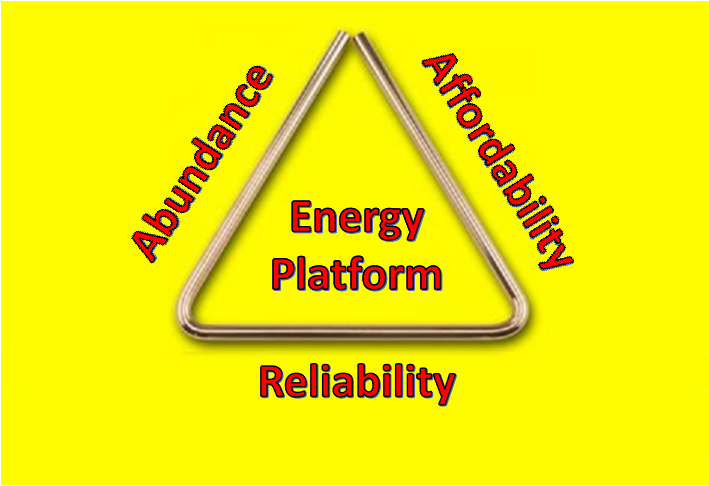
In a move that should inspire every state in the country, Louisiana has passed a groundbreaking law that flips the script on failed renewable mandates. Let’s call it what it is — a common-sense energy sanctuary law. Instead of forcing families and businesses to pay more for unreliable energy from foreign supply chains, Louisiana is now legally prioritizing energy that’s affordable, reliable, and made in America.

That’s not just common sense — it’s leadership.

The technical name is Act 462, but it might well be called “Louisiana’s Energy Independence Act” because it does something no Renewable Portfolio Standard (RPS) has ever done: it puts working families first. It defines energy not by whether it checks a political box, but by whether it keeps the lights on and bills low. In fact, the law goes so far as to define dispatchable and reliable energy in statute, mandating that Louisiana’s grid must prioritize sources that stabilize voltage, ramp up when needed, and avoid dependence on “foreign adversary nations.”

That’s a direct shot at the China-backed solar and wind lobby — and it’s about time.

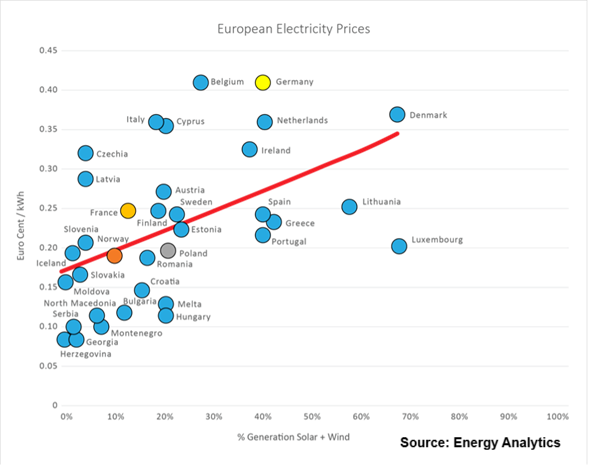
This policy shift couldn’t come at a better moment. New data shows that the states most committed to Renewable Portfolio Standards — California, Hawaii, Massachusetts, New York — are now suffering the highest and fastest-growing electricity rates in the nation. According to the U.S. Energy Information Administration and ElectricChoice’s latest June 2025 numbers:

  • Hawaii’s electricity rate is 42.34¢/kWh — a staggering 228% above the national average.
  • Massachusetts sits at 31.22¢/kWh — up 142%.
  • And California, the poster child of the Green New Scam, is at 30.55¢/kWh — 137% higher than average.

What do these states have in common? They all have binding RPS mandates and have shut down reliable fossil fuel power plants that once powered homes and industries affordably. In California alone, plants like Alamitos, Potrero, and Huntington Beach were taken offline — all while the state imported Chinese-made solar panels and offshore wind turbines with price tags subsidized by taxpayers.

And the results? Sky-high bills, rolling blackouts,
and dependence on intermittent power that collapses
when the sun doesn’t shine or the wind doesn’t blow.

Meanwhile, Louisiana — a state with no binding RPS and an energy mix that includes natural gas — enjoys rates nearly 9% below the national average. It’s joined by other affordable states like North Dakota, Nebraska, and South Carolina — none of which have mandatory green energy quotas.

So yes, Louisiana is charting a new path, and the rest of the country should follow. The message of Louisiana’s Energy Independence Act is simple: energy policy should serve people, not political agendas. By prioritizing affordability and reliability, Louisiana levels the playing field and forces every source of energy — whether gas, coal, solar, or wind — to compete based on merit, not mandates.

And for working families? That’s a win every single time.

Let the climate activists whine. Let the solar lobby scream. Louisiana just showed the country what energy leadership looks like — and it starts by saying no to the Green New Scam and yes to the people who actually pay the bills.

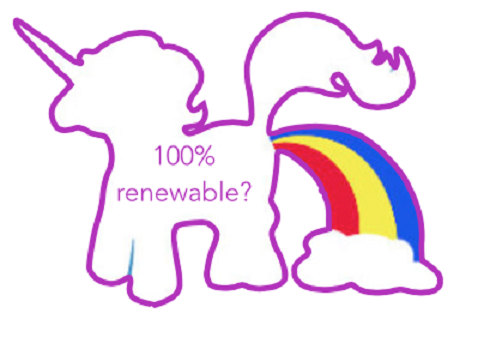
Other states should take note. The future isn’t in chasing unicorns. It’s in putting common sense and the American worker back at the center of energy policy.

Energy Facts, No Hype, from Vaclav Smil

At Real Clear Energy, Ross Pomeroy writes insights from Vaclav Smil An Interview With Vaclav Smil on Small Nuclear Reactors, a Fertility ‘Crisis’, and More.  Excerpts in italics with my bolds.

There is perhaps no scholar more qualified to dissect the world’s energy systems on a macro scale – from food and agriculture to electricity and fuel – than Vaclav Smil. The 81-year-old Distinguished Professor Emeritus in the Faculty of Environment at the University of Manitoba has been researching how humanity has developed, transformed, and used energy for over a half-century. And to our collective benefit, he doesn’t keep what he’s learned to himself. Smil has written fifty books. (His latest was just released in April.)

Smil’s up-to-date and encyclopedic knowledge on humanity’s energy use, coupled with his longevity in the field, make him uniquely positioned to render learned prognostications on the future of Earth’s ever-changing energy, material, and environmental systems. He graciously took the time to answer a few questions for RealClearScience on topics ranging from small nuclear reactors, to climate adaptation, to humanity’s much-debated fertility “crisis.”

RP: Market valuations for small modular reactor companies such as Oklo and Nuscale have ballooned over the past year to roughly $10 billion for each despite the fact that these firms have never built a commercial nuclear reactor. Do you think hype has gotten ahead of reality here? How likely do you think it is that small modular reactors will be deployed in the next decade? What are some open challenges?

VS: This is just the latest (and perhaps the craziest) chapter in an old tale. I heard first about small nuclear reactors more than 40 years ago from Alvin Weinberg (a Manhattan project participant, co-inventor of pressurized water reactor and a director of the Oak Ridge National Laboratory (ORNL)). When Congress ended the funding of a liquid metal fast breeder reactor in 1983 (in the wake of the Three Mile Island accident and huge cost overruns for large nuclear plants), ORNL began to promote the idea of small, inherently safe reactors now known as SMRs (small modular reactors).

When asked about their future I have had a simple answer ever since the 1980s. First, I used to say, “give me a call,” then I changed that to “send me an e-mail” once you see such wonders built on schedule, on budget, and in aggregate capacities large enough to make a real difference to a country’s electricity supply (say at least 10% of the total).

US installed power capacity is now about 1.3 TW. Ten percent of that is 130 GW. Hence, even if SMRs were to average 100 MW, the US would need 1,300 of them to matter. If they averaged just 50 MW, then the country would need 2,600 of them. And that’s before we even consider rising electricity use.

Then think of dealing 1,300 or 3,000+ times with public acceptance, siting selections, NIMBY controversies and lawsuits, regulatory requirements, constructions schedules and major cost overruns (all major projects are notoriously prone to that fate). Obviously, that e-mail announcing SMRs making discernible difference, nationally or globally, is not coming during this decade . . . or the next one.

RP: Transitioning power generation to renewables garners most of the attention when it comes to addressing climate change, but you’ve pointed out that there are other major processes besides power generation that are extremely important and even more difficult to decarbonize. What are a few of these? 

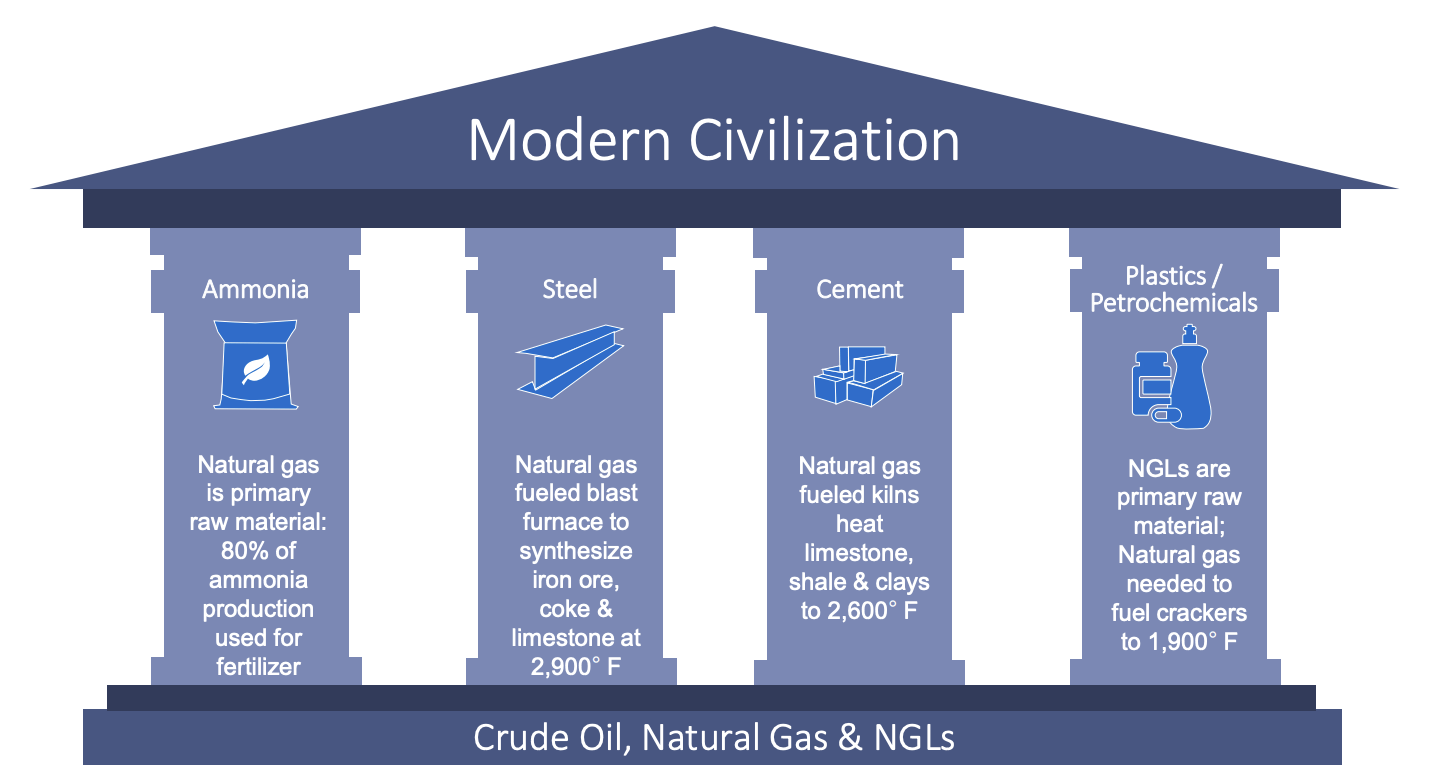
VS: Decarbonizing electricity generation is technically straightforward, with known conversions (now dominated by wind turbines and PV cells) and system arrangements (substantial storage and transmission). And there are other effective choices: the world still has a huge untapped hydro capacity and a new generation of fission reactors could supply base demand. In contrast, decarbonizing what I have called the four pillars of modern civilization -– ammonia, steel, cement, and plastics -– is hard as there are no readily available technical fixes combining the needed output scale with affordability. Basic calculations reveal the extent of these global challenges. 

Without Haber-Bosch synthesis of ammonia we could not, even with assiduous recycling of organic wastes, feed more than about half of humanity. This synthesis is now responsible for less than 2% of global CO₂ emissions, mostly from the production of hydrogen by natural gas reforming. Steel and cement are the two largest, indispensable infrastructural materials. Primary steel production is responsible for 7-9% of global CO₂ emissions, above all from blast furnaces fuelled by metallurgical coke. Cement production (calcination process) generates 7-8% of global CO₂ emissions. And now ubiquitous plastics add 4-6% of global CO₂ emissions from the energy-intensive production of petrochemicals used as feedstocks and energy sources. Together, these industries contribute 20-25% of total global CO₂ emissions. And then there are non-energy uses of fossil fuels as feedstocks required for plastics production as feedstocks and for lubricants (5-6% of total global primary energy use). 

Synthesis of ammonia as well as the smelting of iron can rely on green hydrogen generated by electrolysis of water energized by renewably generated electricity. If you do your own stoichiometric calculations of hydrogen mass needed to produce annually about 180 million tons of ammonia and 1.35 billion tons of primary steel (by the reduction of iron oxides) you will end up with some 32 million tons of green hydrogen for ammonia and 75 million tons of green hydrogen for steel, 107 million tons in total. 

In 2025, the global production of green ammonia will not surpass 5 million tons, less than 5% of today’s replacement demand -– but by 2050 that demand for rising ammonia and steel production might surpass 150 million tons of green hydrogen a year, requiring about 30-fold increase of electrolysis capacity in 25 years. This is technically doable but enormously challenging with total costs (most notably, building entirely new iron pellet reduction plants because the existing blast furnaces cannot work by burning green hydrogen instead of metallurgical coke) that remain to be determined. Meanwhile, 75 new blast furnaces began to work (mostly in China and India) since 2020 and dozens more are under development. Once lit, new furnaces produce hot metal in uninterrupted campaigns lasting 15-20 years. Moreover, in 2024 Nature Energy found a huge gap between the promise and the reality of new green hydrogen capacities: after tracking 190 projects over three years they found only 7% of announced projects finished on schedule.

RP: Humanity, at this time, appears to be largely fixed within its current systems and resistant to the large-scale change and immense spending – estimated to be comparable to WWII yearly expenditures – that would be required to complete a global energy transition by 2050. Do you foresee anything steering humanity off of its current planet-heating course? 

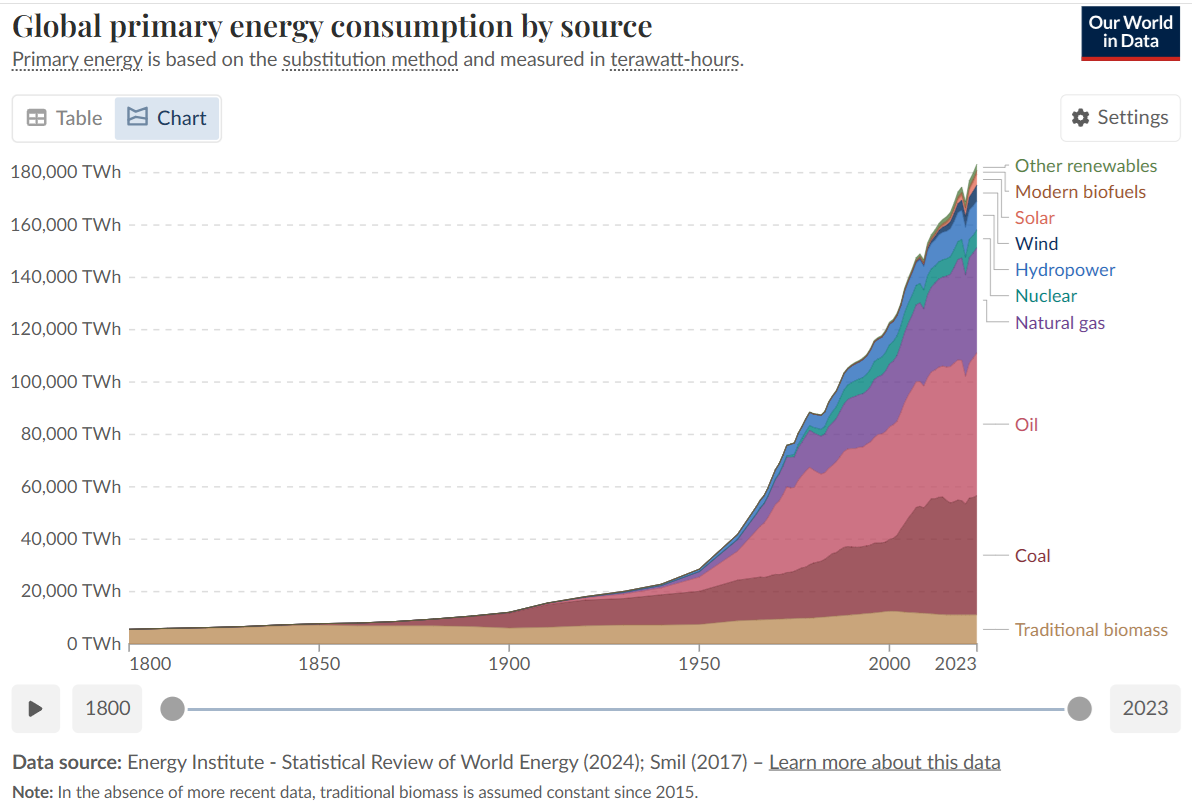
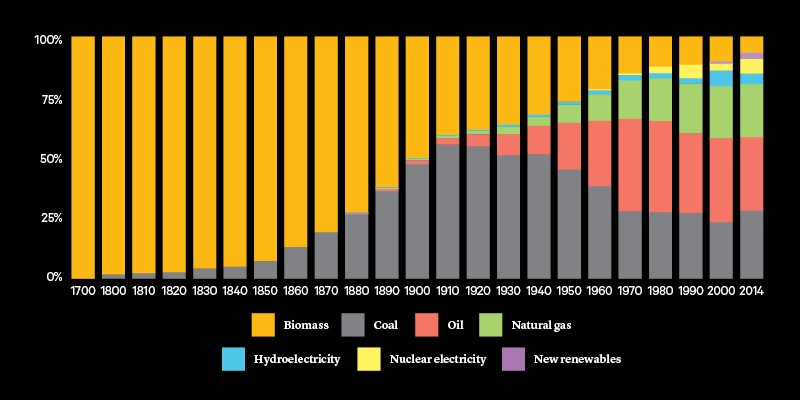
VS: Contrary to common impressions, there has been no absolute worldwide decarbonization. In fact, the very opposite is the case. The world has become much more reliant on fossil carbon. Global fossil fuel consumption rose by 62% between 1997 and 2025 while the share of fossil fuels in global energy consumption has decreased only marginally and it remains above 80 percent. Moreover, the first global energy transition, from traditional biomass fuels to fossil fuels, which started more than two centuries ago, remains incomplete, as about two billion people still rely on traditional biomass energies – mostly on fuelwood and crop residues in the countryside but also on inefficiently and destructively produced charcoal in cities. Replacing these energies will require even greater increases of renewably generated electricity.  

In large-scale affairs, scale always rules. Wishful thinking may set the dates (usually years ending in zero or five) for specific national, regional or global decarbonizations (EU: no new internal combustion engines in 2035; world: net zero in 2050) but after increasing our reliance on fossil fuels by more than 60% during the past quarter century the chances of completely eliminating this dependence during the next 25 years appear extraordinarily unlikely.

RP: Is there a point that climate adaptation becomes a wiser strategy than climate mitigation? 

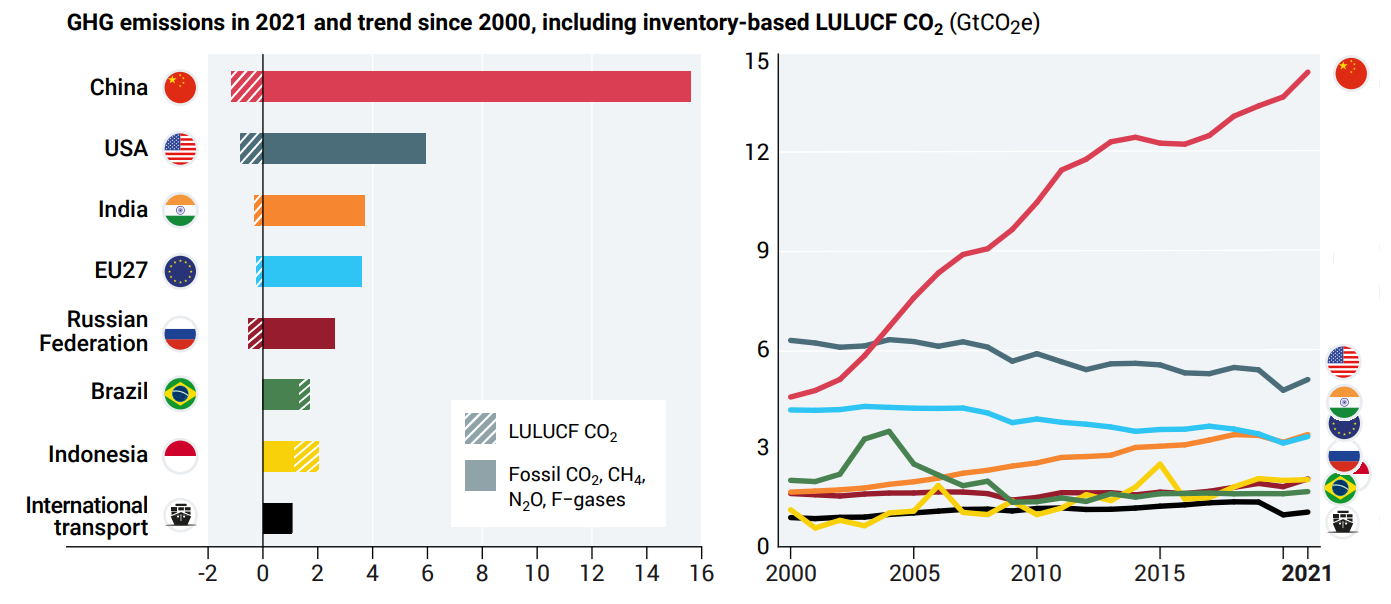
VS: Let us stick to facts. Since the year 2000 more than 20 countries have reduced their CO2 or even their overall (CO2, CH4, N2O) emissions. But global emissions –- the only metric that matters because it is the total mass of greenhouses gases resident in the Earth’s atmosphere that determines the degree of warming — keep on rising. CO2 emissions from energy uses are the most reliably quantifiable flows. In 2024 they set yet another record, 1.3% above 2023 and they now approach 41 billion tons of CO2 equivalent a year, nearly 9% higher than a decade ago. Clearly, there has not been any mitigation (“the act of reducing a severity”) on the global level. 

As for adaptation, wide-body jetliners bring record numbers of people to places already choked with other people. As you read this, cargo flights are bringing fresh blueberries from Peru to New York and just-caught tuna from the Indian Ocean around the Maldives to Tokyo. Go ahead and calculate the carbon costs and benefit ratios of such ventures (blueberries are 85% water and not even high in vitamin C). There is no “wiser strategy” –- there is no strategy (“a plan to achieve a major gain”). The greatest global success has been the rising share of renewably generated electricity (about 13% of the total in 2025) -– but the world now also generates more electricity from coal and natural gas than ever and hence the carbon emissions from this sector also keep on rising.  

RP: You’ve previously touted efficiency as an unheralded yet highly effective method of reducing our impact on Earth’s systems, noting leaky water distribution, inefficient indoor heating, and nitrogen waste from fertilizers as problems ripe for innovation. Why don’t you think there’s been more of a widespread effort to boost efficiency in these arenas? 

VS: Eventually, efficiencies always make the greatest difference. Here are just two prominent examples. The first gas turbine (1939) generated electricity with 17% efficiency, now Siemens will sell you one that is 64% efficient. Boeing 787 uses 69% less jet fuel per revenue passenger kilometer than did the first commercial Boeing 707 in 1958. But these gains are usually incremental, spanning decades. Light emitting diodes (LEDs) have been a notable exception.

Energy losses taking place in hundreds of millions of homes (heated in winter and air conditioned in summer), at billions of sites (leaking pipes), or over enormous areas (as denitrification bacteria in soils convert fertilizer nitrates into nitrogen gas) are an entirely different challenge to manage. Still, none of this can excuse the modern preference of throwing away billions on quests for dubious breakthroughs over-hyped by instant (and often instantly forgettable) start-ups rather than spending millions on good sensors to avoid excessive fertilizer applications and to seal leaking pipes or restrict excessive heating.  

RP: Elon Musk and others have sounded the alarm about a looming fertility crisis resulting from humanity’s gradually declining fertility rate, which has fallen from almost five children per woman in 1965 to just over two today. What do you think about the declining fertility rate? Is it a “crisis”, something to be celebrated, or neither? 

VS: Who is the arbiter of this global total? Who defines what is “desirable?” Who decides what constitutes a “crisis?” Elon Musk? In 1950, when I was a young boy, the global population was about 3 billion. Then the panic about endless growth set in and in 1960 Science (!) published a paper claiming that on Friday, 13 November, A.D. 2026 the Earth will have an infinite population! No wonder, by the late 1960s there were apocalyptic fears of massive famines. Yet then the death rates declined, life expectancies rose, mass famines ended, and today we have about 8.3 billion people. Who is omniscient to say that 9 or 6 or 3 billion is the right number for the human future. Elon Musk?

See Also

Intro to Award Winning Book Population Bombed

“Climate Change” in Leftist Eyes

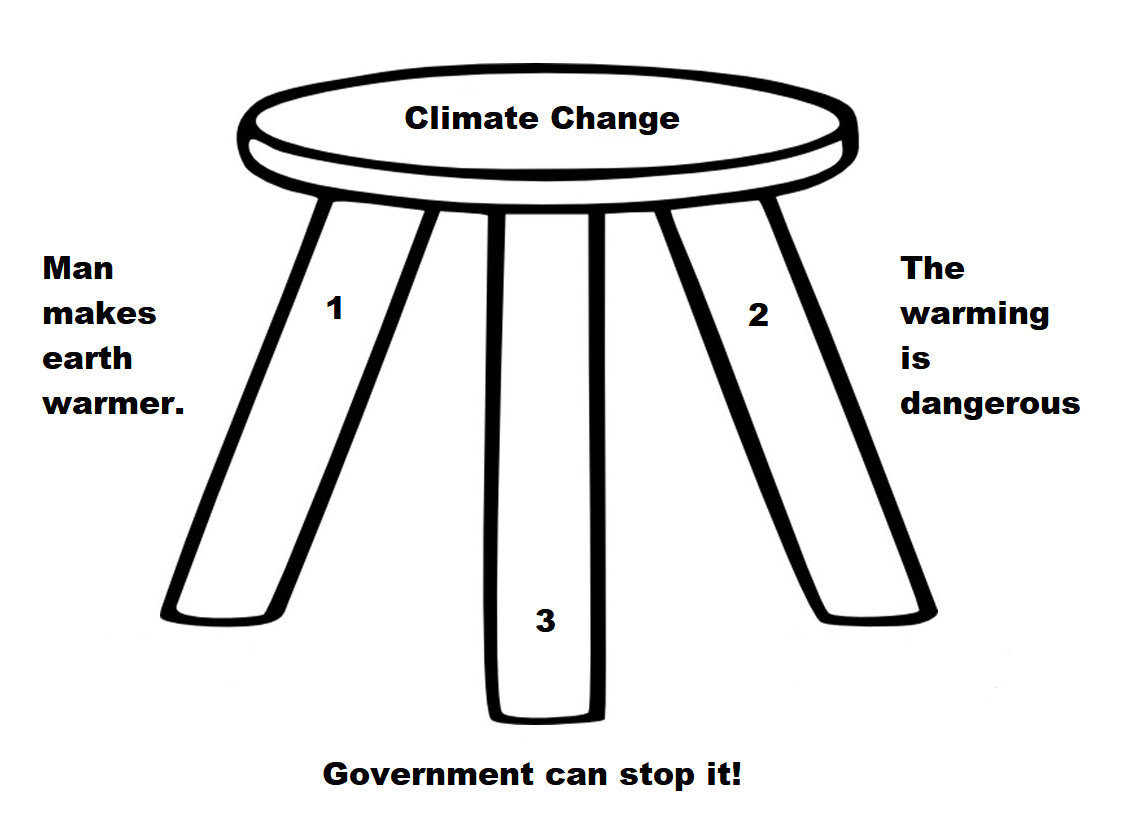
The Climate Change threat depends on three assertions, and collapses if any of them fall.

Linnea Lueken writes at American Thinker “Climate Change” means whatever the Left wants it to mean.  Excerpts in italics with my bolds and added images.

In a recent interview with Sen. Bernie Sanders (I-VT), Joe Rogan touched on the issue of climate change, a favorite talking point for Sanders.

Predictably, Sanders insisted that climate change is not a “hoax.” To this, Rogan raised some of the problems with the common media and political narratives surrounding claims of a climate crisis. The exchange reminded me, though, that despite how silly and absurd climate alarmists look to most of us, the way they have structured the climate debate is pretty smart.

How frustrating is it when they say things like “climate change is real,” or, as Sanders told Rogan, “climate change isn’t a hoax,” with such gravity?

Yes, climate change is real. This beautiful planet we are blessed to call home has multiple types of climate regions and they all constantly change in one way or another, both subtly and sometimes dramatically, over time. Stasis has never existed on Earth. Change is the natural order. An unchanging planet is a dead rock — deader than dead, because even other lifeless planets in our solar system experience seasons and long-term changes. Thus, climate change is not a hoax.

But that’s not what alarmists mean when they say, “climate change.”

When President Trump says climate change is a hoax, he is obviously not saying that natural climate change does not happen, he may not even be asserting that humans have no impact.

 Climate change, in the way activists, the media, politicians, and many scientists commonly use it, comes loaded with a presupposition that it is an unnatural change. Specifically, that most of the warming of the past century or so is anthropogenic — originating from human activities like farming and driving cars — and that such change is an existential threat. In short, one can accept the fact that climate change is a natural phenomenon and still be called a climate denier if you don’t agree with people like Sanders, who declare that windmills, solar panels, electric vehicles, and global socialism are the only proper responses to the changing climate.

To those who value truth and precision, this is aggravating
because it is incomplete, vague, and for all intents and purposes, false.

This is by design, and I think it is mostly tied to the utility of the “denier” label.

It allows interested parties to dismiss people who don’t take a very narrow view of the subject and ostracize scientists who disagree even marginally from the dominant narrative. The truth of the matter is that the science is not settled. Every single element of the anthropogenic climate change theory is up for debate, with varying degrees of disagreement.

It is also dangerous. For example, people in positions of power, like former U.S. Attorney General Loretta Lynch and Sen. Sheldon Whitehouse (D-RI), have expressed interest in prosecuting “climate deniers.” They want to intimidate freethinkers who “follow the science,” while ignoring the fact that we live in a constitutional republic, not a scientific dictatorship.

The facts and data don’t dictate a particular course of action. How to respond to the information, if we even need to, is a decision for individuals and sometimes the political realm. This should be based on our values and an understanding of the trade-offs and risks and benefits of courses of action — scientists have no particularly valuable expertise or insights above the rest of us when making such decisions.

Because the term “climate change” is so nebulous and ubiquitous, anything connected to persecuting or suppressing critics of policy surrounding “climate change” can also be shifted as easily as the alarmists want.

It is smart and tactical, and easy to weaponize. It is easy to smear scientists who are skeptical of the dominant narrative by even mere degrees, silence dissent, and possibly worse, without ever needing to clarify the fullness of the alarmist position or defend the often very extreme political policies that come tied to it.

We need to see realist or skeptical politicians and media figures put the alarmists on their back feet by demanding they define exactly what they mean by “climate change” when the term is used. If Joe Rogan had asked Sanders to define the term “climate change” in addition to the other good points Rogan made, we may have been able to see Sanders forced to solidify the term and have his positions questioned in a more direct and devastating way.

We also need to force alarmists to defend the policy fixes they endorse.

They need to admit their effects on liberty and economic prosperity, their impacts on people in poorer countries, and they must explain exactly how (or if) those policies will change the climate and weather for the better. They need to prove it on time scales where they can actually be held accountable. They need to tell us how much temperature and sea level rise will be prevented, how many lives saved, etc., rather than accepting their ambiguous assurances that if we end fossil fuel use, the world will magically be a better place.


June 2025 Update–Temperature Falls, CO2 Follows

Previously I have demonstrated that changes in atmospheric CO2 levels follow changes in Global Mean Temperatures (GMT) as shown by satellite measurements from University of Alabama at Huntsville (UAH). That background post is reprinted later below.

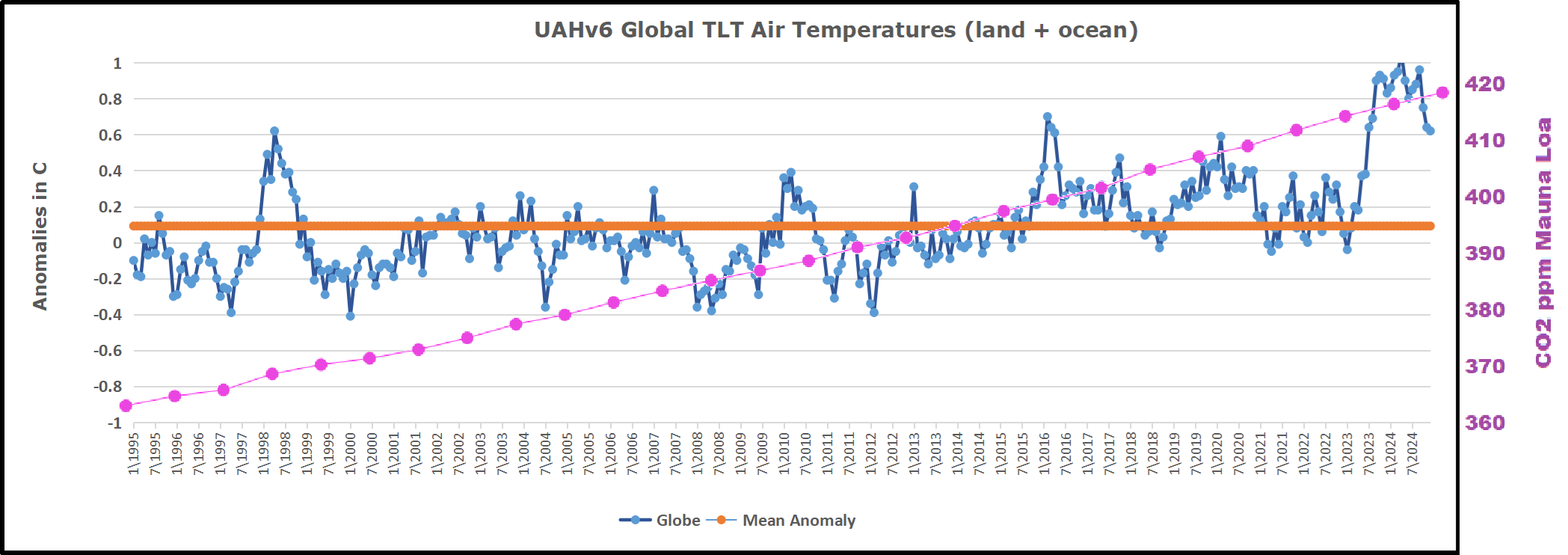
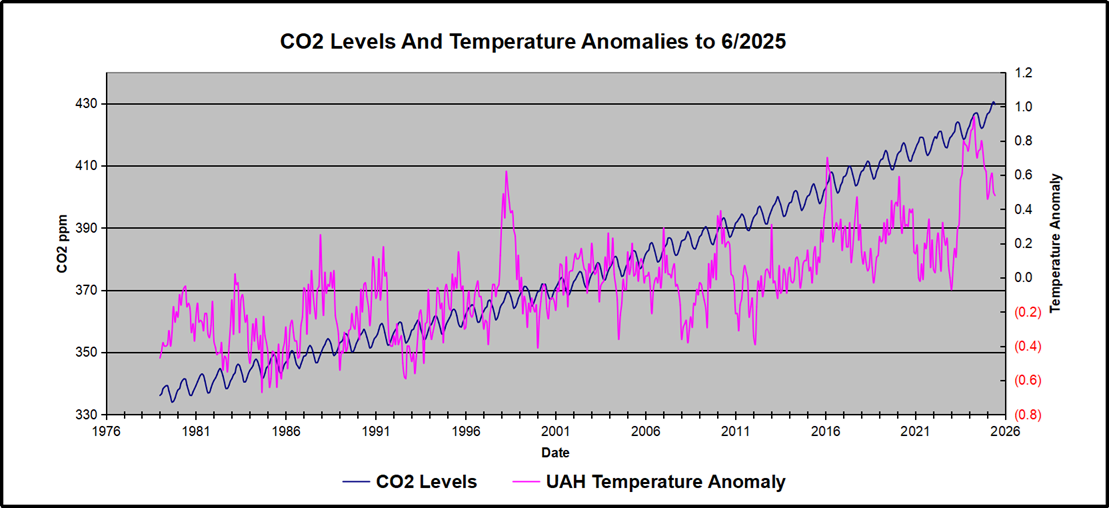
My curiosity was piqued by the remarkable GMT spike starting in January 2023 and rising to a peak in April 2024. GMT has declined steadily, and now 14 months later, the anomaly is 0.48C down from 0.94C.  I also became aware that UAH has recalibrated their dataset due to a satellite drift that can no longer be corrected. The values since 2020 have shifted slightly in version 6.1, as shown in my recent report NH and Tropics Lead UAH Temps Lower May 2025.  The data here comes from UAH record of temperatures measured in the lower troposphere (TLT).

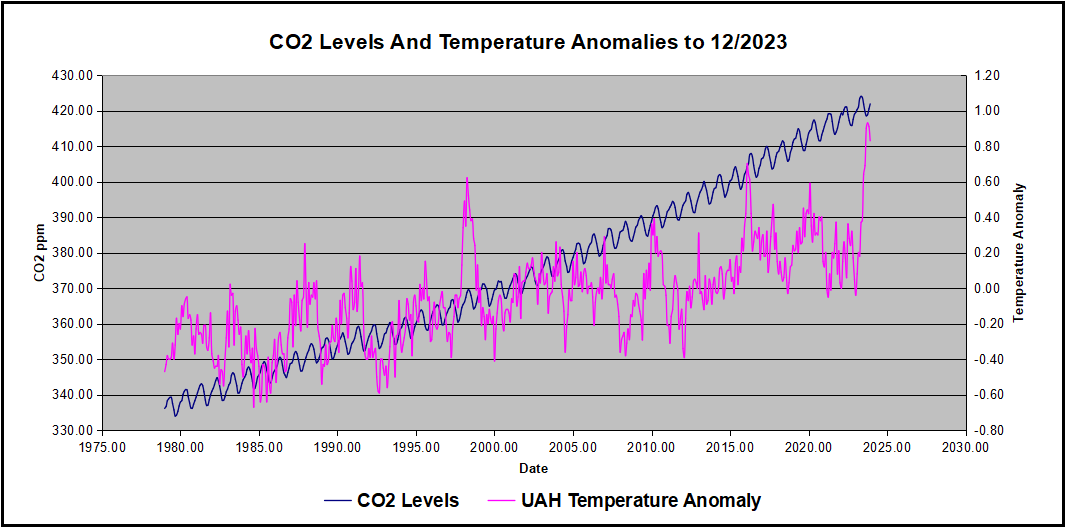
In this post, I test the premise that temperature changes are predictive of changes in atmospheric CO2 concentrations.  The chart above shows the two monthly datasets: CO2 levels in blue reported at Mauna Loa, and Global temperature anomalies in purple reported by UAHv6.1, both through June 2025. Would such a sharp increase in temperature be reflected in rising CO2 levels, according to the successful mathematical forecasting model? Would CO2 levels decline as temperatures dropped following the peak?

The answer is yes: that temperature spike resulted
in a corresponding CO2 spike as expected.
And lower CO2 levels followed the temperature decline.
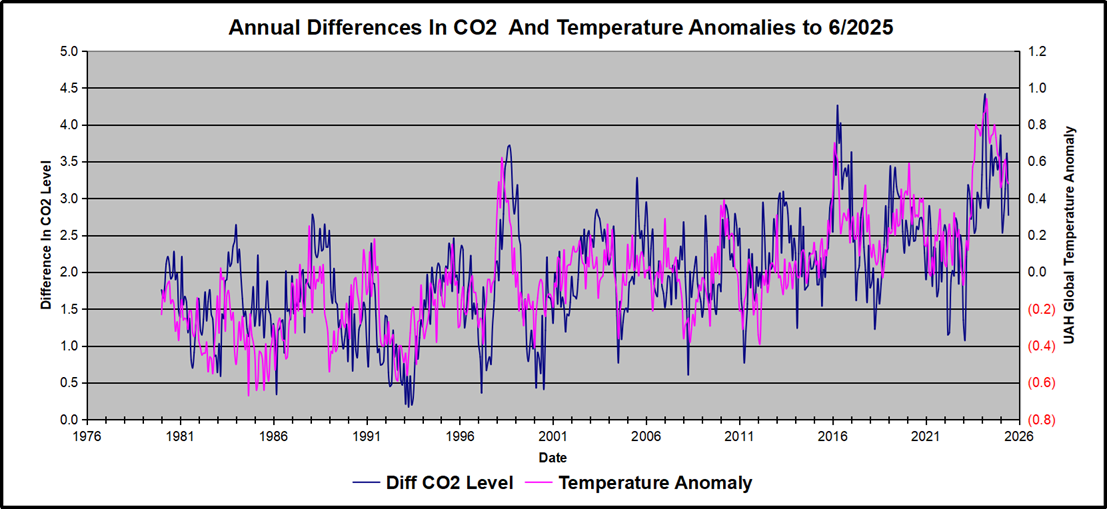
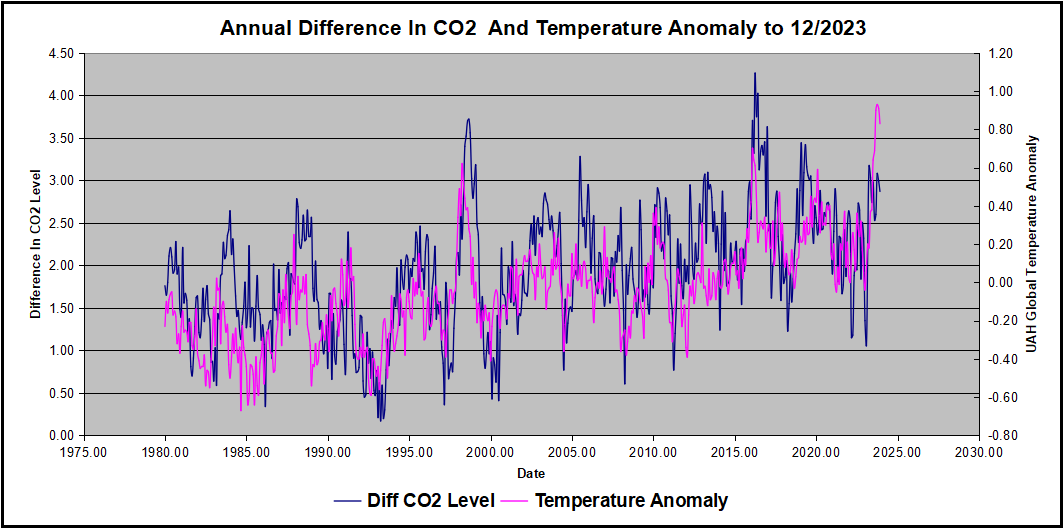
Above are UAH temperature anomalies compared to CO2 monthly changes year over year.

Changes in monthly CO2 synchronize with temperature fluctuations, which for UAH are anomalies referenced to the 1991-2020 period. CO2 differentials are calculated for the present month by subtracting the value for the same month in the previous year (for example February 2025 minus February 2024).  Temp anomalies are calculated by comparing the present month with the baseline month. Note the recent CO2 upward spike and drop following the temperature spike and drop.

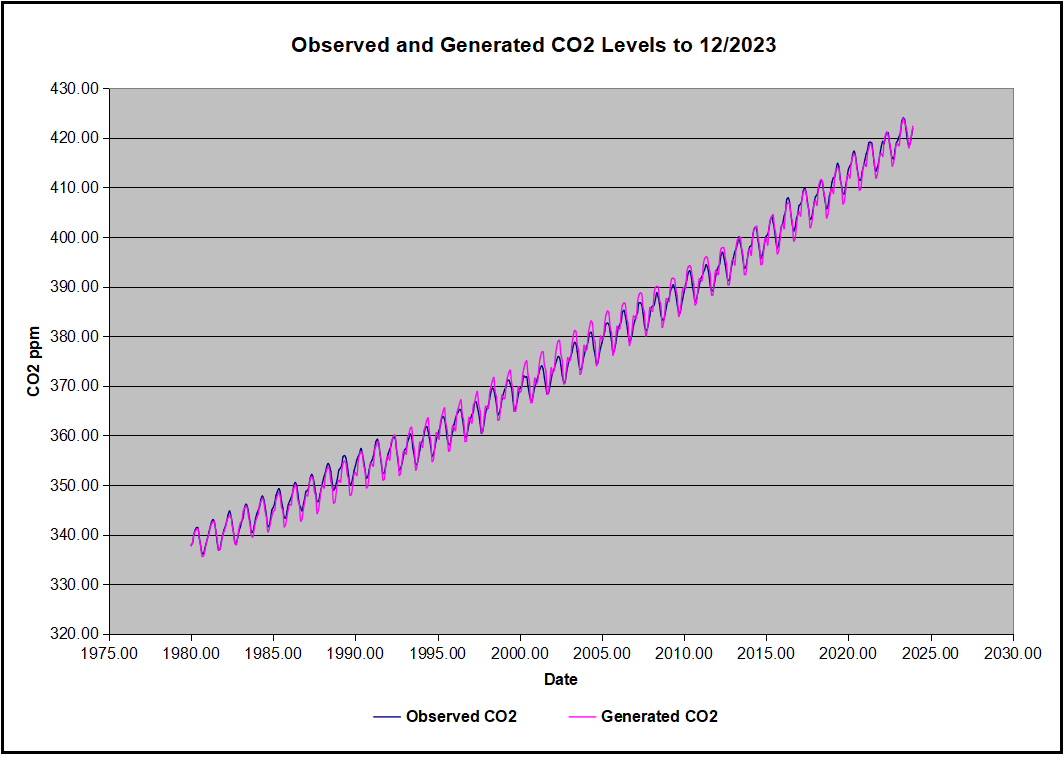
The final proof that CO2 follows temperature due to stimulation of natural CO2 reservoirs is demonstrated by the ability to calculate CO2 levels since 1979 with a simple mathematical formula:

For each subsequent year, the CO2 level for each month was generated

CO2  this month this year = a + b × Temp this month this year  + CO2 this month last year

The values for a and b are constants applied to all monthly temps, and are chosen to scale the forecasted CO2 level for comparison with the observed value. Here is the result of those calculations.
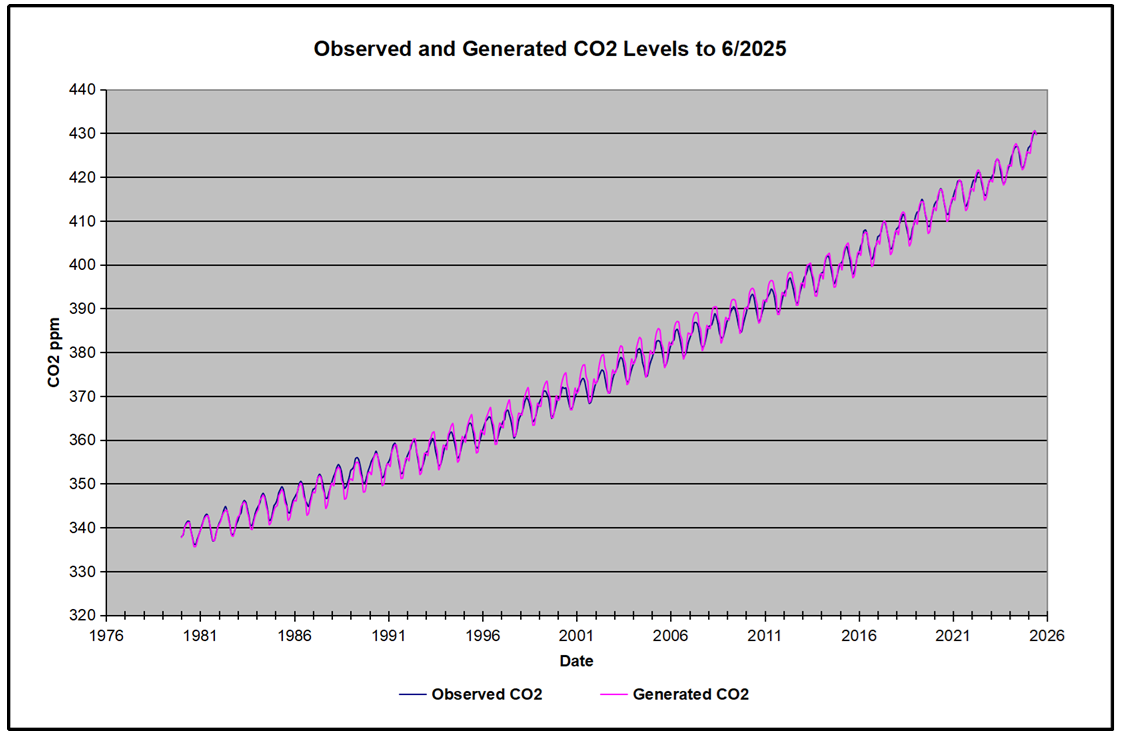
In the chart calculated CO2 levels correlate with observed CO2 levels at 0.9988 out of 1.0000.  This mathematical generation of CO2 atmospheric levels is only possible if they are driven by temperature-dependent natural sources, and not by human emissions which are small in comparison, rise steadily and monotonically.  For a more detailed look at the recent fluxes, here are the results since 2015, an ENSO neutral year.
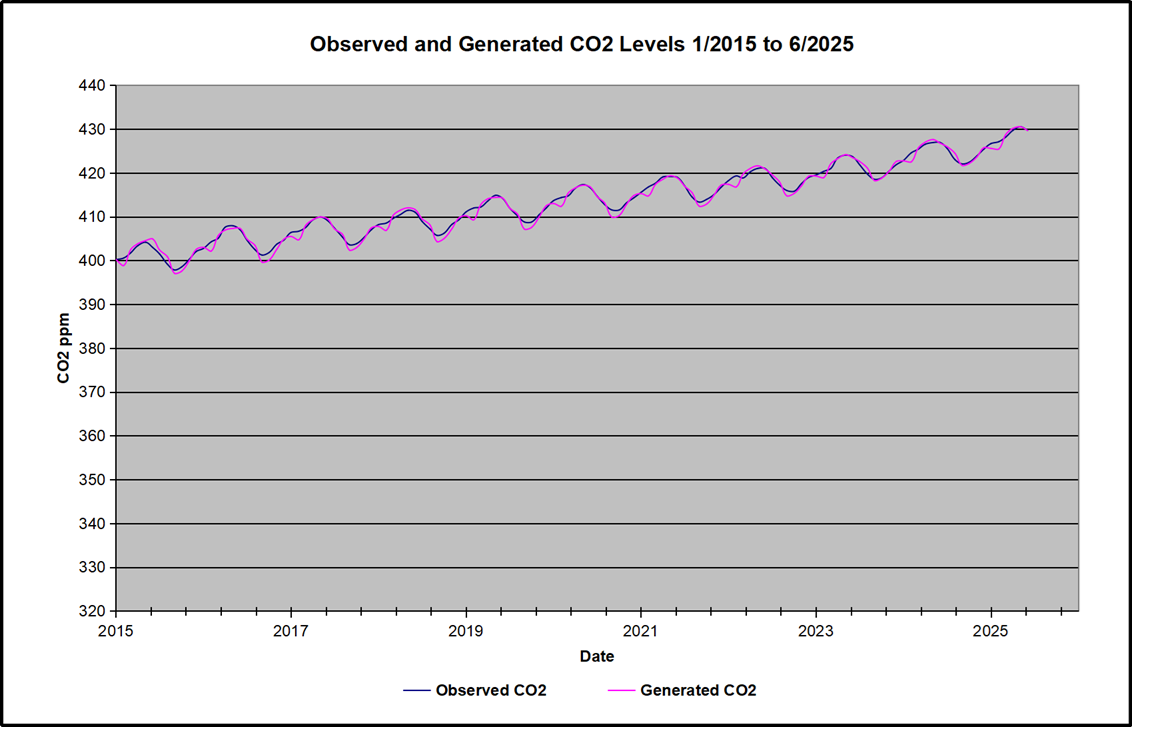
For this recent period, the calculated CO2 values match well the annual highs, while some annual generated values of CO2 are slightly higher or lower than observed at other months of the year. Still the correlation for this period is 0.9939.

Key Point

Changes in CO2 follow changes in global temperatures on all time scales, from last month’s observations to ice core datasets spanning millennia. Since CO2 is the lagging variable, it cannot logically be the cause of temperature, the leading variable. It is folly to imagine that by reducing human emissions of CO2, we can change global temperatures, which are obviously driven by other factors.
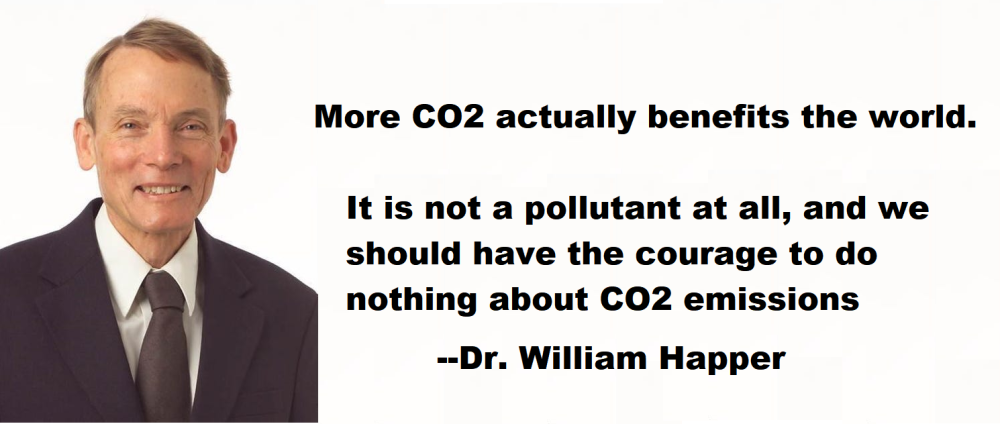
Background Post Temperature Changes Cause CO2 Changes, Not the Reverse

This post is about proving that CO2 changes in response to temperature changes, not the other way around, as is often claimed.  In order to do  that we need two datasets: one for measurements of changes in atmospheric CO2 concentrations over time and one for estimates of Global Mean Temperature changes over time.

Climate science is unsettling because past data are not fixed, but change later on.  I ran into this previously and now again in 2021 and 2022 when I set out to update an analysis done in 2014 by Jeremy Shiers (discussed in a previous post reprinted at the end).  Jeremy provided a spreadsheet in his essay Murray Salby Showed CO2 Follows Temperature Now You Can Too posted in January 2014. I downloaded his spreadsheet intending to bring the analysis up to the present to see if the results hold up.  The two sources of data were:

Temperature anomalies from RSS here:  http://www.remss.com/missions/amsu

CO2 monthly levels from NOAA (Mauna Loa): https://www.esrl.noaa.gov/gmd/ccgg/trends/data.html

Changes in CO2 (ΔCO2)

Uploading the CO2 dataset showed that many numbers had changed (why?).
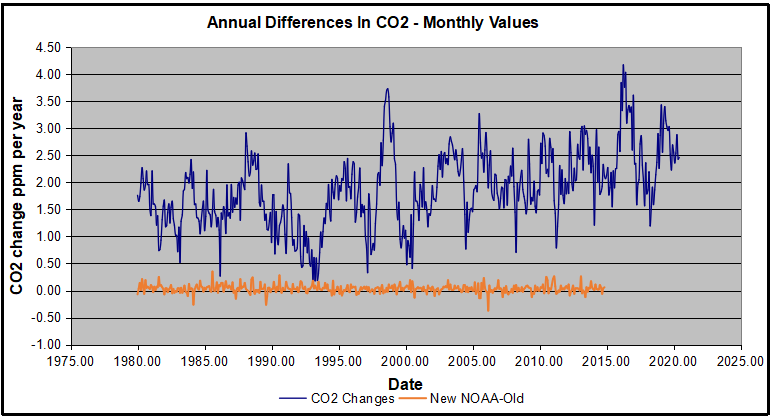
The blue line shows annual observed differences in monthly values year over year, e.g. June 2020 minus June 2019 etc.  The first 12 months (1979) provide the observed starting values from which differentials are calculated.  The orange line shows those CO2 values changed slightly in the 2020 dataset vs. the 2014 dataset, on average +0.035 ppm.  But there is no pattern or trend added, and deviations vary randomly between + and -.  So last year I took the 2020 dataset to replace the older one for updating the analysis.

Now I find the NOAA dataset starting in 2021 has almost completely new values due to a method shift in February 2021, requiring a recalibration of all previous measurements.  The new picture of ΔCO2 is graphed below.
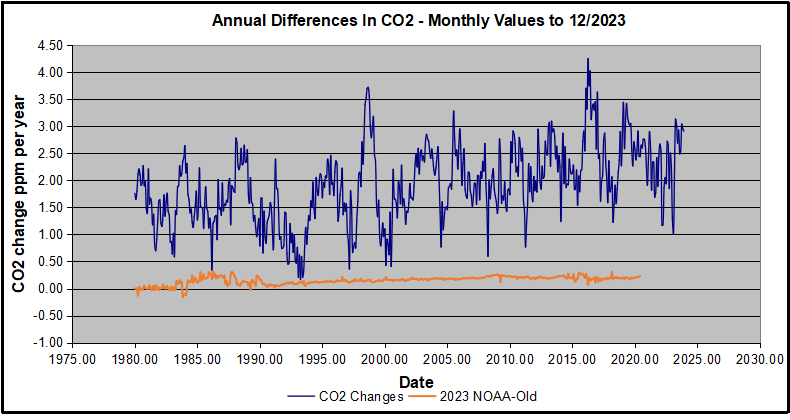
The method shift is reported at a NOAA Global Monitoring Laboratory webpage, Carbon Dioxide (CO2) WMO Scale, with a justification for the difference between X2007 results and the new results from X2019 now in force.  The orange line shows that the shift has resulted in higher values, especially early on and a general slightly increasing trend over time.  However, these are small variations at the decimal level on values 340 and above.  Further, the graph shows that yearly differentials month by month are virtually the same as before.  Thus I redid the analysis with the new values.

Global Temperature Anomalies (ΔTemp)

The other time series was the record of global temperature anomalies according to RSS. The current RSS dataset is not at all the same as the past.
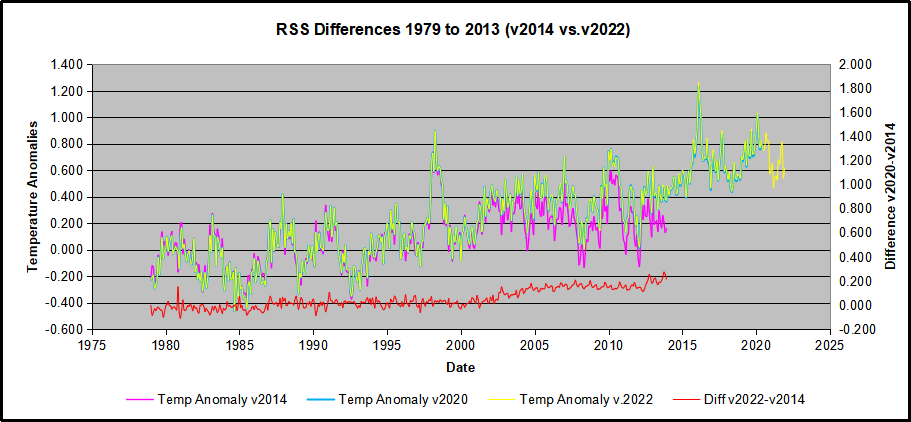
Here we see some seriously unsettling science at work.  The purple line is RSS in 2014, and the blue is RSS as of 2020.  Some further increases appear in the gold 2022 rss dataset. The red line shows alterations from the old to the new.  There is a slight cooling of the data in the beginning years, then the three versions mostly match until 1997, when systematic warming enters the record.  From 1997/5 to 2003/12 the average anomaly increases by 0.04C.  After 2004/1 to 2012/8 the average increase is 0.15C.  At the end from 2012/9 to 2013/12, the average anomaly was higher by 0.21. The 2022 version added slight warming over 2020 values.

RSS continues that accelerated warming to the present, but it cannot be trusted.  And who knows what the numbers will be a few years down the line?  As Dr. Ole Humlum said some years ago (regarding Gistemp): “It should however be noted, that a temperature record which keeps on changing the past hardly can qualify as being correct.”

Given the above manipulations, I went instead to the other satellite dataset UAH version 6. UAH has also made a shift by changing its baseline from 1981-2010 to 1991-2020.  This resulted in systematically reducing the anomaly values, but did not alter the pattern of variation over time.  For comparison, here are the two records with measurements through December 2023.
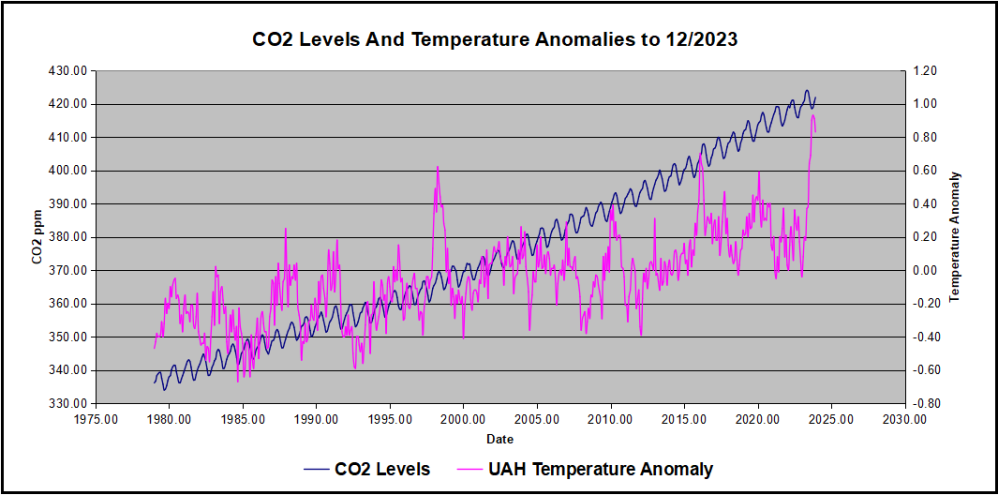
Comparing UAH temperature anomalies to NOAA CO2 changes.

Here are UAH temperature anomalies compared to CO2 monthly changes year over year.
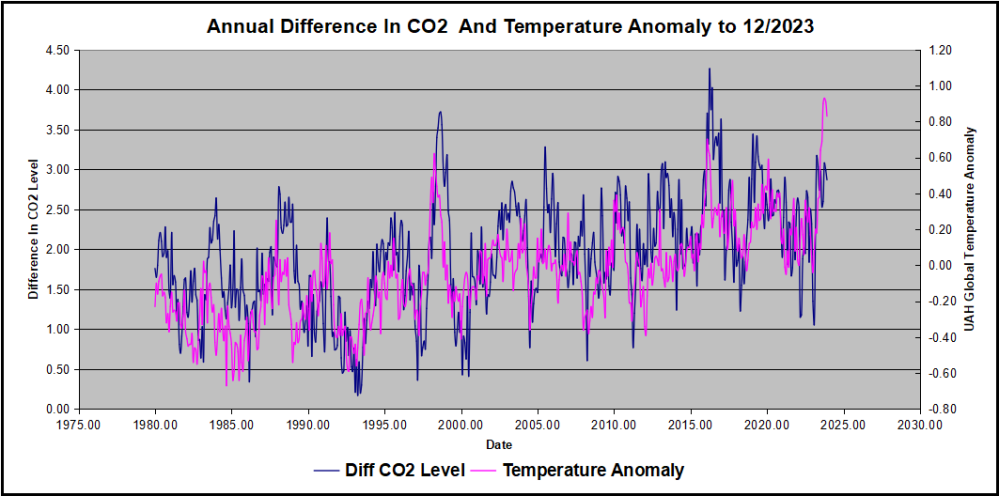
Changes in monthly CO2 synchronize with temperature fluctuations, which for UAH are anomalies now referenced to the 1991-2020 period.  As stated above, CO2 differentials are calculated for the present month by subtracting the value for the same month in the previous year (for example June 2022 minus June 2021).   Temp anomalies are calculated by comparing the present month with the baseline month.

The final proof that CO2 follows temperature due to stimulation of natural CO2 reservoirs is demonstrated by the ability to calculate CO2 levels since 1979 with a simple mathematical formula:

For each subsequent year, the co2 level for each month was generated

CO2  this month this year = a + b × Temp this month this year  + CO2 this month last year

Jeremy used Python to estimate a and b, but I used his spreadsheet to guess values that place for comparison the observed and calculated CO2 levels on top of each other.
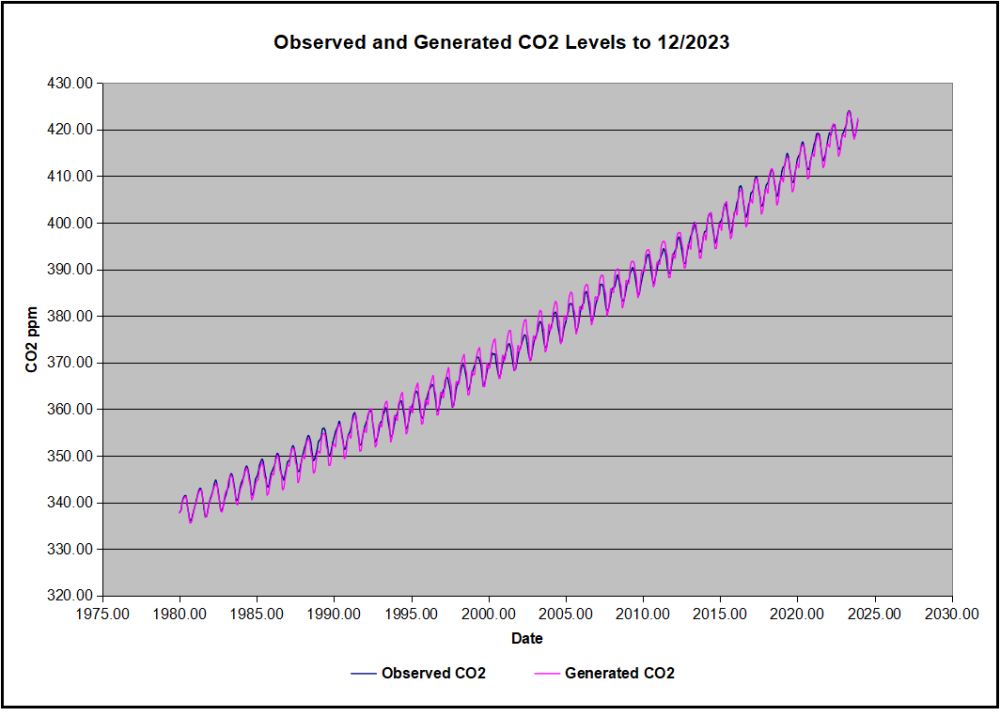
In the chart calculated CO2 levels correlate with observed CO2 levels at 0.9986 out of 1.0000.  This mathematical generation of CO2 atmospheric levels is only possible if they are driven by temperature-dependent natural sources, and not by human emissions which are small in comparison, rise steadily and monotonically.

Comment:  UAH dataset reported a sharp warming spike starting mid year, with causes speculated but not proven.  In any case, that surprising peak has not yet driven CO2 higher, though it might,  but only if it persists despite the likely cooling already under way.

Previous Post:  What Causes Rising Atmospheric CO2?
nasa_carbon_cycle_2008-1

This post is prompted by a recent exchange with those reasserting the “consensus” view attributing all additional atmospheric CO2 to humans burning fossil fuels.

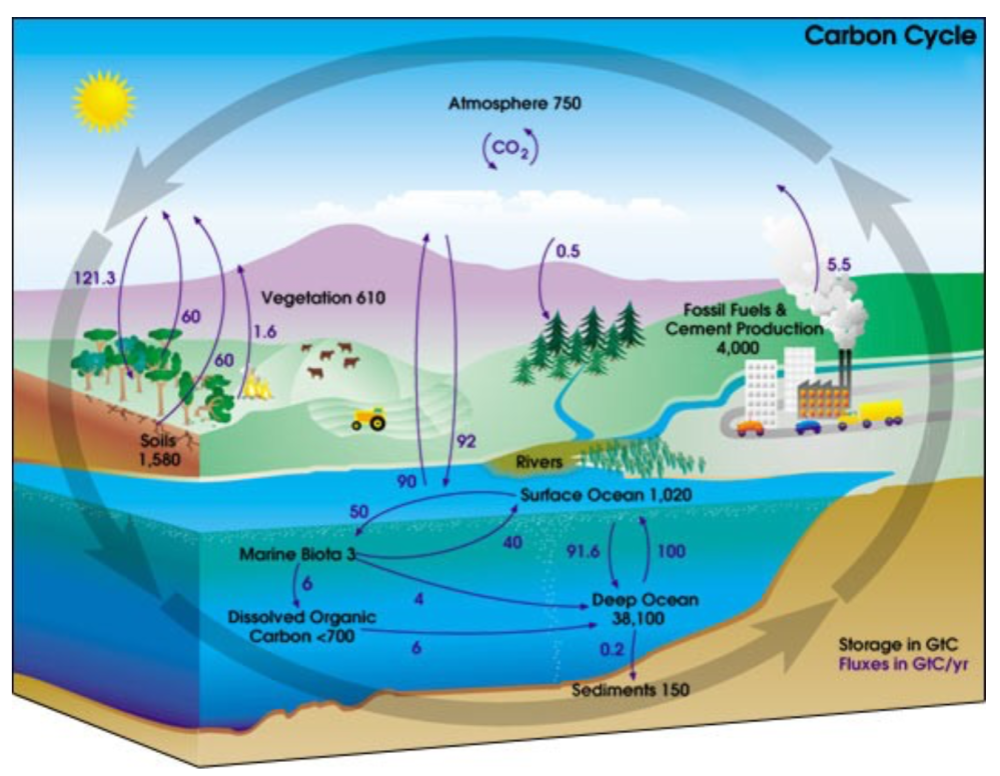
The IPCC doctrine which has long been promoted goes as follows. We have a number over here for monthly fossil fuel CO2 emissions, and a number over there for monthly atmospheric CO2. We don’t have good numbers for the rest of it-oceans, soils, biosphere–though rough estimates are orders of magnitude higher, dwarfing human CO2.  So we ignore nature and assume it is always a sink, explaining the difference between the two numbers we do have. Easy peasy, science settled.

What about the fact that nature continues to absorb about half of human emissions, even while FF CO2 increased by 60% over the last 2 decades? What about the fact that in 2020 FF CO2 declined significantly with no discernable impact on rising atmospheric CO2?

These and other issues are raised by Murray Salby and others who conclude that it is not that simple, and the science is not settled. And so these dissenters must be cancelled lest the narrative be weakened.

The non-IPCC paradigm is that atmospheric CO2 levels are a function of two very different fluxes. FF CO2 changes rapidly and increases steadily, while Natural CO2 changes slowly over time, and fluctuates up and down from temperature changes. The implications are that human CO2 is a simple addition, while natural CO2 comes from the integral of previous fluctuations.  Jeremy Shiers has a series of posts at his blog clarifying this paradigm. See Increasing CO2 Raises Global Temperature Or Does Increasing Temperature Raise CO2 Excerpts in italics with my bolds.

The following graph which shows the change in CO2 levels (rather than the levels directly) makes this much clearer.

Note the vertical scale refers to the first differential of the CO2 level not the level itself. The graph depicts that change rate in ppm per year.

There are big swings in the amount of CO2 emitted. Taking the mean as 1.6 ppmv/year (at a guess) there are +/- swings of around 1.2 nearly +/- 100%.

And, surprise surprise, the change in net emissions of CO2 is very strongly correlated with changes in global temperature.

This clearly indicates the net amount of CO2 emitted in any one year is directly linked to global mean temperature in that year.

For any given year the amount of CO2 in the atmosphere will be the sum of

  • all the net annual emissions of CO2
  • in all previous years.

For each year the net annual emission of CO2 is proportional to the annual global mean temperature.

This means the amount of CO2 in the atmosphere will be related to the sum of temperatures in previous years.

So CO2 levels are not directly related to the current temperature but the integral of temperature over previous years.

The following graph again shows observed levels of CO2 and global temperatures but also has calculated levels of CO2 based on sum of previous years temperatures (dotted blue line).

Summary:

The massive fluxes from natural sources dominate the flow of CO2 through the atmosphere.  Human CO2 from burning fossil fuels is around 4% of the annual addition from all sources. Even if rising CO2 could cause rising temperatures (no evidence, only claims), reducing our emissions would have little impact.

Atmospheric CO2 Math

Ins: 4% human, 96% natural
Outs: 0% human, 98% natural.
Atmospheric storage difference: +2%
(so that: Ins = Outs + Atmospheric storage difference)

Balance = Atmospheric storage difference: 2%, of which,
Humans: 2% X 4% = 0.08%
Nature: 2% X 96 % = 1.92%

Ratio Natural : Human =1.92% : 0.08% = 24 : 1

Resources
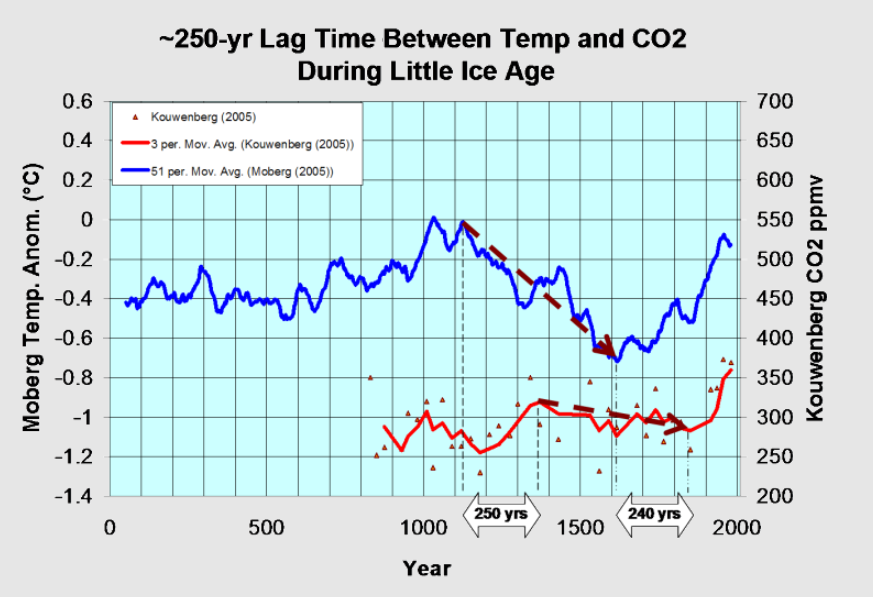
For a possible explanation of natural warming and CO2 emissions see Little Ice Age Warming Recovery May be Over
Resources:

CO2 Fluxes, Sources and Sinks

Who to Blame for Rising CO2?

Fearless Physics from Dr. Salby