Happer & Wrightstone: Get Real and Stop Blaming CO2

The above interview was conducted by NTD news with CO2 Coalition founder William Happer (WH) and Executive Director Gregory Wrightstone (GW).  For those preferring to read, below is a transcript from the closed captions in italics with my bolds and added images.

NTD: The Environmental Protection Agency’s Lee Z eldin announced a proposal earlier this week to overturn a 16-year-old scientific finding from the Obama administration. It allowed three administrations to regulate greenhouse gas emissions like CO2. If successful, this would roll back climate rules on cars, undo $1 trillion in regulatory costs, and save over $54 billion each year. With the public comment period now open, here to break down what all of this means are two guests. William Happer, professor emeritus at Princeton University department of physics, and Gregory Wrightstone, geologist and executive director of the CO2 coalition. Thank you both so much for being here.

Now, first, how big of a deal would this be, repealing the 2009 endangerment finding? Who has benefited under it so far?

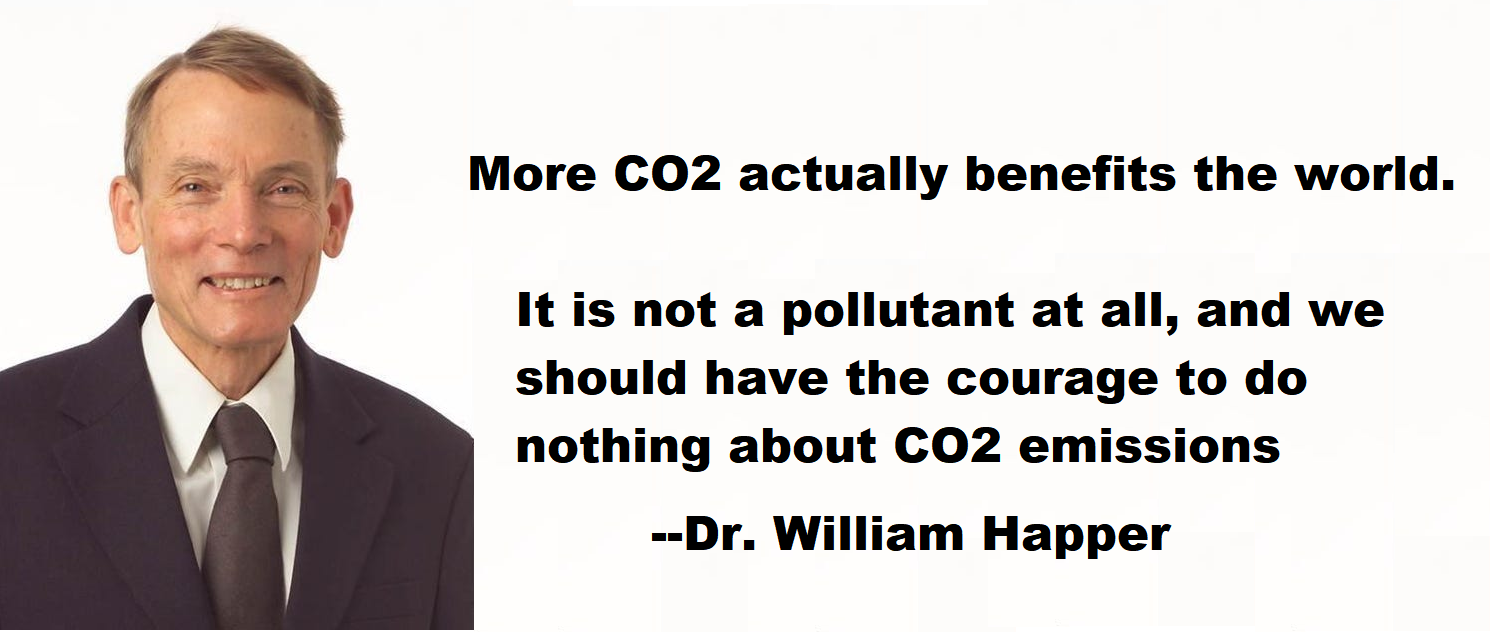
WH: Well, I’m not sure who you asked this question, but I will answer it and Greg can add to what I say. This is something that was long overdue. I mean, it was a ridiculous regulation that purported that carbon dioxide, which all of us breathe out, is a pollutant. I mean, I can’t think of anything dumber than that, but that’s what it was. And so finally there’s been an administration with the courage to tell the truth, that it isn’t a pollutant at all and it’s actually good for the earth to have more carbon dioxide.

NTD: What is the likely legal process of repealing this? And Gregory, this finding was the legal prerequisite used by the Obama and Biden administrations to regulate new car and engine emissions. What is the likely legal process of repealing this now?

GW: Well, this right now is just dealing with cars and light trucks and vehicles, but it’s sure to extend into the other things. Your viewers have had their freedom systematically eroded using the endangerment finding. With this endangerment finding, they’ve been able to tell you what car kind of car to drive. Look at the ceiling fan over your head, regulate that. All these electrical devices, your washer, dryer, dishwasher. the only ones you can buy today are government approved devices because of the endangerment finding. So what this does is to actually liberate Americans for freedom to choose what kind of appliances they want. If they want to buy a dishwasher that’s very efficient in terms of washing dishes, not in terms of how much electricity you use. That should be my choice and your choice and all of your viewers’ choices. So, this is really liberation day for America and restoring a lot of the freedoms that were lost based on this failed endangerment finding.

NTD: Expanding on that, William, what about the science needed to decide whether or not this will get repealed? Besides the legal angle, break down for us the science that’s needed to decide whether or not this will get repealed.

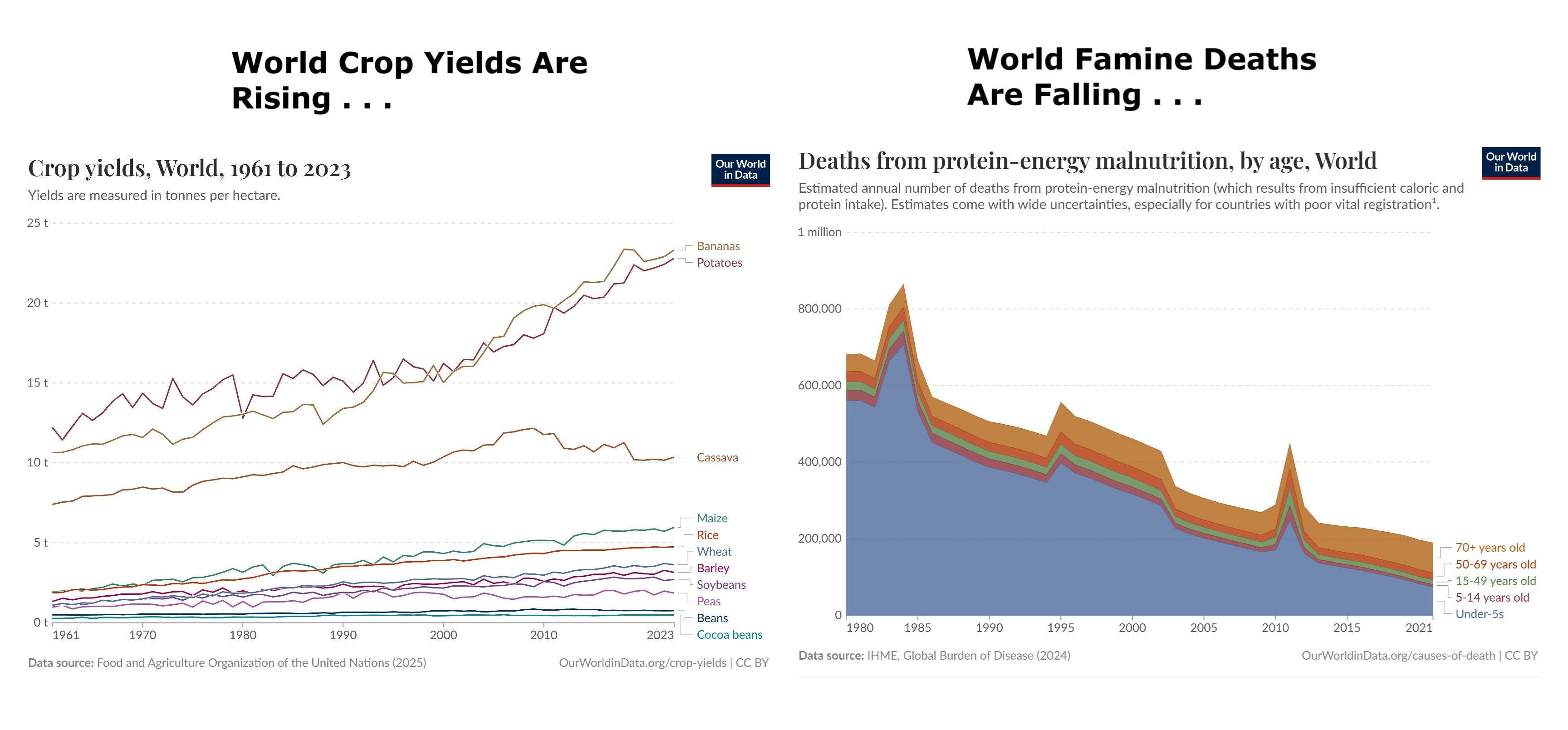
GW: Well, the science is quite clear. Understand what they did in 2009, they excluded any contrary science. By contrary science, anything that indicated that CO2 was not a pollutant. But the Supreme Court rulings in 2024 now say you have to consider all of the science. And there’s just a huge amount of of science right now that that disputes endangerment, that actually confirms carbon dioxide has hugely beneficial aspects. Greening the earth, vegetation growth, crop production is exploding. And Dr. Happer can perhaps talk about how the the greenhouse gas warming potential is not at all what they say it is.

NTD: Will CO2 cause dangerous warming? On that note, will you break down that aspect for us ?

WH: Well, as Greg said, the accusation against CO2 is that it would cause dangerous warming of the earth. And as usual there’s a grain of truth that CO2 will cause some warming, but the warming will be trivial. It will almost certainly be beneficial to most of the earth. The reason it warms is CO2 is a greenhouse gas. It lets sunlight come through and warm the surface of the earth. But it retards the cooling of the earth by infrared radiation to space. And it’s the balance of those two that determines the earth’s temperature.

But it’s a very inefficient greenhouse gas. It doesn’t much matter if you double CO2. You only change the cooling radiation into space by 1%, a tiny effect. And so, it’s amazing they’ve managed to blow up this molehill into this mountainous threat. It’s not a threat at all. It’s a benefit.

NTD: On that note, Gregory, in terms of how we got to the endangerment finding, was contradictory science a factor in that decision?

Well, actually, no. There was no contradictory science. And again, now bear in mind things are different today than they were even just two years ago. with two Supreme Court rulings last year. In Ohio vs. state farm case the US Supreme Court ruled that these regulatory agencies like the DOE, EPA, DOT, all of these alphabet soup regulatory bodies need to consider all significant science that affects their judgment which EPA in the endangerment finding did not do.

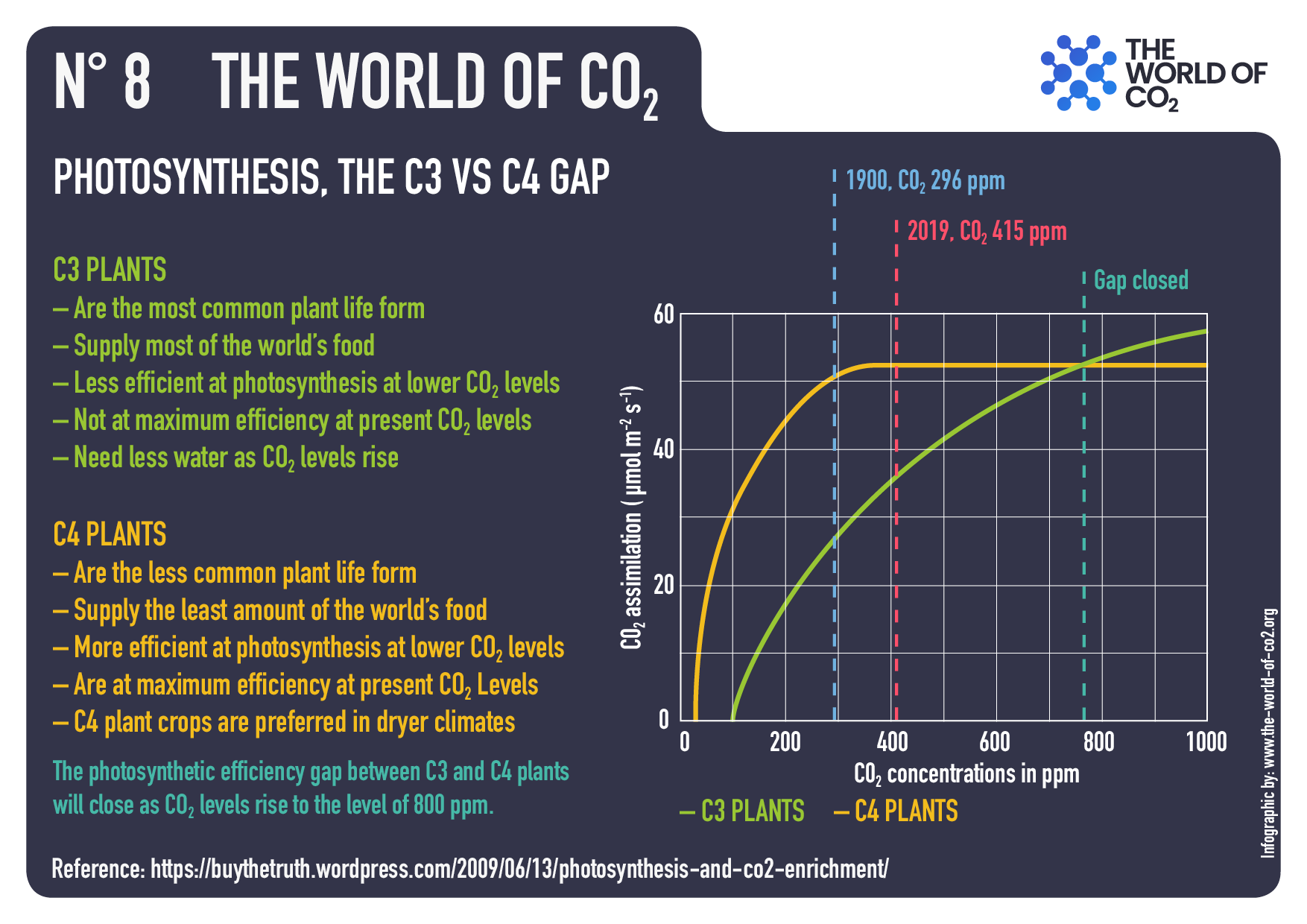
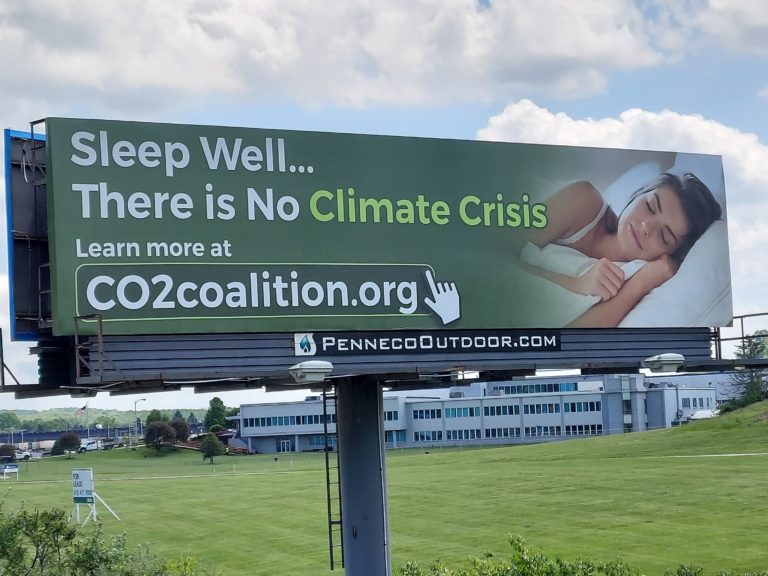
And the evidence we say is is entirely overwhelming. We see by almost every metric you look at, we find that Earth’s ecosystems are thriving and prospering, and the human conditions are improving because of increases in CO2. It’s really the greatest untold story of the 21st century, that of a thriving earth and the benefits to humanity. It’s a feel-good story, but they’ve turned this into fear-mongering where children can’t sleep at night because they’re being lied to by this the promoters we call the climate industrial complex.

Let’s get back to true science, the scientific method. Enough of this consensus science and group think. We support the scientific method and critical thinking which has been removed from many of these government agencies for 30 years or longer.

Climate models

NTD: And William, on that note, there is a big focus on climate change or climate alarm as some might say. Talk to us about some of the climate models that are used. What did these models get wrong?

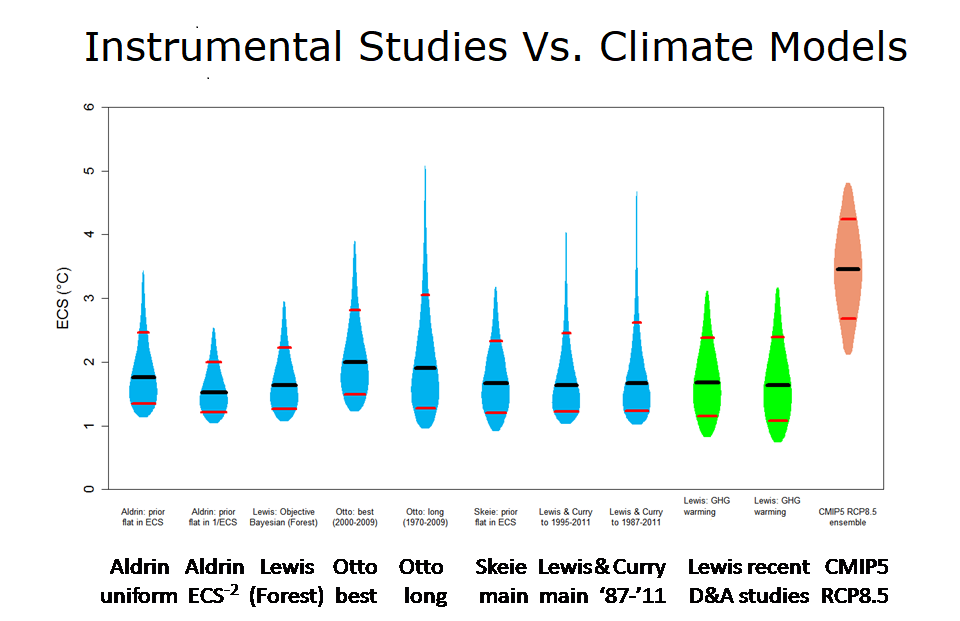
WH: Well, I think the main thing the models get wrong is that they they know perfectly well that the direct effects of carbon dioxide will cause a very small warming of the earth if there are no other effects. If you double CO2 100% increase, which would take more than a century by the way, that would only warm the earth by a little less than one degree centigrade. It’s a trivial amount and we may never double it anyway.

So here’s what they’ve done. They’ve taken this trivial warming is agreed by most people who understand how this works, and they’ve multiplied it by factors three, four, five and saying that there’s these enormous positive feedbacks on the direct warming. That’s completely crazy because most feedbacks in nature are negative. With most other systems in nature, the first thing you calculate is usually too big, not too small. It’s even got a fancy name. It’s called Chatelier’s principle.

And so everything they’ve done violates Chatelier’s principle that works for everything else in nature, but it apparently doesn’t work for climate alarmists.

China

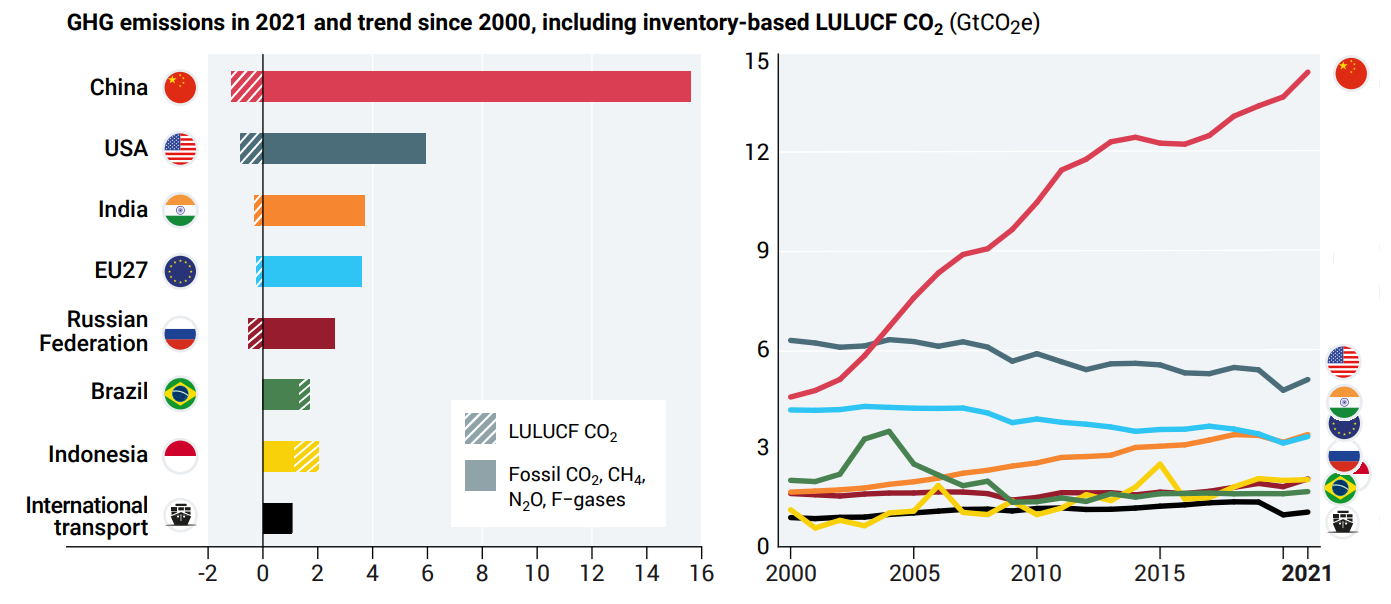
NTD: And staying with you, William, we often hear the US and Europe talking about cutting emissions, whether that’s in cars or cows even. But at the same time, the carbon brief notes that China is the world’s largest annual greenhouse gas emitter and leads in coal use. How should we look at this if the argument is global warming and not regional?

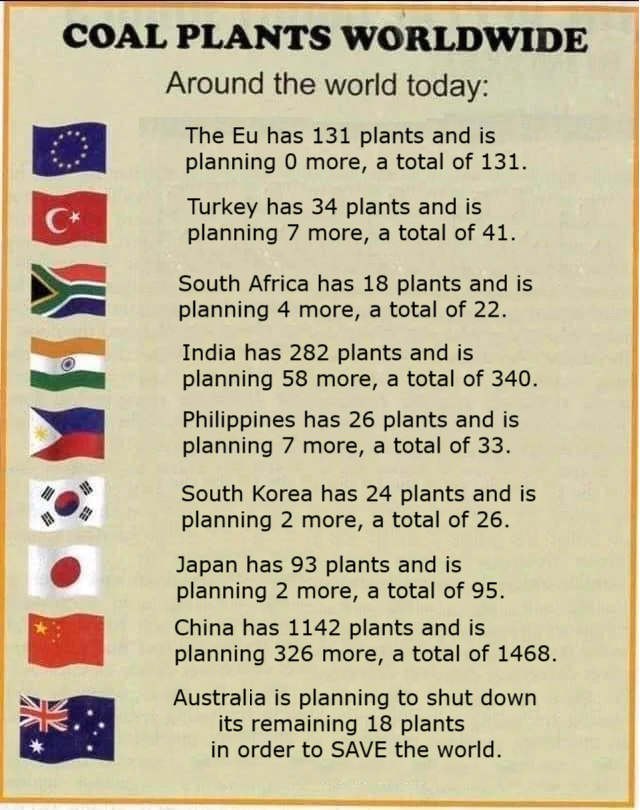
WH: Well, of course, China has built lots of very efficient new coal plants in the last 10 years. they’re ultra supercritical plants many of them. They’re really good plants and so they’ve raised the standard of living there. Part of their policy is is quite okay and the CO2 they’re emitting is good for the earth you know.

I’m not supporting any of the political things that they do but I don’t think there’s a thing wrong with releasing carbon dioxide. More power to them for that.

CO2 Coalition

NTD: On that note, Gregory, you’re the executive director of the CO2 coalition. Give us a sense of what this coalition does and how this fits in with environmental discussions.

GW: We’re 10 years old now. It was founded in 2015 by Dr. William Happer, our chair that was just on here. And we’re some 200 of the top experts and scientists in the world that don’t buy into the company line on climate change. We don’t believe that increases in human emissions of CO2 are leading to harmful warming. Rather just the opposite, we see huge benefits. Crop growth records are being broken year after year and they attribute 70% of that to increasing CO2. Crop growth and crop productivity is outpacing population growth. That’s a good thing, a really good thing.

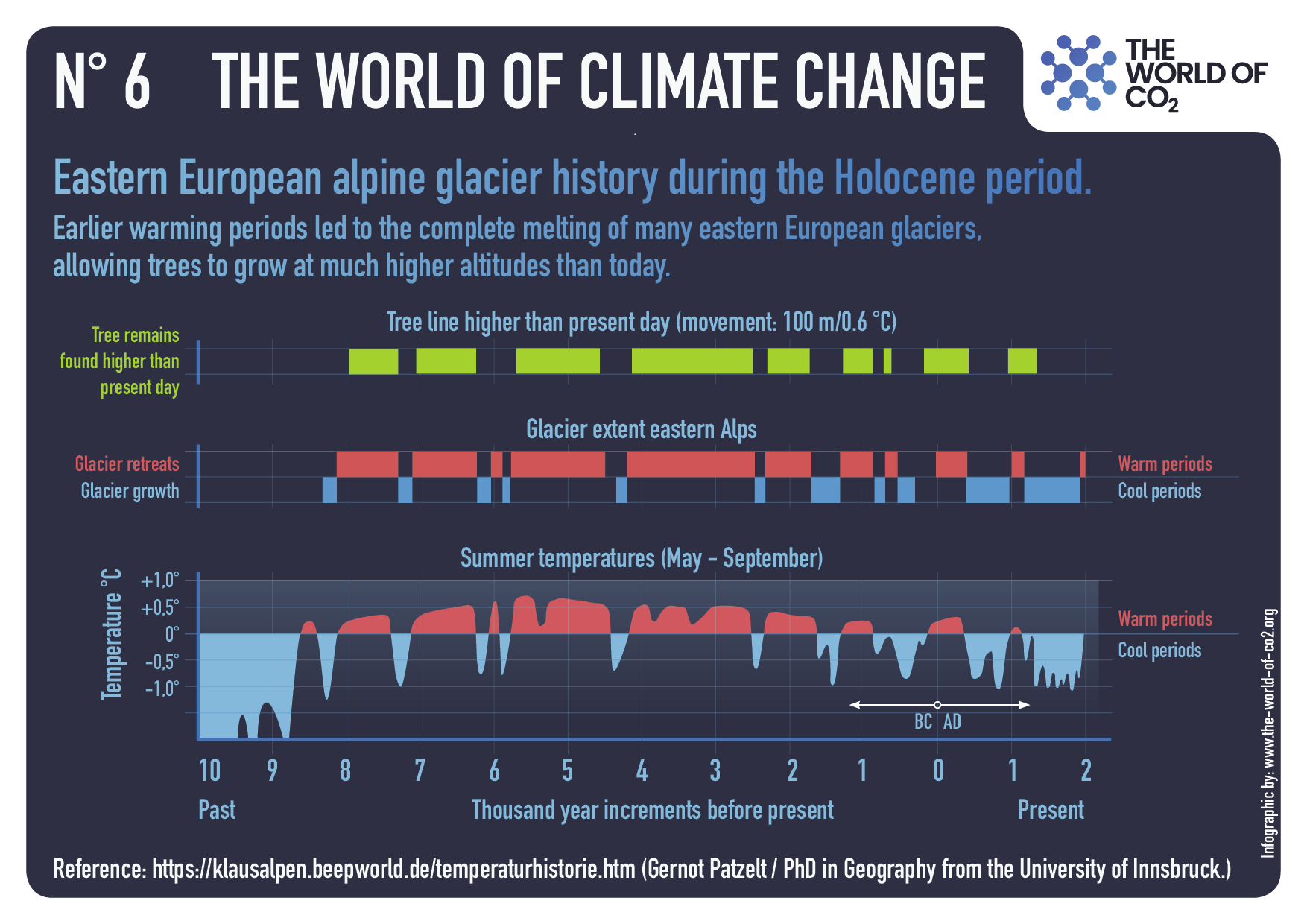
We are in a warming trend. Yes, we are. It’s been warming for more than 300 years. But you know what that does? That means since 1900, our growing seasons in the continental United States have increased by more than two weeks. That’s a really good thing for agriculture. Your farmers will tell you they love that. So at the CO2 Coalition, our unofficial motto is: We love CO2 and so should you.

Arctic Ice Returns to Mean Mid-August 2025

After a sub-par March maximum, by end of May 2025 Arctic ice closed the gap with the 19-year average. Then in June the gap reopened and in July the melting pace matched the average, abeit four days in advance of average. Now mid-August MASIE shows the Arctic ice extent matching the 19-year average.

During this period the average year loses ~2.4M km2 of ice extent.   MASIE on day 197 was 287k km2 down, and the gap increased to 460k km2 by July 27 (day 208). In August 2025 the melt rate slowed, erasing the deficit to average the last 3 days. Note 2007 and 2024 were ~200k km2 below average mid-August.  Meanwhile SII v.4 is showing much lower ice extents than previously, ranging from -200k km2 to -550k km2 below MASIE extents.

The regional distribution of ice extents is shown in the table below. (Bering and Okhotsk seas are excluded since both are now virtually open water.)

Region 2025227 Day 227 2025-Ave. 2020227 2025-2020
 (0) Northern_Hemisphere 5881998 5894299 -12301 5162062 719936
 (1) Beaufort_Sea 932422 706128 226294 838854 93568
 (2) Chukchi_Sea 527504 438457 89047 410757 116747
 (3) East_Siberian_Sea 622184 563120 59064 276845 345339
 (4) Laptev_Sea 252320 243841 8479 24033 228287
 (5) Kara_Sea 10947 94167 -83220 22002 -11055
 (6) Barents_Sea 0 22056 -22056 3285 -3285
 (7) Greenland_Sea 115125 223328 -108202 265814 -150688
 (8) Baffin_Bay_Gulf_of_St._Lawrence 75407 56928 18479 12720 62688
 (9) Canadian_Archipelago 392776 404096 -11320 366453 26323
 (10) Hudson_Bay 25381 65298 -39917 53142 -27761
 (11) Central_Arctic 2927007 3075808 -148801 2887486.48 39520

The table shows large surpluses in Eurasian basins  Beaufort, Chukchi and E. Siberian, offset by deficits in Central Arctic, Kara and Greenland seas. Hudson Bay is mostly open water at this time of year. 2025 exceeds the ice extents in 2020 by 720k km2.

Why is this important?  All the claims of global climate emergency depend on dangerously higher  temperatures, lower sea ice, and rising sea levels.  The lack of additional warming prior to 2023 El Nino is documented in a post SH Drives UAH Temps Cooler July 2025.

The lack of acceleration in sea levels along coastlines has been discussed also.  See Observed vs. Imagined Sea Levels 2023 Update

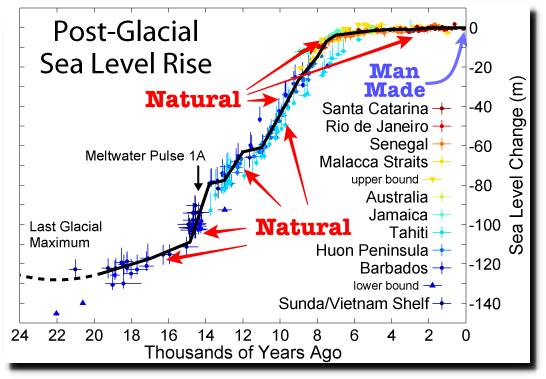
Also, a longer term perspective is informative:

post-glacial_sea_level

Postscript Re. SII v.4

Update: Strange Sea Ice Data July End 2025


How the End of USAID Becomes a Good Thing

Zainab Usman describes the opportunity to reconstruct the effort addressing world poverty and social deprivation in his Foreign Affairs article The End of the Global Aid Industry.  Below is a synopsis of his vision in italics with my bolds and added images.  Following that is a previous post discussing how benevolence can go astray.

USAID’s Demise Is an Opportunity to Prioritize Industrialization Over Charity

Every decade or so, the global aid industry finds that it must transform to survive. During these periods of change, donor countries restructure their aid agencies, shrink or expand their assistance budgets, and lobby for the creation or dissolution of a UN initiative or two. Typically, once the aid industry conforms to the whims of donor countries, the crisis is averted and business continues as usual. Since U.S. President Donald Trump began his second term, the aid industry has found itself at another inflection point. The Trump administration has gutted USAID, the world’s largest development agency, ending 86 percent of its programs, shuttering its headquarters, and terminating nearly all its 10,000 employees. At the same time, the Trump administration has slashed funding for various multilateral initiatives on climate, global health, and education.

Today’s crisis, however, is different from those that came before: this could truly be the end of foreign aid as we know it. For decades, global development—that is, the attempt to improve and save lives of the poor—has been driven mostly by foreign assistance provided by wealthy governments. Some scholars and analysts deride this process as the “aid-industrial complex.” But even advocates of foreign aid have come to see it as an industry, including in their efforts to reform it, which approach its defects as matters of business inefficiency. And now that governments in many rich countries have sharply lurched to the right and taken more skeptical stances on aid, this industry is collapsing. As a result, many charity workers, researchers, and academics will be out of jobs. More important, millions of poor people around the world will suffer.
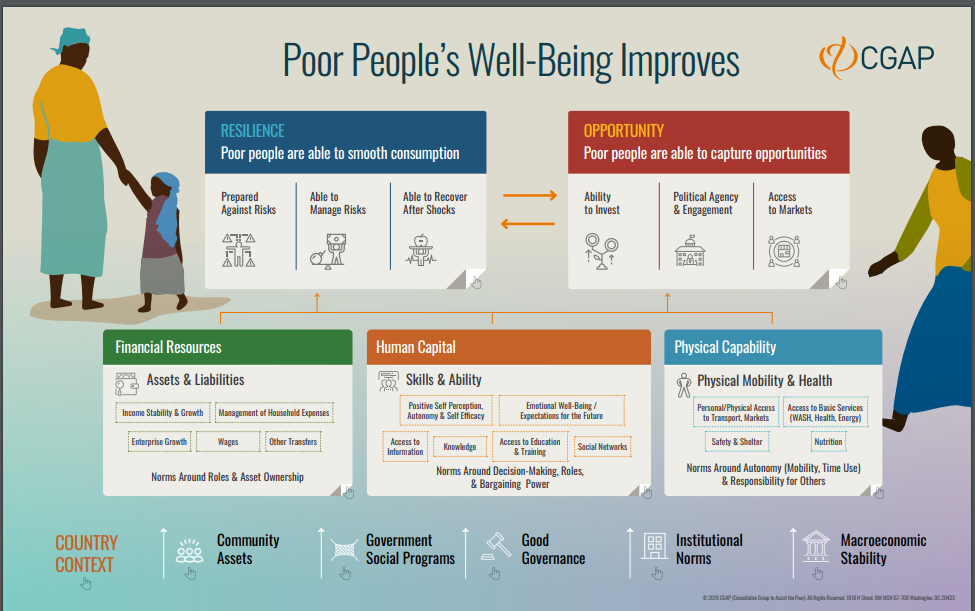
Proponents of global development now face a choice. They can wait for attitudes in donor countries to shift back toward support for foreign aid at some point in the distant future. Or they can reimagine the entire concept of global development, detaching it from aid and rooting it instead in industrial transformation: helping countries shift from subsistence farming, informal employment, and primary commodity production toward manufacturing and services. In truth, the aid industry was already adrift. Its interventions had become spread too thin and often failed to address the key obstacles that poorer countries faced as they tried to upskill their workers, build energy and transport infrastructure, and access new markets. Raising people out of poverty in Africa, South Asia, and parts of Latin America will not only improve their lives but also allow rich countries to maintain their prosperity by creating new markets, and by now, industrial transformation has a strong track record for improving economies. If proponents of global development do not adjust its methods with the times, it will lose its relevance to rich and poor countries alike.

AID AND ABET?

The foreign-aid industry’s primary commodity is official development assistance (ODA), or money from donors that flows to governments, individuals, or groups in poorer places, either directly—such as through budget support to struggling governments—or through projects run by organizations such as Save the Children, Oxfam, or FHI 360. Governments in rich countries are the primary purveyors of ODA. According to the Organization for Economic Cooperation and Development (OECD), in 2023, governments spent $230 billion on development assistance, compared with $11 billion spent by private foundations. Like any industry, foreign aid has middlemen. But in this business, the middlemen are particularly conspicuous. Third-party entities known as “implementing partners” include international nongovernmental organizations, large private contractors, and consulting firms. If the U.S. government wanted, for example, to distribute fertilizers to small-scale farmers in Bangladesh, they might contract Chemonics, a U.S.-based development contractor, to do it. Indeed, in 2023, Chemonics received the most USAID funds of any of the organization’s contractors: over $1 billion.
To take advantage of network effects and economies of scale, implementing partners cluster around the main sites of production of foreign aid, the capitals of the major donor countries: Berlin, Geneva, London, Paris, Rome, and Washington. As a result, very little aid is distributed by organizations or people in poor countries. In 2020, less than nine percent of U.S. aid was administered by recipient governments or firms based in recipient countries, according to Charles Kenny and Scott Morris, researchers at the Center for Global Development. The visibility of middlemen based in rich countries has long provided fodder to detractors who claim that the aid industry operates inefficiently or even unjustly. There is some truth to this critique. According to an analysis by Devex, a news organization, 47 of USAID’s top 50 contractors are located in the United States.

In the United States, successive Democratic and Republican administrations maintained a broad commitment to foreign aid, although arguments also simmered, even within the industry itself, about the proper goal of aid. Since 2000, when 189 countries agreed to the UN’s Millennium Development Goals, the industry’s main objective has been to reduce poverty; after the Paris Agreement was signed in 2015, many governments embraced the idea that, in addition, aid should also be directed toward fighting climate change.
SUPPLY CRISIS

But behind these recent debates lurked a massive shift in the politics and public norms that had allowed the industry to survive. If one sees aid as a form of philanthropy, then rich countries appear as donors and poor ones as beneficiaries. But if one sees aid as an industry, then rich countries appear as sellers and poor ones as buyers. With their development assistance, rich countries are providing a set of projects and institutional norms to achieve a set of expected outcomes: improvements in material conditions in developing countries that will eventually boost their own economies and security—or, failing that, at least a sense on the part of rich countries that they have tried to make a difference.

The role of poor countries is to consume these development projects
in the hope of achieving desired outcomes—or, failing that,
at least a sense that they might be possible someday.

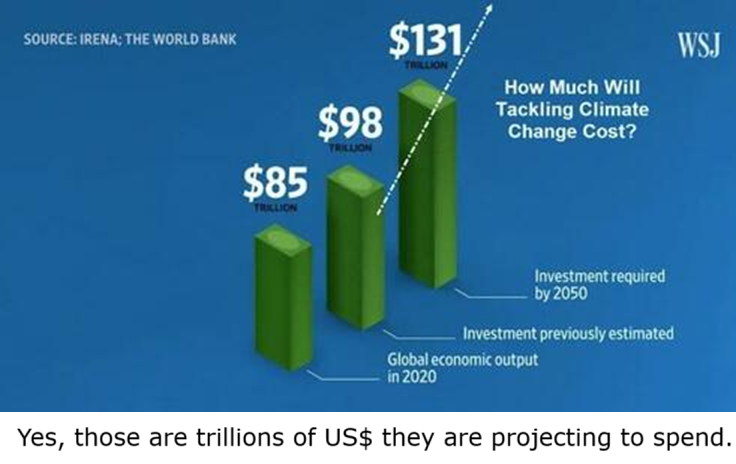
Now this market is experiencing an unprecedented supply crisis. Around the world, people and politicians in the rich countries that had long bought into the basic idea that providing aid is valuable have become skeptical. The aid industry has, for decades, undergone boom and bust cycles resulting from shifts in the domestic politics of donor countries. What is different this time is a deepening disaffection about the prevailing economic model and the aid paradigm associated with it. Since the global financial crisis of 2008, many donor countries have experienced economic stagnation, slow productivity growth, declining competitiveness, and widening inequality. Citizens of rich countries who no longer feel economically secure are questioning why scarce public funds should be devoted to causes abroad when there are needs at home.

This doubt goes beyond the Trump administration. The United States is not the only donor that is cutting foreign aid: in 2024, eight of the top ten donors within the OECD’s Development Assistance Committee reduced their foreign aid budgets and announced their intention to align international development programs more squarely with their national interests—such as by ensuring that development projects use goods and services produced in the donor country. In 2024, Germany, the world’s second-largest bilateral aid donor, announced a $5.3 billion reduction to its foreign-assistance budget. In February, the United Kingdom announced a 40 percent reduction to its aid budget so that it could focus on defense spending. In March 2025, the Netherlands said it would cut 37 percent of its bilateral aid over five years and scale down its financial contributions to some UN agencies.

Many right-leaning voters in rich countries now see foreign aid as wasteful and excessively focused on promoting causes they perceive as linked to the left, such as climate action, gender equality, or democracy promotion. Voters are more dubious of technocrats, policy wonks, and academics committed to foreign aid. Consequently, even left-leaning politicians, such as the Labour government in the United Kingdom, are slashing aid in response to popular sentiment. According to a February 2025 YouGov poll, 65 percent of Britons are in favor of increasing defense spending at the expense of foreign aid.

BLEEDING OUT

The speed and scale of the policy changes make the crisis facing the aid industry existential. Donor governments are fast destroying the industry’s marketplace of actors in irreversible ways. In January, Trump issued an executive order to freeze all U.S. foreign aid, ostensibly so that the secretary of state could review it to make sure that it is aligned with U.S. interests. Within weeks of the order, the world’s largest bilateral development agency, USAID, functionally ceased to exist, and its destruction unleashed a domino effect.

Dozens of small and midsize nongovernmental organizations are folding. Large organizations that implemented projects for USAID, such as FHI 360, Chemonics, and DAI Global, have terminated some country programs, announced the closure of field offices, and laid off hundreds of staffers worldwide. Multilateral organizations are also suffering from U.S. aid cuts. UN agencies such as the International Organization for Migration, the Joint United Nations Program on HIV and AIDS, the UN High Commissioner for Refugees, and the World Health Organization rely on the United States for 20 to 40 percent of their funding and have been forced to downsize.

GET RICH QUICK

Foreign aid has rapidly become a sunset industry. But that does not mean that rich countries should give up fighting poverty entirely. It is in the interest of wealthy states to reduce the pressure of migration by trying to improve the economies and stability of countries in Africa, Latin America, and South Asia. Therefore, policy experts, intellectuals, activists, philanthropists, and humanitarians must save global development by decoupling it from the aid industry and anchoring it in a strategy of industrial transformation. A country becomes industrialized when it adopts technology that allows it to mechanize and digitize, leading to increases in productivity and the skills of its labor force. Eventually, an industrialized country’s workers shift from subsistence agriculture toward higher-productivity sectors such as electronics, pharmaceuticals, green technologies, and digital services. And closely associated with higher incomes and employment in these modern industries are social changes such as more women working in formal jobs, more girls in schools, and fewer child marriages.

Industrialization has transformed many once poor societies into prosperous ones. Over the course of several hundred years, countries including China, Germany, Japan, Poland, Singapore, South Korea, the United Kingdom, and the United States got rich by industrializing. Today, Thailand and Vietnam are undergoing industrialization thanks to foreign direct investment in manufacturing industries, good connectivity infrastructure, skilled labor, and expanded access to export markets.

Part of the problem with the aid industry is that its benefits have been spread too thinly across a multitude of domains and not focused enough on productivity-enhancing sectors. To this end, advocates of global development should focus on enabling poorer countries to access cheap development financing for targeted investments in sectors that connect people, such as electricity, telecommunications, and mass transit. Development financing must include efforts to stem illicit financial flows. African countries, for example, lose a combined total of about $90 billion every year to elite corruption, illicit capital flight, and tax evasion by multinational corporations. That is more money than the $60 billion of aid that donor governments used to send to the continent annually. Such waste could be reduced if rich countries tightened their regulations on tax havens and offshore financial centers and if the 138 signatories of the global tax treaty—an agreement reached in 2023 that sets a minimum rate of tax for large corporations—accelerated its implementation.

Poorer countries also need a stable trading environment to thrive. They need access to export markets in wealthy countries for goods and services they produce. And decades of evidence shows that neither poor nor wealthy countries ultimately prosper from protectionism or autarky. Firms in rich countries, especially those in rapidly changing fields such as artificial intelligence, batteries, drones, and renewable energy hardware, need to be able to sell to growing markets in Africa, Latin America, and South Asia.

Professionals who work in global development will need new codes to guide their efforts to support industrial transformation. These may entail creating new rules to regulate the scramble for critical resources that wealthy countries need to manufacture electronics, such as cobalt from the Democratic Republic of the Congo or copper from Zambia. Ethicists and social scientists around the world must help craft rules for the limits of artificial intelligence, drone warfare, and other ways that new technologies directly interface with human societies.

If proponents of global development embrace industrial transformation as their lodestar, they can help lift people out of destitution while avoiding political blowback. If poor countries industrialize, the entire world will benefit. Global development has the best chance of surviving—and delivering results—if it is seen as more than just charity.

From Previous Post Beware the Benevolence Bandwagon

Benevolence is a curious mental or characterological attribute. It is, as the philosopher David Stove observed, less a virtue than an emotion. To be benevolent means—what? To be disposed to relieve the misery and increase the happiness of others. Whether your benevolent attitude or action actually has that effect is beside the point. Yes, “benevolence, by the very meaning of the word,” Stove writes, “is a desire for the happiness, rather than the misery, of its object.” But here’s the rub:

the fact simply is that its actual effect is often the opposite of the intended one. The adult who had been hopelessly ‘spoilt’ in childhood is the commonest kind of example; that is, someone who is unhappy in adult life because his parents were too successful, when he was a child, in protecting him from every source of unhappiness.

It’s not that benevolence is a bad thing per se. It’s just that, like charity, it works best the more local are its aims. Enlarged, it becomes like that “telescopic philanthropy” Dickens attributes to Mrs. Jellyby in Bleak House. Her philanthropy is more ardent the more abstract and distant its objects. When it comes to her own family, she is hopeless.

The sad truth is that theoretical benevolence is compatible
with any amount of practical indifference or even cruelty.

You feel kindly towards others. That is what matters: your feelings. The effects of your benevolent feelings in the real world are secondary, or rather totally irrelevant. Rousseau was a philosopher of benevolence. So was Karl Marx. Yet everywhere that Marx’s ideas have been put into practice, the result has been universal immiseration. But his intention was the benevolent one of forging a more equitable society by abolishing private property and, to adopt a famous phrase from Barack Obama, by spreading the wealth around.

An absolute commitment to benevolence, like the road that is paved with good intentions, typically leads to an unprofitable destination.

Just so with the modern welfare state. It doesn’t matter that the welfare state actually creates more of the poverty and dependence it was instituted to abolish. The intentions behind it are benevolent. Which is one of the reasons it is so seductive. It flatters the vanity of those who espouse it even as it nourishes the egalitarian ambitions that have always been at the center of Enlightened thought. This is why Stove describes benevolence as “the heroin of the Enlightened.” It is intoxicating, addictive, expensive, and ultimately ruinous.

The intoxicating effects of benevolence help to explain the growing appeal of politically correct attitudes about everything from “the environment” to the fate of the Third World. Why does the consistent failure of statist policies not disabuse their advocates of the statist agenda? One reason is that statist policies have the sanction of benevolence. They are “against poverty,” “against war,” “against oppression,” “for the environment.” And why shouldn’t they be? Where else are the pleasures of smug self-righteousness to be had at so little cost?

The intoxicating effects of benevolence—what Rousseau called the “indescribably sweet” feeling of virtue—also help to explain why unanchored benevolence is inherently expansionist. The party of benevolence is always the party of big government.

The imperatives of benevolence are intrinsically opposed to
the pragmatism that underlies the allegiance to limited government.

The modern welfare state is one result of the triumph of abstract benevolence. Its chief effects are to institutionalize dependence on the state while also assuring the steady growth of the bureaucracy charged with managing government largess. Both help to explain why the welfare state has proved so difficult to dismantle.

Is there an alternative? Stove quotes Thomas Malthus’ observation, from his famous Essay on the Principle of Population, that “we are indebted for all the noblest exertions of human genius, for everything that distinguishes the civilised from the savage state,” to “the laws of property and marriage, and to the apparently narrow principle of self-interest which prompts each individual to exert himself in bettering his condition.” The apparently narrow principle of self-interest, mind.

Contrast that robust, realistic observation with Robert Owen’s blather about replacing the “individual selfish system” with a “united social” system that, he promised, would bring forth a “new man.”

Stove observes that Malthus’ arguments for the genuinely beneficent effects of “the apparently narrow principle of self-interest” “cannot be too often repeated.” Indeed. Even so, a look around at the childish pretended enthusiasm for socialism makes me think that, for all his emphasis, David Stove understated the case. Jim Carrey and Alexandria Ocasio-Cortez (and a college student near you) would profit by having a closer acquaintance with the clear-eyed thinking of Thomas Malthus.
Why Climate Doomsters Can’t Recant

Ted Nordhaus writes at The EcoModernist Why I Stopped Being a Climate Catastrophist,
And why so many climate pragmatists can’t quit catastrophism.  Excerpts in italics with my bolds and added images.

In the book Break Through, Michael Shellenberger and I argued that if the world kept burning fossil fuels at current rates, catastrophe was virtually assured.  I no longer believe this hyperbole. Yes, the world will continue to warm as long as we keep burning fossil fuels. And sea levels will rise. About 9 inches over the last century, perhaps another 2 or 3 feet over the course of the rest of this century. But the rest of it? Not so much.

There is little reason to think that the Amazon is at risk of collapsing over the next 50 years. Agricultural yield and output will almost certainly continue to rise, if not necessarily at the same rate as it has over the last 50 years. There has been no observable increase in meteorological drought globally that might trigger the resource wars that the Pentagon was scenario planning back then.

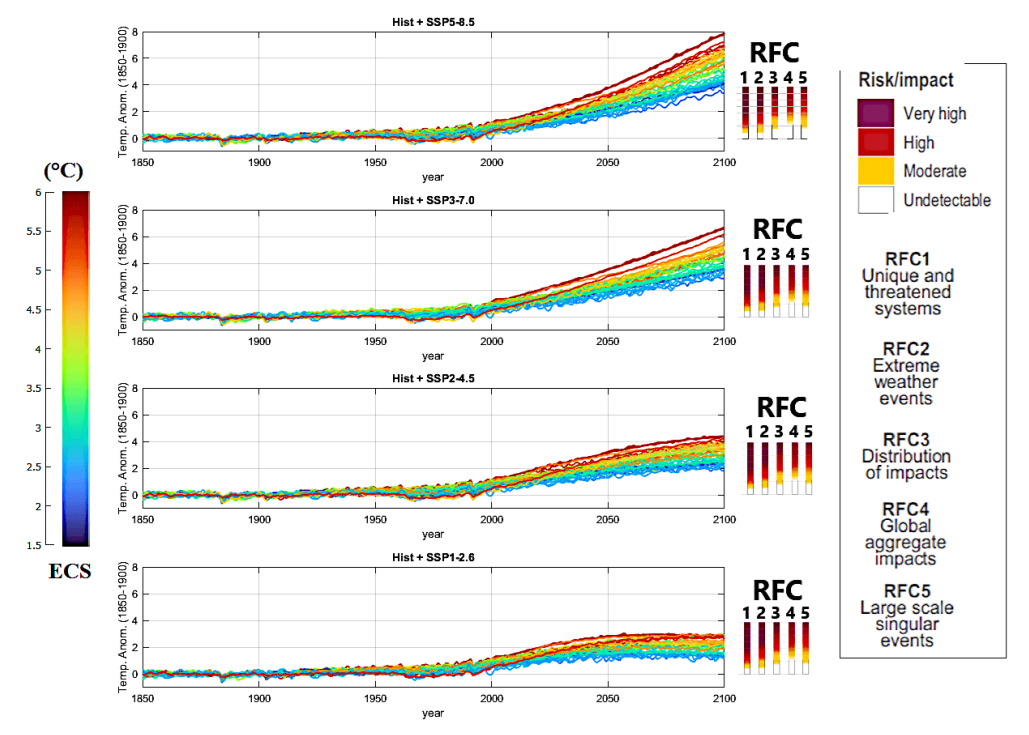
Figure 3: CMIP6 GCM ensemble mean simulations spanning from 1850 to 2100, employing historical effective radiative forcing functions from 1850 to 2014 (see Figure 1C) and the forcing functions based on the SSP scenarios 1-2.6, 2-4.5, 3-7.0, and 5-8.5. Curve colors are scaled according to the equilibrium climate sensitivity (ECS) of the models. The right panels depict the risks and impacts of climate change in relation to various global Reasons for Concern (RFCs) (IPCC, 2023). (Adapted from Scafetta, 2024).

At the time that we published Break Through, I, along with most climate scientists and advocates, believed that business as usual emissions would lead to around five degrees of warming by the end of this century. As Zeke Hausfather, Glen Peters, Roger Pielke Jr, and Justin Richie have demonstrated over the last decade or so, that assumption was never plausible.  The class of scenarios upon which it was based assumed very high population growth, very high economic growth, and slow technological change. None of these trends individually track at all with actual long term global trends.

Fertility rates have been falling, global economic growth slowing,
and the global economy decarbonizing for decades.

As a result of these dynamics, most estimates of worst case warming by the end of the century now suggest 3 degrees or less. But as consensus around these estimates has shifted, the reaction to this good news among much of the climate science and advocacy community has not been to become less catastrophic. Rather, it has been to simply shift the locus of catastrophe from five to three degrees of warming. Climate advocates have arguably become more catastrophic about climate change in recent years, not less.

When Is Weather Climate Change?

For me, the cognitive dissonance began as I became familiar with Roger Pielke Jr’s work on normalized hurricane losses, in the late 2000s. This was around the time that a lot of messaging from the climate advocacy community had started to focus on extreme weather events, not just as harbingers for the storms of our grandchildren, to borrow the title of James Hansen’s 2009 book, but as being fueled by climate change in the present.

If you want to know why Pielke has been so demonized over the last
15 years by climate activists and activist climate scientists,
it’s because he got in the way of this new narrative.

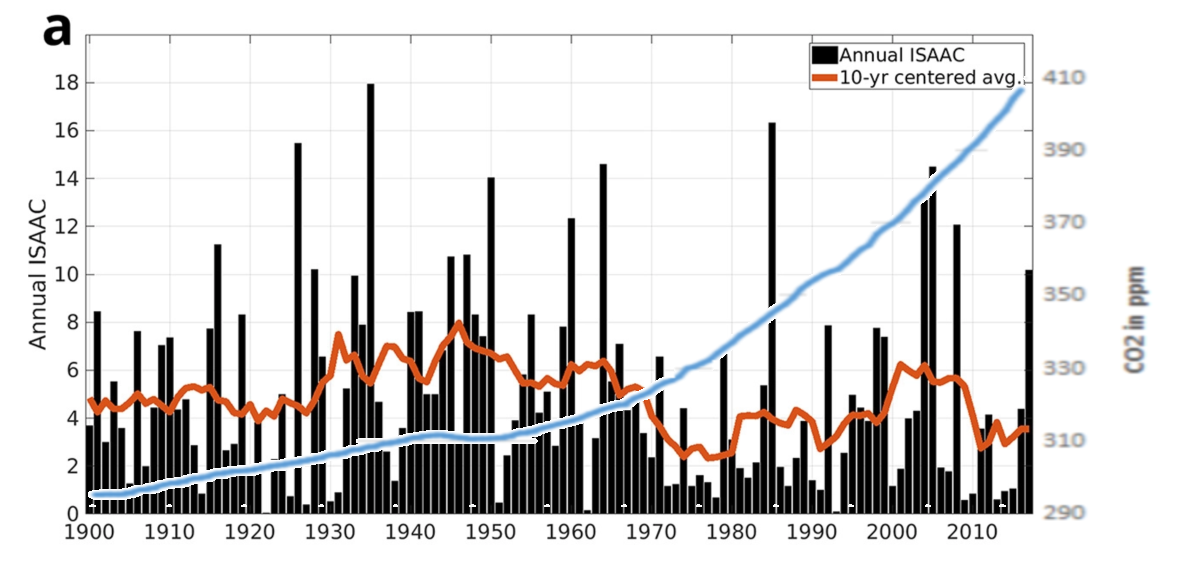
Integrated Storm Activity Annually over the Continental U.S. (ISAAC)

Pielke’s work, going back to the mid-1990s showed, again and again, that the normalized economic costs of climate related disasters weren’t increasing, despite the documented warming of the climate. And unlike a lot of researchers who sometimes produce studies that cut against the climate movement’s chosen narratives, he wasn’t willing to be quiet about it. Pielke got in the way of the advocacy community at the moment that it was determined to argue that present day disasters were driven by climate change and got run over.

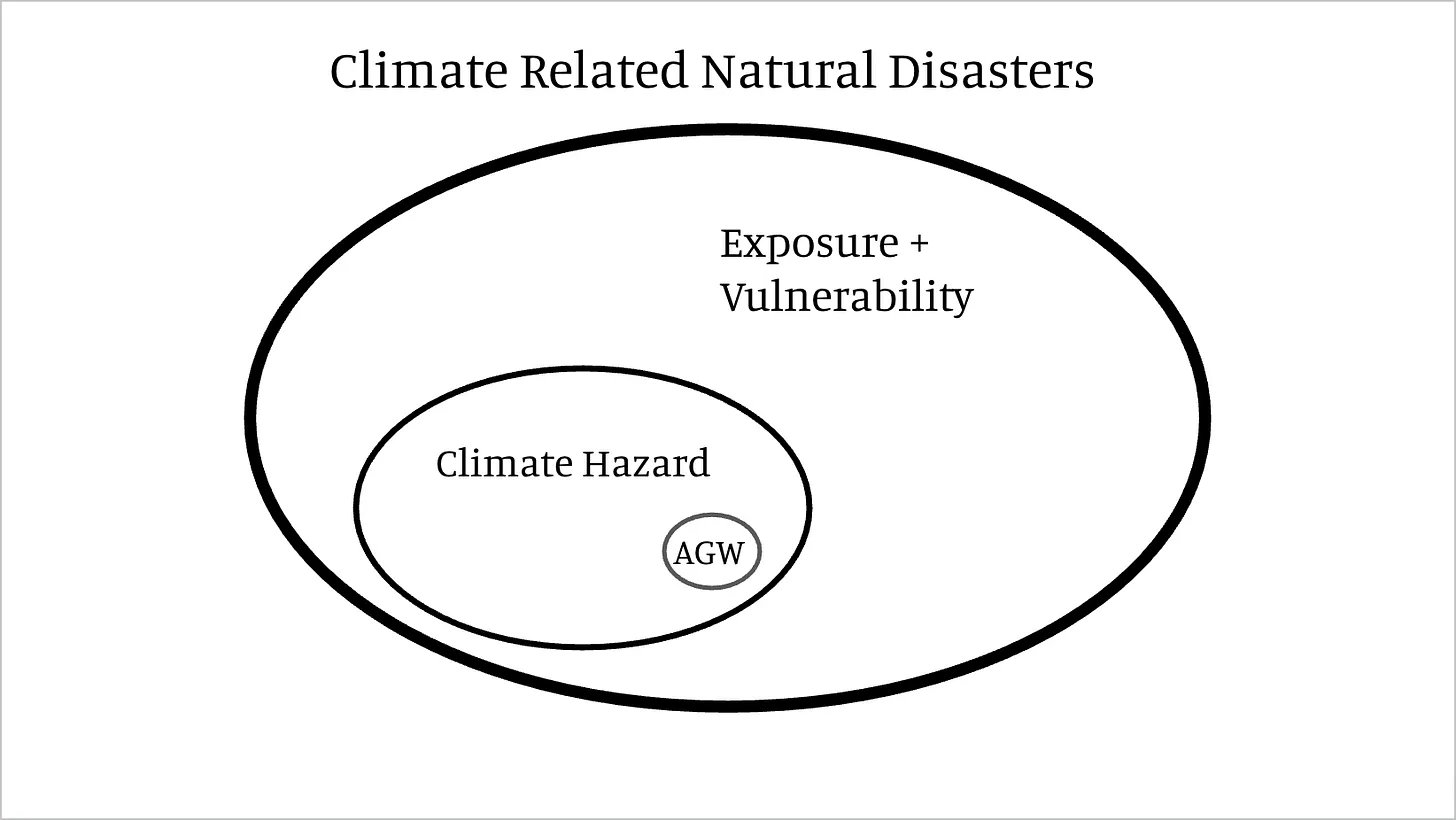
Put these two factors together—the outsized influence that exposure and vulnerability have on the cost of extreme climate and weather phenomena, and the very modest intensification that climate change contributes to these events, when it plays any role at all—and what should be clear is that climate change is contributing very little to present day disasters. It is a relatively small factor in the frequency and intensity of climate hazards that are experienced by human societies, which in turn play a small role in the human and economic costs of climate related disasters compared to non-climate factors.

This also means that the scale of anthropogenic climate change that would be necessary to very dramatically intensify those hazards, such that they overwhelm the non-climate factors in determining the consequences of future climate related events, is implausibly large. 

A Sting in the Tail?

For a long time, even after I had come to terms with the fundamental disconnect between what climate advocates were saying about extreme events and the role that climate change could conceivably be playing, I held on to the possibility of catastrophic climate futures based upon uncertainty. The sting, as they say, is in the tail, meaning so-called fat tails in the climate risk distribution. These are tipping points or similar low probability, high consequence scenarios that aren’t factored into central estimates. The ice sheets could collapse much faster than we understand or the gulf stream might shut down, bringing frigid temperatures to western Europe, or permafrost and methane hydrates frozen in the sea floor might rapidly melt, accelerating warming.

But like the supposed collapse of the Amazon, once you look more closely at these risks they don’t add up to catastrophic outcomes for humanity.  While sensationalist news stories frequently refer to the collapse of the gulf stream, what they are really referring to is the slowing of the Atlantic Meridian Overturning Circulation (AMOC). AMOC helps transport warm water to the North Atlantic and moderates winter temperatures across western Europe. But its collapse, much less its slowing, would not result in a hard freeze across all of Europe. Indeed, under plausible conditions in which it might significantly slow, it would act as a negative feedback, counterbalancing warming, which is happening faster across the European continent than almost any place else in the world.

Permafrost and methane hydrate thawing, meanwhile, are slow processes not fast ones. Even irreversible melting would occur over millennial timescales, fast in geological terms but very slow in human terms. The same is true of accelerated melting of ice caps. Even under very high warming scenarios, broadly acknowledged today as improbable, the Greenland and West Antarctic ice sheets contribute around a meter of sea level rise by the end of this century. Those processes would continue far into the future. But even very accelerated scenarios for rapid disintegration of ice sheets unfold over many centuries, not decades.

Moreover, the problem with grounding strong precautionary claims in these known unknowns is that doing so demands strong remedies in the present in response to future risks that are both unquantifiable and unfalsifiable, a problem made even worse by the fact that “fat tail” proponents generally then proceed to ignore the fact that the unknown, unquantifiable, and unfalsifiable risks they are referring to are incredibly low probability and instead set about centering them in the climate discourse.

Clean Energy Without Catastrophism

Why do so many smart people, most trained as scientists, engineers, lawyers, or public policy experts, and all who will tell you, and I say this not ironically, that they “believe in science,” get the science of climate risk so badly wrong?

There are, in my view, several reasons. The first is that highly educated people with high levels of science literacy are no less likely to get basic scientific issues wrong than anyone else when the facts conflict with their social identities and ideological commitments. Yale Law Professor Dan Kahan has shown that people who are highly concerned about climate change actually have less accurate views about climate change overall than climate skeptics and that this remains true even among partisans with high levels of education and general science literacy. Elsewhere, Kahan and others have demonstrated that on many issues, highly educated people are often more likely to stubbornly hold onto erroneous beliefs because they are more expert at defending their political views and ideological commitments.

The second reason is that there are strong social, political, and professional incentives if you make a living doing left of center climate and energy policy to get climate risk wrong. The capture of Democratic and progressive politics by environmentalism over the last generation has been close to total. There is little tolerance on the Left for any expression of materialist politics that challenge foundational claims of the environmental movement.  Meanwhile the climate movement has effectively conflated consensus science about the reality and anthropogenic origins of climate change with catastrophist claims about climate risk for which there is no consensus whatsoever.

Whether you are an academic researcher, a think tank policy wonk, a program officer at an environmental or liberal philanthropy, or a Democratic Congressional staffer, there is simply no benefit and plenty of downside to questioning, much less challenging, the central notion that climate change is an existential threat to the human future. It’s a good way to lose friends or even your job. It won’t help you get your next job or your next grant. And so everyone, mostly falls in line. Better to go along to get along.

Finally, there is a widespread belief that one can’t make a strong case for clean energy and technological innovation absent the catastrophic specter of climate change. “Why bother with nuclear power or clean energy if climate change is not a catastrophic risk,” is a frequent response. And this view simply ignores the entire history of modern energy innovation. Over the last two centuries, the world has moved inexorably from dirtier and more carbon intensive technologies to cleaner ones. Burning coal, despite its significant environmental impacts, is cleaner than burning wood and dung. Burning gas is cleaner than coal. And obviously producing energy with wind, solar, and nuclear is cleaner than doing so with fossil fuels.

There is a view among most climate and clean energy advocates that the risk of climate change both demands and is necessary to justify a much faster transition toward cleaner energy technologies. But as a practical matter, there is no evidence whatsoever that 35 years of increasingly dire rhetoric and claims about climate change have had any impact on the rate at which the global energy system has decarbonized and by some measure, the world decarbonized faster over the 35 years prior to climate change emerging as a global concern than it did in the 35 years since.

Despite some tonal, tactical, and strategic differences, this basic view of climate risk, and corresponding demand for a rapid transformation of the global energy economy is broadly shared by the climate activists and the pragmatists. The impulse is millenarian, not meliorist.

Underneath the real politik, technocratic wonkery, and appeals
to scientific authority is a desire to remake the world.

For all its worldly and learned affect, what that has resulted in is the creation of an insular climate discourse on the Left that may be cleverer by half than right wing dismissals of climate change but is no less prone to making misleading claims about the subject, ignoring countervailing evidence, and demonizing dissent. And it has produced a politics that is simultaneously grandiose and maximalist and, increasingly, deeply out of touch with popular sentiment.

Finally A Climate Debate

The place to submit a comment on the report is here:

Federal Register: Notice of Availability: A Critical Review of Impacts of Greenhouse Gas Emissions on the U.S. Climate

I summitted the content from my post here:

Shifting Climate Discourse

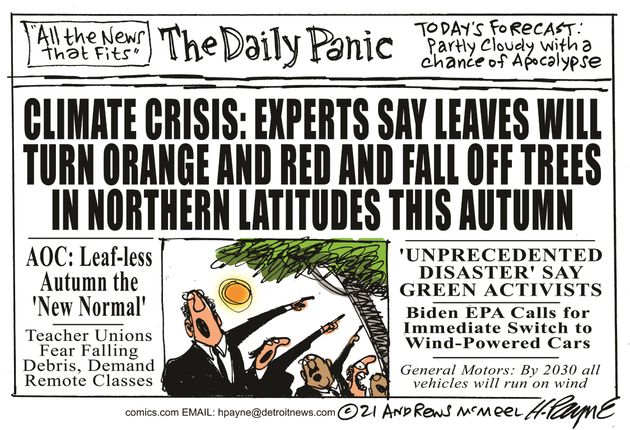
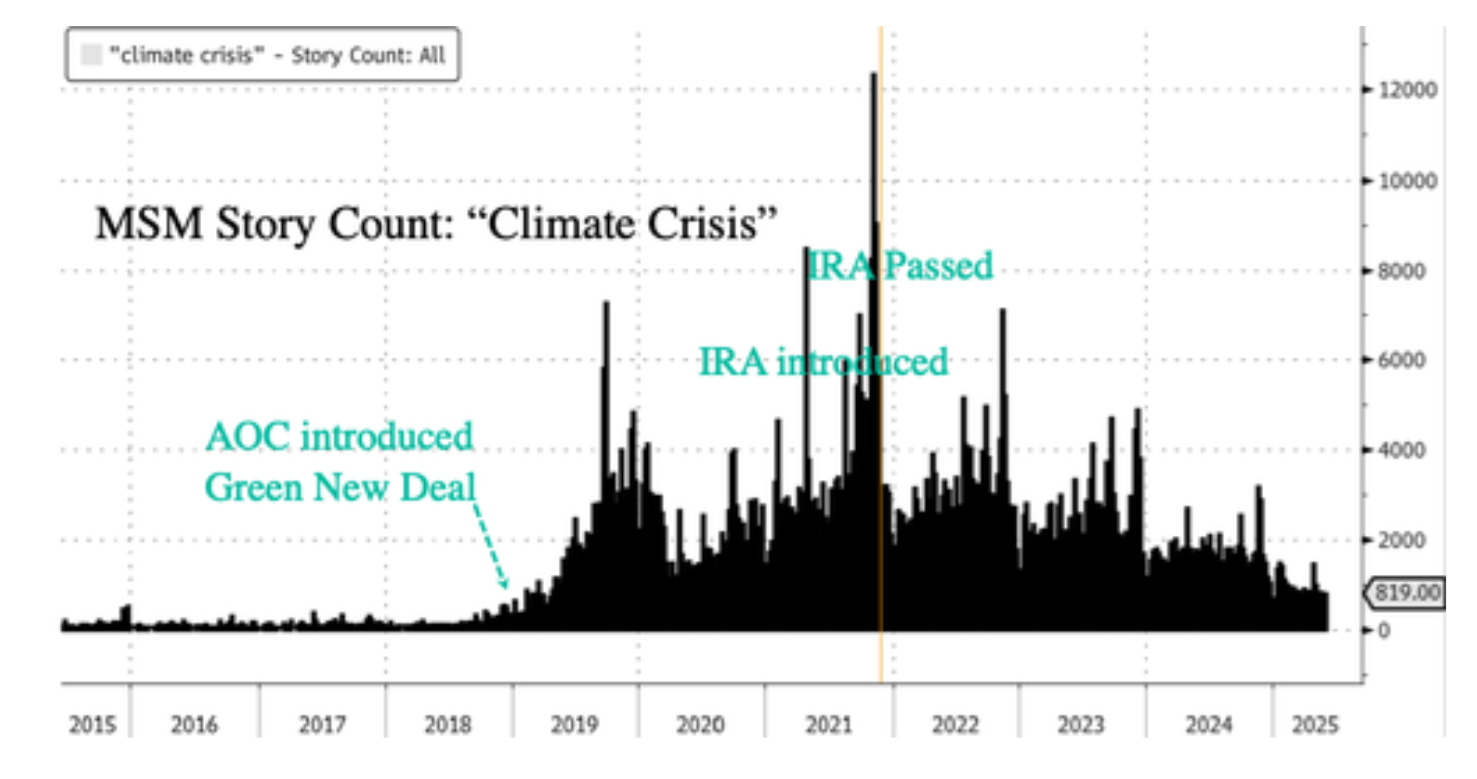
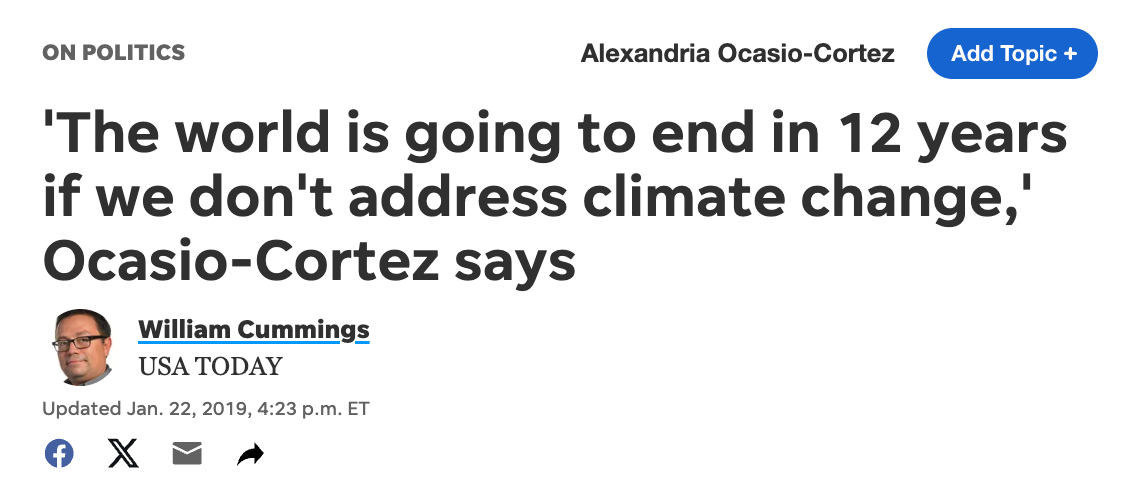
Fun fact: Mentions of “climate crisis” in corporate media have all but imploded. Why? Because the PR propaganda campaigns aren’t needed when Democrats and their dark-money-funded NGOs aren’t pushing “green” bills or fundraising. H/T Tyler Durden

The climate crisis was merely the Democrat Party’s PR operation to siphon money from taxpayers.

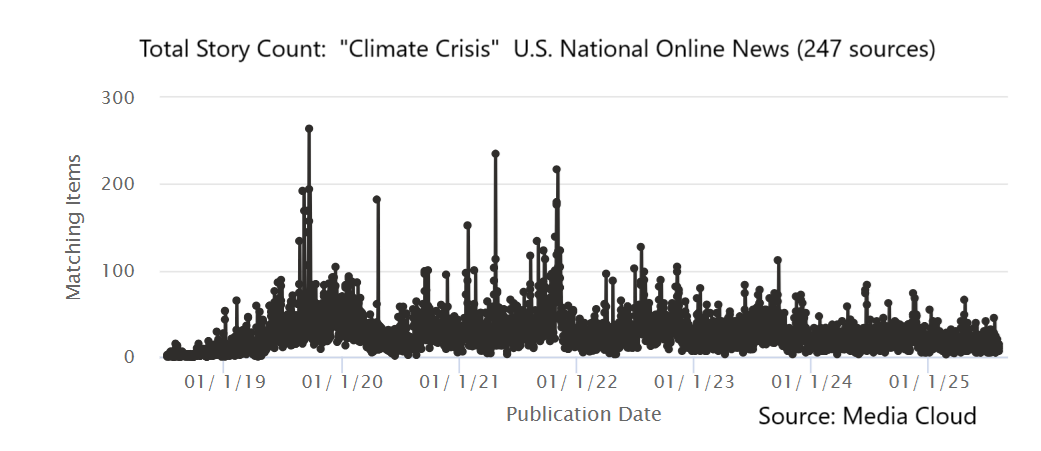
Postscript on Story Counts

I don’t know the source and parameters behind the chart in Tyler Durden’s post.  Below is a chart I produced from Media Cloud based on U.S. National Online News sources.

Update Aug. 11: Relieving US Grid from Wind and Solar Risks


Update August 11, 2025 Shares of Orsted, the world’s largest offshore wind developer, plummeted today.

Orsted shares crashed more than 25% on Monday morning, after the wind farm developer said it plans a 60 billion Danish kroner ($9.4 billion) rights issue, following a “material adverse development” in the U.S. market.

The company said this turn of events left it unable to raise funds from a planned partial divestment of its Sunrise Wind project off the coast of New York.

Given the market conditions, Orsted’s board of directors decided to end the process of selling a stake in Sunrise Wind, which would have provided the “required strengthening” of its capital structure to support its investment and business development programs. Source: CNBC

Orsted had planned to sell part of its Sunrise Wind project off the coast of New York to free up capital.  However, recent adverse developments in the US offshore wind sector have made completing the partial divestment on favourable terms impossible, the company said.  This setback means Orsted will have to fully fund the construction of Sunrise Wind itself, creating an additional 40 billion kroner in financing needs. The project has already been hit by supply chain and construction delays that caused hundreds of millions of dollars in impairments. 

Gary Abernathy reports on progress securing the U.S. grid from the load of entanglements from adding wind and solar power supplies.  His Empowering America article is Climate Science is Not the Law in the U.S.  Exerpts in italics with my bolds and added images.

While not everyone is on board with President Trump’s “America First” philosophy, its importance when it comes to energy is brought into sharp focus when considering where the U.S. would be if it capitulated to the whims of global organizations like the United Nations or obeyed the verdicts of world courts.

The frightening attitudes of believers in global rule were recently on display courtesy of a New York Times opinion piece headlined “Climate Science is Now the Law,” penned by three writers who are all part of something called the Center for International Environmental Law. In their article, the authors claim, “The science on climate change has long been settled. Now the law is, too.”  [See post: ICJ Issues Biased Advice on Climate Change]

At about the same time that the International Court of Overstep was issuing its decree for nations to kneel at the feet of the wind and solar gods, the Trump administration took another giant leap in its race to reverse Biden’s disastrous energy policies. On July 7, the Energy Department unveiled its “Report on Evaluating U.S. Grid Reliability and Security,” as required under President Trump’s April executive order to examine the topic.  DOE reported:

“This methodology equips DOE and its partners with a powerful tool to identify at-risk regions and guide federal interventions to prevent power outages, accelerate data center deployment, and ensure the grid keeps pace with explosive load growth driven by artificial intelligence and reindustrialization.”

Rather than follow international directives and judgments to rid itself of energy sources like natural gas, which is necessary to power technology, manufacturing and the coming AI data centers, the DOE is, fortunately, doing the exact opposite. Among the biggest DOE findings:

    • If current plant retirement schedules and incremental additions remain unchanged “most regions will face unacceptable reliability risks within five years.”
    • Radical change is necessary because otherwise, the magnitude of projected demand from AI data centers and other manufacturing “cannot be met with existing approaches to load addition and grid management.
    • The coal and gas plant retirements previously planned by 2030 “could lead to significant outages when weather conditions do not accommodate wind and solar generation.”
    • Even with plans to replace 104 gigawatts of plant retirements with 209 gigawatts of new generation by 2030, “only 22 (gigawatts) come from firm baseload generation sources,” meaning that “the model found outage risk in several regions rises more than 30-fold.” (A gigawatt is equal to 1 billion watts.)

In other words, replacing firm baseload sources like natural gas with alternative sources like wind or solar is not an apples-for-apples proposition, since “renewables” put the grid at greater risk. Establishing arbitrary end dates for our most affordable and reliable energy sources is both illogical and reckless.

On the heels of the international court’s irresponsible and (thankfully) unenforceable decree, and the DOE’s astute recommendation to do the opposite of what the court prescribed, came a story from Reuters declaring that the Trump administration’s actions to end or curtail Biden-era subsidies and credits for “renewables” are, fortunately, having an impact.  Boom fades for US clean energy as Trump guts subsidies

“Singapore-based solar panel manufacturer Bila Solar is suspending plans to double capacity at its new factory in Indianapolis. Canadian rival Heliene’s plans for a solar cell facility in Minnesota are under review. Norwegian solar wafer maker NorSun is evaluating whether to move forward with a planned factory in Tulsa, Oklahoma. And two fully permitted offshore wind farms in the U.S. Northeast may never get built,” the news agency reported.

These are among the major clean energy investments now in question after Republicans agreed earlier this month to quickly end U.S. subsidies for solar and wind power as part of their budget megabill, and as the White House directed agencies to tighten the rules on who can claim the incentives that remain.

The key provision in the new law is the accelerated phase-out of 30% tax credits for wind and solar projects: it requires projects to begin construction within a year or enter service by the end of 2027 to qualify for the credits. Previously the credits were available through 2032.

The policy changes have also injected fresh doubt about the fate of the nation’s pipeline of offshore wind projects, which depend heavily on tax credits to bring down costs. According to Wood Mackenzie, projects that have yet to start construction or make final investment decisions are unlikely to proceed.

Two such projects, which are fully permitted, include a 300-megawatt project by developer US Wind off the coast of Maryland and Iberdrola’s 791 MW New England Wind off the coast of Massachusetts.
Neither company responded to requests for comment.

President Trump is putting America first and leading an energy renaissance that should be in full bloom on our nation’s 250th birthday on July 4, 2026. It’s difficult to imagine a greater Independence Day gift to the American people than freedom from the cold, dark landscape that would result from following the directives of global agencies and the rulings of international courts.

Postscript: Saving U.S. Farmland from Transmission Lines

Robert Bryce adds the canceling of transmission lines dedicated to wind and solar power in his blog article Transmission Unplugged.

From Missouri and Colorado to Germany and Spain,
high-voltage transmission projects are being stopped by
fierce local opposition, soaring costs, and permitting delays.

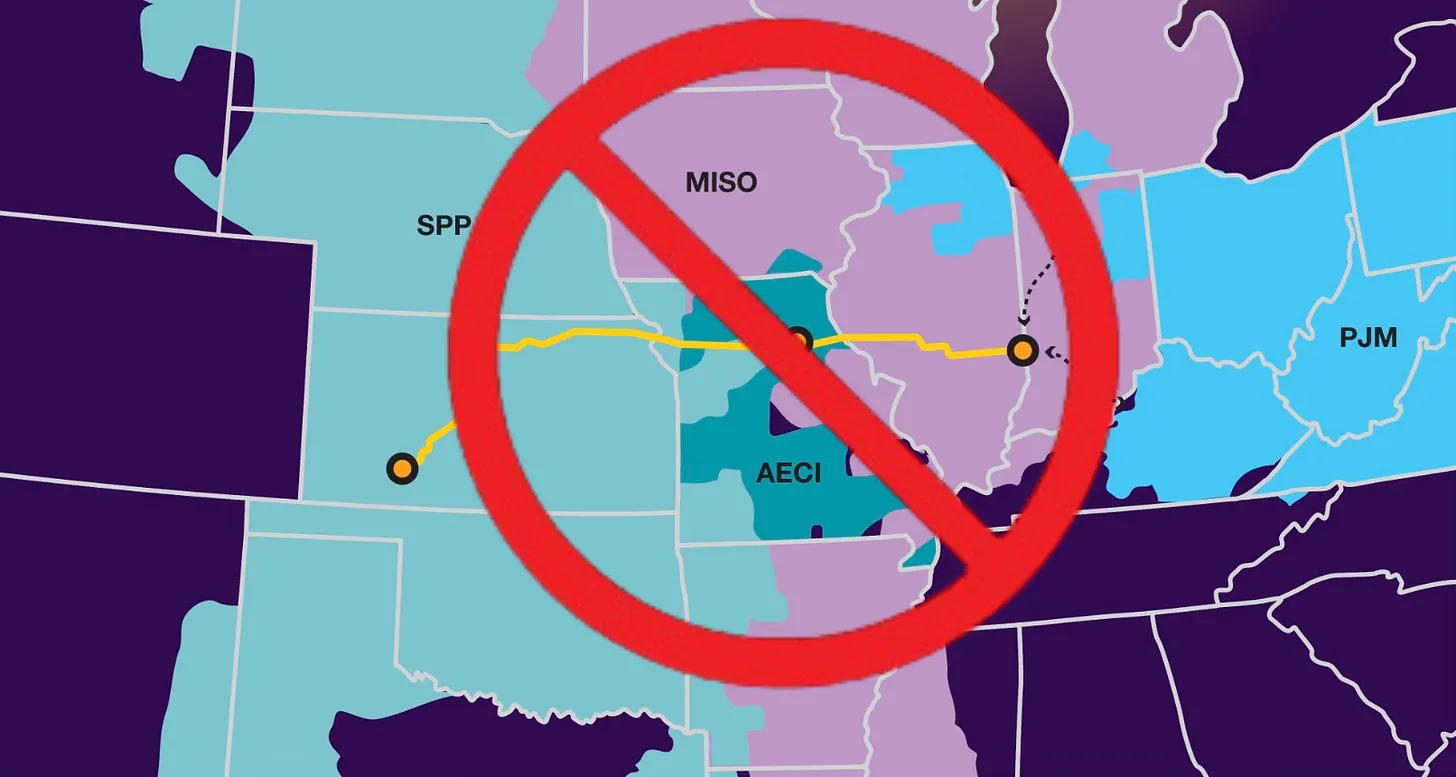
The Grain Belt Express project aimed to carry wind-generated electricity from Kansas to the Indiana-Illinois border. Map credit: grainbeltexpress.com

Invenergy neglected to mention that if the project gets built, it will saddle ratepayers with about $500 million in costs to integrate the power it will be delivering into grids on the eastern end of the line. In other words, Invenergy wants to build a merchant high-voltage transmission line and force its way onto the US electric grid. But it doesn’t want to pay any of the costs that its project will impose on the system. Furthermore, Grain Belt Express has faced fierce opposition in Missouri for more than a decade. Earlier this month, Missouri Attorney General Andrew Bailey announced a civil investigation into Invenergy for its “misleading claims and a track record of dishonesty” about the project.

Last week, the Department of Energy gave Polsky some high-amperage clarity from the Trump administration when it canceled a $4.9 billion loan guarantee for the Grain Belt Express that the agency’s Loan Programs Office made last November in the waning days of the Biden administration.

The DOE said it killed the loan deal “to ensure more responsible stewardship of taxpayer resources.”

Carney Limits Canadians’ Access to News

Another blow against free speech in Canada reported in rightforcanada article Carney defends internet censorship bill, tells Canadians to rely on CBC for news.  Excerpts in italics with my bolds and added images.

PM Mark Carney dismissed concerns over Bill C-18’s restrictions on sharing news
on social media, promoting the Liberal-funded CBC as the primary news source.

During an August 5 press conference in Kelowna, British Columbia, Carney disregarded concerns that Bill C-18 limits Canadians’ ability to share news online, especially during crisis situations such as the wildfires. Instead, he declared that Canadians should get their news from the Liberal-funded CBC News.

“Bill C-18 stands in our way to get back onto Facebook and Instagram,” a reporter for Kelowna Now told Carney. “Are the Liberals looking for an alternative or rescinding that so we can get that news back on those important platforms?”

The question was increasingly relevant since Bill C-18 recently hindered local news outlets from sharing important updates regarding British Columbia wildfires. Carney responded:

One of the roles of CBC/Radio-Canada is to provide unbiased, immediate local information.  That’s one of the reasons why we’ve made the commitment to invest and reinforce and actually change the governance of CBC/Radio-Canada, to ensure they are providing those essential services.

Bill C-18 is one of many censorship bills introduced by former as Prime Minister Justin Trudeau. Passed in June 2023, the legislation aims to compel social media sites to share revenue with certain news outlets, something experts have warned could be the end of independent media.

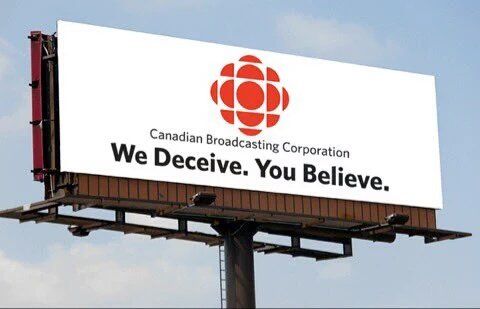
In addition to his refusal to rescind Bill C-18, Carney promoted CBC News as a reliable news source despite the outlet being widely considered an arm of the Liberal Party that receives the vast majority of its funding from the Liberal government.

In January, the watchdog for the CBC ruled that the state-funded outlet expressed a “blatant lack of balance” in its coverage of a Catholic school trustee who opposed the LGBT agenda being foisted on children.

There have also been multiple instances of the outlet pushing what appears to be ideological content, including:

♦  the creation of pro-LGBT material for kids,
♦ tacitly endorsing the gender mutilation of children,
♦ promoting euthanasia, and even
♦ seeming to justify the burning of mostly Catholic churches throughout the country.

Carney revealed his loyalty to the CBC before he was even elected prime minister. In early April, ahead of the federal election, Carney promised another $150 million in funding for CBC on top of the $1.4 billion the outlet already receives annually.

Footnote

There was a time when CBC was not totally under the Liberal party thumb.

For those not familiar with the main characters:  1. Catherine McKenna, Minister of Environment and Climate Change, 2. Elizabeth May, MP and Leader of the Green Party, 3. Dr. David Suzuki, Environmental Scientist.

Relieving US Grid from Wind and Solar Risks


Gary Abernathy reports on progress securing the U.S. grid from the load of entanglements from adding wind and solar power supplies.  His Empowering America article is Climate Science is Not the Law in the U.S.  Exerpts in italics with my bolds and added images.

While not everyone is on board with President Trump’s “America First” philosophy, its importance when it comes to energy is brought into sharp focus when considering where the U.S. would be if it capitulated to the whims of global organizations like the United Nations or obeyed the verdicts of world courts.

The frightening attitudes of believers in global rule were recently on display courtesy of a New York Times opinion piece headlined “Climate Science is Now the Law,” penned by three writers who are all part of something called the Center for International Environmental Law. In their article, the authors claim, “The science on climate change has long been settled. Now the law is, too.”  [See post: ICJ Issues Biased Advice on Climate Change]

At about the same time that the International Court of Overstep was issuing its decree for nations to kneel at the feet of the wind and solar gods, the Trump administration took another giant leap in its race to reverse Biden’s disastrous energy policies. On July 7, the Energy Department unveiled its “Report on Evaluating U.S. Grid Reliability and Security,” as required under President Trump’s April executive order to examine the topic.  DOE reported:

“This methodology equips DOE and its partners with a powerful tool to identify at-risk regions and guide federal interventions to prevent power outages, accelerate data center deployment, and ensure the grid keeps pace with explosive load growth driven by artificial intelligence and reindustrialization.”

Rather than follow international directives and judgments to rid itself of energy sources like natural gas, which is necessary to power technology, manufacturing and the coming AI data centers, the DOE is, fortunately, doing the exact opposite. Among the biggest DOE findings:

    • If current plant retirement schedules and incremental additions remain unchanged “most regions will face unacceptable reliability risks within five years.”
    • Radical change is necessary because otherwise, the magnitude of projected demand from AI data centers and other manufacturing “cannot be met with existing approaches to load addition and grid management.
    • The coal and gas plant retirements previously planned by 2030 “could lead to significant outages when weather conditions do not accommodate wind and solar generation.”
    • Even with plans to replace 104 gigawatts of plant retirements with 209 gigawatts of new generation by 2030, “only 22 (gigawatts) come from firm baseload generation sources,” meaning that “the model found outage risk in several regions rises more than 30-fold.” (A gigawatt is equal to 1 billion watts.)

In other words, replacing firm baseload sources like natural gas with alternative sources like wind or solar is not an apples-for-apples proposition, since “renewables” put the grid at greater risk. Establishing arbitrary end dates for our most affordable and reliable energy sources is both illogical and reckless.

On the heels of the international court’s irresponsible and (thankfully) unenforceable decree, and the DOE’s astute recommendation to do the opposite of what the court prescribed, came a story from Reuters declaring that the Trump administration’s actions to end or curtail Biden-era subsidies and credits for “renewables” are, fortunately, having an impact.  Boom fades for US clean energy as Trump guts subsidies

“Singapore-based solar panel manufacturer Bila Solar is suspending plans to double capacity at its new factory in Indianapolis. Canadian rival Heliene’s plans for a solar cell facility in Minnesota are under review. Norwegian solar wafer maker NorSun is evaluating whether to move forward with a planned factory in Tulsa, Oklahoma. And two fully permitted offshore wind farms in the U.S. Northeast may never get built,” the news agency reported.

These are among the major clean energy investments now in question after Republicans agreed earlier this month to quickly end U.S. subsidies for solar and wind power as part of their budget megabill, and as the White House directed agencies to tighten the rules on who can claim the incentives that remain.

The key provision in the new law is the accelerated phase-out of 30% tax credits for wind and solar projects: it requires projects to begin construction within a year or enter service by the end of 2027 to qualify for the credits. Previously the credits were available through 2032.

The policy changes have also injected fresh doubt about the fate of the nation’s pipeline of offshore wind projects, which depend heavily on tax credits to bring down costs. According to Wood Mackenzie, projects that have yet to start construction or make final investment decisions are unlikely to proceed.

Two such projects, which are fully permitted, include a 300-megawatt project by developer US Wind off the coast of Maryland and Iberdrola’s 791 MW New England Wind off the coast of Massachusetts.
Neither company responded to requests for comment.

President Trump is putting America first and leading an energy renaissance that should be in full bloom on our nation’s 250th birthday on July 4, 2026. It’s difficult to imagine a greater Independence Day gift to the American people than freedom from the cold, dark landscape that would result from following the directives of global agencies and the rulings of international courts.

Postscript: Saving U.S. Farmland from Transmission Lines

Robert Bryce adds the canceling of transmission lines dedicated to wind and solar power in his blog article Transmission Unplugged.

From Missouri and Colorado to Germany and Spain,
high-voltage transmission projects are being stopped by
fierce local opposition, soaring costs, and permitting delays.

The Grain Belt Express project aimed to carry wind-generated electricity from Kansas to the Indiana-Illinois border. Map credit: grainbeltexpress.com

Invenergy neglected to mention that if the project gets built, it will saddle ratepayers with about $500 million in costs to integrate the power it will be delivering into grids on the eastern end of the line. In other words, Invenergy wants to build a merchant high-voltage transmission line and force its way onto the US electric grid. But it doesn’t want to pay any of the costs that its project will impose on the system. Furthermore, Grain Belt Express has faced fierce opposition in Missouri for more than a decade. Earlier this month, Missouri Attorney General Andrew Bailey announced a civil investigation into Invenergy for its “misleading claims and a track record of dishonesty” about the project.

Last week, the Department of Energy gave Polsky some high-amperage clarity from the Trump administration when it canceled a $4.9 billion loan guarantee for the Grain Belt Express that the agency’s Loan Programs Office made last November in the waning days of the Biden administration.

The DOE said it killed the loan deal “to ensure more responsible stewardship of taxpayer resources.”

Judge Crushes Charleston Climate Case

EID covers the legal thrashing visited upon Charleston plaintiffs seeking a judgment punishing Big Oil for their role in climate misfortunes. The article is Judge Shuts Down Charleston Climate Case, Warns of “Boundless” Liability.  Excerpts in italics with my bolds and added images.

A South Carolina judge has dismissed Charleston’s climate lawsuit,
delivering a decisive setback to the climate litigation campaign. 

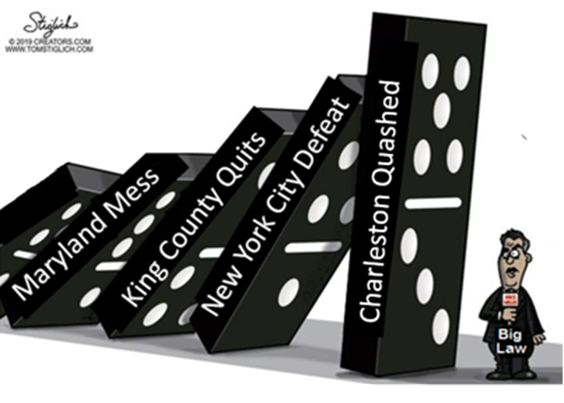
Via a ruling on Wednesday, Judge Roger Young dismissed the case with prejudice – meaning Charleston cannot refile the claims – dealing a substantial blow for law firm Sher Edling and the Rockefeller-backed climate litigation campaign. This ruling follows a growing trend of similar dismissals in New York, Pennsylvania, New Jersey and Maryland, reinforcing the principle that climate policy is a national and global issue, not something individual states or cities can reshape using state law:

“… the Court concludes that, although Plaintiff’s claims purport to be about deception, they are premised on, and seek redress for, the effects of greenhouse gas emissions.”

A Slippery Slope 

One of Judge Young’s most striking points was a clear warning about the “boundless” nature of the liability Charleston’s claims could create. If allowed to proceed, the city’s theory would open the floodgates for nearly limitless litigation – not just against energy producers, but a wide range of industries, including airlines, automakers, and agriculture: 

“Under Plaintiff’s theory, any emitters of or contributors to greenhouse gas emissions — such as airlines, automotive manufacturers, power companies, and agricultural companies—could be liable for contributing to global climate change… … As with the list of plaintiffs, the list of potential defendants thus appears boundless.” (emphasis added)

Similarly, Judge Young emphasized that allowing such lawsuits would create a precedent where every weather event would potentially trigger legal action: 

“Already, scores of states, counties, and municipalities have sued a hodgepodge of oil-and-gas companies for the alleged weather-related effects of climate change. If these lawsuits were successful, municipalities, companies, and individuals across the country could bring suits for injuries after every weather event.”

Time-Barred and Fundamentally Flawed 

Even Charleston’s claim under South Carolina’s Unfair Trade Practices Act did not survive – barred by the state’s three-year statute of limitations. Judge Young noted that public awareness of climate change and its connection to fossil fuel use has existed for decades, undercutting any claim of recent discovery: 

“Plaintiff’s Complaint is time-barred under South Carolina’s three-year statute of limitations because Plaintiff has long been on notice of the potential dangers of climate change and its connection to fossil-fuel use.”

The ruling also referenced constitutional limits and recent federal actions opposing these types of suits, specifically referencing President Trump’s April Executive Order targeting anti-energy lawfare.    

Notably, Judge Young flatly rejected comparisons to tobacco and opioid litigation, stating Charleston’s claims fundamentally differ because the alleged harm depends on cumulative, global emissions – not direct, localized actions:  

“A plaintiff smoking tobacco in South Carolina causes direct adverse health effects to that plaintiff in South Carolina. The City’s claims, by contrast, depend on interstate and international emissions allegedly causing global climate change, ultimately resulting in alleged in-state injuries caused by, for example, the weather. Because any alleged injury under Plaintiff’s claims necessarily relies on the cumulative effect of interstate and international emissions from global consumers, the claims are readily distinguishable from these other mass-tort cases and are uniquely precluded and preempted by federal law.”

BOTTOM LINE: This ruling sends a clear message: the courtroom is not the place to set national climate policy. As more judges reject these unfounded claims, the climate litigation campaign is losing both momentum and credibility. 

Footnote from the ruling by Judge Roger Young

“This Court thus joins the “growing chorus of state and federal courts across the United States, singing from the same hymnal, in concluding that the claims raised by [climate-change plaintiffs] are not judiciable by any state court” and that “our federal structure does not allow . . . any State’s law[] to address [these types of climate-change] claims.”


The case was CITY OF CHARLESTON, Plaintiff, v.
BRABHAM OIL COMPANY, INC.; COLONIAL GROUP, INC.; ENMARK STATIONS, INC.; COLONIAL PIPELINE COMPANY; PIEDMONT PETROLEUM CORP.; EXXON MOBIL CORPORATION; EXXONMOBIL OIL CORPORATION; ROYAL DUTCH SHELL PLC; SHELL OIL COMPANY; SHELL OIL PRODUCTS COMPANY LLC; CHEVRON CORPORATION; CHEVRON U.S.A. INC.; BP P.L.C.; BP AMERICA INC.; MARATHON PETROLEUM CORPORATION; MARATHON PETROLEUM COMPANY LP; SPEEDWAY LLC; MURPHY OIL CORPORATION; MURPHY OIL USA, INC.; HESS CORPORATION; CONOCOPHILLIPS; CONOCOPHILLIPS COMPANY; PHILLIPS 66; and PHILLIPS 66 COMPANY,
Defendants.

ORDER GRANTING DEFENDANTS’ JOINT MOTION TO DISMISS PLAINTIFF’S COMPLAINT FOR FAILURE TO STATE A CLAIM AND FOR LACK OF PERSONAL JURISDICTION