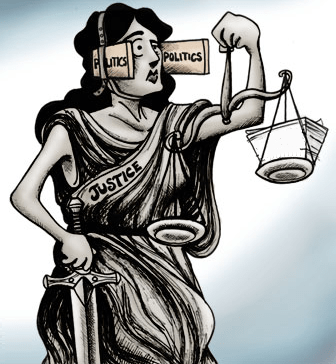
 As expected, climatists were aghast at content in the DOE Climate Review, and the usual suspects complained to the court (Massachusetts, no surprise) on a technicality. The legal maneuvers are twisted, also usual when deployed by wealthy obstructionist pros like EDF (Environmental Defense Fund) and UCS (Union of Concerned Scientists). After some digging, I found the documentary trail with excerpts highlighted below and links in red to official docs for those interested. Source: Court Listener Environmental Defense Fund, Inc. v. Wright (1:25-cv-12249)
The Complaint
The Climate Working Group worked in secret for months to produce a report for DOE and EPA that would provide justification for their predetermined goal of rescinding the Endangerment Finding. In May, unbeknownst to the public, the group transmitted its report to EPA, and EPA then relied extensively on the report in preparing its proposal to rescind the Endangerment Finding.
It was not until the same day that EPA released that proposal, July 29, that the existence and work of the group was made public. Secrecy was so important to Defendants that when the New York Times asked one of the group’s members in early July about his role at DOE, the member obscured his work for the group and simply said that he is an “unpaid person who’s available to them if they need it.”
But federal law does not permit agencies to create or rely on such secret, unaccountable groups when engaged in policymaking. In the Federal Advisory Committee Act (FACA), Congress mandated transparency in the establishment and operation of any federal advisory committee, including by requiring that the group’s formation be promptly disclosed and that its meetings, emails, and other records be open to the public. Here, Defendants did not disclose the Climate Working Group’s existence until months after it began working, and not a single meeting or record has been made public other than the group’s report. Defendants also violated FACA’s prohibition on stacking an advisory committee with adherents of only one point of view; the Climate Working Group’s members were all chosen for their skepticism of climate science, and the group does not have a single member that agrees with the consensus of the overwhelming majority of the scientific community on the effects of climate change.
The Environmental Defense Fund and the Union of Concerned Scientists bring this action to enjoin Defendants’ flagrant violations of FACA, to bring transparency to the Climate Working Group’s work to date as the law requires, and to compel Defendants to follow the law if they wish to rely on outside scientific advisors to justify their actions going forward. If DOE and EPA wish to establish an advisory committee for the enormously consequential purposes for which they have put the Climate Working Group to use, they must comply with the rules that Congress has prescribed.
Defendants’ Response
Plaintiffs invoke the Federal Advisory Committee Act (“FACA”), and contend that the Department of Energy (“DOE”) and Secretary Christopher Wright violated its requirements in establishing the now-dissolved DOE Climate Working Group (“CWG”). But the true goal of their lawsuit is not promoting openness and transparency in public decision-making. While Plaintiffs complain that they only recently learned of the CWG’s existence, DOE released its Report publicly weeks ago, and the Government provided opportunities for public comment on the CWG’s work. Instead, as the introduction to their Complaint makes clear, Plaintiffs’ objective is to delay and prematurely undermine a contemplated future policy decision by a different agency: namely, EPA’s proposed reconsideration of its 2009 greenhouse gas endangerment finding. Their sole hook for that relief is that EPA cited the CWG report—among numerous other sources—in a notice of proposed rulemaking (“NPRM”). That gambit fails at every level. Plaintiffs’ requested relief is foreclosed by Article III, the scope of FACA, and equitable principles.
More broadly, Plaintiffs’ Motion for Preliminary Injunction or, in the Alternative, For Summary Judgment or Consolidation Under Rule 65(a)(2), ECF Nos. 15-16, fails for at least three different reasons. First, Plaintiffs fail to establish that they are likely to succeed on the merits, because the CWG is not an entity covered by FACA; the statutory requirements are inapplicable to groups assembled to exchange facts or information with federal officials. In all events, most of Plaintiffs’ claims are now moot due to the CWG’s dissolution.
Second, Plaintiffs have identified no imminent irreparable harm requiring judicial intervention at this early juncture. They face no harm (irreparable or otherwise) from the prospect of ongoing work performed by the CWG because the group has already been dissolved. And EPA’s upcoming September 22, 2025, deadline for public comment on its NPRM poses no harm, because Plaintiffs are free to raise their concerns about the CWG report via public comment. Nor would any alleged harm stemming from an inability to comment be irreparable. Plaintiffs request that this Court ultimately issue declaratory relief finding the CWG unlawful and an injunction preventing Defendants from relying on its work. Either remedy would fully repair any injury suffered by Plaintiffs from the FACA violations they allege if they ultimately prevail on the merits, rendering a preliminary injunction unnecessary.
Third, Plaintiffs have not shown that the balance of the equities or the public interest weighs in their favor. These factors favor allowing the Government to use the information provided by the scientists of the CWG, promoting dialogue based on honest scrutiny and scientific transparency in the public sphere, and not prematurely pretermitting an ongoing rulemaking process. Even if the Court were inclined to grant some relief, the remedies sought by Plaintiffs are overbroad. Even when a FACA violation is proven on the merits, injunctions preventing the use of committee work are a highly disfavored remedy, as declaratory relief can fully remedy all injuries alleged. Plaintiffs have certainly shown no entitlement to such an extraordinary remedy at the preliminary injunction stage. And because the CWG has been dissolved, no practical purpose is served by an order compelling it to comply with FACA’s procedural requirements going forward. Nor is extension of the comment period on EPA’s NPRM warranted or proper. Plaintiffs cannot circumvent the Clean Air Act or APA finality requirements by alleging a FACA violation in order to indefinitely delay a pending rulemaking with which they disagree.
Plaintiffs’ Reply
For months, Defendants brazenly violated the Federal Advisory Committee Act. They constituted the Climate Working Group (CWG) in secret, had it meet in secret to produce a report with advice and recommendations for policymakers, and then provided the report to EPA in secret for use in a proposal to rescind EPA’s Endangerment Finding. Defendants present no serious argument that they did not violate FACA in taking all of these actions. Instead, when these actions were challenged in court, Defendants purported to dissolve the CWG the day before their opposition was due, and in their filing the next day, they argued that the dissolution mooted the case and left the Court powerless to provide relief for their many legal violations.
But the rule of law is not a game of catch me if you can. DOE, EPA, and the CWG violated FACA with every action they took producing and utilizing the CWG Report, and those unlawful actions continue to harm Plaintiffs in myriad ways. Indeed, Defendants do not dispute that the CWG lacked fairly balanced views—including views representative of those held by Plaintiffs—and was subject to inappropriate influence from Secretary Wright. The continued existence and use of the CWG Report produced with these legal infirmities significantly harms Plaintiffs, and there are multiple forms of declaratory, injunctive and Administrative Procedure Act relief that this Court may enter to redress these injuries.
Amicus Brief American Free Enterprise Chamber of Commerce
Amicus writes to explain why censoring the CWG Report in EPA’s ongoing rulemaking is inappropriate and beyond the power of this Court. The extraordinary request for censorship here should fail for multiple reasons, but AmFree covers five.
First, Plaintiffs lack standing to seek relief against EPA because censoring the study would not redress any cognizable Article III harm. See Nat. Res. Def. Council v. Peña, 147 F.3d 1012, 1020–23 (D.C. Cir. 1998) (so holding). Second, the Clean Air Act strips district courts of power to enjoin EPA’s actions in ongoing Clean Air Act rulemaking proceedings or to control the agency’s rulemaking docket, making courts of appeals (in this case, the D.C. Circuit) the “sole forum” for these disputes. See 42 U.S.C. § 7607(b), (d)(8). Third, censorship remedies are not available under the Administrative Procedure Act (“APA”) or through a writ of mandamus, because such an order does not compel a discrete action required by FACA. Fourth, censoring the government’s use of the CWG Report is punishment that exceeds this Court’s remedial equity jurisdiction. Fifth, Plaintiffs cannot show irreparable harm because they have adequate avenues for judicial relief namely, challenging EPA’s rulemaking record in the D.C. Circuit, after a final rule.
Plaintiffs “are champing at the bit to challenge EPA’s anticipated rule [repealing] carbon dioxide emission[]” standards for new motor vehicles. In re Murray Energy Corp., 788 F.3d 330, 333 (D.C. Cir. 2015) (Kavanaugh, J.). “But courts have never reviewed proposed rules, notwithstanding the costs that parties may routinely incur in preparing for anticipated final rules.” Id. at 335. This Court should not do so here.
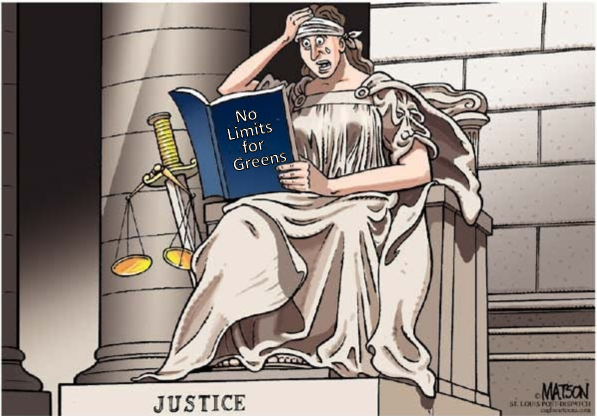
What’s Next for CWG
Steven Koonin writes this excerpt in Climate Change Dispatch article
Our report is the first from Washington in years that deviates from the narrative of a climate headed for catastrophe. That these findings surprised many speaks to a governmental failure to communicate climate science accurately to the public.
Reports like ours may draw a lot of anger, but our work accurately portrays important aspects of climate science.
Our work has attracted strong criticism, despite its grounding in established science. Almost 60,000 comments were submitted to the Federal Register during the month after its publication, and the Environmental Defense Fund and Union of Concerned Scientists filed a lawsuit to prevent the Energy Department or Environmental Protection Agency from using the report in decision-making.
Most of these challenges have no scientific backing.
Though scientists supporting the so-called consensus on climate change have organized several serious critiques, these at most add detail and nuance to our findings, without negating the report’s central points.
They still merit a response, which will form the next round in an overdue public debate on the effects of greenhouse gas emissions.
Climate policies must balance the risks of climate change against a response’s costs, efficacy, and collateral effects.
Reports like ours may draw a lot of anger, but our work accurately portrays important aspects of climate science. Acknowledging the facts is essential for informed policy decisions.
Mr. Koonin is a senior fellow at Stanford’s Hoover Institution and the author of “Unsettled: What Climate Science Tells Us, What It Doesn’t, and Why It Matters.”
 Science Matters
I have written an article and letter in support of the DOE report. The letter is at Letter to the Editor – Epoch Times Sept 2025.pdf – Google Drive. The article is at Department of Energy climate report another victory for solid science – America Out Loud News. We also did at couple of radio interviews boosting it.
LikeLike
Thanks for this great detective work Ron!
LikeLike