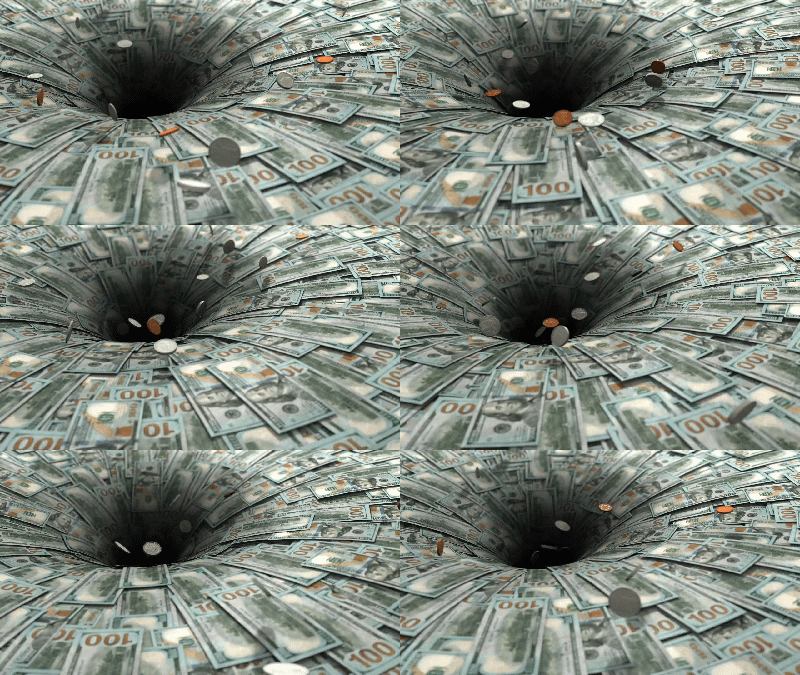
Waste #1: Money Spent, Projects Unknown

“Oxfam finds that for World Bank projects, many things can change during implementation. On average, actual expenditures on the Bank’s projects differ from budgeted amounts by 26–43% above or below the claimed climate finance. Across the entire climate finance portfolio, between 2017 and 2023, this difference amounts to US$24.28–US$41.32 billion,” the report states.
“No information is available about what new climate actions were supported and which planned actions were cut. Now that the Bank has touted its focus on understanding and reporting on the impacts of its climate finance, it is critical to stress that without a full understanding of how much of what the Bank claims as climate finance at the project approval stage becomes actual expenditure, it is impossible to track and measure the impacts of the Bank’s climate co-benefits in practice.”
“Oxfam’s report doesn’t suggest funds are missing but points to a transparency issue that makes it difficult to know precisely what the Bank is delivering in terms of climate finance: where it’s going and what it’s supporting.”
Thus, “contrary to claims online,” it’s not missing. It’s just not accounted for! At this point, I’m not sure which is the bigger racket: dubious national or supranational funding of projects that fall loosely under the aegis of purported climate change mitigation, or fact-checking. At least this can be said about fact-checking: It costs a hell of a lot less.
Waste #2: Money Spent, Projects Dicey
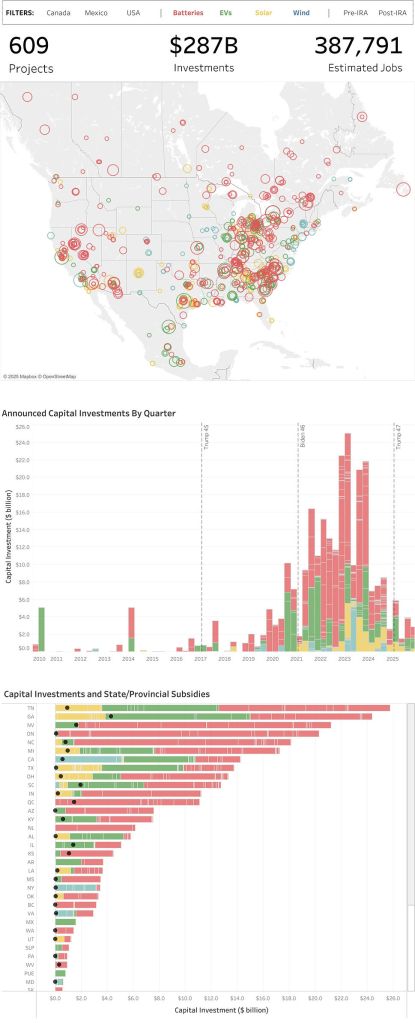
For an idea of how much money is being gambled on Green Energy or “CleanTech” projects here is a chart for North America from The Big Green Machine:
How Risky are these projects? An article at Mish Talk explores the question: How Many More Ridiculous Green Energy Projects Will Fail? Excerpts in italics with my bolds and added images.
The answer is all of them, in due time. Here are the latest spectacular failures.

Birds Fry Every Two Minutes
It took 10 years, and hundreds-of-thousands of dead birds, before
the Ivanpah Solar Electric Generating System in California would meet its fate.
Now finally here in 2025 it seems the reckoning has begun. The Las Vegas Review-Journal notes in an editorial that “a major California utility — Pacific Gas & Electric — announced that it will no longer buy power from the Ivanpah solar plant off Interstate 15 near the Nevada-California border. As a result, two of the plant’s three towers will shut down next year — and the third will probably follow.”
Performance has proven so poor that PG&E has exercised its right to terminate the contract, about which negotiations have been completed; there is no doubt that towers 1 and 3 will cease operations within roughly a year. And it appears to be the case that Edison too wants out: “the utility is in ‘ongoing discussions’ with the project’s owners and the federal government over ending the utility’s contract.”
New Jersey Reaps the Wind, Again
It’s not just solar. Also note that Shell just backed out of a wind-energy project despite huge subsidies.
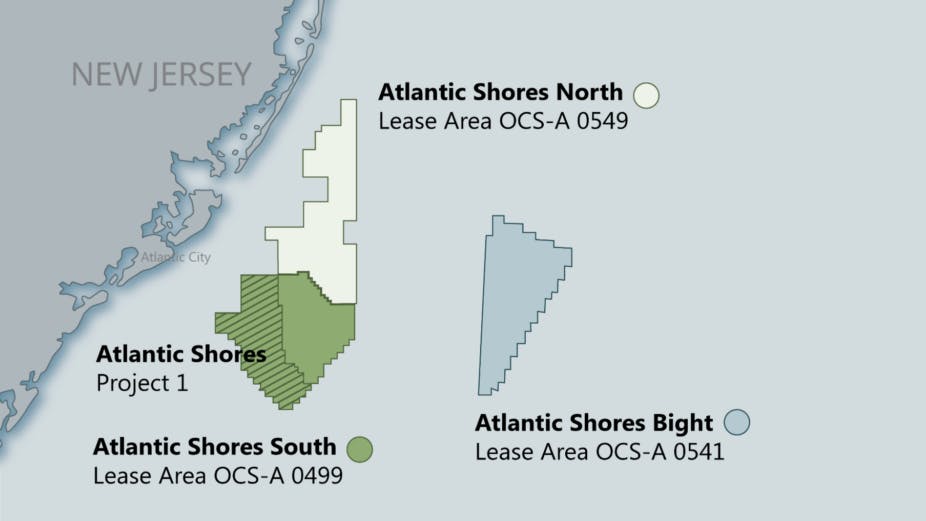
Another offshore wind development stalled this week off the Jersey shore, making it the latest of three such projects to fail despite generous terms from the state. Energy giant Shell wrote off its 50% stake in Atlantic Shores, choosing to take a $1 billion impairment instead of complete the 2,800 megawatt wind farm. New Jersey’s Board of Public Utilities canceled its request for a wind-energy provider, leaving the unfinished project with no prospective customer.
Ratepayers can rejoice. Atlantic Shores would have charged about three times the market price for the power it generated, according to a review by Whitestrand Consulting. That would have raised electricity rates by 11% for residents and 13% to 15% for businesses, forcing them to overpay by $48 billion over the wind farm’s lifetime.
Waste # 3 A Mountain of Unrecyclable Waste
The Institute for Energy Research notes Broken Windmill Blade Closes Nantucket Beaches
A massive wind turbine blade shattered offshore Massachusetts causing extensive debris, which shut down beaches on Nantucket Island and caused serious concern to fishermen, who worried that the debris could damage their boats. The failure of the massive blade and the resulting debris caused the federal Bureau of Safety and Environmental Enforcement to suspend operations at Vineyard Wind until it could be determined whether the “blade failure” impacts other turbine blades on the development of the offshore wind farm. Power production has been suspended and installation of new wind turbine construction is on hold. And as more green energy trash washes ashore the local town is considering litigation. The facility’s massive wind turbines began sending electricity to the grid this past winter.

Thousands of Old Wind Turbine Blades Pile Up in West Texas Officials in Sweetwater say an out-of-state company has made their town a dump for the seldom-seen trash created by renewable energy.
Wind turbine blades are made from fiberglass, or fiber reinforced plastic, and cannot be recycled. The Biden-Harris administration has not indicated what or who it expects to deal with the mountain of waste that will result when thousands of turbine blades reach the end of their useful lives in 20 to 25 years, or in many cases less. In fact, wind blades are piling up in Texas and Iowa without proper disposal. Massive wind graveyards, for example, have popped up on the outskirts of Sweetwater, Texas. The pile of wind blades covers more than thirty acres, in stacks rising as high as basketball backboards.

Waste #4 Money Spent, Operational Failures
Economic Reality
Let’s return to economic reality. None of these projects are profitable, even with subsidies. That’s why they fail. Meanwhile, consumers face monstrous hikes in energy bills to pay for these boondoggles as mounds of unrecyclable garbage piles up in massive wind graveyards.
The Green Machine provides the project categories in colors denoting Batteries, EVs, Solar and Wind.
The BESS Failure Incident Database provides a record of costly problems with Battery Energy Storage Systems (BESS)
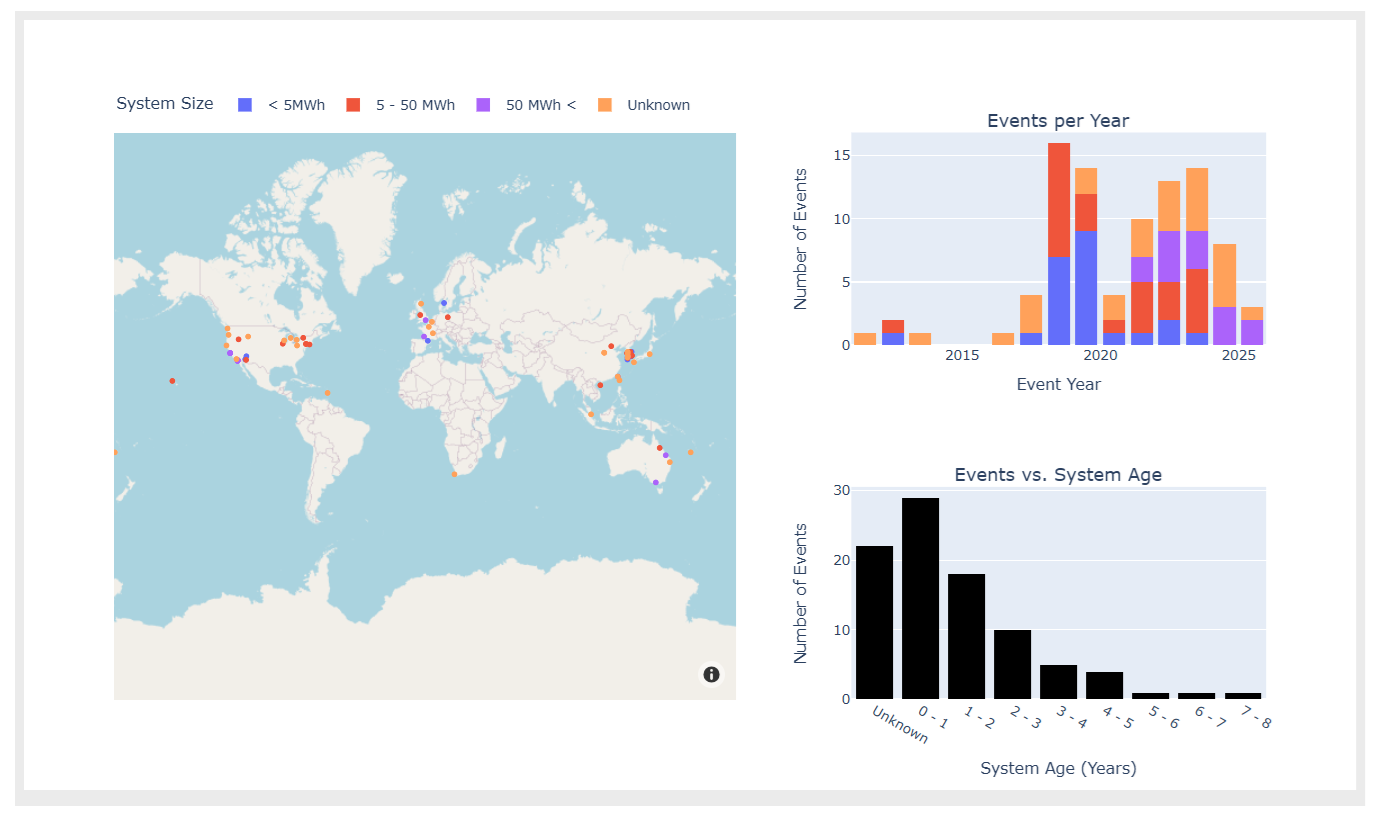
Figure 1. A breakdown of the stationary energy storage failure events from the above table.
EV Boosters reports EV Business Failures Abound
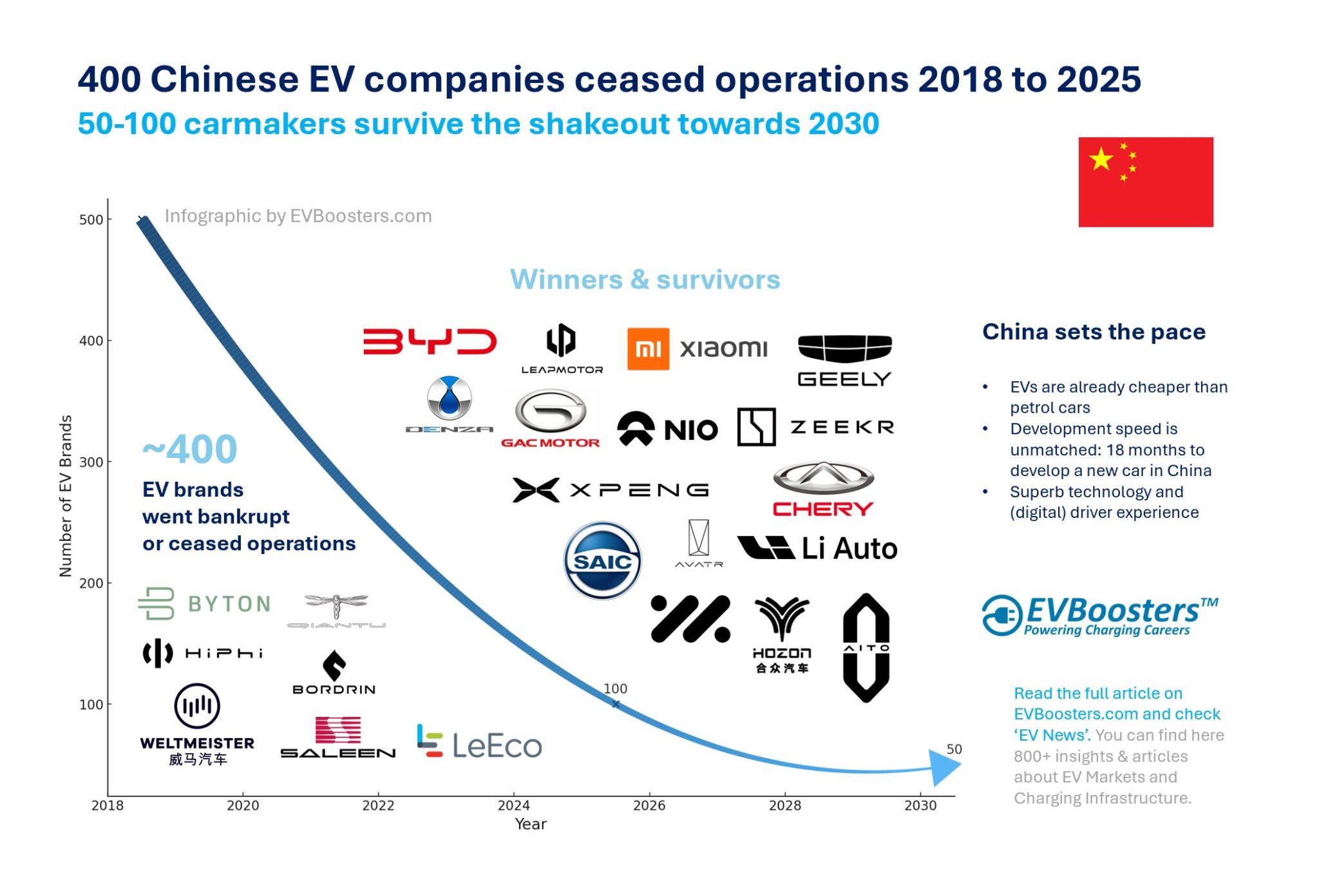 The Chinese electric vehicle (EV) boom has turned into a dramatic shakeout. Around 2018, China had more than 500 EV startups registered. These included everything from serious automotive disruptors to local government-backed ventures that never made it past the prototype phase. What do we mean by “EV startup”? In this context, it includes any newly registered Chinese company involved in the design, development, or production of new energy vehicles (NEVs) — including electric, plug-in hybrid and hydrogen cars. Many were speculative projects, created quickly to benefit from generous state subsidies, often with minimal automotive expertise. While a few had serious ambitions and advanced prototypes, the vast majority never got a vehicle on the road. By 2025, only around 100 of these brands remain active. Analysts from McKinsey predict that by 2030, fewer than 50 Chinese EV companies will survive. This is not just a story of collapse, but also of market maturation, consolidation, and strategic realignment.
SolarInsure Lists the Many Solar Business Failures
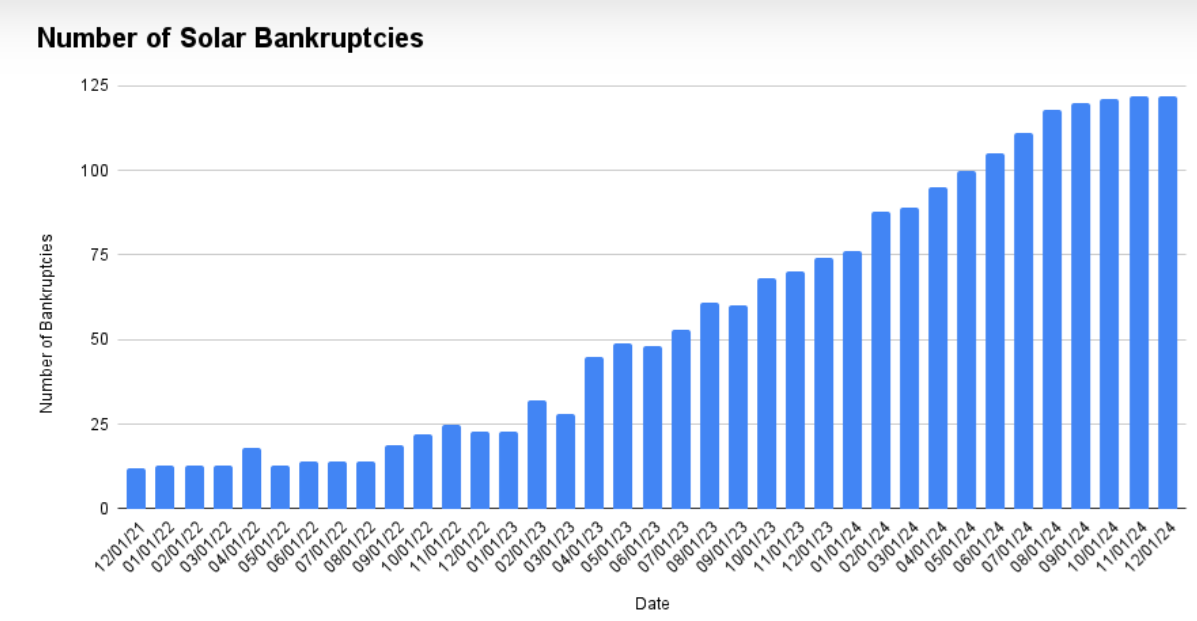
Major Solar Bankruptcies as of September 2025 Include:
- Sunnova – Multiple States
- SunPower – Multiple States
- Pink Energy – Multiple States
- MC Solar – Modern Concepts – Florida
- Harness Power – California
- NM Solar Group – New Mexico
- ASA – American Solar Advantage – California
- Kuubix Energy – California
- Erus Energy – Arizona
- Infinity Energy – California
- Suntuity Renewables – Per Sunova – NJ, CA , TX
- ADT Solar – Multiple States
- Vision Solar – Multiple States
- Solcius – CA, NM, AZ, NV
- Sunworks, Inc. – CA
- Kayo Energy – AZ, CA, TX, FL
- iSun – CT
- Titan Solar Power – Multiple States
- Lumio Solar – Utah
- Expert Solar – Florida, Texas
- Shine Solar – LA, AK
- Posigen – Multiple States
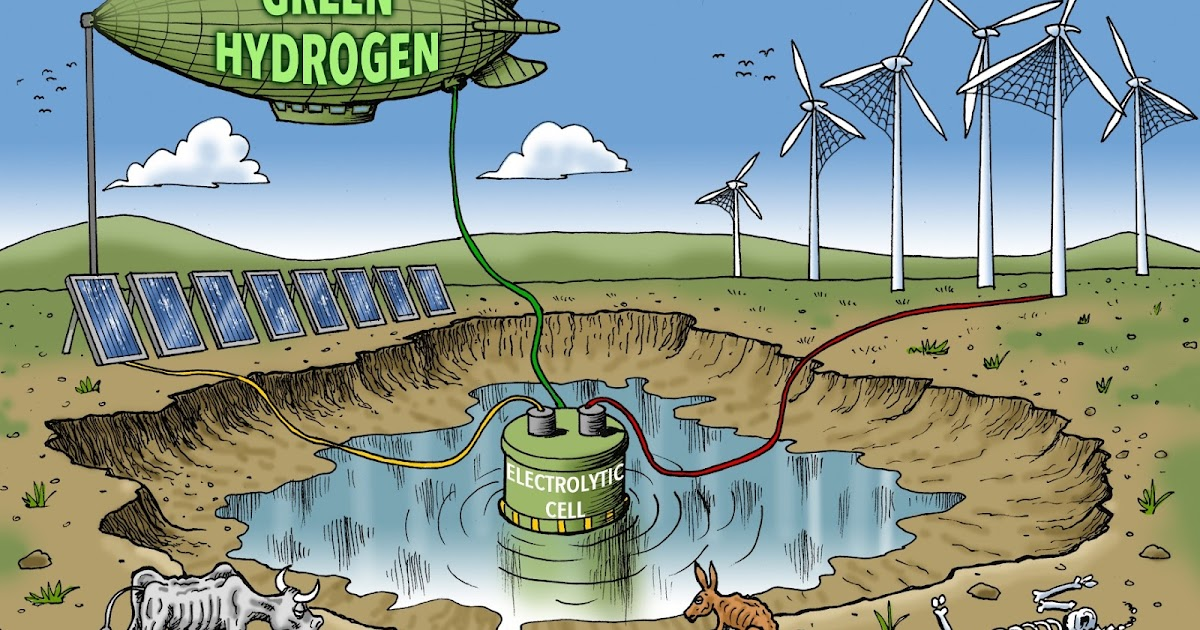
Waste #5 Green Hydrogen Projects–Absurd, Exorbitant and Pointless
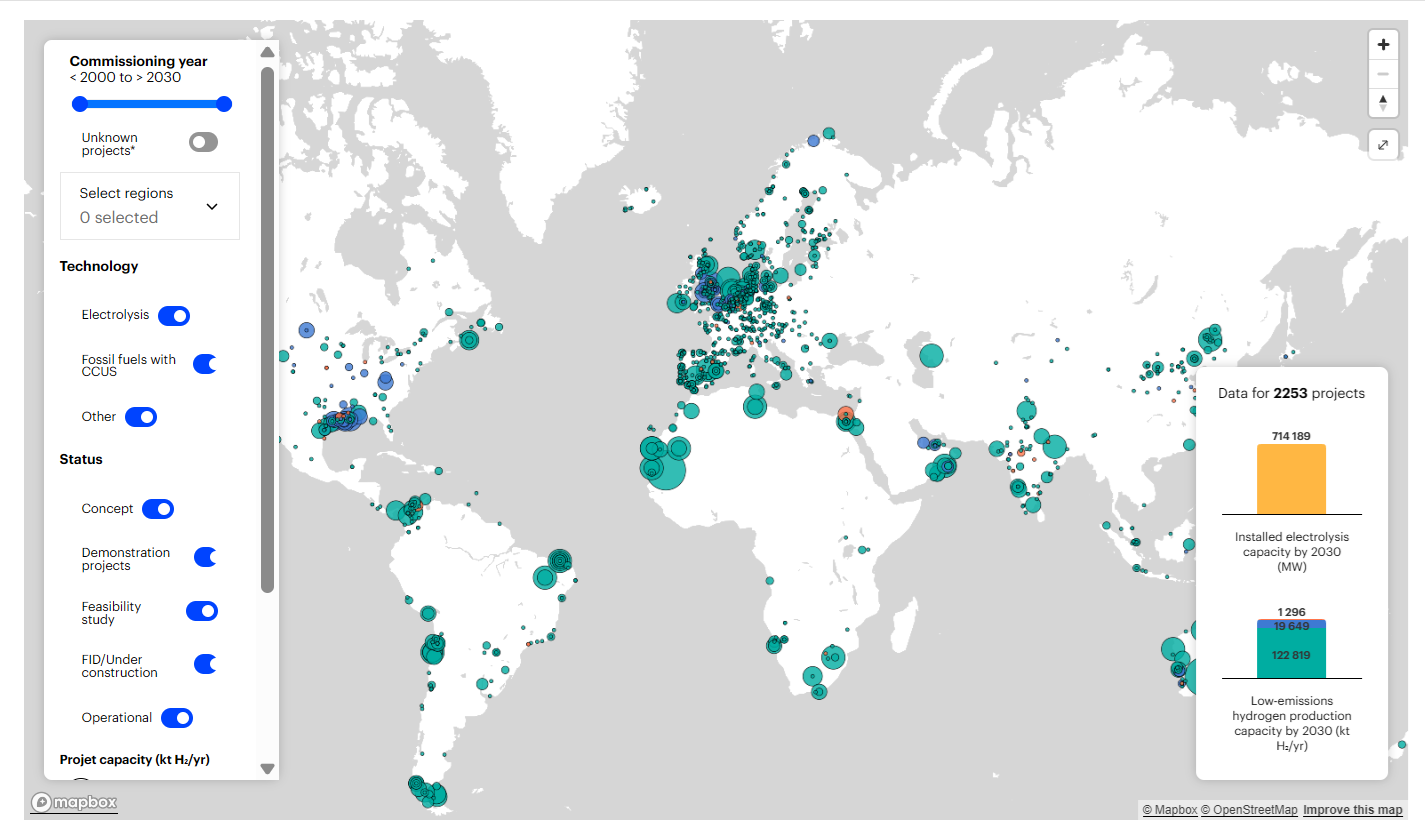
The map above from IEA shows more than 2200 hydrogen fuel projects around the world, intending to replace hydrocarbon fuels to save the planet. They dream of being operational by 2030 claiming that real world obstacles will be overcome if enough taxpayer dollars are thrown at the problems. The whole notion is fantastic (in the literal sense) for reasons detailed in a previous post.
An update on project cancellations comes from Hydrogen Newsletter The Green Hydrogen Reckoning: An Analysis of Project Cancellations
| Project Name / Identifier | Lead Company / Developer(s) | Location | Announced Capacity / Scale | Project Status | Date of Announcement / Status Change |
| Arizona Hydrogen Project | Fortescue | Arizona, USA | 80 MW electrolyzer, 11,000 t/yr H2 | Cancelled (Post-FID) | Jul-25 |
| PEM50 Project | Fortescue | Gladstone, Australia | 50 MW PEM electrolyzer | Cancelled (Post-FID) | Jul-25 |
| H2OK Project | Woodside Energy | Oklahoma, USA | 60 t/d liquid H2 | Cancelled | Jul-25 |
| Massena Green Hydrogen Plant | Air Products | Massena, New York, USA | $500M, 35 t/d liquid H2 | Cancelled | Feb-25 |
| Mississippi Clean Hydrogen Hub | Hy Stor Energy | Mississippi, USA | >1 GW electrolyzer capacity reservation | Cancelled | Sep/Oct 2024 |
| HyGreen Teesside Project | BP | Teesside, UK | 500 MW green hydrogen | Cancelled | Mar-25 |
| Australian Renewable Energy Hub | BP | Australia | $36 billion green hydrogen facility | Exited | Jul-25 |
| Low-Carbon Hydrogen Plant | Shell | West Coast, Norway | Not specified | Cancelled | Sep-24 |
| Clean Hydrogen to Europe | Equinor / Shell | Norway to Germany | 10 GW blue hydrogen export | Scrapped | Sep-24 |
| German Steel Plant Conversion | ArcelorMittal | Germany | Two plants, €2.5 billion plan | Shelved | Jun-25 |
| Global Green Hydrogen Target | Iberdrola | Global | 350,000 tons/yr target | Scaled Back | Mar-24 |
| Green Hydrogen Production Target | Repsol | Spain | 2.5 GW target | Scaled Back | Feb-25 |
| Green Energy Hub | LEAG | Eastern Germany | “One of Europe’s largest” | Postponed Indefinitely | Jun-25 |
| Porvoo Renewable Hydrogen | Neste | Porvoo, Finland | Not specified | Withdrew from investment | Oct-24 |
| Port Pirie Green Hydrogen Plant | Trafigura | South Australia, Australia | A$750 million | Abandoned | Mar-25 |
| Queensland Liquefied H2 Plant | QLD Gov’t, Kansai Electric, Iwatani | Queensland, Australia | A$12.5 billion, 200 t/d | Funding Pulled | 2025 |
| Project Coyote | Fortescue | British Columbia, Canada | $2 billion H2/ammonia facility | Cancelled | Sep-24 |
The above table provides a non-exhaustive but representative catalogue of the major green hydrogen projects that have been cancelled, postponed, or significantly scaled back between 2023 and mid-2025, illustrating the global scale of this market recalibration.
 Science Matters
Numero six: v-a-s-t waste of landscape.
LikeLike
Yes indeed, Beth.
Biofuels the worst, while taking arable land away from food production.
LikeLike