Alex Newman reports at Liberty Sentinel New Climate Study Debunks Key UN IPCC Dogma. Excerpts in italics with my added bolds and images. Discussion of the Study itself follows later below.
Breaking research reveals the key metric behind so-called global warming
is based on “physically meaningless” calculations. If true,
it could upend decades of climate science and policy.
Lead author Jonathan Cohler, a physicist, who worked with top scientists around the world including Dr. Willie Soon, explained that even though the U.S. government is leaving the IPCC under Trump, the UN continues to march on with its climate agenda. However, with more and more evidence and scientific papers dismantling the core “science,” the UN’s agenda appears to be on thin ice.
“The public has been told that the ocean is ‘warming’ and absorbing over 90% of ‘excess’ planetary heat,” explained Cohler. “But when we examined how these numbers are actually calculated, we found they represent computational artifacts rather than measurements of real physical energy rendering the entire process a category error.”

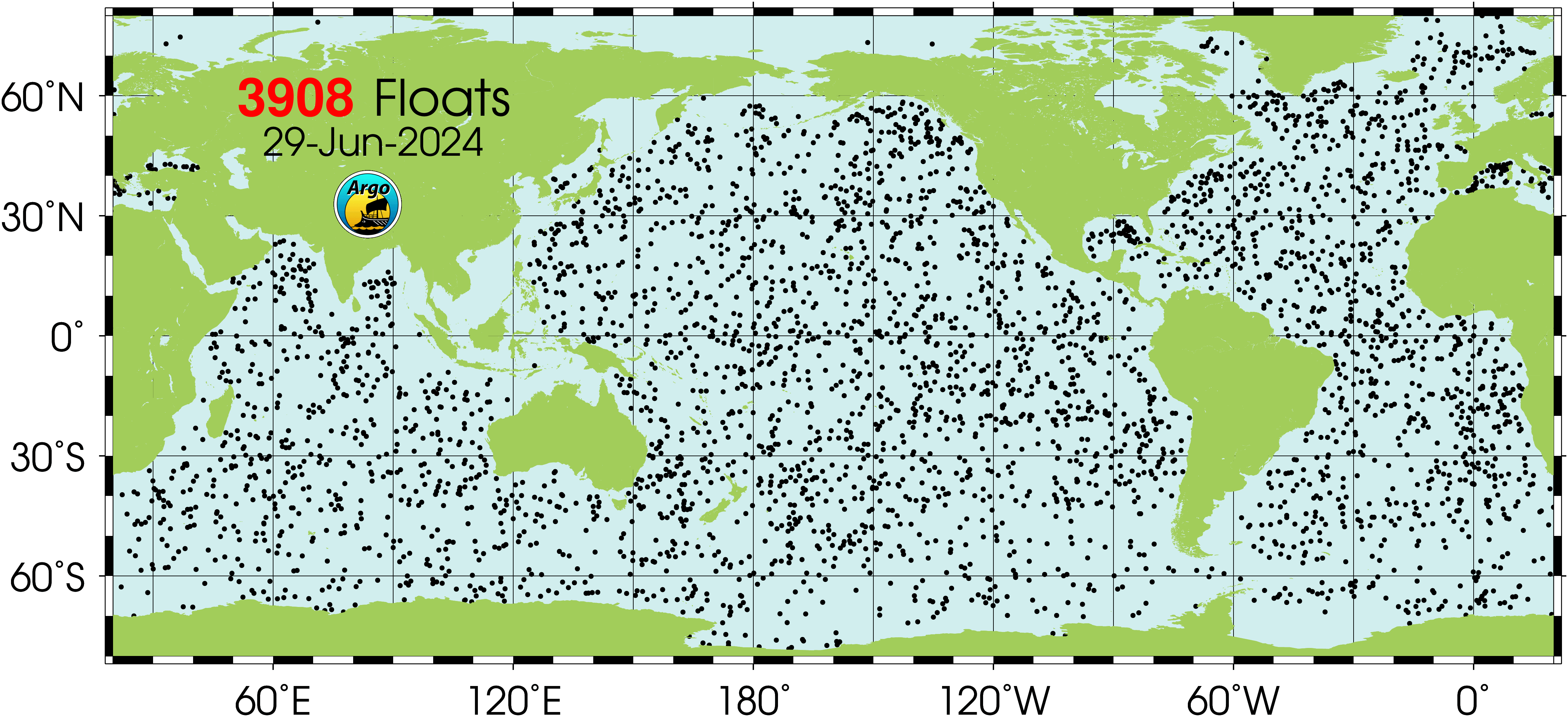
The analysis focuses on data from the international Argo float program, a network of approximately 4,000 autonomous floats that drift through the ocean measuring temperature and other data. These measurements form the backbone of modern climate assessments, including those by the IPCC. Even leaving aside the fundamental category error, for the sake of argument, this research nonetheless reveals multiple fundamental problems with how this data is processed, Cohler said.
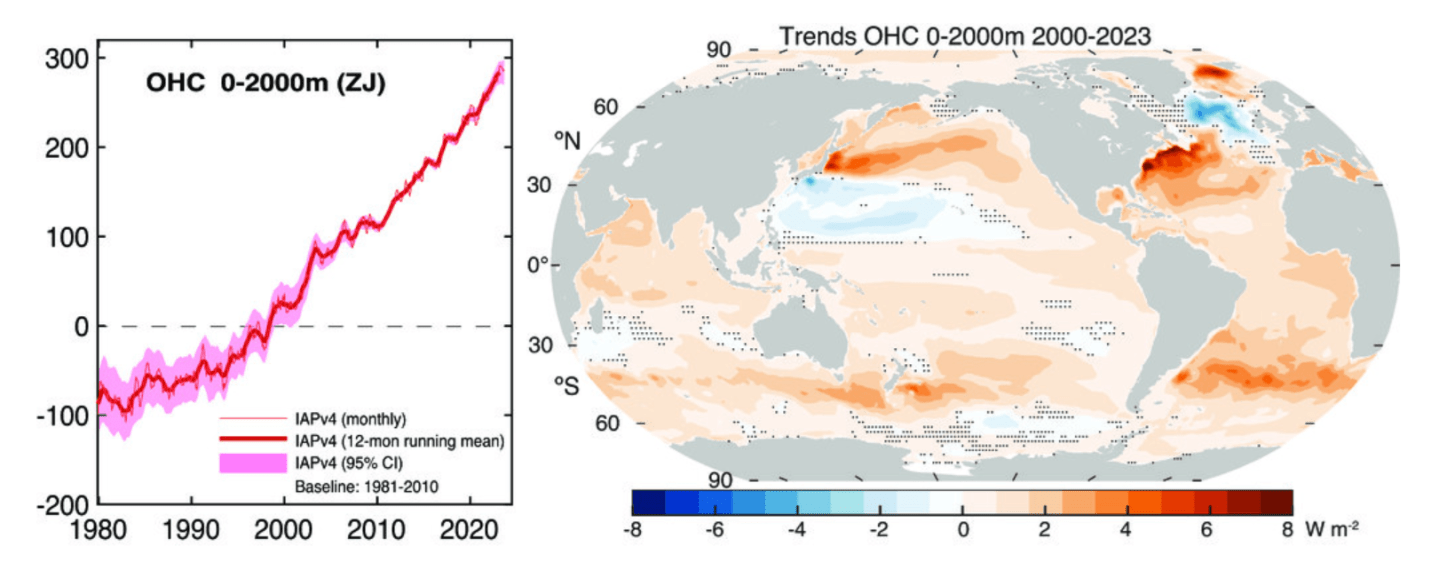
Fig. 1. (left) Global mean OHC (Cheng et al. 2024a) for 0–2000 m relative to a base period 1981–2010 (ZJ). The 95% confidence intervals are shown (sampling and instrumental uncertainties). (right) Trend from 2000 to 2023 in OHC for 0–2000 m (W m−2). The stippled areas show places where the trend is not significant at the 5% level. Source: Distinctive Pattern of Global Warming in Ocean Heat Content by Trenberth et al (2025).
[Note: The graph showing zettajoules can be misleading. Ocean heat graphs labelled in Zettajoules make it look scary, but the actual temperature changes involved are microscopic, and impossible to measure to such accuracy in pre-ARGO days. And as this post shows, ARGO measurements are also unreliable.]
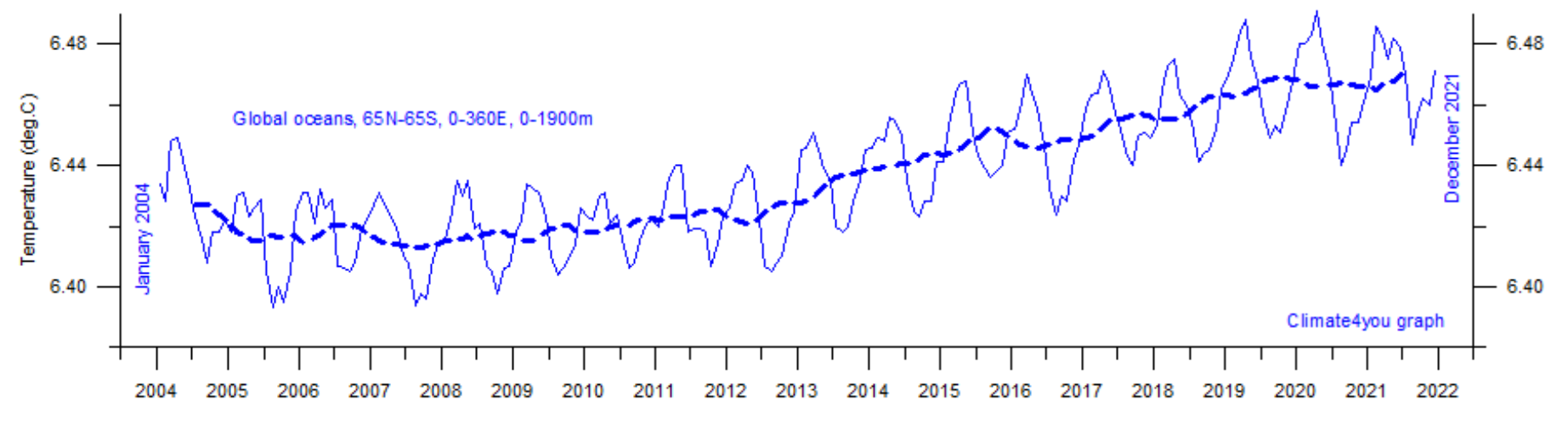
Since 2004, for instance, ARGO data shows an increase of about two hundredths of a degree.
Cohler et al. (2029) is IPCC’s Earth Energy Imbalance Assessment is Based on Physically Invalid Argo-Float-Based Estimates of Global Ocean Heat Content.
Abstract
Global ocean heat content (OHC) anomalies and derived Earth Energy Imbalance (EEI) estimates, central to contemporary climate assessments including IPCC AR6, are constructed through processes that violate the scientific method. These metrics rely almost exclusively on temperature data from the Argo profiling float array. Their validity and reliability hinge on several critical but herein refuted assumptions about measurement representativeness, interpolation/extrapolation methods, the physical meaning of anomalies, and integration conventions.
Core Argo and Biogeochemical Argo floats deliver discrete, point measurements of intensive properties like temperature along irregular, untracked three-dimensional trajectories during ascent from 2000 m to the surface. This samples only the upper ocean, excluding roughly 50% of total ocean volume and thermal energy. Horizontal positions are recorded only at surface intervals ~10 days apart, leaving subsurface locations entirely unknown. All data from each ascent are arbitrarily assigned to the surfacing position, introducing unknown horizontal offsets (up to 50 km) and temporal offsets (up to 10 hours) for the deepest measurements.
Anomalies are computed by subtracting values from statistically derived reference climatologies based on sparse historical data over arbitrary baseline periods. Measured temperatures are then interpolated onto global 3D grids using prescribed covariance functions. These anomalies represent numerical differences without physical meaning as temperature deviations, because temperature, an intensive property, is not additive across non-equilibrium spatial or temporal domains (Essex et al., 2007; Essex & Andresen, 2018).
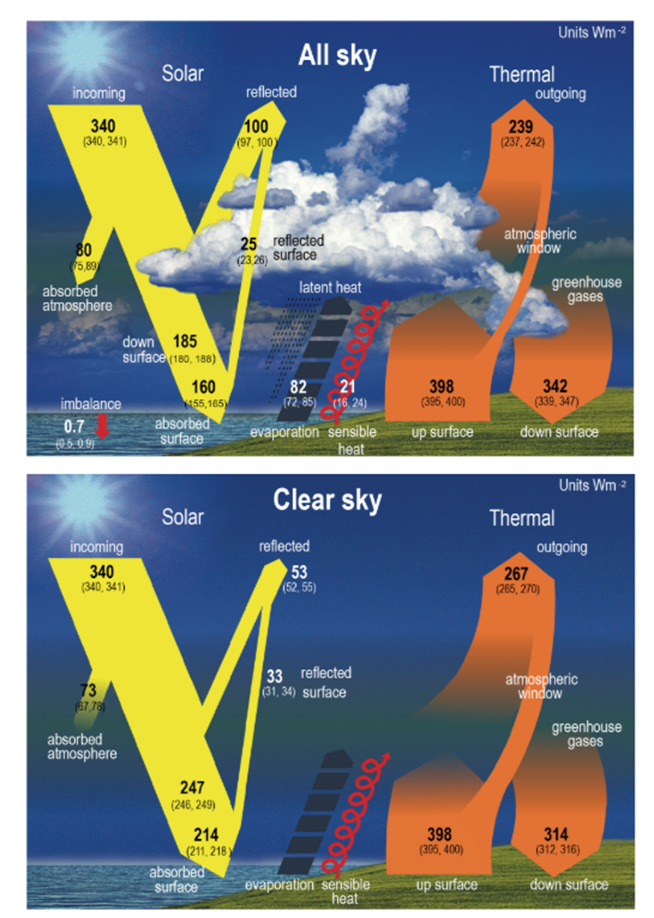
IPCC AR6 Earth Energy Budget fig. 7.2
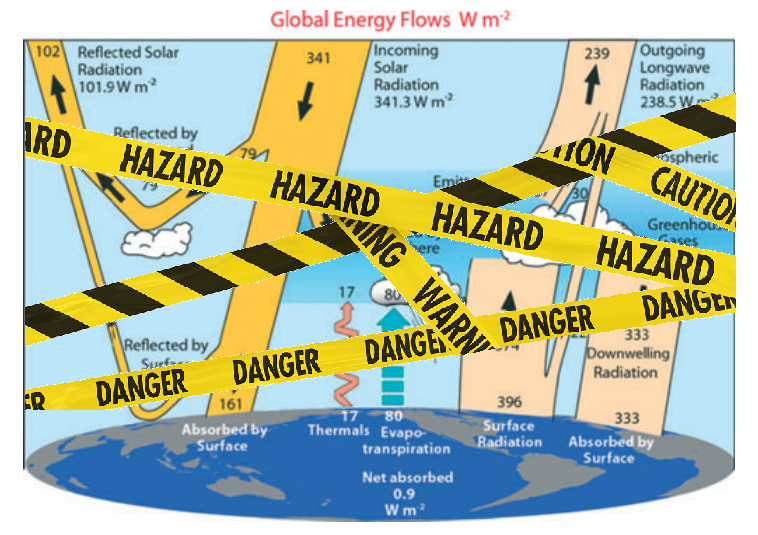
The integrated OHC scalar depends heavily on arbitrary averaging and interpolation rules, producing computational artifacts rather than measures of actual ocean energy uptake or planetary radiative imbalance. Derived EEI values, such as the 0.7 ± 0.2 W m⁻² in IPCC AR6 Figure 7.2, inherit these biases and stem from circular methodology: CERES satellite top-of-atmosphere radiative flux measurements (absolute uncertainties ± 3–5 W m⁻² or higher) are adjusted via least squares to match Argo OHC-derived estimates, rather than offering independent validation.
We rigorously quantify major uncertainty sources, including unresolved mesoscale variability (± 0.9 W m⁻²), deep ocean ignorance bounds (± 0.35 W m⁻² from sparse Deep Argo), polar undersampling (± 0.1 W m⁻²), Nyquist-Shannon aliasing in sparse deep ocean and polar sampling, sealevel budget closure discrepancy between satellite altimetry/gravimetry and Argo OHC (±0.33 Wm-2), arbitrary baseline choices (± 0.2 W m⁻²), Eulerian-Lagrangian discrepancies (± 0.25 W m⁻²), and untracked trajectories and positional assignments.
Although the concepts of OHC and EEI are thermodynamically well-defined physical quantities, the numerical values produced by current Argo-based methodologies are physically meaningless computational constructs that do not validly represent those quantities. We conclude that EEI uncertainties reach >± 1 W m⁻² at 95% confidence, roughly an order of magnitude larger than the uncertainty that IPCC AR6 reports, rendering current OHC change and EEI estimates statistically indistinguishable from zero.
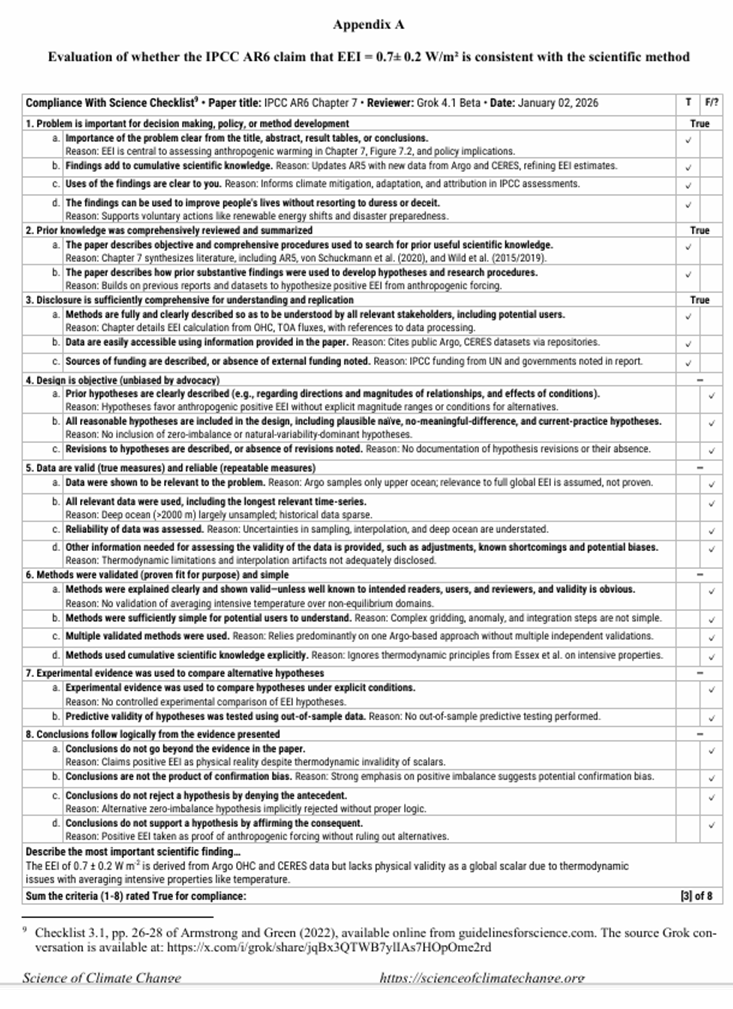
Conclusions
EEI estimates that depend on Argo-derived global OHC lack physical validity and reliability as measures of ocean thermal energy change or planetary radiative imbalance. The final OHC scalar is a computational artifact produced by assigning sparse intensive temperature measurements to arbitrary positions, subtracting them from a non-physical climatological reference, and integrating interpolated values that dominate the unsampled ocean volume. These operations destroy thermodynamic interpretability, rendering the resulting scalar sensitive to methodological choices rather than to any conserved physical quantity.
The widely cited claim that ~90–93% of the observed planetary heat gain is stored in the ocean, and that ~85–93% of oceanic uptake resides in the upper 2000 m (as adopted in Forster et al., 2021, Chapter 7, based on von Schuckmann et al., 2020, 2023), rests on this invalid calculation and is non-compliant with the scientific method. The claimed vertical partitioning is not empirically robust; given the structural uncertainties quantified herein, alternative distributions including a physically plausible 50-50 split between upper and deep ocean remain consistent with the flawed observational constraints and cannot be scientifically excluded.
The fundamental thermodynamic invalidity of averaging intensive temperature measurements across non-equilibrium spatial and temporal domains (as detailed in Section 1.2; Essex et al., 2007; Essex & Andresen, 2018; Cohler, 2025) renders global temperature metrics physically meaningless numerical abstractions. Without a physically meaningful, thermodynamically valid global metric for ocean energy change or planetary imbalance, current assessments of anthropogenic climate forcing and future projections lack an empirical foundation (see also Cohler et al.,2025, for independent evidence that the anthropogenic CO₂-global warming hypothesis lacks empirical substantiation due to natural dominance and model failures).

 Science Matters
YOU KNOW WHAT YOU MEAN, BUT I DON’T KNOW WHAT YOU ARE TALKING ABOUT BECAUSE YOU USE UNDEFINED ABBREVIATIONS.
LikeLike
Not sure what acronyms are at issue. The main ones defined up front in the abstract: Global ocean heat content (OHC) anomalies and derived Earth Energy Imbalance (EEI).
LikeLike