Estimates of the SCC championed by Guilbeault are not science
Environment Minister Steven Guilbeault recently announced that the Social Cost of Carbon (SCC), or the dollar value of supposed damages associated with each tonne of carbon dioxide emissions, is about $247, nearly five times higher than the old estimate of $54. He made it sound like a discovery, as if a bunch of experts had finally been able to measure something they previously only guessed at.
Like when scientists were finally able to measure the mass of an electron or the age
of the Earth, now finally we can measure the SCC.
But in reality there has been no breakthrough in economics comparable to those physics breakthroughs. Countless SCC estimates already exist ranging from small negative amounts (i.e. carbon dioxide emissions are beneficial) to many thousands of dollars per tonne. Every such estimate is like a complex “if-then” statement: if the following assumptions hold, then the SCC is $X. Yale economist William Nordhaus won the 2018 Nobel Memorial Prize in economics for developing some of the first methods for combining all the “if” statements into systems called Integrated Assessment Models or IAMs. And using conventional economic and climate modelling methods, he tended to get pretty low SCC values over the years, which has long been a sore point among climate activists and the politicians who share their agenda.
But economists are on the case. The $247 figure referenced by Guilbeault comes from a new report from the Biden administration that tossed out all the previous models, including Nordhaus’s, and instead cobbled together a set of new models that when run together yield much higher SCC values.
In many ways the new models are just like the old ones.
For example they persist in using an Equilibrium Climate Sensitivity of 3 degrees C. This refers to the warming expected from doubling the amount of CO2 in the atmosphere. The authors cite the Sixth Assessment Report of the Intergovernmental Panel on Climate Change as the basis for this decision, apparently unaware that that estimate has already been shown in the climate literature to be flawed. Using the IPCC’s own method on updated data yields a sensitivity estimate of about 2.2 C or less, and as I have shown in a recent publication this is enough to cause the SCC estimate in a standard model to drop to nearly zero.
The biggest boosts to the new SCC figure hailed by Guilbeault come from revisions to agricultural productivity impacts and mortality costs from climate warming. The evidence for large negative agricultural impacts comes from a 2017 article by Frances Moore and co-authors that looked at the combined effects of CO2 fertilization and warming, concluding the net effect would harm global agriculture. Oddly, they used the same data as a2014 study by Andrew Challinor and co-authors who had found the opposite: the combination of increased CO2 and warming would have much more benign, and in some cases even beneficial, results.
How did Moore et al. get different results from the same data? They used a different statistical model but unfortunately didn’t provide evidence showing it is better than the one Challinor used, so it’s unclear whose results are stronger. But we know whose are more popular. The Biden administration team referred only to the Moore study and left out any mention of the Challinor one, and it is a safe assumption that the reviewers didn’t notice the omission. See how the game is played?
Regarding the mortality effect, the report relies on evidence in a new study that apparently shows that warming will mean fewer deaths from cold and more from heat, and the combined effect globally is a much larger overall death toll than previously thought. The study is by an impressive team led by economist Tamma Carleton and 15 co-authors. In their preface they thank 17 research assistants, four project managers, 13 reviewers and seminar participants at 20 prestigious academic institutions around the world. It’s a high-quality piece of work, but like tens of thousands of other splashy climate impacts studies it relies for its headline conclusions on the discredited RCP8.5 emissions scenario.
How did all those prestigious researchers and reviewers miss this flaw?
The authors compiled mortality data from selected countries around the world and matched them to temperature records, then built a statistical model to extrapolate over the entire world. They used some clever economic modelling to estimate the beneficial effects of adaptive behaviour (like installing air conditioning) as well as the costs. Then they estimated a “mortality function” that spits out the number of additional deaths between now and the year 2300 attributable to each additional tonne of emissions, both from warming itself and the costs of adaptation. To compute this number the authors needed emissions and income projections out to 2300.
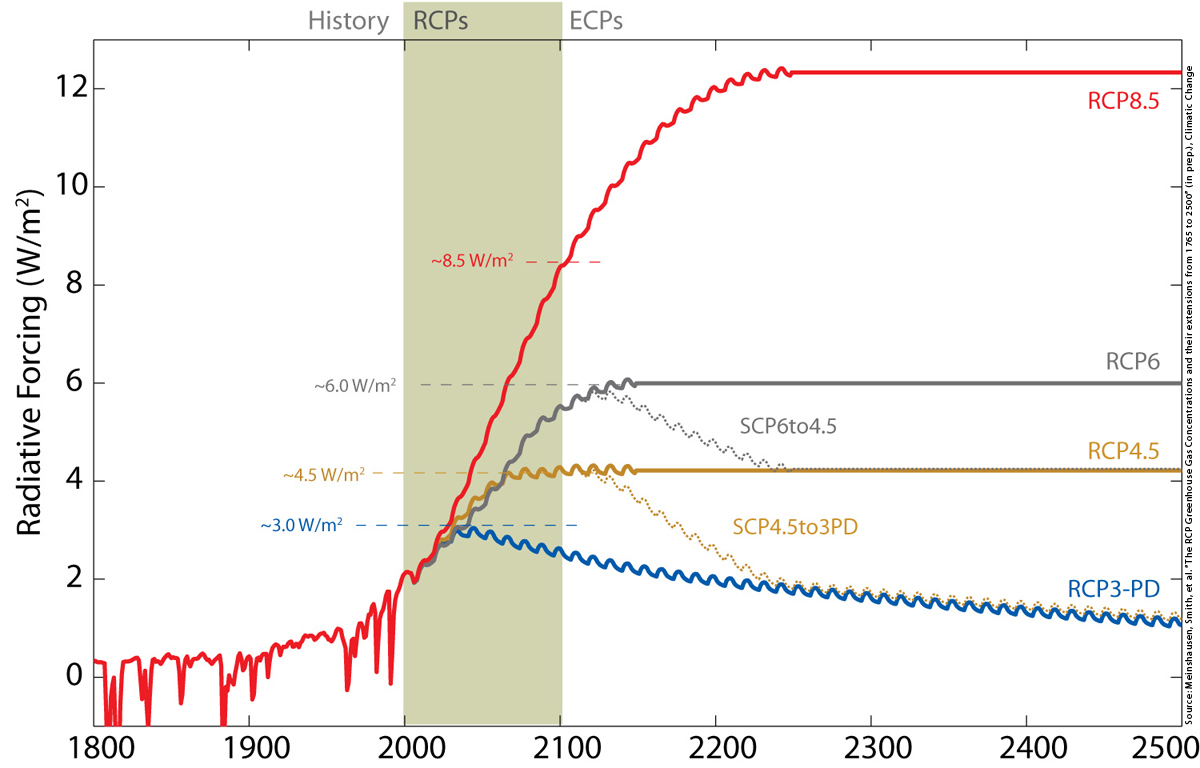
No uncertainty ranges are shown and reported, as for creating the recommendation datasets for CMIP5, central estimates have been assumed closely in line with central estimates in IPCC AR4. (SCP45to3PD). No uncertainty ranges are shown and reported, as for creating the recommendation datasets for CMIP5, central estimates have been assumed closely in line with central estimates in IPCC AR4. https://www.pik-potsdam.de/~mmalte/rcps/
For this they used two scenarios: the extreme, coal-blackened Dickensian fiction called RCP8.5, and a mid-range emissions projection called RCP4.5. In my 2020 JSW column I discussed the efforts of climate analysts to convince their colleagues to stop using the RCP8.5 scenario because of its unrealistic assumptions. Interestingly the Biden administration report moves away from both RCP scenarios and focuses on a new one from Resources for the Future (RFF) which, through most of the rest of this century, projects emissions even below RCP4.5.
But in the main text of the Carleton paper it highlights mortality estimates associated with an RCP8.5 future. Basically we all die a fiery death. If you want to know what the results are using RCP4.5, you will need to track down the 113-page online-only appendix and navigate to page A75, then transfer a table full of numbers to a spreadsheet so you can compare the outcomes.
The two figures on this page summarize what they show. With no adaptation, under the RCP8.5 emissions scenario each tonne of CO2 kills 221 people per hundred thousand (100k) between now and 2300, with the uncertainty range shown by the whisker line. Under RCP4.5 each tonne kills 40 people per 100k. I estimated what their model would yield using the RFF scenario: the effect drops further to 18 people per 100k, and the number is not significantly different from zero.
The second figure reports results if adaptive behaviour is assumed. Under RCP8.5 the mortality rate per 100k drops to 85 people, under RCP4.5 it drops to 14 and under the RFF scenario it drops to five, and the latter two estimates are not significantly different from zero, which means that there is no statistically valid reason to add the mortality effect to an SCC model.
Another step in the analysis is to place a value on these deaths, which depends on things like age and income in every place. Digging further into the online appendix (p. A100), if they stick with RCP4.5 but use a variant that predicts higher income growth the value of the mortality effect goes negative, which means taking account of the lives saved or lost due to warming leads to a lower SCC.
No mention of this in Guilbeault’s announcement.
Thus I reiterate that SCC estimates are if-then statements. They are not intrinsically true or false: what matters is the credibility of the assumptions.
♦ If emissions follow the RCP8.5 scenario (which they won’t), and ♦ if people don’t adapt to climate change (which they will), and ♦ if CO2 and warm weather stop being good for plants (which is unlikely), then the SCC could be five times larger than previously thought.
More likely it isn’t, and very well could be much smaller.
The post below updates the UAH record of air temperatures over land and ocean. Each month and year exposes again the growing disconnect between the real world and the Zero Carbon zealots. It is as though the anti-hydrocarbon band wagon hopes to drown out the data contradicting their justification for the Great Energy Transition. Yes there is warming from an El Nino buildup but no basis to blame it on CO2.
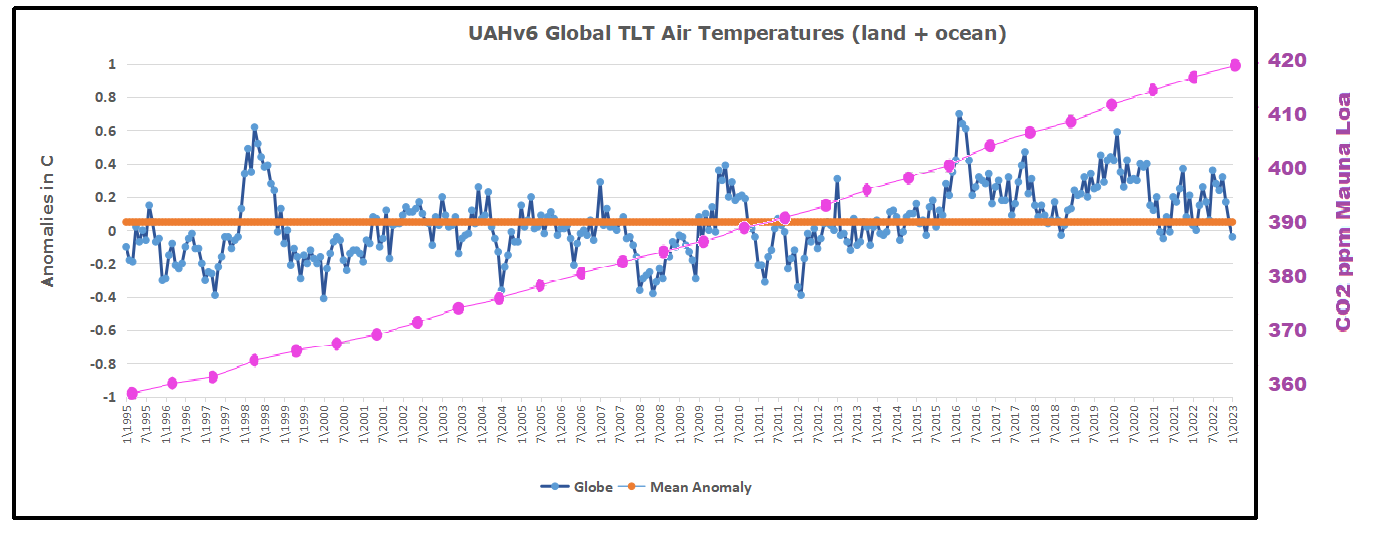
As an overview consider how recent rapid cooling completely overcame the warming from the last 3 El Ninos (1998, 2010 and 2016). The UAH record shows that the effects of the last one were gone as of April 2021, again in November 2021, and in February and June 2022 Now at year end 2022 and continuing into 2023 global temp anomaly is matching or lower than average since 1995, an ENSO neutral year. (UAH baseline is now 1991-2020).
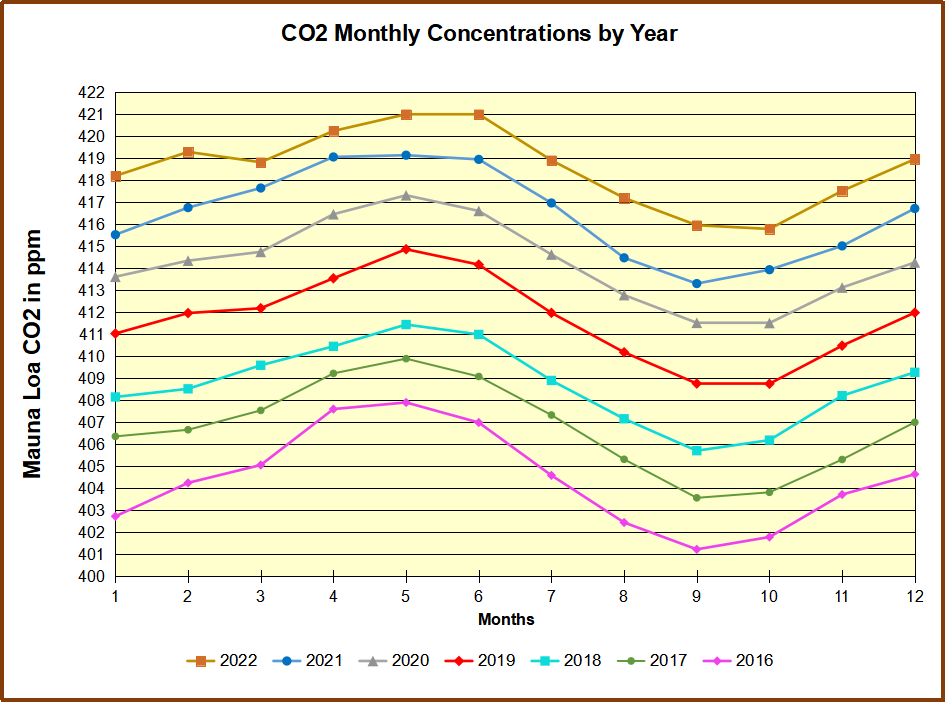
For reference I added an overlay of CO2 annual concentrations as measured at Mauna Loa. While temperatures fluctuated up and down ending flat, CO2 went up steadily by ~60 ppm, a 15% increase.
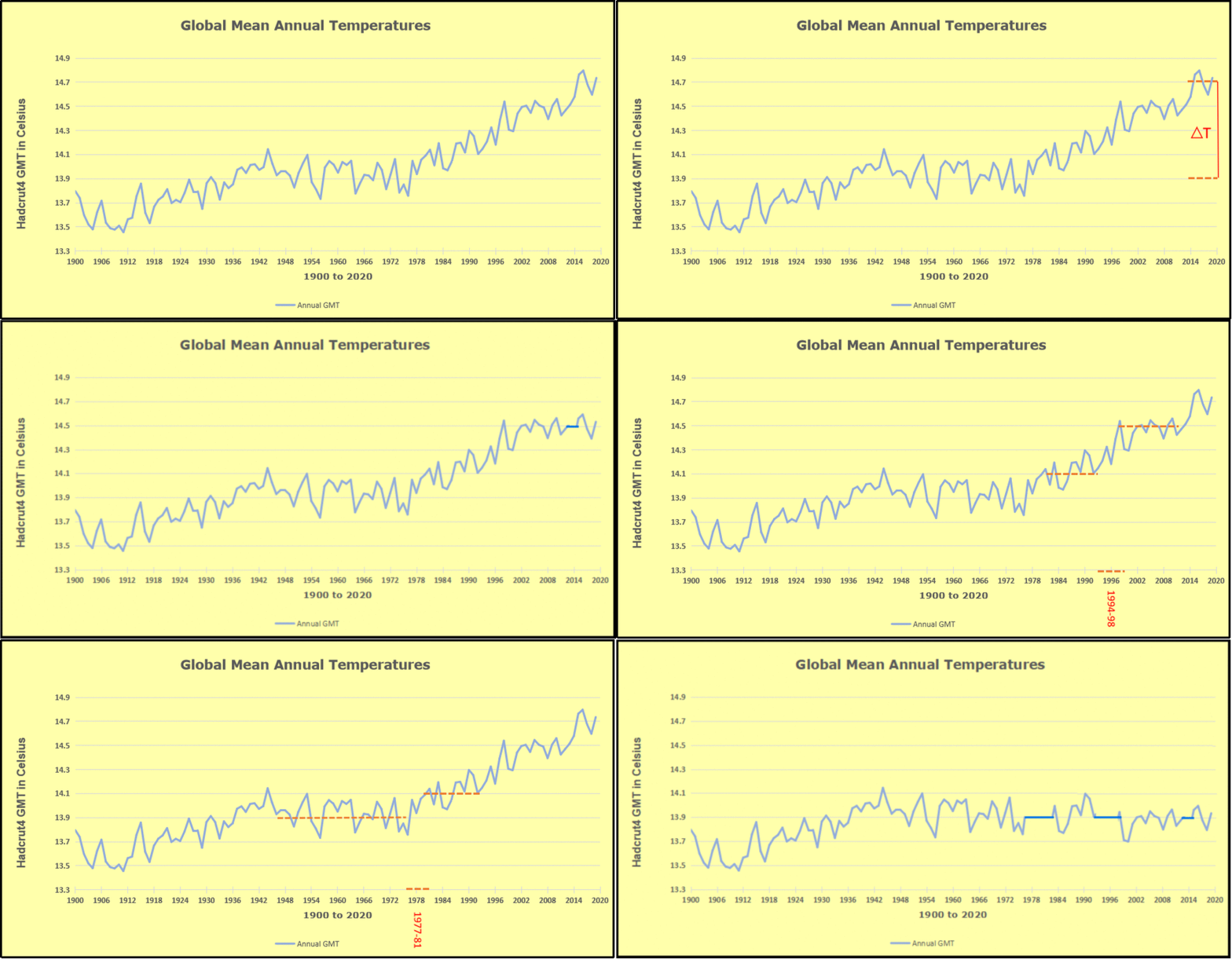
Furthermore, going back to previous warmings prior to the satellite record shows that the entire rise of 0.8C since 1947 is due to oceanic, not human activity.
The animation is an update of a previous analysis from Dr. Murry Salby. These graphs use Hadcrut4 and include the 2016 El Nino warming event. The exhibit shows since 1947 GMT warmed by 0.8 C, from 13.9 to 14.7, as estimated by Hadcrut4. This resulted from three natural warming events involving ocean cycles. The most recent rise 2013-16 lifted temperatures by 0.2C. Previously the 1997-98 El Nino produced a plateau increase of 0.4C. Before that, a rise from 1977-81 added 0.2C to start the warming since 1947.
Importantly, the theory of human-caused global warming asserts that increasing CO2 in the atmosphere changes the baseline and causes systemic warming in our climate. On the contrary, all of the warming since 1947 was episodic, coming from three brief events associated with oceanic cycles.
Update August 3, 2021
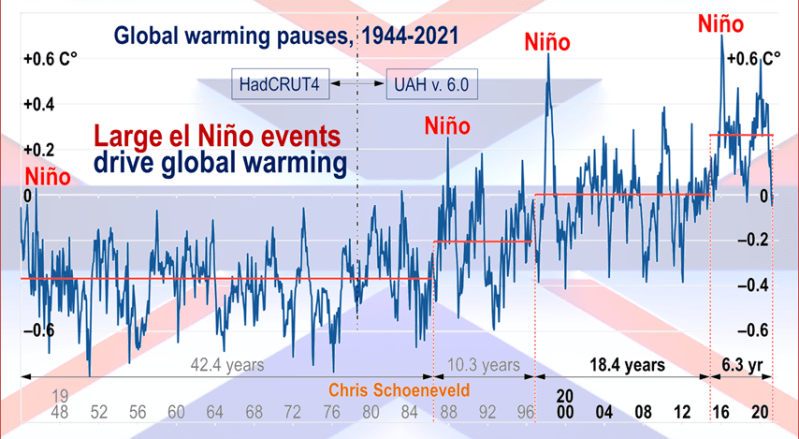
Chris Schoeneveld has produced a similar graph to the animation above, with a temperature series combining HadCRUT4 and UAH6. H/T WUWT
With apologies to Paul Revere, this post is on the lookout for cooler weather with an eye on both the Land and the Sea. While you will hear a lot about 2020-21 temperatures matching 2016 as the highest ever, that spin ignores how fast the cooling set in. The UAH data analyzed below shows that warming from the last El Nino Had fully dissipated with chilly temperatures in all regions. After a warming blip in 2022, land and ocean temps dropped again with 2023 starting below the mean since 1995. Now in March to May EL Nino appears in a Tropical ocean Spike.
UAH has updated their tlt (temperatures in lower troposphere) dataset for May 2023. Posts on their reading of ocean air temps this month preceded updated records from HadSST4. I last posted on SSTs using HadSST4 El Nino Comes to Save Global Warming April 2023. This month also has a separate graph of land air temps because the comparisons and contrasts are interesting as we contemplate possible cooling in coming months and years. Sometimes air temps over land diverge from ocean air changes. For example in February, Tropical ocean temps alone moved upward, while temps in all land regions rebounded after hitting bottom. In May, as shown later on, ocean air everywhere warmed, led by a Tropics spike, while land air temps also rose sharply, despite cooling in SH. Thus a Global uptick in UAH temperature record.
Note: UAH has shifted their baseline from 1981-2010 to 1991-2020 beginning with January 2021. In the charts below, the trends and fluctuations remain the same but the anomaly values change with the baseline reference shift.
Presently sea surface temperatures (SST) are the best available indicator of heat content gained or lost from earth’s climate system. Enthalpy is the thermodynamic term for total heat content in a system, and humidity differences in air parcels affect enthalpy. Measuring water temperature directly avoids distorted impressions from air measurements. In addition, ocean covers 71% of the planet surface and thus dominates surface temperature estimates. Eventually we will likely have reliable means of recording water temperatures at depth.
Recently, Dr. Ole Humlum reported from his research that air temperatures lag 2-3 months behind changes in SST. Thus the cooling oceans now portend cooling land air temperatures to follow. He also observed that changes in CO2 atmospheric concentrations lag behind SST by 11-12 months. This latter point is addressed in a previous post Who to Blame for Rising CO2?
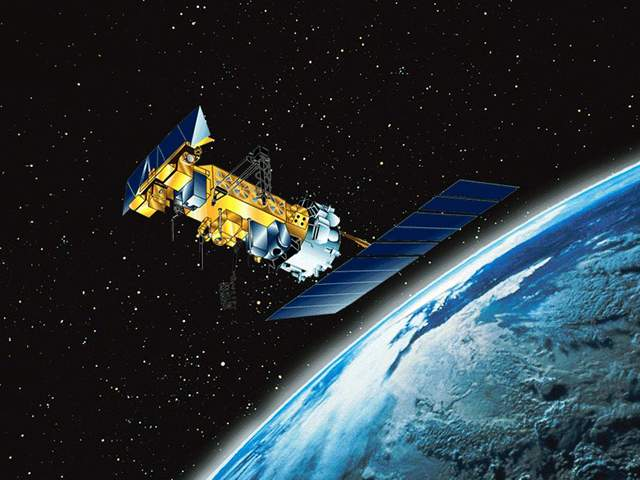
After a change in priorities, updates are now exclusive to HadSST4. For comparison we can also look at lower troposphere temperatures (TLT) from UAHv6 which are now posted for May. The temperature record is derived from microwave sounding units (MSU) on board satellites like the one pictured above. Recently there was a change in UAH processing of satellite drift corrections, including dropping one platform which can no longer be corrected. The graphs below are taken from the revised and current dataset.
The UAH dataset includes temperature results for air above the oceans, and thus should be most comparable to the SSTs. There is the additional feature that ocean air temps avoid Urban Heat Islands (UHI). The graph below shows monthly anomalies for ocean air temps since January 2015.
Note 2020 was warmed mainly by a spike in February in all regions, and secondarily by an October spike in NH alone. In 2021, SH and the Tropics both pulled the Global anomaly down to a new low in April. Then SH and Tropics upward spikes, along with NH warming brought Global temps to a peak in October. That warmth was gone as November 2021 ocean temps plummeted everywhere. After an upward bump 01/2022 temps reversed and plunged downward in June. After an upward spike in July, ocean air everywhere cooled in August and also in September.
After sharp cooling everywhere in January 2023, all regions were into negative territory. Note the Tropics matched the lowest, followed since by spiking upward +0.7C, with the largest increase in May 2023. Warming in both NH and SH added to a higher Global temp. The SSTs are comparable to May 2015 and May 2017, with another peak like 2016 possible.
Land Air Temperatures Tracking Downward in Seesaw Pattern
We sometimes overlook that in climate temperature records, while the oceans are measured directly with SSTs, land temps are measured only indirectly. The land temperature records at surface stations sample air temps at 2 meters above ground. UAH gives tlt anomalies for air over land separately from ocean air temps. The graph updated for May is below.
Here we have fresh evidence of the greater volatility of the Land temperatures, along with extraordinary departures by SH land. Land temps are dominated by NH with a 2021 spike in January, then dropping before rising in the summer to peak in October 2021. As with the ocean air temps, all that was erased in November with a sharp cooling everywhere. After a summer 2022 NH spike, land temps dropped everywhere, and in January, further cooling in SH and Tropics offset by an uptick in NH.
Remarkably, in 2023, SH land air anomaly shot up 1.2C, from -0.56C in January to +0.67 in April. Now in May, rising Tropical and NH Land air temps rose, pulling up the Global land anomaly, despite a drop in SH land temps.
The Bigger Picture UAH Global Since 1980
The chart shows monthly Global anomalies starting 01/1980 to present. The average monthly anomaly is -0.06, for this period of more than four decades. The graph shows the 1998 El Nino after which the mean resumed, and again after the smaller 2010 event. The 2016 El Nino matched 1998 peak and in addition NH after effects lasted longer, followed by the NH warming 2019-20. An upward bump in 2021 was reversed with temps having returned close to the mean as of 2/2022. March and April brought warmer Global temps, later reversed, and with the sharp drops in Nov., Dec. and January 2023 temps, there was no increase over 1980. Now in 2023 the May peak matches the two previous Julys. Where it goes from here, up or down, remains to be seen.
TLTs include mixing above the oceans and probably some influence from nearby more volatile land temps. Clearly NH and Global land temps have been dropping in a seesaw pattern, nearly 1C lower than the 2016 peak. Since the ocean has 1000 times the heat capacity as the atmosphere, that cooling is a significant driving force. TLT measures started the recent cooling later than SSTs from HadSST3, but are now showing the same pattern. It seems obvious that despite the three El Ninos, their warming has not persisted, and without them it would probably have cooled since 1995. Of course, the future has not yet been written.
Dissenters from the catastrophe consensus on warming are worth listening to.
Stop with all the existential-crisis talk. President Biden said, “Climate change is literally an existential threat to our nation and to the world.” Defense Secretary Lloyd Austin also talks about the “existential threat” of climate change. National security adviser Jake Sullivan identifies an “accelerating climate crisis” as one reason for a “new consensus” for government picking winners and losers in the economy. Be wary of those touting consensus.
But what if the entire premise is wrong?What if the Earth is self-healing? Before you hurl the “climate denier” invective at me, let’s think this through. Earth has been around for 4.5 billion years— living organisms for 3.7 billion. Surely, an enlightened engineer might think, the planet’s creator built in a mechanism to regulate heat, or we wouldn’t still be here to worry about it.
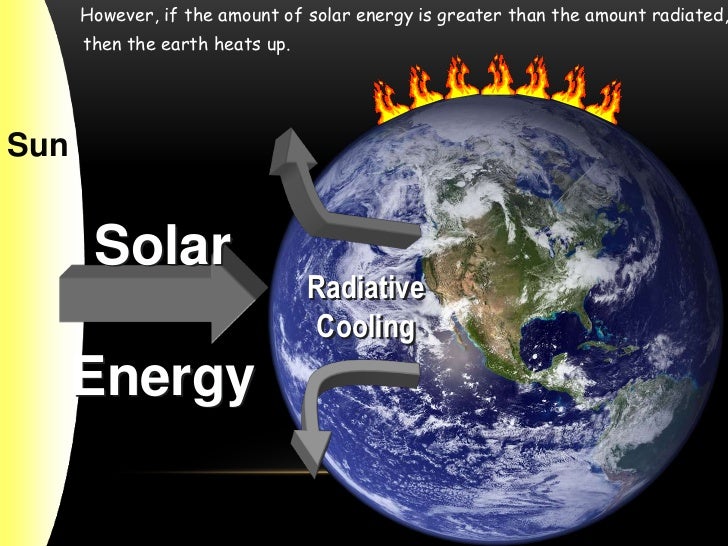
The theory of climate change is that excess carbon dioxide and methane trap the sun’s radiation in the atmosphere, and these man-made greenhouse gases reflect more of that heat back to Earth, warming the planet. Pretty simple. Eventually, we reach a tipping point when positive feedback loops form—less ice to reflect sunlight, warm oceans that can no longer absorb carbon dioxide—and then we fry, existentially. So lose those gas stoves and carbon spewing Suburbans.
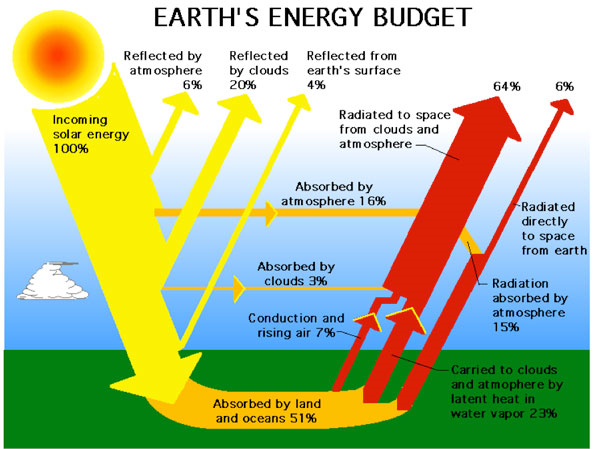
Note nearly half incoming solar energy is not absorbed by Earth’s surface.
But nothing is simple. What about negative feedback loops? Examples: human sweat and its cooling condensation or our irises dilating or constricting based on the amount of light coming in. Clouds, which can block the sun or trap its radiation, are rarely mentioned in climate talk.
Why? Because clouds are notoriously difficult to model in climate simulations. Steven Koonin, a New York University professor and author of “Unsettled,” tells me that today’s computing power can typically model the Earth’s atmosphere in grids 60 miles on a side. Pretty coarse. So, Mr. Koonin says, “the properties of clouds in climate models are often adjusted or ‘tuned’ to match observations.” Tuned!
Last month the coddling modelers at the United Nations’ World Meteorological Organization stated that “warming El Niño” and “human-induced climate change” mean there is a “66% likelihood that annual average global temperatures will exceed the threshold of 1.5 degrees Celsius above preindustrial levels by 2027.” Notice that El Niño is mentioned first.
To enlarge open image in new tab.
Richard Lindzen, a professor at the Massachusetts Institute of Technology and lead author of an early Intergovernmental Panel on Climate Change report, told me, “Temperatures in the tropics remain relatively constant compared with changes in the tropics-to-pole temperatures. The tropics-polar difference is about 40 degrees Celsius today but was 20 degrees during the warm Eocene Epoch and 60 degrees during Ice Ages.” This difference has more to do with changes in the Earth’s rotation, like wobbling, than anything else. According to Mr. Lindzen, this effect is some 70 times as great as human-made greenhouse gases.
OK, back to clouds. Cumulus clouds, the puffy ones often called thunderclouds, are an important convection element, carrying heat from the Earth’s surface to the upper atmosphere. Above them are high-altitude cirrus clouds, which can reflect heat back toward the surface. A 2001 Lindzen paper, however, suggests that high-level cirrus clouds in the tropics dissipate as temperatures rise. These thinning cirrus clouds allow more heat to escape. It’s called the Iris Effect, like a temperature-controlled vent opener for an actual greenhouse so you don’t (existentially) fry your plants. Yes, Earth has a safety valve.
Mr. Lindzen says, “This more than offsets the effect of greenhouse gases.” As you can imagine, theories debunking the climate consensus are met with rebuttals and more papers. Often, Mr. Lindzen points out, critics, “to maintain the warming narrative, adjust their models, especially coverage and reflection or albedo of clouds in the tropics.” More tuning.
A 2021 paper co-authored by Mr. Lindzen shows strong support for an Iris Effect. Maybe Earth really was built by an engineer. Proof? None other than astronomer Carl Sagan described the Faint Young Sun Paradox that, 2.5 billion years ago, the sun’s energy was 30% less, but Earth’s climate was basically the same as today. Cirrus clouds likely formed to trap heat—a closed Iris and a negative feedback loop at work.
Figure 2: At higher temperatures there are more thunderstorms over the ocean and the area without high level clouds (dry and clear) expands further and thus allows more heat to radiate off into space (strong OLR) than when temperatures are lower, i.e. when the iris is smaller. Source: Figure 1 from MS15.
In a 2015 Nature Geoscience paper, Thorsten Mauritsen and Bjorn Stephen at the Max Planck Institute for Meteorology reran climate models using the Iris Effect and found them better at modeling historic observations. No need for tuning. Wouldn’t it be nice if the U.N. used realistic cloud and climate models?
Earth has warmed, but I’m convinced negative feedback loops will save us. Dismissing the Iris Effect or detuning it isn’t science. Sadly, climate science has morphed into climate rhetoric. And note, Treasury Secretary Janet Yellen explained in April that green spending “is, at its core, about turning the climate crisis into an economic opportunity.” Hmmm. “Catastrophic,” “existential” and “crisis” are cloudy thinking. Negative feedback is welcome. Dissenters from the catastrophe consensus on warming are worth listening to.
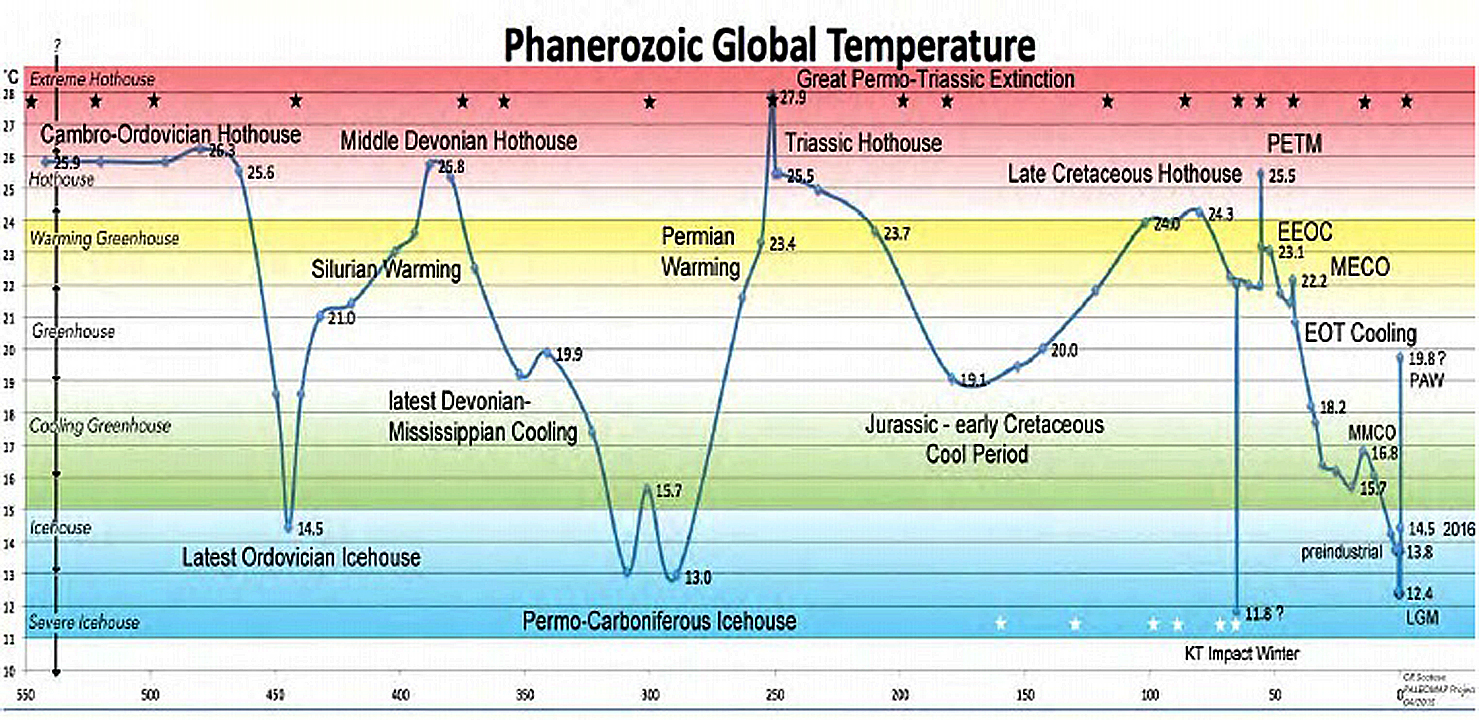
Footnote–Phanerozoic Temperatures
Maurice Lavigne commented that the best evidence of our self-regulating climate is found in the Phanerozoic temperature record. I had to find out what he meant, which led me to discover this:
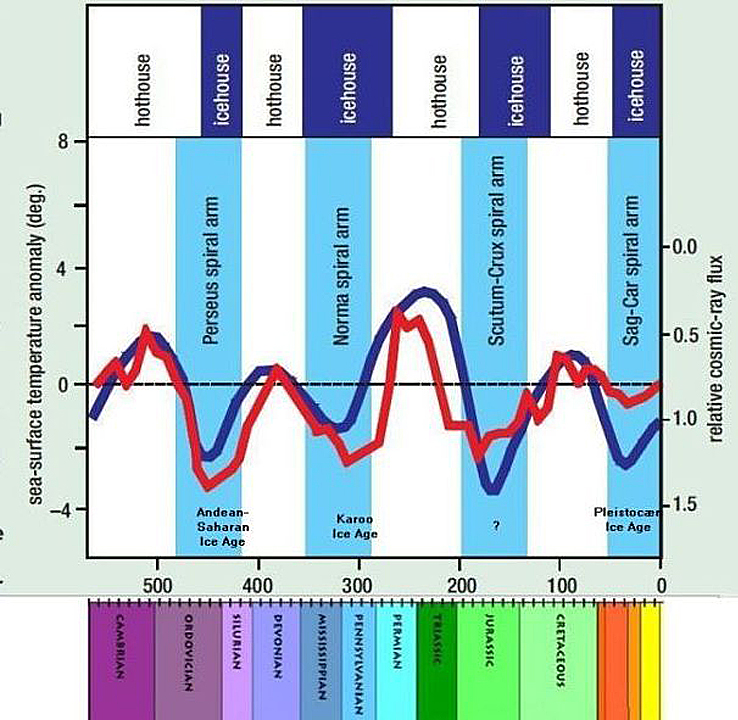
Cosmic radiation and temperature through Phanerozoic according to Nir Shaviv and Jan Veizer. The vertical axis on the left represents the temperature as deviations from present temperature. The vertical axis on the right shows the cosmic radiation as multiples of radiation today – today’s radiation is set to 1. Note that the right scale is inverted so that strong radiation can be compared to low temperature. The red curve represents the temperature and the blue radiation. Temperature and cosmic radiation appear to have a very good correlation. The horizontal axis represents time through Phanerozoic’s more than 500 million years. Note that the Carboniferous is divided into “Missisipian” and “Pennsylvanian”, that is an American custom, referring to different types of coal from the coal mines.
The image above comes from Christopher Scotese PaleoMAP project, showing the dramatic temperature and climate shifts, hothouse to icehouse and everything in between. Finally, a graph showing these temperature cycles unrelated to CO2 concentrations.
The United Nations has declared war on conspiracy theories, describing the rise of conspiracy thinking as “worrying and dangerous”, and providing the public with a toolkit to “prebunk” and “debunk” anybody who dares to suggest that world governments are anything but completely honest, upstanding and transparent.
The UN also warns that George Soros, the Rothschilds and the State of Israel must not be linked to any “alleged conspiracies.”
UNESCO has teamed up with Twitter, the European Commission and the World Jewish Congress to launch the campaign dubbed #ThinkBeforeSharing: Stop the spread of conspiracy theories.
The UN wants you to know that events are NOT “secretly manipulated behind the scenes by powerful forces with negative intent” and if you encounter anybody who thinks the global elite are conspiring to consolidate power and dictate global events, you must take action.
According to UNESCO, “if you are certain you have encountered a conspiracy theory” on the internet then you must “react” immediately post a relevant link to a “fact-checking website” in the comments.
(Never mind the fact that “fact checkers” are mostly untrained and unqualified hacks performing “fact checks” from the comfort of their bedroom in between posting far-left political content on personal blogs and getting high.)
Remarkably, hidden in the fine print, UNESCO admit that conspiracy theories do exist. Under the heading “What is a real conspiracy?” the United Nations bureaucrats explain that “real conspiracies large and small DO exist.”
According to the UN, it’s only a REAL conspiracy theory if it’s “unearthed by the media.”
Dr Pierre Kory – On Ivermectin – At Euro Parliament Summit 2023 is the video above. Below is my transcript with my bolds from closed captions and exhibits from a similar, longer presentation at Rumble.
Thank you I appreciate the invitation. I want to speak about a topic; I don’t think any of the topics today are pleasant, but this one is particularly unpleasant to me. I’m going to talk about the global war on Ivermectin. There was a massive Global disinformation campaign whose only objective is to suppress the evidence of efficacy of this life-saving drug. My colleague Dr Brouqui just referred to the war on Hydroxychloroquine.
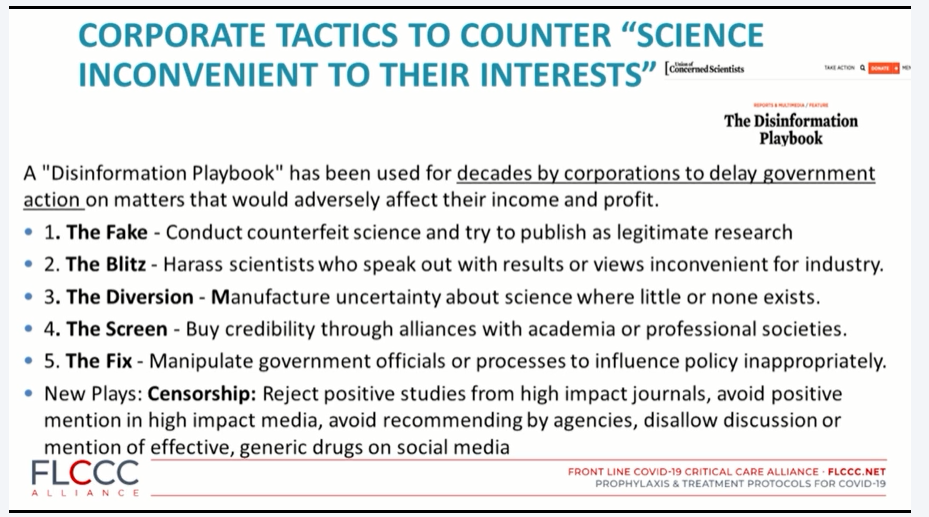
I’m going to take you through this almost like a case study showing what they do. Keep in mind it has nothing to do with Ivermectin, and everything to do with a decades-long war. They’ve been doing these things for decades on any generic off patent drug which threatens their profits.
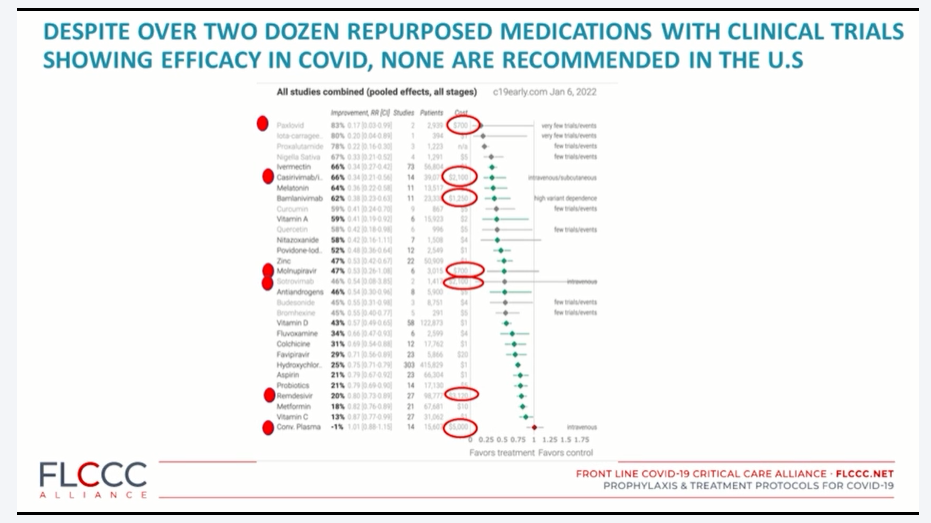
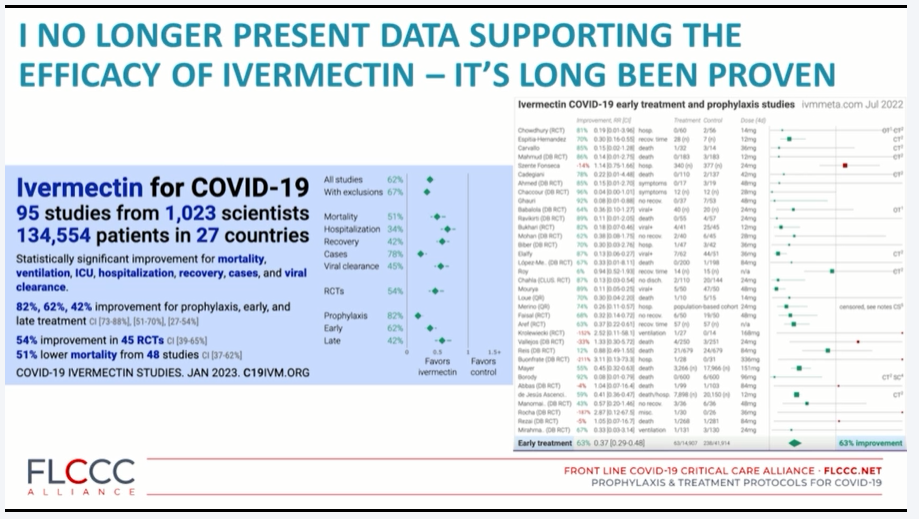
This is a forest plot. On the left are medicines that have trials to show that they’re effective against Covid. We have 43 effective therapies. Likely you’ve not heard of any of them if you live in the United States. The only ones approved are the ones that are circled. They have something in common, which is they’re all absurdly expensive and present massive profits to pharmaceutical companies. Any medicine, no matter how many studies supporting it–if it costs a dollar or two, it will not find regulatory approval in any Advanced Health economy around the world. And as a result people die. They die frequently and in high numbers because there’s a barrier to getting access to these medicines, to having them recommended. Currently Ivermectin it has the most studies of any therapy, 95 controlled trials, over 40 are randomized and showing a massive evidence of efficacy.
Now why would they attack Ivermectin? Ivermectin probably, and hydroxychloroquine there, I would consider them almost equal presented a massive threat. It would have halted the vaccine campaign. If they were following the rules, which is you can’t have an effective therapy. It would have skyrocketed the Public Enemy Number One, which is something called Vaccine Hesitancy. Because this was all about the vaccine, and so they had to go after these drugs. It also threatens the profits of all of the Therapeutics that they were rushing out and barely improving on manipulated actually fraudulent single Studies by these companies. So if you talk about remdessivir, paxlovid and monopirovir: Billion dollar contracts were written by our government before those studies ever were published. There were press releases issued and contracts signed, and billions of dollars went into the pharmaceutical companies hands. They could not have a competitor.
So how did they do this? Well it’s called disinformation, and I’m going to be speaking specifically to the tactics used by Industries when science emerges that’s inconvenient to their industry interests. Every industry follows this playbook when science emerges that’s threatens their interests. No industry is more skilled at this than the pharmaceutical industry.
In modern times with the consolidation of Media power, they control social media
and they’ve completely captured regulatory Health agencies.
Across Advanced Health economies, they can make you believe that things are true; they can make you believe that things are false. And it makes you complicit in their own device. It’s largely centered around the use of propaganda and censorship, yet their abilities to do both of those things are historically unparalleled. We now have a global media and communication system which allows them to do this propaganda and censorship worldwide.
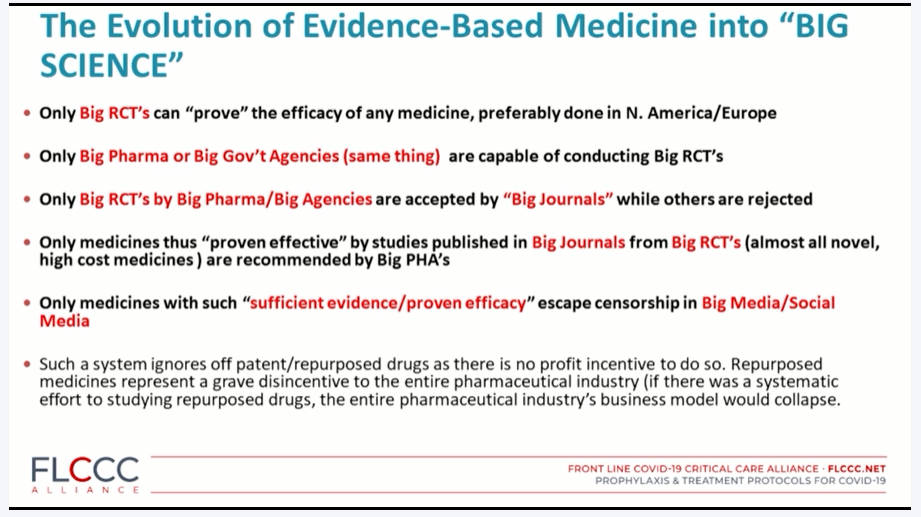
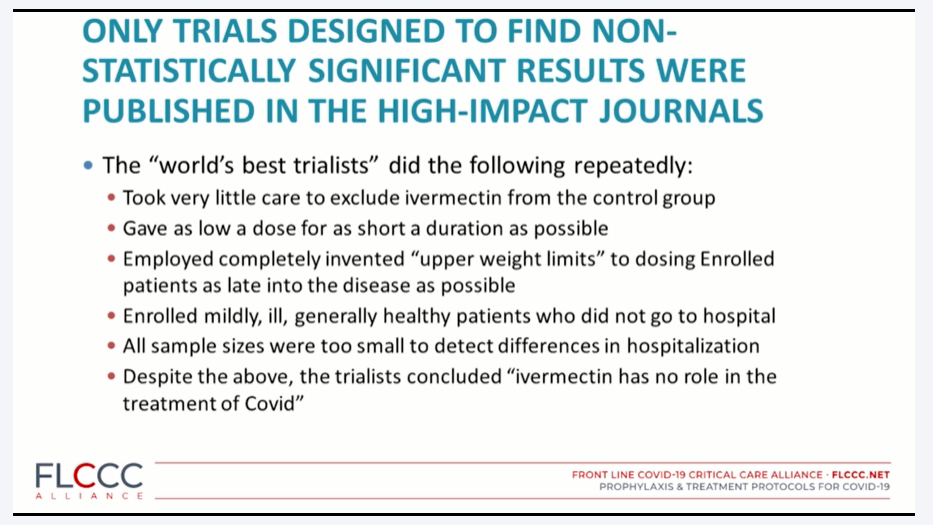
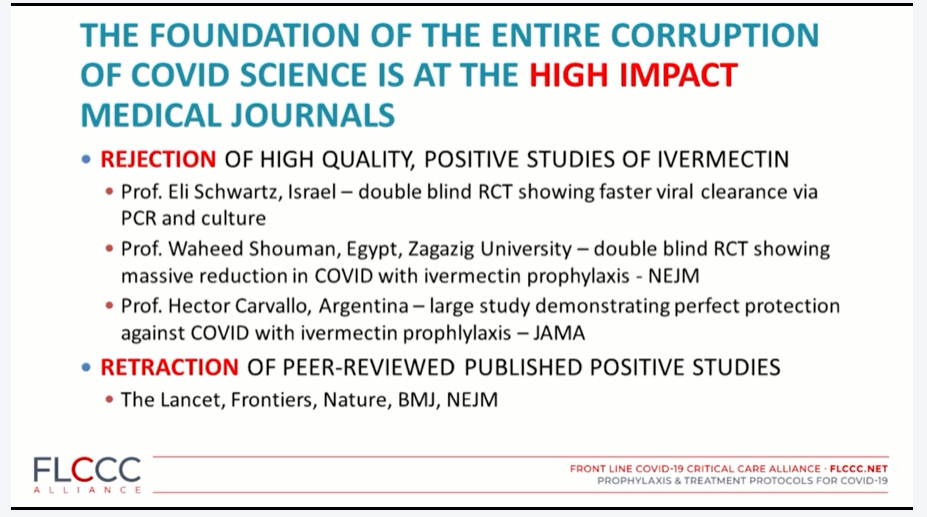
The biggest and the foundation of this entire disinformation campaign, I’m sorry to tell you, occurred at the level of the studies that were done by big agencies. So the biggest and highest funded studies were the most corrupt. And it occurred at the level of the highest impact medical journals in the world as well. The world’s leading Health agencies, one of which is in the US.
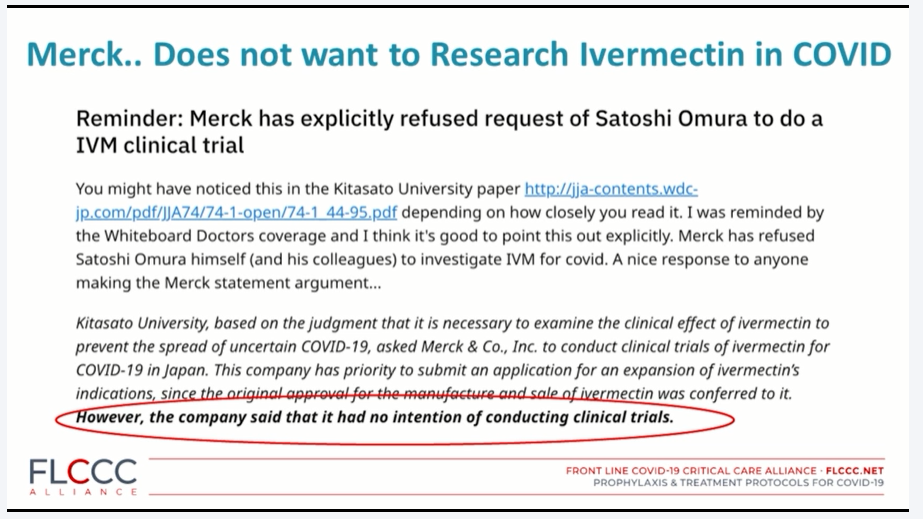
Keep in mind they were they were scared of Ivermectin from the beginning. My colleague Dr Robert Malone and other researchers had already identified Ivermectin as effective against at least a dozen RNA viruses before covid began. They were worried about Ivermectin and its antiviral properties. So when the Nobel prize winning Discoverer Omura asked Merck his old partner: “ I think we should study Ivermectin for covid, what did Merck say? “No thank you.” in the middle of a global pandemic.
Merck went even farther and one night in February of 2021 when there was nothing to support these three statements; I will tell you their public relations team put this on their website.
Now to find that a big big pharmaceutical company would publish lies on their website is completely unsurprising to me. But the surprise in this was the launched media campaigns around the world where media trumpeted over and over started to echo a pharmaceutical company whose three statements are so obviously protecting their profits. And this became a PR campaign that went around the world: “ Merck says that Ivermectin doesn’t work.”
So you could see this started early before there was any evidence to show that it didn’t work. In fact at the time of my testimony two months prior to that statement, I already had 35 controlled trials, 17 of which were randomized controlled trials. There was already an immense amount of evidence showing its efficacy. As of two weeks ago we have 95 controlled trials with 134, 000 patients.
If you look at the forest plot to the side all of the green squares that were going all the way to the left are showing large magnitude estimates of efficacy from dozens and dozens of Trials. These are only the early treatment trials. IVM is the most proven medication in history, yet not one Advanced Health economy around the world recommends it. Almost all hospitals have removed it from their formularies, and if you try to get filled at a pharmacy, any Retail Pharmacy in any of those developed countries, the pharmacist will not do it. They’re scared to death.
The trials. So how come we have all of these big rigorous large high quality trials? There’s
actually only been six of them, so out of the 95 trials, the only ones you’ve seen on the front pages of your newspapers are what I call the Big Six. Out of that 95 there were six trials that were heavily funded and carried out by investigators; they’re called the largest and high quality trials. What did
they show?
Somehow they concluded, in contradiction to all of the other trials,
that Ivermectin wasn’t effective.
How did they do that? Because they know how to do it and have been doing it for a while. They can design trials to show you something works, they can design trials to show you something doesn’t work. They’ve pulled the same tricks over and over again. All you need to know about those six trials compared to the 95: With one exception those were the only trials where every almost every single investigator was drowning in Financial conflicts of interests with pharmaceutical companies.
Every other trial had no Financial conflicts of interest. So ask yourself: Why they reached conclusions that completely departed from the rest of the evidence base.
These are the big six and they appeared in the highest impact journals in the world: New England Journal of Medicine, the Journal of American Medical Association, British Medical Journal, The Lancet and the Annals of Internal Medicine. Every time they were published, they launched PR campaigns across the world. You saw radio and television stations and newspapers blaring latest high quality study shows that Ivermectin doesn’t work.
And then there’s lots of Trials showing that the Ivermectin Advocates of which I’m one, I will tell you every country in the world has experts on Ivermectin who have had to watch and witness this propaganda campaign.
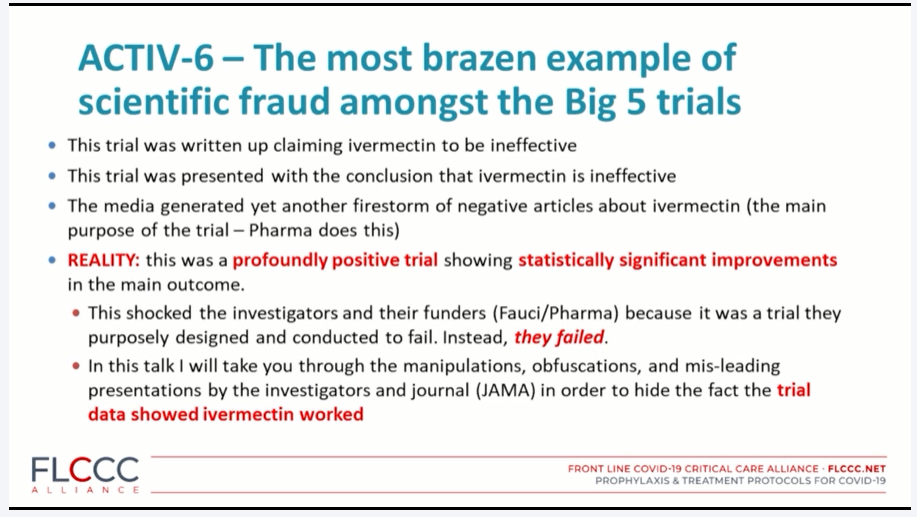
This is one of the more egregious samples. This is my own country, funded by the National Institutes of Health which is our largest research funder. They just did a couple of Trials on Ivermectin in Active-6.
By the way the lead investigator Dr. Susanna Naggie owns stock in a competitor to Ivermectin and she also has conflicts of interest with Gilead which makes as well are Remdesivir and other products that compete with Ivermectin. Do you think that she’s an objective investigator? And do you think it’s an accident she was hired? It is not; she was hired on purpose to do this kind of stuff.
Look at this trial, originally designed to see the difference in symptoms at day 14 which would make sense for an acute viral illness. In the middle of the trial, mysteriously they decided to change the end point from day 14 to day 28. Why would they do that? So look at the results that they found at the posterior P efficacy column in the other table. Anything above 0.95 is a statistically significant result which would show that Ivermectin is superior. In the middle you can see this in the journal; it’s completely public knowledge, yet no one talks about it. Now you can see why they moved it from day 14 to day 28: It was to disappear the statistical significance favoring Ivermetin.
This paper was published in one of the top journals of the world with the conclusion that Ivermectin has no role in the treatment of covid. You know there’s no major differences at day 28, and by the way this are all mild patients. Very few went to the hospital, there was one death and that was in the Ivermectin group. They never got Ivermectin because they died beforehand.
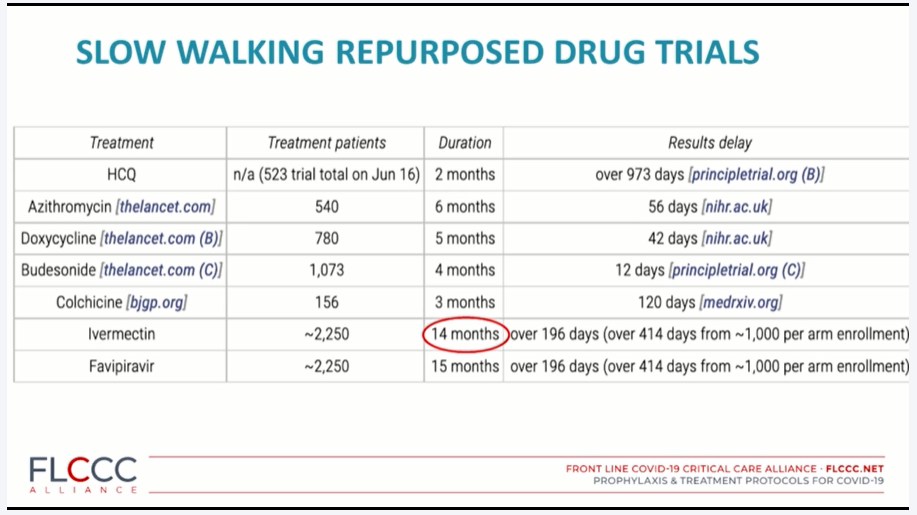
I call it the big six because they were the big ones that were published in the highest impact journals, but it’s really seven. Let’s talk about this seventh one that was started a long time ago by the University of Oxford by the same investigator who did a 25,000 person trial on mobile. Which has been completed and we know the results which shows them when the period doesn’t work.
But it’s a little odd what happened to the Ivermectin trial. It has been 10 months since the trial completed with not one mention of the result. Does anyone find that anomalous or abnormal? When we had to hear results of remdesivir, paxlovid and molnupiravir by press release before the data was available. These people at Oxford are sitting on a positive trial and you know it they won’t publish. They also did other stuff.
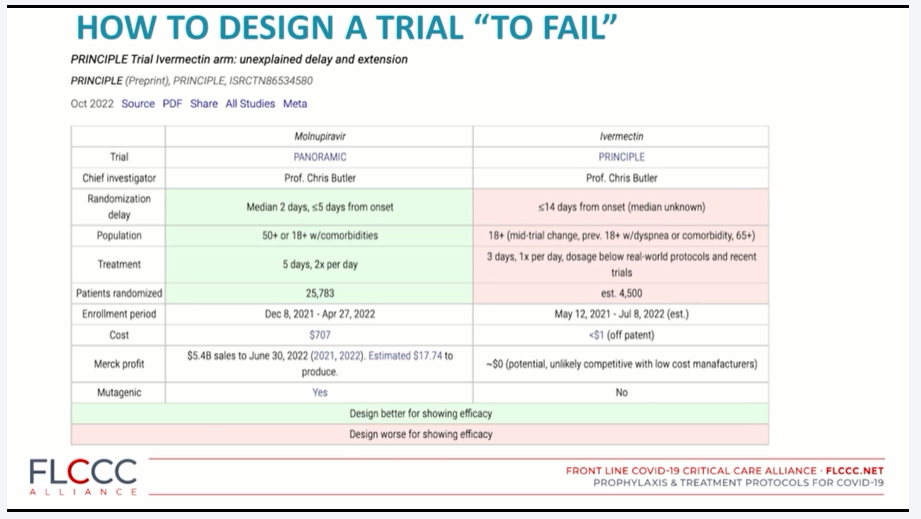
Let’s look at the designs of these trials. This is so Brazen. If you want to show something’s effective, you’re going to make sure to get the study drug into that patient immediately and as early as possible to maximize benefit. So they did a median of two days in a 25, 000 person trial, which is a fantastic achievement. I would love to see that kind of science being practiced everywhere. Only problem was the drug wasn’t effective.
What do they do with Ivermectin? They allow up to 14 days to start the medicine. And we have evidence from some of the participants that they were totally well by the time they got their medicines. This is a fake trial not a real one. But I think they weren’t good enough at what they were doing, because they’re sitting on a positive result. There’s no other explanation why 10 months have gone by and we haven’t heard. They are laying low, sitting quiet because they’ve seen that a lot of us around the world have found all of the fraud and brazen manipulations in the other large trials.
They also did something else. Curiously in the middle of the trial they suddenly announced the halting of the trial and the trialist from Oxford literally claimed to the world that they ran out of ivermectin. Which is so absurd: No self-respecting trials would ever run out of a study drug in the middle. Funny thing is there’s one functioning journalist left in the world and that was at The Epoch Times, and they did they actually did some journalism. They called the pharmaceutical company that was supplying the Ivermectin to Oxford and asked: Hey did you guys run out of ivermectin?” Their answer: “No we have plenty.” This is the kind of stuff they’re doing.
Beyond the Selective publication of negative trials by pharmaceutical companies’ conflicted researchers, in my book which is soon to be published I have numerous examples of researchers around the world with positive randomized controlled Trials of ivermectin they were uniformly and systematically rejected from publication, from any journal in the first or second tier of medical journals. There is an editorial Mafia that controls our top medical journals. Science has been completely corrupted. Beyond the rejections are thosethat actually manage to go through peer review and get published, but were suddenly retracted for reasons we’d never heard of in our careers.
Me and my group have published over 150 peer-reviewed articles, never had one retracted. First time in our lives was our Ivermectin paper.
And then we had to read editorial after editorial you know propelling these narratives that circulated in the media relentlessly: “Don’t believe Ivermectin science, the studies are all low quality, too small in different countries, the doses aren’t the same, it can’t be believed, wait for the real signs.” These are the narratives that they’ve used to try to destroy the evidence of efficacy.
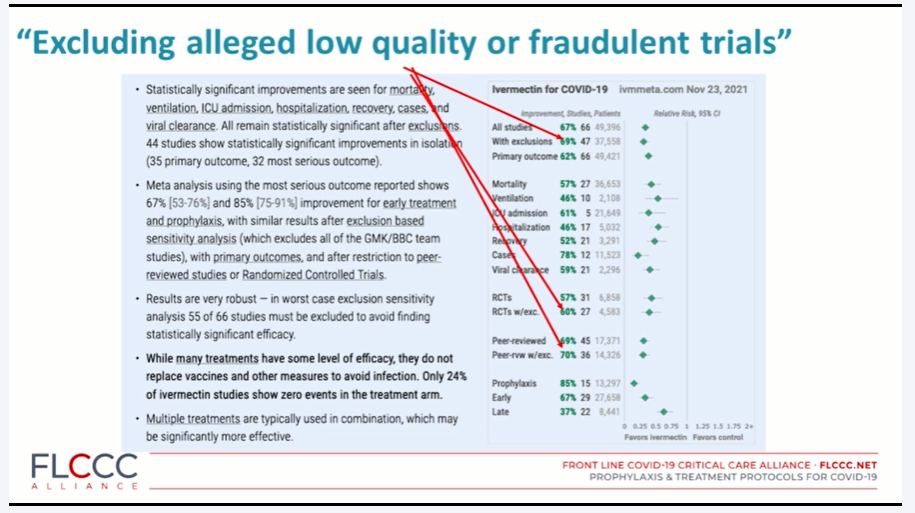
When challenged trials are excluded, Ivermetin efficacy gets even stronger.
This is an example. They picked one trial and they they supposedly found it to be fraudulent. It may or may not have been; there are some unreliable trials in any body of evidence. Researchers say about 20% of Trials will be fraudulent, not unique to Ivermectin. But the world’s leading researcher hired by the WHO in UK published a phenomenally positive meta-analysis which is a summary of 24 randomized control trials which showed statistically significant improvements in mortality, hospitalization time, to clinical recovery and time to viral clearance.
I hadn’t talked to him in a few months and I saw that he published that paper and I couldn’t believe how astoundingly positive that paper was. I could believe it by the fact that the media was silent. It was not carried and then I think the other side got real worried because Andy started behaving very differently. He self-retracted his own paper
And he started removing randomized control trials using invented categories this is from his exact paper it looks like a five-year-old who’s trying to disappear the evidence of efficacy. So he makes up these categories “potentially fraudulent” no definition of what kind of study that is. And then this other category which is “some concerns” So there’s a category of evidence which is when Dr Andrew Hill has some concerns, so he removes and disappears the evidence base to the point where it loses statistical significance. And now he’s claiming it doesn’t work. A bizarre turnaround for this researcher
I’m going to finish with the agencies. We know they control; you cannot work at a health agency without making Pharma happy. Your career is over, you’re off of committees, you don’t graduate from the agencies to get jobs in pharmaceutical unless you do their bidding. They are completely in lockstep. What happened with the Ivermectin story in the United States is that in the middle of August of 2021 Ivermectin prescriptions hit 90,000 a week. They were skyrocketing, everyone was figuring out it was working, everybody was prescribing. In a very short sequence you saw our CDC send out a memo to every State Department of Health which then went to every licensed physician in that state. And that memo said careful of ivermectin we’re seeing overdoses and people are getting injured. They made it out to be a dangerous drug when it’s one of the safest, if not the safest medication we have in history.
And after they said that it was dangerous, all the professional Societies in the United States, without any authority sent out memos to every doctor in the country calling for an immediate cessation of prescribing of ivermectin. What followed was the horse dewormer PR campaign was launched. You can tell a PR campaign in the narrative when it’s two weeks four different channels and that’s what you saw; late night talk show host, News hosts, newspapers, magazines, radio–”Horse dewormer, horse dewormer, horse dewormer. and
At the end of those two weeks no self-respecting doctor would ever prescribe
such a dangerous and ineffective drug and no patient would want to get it.
Do you think that PR campaign was invented in August of 2021, it was not. It was launched in 2021 because they saw they were losing this war against Ivermectin. And here we are at the end of three years and it’s been shut down in most of the advanced health economies around the world. One of the most effective drugs in history, that would have saved millions of lives. This was a humanitarian catastrophe and a crime against humanity yet no one will go to jail for it.
Net Zero has published a wonderful essay by William Briggs On Broken Science. It is a joy to read with great clarity, depth and plain talk while being delightful. The excerpt here is the segment describing how climate science is the epitome of the wider phenomenon of broken science.
We all agree that the planet needs saving. Everybody says so. From global cooling.
When climatology was becoming a new field, they really did say a new ice age was coming.
Newsweek in 1975 reported:
There are ominous signs that the earth’s weather patterns have begun to change dramatically and that these changes may portend a drastic decline in food production.
Time in 1974 said:
Climatologist Kenneth Hare, a former president of the Royal Meteorological Society, believes that the continuing drought…gave the world a grim premonition of what might happen. Warns Hare: ‘I don’t believe the world’s present population is sustainable if [trends continue]’.
There are scores upon scores of these, the scientists and groups such as the UN warning of mass deaths by starvation and so on. Well, climatological science grew, and the temperature warmed, and then we got global warming. Caused, incidentally, by the same thing said to cause global cooling: oil.
Global warming in time became ‘climate change’: a brilliant name, because the earth’s climate changes unceasingly. Thus any change, which is inevitable, can be said to be because of ‘climate change.’ Correlation becomes causation with ease here.
‘Climate change’ was quickly married to scientism, where it came to be synonymous with ‘solutions’ to ‘climate change’. Because of this error, doubt expressed about the so-called solutions caused one to be called a ‘climate change denier’ – an asinine name, because no working scientist, not one, denies the earth’s climate changes or is unaffected by man.
US Secretary of the Treasury Janet Yellen recently said that ‘Climate change is an existential threat’ and that the ‘world will become uninhabitable’ if – you know the rest – if we don’t act. Uninhabitable is a mighty word. Rode and Fischbeck in 2021 examined environmental apocalyptic predictions and discovered that the average time until The End, for those saying we ‘Must act now’, as Yellen did, is about nine years.
Predictions of ‘only nine years left’ started gradually, in the 1970s. They now happen regularly. Funny thing about these forecasts is that failure never counts against theory. Which is another strike against falsification.
That is a story unto itself. Let’s instead peek at the science of ‘climate change.’ Not at the thermodynamics or fluid physics, which is too much for us here, but at the things which are claimed will go bad because of ‘climate change.’
Which is everything. There is no ill that will not be exacerbated by ‘climate change’, and there is no good thing that will escape degradation. ‘Climate change’ will simultaneously cause every beast and bug and weed which is a menace to flourish, and it will corrupt or kill every furry, delicious, and photogenic animal.
There is a fellow in the UK who collects these things. His ‘warm list‘ total right now is about 900 science papers, an undercount. Academics have proved, to their satisfaction, that ‘climate change’ will cause or exacerbate (just reading the first few): AIDS, Afghan poppies destroyed, African holocaust, aged deaths, poppies more potent, Africa devastated, Africa in conflict, African aid threatened, aggressive weeds, Air France crash, air pockets, air pressure changes, airport farewells virtual, airport malaria, Agulhas current, Alaskan towns slowly destroyed, Al Qaeda and Taliban Being Helped, allergy increase, allergy season longer, [and my favourite] alligators in the Thames! And we haven’t even come close to getting out of the As.
There is not one study, that I know of, that remarks on how a slight increase in globally average temperature will lead to more warm, pleasant summer afternoons. That a small change in the earth’s climate, whether caused by man or not, can only be seen as wholly and entirely bad, and can in no way be good, is sufficient proof, I think, that science has gone horribly wrong. It’s not logically impossible, of course, but it cannot be believed.
Yet this doesn’t say how these beliefs are generated. They happen by some of the reasons we’ve already mentioned, but also by forgetting the multiplication of uncertainties.
Given knowledge of coins, the chance of a head on a flip is one half. Two heads in a row is one quarter: the uncertainties are multiplied. Three in a row is one eighth; four is one in sixteen. If the event of interest is that string of four heads, we must announce the small probability of about 6%. It would be an obvious error, and a silly mathematical blunder, to say the probability is ‘one half’ because the chance of the last head is one half. And it would be outrageous if a headline were to blare ‘Earth will see a Head on last throw.’ Agreed?
But that’s exactly how ‘climate change’ scare stories are produced. We first have a model of climate change, and how man might affect the climate. There is only a chance this model is correct. It is not certain. We next have a weather model, which rides on top of the climate model, which says how the weather will change when the climate does. This model is not certain, either. We then have a third model, about how some item of importance – the welfare of some animal or the size of coffee production or whatever – is affected by the weather. This third model is not certain. We finally, or eventually, have a fourth model, which shows how a solution will stop this bad thing from happening. This model is also uncertain.
In the end, it will be announced ‘We must do X to stop Y’. This is equivalent to ‘Earth will see a Head.’ Causal language. Which we agreed was an error. The chain of uncertainties must be multiplied. The greater the chain, the more uncertain the whole must be. This is never remembered, but must be, especially when the number of claims grows almost without bound.
The Deadly Sin Of Reification: Mistaking models for Reality
We are in rugged territory here, for the closer we get to the true nature of causation, which requires a clear understanding of metaphysics, the subtler the mistakes that are made, and the more difficult they are to describe. Plus, I have detained you long enough.
It would, I hope you agree, be an obvious fallacy to say that Y was not or cannot be observed, when Y was in fact observed, because some theory X says Y is not possible. Yes?
This error abounds. X is some cherished model or theory, and Y an observation which is scoffed at, dismissed, or ‘explained’ away, because it does not accord with theory.
This happens in the least sciences, like dowsing or astrology, where practitioners reflexively explain away their mistakes. But it also happens with great and persistent frequency in the greatest sciences, like physics.
It also leads to the current mini-panic over ‘AI’, or ‘artificial intelligence.’ Which it isn’t: intelligence, that is. All models only say what they are told to say – a philosophic truth that when forgotten leads to scientism – and AI is only a model. AI is nothing more than an abacus, which does its calculations at the direction of real intelligence in wooden beads, with the beads replaced with electric potential differences.
But because the allure and love of theory is too strong, it is believed that computer intelligence will somehow ‘emerge’ into real intelligence, just like the behaviour of large objects is said to ‘emerge’ from quantum interactions.
I will upset many when I say this is always a bluff, a great grand bluff. There is no causal proof of ‘emergence’: if there was, it would be given. Talk of emergence is always wishful thinking, reflecting a desire not to question the philosophy of what philosopher Robert Koons and others call ‘microphysicalism’, the ancient Democritian idea that everything is just particles bumping into things.
There are alternatives to this philosophy, such as the revival of Aristotelian metaphysics, which would do wonders for quantum mechanics if it were better known. Unfortunately, we haven’t the time to cover any of them.
The Deadly Sin Of Reification, the mistaking of models for Reality, is much worse than I have made it sound. It leads to strange and untestable creations, such as the multiverse and ‘many worlds’ in physics, and gender theory, and all that they have wrought.
Vaclav Smil has published a major study Natural Gas in the New Energy World For Naturgy Foundation. Excerpts in italics with my bolds and added images.
Bottom Line: There is an ongoing effort to decarbonize the global energy supply and demand system. This has been a general but slower than currently advertised trend over the past many centuries. While more renewables and greater efficiency to lower fossil fuel usage continues, coal, oil, and natural gas will continue to supply the bulk of the world’s energy for much longer than most probably realize. Make no mistake: the drop in demand and CO2 emissions in 2020 came from a global pandemic, not from a structural decline in the use of fossil fuels. As the cleanest fossil fuel with the lowest CO2 emissions, natural gas in particular has an essential role to play, especially in Asia where it can displace the overdependence on higher emission coal.
While the quest for accelerated decarbonization of the global energy supply has obviously been linked to rising concerns about global climate change, there is nothing new about the process itself.
Histories of modern primary energy and electricity production present
clear trends toward lower carbon intensity.
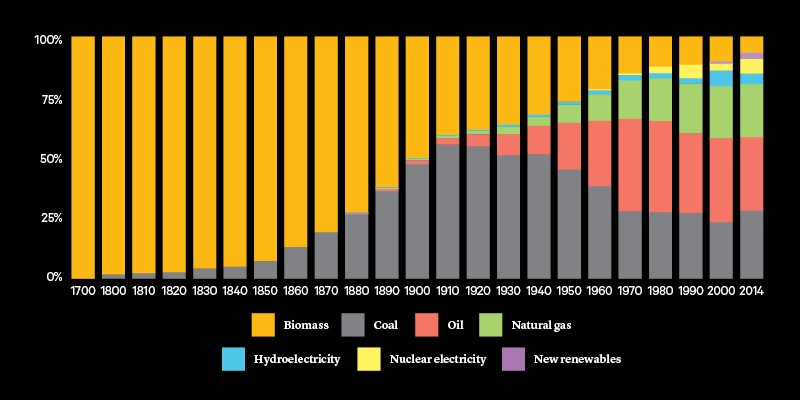
Energy Sources and the Rise of Civilization. Source: Bill Gates
For example, fuelwood was followed by coal, coal by crude oil and crude oil by natural gas, and as fossil-fueled electricity generation was augmented by hydro and nuclear generation and, most recently, by solar and wind-powered conversions.
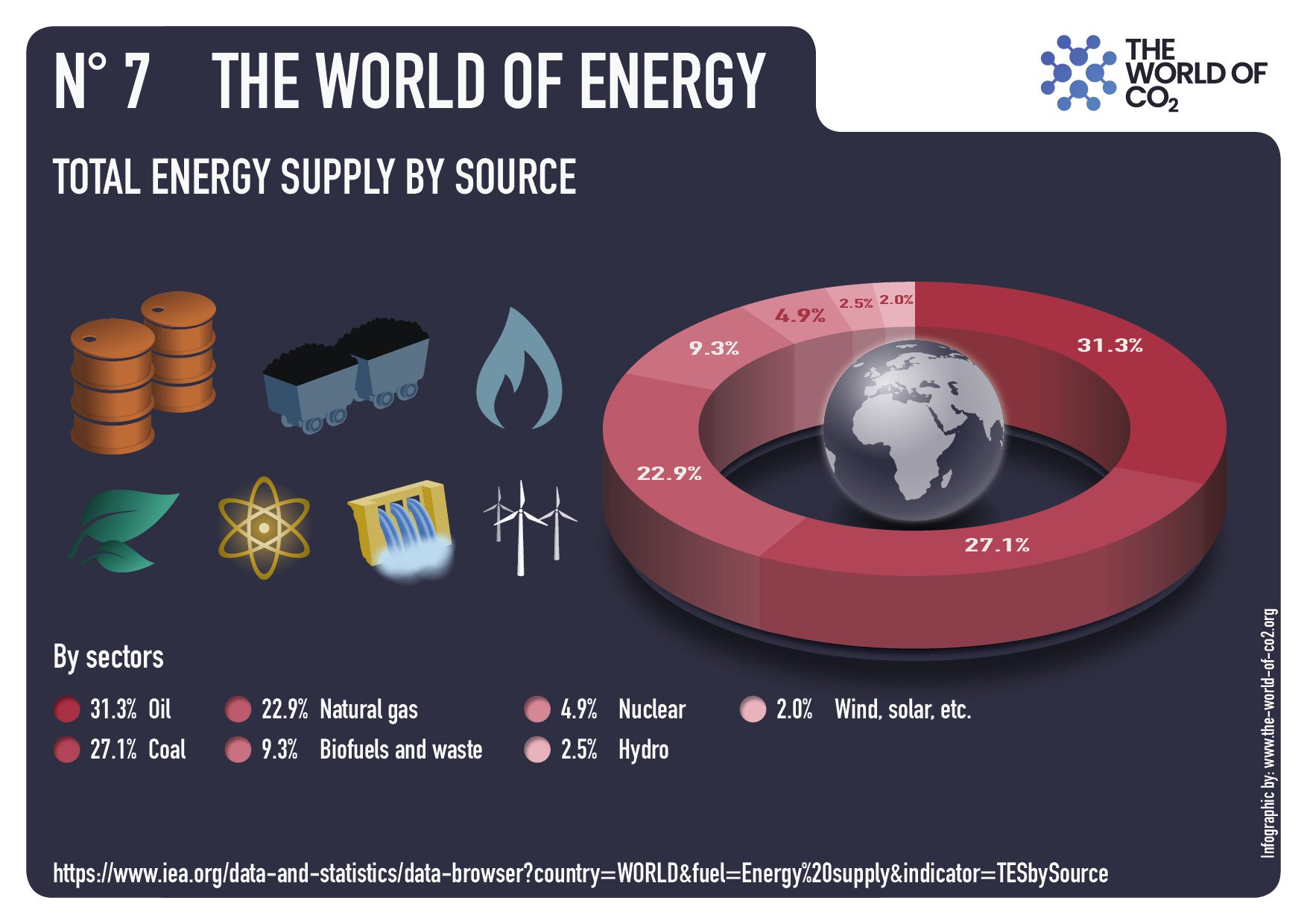
This is an ongoing but not a very fast process: half a century ago the world derived about 94% of its primary energy from fossil fuels, by 2020 the share was still about 85%, while 60% of the world’s electricity was still generated in coal- and natural gas-fired stations (crude oil and refined fuels accounted for another 4% of the total).
During the time of the Covid-19 pandemic in 2020, a temporary drop in CO2 emissions resulting from economic lockdowns in the spring months of 2020 was seen by an increasing number of commentators and governments as the beginning of complete decarbonization that would be accomplished in just three decades.
Indeed, wishful thinking should not be mistaken for realistic appraisals.
To begin with, the global decline in energy use has been far lower than initially assumed. The reduction will only slow down the build-up of atmospheric CO2, it will not even interrupt it.
When looking ahead, it is imperative to separate what is possible in the high-income economies from what is required in low-income nations.
Relatively rapid expansion of renewable electricity generation and the pursuit of higher energy efficiencies can (combined with stationary or declining populations) translate into a steady and significant rate of decarbonization in high-income economies.
Even so, it will be impossible to displace all fossil fuels that are now required for heating, transportation and industrial uses by non-carbon alternatives for decades to come.
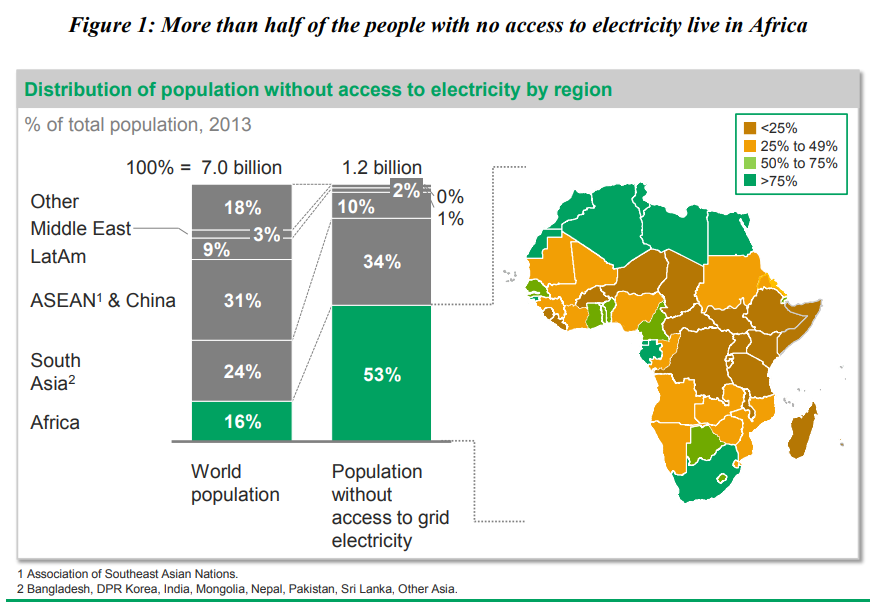
We simply must remain realistic: Asian and African consumption of fossil fuels is still rising and the developmental aspirations of low-income nations ensure that it will continue to increase in the foreseeable future even with accelerated expansion of renewable electricity generation.
Looking ahead requires at least the basic qualitative and quantitative understanding
of what we are dealing with and where we are coming from.
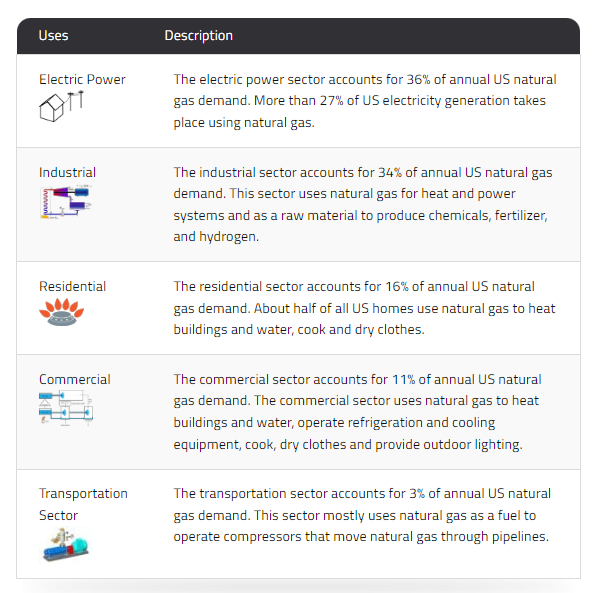
In the future, expanded consumption of natural gas can make as much of substantial difference in today’s low-income countries as it has made in high-income nations: the fuel is perfectly suited to replace coal in electricity generation (one of the fuel’s largest uses), to power new generation capacities that can operate with unequaled dispatchability and conversion efficiency, to be used more efficiently than any other fuel in a multitude of industrial process, and to provide (for a long time to come) an indispensable feedstock for syntheses of many essential chemicals.
The good news is that the global reserves and resource of natural gas is more than
sufficient to encourage a dramatic rise in gas usage around the world.
Findings:
There is an ongoing effort to decarbonize the global energy supply and demand system.
This is NOT a new evolution and has repeated itself many times…but the process takes a lot longer than some are claiming today.
We must be realistic: renewables are growing in importance but will not displace fossil fuels any time soon, measured in decades not years.
Natural gas has a unique and widening role to play, in the still developing world especially, because it is low-cost, lower emission, abundant, highly versatile and efficient, and very reliable.
The imperative is put concisely in US Senate testimony by Robert Bryce in summary video above. For those who prefer reading, I provide below a transcript and exhibits from the closed caption and screen captures.
Legislators and policymakers in Washington need a big dose of energy realism, an even bigger dose of energy humanism.Europe provides a case study for what not to do. Millions of Europeans are facing the prospect of a cold winter without enough affordable energy to heat their homes. Fertilizer plants and steel mills are closing because of high energy prices.
Europe’s price hikes are being caused by under investment in hydrocarbons due to aggressive decarbonization and ESG policies. Second, they’re being caused by over-investment in weather-dependent renewables, which has left the continent vulnerable to wind droughts. Just yesterday in Britain spot prices for electricity exceeded four thousand dollars a megawatt hour due to low wind speeds. Third, Europe is prematurely shuttering its coal and nuclear plants, and finally it is relying too heavily on imported energy and in particular Russian natural gas.
The implications of Europe’s price spikes include soaring inflation,
deindustrialization and increased burdens on consumers,
especially the working poor.
The knock-on effects could last for months or even years. Fertilizer made from hydrocarbons is the food of food. Numerous fertilizer plants in Europe and around the world are shutting down because of high natural gas prices. This will mean less food production and therefore higher food prices, leading to additional inflation.
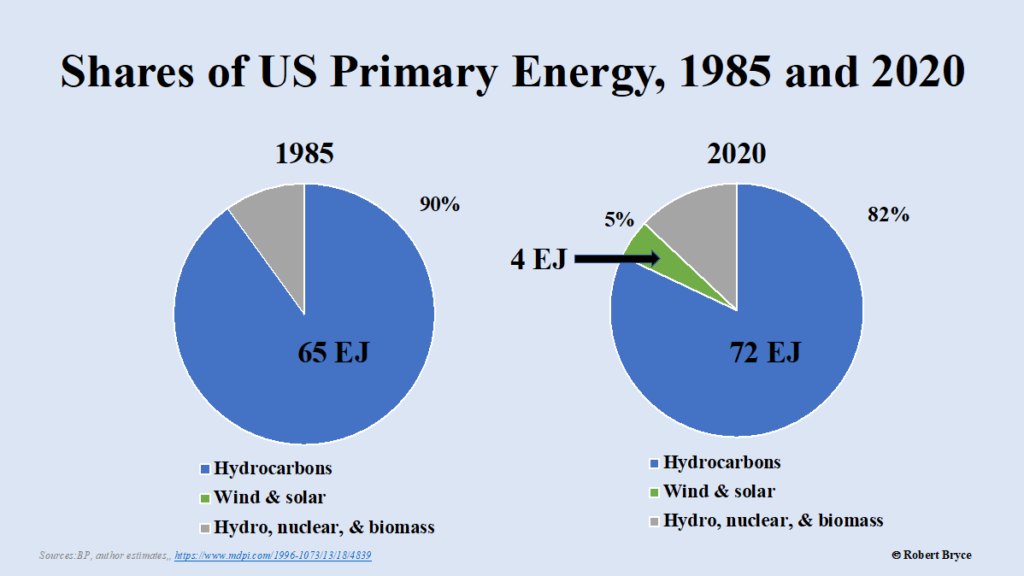
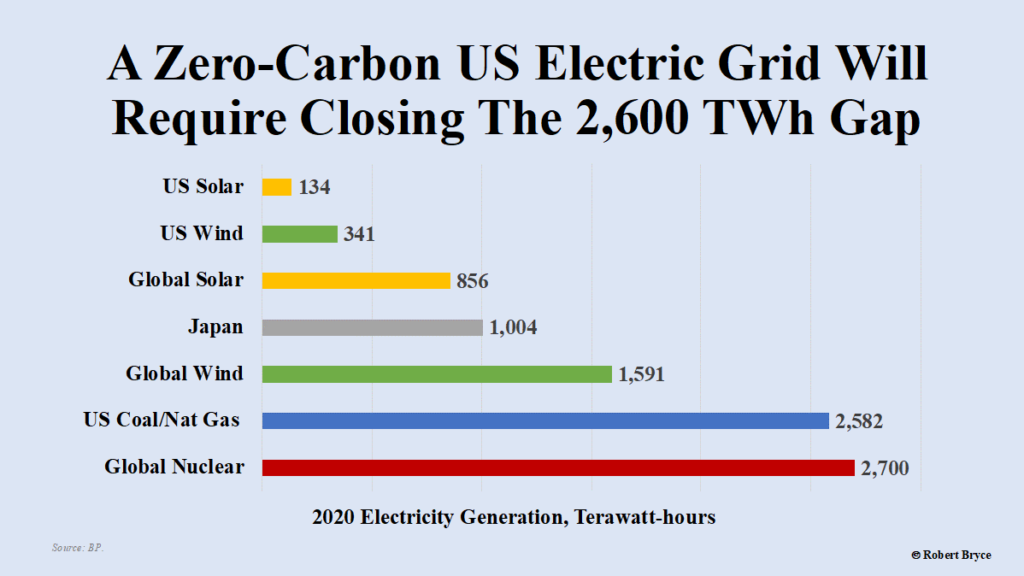
The United States must not emulate Europe’s disastrous energy blueprint. We need energy realism. Energy is the economy; energy nourishes human potential. Hydrocarbons now provide 82 percent of our total energy and about 60 percent of our electricity supplies. The US today gets 18 times more energy from hydrocarbons as it does from wind and solar combined.
The myriad claims being made by climate activists, politicians and elite academics that we can run our economy solely on wind and solar and a few drops of hydropower have no basis in physics, math or history. Furthermore wherever renewables have been ramped up, as in Europe, energy prices have soared.
Senators, look at California where electricity prices are absolutely exploding. Wood Mckenzie estimates that converting our grid to renewables could cost 4.5 trillion dollars, or roughly $35, 000 for every family in America. How could such a staggering cost result in the just energy transition that we hear so much about?
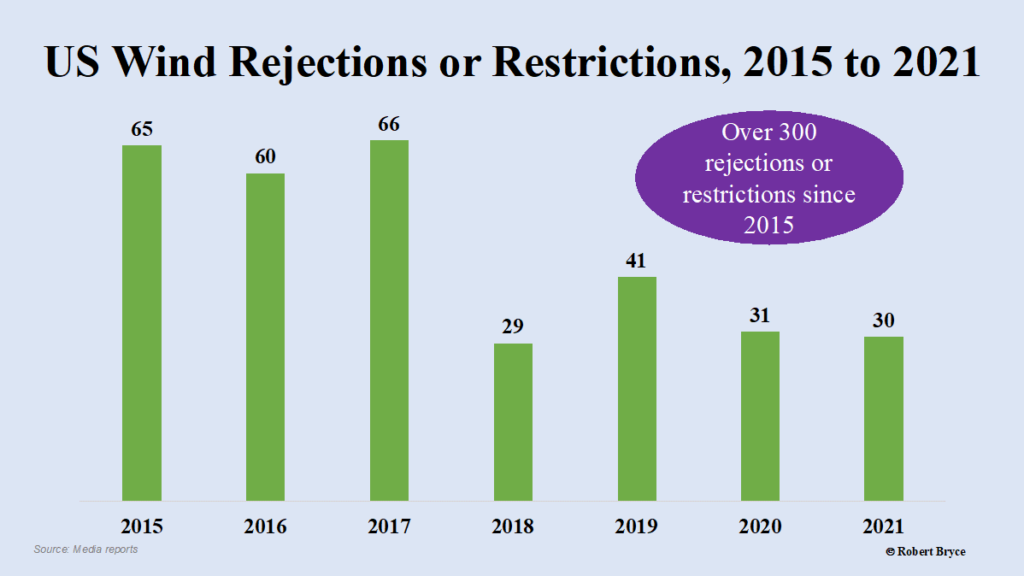
Some Energy Realism: Since 2015 more than 300 communities across the country, from Maine to Hawaii have rejected wind projects. Over the past six months alone massive solar projects in Nevada, Pennsylvania and Montana have been rejected by local communities.
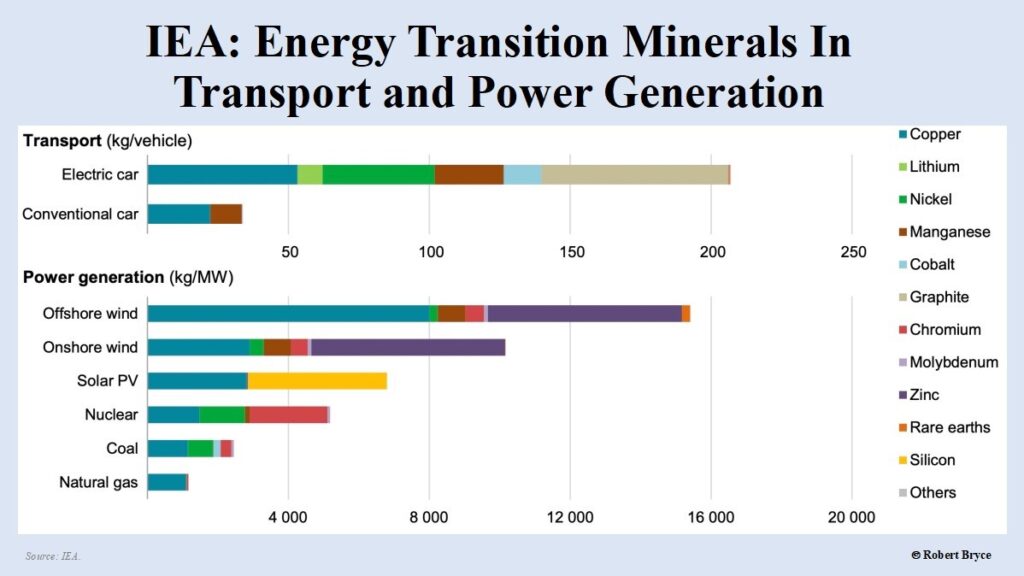
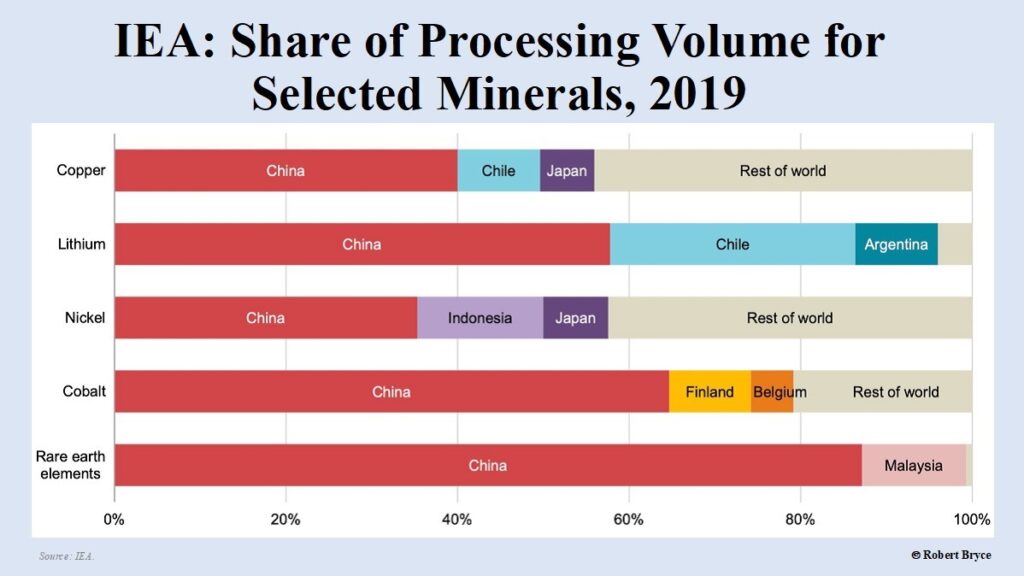
More Realism: Trying to convert our energy and power systems to renewables will make the US reliant on China for critical minerals like Neodymium, Dysprosium and Cobalt. Why is this okay?
Relying on renewables would also require building hundreds of thousands of miles of new high-voltage transmission lines. But the November second referendum in Maine showed very clearly again that rural americans do not want high voltage transmission lines slashing through their neighborhoods.
Strangling America’s hydrocarbon sector by killing pipelines,banning natural gas, halting drilling on federal lands, electrifying everything, and never ending tax breaks for big wind and big solar will not solve global climate change. Instead those moves will turbocharge inflation, imperil our energy security, and impose regressive taxes on the poor and the working class.
Our economy runs on hydrocarbons and that will be true for decades to come. Staking our economy as Europe has done on weather dependent renewables amounts to unilateral energy disarmament That will hurt us and benefit Russia, China and OPEC. Who will stand upfor rural America and against the landscape destroying sprawl of wind and solar? Who will speak against the federally subsidized slaughter of our birds and bats by the wind industry? Expensive energy is the enemy of the poor; Who in the senate will stand up for them? Who in congress will stand up for the affordability reliability and resilience of our electric grid, which is being undermined by this senseless rush to renewables and the premature retirement of our nuclear reactors?
Where are the pro-nuclear, pro-energy realists?
Where, I ask you, are the energy humanists?
Postscript: Complete text of Bryce presentation with images is at Innovationized:
A summary at The Telegraph of David Frost’s recent lecture, in italics with my bolds.
Some of the worst policies ever pursued in this country have been those which nearly all politicians supported at the time. Keeping Britain on the gold standard. Running down our Armed Forces in the 1930s. Demolishing our historic cities and replacing them with concrete. Joining the EU’s Exchange Rate Mechanism. Only a handful of free thinkers questioned these at the time. But when the disastrous results became clear, suddenly few people wanted to defend them.
Now, of course, consensuses can be correct, too. Most people agree that free trade is a good thing. But no one could say that that policy has been unchallenged. Indeed, although it is repeatedly attacked, both intellectual argument and real life keep proving it right.
That is why challenge and argument are so important. When everyone agrees on a policy, it is never seriously questioned. The arguments for it become ritualised. Zombie numbers get repeated from one document to another, however feeble their real underpinning – remember the three million jobs we were told for 20 years depended on EU membership? And its advocates don’t feel the need to invest any effort in defending it, because it’s easier just to smear its opponents.
So the cross-party agreement on the totemic policy of our time –
net zero 2050 – is troubling.
By all means accept the scientific consensus: it doesn’t seem to me to depict “climate catastrophe”. But net zero 2050 isn’t science. It’s a political goal enshrining a particular view of the trade-offs facing us as a result of climate change. It makes assumptions about how our economies and societies work which must be open to question. If no one ever does question it, we will inevitably end up with bad policy and bad results. That’s why I refuse to remain silent.
All these economic assumptions seem to me to be highly suspect. That’s partly because predicting the future is very difficult, and in this case we can prove that, because so many of the predictions in Labour’s Energy White Paper 20 years ago turned out to be wrong.
You might think, therefore, that the right thing for governments to do would be to invest in basic scientific research, to establish a simple regime for taxing the externality of carbon emissions at whatever level we think justified – and then stand back and let the market sort out how best to meet the policy goal.
You might think that, but you would be wrong. Governments have all decided
that they know best and can pick the technologies, the subsidies,
and the targets to get us to net zero.
That’s why you will be forced to buy ineffective boilers and expensive electric cars. That’s why you’re made to pay for windmills, a technology that was cutting-edge just after the Norman Conquest. That’s why our electricity grid is getting less reliable while at the same time energy bills go ever higher.
Some voters are clearly doubtful. So Western governments now go further, and argue that all these inferior technologies will actually improve economic growth – by a grand total of 2 per cent in 2050, according to reports quoted in Chris Skidmore’s Net Zero Review.
Sorry, but I don’t believe it. This whole area is riddled with economic fallacies:
counting benefits but not the costs; optimism bias;
illusory certainty and misplaced confidence in prediction.
There’s the belief that raising taxes to pay subsidies will not damage the wider economy. There’s the “broken windows fallacy”: just as repairing a broken window does not make you any better off, and you also lose the chance to spend the money on something more productive, so scrapping one system of energy production and replacing it with another does not make us richer – especially when the new system is worse than its predecessor.
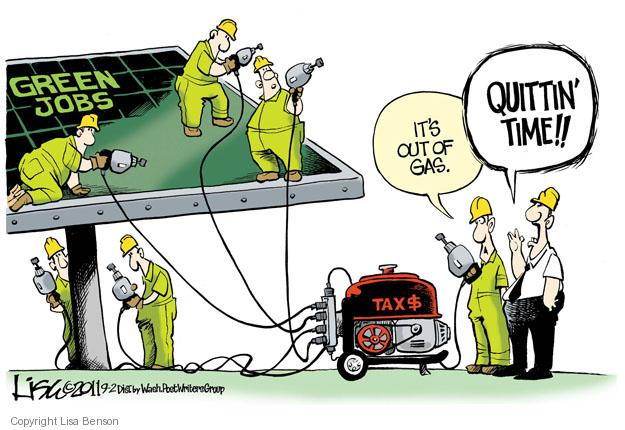
There’s the faith that massive projects like insulating every house in the country can be undertaken simply and speedily with just an effort of will. And finally there’s the view that “green jobs”, many of them required to install all those less efficient technologies, are somehow a benefit rather than a cost. If you believe that, you must think we could make ourselves wealthier by sending everyone back into the fields to work the land.
Stop treating us like idiots. If we are told things will get better, and then they get worse, voters will in the end rebel against the policy. Look at the migration figures if you doubt that. I personally believe we will have to rethink the net zero methods and the timetable. Of course I might be wrong. But let’s have a proper debate and real honesty, not smears and cancellations.
One of Bob Dylan’s greatest songs, Not Dark Yet, is a reflection on his own waning powers and mortality. We need to make the same reflection about our society. Not only whether we literally go dark, because we can’t keep the lights on any more, but whether we in the West can actually summon the strength to resist degrowth, miserabilism and economic decline. “It’s not dark yet, but it’s getting there.” Time to stop, and rethink.
The text of David Frost’s lecture ‘Not Dark Yet’ is available at GWPF
An investor-driven climate change push at some of the world’s largest oil companies has stalled out.
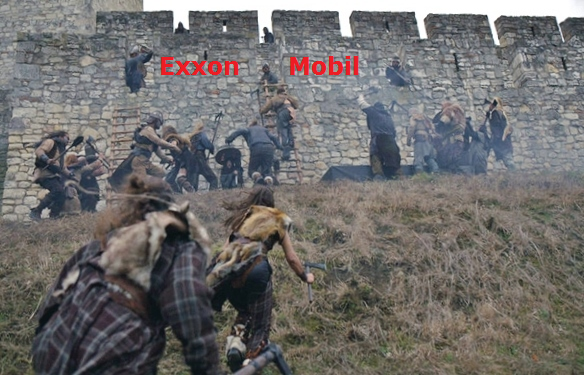
On Wednesday, Exxon Mobil and Chevron’s shareholders struck down a raft of proposals urging the companies to cut greenhouse-gas emissions derived from fuel consumption, put out new reports on climate benchmarks and disclose certain oil-spill risks, among other initiatives.
The votes were abysmal for climate activists. All but two of the 20 shareholder proposals for the two companies garnered less than 25% of investors’ vote, according to preliminary results, with some performing much worse than similar proposals put forward last year.
Among the most controversial proposals were those that would have had the companies adopt targets for reducing emissions including those from third-party consumption of their products, such as when drivers burn gasoline in their cars, also known as Scope 3 emissions. Those received only 11% and 10% of the vote among Exxon and Chevron investors, respectively, compared with 27% and 33% for similar proposals last year.
In recent weeks, similar climate proposals failed to win over most shareholders
at annual meetings of British oil and gas giants BP and Shell in London.
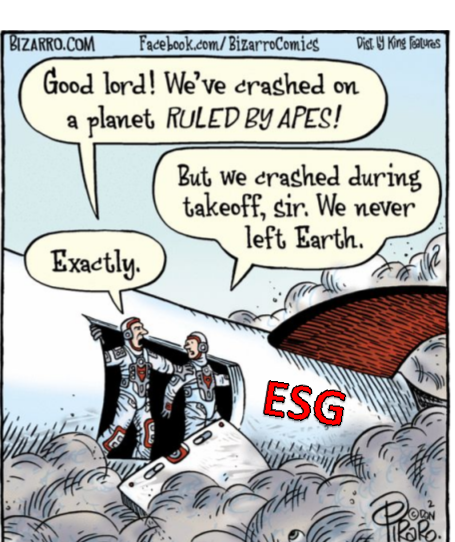
Investment strategies linked to ESG, short for environmental, social and corporate-governance issues, had gained momentum in recent years, particularly following the onset of the pandemic in 2020. Investors pressed oil companies to show how they were working to reduce their climate footprint, set long-term environmental goals and curtail the flaring of unwanted natural gas.
In 2021, investment firm Engine No. 1 prevailed in a historic proxy battle against Exxon, winning three board seats at the company’s annual meeting with the backing of investment firms, Vanguard, State Street and BlackRock. The firm argued that Exxon needed to form a better strategy to prepare for the world’s anticipated energy transition.
After the defeat, Exxon adopted a so-called net zero commitment — a goal to reduce or offset greenhouse-gas emissions from its operations to zero by 2050.
But Wednesday’s votes demonstrated how some shareholders have backed off pushing major oil companies to embrace certain climate goals. Investors said many voices pushing ESG measures have been drowned out following Russia’s war in Ukraine, which caused oil and gas prices to skyrocket as global supplies were crimped.
Mark van Baal, founder of environmental activist group Follow This, said shareholders missed an opportunity at the annual votes. Investors know that avoiding climate disaster will require global emissions to fall by almost half by 2030, he said, but many are focused on short-term profits. [Note: van Baal is wrong about disaster–see Even 3°C Warming Can’t Stop World Prosperity. ]
The industry and its allies have said some countries, particularly in Europe, were too quick to move away from fossil fuels toward clean energy sources such as solar and wind. A movement against climate activism has gained political traction in the U.S., particularly among Republican voters. Entrepreneur Vivek Ramaswamy, a candidate for the Republican presidential nomination, has made anti-ESG policies a central plank of his campaign.
The pushback against ESG measures has also hit investment firms such as BlackRock,
which have faced potential boycotts in Texas and other red states.
Republican officials in Florida, Texas, Louisiana and South Carolina pulled more than $4 billion in pension and investment funds from BlackRock starting last year. BlackRock brought in $230 billion from U.S. clients in 2022.
It wasn’t immediately clear how BlackRock, State Street and Vanguard voted at the meetings this week. State Street and BlackRock declined to comment. Vanguard didn’t immediately respond to a request for comment.
Investments in fossil fuels pushed many oil companies to record profits last year, which lured back some investors who had fled after years of meager returns from the industry. Exxon Chief Executive Darren Woods said Wednesday the company had benefited from investing in fossil fuels when others pulled back.
Even in Europe, energy executives have shown a willingness to alienate clean-energy investors to tailor strategies to the thirst for fossil fuels. BP and Shell’s record full-year 2022 profits and hefty returns to investors have attracted new investors, and won back some who were dubious of their energy-transition strategies, executives said.
Shell and BP executives have said their strategies are consistent with targets to lower global emissions, while also helping supply the oil and gas still demanded in coming years globally. Exxon and Chevron have said they support the emissions targets set by the Paris climate accords and reducing emissions from their operations.
But Woods and other industry executives have argued some climate-related proposals would backfire or leave the economy worse off. Woods said several proposals rejected Wednesday would have required the company to assume the world will cut carbon emissions at a much faster pace than observers have projected.
“Some [would] go so far as to force us to decrease oil and gas development,” he said. “This would do nothing to reduce global demand.”
What is actually beyond debate is not that we are in a climate crisis but that if we don’t stop destroying our conventional energy economy, we are going to be in a civilizational crisis.


























 Science Matters