Mann’s AMOC Collapse Hoax

Dr. Kevin E. Trenberth, a distinguished scholar at the National Center for Atmospheric Research, commented on this movie: “I don’t recall a lot except that the whole science was incredibly wrong,”, “one does not get an ice age out of global warming.”

Likely you’ve heard the recent and previous warnings from Mann and friends about the ocean conveyor belt (including the Gulf Stream) slowing down and freezing us all.  With the COP gathering next month, something scary must be proclaimed, and Global Freezing is it, replacing Global Boiling earlier this year. The declaration signed by Mann and 43 other scientists was Open Letter by Climate Scientists to the Nordic Council of Ministers, Reykjavik, October 2024. Preface:

“We, the undersigned, are scientists working in the field of climate research and feel it is urgent to draw the attention of the Nordic Council of Ministers to the serious risk of a major ocean circulation change in the Atlantic. A string of scientific studies in the past few years suggests that this risk has so far been greatly underestimated. Such an ocean circulation change would have devastating and irreversible impacts especially for Nordic countries, but also for other parts of the world.”


“Given the increasing evidence for a higher risk of an AMOC collapse, we believe it is of critical importance that Arctic tipping point risks, in particular the AMOC risk, are taken seriously in governance and policy. Even with a medium likelihood of occurrence, given that the outcome would be catastrophic and impacting the entire world for centuries to come, we believe more needs to be done to minimize this risk.”

The Warning is based on Fear, not Facts

1.  The AMOC has been stable for the last four decades.

Florida Current transport observations reveal four decades of steady state Volkov et al 2024

Abstract

The potential weakening of the Atlantic Meridional Overturning Circulation (AMOC) in response to anthropogenic forcing, suggested by climate models, is at the forefront of scientific debate. A key AMOC component, the Florida Current (FC), has been measured using submarine cables between Florida and the Bahamas at 27°N nearly continuously since 1982. A decrease in the FC strength could be indicative of the AMOC weakening. Here, we reassess motion-induced voltages measured on a submarine cable and reevaluate the overall trend in the inferred FC transport. We find that the cable record beginning in 2000 requires a correction for the secular change in the geomagnetic field. This correction removes a spurious trend in the record, revealing that the FC has remained remarkably stable. The recomputed AMOC estimates at ~26.5°N result in a significantly weaker negative trend than that which is apparent in the AMOC time series obtained with the uncorrected FC transports.

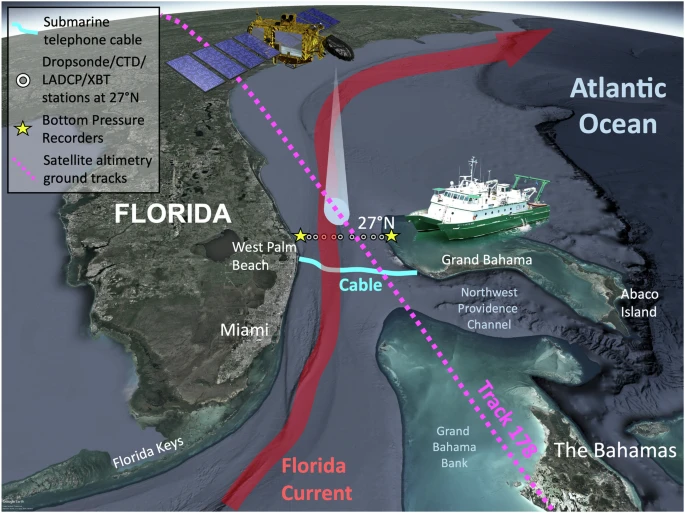
Fig. 1: The Western Boundary Time Series
observing network in the Straits of Florida.

The network consists of the submarine telecommunications cable between West Palm Beach and Grand Bahama Island (cyan curve), ship sections across the Florida Current (FC) at 27°N with in situ measurements at nine stations (white circles), two bottom pressure gauges on both sides of the FC at 27°N (yellow stars), and along-track satellite altimetry measurements (magenta dotted line). CTD Conductivity-Temperature-Depth, LADCP Lowered Acoustic Doppler Current Profiler, XBT expendable bathythermograph.

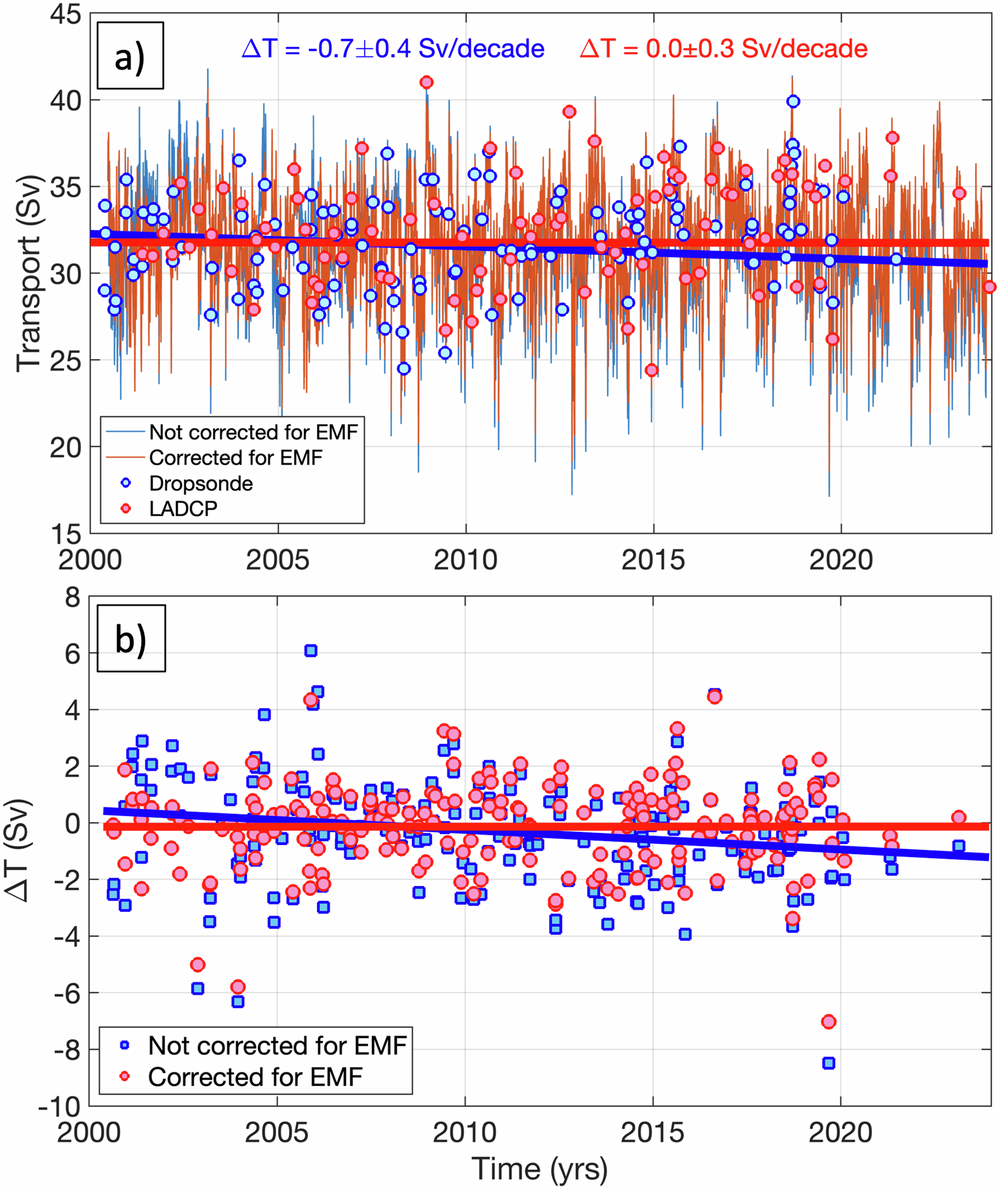
Fig. 6: Florida Current (FC) volume transports corrected for
the secular change in the Earth’s Magnetic Field (EMF).

a The time series of the daily FC volume transport: (blue) not corrected for the secular change in the EMF, (red) corrected for the secular change in the EMF. The linear trends of the FC transport not corrected and corrected for the EMF are shown by the blue and red lines, respectively. b The differences between the cable and ship section transport for the cable data (blue squares) not corrected for the EMF and (red circles) corrected for the EMF. The linear trends of the differences (ΔT) not corrected and corrected for the EMF are shown by the blue and red lines, respectively.

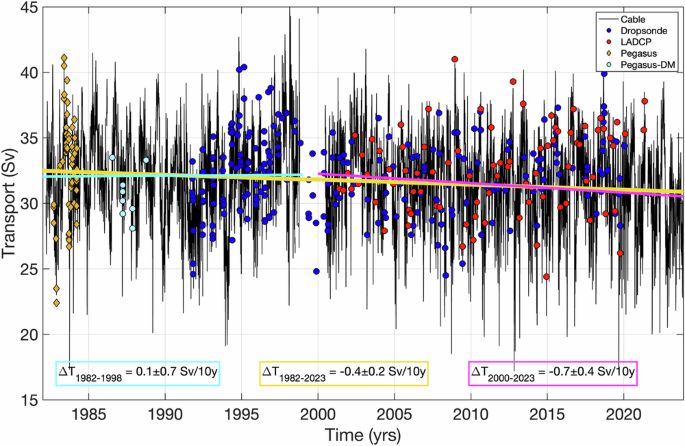
Fig. 2: The Florida Current volume transport.

Daily transport estimates from the cable record (black; prior to corrections applied in this study); estimates from the Pegasus (orange diamonds) and Pegasus in dropsonde mode (Pegasus-DM; light blue circles) sections; estimates from the dropsonde sections (blue circles); and estimates from the Lowered Acoustic Doppler Current Profiler (LADCP) sections (red circles). The linear trends for 1982–2023, 1982–1998, and 2000–2023 periods are shown by the orange, cyan, and magenta lines, respectively.

2.  Paleo records show past AMOC changes due to seafloor shifts not climate change.

Controlling factors for the global meridional overturning circulation: A lesson from the Paleozoic, Yuan et al. 2024.

Abstract

The global meridional overturning circulation (GMOC) is important for redistributing heat and, thus, determining global climate, but what determines its strength over Earth’s history remains unclear. On the basis of two sets of climate simulations for the Paleozoic characterized by a stable GMOC direction, our research reveals that GMOC strength primarily depends on continental configuration while climate variations have a minor impact. In the mid- to high latitudes, the volume of continents largely dictates the speed of westerly winds, which in turn controls upwelling and the strength of the GMOC. At low latitudes, open seaways also play an important role in the strength of the GMOC. An open seaway in one hemisphere allows stronger westward ocean currents, which support higher sea surface heights (SSH) in this hemisphere than that in the other. The meridional SSH gradient drives a stronger cross-equatorial flow in the upper ocean, resulting in a stronger GMOC. This latter finding enriches the current theory for GMOC.

On the basis of a series of simulations for the Paleozoic, we find that the GMOC is primarily controlled by:

  • freshwater input into ocean;
  • wind-driven Ekman pumping in the midlatitudes, and
  • SH anomaly in low latitudes.

The latter two factors are especially important for the strength of the GMOC and are highly related to continental configuration. Our major conclusions find validation through Paleozoic climate simulations using the HadCM3 model by Valdes et al. (53, 67) and a non-IPCC class model, FOAM, by Pohl et al. (52) (figs. S17 and S18). This last study by Pohl et al. (52) also pointed out the unfortunate absence of proxy data for validating the direction and magnitude of the Paleozoic GMOC.

Controlling factors for the global
meridional overturning
circulation

Fig. 5. Schematic of controlling factors for the GMOC during the Paleozoic. The schematic is based on the situation for 400 Ma. Three main factors are shown, the less net precipitation in the south SH; the strong westerlies, ocean surface current, and Ekman upwelling in the midlatitude region in NH; the SSH anomaly and associated pressure anomaly in the low-latitude region.

Although there has been tremendous interest in understanding the mechanisms that govern the MOC, surface topography in the westerlies region and the presence of an open seaway in the low-latitude region were previously largely overlooked. Our study thus draws attention to how the evolution of continents in these two regions affects the strength of MOC. Our study indicates that the traditional theory for MOC misses an important element, that is, the influence of a low-latitude seaway. Previous studies either did not have such a seaway (1, 34, 43) or had a partial seaway that connected the present-day Atlantic Ocean and Pacific Ocean only (32–34). Their focus was mostly on the strength of the AMOC and mechanism invoked generally involved freshwater and salinity only (32, 33, 68), while as demonstrated above, a fully open low-latitude seaway affects the MOC in a fundamentally different way.

3.  AMOC alarm presupposes Arctic “Amplification” of Global Warming

Activist scientists claim the Arctic is warming up to five times faster than lower latitudes.  This is based on models projecting scarce temperature records great distances over the Arctic ocean drift sea ice.  There are three flaws in the arctic warming claim (from Arctic “Amplification” Not What You Think)

a. Arctic Amplification is an artifact of Temperature Anomalies

Clive Best provides this animation of recent monthly temperature anomalies which demonstrates how most variability in anomalies occur over northern continents.

b. Arctic Surface Stations Records Show Ordinary Warming

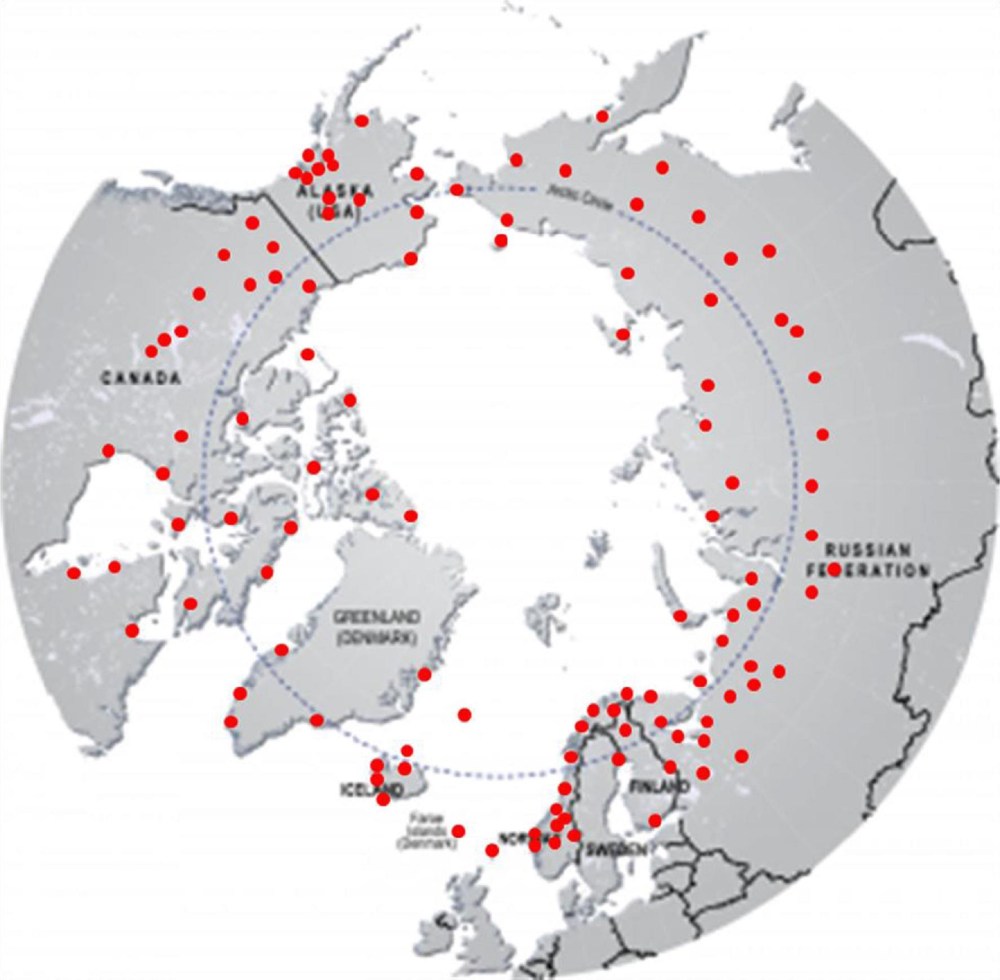
Locations of 118 arctic stations examined in this study and compared to observations at 50 European stations whose records averaged 200 years and in a few cases extend to the early 1700s.

The paper is: Arctic temperature trends from the early nineteenth century to the present W. A. van Wijngaarden, Theoretical & Applied Climatology (2015).  My synopsis: Arctic Warming Unalarming

c. Arctic Warmth Comes from Meridional Heat Transport, not CO2

4.  Hypothesis that rising CO2 will collapse the AMOC is flawed.

The “AMOC is collapsing” narrative goes like this:

Ocean circulation is driven by density differences, which depend on the salinity and the temperature of the water. Cold, salty water is heavier than warm, fresh water. When flowing water reaches Greenland, it becomes very cold and salty, causing it to sink and flow south, where the water warms and rises closer to the surface again. Some compare the process to a conveyor belt going around and around.

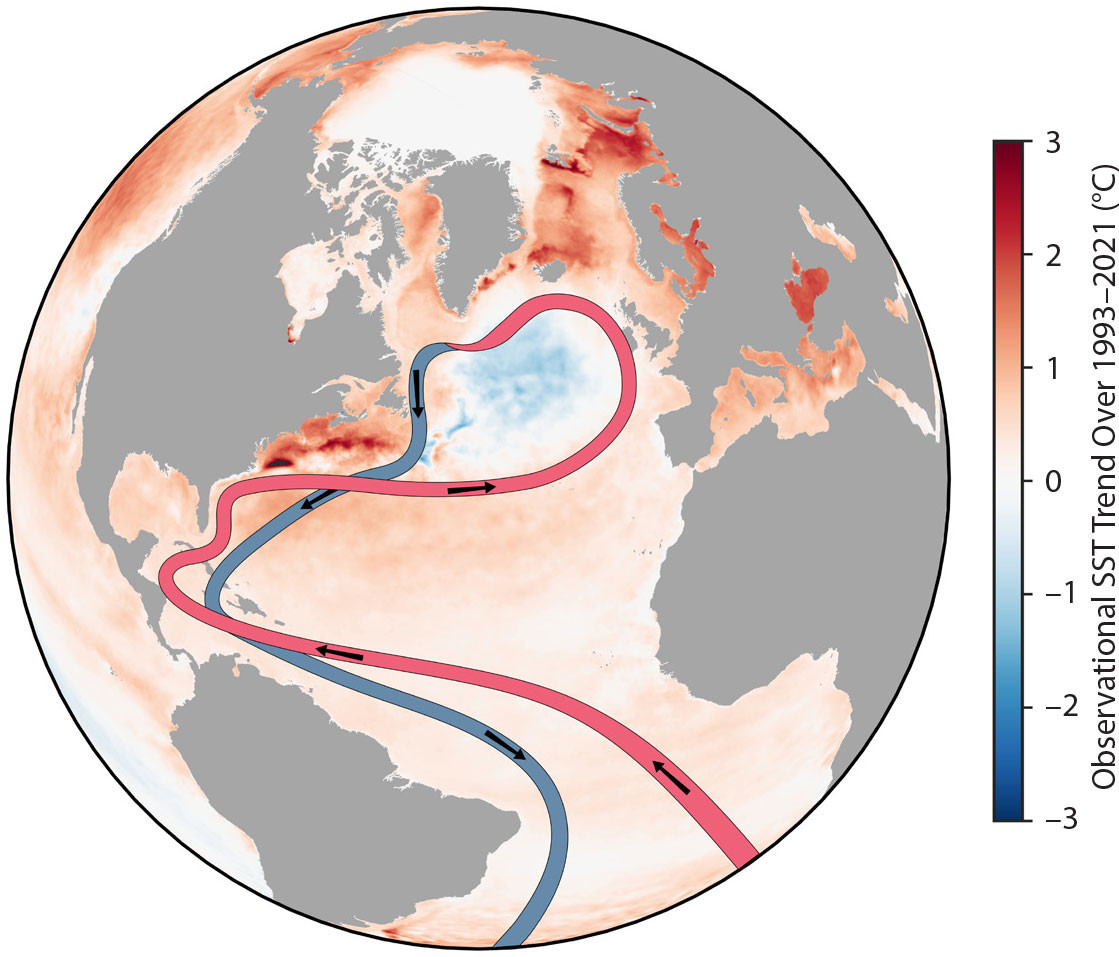
This graphic shows a highly simplified schematic of the Atlantic Meridional Overturning Circulation (AMOC) against a backdrop of the sea surface temperature trend since 1993 from the Copernicus Climate Change Service (https://climate.copernicus.eu/). Image credit: Ruijian Gou. > High res figure.

Changing the salinity of the water messes up the way the water flows. That’s why the melting of the Greenland ice sheets is a big problem: It’s injecting a ton of freshwater into the ocean far north, where the water is usually very salty. The more freshwater, the weaker the circulation—not to mention that atmospheric temperatures are also increasing, which also makes water lighter. The new study shows that if the density dynamics change enough, the conveyor belt will eventually stop moving, aka “collapse.” That means it won’t transport any water, saline, or heat across the globe.

So the scenario is that supposed amplified Arctic warming will cause iceberg calving and glacial melting, and the freshwater will slow and eventually stop the AMOC.  Firstly, the above study shows seafloor configuration has greater impact than salinity changing.  Secondly, the spread of freshwater is not so simple.

Role of the Labrador Current in the Atlantic Meridional Overturning Circulation response to greenhouse warming, Shan et al. 2024

Abstract

Anthropogenic warming is projected to enhance Arctic freshwater exportation into the Labrador Sea. This extra freshwater may weaken deep convection and contribute to the Atlantic Meridional Overturning Circulation (AMOC) decline. Here, by analyzing an unprecedented high-resolution climate model simulation for the 21st century, we show that the Labrador Current strongly restricts the lateral spread of freshwater from the Arctic Ocean into the open ocean such that the freshwater input has a limited role in weakening the overturning circulation. In contrast, in the absence of a strong Labrador Current in a climate model with lower resolution, the extra freshwater is allowed to spread into the interior region and eventually shut down deep convection in the Labrador Sea. Given that the Labrador Sea overturning makes a significant contribution to the AMOC in many climate models, our results suggest that the AMOC decline during the 21st century could be overestimated in these models due to the poorly resolved Labrador Current.

5.  The “Tipping Point” scare is unscientific.

Uncertainties too large to predict tipping times of major Earth system components from historical data, Ben-Yami et al. 2024

Abstract

One way to warn of forthcoming critical transitions in Earth system components is using observations to detect declining system stability. It has also been suggested to extrapolate such stability changes into the future and predict tipping times. Here, we argue that the involved uncertainties are too high to robustly predict tipping times. We raise concerns regarding

(i) the modeling assumptions underlying any extrapolation of historical results into the future,

(ii) the representativeness of individual Earth system component time series, and

(iii) the impact of uncertainties and preprocessing of used observational datasets, with focus on nonstationary observational coverage and gap filling.

We explore these uncertainties in general and specifically for the example of the Atlantic Meridional Overturning Circulation. We argue that even under the assumption that a given Earth system component has an approaching tipping point, the uncertainties are too large to reliably estimate tipping times by extrapolating historical information.

“The conclusions of this study are certainly in line with my understanding of the current state of the art,” says Gavin Schmidt, a climate scientist and professor at Columbia University and the director of NASA’s Goddard Institute for Space Studies (GISS). Schmidt was not involved in the new work, but has extensively researched climate variability and systems like AMOC.

I have not been impressed by previous or recent efforts to predict upcoming tipping points in either AMOC or ice sheets — there is more going on than just patterns in time series and we still don’t have sufficiently complex and calibrated models to have a robust idea of what will happen,” says Gavin Schmidt, director of NASA’s GISS.

Footnote

In researching for this post I discovered an informative website Ocean to Climate  Science news & articles on topics related to ocean and climate by oceanographer Sang-Ki Lee.  Some additional examples of studies for further reading on this issue are below.

Gulf Stream’s fate to be decided by climate ‘tug-of-war’

A stable Atlantic Meridional Overturning Circulation in a changing North Atlantic Ocean since the 1990s

Detectability of an AMOC Decline in Current and Projected Climate Changes

Global surface warming enhanced by weak Atlantic overturning circulation

Nonstationarity of the Atlantic Meridional Overturning Circulation’s Fingerprint on Sea Surface Temperature


Acidification Alarmists Forced to Fake Findings

The story of fake research findings was published at the journal Science entitled Star marine ecologist committed misconduct, university says.  Excerpts below in italics with my bolds.

Finding against Danielle Dixson vindicates whistleblowers
who questioned high-profile work on ocean acidification

A major controversy in marine biology took a new twist last week when the University of Delaware (UD) found one of its star scientists guilty of research misconduct. The university has confirmed to Science that it has accepted an investigative panel’s conclusion that marine ecologist Danielle Dixson committed fabrication and falsification in work on fish behavior and coral reefs. The university is seeking the retraction of three of Dixson’s papers and “has notified the appropriate federal agencies,” a spokesperson says.

Danielle Dixson, asistant professor at the University of Delaware, will explore coral reefs off Belize over the next three years. Here, she is diving on a reef in the Indo-Pacific. Courtesy of Danielle Dixson Source: delaware online

Dixson is known as a highly successful scientist and fundraiser. She obtained her Ph.D. at James Cook University (JCU),  Townsville in Australia, in 2012; worked as a postdoc and assistant professor at the Georgia Institute of Technology for 4 years; and in 2015 started her own group at UD’s marine biology lab in Lewes, a small town on the Atlantic Coast. She received a $1.05 million grant from the Gordon and Betty Moore Foundation in 2016 and currently has a $750,000 career grant from the National Science Foundation (NSF). She presented her research at a 2015 White House meeting and has often been featured in the media, including in a 2019 story in Science.

Together with one of her Ph.D. supervisors, JCU marine biologist Philip Munday, Dixson pioneered research into the effects on fish of rising CO2 levels in the atmosphere, which cause the oceans to acidify. In a series of studies published since 2009 they showed that acidification can disorient fish, lead them to swim toward chemical cues emitted by their predators, and affect their hearing and vision. Dixson’s later work focused on coral reef ecology, the subject of her Science paper.

The colorful diversity of coral found at One Tree Island. The structure and diversity of coral we see today is already at risk of dissolution from ocean acidification. Kennedy Wolfe University of Sydney

Among the papers is a study about coral reef recovery that Dixson published in Science in 2014, and for which the journal issued an Editorial Expression of Concern in February. Science—whose News and Editorial teams operate independently of each other—retracted that paper today.

The investigative panel’s draft report, which Science’s News team has seen in heavily redacted form, paints a damning picture of Dixson’s scientific work, which included many studies that appeared to show Earth’s rising carbon dioxide (CO2) levels can have dramatic effects on fish behavior and ecology. “The Committee was repeatedly struck by a serial pattern of sloppiness, poor recordkeeping, copying and pasting within spreadsheets, errors within many papers under investigation, and deviation from established animal ethics protocols,” wrote the panel, made up of three UD researchers.

Several former members of Dixson’s lab supported the whistleblowers’ request for an investigation. One of them, former postdoc Zara Cowan, was the first to identify the many duplications in the data file for the now-retracted Science paper. Another, former Ph.D. student Paul Leingang, first brought accusations against Dixson to university officials in January 2020. He left the lab soon after and joined the broader group of whistleblowers.

Leingang, who had been at Dixson’s lab since 2016, says he had become increasingly suspicious of her findings, in part because she usually collected her fluming data alone. In November 2019 he decided to secretly track some of Dixson’s activities. He supplied the investigation with detailed notes, chat conversations, and tweets by Dixson to show that she did not spend enough time on her fluming studies to collect the data she was jotting down in her lab notebooks.

The investigative panel found Leingang’s account convincing and singled him out for praise. “It is very difficult for a young scholar seeking a Ph.D. to challenge their advisor on ethical grounds,” the draft report says. “The Committee believes it took great bravery for him to come forward so explicitly. The same is true of the other members of the laboratory who backed the Complainant’s action.”

UD “did a decent investigation. I think it’s one of the first universities that we’ve seen actually do that,” says ecophysiologist Fredrik Jutfelt of the Norwegian University of Science and Technology, one of the whistleblowers. “So that’s really encouraging.” But he and others in the group are disappointed that the committee appears to have looked at only seven of the 20 Dixson papers they had flagged as suspicious. They also had hoped UD would release the committee’s final report and detail any sanctions against Dixson. “That is a shame,” Jutfelt says.

Inventing Facts to Promote an Imaginary Crisis

Legacy and social media are awash with warnings about hydrocarbon emissions making the oceans acidic and threatening all ocean life from plankton up to whales.  For example:

Ocean acidification: A wake-up call in our waters – NOAA

Canada’s oceans are becoming more acidic – Pêches et Océans Canada

The Ocean Is Getting More Acidic—What That Actually Means– National Geographic

What Is Ocean Acidification? – NASA Climate Kids

Ocean acidification: why the Earth’s oceans are turning to acid – OA-ICC

Etc, etc., etc.

With the climatism hype far beyond any observations, marine biologists have stepped up to make an industry out of false evidence.  They are forced to do so because reality does not conform to their beliefs.  A good summary of acidification hoaxes comes from Jim Steele Un-refutable Evidence of Alarmists’ Ocean Acidification Misinformation in 3 Easy Lessons posted at WUWT.  Points covered include:

♦  The Undisputed Science

♦  The Dissolving Snail Shell Hoax

♦  The Reduced Calcification Hoax

More detail on the bogus fish behavior studies is also found at WUWT: James Cook University Researchers Refuted: “Ocean Acidification Does not Impair” Fish behaviour

A brief explanation debunking the notion of CO2 causing ocean “acidification” is here:

Background Post Shows Alarmist Claims Not Supported in IPCC WG1 References

Headlines Claim, But Details Deny

Update Sept. 9 Response to Brian Catt

Below I note that claimed %s of increasing acidity involve changes in parts per billion for H ion in water.  Further, the relation between atmospheric CO2 and ocean pH needs to be understood.

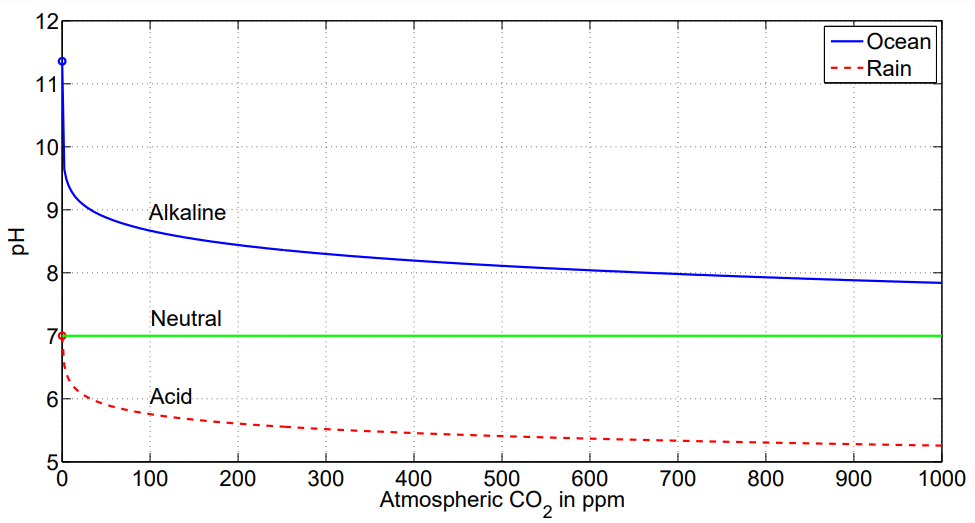
Figure 1: pH of ocean water and rain water versus concentration of CO2 in the atmosphere. Calculated with (20); Ocean alkalinity [A] = 2.3 × 10⁻³ M. Rain alkalinity [A] = 0. Temperature T = 25 C.

The source is Cohen and Happer (2015), where these conclusions are written:

This minimalist discussion already shows how hard it is to scare informed people with ocean acidification, but, alas, many people are not informed. For example:

• The oceans would be highly alkaline with a pH of about 11.4, similar to that of household ammonia, if there were no weak acids to buffer the alkalinity. Almost all of the buffering is provided by dissolved CO2, with very minor additional buffering from boric acid, silicic acid and other even less important species.

• As shown in Fig. 1, doubling atmospheric CO2 from the current level of 400 ppm to 800 ppm only decreases the pH of ocean water from about 8.2 to 7.9. This is well within the day-night fluctuations that already occur because of photosynthesis by plankton and less than the pH decreases with depth that occur because of the biological pump and the dissolution of calcium carbonate precipitates below the lysocline.

• As shown in Fig. 2, doubling atmospheric CO2 from the current level of 400 ppm to 800 ppm only decreases the carbonate-ion concentration, [CO2−3], by about 30%. Ocean surface waters are already supersaturated by several hundred per cent for formation of CaCO3 crystals from Ca2+ and CO2−3. So scare stories about dissolving carbonate shells are nonsense.

• As shown in Fig. 7, the ocean has only absorbed 1/3 or less of the CO2 that it would eventually absorb when the concentrations of CO2 in the deep oceans came to equilibrium with surface concentrations. Effects like that of the biological pump and calcium carbonate dissolution below the lysocline allow the ocean to absorb substantially more than the amount that would be in chemical-equilibrium with the atmosphere.

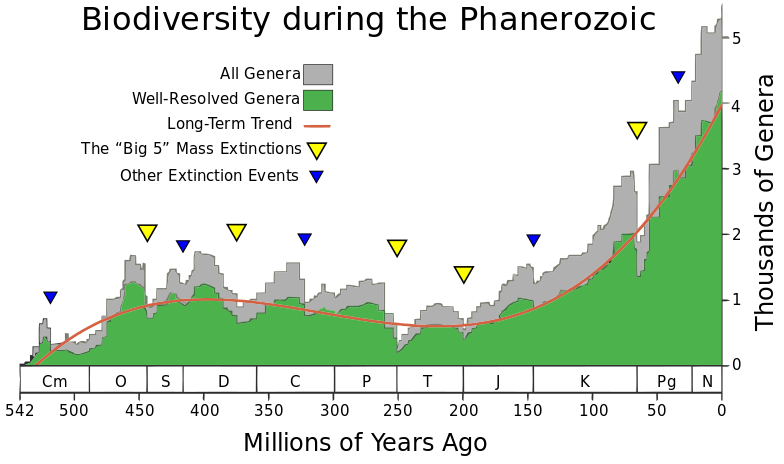
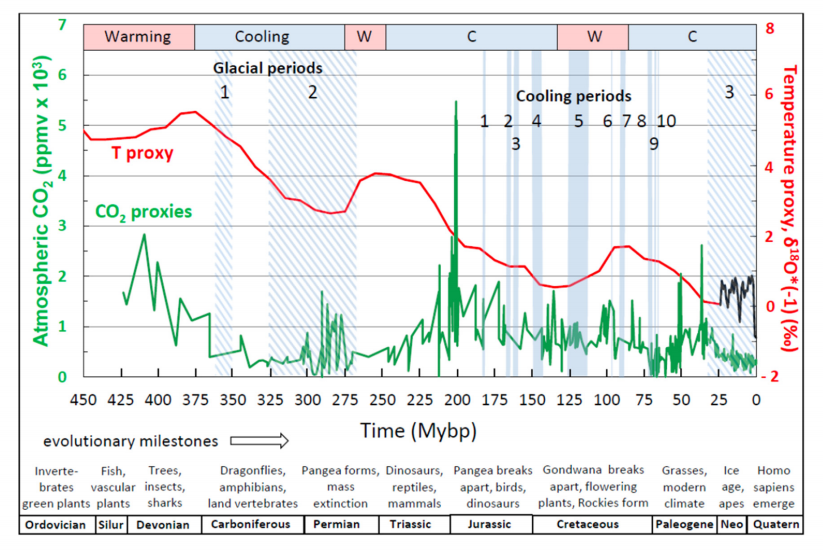
• Over most of the Phanerozoic, the past 550 million years, CO2 concentrations in the atmosphere have been measured in thousands of parts per million, and life flourished in both the oceans and on land. This is hardly surprising, given the relative insensitivity of ocean pH to large changes in CO2 concentrations that we have discussed above, and given the fact that the pH changes that do occur are small compared to the natural variations of ocean pH in space and time.


Latest INM Climate Model Projections Triggered by Scenario Inputs

The latest climate simulation from the Russian INM was published in April 2024: Simulation of climate changes in Northern Eurasia by two versions of the INM RAS Earth system model. The paper includes discussing how results are driven greatly by processing of cloud factors.  But first for context readers should be also aware of influences from scenario premises serving as model input, in this case  SSP3-7.0.

Background on CIMP Scenario  SSP3-7.0

A recent paper reveals peculiarities with this scenario.  Recognizing distinctiveness of SSP3-7.0 for use in impact assessments by Shiogama et al (2024).  Excerpts in italics with my bolds and added images.

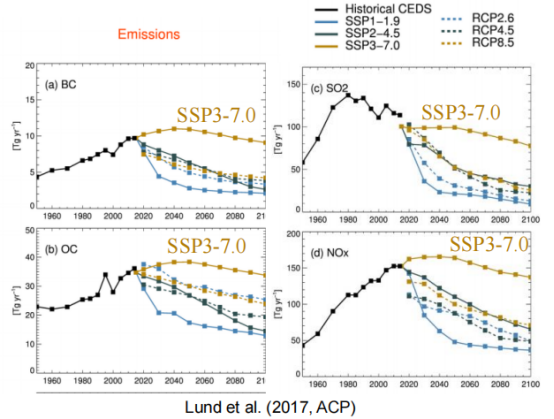
Because recent mitigation efforts have made the upper-end scenario of the future GHG concentration (SSP5-8.5) highly unlikely, SSP3-7.0 has received attention as an alternative high-end scenario for impacts, adaptation, and vulnerability (IAV) studies. However, the ‘distinctiveness’ of SSP3-7.0 may not be well-recognized by the IAV community. When the integrated assessment model (IAM) community developed the SSP-RCPs, they did not anticipate the limelight on SSP3-7.0 for IAV studies because SSP3-7.0 was the ‘distinctive’ scenario regarding to aerosol emissions (and land-use land cover changes). Aerosol emissions increase or change little in SSP3-7.0 due to the assumption of a lenient air quality policy, while they decrease in the other SSP-RCPs of CMIP6 and all the RCPs of CMIP5. This distinctive high-aerosol-emission design of SSP3-7.0 was intended to enable climate model (CM) researchers to investigate influences of extreme aerosol emissions on climate.

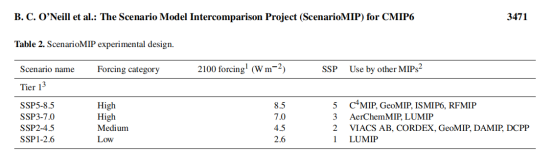
SSP3-7.0 Prescribes High Radiative Forcing

SSP3-7.0 Presumes High Aerosol Emissions

Aerosol Emissions refer to Black Carbon, Organic Carbon, SO2 and NOx.

•  Aerosol emissions increase or change little in SSP3-7.0 due to the assumption of a lenient air quality policy, while they decrease in the other SSP-RCPs of CMIP6 and all the RCPs of CMIP5.

• This distinctive high-aerosol-emission design of SSP3- 7.0 was intended to enable AerChemMIP to investigate the consequences of continued high levels of aerosol emissions on climate.

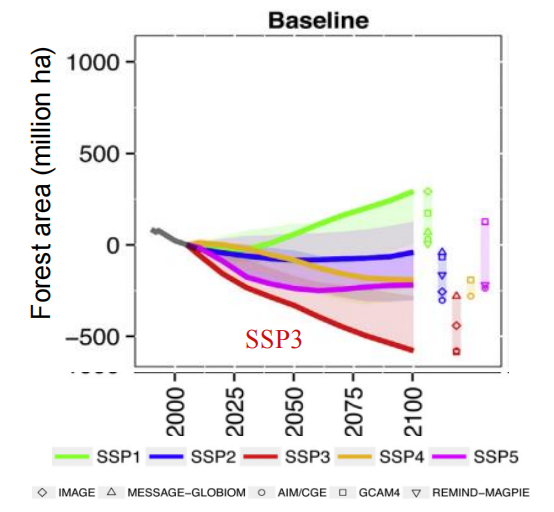
SSP3-7.0 Supposes Forestry Deprivation

• Decreases in forest area were also substantial in SSP3- 7.0, unlike in the other SSP-RCPs.
• This design enables LUMIP to analyse the climate influences of extreme land-use and land-cover changes.

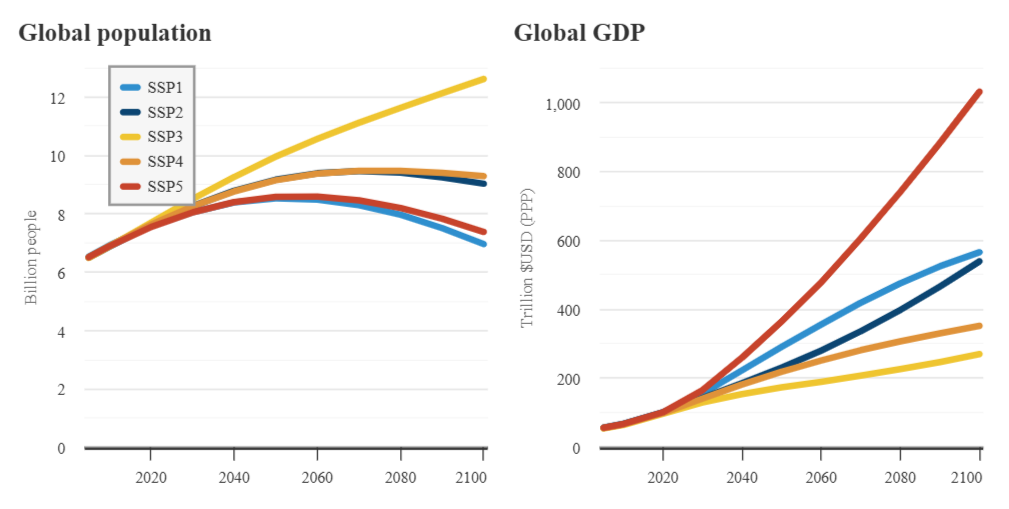
SSP3-7.0 Projects High Population Growth in Poorer Nations

Global population (left) in billions and global gross domestic product (right) in trillion US dollars on a purchasing power parity (PPP) basis. Data from the SSP database; chart by Carbon Brief using Highcharts.

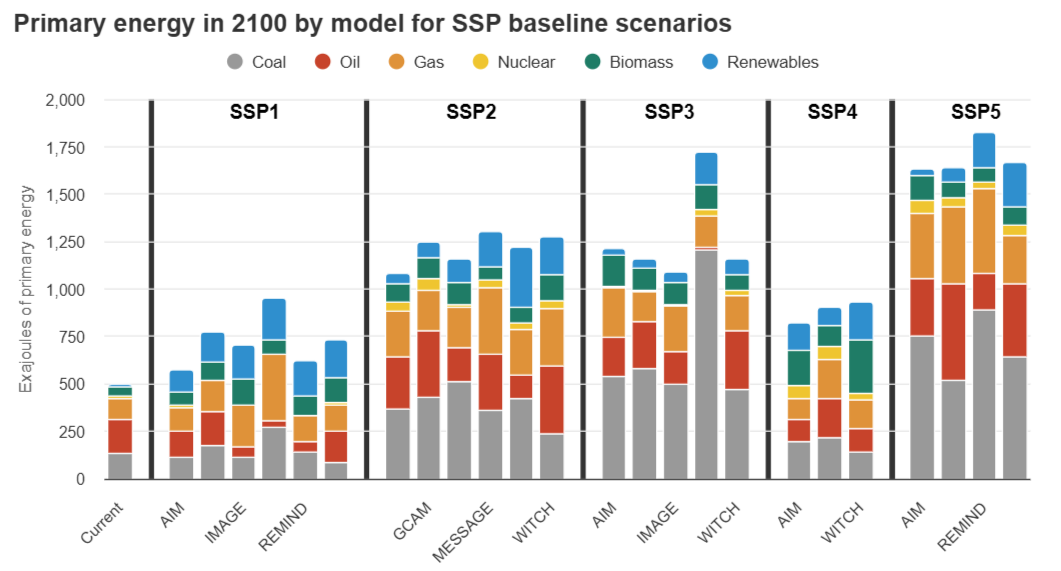
SSP3-7.0 Projects Growing Use of Coal Replacing Gas and Some Nuclear

My Summary:  Using this scenario presumes high CO2 Forcing (Wm2), high aerosol emissions and diminished forest area, as well as much greater population and coal consumption. Despite claims to the contrary, this is not a “middle of the road” scenario, and a strange choice for simulating future climate metrics due to wildly improbable assumptions.

How Two Versions of a Reasonable INM Climate Model Respond to SSP3-7.0

The preceding information regarding the input scenario provides a context for understanding the output projections from INMCM5 and INMCM6.  Simulation of climate changes in Northern Eurasia by two versions of the INM RAS Earth system model. Excerpts in italics with my bolds and added images.

Introduction

The aim of this paper is the evaluation of climate changes during last several decades in the Northern Eurasia, densely populated region with the unprecedentedly rapid climate changes, using the INM RAS climate models. The novelty of this work lies in the comparison of model climate changes based on two versions of the same model INMCM5 and INMCM6, which differ in climate sensitivities ECS and TCR, with data from available observations and reanalyses. By excluding other factors that influence climate reproduction, such as different cores of GCM components, major discrepancies in description of physical process or numerical schemes, the assessment of ECS and TCR role in climate reproduction can be the exclusive focus. Also future climate projections for the middle and the end of 21st century in both model versions are given and compared.

After modification of physical parameterisations, in the model version INMCM6 ECS increased from 1.8K to 3.7K (Volodin, 2023), and TCR increased from 1.3K to 2.2K. Simulation of present-day climate by INMCM6 Earth system model is discussed in Volodin (2023). A notable increase in ECS and TCR is likely to cause a discrepancy in the simulation of climate changes during last decades and the simulation of future climate projections for the middle and the end of 21st century made by INMCM5 and INMCM6.

About 20% of the Earth’s land surface and 60% of the terrestrial land cover north of 40N refer to Northern Eurasia (Groisman et al, 2009). The Hoegh-Guldberg et al (2018) states that the topography and climate of the Eurasian region are varied, encompassing a sharply continental climate with distinct summer and winter seasons, the northern, frigid Arctic environment and the alpine climate on Scandinavia’s west coast. The Atlantic Ocean and the jet stream affect the climate of western Eurasia, whilst the Mediterranean region, with its hot summers, warm winters, and often dry spells, influences the climate of the southwest. Due to its location, the Eurasian region is vulnerable to a variety of climate-related natural disasters, including heatwaves, droughts, riverine floods, windstorms, and large-scale wildfires.

Historical Runs

One of the most important basic model experiments conducted within the CMIP project in order to control the model large-scale trends is piControl (Eyring et al, 2016). With 1850 as the reference year, PiControl experiment (Eyring et al, 2016) is conducted in conditions chosen to be typical of the period prior to the onset of large-scale industrialization. Perturbed state of the INMCM model at the end of the piControl is taken as the initial condition for historical runs. The historical experiment is conducted in the context of changing external natural and anthropogenic forcings. Prescribed time series include:

♦  greenhouse gases concentration,
♦  the solar spectrum and total solar irradiance,
♦  concentrations of volcanic sulfate aerosol in the stratosphere, and
♦  anthropogenic emissions of SO2, black, and organic carbon.

The ensemble of historical experiments consists of 10 members for each model version. The duration of each run is 165 model years from 1850 to 2014.

SSP3-7.0 Scenario

Experiments are designed to simulate possible future pathways of climate evolution based on assumptions about human developments including: population, education, urbanization, gross domestic product (GDP), economic growth, rate of technological developments, greenhouse gas (GHG) and aerosol emissions, energy supply and demand, land-use changes, etc. (Riahi et al, 2016). Shared Socio-economic Pathways or “SSP” vary from very ambitious mitigation and increasing shift toward sustainable practices (SSP1) to fossil-fueled development (SSP5) (O’Neill et al, 2016).

Here we discuss climate changes for scenario SSP3-7.0 only, to avoid presentation large amount of information. The SSP3-7.0 scenario reflects the assumption on the high GHG emissions scenario and priority of regional security, leading to societies that are highly vulnerable to climate change, combined with relatively high forcing level (7.0 W/m2 in 2100). On this path, by the end of the century, average temperatures have risen by 3.0–5.5◦C above preindustrial values (Tebaldi et al, 2021). The ensembles of historical runs with INMCM5 and INMCM6 were prolonged for 2015-2100 using scenario SSP3-7.0.

Observational data and data processing

Model near surface temperature and specific humidity changes were compared with ERA5 reanalysis data (Hersbach et al, 2020), precipitation data were compared with data of GPCP (Adler et al, 2018), sea ice extent and volume data were compared with satellite obesrvational data NSIDC (Walsh et al, 2019) and the Pan-Arctic Ice Ocean Modeling and Assimilation System (PIOMAS) (Schweiger et al, 2011) respectively, land snow area was compared with National Oceanic and Atmospheric Administration Climate Data Record (NOAA CDR) of Snow Cover Extent (SCE) reanalysis (Robinson et al, 2012) based on the satellite observational dataset Estilow et al (2015). Following Khan et al (2024) Northern Eurasia is defined as land area lying within boundaries of 35N–75N, 20E–180E. Following IPCC 6th Assessment Report (Masson-Delmotte et al, 2021), the following time horizons are distinguished: the recent past (1995– 2014), near term (2021–2040), mid-term (2041–2060), and long term (2081–2100). To compare observed and model temperature and specific humidity changes in the recent past, data for years 1991–2020 were compared with data for years 1961–1990.

Near surface air temperature change

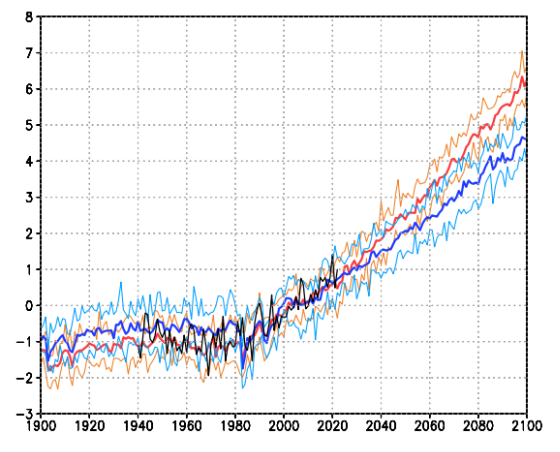
Fig. 1 Annual near surface air temperature change in Northern Eurasia with respect to 1995–2014 for INMCM6 (red), INMCM5 (blue) and ERA5 reanalysis (Hersbach et al, 2020)(black), K. Orange and lightblue lines show ensemble spread.

Despite different ECS, both model versions show (Fig. 1) approximately the same warming over Northern Eurasia by 2010–2015, similar to observations. However, projections of Northern Eurasia temperature after year 2040 differ. By 2100, the difference in 2-m air temperature anomalies between two model versions reaches around 1.5 K. The greater value around 6.0 K is achieved by a model with higher sensitivity. This is consistent with Huusko et al (2021); Grose et al (2018); Forster et al (2013), which confirmed that future projections show a stronger relationship than historical ones between warming and climate sensitivity. In contrast to feedback strength, which is more important in forecasting future temperature change, historical warming is more associated with model forcing. Both INMCM5 and INMCM6 show distinct seasonal warming patterns. Poleward of about 55N the seasonal warming is more pronounced in winter than in summer (Fig. 2). That means the smaller amplitude of the seasonal temperature cycle in 1991– 2020 compared to 1961–1990. The same result was shown in Dwyer et al (2012) and Donohoe and Battisti (2013). The opposite situation is observed during the hemispheric summer, where stronger warming is observed over the Mediterranean region (Seager et al, 2014; Kr¨oner et al, 2017; Brogli et al, 2019), subtropics and midlatitudinal regions of the Pacific Ocean, leading to an amplification of the seasonal cycle. The spatial patterns of projected warming in winter and summer in model historical experiments for 1991-2020 relative to 1961-1990 are in a good agreement with ERA5 reanalysis data, although for ERA5 the absolute values of difference are greater.

East Atlantic/West Russia (EAWR) Index

The East Atlantic/West Russia (EAWR) pattern is one of the most prominent large-scale modes of climate variability, with centers of action on the Caspian Sea, North Sea, and northeast China. The EOF-analysis identifies the EAWR pattern as the tripole with different signs of pressure (or 500 hPa geopotential height) anomalies encompassing the aforementioned region.

In this study, East Atlantic/ West Russia (EAWR) index was calculated as the projection coefficient of monthly 500 hPa geopotential height anomalies to the second EOF of monthly reanalysis 500 hPa geopotential height anomalies over the region 20N–80N, 60W–140E.

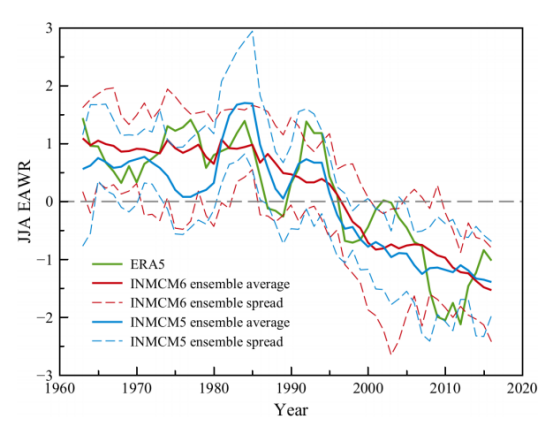
Fig. 5 Time series of June-July-August 5-year mean East Atlantic/ West Russia (EAWR) index. Maximum and minimum of the model ensemble are shown as a dashed lines. INMCM6 and INMCM5 ensemble averaged indices are plotted as a red and blue solid lines, respectively.  The ERA5 (Hersbach et al, 2020) EAWR index is shown in green.

[Note: High EAWR index indicates low pressure and cooler over Western Russia, high pressure and warmer over Europe. Low EAWR index is the opposite–high pressure and warming over Western Russia, low pressure and cooling over Europe.]

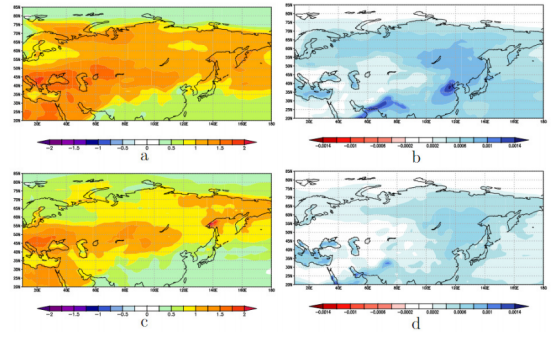
East Atlantic/ West Russia (EAWR) index Time series of EAWR index can be seen in Fig. 5. Since the middle of 1990s the sign of EAWR index has changed from positive to negative according to reanalysis data. Both versions of the INMCM reproduce the change in the sign of EAWR index. Therefore, the corresponding climate change in the Mediterranean and West Russia regions should be expected. Actually, the difference in annual mean near-surface temperature and specific humidity between 2001–2020 and 1961–1990 shows warmer and wetter conditions spreading from the Eastern Mediterranean to European Russia both for INMCM6 and INMCM5 with the largest difference being observed for the new version of model.

Fig. 6 Annual mean near surface temperature, K (left) and specific humidity, kg/kg (right) in 2001– 2020 with respect to 1961–1990 for INMCM6 (a,b) and INMCM5 (c,d).

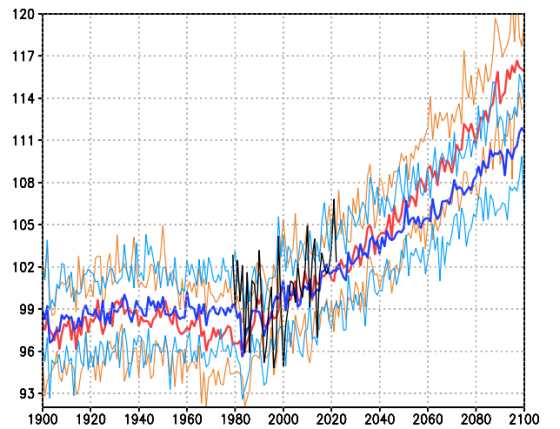
Fig. 7 Annual precipitation change (% with respect to 1995–2014) in Northern Eurasia for INMCM6 (red), INMCM5 (blue) and GPCP analysis (Adler et al, 2018) (black). Orange and lightblue lines show ensemble spread.

Discussion and conclusions

Climate changes during the last several decades and possible climate changes until 2100 over Northern Eurasia simulated with climate models INMCM5 and INMCM6 are considered. Two model versions differ in parametrisations of cloudiness, aerosol scheme, land snow cover and atmospheric boundary layer, isopycnal diffusion discretisation and dissipation scheme of the horizontal components of velocity. These modifications in atmosphere and ocean blocks of the model have led to increase of ECS to 3.7 K and TCR to 2.2 K, mainly due to modification of cloudiness parameterisation.

Comparison of model data with available observations and reanalysis show that both models simulate observed recent temperature and precipitation changes consistently with observational datasets. The decrement of seasonal temperature cycle amplitude poleward of about 55N and its increase over the Mediterranean region, subtropics, and mid-latitudinal Pacific Ocean regions are two distinct seasonal warming patterns that are displayed by both INMCM5 and INMCM6. In the long-term perspective, the amplification of difference in projected warming during June-JulyAugust (JJA) and December-January-February (DJF) increases. Both versions of the INMCM reproduce the observed change in the sign of EAWR index from positive to negative in the middle of 1990s, that allows to expect correct reproduction of the corresponding climate change in the Mediterranean and West Russia regions.

Specifically, the enhanced precipitation in the North Eurasian region since the mid-1990s has led to increased specific humidity over the Eastern Mediterranean and European Russia, which is simulated by the INMCM5 and INMCM6 models. Both versions of model correctly reproduce the precipitation change and continue its increasing trend onwards.

Both model versions simulate similar temperature, precipitation, Arctic sea ice extent in 1990–2040 in spite of INMCM5 having much smaller ECS and TCR than INMCM6. However, INMCM5 and INMCM6 show differences in the long-term perspective reproduction of climate changes. After 2040, model INMCM6 simulated stronger warming, stronger precipitation change, stronger Arctic sea ice and land snow extent decrease than INMCM5.

My Comment

So both versions of the model replicate well the observed history.  And when fed the SSP3-7.0 inputs, both project a warmer, wetter world out to 2100; INMCM5 reaches 4.5C and INMCM6 gets to 6.0C.  The scenario achieves the desired high warming, and the cloud enhancements in version 6 amplify it.  I would like to see a similar experiment done with the actual medium scenario SSP2-4.5.

The Original Sin of GHG Theory

In reality, Water only spontaneously flows down a
pressure gradient (downhill).
Energy only spontaneously flows
down an energy density gradient (from high to low).

In the domain of theology, original sin refers to Adam and Eve choosing to trust the serpent’s lies rather than natural truth placed by God in the Garden of Eden.  In legal proceedings, a similar concept concerns evidence obtained under false pretences.  “The fruit of a poisonous tree” refers to analyses, interpretations or conclusions that must be excluded because they started with a falsehood.

This post delves into a fraud at the root of consensus Climate Science™, illustrated by the image above showing how both water and energy flow down their respective gradients.  William Happer alluded to the problem in a recent presentation: (See Happer: Cloud Radiation Matters, CO2 Not So Much)
As we shall see below, mischief is a very polite term for a math and science error that has poisoned most all thinking and discussion about changes in climate and weather.  In a previous post, I summarized an important empirical experiment by Thomas Allmendinger proving that a parcel of pure CO2 and a parcel of ordinary air warm exactly the same when exposed to both SW and LW radiation.  (See Experimental Proof Nil Warming from GHGs).
So we know the notion is empirically wrong, now let’s discuss how GHG theory went off the rails from the beginning.  For that I provide below a synopsis of commentary by blogger Morpheus which he posted at Tallbloke’s Talkshop.  Excerpts in italics with my bolds and added images. (Title in red is link to blog)

CAGW (Catastrophic Anthropogenic Global Warming, due to CO2)
is nothing more than a complex mathematical scam.

The takeaways:

1) The climatologists have conflated their purported “greenhouse effect” with the Kelvin-Helmholtz Gravitational Auto-Compression Effect (aka the lapse rate).

2) The climatologists purport the causative agent for their purported “greenhouse effect” to be “backradiation”.

3) The Kelvin-Helmholtz Gravitational Auto-Compression Effect’s causative agent is, of course, gravity.

4) “Backradiation” is physically impossible because energy cannot spontaneously flow up an energy density gradient.

5) The climatologists misuse the Stefan-Boltzmann (S-B) equation, using the idealized blackbody form of the equation upon graybody objects, which manufactures out of thin air their purported “backradiation”. It is only a mathematical artifact due to that aforementioned misuse of the S-B equation. It does not and cannot actually exist. Its existence would imply rampant violations of the fundamental physical laws.
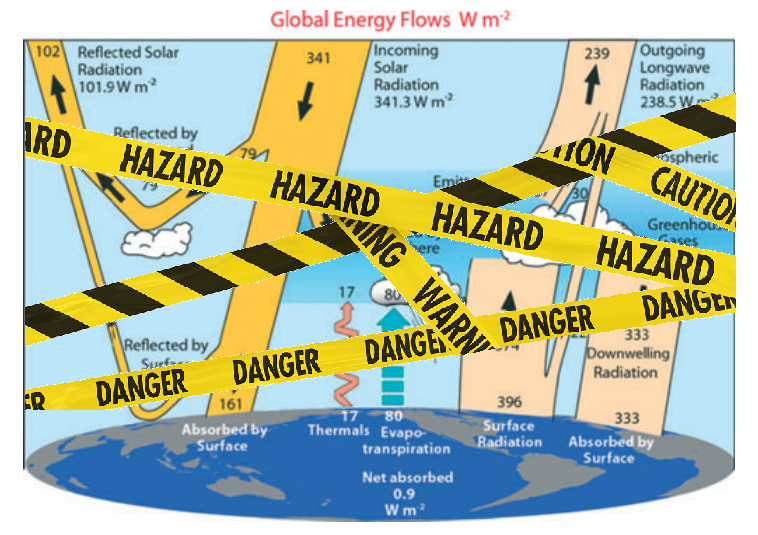
6) Polyatomic molecules are net atmospheric radiative coolants, not “global warming” gases. Far from the ‘global warming gas’ claimed by the climatologists, water acts as a literal refrigerant (in the strict ‘refrigeration cycle’ sense) below the tropopause. CO2 is the most prevalent atmospheric radiative coolant above the tropopause and the second-most prevalent (behind water vapor) below the tropopause. Peer reviewed studies corroborating this are referenced in the paper at the end of this post.

As you can see, there are two forms of the Stefan-Boltzmann (S-B) equation… one for idealized blackbody objects, one for graybody objects.

The idealized blackbody form of the S-B equation assumes emission to 0 K and ε = 1 by the very definition of idealized blackbody objects. ( ε is the term for emissivity from 0 to 1).

Idealized Blackbody Object (assumes emission to 0 K and ε = 1 by definition):
q_bb = ε σ (T_h^4 – T_c^4) A_h
1 σ (T_h^4 – 0 K) 1 m^2
=    σ  T^4

The graybody form of the S-B equation assumes emission to > 0 K and ε < 1.

Graybody Object (assumes emission to > 0 K and ε < 1):
q_gb = ε σ (T_h^4 – T_c^4) A_h

The ‘A_h’ term is merely a multiplier, used if one is calculating for an area larger than unity [for instance: >1 m^2], which converts the result from radiant exitance (W m-2, radiant flux per unit area) to radiant flux (W).

One can see from the immediately-above equation that the Stefan-Boltzmann (S-B) equation is all about subtracting the radiation energy density of the cooler object from the radiation energy density of the warmer object.

So radiant exitance at its most simplified (and thus the S-B equation at its most simplified) is just the emissivity of the warmer object (because emissivity only applies to objects which are emitting, and only the warmer object will be emitting… the colder object will be unable to emit in the direction of the warmer object because energy cannot spontaneously flow up an energy density gradient) multiplied by the speed of light in vacua, multiplied by the energy density differential, all divided by 4.

For graybody objects, it is the radiation energy density differential between warmer object and cooler object which determines warmer object radiant exitance. Warmer objects don’t absorb radiation from cooler objects (a violation of 2LoT in the Clausius Statement sense and Stefan’s Law); the lower radiation energy density gradient between warmer and cooler objects (as compared to between warmer object and 0 K) lowers radiant exitance of the warmer object (as compared to its radiant exitance if it were emitting to 0 K). The radiation energy density differential between objects manifests a radiation energy density gradient, each surface’s radiation energy density manifesting a proportional radiation pressure.

The climatologists use:   q = σ T^4on graybody objects, and sometimes slap ε<1 onto that,
when they should be using:  q = ε σ (T_h^4 – T_c^4)

This has the effect of artificially inflating radiant exitance of all calculated-upon objects.

Essentially, the climatologists are treating real-world graybody objects as though they are idealized blackbody objects… with emission to 0 K and emissivity of 1 (sometimes… other times they slap emissivity onto the idealized blackbody form of the S-B equation while still assuming emission to 0 K… which is still a misuse of the S-B equation, for graybody objects).

This essentially isolates each object into its own system so it cannot interact with other objects via the ambient EM field, which grossly inflates radiant exitance of all objects, necessitating that the climatologists carry these incorrect values through their calculation and cancel them on the back end (to get their equation to balance) by subtracting a wholly-fictive ‘cooler to warmer’ energy flow from the real (but far too high because it was calculated for emission to 0 K) ‘warmer to cooler’ energy flow.

That wholly-fictive ‘cooler to warmer’ energy flow is otherwise known as ‘backradiation’... it is nothing more than a mathematical artifact due to that aforementioned misuse of the S-B equation.

As I show here and in the below-linked paper, the correct usage of the S-B equation for graybody objects is via subtracting cooler object energy density from warmer object energy density to arrive at the energy density gradient, which determines radiant exitance of the warmer object.

So we’re talking about the same concept as water only spontaneously flowing down a pressure gradient (ie: downhill) when we talk of energy (of any form) only spontaneously flowing down an energy density gradient. Energy density is pressure, an energy density gradient is a pressure gradient… for energy.

It’s a bit more complicated for gases because they can convert that energy density to a change in volume (1 J m-3 = 1 Pa), for constant-pressure processes, which means the unconstrained volume of a gas will change such that its energy density (in J m-3) will tend toward being equal to pressure (in Pa). This is the underlying mechanism for convection. It should also have clued the climatologists in to the fact that it is solar insolation and atmospheric pressure which ‘sets’ temperature, not any ‘global warming’ gases.

Since a warmer object will have higher radiation energy density at all wavelengths than a cooler object (because remember, temperature is a measure of radiation energy density, equal to the fourth root of radiation energy density divided by Stefan’s Constant):

… ‘backradiation’ can do nothing to warm the surface because energy cannot spontaneously radiatively flow from lower to higher radiation energy density, and thus CAGW is nothing more than a complex mathematical scam perpetrated to obtain multiple billions of dollars in funding for trough-grubbing line-toeing ‘scientists’ and by perfidious politicians.

“But how does that make CAGW a scam?”, some may ask… well, because we’re being lied to, based upon an unscientific premise.

The climatologists have misused the Stefan-Boltzmann (S-B) equation (and the fundamental physical laws), and in the process, have practically flipped reality on its headpolyatomics (CO2, H2O, etc.) are not “global warming gases”, they are net atmospheric radiative coolants (radiative emission to space being the only way that Earth can shed energy); monoatomics (Ar) are not inert gases that have no effect upon climate, they are the actual “greenhouse gases” (because they cannot emit IR, and thus cannot shed energy to space… they dilute the radiative coolant gases); homonuclear diatomics (N2, O2) are somewhere in between… they can radiatively emit IR (and thus shed energy from the system known as ‘Earth’), but only under certain conditions (collisional perturbation of their net-zero electric dipole, which is why homonuclear diatomic vibrational mode quantum states are meta-stable and relatively long-lived. Collisions happen exponentially less frequently as altitude increases), and thus are “greenhouse gases” like the monoatomics, just not to the same extent.

We live, at the planet’s surface, in what can be analogized to the evaporator section of a world-sized AC unit, with polyatomics being net atmospheric radiative coolants (a higher concentration of them increases thermodynamic coupling between heat source (surface) and sink (space)), and with monoatomics and homonuclear diatomics playing the same role as non-condensable gases would play in an AC unit… diluting the polyatomic radiative gases which transit the majority of the energy, thus reducing the efficiency at which energy is transited from surface to upper atmosphere, then radiatively emitted to space.

Think about it this way… we all know the air warms up during the daytime as the planet’s surface absorbs energy from the sun. Conduction of that energy when air contacts the planet’s surface is the major reason air warms up.

How does that ~99% of the atmosphere (N2, O2, Ar) cool down? It cannot effectively radiatively emit.

Convection moves energy around in the atmosphere, but it cannot shed energy to space. Conduction depends upon thermal contact with other matter and since space is essentially a vacuum, conduction cannot shed energy to space… this leaves only radiative emission. The only way our planet can shed energy is via radiative emission to space. Fully ~76.2% of all surface energy is removed via convection, advection and evaporation. The surface only radiatively emits ~23.8% of all surface energy to space. That ~76.2% must be emitted to space by the atmosphere.
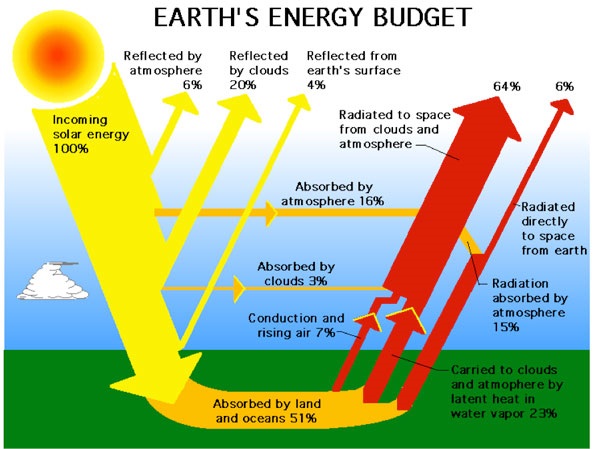
ERBE Earth Radiation Budget Experiment

Thus, common sense dictates that the thermal energy of the constituents of the atmosphere which cannot effectively radiatively emit (N2, O2, Ar) must be transferred to the so-called ‘greenhouse gases’ (CO2 being a lesser contributor below the tropopause and the largest contributor above the tropopause, water vapor being the main contributor below the tropopause) which can radiatively emit and thus shed that energy to space. Peer-reviewed studies corroborating this are referenced in the linked file below.

So, far from being ‘greenhouse gases’ which ‘trap heat’ in the atmosphere, those polyatomic radiative gases actually shed energy from the atmosphere to space. They are net atmospheric radiative coolants.

In short, in an atmosphere sufficiently dense such that collisional energy transfer can significantly occur, all polyatomic radiative molecules play the part of atmospheric radiative coolants at and above the temperature at which the combined translational mode energy of two colliding particles (atoms or molecules) exceeds the lowest excited vibrational mode quantum state energy of the radiative molecule. Below this temperature, they act to warm the atmosphere via thermalization (the mechanism the climate alarmists claim happens all the time), but if that occurs below the tropopause, the net result is an increase of Convective Available Potential Energy, which increases convection, which is a net cooling process. It is a gradation… as temperature increases, so too does the population of vibrationally excited polyatomics, and thus increases radiative emission. For CO2, that ‘transition temperature’ (the temperature at which the molecule transitions from being ‘net warmant’ to ‘net coolant’ and vice versa) is ~288 K.

The climatologists only told people half the story (thermalization by CO2 via vibrational mode to translation mode (v-t) collisional energy transfer processes). They didn’t tell anyone about the inverse (translational mode to vibrational mode (t-v) collisional energy transfer processes, (then that energy being radiatively emitted to space)), which is a cooling process. That didn’t fit their doomsaying narrative, so they left it out.

In other words, the climatologists only told people about the warming part (thermalization), not the cooling part. In order to hew to the fundamental physical laws, one must consider energy flow both to and from the CO2 molecule.

This doesn’t just apply to CO2, however. It applies to all atmospheric polyatomic molecules. In fact, far from the ‘global warming gas’ claimed by the climatologists, water acts as a literal refrigerant (in the strict ‘refrigeration cycle’ sense) below the tropopause:

That’s why, after all, the humid adiabatic lapse rate (~3.5 to ~6.5 K km-1) is lower than the dry adiabatic lapse rate (~9.81 K km-1).

You will note that the dry adiabatic lapse rate is due to the monoatomics and homonuclear diatomics... we’ve removed in this case the predominant polyatomic which reduces lapse rate.

Remember that an actual greenhouse works by hindering convection of energy out of the greenhouse.

In an atmosphere consisting of solely monoatomics and homonuclear diatomics (ie: no polyatomic radiative molecules), the atoms / molecules could pick up energy via conduction by contacting the surface, just as the polyatomics do; they could convect just as the polyatomics do… but once in the upper atmosphere, they could not as effectively radiatively emit that energy, the upper atmosphere would warm, lending less buoyancy to convecting air, thus hindering convection… and that’s how an actual greenhouse works, by hindering convection.

For homonuclear diatomics, there would be some collisional perturbation of their net-zero electric dipole and thus some emission in the atmosphere, but by and large the atmosphere could not effectively emit (especially at higher altitudes, because the probability of collision decreases exponentially with altitude).

Thus the surface would have to radiatively emit that energy (which is currently ~76.2% of all energy removed from the surface via radiation, convection and evaporation) instead… and a higher surface radiant exitance implies a higher surface temperature.

On the contrary, in our actual atmosphere, as temperature increases, (t-v) (translational mode -to- vibrational mode) collisional energy transfer processes increase and thus spectral emission increases only because CO2 is a net atmospheric radiative coolant (transferring translational mode energy to vibrational mode energy, then radiatively emitting it). So they are attempting to claim that CO2 is a “global warming gas” and simultaneously a net atmospheric radiative coolant, a contradiction… which is why their claims make no sense upon close examination.

In fact, removing CO2 would increase upper atmosphere temperature (due to fewer emitters in the upper atmosphere), which would set the starting point of the lapse rate higher, which translates down through the lapse rate to a warmer surface. That doesn’t occur with Ar, because it is a monoatomic, has no vibrational mode quantum states and thus cannot emit (nor absorb) IR in any case, and thus it only dilutes the radiative polyatomics, reducing the efficiency by which energy is transited from surface to space.

Because we don’t live in a ‘greenhouse’ as the climatologists claim… we live in what can be analogized to a world-sized AC unit… the surface is akin to the AC unit’s evaporator section (ie: the heat source); the atmosphere is akin to the AC unit’s working fluid; space is akin to the AC unit’s condenser section (ie: the heat sink); convection is akin to the AC unit’s compressor (ie: the motive force to move the working fluid).

These concepts used to be common knowledge. Somewhere along the way, the concepts got skewed to fit a particular narrative. Eventually, the concepts described herein will be common knowledge again, whereupon CAGW and its offshoots will be dumped on the midden heap of bad scientific ideas.
 

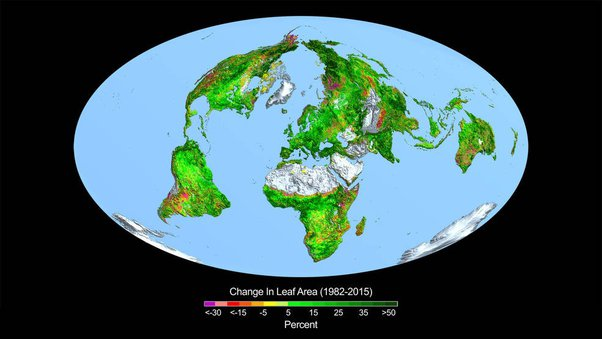
Yes, IPCC, Our Climate Responds to Our Sun

John Gideon Hartnett writes at Spectator Australia The sun is in control of our oceans. Text is from John Ray at his blog, excerpts in italics with my bolds and added images.
In recent years, there has been observed an increase in ocean temperature. Those who adhere to the Climate Change version of events say that the oceans are getting warmer because of trapped carbon dioxide (CO2) in the atmosphere causing a massive greenhouse effect leading to boiling oceans.

Well, anyone who has a brain knows that the oceans are not boiling, but let’s assume that is just hyperbole. When actual research – when actual measurements were taken – reality turns out to be the exact opposite.

New research shows that the temperature of our oceans are controlled by incident radiation from the Sun. Who would have guessed?

And as a consequence of the oceans warming, dissolved carbon dioxide gas is released due to reduced is solubility in ocean water. This means the warming of the oceans would lead (or cause) an increase in CO2 concentration in the atmosphere.  One of the researchers in the study wrote on X.com:

A decrease in cloud cover and albedo means more short wavelength (SW) solar radiation reaches the oceans. Albedo is the reflectivity of the Earth. Lower albedo means more sunlight reaching the land and oceans and more warming by the Sun.

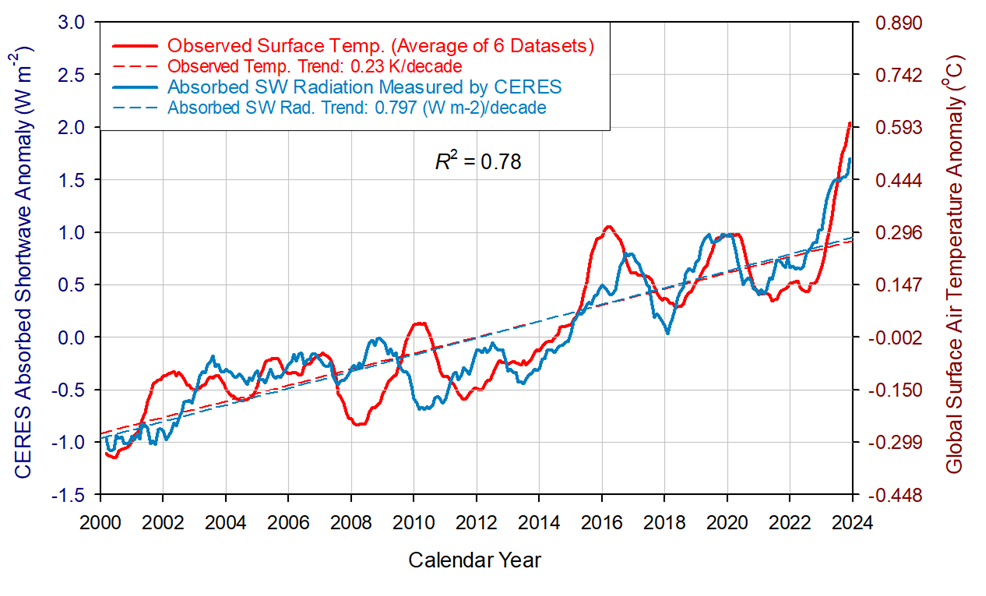
Figure 8. Comparison between observed global temperature anomalies and CERES-reported changes in the Earth’s absorbed solar flux. The two data series representing 13-month running means are highly correlated with the absorbed SW flux explaining 78% of the temperature variation (R2 = 0.78). The global temperature lags the absorbed solar radiation between 0 and 9 months, which indicates that climate change in the 21st Century was driven by solar forcing.

I mean to say that this is so obvious. The Sun heats Earth’s surface of which 71% is covered by the oceans! Basic physics!

The energy from the Sun powers all life on the planet and causes all Earth changes. Every second, the Earth receives the equivalent energy of 42 megatons of TNT in radiation from the Sun. That cannot be ignored. 

Climate Change, the ideological movement which I prefer to call a cult, views all evidence through the lens of their religious belief that the Earth is warmed by human activity. That activity releases carbon dioxide gas, which has been observed to be increasing. Their belief is that CO2 traps heat in a giant greenhouse effect. That is the dogma anyway. And I must add, we all are the carbon they want to eliminate.

But how much of that observed increase in CO2 is actually from natural causes and not from human activity? At least 94 per cent is. This new evidence now suggests it could be even more than that.

If the oceans emit CO2 gas following changes in the water temperature, which this research shows is due to the amount (flux) of solar radiation reaching the surface, then more CO2 comes from natural causes.

It is basic physics that as you heat water the dissolved gases are released due to a decrease in gas solubility. This means as the solar flux increases CO2 gas is released from the warmer ocean water.

Thus an ocean temperature increase leads to an increase in CO2 in the atmosphere, and not the other way around.

Space weather impacts the ionosphere in this animation. Credits: NASA/GSFC/CIL/Krystofer Kim

Roots of Climate Change Distortions

Roger Pielke Jr. explains at his blog Why Climate Misinformation Persists.  Excerpts in italics with my bolds and added images. H/T John Ray
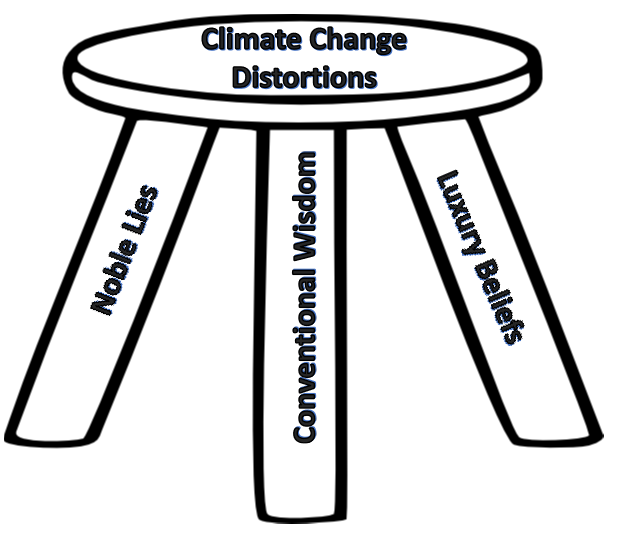
Noble Lies, Conventional Wisdom, and Luxury Beliefs

In 2001, I participated in a roundtable discussion hosted at the headquarters of the National Academy of Sciences (NAS) with a group of U.S. Senators, the Secretary of Treasury, and about a half-dozen other researchers. The event was organized by Idaho Senator Larry Craig (R-ID) following the release of a short NAS report on climate to help the then-new administration of George W. Bush get up to speed on climate change.

At the time I was a 32 year-old fresh-faced researcher about to leave the National Center for Atmospheric Research for a faculty position across town at the University of Colorado. I had never testified before Congress or really had any high-level policy engagement.

When the roundtable was announced, I experienced something completely new in my professional career — several of my much more senior colleagues contacted me to lobby me to downplay or even to misrepresent my research on the roles of climate and society in the economic impacts of extreme weather. I had become fairly well known in the atmospheric sciences research community back then for our work showing that increasing U.S. hurricane damage could be explained entirely by more people and more wealth.

One colleague explained to me that my research, even though scientifically accurate, might distract from efforts to advocate for emissions reductions:

“I think we have a professional (or moral?) obligation to be very careful what we say and how we say it when the stakes are so high.”

At the time, I wrote that the message I heard was that the “ ends justify means or, in other words, doing the “right thing” for the wrong reasons is OK” — even if that meant downplaying or even misrepresenting my own research.

I have thought about that experience over the past few weeks as I have received many comments on the first four installments of the THB series Climate Fueled Extreme Weather (Part 1Part 2Part 3Part 4). One of the most common questions I’ve received asks why it is that the scientific assessments of the Intergovernmental Panel on Climate Change (IPCC) are so different than what is reported in the media, proclaimed in policy, and promoted by the most public-facing climate experts. And, why can’t that gap be closed?

Over the past 23 years, I have wondered a lot myself about this question — not just how misinformation arises in policy discourse (we know a lot about that), but why it is that the expert climate community has been unable or unwilling to correct rampant misinformation about extreme weather, with some even promoting that misinformation.

Obviously, I don’t have good answers, but I will propose three inter-related explanations that help me to make sense of these dynamics — the noble lie, conventional wisdom, and luxury beliefs.

The Noble Lie

The most important explanation is that many in the climate community — like my senior colleague back in 2001 — appear to believe that achieving emissions reductions is so very important that its attainment trumps scientific integrity. The ends justify the means. They also believe that by hyping extreme weather, they will make emissions reductions more likely (I disagree, but that is a subject for another post).

I explained this as a “fear factor” in The Climate Fix:

Typically, the battle over climate-change science focused on convincing (or, rather, defeating) those skeptical has meant advocacy focused on increasing alarm. As one Australian academic put it at a conference at Oxford University in the fall of 2009: “The situation is so serious that, although people are afraid, they are not fearful enough given the science. Personally I cannot see any alternative to ramping up the fear factor.” Similarly, when asked how to motivate action on climate change, economist Thomas Schelling replied, “It’s a tough sell. And probably you have to find ways to exaggerate the threat. . . [P]art of me sympathizes with the case for disingenuousness. . . I sometimes wish that we could have, over the next five or ten years, a lot of horrid things happening—you know, like tornadoes in the Midwest and so forth—that would get people very concerned about climate change. But I don’t think that’s going to happen.” From the opening ceremony of the Copenhagen climate negotiations to Al Gore’s documentary, An Inconvenient Truth, to public comments from leading climate scientists, to the echo-chambers of the blogosphere, fear and alarm have been central to advocacy for action on climate change.

It’s just a short path from climate fueled extreme weather
to the noble lie at the heart of fear-based campaigns.

Conventional Wisdom

The phrase was popularized by John Kenneth Galbraith in his 1958 book, The Affluent Society, where he explained:

It will be convenient to have a name for the ideas which are esteemed at any time for their acceptability, and it should be a term that emphasizes this predictability. I shall refer to these ideas henceforth as the conventional wisdom.

The key point here is “acceptability” regardless of an idea’s conformance with truth. Conventional wisdom is that which everyone knows to be true whether actually true or not. Examples of beliefs that at one time or another were/are conventional wisdom include — Covid-19 did not come from a lab, Sudafed helps with hay fever, spinach is high in iron, and climate change is fueling extreme weather.

As the noble lie of climate fueled extreme weather has taken hold as conventional wisdom, few have been willing to offer correctives — Though there are important exceptions out in plain sight, like the IPCC Working Group 1 and the NOAA GFDL Hurricanes and Global Warming page.

Actively challenging conventional wisdom has professional and social costs. For instance, those who suggested that Covid-19 may have had a research-related origin were labeled conspiracy theorists and racists, those who suggested that President Biden was too old to serve another term were called Trump enablers, and those who accurately represent the science of climate and extreme weather are tarred as climate deniers and worse.

A few years ago I wrote an op-ed for a U.S. national newspaper and included a line about how hurricane landfalls had not increased in the U.S. in frequency or in their intensity since at least 1900. The editor removed the sentence and told me that while the statement was correct, most readers wouldn’t believe it and that would compromise the whole piece.

When noble lies become conventional wisdom,
they become harder to correct.

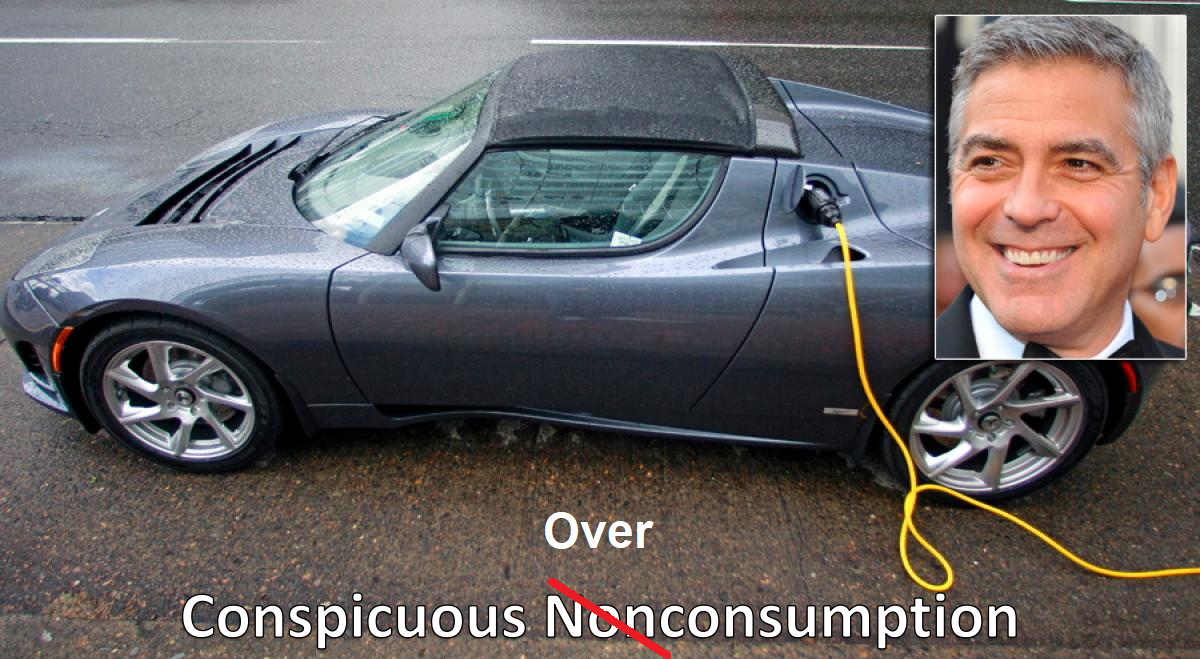
Luxury Beliefs

Yascha Mounk offers a useful definition:

Luxury beliefs are ideas professed by people who would be much less likely to hold them if they were not insulated from, and had therefore failed seriously to consider, their negative effects.

After all, what is the real harm if people believe in climate fueled extreme weather? If people believe that the extreme weather outside their window or on their feeds make aggressive climate policies more compelling, then that’s a good thing, right?

Surely there can only be positive outcomes that result from promoting misunderstandings of climate and extreme weather at odds with evidence and scientific assessments?

Well, no.

Last year I attended a forum at Lloyd’s of London — the event was held under the Chatham House rule, and in the event, later reported by the Financial Times, the company made a surprising admission contrary to the conventional wisdom (emphasis added):

Lloyd’s of London has warned insurers that the full impact of climate change has yet to translate into claims data despite annual natural catastrophe losses borne by the sector topping $100bn.

Insurance prices are surging as companies look to repair their margins after years of significant losses from severe weather to insured properties, exacerbated by inflation in rebuild costs. A warming planet has been identified by insurance experts and campaigners alike as a key factor.

But at a private event last month, one executive at the corporation that oversees the market told underwriters that it has not yet seen clear evidence that a warming climate is a major driver in claims costs.

It turns out that misunderstandings of the science of climate and extreme weather actually lead to unnecessary costs for people whose jobs involve making decisions about climate and extreme weather. Those unnecessary costs often trickle down to ordinary people. Kudos to Lloyd’s for calling things straight, even if only in a private forum — That is of course their professional responsibility.

Conclusion

In a classic paper in 2012, the late Steve Rayner explained that some forms of social ignorance are created and maintained on purpose:

To make sense of the complexity of the world so that they can act, individuals and institutions need to develop simplified, self-consistent versions of that world. The process of doing so means that much of what is known about the world needs to be excluded from those versions, and in particular that knowledge which is in tension or outright contradiction with those versions must be expunged. This is ‘uncomfortable knowledge’.

Climate fueled extreme weather is perhaps the canonical example
of dysfunctional socially constructed ignorance.  It may be
uncorrectable — a falsehood that persists permanently.

Here at THB, I am an optimist that science and policy are self-correcting, even if that takes a while. That means that the series on climate fueled extreme weather will keep going — Have a great weekend!


Over the Top Guterres Claims Oil and Gas Ads Cause Global Warming

A recent post below highlights the many colorful falsehoods perpetrated by UN Chief Guterres.  Now he takes his nonsensical word salads to a new level, referring to traditional energy companies as “Godfathers of Climate Chaos,”  a label better suited to himself.  After all, those companies are only filling the demand by billions of people who depend on affordable reliable energy.  What economic demand is Guterres filling?

His lecture was reported many places, including an article at Al Jazeera ‘Godfathers of climate chaos’: UN chief calls for ban on fossil fuel ads.  Excerpts in italics with my bolds and added images.

Antonio Guterres urges a 30 percent cut in global fossil fuel
production and use by 2030 amid record high temperatures.

“The godfathers of climate chaos – the fossil fuel industry – rake in record profits and feast off trillions in taxpayer-funded subsidies,” he said.

Drawing a comparison with many governments’ restrictions on advertising for harmful substances like tobacco, he said, “I urge every country to ban advertising from fossil fuel companies, and I urge news media and tech companies to stop taking fossil fuel advertising.”

Carbon dioxide emissions from burning fossil fuels – the main cause wrongly claimed to cause climate change – hit a record high last year despite global agreements designed to curb their release and a rapid expansion in renewable energy. [My edit: see 2024 Update: Fossil Fuels ≠ Global Warming. ]

Coal, oil and gas still provide more than three-quarters of the world’s energy, with global oil demand remaining strong.

Of course Guterres can urge all he wants, without any accountability for his words, since the UN has no authority to decide who agencies take on as advertising clients. It is all bluff and bluster, threatening as though a mafia boss lacking enforcers. Even so, the evidence does not support hydrocarbon fuel emissions as causing temperature changes.  Moreover, there’s no reason to believe banning advertising of such products will reduce the demand, which comes from real people purchasing with their own money in free markets.

Background Post UN Chief Wins Junk Science Award

At Financial Post’s Junk Science Week, Terence Corcoran highlights the hysterical alarmist statements by the UN chief promoting IPCC agenda, the article being The UN emperor has no science.  Excerpts in italics with my bolds and added images.H/T John Ray.

Guterres Mangles Metaphors To Pitch Extreme Climate Alarmism

UN secretary General Antonio Guterres addresses the media during a visit to the UN office in Nairobi, Kenya, May 3, 2023. © Provided by Financial Post

History will record that the United Nations has established itself as the greatest organizational perpetrator of junk science in modern times, if not of all time, with current UN Secretary-General Antonio Guterres destined to be singled out for his personal contribution to the distorted UN climate alarmism.

Since his appointment in 2019, Guterres and the UN have lived up to our standard formal definition of junk science. It occurs when:

    • scientific facts are distorted,
    • risk is exaggerated (or underplayed), and
    • “the science” adapted and warped by politics and ideology to serve another agenda.

That definition encompasses a wide range of activities among scientists, NGOs, politicians, journalists, media outlets, cranks and quacks who manipulate science for political, environmental, economic and social purposes. It also nicely captures the entire United Nations’ climate crusade and the work of its institutional creation, the Intergovernmental Panel on Climate Change (IPCC).

But no single official can top Guterres as a purveyor of IPCC hype and doom, a living embodiment of Hans Christian Andersen’s  fabled emperor who believes he is fully, stylishly dressed but in fact has no clothes.

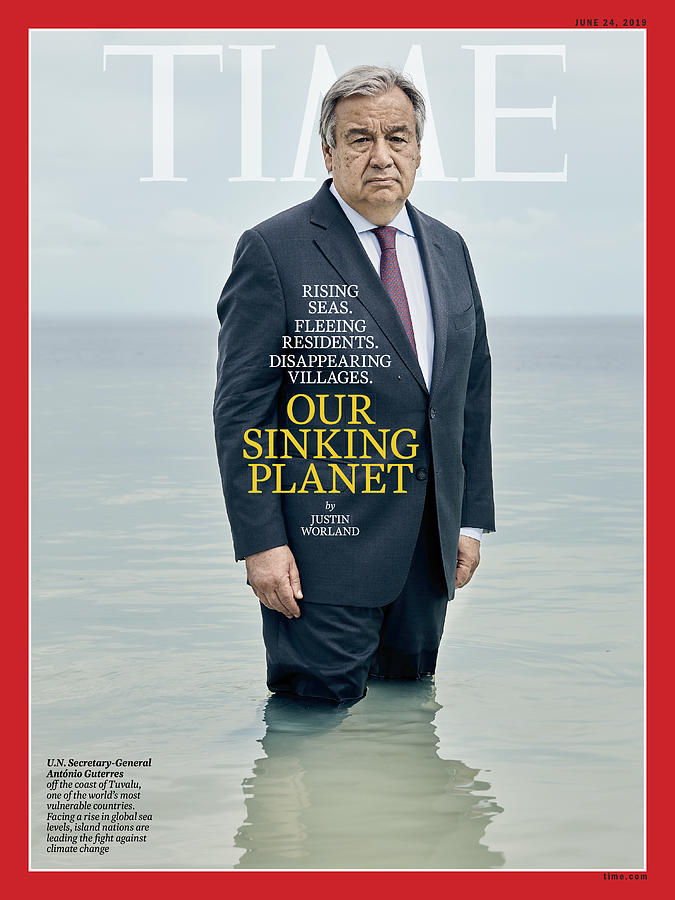
Our Sinking Planet – Antonio Guterres is a photograph by Photograph by Christopher Gregory for TIME which was uploaded on July 21st, 2020.

Guterres, a former Socialist Party prime minister of Portugal (1995-2002) and president of the Socialist International (1999-2005), was in typically ridiculous form on June 5th when he  delivered a speech  at the Museum of Natural History in Manhattan, at an event billed as “A Moment of Truth” and a “special address on climate action.” Guterres talked about a planet on a “highway to climate hell,”  rehashing a line he used in 2022 in Egypt at the COP27 climate conference: “We are on a highway to climate hell with our foot still on the accelerator.”

Guterres also has no qualms about mixing and mangling metaphors. He simultaneously told the Manhattan audience that humans are “like the meteor that wiped out the dinosaurs, we’re having an outsized impact. In the case of climate, we are not the dinosaurs. We are the meteor. We are not only in danger. We are the danger.”

The longer Guterres rambles on, the more confusing, contradictory and senseless the metaphors become:

“We are playing Russian roulette with our planet.  We need an exit ramp off the highway to climate hell. And the truth is … we have control of the wheel.”

Other Guterres’ climate spins include: “Humanity has opened the gates of hell” and “become a weapon of mass extinction.” And: “We must go into emergency mode and put out this five-alarm fire.”

Is Guterres describing reality — or the content of a new AI computer game in which some crazed teenaged human monster drives a flaming meteor through the ozone layer, knocking off dinosaurs before crashing onto a highway and plowing into a Russian Museum of Political Roulette just outside the Gates of Hell?

As UN Secretary-General, Guterres sits atop a hierarchy of agencies such as the IPCC climate science megaplex, which was created  in 1988 by two other UN agencies, the World Meteorological Organization (WMO) and the United Nations Environment Program (UNEP). UNEP was cobbled together in 1972 as the  brainchild of Maurice Strong , the late Canadian global environmental schemer, who famously mused about a fictional environmental crisis that leads a group of global insiders to decide the only hope for the planet is “that the industrialized civilizations collapse.” The current “de-growth” movement is a version of deindustrialization that reflects Guterres’ off-ramp from the highway to hell. In fact, the word “de-growth”  appears  28 times in the IPCC’s sixth and latest Assessment Report .

With these UN agencies as his guide, Guterres’ verbal jumble of science statements is no better than his mixed metaphors. His abuse of climate and environmental facts has often been commented upon, including in a YouTube video titled “Who is Antonio Guterres?,” posted earlier this year by Ottawa journalist John Robson on his Climate Discussion Nexus site. Robson reviews and highlights  some of the garbled inaccuracies and misrepresentations Guterres routinely cranks out.

For instance: “Climate-related natural disasters are becoming more frequent, more deadly, more destructive with growing human and financial cost.”  Not true . And: “The number of weather, climate and water-related disasters has increased by a factor of five over the past 50 years.”  Also not true .

When it comes to policies to deal with his fantastic vision of planetary destruction, Guterres aligns with Maurice Strong’s de-growth agenda. In his Manhattan speech, he repeated the UN call for a “fossil-fuel phase-out” since “economic logic makes the end of the fossil fuel age inevitable.” He urged financial institutions to “stop bankrolling” fossil fuel industries. “Fossil fuels are not only poisoning our planet,” he told bankers, “they’re toxic for your brand.”

The planet would be much better off if national governments stopped bankrolling Guterres and the United Nations and their constant poisoning of our science, economics and politics.

Declare Freedom from Climate Alarms

Illustration on climate hysteria by Alexander Hunter/The Washington Times

The Washington Times Editorial Board published ‘Declaring independence from hoaxes’ – ‘Let’s put the climate change fantasy to rest’ – ‘What’s being sold as science isn’t science at all’. Excerpts in italics with my bolds and added images.

Two hundred forty-eight years ago, America declared independence from the idea we needed to be governed by a king. Our Founding Fathers realized a freethinking people are perfectly capable of governing themselves. It was a revolutionary concept in every sense of the word.

Today, tyranny no longer emanates from the decrees of a faraway monarch suffering from a dash of mental illness. It has become a mental tyranny emanating from academics and politicians who employ doomsday tales to replace freethinking with blind acceptance of yarns that advance their agenda.

Mankind’s use of modern conveniences has, they insist, warmed the planet to an uncomfortable degree. Unless we do something to reverse this deadly trend, we will be subjected to extreme storms, rising seas and plagues on an apocalyptic scale. Scary stuff indeed.

We are told this is the conclusion of science, and one cannot
disagree with “the science.” But perhaps we should.

Earlier this year, The Heritage Foundation released a report comparing the predictions of 36 climate models against the actual temperature patterns recorded in the U.S. Corn Belt between the 1970s and the present.

The plot shows the 50-year area-averaged temperature trend during 1973-2022 for the 12-state corn belt as observed with the official NOAA homogenized surface temperature product (blue bar) versus the same metric from 36 CMIP6 climate models (red bars, SSP245 emissions scenario, output here).

Accurate models would be able to match real-life measurements. As the great Nobel Prize-winning physicist Richard Feynman explained in 1964: “If [a theory] disagrees with experiment, it’s wrong. In that simple statement is the key to science.”

All 36 climate predictions disagreed with reality — that is, each forecast temperatures much higher than what Midwesterners actually experienced. The “warming” never lived up to expectations, which means the climate models are something other than science.

Yet President Biden on Tuesday said you’re “really dumb” if you deny the climate crisis the models predict. He demands you return him to the White House so he can heap more climate regulations on the businesses he disfavors.

It’s not likely that another layer of red tape will do anything to alter global weather patterns, because the sun, not mankind, is the primary driver of climate. Whenever humans try to overcome the sun’s influence, the results inevitably fail to live up to expectations.

For instance, a study published in Nature in May found changes in the formulation of fuel used in cargo vessels four years ago “abruptly reduced the emission of sulfur dioxide from international shipping by about 80% and created an inadvertent geoengineering termination shock with global impact.”

That’s a fancy way of saying cleaner skies allowed more sunshine to reach the ocean, warming the seas dramatically. It’s a puzzler for devotees of the climate change narrative to explain how pollution can combat global warming, so they just ignore it as they do all inconvenient truths.

If climate change were rooted in honest belief, liberals would rally around nuclear energy as the cleanest and most efficient means of supplying any nation’s electricity needs. According to the Energy Department, when counting manufacturing emissions, rooftop solar panels create 40 grams of carbon dioxide for every kilowatt-hour of electricity generated. Nuclear power plants generate one-third that much.

Freethinkers ought to question the animosity toward carbon dioxide, the substance that nourishes plants and makes for bountiful harvests. We ought to liberate our minds from the influence of mountebanks who enrich themselves through the telling of climate fairy tales.

What’s being sold as science isn’t science at all.


UN Chief Wins Junk Science Award

At Financial Post’s Junk Science Week, Terence Corcoran highlights the hysterical alarmist statements by the UN chief promoting IPCC agenda, the article being The UN emperor has no science.  Excerpts in italics with my bolds and added images.H/T John Ray.

Guterres Mangles Metaphors To Pitch Extreme Climate Alarmism

UN secretary General Antonio Guterres addresses the media during a visit to the UN office in Nairobi, Kenya, May 3, 2023. © Khalil Senosi, AP

History will record that the United Nations has established itself as the greatest organizational perpetrator of junk science in modern times, if not of all time, with current UN Secretary-General Antonio Guterres destined to be singled out for his personal contribution to the distorted UN climate alarmism.

Since his appointment in 2019, Guterres and the UN have lived up to our standard formal definition of junk science. It occurs when:

    • scientific facts are distorted,
    • risk is exaggerated (or underplayed), and
    • “the science” adapted and warped by politics and ideology to serve another agenda.

That definition encompasses a wide range of activities among scientists, NGOs, politicians, journalists, media outlets, cranks and quacks who manipulate science for political, environmental, economic and social purposes. It also nicely captures the entire United Nations’ climate crusade and the work of its institutional creation, the Intergovernmental Panel on Climate Change (IPCC).

But no single official can top Guterres as a purveyor of IPCC hype and doom, a living embodiment of Hans Christian Andersen’s  fabled emperor who believes he is fully, stylishly dressed but in fact has no clothes.

Our Sinking Planet – Antonio Guterres is a photograph by Photograph by Christopher Gregory for TIME which was uploaded on July 21st, 2020.

Guterres, a former Socialist Party prime minister of Portugal (1995-2002) and president of the Socialist International (1999-2005), was in typically ridiculous form on June 5th when he  delivered a speech  at the Museum of Natural History in Manhattan, at an event billed as “A Moment of Truth” and a “special address on climate action.” Guterres talked about a planet on a “highway to climate hell,”  rehashing a line he used in 2022 in Egypt at the COP27 climate conference: “We are on a highway to climate hell with our foot still on the accelerator.”

Guterres also has no qualms about mixing and mangling metaphors. He simultaneously told the Manhattan audience that humans are “like the meteor that wiped out the dinosaurs, we’re having an outsized impact. In the case of climate, we are not the dinosaurs. We are the meteor. We are not only in danger. We are the danger.”

The longer Guterres rambles on, the more confusing, contradictory and senseless the metaphors become:

“We are playing Russian roulette with our planet.  We need an exit ramp off the highway to climate hell. And the truth is … we have control of the wheel.”

Other Guterres’ climate spins include: “Humanity has opened the gates of hell” and “become a weapon of mass extinction.” And: “We must go into emergency mode and put out this five-alarm fire.”

Is Guterres describing reality — or the content of a new AI computer game in which some crazed teenaged human monster drives a flaming meteor through the ozone layer, knocking off dinosaurs before crashing onto a highway and plowing into a Russian Museum of Political Roulette just outside the Gates of Hell?

As UN Secretary-General, Guterres sits atop a hierarchy of agencies such as the IPCC climate science megaplex, which was created  in 1988 by two other UN agencies, the World Meteorological Organization (WMO) and the United Nations Environment Program (UNEP). UNEP was cobbled together in 1972 as the  brainchild of Maurice Strong , the late Canadian global environmental schemer, who famously mused about a fictional environmental crisis that leads a group of global insiders to decide the only hope for the planet is “that the industrialized civilizations collapse.” The current “de-growth” movement is a version of deindustrialization that reflects Guterres’ off-ramp from the highway to hell. In fact, the word “de-growth”  appears  28 times in the IPCC’s sixth and latest Assessment Report .

With these UN agencies as his guide, Guterres’ verbal jumble of science statements is no better than his mixed metaphors. His abuse of climate and environmental facts has often been commented upon, including in a YouTube video titled “Who is Antonio Guterres?,” posted earlier this year by Ottawa journalist John Robson on his Climate Discussion Nexus site. Robson reviews and highlights  some of the garbled inaccuracies and misrepresentations Guterres routinely cranks out.

For instance: “Climate-related natural disasters are becoming more frequent, more deadly, more destructive with growing human and financial cost.”  Not true . And: “The number of weather, climate and water-related disasters has increased by a factor of five over the past 50 years.”  Also not true .

When it comes to policies to deal with his fantastic vision of planetary destruction, Guterres aligns with Maurice Strong’s de-growth agenda. In his Manhattan speech, he repeated the UN call for a “fossil-fuel phase-out” since “economic logic makes the end of the fossil fuel age inevitable.” He urged financial institutions to “stop bankrolling” fossil fuel industries. “Fossil fuels are not only poisoning our planet,” he told bankers, “they’re toxic for your brand.”

The planet would be much better off if national governments stopped bankrolling Guterres and the United Nations and their constant poisoning of our science, economics and politics.

2024 Update: Fossil Fuels ≠ Global Warming

gas in hands

Previous posts addressed the claim that fossil fuels are driving global warming. This post updates that analysis with the latest (2023) numbers from Energy Institute and compares World Fossil Fuel Consumption (WFFC) with three estimates of Global Mean Temperature (GMT). More on both these variables below. Note: Previously these same statistics were hosted by BP.

WFFC

2023 statistics are now available from Energy Institute for international consumption of Primary Energy sources. Statistical Review of World Energy. 

The reporting categories are:
Oil
Natural Gas
Coal
Nuclear
Hydro
Renewables (other than hydro)

Note:  Energy Institute began last year to use Exajoules to replace MToe (Million Tonnes of oil equivalents.) It is logical to use an energy metric which is independent of the fuel source. OTOH renewable advocates have no doubt pressured EI to stop using oil as the baseline since their dream is a world without fossil fuel energy.

From BP conversion table 1 exajoule (EJ) = 1 quintillion joules (1 x 10^18). Oil products vary from 41.6 to 49.4 tonnes per gigajoule (10^9 joules).  Comparing this annual report with previous years shows that global Primary Energy (PE) in MToe is roughly 24 times the same amount in Exajoules.  The conversion factor at the macro level varies from year to year depending on the fuel mix. The graphs below use the new metric.

This analysis combines the first three, Oil, Gas, and Coal for total fossil fuel consumption world wide (WFFC).  The chart below shows the patterns for WFFC compared to world consumption of Primary Energy from 1965 through 2023.

The graph shows that global Primary Energy (PE) consumption from all sources has grown continuously over nearly 6 decades. Since 1965  oil, gas and coal (FF, sometimes termed “Thermal”) averaged 88% of PE consumed, ranging from 93% in 1965 to 82% in 2023.  Note that in 2020, PE dropped 21 EJ (4%) below 2019 consumption, then increased 31 EJ in 2021.  WFFC for 2020 dropped 24 EJ (5%), then in 2021 gained back 26 EJ to slightly exceed 2019 WFFC consumption. For the 59 year period, all net changes were increases from previous years and were:

Oil 203%
Gas 536%
Coal 182%
WFFC 246%
PE 297%
Global Mean Temperatures

Everyone acknowledges that GMT is a fiction since temperature is an intrinsic property of objects, and varies dramatically over time and over the surface of the earth. No place on earth determines “average” temperature for the globe. Yet for the purpose of detecting change in temperature, major climate data sets estimate GMT and report anomalies from it.

UAH record consists of satellite era global temperature estimates for the lower troposphere, a layer of air from 0 to 4km above the surface. HadSST estimates sea surface temperatures from oceans covering 71% of the planet. HadCRUT combines HadSST estimates with records from land stations whose elevations range up to 6km above sea level.

Both GISS LOTI (land and ocean) and HadCRUT4 (land and ocean) use 14.0 Celsius as the climate normal, so I will add that number back into the anomalies. This is done not claiming any validity other than to achieve a reasonable measure of magnitude regarding the observed fluctuations.[Note: HadCRUT4 was discontinued after 2021 in favor of HadCRUT5.]

No doubt global sea surface temperatures are typically higher than 14C, more like 17 or 18C, and of course warmer in the tropics and colder at higher latitudes. Likewise, the lapse rate in the atmosphere means that air temperatures both from satellites and elevated land stations will range colder than 14C. Still, that climate normal is a generally accepted indicator of GMT.

Correlations of GMT and WFFC

The next graph compares WFFC to GMT estimates over the decades from 1965 to 2023 from HadCRUT4, which includes HadSST4.

Since 1965 the increase in fossil fuel consumption is dramatic and monotonic, steadily increasing by 246% from 146 to 505 exajoules.  Meanwhile the GMT record from Hadcrut shows multiple ups and downs with an accumulated rise of 0.8C over 56 years, 6% of the starting value.

The graph below compares WFFC to GMT estimates from UAH6, and HadSST4 for the satellite era from 1980 to 2023 a period of 44 years.

In the satellite era WFFC has increased at a compounded rate of 1.5% per year, for a total increase of 97% since 1979. At the same time, SST warming amounted to 0.76C, or 5% of the starting value.  UAH warming was 0.85C, or 6% up from 1979.  The temperature compounded rate of change is 0.1% per year, an order of magnitude less than WFFC.  Even more obvious is the 1998 El Nino peak and flat GMT since.

Summary

The climate alarmist/activist claim is straight forward: Burning fossil fuels makes measured temperatures warmer. The Paris Accord further asserts that by reducing human use of fossil fuels, further warming can be prevented.  Those claims do not bear up under scrutiny.

It is enough for simple minds to see that two time series are both rising and to think that one must be causing the other. But both scientific and legal methods assert causation only when the two variables are both strongly and consistently aligned. The above shows a weak and inconsistent linkage between WFFC and GMT.

Going further back in history shows even weaker correlation between fossil fuels consumption and global temperature estimates:

wfc-vs-sat

Figure 5.1. Comparative dynamics of the World Fuel Consumption (WFC) and Global Surface Air Temperature Anomaly (ΔT), 1861-2000. The thin dashed line represents annual ΔT, the bold line—its 13-year smoothing, and the line constructed from rectangles—WFC (in millions of tons of nominal fuel) (Klyashtorin and Lyubushin, 2003). Source: Frolov et al. 2009

In legal terms, as long as there is another equally or more likely explanation for the set of facts, the claimed causation is unproven. The more likely explanation is that global temperatures vary due to oceanic and solar cycles. The proof is clearly and thoroughly set forward in the post Quantifying Natural Climate Change.

Footnote: CO2 Concentrations Compared to WFFC

Contrary to claims that rising atmospheric CO2 consists of fossil fuel emissions, consider the Mauna Loa CO2 observations in recent years.


Despite the drop in 2020 WFFC, atmospheric CO2 continued to rise steadily, demonstrating that natural sources and sinks drive the amount of CO2 in the air.

See also: Nature Erases Pulses of Human CO2 Emissions

Temps Cause CO2 Changes, Not the Reverse