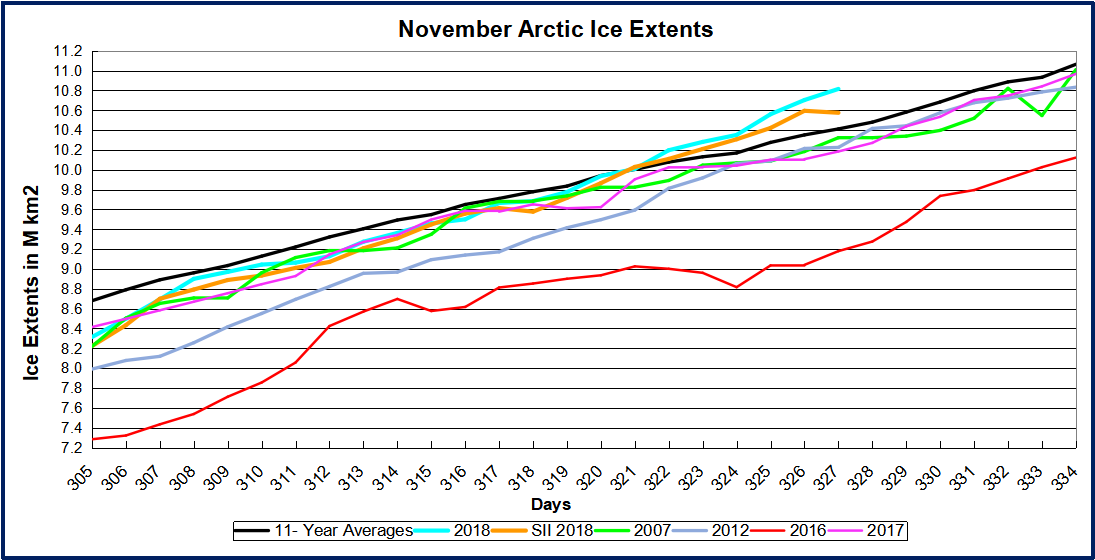
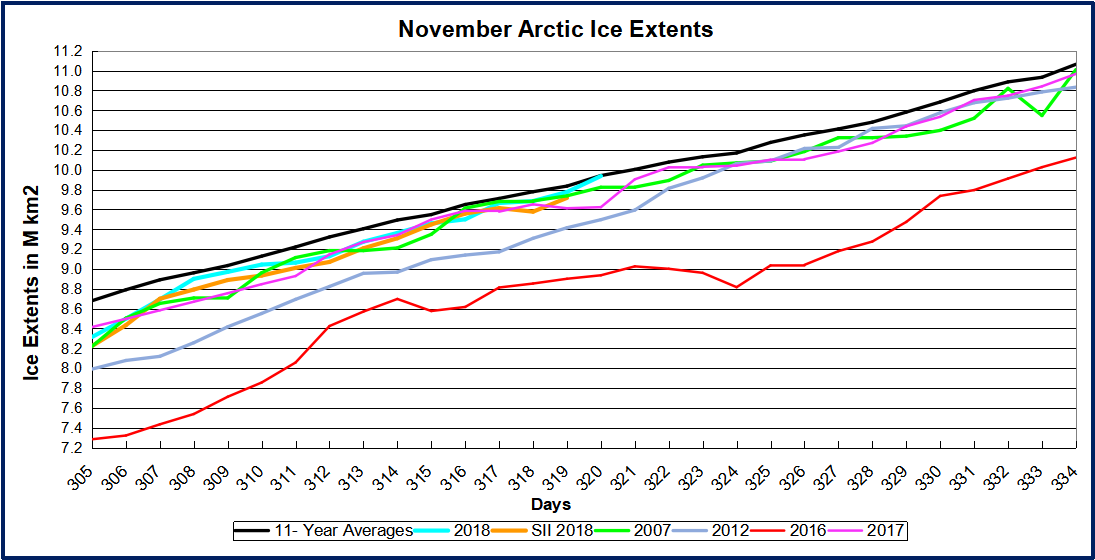
The remarkable growth of Arctic ice extent continues with a new development yesterday, as shown by the graph below.
Note that as of day 330, Nov. 26, 2018, Arctic ice extent exceeds the 11 year average reached at month end. At 11.08M km2, it is 400k km2 above the average for day 330. It also matches 2013 (not shown) with only 2014 slightly higher in the last decade.
Dr. Judah Cohen at AER posted yesterday on the difficulties forecasting this winter’s coming months. Excerpts in italics with my bolds.
In my opinion troposphere-stratosphere coupling is now in full gear and is having a significant impact on the large-scale circulation of the atmosphere. The relatively active vertical transfer of energy from the troposphere to the stratosphere is repeatedly perturbing the stratospheric PV though it is not of sufficient magnitude to force a significant PV disruption but only minor disruptions. Still the stratospheric PV is predicted to be continuously displaced from the North Pole towards northwest Eurasia. The displacement of the stratospheric PV south of its normal position is allowing the stratospheric PV to grab milder temperatures from more southern latitudes and sling shot it from across Asia towards Eastern Siberia and Alaska, where the warming temperatures are building ridging/positive geopotential height anomalies in the stratosphere centered near Alaska. This is resulting in northerly flow between the Alaskan ridge and stratospheric PV on the North Atlantic side of the Arctic from central Siberia to eastern North America. We have seen the same flow already mimicked or repeated in the troposphere during the month of November contributing to an overall cold month of November in the Eastern US.
As far as the winter as a whole, I believe that the behavior of the stratospheric PV is critical. The vertical atmospheric energy transfer looks active to me for the foreseeable future. This could lead to a significant or major stratospheric PV as early as the second half of December and extending into early January. If a large stratospheric PV disruption were to occur in the late December and early January timeframe this would be almost ideal in contributing to an overall cold winter for the usual favored regions across the NH mid-latitudes, but each event is unique. Any delay in a significant stratospheric PV disruption would lead to an extended period of volatile weather and increase the odds for an overall mild winter especially if the stratospheric PV strengthens and becomes circular in shape. There is the scenario where the vertical energy transfer remains active, the stratospheric PV is perturbed but no significant disruptions occur and the Eastern US still experiences a cold winter ala winter 2013/14 and is described in our new paper: Kretschmer et al. 2018, but more on the paper in a future blog.
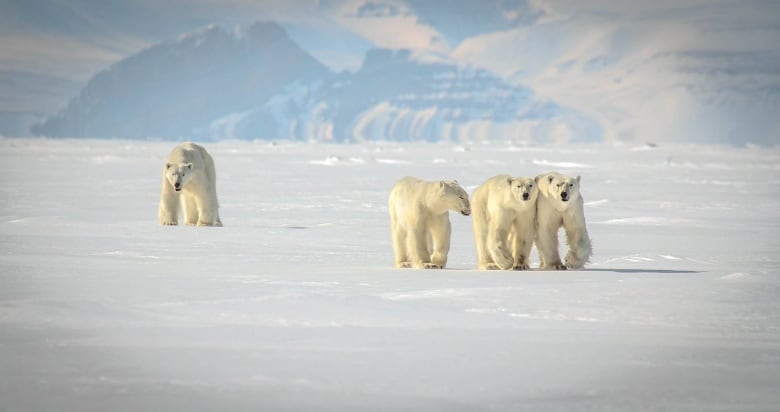
Meanwhile, in Nunavut, it is a great time to be a polar bear, even more of them than people want.
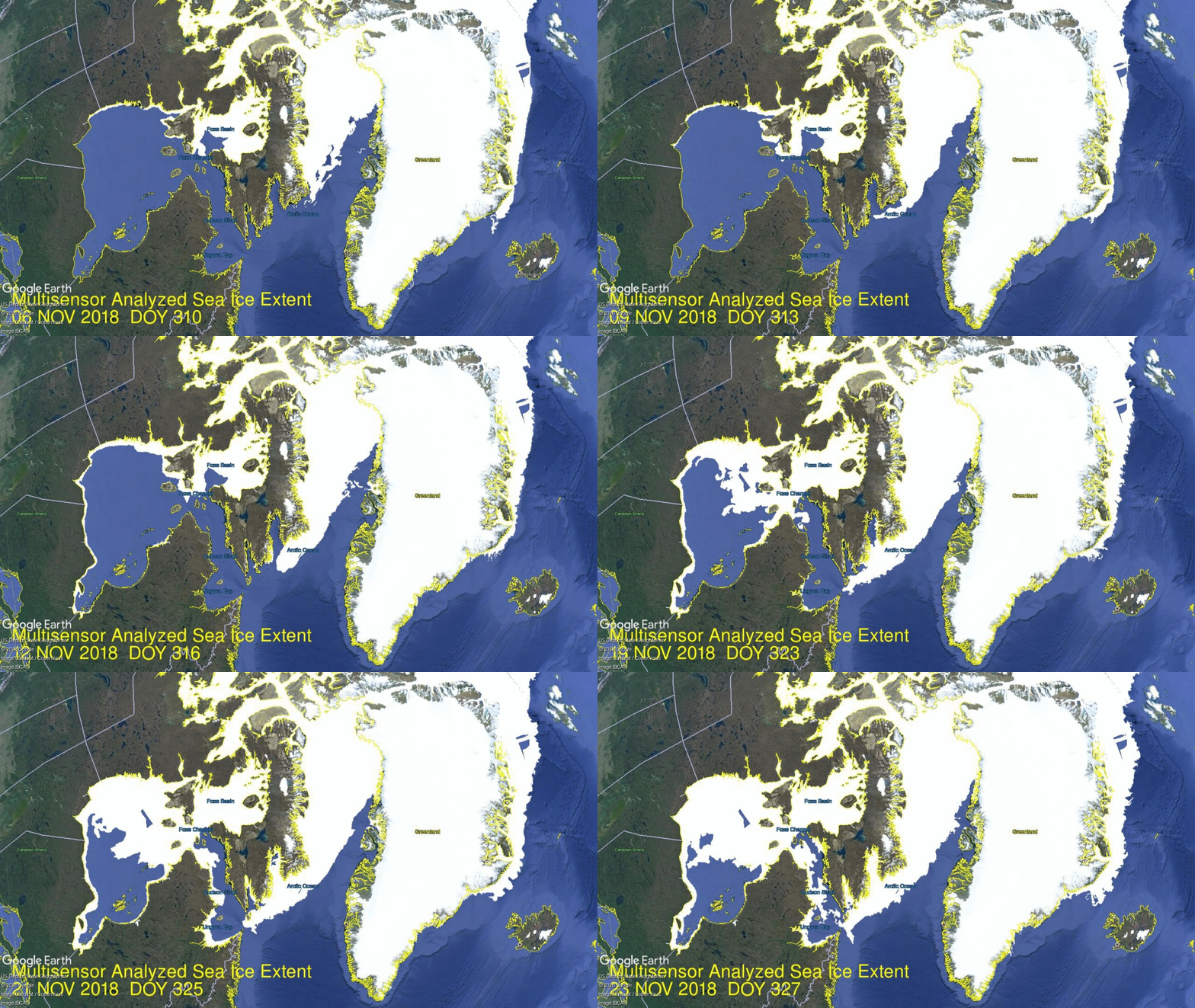
Despite the feverish reporting that last summer was hell, and that hot is now the “new normal,” the Arctic ice man is hard at work. In reality, Arctic ice is spreading everywhere. The image below shows how quickly Hudson Bay froze over in recent days.
Baffin Bay in the center next to Greenland is extending south and added 250k km2. Hudson Bay on the left added 700k km2, now at 73% of maximum, with both east and west coastlines freezing all the way down into James Bay.
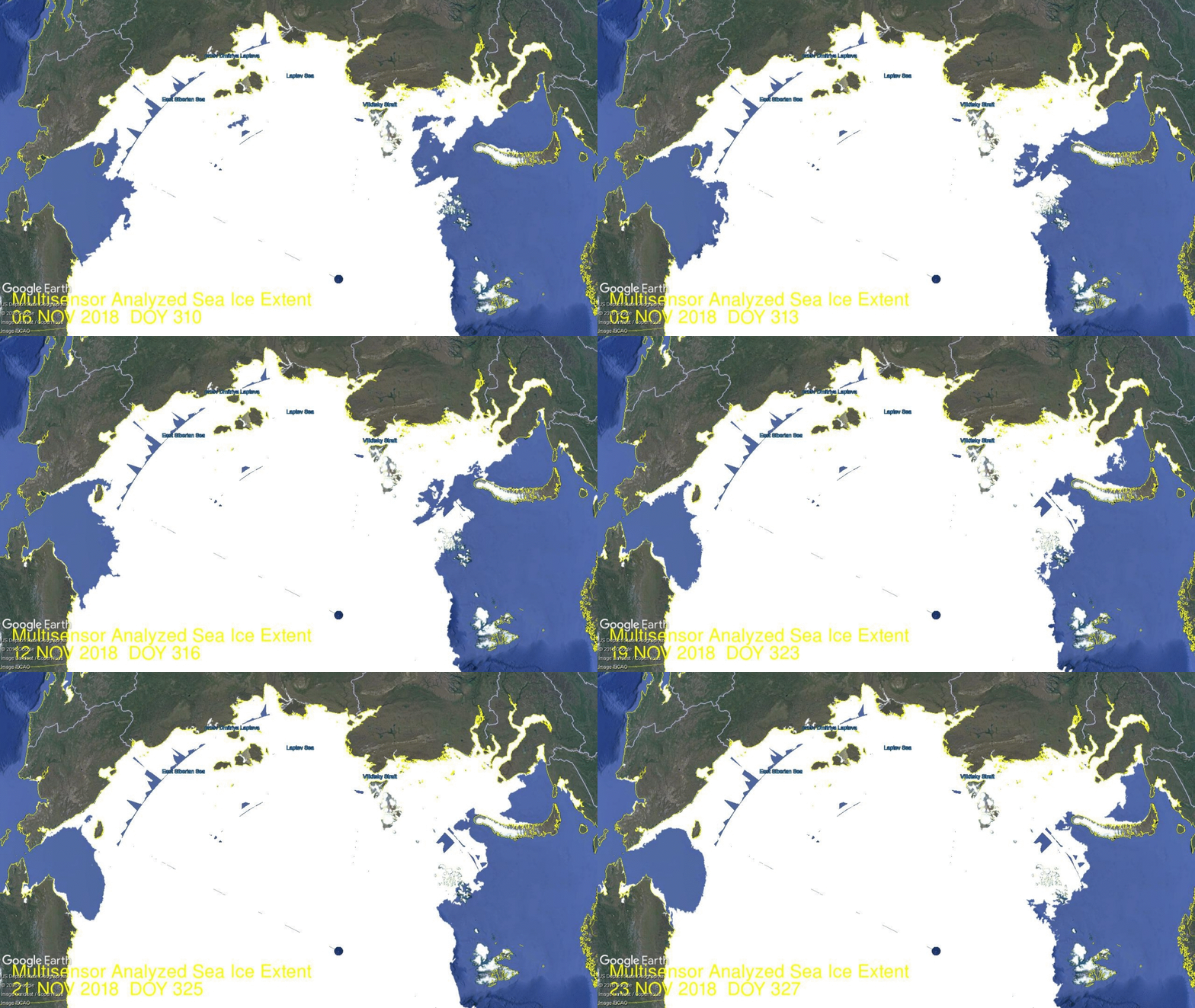
On the Eurasian side, on the left margin Chukchi is closing in. On the right side Kara has added 300k km2 of ice extent, now at 85% of maximum
The graph below shows 2018 is now exceeding the 11-year average after being down in October.
MASIE is showing 10.8M km2 ice extent, 400k km2 greater than the average for day 327, Nov. 23. SII is slightly lower, while 2007 is almost 500k km2 lower. In fact, in the past decade, only two years, 2013 and 2015, had more ice than 2018 at this date.
Region
2018327
Day 327
Average
2018-Ave.
2007327
2018-2007
(0) Northern_Hemisphere
10815225
10412198
403027
10323881
491344
(1) Beaufort_Sea
1070498
1068397
2100
1053320
17177
(2) Chukchi_Sea
624371
744131
-119760
655458
-31087
(3) East_Siberian_Sea
1087137
1077862
9275
1055561
31576
(4) Laptev_Sea
897845
897263
582
897845
0
(5) Kara_Sea
795273
712636
82637
784601
10672
(6) Barents_Sea
133731
197266
-63536
137195
-3464
(7) Greenland_Sea
453657
518028
-64371
589509
-135852
(8) Baffin_Bay_Gulf_of_St._Lawrence
786601
615297
171304
585929
200672
(9) Canadian_Archipelago
853337
851790
1547
852556
781
(10) Hudson_Bay
916266
406475
509791
494237
422029
(11) Central_Arctic
3142574
3186697
-44124
3151036
-8462
Small deficits in Chukchi, Greenland and Barents Seas are more than offset by surpluses in Kara Sea, Baffin and Hudson Bays. Note Hudson Bay is more than twice the average for this date.
Meanwhile, in Nunavut, it is a great time to be a polar bear, even more of them than people want.
The title of this post is over the top, but was provoked by the repeated claims last summer earth was going to hell right now. For example,
The world’s summer of hell. Hot, hot, hot: Summer of extremes setting heat records around the world, July 2018, CBC
Summer 2018: On the highway to hell? August 2018, Beyond Ratings
Earth at risk of becoming ‘hothouse’ if tipping point reached, if we can’t stop it we’re in a hell of a mess..August 2018, CNN
The Summer of Hell. Climate change is here and we are living in its embers. August 2018 The Week (US)
Meanwhile, back in reality, Arctic ice is spreading everywhere. The image below shows the European side in the last two weeks:
Laptev and East Siberian in the middle are frozen solid. On the right Kara has added 400k km2 ice extent up to 700k km2, 75% of March maximum. Below is the freezing proceeding on the Canadian side.
Baffin Bay in the center next to Greenland is extending south and added 300k km2. Hudson Bay on the left added 400k km2, with the western coastline freezing all the way down into James Bay. The graph below shows 2018 is matching the 11-year average after being down in October.
Both MASIE and SII have 9.9M km2 ice extents matching the average for day 320, Nov. 16. 2007, 2012 and 2017 all recovered from their September lows, while 2016 was much slower to refreeze.
Region
2018320
Day 320 Average
2018-Ave.
2007320
2018-2007
(0) Northern_Hemisphere
9937017
9942096
-5078
9824193
112824
(1) Beaufort_Sea
1069588
1064590
4999
1059182
10406
(2) Chukchi_Sea
615028
667249
-52222
519486
95541
(3) East_Siberian_Sea
1085198
1077597
7601
1055581
29617
(4) Laptev_Sea
897845
897648
197
897845
0
(5) Kara_Sea
701192
655668
45524
774297
-73105
(6) Barents_Sea
65798
167138
-101340
149482
-83684
(7) Greenland_Sea
378273
482289
-104016
533946
-155672
(8) Baffin_Bay_Gulf_of_St._Lawrence
711715
555346
156369
545899
165816
(9) Canadian_Archipelago
853337
851902
1435
852539
798
(10) Hudson_Bay
426092
261863
164228
244531
181560
(11) Central_Arctic
3107467
3186378
-78911
3163043
-55576
Deficits in Chukchi, Greenland and Barents Seas are offset by surpluses in Kara Sea, Baffin and Hudson Bays.
Meanwhile, in Nunavut, it is a great time to be a polar bear, even more of them than people want.
Only loathsome species will flourish, according to certain studies. Why? Because ‘rat explosion’ is more alarming than ‘two degrees’
Rats! It’s global warming again. Can’t we get a break?
No, literally. Not from the warming part. It’s actually quite chilly outside and there hasn’t been any measurable planetary warming since 1999. From the rats. Big ugly swarms of them spreading disease and biting your kids.
Monday’s Post headline actually said “Explosion of rats feared as climate warms.” So the good news is rats aren’t increasing any more than temperature. The bad news is a further increase in passive-voice predictions of doom.
Before the rats reach your face I’d like to note that this “news” story is remarkable for having the plumbing on the outside. It starts “Scientists have shown that the likely 2 degrees of global warming to come this century will be extremely dangerous, but, you know, ‘2 degrees’ is hardly a phrase from horror films. How about ‘rat explosion?’ ”
Exactly. It’s openly a story about hype not science. “The physics of climate change doesn’t have the same fear factor as the biology.” So cue the Fu Manchu-style mandibles, mould and plague because “it’s the creatures multiplying in outbreaks and infestations that generate horror.”
Beach invaded by red crabs.
It’s also old news. I’ve collected quite the file of creepy-crawly global-warming scare stories over the years including “super-sized, extra-itchy poison ivy” (Ottawa Citizen 2006), “tropical and potentially lethal fungus” (Globe and Mail 2007), venomous jellyfish the size of refrigerators (MSNBC 2009), mass starvation and the extinction of humanity (Globe and Mail 2009), bigger and more frequent kidney stones (Ottawa Citizen 2008), soggy pork chops (Globe and Mail 2009), asthma, allergies and runny noses (NBC 2015) and the conflict in Darfur (Ottawa Citizen 2007). Not to mention drought and flooding and the migration of France’s fabled wine industry to … um… Scotland (all Ottawa Citizen 2007), where they’ll be pairing a fine ruby Loch Ness with rat haggis I suppose. Och aye mon.
I could go on and on. But they already did. And don’t go reading these stories and thinking they offer evidence, or rather speculation, that warmth benefits life generally.
Far from it. Virtually none of these stories has anything cute or cuddly flourishing. Unless you count stray cats in Toronto (National Post 2007). Instead it’s a strangely un-PC combination of lookism and speciesism.
If you want to be a climate alarmist without all that tedious mucking about with facts, here’s how. Make a collage of many living things. Circle everything you’d like to see, up close or from a distance, like coral reefs or polar bears. Now predict their catastrophic decline if it gets two degrees warmer. (Don’t worry about them having somehow staggered through the Holocene Climatic Optimum. Pretend it never happened and hope it’s gone in the morning.)
Now circle all the really hideous stuff. Eyes on stalks, pointy noses, smelly, slimy. Predict a huge increase. Chocolate? Gone. (Globe and Mail 2012.) Diarrhea-inducing vibrio bacteria? Coming soon to an intestine near you. (MSNBC 2011.) Zika, or crabs swarming beaches? Oh yeah. (NBC 2016.) Insomnia, insanity and suicide? You bet. (Washington Post 2017, National Post 2018, Globe and Mail 2018.) Beer? Going going … (Guardian 2018.)
Friends, scientists, countrypersons, lend me your ears before some warmth-surfing pest chews them off. Even if a rapidly warming Earth were bad for man and beast, and our fault, the initial phases, with temperatures well within the range since the last glaciation ended 12,000 years back, can’t bring only bad consequences. No wind is that ill.
Nor is it plausible that every single new study says it’s worse than scientists thought. (Especially if “the science is settled”). If it were real science somebody would occasionally discover there’s a bit more time, climate somewhere will improve in the short run, some species that doesn’t have you fumbling for the Raid will flourish briefly. But no.
Even if climate change is going to have wiped out “sea spiders as large as a dinner plate” (Ottawa Citizen 2002) it’s the tragic loss of a unique species. But mostly it’s bumble bees (NBC 2015) or the coelacanth (Ottawa Citizen 2001), which cruised through the Permian-Triassic and Cretaceous-Paleogene mass extinctions but now dangles by a rhetorical thread. Oh, and the emperor penguin gets it too (NBC 2014). Plus plankton (Globe and Mail 2000). And walruses (NBC 2014).
As for the rats, one pregnant female will send 15,000 loathsome offspring a year straight to your suburb. None of their natural enemies will flourish. And “Rats are just the beginning … populations of dangerous crop-eating insects are likely to explode … Similar horrors lurk offshore … a population explosion of purple sea urchins — ‘cockroaches of the ocean’ — is choking out other denizens of Pacific kelp forests … we’re all sharing this warming planet, and at the very least surely we can unite against a future filled with rats.”
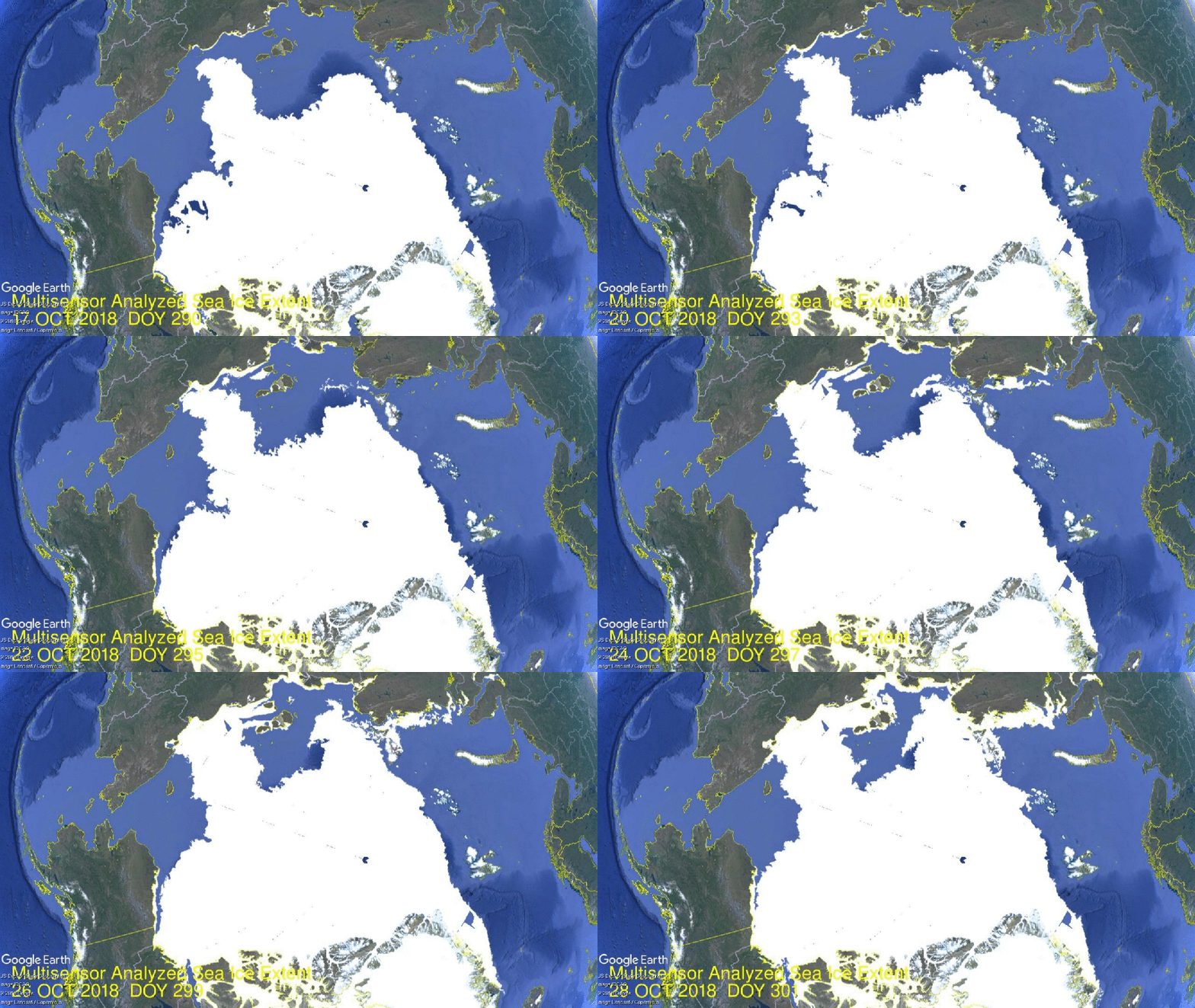
With the Canadian Arctic already frozen over, the action has moved to the Russian side. The image above shows East Siberian and Laptev basins filling in completely. Meanwhile on the right Kara Sea has gone from open water to nearly half of last March maximum. Kara went from 114k km2 on day 298 to 435k km2 yesterday, 47% of March max.
The graph shows MASIE reporting ice extents totaling 9.0M km2 yesterday, matching the 11 year average (2007 to 2017 inclusive). Notice that 2018 lagged the average by 900k km2 on day 296 and overcame that gap in 13 days. Presently, 2018 is tracking 300k km2 above 2007, 600k km2 more than 2012, and 1.3M km2 more than 2016. NOAA’s Sea Ice Index continutes to match MASIE through this period.
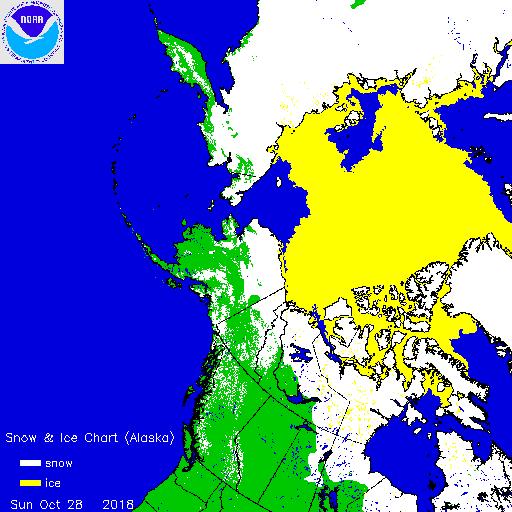
The current IMS Snow and Ice Chart shows how snow is covering Siberia completely, and has spread over northern and eastern canada. Snow cover is an important indicator for the coming Arctic and NH winter, as explained by Dr. Judah Cohen in his latest AER arctic oscillation update (here). Excerpts in italics with my bolds.
What unfolds next with the stratospheric PV (Polar Vortex) and troposphere-stratosphere coupling could be critical for determining the average temperature for the winter (December-January-February). Currently the GFS is predicting that the vertical transfer of energy from the troposphere to the stratosphere will become relatively quiet after this week. This will allow the stratospheric PV to recover and strengthen the second half of November. If the stratospheric PV becomes relatively strong and circular in shape in early December and couples to the mid and lower troposphere, this will likely result in a mild to extremely mild pattern across much of the NH including the Eastern US and northern Eurasia. At least for the Eastern US, it will be very difficult to recover from a mild start to winter and the winter temperatures would likely average mild regardless of what transpired the remainder of winter. Across northern Eurasia including Europe I think the outcome is a little more in doubt, as we saw last winter, Northern Eurasia and Europe can still average below normal for winter even with a mild start.
However an alternate path is that the energy pulse predicted for this week is not unique but is followed by subsequent pulses that further perturb the stratospheric PV. I see no evidence of this from the latest GFS forecasts, however in my opinion the NH tropospheric circulation remains favorable for subsequent PV disruptions. I think the place to watch is Siberia. As long as Siberia remains cold further energy pulses are likely with disruption to the stratospheric PV. However if Siberia turns mild for an extended period then we should expect a relatively strong PV for at least several weeks.
I would also like to note several trends. Snow cover extent remains above normal across North America. I do believe that snow cover can foreshadow the weather and the early season cold air outbreak across Eastern North America was at least preconditioned by the extensive snow cover for the entire fall this year. As long as the snow cover remains extensive and resilient, eastern North America remains at risk for subsequent cold air or Arctic outbreaks. However in the near term snow cover advance has been most impressive across Asia and with the more extensive snow cover, cold air is building across Siberia and is predicted to become more widespread. And just as I discussed above how long the snow and cold persist across Asia could be critical for the character of the winter not just locally but even remotely including the Eastern US.
Just in time for Halloween, the United Nations’ Intergovernmental Panel on Climate Change has released yet another in a 30-year stream of spooky stories: Global Warming of 1.5 Degree Celsius, an IPCC special report on the impacts of global warming of 1.5°C above pre-industrial levels.
Like its five predecessors, it makes terrifying predictions about human-caused climate catastrophes that are always just about to occur, unless governments reduce the level of the harmless trace gas carbon dioxide in the atmosphere from its current four-hundredths of one percent to the three hundredths it was before industrialization.
Notice that the title chosen by the UN gives the game away. It presents correlation as causation by implying that all the warming since pre-industrial times has been caused by industry. There’s no room here for a natural oscillation back from the well-documented lows of the 1700s, which themselves were rebounds from a higher temperature period in the 1400s. (See this NOAA chart).
So how will the UN engender so much fear that the public will agree to stop using fossil-fueled electricity to halt “climate change?” After all, the phrase in itself is benign and natural. With enough repetition as images of hurricanes play on the screen, however, climate change has come to be short-hand for fossil-fueled, civilization-threatening storms, droughts, and destruction of coastal cities and islands, a dubious hypothesis on which we are hilariously told “the debate is over.”
For years I assigned statistics students to pick any apocalyptic climate claim in the media and trace it back through the UN reports to its genesis in a scientific study. I knew they would discover that these reports are not scientific documents based on the peer review process, but political documents “approved by governments” and intended to scare the public into supporting constraints on the production and use of energy.
A powerful publicity machine magnifies the alarm, bombarding citizens with exaggerations and claims of certainty that are proven wrong as you dig down to their underlying scientific studies:
Public figures, news editors, and commentators make claims that are more alarmist than what individual IPCC authors say at the release of the report.
Individual IPCC authors make claims at the release of the report that are more alarmist than what the official press release says.
The official press release makes claims that are more alarmist than what the report’s summary for policy-makers says.
The summary for policy-makers makes claims that are more alarmist than the various chapters of the reports.
The chapters of the report make claims that are more alarmist than the studies they reference in the footnotes.
The studies referenced in the footnotes are often actually peer-reviewed and generally make cautious claims about a possible trend spotted in one or a small number of locations or in a global computer model.
Both types of studies are more speculative than definitive because, as they always acknowledge in the fine print, they are based on highly-uncertain measurements of highly-complex phenomena with many interacting causes, of which warming gasses generated by human activity are only one, and often a minor component.
For governments to make policy on such a hierarchy of exaggeration brings to mind James Madison’s warning: “A popular Government, without popular information, or the means of acquiring it, is but a Prologue to a Farce or a Tragedy; or perhaps both.”
The serial release of UN reports obscures the fact that the climate catastrophes they predict never occur. As the data contained deep in the bowels of this latest report again acknowledge, Mother Nature is simply not cooperating with the UN There has been no positive trend in hurricanes, floods, and droughts as carbon dioxide levels continue to rise.
Even the average global temperature (whose rise is supposed to increase disasters) has barely budged, only rising a third of the amount that has been repeatedly been predicted by the IPCC computer models.
Sea levels, which are very difficult to measure due to human use of land and even to the natural rise and fall of land itself, chugs along at the same inch-per-decade that it has for thousands of years – not the terrifying 10 feet in a century warned about in previous reports. The islands and polar ice that we were repeatedly told would be gone by now are still there, and no closer to destruction.
The UN’s response to its failed predictions is simply to move the goal-posts, and make new dire predictions for some future date – in this case 2030. There is no reason to believe that this speculation will be any more accurate the ones that predicted human-induced climate catastrophes by certain dates, now passed.
But don’t be too frightened: the same governments who authorize the UN reports never take the steps needed to reduce the supposedly horrifying carbon dioxide level. Hidden behind their teeth-chattering fear of fossil fuels is their awareness that oil, gas, and coal have helped bring dramatic improvements in health, welfare, and life expectancy, and that alternative methods of generating power are currently available only at unacceptable economic (and hence political) cost.
Happy Halloween!
Caleb Rossiter, Ph.D., is the director of the American Exceptionalism Media Project, a fellow at The Texas Public Policy Foundation, and a former professor of statistics at American University.
The major growth in ice extent came in the Russian basins (right side). The image above shows massive gains in ice extent in East Siberian and Laptev seas. East Siberian added 460k km2 for a total of 895, or 82% of last March maximum. Laptev was mostly open water in September, but added 600k km2 in the last two weeks for a total of 700k km2 or 78% of last March maximum. With the Canadian Arctic on the left already frozen over, the gains were smaller, limited to northern Hudson Bay (top left) and Baffin Bay filling in from the north.
The graph shows MASIE reporting ice extents totaling 8.2M km2 yesterday, 400k km2 below the 11 year average (2007 to 2017 inclusive). Note how 2018 started October on average, then went fairly flat the first week or so, falling 900k km2 below average. Recent gains in ice extent exceed average gains, closing the gap. Presently, 2018 is three days behind the average, matching 2007 and tracking above 2016 and 2012. NOAA’s Sea Ice Index matched MASIE throughout October.
The current IMS Snow and Ice Chart shows how snow is covering Siberia completely, and has spread over northern and eastern canada.
The table below shows the regional distribution of Arctic ice extents.
Region
2018304
Day 304 Average
2018-Ave.
2007304
2018-2007
(0) Northern_Hemisphere
8167466
8561136
-393671
8175072
-7606
(1) Beaufort_Sea
1069285
948751
120534
1038126
31159
(2) Chukchi_Sea
412073
468794
-56721
242685
169389
(3) East_Siberian_Sea
894863
954841
-59978
835071
59792
(4) Laptev_Sea
698238
896167
-197929
887789
-189551
(5) Kara_Sea
299264
462673
-163409
311960
-12695
(6) Barents_Sea
4058
81432
-77375
52823
-48765
(7) Greenland_Sea
341543
416633
-75090
443559
-102016
(8) Baffin_Bay_Gulf_of_St._Lawrence
427557
271561
155996
289374
138184
(9) Canadian_Archipelago
823551
789952
33599
817220
6331
(10) Hudson_Bay
131284
85823
45461
48845
82439
(11) Central_Arctic
3063891
3173126
-109235
3206345
-142454
The deficits are mainly on the Russian and European seas, only partly offset by surpluses in Beaufort, CAA, Baffin and Hudson Bays.
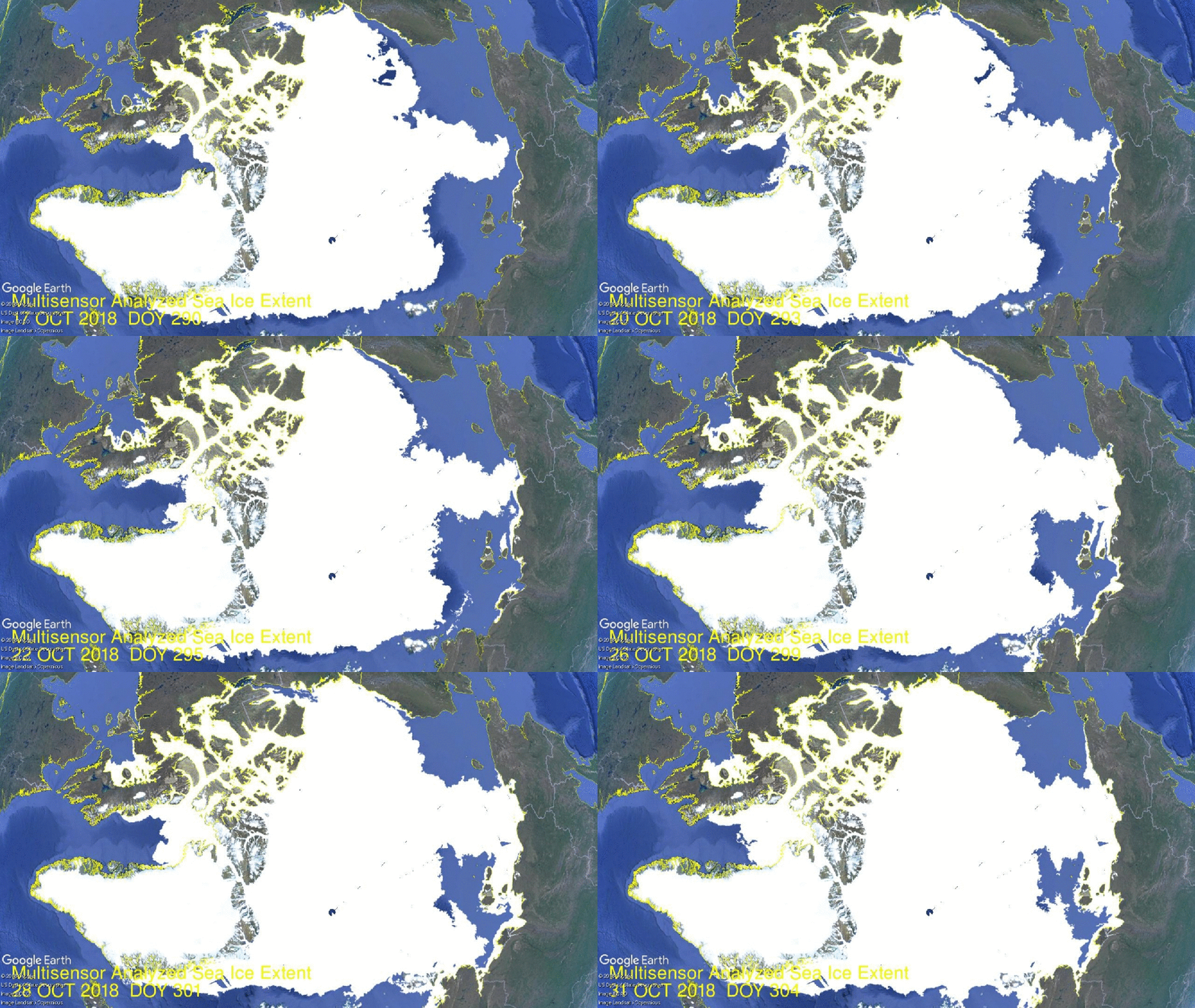
With the Canadian Arctic already frozen over, the action has moved to the Russian side. The image above shows massive gains in ice extent in East Siberian and Laptev basins. East Siberian added 383k km2 for a total of 821, or 75% of last March maximum. Laptev was mostly open water in September, but added 550k km2 in the last ten days for a total of 650k km2 or 72% of last March maximum.
The graph shows MASIE reporting ice extents totaling 7.8M km2 yesterday, 400k km2 below the 11 year average (2007 to 2017 inclusive). Note how 2018 started on average, then went fairly flat the first week or so, falling 900k km2 below average. Recent gains in ice extent exceed average gains, closing the gap. Presently, 2018 is about four days behind the average, tracking above 2016, 2012 and 2007. NOAA’s Sea Ice Index is matching MASIE through most of October.
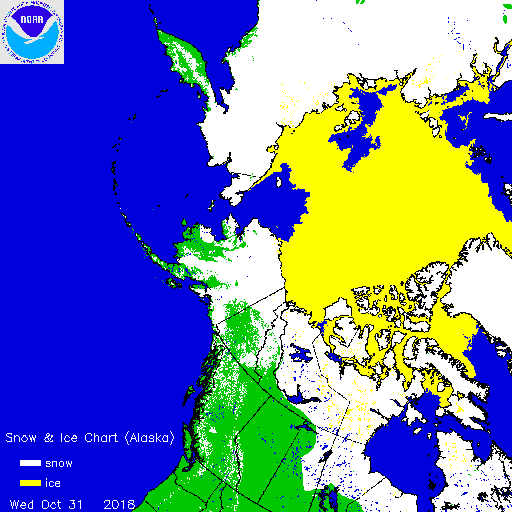
The current IMS Snow and Ice Chart shows how snow is covering Siberia completely, and has spread over northern and eastern canada.
To believe humans are dangerously warming earth’s climate, you have to swallow a bunch of unbelievable notions. You have to think the atmosphere drives temperature, instead of the ocean with 1000 times the heat capacity. You have to disregard the sun despite its obvious effects from summer to winter and longer term. You have to think CO2 drives radiative heat transfers, instead of H2O which does 95% of the radiative work. You have to think rises in CO2 cause temperatures to rise, rather than the other way around. You have to forget it was warmer than now in the Middle Ages, warmer still in the Roman era, and warmest of all during Minoan times. And on and on. The global warmist narrative is full of ideas upside down and backwards, including many reversals of cause and effect.
It is like a massive hot air balloon, so why doesn’t it deflate? Answer: It is because so many interests are served by keeping it alive and pumping up public fears. In this brief video, Richard Lindzen explains how it serves politicians, NGOs and the media to be on the global warming bandwagon.
In addition, there are businesses and industries that can and do contribute to global warming fears to further their own interests. For example,Terence Corcoran explains how the insurance industry benefits by promoting global warming in his Financial Post article Why insurers keep hyping ‘climate risks’ that don’t materialize Excerpts in italics with my bolds.
Insurers are urging the government to invest in natural, green infrastructure even though engineers call it ineffective
For more than two decades, insurance firms facing rising property damage costs in Canada and abroad have sought some kind of salvation in the environmental movement’s climate change crusade.
The latest insurance industry initiative wanders even deeper into the quagmire of green policy advocacy. Combating Canada’s Rising Flood Costs, a new report from the Insurance Bureau of Canada (IBC), urged governments across the country to adopt “natural infrastructure” to limit escalating climate change risks.
The report continues the insurance industry’s 20-year practice of hyping climate risks. At an industry conference in 1999, one executive warned: “The increase in extreme weather events (in Canada) is part of a global trend in which climate change has played a significant role.”
The evidence was non-existent then, and not much has changed in the interim, despite the industry’s claim that climate-driven flood risk is escalating. According to the insurers, Canada needs all levels of government to turn to natural and “green” infrastructure before installing traditional “grey” infrastructure.
The first priority is to retain existing ponds, streams, trees and other natural infrastructure systems, according to the report. The second is to rebuild and replace natural infrastructure that has been lost. And the third — building new and replacing old sewers, pipes, concrete drainways, diversions, improved building techniques — should be undertaken only on a “build what you must” basis.
However, that’s not what the Ontario Society of Professional Engineers recommends. In an April report for provincial officials it said: “Numerous studies have demonstrated that green infrastructure does not provide a flood risk reduction benefit.” The engineers advised that protective plumbing, pump-station modifications and sanitary-sewer improvements are among the measures that should be taken to control urban flooding.
Insurers have an understandable self-interest in promoting infrastructure spending and government policies, laws and regulations that would protect their businesses from rising insurance claims. But the report reads like a document from the World Wildlife Fund. It was sponsored by the IBC and “generously supported” by Intact Financial Corp., Canada’s largest insurance company. The University of Waterloo-based Intact Centre on Climate Adaptation (funded by Intact, which has given millions to the centre) was also involved.
Despite the heavy corporate involvement, the CBC opened up about 10 minutes of The National, it’s flagship news show, to the industry report when it was released last month. Would The National give the pipeline, mining and telecom companies 10 minutes to promote their views?
The stars of The National that night were Blair Feltmate, head of the Centre on Climate Adaptation, and CBC News meteorologist Johanna Wagstaffe. Both repeated the insurance industry’s 20-year-old claims that climate devastation is ravaging Canada through extreme weather events — and warned the public to look out for rising insurance premiums if nothing is done. Here’s a sample:
Wagstaffe: “Every single extreme weather event is connected to a warming climate because… as we see longer and hotter summers, we see more moisture being held in our atmosphere, we see higher water levels, that means every single event is amplified by climate change.”
Feltmate: “I totally agree. So all the modelling on climate change that’s been done over the last many years by groups like the Intergovernmental Panel on Climate Change, which is a group of several hundred climate scientists… their predictions are that, yes, climate change has happened, is happening and will continue to happen. And we’re seeing the expression of extreme weather events as a result of that.”
Feltmate added the magnitude of flooding, which is the No. 1 cost due to climate change in the country, is increasing.
Such climate warnings have been official insurance industry mantra since the 1990s. Flooding and extreme weather are becoming more frequent, the industry said again and again.
Not true, according to the latest IPCC science report released this month. The impacts chapter said: “There is low confidence due to limited evidence, however, that anthropogenic climate change has affected the frequency and the magnitude of floods.” Furthermore, from 1950 to 2012 “precipitation and (fluvial) runoff have… decreased over most of Africa, East and South Asia, eastern coastal Australia, southeastern and northwestern United States, western and eastern Canada.”
Despite a lack of evidence, the industry recently claimed conditions are so bad in Canada that “weather events that used to occur every 40 years now happen every six years” — a factoid attributed to a 2012 IBC-commissioned report by veteran Western University climatologist and climate-policy activist Gordon McBean. He cited an Environment Canada report to support the 40-to-six claim, but in 2016 Canadian Underwriter magazine published a note quoting an Environment Canada official who said studies “have not shown evidence to support” the 40-to-six year frequency shift. The claim has since been scrubbed from the insurance industry’s communications on climate issues.
The insurers have a newer warning widget in the form of a graphic that appears to show a dramatic rise in catastrophic insurance losses due to climate change. A trend line rises from the mid-1980s to 2017 to a $5-billion peak with the 2016 Fort McMurray fire (see first accompanying chart). The new IBC flood report said these numbers illustrate the financial impacts of climate change and extreme weather events that are being felt by a growing number of homeowners and communities. These losses “averaged $405 million per year between 1983 and 2008, and $1.8 billion between 2009 and 2017.”
The graphic contains three dubious elements as a source for a flood report. First is an inconsistency in the source of data, a problem identified by Robert Muir, a professional engineer and member of in infrastructure task force at the Ontario Society of Professional Engineers. The 1983–2007 data set was collected through informal industry surveys, while the 2008–2017 data are tabulated systematically by an independent agency.
Data inconsistency may explain the bizarre result that the insurance industry had zero losses due to floods, water, rain and storm perils in four of 17 years between 1983 and 2000.
Second, the IBC graph also counts fire losses, including the Fort McMurray fire of 2016 — an event unrelated to flood risk. Removal of fire losses significantly flattens the curve (see the second accompanying chart). If the 2013 floods in Alberta and Toronto are treated as possible one-off freak events, the average insurance losses come to $182 million in the 1990s, $198 million during the 2000s and $268 million over the past nine years, which is not a dramatic shift considering there are many other explanations for insurance losses, including increasing individual wealth beyond mere per capita GDP values, urbanization, failure of governments to maintain decaying ancient water infrastructures, and the risks people take by moving into flood-prone areas.
The insurance industry has an obvious motive in highlighting flood risk. It is part of a concerted climate campaign by NGOs, governments and sustainable development advocates. As one executive put it at a 2016 conference the objective is to “monetize” the flood risk, an idea the IBC is pushing with the help of a relatively new “flood model” that identifies high-risk areas.
When risks are real, people should of course take steps to avoid them or get protection, including taking out insurance. But the industry seems to be heading in a questionable direction by promoting insurance for climate risks that may not exist and at the same time advocating for green protective infrastructure (see below) that will cost more and may — if the engineers are right — increase the risk.
The latest unguided missile IPCC report came out of a South Korea meeting, and surprisingly the first media response was silence. Could it be some of them actually considered that these new claims and demands are so over the top that their audiences will guffaw and break with their media masters once and for all?
The graph illustrates the problem very clearly. Since 1992, the UN Framework Convention on Climate Change has met 23 times. These UNFCCC discussions have utterly failed to reduce CO2 emissions. Yet from 2020, emissions have to drop dramatically, if we are to stand a chance of keeping global warming below 1.5°C.
According to IPCC SR15 this will require an annual average investment of around US$2.4 trillion (at 2010 prices) between 2016 and 2035, representing approximately 2.5% of global gross domestic product (GDP). The cost of inaction and delay, however, will be many times greater. (sic). Note: This is referring to increasing investments in renewable energy from current US$335B per year to $2.4T. Present global spending on Climate Crisis Inc.is estimated at nearly US$2T, not limited to renewables. So this would double the money wasted spent on this hypothetical problem.
After their initial shock, like the lemmings they are, the news and opinion makers filled their pages and screens with end of the world proclamations, and continue to do so.
Elsewhere I have posted on the disconnect between reality and the IPCC scientific claims. The focus in this post is on the appalling economics piled on top. At IER Robert Murphy writes The IPCC Should Heed the Work of Nobel Laureate William Nordhaus. Excerpts in italics with my bolds.
One of the recurring themes of my work on the economics of climate change is that the very people who lecture the world on the dangers of “science denial” don’t actually follow their own advice. The recent announcement of the Nobel Prize in Economics, along with the release of the UN’s latest IPCC (Intergovernmental Panel on Climate Change) report, illustrates my claim perfectly. Specifically, William Nordhaus just won the Nobel for his work on basically inventing the economics of climate change. But while Nordhaus’ model shows that even a ceiling of 2° Celsius is too aggressive—with the costs outweighing the benefits—the media breathlessly tells the world that the latest “science” from the IPCC shows humanity that we have about a decade to implement draconian measures if we are going to achieve the goal of limiting warming to 1.5°Celsius.
The Media Announcements
From the Guardian: We have 12 years to limit climate change catastrophe, warns UN Urgent changes needed to cut risk of extreme heat, drought, floods and poverty, says IPCC
The following quotation comes from the New York Times article announcing this year’s joint winners of the Nobel (Memorial) Prize in Economics, namely William Nordhaus and Paul Romer. Note how the piece ties Nordhaus to the virtually simultaneous release of the latest IPCC report:
The 2018 Nobel Memorial Prize in Economic Science was awarded on Monday to the American economists William D. Nordhaus and Paul M. Romer for reshaping the understanding of the long-term determinants of economic growth.
Mr. Nordhaus was cited for his work on the implications of environmental factors, including climate change. Mr. Romer was cited for his work on the importance of technological change.
Mr. Nordhaus, a professor of economics at Yale University, pioneered the economic analysis of climate change. He is also a leading proponent of the use of carbon taxation to reduce emissions, a policy approach preferred by many economists.
The announcement of the award came the same day that a United Nations panel on climate change released a report warning of dire consequences from climate change and urging governments to respond to the problem with greater urgency. The report builds on and cites Mr. Nordhaus’s work. [New York Times, bold added.]
Now, any normal citizen reading the above two samples from our major media—who ostensibly are all up-to-speed on the “consensus” and would never dream of letting ideology get in the way of the empirical evidence—would be quite certain that William Nordhaus’ work supports the IPCC’s call to limit global warming to 1.5°C. And yet, as I’ll show in the next section, this is utterly false. Nordhaus’ work shows that such an ambitious climate change goal is far too aggressive.
Nordhaus on Proper Climate Policy
Now to be clear, I am a critic of Nordhaus’ work on climate change economics. Back in 2009 I wrote a peer-reviewed article criticizing his “DICE” model, and here at IER I’ve written articles (such as this one) arguing that Nordhaus misled the public in one of his popular articles on climate “skeptics.”
However, what I want to do in the current post is simply show that the guy who just won the Nobel Prize for his work on climate change economics does NOT support anything close to the IPCC’s latest announcement. This should show that, far from being “settled science,” the ever-increasing stridency of the calls for global action to combat climate change are more and more based on ideology and/or arbitrary decisions not tied to reasoned analysis.
For starters (and I thank David R. Henderson for reminding me of this salient point), as of DICE-2007 (i.e., Nordhaus’ model back in 2007), the climate goal of limiting global warming to 1.5°C was a horrible policy, which would make humanity $14 trillion (in present-value terms, in 2005 US$) poorer than doing nothing at all. (See Table 4 of my articleto see the details.)
Now it’s true that the numbers have changed since 2007, and Nordhaus’ model would no longer give such a pessimistic assessment. However, back in 2013 Nordhaus argued in his then-new book on climate change that the optimal policy (depending on assumptions regarding participation among the world’s governments, etc.) would limit global warming from 2.3°C up to nearly 4°C, as Paul Krugman admits in his review of the book.
Please re-read my last sentence: As of 2013, William Nordhaus—who just won the Nobel Prize for his work on the economics of climate change—was saying the optimal path of global warming would allow for temperature increases of at least 2.3°C and possibly close to 4°C. Yet the IPCC’s media people are telling the world that we should really shoot for 1.5°C of warming to avoid catastrophe, and that the difference between 1.5°C versus 2.0°C is huge.
Chain of suppositions comprising Integrated Assessment Models.
Conclusion
I have serious reservations about the work of William Nordhaus and the other creators of so-called Integrated Assessment Models (IAMs), which are used to calculate the “social cost of carbon.” Yet to the extent that we are going to take IAMs at face value—and the major media touting Nordhaus’ Nobel certainly do—then they should give pause to those clamoring for aggressive government action. Although Nordhaus favors a carbon tax, his work shows that the recent goals announced by the IPCC are ludicrously aggressive, and would likely cause far more damage to economic growth than they would alleviate in terms of climate change.
In this article I will provide more details of just how Orwellian it is, that some pundits and reporters are linking Nordhaus with the IPCC’s latest announcement. More generally, this whole episode underscores the farce of the “social cost of carbon” (SCC) concept. The Obama Administration and academics like Nordhaus go through all of this work to generate estimates of the quantitative damage caused by carbon dioxide emissions, and then the United Nations goes ahead and recommends policies that aren’t even in the same ZIP code as what those “scientific” estimates entail. If anybody in this debate is a “denier,” it is the people claiming the IPCC’s latest pronouncements have anything to do with the peer-reviewed economics literature.
Robert Murphy also has this video clip of a presentation on climate economics (H/T Jim Rose)












 Big Chill in last Two Weeks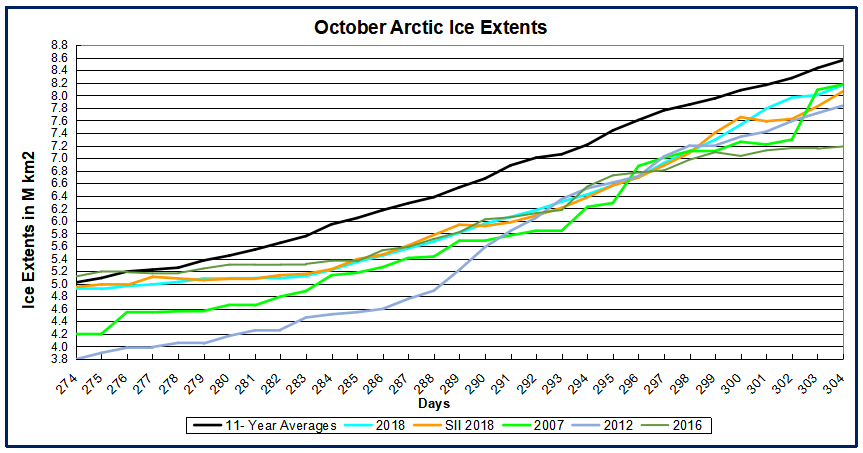

 Siberian Big Chill in last Ten days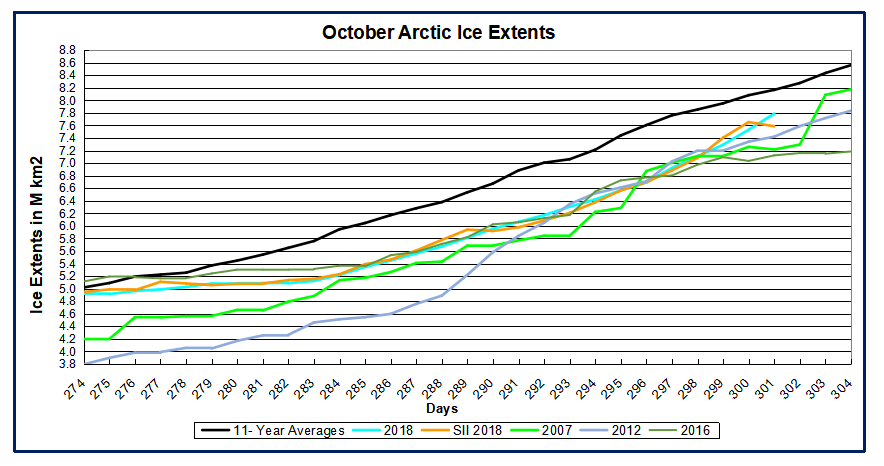


 The graph illustrates the problem very clearly. Since 1992, the UN Framework Convention on Climate Change has met 23 times. These UNFCCC discussions have utterly failed to reduce CO2 emissions. Yet from 2020, emissions have to drop dramatically, if we are to stand a chance of keeping global warming below 1.5°C.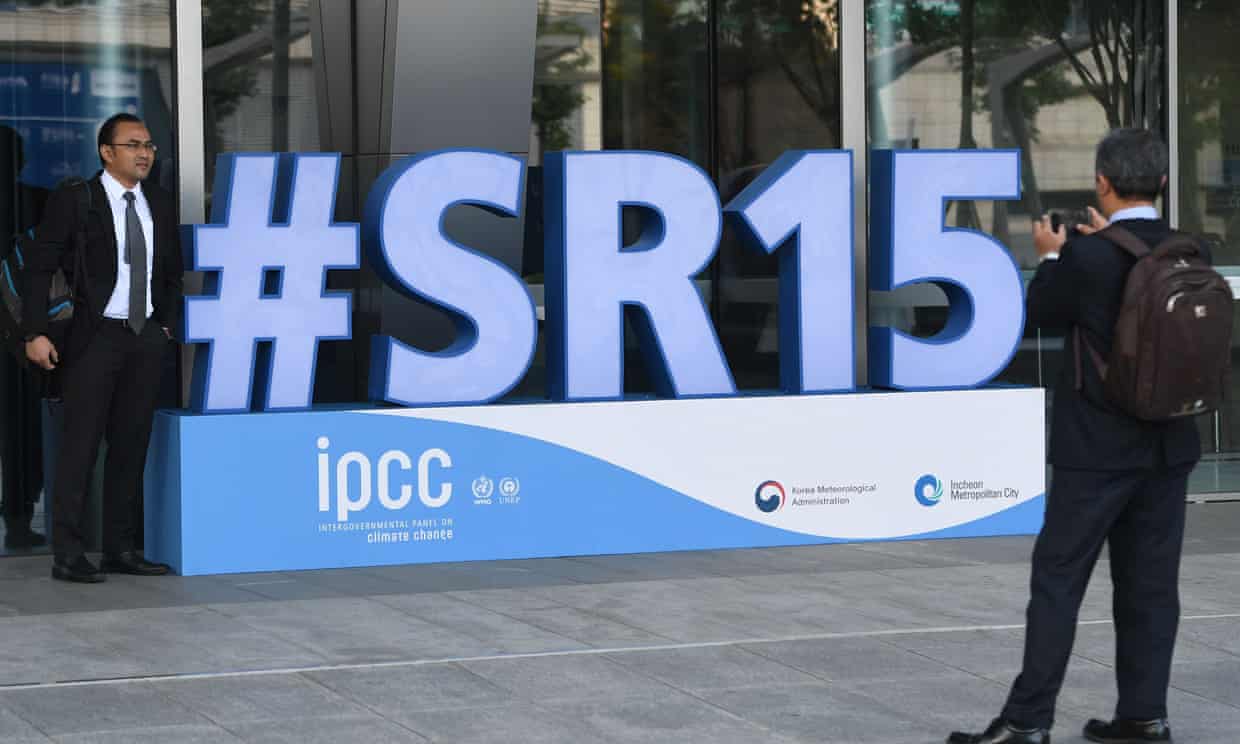


/cdn0.vox-cdn.com/uploads/chorus_asset/file/4192727/climate-change-uncertainty-loop.0.jpg)
 Science Matters