Media Alarms: Eating Meat Heats the Planet
You may have noticed a media theme over recent months linking meat eating with climate change. The following examples come from the usual suspects.
Eating meat has ‘dire’ consequences for the planet National Geographic
Huge reduction in meat-eating ‘essential’ to avoid climate breakdown The Guardian
Eating Less Meat Essential to Curb Climate Change UN University
How Your Diet Can Save the Planet Fortune
Here Comes the Meat Tax;Paying more for environmentally harmful foods may be inevitable.The Atlantic
Combat climate change by cutting beef and lamb production CNN
World must slash meat consumption to save climate Phys,org
Will China’s Growing Appetite for Meat Undermine Its Efforts to Fight Climate Change? SmithsonianMag
Skip the steak? Curb meat consumption to combat climate change Global News
Massive reduction in meat consumption and changes to farming vital to guarantee future food supply The Independent
Climate change: Report says ‘cut lamb and beef’ BBC News
A Radical Plan to Slow Climate Change: Eat Less Meat Bloomberg
Should there be a ‘meat tax’ to fight climate change? DW
Tackling the world’s most urgent problem: meat UN Environment
Your meals are speeding up climate change, but there’s a way to eat sustainably CBC
The origin of these alarms are studies published in Lancet, once highly reputed but recently given over to climate ideology rather than objective science. Most recently is Food in the Anthropocene: the EAT–Lancet Commission on healthy diets from sustainable food systems The preceding Lancet study stated this main finding:
Following environmental objectives by replacing animal-source foods with plant-based ones was particularly effective in high-income countries for improving nutrient levels, lowering premature mortality (reduction of up to 12% [95% CI 10–13] with complete replacement), and reducing some environmental impacts, in particular greenhouse gas emissions (reductions of up to 84%). However, it also increased freshwater use (increases of up to 16%) and had little effectiveness in countries with low or moderate consumption of animal-source foods. (here).
Two Major Objections

This post raises two objections to these claims. Firstly is an article exposing the Lancet biases and contradicting the the nutritional findings and recommendations therein. Secondly is an article exploding the link between raising animals and climate change.
Georgia Ede MD writes in Psychology Today EAT-Lancet’s Plant-based Planet: 10 Things You Need to Know. Excerpts in italics below with my bolds. Title is link to full text which is recommended reading. Georgia Ede, MD, is a Harvard-trained psychiatrist and nutrition consultant practicing at Smith College. She writes about food and health on her website DiagnosisDiet.com.
We all want to be healthy, and we need a sustainable way to feed ourselves without destroying our environment. The well-being of our planet and its people are clearly in jeopardy, therefore clear, science-based, responsible guidance about how we should move forward together is most welcome.
Unfortunately, we are going to have to look elsewhere for solutions, because the EAT-Lancet Commission report fails to provide us with the clarity, transparency and responsible representation of the facts we need to place our trust in its authors. Instead, the Commission’s arguments are vague, inconsistent, unscientific, and downplay the serious risks to life and health posed by vegan diets.
1. Epidemiology = mythology
The vast majority of human nutrition research—including the lion share of the research cited in the EAT-Lancet report— is conducted using the tragically flawed methodology of nutrition epidemiology. Nutrition epidemiology studies are not scientific experiments; they are wildly inaccurate, questionnaire-based guesses (hypotheses) about the possible connections between foods and diseases. This approach has been widely criticized as scientifically invalid [see here and here], yet continues to be used by influential researchers at prestigious institutions, most notably Dr. Walter Willett. An epidemiologist himself, he wrote an authoritative textbook on the subject and has conducted countless such studies, including a recent, widely-publicized paper tying low-carbohydrate diets to early death. In my reaction to that study, I explain in plain English why epidemiological techniques are so untrustworthy, and include a sample from an actual food questionnaire for your amusement.
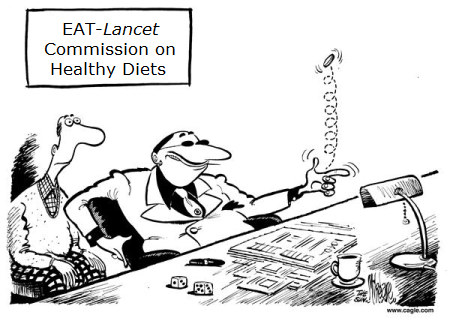
Even if you think epidemiological methods are sound, at best they can only generate hypotheses that then need to be tested in clinical trials. Instead, these hypotheses are often prematurely trumpeted to the public as implicit fact in the form of media headlines, dietary guidelines, and well-placed commission reports like this one. Tragically, more than 80% of these guesses are later proved wrong in clinical trials. With a failure rate this high, nutrition epidemiologists would be better off flipping a coin to decide which foods cause human disease. The Commission relies heavily on this methodology, which helps to explain why their recommendations often fly in the face of biological reality.
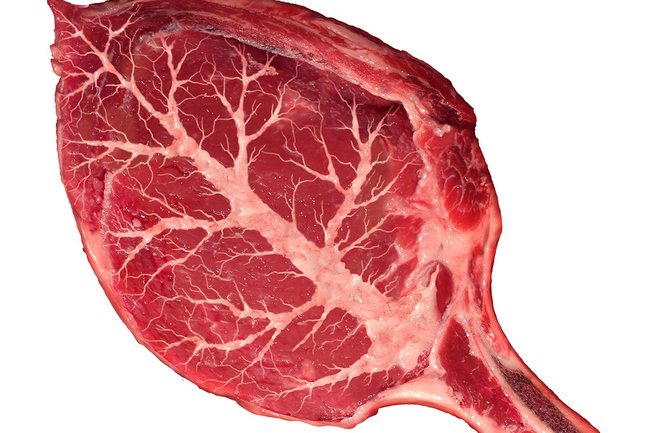
2. Red meat causes heart disease, diabetes, cancer…and spontaneous combustion
The section of the report dedicated to protein blames red meat for heart disease, stroke, type 2 diabetes, obesity, cancer and early death. It contains 16 references, and every single one is an epidemiological study. The World Health Organization report tying red meat to colon cancer was also mentioned, and that report is almost entirely based on epidemiology as well. [Read my full analysis of the WHO report here]. The truth is that there is no human clinical trial evidence tying red meat to any health problem. I certainly haven’t found any—and if there were, I think this Commission surely would have mentioned it.
3. Protein is essential…but cancerous
The commissioners write:
“Protein quality (defined by effect on growth rate) reflects the amino acid composition of the food source, and animal sources of protein are of higher quality than most plant sources. High-quality protein is particularly important for growth of infants and young children, and possibly in older people losing muscle mass in later life.” [page 8]
Translation: Complete proteins are good because they contain every essential amino acid. All animal proteins are naturally complete, whereas most plant proteins are incomplete. Watch how the authors wriggle their way out of this inconvenient truth in the next sentence:
“However, a mix of amino acids that maximally stimulate cell replication and growth might not be optimal throughout most of adult life because rapid cell replication can increase cancer risk.” [page 8]
Translation: Complete proteins are bad because they cause cancer.
The sole reference for this absurd suggestion that complete proteins cause cancer is a paper about mutations causing cancer in which the terms “protein,” “amino acid,” and “meat” each occur a grand total of zero times, suggesting that the Commission’s suggestion is pure…suggestion. Furthermore, if obtaining all of the essential amino acids we need causes cancer, shouldn’t we also worry about complete proteins from plant sources like tofu or beans with rice?
4. Omega-3s are essential…good luck with that
“Fish has a high content of omega-3 fatty acids, which have many essential roles…Plant sources of alpha-linolenic acid [ALA] can provide an alternative to omega-3 fatty acids, but the quantity required is not clear.” [page 11]
If the Commission doesn’t know how much plant ALA a person needs to consume to meet requirements, then how does it know that plants provide a viable alternative to omega-3s from animal sources?
The elephant in the room here is that all omega-3s are not created equal. Only animal foods (and algae, which is neither a plant nor an animal) contain the forms of omega-3s our bodies use: EPA and DHA. Plants only contain ALA, which is extremely difficult for our cells to convert into EPA and DHA. According to this 2018 review, we transform anywhere between 0% and 9% of the ALA we consume into the DHA our cells require.
Instead of being vague, why not responsibly warn people that trying to obtain omega-3 fatty acids from plants alone may place their health at risk?
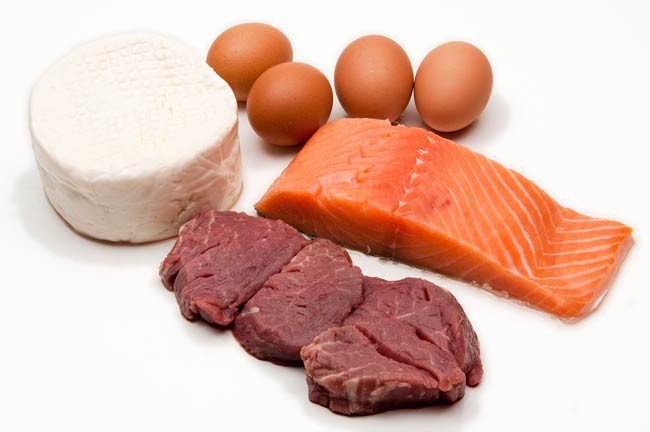
5. Vitamins and minerals are essential…so take supplements
The drumbeat heard throughout the report is that animal foods are dangerous and that a vegan diet is the holy grail of health, yet EAT-Lancet commissioners repeatedly find themselves in the awkward position of having to acknowledge the nutritional superiority of the very animal foods they recommend avoiding.
If the commissioners are concerned that red meat is dangerous (which is only true on Planet Epidemiology), why not recommend other naturally iron-rich animal foods such as duck, oysters, or chicken liver for these growing young women, as these foods would also provide the complete proteins needed for growth? What about the 10-22% of non-teen reproductive age women in the U.S. who suffer from iron deficiency? And why a “multimineral preparation” rather than a simple iron supplement? Are they implying that other minerals may be lacking in their plant-based diet?
Unfortunately, the nutritional inadequacy of plant-based diets goes beyond B vitamins. Plant foods lack several key nutrients, and some of the nutrients they do contain come in less bioavailable forms. Furthermore, many plant foods contain “anti-nutrients” that interfere with nutrient absorption. This means that just because a plant food contains a nutrient doesn’t mean we can access it.
An important example is that grains, beans, nuts and seeds—the staple foods of plant-based diets—contain phytate, a mineral magnet which substantially interferes with absorption of essential minerals like zinc, calcium, iron, and magnesium. And thanks to oxalates—mineral-binding compounds found in a wide variety of plant foods—virtually none of the iron in spinach makes it into Popeye’s muscles.
Only animal foods contain every nutrient we need in its proper, most accessible form. To learn more about nutrient availability and how it affects brain health, read this article.
6. Making up numbers is fun and easy
How did the commissioners arrive at the recommended quantities of foods we should eat per day…7 grams of this, 31 grams of that? Numbers like these imply that something’s been precisely measured, but in many cases, it’s plain that they simply pulled a number out of thin air.
The commissioners attempt to defend themselves from criticism on this issue by stating:
“We have a high level of scientific certainty about the overall direction and magnitude of associations described in this Commission, although considerable uncertainty exists around detailed quantifications.” [page 7]
If they are this uncertain about the details, how can they in good conscience prescribe such specific quantities of food? Why not say they don’t know? Most people will not read this report—they will interpret the values in this table as medical advice.
7. Epidemiology is gospel…unless we don’t like the results
Any researcher will tell you that clinical trials—actual scientific experiments—are considered a much higher level of evidence than epidemiological studies, yet Willett’s group not only relies heavily on epidemiological studies, it favors them over clinical trials when it suits their agenda:
“We have used an intake of eggs at about 13 g/day, or about 1.5 eggs per week, for the reference diet, but higher intake might be beneficial for low-income populations with poor dietary quality.” [page 11]
Why recommend only 1.5 eggs per week when epidemiological studies found that 1 egg per day was perfectly fine? And why skew your recommendations against low-income people, which make up a significant portion of the global population?
There is a remarkable paragraph on page 9 (too long to quote here) arguing that red meat was found to increase risk of death in epidemiological studies conducted in Europe and the USA, but not in Asia, where red meat (mainly pork) was associated with a decreased risk of death. Rather than grappling with this seeming contradiction, they simply dismiss the Asian findings as invalid, wondering if perhaps Asian countries haven’t been rich long enough for the risk to show up yet.
Wait, what?
8. Everyone should eat a vegan diet, except for most people
Although their diet plan is intended for all “generally healthy individuals aged two years and older,” the authors admit it falls short of providing proper nutrition for growing children, adolescent girls, pregnant women, aging adults, the malnourished, and the impoverished—and that even those not within these special categories will need to take supplements to meet their basic requirements.
Sadder still is the fact that the majority of people in this country and in many other countries around the world are no longer metabolically healthy, and this high-carbohydrate plan doesn’t take them into consideration.
For those of us with insulin resistance (aka “pre-diabetes”) whose insulin levels tend to run too high, the Commission’s high-carbohydrate diet—based on up to 60% of calories from whole grains, in addition to fruits and starchy vegetables—is potentially dangerous. . . If the Commission read its own report it would find support for the notion that those of us with metabolic damage could be better off increasing our meat intake and decreasing our carbohydrate intake.

9. Pay no attention to the money behind the curtain
As an advocate of meat-inclusive diets, I have often been assumed to have financial ties to the meat industry (which I do not), but how many people stop to question the financial (and professional) incentives that may influence doctors promoting plant-based diets? We all have personal beliefs and we all need to make a living, but honesty with oneself and transparency with the public should be paramount. The Nutrition Coalition has compiled a list of Dr. Willett’s potential conflicts of interest here.
The EAT Foundation, which collaborated with The Lancet to produce this report, was founded by Norwegian billionaire and animal rights activist Gunhild Stordalen. EAT recently helped to launch “FReSH” (Food Reform for Sustainability and Health), a global partnership of about 40 corporations, including Barilla (pasta), Unilever (meat alternatives and vegetable oils), Kellogg’s (cereals) and Pepsico (sugary beverages). Make of this what you will.
10. No to choices, yes to taxes?
How does EAT-Lancet propose to achieve its dream of a plant-based world? Many suggestions are put forth, but two are worth emphasizing: the elimination or restriction of consumer choices, and taxation. The EAT Foundation describes itself as:
“a non-profit startup dedicated to transforming our global food system through sound science, impatient disruption and novel partnerships.”
Sound science? Clearly not. But impatient disruption—what does that mean?
Regardless of how you feel about taxation as a tool for social change, consider the Commission’s own numerous exceptions to the plant-based rules, including pregnant women, children, the malnourished and the impoverished. Should we really support making animal foods—the only nutritionally complete foods on the planet—even more expensive for vulnerable populations? The notion of taxation is followed by a vague reference to the possibility of “cash transfer” social safety nets for women and children. This section of the report is representative of its overall elitist and paternalistic tone.
I believe, because I’m convinced by the science, that animal foods are essential to optimal human health. This is an uncomfortable biological reality we all have to wrestle with as creatures of conscience. Finding ways to support excellent health and quality of life for the creatures we depend on for our sustenance and vitality is one of our most important callings as caring stewards of our planet and all of its inhabitants. But I’m also a firm believer in personal choice. We each need to become experts in what works best for our own bodies. Eat and let eat, I say. It seems clear that EAT-Lancet commissioners are neither supporters of personal choice nor the transparent distribution of accurate nutrition information that would empower people to weigh the risks and benefits of various diets for themselves.
Summary on EAT-Lancet
The EAT-Lancet report has the feel of a royal decree, operating under the guise of good intentions, seeking to impose its benevolent will on all subjects of planet Earth. It is well worth challenging the presumed authority of this group of 37 “experts,” because it wields tremendous power and influence, has access to billions of dollars, and is likely to affect your choices, your health, and your checkbook in the near future.
Capitalizing on our current public health and environmental crises, the EAT-Lancet Commission pronounces itself as the authority on the science of nutrition, exploits our worst fears, and seeks to dictate our food choices in accordance with its members’ personal, professional and possible commercial interests.
To the best of my knowledge, there has never been a human clinical trial designed to test the health effects of simply removing animal foods from the diet, without making any other diet or lifestyle changes such as eliminating refined carbohydrates and other processed foods. Unless and until such research is conducted demonstrating clear benefits to this strategy, the assertion that human beings would be healthier without animal foods remains an untested hypothesis with clear risks to human life and health. Prescribing plant-based diets to the planet without including straightforward warnings of these risks and offering clear guidance as to how to minimize them is scientifically irresponsible and medically unethical, and therefore should not form the basis of public health recommendations.

And What About the Environmental Benefits
Frank M. Mitloehner is Professor of Animal Science and Air Quality Extension Specialist, University of California, Davis. He writes at the Conversation Yes, eating meat affects the environment, but cows are not killing the climate. Excerpts in italics with my bolds.
A key claim underlying these arguments holds that globally, meat production generates more greenhouse gases than the entire transportation sector. However, this claim is demonstrably wrong, as I will show. And its persistence has led to false assumptions about the linkage between meat and climate change.
My research focuses on ways in which animal agriculture affects air quality and climate change. In my view, there are many reasons for either choosing animal protein or opting for a vegetarian selection. However, foregoing meat and meat products is not the environmental panacea many would have us believe. And if taken to an extreme, it also could have harmful nutritional consequences.
Many people continue to think avoiding meat as infrequently as once a week will make a significant difference to the climate. But according to one recent study, even if Americans eliminated all animal protein from their diets, they would reduce U.S. greenhouse gas emissions by only 2.6 percent. According to our research at the University of California, Davis, if the practice of Meatless Monday were to be adopted by all Americans, we’d see a reduction of only 0.5 percent.
Moreover, technological, genetic and management changes that have taken place in U.S. agriculture over the past 70 years have made livestock production more efficient and less greenhouse gas-intensive. According to the FAO’s statistical database, total direct greenhouse gas emissions from U.S. livestock have declined 11.3 percent since 1961, while production of livestock meat has more than doubled.
Removing animals from U.S. agriculture would lower national greenhouse gas emissions to a small degree, but it would also make it harder to meet nutritional requirements. Many critics of animal agriculture are quick to point out that if farmers raised only plants, they could produce more pounds of food and more calories per person. But humans also need many essential micro- and macronutrients for good health.
The world population is currently projected to reach 9.8 billion people by 2050. Feeding this many people will raise immense challenges. Meat is more nutrient-dense per serving than vegetarian options, and ruminant animals largely thrive on feed that is not suitable for humans. Raising livestock also offers much-needed income for small-scale farmers in developing nations. Worldwide, livestock provides a livelihood for 1 billion people.
Climate change demands urgent attention, and the livestock industry has a large overall environmental footprint that affects air, water and land. These, combined with a rapidly rising world population, give us plenty of compelling reasons to continue to work for greater efficiencies in animal agriculture. I believe the place to start is with science-based facts.

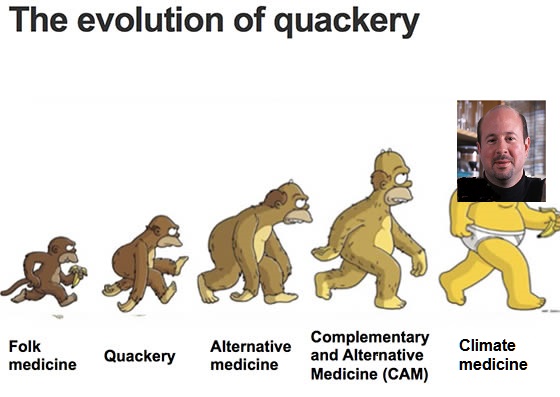
Background: Previous Post on The Rise of Climate Medicine
With Bonn COP23 set to start next week, the media is awash with claims that climate change is an international public health crisis. For example, in just one day from Google news:
Climate change isn’t just hurting the planet – it’s a public health emergency–The Guardian
Climate change’s impact on human health is already here — and is ‘potentially irreversible,’ report says –USA TODAY
Climate Change Is Bad for Your Health–New York Times
From heat stress to malnutrition, climate change is already making us sick–The Verge
As Richard Lindzen predicted, everyone wants on the climate bandwagon, because that is where the money is. Medical scientists are pushing for their share of the pie, as evidenced by the Met office gathering on Assessing the Global Impacts of Climate and Extreme Weather on Health and Well-Being (following Paris COP). Not coincidentally, the 2nd Global Conference on Health and Climate was held July 7-8, 2016 in Paris. Now we have the American Public Health Association declaring:
2017 is the Year of Climate Change and Health

“We’re committed to making sure the nation knows about the effects of climate change on health. If anyone doesn’t think this is a severe problem, they are fooling themselves.” — APHA Executive Director Georges Benjamin, in The Washington Post
The new field of Climate Medicine is evidenced by a slew of new organizations and studies. In addition to numerous agencies set up within WHO and the UN, and governmental entities (such as the Met Office), there are many NGOs, such as:
Health Care Without Harm
Health and Environment Alliance
Health and Climate Foundation
Climate and Health Council
United States National Association of County and City Health Officials
Care International
Global Gender and Climate Alliance / Women’s Environment and Development Organization
International Federation of Medical Students’ Associations
Climate Change and Human Health Programme, Columbia U.
Center for Health and the Global Environment, Harvard
National Center for Epidemiology and Population Health, ANC Canberra
Centre for Sustainability and the Global Environment, U of Wisconsin
Environmental Change Institute, Oxford
London School of Tropical Medicine and Hygiene, London, UK
International Human Dimensions Programme on Global Environmental Change, US National Academies of Science
US Climate and Health Alliance
Etc, etc., etc.
Of course, they are encouraged and abetted by the IPCC.
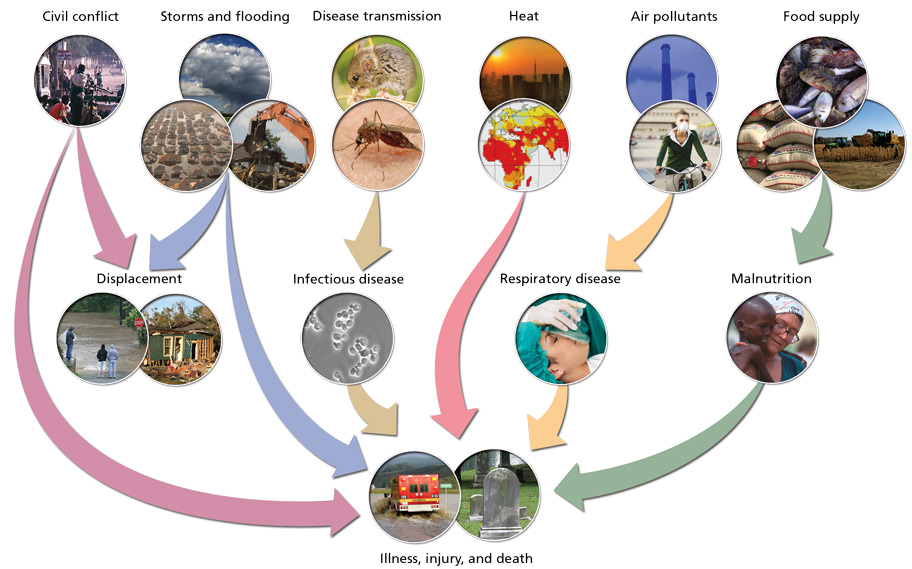
From the Fifth Assessment Report:
Until mid-century, projected climate change will impact human health mainly by exacerbating health problems that already exist (very high confidence). Throughout the 21st century, climate change is expected to lead to increases in ill-health in many regions and especially in developing countries with low income, as compared to a baseline without climate change (high confidence). By 2100 for RCP8.5, the combination of high temperature and humidity in some areas for parts of the year is expected to compromise common human activities, including growing food and working outdoors (high confidence). {2.3.2}
In urban areas climate change is projected to increase risks for people, assets, economies and ecosystems, including risks from heat stress, storms and extreme precipitation, inland and coastal flooding, landslides, air pollution, drought, water scarcity, sea level rise and storm surges (very high confidence). These risks are amplified for those lacking essential infrastructure and services or living in exposed areas. {2.3.2}
Feared Climate Health Impacts Are Unsupported by Scientific Research
NIPCC has a compendium of peer-reviewed studies on this issue and provides these findings (here)
Key Findings: Human Health
• Warmer temperatures lead to a decrease in temperature-related mortality, including deaths associated with cardiovascular disease, respiratory disease, and strokes. The evidence of this benefit comes from research conducted in every major country of the world.
• In the United States the average person who died because of cold temperature exposure lost in excess of 10 years of potential life, whereas the average person who died because of hot temperature exposure likely lost no more than a few days or weeks of life.
• In the U.S., some 4,600 deaths are delayed each year as people move from cold northeastern states to warm southwestern states. Between 3 and 7% of the gains in longevity experienced over the past three decades was due simply to people moving to warmer states.
• Cold-related deaths are far more numerous than heat-related deaths in the United States, Europe, and almost all countries outside the tropics. Coronary and cerebral thrombosis account for about half of all cold-related mortality.
• Global warming is reducing the incidence of cardiovascular diseases related to low temperatures and wintry weather by a much greater degree than it increases the incidence of cardiovascular diseases associated with high temperatures and summer heat waves.
• A large body of scientific examination and research contradict the claim that malaria will expand across the globe and intensify as a result of CO2 -induced warming.
• Concerns over large increases in vector-borne diseases such as dengue as a result of rising temperatures are unfounded and unsupported by the scientific literature, as climatic indices are poor predictors for dengue disease.
• While temperature and climate largely determine the geographical distribution of ticks, they are not among the significant factors determining the incidence of tick-borne diseases.
• The ongoing rise in the air’s CO2 content is not only raising the productivity of Earth’s common food plants but also significantly increasing the quantity and potency of the many healthpromoting substances found in their tissues, which are the ultimate sources of sustenance for essentially all animals and humans.
• Atmospheric CO2 enrichment positively impacts the production of numerous health-promoting substances found in medicinal or “health food” plants, and this phenomenon may have contributed to the increase in human life span that has occurred over the past century or so.
• There is little reason to expect any significant CO2 -induced increases in human-health-harming substances produced by plants as atmospheric CO2 levels continue to rise.
Source: Chapter 7. “Human Health,” Climate Change Reconsidered II: Biological Impacts (Chicago, IL: The Heartland Institute, 2014).
Full text of Chapter 7 and references on Human health begins pg. 955 of the full report here

Summary
Advances in medical science and public health have benefited billions of people with longer and higher quality lives. Yet this crucial social asset has joined the list of those fields corrupted by the dash for climate cash. Increasingly, medical talent and resources are diverted into inventing bogeymen and studying imaginary public health crises.
Economists Francesco Boselloa, Roberto Roson and Richard Tol conducted an exhaustive study called Economy-wide estimates of the implications of climate change: Human health
After reviewing all the research and crunching the numbers, they concluded that achieving one degree of global warming by 2050 will, on balance, save more than 800,000 lives annually.
Not only is the warming not happening, we would be more healthy if it did.
Oh, Dr. Frankenmann, what have you wrought?

Footnote: More proof against Climate Medicine
From: Gasparrini et al: Mortality risk attributable to high and low ambient temperature: a multicountry observational study. The Lancet, May 2015
Cold weather kills 20 times as many people as hot weather, according to an international study analyzing over 74 million deaths in 384 locations across 13 countries. The findings, published in The Lancet, also reveal that deaths due to moderately hot or cold weather substantially exceed those resulting from extreme heat waves or cold spells.
“It’s often assumed that extreme weather causes the majority of deaths, with most previous research focusing on the effects of extreme heat waves,” says lead author Dr Antonio Gasparrini from the London School of Hygiene & Tropical Medicine in the UK. “Our findings, from an analysis of the largest dataset of temperature-related deaths ever collected, show that the majority of these deaths actually happen on moderately hot and cold days, with most deaths caused by moderately cold temperatures.”
Now in 2017, Lancet sets the facts aside in order to prostrate itself before the global warming altar:
Christiana Figueres, chair of the Lancet Countdown’s high-level advisory board and former executive secretary of the UN Framework Convention on Climate Change, said, “The report lays bare the impact that climate change is having on our health today. It also shows that tackling climate change directly, unequivocally and immediately improves global health. It’s as simple as that.’’











 See
See


 Figure 9. Forecasted snowfall anomalies (mm/day; shading) from 18 – 22 January 2019. The forecasts are from the 00Z 7 January 2019 GFS ensemble.





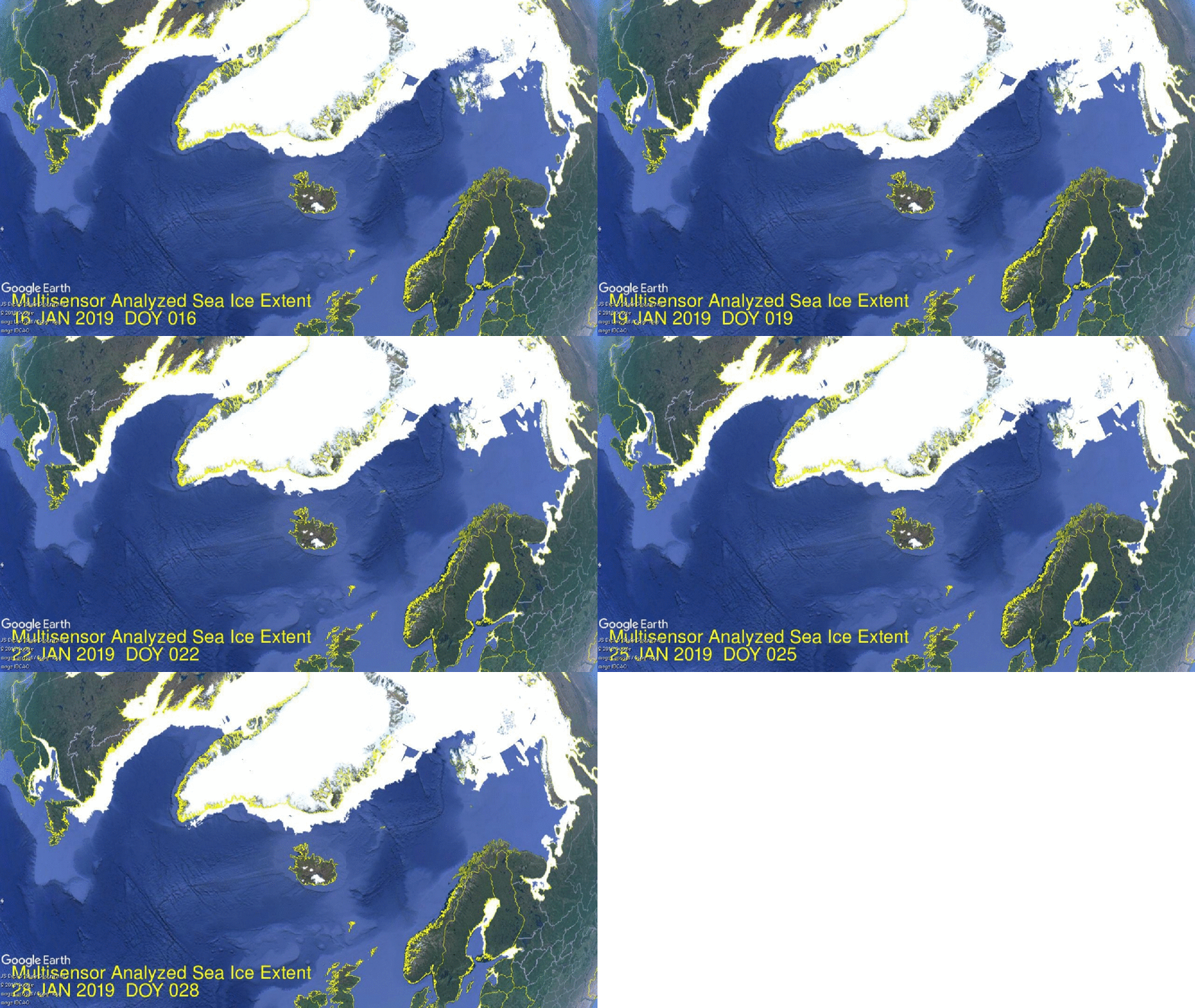
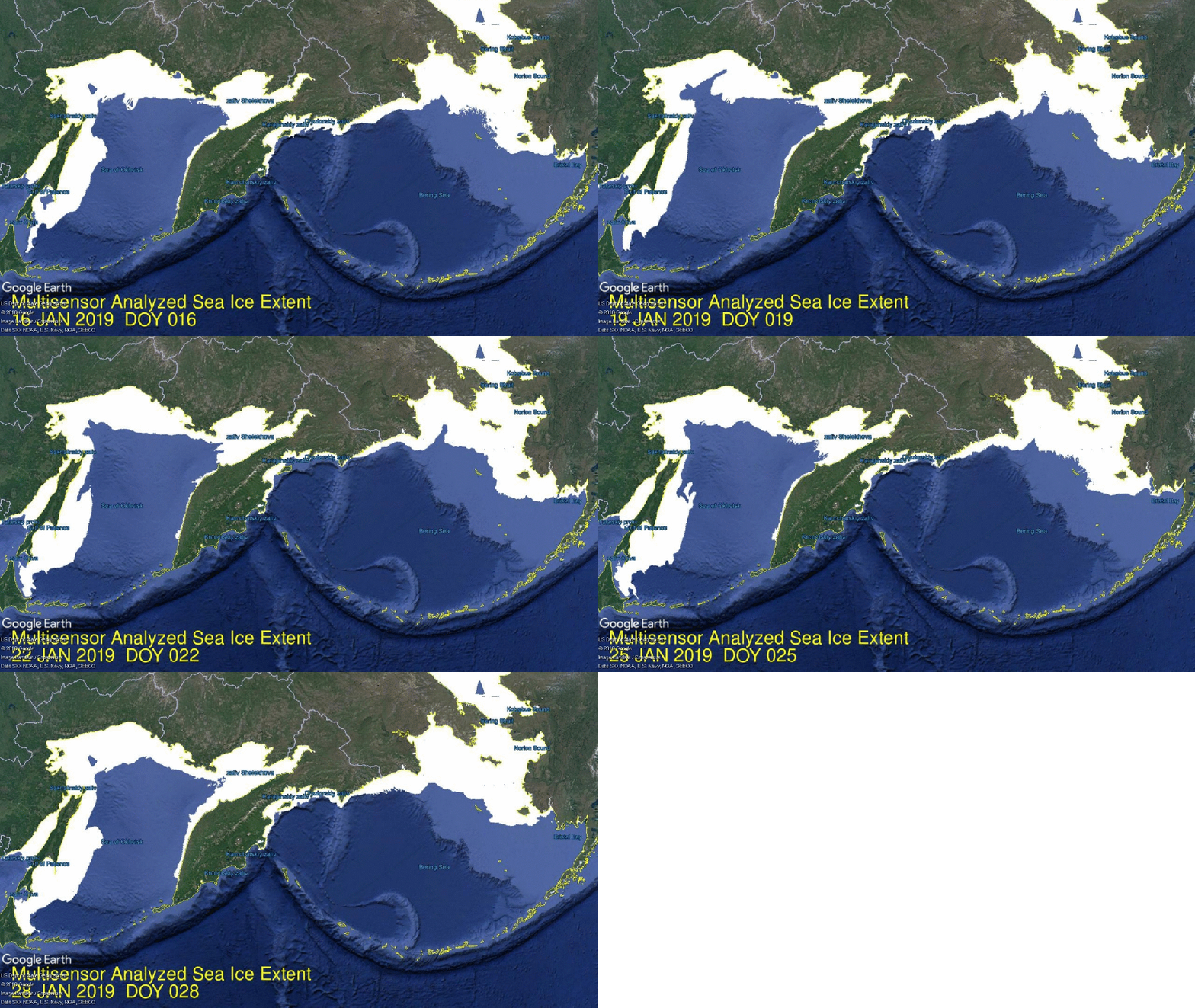
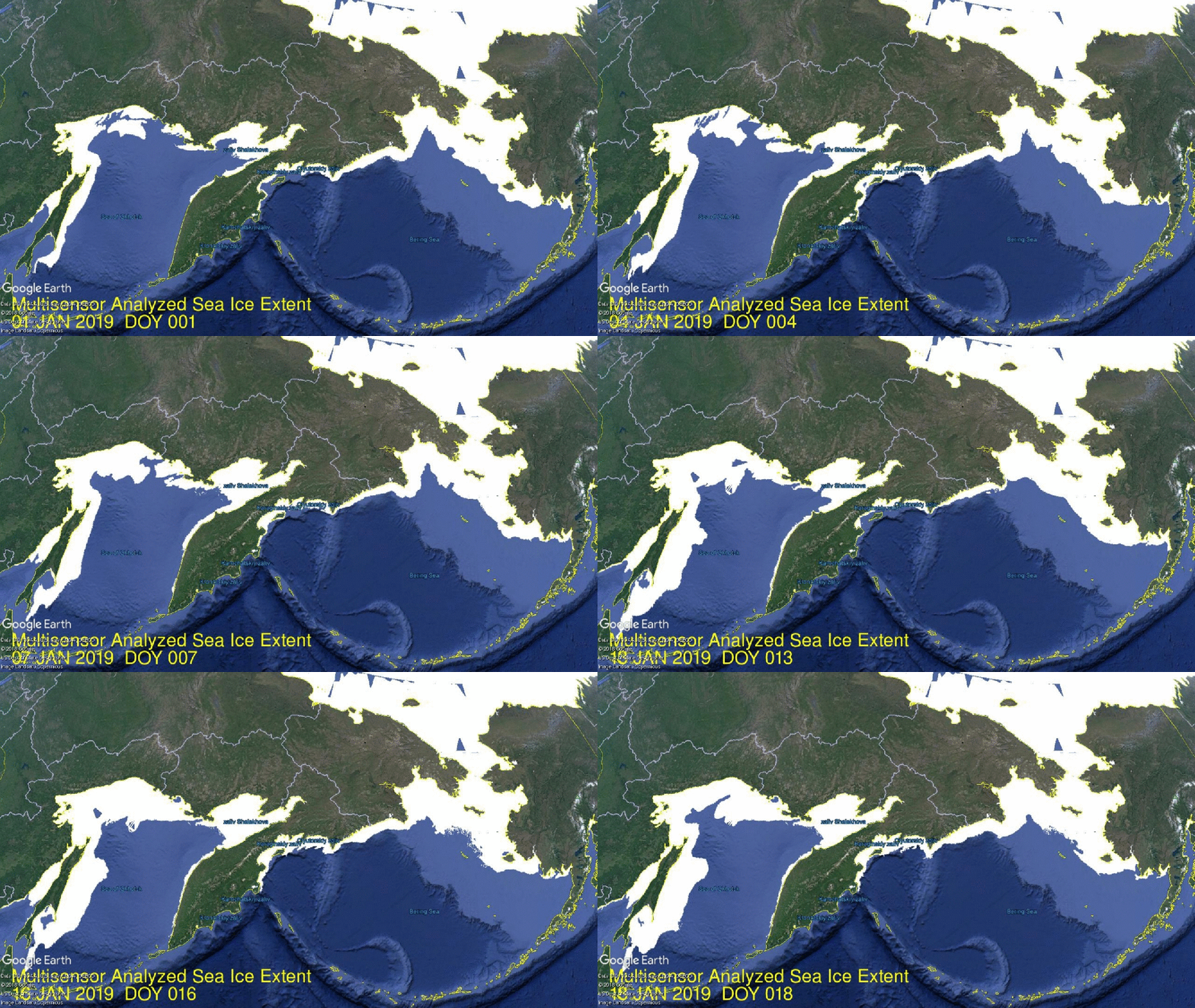
 Eleven Days in Pacific Arctic are shown in the above animation. In the upper center, Chukchi finally froze completely, adding 260k km2 of ice to reach 99.8% of maximum. (Disregard the blue jagged arc as a sensor artifact.) Meanwhile, serious freezing began in the two Pacific basins. Bering to the south of Chukchi went from 57k km2 to 195k, now 43% of maximum. Okhotsk to the left went from 58k km2 to 223k, now 19% of maximum.
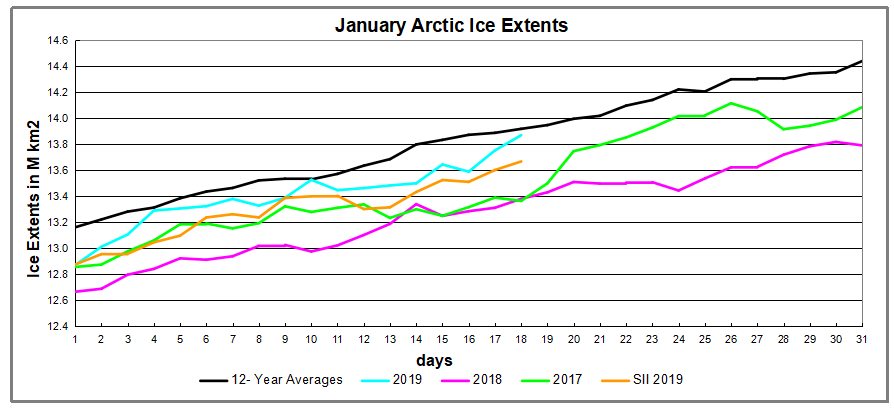
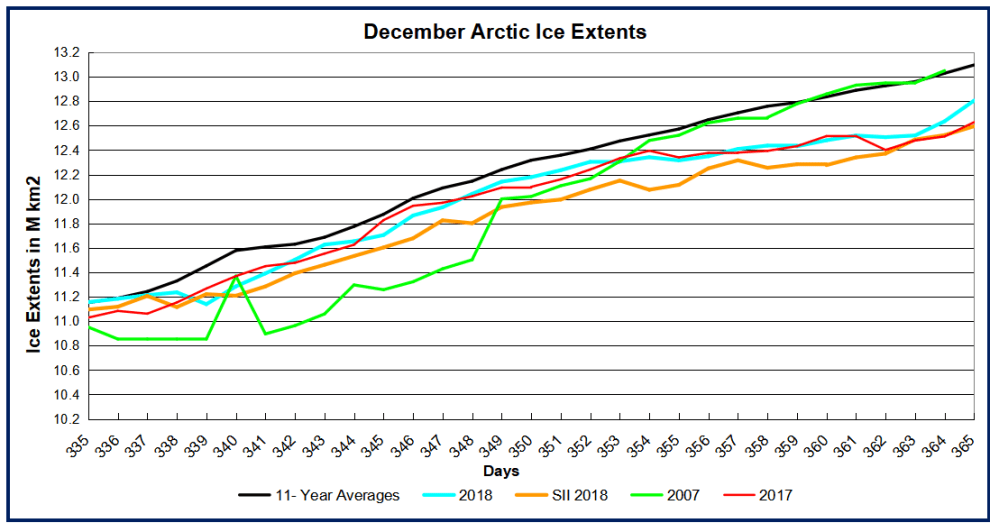
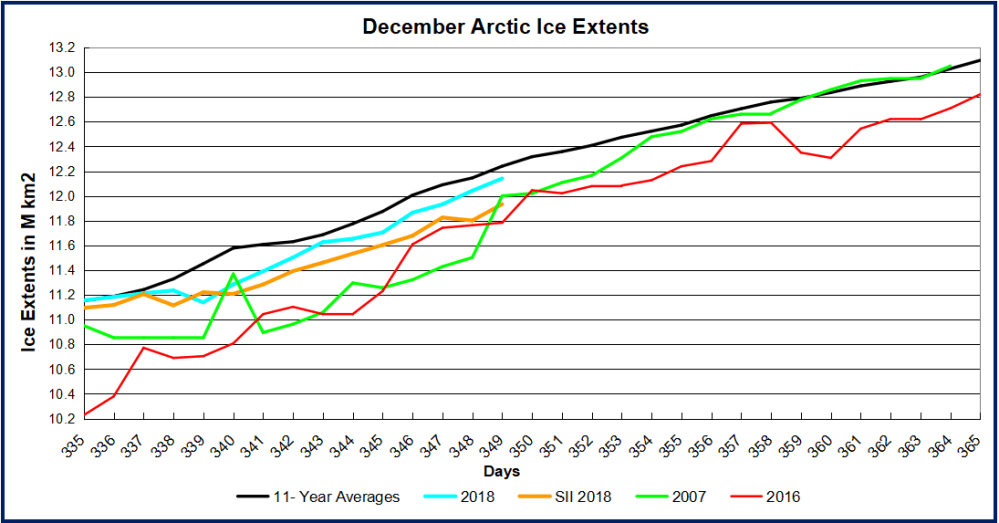 From days 335 to 339, 2018 extents were flat and went below average. Now freezing has resumed as shown in the animation above and tracking close to average again in the graph. At day 349 (Dec. 15) MASIE shows 2018 1 day behind average (100k km2), 200k km2 greater than SII 2018, 140k km2 greater than 2007 and 358k km2 more than 2016.
 Science Matters