
Tyler Durden writes at ZeroHedge UN Climate Panel Quietly Admits Its Doomsday Climate Scenarios Were ‘Implausible‘. excerpts in italics with my bolds and added images.
The IPCC has published a new generation of climate scenarios – and buried in the fine print is a remarkable concession: the extreme warming pathways that dominated climate research, policy, and media coverage for decades were never actually plausible. It took a while to notice because almost no one in mainstream media bothered to report it. Science policy analyst Roger Pielke Jr. wrote,
“The Intergovernmental Panel on Climate Change (IPCC) has just published the next generation of climate scenarios,” calling it “big news” that “eliminated the most extreme scenarios that have dominated climate research over much of the past several decades.”
The conclusion was unambiguous. “The IPCC and broader research community has now admitted that the scenarios that have dominated climate research, assessment and policy during the past two cycles of the IPCC assessment process are implausible. They describe impossible futures.”
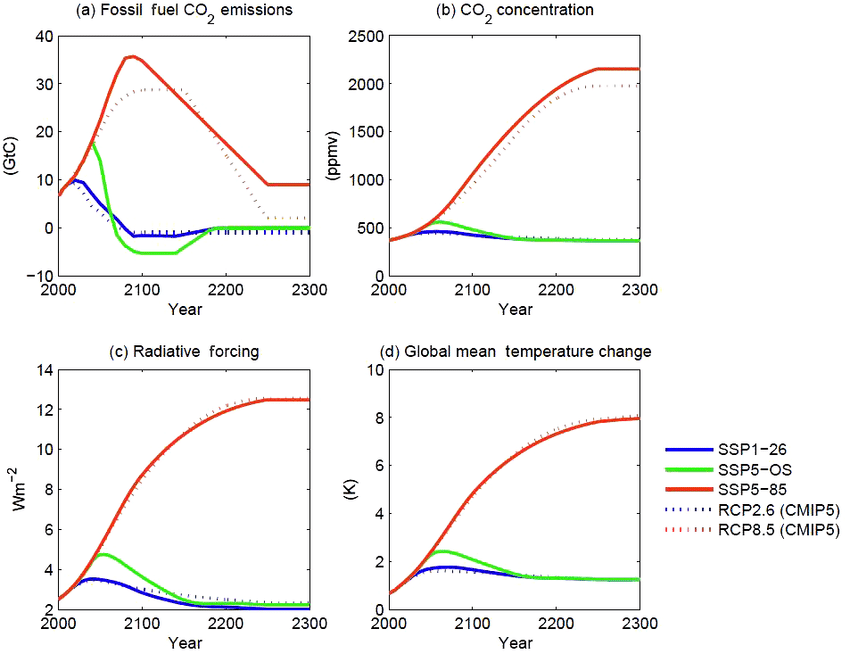
Those “impossible futures” formed the backbone of a decade-plus of apocalyptic climate messaging – melting ice caps, submerged coastlines, mass extinctions, widespread crop failures, and global hunger, always around the corner, always demanding immediate, economy-reshaping action to avert a catastrophe that, it now turns out, the underlying science community had assigned to a category closer to science fiction than projection.
The new IPCC framework formally demotes its remaining “HIGH scenario” from expected outcome to “exploratory – a thought experiment, not a projection.” [SSP5-85]
That’s a significant institutional retreat.
https://rclutz.com/wp-content/uploads/2020/12/pielkejr.2020-fig1.png?w=1000
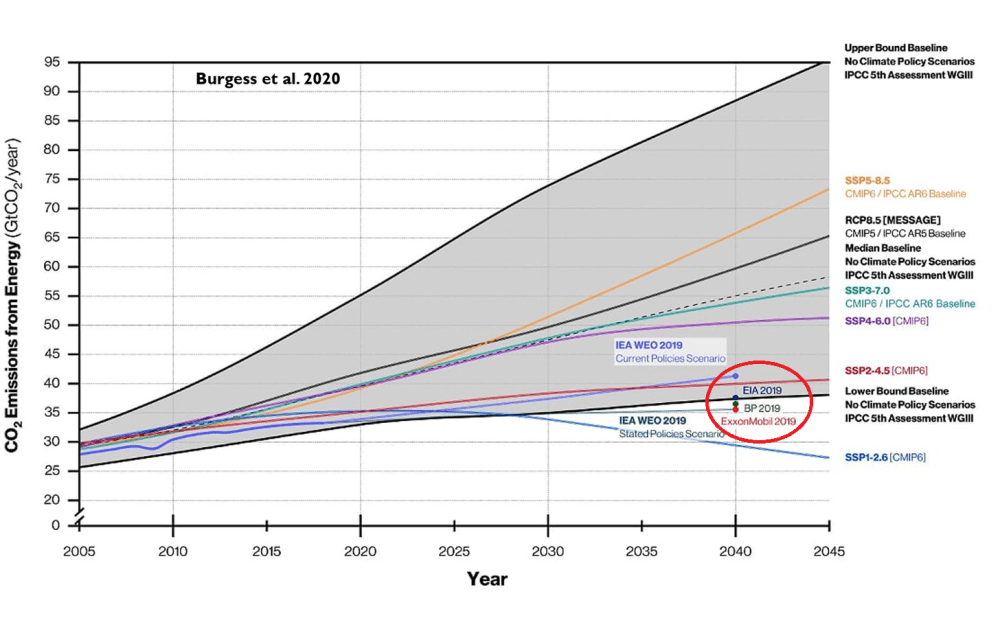
Pielke noted that the previous framework lacked “any systematic effort to evaluate plausibility of scenarios,” meaning the scariest pathways were able to dominate the policy debate for years without anyone in the room applying a basic reality check.
What matters today is that the group with official responsibility for developing climate scenarios for the IPCC and broader research community has now admitted that the scenarios that have dominated climate research, assessment and policy during the past two cycles of the IPCC assessment process are implausible. They describe impossible futures.
Curiously, the revised framework was technically adopted back in 2021, but has only now filtered into public view as related technical and institutional changes caught up. And it’s fair to ask why. The policy consequences of those “impossible futures” were very real.

As the Daily Sceptic’s Chris Morrison opines;
It cannot be over-emphasised how important this finding of implausibility is. It means that almost every fearmongering mainstream media climate headline and story that has been written over the last 15 years is junk. Of course it also explains why a growing band of sceptical commentators have refused to accept the political concept of ‘settled’ science and have engaged in widespread debunking. Shooting fish in a barrel is one way of describing this work. At times, with just a modicum of investigative scepticism, the stories can be seen as little more than an insult to average human intelligence.

When the RCP8.5 assumptions are loaded into computer models, they run politically-convenient red hot suggestions that the temperature in 2100 will rise by about 4°C from a 1850-1900 baseline – in other words, a rise of nearly 3°C in the next 80 years. Only the most deranged eco loons will claim such large short-term rises out loud, so the activist scientists quietly loaded garbage assumptions into their computers to arrive at their garbage-out Armageddon scares. The writing was on the wall for RCP8.5 last year when President Trump’s executive order titled ‘Restoring Gold Standard Science’ effectively banned the use of RCP8.5 for scientists on the United States federal payroll. It also noted one of the unrealistic RCP8.5 assumptions driving deliberate climate psychosis to be that end-of-century coal use will exceed estimates of recoverable reserves.

At the time, the climate researcher Zeke Hausfather dismissed the Trump Administration’s claims about RCP8.5 by stating that the research community had moved on. But Pielke has taken issue with this ‘nothing to see here’ claim. He states that from 2018 to 2021, Google Scholar reported 17,000 articles published using RCP8.5 compared with 16,900 in the next three year period. “Some shift,” he observed.

Again, those using less charitable words might note that the ultimate climate crackpipe has proved difficult to put down. A long and painful process of rehabilitation now seems likely.

Why are they,
Alarmist –
Scenario-ists,
(Bill Gatists )
doing? What
have they got
to gain? You bet
it’s not
disinterested
science with
the IPCC.
I don’t consider it just implausible; it was STUPID as it damaged science research for years as many scientists who should know better foolishly followed an obvious false research trail to a dead end, now their credibility declines greatly as they will try to extricate themselves from the pseudoscience mud, they were wallowing in for years knowing it was an absurdity but they have to convince their masters with $$$ they were willing to prostitute to playstation models.
I don’t have a big science degree, yet I saw early on what a pile of baloney it was as it was so far off the mark from the start as the warming trend which was always decoupled from the CO2 changes had no demonstrated relationship with the supposed CO2 as a climate driver when its postulated warm forcing numbers is too small to get out of the statistical noise at the 430 ppm level.
Yes DF, “implausible” is weak tea compared to the sackcloth and ashes they should be wearing. But at least it takes those distortions off the table. Many more climbdowns to come. Unfortunately, like the Covid fanatics, they will also probably escape accountability.