Lab Meat: A Pharma Product with Huge Carbon Footprint

Tyler Durden reports at zerohedge Lab-Grown Meat Gets Green Light On US Menus. Excerpts in italics with my bolds.

The World Economic Forum’s dietary blueprint for the masses is becoming a reality as lab-grown meat, bugs, and plant-based foods are quickly being adopted under the guise of solving ‘climate change.’ The latest move by elites and governments to reset the global food supply chain is US regulators approving the sale of meat cultivated from Chicken cells. This makes the US the second country worldwide, besides Singapore, to approve the sale of lab-grown fake meat.

The Agriculture Department approved Upside Foods and Good Meat to begin selling “cell-cultivated” or “cultured” chicken meat from labs in supermarkets and restaurants.

“Today’s watershed moment for the burgeoning cultivated meat, poultry and seafood sector, and for the global food industry,” Good Meat said in a statement.

Researchers conducted a life-cycle assessment of the energy needed and greenhouse gases emitted in all stages of production and compared that with beef. One of the current challenges with lab-grown meat is the use of highly refined or purified growth media, the ingredients needed to help animal cells multiply. Currently, this method is similar to the biotechnology used to make pharmaceuticals. This sets up a critical question for cultured meat production: Is it a pharmaceutical product or a food product? -UC Davis

“If companies are having to purify growth media to pharmaceutical levels, it uses more resources, which then increases global warming potential,” according to lead author and doctoral graduate Derrick Risner, of the US Davis Department of Food Science and Technology. “If this product continues to be produced using the “pharma” approach, it’s going to be worse for the environment and more expensive than conventional beef production.”

Cultured Beef Burger grown from stem cells of cattle made by Professor Mark Post of Netherland’s Maastricht University.

The scientists considered the ‘global warming potential’ to be the carbon dioxide equivalents emitted for each kilogram of meat produced – and found that the global warming potential (GWP) of lab-based meat using these purified media is up to 25 times greater than the average for retail beef.

The study is Environmental impacts of cultured meat: A cradle-to-gate life cycle assessment  Derrick Risner et al. (UC Davis) 2023.  Excerpts in italics with my bolds and added images.

Abstract

Interest in animal cell-based meat (ACBM) or cultured meat as a viable environmentally conscious replacement for livestock production has been increasing, however a life cycle assessment for the current production methods of ACBM has not been conducted.

Currently, ACBM products are being produced at a small scale and at an economic loss, however ACBM companies are intending to industrialize and scale-up production. This study assesses the potential environmental impact of near term ACBM production.

Updated findings from recent technoeconomic assessments (TEAs) of ACBM and a life cycle assessment of Essential 8™ were utilized to perform a life cycle assessment of near-term ACBM production. A scenario analysis was conducted utilizing the metabolic requirements examined in the TEAs of ACBM and a purification factor from the Essential 8™ life cycle assessment was utilized to account for growth medium component processing.

The results indicate that the environmental impact of near-term ACBM production
is likely to be orders of magnitude higher than median beef production
if a highly refined growth medium is utilized for ACBM production.

Figure 1 is a process flow diagram of a fed-batch ACBM production system with associated energy requirements.

Lifecycle Impact assessment (LCIA)

After all the inputs were identified and consolidated, a life cycle impact assessment was completed utilizing data and methods from the E8 LCA, OpenLCA v.1.10 software and OpenLCA LCIA v2.1.2 methods software. The tool for reduction and assessment of chemicals and other environmental impacts (TRACI) 2.1 was the LCIA methods utilized in the OpenLCA LCIA software, and these results were combined with the facility power data to determine the potential environmental impact of the production of 1 kg ACBM (wet basis).

Scenario analysis

All scenarios utilize a fed-batch system as described in the Humbird (2021) TEA. Energy estimates from the Humbird TEA are utilized in all scenarios. Growth medium components were assumed to be delivered to the animal cells as needed and the build-up of growth inhibiting metabolites such as lactate or ammonia are not accounted for unless specifically stated in the scenario. The growth medium substrates are also assumed to be supplied via fed batch to achieve the highest possible specific growth rate in the production bioreactor. The three minimum/base scenarios were defined utilizing data from the Risner et al. and Humbird TEAs then a purification factor was applied based on the results from a LCA which examined the environmental impact of fine chemical and pharmaceutical production (Wernet et al., 2010).

Each of the three base scenarios were examined independently and then
with the purification factor applied for a total of six scenarios in the assessment.

Results

The LCIA was conducted on both the base scenarios and scenarios with purified growth medium components.  The GWP for all ACBM scenarios (19.2 to 1,508 kg of CO2e per kilogram of ACBM) was greater than the minimum reported GWP for retail beef (9.6 kg of CO2e per kg of FBFMO) (Poore & Nemecek, 2018). The GWP of all purified scenarios ranged from 246 to 1,508 kg of CO2e per kilogram of ACBM which is 4 to 25 times greater than the median GWP of retail beef (∼60 kg CO2e per kg of FFBMO). Without purification of the growth medium components, the GWP of the GCR scenario is approximately 25% greater than reported median of GWP of retail beef (Poore & Nemecek, 2018).

It should be noted that the system boundary of this LCA stops at the ACBM production facility gate and does not include product losses, cold storage, transportation, and other environmental impacts associated with the retail sale of beef. Inclusion of these post-production processes would increase the GWP of ACBM products.

Figure 3 illustrates the difference in the GWP of retail beef and cradle to upstream ACBM production gate.

Discussion

Our results indicate that ACBM is likely to be more resource intensive than most meat production systems according to this analysis. In this evaluation, our primary focus has been on the resource intensity of the growth mediums. We have largely focused on the quantity of growth medium components (e.g. glucose, amino acids, vitamins, growth factors, salts, and minerals) and attempted to account for purification requirement of those components for animal cell culture. We also acknowledge that our analysis may be viewed as minimum environmental impacts due to several factors including incomplete datasets, the exclusion of energy and materials required to scale the ACBM industry and exclusion of the energy and materials needed to scale industries which would support ACBM production.

Animal cell culture is inherently different than culturing bacteria or yeast cells due to their enhanced sensitivity to environmental factors, chemical and microbial contamination. This can be illustrated by the industrial shift to single use bioreactors for monoclonal antibody production to reduce costs associated with contamination (Jacquemart et al., 2016). Animal cell growth mediums have historically utilized fetal bovine serum (FBS) which contains a variety of hormones and growth factors (Jochems et al., 2002). Serum is blood with the cells, platelets and clotting factors removed. Processing of FBS to be utilized for animal cell culture is an 18-step process that is resource intensive due to the level of refinement required for animal cell culture.

Thus, the authors believe that commercial production of an ACBM product utilizing
FBS or any other animal product to be highly unlikely given this high level of refinement.

Conclusion

Critical assessment of the environmental impact of emerging technologies is a relatively new concept, but it is highly important when changes to societal-level production systems are being proposed (Bergerson et al., 2020). Agricultural and food production systems are central to feeding a growing global population and the development of technology which enhances food production is important for societal progress. Evaluation of these potentially disruptive technologies from a systems-level perspective is essential for those seeking to transform our food system. Ideally, systems-level evaluations of proposed novel food technologies will allow policymakers to make informed decisions on the allocation of government capital. Proponents of ACBM have hailed it as an environmental solution that addresses many of the environmental impacts associated with traditional meat production.

Upon examination of this highly engineered system, ACBM production appears
to be resource intensive when examined from the cradle to production gate
perspective for the scenarios and assumptions utilized in our analyses.

Our environmental assessment is grounded in the most detailed process systems available that represent current state-of-the-art in this emerging food technology sector. Our model generally contradicts previous studies by suggesting that the environmental impact of cultured meat is likely to be higher than conventional beef systems, as opposed to more environmentally friendly. This is an important conclusion given that investment dollars have specifically been allocated to this sector with the thesis that this product will be more environmentally friendly than beef.

In sum, understanding the minimum environmental impact of near term ACBM is highly important for governments and businesses seeking to allocate capital that can generate both economic and environmental benefits (Zimberoff, 2022). We acknowledge that our findings would likely be the minimum environmental impact due to the preliminary nature of our LCA. This LCA aims to be as transparent as possible to allow the interested parties to understand our logic and why we have developed these conclusions. We also hope that our LCA will provide evidence of the need for additional critical environmental examination of new food and agriculture technologies.

Bottom Line:

“Our findings suggest that cultured meat is not inherently better for the environment than conventional beef. It’s not a panacea,” said corresponding author Edward Spang, an associate professor in the Department of Food Science and Technology. “It’s possible we could reduce its environmental impact in the future, but it will require significant technical advancement to simultaneously increase the performance and decrease the cost of the cell culture media.”

Even the most efficient beef production systems reviewed in the study outperform
cultured meat across all scenarios (both food and pharma), suggesting that
investments to advance more climate-friendly beef production may yield
greater reductions in emissions more quickly than investments in cultured meat.


Nations Planning for Future Hydrocarbon Energy

From energypost.eu comes the news Nearly half of national climate pledges (NDCs) intend to keep extracting fossil fuels.  Excerpts in italics with my bolds.

Nationally Determined Contributions” (NDCs) are a nation’s published plans to reduce emissions and adapt to the impacts of climate change.  Nations are obliged to update their NDCs every five years, to give more detail. That added detail is a cause for concern in the latest round of NDCs: there is an increase in countries communicating plans to maintain or increase production rather than phase it out.

This goes against the fact that oil and gas production needs to decline
by at least 65% by 2050 in scenarios that limit warming to 1.5C.

We found that more and more countries are discussing the production of fossil fuels in their “nationally determined contributions” (NDCs).

The topic is mentioned in two-thirds of fossil fuel-producing countries’ second-round NDCs, an increase on the first iteration, highlighting the increased discussion around the topic.

But we observe that while a few countries are reporting on measures to phase out fossil fuel production, nearly half of second-round NDCs included plans to maintain or even increase fossil fuel production.

Here, we take a closer look at the growing discussion of fossil fuel production in NDCs and “long-term low emissions development strategies” (LT-LEDS), the significance of their inclusion and how governments could build in targets and pathways for winding down production as we look to the next NDC cycle.

Within the analysis, we looked at 103 first-round NDCs (those published between 2015-19), 95 second-round NDCs (2019-March 2023) and 31 LT-LEDS belonging to fossil fuel producing countries.

Additionally, we looked at 65 first-round NDCs, 48 second-round NDCs and 19 LT-LEDS submitted by countries that do not produce fossil fuels.

Overall, only two countries discuss targets or policies designed to restrict or wind down fossil fuel production in their first-round NDCs, illustrated by the mid-green sliver in the second column from the top of the chart above. This rises to five in second-round NDCs (dark green) and 13 in LT-LEDS (light green).

Others – as shown in the first set of bars – do not include active policies, but, rather, quietly acknowledge the reality that their fossil fuel production will decrease. Australia is in this camp, for instance. Its LT-LEDS, while pledging to continue producing fossil fuels for as long as the world needs them, predicts that production will be 35% lower in 2050 than in 2020 due to changes in global demand.

However, a much larger number of countries plan to increase fossil fuel production, or indicate that they will maintain current levels: 35 first-round NDCs, 45 second-round NDCs, and 13 LT-LEDS . This is illustrated in the second set of bars in the figure above (“continuing or increasing production”).

In particular, this increase within the second-round of NDCs is notable, with 15 new countries including the continuation or expansion of fossil fuel production in their second-round NDCs, while only three have dropped the reference in the second iteration.

Indeed, two countries that do not currently produce oil and gas – Lebanon and Senegal –
expressed intent to begin in their second-round NDC
.

Many countries, such as Canada, Norway, the United Arab Emirates and Saudi Arabia, include commitments to reduce flaring, electrify processes or increase the energy efficiency of fossil fuel production.

These countries mostly do not simultaneously indicate any intention to scale down production volumes, however, despite the fact that oil and gas production declines by at least 65% by 2050 in scenarios that limit warming to 1.5C.


Update on Zombie Kids Climate Lawsuits: (Juliana vs. US) (Held vs Montana)

Jonathan H. Adler reports on the astonishing attempt to revive the climate lawsuit at Reason District Court Judge Revives Kids Climate Case.  Excerpts in italics with my bolds and added images.

Years after the Ninth Circuit ordered the case dismissed,
it is brought back to life with a surprising trial court order.

This afternoon (June 1, 2023), Judge Aiken on the U.S. District Court for the District of Oregon revived  Juliana v. United States, aka the “Kids Climate Case,” by granting the plaintiffs’ motion to amend their complaint, some two years after the motion was filed.

This is a remarkable order because the U.S. Court of Appeals for the Ninth Circuit previously ordered the case dismissed due to a lack of standing. The original Ninth Circuit panel ruling was in January 2020, and the court denied en banc rehearing in February 2021. The plaintiffs filed a motion to amend in March 2021, which was opposed by the Department of Justice on the grounds that “the mandate rule requires [the district] court to dismiss the case.” Despite the DOJ’s opposition, the district court further ordered a settlement conference, and whatever jurisdiction the district court may have retained over the case should have expired when the plaintiffs failed to petition for certiorari.

Judge Aiken clearly sees things differently.  As for how the proposed amendments address the standing problems identified by the Ninth Circuit, Judge Aiken wrote:

Plaintiffs assert that their proposed amendments cure the defects the Ninth Circuit identified and that they should be given opportunity to amend. Plaintiffs explain that the amended allegations demonstrate that relief under the Declaratory Judgment Act alone would be substantially likely to provide partial redress of asserted and ongoing concrete injuries, and that partial redress is sufficient, even if further relief is later found unavailable. . . .

Plaintiffs’ Second Amended Complaint thus requests this Court to:
(1) declare that the United States’ national energy system violates and continues to violate the Fifth Amendment of the U.S. Constitution and Plaintiffs’ constitutional rights to substantive due process and equal protection of the law;
(2) enter a judgment declaring the United States’ national energy system has violated and continues to violate the public trust doctrine; and
(3) enter a judgment declaring that § 201 of the Energy Policy Act has violated and continues to violate the Fifth Amendment of the U.S. Constitution and plaintiffs’ constitutional rights to substantive due process and equal protection of the law. . . .

Here, plaintiffs seek declaratory relief that “the United States’ national energy system that creates the harmful conditions described herein has violated and continues to violate the Fifth Amendment of the U.S. Constitution and Plaintiffs’ constitutional rights to substantive due process and equal protection of the law.” (Doc. 514-1 ¶ 1). This relief is squarely within the constitutional and statutory power of Article III courts to grant. Such relief would at least partially, and perhaps wholly, redress plaintiffs’ ongoing injuries caused by federal defendants’ ongoing policies and practices. Last, but not least, the declaration that plaintiffs seek would by itself guide the independent actions of the other branches of our government and cures the standing deficiencies identified by the Ninth Circuit. This Court finds that the complaint can be saved by amendment. See Corinthian Colleges, 655 F.3d at 995.

The Ninth Circuit’s initial decision dismissing the Juliana case was likely the best outcome the plaintiffs could have hoped for, as it avoided substantive Supreme Court intervention (after the justices had indicated their concern about the case). By reviving the case, Judge Aiken is tempting fate—and risking a broader legal judgment that could preclude a broader array of climate-related suits.

Comment:

The Ninth Circuit Court in Juliana observed that there was no explicit right to a stable climate system in the United States Constitution,  and held that, even if such a right existed, the issue was not justiciable because the Court could not grant an effective remedy.

What’s at Stake in Held vs. Montana

From Montana Free Press:  In a 2011 Montana lawsuit, Our Children’s Trust directly petitioned the Montana Supreme Court to declare that Montana has a duty to protect and preserve the atmosphere. The court rejected the petition, stating that there was no reason the youth plaintiffs couldn’t follow the normal channels of litigation through a lower court, followed by an appeal to the Supreme Court. To that end, Held was filed in Montana’s First Judicial District Court with the intent of establishing a court record that can, if needed, be appealed to the Montana Supreme Court, according to attorneys for the plaintiffs.

Filed in March 2020, the lawsuit, Held v. Montana, was brought by 16 youth plaintiffs from across Montana who allege the state has violated their constitutional right to a clean and healthful environment. The complaint focuses on two statutes — provisions of Montana’s state energy policy, which explicitly promotes the use of fossil fuels, and an amendment to the Montana Environmental Policy Act (MEPA), which prevents the state from considering how the state’s energy economy contributes to climate change.

But on May 23, Lewis and Clark County District Court Judge Kathy Seeley agreed with the state, writing that the only relief she could have offered would have rolled back the statute, which the Legislature already did.

However, Seeley stayed firm on her decision to allow the case to proceed to trial, which was a landmark victory for climate change advocates when she initially set a bench trial in 2021.  In the recent court filing, Seeley wrote there are five facts in dispute to be taken up at trial, including “whether climate impacts and effects in Montana can be attributed to Montana’s fossil fuel activities.”

In the judgment of the Court, the following material facts are in dispute:
1. Whether Plaintiffs’ injuries are mischaracterized or inaccurate.
2. Whether Montana’s GHG emissions can be measured incrementally.
3. Whether climate change impacts to Montana’s environment can be measured incrementally.
4. Whether climate impacts and effects in Montana can be attributed to Montana’s fossil fuel activities.
5. Whether a favorable judgment will influence the State’s conduct and alleviate Plaintiffs’ injuries or prevent further injury.

Comment:

HvM raises the issue whether it is the appropriate role of the Court to endorse and compel what it may view as a desirable policy. The majority in Juliana acknowledged that based on the evidence, it would be good for the government to adopt “a comprehensive scheme to decrease fossil fuel emissions and combat climate change, both as a policy matter in general and a matter of national survival in particular.” The majority, however, explained that responsibility for the myriad decisions that go into formulating such a comprehensive policy is allocated to the legislative and executive branches of government, not the courts. Even though the details of implementation of the policy would be left to the discretion of the government, the Court would inevitably be called upon to “pass judgment on the sufficiency of the government’s response to the order, which necessarily would entail a broad range of policymaking.”  Further, “given the complexity and long-lasting nature of global climate change, the court would be required to supervise the government’s compliance with any suggested plan for many decades.”

Comment: 

Readers likely know that this is one of the few times that the substance of climate alarm claims is on trial, and that the skeptical case against them can be made persuasively.  In 2011 Dr. Ed Berry of Montana made the case against the petition to the state supreme court.  But he has been left out of this one, and doubts the strength of the defense that will be presented. The proceedings began on June 12, 2023, and you can follow them along with his commentary.

Montana’s AG censored the science he needed  to defeat Held v Montana


Choices Usurped by Self Righteous Tyrants

William Watson writes at Financial Post Self-righteous totalitarian tinkering and the end of gas-powered cars.  Excerpts in italics with my bolds and added images.

Canadians often get to vote on important local projects.
When did we all vote on abolishing gas engines?

I am happy to report that democracy is alive and well in the Montreal suburb where I live and by all appearances completely uninfluenced by the Chinese Communist Party.

My evidence is purely anecdotal: the steady stream of voters arriving at the advance poll held Sunday at the almost 60-year-old town arena to cast their ballot in a referendum on whether we should replace that self-same arena — famous as being the coldest in all of Montreal — with a new almost $40-million sports complex that would include a new arena. The federal and provincial governments have pledged $12.5 million and private fundraising has brought in a few million more but the bulk of the money would be provided by the town, partly through new debt issue.

Getting citizen approval (or rejection) of that issue was the purpose of the referendum,
which was called after the requisite number of voters registered their request for it.

My guess is the new arena won’t pass. It has been discussed for several years and the amount that was always mentioned was at most $20 million so when this spring the lowest contractor bid came in at $38 million, that was a shock. There has been lots of back and forth at various meetings and a flurry of flyers in the mail debating pros and cons, including what the effect on property taxes will be. I suspect the strong turnout means people don’t want to pay more to service the higher debt. But we’ll know when the final vote takes place next week. What’s most important is that there seems to be widespread agreement that the vote is the final word — though in this litigious age it’s not inconceivable that whichever side loses may try their luck in the courts.

Whatever the outcome, it has been a great exercise in democracy. And it has left me feeling I’d like to have a direct say in other decisions that will have an important effect on my life. One that comes to mind immediately is Ottawa’s decision to do away with gasoline-powered cars.

By 2035, ministers Steven Guilbeault and Jonathan Wilkinson decreed in 2021,
the “mandatory target,” i.e., the requirement, for all new
“light-duty cars and passenger trucks” is that they be zero-emission.

Thus will end, in this country at least, the widespread use of the internal-combustion engine for personal transportation, a technology that since its first commercially successful use in the 19th century, has brought unprecedented prosperity and freedom of movement to literally billions of people around the world and largely made possible the much-decried suburban lifestyle that is currently under all-out attack from car-less urban sophisticates. It has also over the decades undergone continuous and considerable refinement in terms of efficiency, noise and exhaust, so that modern combustion engines are barely recognizable compared to early versions.

In 2021, Statistics Canada tells us, more than 26.2 million “road motor vehicles” were registered in this country, which works out to not quite one car per adult Canadian (depending where you draw the age line for adult, of course).

Of those 26.2 million registered motor vehicles, 303,073 were hybrid-electric, 152,685 battery-electric and 95,896 plug-in electric — so some 551,000 in total, or a little over two per cent, were low or no emissions. Except that net-zero absolutists really don’t like hybrid vehicles, which run part of the time on fossil fuels, so the true proportion of elite-acceptable net-zero vehicles was under one per cent. And we’re now in 2023, which means 2035 is just 12 years away. What contortions will the car industry, not to mention the economy, have to be put through so that in those 12 short years all new cars are net-zero? The hubris of people willing to impose such contortions is breathtaking.

Whether or not my town gets a new arena will in fact have much less impact on my life than whether in 12 years we Canadians will be forbidden from acquiring a newly produced internal combustion engine car. Yet while my opinion on the arena is being sought and respected nobody ever asked my opinion about whether or not to ban gas cars.

As Lionel Shriver, one of my favourite columnists, put it in London’s Spectator magazine last week: “We’ve entered an era of unaccountable bureaucratic imposition that’s only going to get worseBans on the sale of new petrol cars by 2030 and gas boilers in new homes by 2025 that no one voted for are just the beginning of a self-righteous totalitarian tinkering with our daily lives that makes a mockery of the notion that democracies are governed by consent.”

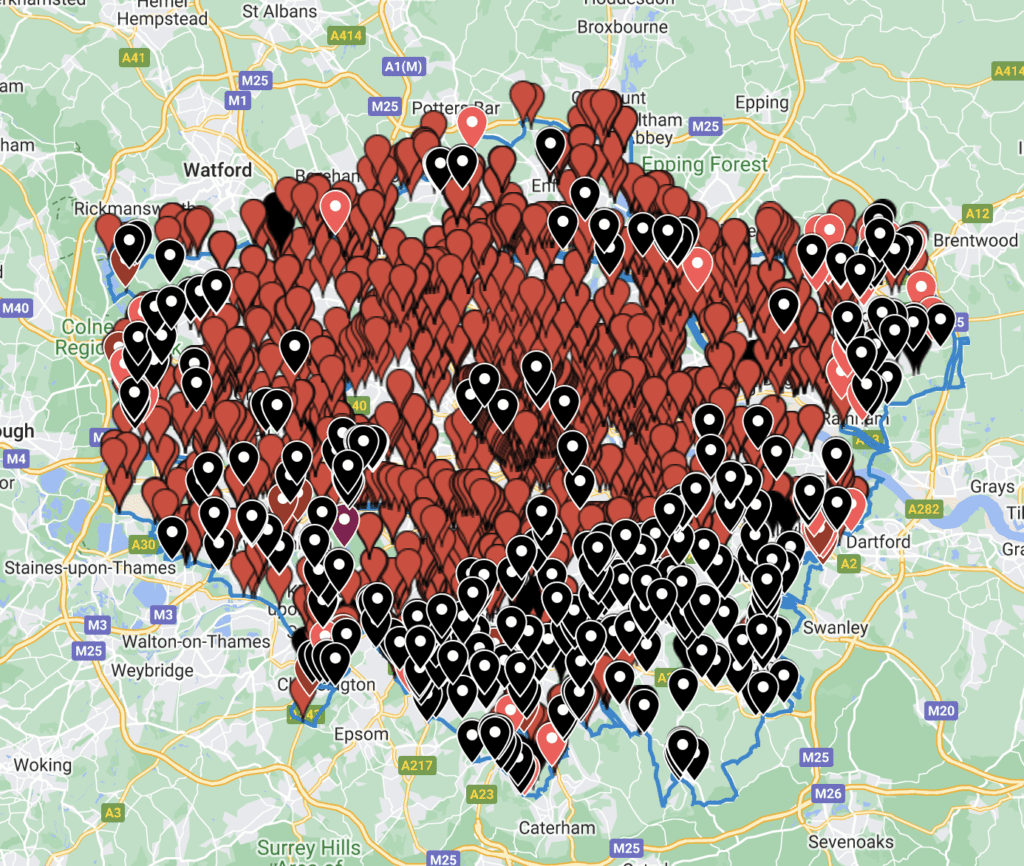
She was writing about Britain and in particular London’s “ultra-low emissions zone,” in which non-complying cars pay a charge of £12.50 a day. But she could have been writing about this country or indeed any western democracy, in all of which officials seem firmly in control and voters essentially powerless.

“Self-righteous totalitarian tinkering” is a phrase that
these days echoes familiarly in Canada.

Absurd Climate Blame Game

Lorrie Goldstein explains.at Toronto Sun in above video Guilbeault  Plays Absurd Blame Game–Attacks Conservatives, but not China, on climate change.  Transcript from closed captions in italics with my bolds and added images.

PM Trudeau: We will raise Canada’s price on carbon pollution Rising by 15 a ton starting in 2023 and rising to 170 Canadian dollars per ton by 2030.

Federal environment Minister Stephen Guilbeault says the Trudeau government could be more effective in fighting climate change were it not for the opposition of the federal conservatives. He told CTV news that he would like to do things like, for example, speeding up Canada’s goal of net zero emissions, possibly lowering it to 2040 instead of the current 2050.

Now his argument is absurd on a number of fronts. First of all Stephen Guilbeault and the Trudeau government don’t need the permission of the conservatives to lower our emissions targets to 2040 instead of 2050. He didn’t need them to set the 2050 Target; why would he need them for the 2040 Target?

And in terms of keeping in power to fight climate change, his government doesn’t need the support of the federal conservatives. So far the NDP are supporting him. And if anything they want the government to go faster in fighting climate change.

But the more important issue is that it doesn’t matter what Canada’s Target is. It also doesn’t matter how much we pay in carbon taxes or clean fuel regulations or subsidies to corporate green companies. None of that matters, the reason being Canada’s emissions are a rounding error in terms of global emissions.

Nothing Canada does on its own is going to slow the rate of wildfires or floods
or wind storms or severe weather in Canada. Zero Effect.

Why? Here’s a few numbers according to the federal government. In 2019 our emissions were 724 million tons of greenhouse gas emissions. The global total is 48,000 million tons. China’s total, as the largest single emitter in the world, was about 12,700 million tons. Tony Keller in the Globe and Mail made a good analogy about this. He said to think of the world’s greenhouse gas emissions as water in a swimming pool. What’s happening is that in Canada we’re trying to lower the level of the water using a soup spoon, and meanwhile China and other countries are filling up the pool using a fire hose.

Now if Stephen Guilbeault and Trudeau really want to be more effective in fighting climate change, they shouldn’t be attacking the conservatives; they should be attacking China’s dictators.

Now we’re always accused, even by our own government, that Canadians are wanton wasters of energy because we are the highest per capita emitters in the world. That’s an absurd metric to use particularly for Canada. Because we are the second coldest country on Earth, the second largest country on Earth, and we have a relatively small population.

Use another metric that has been used, emissions per square kilometer. Lo and behold Canada becomes one of the lowest emitters in the developed world. It’s true that what you get always depends on what you measure.

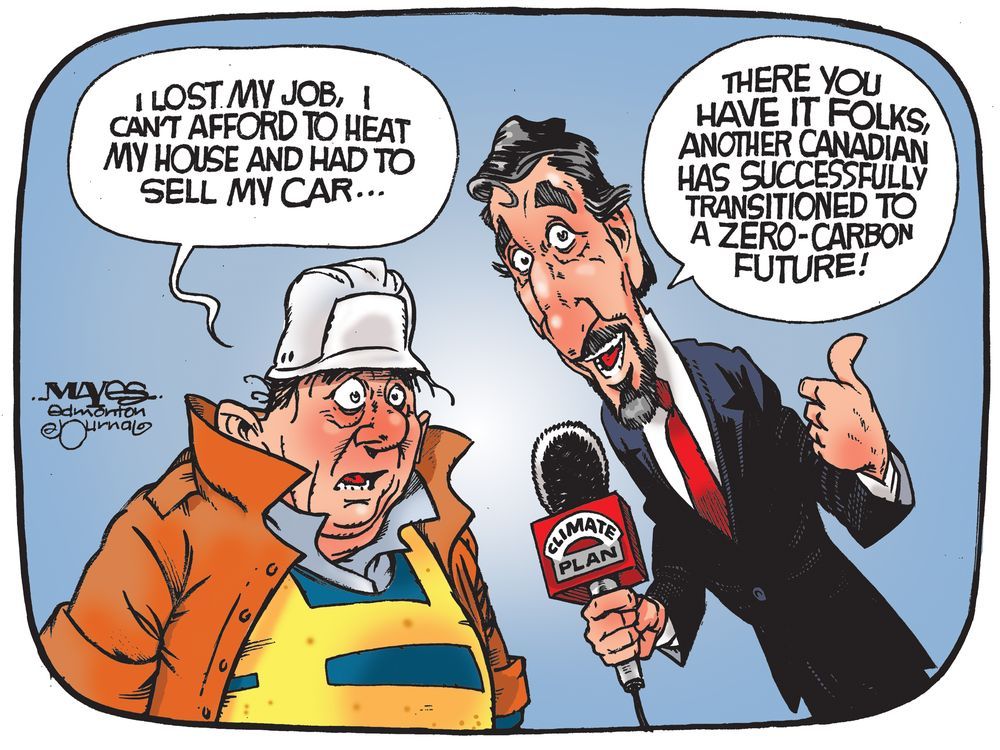
The only practical effect of our emission targets and paying more for oil and gas to heat our homes and everything else is: In theory it gives Justin Trudeau the moral authority to attempt to use moral persuasion on countries like China to lower their emissions.

Of course we already know from experience how well Canada’s
moral influence works on China’s dictators.

Postscript:  A Voice from Silent Canadians


Social Cost of Carbon Game

Ross McKitrick writes at Financial Post Junk Science Week —The Social Cost of Carbon game.  H/T John Ray Excerpts in italics with my bolds.

Estimates of the SCC championed by Guilbeault are not science

Environment Minister Steven Guilbeault recently announced that the Social Cost of Carbon (SCC), or the dollar value of supposed damages associated with each tonne of carbon dioxide emissions, is about $247, nearly five times higher than the old estimate of $54. He made it sound like a discovery, as if a bunch of experts had finally been able to measure something they previously only guessed at.

Like when scientists were finally able to measure the mass of an electron or the age
of the Earth, now finally we can measure the SCC.

But in reality there has been no breakthrough in economics comparable to those physics breakthroughs. Countless SCC estimates already exist ranging from small negative amounts (i.e. carbon dioxide emissions are beneficial) to many thousands of dollars per tonne. Every such estimate is like a complex “if-then” statement: if the following assumptions hold, then the SCC is $X. Yale economist William Nordhaus won the 2018 Nobel Memorial Prize in economics for developing some of the first methods for combining all the “if” statements into systems called Integrated Assessment Models or IAMs. And using conventional economic and climate modelling methods, he tended to get pretty low SCC values over the years, which has long been a sore point among climate activists and the politicians who share their agenda.

But economists are on the case. The $247 figure referenced by Guilbeault comes from a new report from the Biden administration that tossed out all the previous models, including Nordhaus’s, and instead cobbled together a set of new models that when run together yield much higher SCC values.

In many ways the new models are just like the old ones.

For example they persist in using an Equilibrium Climate Sensitivity of 3 degrees C. This refers to the warming expected from doubling the amount of CO2 in the atmosphere. The authors cite the Sixth Assessment Report of the Intergovernmental Panel on Climate Change as the basis for this decision, apparently unaware that that estimate has already been shown in the climate literature to be flawed. Using the IPCC’s own method on updated data yields a sensitivity estimate of about 2.2 C or less, and as I have shown in a recent publication this is enough to cause the SCC estimate in a standard model to drop to nearly zero.
The biggest boosts to the new SCC figure hailed by Guilbeault come from revisions to agricultural productivity impacts and mortality costs from climate warming. The evidence for large negative agricultural impacts comes from a 2017 article by Frances Moore and co-authors that looked at the combined effects of CO2 fertilization and warming, concluding the net effect would harm global agriculture. Oddly, they used the same data as a 2014 study by Andrew Challinor and co-authors who had found the opposite: the combination of increased CO2 and warming would have much more benign, and in some cases even beneficial, results.

How did Moore et al. get different results from the same data? They used a different statistical model but unfortunately didn’t provide evidence showing it is better than the one Challinor used, so it’s unclear whose results are stronger. But we know whose are more popular. The Biden administration team referred only to the Moore study and left out any mention of the Challinor one, and it is a safe assumption that the reviewers didn’t notice the omission. See how the game is played?

Regarding the mortality effect, the report relies on evidence innew study that apparently shows that warming will mean fewer deaths from cold and more from heat, and the combined effect globally is a much larger overall death toll than previously thought. The study is by an impressive team led by economist Tamma Carleton and 15 co-authors. In their preface they thank 17 research assistants, four project managers, 13 reviewers and seminar participants at 20 prestigious academic institutions around the world. It’s a high-quality piece of work, but like tens of thousands of other splashy climate impacts studies it relies for its headline conclusions on the discredited RCP8.5 emissions scenario.
How did all those prestigious researchers and reviewers miss this flaw?

The authors compiled mortality data from selected countries around the world and matched them to temperature records, then built a statistical model to extrapolate over the entire world. They used some clever economic modelling to estimate the beneficial effects of adaptive behaviour (like installing air conditioning) as well as the costs. Then they estimated a “mortality function” that spits out the number of additional deaths between now and the year 2300 attributable to each additional tonne of emissions, both from warming itself and the costs of adaptation. To compute this number the authors needed emissions and income projections out to 2300.

No uncertainty ranges are shown and reported, as for creating the recommendation datasets for CMIP5, central estimates have been assumed closely in line with central estimates in IPCC AR4. (SCP45to3PD). No uncertainty ranges are shown and reported, as for creating the recommendation datasets for CMIP5, central estimates have been assumed closely in line with central estimates in IPCC AR4. https://www.pik-potsdam.de/~mmalte/rcps/

For this they used two scenarios: the extreme, coal-blackened Dickensian fiction called RCP8.5, and a mid-range emissions projection called RCP4.5. In my 2020 JSW column I discussed the efforts of climate analysts to convince their colleagues to stop using the RCP8.5 scenario because of its unrealistic assumptions. Interestingly the Biden administration report moves away from both RCP scenarios and focuses on a new one from Resources for the Future (RFF) which, through most of the rest of this century, projects emissions even below RCP4.5.

But in the main text of the Carleton paper it highlights mortality estimates associated with an RCP8.5 future. Basically we all die a fiery death. If you want to know what the results are using RCP4.5, you will need to track down the 113-page online-only appendix and navigate to page A75, then transfer a table full of numbers to a spreadsheet so you can compare the outcomes.

The two figures on this page summarize what they show. With no adaptation, under the RCP8.5 emissions scenario each tonne of CO2 kills 221 people per hundred thousand (100k) between now and 2300, with the uncertainty range shown by the whisker line. Under RCP4.5 each tonne kills 40 people per 100k. I estimated what their model would yield using the RFF scenario: the effect drops further to 18 people per 100k, and the number is not significantly different from zero.

The second figure reports results if adaptive behaviour is assumed. Under RCP8.5 the mortality rate per 100k drops to 85 people, under RCP4.5 it drops to 14 and under the RFF scenario it drops to five, and the latter two estimates are not significantly different from zero, which means that there is no statistically valid reason to add the mortality effect to an SCC model.

Another step in the analysis is to place a value on these deaths, which depends on things like age and income in every place. Digging further into the online appendix (p. A100), if they stick with RCP4.5 but use a variant that predicts higher income growth the value of the mortality effect goes negative, which means taking account of the lives saved or lost due to warming leads to a lower SCC.

No mention of this in Guilbeault’s announcement.

Thus I reiterate that SCC estimates are if-then statements. They are not intrinsically true or false: what matters is the credibility of the assumptions.

♦  If emissions follow the RCP8.5 scenario (which they won’t), and
♦  if people don’t adapt to climate change (which they will), and
♦  if CO2 and warm weather stop being good for plants (which is unlikely),
    then the SCC could be five times larger than previously thought.

More likely it isn’t, and very well could be much smaller.

See Also Biden’s Arbitrary Social Cost of Carbon: What You Need to Know


Natural Gas to the Rescue (Vaclav Smil)

Vaclav Smil has published a major study Natural Gas in the New Energy World  For Naturgy Foundation. Excerpts in italics with my bolds and added images.

Bottom Line: There is an ongoing effort to decarbonize the global energy supply and demand system. This has been a general but slower than currently advertised trend over the past many centuries. While more renewables and greater efficiency to lower fossil fuel usage continues, coal, oil, and natural gas will continue to supply the bulk of the world’s energy for much longer than most probably realize. Make no mistake: the drop in demand and CO2 emissions in 2020 came from a global pandemic, not from a structural decline in the use of fossil fuels. As the cleanest fossil fuel with the lowest CO2 emissions, natural gas in particular has an essential role to play, especially in Asia where it can displace the overdependence on higher emission coal.   
While the quest for accelerated decarbonization of the global energy supply has obviously been linked to rising concerns about global climate change, there is nothing new about the process itself.

Histories of modern primary energy and electricity production present
clear trends toward lower carbon intensity. 

Energy Sources and the Rise of Civilization. Source: Bill Gates

For example, fuelwood was followed by coal, coal by crude oil and crude oil by natural gas, and as fossil-fueled electricity generation was augmented by hydro and nuclear generation and, most recently, by solar and wind-powered conversions.

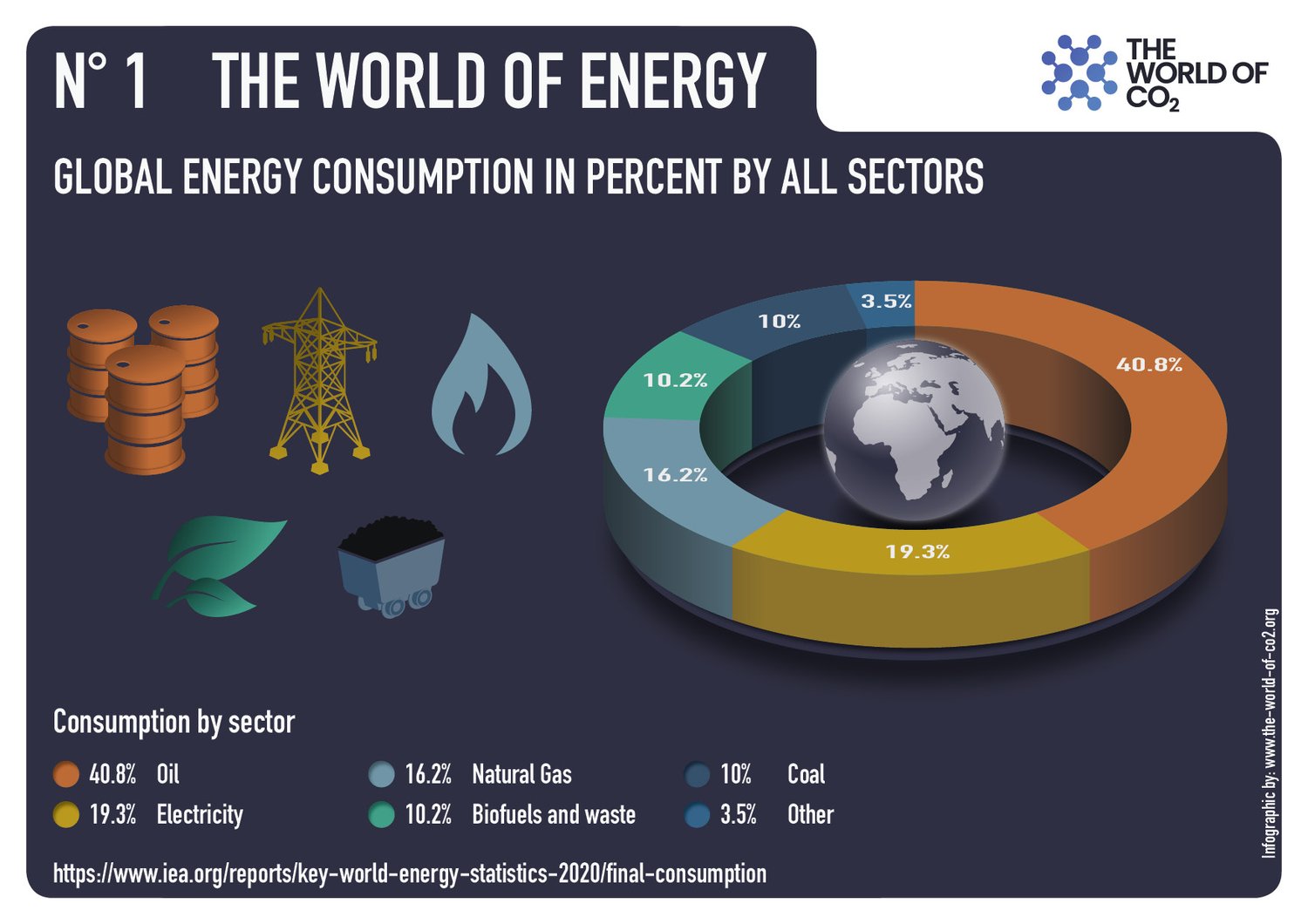
This is an ongoing but not a very fast process: half a century ago the world derived about 94% of its primary energy from fossil fuels, by 2020 the share was still about 85%, while 60% of the world’s electricity was still generated in coal- and natural gas-fired stations (crude oil and refined fuels accounted for another 4% of the total).

During the time of the Covid-19 pandemic in 2020, a temporary drop in CO2 emissions resulting from economic lockdowns in the spring months of 2020 was seen by an increasing number of commentators and governments as the beginning of complete decarbonization that would be accomplished in just three decades. 

Indeed, wishful thinking should not be mistaken for realistic appraisals. 

To begin with, the global decline in energy use has been far lower than initially assumed. The reduction will only slow down the build-up of atmospheric CO2, it will not even interrupt it. 

When looking ahead, it is imperative to separate what is possible in the high-income economies from what is required in low-income nations. 

Relatively rapid expansion of renewable electricity generation and the pursuit of higher energy efficiencies can (combined with stationary or declining populations) translate into a steady and significant rate of decarbonization in high-income economies.

Even so, it will be impossible to displace all fossil fuels that are now required for heating, transportation and industrial uses by non-carbon alternatives for decades to come.

We simply must remain realistic: Asian and African consumption of fossil fuels is still rising and the developmental aspirations of low-income nations ensure that it will continue to increase in the foreseeable future even with accelerated expansion of renewable electricity generation.

Looking ahead requires at least the basic qualitative and quantitative understanding
of what we are dealing with and where we are coming from. 

In the future, expanded consumption of natural gas can make as much of substantial difference in today’s low-income countries as it has made in high-income nations: the fuel is perfectly suited to replace coal in electricity generation (one of the fuel’s largest uses), to power new generation capacities that can operate with unequaled dispatchability and conversion efficiency, to be used more efficiently than any other fuel in a multitude of industrial process, and to provide (for a long time to come) an indispensable feedstock for syntheses of many essential chemicals.

Natural Gas Top Uses

The good news is that the global reserves and resource of natural gas is more than
sufficient to encourage a dramatic rise in gas usage around the world.

Findings:

  1. There is an ongoing effort to decarbonize the global energy supply and demand system. 
  2. This is NOT a new evolution and has repeated itself many times…but the process takes a lot longer than some are claiming today. 
  3. We must be realistic: renewables are growing in importance but will not displace fossil fuels any time soon, measured in decades not years.  
  4. Natural gas has a unique and widening role to play, in the still developing world especially, because it is low-cost, lower emission, abundant, highly versatile and efficient, and very reliable.  

Read the full study here.

Get Real on Energy Policy ( Bryce to US Senators)

The imperative is put concisely in US Senate testimony by Robert Bryce in summary video above.  For those who prefer reading, I provide below a transcript and exhibits from the closed caption and screen captures.

Legislators and policymakers in Washington need a big dose of energy realism, an even bigger dose of energy humanism. Europe provides a case study for what not to do. Millions of Europeans are facing the prospect of a cold winter without enough affordable energy to heat their homes. Fertilizer plants and steel mills are closing because of high energy prices.

Europe’s price hikes are being caused by under investment in hydrocarbons due to aggressive decarbonization and ESG policies. Second, they’re being caused by over-investment in weather-dependent renewables, which has left the continent vulnerable to wind droughts. Just yesterday in Britain spot prices for electricity exceeded four thousand dollars a megawatt hour due to low wind speeds. Third, Europe is prematurely shuttering its coal and nuclear plants, and finally it is relying too heavily on imported energy and in particular Russian natural gas.

The implications of Europe’s price spikes include soaring inflation,
deindustrialization and increased burdens on consumers,
especially the working poor.

The knock-on effects could last for months or even years. Fertilizer made from hydrocarbons is the food of food. Numerous fertilizer plants in Europe and around the world are shutting down because of high natural gas prices. This will mean less food production and therefore higher food prices, leading to additional inflation.

The United States must not emulate Europe’s disastrous energy blueprint. We need energy realism. Energy is the economy; energy nourishes human potential. Hydrocarbons now provide 82 percent of our total energy and about 60 percent of our electricity supplies. The US today gets 18 times more energy from hydrocarbons as it does from wind and solar combined.

The myriad claims being made by climate activists, politicians and elite academics that we can run our economy solely on wind and solar and a few drops of hydropower have no basis in physics, math or history. Furthermore wherever renewables have been ramped up, as in Europe, energy prices have soared.

Senators, look at California where electricity prices are absolutely exploding. Wood Mckenzie estimates that converting our grid to renewables could cost 4.5 trillion dollars, or roughly $35, 000 for every family in America. How could such a staggering cost result in the just energy transition that we hear so much about?

Some Energy Realism: Since 2015 more than 300 communities across the country, from Maine to Hawaii have rejected wind projects. Over the past six months alone massive solar projects in Nevada, Pennsylvania and Montana have been rejected by local communities.

More Realism: Trying to convert our energy and power systems to renewables will make the US reliant on China for critical minerals like Neodymium, Dysprosium and Cobalt. Why is this okay?

Relying on renewables would also require building hundreds of thousands of miles of new high-voltage transmission lines. But the November second referendum in Maine showed very clearly again that rural americans do not want high voltage transmission lines slashing through their neighborhoods.

Strangling America’s hydrocarbon sector by killing pipelines, banning natural gas, halting drilling on federal lands, electrifying everything, and never ending tax breaks for big wind and big solar will not solve global climate change. Instead those moves will turbocharge inflation, imperil our energy security, and impose regressive taxes on the poor and the working class.

Our economy runs on hydrocarbons and that will be true for decades to come. Staking our economy as Europe has done on weather dependent renewables amounts to unilateral energy disarmament
That will hurt us and benefit Russia, China and OPEC. Who will stand up for rural America and against the landscape destroying sprawl of wind and solar? Who will speak against the federally subsidized slaughter of our birds and bats by the wind industry? Expensive energy is the enemy of the poor; Who in the senate will stand up for them? Who in congress will stand up for the affordability reliability and resilience of our electric grid, which is being undermined by this senseless rush to renewables and the premature retirement of our nuclear reactors?

Where are the pro-nuclear, pro-energy realists?
Where, I ask you, are the energy humanists?

Postscript:  Complete text of Bryce presentation with images is at Innovationized:
What’s Causing the Energy Crisis?

ESG, the Demonization of Carbon Fuels, and an Unfounded Confidence in Renewables


Net Zero Zealots are Treating the Public Like Fools

A summary at The Telegraph of David Frost’s recent lecture, in italics with my bolds.

Some of the worst policies ever pursued in this country have been those which nearly all politicians supported at the time. Keeping Britain on the gold standard. Running down our Armed Forces in the 1930s. Demolishing our historic cities and replacing them with concrete. Joining the EU’s Exchange Rate Mechanism. Only a handful of free thinkers questioned these at the time. But when the disastrous results became clear, suddenly few people wanted to defend them.

Now, of course, consensuses can be correct, too. Most people agree that free trade is a good thing. But no one could say that that policy has been unchallenged. Indeed, although it is repeatedly attacked, both intellectual argument and real life keep proving it right.

That is why challenge and argument are so important. When everyone agrees on a policy, it is never seriously questioned. The arguments for it become ritualised. Zombie numbers get repeated from one document to another, however feeble their real underpinning – remember the three million jobs we were told for 20 years depended on EU membership? And its advocates don’t feel the need to invest any effort in defending it, because it’s easier just to smear its opponents.

So the cross-party agreement on the totemic policy of our time –
net zero 2050 – is troubling.

By all means accept the scientific consensus: it doesn’t seem to me to depict “climate catastrophe”. But net zero 2050 isn’t science. It’s a political goal enshrining a particular view of the trade-offs facing us as a result of climate change. It makes assumptions about how our economies and societies work which must be open to question. If no one ever does question it, we will inevitably end up with bad policy and bad results. That’s why I refuse to remain silent.

All these economic assumptions seem to me to be highly suspect. That’s partly because predicting the future is very difficult, and in this case we can prove that, because so many of the predictions in Labour’s Energy White Paper 20 years ago turned out to be wrong.

You might think, therefore, that the right thing for governments to do would be to invest in basic scientific research, to establish a simple regime for taxing the externality of carbon emissions at whatever level we think justified – and then stand back and let the market sort out how best to meet the policy goal.

You might think that, but you would be wrong. Governments have all decided
that they know best and can pick the technologies, the subsidies,
and the targets to get us to net zero.

That’s why you will be forced to buy ineffective boilers and expensive electric cars. That’s why you’re made to pay for windmills, a technology that was cutting-edge just after the Norman Conquest. That’s why our electricity grid is getting less reliable while at the same time energy bills go ever higher.

Some voters are clearly doubtful. So Western governments now go further, and argue that all these inferior technologies will actually improve economic growth – by a grand total of 2 per cent in 2050, according to reports quoted in Chris Skidmore’s Net Zero Review.

Sorry, but I don’t believe it. This whole area is riddled with economic fallacies:
counting benefits but not the costs; optimism bias;
illusory certainty and misplaced confidence in prediction.

There’s the belief that raising taxes to pay subsidies will not damage the wider economy. There’s the “broken windows fallacy”: just as repairing a broken window does not make you any better off, and you also lose the chance to spend the money on something more productive, so scrapping one system of energy production and replacing it with another does not make us richer – especially when the new system is worse than its predecessor.

There’s the faith that massive projects like insulating every house in the country can be undertaken simply and speedily with just an effort of will. And finally there’s the view that “green jobs”, many of them required to install all those less efficient technologies, are somehow a benefit rather than a cost. If you believe that, you must think we could make ourselves wealthier by sending everyone back into the fields to work the land.

Stop treating us like idiots. If we are told things will get better, and then they get worse, voters will in the end rebel against the policy. Look at the migration figures if you doubt that. I personally believe we will have to rethink the net zero methods and the timetable. Of course I might be wrong. But let’s have a proper debate and real honesty, not smears and cancellations.

One of Bob Dylan’s greatest songs, Not Dark Yet, is a reflection on his own waning powers and mortality. We need to make the same reflection about our society. Not only whether we literally go dark, because we can’t keep the lights on any more, but whether we in the West can actually summon the strength to resist degrowth, miserabilism and economic decline. “It’s not dark yet, but it’s getting there.” Time to stop, and rethink.

The text of David Frost’s lecture ‘Not Dark Yet’ is available at GWPF

Flawed Science Behind Nitrogen “Crisis” (Briggs and Hanekamp)

The Dutch Nitrogen Faux Crisis — Jaap Hanekamp Interview

William M Briggs and Jaap Hanekamp discuss the Dutch nitrogen “crisis.”

Farmers in the Netherlands are unhappy with government wanting to shut them down or reduce their operations, because of a supposed plague of nitrogen.  The “crisis” is, however, completely model driven. First by the Curse of the Wee P, and second by Lack of Skill.

Jaap and William have been involved in this “crisis” for many years, publishing often on how much over-certainty there is and about bad models.  Give a listen and find out why the government is wrong and they are right.  For those who prefer reading, below is an excerpted transcript from closed captions in italics with my bolds.

How in Netherlands Nitrogen Policy Became Nature Policy

The Netherlands is famous for its Dutch cheese, not for much longer as the government sells off all of the Farms or or buys up all the farms. We’ve been working on this this topic. Our audience knows me a little bit but they don’t know you. Jaap has formal training in chemistry and he is a chemistry professor. He’s also got a PhD in Theology and teaches on that. And he and I have been working together on this so-called crisis, this fake crisis for a number of years.

So the so-called uh mediator who was once a part of the official panel to investigate the crisis, and due to some sort of bureaucratic trick, became an independent expert, today recommended that the government buy off the biggest farmers. What’s the deal with that?

Of course we have a small country with loads of agriculture so the government and house of Parliament and NGOs from the environmental side think that we should reduce our impact on ecosystems, nature in the Netherlands. That is strange, given our history. You know, it’s long been said that God created the world, and the Dutch created the Netherlands. It’s so obvious here that we engineer nature, like any other organism or creature on Earth that reorganizes nature around itself to suit itself. But we in the Netherlands were rather exuberant in that arena so we created our whole ecosystem around us in terms of of cities, in terms of agriculture. Any kind of Natural Area we might have is created in the Netherlands almost literally either intentionally or unintentionally anyway. And those places are quite nice and beautiful.

There is sort of a very strong protective streak in policy saying we should protect the natural areas we still have, and protect simply means more or less a status quo, keep it as it is which doesn’t make much sense. But the weapon of choice is nitrogen now. There is a strange thing about this because influences are from all sides, especially here groundwater, precipitation, temperature, climate and so on, and of course also nitrogen. And we chose nitrogen, so nature policy is nitrogen policy, and nitrogen policies are nature policy in the Netherlands. Which is a very odd thing to do but anyway this is what we have.

The Dutch government wants to spend 30 billion euros which is a large chunk of our budget on protecting nature via the reduction of nitrogen emissions and depositions. So that’s it.

Believing in Ecological Crisis

But why why do they believe that this crisis exists? I mean they must have had something in the expertocracy as I call it. They have Solutions in search of problems in my my estimation. They have a solution they want to meddle with certain things because of their understanding of what nature is. So they go look for a problem, and they created a lot of nitrogen other other countries are using carbon dioxide, of course the Netherlands as well, l so we’ve part of that of course.

But why this thing and after you answer why, then let’s start talking about the the research that they’re using on this and and the stuff that you and I have discovered.

Why can be answered on multiple levels. You could look from a scientific perspective, which is not really that interesting; we’re going to discuss this later. Because the problem we have nowadays everywhere is that science or scientism or exportocracy should solve everything and anything. Whether or not there’s a problem, there must be some solution to some issue because of science. That’s a huge problem in itself. Why do we think that science could actually do that, or understand it or research it, or fathom it to such an extent I would actually find solutions to to the problems that might exist or might not exist.

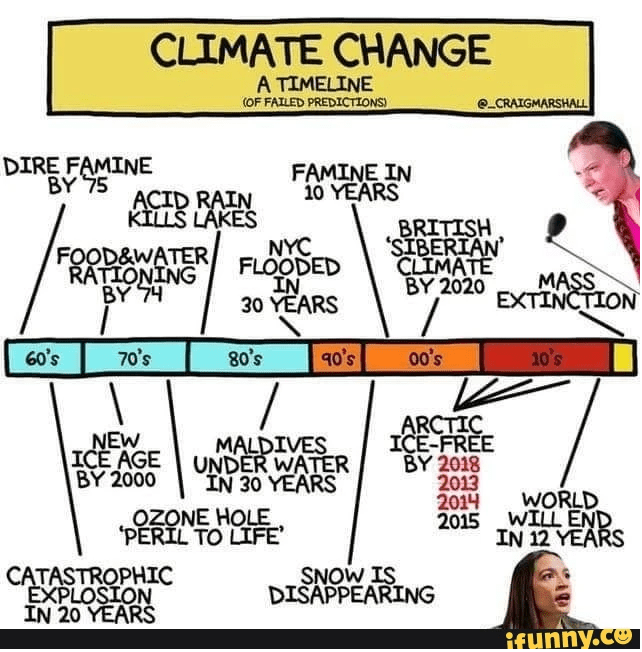
The other part is harder to Fathom; it has to do likely with the problem coming from the 1970s: Acid rain and the disappearance of forest. The forest dieback was originally a German issue. Der Spiegel actually brought out a huge paper with the title The Ecological Hiroshima, the idea that acid rain would obliterate within a decade every single forest in the world.

I remember that, it was sort of the the climate change catastrophe 101 basically. That acid rain story sort of disappeared from view, people didn’t talk about it anymore. But during that time of the 1970s and 80s dangers of agriculture came into view because producing ammonia and of course deposited on nature areas.

And the idea was, okay ammonia is of course a base, but it will acidify the soil
and that will destroy the forest and will aid in the forest in dying off.

So that’s where it originated, say 50 years ago. But of course the whole Forest dieback disappeared and now it’s about soil acidification and loss of biodiversities. Those are the the terms that actually have survived the debacle of the acid rain Forest dieback apocalypse.

On the one hand we can very well monitor the dying of forest; you can actually observe that. Yeah it didn’t happen, not even close. So they had to move away from that theme. I still remember pictures of monuments dissolving into nothing as if this has happened overnight; algae blooms on lakes as if these were brand new; all kinds of things like that. So they had the same problems. not just in Germany yeah. And course the the famous dangers came from Eastern Europe, loads of sulfur dioxide from foundries for instance were blasted into to Forest. And sulfur dioxide is not really a healthy chemical if you if the concentration is really high. Of course most plants or humans or any other organism would really love to have sulfur dioxide blown in their face so sulfur dioxide was an issue. And that was tackled since then which is basically a good thing. You obviously shouldn’t pump stuff in the air just randomly.

But of course the story got bigger and bigger and in the end disappeared because yeah the forest just grew happily uh through all our own brouhaha about all these problems. But what remained is the idea that ammonia changes soil chemistry, changes ecosystems, changes our biodiversity and that’s a bad thing. And it just became a matter of theology almost; it became a truism. And then it seems after that truism, they went in search of evidence in the form of models.

Examining the Notion of Chemical Critical Loads

The science of nitrogen and the impact on ecosystems has been around now for the past 50 years, at the same time as the forest issue. And it never has grown out to be an adult critical discourse scientifically speaking. Now it’s just confirming what the other guy says and based on the work from some other type; so there’s no real conflict no real discussion within this discourse at all. It’s just basically doing the same old same old thing and sort of publishing stuff without really critically reflecting on the results that came out of that research.

And we’ve shown that especially when we have to discuss the critical loads issue. The idea was that beyond a certain level of deposition per area, ecosystems suffer from a certain kind of deposition, meaning the the amount of nitrogen that’s falling on the land, in precipitation or dry deposition or whatever you can imagine.

Critical loads have been devised on the idea that above a certain kind of of raining down or depositing a certain chemical, ecosystems suffer a certain amount of risk, that’s the critical loads topic that now you and I have investigated that quite thoroughly. We’ve found it to be at best wanting, that’s being very very euphemistic.

We discovered so many caveats, which are embarrassing on the one hand,
on the other hand sloppy, imprecise, statistically nonsensical,
experimentally badly done.

So to apply this idea of nitrogen critical loads you have to define the critical point when we’re gonna stop things. They went and did these experiments, basically they took small plots just a couple of meters square. And they would grow certain grasses or other other types of plant matter on this and they would measure all kinds of things: the rate of growth, the width of the stems, and the root penetration and so on. And if they tested a difference between something that had a higher nitrogen content than a lower nitrogen content and it gave a wee P value, well that was said to be a nitrogen critical load. But there was no consistency to what they meant by a critical load or what was actually affected or the or the range of stuff that could be affected. And they had these ridiculous numbers extrapolating from a couple of square meters to the area of the entire country

Using these kinds of things, we showed if you just take a proper accordance of the uncertainty in these measurements, the critical loads just evaporate, they have no meaning unless you were to design really good experiments . We proposed large scale experiments taking a couple of hundred square meters and doing this experiment for years and years and years.

But there’s another problem you described quite well in in our paper. Of course nitrogen instigates change in ecosystems but the question is: In what terms do you regard this as damage or bad? Sure things change, but to what extent does is change a good thing or or not?

They assumed that change of any kind was a Bad Thing. Any difference between the sort of control group and a nitrogen group was considered bad. Which is which is ridiculous because you have to have nitrogen, you can’t eliminate nitrogen. It’s absolutely like eliminating carbon dioxide. In epidemiology you can do elimination studies, for instance antioxidants intake. You can do that because you can survive antioxidants intake for a certain while. But you can’t really do an elimination study in nitrogen and plant growth no that’s not going to work.

The other great thing we found is that there’s always a background concentration in the atmosphere and how much deposited on the area you’re looking at and background is important because you want to know at the control level how much nitrogen will rain down anyway. We found that studies were taking yearly averages, sort of polls of plots of the countryside. Which of course doesn’t give us much information about anything.

So you cannot really take the control and look at the experiment. They would calculate these single numbers from a small area and apply them either to an entire region or even Countrywide. And then averaging by year. I mean as the basis of policy it’s quite absurd. Of course there are other observational studies which are much harder to do experimentally. That is observing what happens to to certain ecosystems in in areas where there’s much more nitrogen deposition than somewhere else. But it’s hard to to extrapolate precise information from these studies anyway.

So this whole critical load debate is basically devoid of any critical reflection. We were the first ones that published a paper which was critical on on anything. And of course we got no response from the community, nothing at all. There was a weak response in Dutch in an internet Forum, which was poorly written and and sort of a hand-waving response. There was no real critical reflection on that at all. And we weren’t surprised because the researchers in that Arena are not at all versed in critical discourse as we are in chemistry. In mathematics and in physics you have to be critical, you’re critical of other people as well, because that’s how the the whole discourse develops. But in this matter not so much, in this discourse none whatsoever.

Central Role of Aerius OPS Chemical Transport Model

In fact the whole nitrogen policy is reduced to two things: the critical loads we just discussed and Aerius OPS (Operational Priority Substances), which is a model. Aerius OPS is a transport model that calculates the emission or actually how much of a certain chemical is transported through the atmosphere, and where and and to what extent it deposits at some point from the source where this emission comes from.

Now you can imagine to measure and analyze deposition in the Netherlands you would have maybe a hundred thousand measuring points. Or you can measure different chemicals like ammonia which is not possible. So I always say modeling itself is not a problem, but you have to model in this case because you can’t sample a hundred thousand areas in the Netherlands and decide exactly how much were the deposits. And that still doesn’t cover the problem: Where do all these emissions come from, which is another issue altogether.

So modeling itself is not a problem but OPS areas is a problem and keep in mind both critical load and Aerius OPS are part of the nitrogen laws in the Netherlands so in order to define how much you contribute to nitrogen deposition in Netherlands you have to use areas OPS the model run by the National Institute of Health and Environment. You have to use that model to calculate your own addition to the background levels of of nitrogen deposition. So it has huge policy implications.

Now I was part of a scientific committee that had to analyze the scientific quality of areas OPS and and all the other stuff. Not critical loads by the way, we didn’t discuss very much. But here’s the thing: We never really looked under the hood in OPS, we never looked at the Machinery of OPS. We did say as a committee the calculations done per hectare were too imprecise. That’s as far as we got with our criticism of Aerius.

Then of course validation studies via FOIA requests came on the table and you were courteous enough to look at these validation studies, which by the way we didn’t get as a scientific committee, which still annoys me actually. As a good scientist, you know science needs to be transparent. That’s the a priori of any kind of scientific work. People should have put on these validation studies immediately on the table. That’s what you do; you don’t make others to have to ask for them. That’s part of questioning the science. But here that makes you a denier and so forth; you’re just supposed to accept because this is how the expertocracy works.  But we did get these things and we were able to investigate how well this model performed you can explain much more than I can what were the what were the results. 

We have a two-tier approach here. The first part was for our esteemed colleagues to provide the underlying data of these validations. We didn’t get that, at least not immediately; there’s a nice story to that. But the first stage of this two-tier approach was your analysis of the quality of the validation studies, and how well the model actually worked according to those studies.

Aerius OPS Model Lacks Necessary Predictive Skill

Let me explain something about this model: it stinks, it doesn’t have good predictive ability at all. I want to explain this concept called skill. I’ve explained it a million times but it never sticks in people’s minds for some reason. So we have this expert model this OPS model, with all kinds of science going it. And it makes predictions of something like SO2 or NOx concentrations of something like this in the atmosphere. Now that’s a very sophisticated model, there’s lots of code and all this kind of stuff in here.

Before you continue you do an experiment. You open a bottle of sulfur dioxide or ammonia or whatever gas can be transported through the atmosphere. You measure distances over time, or over a certain time frame you measure concentrations when you open the bottles and you afterward find certain atmospheric concentrations. And of course they diminish over time because of a convection of wind, blah blah. You have these data from these measurements which has a certain precision. But now the model subsequently needs to predict based on all this physics and chemistry and these concentrations you just measured in the experiments. So the sophisticated model is making a prediction of these numbers.

I’m just going to take the seasonal average, the location experimental average we have. I’m going to make a guess of the mean, just the average, and I’m going to pretend that average is itself a forecast. In other words for every measurement I’m going to predict the mean. Now that’s a really crude model; it’s a very simple but a useful model. In fact we use it all the time to say winter is colder than summer in the northern hemisphere because of these types of averages.

It’s a very rough and crude model, but if this OPS model itself has any weight to it,
it should easily beat this mean model.

It should be more precise than just taking seasonal averages. That’s what skill is. The skill is relative performance over a supposedly weaker model. The OPS model often does not have skill against this simple mean model. It just doesn’t work. The error of the model itself increases as the concentration of the chemical (whatever we’re measuring) increases.

In other words, when these chemicals are in small amounts down and hovering around zero, the model has skill. But if you get large amounts and they become interesting, the model becomes worse and worse and worse .

So that’s one of the problems with it. The second problem is when our researcher ran the model for a farm at a particular downwind site. It’s what you’re supposed to do if you have a farm yourself so our researcher populated this farm with 400 fictional cows and then halved it to 200 cows and halved it again to 100 cows and then again to zero cows. And looked at comparing the amount of nitrogen that was deposited at this particular location according to OPS. OPS predicted the grand difference between all 400 cows and no cows at all was just under six moles per hectare per year. From 400 to 200 cows, it went down to like four or something so we’re talking about a difference of two moles per hectare per year. So now tell us as a chemist what is the difference in terms of numbering six or four or two

But of course that’s just completely fictional because there is no way
I can tell the difference between four and six moles per hectare per year.
I couldn’t measure it.

Though the model says as we increase the number of cows the amount deposited does increase. So based on that if I had to make a policy decision I’d say: Oh this is terrible the only way I could fix this is if I eliminated the cows or I’d cut them in half and then the number does go down. So based on that kind of reasoning therefore I should do something.

But you’re talking about a difference so small, so down into the noise you’d never be able to tell if you really reached it in reality. That’s our main criticism against this this whole policy making. It’s completely virtual, it sort of suggests a world which doesn’t exist, except in the zeros and ones in the computers. The biggest problem I have with the model is that it’s completely an imaginary reality not the world that we live in.

I couldn’t stress this enough Aerius is Central to the whole policy making. You need to use it in order to have a computation whether or not you add or subtract, increase or decrease your ammonia additions to a nature area near by. That is of course very worrying because that’s still in place. This model should be scrapped immediately because it produces bogus results as this very nice pictures shows. At least it should be tested, be investigated and then judged by independent parties.

Food Supply and Livelihoods At Risk from Nitrogen Policies

The irony of this whole situation is that the Dutch institution literally produces misinformation . We show that it’s completely misinforming about the reality of of any kind of nitrogen deposition from a certain Farm which wants to increase or decrease its number of animals.

That’s actually the case, so now where are the Netherlands going to get their food once the Farms are shut down,  Of course it’s not suddenly we have less food to eat no that’s not how it works. Fortunately that’s not how agriculture markets work, happy to say.

But there is another problem which I do not understand: We have a war in Ukraine in our backyard. If War would actually be extended to other parts of Europe we have a big problem, also a big agricultural problem. So where do we get our food from? So yes of course you can you can diminish your your livestock that’s not gonna over change overnight the the the food situation. But in this particular case, this could be more worrisome in the long term.

There’s also another problem, the biggest issue now is that we invest huge amounts of money to buy out all these farmers, and we have no idea what we get back for it. More nature? Of course we know this is not going to happen because it’s a virtual world all these policy makers look at. But of course that means less income for the Netherlands and more unemployment. So it’s a lose-lose situation on all sides.

We don’t get what we want in nature, and we get less income and and food
not just for us, but actually for the European Union and beyond.

People should be looking meticulously at the Netherlands, because what’s happening here is a huge top-down policy influence on a huge economic sector based on mere fantasy of apocalyptic risks related to nitrogen deposition. Because other countries like Canada, US and and other European countries are feverishly hoping the Netherlands government can pull this off. Because it’s a trick to disenfranchise huge parts of of the population in the Netherlands for no Return of Investment.

Footnote: List Of Evidence Showing There Is No Nitrogen “Crisis” In The Netherlands

To read studies exposing the flawed science basis to the so called Dutch nitrogen crisis, see the link above at wmbriggs.com.

There is no nitrogen emergency,
except for government nitrogen policies
threatening global food supply.