Gas Stove Just a Starter

As explained  below, the move against gas stoves is just an opening into a larger war against methane because of its CO2 emissions.  Coal was bashed as a fuel already long ago, and now activists want to disqualify gas lest it serve as a bridge energy source with much lower CO2 emissions, delaying the desired upheaval.  The current assault on domestic appliances should be seen as the thin edge of a wedge to destroy natural gas supply, in parallel with actions against coal and oil.

Mark Krebs and Tom Tanton explain the ins and outs of this new phase encroaching upon the citizenry where they live.  Their Master Resource article is Gas Stoves: The Beloved Blue Flame is Just Better.  Some excerpts in italics with my bolds and added images and headers.

The Larger Federal Goal:  Transition Away from Natural Gas

The concern should not be about gas stove usage but the public policy of The Biden Administrative State to wean consumers off the direct use of natural gas and propane and on to electric appliances, ASAP. This “transition” includes how to heat your home, heat your water, cook, and drive.

Gas cooking is highly valued by consumers, virtually all of whom have normal taste buds. It is the one gas appliance that consumers see and use daily. The blue flame is part of home life, as is the fireplace run by gas or propane.

In contrast, the furnace and water heater usually tucked away in the basement or equipment closet and operate unseen. Also unseen are the legions of new electric power plants transmission lines and battery storage system to provide ostensibly “clean” juice for these new electric appliances and the serious environmental, strategic, and human rights impacts from mining and processing heavy metals and rare earths.

In fact, no one has done a comparative full fuel cycle analysis to document whether electrification is a good idea or a bad one; at least not a transparent analysis that has been subject to independent technical debate. Neither have the all-electrification busybodies presented a comprehensive plan to produce the millions of batteries necessary for the electrical grid to be able to handle all these new uses, while burdened by intermittent wind and solar.

Govt. Misdirection:  Claims Gas Stoves Hazardous to Indoor Air Quality

The first ploy was to claim gas stoves are unsafe concerning air pollutants.  Several problems with this attempt to regulate away these cooking appliances.

Fear mongering about the “existential threat” from Anthropogenic Global Warming (AGW) hasn’t been working as well as planned. So maybe, they hope, additional fearmongering about how parents are putting their own children at risk due to respiratory ailments, such as asthma from your stove will do the trick.

There are at least three agencies leading the Biden Administration’s whole-of-government fossil-fuel eradication efforts. These are:

  • DOE’s Office of Energy Efficiency & Renewable Energy” (EERE)
  • The Consumer Product Safety Commission (CPSC)
  • The Environmental Protection Agency (EPA)

None of these agencies have Congressional authority to regulate “indoor air pollution.” EERE has been pushing electrification at least since the Obama Administration, and it continued even throughout the Trump Administration. The Biden Administration simply removed the nominal (if any) restraints there may have been under Biden’s “whole of government” executive orders (EOs) to reduce GHG’s: e.g., Executive Order (EO) 13990.

In EERE’s case certain EO obstacles include that they still must act “as appropriate and consistent with applicable law.” The Energy Policy and Conservation Act of 1975 (EPCA) is one such law. EPCA is also supposed to promote regulatory objectivity. Under EPCA, DOE/EERE must also “consider” safety.

The science that the Biden Administration claims to guide such regulatory decisions
is far from conclusive that gas stoves are harmful.

Instead, the Biden Administration and its supporters “cherry pick” data that supports regulatory expansion. In this case, the science comes from the highly partisan Rocky Mountain Institute (RMI). A major activity (and bias) of RMI is its “Electricity Innovation Lab. It reiterates RMI’s mission to achieve a carbon-free electricity monopoly.

According to independent scientific researchers with a deep knowledge of this subject, most of the “indoor air pollution” is emitted from the food itself being cooked. Such pollution is in the form of particulates from cooking food regardless of what form of energy is doing the cooking. Those particulates may be especially harmful to adolescent asthmatics.

More Govt. Hype: Replacements More Efficient than Gas Stoves

Government Orange Gas?

What is it exactly that DOE wants to force on consumers under the guise of “energy efficiency in the case of gas stoves? It appears to be a relatively new type of gas stove burner that glows orange (infrared, a.k.a., “radiant”) instead of the blue flames present in traditional burners that consumers are accustomed to. Infrared burners have been around for a long time, especially for gas BBQ grills but they don’t last long. Infrared burner adoption for consumer kitchen cooking appliances have been limited to a few high-end “prosumer” gas ranges. Costs for such models tend to be in the vicinity of $7,000 to $9,000. One example is Wolf/Sub Zero’s Model # GR364G with a MSRP of $8,760. And only the griddle portion of that model is infrared. According to DOE, there may be one model that is all infrared but good luck finding it.

In comparison, a basic electric range can be purchased for under $500. Granted, if DOE mandates infrared gas burners, mass production could decrease cost premiums. But for cost-conscious consumers, such premiums will likely far exceed those of electric stoves, even induction electric stoves.

Forcibly moving the market via equipment costs is a typical DOE strategy.
And then they say, “let the market decide.

Part of DOE’s bag of tricks for justifying higher gas appliance efficiencies is to minimize maintenance costs and safety concerns.  At a minimum, “worst-case scenario” analyses are needed to determine how infrared burners perform in the “real world” of “messy” stoves. In messy situations, infrared burners may turn into product liabilities. And they may have to be replaced; that can quickly get expensive. It is at least possible that “dirty” infrared burners emit more pollutants than traditional blue flame burners. DOE needs to “consider” safety consequences of its energy efficiency proposals going forward.  It is not evident that they have.

Likewise, DOE tends to minimize its estimations for what the increased prices will be that consumers must bear from increased efficiency.  Taken together with other forms of analytical “trickery,” consumer cost-effectiveness can quickly become negative.

Since pictures are “worth a thousand words, see Shutterstock’s 223 images of infrared gas stoves. Several of these are pictures of infrared burners that have experienced obvious degradation from cooking spills.

There’s also movement on the electrical stove side of all this. That is, electric stoves continue to change and the technology du jour is the induction stove. Induction stoves electro-magnetically couple the stove with the pan, directly heating the pan and not the stove. They are more efficient than tradition hot coil electric resistance stoves but are also more expensive and require magnetic cookware. They too, have associated health risks (Induction stoves may not be safe to use with pacemakers; “People with pacemakers are better off avoiding induction stoves.”)
Perverse Incentives in Inflation reduction Act

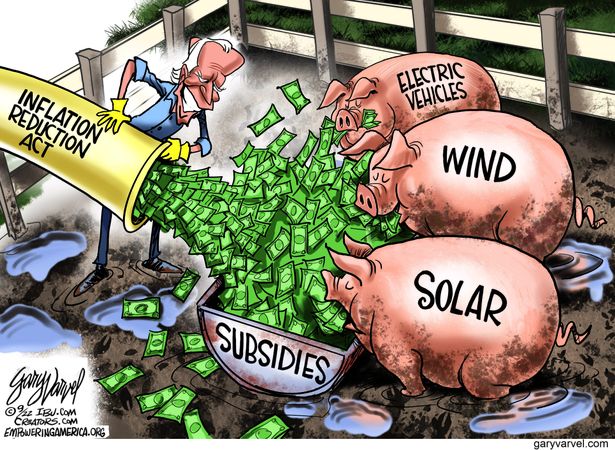
The so-called Inflation Reduction Act provides perverse incentives for switching to electricity.  These incentives are summarized as follows:

DOE also needs to consider the safety feature of having a gas stove during extended electric grid blackouts that may make the difference between consumers and their water pipes freezing or not.  This benefit was widely observed in Texas during Winter Storm Uri.

To make a logical scientific argument about consumer safety concerns with gas burners, DOE must clearly and transparently demonstrate a safety issue with conventional “blue flame” burners.  Instead, DOE is proposing a one-way move to infrared burners based upon theoretical economic operating cost advantages of a few percentage points.

Meanwhile, DOE is not mandating a move from electric resistance stoves to higher efficiency  electric induction  stoves that, according to the EPA,  can be “5-10% more efficient than conventional electric resistance units.”  EPA’s verbiage following that quote states: “and about 3 times more efficient than gas.”  That latter verbiage is tantamount to professing a belief that electricity is magically created inside of the house’s electric meter. This is pretty much “par for the course” for the Biden Administration’s “Green New Deal” energy and environmental policies.

Under EPCA’s anti-backsliding provisions, once infrared burners are mandated, there is no going back to traditional (blue flame) gas burners. Thus, if consumers want to regain better cooking maintenance and reliability, they can only switch to electric stoves. We think that’s their plan! Consumers will probably choose electric resistance varieties due to their relatively low initial purchase cost. What this portends, at least for the next few decades, is that energy efficiency when measured over the complete fuel-cycle is massively reduced throughout most of the United States where fossil fuels still dominate electric grid generation. The same goes for emissions when measured along the complete fuel-cycle.

The direct use of natural gas makes the most sense economically and environmentally for consumers. Consumers are losing that choice.

Conclusion–Why The Crusade?

Why is the Biden Administration messing with a piece of Americana. Is it to try the hardest part first? Or because “clean” electrification is where the money is? With passage of the Inflation Reduction Act, it is definitely where the subsidies are. The enormity of these subsidies are like an all-you-can-eat buffet for Green New Deal enrichment.

Phasing out natural gas and propane is not merely for the U.S. to meet its commitments for “deep decarbonization” per the UN’s Paris accords. It’s also about “great reset” social control. With the advent of “smart” electric meters and appliances, it’s relatively easy to centrally control electricity usage.

Coupled with digital currency, it then becomes relatively easy to control behavior, such as remotely changing YOUR living room thermostat or disabling your car. Early dinner? No: you’ll cook when the power is temporarily turned on to your stove.  But if you project the correct attitude of cheerful compliance, you may be awarded with an extra ration of electricity.

DOE needs to stop politicizing energy appliances on unfounded predictions that “clean” renewable electricity will soon dominate the grid. This scenario is not at all probable given the cost and enormity of the quest. Big Brother is already running wild and must be leashed/removed. Given that DOE’s proposed rule calls for yearly energy consumption limits for cooking appliances, rationing might not be totally far-fetched. The time to expose and eradicate is now.

Appendices to Master Resource Article

Appendix A: Call To Action (Next Steps, What You Can Do)

Appendix B: Further Reading

Footnote

Obviously, bans against ICE vehicles will also prohibit those running on LNG (Liquified Natural Gas). See Consumers Report: Tesla Road Trip

As for fertilizer banning,  half of the people on Earth are alive today thanks to nitrogenous fertilizers made of and with natural gas.  So why are governments at home and abroad scrambling to cut off humanity’s natural gas supply?

See Natural Gas – Generated Nitrogenous Fertilizers Prevent Worse World Hunger



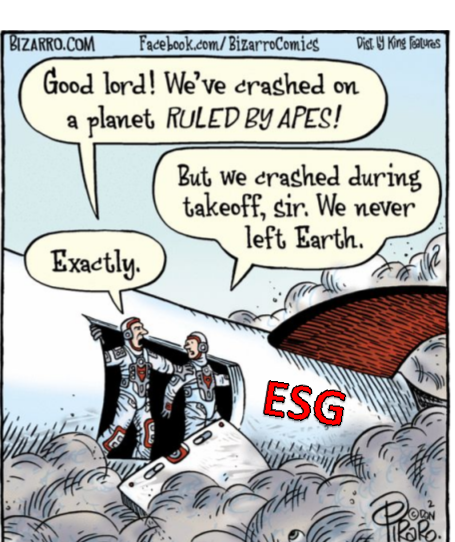
Florida to Ban Woke ESG Banking

Amber Jo Cooper reports at Florida’s Voice DeSantis proposes banning social credit scores in banking, targets ESG. Excerpts in italics with my bolds. H/T Tyler Durden

On Monday Gov. Ron DeSantis announced a proposal to target
ESG banking and investment policies 

DeSantis said he aims to enact protections for Floridians against discrimination by big banks and large financial institutions for their religious, political, or social beliefs.

ESG – environmental, social, and governance – is a business framework that determines investment based on political factors such as renewable energy and social justice initiatives.

DeSantis said ESG has developed into a “mechanism to inject political ideology into investment decisions, corporate governance, and really just the the everyday economy.”

“That is not ultimately something that is going to work out well for us here in Florida,” he said.

DeSantis said it violates the fiduciary duty that executives have to the shareholders of publicly traded companies.

Your pension money, your retirement money, is likely invested in some of these funds, and those funds should be done to try to produce the best result for you using the available investment options,” DeSantis said.

“What ESG says is no, we’re not going to do, even if it would do a better return – we’re not going to allow you to invest in certain areas, you’re not allowed to invest in oil and gas, you’re not allowed to invest in disfavored areas,” he explained.

The proposal includes prohibiting the financial sector from considering “social credit
scores” in banking and lending practices that aim to prevent Floridians
from obtaining loans, lines of credit, and bank accounts.

“That is a way to try to change people’s behavior. It’s a way to try to impose politics on what should just be economic decisions,” he said.

“We are also not going to house in either the state or local government level deposits. And we have a lot of deposit, we got a massive budget surplus in Florida, you have deposits all over the place that go in where state and local government use financial institutions, none of those deposits will be permitted to be done in institutions that are pursuing this woke ESG agenda,” he said.

The proposal would also aim to make sure ESG will not “infect decisions” at both the state and local governments, such as investment decisions, procurement and contracting, or bonds.

The Governor’s press release said the legislation would also:

  • Prohibit banks that engage in corporate activism from holding government funds as a Qualified Public Depository (QPD).
  • Prohibit the use of ESG in all investment decisions at the state and local level, ensuring that fund managers only consider financial factors that maximize the highest rate of return.
  • Prohibit all state and local entities, including direct support organizations, from considering, giving preference to, or requesting information about ESG as part of the procurement and contracting process.
  • Prohibit the use of ESG factors by state and local governments when issuing bonds, including a contract prohibition on rating agencies whose ESG ratings negatively impact the issuer’s bond ratings.
  • Direct the Attorney General and Commissioner of Financial Regulation to enforce these provisions to the fullest extent of the law.

Florida Chief Financial Officer Jimmy Patronis praised DeSantis’ proposal to crack down on ESG.

“When it comes to ESG, many of us have been boiled like a frog,” Patronis said. “The Governor is right that over time ESG has wound its way into too many aspects of American society, and pulling it back is going to take work.”

“This proposed legislation puts returns first, it puts the Constitution first, and it puts corporate America on notice that if they play politics with Florida residents, we’ll have the tools to hold them accountable. I look forward to working with the DeSantis Administration, as well as Senate President Passidomo and House Speaker Renner in getting this legislation over the finish line,” Patronis said.

Patronis previously barred ESG funds’ participation in the deferred compensation program and divested around $2 billion from BlackRock due to their utilization of ESG.

House Speaker Paul Renner said Bob Rommel, R-Naples, will introduce the bill in the House.  “The biggest thing that I think ESG represents is a total hijacking of democracy,” said Renner.

“We’re lucky here in the state of Florida, that we’ve got a governor who will stand up to things like ESG, when others will not,” he said.

“This is amazing what he’s doing for our state, our state is just rocketing,” said Senate President Kathleen Passidomo “I look forward to having the governor come back here again and again and again to sign all these bills,” she said.


SCOTUS and Climate Free Speech

Donald J. Kochan writes at The Hill Climate change consumer deception lawsuits threaten free speech. Will the Supreme Court take note? Excerpts in italics with my bolds and added images

Courts are increasingly taking a close look at the validity of climate change lawsuits against oil producers. And for good reason: These cases severely test the boundaries of court jurisdiction, the breadth of tort law, the protections of due process and even the sanctity of free speech.

As one example of this scrutiny, last Oct. 3, the U.S. Supreme Court signaled a serious interest in the proper forum and scope for climate change litigation.

In Suncor Energy (U.S.A.) Inc. v. Board of County Commissioners of Boulder County, the Supreme Court invited the solicitor general of the United States to weigh in, even though the United States is not a party to the litigation. The federal government is invited to file a brief with an official legal opinion of the federal government about the questions presented regarding the role of federal and state courts and the scope of federal and state common law for evaluating lawsuits alleging climate change injuries from fossil fuel production and consumption. These invitations are rare.

All of the cases similar to Suncor percolating across the country are focused on suing companies for the effects of climate change. Yet, each of these lawsuits also tack on “consumer deception” and related “greenwashing” claims. Both categories get a lot of attention, but the latter deserves special inspection.

These so-called deception claims sometimes allege that the companies downplayed the impacts of climate change despite that there is no affirmative duty to share everything you know, especially when consumers in the market have access to the same information.

Other times the greenwashing claims allege that the companies should not have been allowed to advertise about efforts they are making toward developing cleaner energy because these efforts were not as robust as the plaintiffs would have liked. Indeed, in several cases, the plaintiffs have essentially stated that these companies should not have been allowed to speak about their environmental successes because the only clean fossil fuel is no fossil fuel.

These consumer deception lawsuits are direct attacks on rights to speak
and the corollary rights to not be compelled to speak.
But there should be no climate change exception to free speech.

In 2019, Justice Samuel Alito penned an important dissenting opinion from a decision by the Supreme Court not to hear an appeal in National Review, Inc. v. Mann. He saw the denial as a lost opportunity to underscore that traditional and ordinary principles protecting free speech to promote discourse should apply within climate change discussions specifically.

Justice Alito noted that “To ensure that our democracy is preserved and is permitted to flourish, this Court must closely scruti­nize any restrictions on the statements that can be made on important public policy issues. Otherwise, such restrictions can easily be used to silence the expression of unpopular views.”

Efforts to restrict how one speaks about climate change are precisely such “immensely important” cases where close scrutiny should apply. Justice Alito observed that “Climate change has staked a place at the very center of this Nation’s public discourse. Politicians, journalists, academics, and ordinary Americans discuss and debate various aspects of climate change daily—its causes, extent, urgency, consequences, and the appropriate policies for addressing it. The core purpose of the constitutional protection of freedom of expression is to ensure that all opinions on such issues have a chance to be heard and considered.”

These viewpoints are prescient in light of the climate deception
and greenwashing allegations in front of the court today.

Advertising itself has a long history as protected and beneficial speech. It is seen as critical to providing information to the market. It helps consumers make intelligent and well-informed decisions. It is not misleading to say that an attribute of a product is that it is better or cleaner today than it was yesterday.

Furthermore, if we were to say that companies are prohibited from advertising that they’ve improved simply because they have not eliminated all harmful aspects of their products, we would disincentivize the very improvements that those fighting to combat climate change wish to see. Advertising lets one benefit from the investment they make in improving a product, which in turn incentivizes the investment.

Thus, if these deception claims are successful in court, shutting down speech because the quality is not perfect in the eyes of some advocates becomes the enemy of the good.

Free speech is an invaluable thing with a fragility that counsels constant vigilance for its protection. Against those truths, we should be concerned when the very court system entrusted to protect speech is at risk of instead becoming weaponized to punish or chill it.


Background Post with entire Dissenting Opinion Justice Alito Finds Chinks in Mann’s Legal Armor


“Sustainability, Inclusiveness” Is Nanny State Dictating to Business

Matthew Lau explains at Financial Post Forget ‘sustainable and inclusive’: Get back to profit.  Excerpts in italics with my bolds and added images

Business community must re-focus its efforts on fulfilling
its real social responsibility: increasing profits

“Sustainable and inclusive growth,” like “corporate social responsibility,” is a loaded phrase. Both are based on subversive policies and ideas, but because nobody wants to be accused of supporting un-sustainability or corporate social ir-responsibility they often go unopposed.

That’s a mistake: both badly need opposing.

Just as preachers of corporate social responsibility advocate a form of socialism, those calling for “sustainable and inclusive” economic growth are proposing government economic planning. When activists say “sustainable and inclusive growth” what they really mean is that they, through the government intervention they invariably recommend, should dictate where economic growth takes place, in which sectors and for whose benefit.

It should surprise no one that the federal government splashes buzzwords like “sustainability” and “inclusiveness” all over its communications in trying to sell its inordinately expensive, not to mention dumb, economic programs to the voting public. It is more difficult to understand why the business community follows the government’s lead in advocating central economic planning and masking it behind “sustainability,” “inclusiveness” and other slick marketing words.

One reason for this unfortunate tendency of the business community may be that government expansion into business has completely blurred the lines between the two. Nor does it help that many business leaders come from government and bring with them far too rosy views of government economic planning instead of — as would be far more appropriate — a clear understanding of the tendency of government officials to act in their own rather than the public interest, the undisciplined wastefulness and inefficiency of government programs and the fatal conceit of top-down economic organization.

Two such business leaders are former federal cabinet ministers Anne McLellan (Liberal) and Lisa Raitt (Conservative), who now co-chair the Coalition for a Better Future. The coalition, which today includes 142 of Canada’s most influential business groups, industry associations, think tanks, and non-profits, was formed in 2021 with the goal of “a more inclusive, sustainable, and prosperous Canada.” Their ordering of the adjectives is telling: “prosperous” comes last. Also telling is Raitt’s declaration that business, government, and community and Indigenous voices must build “a shared economic vision” to achieve this Canada.

Widespread and sustainable economic growth does not come from consolidating
business and government visions, plans, interests and objectives.

The Coalition for a Better Future, McLellan and Raitt recently wrote in the FP, “believes any growth agenda needs to be inclusive and environmentally sustainable in order to be viable.” After correctly identifying the dearth of private-sector investment as one reason for lagging productivity and growth, they go on to propose alarmingly bad solutions. They call Joe Biden’s misleadingly-named Inflation Reduction Act (US $499 billion in government spending, of which $391 billion is on climate change) a “welcome impetus to global climate transition efforts” that is “already siphoning Canadian capital south of the border,” suggesting their preferred way to increase growth and capital investment is for government to sink many tens or even hundreds of billions of dollars more into the global warming project.

Government economic plans should also, according to McLellan and Raitt, include “enabling and incentivizing business to deliver on big projects in key sectors such as critical minerals, clean energy and green manufacturing.” But government dictating which sectors should receive “incentives” invariably directs capital from economically productive uses to relatively unproductive but politically favoured uses — these days, anything involved in “sustainability.” The push for government-guided “inclusiveness” is similarly bad. When people with political power get to decide whom to include as beneficiaries of government-granted economic privilege and benefits, the greatest privilege and benefits invariably flow to … people with political power. This is not a sensible way to help those at the bottom of society.

If there is to be any real productivity growth or economic improvement in Canada, the business community must re-focus its efforts on fulfilling its real social responsibility — increasing profits — and reject government preaching about supposedly “sustainable and inclusive” matters that are in fact mostly unsustainable and economically destructive.

How Well is Government Doing Directing the Canadian Economy?

What’s driving this? A previous blog explained how growth in real per capita GDP is the sum of: (a) growth in output per hour worked (“labour productivity”) and (b) growth in hours worked per head of population (“labour utilisation”). Of the two components, productivity growth is the more important determinant of future living standards because it is limited only by the pace of technological change and the ability of businesses and workers to adapt to it. In contrast, labour utilisation growth has a natural ceiling based on demographics, labour force participation, and there being only so many hours people can or will work per year.

The OECD finds that Canada’s prospects for real per capita GDP growth over 2020-2030 are poor because of feeble expected growth in output per hour worked (labour productivity, see Figure 1b) and a slight drag from hours worked per head of population (labour utilization, see Figure 1c).

Source:  Business Council of British Columbia  OECD predicts Canada will be the worst performing advanced economy over the next decade…and the three decades after that


On Climate Grooming the Children

A man who has not been a socialist before 25 has no heart.
If he remains one after 25 he has no head.—King Oscar II of Sweden

One of the observations about the 2022 midterms was how strongly young unmarried women voted for the socialist agenda of today’s Democratic party.  I recall a video clip of two university students saying their vote was all about women’s abortion rights, and thinking these two male nerds’ politics might be biased by their desire to get lucky some night.  But beyond that issue is the campaign of brainwashing children regarding global warming/climate change.

Benjamin Khoshbin shines some light into this climate political grooming in his Real Clear Energy article The Electoral Case for Commonsense Environmentalism  Somewhere Between “No More Meat” and “It’s a Hoax:”  Excerpts in italics with my bolds.

We’ve all heard the adage, that a young person not thinking socialist has no heart, while an older person still a socialist has no head.  It sounds true, but it’s not — young voters are no longer aging into conservatism. While Gen X and Boomers did trend more conservative as they aged, Millennials in the U.S. are becoming more liberal as they age, and are estimated to be the most liberal 35-year-olds in recorded U.S. history.

Based on their behavior in the 2022 midterms, Gen Z is likely to follow suit.

According to the Edison Research National Election Pool exit poll, 63% of Gen Z voted for Democrats in House races, compared to just 35% who voted for Republicans — a whopping 28-point gap. While many salient issues for young voters are likely driving this, one stands out: climate change.

Millennials and Gen Z are more concerned about climate change than any other generation. A Harris Poll survey of American 13–19 year-olds found that more than 8 in 10 teens believed that if climate change isn’t addressed today, it will be too late for future generations as some parts of the planet will become unlivable. Nearly 80% of teens in the survey also believed that protecting the environment should take priority over economic growth.

My deeper look into the 4H/Harris Survey

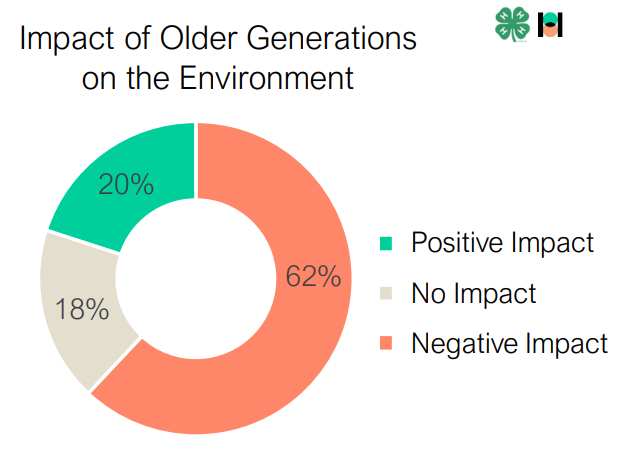
I have posted before on climate push polls designed to get results supporting a political agenda.  What participants say is shaped by how questions are asked and answered. This survey was conducted online within the United States by The Harris Poll on behalf of 4-H from January 5 to January 18, 2022, among 1,500 respondents ages 13-19.   The age cohort is interesting to show how successfully has been the educating of children regarding environmental concerns, and especially climate change.  The survey content is here Environmental Impact Survey  Exploring the impact of the environment on teens.

Indeed the title of the report refers not to impact upon nature, but rather the impact of environmental messaging upon impressionable teenagers.  The survey itself consisted of stating preferred conclusions and offering agree/disagree options.  Typically strongly and somewhat agree responses are lumped together into agree percentages.  Some Examples:

84% of teens agree, “I am concerned that if we don’t do more to protect the environment, humans and other species, wildlife will suffer and possibly go extinct.”

82% of teens agree, “If we don’t do more to protect the environment today, I expect to have to make future life decisions based on the state of the environment, including where I live, what kinds of jobs will be available, or if I will have children.”

56% of teens agree, “International governments are working towards global initiatives and policies to protect our planet.”

84% of teens agree, “Climate change will impact everyone in my generation through global political instability.”

84% of teens agree, “If we don’t address climate change today, it will be too late for future generations, making some parts of the planet unlivable.”

69% of teens agree, “I am worried that my family and I will be affected by climate change in the near future.”

77% of teens agree, “I feel responsible to protect the future of our planet.”

84% of teens agree, “We need more corporate action from companies today to improve our climate for tomorrow.”

83% of teens agree, “We need more legislative action from government today to improve our climate for tomorrow.”

79% of teens agree, “Protecting the environment should take priority over economic growth.

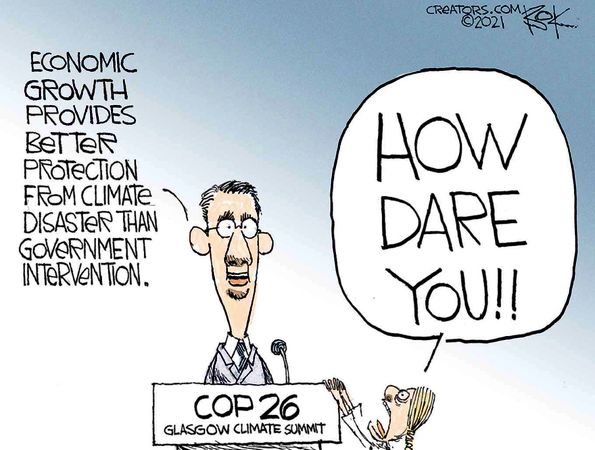
Khoshbin: These findings should trouble Republicans. Young voters believe that climate change is an existential threat, but they mistakenly think that environmental protection and economic growth are mutually exclusive. In reality, since 2005, 32 countries — both developing and developed — have absolutely decoupled carbon emissions from GDP growth, having successfully grown their economies while simultaneously reducing carbon emissions.

My Comment:

That is not the only mistaken perception among these teens.  Mind you, they were only exposed to the alarmist POV, and followed their hearts and feelings.  Note the repeated 84% agreement percentage suggests a central tendency in responses with little if any consideration of nuances between statements.  Basically this survey confirms that a narrative is embedded in these people.

An interesting contradiction appears here:

• Over 9 in 10 teens grew up engaging in a number of outdoor activities, yet today a majority of teens spend 5 hours or less outside per week – or less than 11 days a year

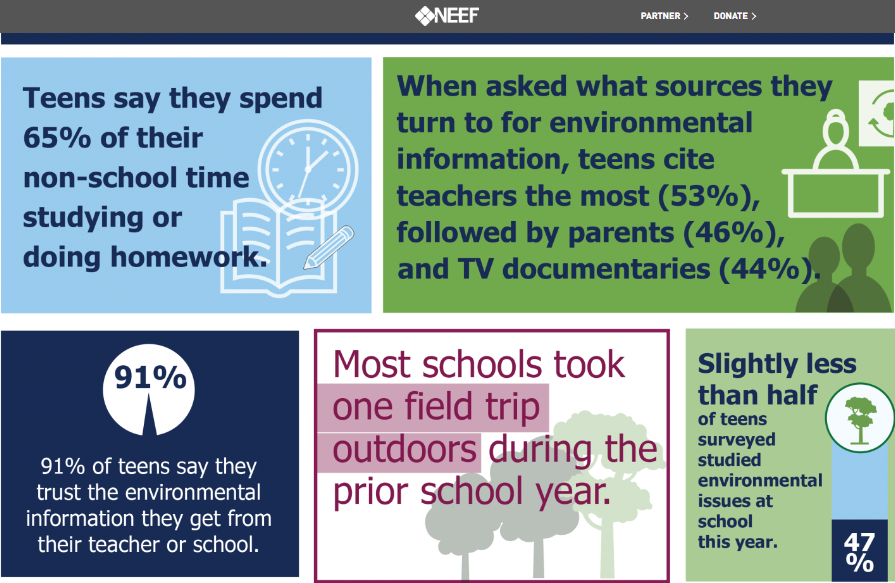
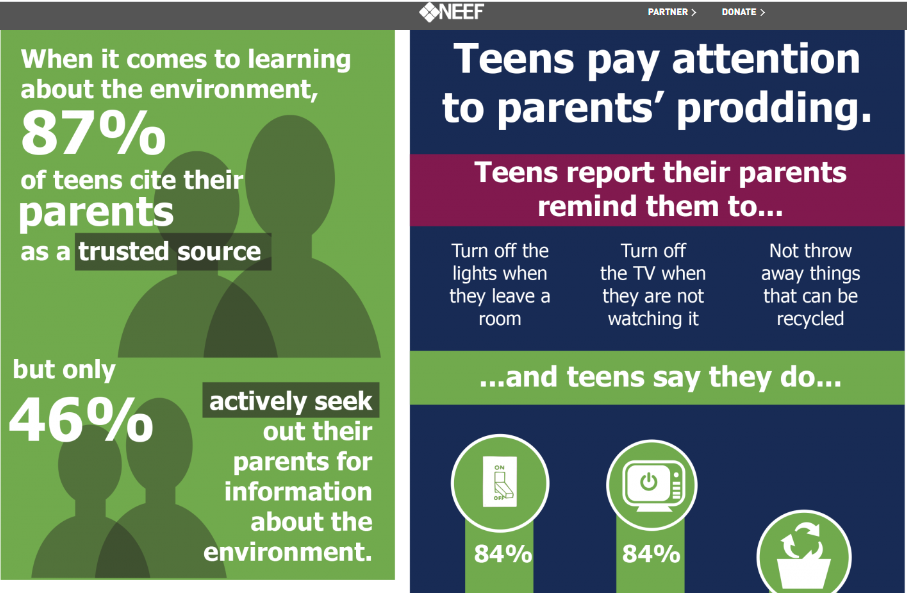
Another survey source indicates where children get information NEEF Teen Benchmark Survey National Environmental Education Foundation (NEEF): Some relevant findings:

See Also

The Art of Rigging Climate Polls

YouGov Climate Push Poll: Still no Believer Majority


Climate Reparations a Lose-Lose-Lose Deal

https://video-api.wsj.com/api-video/player/v3/iframe.html?guid=E6B05E12-0E60-4B80-A8A2-565460ABABF5

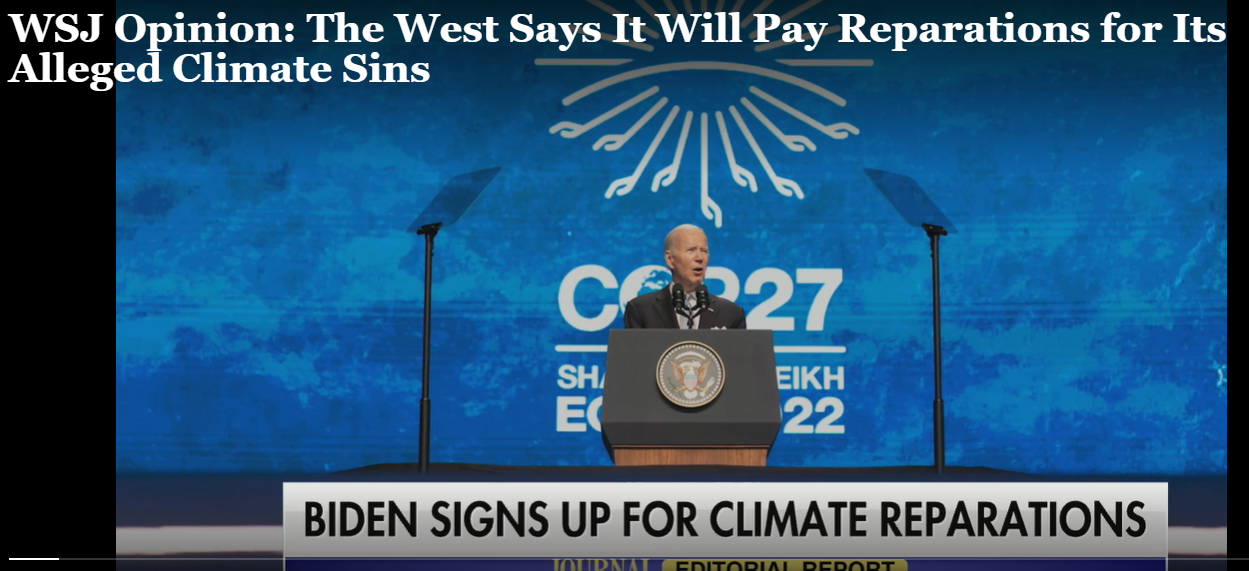
At the recently concluded UN climate summit, wealthy nations agreed to pay climate reparations to poor countries. Unfortunately, this could ultimately be a bad deal even for the recipients, if the West expects developing nations to forego fossil fuels that would help them to develop and get more resilient towards natural disasters. Bjorn Lomborg also discussed the topic on The Journal Editorial Report with Wall Street Journal editor Paul Gigot.

The link to the video clip of the interview is in red above, and below a lightly edited transcript of the conversation.  PG refers to Paul Gigot and BL to Bjorn Lomborg.  Transcript is in italics with my bolds and added images.

PG: The COP27 conference in Egypt wrapped up last week with President Biden signing on to a climate reparations plan. Under the agreement wealthy countries would pay into a new fund to compensate poor countries for supposed damage caused by rich country use of fossil fuels. The move represents a major reversal in U.S. policy with the Biden administration’s climate envoy John Kerry dismissing the idea just weeks ago, saying that a compensation fund was “just not happening.”

Let’s bring in Bjorn Lomborg, President of the Copenhagen Consensus Center and a visiting fellow at the Hoover Institution. He’s also author of the book False Alarm: How Climate Change Panic Costs Us Trillions, Hurts the Poor and Fails to Fix the Planet.

Welcome back, Bjorn. So first of all, what do you make of climate reparations fund idea? Is it a good idea, or not?

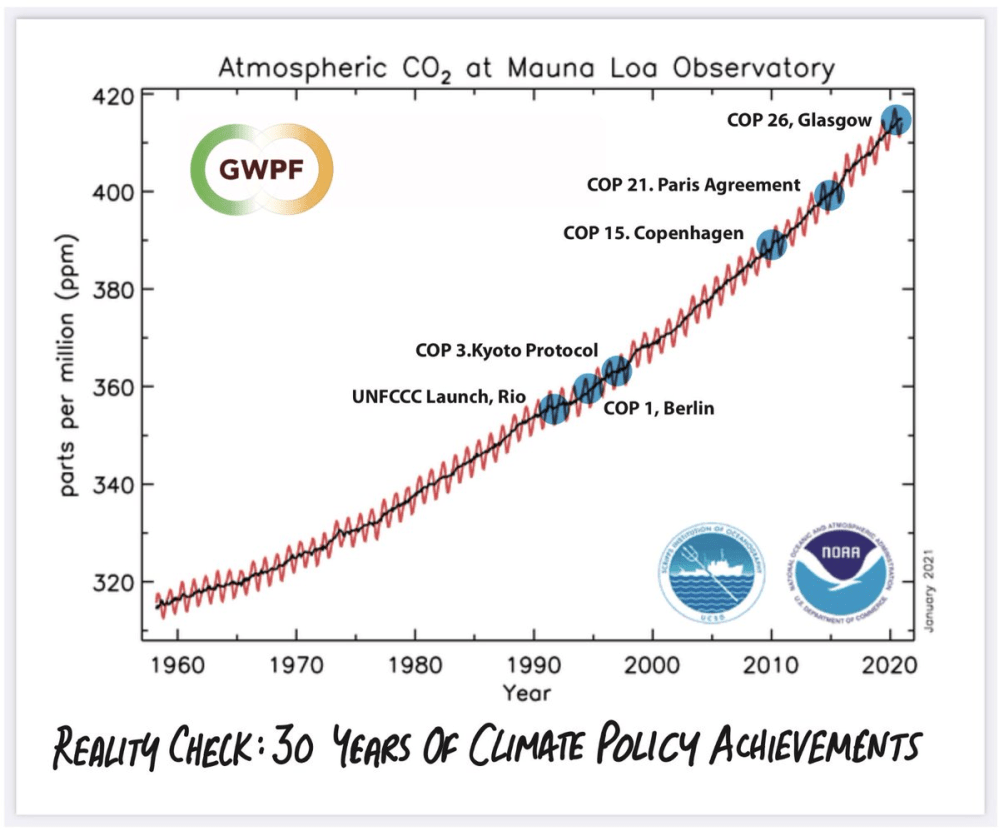
BL: No it’s mostly a bad idea. Look, there’s a lot of different things you can think about it. But first and foremost, if you step back, we’ve been trying to solve climate, which is a real issue, for what, 30 years now. It’s the 27th Conference. And now we’re basically moving from fixing climate–Which would obviously entail, How do we get technologies out so people actually cut their carbon emissions–to now saying, no, let’s just make it about money.

The second part is, of course, this is payback for the incredible amount of exaggeration that’s been going on for the last 30 years. If you tell everyone that this is terribly dangerous and it’ll endanger basically the survival of the human race. Don’t be surprised when most people are gonna say, “Well then, you know, give me some money, for putting me in this dangerous situation.” That’s not the right way to look at this. The economic estimates show that global warming will be a problem; we’re talking about perhaps 4% of GDP by the end of the century, not a wipe out.

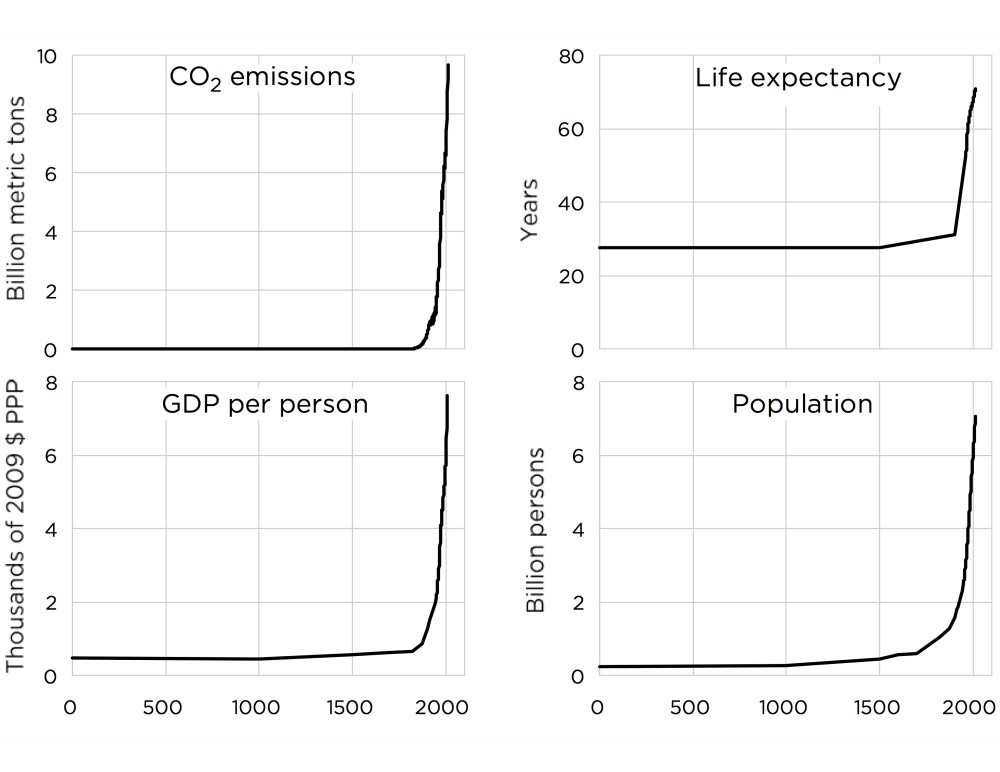
And then the really damaging thing is that much of this money, if it at all materializes, it will be spent on rich countries paying poor countries not to use fossil fuels. Which essentially means not developing. And of course that will leave them undeveloped. That will leave them in poverty. And why is it that these countries like Pakistan are vulnerable to flooding? Remember most of Pakistani floods came from bad governance, lots of bad infrastructure and lots of people. It’s because they’re vulnerable, because they’re poor. So leaving them poor is the worst way to help fix the problem of climate change.

So this will leave the world worse off, and of course leave rich countries with a huge bill.

PG: I find your arguments compelling, Bjorn, but then why did the Europeans decide, in the first instance, to change their minds on this, to go ahead and endorse this reparations fund. And that isolated the U.S., which I gather felt then they couldn’t be isolated and had to go along. Why did the Europeans insist on this?

BL: It’s hard to tell. My gut feeling, and I wasn’t there, my gut feeling is they realized that nothing was coming out of the Sharm El-Sheikh meeting of the COP 27. So we need to have some sort of success. So let’s say yes to this, which the developing world was very strongly pushing. Look if you go to all of these meeting, and virtually nothing comes out of it; if there’s the possibility of getting trillions out of it, I can understand why a lot of leaders would sign up for basically free money.

But the reality is, much of this could end up not happening, because remember the U.S. Congress has to appropriate: That does not seem plausible. The New York Times said, “We now have a fund but there is no money in it. So it seems likely this will not come true. Most countries are not feeling very flush right now. I can’t imagine most countries saying, “ Sure, let ‘s pay another couple of trillion dollars to the developing world.

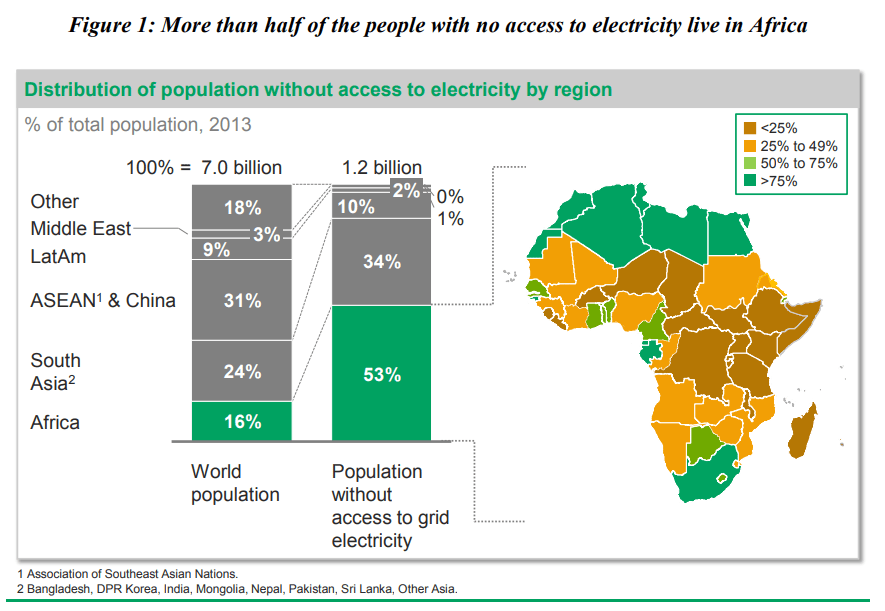
First and foremost let’s remember that if this actually happened, it would likely prevent poor countries from using fossil fuels, which is one of the key ways to get out of poverty. Remember China dramatically industrialized by using lots and lots of fossil fuels, and almost lifted a billion people out of poverty. That’s an amazing achievement. And most people in the developing world want to do the exact same thing. So in a sense, we are setting all of ourselves up for really bad outcomes in the future.

PG: There’s kind of a guilt tax quality to this, where the West is supposed to pay for the sin of having actually developed first, and for being prosperous in part by using fossil fuels. But China isn’t tapped to pay into this fund at all. And it’s building coal plants at a rapid pace, to the point where its projected new plants are going to dwarf all of the U.S. current coal production by 2025. How can China remain out of all of this?

BL: Well, first of all, because that would be really convenient for China. They are categorized as a developing country in the UNFCCC agreement that encompasses the COP negotiations. And of course, it you’re China, you wanna stay that way. I think it’s also fair to say that China has still only historically emitted only about half of what the U.S. or Europe has done. So there is some justification to this. But we have to very clearly separate the fact that you could make the argument that a little bit of reparations make philosophical sense.

But if you start in letting that genie out of the bottle, you’ll make the whole conversation about that, and forgetting to actually fix climate change.

Which is about making green energy much cheaper in the future through innovation. That’s what we should be focusing on if we actually want to fix this. And secondly, you’ll also have this situation where India, China and almost everyone else is not going to pay into this potentially enormous cost.

Summation

Climate reparations is a move in which rich nations lose, poor nations lose and energy innovation loses,  And as noted previously, the winners will be lawyers and accountants, as well as sovereign hydrocarbon producers.

Climate Loss and Damage, Legal House of Cards


Energy Transition and Impossible Dreams

Daniel Yergin writes at Project Syndicate The Energy Transition Confronts Reality.  Excerpts in italics with my bolds and added images.

Given the scale and complexity of the transition away from hydrocarbons, some worry that economic analysis has been given short shrift in the policy planning process. A clear-eyed assessment of the transition’s prospects requires a deeper understanding of at least four major challenges.

Overview

The “energy transition” from hydrocarbons to renewables and electrification is at the forefront of policy debates nowadays. But the last 18 months have shown this undertaking to be more challenging and complex than one would think just from studying the graphs that appear in many scenarios. Even in the United States and Europe, which have adopted massive initiatives (such as the Inflation Reduction Act and RePowerEU) to move things along, the development, deployment, and scaling up of the new technologies on which the transition ultimately depends will be determined only over time.

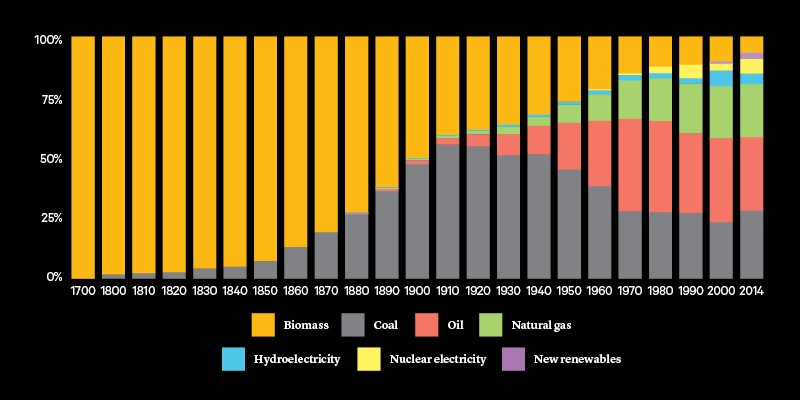
Progress of civilization through changing mixes of energy sources.

Beware:  The Imagined Transition is to be Sudden and not Additive.

The term “energy transition” suggests that we are simply taking one more step in the journey that began centuries ago with the Industrial Revolution. But in examining previous energy transitions for my book The New Map, I was struck by how different this one is. Whereas technology and economic advantage drove earlier transitions, public policy is now the most important factor.

Moreover, previous energy transitions unfolded over the course of a century or more, and they did not wholly displace the incumbent technologies. Oil overtook coal as the world’s top energy source in the 1960s, yet we now use three times more coal than we did back then, with global consumption hitting a record high in 2022.

By contrast, today’s transition is intended to unfold in little more
than a quarter-century and not be additive.

Given the scale of what is envisioned, some worry that macroeconomic analysis has been given insufficient attention in the policy-planning process. In a 2021 paper for the Peterson Institute for International Economics, the French economist Jean Pisani-Ferry notes that moving too rapidly to net-zero emissions could precipitate “an adverse supply shock – very much like the shocks of the 1970s.” He warns that a precipitous transition “is unlikely to be benign and policymakers should get ready for tough choices.”

Hard Reality #1  Energy Security is Top Priority

Developments since energy markets began to tighten in the late summer of 2021 point to four big challenges to watch out for. First, owing largely to the disruptions caused by Russia’s war in Ukraine, energy security has become a top priority again. For the most part, keeping the lights on and factories operating still requires hydrocarbons, so energy security means ensuring adequate and reasonably priced supplies and insulation from geopolitical risk and economic hardship.

Even with climate change remaining a central focus, US President Joe Biden administration’s has urged domestic companies to increase their oil production and released supplies from the Strategic Petroleum Reserve at a far greater scale than any previous administration. In Germany, the Greens in the governing coalition have spearheaded the development of the country’s capacity to import liquefied natural gas, with the first deliveries of LNG from the US arriving this month through infrastructure built in less than 200 days. Energy security is not something that is going to be assumed away in the years ahead.

Hard Reality #2  The Scale Reaches Beyond Our Means

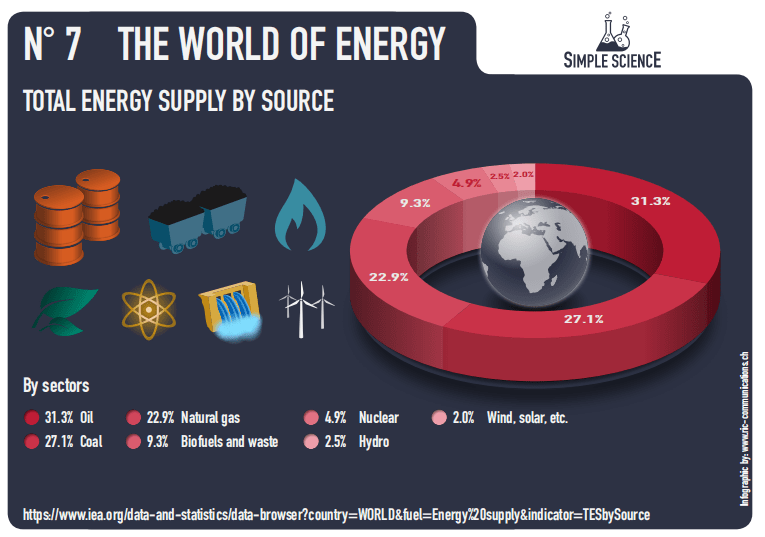
The second challenge concerns scale. Today’s $100 trillion world economy depends on hydrocarbons for over 80% of its energy, and nothing as massive and complex as the global energy system can be transformed easily. In an important new book, How The World Really Works, noted energy scholar Vaclav Smil argues that the four essential “pillars of modern civilization” are cement, steel, plastics, and ammonia (for fertilizer), each of which is heavily dependent on the existing energy system.

Given these starting conditions, will solutions like veganism help? Smil points out that five tablespoons of petroleum are embodied in the system that gets a single tomato from cultivation in Spain (including the required fertilizer) to a dinner table in London. Yes, energy efficiency could be improved. But the main effects will show up in developed countries, rather than in the developing world, where 80% of all people live, and where rising incomes will drive up energy demand.

Land required for wind farms to power London UK.

Hard Reality #3 North and South Interests Conflict

That points to the third challenge: the new North-South divide. In the Global North – primarily Western Europe and North America – climate change is at the top of the policy agenda. But in the Global South, that priority coexists with other critical priorities, such as boosting economic growth, reducing poverty, and improving health by targeting indoor air pollution from burning wood and waste.

Hence, for many in the developing world, “energy transition” means
moving from wood and waste to liquefied petroleum gas.

This divide was vividly illustrated last year when the European Parliament passed a resolution denouncing a proposed oil pipeline running from Uganda through Tanzania to the Indian Ocean. MEPs objected that the project would adversely affect the climate, the environment, and “human rights.” Yet they cast their votes from a body located in France and Belgium, where per capita income (in current dollars) is, respectively, 50 times and 60 times greater than in Uganda, where the pipeline is seen as a foundation for economic development. The resolution provoked a furious reaction. The deputy speaker of Uganda’s parliament denounced the Europeans for exhibiting “the highest level of neocolonialism and imperialism against the sovereignty of Uganda and Tanzania.”

Hard Reality #4 Materials Demands Blow Away Supplies

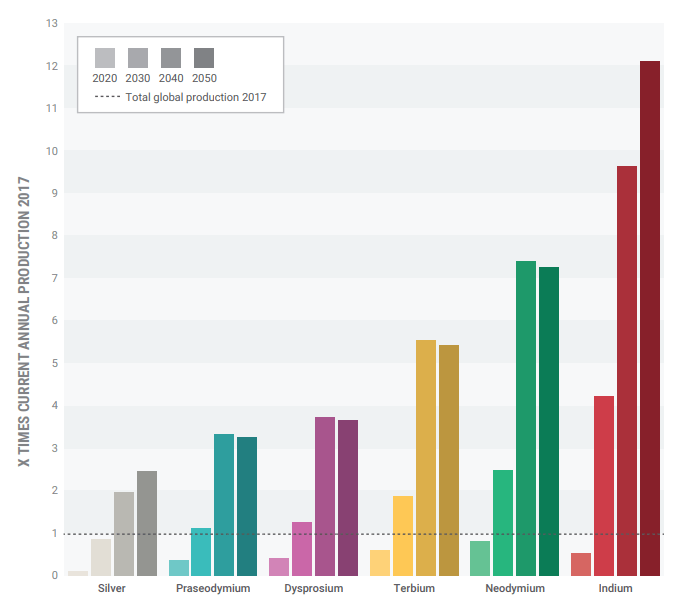
The fourth challenge concerns the material requirements of the energy transition. I see this as the shift from “Big Oil” to “Big Shovels” – that is, from drilling for oil and gas to mining the minerals for which demand will increase enormously in a world that becomes more electrified.

In a new S&P study, The Future of Copper, we calculate that the supply of “the metal of electrification” will have to double to support the world’s 2050 climate objectives. Recently, a host of authorities – including the US and Japanese governments, the European Union, the World Bank, the International Monetary Fund, and the International Energy Agency – have all published alarming reports about the expected exponential growth in demand for minerals such as lithium and cobalt.

But alarm itself will not open major new mines, a process estimated to take 16-25 years and which faces ever-more complex permitting requirements around the world. In some key resource countries, governments are openly hostile to mining.

So, while the direction of the energy transition is clear, policymakers and the public must recognize the challenges that it entails. A deeper and more realistic understanding of the complex issues that need to be addressed is essential as the effort to achieve the transition’s goals proceeds.

My Comment

The direction of the called for energy transition is clear alright, but is it necessary?  Recently, no less than John Kerry. told the World Economic Forum the world will eventually move to a low-carbon economy, but it may be too late to avoid the worst effects of climate change.  Meanwhile, there are a number of serious scientists who expect global cooling in coming decades.

The unmentioned Hard Reality #5:  Smart People will Adapt to Climate and Weather, as they always have. That is, if they haven’t already trashed their energy system and planetary resources chasing an impossible dream.

Zero Carbon Lemmings in a Rush.


Just Transition Really Means Great Disruption

Disney’s portrayal of the Sorcerer’s Apprentice in over his head.

After breaking basic public services, woke elites now aim to collapse economies, calling it the “Just Transition” to net zero energy.  Like the ignorant novice in the fable, these fools are following a magical recipe with no understanding of the uncontrollable consequences.  This post discusses the emerging movement of naïve leaders threatening the livelihoods of their citizens whose trust has been betrayed.

Firstly, Rex Murphy writes at National Post The Trudeau Liberals are coming for your jobs.  Excerpts in italics with my bolds and added images.

From the Instapundit site I find this ever so telling comment. Will anyone deny the obvious truth it contains?

“All the people who want to ‘regulate the planetary climate’ and demand the power and unlimited resources to do so are people who have proven themselves incapable of competently managing and running recently built, closed, man-made systems. They cannot competently run power grids, or municipal water systems or trash pickup; they cannot competently maintain, let alone repair, the ‘roads and bridges’ they are always pratting about; they cannot competently run or maintain the public housing they increasingly want people to live in, or the public transportation systems that they want people to rely on …”

To which we really must add that they (or one particular government I have in mind) cannot manage international airports, passport issuance, legitimate protests, civil service payroll systems, support for their veterans, maintain a sufficient military, a national health-care system (which used to be the pride of the country) inter-provincial relations, and conflict of interest legislation.

To be fair, they are good at handing out contracts to their friends and running up consultancy bills.

And most pertinent to the present moment, this particular government — which the keenest of you will have guessed is the present one in Ottawa — also wants to impose a great restructuring — i.e. the total cancellation — of the country’s No. 1 and vital industry, which only has the third highest reserves in the entire world — energy.

And replace that great and successful resource with what amounts to
a million helicopter blades on very high metal sticks.
In Liberalese this is called the “just transition.”

On a related matter, one might ask from where could such a crazy idea emerge? Why from the great Alpine closet of Davos and its hive of globalist billionaires, celebrities and unmoored politicians, the great World Economic Forum — Davos the Swiss Bethlehem of the Great Reset.  [Note: Many of the Davos crowd inherited or married into wealth (John Kerry, for example), so lack worldly knowledge of building an actual enterprise trusted to provide quality goods or services to paying customers.]

Slacker that I am, I was unaware till very recently that our very own No. 1 Trudeau cabinet star, Chrystia Freeland occupies a key seat on the board of the world’s most presumptuous, paternalistic and cosmically pretentious institution. No less a reporter than the doughty Rupa Subramanya, who graces these very pages, two years ago gave a full report on Freeland’s pupation from reporter on the Davos crowd to one of its highest eminences.

It is a delicious account. Rupa quotes Freeland: “After my book, Plutocrats, was published in 2012, I was even — and I know this will shock you — disinvited to a Davos dinner party!” And continues: “Indeed, the one-time critic has enjoyed an apotheosis of sorts and since 2019 has sat on the board of trustees of the WEF itself. Other members include Canada’s own Mark Carney, former governor of the Bank of Canada.”

Now, I have no idea of the answer to this question, but should the finance minister of a country also be a top board member of a billionaire-stuffed cabal — even given that it offers the thrill of rubbing shoulders with Al Gore once a year? Or, we could ask, is it fair to Klaus Schwab (insert James Bond villain theme here) and the WEF that Ms. Freeland has to spend so much time on Canadian stuff, that she cannot possibly give her full attention to the Great Reset and WEF’s priority policy of “decarbonization?”

Or, we could ask, when there is a clash between the Canadian agenda
and the WEF agenda, which wins?

On that last one — looking at the maniacal idea of “just transition” as it’s playing out in Canada, I’d say the WEF is getting good value. But I’m a neutralist on these questions? What does Justin Trudeau think? Is this a case of upper-class moonlighting?

Finally, I wish to cite Toronto Sun editor emeritus, Lorrie Goldstein, the North Star of global warming reportage. He has what I think is called a “twitter thread” (in future, I will consult my nephew on the strange nomenclature of this internet) on the “just transition” aka, the “great disruption.” Space allow only one quote, but the rest I’m told is easily found:

“The value of the controversy over Trudeau’s ‘Just Transition Plan’ broken by Blacklock’s is that it ends the myth only oil, gas & coal workers will be impacted by his green energy plan: In fact, 7 major sectors of the economy could face ‘significant’ disruptions in employment.”

My Comment

New Zealand Leads in the Suffering

Could this be why PM Ardern has “emptied her tank” and resigning?  :  Jacinda Ardern was the international poster girl for ‘kindly’ authoritarianism. 

Among our supposedly liberal elites it has become common sense
that populations must be controlled for their own good

“This global chorus of praise is a fitting send-off. Ardern is in many ways an archetypal leader of our age, in which politicians draw just as much legitimacy, if not more, from the warm feeling they give international elites than what it is they actually do and achieve for their domestic population. Indeed, her cheerleaders don’t even bother to look into those things. If they did, they’d see why Ardern is beating a hasty retreat. She leaves office amid a painful cost-of-living crisis and spiralling crime rates.”

Scotland Raises the Bar for Absurdity

From the Daily Sceptic The Dangerous Fantasy of Scotland’s Net Zero Energy Transition

Suppose that Scotland’s CO2 emissions fell tomorrow to zero, i.e., that, at midnight, the country ceased to exist. Then according to the “Model for the Assessment of Greenhouse Gas Induced Climate Change” (MAGICC), based on the latest IPCC climate models, the reduction in the Earth’s temperature in 2100 would be…undetectable.

Motivated by the moral necessity and urgency of this goal, the Scottish Government is proposing a novel energy policy – its “Energy Strategy and Just Transition Plan”.

This article reviews its major themes and their implications, and considers briefly the probability of success of the Scottish Government implementing it.

Irreversible impairment of either our energy or financial systems would have a catastrophic impact on the welfare of Scotland’s citizens. Yet few have expressed any desire, much less informed consent, for risk on the scale proposed for such little benefit.

Yet the project, representing a scope of unprecedented scale, cost, pace and technical uncertainty, will be overseen by a Government that is currently struggling to procure two relatively modest ferries for less than the cost that other governments can procure 34 ferries – again, ironically due in large part to cost overruns associated with the attempt to employ novel technologies to reduce CO2 emissions. As evidence of the extent to which the Scottish Government and its advisers have become unmoored from physical reality by the climate catastrophe hypothesis, it’s a document that is fascinating to read, and alarming to contemplate.”

World Energy Wake Up Call

Are we heading toward an all-renewable energy future, spearheaded by wind and solar? Or are those energy sources wholly inadequate for the task? Mark Mills, Senior Fellow at the Manhattan Institute and author of The Cloud Revolution, compares the energy dream to the energy reality. How Much Energy Will the World Need?

Video Transcript

We’re headed toward an exciting all-renewable energy future. Wind and solar will power the world of tomorrow.

And tomorrow isn’t far off!……..

…It’s time to wake up.

You’re having a dream.

Here’s the reality.

Oil, natural gas, and coal provide 84% of all the world’s energy. That’s down just two percentage points from twenty years ago.

And oil still powers nearly 97% of all global transportation.

Contrary to headlines claiming that we’re rapidly transitioning away from fossil fuels, it’s just not happening. Two decades and five trillion dollars of governments “investing” in green energy and we’ve barely moved the needle.

This was supposed to be easy. Why is it so hard?

In a word: rocks.

To get the same amount of energy from solar and wind that we now get from fossil fuels, we’re going to have to massively increase mining.

By more than 1000%.

This isn’t speculation. This is physics.

Copper, iron ore, silicon, nickel, chromium, zinc, cobalt, lithium, graphite, and rare earth metals like neodymium. We need them all.

And then those metals and materials have to be turned into motors, turbine blades, solar panels, batteries, and hundreds of other industrial components. That also takes lots of energy, which requires even more mining.

As a World Bank study put it, these green “technologies … are in fact significantly more material intensive” than our current energy mix. That may be the understatement of the century: raw materials account for 50-70% of the costs to manufacture both solar panels and batteries.

Until now it hasn’t really mattered that much because wind and solar still account for only a few percentage points of the global energy supply. They’re an applause line for environmentalists—not a major energy player. And it’s unlikely they will be in the foreseeable future.

But for the sake of argument, let’s say we sharply ramp up mining. Where would these new mines be located?

Well, for one, China.

That country is today the single largest source for most of our critical energy materials. The United States is not only a minor player but is dependent on imports for 100% of 17 critical minerals. Do we want to give China more political and economic leverage? Europe has made itself dependent on Russia for 40% of its natural gas. How well has that worked out?

Ironically, we have all the minerals we need right here in North America.

But good luck trying to get them out of the ground.

Proposals to build mines in the United States and, increasingly almost everywhere else, meet fierce opposition if not outright bans. To give just one example, in 2022 the Biden Administration canceled a proposed copper and nickel mine in northern Minnesota. This was after years of delays, navigating a maze of environmental regulations.

Yes, the same environmentalists and green-leaning politicians who tout all the benefits of electric cars are the same people who make mining the materials essential to build those cars—like copper and nickel—all but impossible.

Try to square that circle.

So far, we’ve only talked about today’s energy needs. What about tomorrow’s?

Future energy demand will be far greater than today’s. That’s been true for the entire history of civilization. The future will not only have more people but also more innovations. And entrepreneurs have always been better at inventing new ways to use energy than to produce it.

It’s obvious but worth stating: Before the invention of automobiles, airplanes, pharmaceuticals, or computers, there was no energy needed to power them.

And as more people become more prosperous, they’ll want the things others already have—from better medical care to vacations to cars.

In America, there are about 80 cars for every 100 citizens. In most of the world, it’s about five per hundred citizens.

Over 80% of air travel is for personal purposes. That’s two billion barrels of oil a year.

Hospitals use 250% more energy per square foot than an average commercial building.

And the global information infrastructure—the Cloud— already uses twice as much electricity as the entire country of Japan, the world’s third-largest economy. The massive data centers at the heart of the Cloud alone consume almost 10 times more electricity than the world’s 10 million electric cars.

E-commerce has taken off and is propelling record growth in warehouses, increasingly filled with energy-hungry robots. America’s truck freight index more than doubled in the past decade to deliver the goods to and from those warehouses.

These are today’s known trends. While we can’t predict the future, we can predict there’ll be more innovation—in robotics, drones, quantum computing, biotechnology. And new industries not yet imagined.

All of it will require more energy—a lot more.

Fossil fuels, nuclear energy, and yes, renewables will be required.

But if you think we can get it all from wind and solar, dream on.

I’m Mark Mills, senior fellow at the Manhattan Institute, for Prager University.

See Also

West’s Obsession with EV Tech Puts China in World Driver Seat

Nat Gas to be Totally Green

This is an update about Non-Emissions Technology (NET) regarding natural gas as an energy source.  Gas is already the cleanest burning fossil fuel, and now power plants are being built which will in addition entirely eliminate CO2 emissions into the atmosphere.  Mark Whittington has the story at Washington Examiner Natural gas is about to become the world’s biggest green energy source.  Excerpts in italics with my bolds

When politicians who are alarmed about climate change think about green energy, they tend to be fixated on solar and wind power. However, thanks to a recent merger announced between NET Power and Rice Acquisition Corp II, natural gas is about to become the leading source of green energy, supplanting solar and wind.

NET Power has developed a new natural gas power plant technology called the Allam cycle.

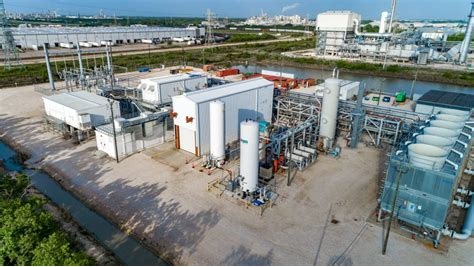
The NET Power Allam-Fetvedt Cycle is essentially a specialized Brayton cycle in which the combustor is supplied with three flows: fuel gas, which is compressed in the fuel compressor; oxygen, which is produced in an air separation unit and then compressed; and a carbon dioxide working fluid that is heated in the multi-flow regenerator. Combustion of this oxy-fuel mixture in the carbon dioxide environment creates high-temperature products that then enter the carbon dioxide turbine. These products drive the power generator and then enter the multi-flow regenerator, where some of their heat is transferred to the heated flows. The flow is then directed to the cooler-separator, where its water and carbon dioxide contents are split. Part of that carbon dioxide is compressed to supercritical pressure, and the rest is sent to storage. Courtesy: 8 Rivers

Conventional natural gas plants burn natural gas to heat water, which then turns the turbines that generate electricity, emitting carbon dioxide into the atmosphere. An Allam cycle plant uses the carbon dioxide to turn the turbines and then sequesters it for sale to customers that use the CO2 for everything from fuel to building materials to food. NET has successfully run a test plant in La Porte, Texas, since 2018.

The NET Power process was demonstrated at our 50MWth test facility in La Porte, Texas which broke ground in 2016 and began testing in 2018. Since 2018, NET Power has conducted three extended testing campaigns and successfully synchronized to the Texas grid in the fall of 2021. NET Power has achieved technology validation, hit critical operational milestones, and accumulated over 1,500 hours of total facility runtime as of October 2022. La Porte will remain a crucial resource for ongoing technology enhancements.

Rice Acquisition is a decarbonization solutions special-purpose acquisition company. Its merger with NET will create a new, publicly traded company called NET Power Inc.

NET already has six Allam cycle power plants, each capable of generating 300 MWs of electricity in various stages of development — four in the United States, one in the United Kingdom, and another in Germany. The company believes that the sky is the limit as far as how many power plants it can build — perhaps thousands. It anticipates being able to replace older, more polluting power plants with its newer, nonemitting models.

Ironically, the company notes that a provision of the much-maligned Inflation Reduction Act contains tax incentives for the kind of carbon capture technology it is preparing to unleash on the world. The provision may be one of the few good things about the Inflation Reduction Act.

The advent of natural gas as a true green energy source will upend
the politics of climate change and energy production.

Hitherto, the Biden administration and some countries in the European Union have sought to limit the production of fossil fuels because they emit greenhouse gasses. However, governments around the world that are chasing a renewable green energy dream will no longer have an excuse to do so once the NET emission-free plants come online.

Green New Dealers such as Bernie Sanders may label carbon capture, along with nuclear power, as a “false solution,” but NET Power is about to prove them all wrong. Natural gas power plants have advantages that wind and solar lack. They run 24/7, night or day, rain or shine, windy or calm, without any need for battery storage. Natural gas power uses less land than wind and solar farms do. Solar and wind have hidden environmental costs, from the difficulty of recycling fiberglass turbine blades to the effects on wildlife of utility-scale wind and solar arrays.

Emerging energy technologies such as carbon capture are more likely to address the problem of climate change than resorting to “renewable energy” by government fiat. The free market, with perhaps some indirect government incentives, will more likely lead to a world in which the energy we need to operate a technological civilization can be generated without emitting greenhouse gasses.

Carbon capture will not be the only energy technology of the future. New, safer nuclear power plants will be in the mix. The development of a new magnet at MIT and the recent breakthrough at Lawrence Livermore point the way to clean, limitless fusion energy in the coming decades.

The Green New Dealers want to impose a future of limits on all but the very wealthiest.

Their excuse is that such a future is necessary to save Earth from a climate catastrophe. But one suspects the real reason is that rationing energy is a way for them to control people and maintain power.

Fortunately, private companies and the engineers and scientists who work for them are working to thwart the plans of people such as Sanders and Rep. Alexandria Ocasio-Cortez (D-NY). The Green New Dealers despise free markets, but the same economic system that has brought such prosperity to the world is going to solve climate change and the energy crisis forever.

My Comment

Natural gas burns clean, meaning it produces no mercury vapors, sulfur dioxide, or particulate matter, and a reduced amount of nitrogen oxide. It also emits half the CO2 from burning coal, and 1/4 the CO2 from oil combustion.  Of course, far from being a pollutant, CO2 is plant food and any added to the atmosphere from any source is a boon to the biosphere essential to human and animal life.  The warming case against emitting CO2 is unfounded, as I have explained previously: Global Warming Theory and the Tests It Fails.

The impact of this innovation is primarily political and economic, dismantling the rationale for banning natural gas power plants.  The planet will warm or cool regardless of the negligible effect from CO2 emissions.