Xmas 2020: Twelve Forgotten Principles of Public Health

Dr. Martin Kulldorff, PhD, is a Professor of Medicine at Harvard Medical School. His research centers on developing new epidemiological and statistical methods for the early detection and monitoring of infectious disease outbreaks and for post-market drug and vaccine safety surveillance. This holiday gift remembrance is collected from Dr. Kulldorff’s twitter thread courtesy of AIER, which also includes links to articles adding depth to the 12 points. Tweets in italics with my bolds.

  1. Public health is about all health outcomes, not just a single disease like Covid-19. It is important to also consider harms from public health measures. More.

  2. Public health is about the long term rather than the short term. Spring Covid lockdowns simply delayed and postponed the pandemic to the fall. More.

  3. Public health is about everyone. It should not be used to shift the burden of disease from the affluent to the less affluent, as the lockdowns have done. More.

  4. Public health is global. Public health scientists need to consider the global impact of their recommendations. More.

  5. Risks and harms cannot be completely eliminated, but they can be reduced. Elimination and zero-Covid strategies backfire, making things worse. More.

  6. Public health should focus on high-risk populations. For Covid-19, many standard public health measures were never used to protect high-risk older people, leading to unnecessary deaths. More.

  7. While contact tracing and isolation are critically important for some infectious diseases, it is futile and counterproductive for common infections such as influenza and Covid-19. More.

  8. A case is only a case if a person is sick. Mass testing asymptomatic individuals is harmful to public health. More.

  9. Public health is about trust. To gain the trust of the public, public health officials and the media must be honest and trust the public. Shaming and fear should never be used in a pandemic. More.

  10. Public health scientists and officials must be honest with what is not known. For example, epidemic models should be run with the whole range of plausible input parameters. More.

  11. In public health, open civilized debate is profoundly critical. Censoring, silencing and smearing leads to fear of speaking, herd thinking and distrust. More.

  12. It is important for public health scientists and officials to listen to the public, who are living the public health consequences. This pandemic has proved that many non-epidemiologists understand public health better than some epidemiologists. More.

Dr. Martin Kulldorff

California: World Leading Climate Hypocrite Updated Dec. 23, 2020

Update following below Dec. 23, 2020 Has Progressive Californication Peaked?

California’s Climate Extremism
Joel Kotkin reports from the Golden State. Excerpts in italics with my bolds.

The pursuit of environmental purity in the Golden State does nothing to reverse global warming—but it’s costing the poor and middle class dearly.

Environmental extremism increasingly dominates California. The state is making a concerted attack on energy companies in the courts; a bill is pending in the legislature to fine waiters $1,000—or jail them—if they offer people plastic straws; and UCLA issued a report describing pets as a climate threat. The state has taken upon itself the mission of limiting the flatulence of cows and other farm animals. As the self-described capital of the anti-Trump resistance, California presents itself as the herald of a green, more socially and racially just society. That view has been utterly devastated by a new report from Chapman University, in which coauthors David Friedman and Jennifer Hernandez demonstrate that California’s draconian anti-climate-change regime has exacerbated economic, geographic, and racial inequality. And to make things worse, California’s efforts to save the planet have actually done little more than divert greenhouse-gas emissions (GHG) to other states and countries.

Jerry Brown’s return to Sacramento in 2011 brought back to power one of the first American politicians to embrace the “limits of growth.” Brown has long worried about resource depletion (including such debunked notions as “peak oil”), taken a Malthusian approach to population growth, and opposed middle-class suburban development. Like many climate-change activists, he has limitless confidence in the possibility for engineering a green socially just society through “the coercive power of the state,” but little faith that humans can find ways to address the challenge of climate change. If Brown’s “era of limits” message in the 1970s failed to catch on with the state’s voters, who promptly elected two Republican governors in his wake, he has found in climate change a more effective rallying cry, albeit one that often teeters at the edge of hysteria. Few politicians can outdo Brown for alarmism; recently, he predicted that climate change will cause 3 to 4 billion deaths, leading eventually to human extinction. To save the planet, he openly endorses a campaign to brainwash the masses.

The result: relentless ratcheting-up of climate-change policies. In 2016, the state committed to reduce greenhouse-gas (GHG) emissions 40 percent below 1990 levels by 2030. In response, the California Air Resource Board (CARB), tasked with making the rules required to achieve the state’s legislated goals, took the opportunity to set policies for an (unlegislated) target of an 80 percent reduction below 1990 levels by 2050.

Brown and his supporters often tout their policies as in line with the 2015 Paris Agreement, note Friedman and Hernandez, but California’s reductions under the agreement require it to make cutbacks double those pledged by Germany and other stalwart climate-committed countries, many of which have actually increased their emissions in recent years, despite their Paris pledges.

Governor Brown has preened in Paris, at the Vatican, in China, in newspapers, and on national television. But few have considered how his policies have worked out in practice. California is unlikely to achieve even its modest 2020 goals; nor is it cutting emissions faster than other states lacking such dramatic legislative mandates. Since 2007, when the Golden State’s “landmark” global-warming legislation was passed, California has accounted for barely 5 percent of the nation’s GHG reductions. The combined total reductions achieved over the past decade by Ohio, Georgia, Pennsylvania, and Indiana are about 5 times greater than California’s. Even Texas, that bogeyman of fossil-fuel excess, has been reducing its per-capita emissions more rapidly.

In fact, virtually nothing that California does will have an impact on global climate. California per-capita emissions have always been relatively low, due to the mild climate along the coast, which reduces the need for much energy consumption on heating and cooling. In 2010, the state accounted for less than 1 percent of global GHG emissions; the disproportionately large reductions sought by state activists and bureaucrats would have no discernible effect on global emissions under the Paris Agreement. “If California ceased to exist in 2030,” Friedman and Hernandez note, “global GHG emissions would be still be 99.54 percent of the Paris Agreement total.”

Many of California’s “green” policies may make matters worse. California, for example, does not encourage biomass energy use, though the state’s vast forested areas—some 33 million acres— could provide renewable energy and reduce the excessive emissions from wildfires caused by years of forest mismanagement. Similarly, California greens have been adamant in shutting down nuclear power plants, which continue to reduce emissions in France, and they refuse to count hydro-electricity as renewable energy. As a result, California now imports roughly one-third of its electricity from other states, the highest percentage of any state, up from 25 percent in 2010. This is part of what Hernandez and Friedman show to be California’s increasing propensity to export energy production and GHG emissions, while maintaining the fiction that the state has reduced its total carbon output.

Overall, California tends to send its “dirty work”—whether for making goods or in the form of fossil fuels—elsewhere. Unwanted middle- and working-class people, driven out by the high cost of California’s green policies, leave, taking their carbon footprints to other places, many of which have much higher per-capita emission rates. Net migration to other, less temperate states and countries has been large enough to offset the annual emissions cuts within the state. Similarly, the state’s regulatory policies make it difficult for industrial firms to expand or even to remain in California. Green-signaling firms like Apple produce most of their tangible products abroad, mainly in high-GHG emitting China, while other companies, like Facebook and Google, tend to place energy-intensive data centers in other, higher GHG emission states. The study estimates that GHG emissions just from California’s international imports in 2015, and not even counting imports from the rest of the U.S., amounted to about 35 percent of the state’s total emissions.

California’s green regulators predict that the implementation of ever-stricter rules related to climate will have a “small” impact on the economy. They point to strong economic and job growth in recent years as evidence that strict regulations are no barrier to prosperity. Though the state’s economic growth is slowing, and now approaches the national average, a superficial look at aggregate performance makes a seemingly plausible case for even the most draconian legislation. California, as the headquarters for three of the nation’s five largest companies by market capitalization—Alphabet, Apple, and Facebook— has enjoyed healthy GDP growth since 2010. But in past recoveries, the state’s job and income growth was widely distributed by region and economic class; since 2007, growth has been uniquely concentrated in one region—the San Francisco Bay Area, where employment has grown by nearly 17 percent, almost three times that of the rest of the state, with growth rates tumbling compared with past decades.

Some of these inequities are tied directly to policies associated with climate change. High electricity prices, and the war on carbon emissions generally, have undermined the state’s blue-collar sectors, traditionally concentrated in Los Angeles and the interior counties. These sectors have all lost jobs since 2007. Manufacturing employment, highly sensitive to energy-related and other regulations, has declined by 160,000 jobs since 2007. California has benefited far less from the national industrial resurgence, particularly this past year. Manufacturing jobs—along with those in construction and logistics, also hurt by high energy prices—have long been key to upward mobility for non-college-educated Californians.

As climate-change policies have become more stringent, California has witnessed an unprecedented level of bifurcation between a growing cadre of high-income earners and a vast, rapidly expanding poor population. Meantime, the state’s percentage of middle-income earners— people making between $75,000 and $125,000—has fallen well below the national average. This decline of the middle class even occurs in the Bay Area, notes a recent report from the California Budget and Policy Center, where in 1989 the middle class accounted for 56 percent of all households in Silicon Valley, but by 2013, only 45.7 percent. Lower-income residents accounted for 30.3 percent of Silicon Valley’s households in 1989, and that number grew to 34.8 percent in 2013.

Perhaps the most egregious impact on middle and working-class residents can be seen in housing, where environmental regulations, often tied directly to climate policies, have discouraged construction, particularly in the suburbs and exurbs. The state’s determination to undo the primarily suburban, single-family development model in order to “save the planet” has succeeded both in raising prices well beyond national norms and creating a shortfall of some 3 million homes.

As shown in a recent UC Berkeley study, even if fully realized, the state’s proposals to force denser housing would only reach about 1 percent of its 2030 emissions goals. Brown and his acolytes ignore the often-unpredictable consequences of their actions, insisting that density will reduce carbon emissions while improving affordability and boosting transit use. Yet, as Los Angeles has densified under its last two mayors, transit ridership has continued to drop, in part, notes a another UC Berkeley report, because incentives for real-estate speculation have driven the area’s predominantly poor transit riders further from trains and buses, forcing many to purchase cars.

Undaunted, California plans to impose even stricter regulations, including the mandatory installation of solar panels on new houses, which could raise prices by roughly $20,000 per home. This is only the latest in a series of actions that undermines the aspirations of people who still seek “the California dream;” since 2007, California homeownership rates have dropped far more than the national average. By 2016, the overall homeownership rate in the state was just under 54 percent, compared with 64 percent in the rest of the country.

The groups most affected by these policies, ironically, are those on whom the ruling progressives rely for electoral majorities. Millennials have seen a more rapid decline in homeownership rates compared with their cohort elsewhere. But the biggest declines have been among historically disadvantaged minorities—Latinos and African-Americans. Latino homeownership rates in California are well below the national average. In 2016, only 31 percent of African-Americans in the Bay Area owned homes, well below the already low rate of 41 percent black homeownership in the rest of nation. Worse yet, the state takes no account of the impact of these policies on poorer Californians. Overall poverty rates in California declined in the decade before 2007, but the state’s poverty numbers have risen during the current boom. Today, 8 million Californians live in poverty, including 2 million children, by far the most of any state. The state’s largest city, Los Angeles, is also now by some measurements America’s poorest big city.

To allay concerns about housing affordability, the state has allocated about $300 million from its cap-and-trade funds for housing, a meager amount given that the cost of building affordable housing in urban areas can exceed $700,000 per unit. These benefits are dwarfed by those that wealthy Californians enjoy for the purchase of electric cars and home solar: Tesla car buyers with average incomes of $320,000 per year got more than $300 million in federal and state subsidies by early 2015 alone. By contrast, in early 2018, state electricity prices were 58 percent higher, and gasoline over 90 cents per gallon higher, than the national average, disproportionately hurting ethnic minorities, the working class, and the poor. Based on cost-of-living estimation tools from the Census Bureau, 28 percent of African-Americans in the state live in poverty, compared with 22 percent nationally. Fully one-third of Latinos, now the state’s largest ethnic group, live in poverty, compared with 21 percent outside the state.

In a normal political environment, such disparities would spark debate, not only among conservatives, but also traditional Democrats. Some, like failed independent candidate and longtime environmentalist Michael Shellenberger, have expressed the view that California’s policies have made it not “the most progressive state” but “the most racist one.” Recently, some 200 veteran civil rights leaders sued CARB, on the basis that state policies are skewed against the poor and minorities. So far, their voices have been largely ignored. The state’s prospective next governor, Gavin Newsom, seems eager to embrace and expand Brown’s policies, and few in the legislature seem likely to challenge them. The Republicans, for now, look incapable of mounting a challenge.

This leaves California on a perilous path toward greater class and racial divides, increasing poverty, and ever-more strenuous regulation. Other ways to reduce greenhouse gases—such as planting trees, more efficient transportation, and making suburbs more sustainable—should be on the table. The Hernandez-Friedman report could be a first step toward addressing these issues, but however it happens, a return to rationality is needed in the Golden State.

Joel Kotkin serves as Presidential Fellow in Urban Futures at Chapman University and executive director of the Center for Opportunity Urbanism (COU).

Update Dec. 23, 2020 Has Progressive Californication Peaked?

Joel Kotkin has updated the California story as 2020 ends in his article Peak Progressive? at the American Mind. Excerpts in italics with my bolds.

With adjustment for cost of living, California now has the highest overall poverty rate in the United States according to the Census Bureau. Los Angeles, by far the state’s largest metropolitan area, has among the highest poverty rates for the largest U.S. metros. In parts of Los Angeles, the growing homeless encampments have spawned medieval diseases such as typhus. There are even indications of a comeback for bubonic plague, the signature scourge of the Middle Ages.

Hispanics and African Americans, who constitute 45% of the state’s population, do far worse here than elsewhere. Based on cost-of-living estimation tools from the Census Bureau, 28% of African Americans in the state live in poverty, compared with 22% nationally. Fully one third of Hispanics, the state’s largest ethnic group, are below the poverty line, compared with 21% outside the state. Over two thirds of noncitizen Latinos, including the undocumented, live at or below the poverty line.

The pandemic has widened this divide. The state’s unemployment rates now surpass the national average, making them worse even than in New York, the epicenter of the coronavirus outbreak. L.A. County has lost over 1 million jobs to the pandemic and suffers an unemployment rate higher than any of the major California urban counties. Today in Los Angeles, violent crime is spiking, and less than half of residents now hold jobs. Since the pandemic, the state’s largest metro, Los Angeles–Orange County, has suffered the second most job losses in the U.S. Two others, the Bay Area and the Inland Empire, rank in the top ten.

Now the state seems poised to lose much of its tech economy, which has been the one force keeping it afloat.

Yet it is ever more clear to ever more Californians that our state is becoming exactly the vast gated community Newsom warns about. As Ali Modarres showed in “The Demographic Transformation of California” (2003), the “shared prosperity” of the Pat Brown years were based on a broad-based economy spanning the gamut from agriculture and oil to aerospace and finance, software, and basic manufacturing. In contrast, the Newsom progressive model is built largely around one industry—high tech—which provides increasingly little opportunity for most Californians, and now shows disturbing signs of moving elsewhere.

Current progressive policies are chasing key companies out of the state—including, just within the last week, tech giants Tesla, Hewlett Packard Enterprises, and Oracle, all of which are heading to Texas. But the real problem lies in the state’s fading appeal to outsiders. It is losing domestic migrants and, increasingly, losing appeal to immigrants as well. California retains many of its great assets—a huge concentration of technical talent, a robust grassroots economy, unmatched physical beauty, and a remarkably pleasant climate—but these are being increasingly squandered. The question now is whether Californians will challenge the status quo.

More Evidence of California Climate Fumbles:

How Climatism Destroyed California

Climate activists versus affordable housing

California Cop Out

California’s Year: Veering Left from Left Lane


Disputing Ignorant Virtue Signaling

Adam Anderson, CEO of Innovex Downhole Solutions, wrote the letter below to Steve Rendle, CEO of North Face’s parent, VF Corporation, in response to the latter’s refusal to fulfill a shirt order for the oil and gas company. Mr. Rendle has not responded to date. H/T Master Resource  Excerpts in italics with my bolds and images.

I am proud to be the CEO of Innovex Downhole Solutions. We are an industry leader providing tools and technologies to service oil and natural gas producers worldwide.

Our work enables our customers, employees and communities to thrive. Low-cost, reliable energy is critical to enable humans to flourish. Oil and natural gas are the two primary resources humanity can use to create low-cost and reliable energy. The work of my company and our industry more broadly enables humans to have a quality of life and life expectancy that were unfathomable only a century ago.

The merits of low-cost and reliable energy are too numerous to cite in totality but here are a few key highlights:

  • Lifespans and quality of life have expanded dramatically over the last 150 years, enabled by access to abundant energy.
  • Low-cost and reliable energy enables life-saving technologies. For example, the new Pfizer vaccine must be stored at -70 0C. This would be impossible without low cost and reliable energy.
  • American industry is dependent on low-cost and reliable energy to thrive and compete internationally.
  • More than a billion people worldwide live today without access to electricity. As a result, these people live shorter, more difficult and dangerous lives than necessary. The solution to this problem is more low-cost and reliable energy, not less.

Hydrocarbons are the only source of supply for the vast majority of our low-cost and reliable energy needs.  The Oil and Gas industry is essential to enable human flourishing and no low-cost and reliable alternative exists:

Oil and natural gas are the only viable sources for low-cost, reliable energy today.

Wind, solar and many other alternatives suffer from an intermittency problem that has not yet been solved.

Any attempts to move our energy consumption to these unreliable, higher-cost sources of energy will have many negative impacts for humanity as it will dramatically decrease our access to low-cost and reliable energy.

For example, Germany has endeavored to transition their energy grid to alternatives such as wind and solar with disastrous consequences. Electricity costs in Germany have tripled over the last 20 years and are roughly 2x the US costs (which are themselves elevated due to the partial shift to unreliable, intermittent sources of energy in the US).

Oil and natural gas are used in many other important ways to create materials that go into thousands of critical products including, clothes, smart phones, vehicles and life-saving medical devices.

Lastly, the Oil and Gas industry is a bastion of high-quality, high-paying, industrial jobs for our people. Last year, Innovex employed ~650 people and paid our employees an average salary of >$85,000 per year. More than 230 of our employees earned over $100,000 last year. The majority of these individuals do not have a college degree and achieve these high levels of income due to their intelligence, dedication and work ethic. We need more high-quality jobs staffed with individuals like my team members in this country, not fewer.

Frequently people are concerned about the impacts of CO2 released from the burning of hydrocarbons. I acknowledge that CO2 is a greenhouse gas and modest increases in CO2 level will have modest impacts on global temperatures. However, I think the climate catastrophists who claim we will endure dramatic negative impacts from these changes are terribly wrong and misunderstand how low cost energy can help us adapt to our ever changing climate:

  • The US Oil and Gas Industry has enabled an ~14% reduction in US CO2 emissions over the last decade, largely as a result of significant growth in Natural Gas production
  • Climate related deaths have declined ~90% since the beginning of the 20th century as a direct result our society is more robust against floods, draughts, storms, wildfires and extreme temps
  • As there has been a modest increase in CO2, there has been an increase in carbon dioxide fertilization in plants across the Globe. According to NASA there has been significant greening of the Earth over the last 35 years
  • This greening combined with incredible technological progress enabled by low cost and reliable energy has led to a dramatic decrease in death by famine. The death rate due to famines has declined by more than 95% over the last century.

At this point, you may wonder why I am directing this letter to you, the CEO of one of the world’s largest apparel companies. We recently contacted North Face to inquire about buying jackets with the Innovex logo for all of our employees as Christmas presents. We viewed North Face as a high-quality brand that our employees would value and cherish for years to come. Unfortunately, we were informed that North Face would not sell us jackets because we were an oil and gas services company.

The irony in this statement is your jackets are made from the oil and gas products the hardworking men and women of our industry produce. I think this stance by your company is counterproductive virtue signaling, and I would appreciate you re-considering this stance. We should be celebrating the benefits of what oil and gas do to enable the outdoors lifestyle your brands embrace. Without Oil and Gas there would be no market for nor ability to create the products your company sells.

I appreciate your consideration and look forward to hearing from you.

Adam Anderson, CEO, Innovex Downhole Solutions, 4310 N Sam Houston Parkway E Houston, TX 77032

America’s Future: Market or Jungle?

This post is about the US at a junction, dramatized by the crisis of a flawed federal election.  The change point is also demonstrated by dictatorial behavior of elected officials claiming to protect the citizenry from coronavirus. As explained below, there are in principle two ways of organizing a society:  a market based on free choices by individuals, or a jungle where the powerful decide and the weak conform.  The US was conceived and operated for 2 centuries upon the market paradigm, but is now facing an activist minority seeking to overthrow that model in favor of autocracy in the form of one-party rule.

Many people have heard of Jordan Peterson due to his battles against post modernism and progressive social justice warfare. Bruce Pardy is another outspoken Canadian professor, belonging to the Faculty of Law, Queen’s College, Kingston, Ontario. This post will provide excerpts from several of Pardy’s writings to give readers access to his worldview and its usefulness making sense of current cultural struggles, and the US on the brink of a socio-political revolution.

In 2009 Pardy wrote Climate Change Charades: False Environmental Pretences of Statist Energy Governance
The Abstract:
Climate change is a poor justification for energy statism, which consists of centralized government administration of energy supplies, sources, prices, generating facilities, production and conservation. Statist energy governance produces climate change charades: government actions taken in the name of climate change that bear little relationship to the nature of the problem. Such actions include incremental, unilateral steps to reduce domestic carbon emissions to arbitrary levels, and attempts to choose winners and losers in future technology, using public money to subsidize ineffective investments. These proffered solutions are counter-productive. Governments abdicate their responsibility to govern energy in a manner that is consistent with domestic legal norms and competitive markets, and make the development of environmental solutions less likely rather than more so.

Pardy also spoke out in support of Peterson and against the Canadian government legislation proscribing private speech between individuals. His article in National Post was Meet the new ‘human rights’ — where you are forced by law to use ‘reasonable’ pronouns

Human rights were conceived to liberate. They protected people from an oppressive state. Their purpose was to prevent arbitrary arrest and detention, torture, and censorship, by placing restraints on government. The state’s capacity to accommodate these “negative rights” was unlimited, since they required only that people be left alone.

If only arm twisting were prohbited beyond the ring.

But freedom from interference is so 20th century. Modern human rights entitle. We are in the middle of a culture war, and human rights have become a weapon to normalize social justice values and to delegitimize competing beliefs. These rights are applied against other people to limit their liberties.

Freedom of expression is a traditional, negative human right. When the state manages expression, it threatens to control what we think. Forced speech is the most extreme infringement of free speech. It puts words in the mouths of citizens and threatens to punish them if they do not comply. When speech is merely restricted, you can at least keep your thoughts to yourself. Compelled speech makes people say things with which they disagree.

Some senators expressed the view that forcing the use of non-gendered pronouns was reasonable because calling someone by their preferred pronoun is a reasonable thing to do. That position reflects a profound misunderstanding of the role of expression in a free society. The question is not whether required speech is “reasonable” speech. If a statute required people to say “hello,” “please” and “thank you,” that statute would be tyrannical, not because “hello,” “please” and “thank you” aren’t reasonable things to say, but because the state has dictated the content of private conversation.

Traditional negative human rights give people the freedom to portray themselves as they wish without fearing violence or retribution from others. Everyone can exercise such rights without limiting the rights of others. Not so the new human rights. Did you expect to decide your own words and attitudes? If so, human rights are not your friend.

These positions derive from bedrock reasoning by Pardy on the foundations of law and legitimacy. An insight into his thinking is his rebuttal of a critic The Only Legitimate Rule: A Reply to MacLean’s Critique of Ecolawgic Dalhousie Law Journal, Spring 2017

Ecosystem as One model of Society

An ecosystem is not a thing. It does not exist as a concrete entity. “Ecosystem” is a label for the dynamics that result when organisms interact with each other and their environment. Those dynamics occur in infinite variation, but always reflect the same logic: Competition for scarce resources leads to natural selection, where those organisms better adapted to ecosystem conditions survive and reproduce, leading to evolutionary change. All participants are equally subject to their forces; systems do not play favourites.

In ecosystems, the use of the word “autonomy” does not mean legally enforced liberty but the reverse: no externally imposed rules govern behaviour. In ecosystems unmanaged by people, organisms can succeed or fail, live or die, as their genetically determined physiology and behaviour allow. Every life feeds on the death of others, whether animal or plant, and those better adapted to their circumstances survive to reproduce. Organisms can do anything that their genes dictate, and their success or failure is the consequence that fuels evolution.

When an antelope is chased by a lion and plunges into a river to escape, that action allows the antelope to survive and thus to reproduce. The offspring may carry a genetic disposition to run into water when chased by predators. There are no committees of either antelopes or humans deciding how antelopes will behave. Autonomy in ecosystems is not a human creation. It is not based upon human history or culture and is not a human preference.

Market as a Different Model of Society

A market is not a thing either. Nor is it a place. Markets, like ecosystems, do not exist as concrete entities. “Market” is a label for the dynamics that result when people exchange with each other. Bargains may be commercial in nature, where things are bought and sold, but they also occur in other facets of life. For example, in Ecolawgic I suggested that marriage is a kind of exchange that is made when people perceive themselves better off to enter into the bargain than not to.

As I said in Ecolawgic, “Laws and governments can make markets more stable and efficient, such as by enforcing contracts and creating a supply of money, but they create neither the activity of trading nor the market dynamics that the transactions create.”  A market is not a place or a legal structure but the dynamics of a collection of transactions. It does not exist before or independently of the transactions within it. The transactions make the market. Transactions are not created by governments but by the parties who enter into them.

People transact whether they are facilitated by governments or not. The evidence is everywhere. If it were not so, human beings would not have bartered long before there were governments to create money and enforce contracts. During Prohibition, no alcohol would have been produced and sold. Citizens of the Soviet Union would not have exchanged goods. Today there would be no drug trade, no black market and no smuggling. Cigarettes would not be used as currency inside jails. People would not date, hold garage sales or trade hockey cards. There would be no Bitcoin or barter. Try prohibiting people from transacting and see that they will transact anyway. They will do so because they perceive themselves as better off. Sometimes the benefit is concrete and sometimes it is ethereal. The perception of benefit is personal and subjective.

Ecosystems are Coercive, Markets are Voluntary

Ecosystems and markets share many features but they differ in one important respect. Violence plays an important role in ecosystems but is not a part of voluntary market exchange. Ecosystems are arenas for mortal combat. Lions eat antelopes if they can catch them. Nothing prevents taking a dead antelope from a lion except the lion’s response. There are no restrictions on survival strategies, and organisms do not respect the interests, habitats or lives of other organisms.

Markets, in contrast, proceed upon the judgment of the transacting parties that they are better off to trade than to fight. The hunter did not shoot the woodworker to get chairs, and the woodworker traded for meat instead of stealing it. They chose to trade because it made them better off than fighting. The reasons are their own. Perhaps they were friends, colleagues or allies. Perhaps they believed that harming other people is wrong. Perhaps they hoped to have an ongoing trading relationship. Perhaps fighting carried risks that were too high and they feared injury or retribution. Perhaps trading was less work than fighting.

For whatever reason, they chose to trade. This choice is not universal. People have traded throughout human history, but they have also fought. I do not maintain that trading is any more “natural” or inbred than fighting, but neither is it is less so. When people choose to fight, they are no longer part of a market. Markets are like ecosystems with the violence removed.  They are the kinder, gentler version of ecosystems.

There are only two models for legal governance and only one legitimate rule.

The logic is as follows:
1. In the wild, organisms compete for scarce resources. Those organisms better adapted to conditions survive and reproduce. Their interactions constitute ecosystems. No legal rules govern behaviour and might is right.

2. Human beings trade spontaneously. Parties enter into transactions when they perceive themselves as better off to trade than to fight. Their transactions constitute markets.

3. Moral values and policy goals are preferences whose inherent validity cannot be established. They are turtles all the way down. Therefore laws based upon those preferences lack legitimacy.

4. When governments use might to impose laws and policies that are illegitimate, they unintentionally imitate ecosystems, where might is right. Political constituencies use whatever means necessary to impose their preferences, and their opponents use whatever means necessary to resist. They are “autonomous” in the ecosystem sense: there are no inherently valid restrictions on behaviour. The result is a social order of division and conflict.

5. The alternative is to model human governance on the other system that exists independently of state preference: markets. If the model for human governance is markets, interactions between people are voluntary. People are “autonomous” in the market sense: they may pursue their own interests without coercion. Instead of imposing illegitimate rules and policies, the state uses force only to prohibit people from imposing force on each other. A plethora of sub-rules follow as corollaries of the rule against coercion: property, consent, criminal offences that punish violence and so on.

6. There is no third choice. Coercion is not right or wrong depending upon the goals being pursued since those goals are merely preferences. Their advocates cannot establish that their goals have inherent validity to those who do not agree. Therefore, giving priority to those objectives is to assert that might is right. If might is right, we are back to ecosystems, where any and all actions are legitimate.

7. If might is right, anything goes, and the model is ecosystems. If might is not right, force is prohibited, and the model is markets. Choose one and all else follows.

When I claim that a prohibition on force is the only legitimate rule, I mean the only substantive rule to govern relations between competent adults. No doubt the administration of a legal system, even a minimalist one, would require other kinds of laws to function. Constitutional rules, court administration, the conduct of elections and procedures to bring legal proceedings are a few of the other categories that would be necessary in order to give effect to the general rule.

No Property, No Market

But the existence of property rights must follow from a general rule prohibiting coercion. If it does not, the general rule is not what it purports to be. When people trade, they recognize the property interest held by the other party. It is that interest that they wish to obtain. When the woodworker trades chairs for the hunter’s meat, she trades “her” chairs for “his” meat. The trade would not occur without a mutual understanding of the possession that both hold over their respective stuff.

Sometimes those interests are recognized and protected by the law, which according to Bentham created the property. However, since markets arise even where no property is legally recognized, the notion of property must be prior to the law. Above I gave examples of markets that have arisen where no legal regime has protected property rights: prehistorical trade, alcohol sales during Prohibition, black markets in the Soviet Union, the modern day drug trade, smuggling of illicit goods, and the internal markets of prisons. Since trading occurs even in the absence of an approving legal regime, the notion of property must exist independently as well.

No Consent, No Market

Autonomy in the market sense means to be able to pursue your own interests and control your own choices without coercion. Consent is part and parcel of autonomy. Without the ability to consent, no trades can be made. Without trades, no markets exist. If one cannot consent to be touched, to give up property, to make bargains, to mate, to arm wrestle, to trade chairs for meat, to sell labour for money, and so on, then one is not autonomous.

If force is prohibited, then corollaries are laws that protect people from having force imposed upon them. Laws apply the force of the state to prevent or punish the application of force. A criminal law that prohibits assault is an extension of the general rule. A tax to finance the police department is legitimate if its purpose is to investigate and prosecute violent crimes. Traffic laws prevent people from running each other over.  Civil liability compensates for physical injuries caused by the force of others.

Illegitimate Laws, No Market

Illegitimate laws use state coercion to seek other ends such as enforcing moral standards, pursuing social goals or saving people from themselves. A criminal law that prohibits the use of drugs uses state force to prevent an activity in which there is no coercion. A tax to fund the armed forces to protect the peace may be legitimate, but one to take wealth from Peter to give to Paul is not. The legal regimes of modern administrative states consist largely of instrumentalist laws and policies that are inconsistent with the general rule, including tax laws, economic development programs, bankruptcy, patent regimes, mandatory government-run pension plans and MacLean’s version of environmental regulation, in which each decision turns on a political determination of the values to be applied.

It is either ecosystems or markets. Either might is right or it is not. If it is, then human society is subject to the law of the jungle where people are at liberty to fight like animals if they choose to do so. If it is not, then human society is a marketplace where people may enter into transactions voluntarily and the state may justifiably use force only to prevent or punish the application of force.

There is no third choice. Some might insist that coercion is not categorically wrong but that it can be right or wrong depending upon the other goals to be pursued. Those goals are merely preferences. They are turtles all the way down. I do not maintain that other rules will not be passed and enforced using the established machinery of government but only that they have no claim to legitimacy, any more than other rules that might have been chosen instead. If force is used to pursue those preferences, why would others not use force to resist? Such a choice results in a free-for-all. If state force is right only because it cannot be resisted, that means that might is right. The administrative welfare state prevails not because it is justified morally or socially but because it has managed to secure a monopoly on violence. The imposition of government preferences is an invitation to those opposed to an arbitrary policy agenda to take up force against it.

Summary

In  a way, Pardy is warning us not to take for granted the free market social democracies to which we were accustomed.  Post modern progressive social justice warriors have decided that society is essentially an endless power struggle, that one group’s rights are gained only at the expense of another group.  In other words, it’s a dog-eat-dog, might makes right ecosystem.  Pardy says there is another way, which has been the basis for the rise of civilization, but can be reversed by governance that destroys the free market of ideas and efforts by imposing values favored by the rich and powerful.

Footnote about Turtles.  Pardy explains the metaphor:

In Rapanos v. United States, Justice Antonin Scalia offered a version of the traditional tale of how the Earth is carried on the backs of animals. In this version of the story, an Eastern guru affirms that the earth is supported on the back of a tiger.  When asked what supports the tiger, he says it stands upon an elephant; and when asked what supports the elephant he says it is a giant turtle.  When asked, finally, what supports the giant turtle, he is briefly taken aback, but quickly replies “Ah, after that it is turtles all the way down.”

Postscript on Climate Change and the Paris Accord:

Let the Paris climate deal die. It was never good for anything, anyway
Opinion: Paris is a climate fairy tale. It has always been more about money and politics than the environment.  Excerpts below with my bolds.

Paris is more a movement than a legal framework. It imagines the world as a global community working in solidarity on a common problem, making sacrifices in the common good, reducing inequality and transcending the negative effects of market forces. In this fable, climate change is a catalyst for revolution. It is the monster created by capitalism that will turn on its creator and bring the market system to the end of its natural life. A new social order will emerge in which market value no longer determines economic decisions. Governments will exercise influence over economic behaviour by imposing “market-based mechanisms” such as carbon taxes and cap-and-trade systems. Enlightened leaders will direct energy use based upon social justice values and community needs. An international culture will unite peoples in a cause that transcends their national interests, giving way to the next stage of human society. Between the lines of the formal text, the Paris agreement reads like a socialist nightmare.

The regime attempts to establish an escalating global norm that requires continual updating, planning and negotiation. To adhere, governments are to supervise, regulate and tax the energy use and behaviour of their citizens (for example, the Trudeau government’s insistence that all provinces impose a carbon tax or the equivalent, to escalate over time.) Yet for all of the domestic action it legitimizes, Paris does not actually require it. Like the US$100-billion pledge, reduction targets are outside the formal Paris agreement. They are voluntary; neither binding nor enforceable. Other countries have condemned Trump’s withdrawal and reaffirmed their commitment to Paris but many of them, including Canada, are not on track to meet even their initial promises. Global emissions are rising again.

If human action is not causing the climate to change, Paris is irrelevant. If it is, then Paris is an obstacle to actual solutions. If there is a crisis, it will be solved when someone develops a low-carbon energy source as useful and cheap as fossil fuels. A transition will then occur without government interventions and international declarations. Until then, Paris will fix nothing. It serves interests that have little to do with atmospheric concentrations of greenhouse gases. Will America’s repudiation result in its eventual demise? One can hope.

On Stopping Biden’s Deadly Energy Policies

Clarice Feldman writes at Climate Change Dispatch How Biden’s Deadly Plan For American Energy Can Be Stopped.  Excerpts in italics with my bolds and images.

It’s perfectly understandable for anyone concerned about energy production in the U.S. to be uneasy that Joe Biden appears to be winning this year’s contest for the White House.

Whether he makes it to 1600 Pennsylvania Ave. remains in doubt, but what is not in doubt is that, should that happen, he would have no substantial mandate.

The climate change part of the platform–like much of his party’s platform–seems to have little purchase other than the coastal bien pensants and the left-wing corporatists dreaming of yet another boondoggle financed by the taxpayers on the same pie-in-the-sky swindle as was Solyndra and California’s train to nowhere.

Of course, my ability to read the future is limited, but let me explain why I think much of what Biden has promised the far Left of his party to secure the nomination and their support, is unlikely to take shape.

At the moment the election in six states is still either still being counted, being challenged in court, or subject to a recount. Excluding those states, President Trump leads Biden 232 to 227 in the Electoral Vote totals. (270 electoral votes of 538 are needed to win the electoral college vote in January).

It is impossible in this fast-changing circumstance to keep track of all the litigation challenges in the various state-run elections. So far this compendium by OSU seems the most accurate.

I’ve seen some of the complaints filed or about to be in Michigan and Pennsylvania and they include numerous credible affidavits documenting substantial illegality. [See The Trapdoor US Election]

If the Supreme Court meant it when they said this twenty years ago in Bush v. Gore, 531 U.S. 98, 105 (2000), I have to believe that the counts in both those states simply do not meet the constitutional standard in Gore.

It must be remembered that “the right of suffrage can be denied by a debasement or dilution of the weight of a citizen’s vote just as effectively as by wholly prohibiting the free exercise of the franchise.” Reynolds v. Sims, 377 U. S. 533, 555 (1964).

If these recounts and challenges are not resolved by the December 14 cut-off date, the House of Representatives can choose the interim president and the Senate the interim vice president until the results are certified by the states.

In the House, the vote is by state and the Republicans hold the majority there, as they do in the Senate. If the matter is not resolved to the satisfaction of the state legislatures, they may under the constitution select their own slate of electors.

Republicans hold the majority in the legislatures of Pennsylvania, Georgia, and Michigan, the three states with the most electoral votes among the still disputed contests.

Given the uncertain outcomes, at this time it is preposterous to call Biden “president-elect.”

Nevertheless, there certainly is a reason for concern in the Democratic platform Biden ran on.

The platform reads like a prose version of the Russian film “Battleship Potemkin” substituting only the film’s motif of all forces of the population joining hands in revolution with everyone joining hands to keep the climate from changing. (It misses only scenes of fracking and gas rigs shooting at wounded veterans and orphans.)

Among the specifics are these:

  • A pledge to achieve “zero-net greenhouse gas emissions as soon as possible, and no later than 2050.”
  • Eliminating “carbon pollution from power plants through technology-neutral standards for clean energy and energy efficiency.
  • “Dramatically” expanding solar and wind energy deployment.”

The program specifics are even more sophomoric and fanciful, involving retrofitting buildings, setting even higher emissions standards for cars and trucks, including 500,000 school buses, and more in a program “to ensure racial and socioeconomic equity in federal climate, energy, and infrastructure programs.”

(My guess is this was written somewhere else besides California which the document says should again be allowed to set its own vehicle emission standards. I say that because rolling blackouts related to a similar set of juvenile energy policies in that state’s programs would seem to put something of a leash on these overweening goals.)

Biden also has pledged to kill the Keystone pipeline. On that score, Alberta Premier Jason Kenney indicates confidence he can change Biden’s mind, and perhaps he would be successful — pledges from Biden do seem to have a short life span.

He promised during the debates that he would not claim victory until all the state contests were certified. He already has done so when we are far from that point.

He’s also promised to crack down on “climate cheats” whoever they are; push the world on climate change, and invest $1.7 trillion to reduce global warming. At the same time, his team is advocating further coronavirus lockdowns and payouts to those unemployed because of them.

Now I could be wrong. He could have a secret invention to generate trillions of new dollars and is keeping it a secret along with a never-revealed way to fuel this economy without fossil fuels, but I’m suspicious of the ability to fund these grandiose plans or carry the platform’s promises out.

Even if he were crazy enough to try it, he will do so without a great deal of support. At the moment, the Democrats are hanging on to an even thinner majority in the House, having lost a number of seats they expected to win, and jeopardized more who in these weird times are labeled “moderates”.

The party is splintered and recriminations against the left are legion. It seems increasingly likely that the Blue Wave the media promised didn’t materialize and in fact, a Red Wave washed a lot of the Democrats out to sea.

There will be at least 50 Republican senators in the Senate with the likely prospect of two more once the Georgia runoffs are complete in January.

Without a majority in the Senate, Biden can’t revoke the industry-friendly fuel tax; he can’t restore or expand the federal tax credit for purchases of electric vehicles, he can’t repeal the Halliburton provision permitting fracking in the Safe Drinking Water Act, he can’t amend the renewable fuel standard post-2022, he can’t alter the Jones Act, and he can’t change the carbon price, etc.

Some have suggested he can achieve these goals simply through executive orders, and there are a few things he can achieve via this route, beginning with an area in which he has the freest hand — rejoining the Paris climate agreement.

Some of the others, more troublesome to be sure, are regulatory actions like blocking oil and gas drilling on federal lands, allowing California to set independent standards for auto emissions and fuel economy, restricting access to low-cost capital for the fossil fuel industry, and setting fuel economy standards.

For these, judicial and public resistance are greater checks on his authority.

Chief Justice Roberts has displayed a penchant for fine-tooth-combing executive orders and rejecting them. The public — reeling from the devastation of the lockdowns, pleased with lower gas prices and anticipating a continued v-shaped recovery — are likely to find Biden’s extremism unwanted and make their opposition known.

Biden may squeak out an election victory. If so, it will have been a Pyrrhic one.

See also US Conflicted over Green Energy


Bulgarians Winning Covid Fight Using HCQ+, Canadians and Americans Losers

Bulgaria is protecting health care workers and outpatients the smart way, as reported here Hydroxychloroquine for prophylaxis and treatment of COVID-19 in health care workers: Bulgaria.  Excerpts in italics with my bolds.

Hydroxychloroquine (HCQ) exerts antiviral effects through several mechanisms. Our initial experience suggests that HCQ could be used for prophylaxis of COVID-19 infection in health care workers (HCW) and could help to control the virus in the early disease stages. We suggest a prophylactic strategy with HCQ for autumn-winter-spring 2020-2021.

Providing adequate health care is vitally important during the COVID-19 pandemic to keep morbidity and mortality low. Health care workers (HCW) are key guarantees for this process, and they must feel safe and adequately protected, which includes reliable prophylactic measures (1).

Hydroxychloroquine (HCQ) could exert antiviral effects, essential for prophylaxis and early treatment of COVID-19, through several mechanisms: 1) endosomal pH increase, which inhibits SARS-CoV-2 entry through the host cells’ membranes; 2) inhibition of ACE2 cell receptor glycosylation, which impedes SARS-CoV-2-receptor binding; 3) blocking the transport of SARS-CoV-2 from early endosomes to endolysosomes, which prevents the release of viral genome; 4) immunomodulation; 5) limiting the post-viral cytokine-storm syndrome (2, 3).

We share the experience of the Bulgarian Cardiac Institute (BCI) regarding the use of HCQ for prophylaxis and treatment of COVID-19 in HCW.

BCI comprises seven hospitals and eight medical centers, with around 1200 HCW, covering more than two-thirds of Bulgarian territory.

Since March 2020, many of our employees were in close contact with COVID-19 cases. We offered prophylaxis with HCQ 200 mg qd for 14 days to 204 of them. 76.4% of the group (156 HCW) used HCQ and none of them presented with COVID-19 symptoms. Unfortunately, out of the rest 48 HCW that refused HCQ prophylaxis, three developed symptoms and tested positive for COVID-19.

During the last seven months, 38 HCW at BCI tested positive for COVID-19, half of them symptomatic.

We suggested the following treatment regimen as an early home-based therapy for them: azithromycin 500 mg qd; HCQ 200 mg tid and Zn up to 50 mg qd for 14 days. 33 (86.8%) of them undertook this treatment, with symptoms abolishing between 2nd and 4th day, none of them requiring hospitalization and with a negative PCR on 14th day for all.

In conclusion, our experience at BCI suggests that HCQ could possibly provide protection against infection with SARS-CoV-2 (prophylaxis), and could, if used early, help control the COVID-19 infection (treatment).

Based on this experience, we at BCI adopted a new prophylactic strategy for HCW starting from the 2nd half of October 2020. This includes alternative months of HCQ intake (200 mg qd) and months without therapy. We are planning to continue this prophylaxis regimen throughout the autumn, winter, and spring months.

See also Truth and Lies about HCQ Covid Regimen

From previous post:

Article is HCQ is effective for COVID-19 when used early: analysis of 118 studies.  Excerpts in italics with my bolds.

HCQ is an effective treatment for COVID-19. The probability that an ineffective treatment generated results as positive as the 118 studies to date is estimated to be 1 in 23 million (p = 0.000000043).

Early treatment is most successful, with 100% of studies reporting a positive effect and an estimated reduction of 63% in the effect measured (death, hospitalization, etc.) using a random effects meta-analysis, RR 0.37 [0.30-0.47].
100% of Randomized Controlled Trials (RCTs) for early, PrEP, or PEP treatment report positive effects, the probability of this happening for an ineffective treatment is 0.002.
•There is evidence of bias towards publishing negative results. Significantly more retrospective studies report negative results compared to prospective studies, p = 0.04.
•Significantly more studies in North America report negative results compared to the rest of the world, p = 0.002.

Figure 2: Treatment stages.

Figure 2 shows stages of possible treatment for COVID-19. Pre-Exposure Prophylaxis (PrEP) refers to regularly taking medication before being infected, in order to prevent or minimize infection. In Post-Exposure Prophylaxis (PEP), medication is taken after exposure but before symptoms appear. Early Treatment refers to treatment immediately or soon after symptoms appear, while Late Treatment refers to more delayed treatment.

Table 1. Results by treatment stage. 2 studies report results for a subset with early treatment, these are not included in the overall results.

Publication bias. Publishing is often biased towards positive results, which we would need to adjust for when analyzing the percentage of positive results. Studies that require less effort are considered to be more susceptible to publication bias. Prospective trials that involve significant effort are likely to be published regardless of the result, while retrospective studies are more likely to exhibit bias. For example, researchers may perform preliminary analysis with minimal effort and the results may influence their decision to continue. Retrospective studies also provide more opportunities for the specifics of data extraction and adjustments to influence results.

For HCQ, 87.5% of prospective studies report positive effects, compared to 69.8% of retrospective studies, two-tailed z test 2.07, p = 0.04, indicating a bias toward publishing negative results.

The lack of bias towards positive results is not very surprising. Both negative and positive results are very important given the current use of HCQ for COVID-19 around the world, evidence of which can be found in the studies analyzed here, government protocols, and news reports, for example [AFP, AfricaFeeds, Africanews, Afrik.com, Al Arabia, Al-bab, Anadolu Agency, Anadolu Agency (B), Archyde, Barron’s, Barron’s (B), BBC, Belayneh, A., CBS News, Challenge, Dr. Goldin, Efecto Cocuyo, Expats.cz, Face 2 Face Africa, France 24, France 24 (B), Franceinfo, Global Times, Government of China, Government of India, GulfInsider, Le Nouvel Afrik, LifeSiteNews, Medical World Nigeria, Medical Xpress, Medical Xpress (B), Middle East Eye, Ministerstva Zdravotnictví, Morocco World News, Mosaique Guinee, Nigeria News World, NPR News, Oneindia, Pan African Medical Journal, Parola, Pilot News, Pleno.News, Q Costa Rica, Rathi, Russian Government, Teller Report, The Africa Report, The Australian, The BL, The East African, The Guardian, The Indian Express, The Moscow Times, The North Africa Post, The Tico Times, Ukraine Ministry of Health Care, Ukrinform, Vanguard, Voice of America].

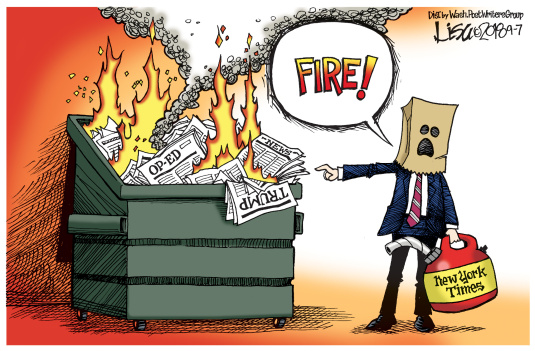
We also note a bias towards publishing negative results by certain journals and press organizations, with scientists reporting difficulty publishing positive results [Boulware, Meneguesso]. Although 88 studies show positive results, The New York Times, for example, has only written articles for studies that claim HCQ is not effective [The New York Times, The New York Times (B), The New York Times (C)]. As of September 10, 2020, The New York Times still claims that there is clear evidence that HCQ is not effective for COVID-19 [The New York Times (D)]. As of October 9, 2020, the United States National Institutes of Health still recommends against HCQ for both hospitalized and non-hospitalized patients [United States National Institutes of Health].

Treatment details. We focus here on the question of whether HCQ is effective or not for COVID-19. Significant differences exist based on treatment stage, with early treatment showing the greatest effectiveness. 100% of early treatment studies report a positive effect, with an estimated reduction of 63% in the effect measured (death, hospitalization, etc.) in the random effects meta-analysis, RR 0.37 [0.30-0.47]. Many factors are likely to influence the degree of effectiveness, including the dosing regimen, concomitant medications such as zinc or azithromycin, precise treatment delay, the initial viral load of patients, and current patient conditions.

News website Panorama.it has launched a petition to get the drug hydroxychloroquine officially reinstated so that Italian doctors can once again use it with patients. If not, some of them will go ahead and use it anyway. The retracted Lancet study and trials using lethal doses(!) of HCQ were enough to get it officially banned in Italy as in other countries. Except the Italian Medicines Agency (AIFA) has not yet reapproved it, despite studies showing its effectiveness. Here are excerpts of the Change.org petition translated from Italian:

At the moment there are no treatments of proven effectiveness to be administered at home. Because the only therapy that AIFA (Italy’s Medicines Agency) had authorized at home, the one based on hydroxychloroquine, has been blocked. It happened on May 26, after the publication of a study in The Lancet, which was withdrawn 13 days later.

Meanwhile, German GPs, who had administered 1,060,000 doses of hydroxychloroquine in March, continued to prescribe it. In the United States, three states lifted the ban on the drug in early August. In China, on August 19, the National Health Commission’s guidelines continued to recommend the active ingredient for Covid 19 patients. And on September 21, The Lancet itself retraced its steps, with a study claiming that hydroxychloroquine reduces mortality.

In order to save lives, we ask AIFA to restore the use of hydroxychloroquine for home patients in the very early stages of the disease, possibly even with an emergency procedure. Otherwise, we invite the Agency to provide shared protocols of treatment practicable in the territory.

Bankers Should Mind Their Own Business, not the Climate

John H. Cochrane writes at the Hoover Institution Central Banks and Climate: A Case of Mission Creep.  Excerpts in italics with my bolds.

The following is adapted from John H. Cochrane’s remarks at the European Central Bank’s Conference on Monetary Policy: Bridging Science and Practice. His full presentation about the challenges facing central banks is here.

Central banks are rushing headlong into climate policy. This is a mistake. It will destroy central banks’ independence, their ability to fulfill their main missions to control inflation and stem financial crises, and people’s faith in their impartiality and technical competence. And it won’t help the climate.

In making this argument, I do not claim that climate change is fake or unimportant. None of the following comments reflect any argument with scientific fact. (I favor a uniform carbon tax in return for essentially no regulation, but this essay is not about carbon policy.)

The question is whether the European Central Bank (ECB), other central banks, or international institutions such as the International Monetary Fund, the Bank for International Settlements, and the Organization for Economic Co-operation and Development should appoint themselves to take on climate policy—or other important social, environmental, or political causes—without a clear mandate to do so from politically accountable leaders.

The Western world faces a crisis of trust in our institutions, a crisis fed by a not-inaccurate perception that the elites who run such institutions don’t know what they are doing, are politicized, and are going beyond the authority granted by accountable representatives.

Trust and independence must be earned by evident competence and institutional restraint. Yet central banks, not obviously competent to target inflation with interest rates; floundering to stop financial crisis by means other than wanton bailouts; and still not addressing obvious risks lying ahead; now want to be trusted to determine and implement their own climate change policy? (And next, likely, taking on inequality and social justice?)

We don’t want the agency that delivers drinking water to make a list of socially and environmentally favored businesses and start turning off the water to disfavored companies. Nor should central banks. They should provide liquidity, period.

But a popular movement wants all institutions of society to jump into the social and political goals of the moment, regardless of boring legalities. Those constraints, of course, are essential for a functioning democratic society, for functioning independent technocratic institutions, and incidentally for making durable progress on those same important social and political goals.

It’s Not About Risk

The European Central Bank and other institutions are not just embarking on climate policy in general. They are embarking on the enforcement of one particular set of climate policies—policies to force banks and private companies to defund fossil fuel industries, even while alternatives are not available at scale, and to provide subsidized funding to an ill-defined set of “green” projects.

Let me quote from ECB executive board member Isabel Schnabel’s recent speech. I don’t mean to pick on her, but she expresses the climate agenda very well, and her speech bears the ECB imprimatur. She recommends that

“[f]irst, as prudential supervisor, we have an obligation to protect the safety and soundness of the banking sector. This includes making sure that banks properly assess the risks from carbon-intensive exposures. . .”

Let me point out the unclothed emperor: climate change does not pose any financial risk at the one-, five-, or even ten-year horizon at which one can conceivably assess the risk to bank assets. Repeating the contrary in speeches does not make it so.

Risk means variance, unforeseen events. We know exactly where the climate is going in the next five to ten years. Hurricanes and floods, though influenced by climate change, are well modeled for the next five to ten years. Advanced economies and financial systems are remarkably impervious to weather. Relative market demand for fossil vs. alternative energy is as easy or hard to forecast as anything else in the economy. Exxon bonds are factually safer, financially, than Tesla bonds, and easier to value.

The main risk to fossil fuel companies is that regulators will destroy them, as the ECB proposes to do, a risk regulators themselves control. And political risk is a standard part of bond valuation.

That banks are risky because of exposure to carbon-emitting companies; that carbon-emitting company debt is financially risky because of unexpected changes in climate, in ways that conventional risk measures do not capture; that banks need to be regulated away from that exposure because of risk to the financial system—all this is nonsense. (And even if it were not nonsense, regulating bank liabilities away from short term debt and towards more equity would be a more effective solution to the financial problem.)

Next, we contemplate a pervasive regime essentially of shame, boycott, divest, and sanction

“[to] link the eligibility of securities . . . as collateral in our refinancing operations to the disclosure regime of the issuing firms.”

We know where “disclosure” leads. Now all companies that issue debt will be pressured to cut off disparaged investments and make whatever “green” investments the ECB is blessing.

Last, the ECB is urged to print money directly to fund green projects:

“We should also consider reassessing the benchmark allocation of our private asset purchase programs. In the presence of market failures . . . the market by itself is not achieving efficient outcomes.”

Now you may say, “Climate is a crisis. Central banks must pitch in and help the cause. They should just tell banks to stop lending to the evil fossil fuel companies, and print money and hand it out to worthy green projects.”

But central banks are not allowed to do this, and for very good reasons.

A central bank in a democracy is not an all-purpose do-good agency, with authority to subsidize what it decides to be worthy, defund what it dislikes, and force banks and companies to do the same. A central bank, whose leaders do not regularly face voters, lives by an iron contract: freedom and independence so long as it stays within its limited and mandated powers.

The ECB in particular lives by a particularly delineated and limited mandate. For very good reasons, the ECB was not set up to decide which industries or regions need subsidizing and which should be scaled back, to direct bank investment across Europe, to set the price of bonds, or to print money to subsidize direct lending. These are intensely political acts. In a democracy, only elected representatives can take or commission such intensely political activities. If I take out the words “green,” the EU member states, and EU voters, would properly react with shock and outrage at this proposal. If the ECB bought different countries’ bonds at different prices and in different quantities to reward those making greater progress on “green” policy implementation, there would likely be an outcry.

That’s why this movement goes through the convolutions of pretending that defunding fossil fuels and subsidizing green projects—however desirable—has something to do with systemic risk, which it patently does not.

That’s why one must pretend to diagnose “market failures” to justify buying bonds at too high prices. By what objective measure are green bonds “mispriced” and markets “failing”? Why only green bonds? The ECB does not scan all asset markets for “mispriced” securities to buy and sell after determining the “right” prices.

Who Gets the Green Light?

At face value, “carbon emitting” does not mean just fossil fuel companies but cement manufacturers, aluminum producers, construction, agriculture, transport, and everything else. Will the carbon risk and defunding project really extend that far, in any sort of honest quantitative way? Or is “carbon emitting” just code for hounding the politically unpopular fossil fuel companies?

In the disclosure and bond buying project, who will decide what is a green project? Already, cost-benefit analysis—euros spent per ton of carbon, per degrees of temperature reduced, per euros of GDP increased—is lacking. By what process will the ECB avoid past follies such as switchgrass biofuel, corn ethanol, and high-speed trains to nowhere? How will it allow politically unpopular projects such as nuclear power, carbon capture, natural gas via fracking, residential zoning reform, and geoengineering ventures—which all, undeniably, scientifically, lower carbon and global temperatures—as well as adaptation projects that undeniably, scientifically, lower the impact on GDP? Well, clearly it won’t.

The ECB is embarking on one specific kind of green policy, popular at the cocktail parties at Davos, but having little to do with cost-benefit analysis or science of climate policy.

In sum, where is the analysis for this program? I challenge the ECB to calculate how many degrees this bond buying plan would lower global temperatures, and how much it would raise GDP by the year 2100, in any transparent, verifiable, and credible way. Never mind the costs for now: where are the benefits?

And how would the ECB resist political pressure to subsidize all sorts of boondoggles? If the central bank does not have and disclose neutral technical competence at making this sort of calculation, the project will be perceived as simply made-up numbers to advance a political cause. All of the central bank’s activities will then be tainted by association.

This will end badly. Not because these policies are wrong, but because they are intensely political, and they make a mockery of the central bank’s limited mandates.

If this continues, the next ECB presidential appointment will be all about climate policy: who gets the subsidized green lending, who is defunded, what the next set of causes is to be, and not interest rates and financial stability. Board appointments will become champions for each country’s desired subsidies. Countries and industries that lose out will object. This is exactly the sort of institutional aggrandizement that prompted Brexit.

If the ECB crosses this second Rubicon—buying sovereign and corporate debt was the first—be ready for more. The IMF is already pushing redistribution. The US Federal Reserve, though it has so far stayed away from climate policy, is rushing into “inclusive” employment and racial justice. There are many problems in the world. Once you start trying to shape climate policy, and so obviously break all the rules to do it, how can you resist the clamor to defund, disclose, and subsidize the rest? How will you resist demands to take up regional development, prop up dying industries, subsidize politicians’ pet projects, and all the other sins that the ECB is explicitly enjoined from committing?

A central bank that so blatantly breaks its mandates must lose its independence, its authority, and people’s trust in its objectivity and technical competence to fight inflation and deflation, regulate banks, and stop financial crises.

A Narrow Role, and Essential

Working for a central bank is a bit boring. One may feel a longing to do something that feels more important, that helps the world in its big causes. One may feel longing for the approval of the Davos smart set. Why does Greta Thunberg get all the attention? But a central bank is not the Gates Foundation, which can spend its money any way it likes. This is taxpayers’ money, and regulations use force to transfer wealth between very unwilling people. A central bank is a government agency, and central bankers are public servants, just like the people who run the DMV.

Central banks must be competent, trusted, narrow, independent, and boring. A good strategy review will refocus central banks on their core narrow mission and let the other institutions of society address big political causes. Boring as that may be.

See also:  Financiers Failed Us: Focused on Fake Crisis


US Conflicted over Green Energy

Joel Kotkin writes at Real Clear Energy Democrats’ Energy Dilemma.  Excerpts in italics with my bolds.

The biggest challenge facing a putative first-term Joe Biden administration and the Democratic Party may lie with energy policy, where gentry and green wishful thinking confront the daily realities of millions of middle- and working-class Americans.

Democrats could choose a climate policy that allows for gradual change – for example, transitioning from coal to natural gas – and consider the feasibility of smaller and safer nuclear plants, while keeping the productive economy afloat. But Biden, despite some wriggling about fracking on private land, just last week committed himself to the gradual eradication of the fossil fuel industry. His running mate, Senator Kamala Harris, is beloved by California’s extremist greens.

Already, in anticipation of a Democratic sweep, utilities are putting some natural gas projects on hold – threatening a powerful growth engine in places like Pennsylvania and Ohio. If Biden continues to embrace the basic thrust of the Green New Deal, if not its full-bore socialist program, the impact could be devastating for manufacturing areas that compete with China, which depend largely on natural gas, coal, and nuclear power to keep costs down. These state economies cannot fantasize, as some do in California, that the resulting social costs will be paid for by the wealthy digerati; lacking sufficient numbers of the rich and famous, these states will be hit hard, and fast.

If, as seems likely, victorious Democrats enact legislation broadly derived from the Green New Deal, major blowback – and economic disruption – seems inevitable. Biden and Harris have been almost comically inconsistent in their statements about fracking, but they’re certainly hostile to it: if they win the White House and pursue a ban, it would likely drive higher prices for energy, reduce national energy self-sufficiency, and cause massive job loss among a large number of Americans, particularly in key states like Ohio and Pennsylvania.

The critical gentry-green alliance

Energy effects so many other things – our daily bills, whether an employer locates in our town, our already-frayed economic mobility – and is thus a far broader issue, in terms of its consequences, than, say, abortion or race reparations, which often appeal to limited, albeit passionate, constituencies. Energy policy is certain to fracture the Democrats along ideological, class, and geographic lines.

In the past, Democrats tried to appeal to workers and communities connected to the oil and gas industries. Over the past decade or so, these constituencies have generally expanded; they tend to be unionized and well-paid. Yet today, organizations like the Oil, Chemical and Atomic Workers, once a militantly left union, have far less influence on Democratic politics, while the Sierra Club and its allies among the tech oligarchs and, increasingly on Wall Street, have much more.

You don’t have to be Karl Marx to see the reasons why financial and tech moguls support a restrictive energy regime despite the challenges posed by the high cost and intermittent nature of renewable energy. Being “green” is great if you make such stupendous profits that a few million more dollars in energy costs won’t make much difference to your bottom line. And besides, both Wall Street and the tech moguls have become heavy investors in “green” energy schemes that, due to subsidies and tax breaks, guarantee virtually assured profits.

The “Brahmin left” – as economist Thomas Picketty puts it – benefits politically and economically from centrally imposed scarcity, under the pretext of “human survival.” These interests – notably the tech elites – have lined up massively behind Biden’s exceedingly well-funded campaign. Long before they settled on Biden, Kamala Harris, as California attorney general, was an aggressive enforcer of California’s often-draconian climate and planning laws.

Class warfare by other means

In adopting an ultra-green perspective, Democrats have made a choice to favor their backers among the fantastically rich and on Wall Street, who can use green investments to correct their increasingly low standing among the masses. Get rich, go green – and preen. Tech elites and their Wall Street allies – as opposed to populists like Bernie Sanders and Elizabeth Warren – were clear winners of the Democratic primaries.

Whatever its derivation, the green energy agenda doesn’t harmonize easily with the notion of Democrats as the “party of the people.” It represents a direct threat to the party’s once-vital working-class base. In the past, Democratic voters came in large part from the working class. Today, Democrats do better among well-educated “knowledge workers” and the prestigious companies that employ them. This leads some progressives to believe that white working-class voters are no longer critical to the party’s chances.

This voting bloc is shrinking, true, but it still constitutes as much as 44 percent of the electorate, Democratic strategist Ruy Teixeira points out. These voters provided a critical boost to President Obama’s electoral success and later to Donald Trump’s. Teixeira argues that the Democratic focus on cultural and green issues, as opposed to more lunch-bucket concerns, has limited appeal to the working class. Certainly extreme environmental policies, as seen in California, hurt poor and minority populations – and electric-car production and solar plants pose their own, though rarely reported, environmental problems.

Middle- and working-class voters may say that they want a cleaner climate – and most do want something done about climate change – but generally, they consider environmental issues low priority, and they tend to be skeptical of the costs associated with ambitious programs like the Green New Deal. Democrats may feel that minorities will support anything the party proposes as long as racism is invoked, but “people of color” are also people with their own economic interests and families to support.

Today, barely 58% of all working-class Americans are white. According to a 2016 Economic Policy Institute study, nonwhites will become the majority of the working class by 2032. In Green New Deal states like California, policies have increased “energy poverty” and taken away good blue-collar jobs, particularly for the heavily Latino working class.

Regional challenge

Energy policy is unlikely to turn California and most coastal states red (unless you’re using the traditional political meaning of that color). The potential havoc is clearer, though, in parts of the country where low energy prices and production are primary elements of the economy. One can only imagine the damage to the Democratic Party when, despite promises to the contrary, Biden and his presumed heir Harris eventually find a way to “ban” through regulations fracking in places like Texas, North Dakota, Ohio, West Virginia, and Pennsylvania. In Texas alone, by some estimates, 1 million jobs would be lost. Overall, according to a Chamber of Commerce report, a full ban would cost 14 million jobs, far more than the 8 million lost in the Great Recession.

The effects will be particularly severe in the Rust Belt, still the fulcrum of American politics. Trump may be underperforming in high-end suburbs, but he’s still doing well in once-Democratic parts of the Midwest, such as Minnesota’s mining country. Beyond the extractive industries, far bigger sectors – logistics, agriculture, and manufacturing – would face serious problems with intermittent and expensive “green energy,” as a recent MIT report suggests. These policies have already been tied to persistent blackouts in California that forced the Golden State to depend on imported energy and delayed its planned decommissioning of gas plants.

These realities may not be enough to save Donald Trump at the polls, but over time, they could further alienate voters in a broad swath of states that generally determine the country’s political future. Ultimately, the test for Joe Biden, and his party, lies in the old union slogan: “Which side are you on?” If Democrats adhere blindly to California’s Ecotopian absolutism, glasses may clink at Davos, on Wall Street, and in San Francisco, but “the party of the people” will surrender its historic legacy – perhaps permanently.

Solar and Wind Energy Underestimated? Not.

Source: Smil (2012) and IEA

The first part of this post is a report that the IEA is accused of underestimating the amount of solar and wind power in recent years.  The second part presents analyses showing that media hype and misinformation lead the public to routinely overestimate the portion solar and wind contribute to power modern societies.

The IEA is under pressure about their wind and solar energy numbers, as reported at energypost.eu World Energy Outlook 2020: IEA responds to some difficult questions.  Excerpts in italics with my bolds

The IEA has issued an FAQ to try to answer some persistent questions and criticisms about their annual World Energy Outlooks (WEO). How come the growth of solar and wind have been consistently underestimated? When is “peak oil” going to happen? Will the IEA’s Sustainable Development Scenario limit the global temperature rise to 1.5 °C this century? Is it realistic? Why has a “Net Zero Emissions by 2050” (NZE2050) pathway been added this year? Do the IEA scenarios rely too much on carbon capture? In this article the IEA forcefully emphasizes that a WEO “…is not, and has never been, a forecast of where the energy world will end up.” It’s to explore pathways. Only governments and citizens can make any of it a reality.

Regarding the NZE2050, “unparalleled changes across all parts of the energy sector would need to be realized simultaneously, at a time when the world is trying to recover from the Covid-19 pandemic”, something that is clearly not happening, says the IEA.

Q. The WEO has been accused of underestimating the growth of renewable energy technologies such as solar PV and wind. Why is this? And are its latest numbers more accurate?

A. This accusation results from a misunderstanding or mischaracterisation of the WEO’s scenarios, as outlined in the answer above. The spectacular growth of wind and especially solar PV over the past two decades has far outstripped many projections made during the period. This is true for the projections included in past editions of the WEO, which were based on the policies that had been put in place or proposed at the time of publication. Significant new policies that were announced subsequently changed the trajectories of wind and solar by generating new demand and investment, thereby helping foster technological advances and cost declines.

A good example of this is China, where policies and targets for solar strengthened dramatically after 2007, putting China on a path to becoming a driving force for solar worldwide.

The projections in this year’s WEO reflect the continuing technology advances and cost declines of wind and solar. In the STEPS, renewables meet 80% of the growth in global electricity demand to 2030. Solar is the main driver of growth, becoming the new king of electricity markets worldwide as it sets new records for deployment each year after 2022, followed by onshore and offshore wind. The advance of renewable sources of generation, and of solar in particular, is much stronger in the SDS, where solar generates 13 times as much electricity in 2040 as it did in 2019. Growth is even more rapid in the NZE2050.

So IEA answers the criticism by claiming a rosy future for renewables compared to past performance.  Left out is any reference to how small is the baseline, which makes easy impressive growth numbers.  Left out also is any measure of the proportion of total energy supply coming from renewables, specifically wind and solar, despite referring to solar as “the new king of electricity markets worldwide.”  That misleading lack of perspective is addressed in a previous post reprinted below.

Exaggerating Green Energy Supply (previous post)

dave_gangland

As noted here before, public opinion surveys are often “push polls”, raising issues like climate change as part of an effort to promote public concern.  Such surveys also inform activists how successful or not has been the media messaging in generating belief and support for climate policy proposals.

Sometimes the questionnaires are manipulated to show the greatest possible public awareness and support..  For example, see:  The Art of Rigging Climate Polls.

Other times, the survey is used to chide the public for failing to buy into claims and propaganda prominently advanced in the media.  For example, see: “Hottest Year” Misdirection, where mainstream media claims 17 of the last 18 years were the hottest on record, while the public in 37 countries guessed only 9.  After checking the data, the correct answer is more likely 5.

That same survey, Perils of Perceptions, reported that in most countries the public overestimates how much green energy they consume.  That finding is the subject of this post.  As we will see, energy from renewables is perceived to be much higher than numbers from the World Bank. 

And since those numbers are themselves exaggerated, the gap between virtuous green behavior and performance is even greater than stated.

The renewable energy finding from Ipsos (here):

The majority of countries overestimate the amount of energy used that comes from renewable sources in their country. The average guess is 26% when it’s actually only 19%. Malaysia, Saudi Arabia, China and Singapore were the furthest out; some countries, though, actually underestimate how much progress they have made with renewables, such as Sweden and Montenegro.

Now, 19% of energy consumed coming from renewables looks high to me, so let’s explore two of the countries:  Canada and the Netherlands.

First, The Canadian Story on Green Energy Supply

energyuse

Question is Framed to be Misleading

Note that wind and solar power are presented as examples of renewable energy sources, when in reality hydro and nuclear are much larger sources of power (electricity). Note also respondents are led to confuse power with total energy, which is a much larger amount.

What is the Reality of Canadian Energy Supply (Consumption)

World Bank shows 22% of Canada’s total energy consumption was from renewables in 1990 and 2015.

Let’s test that number against the Canadian Energy Fact Book 2016–2017 (which presents 2014 as the latest statistics).  The categories are defined nicely in this diagram:
Energy FlowWorking from the top down, first is the mix of total primary energy supply by source:
Canada Primary Energy Supply
In this fact book, energy supply is equivalent to energy consumed, since it is calculated after adjusting for energy imports and exports. Note that 17.7% is the amount of energy from renewables, and hydro is 11.6%.   Let’s see how much of renewable energy comes from wind and solar:
Canada Renewable EnergySo Canadians actually consume 4.4% of their renewable energy from wind and solar. 92% of Canadian renewable energy comes from the traditional sources:  Hydro dams and burning wood.

Combining the two tables, we see that 80% of the Other Renewables is solid biomass (wood), which leaves at most 1% of Canadian total energy supply coming from wind and solar.

Second, the Netherlands Green Energy Story

According to the Ipsos Perils of Perception survey, respondents from the Netherlands said on average 22% of their energy is Green, while the World Bank says only 6% comes from Green sources.  Last year there was a provocative and entertaining analysis of Dutch perceptions versus green energy realities broadcast on a popular Sunday morning TV show.  The episode was called Green Electrical Shocks, and is provided below for your enjoyment and edification.

Green Electrical Shocks


On Sunday Feb.4, 2018, a weekly news program aired in the Netherlands on the titled subject. H/T Climate Scepticism. The video clip is below with English subtitles. For those who prefer reading, I provide the substantial excerpts from the program with my bolds.

How many of you have Green Electricity? I will estimate 69%
And how much nationally? Oh, 69%!
So we are very average, and in a good way, because the climate is very important.

Let me ask: Green electricity comes from . . .?
Yes, electricity produced from windmills and solar panels.
Nearly 2/3 of the Dutch are using it. That’s the image.

Well I have green news and bad news.
The green news: Well done!
The bad news: It is all one big lie.
Time for the Green Electrical Shocks.

Shock #1: The green electricity from your socket is not green.
When I switched to green electricity I was very proud.
I thought, Yes, well done! The climate is getting warmer, but not any more thanks to me.

Well, that turned out to be untrue.
All producers deliver to one communal grid. Green and grey electricity all mix.
The electricity you use is always a mix of various sources.
OK. It actually makes sense not to have separate green and grey cables for every house.
So it means that of all electricity, 69% is produced in a sustainable way. But then:

Shock #2: Green Electricity is mostly fake.
Most of the green electricity we think we use comes from abroad.
You may think: So what. Green is green.

But that electricity doesn’t come from abroad, it stays abroad.
If you have green electricity at home, it may mean nothing more than that your supplier has bought “green electricity certificates”.

In Europe green electricity gets an official certificate,
Instead of selling on the electricity, they sell on those certificates.
Norway, with its hydro power, has a surplus of certificates.
Dutch suppliers buy them on a massive scale, while the electricity stays in Norway.

The idea was: if countries can sell those certificates, they can make money by producing more green electricity.
But the Norwegians don’t produce more green electricity.
But they do sell certificates.

The Dutch suppliers wave with those certificates, and say Look! Our grey electricity is green.
Only one country has produced green electricity: Norway.
But two countries take the credit.
Norway, because they produce green electricity, and the Netherlands because, on paper, we have green electricity. Get it? That’s a nice deal.

More and more countries sell those certificates. Italy is now the top supplier.
We buy fake green electricity from Italy, like some kind of Karma ham.

Now, let’s look again at the green electricity we all think we use.
So the real picture isn’t 69%. If you cancel the certificates, only 21% of electricity is really green.
Nowadays you can even order it separately if you don’t want to be part of that Norway certificates scam.
You may think: 21% green is still quite a lot. But it is time for:

Shock #3: Not all energy is electricity.
If you talk about the climate, you shouldn’t just consider electricity but all energy.
When you look at all energy, like factories, cars, trains, gas fires, then the share of consumer electricity is virtually nothing.
If you include everything in your calculation, it turns out that only 6% of all the energy we use in the Netherlands is green. It is a comedy, but wait:

Trees converted into pellets by means of petroleum powered machinery.

Shock #4: Most green energy doesn’t come from sun or wind, like you might think.
Even the 6%, our last green hope, is fake. According to the CBS we are using more sun and wind energy, but most of the green energy is produced by the burning of biomass.
Ah, more than half of the 6% green energy is biomass.

Ridiculous. What is biomass really? It is organic materials that we encounter every day.
Like the content of a compost heap. How about maize leaves or hay?
The idea behind burning organic materials is that it will grow up again.
So CO2 is released when you burn it, but it will be absorbed again by new trees.

However, there is one problem. The forest grows very slowly and our power plants burn very fast.
This is the fatal flaw in the thinking about biomass. Power plants burn trees too fast, so my solution: slow fire. Disadvantage: it doesn’t exist. So this is our next shock.

Shock#5: Biomass isn’t all that sustainable.
It’s getting worse. There aren’t enough trees in the Netherlands for biomass.
We can’t do it on our own. We don’t have enough wood, so we get it from America.

In the USA forests are cut at a high rate, Trees are shredded and compressed into pellets.
These are shipped to the Netherlands and end up in the ovens of the coal plants.
It’s a disaster for the American forests, according to environmental groups.

So we transport American forests on diesel ships to Europe.
Then throw them in the oven because it officially counts as green energy.
Only because the CO2 released this way doesn’t count for our total emissions.

In reality biomass emits more CO2 than natural gas and coal.
These are laws of nature, no matter what European laws say.
At the bottom line, how much sustainable energy do we really have in the Netherlands?
Well, the only real green energy from windmills, solar panels etc. Is only 2.2%. of all the energy we use.

In Conclusion
So the fact that 2/3 of the audience and of all Dutch people use green electricity means absolutely nothing. It’s only 2.2%, and crazier still, the government says it should be at 14% by 2020.
They promised: to us, to Europe, to planet Earth: 14 instead of 2.2.

Instead of making a serious attempt to save the climate, they are only working on accounting tricks, like buying pieces of paper in Norway and burning American forests.
They are only saving the climate on paper.

Summary Comment

As the stool above shows, the climate change package sits on three premises. The first is the science bit, consisting of an unproven claim that observed warming is caused by humans burning fossil fuels. The second part rests on impact studies from billions of research dollars spent uncovering any and all possible negatives from warming. And the third leg is climate policies showing how governments can “fight climate change.”

It is refreshing to see more and more articles by people reasoning about climate change/global warming and expressing rational positions. Increasingly, analysts are unbundling the package and questioning not only the science, but also pointing out positives from CO2 and warming.  And as the Dutch telecast shows, ineffective government policies are also fair game.

More on flawed climate policies at Reasoning About Climate


An End to Frivolous Climate Lawsuits?

Craig Richardson writes at Real Clear Energy The Supreme Court Is Taking Critical Step Towards Resolving Frivolous Climate Suits. Excerpts in italics with my bolds.

Sometimes the most important Supreme Court decisions are overlooked because of their technical nature. That is the case with the Supreme Court’s choice to hear jurisdictional claims in B.P. P.L.C., et al. v. Mayor and City Council of Baltimore.

The Court’s ruling will either allow cities to pursue superfluous nuisance claims against energy companies in state courts or limit the suits to federal courts that are less prone to accept broad liability claims.

These jurisdictional claims are significant because they set the appropriate scope of appellate review for these suits. Lawsuits predicated on federal laws and involving federal officers’ actions should be decided at the federal level. By agreeing to hear arguments in the Baltimore case, the Supreme Court is taking a crucial step towards setting a consistent legal playing field.

The Supreme Court will not rule on the merits of Baltimore’s claims. Instead, they will decide whether the defendants can appeal a jurisdictional claim after a federal court rejects it.

Under existing law, it is clear the defendant can appeal aspects of the decision, but not whether the whole claim is fair game. A ruling in favor of the defendants would force multiple Circuit Courts to reevaluate their previous rulings and rehear jurisdictional claims by the energy companies.

Even though the justices won’t decide on the merits, the key is the context of Baltimore’s lawsuit. For years, city and state officials have been – in partnership with trial lawyers and leftist environmental groups – twisting the meaning of public nuisance laws to sue energy companies for their alleged contributions to climate change, even though these companies aren’t breaking the law. In recent months, localities have filed even more suits, making it especially important that lower courts know whether these cases should be resolved at the federal or state level.

These suits aren’t about helping the environment but are filed by leftist politicians and their backers hoping to score political points as they desperately attempt to fill their city or state coffers.

A senior Rhode Island official said the state’s climate lawsuit was designed to create a “sustainable funding stream” for Rhode Island. The state is desperate for funding because decades of big-spending policies have left Rhode Island officials with a budget deficit approaching $160 million.

In another instance, San Mateo County filed a lawsuit claiming there was a 93% risk of deadly floods by 2050 while telling municipal investors they had nothing to worry about. The S.E.C. is now investigating the county for fraud, and it is clear its lawsuit is motivated by politics, not science.

Instead of addressing climate change or working to build a sustainable future, leftist officials are trying to profit off energy companies, which would drive up the cost for all Americans. Given the clear political undertones of these cases, and the potential devastating impact on the U.S. economy, they must receive a fair hearing in a neutral venue.

It shouldn’t be surprising that state and city officials are fighting to have the cases heard in the state courts, the most favorable jurisdictions possible for them. Local officials are confident they can find a state judge who will issue a broad ruling against the energy companies, which would be difficult to overturn on appeal, regardless of the merits.

This outcome would be a disaster for energy companies and their customers, who would have to worry about individual state judges’ whims. These judges could create a mishmash of legal rulings that ends up being totally incoherent. It is easy to imagine a scenario where the defendants prevail in most of these frivolous lawsuits but lose a few in unfriendly jurisdictions and all of us will pay the price monetarily.

Additionally, state courts shouldn’t be addressing national political issues, especially on climate change, an issue that in the past the Supreme Court ruled should be handled by Congress and the president, not state courts. If laws need to be changed, Congress should change them, instead of having individual judges legislate from the bench. Some courts have already dismissed similar climate suits for this very reason.

Allowing state courts to decide debates of global importance is a recipe for disaster.

Generally, federal courts “are far less likely, as a whole and with some exceptions, to be willing to entertain expansive theories of liability than state courts,” according to George Mason University law professor Donald Kochan. This means federal courts are unlikely to perform legal gymnastics to try and hold energy companies accountable when it is clear they are operating within the law and have permits from the government.