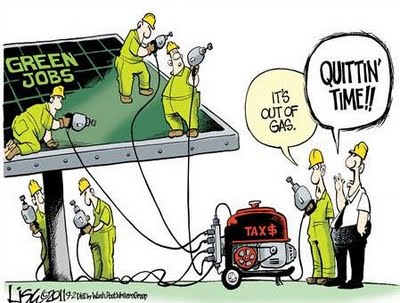
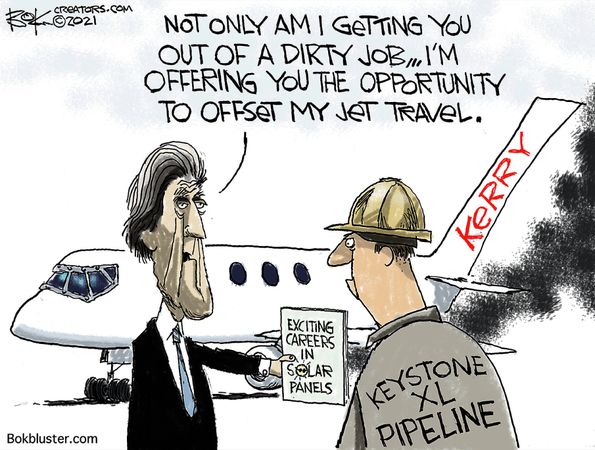
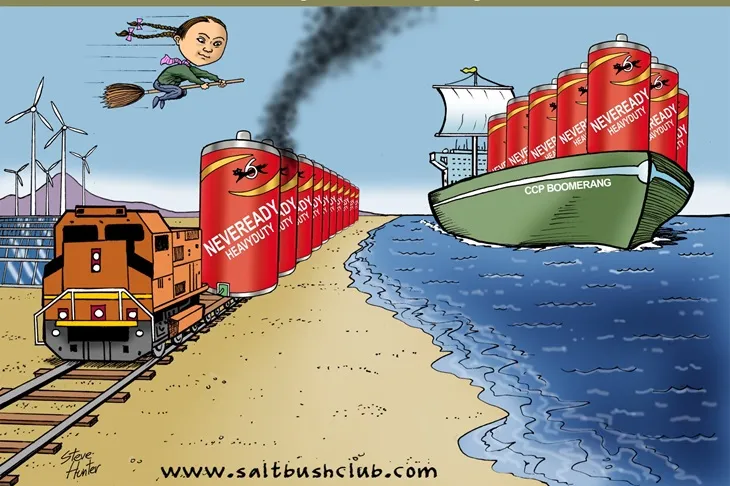
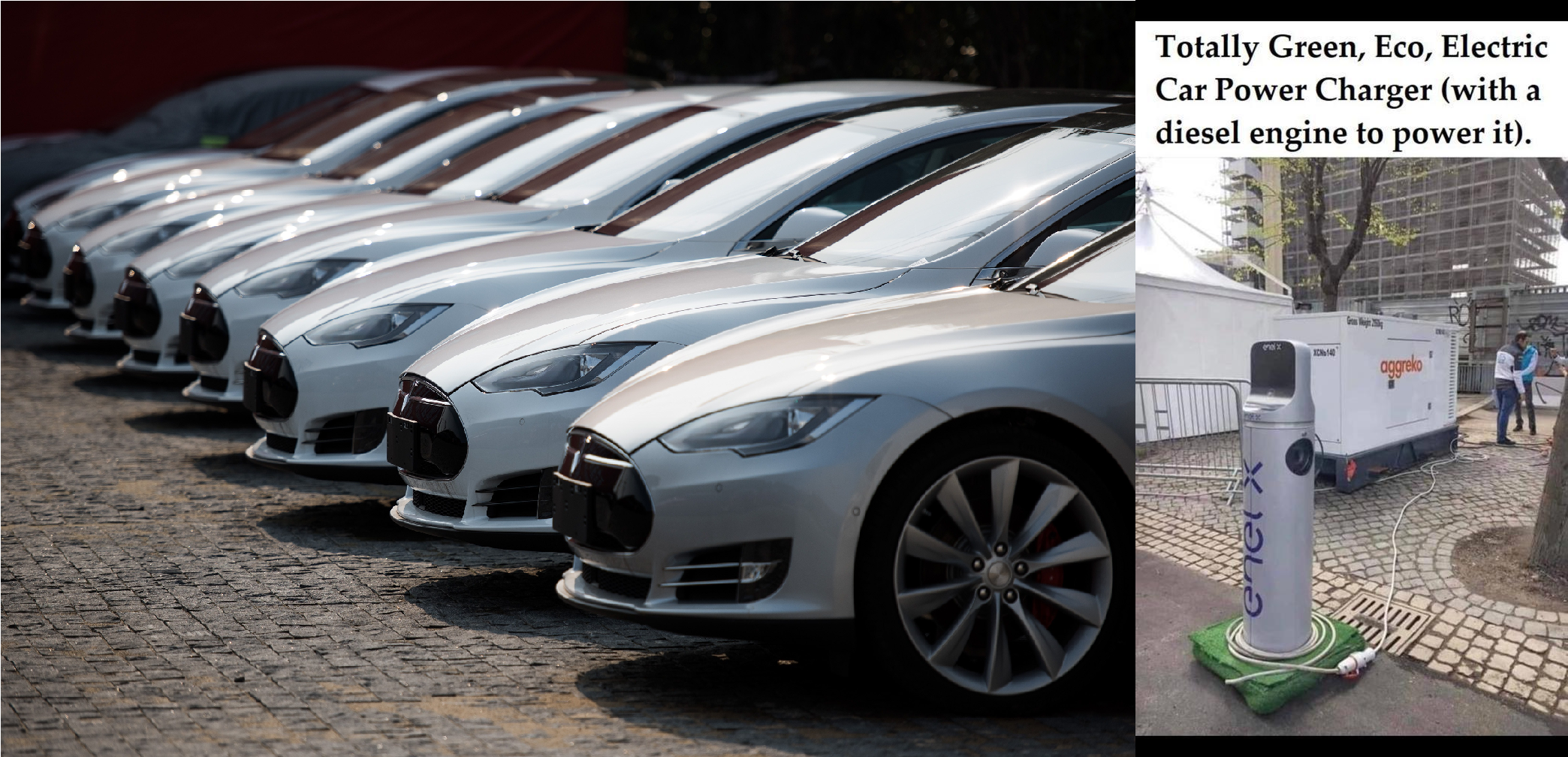
Wanted: More Energy Sanctuary States Like Louisiana

Larry Behrens explains the trail blazing move in his Real Clear Energy article Did Louisiana Just Become America’s First Energy Sanctuary State? Excerpts in italics with my bolds and added images.

While states like California fumble and self-destruct, Louisiana is doing
something revolutionary: standing up to the Green New Scam.

In a move that should inspire every state in the country, Louisiana has passed a groundbreaking law that flips the script on failed renewable mandates. Let’s call it what it is — a common-sense energy sanctuary law. Instead of forcing families and businesses to pay more for unreliable energy from foreign supply chains, Louisiana is now legally prioritizing energy that’s affordable, reliable, and made in America.

That’s not just common sense — it’s leadership.

The technical name is Act 462, but it might well be called “Louisiana’s Energy Independence Act” because it does something no Renewable Portfolio Standard (RPS) has ever done: it puts working families first. It defines energy not by whether it checks a political box, but by whether it keeps the lights on and bills low. In fact, the law goes so far as to define dispatchable and reliable energy in statute, mandating that Louisiana’s grid must prioritize sources that stabilize voltage, ramp up when needed, and avoid dependence on “foreign adversary nations.”

That’s a direct shot at the China-backed solar and wind lobby — and it’s about time.

This policy shift couldn’t come at a better moment. New data shows that the states most committed to Renewable Portfolio Standards — California, Hawaii, Massachusetts, New York — are now suffering the highest and fastest-growing electricity rates in the nation. According to the U.S. Energy Information Administration and ElectricChoice’s latest June 2025 numbers:

  • Hawaii’s electricity rate is 42.34¢/kWh — a staggering 228% above the national average.
  • Massachusetts sits at 31.22¢/kWh — up 142%.
  • And California, the poster child of the Green New Scam, is at 30.55¢/kWh — 137% higher than average.

What do these states have in common? They all have binding RPS mandates and have shut down reliable fossil fuel power plants that once powered homes and industries affordably. In California alone, plants like Alamitos, Potrero, and Huntington Beach were taken offline — all while the state imported Chinese-made solar panels and offshore wind turbines with price tags subsidized by taxpayers.

And the results? Sky-high bills, rolling blackouts,
and dependence on intermittent power that collapses
when the sun doesn’t shine or the wind doesn’t blow.

Meanwhile, Louisiana — a state with no binding RPS and an energy mix that includes natural gas — enjoys rates nearly 9% below the national average. It’s joined by other affordable states like North Dakota, Nebraska, and South Carolina — none of which have mandatory green energy quotas.

So yes, Louisiana is charting a new path, and the rest of the country should follow. The message of Louisiana’s Energy Independence Act is simple: energy policy should serve people, not political agendas. By prioritizing affordability and reliability, Louisiana levels the playing field and forces every source of energy — whether gas, coal, solar, or wind — to compete based on merit, not mandates.

And for working families? That’s a win every single time.

Let the climate activists whine. Let the solar lobby scream. Louisiana just showed the country what energy leadership looks like — and it starts by saying no to the Green New Scam and yes to the people who actually pay the bills.

Other states should take note. The future isn’t in chasing unicorns. It’s in putting common sense and the American worker back at the center of energy policy.

Climate Litigants Lackeys for China’s Agenda?

A Chinese flag flies in front of a coal fired power plant in Tianjin. China has been building many more similar plants. Getty Images

Dan Eberhart writes at Forbes Climate Lawsuits Are Changing The U.S. Energy Industry And China’s Too.  H/T Tyler Durden. Excerpts in italics with my bolds and added images.

Sen. Ted Cruz has expressed concern in multiple public statements that the American energy security may face a significant threat from a wave of lawsuits claiming to defend a progressive environmental agenda.

On this upcoming Wednesday, Sen. Cruz’s Judiciary oversight subcommittee will hold a hearing to examine how China and America’s climate litigation movement are working in parallel to undermine U.S. energy dominance. These efforts are being carried out under the banner of environmental protection and the clean energy transition, but the real goal is to weaken America’s energy sector and give the advantage to China in global energy and manufacturing markets.

Climate cases brought by plaintiff firms like Sher Edling are supported by a network of well-funded foundations and nonprofits that are unwittingly advancing the strategic interests of America’s adversaries by weakening domestic energy production and increasing our dependence on foreign-controlled supply chains—particularly those dominated by China.

There is growing recognition that this is a national security problem. The U.S.-China Economic and Security Review Commission has warned that the Chinese Communist Party is actively working to “directly and malignly influence state and local leaders to promote China’s global agenda.”

A recent report by national security nonprofit State Armor outlines how China has co-opted elements of the U.S. climate lobby to drive a transition away from fossil fuels. The result is greater U.S. reliance on Chinese-controlled technologies, minerals, and supply chains. China dominates the global markets for lithium, cobalt, solar panels, and battery components. It stands to gain enormously from U.S. policies that force a premature shift away from traditional energy sources.

The report spotlights Energy Foundation China (EFC) which claims to be a nonprofit headquartered in San Francisco. In reality, its staff are mostly based in Beijing, and its operations align closely with the Chinese Communist Party’s interests. EFC has spent millions supporting anti-fossil fuel groups in the United States, including the Rocky Mountain Institute and the Natural Resources Defense Council. NRDC was the subject of a 2018 congressional inquiry over whether it should register as a foreign agent due to its ties to China.

House Energy and Commerce Committee leaders last year warned that “China has already attempted to influence United States policy and opinion through covert influence and by exploiting perceived societal divisions.” Their letter raised concerns about China-affiliated organizations influencing U.S. energy policy.

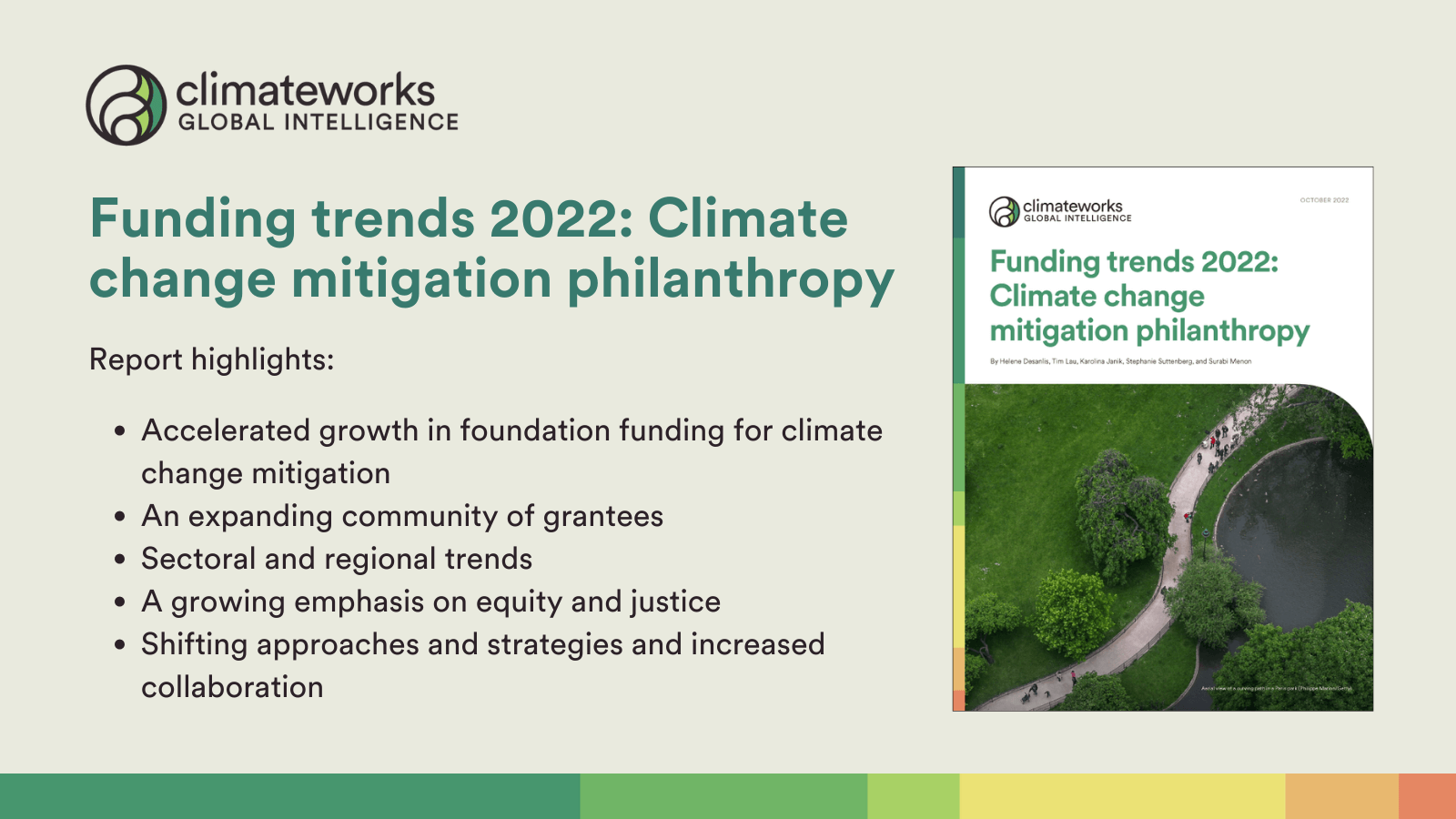
Major Focus Areas for U.S. Climate and Energy Funding, 2011–2015. Based on analysis of 2,502 publicly reported grants available as of Spring/Summer 2016 which were distributed between 2011 and 2015 by 19 major foundations making environmental grants totaling $556,678,469. Source:Strategic philanthropy in the post-Cap-and-Trade years: Reviewing U.S. climate and energy foundation funding by Nisbet 2018

A number of foundations have played a role in financing climate litigation efforts nationwide. A decade of litigation that most likely would not have happened without their financial backing. Major donors to this network include some of the largest philanthropic institutions in the country, including the Children’s Investment Fund, MacArthur, Rockefeller, and Hewlett foundations. Yet few of these donors have accounted for the risk of foreign manipulation embedded in the organizations they fund.

The influence campaign also extends into U.S. academic institutions. The National Natural Science Foundation of China, a government-run research entity, has published articles in American journals criticizing fossil fuels and accusing U.S. companies of deceptive practices. One of EFC’s top communications directors previously held a position at that same Chinese foundation.

At the same time, the revolving door between activist nonprofits and government agencies is raising serious ethical and legal questions. Ann Carlson, a senior official in the Biden administration, previously sat on the board of the Environmental Law Institute while also consulting for Sher Edling. This institute has hosted multiple educational events with Chinese organizations on “climate litigation capacity building” aimed at influencing judges and shaping the legal landscape in both countries.

There is no shortage of outside forces fueling this wave of litigation, and Cruz’s subcommittee is well positioned to expose them. The American people deserve transparency about who is bankrolling the litigation assault on domestic energy, and to what end. President Donald Trump’s energy dominance agenda may not be enough to counteract opaque litigation funding that could undermine U.S. energy security. Prior administrations allowed this framework to take hold by ceding policymaking authority to the courts.

China is more than happy to watch Americans tie the economy in regulatory knots while Chinese companies build new coal-fired power plants, locks in oil and gas contracts with OPEC+ members, and consolidates control over clean energy technologies. If this trend continues, Beijing will have a significant advantage when it comes to the energy industry.

Rupert Darwall: World Leaders Took a Wrong Turn

Rupert Darwall examines when and why the world has gone wrong this century, pinpointing a fundamental error needing correction. Excerpts of the transcript are in italics lightly edited with my bolds and added images. [MM refers to the interviewer, Maggie Miller, and RD refers to Rupert Darwall.]

MM: I’m joined now by Rupert Darwall, author of The Age of Error, Net Zero and The Destruction of the West. Thank you for joining me here today. Although you’re not a speaker here at this event I feel like your book speaks to what we are talking about. So it’s important to take some time to discuss this. For those who might be unfamiliar, would you talk about your book and what are the key takeaways?

RD: Yes, going back in time a bit, I had this sensation where I didn’t understand the way things were going in the world. Perhaps other people might have a a similar kind of feeling. And then the penny dropped. We live in an age of error. And once you understood that, everything started to fall in place. As a result of that, I decided to write a book on the age of error, which is essentially what the book’s about.

MM: When you think about the age of error, when do you think it began, can you set a date to that precisely?

RD: Yes I think I can. Because in 2006 there was the meeting of the G8 which was in St Petersburg hosted by Vladimir Putin. And the leaders of the west along with Vladimir Putin signed up to a document called the St. Petersburg Principles of Energy Security. In that document the leaders of the west said that that they needed to invest trillions of dollars across all the value chain, the whole oil and gas value chain.

We can see there in the summer of 2006, the leaders of the west understood energy realism. This was a realistic response to what was happening in the first decade of the 21st century. Oil prices had been rising quite strongly. Since the 1980s there had been a two decade run of falling energy prices that started to reverse. And higher energy prices were of course causing real concern to the economy and also to energy security.

So in 2006 we can say that was energy realism. People such as the leaders of the west had their heads screwed on straight. By 2009, after the global financial crisis of 2008 and the election of Barack Obama also in 2008, we then had the L’Aquila G8 meeting. And there the leaders of the west signed up to a green recovery and the realism that you’d seen three years earlier had completely gone. So yes one can date this really quite precisely.

MM: Sounds very interesting. What would you say is the biggest error that the west has made?

RD: I think the biggest error is personified by John Kerry. People like John Kerry believe that history is over, that is the history of the rise and fall and competition of great powers is over. And now the world together faces the prospect of climate catastrophe, a planetary catastrophe. So that the world must come together, bury their rivalries. We all come together at the Paris climate conference and we agree to decarbonize.

That to my mind is the biggest error of the age because history has not ended. Geopolitics still continues. We saw that in 2014 when Vladimir Putin seized Crimea, and most of all we saw that in February 2022 when he invaded Ukraine. And the error is that by believing in the catastrophe vision of the world, you will lose the geopolitics. Because there is no way that you can decarbonize your economy and still compete in a geopolitical world. You will basically lose, the west will lose to China.

MM: So what are the consequences for America and Europe?

RD: I would distinguish between America and Europe because after the financial crisis one thing that America had one thing going for it, which was a really really big thing, that was hydraulic fracturing and horizontal drilling– the shale revolution. And that turbocharged economic growth in the years following the financial crisis. It was driven a lot by falling energy prices and by the shale revolution.

Europe on the other hand has really strongly embraced net zero. It really believes that decarbonization is the path to economic growth and that is a complete fantasy. You can’t do both. You cannot have economic growth and at the same time starve yourself of of energy.

So I think America is in a different position because of the energy revolution, and moreover there’s always been a debate in America about climate change. So there’s always been a strong trend to towards energy realism, which obviously one sees now very strongly in in the Trump administration.  Figures like Chris Wright personify energy realism and and the energy opportunity.

Europe has real real deep, deep problems, since it has drunk from the well of net zero very deeply. And it’s going to take a lot to get it off. I mean by a lot, it’s going to take very high prices, very weak economy. It simply can cannot generate the resources it needs to defend itself from a more aggressive Russia.

MM: What are you looking forward to now, what have you set your sight on?

RD: In terms of the book, I’ve written 17 chapters and the book will be 20 chapters. I’m looking forward to putting finish on chapter 20 and submitting the manuscript. Getting the book out is important because I think it speaks very strongly to the current situation we’re in.

Climate Policies to What End?

Oren Cass writes at Commonplace Who Is Climate Policy For?  Not workers. Excerpts in italics with my bolds and added images.

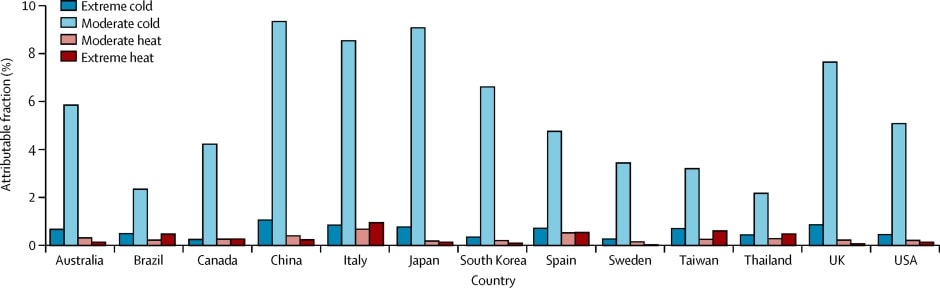
I mostly stopped writing about climate change in 2018, when actual analysis lost all relevance to the increasingly unmoored claims of climate activists. The frequently cited estimates of catastrophic cost, I showed in published reports and congressional testimony, were simply nonsensical. One prominent model relied upon by the EPA predicted that heat deaths in northern cities in the year 2100 would be 50 times higher than they had been in southern cities in the year 2000, despite the northern cities never reaching the temperatures that the southern cities were already experiencing. Another study, published in Nature, predicted that warming would boost Mongolia’s GDP per capita to more than four times America’s. But no one cared; no one was held accountable.

When subsequent research flipped the claims on their head, no one even flinched. Here’s the New York Times, four years apart:

(Technically, the first chart is GDP loss, while the second is heat deaths. But as the Times explained, the main driver of GDP loss in that first chart is heat deaths: “The greatest economic impact would come from a projected increase in heat wave deaths as temperatures soared, which is why states like Alabama and Georgia would face higher risks while the cooler Northeast would not.”) [Note:  Observations actually show a “warming hole” in Southeast US, perhaps due in part to reforestation efforts.]

Discussion of solutions, meanwhile, became entirely performative. So many climate agreements were signed, none had the prospect of substantially shifting the trajectory of global emissions, which is driven overwhelmingly by growth in the developing world. The Biden administration spent four years trumpeting unprecedented investment in fighting climate change. Try to find a comment linking that action to a downward shift in future temperatures or a reduction in any of the purportedly existential harms repeated ad nauseum as the basis for the action. I’ll wait.

The climate lectures had become the equivalent of the parent telling his children to eat their vegetables, because children in Africa are starving.

So now I encounter climate change mostly in the context of discussions about how best to build a policy agenda that serves the interests of American workers, and the working class broadly. Along with the refusal to enforce immigration law and the passion for shoveling hundreds of billions of dollars into a higher education system that fails most young people, the obsession with fighting climate change is a quintessential tradeoff preferred by progressives that they are of course welcome to make, but that cannot be squared with a commitment to working-class interests.

Progressives tend not to appreciate this observation,
or the cognitive dissonance that it triggers.

As I wrote in The Once and Future Worker, “People know how they want society ordered and wish desperately for that same thing to be good for everyone else.” Our 20-year-old texter feels this strongly. Fighting the climate crisis and providing for working families are not mutually exclusive. But the belief in a mythological crisis goes forever unsubstantiated. What is the ongoing devastation of communities that Biden-style policy action will mitigate?

To be clear, when I say mythological crisis, I don’t mean that climate change is a myth. I think climate change is a very serious challenge with which the United States, and the world, must find ways to cope. I’d also like to see us pursuing aggressive public investment in next-generation nuclear technology, and in the industrial precursors to strong electric vehicle supply chains—both of which are smart industrial policy regardless of climate implications.

But in the broader scheme of a century of economic, technological,
and geopolitical changes and challenges, the gradual increase
in global temperatures does not rank high.

This is not my opinion, it is the conclusion of the climate models, the UN’s Intergovernmental Panel on Climate Change, and the analyses that attempt to translate these forecasts into economic impacts. Climate change is not one of the top challenges facing working families in America. Solving it, if we could, which we can’t, would do little to move the needle in helping them achieve middle-class security.

But what about the “Green New Deal”? It has “New Deal” right in the title, suggesting a clear commitment to improving economic opportunity! That’s true, as far as it goes. Indeed, we could launch a “Purple New Deal” dedicated to knocking down all buildings that are not purple and replacing them with purple ones, which would also have many jobs associated with it.  Unfortunately, that’s not good economic policy.

What the Green New Deal—and climate policy, generally—attempts to do is shut down the existing energy industry and much of the industrial economy that relies on cheap and reliable energy, and replace it all with new “green” jobs. This should not require saying, but apparently does: Supplanting an existing, robust energy sector and industrial economy that provides a lot of very good jobs outside of our knowledge economy and superstar cities, with a new set of industries that hopes to do the same, does not in fact deliver economic gains.

The stated goal of climate policy is to replace things we already have. Anything new it creates is an attempt to climb back out of a hole it has dug itself. And unfortunately, the new tends to be less good, economically speaking, than the old. That reality in the auto industry is what drove the UAW strike last year.

The best way to understand all this is with a simple hypothetical: Let’s say we didn’t have to worry about climate change. A neat little box sucked greenhouse gases out of the atmosphere for free; problem solved. Would anyone still propose the Green New Deal? No climate change to worry about, you need to propose an agenda to support working families, how high on the list is “spend trillions of dollars shutting down the industrial economy and attempting to replace it with a set of less efficient and unproven technologies in which the United States has a much weaker position”?

It’s nowhere on the list.
Because climate policy does not help the working class.

For whatever reason, the project of decarbonizing the economy captures the progressive mind like no other. Ezra Klein and Derek Thompson’s Abundanceopens with a paragraph about waking up in the year 2050 in a cool bedroom powered by clean energy sources—a bedroom no cooler than the one you would wake up in today. Their abundant future is, first and foremost, not a more abundant one at all—merely one whose energy system they have transformed. Discussing scarcities, they start with, “We say that we want to save the planet from climate change.” When they enthuse that “new technologies create new possibilities and allow us to solve once-impossible problems,” they are thinking first of greenhouse gas emissions. “We worry,” first, “over climate change.” And “this book is motivated in no small part by our belief that we need to decarbonize the global economy.”

In my podcast with Klein, I asked him whether combatting climate change might represent a tradeoff in his agenda, rather than item one for bringing abundance to America. “For most, certainly, liberals who think about this and have studied this,” he responded, “the decarbonization is just central to the idea of what it would mean for our descendants to live a flourishing life.” Pitched this way, it fits perfectly the ideological template of most neoliberal missteps of the past 30 years: a purported win-win that serves the priorities of highly educated, high-income elites, who then instruct everyone else that the same thing should be their priority too. Like globalization, and unrestricted immigration, and free college.

Fool me once… Climate policy imposes massive costs, and damages the industrial economy, in pursuit of a specific goal: reducing carbon dioxide emissions. And if that’s your goal, that’s fine. Fight for it! Make the case for the tradeoff. But don’t pretend there’s no tradeoff, and certainly don’t tell the people you’re trading off that you’re really doing it for them.


See Also 

Eco-Loons War on Productive Working Class


More Lying About Carbon Capture

Carbon capture tech is pie-in-sky impractical, but was weaponized against coal-fired power plants by requiring CCUS as though it were proven effective and profitable.  Just The News reports Biden’s EPA hid comments from Dept. of Energy that undermined key part of EPA power plant rule.  Excerpts in italics with my bolds and added images.

The Clean Power Plan 2.0 was supported by a finding that carbon capture
technology had been “adequately demonstrated.” The EPA sought and
got comments from the DOE, which disputed that “demonstration.”
Somehow those comments never made it into the administrative record.

It appears that the Biden-Harris administration hid comments that would have undermined its Clean Power Plan 2.0 rule (CPP2), which the Trump administration is currently reviewing. The EPA had sought comments from the Department of Energy’s National Energy Technology Lab (NETL) on the efficacy of carbon capture technology prior to proposing the rule. These comments, which were somehow scrubbed from the administrative record, disputed a key claim the rule is based on. Those missing comments, a legal expert says, could provide a basis for the rule’s repeal.

The CCP2 requires all coal plants to install carbon capture technology by 2039, which captures and stores emissions in underground geological formations. It also requires new natural gas-fired power plants to install the technology, with requirements starting in 2032. Experts warned the rules would drive up electricity costs and destabilize the grid by disincentivizing reliable power from coal and natural gas in favor of intermittent wind and solar power.

The Clean Air Act authorizes the EPA to develop new emissions standards, but those standards must be achievable at a reasonable cost. The technology required for compliance must also be adequately demonstrated. Documents obtained by Just the News show that the EPA formally sought comments from NETL in March 2023 on its soon-to-be proposed rule, which was put out for public comment the following May.

The proposed rule allowed for two technologies — hydrogen and carbon capture and underground storage (CCUS) — to meet the emissions standards on fossil fuel-burning power plants. Comer’s letter quotes two unnamed authors expressing that neither technology was viable.

Hydrogen was removed from the rule when it was finalized in April 2024. Carbon capture technology, however, was part of the final rule, even though the comments from one unnamed NETL author stated that:

“CCUS remains prohibitively expensive even after use of funds or tax credits made available through the Inflation Reduction Act.”

The EPA based its determination that CCUS was “adequately demonstrated” on the performance of the Boundary Dam Unit #3 (BD3), which is a Canadian coal-fired power plant fitted with carbon capture technology. An April 2024 report by the Institute for Energy Economics and Financial Analysis called the project an “under-performing failure.” Despite $1 billion CAD spent on the project, it was, as of April 2024, capturing far less than the 90% originally promised. Its capture rate through the end of 2023 was just 57%, which was 63% of the 90% promised, the report found.

Comments from NETL engineers, according to the GOA’s records request, state that “the ongoing operating performance of the same BD3 demonstration project is being, once again, misconstrued as having provided sufficient justification for claiming satisfactory performance to allow the technology to be considered ‘adequately demonstrated.’”

Carbon capture at Boundary Dam 3 still an underperforming failure

To be considered a success, a carbon capture project must capture all or almost all CO2 produced by the facility (power or industrial plant) to which it is attached and must do so for decades. Stantec photo by Kevin Ross.

Another comment states that BD3 only approached the 90% promised target for two months over a period of 8 years and three months. Another comment states that after 8 years and three months “of demonstration, such failure to meet negligible standards for emissions limitations, over a full-year period ending less than one year ago, argues strongly for not considering BD3 as a credible basis for Best System of Emissions Reduction and ‘adequate demonstration’ of the related technology.”

“These comments were sanitized at some point in this process and were not included in NETL’s and/or DoE’s comments to EPA, which made their way into the administrative record,” according to the GOA’s record request.

An EPA spokesperson told Just the News that the EPA, as part of its reconsideration of the CCP2, is developing a proposed rule, which will be published once it has completed an inter-agency review and been signed by EPA Administrator Lee Zeldin.

“Many have voiced concerns that the last administration’s replacement for that rule is similarly overreaching and an attempt to shut down affordable and reliable electricity generation in the United States, raising prices for American families, and increasing the country’s reliance on foreign forms of energy,” the spokesperson said.

Canada PM Carney Floats Imaginary “Decarbonized Oil” Pipeline

Reality intrudes in National Post article Alberta and Ottawa tout a grand bargain on ‘decarbonized’ oil but some are skeptical.  Excerpts in italics with my bolds.

Carney said he’d consider fast-tracking a new oil pipeline
to the West Coast if it shipped ‘decarbonized barrels’

OTTAWA — “Grand bargain” was the phrase of the day on Parliament Hill after Prime Minister Mark Carney and his provincial counterparts found common ground on oil and gas development.  “If (the Conservatives) were listening to yesterday, there is a grand bargain,” Energy Minister Tim Hodgson boasted to the Opposition benches.

“There is a bargain that the Premier of Alberta has signed onto.”  Alberta Premier Danielle Smith left Monday’s first ministers’ meeting with a new deal exchanging oil sands access to coastal waters for massive investments in decarbonization technologies, but experts warn this could be a costly pipe dream. 

“I’m worried we’re seeing (the first ministers) fall into a trap of wanting to have their cake and eat it too,” said Tim McMillan, a partner at Garrison Strategy and the former head of the Canadian Association of Petroleum Producers.

“There’s real potential there (and), if further developed, the federal government will look to advance it,” said Carney.  But McMillan says the devil could be in the details.

“I don’t know exactly what they’re talking about with decarbonization, but… it may be linked to carbon capture, which does not increase our exports (or) investability,” said McMillan.  “If (carbon capture) becomes a long-term requirement for new projects, it will likely have a negative effect on future investments in Canada’s upstream oil and gas sector.”

The Calgary-based Pathways Alliance, a group of six major oil sands producers, has put forward a $16.5-billion decarbonization network that would reroute carbon emissions from nearly two dozen facilities to an underground hub near Cold Lake, Alta.  The big-ticket project has been at a standstill for years over government funding.

Smith said Monday that the financial windfall of a new West Coast bitumen pipeline serving markets in Asia could help make the economics of the Pathways project work.  “If we had a million barrel a day pipeline going to the northwest (British Columbia) coast, that would generate about $20 billion a year in revenues… that seems like a pretty good value proposition if both of those projects can proceed at once,” said Smith.

Carney and Hodgson have both paid lip service to the Pathways project in recent weeks, but the venture still faces an uphill battle.  A recent independent analysis found the project was likely to lose money due to the limited recyclability of captured carbon.

“Even under optimal conditions, the Pathways project may struggle to break even, and real-world operations are rarely optimal,” read the study, prepared by the Institute for Energy Economics and Financial Analysis.  “The Canadian federal government and the province of Alberta may be pressured to make up the likely shortfall,” it continued.

“An unprofitable carbon capture project will struggle to bring lasting positive economic benefits to host communities and become dependent on external financial subsidies to maintain operations.”

McMillan also noted that Canada’s two biggest competitors in the heavy oil industry, Mexico and Venezuela, are unlikely to follow suit with large-scale carbon capture projects of their own, giving each an edge over Canada on a per-barrel basis.

Footnote:  “Some are skeptical” understates the case.  “Decarbonized Oil” is a Ruinous Farce.

The Study is Financial risks of carbon capture and storage in Canada: Concerns about the Pathways Project and Public Energy Policy.  Highlights in italics with my bolds and added images.

Cost challenges threaten the ability of a large, planned carbon capture project to achieve financial sustainability. The Pathways Alliance plans to capture carbon dioxide (CO2) generated at 13 oil sand processing facilities, compress the gas and send it by pipeline to a storage hub near the Cold Lake region in Alberta. Publicly available financial information on the Pathways project is scant. It is instructive, however, to analyze the experiences of two existing commercial carbon capture facilities in Alberta—the Alberta Carbon Trunk (ACTL) line facility and Shell’s Quest facility.

The Institute for Energy Economics and Financial Analysis (IEEFA) examined the two currently operating CCS projects, together with current policy and provincial carbon market dynamics. The resulting report identified troubling cost implications for the Pathways CO2 transport and storage project and raises the concern that the Canadian federal government and the province of Alberta may be pressured to make up the likely shortfall.

  • We find total costs including interest, insurance, depreciation and taxes for existing commercial-scale carbon capture plants in Alberta are approaching thresholds that threaten profitability.
  • Rising project costs are not being offset by commensurate increases in CO2 capture volumes and associated revenue. Operating costs are growing at twice the rate of CO2 captured volumes.
  • CCS operating revenue is uncertain. An effective cap on emission performance credit (EPC) pricing of CAD$170 per tonne limits project revenue potential, while a looming oversupply of carbon EPCs is an example of risks to project cash flows. The option to combine Clean Fuel Regulation credits with EPCs is available to ACTL, but this significant financial benefit is not available to the Pathways project.
  • Performance risk is financial risk. Without substantial efficiency improvements, the cost per tonne of CO2 captured is likely to exceed the revenue that the project can generate for each tonne captured. 
  • An unprofitable carbon capture project will struggle to bring lasting positive economic benefits to host communities and become dependent on external financial subsidies to maintain operations.

Even under optimal conditions, the Pathways project may struggle
to break even, and real-world operations are rarely optimal.

Large-scale public investment in CCS is misguided. The technology has struggled to achieve meaningful emissions reductions or prove its long-term viability. The lack of demonstrated success and heightened financial risks indicate public investments are unlikely to yield the desired environmental or economic benefits.


Green Schemes Hidden by Greenhushing

Transcript excerpted from captions of  Interview with Bjorn Lomborg What is behind business ‘greenhushing’? [FN refers to comments from FOx News interviewers, BL to Bjorn Lomborg]

FN: From Climate Talk to climate realism. As energy secretary Chris Wright says climate change is a side effect of building the modern world. Banks and businesses seem to be finally getting on board with this. But moving from unrealistic promises, greenwashing lies and environmental fear-mongering, risks some engaging in greenhushing, purposely keeping quiet about sustainability actions.

Our next guest says climate solutions come with their own set of costs [you can read his op-ed excerpted later in this post]. And joining us now, and Brian and I are both huge fans of Bjorn Lomborg’s work. He’s Copenhagen Consensus President. Bjorn, so great to see you.

What are you concerned with in terms of going from greenwashing to then kind of burying what these corporations are doing now?

BL: Well the real problem is for a long time corporations have been saying “Oh we’re going to be so green,” and they got lots of applause and everybody said “Oh this is great in Davos and stuff.” And of course it’s not what businesses mostly should be doing. But now with Trump and everything else, people are realizing, “Oh wait, this is not a good idea.” So they’ve stopped talking about it but they’re still doing a lot of it. And actually a new survey of of about 4,000 sustainability people in these big corporations said, “Yeah we’re going to talk a lot less about it, but we’re still going to do it. We’re actually going to do a little more.”

And that’s troublesome because this is not what businesses should be doing.
They should be in the business of making great products and high profits
.

FN: So there’s a debate out there. You’ve got the CEOs of these companies and the question is: Do they really believe in the green thing or were they just doing it because the social pressure was so strong? And now they’re pulling back because really at the end of the day they agree with you, they just want to run their businesses.

What I hear you saying is in fact the guys running these businesses really are bought into the green agenda and they will do it again when the political environment lets them speak more freely. Is that what you’re saying?

BL: It’s hard to know. I think you’re right a lot of the CEOs are saying, I actually want my business to run and drive a profit. But now they’ve hired so many other people, sustainability experts and everybody else. Of course if that’s your job, you’re pushing for doing more of that. So I think it’s important for businesses to rein in and say:

“Look we’re not going to be doing this anymore, we’re actually going to go back and focus on what we’re good at, namely servicing customers.”

FN: This goes to something else that you’ve written about, that corporations need to focus on creating things profitably, because the environment improves as nations prosper. And the greatest polluter is poverty. We saw with John Kerry here in the United States and him talking to subsaharan Africa about cutting off any funding and financing for them to extract fossil fuels from the earth and thereby bring their nations out of poverty. Keeping nations poor makes the environment worse, rather than allowing them to develop into modern societies.

BL: Absolutely. I wrote two things for Earth Day. First we have to recognize there are environmental problems. And it’s great that we get a better environment, and fundamentally when you get rich you can actually afford to do a lot of this. And as you point out poverty is the biggest polluter, because if you’re poor, you quite frankly have other important issues. So you’ll cut down your rainforest or whatever else you need to do.

Secondly, it also emphasizes as you just pointed out that most nations and especially poor nations need to get out of poverty by doing what we’ve done. They want to have access for a lot more energy and mostly that is going to be fossil fuels. Remember when Russia invaded Ukraine, Europe decided to say “All right we’re not going to go and get any energy from Russia.” But they didn’t say “Oh so we’re going to go all green.” They actually went to Africa to buy up their fossil fuels because we want to keep our living standards. But they simultaneously told the Africans, “But you shouldn’t be using it, you should actually go all green.” That’s just hypocrisy absolutely.

Excerpts from Lomborg op-ed Time to pull the plug on corporate virtue-signaling

The era of being cheered on for every green promise and vow
– regardless of how silly or self-defeating – has come to an end

Climate change is undeniably a real problem which has tangible economic impacts. However, climate solutions also come with their own set of costs, often demanding that businesses and individuals rely on pricier, less dependable energy sources. The decision to balance the expenses of climate policies with the advantages of climate action falls rightly under the responsibility of governments, not profit-driven businesses.

Yet over the past decade, even major contributors to climate change – such as the fossil fuel industry itself – invested in extraordinary green policies. Five years ago, BP made an astonishing promise to slash its oil and gas production by 40% by 2030, while increasing green energy generation twentyfold and becoming net-zero.

Now, along with other big, Western oil companies,
it has abandoned those farcical green promises and
recommitted to its primary activity: fossil fuels.

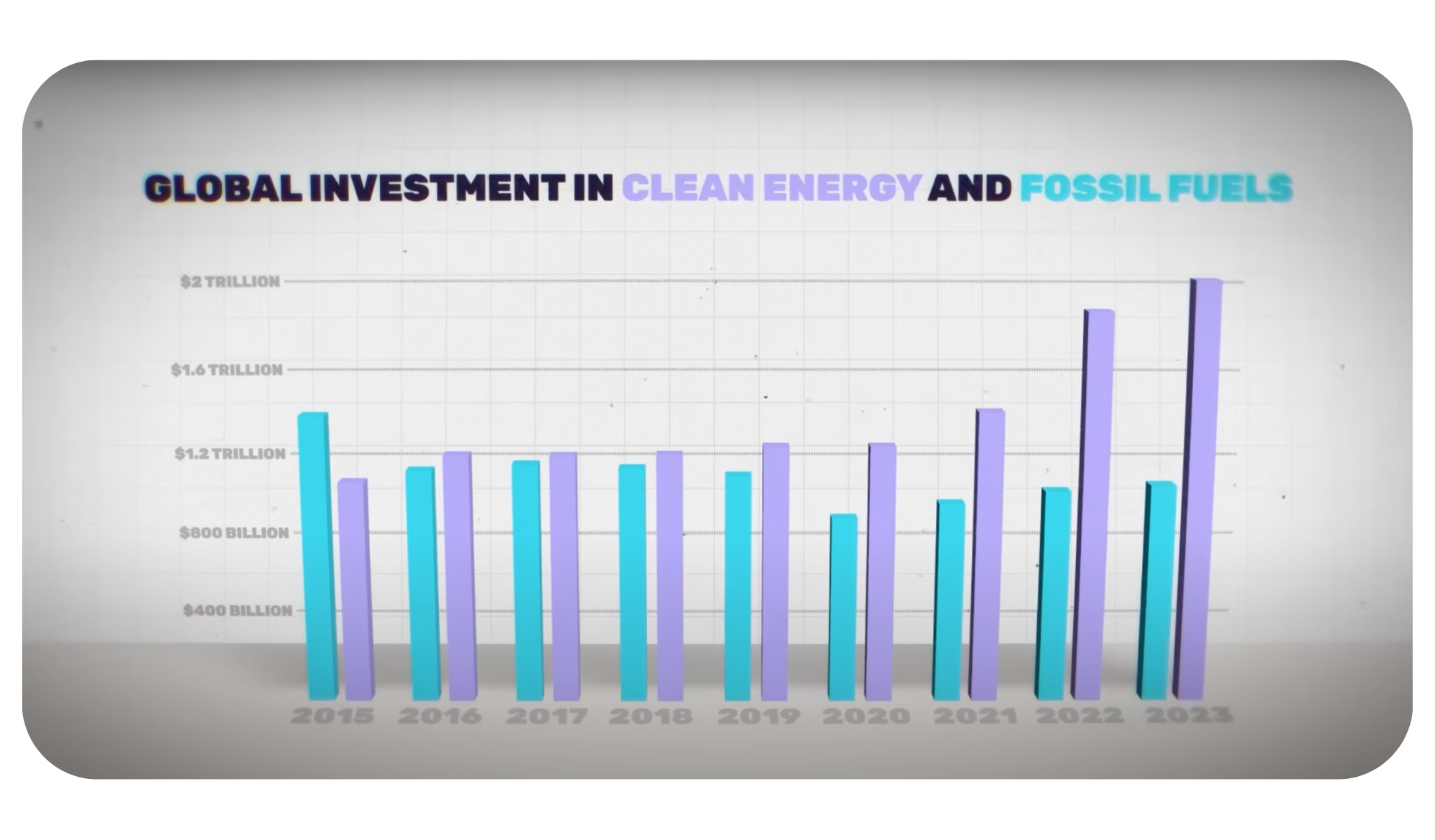
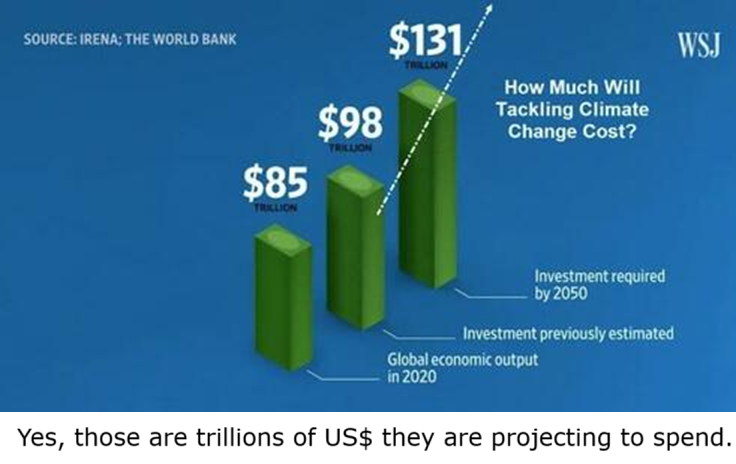
No doubt, this U-turn will be lamented by green activists. But the truth is that these promises were always an inefficient way of helping the planet, and very shortsighted for fossil fuel companies. Even after the world has spent $14 trillion on climate policy, more than four-fifths of global energy remains supplied by fossil fuels.

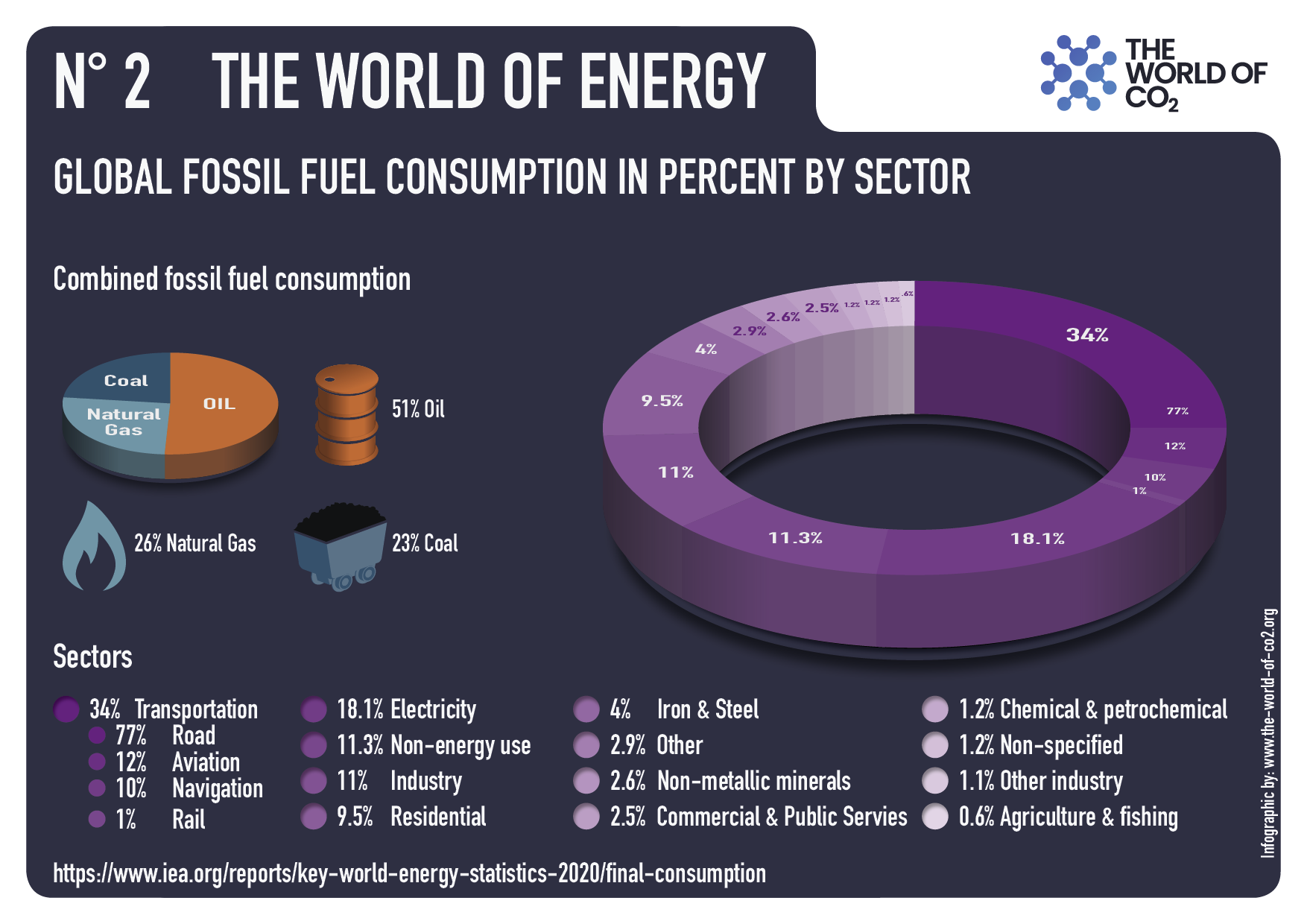
Over the past half-century, fossil fuel energy has more than doubled, with 2023 again setting a new record. Consumers and businesses are crying out for more energy, while competitor state-owned oil companies from the Middle East have continued to provide more fossil fuels. It is a foolish energy company that declares it will supply less energy.

Banks also had a fling with green policies, and have now dumped them, with the six largest U.S. banks leaving the Net-Zero Banking Alliance, and Wells Fargo officially abandoning its goal of achieving net-zero emissions across its financial portfolio by 2050.

In the peer-reviewed journal of the American Association for the Advancement of Science, a study finds that of 1,500 “climate” policies announced around the world, a mere 63, or 4%, produce any reduction in emissions.

While some industries are moving faster than others, there are signs that many companies will just change their language, and not their inefficient climate policies.

As leaders of international organizations and corporations scramble to adapt to an entirely new world, it’s important they go further than just shifts in rhetoric. The era of being cheered on for every green promise and vow – regardless of how silly or self-defeating – has come to an end. Now it’s time for those leaders to get back to business.

US Supremes Rein In Politicized Environmental Reviews

On May 29, 2025 SCOTUS ruled unanimously that NEPA (National Environmental Protection Act) can no longer be a tool for political activists against development projects.  The report from MSN is US Supreme Court limits environmental reviews in Utah railway ruling.  Excerpts in italics with my bolds and added images.

The U.S. Supreme Court dealt a setback to environmentalists on Thursday by allowing federal agencies to limit the scope of their reviews of the environmental impact of projects they regulate, as the justices bolstered a Utah railway project intended to transport crude oil.

The 8-0 ruling overturned a lower court’s decision that had halted the project and had faulted an environmental impact statement issued by a federal agency called the Surface Transportation Board in approving the railway as too limited in scope. The project was challenged by environmentalists and a Colorado county.

A coalition of seven Utah counties and an infrastructure investment group are seeking to construct an 88-mile (142-km) railway line in northeastern Utah to connect the sparsely populated Uinta Basin region to an existing freight rail network that would be used primarily to transport waxy crude oil.

The case tested the scope of environmental impact studies that federal agencies must conduct under a U.S. law called the National Environmental Policy Act (NEPA), enacted in 1970 to prevent environmental harms that might result from major projects. The law mandates that agencies examine the “reasonably foreseeable” effects of a project.

The ruling, authored by conservative Justice Brett Kavanaugh, was joined by four other conservative justices. The court’s three liberal justices filed a separate opinion concurring in the outcome.

Kavanaugh wrote that agencies need only consider environmental effects of a project at hand and not the “effects from potential future projects or from geographically separate projects,” and that courts must offer agencies “substantial deference” regarding the scope of these assessments.

“NEPA is a procedural cross-check, not a substantive roadblock. The goal of the law is to inform agency decision-making, not to paralyze it,” Kavanaugh wrote.

Background Post: US Supremes Hear Climate Lawfare Case to Stop Oil Railway

IER reports the news from December in article The Supreme Court Takes on a Case Involving the National Environmental Policy Act.  Excerpts in italics with my bolds and added images.

Key Takeaways

The Supreme Court recently heard a major case, Seven County Infrastructure Coalition v. Eagle County, Colorado, that will affect the scope of the National Environmental Policy Act (NEPA). The case concerns the permitting of a proposed Utah railway that would ship oil from the Uinta Basin, potentially quadrupling its oil production. The 88-mile Uinta Basin Railway would connect the oil fields of northeastern Utah to the national rail network running alongside 100 or so miles of the Colorado River to reach oil refineries on the Gulf Coast.  According to The Hill,  at issue is whether and when upstream and downstream environmental impacts should be considered as part of federal environmental reviews. The company behind the railway and a group of Utah counties appealed a lower court decision to the Supreme Court, arguing that those indirect impacts are beyond the scope of the federal reviews.

Background

The case concerns a rail line to support oil development and mineral mining. In 2021, the federal Surface Transportation Board (STB) issued a 3,600-page environmental impact statement to comply with NEPA and approved the rail line. The NEPA mandates that federal agencies assess the environmental effects of projects within their authority. Any major initiative that is managed, regulated, or authorized by the federal government must undergo a NEPA evaluation, a process that can span years and frequently exposes projects to legal challenges.

The STB analyzed the railway’s potential effects on local water resources, air quality, protected species, recreation, local economies, the Ute Indian tribe, and other factors. Environmental groups, however, sued the agency, saying that it failed to examine sufficiently how the railway might affect the risk of accidents on connecting lines hundreds of miles away and to assess emissions in “environmental justice communities” on the Gulf Coast from increased oil shipments, among other supposed shortcomings.

According to the Wall Street Journal editorial board, “a D.C. Circuit Court of Appeals panel sided with the plaintiffs and told the STB it must consider the line’s upstream and downstream effects even if they were hard to predict and beyond the control of the agency and developers. This includes the effects of oil shipments on Gulf Coast refiners and their contributions to climate change.” The appeals court ruling found that the federal STB violated the Endangered Species Act and the Interstate Commerce Commission Termination Act when it permitted the project.

Furthermore, the editorial board also explained that lower court judges—those on the D.C. and Ninth Circuits—ignored the Supreme Court’s past rulings and imposed arbitrary permitting requirements with no limiting principle. The STB lacks authority over Gulf Coast refiners and cannot prevent climate change.

Court Rulings Regarding NEPA

The Supreme Court has heard other related cases and held that agencies need not consider indirect and unpredictable impact, most recently in a 2004 case, Department of Transportation v. Public Citizen. In that case, the Supreme Court held that agencies need only analyze environmental impact with “a reasonably close causal relationship” over which they have “statutory authority” and which they can prevent.

In 2020, the Supreme Court green-lit approval for permits for the Atlantic Coast Pipeline after nearly seven years of litigation, but the pipeline was scrapped due to legal delays that raised project costs significantly. It takes an average of 4.2 years to litigate a NEPA challenge, which adds to the four or more years to obtain a federal permit. These delays are what frustrate investment in new projects, slowing job creation and economic expansion in the United States.

judge struck down a Montana coal mine permit because a federal agency did not consider the climate effects of coal combustion in Asia. Additionally, a 225-mile electric transmission line in Nebraska has been stuck in permitting for 10 years because a lower court invalidated a U.S. Fish and Wildlife permit.

Conclusion

The Supreme Court is tackling a case involving the scope of a federal environmental law, NEPA, that involves a rail line to move oil. In this case, lower courts agreed with environmental groups, who are challenging the government’s permit approval of the rail line. The case is instrumental to the issue of what should be considered when determining potential environmental damages. Congress recognizes that NEPA needs reform as delays over lawsuits have killed projects and dramatically increased their costs and it continues to debate ways to make federal permitting easier and quicker. Until that reform happens, however, Supreme Court Justices need to reign in the environmental limits of NEPA so that needed projects can progress in America.

Again, There is No Right to a Stable Climate

Twenty-two young people from across the country sued the
Trump administration over the executive orders,
which prioritize the expansion of fossil fuels.

The complaint, filed Thursday in the U.S. District Court in Montana, challenges three executive orders: “Unleashing American Energy,” “Declaring a National Energy Emergency” and “Reinvigorating America’s Beautiful Clean Coal Industry.” The lawsuit argues that with the orders, the Trump administration knowingly is advancing an agenda that will increase greenhouse gas pollution that already is stressing the global climate to a dangerous extent.

The litigation argues the situation infringes on the young people’s constitutional rights to life and liberty, as well as falling afoul of other laws approved by Congress that protect public health and the environment. The plaintiffs want the court to declare the executive orders unconstitutional, block their implementation and reaffirm the legal limits on presidential power.

“From day one of the current administration, President Trump has issued directives to increase fossil fuel use and production and block an energy transition to wind, solar, battery storage, energy efficiency, and electric vehicles (“EVs”),” the lawsuit states. “President Trump’s EOs falsely claim an energy emergency, while the true emergency is that fossil fuel pollution is destroying the foundation of Plaintiffs’ lives.”
It’s the same argument from the same people (Our Children’s Trust) that was shot down in flames just a year ago.  There were multiple attempts to undo the damaged legal maneuver to no avail.  Below is why this latest litigation should be put out of its misery at once.

 Appeals Court Rules Against Kids’ Climate Lawsuit, May 1, 2024

Ninth Circuit Court of Appeals grants Federal government’s petition for writ of mandamus in the case of Juliana v. United States, originally filed in 2015.  Ruling excerpts are below in italics with my bolds. 20240501_docket-24-684_order

In the underlying case, twenty-one plaintiffs (the Juliana plaintiffs) claim that—by failing to adequately respond to the threat of climate change—the government has violated a putative “right to a stable climate system that can sustain human life.” Juliana v. United States, No. 6:15-CV-01517-AA, 2023 WL 9023339, at *1 (D. Or. Dec. 29, 2023). In a prior appeal, we held that the Juliana plaintiffs lack Article III standing to bring such a claim. Juliana v. United States, 947 F.3d 1159, 1175 (9th Cir. 2020). We remanded with instructions to dismiss on that basis. Id. The district court nevertheless allowed amendment, and the government again moved to dismiss. The district court denied that motion, and the government petitioned for mandamus seeking to enforce our earlier mandate. We have jurisdiction to consider the petition. See 28 U.S.C. § 1651. We grant it.

In the prior appeal, we held that declaratory relief was “not substantially likely to mitigate the plaintiffs’ asserted concrete injuries.” Juliana, 947 F.3d at 1170. To the contrary, it would do nothing “absent further court action,” which we held was unavailable. Id. We then clearly explained that Article III courts could not “step into the shoes” of the political branches to provide the relief the Juliana plaintiffs sought. Id. at 1175. Because neither the request for declaratory relief nor the request for injunctive relief was justiciable, we “remand[ed] th[e] case to the district court with instructions to dismiss for lack of Article III standing.” Id. Our mandate was to dismiss.

The district court gave two reasons for allowing amendment. First, it concluded that amendment was not expressly precluded. Second, it held that intervening authority compelled a different result. We reject each.
The first reason fails because we “remand[ed] . . . with instructions to dismiss for lack of Article III standing.” Id. Neither the mandate’s letter nor its spirit left room for amendment. See Pit River Tribe, 615 F.3d at 1079.

The second reason the district court identified was that, in its view, there was an intervening change in the law. District courts are not bound by a mandate when a subsequently decided case changes the law. In re Molasky, 843 F.3d 1179, 1184 n.5 (9th Cir. 2016). The case the court identified was Uzuegbunam v. Preczewski, which “ask[ed] whether an award of nominal damages by itself can redress a past injury.” 141 S. Ct. 792, 796 (2021). Thus, Uzuegbunam was a damages case which says nothing about the redressability of declaratory judgments. Damages are a form of retrospective relief. Buckhannon Bd. & Care Home v. W. Va. Dep’t of Health & Human Res., 532 U.S. 598, 608–09 (2001). Declaratory relief is prospective. The Juliana plaintiffs do not seek damages but seek only prospective relief. Nothing in Uzuegbunam changed the law with respect to prospective relief.

We held that the Juliana plaintiffs lack standing to bring their claims and told the district court to dismiss. Uzuegbunam did not change that. The district court is instructed to dismiss the case forthwith for lack of Article III standing, without leave to amend.

Background July 2023: Finally, a Legal Rebuttal on the Merits of Kids’ Climate Lawsuit

As reported last month, the Oregon activist judge invited the plaintiffs in Juliana vs US to reopen that case even after the Ninth Circuit shot it down.  Now we have a complete and thorough Motion from the defendant (US government) to dismiss this newest amended complaint.  Most interesting is the section under the heading starting on page 30.  Excerpts in italics with my bolds and added images.

Plaintiffs’ Claims Fail on the Merits

Because Plaintiffs’ action fails at the jurisdictional threshold, the Ninth Circuit never reached—and this Court need not reach—the merits of the claims. . . Plaintiffs’ second amended complaint, which supersedes the first amended complaint, asserts the same claims that were brought in the first amended complaint, which this Court addressed in orders that the Ninth Circuit reversed. Defendants thus renew their objection that Plaintiffs’ claims fail on the merits and should be dismissed pursuant to Fed. R. Civ. P. 12(b)(6).

A. There is no constitutional right to a stable climate system.

The Supreme Court has repeatedly instructed courts considering novel due process claims
to “‘exercise the utmost care whenever . . . asked to break new ground in this field,’… lest the liberty protected by the Due Process Clause be subtly transformed” into judicial policy preferences. More specifically, the Supreme Court has “regularly observed that the Due Process Clause specially protects those fundamental rights and liberties which are, objectively, ‘deeply rooted in this Nation’s history and tradition.’”  Plaintiffs’ request that this Court recognize an implied fundamental right to a stable climate system contradicts that directive, because such a purported right is without basis in the Nation’s history or tradition.

The proposed right to a “stable climate system” is nothing like any fundamental right ever recognized by the Supreme Court. The state of the climate is a public and generalized issue, and so interests in the climate are unlike the particularized personal liberty or personal privacy interests of individuals the Supreme Court has previously recognized as being protected by fundamental rights.  “[W]henever federal courts have faced assertions of fundamental rights to a ‘healthful environment’ or to freedom from harmful contaminants, they have invariably rejected those claims.”. Plaintiffs’ First Claim for Relief must be dismissed.

B.  Plaintiffs fail to allege a cognizable state-created danger claim.

The First Claim for Relief must also be dismissed because the Constitution does not impose an affirmative duty to protect individuals, and Plaintiffs have failed to allege a cognizable claim under the “state-created danger” exception to that rule.
As a general matter:

[The Due Process Clause] is phrased as a limitation on the State’s power to act, not as a guarantee of certain minimal levels of safety and security. It forbids the State itself to deprive individuals of life, liberty, or property without “due process of law,” but its language cannot fairly be extended to impose an affirmative obligation on the State to ensure that those interests do not come to harm through other means.

Thus, the Due Process Clause imposes no duty on the government to protect persons from harm inflicted by third parties that would violate due process if inflicted by the government.

Plaintiffs contend that the government’s “deliberate actions” and “deliberate indifference” with regard to the dangers of climate change amount to a due process violation under the state-created danger exception.

First, Plaintiffs have identified no harms to their “personal security or bodily integrity” of the kind and immediacy that qualify for the state-created danger exception. . . But here, Plaintiffs allege that general degradation of the global climate has harmed their “dignity, including their capacity to provide for their basic human needs, safely raise families, practice their religious and spiritual beliefs, [and] maintain their bodily integrity” and has prevented them from “lead[ing] lives with access to clean air, water, shelter, and food.”  Those types of harm are unlike the immediate, direct, physical, and personal harms at issue in the above-cited cases.

Second, Plaintiffs identify no specific government actions—much less government actors—that put them in such danger. Instead, Plaintiffs contend that a number of (mostly unspecified) agency actions and inactions spanning the last several decades have exposed them to harm. This allegation of slowly-recognized, long-incubating, and generalized harm by itself conclusively distinguishes their claim from all other state-created danger cases recognized by the Ninth Circuit.

Third, Plaintiffs do not allege that government actions endangered Plaintiffs in particular. . . As explained above, Plaintiffs’ asserted injuries arise from a diffuse, global phenomenon that affects every other person in their communities, in the United States, and throughout the world.

For all these reasons, there is no basis for finding a violation of Plaintiffs’ due process right under the state-created danger doctrine, and Plaintiffs’ corresponding claim must be dismissed.

C. No federal public trust doctrine creates a right to a stable climate system.

Plaintiffs’ Fourth Claim for Relief, asserting public trust claims, should be dismissed for two independent reasons. First, any public trust doctrine is a creature of state law that applies narrowly and exclusively to particular types of state-owned property not at issue here. That doctrine has no application to federal property, the use and management of which is entrusted exclusively to Congress. . .Consequently, there is no basis for Plaintiffs’ public trust claim against the federal government under federal law.

Second, the “climate system” or atmosphere is not within any conceivable federal public trust.

1. No public trust doctrine binds the federal government.

Plaintiffs rely on an asserted public trust doctrine for the proposition that the federal government must “take affirmative steps to protect” “our country’s life-sustaining climate system,” which they assert the government holds in trust for their benefit.  But because any public trust doctrine is a matter of state law only, public trust claims may not be asserted against the federal government under federal law. . . The Supreme Court has without exception treated public trust doctrine as a matter of state law with no basis in the United States Constitution.

2. Any public trust doctrine would not apply to the “climate system” or the atmosphere.

Independently, any asserted public trust doctrine does not help Plaintiffs here. Public trust cases have historically involved state ownership of specific types of natural resources, usually limited to submerged and submersible lands, tidelands, and waterways. . . The climate system or atmosphere is unlike any resource previously deemed subject to a public trust. It cannot be owned and, due to its ephemeral nature, cannot remain within the jurisdiction of any single government. No court has held that the climate system or atmosphere is protected by a public trust doctrine. Indeed, the concept has been widely rejected.

For all these reasons, the Court should dismiss Plaintiffs’ Fourth Claim for Relief.

Background Post Update on Zombie Kids Climate Lawsuits: (Juliana vs. US) (Held vs Montana)

Adios Socialized Energy, Welcome Free Market Energy

tippinsights Editorial Board  explains this critical moment in the power struggle over whether the US will have an Energy Sector controlled by Federal diktats or by Market choices. Their article is Adios, Green New Deal. Welcome, Free-Market Energy Independence.  Excerpts in italics with my bolds and added images.

Trump Dismantles the Green Agenda, Embraces Capitalism,
and Launches America’s New Energy Future.

Buried within the 1,100-page bill recently passed by the House of Representatives—the “One Big, Beautiful Bill” that reflects President Trump’s priorities—are several provisions that, if enacted into law, could return the U.S. energy sector to a more capitalistic model.

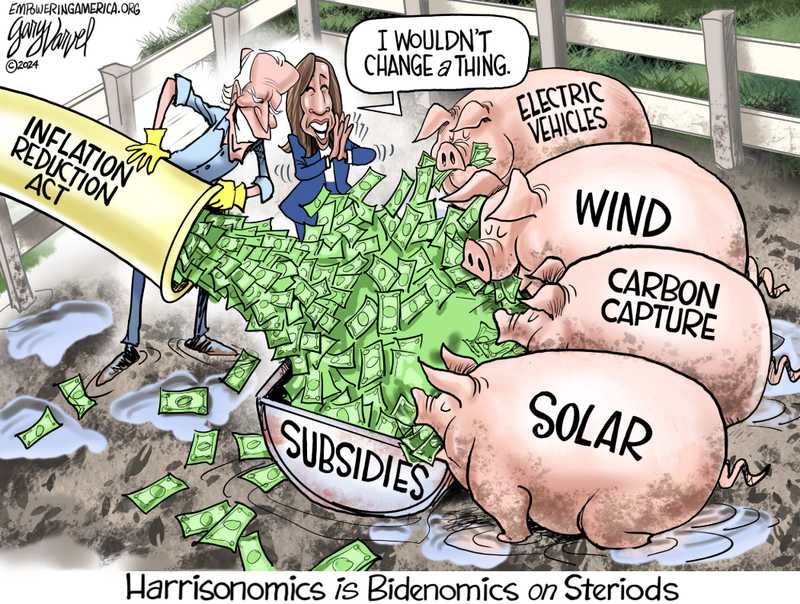
President Joe Biden, with strong backing from environmental lobbyists and a last-minute defection from West Virginia Senator Joe Manchin, pushed through the Inflation Reduction Act and the Infrastructure Bill. These measures allocated billions of dollars in federal credits and loan guarantees to favored industries, all under the banner of environmental protection.

What followed was a Soviet-style industrial strategy in which
a handful of Washington bureaucrats determined
the winners and losers of America’s energy future.

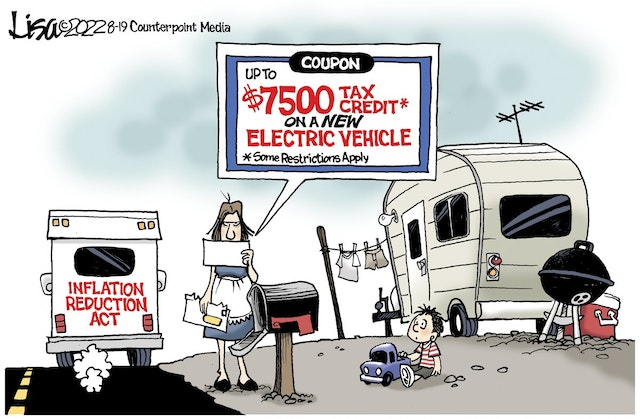
The Inflation Reduction Act (IRA) 2022 contained “Climate and energy investments” of approximately $369 billion over 10 years. These included $270 billion for clean energy tax credits to support wind, solar, geothermal, and other renewables; clean hydrogen production; and carbon capture and storage technologies. Buyers of electric vehicles would get up to a $7,500 tax credit for new EVs and up to a $4,000 tax credit for used EVs (with income and manufacturing origin restrictions). Tax credits and funding for domestic manufacturing of solar panels, wind turbines, batteries, and critical minerals exceeded $60 billion. Rebates for energy-efficient appliance upgrades, heat pumps, insulation, and home weatherization exceeded $60 billion under the Green Jobs and Environmental Justice banner.

With so much federal money up for grabs, greedy entrepreneurs flocked to risky green energy ventures, largely funded by grants and low-interest loans—funding they likely wouldn’t have secured through private markets. We all remember the Obama-era Solyndra disaster, but Biden’s approach was Solyndra-style investment on steroids.

What was worse, Biden used the vast levers of federal power to kneecap perfectly functioning industries. His administration was especially punitive toward the oil and gas sector: it suspended leases on federal land, blocked vast swaths of the Pacific, Atlantic, and Gulf coasts from new drilling, canceled major pipelines, and imposed regulatory hurdles that made it increasingly difficult for the fossil fuel industry to attract investment capital. As oil prices steadily rose, Biden’s energy strategy relied on tapping the Strategic Petroleum Reserve and urging Saudi Arabia to increase production—an ironic move given his simultaneous efforts to restrict Russian oil exports during the Ukraine war.

President Trump, who campaigned once again on the
“drill, baby, drill” message, has consistently opposed
such government interference in the energy markets.

He has long supported removing regulatory red tape and streamlining the permitting process to allow for increased oil production—lowering domestic prices and boosting exports. In December 2019, under Trump’s administration, the U.S. Energy Information Administration announced that America had become a net exporter of oil for the first time in nearly 60 years.

Biden’s green agenda had another critical flaw: financing. Much of it depended on borrowing from Chinaironically benefiting Chinese companies dominating the very industries Biden sought to boost. Since the launch of China’s “Made in China 2025” initiative, Chinese firms—heavily subsidized by their government—have taken over more than 85% of the global rooftop solar panel market. Battery components for solar installations have even higher Chinese market dominance. In effect, Biden borrowed money from China to finance the growth of Chinese companies that sold solar products to U.S. installers.

The new House bill aims to dismantle this entire framework in one stroke.

♦  It eliminates the trading of green credits between corporations;
♦  revokes low-interest green loans, and
♦  entirely phases out subsidies for renewable energy initiatives.

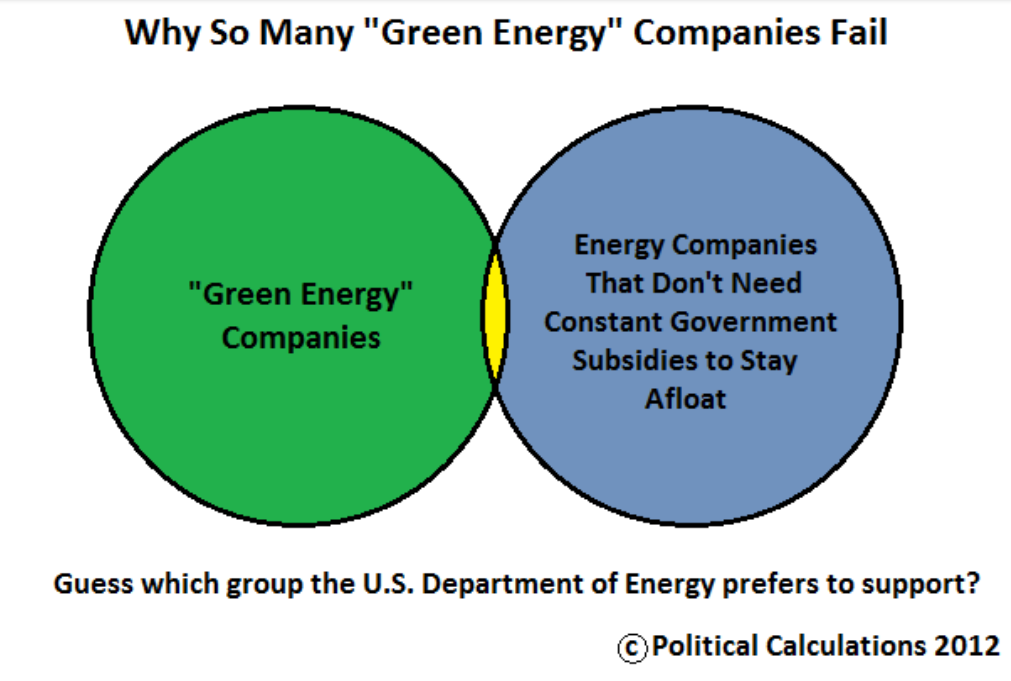
To those who claim this approach is irresponsible, we pose a simple question: How many more decades should the green energy sector rely on government aid to stay afloat? Sustainable energy and transition projects are essential, but they must prove their viability in the open market—just like oil and gas companies do every day. This is classic Adam Smith-style capitalism: let competition and innovation—not government favoritism—determine success.

Trump also supports nuclear power, one of the cleanest
and most efficient methods of generating electricity.

Critics on the Left often call nuclear energy dangerous, but even the most liberal nations—France, Germany, and Japan—have long depended on it. The only significant U.S. nuclear accident, Three Mile Island in the 1980s, did not result in any deaths. Despite Japan’s vulnerability to natural disasters, it maintained a strong safety record until Fukushima. The U.S., by contrast, is less prone to earthquakes or tsunamis, yet Congress and successive administrations have consistently stymied progress on nuclear energy.

This week, Trump signed an executive order that could clear the way for small-scale nuclear plants to begin operations within the next 18 months. These modern reactors, based on cutting-edge American technology, are far safer than their predecessors and are designed to power small cities or neighborhoods rather than entire states. Every aspect of nuclear energy today—from fuel storage to waste disposal—is light-years ahead of where it was decades ago. It’s a national disgrace that despite having world-class nuclear capabilities—including naval reactors and the world’s second-largest nuclear arsenal—our federal policies have hampered the civilian nuclear industry.

By issuing appropriate permitting waivers, Trump aims to unlock this potential, even if a modest federal investment is necessary to overcome ideological resistance from the Left. Energy independence and security should have been the hallmarks of the Obama and Biden administrations. Instead, they catered to the demands of environmental activists and weakened America’s energy position.

We are glad to say that the Green New Deal is dead.