The Problem with Climate Chicken Littles

Michael Walsh writes The Late Great (Again) Planet Earth in PJ Media. Excerpts in italics with my bolds. (Indented text is from George Monbiot, infamous alarmist).

Unexamined Premises

George Monbiot, the man who gave his name to the term “moonbat,” is back, like some hair-shirted lunatic screaming on a street corner, saying that we’re all doomed:

It was a moment of the kind that changes lives. At a press conference held by climate activists Extinction Rebellion last week, two of us journalists pressed the organisers on whether their aims were realistic. They have called, for example, for UK carbon emissions to be reduced to net zero by 2025. Wouldn’t it be better, we asked, to pursue some intermediate aims?

A young woman called Lizia Woolf stepped forward. She hadn’t spoken before, but the passion, grief and fury of her response was utterly compelling. “What is it that you are asking me as a 20-year-old to face and to accept about my future and my life? … This is an emergency. We are facing extinction. When you ask questions like that, what is it you want me to feel?” We had no answer.

Softer aims might be politically realistic, but they are physically unrealistic. Only shifts commensurate with the scale of our existential crises have any prospect of averting them. Hopeless realism, tinkering at the edges of the problem, got us into this mess. It will not get us out.

Now that there is some prime moonbattery, even by Monbiot’s soaring standards. What a 20-year-old female knows about anything is moot, but her notion that she is “facing extinction” is beyond delusional; in fact, it’s the product of having her head stuffed with the most self-evidently arrant nonsense of the modern era: “climate change.”

Since at least 1970, when the not-yet-late great Hal Lindsey told us we were all going to die in The Late Great Planet Earth, snake-oil salesmen and Chicken Littles around the world have joined forces to convince the rubes and the suckers that the Earth is, so to speak, on her last legs unless we do something right now. Lindsey’s book employed Bible “prophecy” to limn our destruction at the hands of the Antichrist and the return of Jesus sometime in the 1980s.

Well, you can’t go wrong betting against religious crackpots, and while the climate-change freaks are ostensibly secular, their approach to their unalterable dogma has all the hallmarks of a particularly nutty faith. Never mind that the data to which they so fearfully cling is either bogus or misinterpreted; combine that with the natural human tendency to think that the world as we know it began, and will end, with us — that everything is, to use one of their favorite words, “unprecedented” (if you pay no attention to history) — and you have a rich field for superstition wedded to calls for (what else?) immediate governmental action.

How Have Predictions on Catastrophic Climate Change Held Up Over the Last 30 Years?

So this was a bummer:

Researchers with UC San Diego’s Scripps Institution of Oceanography and Princeton University recently walked back scientific findings published last month that showed oceans have been heating up dramatically faster than previously thought as a result of climate change.

In a paper published Oct. 31 in the journal Nature, researchers found that ocean temperatures had warmed 60 percent more than outlined by the United Nation’s Intergovernmental Panel on Climate Change. However, the conclusion came under scrutiny after mathematician Nic Lewis, a critic of the scientific consensus around human-induced warming, posted a critique of the paper on the blog of Judith Curry, another well-known critic.

“The findings of the … paper were peer reviewed and published in the world’s premier scientific journal and were given wide coverage in the English-speaking media,” Lewis wrote. “Despite this, a quick review of the first page of the paper was sufficient to raise doubts as to the accuracy of its results.”

Co-author Ralph Keeling, climate scientist at the Scripps Institution of Oceanography, took full blame and thanked Lewis for alerting him to the mistake. “When we were confronted with his insight it became immediately clear there was an issue there,” he said. “We’re grateful to have it be pointed out quickly so that we could correct it quickly.”

Keeling said they have since redone the calculations, finding the ocean is still likely warmer than the estimate used by the IPCC. However, that increase in heat has a larger range of probability than initially thought — between 10 percent and 70 percent, as other studies have already found.

In other words, never mind. But that won’t stop the moonbats from flapping ever more vigorously. I just shoveled six inches of global warming off my patio here in rural New England, while California continues to burn — but all weather and weather-related events are of a piece with the Unified Field Theory of Everything: evil mankind (white, male, middle-aged) is killing Mother Gaia. Hence, the calls for “environmental justice,” which like all modified forms of “justice” equals punishment and payback.

Guru Monbiot again:

Public figures talk and act as if environmental change will be linear and gradual. But the Earth’s systems are highly complex, and complex systems do not respond to pressure in linear ways. When these systems interact (because the world’s atmosphere, oceans, land surface and lifeforms do not sit placidly within the boxes that make study more convenient), their reactions to change become highly unpredictable. Small perturbations can ramify wildly. Tipping points are likely to remain invisible until we have passed them. We could see changes of state so abrupt and profound that no continuity can be safely assumed.

Only one of the many life support systems on which we depend – soils, aquifers, rainfall, ice, the pattern of winds and currents, pollinators, biological abundance and diversity – need fail for everything to slide. For example, when Arctic sea ice melts beyond a certain point, the positive feedbacks this triggers (such as darker water absorbing more heat, melting permafrost releasing methane, shifts in the polar vortex) could render runaway climate breakdown unstoppable. When the Younger Dryas period ended 11,600 years ago, temperatures rose 10C within a decade.

Okay, George, who’s to blame?

The oligarchic control of wealth, politics, media and public discourse explains the comprehensive institutional failure now pushing us towards disaster. Think of Donald Trump and his cabinet of multi-millionaires; the influence of the Koch brothers in funding rightwing organisations; the Murdoch empire and its massive contribution to climate science denial; or the oil and motor companies whose lobbying prevents a faster shift to new technologies.

Sort of gives the game away, doesn’t it?

Two tasks need to be performed simultaneously: throwing ourselves at the possibility of averting collapse, as Extinction Rebellion is doing, slight though this possibility may appear; and preparing ourselves for the likely failure of these efforts, terrifying as this prospect is. Both tasks require a complete revision of our relationship with the living planet.

Because we cannot save ourselves without contesting oligarchic control, the fight for democracy and justice and the fight against environmental breakdown are one and the same. Do not allow those who have caused this crisis to define the limits of political action. Do not allow those whose magical thinking got us into this mess to tell us what can and cannot be done.

In other words, the sky is falling so we need nothing short of a Leftist political revolution to save ourselves, and even then it may be too late. As I often say on Twitter, I never take political advice from small children, and certainly not from 20-year-old hysterics. Besides, the world has weathered worse patches than this before: (from Harvard professor Michael McCormick )

Bubonic plague, famine, war and flu pandemics have made some periods of human history infamous for death and suffering but one year stands above the rest in terms of misery; 536 AD. According to research from a Harvard professor, it is a prime candidate for the unfortunate accolade of the worst year in the entirety of recorded history.

Europe, the Middle East, and parts of Asia were plunged into 18 months of solid darkness by a mysterious fog. It caused snowfall in China, continental-scale crop failure, extreme drought, famine and disease throughout most of the northern hemisphere. The bleak year was triggered by a cataclysmic Icelandic eruption, scientists say, and was an ominous omen for a bleak century of suffering and death.

The eerie fog created a drab world with darkness residing over the northern hemisphere for 18 months, with an unrelenting dusk persevering through day and night. Effects on the climate were so severe that the Irish chronicles tell of ‘a failure of bread from the years 536–539’. Temperatures in the summer of 536 fell between 1.5°C (2.7°F) and 2.5°C (4.5°F), initiating the coldest decade in the past 2,300 years.

And nary an SUV or a fossil fuel to blame, unless you count wood and turf. The blackout seems to have been caused (as subsequent, similar events like the 1816 “year without a summer” were) by a volcanic eruption, this one in Iceland. Amazing what climatological havoc Gaia can wreak when she puts her mind to it.

God knows whom or what the poor sods living in the ruins of the Roman Empire in the 6th century blamed for the weather — probably God, possible cow farts — but today’s True Believers no longer believe in God; rather, they believe in Man, as both the root of all evil and the last best hope of Earth, if only Man would have the decency to kill himself. Or at least kill the conservatives, so that poor little Lizia Woolf may thrive without fear of imminent extinction or another Orson Welles documentary.

See Also Climate Horror Show


Will the Courts Shut Off Energy Supplies?

Numerous posts here have reported on efforts by climate lawyers to stop use of fossil fuels (FF) to prevent imaginary global warming. The failure of rising CO2 to cause warming in the atmosphere is confirmed yet again by a detailed study of the last 40 years of satellite measurements. My synopsis with links is Atmospheric Observations Contradict Global Warming Theory.

Despite no apparent global warming, climatists (alarmists/activists) are determined that fossil fuels be “left in the ground.” Actually, everyone knows it is not illegal to sell and use fossil fuel products. Of course there are attempts to change that, the current example being the kids lawsuit, destined eventually to go before the US Supreme Court. See Kid’s Climate Lawsuit Update Nov. 5.

Even before that long-shot case started in 2015, climate lawyers have been busy applying another strategy. Since it is legal (still) to sell and use FF, the idea is to prevent the transport of such energy by pipelines, thereby blocking sale and usage and eventually making extraction and production of FF uneconomic. Hence, numerous legal actions have been mounted to prevent or shut down gas and/or oil pipelines.

An insight into their thinking is provided by the recent Montana District judge stopping the Keystone pipeline project that was expressly approved by President Trump. The District Court Order is published at Sierra Club website, since they are a major employer of climate lawyers. (SEIS means the final Supplemental Environmental Impact Statement; ROD means Record of Decision by the Department authority (State Dept. In this case)). The order (here) is written by Judge Brian Morris, excerpts in italics with my bolds.

2. The Department’s Conclusions on Climate Change

The 2014 SEIS determined that the pipeline would not affect significantly oil extraction in Canada. As a result of this determination, the 2014 SEIS reasoned that the emissions associated with transporting 830,000 bpd of tar sands crude oil (Keystone’s capacity), would occur regardless of the pipeline’s existence. To reach this conclusion, the 2014 SEIS analyzed numerous factors, including the price of oil, transportation costs, and supply and demand for oil.

The Court must limit its review to determining whether the 2014 SEIS took a “hard look” at the effects of Keystone on oil markets. The Department met this “hard look” requirement in its market analysis and its conclusion that Keystone would not impact the rate of tar sands extraction. The Department provided sufficient analysis that went beyond mere assumptions of the rate of oil sands extraction rates in 2014. The Court finds no error in the Department’s 2014 analysis of the rate of tar sands extraction and its impact on climate change.

The Department denied the permit in its 2015 ROD. The Department relied heavily on the United States’s role in climate leadership.

[My Comment: That 2014 Keystone project SEIS statement proved embarrassing to then-President Obama, who was gearing up for the 2015 do-or-die Paris Accord conference. He directed State Dept. to reconsider, and they did in the 2015 ROD.]

The Department issued a new ROD in 2017. The new ROD noted that “there have been numerous developments related to global action to address climate change, including announcements by many countries of their plans to do so” since the 2015 ROD. Moreover, the new ROD suggested that “a decision to approve [the] proposed Project would support U.S. priorities relating to energy security, economic development, and infrastructure.” The Department argues that this about-face constitutes a mere policy shift, and that on its own, cannot be found arbitrary and capricious.

The Department possesses the authority to give more weight to energy security in 2017 than it had in 2015. Kake and State Farm make clear, however, that “even when reversing a policy after an election, an agency may not simply discard prior factual findings without a reasoned explanation.” The Department did not merely make a policy shift in its stance on the United States’s role on climate change. It simultaneously ignored the 2015 ROD’s Section 6.3 titled “Climate Change-Related Foreign Policy Considerations.” Section 6.3 of the 2015 ROD determined that the United States’s climate change leadership provided a significant basis for denying the permit. The Department acknowledged science supporting a need to keep global temperature below two degrees Celsius above pre-industrial levels Id. at 1182-83. The Department further recognized the scientific evidence that human activity represents a dominant cause of climate change. The Department cited transboundary impacts including storm surges and intense droughts. And finally, the Department accepted the United States’s impact as the world’s largest economy and second-largest greenhouse gas emitter.

[My comment: Note that President’s Obama’s personal desire to be a global leader on climate change is referred to as a “factual finding” and President Trump’s alternate policy is called “capricious.” President Obama’s personal beliefs then serve to justify introducing a bunch of UN-IPCC assertions to override US sovereignty.]

The 2017 ROD initially tracked the 2015 ROD nearly word-for-word. The 2017 ROD, without explanation or acknowledgment, omitted entirely a parallel section discussing “Climate Change-Related Foreign Policy Considerations.” The 2017 ROD ignores the 2015 ROD’s conclusion that 2015 represented a critical time for action on climate change. The 2017 ROD avoids this conclusion with a single paragraph. The 2017 ROD simply states that since 2015, there have been “numerous developments related to global action to address climate change, including announcements by many countries of their plans to do so.”

Once again, this conclusory statement falls short of a factually based determination, let alone a reasoned explanation, for the course reversal. “An agency cannot simply disregard contrary or inconvenient factual determinations that it made in the past, any more than it can ignore inconvenient facts when it writes on a blank slate.”

Blaming FF Pipelines for Global Warming/Climate Change

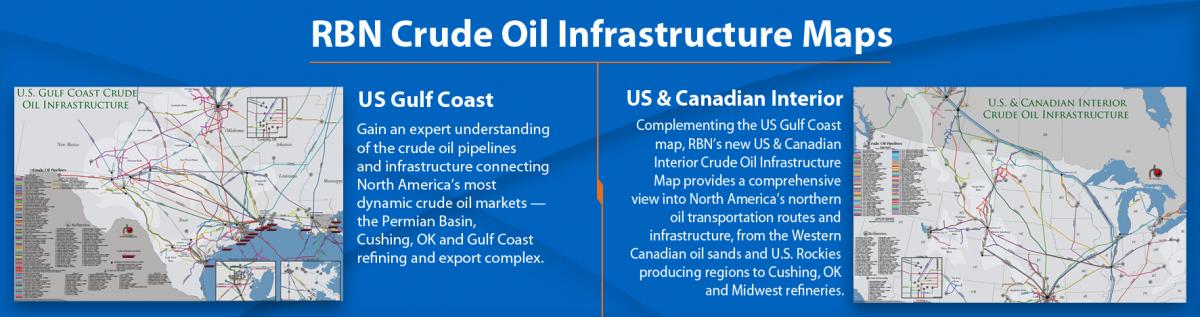
The Trump administration will be considering the most effective response to the above latest judicial creativity.  Meanwhile, a look into the saga of the Sabal Trail pipeline shows how climate lawyers are beavering away to undermine and blockade FF energy infrastructure. Overview and current pipeline status is from RBN Energy Northeast Gas Pulled South By Florida Power Plants And Sabal Trail. Excerpts in italics with my bolds.

Florida’s electric utilities are turning to natural gas-fired power and renewables for all their incremental generation needs and as replacements for the older coal units they’ve been retiring. The state’s big bet on natural gas has been spurring the development of new pipelines. And, because of big shifts in where gas is being produced and where it’s flowing, the Sunshine State will soon be receiving an increasing share of its gas needs from the Marcellus region. Today, we discuss the slew of new gas-fired power plants that have come online, the additional plants planned, and gas flows on Sabal Trail, the first new gas mainline into the state in almost two decades.

Open image in new tab to enlarge.

With more than a year of Sabal Trail operational history in the books and Florida’s seasonal weather as hot and humid as modern man and woman can bear, we decided it was time for an update. As we said in Part 1 of this two-part series, Florida is a leading generator of electricity — second only to Texas, in fact — and in recent years its electric utilities have been particularly aggressive in their shift from coal (and nuclear) generation to gas. That spurred the development of the 1.1-Bcf/d Sabal Trail Pipeline, which runs more than 500 miles from an interconnect with Williams’s Transcontinental Gas Pipeline (Transco) in west-central Alabama to the Orlando-area gas hub (black dot in Figure 1). A related pipeline called Florida Southeast Connection delivers gas from that hub into South Florida. Sabal Trail — in service since May 2017 — increased to three the number of gas mainlines serving the state, the other two being the 3.1-Bcf/d Florida Gas Transmission and the 1.3-Bcf/d Gulfstream Natural Gas System.

Obstructing Sabal Trail

Climate lawyers have opposed and obstructed Sabal Trail pipeline for years, and their arguments are seen in the most recent ruling by FERC, the Federal Energy Regulatory Commission, August 10, 2018 Order Denying Rehearing. Excerpts in italics with my bolds.

Sierra Club claims that the Commission has entirely ignored downstream emissions. This is not true. The Commission fully considered GHG emissions in the Final SEIS by quantifying them and providing information that put the GHG emissions in context. In this case, having confirmed, following review of the Final SEIS, that the SMP Project remains an environmentally acceptable action, the Commission has no need to effectively re-open its balancing to determine whether the environmental consequences outweigh the previously-identified benefits. The fact that, explained above, the Final SEIS was unable to determine whether the quantified GHG emissions were significant, does not vitiate the fact that we analyzed them and concluded that the identified quantity of GHG emissions does not support a finding that the SMP Project is environmentally unacceptable.

Sierra Club further states that nothing in the NGA (National Gas Act) precludes consideration of downstream emissions. This is correct. We have never suggested to the contrary. Whether such consideration is required by law and whether such consideration compels an outcome of denial of pipeline infrastructure, is a different question. The Commission’s public interest balancing includes a wide-range of factors, but the “principal aim” of the NGA, as determined by Congress, is to “encourag[e] the orderly development of plentiful supplies of . . . natural gas at reasonable prices,” and “protect[] consumers against exploitation at the hands of natural gas companies.” As the Commission explained in the Remand Order, “the public interest that the Commission must protect always includes the interest of consumers in having access to an adequate supply of gas at a reasonable price.”

It is within the policy framework established by Congress in the NGA that the Commission determines whether a proposed project is “environmentally acceptable.” As we explain herein, that determination included consideration of downstream GHG emissions and their secondary effects. We acknowledge that there may be disagreement with the policy choice expressed in the NGA; however, the Remand Order correctly found that “it is for Congress or the Executive Branch to decide national policy on the use of natural gas and that the Commission’s job is to review applications before it on a case-by-case basis.”

57.Congress has not granted the Commission the responsibility to affirmatively establish federal climate policy. Accordingly, we believe the Commission’s proper role is to implement federal climate policies—as established by Congress and those Executive departments to which Congress has delegated the requisite authority—in discharging its duties under the NGA and other statutes the Commission administers, including the Federal Power Act (FPA). The D.C. Circuit has explained that, “[a]s a federal agency, FERC is a ‘creature of statute,’ having ‘no constitutional or common law existence or authority, but only those authorities conferred upon it by Congress.’”

Whether Congress’s directive for the Commission “to encourage the orderly development of plentiful supplies of . . . natural gas at reasonable prices,” is outweighed by the need to address the problem of global climate change is “a question of deep ‘economic and political significance’ that is central to this statutory scheme; had Congress wished to assign that question to an agency, it surely would have done so expressly.” The lack of such an express grant does not necessarily preclude the Commission from considering the impacts of climate change in its assessment of the public interest. But it does mean that the Commission may not flip the NGA on its head, by using it as a vehicle to regulate climate change—and the numerous upstream and downstream activities that contribute thereto—rather than the transportation and sale of natural gas in interstate commerce.

The rehearing requests filed by Sierra Club, G.B.A. Associates, and K. Gregory Issacs are hereby denied. (B) The request for stay filed by Sierra Club is dismissed as moot.

A more precise explanation of the issues in play is provided by a dissenting opinion written by Judge Brown at the DC Court of Appeals in 2017 regarding Sabal Trail pipeline.

Overview of the August 22, 2017 Ruling on Sabal Trail Florida Pipeline Project

Media Report: Activists won a huge victory when a Washington, D.C. appellate court panel sided with the Sierra Club, saying the federal agency that reviewed the project had made a huge error. In the narrow 2-1 decision, U.S. Circuit Judge Thomas B. Griffith wrote that the Federal Energy Regulatory Commission (FERC) should have considered the impact of the pipeline’s added greenhouse gas emissions.

BROWN, Circuit Judge, concurring in part and dissenting in part (in italics with my bolds)

I join today’s opinion on all issues save the Court’s decision to vacate and remand the pipeline certificates on the issue of downstream greenhouse emissions. Case law is clear: When an agency “‘has no ability to prevent a certain effect due to’ [its] ‘limited statutory authority over the relevant action[],’ then that action ‘cannot be considered a legally relevant cause’” of an indirect environmental effect under the National Environmental Policy Act (“NEPA”).

Here, FERC declined to engage in an in-depth examination of downstream greenhouse gas emissions because there is no causal relationship between approval of the proposed pipelines and the downstream greenhouse emissions; and, even if a causal relationship exists, any additional analysis would not meaningfully contribute to its decision making. Both determinations were reasonable and entitled to deference.

Regarding causation, the Court is correct that NEPA requires an environmental analysis to include indirect effects that are “reasonably foreseeable,” Freeport, 827 F.3d at 46, but it misunderstands what qualifies as reasonably foreseeable. The Court blithely asserts it is “not just the journey,” it is “also the destination.” Maj. Op. at 18. In fact, NEPA is a procedural statute that is all about the journey. It compels agencies to consider all environmental effects likely to result from the project under review, but it “does not dictate particular decisional outcomes.”

While the Court concludes FERC’s approval of the proposed pipelines will be the cause of greenhouse gas emissions because a significant portion of the natural gas transported through the pipeline will be burned at power plants, see Maj. Op. at 19, the truth is that FERC has no control over whether the power plants that will emit these greenhouse gases will come into existence or remain in operation.

Even if the Court is correct that the Commission has the power to deny pipeline certificates based on indirect environmental concerns, such a denial represents the limit of the Commission’s statutory power. Nothing would prevent the Florida Board from independently approving the construction or expansion of the power plants at issue. In fact, the record shows the Board has already approved some of these projects prior to the Commission reaching a decision on the proposed pipelines. JA 910–11. Moreover, there is also nothing preventing the Intervenors from pursuing an alternative method of delivery to account for the same amount of natural gas. Practical considerations point in the opposite direction. Both the Board and the Commission have concluded Florida has a need for additional natural gas, and nothing in today’s opinion takes issue with those holdings.

Thus, just as FERC in the DOE cases and the Federal Motor Carrier Safety Administration in Public Citizen did not have the legal power to prevent certain environmental effects, the Commission here has no authority to prevent the emission of greenhouse gases through newly-constructed or expanded power plants approved by the Board.

Summary

Climate lawyers funded by Sierra Club and other activists are attempting to load upon pipelines the guilt by association with fossil fuels. That their global warming fears are unfounded does not deter them. And they attempt to twist regulatory statutes to their purpose rather than what was congressional intent. As Judge Kavanaugh put it in a different DC Court of Appeals ruling: They are jamming a square peg (addressing climate change) in a round hole (eg.limiting ozone-destroying chemicals).

Midterms: Voters Rejected Most Climate Energy Propositions


Nevada voters passed Question 6 on Tuesday, which calls for the state to use 50 percent renewable energy by the year 2030. Supporters say Question 6 will generate hundreds of millions of dollars in economic activity and create thousands of new Nevada jobs (sic)

“Clean energy is putting Nevadans to work, with more than 25,000 strong employed in 2017,” said Ray Fakhoury, state policy manager with the national business group Advanced Energy Economy, in statement. “By increasing the state’s renewable standard, Nevada has set itself up to continue reaping the economic benefits for years to come.”

Major corporations, including casinos and data centers, have recently been investing heavily in renewable energy in Nevada. With the passage of Question 6, Alli Gold Roberts, senior manager of state policy with Ceres, said the state is “poised to continue to attract corporate renewable energy investment.”

Question 6, to boost the RPS to 50 percent, will now have to pass again in 2020 in order to become law. AEE’s Fakhoury said consumers could see benefits sooner than that. “Passing with wide support, the legislature and governor-elect should move forward in the upcoming legislative session to enact this landmark increase,” he said.

Corporate clean energy buyers invested heavily in a separate Nevada ballot measure, Question 3, which sought to deregulate Nevada’s retail electricity market, but the measure was ultimately unsuccessful. Question 3 was the subject of fierce debate. According to the Nevada Independent, it was backed by Sheldon Adelson’s Sands Corp. (Adelson also happens to be a major Republican donor) and the data company Switch, as well as many clean energy and environmental groups.

But there were also concerns about how Question 3 would affect electricity rates and clean energy adoption. The Natural Resources Defense Council, the Sierra Club, Southwest Energy Efficiency Project, and Western Resource Advocates came out against deregulating Nevada’s electricity market because of the disruption they said it would cause to the state’s clean energy progress. NV Energy also opposed Question 3, and planned to spend $30 million on defeating it.

Arizona rejects 50% RPS
Arizona voters overwhelmingly rejected Proposition 127 on Tuesday, a constitutional amendment that would have required 50 percent of the state’s electricity to come from renewable sources by 2030. It’s a significant victory for the state’s largest utility, Arizona Public Service (APS), which spent heavily to oppose the measure. California billionaire Tom Steyer’s political group NextGen America funded efforts in support of the measure.

Proposition 127 was by far the most expensive ballot initiative in Arizona state history. Opponents said the measure would increase electric bills by forcing utilities to build new solar and wind plants, which would result in the early closure of coal plants and the state’s lone nuclear plant. Supporters argued those claims were unfounded given that renewable energy resources are now competitive with fossil fuels, even when coupled with battery storage.

APS was particularly outspoken about losing the Palo Verde nuclear plant if the RPS measure passed. If that plant goes offline, the utility argued, greenhouse gas emissions in the state would rise.

While Proposition 127 has failed, Arizona regulators are still considering a proposal to increase Arizona’s RPS to 80 percent by 2050 and broaden it to also include nuclear power. APS generally supports that plan.

Colorado votes down a fracking ban
Colorado voters rejected a measure Tuesday that would have blocked new oil and gas drilling within 2,500 feet of homes, schools and other occupied areas.

Proposition 112 stemmed from complaints that fracking was encroaching on populated areas, creating health and safety concerns. An analysis showed that the measure would have blocked new oil and gas wells on 85 percent of nonfederal land in Colorado, which is America’s fifth-largest gas-producing and seventh-largest oil-producing state.

Washington state rejects a carbon price — again
Washington state has failed, once again, to pass a carbon tax. Initiative 1631, the Carbon Emissions Fee Measure, would have set a carbon fee starting at $15 per ton in 2020, rising to around $55 per ton in 2035, depending on inflation.

This is the second major election in a row in which Washington voters have rejected a ballot initiative that would put a price on carbon emissions. The first such ballot was proposed in 2016 and failed.

Tuesday’s loss may cast doubt on the broader narrative that states will lead on climate action in the absence of federal leadership, or it could signal that Americans simply aren’t ready to get behind a carbon tax. Alternatively, it could have all come down to spending. Supporters of Initiative 1631 spent at least $12 million to advance the measure, while opponents spent more than $25 million.

Source: Greentech Media  Midterms 2018: Mixed Results for the Renewable Energy Agenda

Background: Five States to Vote on Futile Climate Proposals

Kid’s Climate Lawsuit Update Nov. 5


img

As predicted in the previous post (reprinted below), US lawyers are following the Supreme’s lead by again asking the Ninth Circuit Court of Appeals to dismiss the case.  At the same time, one motion filed at the Oregon District Court asks for a stay of proceedings there pending a ruling by the Appeals Court.  Another motion asks the Oregon court to again consider narrowing the scope of the lawsuit.  The documents can be accessed at Columbia’s climate litigation website for Juliana vs. United States  Some excerpts in italics with my bolds, followed by the Nov. 2 post.

From Petition to Court of Appeals:

If the district court grants certification and stays all proceedings, as the Supreme Court has signaled that it should, it will obviate the need for this Court’s intervention by way of mandamus. If, however, the district court declines to grant certification (despite the Supreme Court’s clear guidance to the contrary), this Court would need to intervene to provide the pretrial appellate review contemplated by the Supreme Court. 

To be clear, the government hopes that this Court’s intervention through extraordinary relief will not be necessary. The government is doing everything in its power to persuade the district court to follow the Supreme Court’s guidance and to certify its decisions for interlocutory appeal. But if the district court declines to do so, this Court should intervene to provide the relief that the Supreme Court has expressly stated “may be available in” this Court — and that is plainly warranted given the fundamental defects in Plaintiffs’ action. ECF No. 416, at 2.

Previous Post Nov. 2, 2018:  Supremes Kick Kids Lawsuit Down the Road

Last night the US Supreme justices refused the federal government’s petition to end the Oregon district court case. The media headlines will say this action allows the case to start, but that is not what happened. The real story concerns procedural hurdles and comes from Scotusblog, not from the green industry PR department (when did yellow journalism change colors?).

Everyone knows this issue will eventually come to the Supreme Court for a ruling. Some judges in black robes will take the heat for telling the truth about the case’s fatal legal flaws. So the Supremes will allow (not prevent) the lower courts to do their job to declare the suit out of bounds. All the while they know any lower ruling will be appealed by the losing side to the top later on.

As you will see, there are probably two more procedural maneuvers before the case can proceed to address the merits, or lack thereof. Yesterday, the Supremes noted that the Ninth District Court of Appeals twice refused the fed’s petition on grounds that no longer pertain. Thus, they suggest that the Ninth take a third kick at this can, perhaps this time actually engaging the issues.

If, as everyone expects, the Ninth follows their San Francisco-based leftist leanings and summarily grants no relief, then the feds can come back to the Supremes having no longer any recourse at lower levels. BTW, two Supreme Justices said they were ready now to grant the federal petition as it stands.

Amy Howe writes truthfully Justices refuse to block climate-change trial. Excerpts below in italics with my bolds.

Tonight the Supreme Court declined to intervene to block the trial in a lawsuit filed by a group of children and teenagers who have asked a federal district court in Oregon to order the federal government to prepare and put in place a plan to phase out fossil-fuel emissions. Although the justices’ ruling formally cleared the way for a trial in the case to go forward, the court stressed that the government may be able to get the relief that it is seeking in the U.S. Court of Appeals for the 9th Circuit, and it did not foreclose the possibility that the government could return to the Supreme Court yet again.

Text of Supreme Court Order ORDER IN PENDING CASE

This afternoon’s order was the latest chapter in the climate-change lawsuit, which was originally filed in 2015, during the Obama administration. The plaintiffs contend that the federal government’s conduct has led to a “dangerous climate system,” in conflict with their constitutional right to a “climate system capable of sustaining human life.”

The federal government first came to the Supreme Court in the case last summer, asking the justices to block discovery and a trial until the U.S. Court of Appeals for the 9th Circuit could rule on the government’s request to have the case dismissed or, at the very least, put on hold. But the justices declined to step in, describing the government’s request as “premature.” At the same time, the justices acknowledged that the plaintiffs’ claims are “striking” and that there are “substantial grounds for difference of opinion” on whether those claims belong in court at all; they also emphasized that the district court should “take these concerns into account in assessing the burdens of discovery and trial, as well as the desirability of a prompt ruling on” other motions that the government had filed seeking dismissal of the plaintiffs’ claims.

With a trial looming, the government returned to the Supreme Court again last week, complaining that the district court had declined to “meaningfully narrow” the scope of the case. It asked the justices to either end the lawsuit altogether or, at a minimum, review the district court’s rulings allowing the case to go forward. Chief Justice John Roberts, who at the time handled emergency requests from the geographic area that includes Oregon, agreed to put discovery and the trial on hold temporarily to give the plaintiffs an opportunity to respond to the government’s application.

In their response, the plaintiffs urged the justices to allow the trial to go forward. They noted that most pretrial fact-finding had already been completed, with the only remaining discovery “extremely limited.” The only harm that the government has cited to justify putting the trial on hold, the plaintiffs argued, is that it would otherwise be required to “participate in the normal process of trial and await appellate consideration until after final judgment” – which, in the plaintiffs’ view, is an “ordinary” burden rather than the kind of irreparable harm necessitating emergency relief. By contrast, they suggested, stopping the trial now “will disrupt the integrity of the judiciary’s role as a check on the political branches and will irreparably harm these children.” Indeed, the plaintiffs asserted, discovery and a trial are essential because the district court can’t decide the questions presented by their lawsuit, involving the plaintiffs’ legal right to bring the lawsuit and the allocation of power between the different branches of government, until the facts have been better developed.

In a reply brief, the federal government pushed back, telling the justices that it had made every possible effort in the lower courts to avoid reaching this point, but had been unsuccessful. The government emphasized that what the plaintiffs are asking the federal courts to do is extraordinary, “nothing less than a complete transformation of the American energy system – including the abandonment of fossil fuels.” Such a request, the government continued, “has no place in federal court,” so that granting the government a reprieve from the upcoming trial would “preserve the judiciary’s essential role under the Constitution.”

The government added that, contrary to the plaintiffs’ assurances, the prospect winning on appeal after an “extensive” trial had already taken place would provide little comfort to the government, because of the enormous amount of resources that would have to be devoted to pretrial preparations and the trial itself.

In an unsigned three-page order issued tonight, the Supreme Court explained that it would block the proceedings in the district court only if the government were likely to prevail on its request for an order of the Supreme Court, in particular, requiring the district court to dismiss the case. But the government cannot meet that standard, the justices continued, because it may be able to get the relief that it is seeking in the 9th Circuit. The court acknowledged that the 9th Circuit has twice turned down requests from the government to order the district court to dismiss the case, but it reasoned that the 9th Circuit did so because of the prospect that the plaintiffs’ claims against the government might eventually be dismissed through more conventional avenues. The justices concluded that those “reasons are, to a large extent, no longer pertinent” with a 50-day trial – which had been scheduled for October 29 – looming.

The court therefore denied the federal government’s request to keep the trial on hold “without prejudice” – that is, leaving open the possibility that the dispute could return to the Supreme Court again. The justices’ earlier order putting the trial on hold temporarily, to give them time to consider the government’s request, is terminated. Justices Clarence Thomas and Neil Gorsuch indicated that they would have granted the government’s request.

Background from previous post Supreme Justice Grants Stay of Kids Lawsuit

On Friday, Chief Justice Roberts stayed the discovery and trial of Juliana vs. US, pending responses from the plaintiffs to issues raised by the defense.  Report from The News Review in italics with my bolds.

The U.S. Supreme Court on Friday granted a stay in the climate trial, Juliana v. United States, pending a response from the plaintiffs.

The Department of Justice asked the Supreme Court on Tuesday to dismiss the case brought by 21 young plaintiffs Thursday.

In a news release issued Friday afternoon, Meg Ward with Our Children’s Trust said the plaintiff’s legal team is working on its response, which it will file Monday.

The Supreme Court order states a response is due by Oct. 24.

Julia Olson, one of the lawyers representing the young plaintiffs, said the prosecution is confident that once the court receives the response the trial will proceed.

“As the Supreme Court has recognized in innumerable cases, review of constitutional questions is better done on a full record where the evidence is presented and weighed by the trier of fact,” Olson said in a news release.

The lawsuit alleges the federal government has violated young people’s constitutional rights through policies that have caused a dangerous climate.

They have said their generation bears the brunt of climate change and that the government has an obligation to protect natural resources for present and future generations.

The young people say government officials have known for more than 50 years that carbon pollution from fossil fuels was causing climate change and that policies on oil and gas deprive them of life, liberty and property. They also say the government has failed to protect natural resources as a “public trust” for future generations.

The lawsuit wants a court to order the government to stop permitting and authorizing fossil fuels, quickly phase out carbon dioxide emissions to a certain level by 2100 and develop a national climate recovery plan.

The Trump administration got a temporary reprieve on the case after also asking the 9th U.S. Circuit Court of Appeals, which rejected the request in July.

“The latest attempt to get the U.S. Supreme Court to stop the trial does not appear to be based on any new evidence or arguments. The only new element is an additional Supreme Court justice,” said Melissa Scanlan, a professor at Vermont Law School, who is not involved in the case.

Kavanaugh replaced the more moderate Anthony Kennedy.

Scanlan said the Trump administration is trying to avoid “what they’re expecting to be a 50-day trial focused on climate disruption.” The trial in Eugene was expected to wrap up in January.

CNN added this:

Solicitor General Noel Francisco asked the justice to stop any further discovery and the pending trial while the government appeals the lower court opinion.

In his filing, Francisco lambasted the suit, calling it “an attempt to redirect federal environmental and energy policies through the courts rather than through the political process, by asserting a new and unsupported fundamental due process right to certain climate conditions.”

Francisco’s language echoes some of the remarks Attorney General Jeff Sessions made before the conservative Heritage Foundation on Monday. “Judicial activism is therefore a threat to our representative government and the liberty it secures,” Sessions said. “In effect, activist advocates want judges who will do for them what they have been unable to achieve at the ballot box. It is fundamentally undemocratic.”

The filings may be welcomed by some of the justices but they also put others in an uncomfortable position, and there’s a risk of going to the well too often.

“The Supreme Court unquestionably has the authority to provide the extraordinary relief the government is seeking in these cases,” said Steve Vladeck, CNN Supreme Court analyst and professor at the University of Texas School of Law.

“That said, it tends to exercise that authority sparingly,” he added,” and there’s reason to wonder if the government, by repeatedly asking for such unusual relief, might be perceived by at least some of the justices as the boy who cried wolf.”

The text of the  US filing is PETITION FOR A WRIT OF MANDAMUS Contents:

Reasons for granting the petition

A. The government has a clear and indisputable
right to relief from the district court’s refusal to
dismiss this fundamentally misguided suit

1. The district court clearly and indisputably
erred by exercising jurisdiction over the suit
2. The district court clearly and indisputably
erred by allowing the claims to proceed
outside the binding framework of the APA
3. The district court clearly and indisputably
erred by allowing the claims to proceed on the
merits

B. The government has no other adequate means to
attain relief from a fundamentally misguided and
improper trial

C. Mandamus relief is appropriate under the
circumstances

Excerpt from page 26:

Remarkably, the district court rooted its recognition of a fundamental due process right to “a climate system capable of sustaining human life,” App., infra, 141a, in this Court’s recognition of a fundamental right to samesex marriage in Obergefell v. Hodges, 135 S. Ct. 2584 (2015). There is no relationship, however, between a distinctly personal and circumscribed right to same-sex marriage and the alleged right to a climate system capable of sustaining human life that apparently would run indiscriminately to every individual in the United States. The right recognized by the district court has no relationship to any right as “fundamental as a matter of history and tradition” as the right to marry recognized in Obergefell. Id. at 2602.

Background from previous post Supremes Looking at Kids Lawsuit

An Oregon liberal judge is determined to put climate change on trial in Juliana vs US, scheduled to start on October 29, 2018.  But now another pitfall stands in the way.  The Trump administration has asked the Supreme Court to review the legitimacy of the scope of the kids’ claims they have a right to an unchanging favorable climate provided to them by the federal government.  Here is the update from Scotusblog by Amy Howe Government returns in climate change lawsuit  Excerpts in italics with my bolds.

In July, the Supreme Court declined to intervene in a lawsuit filed by a group of 21 children and teenagers who allege that they have a constitutional right to a “climate system capable of sustaining human life.” The justices rejected the federal government’s request to block discovery and a trial until the U.S. Court of Appeals for the 9th Circuit could rule on the government’s petition seeking to have the case dismissed or, at a minimum, to block discovery and the trial temporarily. Today the Trump administration returned to the Supreme Court, asking it once again to put discovery and the trial – now scheduled for the end of October – on hold.

The case was originally filed in 2015 against the Obama administration. The plaintiffs argue that the federal government’s actions are causing a “dangerous climate system,” and they have asked a federal district court in Oregon to order various federal agencies to prepare and implement a remedial plan to phase out fossil-fuel emissions.

When the government asked the justices to step in over the summer, they rejected the request, which they described as “premature.” But the justices also seemed to express some skepticism about the “breadth” of the plaintiffs’ claims, calling them “striking” and observing that there are “substantial grounds for difference of opinion” on whether those claims belong in court at all. The justices instructed the district court to “take these concerns into account in assessing the burdens of discovery and trial, as well as the desirability of a prompt ruling on the” federal government’s other pending motions, which could result in dismissal of some or all of the plaintiffs’ claims.

The government is now back at the court, telling the justices that earlier this week the district court “declined to meaningfully narrow” the plaintiffs’ claims, instead rejecting various government motions that would have ended the case. The government is now asking the court to order the district court to “end this profoundly misguided suit” or, at the very least, review the district court’s rulings allowing the case to go forward; moreover, the government again urges, the Supreme Court should put discovery and the trial on hold while it considers these requests. There would be no real harm to the plaintiffs from doing so, the government stresses, because the plaintiffs are claiming that they have been harmed by the cumulative effects of carbon dioxide emissions over several decades.

The government’s request, signed by U.S. solicitor general Noel Francisco, goes to Chief Justice John Roberts, who currently serves as the circuit justice for the 9th Circuit. Roberts can act on the government’s application immediately or refer it to the full court.

Economist Joseph Stiglitz writes of climate change: “There is a point at which, once this harm occurs, it cannot be undone at any reasonable cost or in any reasonable period of time. Based on the best available science, our country is close to approaching that point.” Credit: Win McNamee/Getty Images

For an insight into the claims being made on behalf of the kids, here is a reprint of a previous post analyzing a brief filed by an IPCC insider.

Climatists Make Their Case by Omitting Facts

One of the world’s top economists has written an expert court report that forcefully supports a group of children and young adults who have sued the federal government for failing to act on climate change. (Source: Inside Climate News  here) Excerpts in italics with my bolds.

Stiglitz, a Columbia University economics professor and former World Bank chief economist, concludes that increasing global warming will have huge costs on society and that a fossil fuel-based system “is causing imminent, significant, and irreparable harm to the Youth Plaintiffs and Affected Children more generally.” He explains in a footnote that his analysis also examines impacts on “as-yet-unborn youth, the so-called future generations.”

But, he says, acting on climate change now—by imposing a carbon tax and cutting fossil fuel subsidies, among other steps—is still manageable and would have net-negative costs. He argues that if the government were to pursue clean energy sources and energy-smart technologies, “the net benefits of a policy change outweigh the net costs of such a policy change.”

“Defendants must act with all deliberate speed and immediately cease the subsidization of fossil fuels and any new fossil fuel projects, and implement policies to rapidly transition the U.S. economy away from fossil fuels,” Stiglitz writes. “This urgent action is not only feasible, the relief requested will benefit the economy.”

Stiglitz has been examining the economic impact of global warming for many years. He was a lead author of the 1995 report of the UN’s Intergovernmental Panel on Climate Change, an authoritative assessment of climate science that won the IPCC the 2007 Nobel Peace Prize, shared with Al Gore.

The Stiglitz expert report submitted to the court is here.

An Example of Intentional Omissions

Since this is a legal proceeding, Stiglitz wrote a brief telling the plaintiffs’ side of the story. In a scientific investigation, parties would assert theories attempting to explain all of the evidence at hand. Legal theories have no such requirement to incorporate all the facts, but rather present conclusions informed by the evidence deemed strongest and most pertinent to one party’s interests.

While the Pope accuses us with the Sin of Emissions, we counter with the Sins of Omissions by him and his fellow activists.

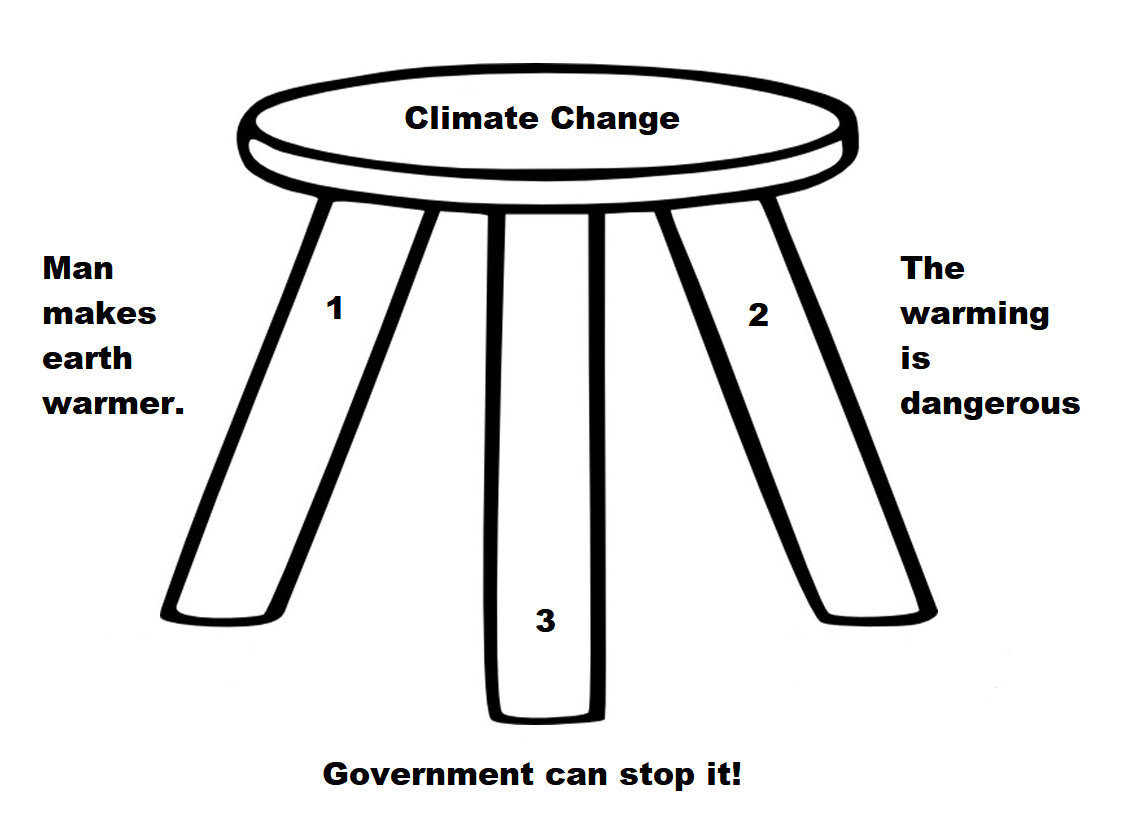
Let’s consider the Stiglitz brief according to the three suppositions comprising the Climatist (Activists and Alarmists) position. Climate change is a bundle that depends on all three assertions to be true.

Supposition 1: Humans make the climate warmer.

As an economist, Stiglitz defers to the IPCC on this scientific point, with references to reports by those deeply involved and committed to Paris Accord and other UN climate programs. In the recent California District Court case (Cities suing Big Oil companies), both sides in a similar vein stipulated their acceptance of IPCC reports as authoritative regarding global warming/climate change.

Skeptical observers must attend to the nuances of what is referenced and what is hidden or omitted in these testimonies. For example, Chevron’s attorney noted that IPCC’s reports express various opinions over time as to human influence on the climate. They noted that even today, the expected temperature effect from doubling CO2 ranges widely from 1.5C to 4.5C. No mention is made that several more recent estimates from empirical data (rather than GCMs) are at the low end or lower.

In addition, there is no mention that GCMs projections are running about twice as hot as observations. Omitted is the fact GCMs correctly replicate tropospheric temperature observations only when CO2 warming is turned off. In the effort to proclaim scientific certainty, neither Stiglitz nor IPCC discuss the lack of warming since the 1998 El Nino, despite two additional El Ninos in 2010 and 2016.

Figure 5. Simplification of IPCC AR5 shown above in Fig. 4. The colored lines represent the range of results for the models and observations. The trends here represent trends at different levels of the tropical atmosphere from the surface up to 50,000 ft. The gray lines are the bounds for the range of observations, the blue for the range of IPCC model results without extra GHGs and the red for IPCC model results with extra GHGs.The key point displayed is the lack of overlap between the GHG model results (red) and the observations (gray). The nonGHG model runs (blue) overlap the observations almost completely.

Further they exclude comparisons between fossil fuel consumption and temperature changes. The legal methodology for discerning causation regarding work environments or medicine side effects insists that the correlation be strong and consistent over time, and there be no confounding additional factors. As long as there is another equally or more likely explanation for a set of facts, the claimed causation is unproven. Such is the null hypothesis in legal terms: Things happen for many reasons unless you can prove one reason is dominant.

Finally, Stiglitz and IPCC are picking on the wrong molecule. The climate is controlled not by CO2 but by H20. Oceans make climate through the massive movement of energy involved in water’s phase changes from solid to liquid to gas and back again. From those heat transfers come all that we call weather and climate: Clouds, Snow, Rain, Winds, and Storms.

Esteemed climate scientist Richard Lindzen ended a very fine recent presentation with this description of the climate system:

I haven’t spent much time on the details of the science, but there is one thing that should spark skepticism in any intelligent reader. The system we are looking at consists in two turbulent fluids interacting with each other. They are on a rotating planet that is differentially heated by the sun. A vital constituent of the atmospheric component is water in the liquid, solid and vapor phases, and the changes in phase have vast energetic ramifications. The energy budget of this system involves the absorption and reemission of about 200 watts per square meter. Doubling CO2 involves a 2% perturbation to this budget. So do minor changes in clouds and other features, and such changes are common. In this complex multifactor system, what is the likelihood of the climate (which, itself, consists in many variables and not just globally averaged temperature anomaly) is controlled by this 2% perturbation in a single variable? Believing this is pretty close to believing in magic. Instead, you are told that it is believing in ‘science.’ Such a claim should be a tip-off that something is amiss. After all, science is a mode of inquiry rather than a belief structure.

Supposition 2: The Warming is Dangerous

Billions of dollars have been spent researching any and all negative effects from a warming world: Everything from Acne to Zika virus. Stiglitz links to a recent Climate Report that repeats the usual litany of calamities to be feared and avoided by submitting to IPCC demands. The evidence does not support these claims.

Stiglitz: It is scientifically established that human activities produce GHG emissions, which accumulate in the atmosphere and the oceans, resulting in warming of Earth’s surface and the oceans, acidification of the oceans, increased variability of climate, with a higher incidence of extreme weather events, and other changes in the climate.

Moreover, leading experts believe that there is already more than enough excess heat in the climate system to do severe damage and that 2C of warming would have very significant adverse effects, including resulting in multi-meter sea level rise.

Experts have observed an increased incidence of climate-related extreme weather events, including increased frequency and intensity of extreme heat and heavy precipitation events and more severe droughts and associated heatwaves. Experts have also observed an increased incidence of large forest fires; and reduced snowpack affecting water resources in the western U.S. The most recent National Climate Assessment projects these climate impacts will continue to worsen in the future as global temperatures increase.

Alarming Weather and Wildfires

But: Weather is not more extreme.
And Wildfires were worse in the past.
But: Sea Level Rise is not accelerating.
Litany of Changes

Seven of the ten hottest years on record have occurred within the last decade; wildfires are at an all-time high, while Arctic Sea ice is rapidly diminishing.

We are seeing one-in-a-thousand-year floods with astonishing frequency.

When it rains really hard, it’s harder than ever.

We’re seeing glaciers melting, sea level rising.

The length and the intensity of heatwaves has gone up dramatically.

Plants and trees are flowering earlier in the year. Birds are moving polewards.

We’re seeing more intense storms.

But: Arctic Ice has not declined since 2007.
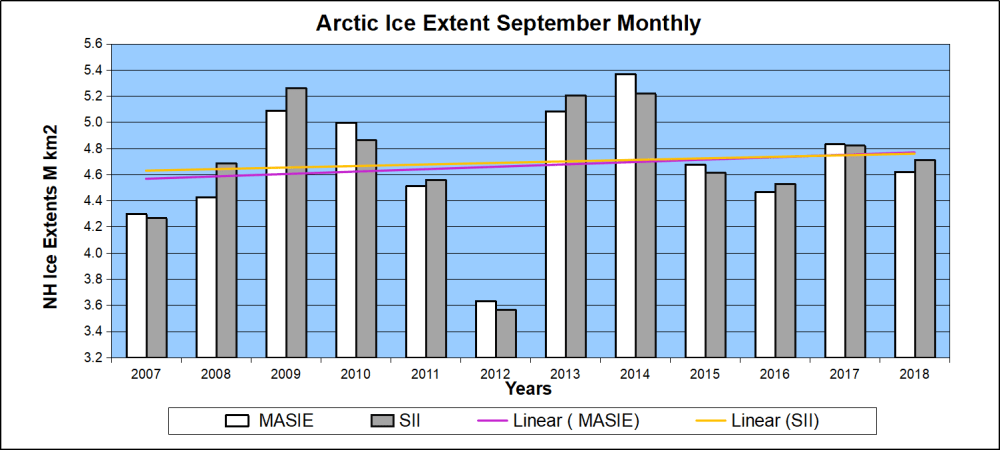
arctic-sept-2007-to-20181

But: All of these are within the range of past variability.

In fact our climate is remarkably stable.
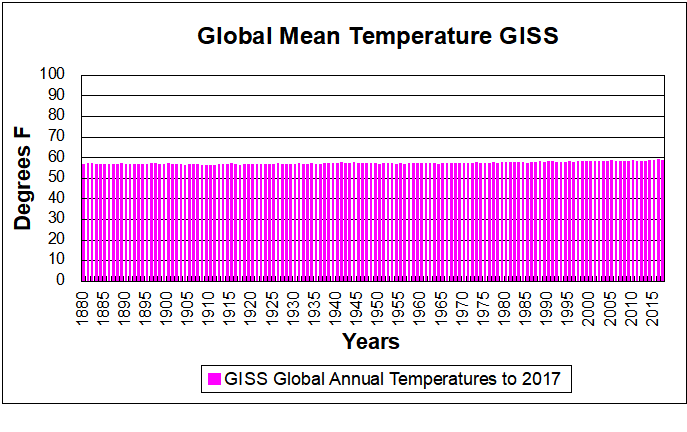
And many aspects follow quasi-60 year cycles.

Climate is Changing the Weather

Stiglitz:  Other potential examples include agricultural losses. Whether or not insurance
reimburses farmers for their crops, there can be food shortages that lead to higher food
prices (that will be borne by consumers, that is, Youth Plaintiffs and Affected Children).
There is a further risk that as our climate and land use pattern changes, disease vectors
may also move (e.g., diseases formerly only in tropical climates move northward).36 This
could lead to material increases in public health costs

But: Actual climate zones are local and regional in scope, and they show little boundary change.


But: Ice cores show that it was warmer in the past, not due to humans.

Supposition 3:  Government Can Stop it!

Here it is blithely assumed that the court can rule the seas to stop rising, heat waves to cease, and Arctic ice to grow (though why we would want that is debatable).  All this will be achieved by leaving fossil fuels in the ground and powering civilization with windmills and solar panels.  While admitting that our way of life depends on fossil fuels, they ignore the inadequacy of renewable energy sources at their present immaturity.

Stiglitz: Conclusion
The choice between incurring manageable costs now and the incalculable, perhaps even
irreparable, burden Youth Plaintiffs and Affected Children will face if Defendants fail to
rapidly transition to a non-fossil fuel economy is clear. While the full costs of the climate
damages that would result from maintaining a fossil fuel-based economy may be
incalculable, there is already ample evidence concerning the lower bound of such costs,
and with these minimum estimates, it is already clear that the cost of transitioning to a
low/no carbon economy are far less than the benefits of such a transition. No rational
calculus could come to an alternative conclusion. Defendants must act with all deliberate
speed and immediately cease the subsidization of fossil fuels and any new fossil fuel
projects, and implement policies to rapidly transition the U.S. economy away from fossil
fuels.

But CO2 relation to Temperature is Inconsistent.

But: The planet is greener because of rising CO2.

But: Modern nations (G20) depend on fossil fuels for nearly 90% of their energy.

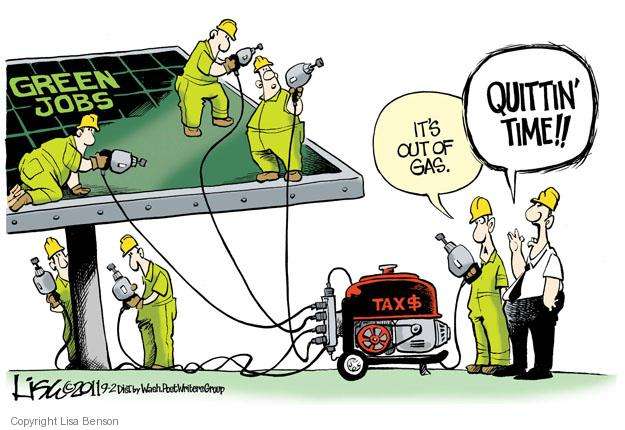
But: Renewables are not ready for prime time.

People need to know that adding renewables to an electrical grid presents both technical and economic challenges.  Experience shows that adding intermittent power more than 10% of the baseload makes precarious the reliability of the supply.  South Australia is demonstrating this with a series of blackouts when the grid cannot be balanced.  Germany got to a higher % by dumping its excess renewable generation onto neighboring countries until the EU finally woke up and stopped them. Texas got up to 29% by dumping onto neighboring states, and some like Georgia are having problems.

But more dangerous is the way renewables destroy the economics of electrical power.  Seasoned energy analyst Gail Tverberg writes:

In fact, I have come to the rather astounding conclusion that even if wind turbines and solar PV could be built at zero cost, it would not make sense to continue to add them to the electric grid in the absence of very much better and cheaper electricity storage than we have today. There are too many costs outside building the devices themselves. It is these secondary costs that are problematic. Also, the presence of intermittent electricity disrupts competitive prices, leading to electricity prices that are far too low for other electricity providers, including those providing electricity using nuclear or natural gas. The tiny contribution of wind and solar to grid electricity cannot make up for the loss of more traditional electricity sources due to low prices.

These issues are discussed in more detail in the post Climateers Tilting at Windmills

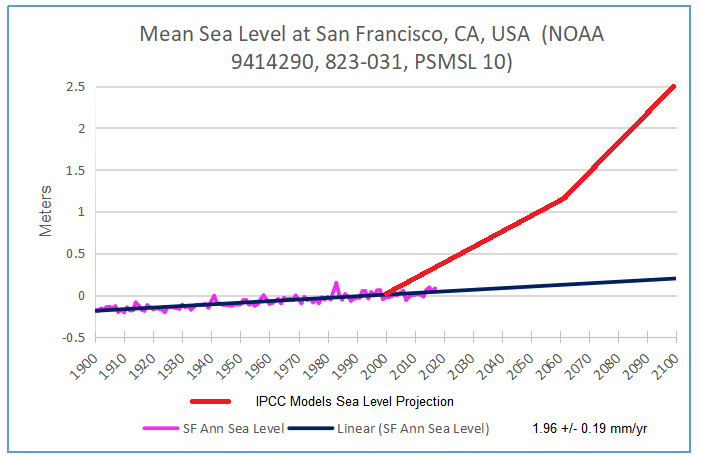
Footnote regarding mention of “multi-meter” sea level rise.  It is all done with computer models.  For example, below is San Francisco.  More at USCS Warnings of Coastal Floodings
sf-ca-past-projected

dilbert-sins-of-omission-and-comission

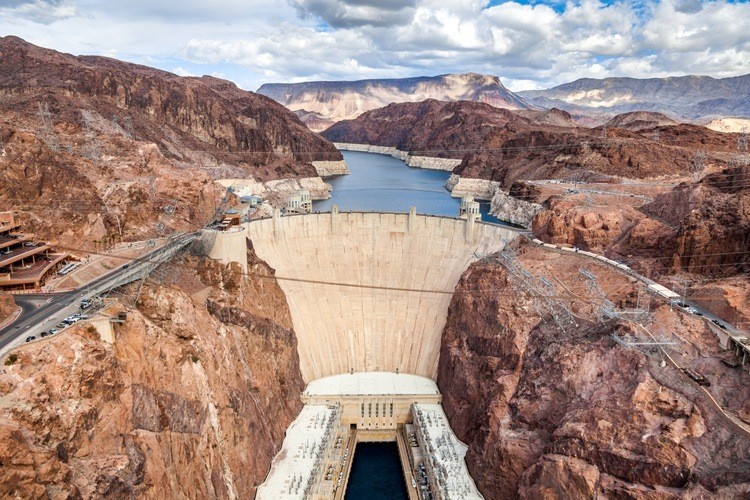
BBC Disparages Hydropower


A previous post explained how methane has been hyped in support of climate alarmism/activism. Now we have an additional campaign to disparage hydropower because of methane emissions from dam reservoirs. File this under “They have no shame.” Excerpts below with my bolds.

This week BBC News published Large hydropower dams ‘not sustainable’ in the developing world by an environmental correspondent.  “Sustainable” is a code word that means “little or no change to nature”, so of course building dams is already suspect. In fact, dams provide a range of economic, environmental, and social benefits, including recreation, flood control, water supply, hydroelectric power, waste management, river navigation, and wildlife habitat.  To say dams are “unsustainable” belies their success in the developed world, and seeks to deny those benefits to other nations who want and need those benefits.

BBC News: More than 90% of dams built since the 1930s were more expensive than anticipated. They have damaged river ecology, displaced millions of people and have contributed to climate change by releasing greenhouse gases from the decomposition of flooded lands and forests.

The climate change angle may be the real motivation behind these stories.  On March 5, 2018 a study was published in Environmental Research Letters Greenhouse gas emissions of hydropower in the Mekong River Basin can exceed those of fossil fuel energy sources

“The hydropower related emissions started in the Mekong in mid-1960’s when the first large reservoir was built in Thailand, and the emissions increased considerably in early 2000’s when hydropower development became more intensive. Currently the emissions are estimated to be around 15 million tonnes of CO2e per year, which is more than total emissions of all sectors in Lao PDR in year 2013,” says Dr Timo Räsänen who led the study. The GHG emissions are expected to increase when more hydropower is built. However, if construction of new reservoirs is halted, the emissions will decline slowly in time.

Another recent example of the claim is from Asia Times Global hydropower boom will add to climate change

The study, published in BioScience, looked at the carbon dioxide (CO2), methane (CH4), and nitrous oxide (N2O) emitted from 267 reservoirs across six continents. In total, the reservoirs studied have a surface area of more than 77,287 square kilometers (29,841 square miles). That’s equivalent to about a quarter of the surface area of all reservoirs in the world, which together cover 305,723 sq km – roughly the combined size of the United Kingdom and Ireland.

“The new study confirms that reservoirs are major emitters of methane, a particularly aggressive greenhouse gas,” said Kate Horner, Executive Director of International Rivers, adding that hydropower dams “can no longer be considered a clean and green source of electricity.”

In fact, methane’s effect is 86 times greater than that of CO2 when considered on this two-decade timescale. Importantly, the study found that methane is responsible for 90% of the global warming impact of reservoir emissions over 20 years.

Alarmists are Wrong about Hydropower

Now CH4 is proclaimed the primary culprit held against hydropower. As usual, there is a kernel of truth buried beneath this obsessive campaign: Flooding of biomass does result in decomposition accompanied by some release of CH4 and CO2. From HydroQuebec:  Greenhouse gas emissions and reservoirs

Impoundment of hydroelectric reservoirs induces decomposition of a small fraction of the flooded biomass (forests, peatlands and other soil types) and an increase in the aquatic wildlife and vegetation in the reservoir.

The result is higher greenhouse gas (GHG) emissions after impoundment, mainly CO2 (carbon dioxide) and a small amount of CH4 (methane).

However, these emissions are temporary and peak two to four years after the reservoir is filled.

During the ensuing decade, CO2 emissions gradually diminish and return to the levels given off by neighboring lakes and rivers.

Hydropower generation, on average, emits 50 times less GHGs than a natural gas generating station and about 70 times less than a coal-fired generating station.

The Facts about Tropical Reservoirs

Activists estimate Methane emissions from dams and reservoirs across the planet, including hydropower, are estimated to be significantly larger than previously thought, approximately equal to 1 gigaton per year.

Activists also claim that dams in boreal regions like Quebec are not the problem, but tropical reservoirs are a big threat to the climate. Contradicting that is an intensive study of Brazilian dams and reservoirsGreenhouse Gas Emissions from Reservoirs: Studying the Issue in Brazil

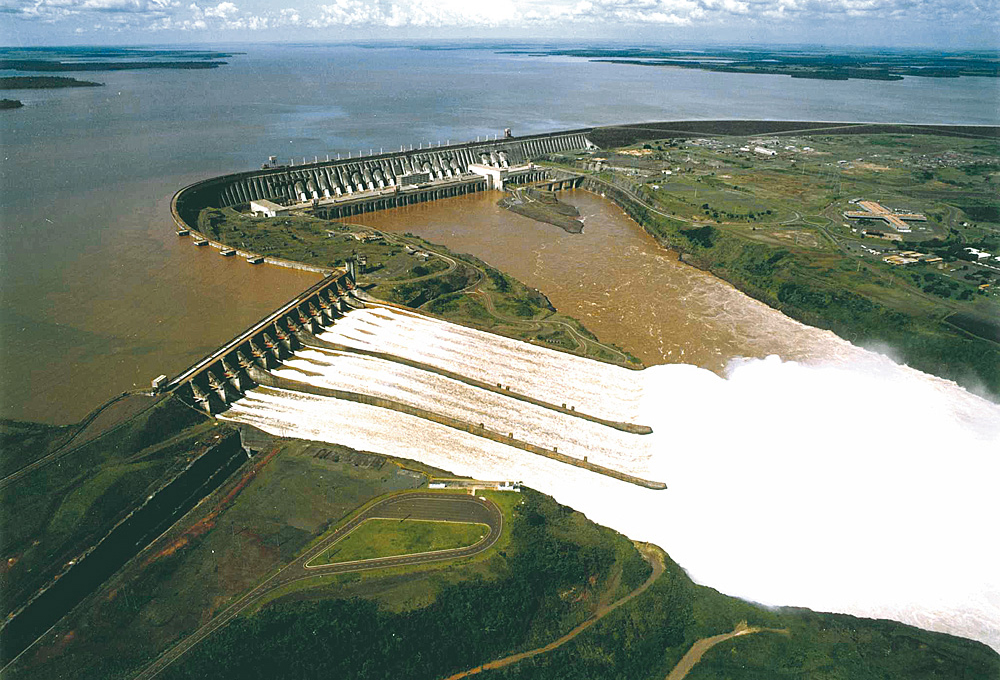
The Itaipu Dam is a hydroelectric dam on the Paraná River located on the border between Brazil and Paraguay. The name “Itaipu” was taken from an isle that existed near the construction site. In the Guarani language, Itaipu means “the sound of a stone”. The American composer Philip Glass has also written a symphonic cantata named Itaipu, in honour of the structure.

Five Conclusions from Studying Brazilian Reservoirs

1) The budget approach is essential for a proper grasp of the processes going on in reservoirs. This approach involves taking into account the ways in which the system exchanged GHGs with the atmosphere before the reservoir was flooded. Older studies measured only the emissions of GHG from the reservoir surface or, more recently, from downstream de-gassing. But without the measurement of the inputs of carbon to the system, no conclusions can be drawn from surface measurements alone.

2) When you consider the total budgets, most reservoirs acted as sinks of carbon in the short run (our measurements covered one year in each reservoir). In other words, they received more carbon than they exported to the atmosphere and to downstream.

3) Smaller reservoirs are more efficient as carbon traps than the larger ones.

4) As for the GHG impact, in order to determine it, we should add the methane (CH4) emissions to the fraction of carbon dioxide (CO2) emissions which comes from the flooded biomass and organic carbon in the flooded (terrestrial) soil. The other CO2 emissions, arising from the respiration of aquatic organisms or from the decomposition of terrestrial detritus that flows into the reservoir (including domestic sewage), are not impacts of the reservoir. From this sum, we should deduct the amount of carbon that is stored in the sediment and which will be kept there for at least the life of the reservoir (usually more than 80 years). This “stored carbon” ranges from as little as 2 percent of the total carbon output to more than 25 percent, depending on the reservoirs.

5) When we assess the GHG impacts following the guidelines just described, all of FURNAS’s reservoirs have lower emissions than the cleanest European oil plant. The worst case – Manso, which was sampled only three years after the impoundment, and therefore in a time in which the contribution from the flooded biomass was still very significant – emitted about half as much carbon dioxide equivalents (CO2 eq) as the average oil plant from the United States (CO2 eq is a metric measure used to compare the emissions from various greenhouse gases based upon their global warming potential, GWP. CO2 eq for a gas is derived by multiplying the tons of the gas by the associated GWP.) We also observed a very good correlation between GHG emissions and the age of the reservoirs. The reservoirs older than 30 years had negligible emissions, and some of them had a net absorption of CO2eq.

Keeping Methane in Perspective

Over the last 30 years, CH4 in the atmosphere increased from 1.6 ppm to 1.8 ppm, compared to CO2, presently at 400 ppm. So all the dam building over 3 decades, along with all other land use was part of a miniscule increase of a microscopic gas, 200 times smaller than the trace gas, CO2.


Background Facts on Methane and Climate Change

The US Senate is considering an act to repeal with prejudice an Obama anti-methane regulation. The story from activist source Climate Central is
Senate Mulls ‘Kill Switch’ for Obama Methane Rule

The U.S. Senate is expected to vote soon on whether to use the Congressional Review Act to kill an Obama administration climate regulation that cuts methane emissions from oil and gas wells on federal land. The rule was designed to reduce oil and gas wells’ contribution to climate change and to stop energy companies from wasting natural gas.

The Congressional Review Act is rarely invoked. It was used this month to reverse a regulation for the first time in 16 years and it’s a particularly lethal way to kill a regulation as it would take an act of Congress to approve a similar regulation. Federal agencies cannot propose similar regulations on their own.

The Claim Against Methane

Now some Republican senators are hesitant to take this step because of claims like this one in the article:

Methane is 86 times more potent as a greenhouse gas than carbon dioxide over a period of 20 years and is a significant contributor to climate change. It warms the climate much more than other greenhouse gases over a period of decades before eventually losing its potency. Atmospheric carbon dioxide remains a potent greenhouse gas for thousands of years.

Essentially the journalist is saying: As afraid as you are about CO2, you should be 86 times more afraid of methane. Which also means, if CO2 is not a warming problem, your fear of methane is 86 times zero. The thousands of years claim is also bogus, but that is beside the point of this post, which is Methane.

IPCC Methane Scare

The article helpfully provides a link referring to Chapter 8 of IPCC AR5 report by Working Group 1 Anthropogenic and Natural Radiative Forcing.

The document is full of sophistry and creative accounting in order to produce as scary a number as possible. Table 8.7 provides the number for CH4 potency of 86 times that of CO2.  They note they were able to increase the Global Warming Potential (GWP) of CH4 by 20% over the estimate in AR4. The increase comes from adding in more indirect effects and feedbacks, as well as from increased concentration in the atmosphere.

In the details are some qualifying notes like these:

Uncertainties related to the climate–carbon feedback are large, comparable in magnitude to the strength of the feedback for a single gas.

For CH4 GWP we estimate an uncertainty of ±30% and ±40% for 20- and 100-year time horizons, respectively (for 5 to 95% uncertainty range).

Methane Facts from the Real World
From Sea Friends (here):

Methane is natural gas CH4 which burns cleanly to carbon dioxide and water. Methane is eagerly sought after as fuel for electric power plants because of its ease of transport and because it produces the least carbon dioxide for the most power. Also cars can be powered with compressed natural gas (CNG) for short distances.

In many countries CNG has been widely distributed as the main home heating fuel. As a consequence, methane has leaked to the atmosphere in large quantities, now firmly controlled. Grazing animals also produce methane in their complicated stomachs and methane escapes from rice paddies and peat bogs like the Siberian permafrost.

It is thought that methane is a very potent greenhouse gas because it absorbs some infrared wavelengths 7 times more effectively than CO2, molecule for molecule, and by weight even 20 times. As we have seen previously, this also means that within a distance of metres, its effect has saturated, and further transmission of heat occurs by convection and conduction rather than by radiation.

Note that when H20 is present in the lower troposphere, there are few photons left for CH4 to absorb:

Even if the IPCC radiative greenhouse theory were true, methane occurs only in minute quantities in air, 1.8ppm versus CO2 of 390ppm. By weight, CH4 is only 5.24Gt versus CO2 3140Gt (on this assumption). If it truly were twenty times more potent, it would amount to an equivalent of 105Gt CO2 or one thirtieth that of CO2. A doubling in methane would thus have no noticeable effect on world temperature.

However, the factor of 20 is entirely misleading because absorption is proportional to the number of molecules (=volume), so the factor of 7 (7.3) is correct and 20 is wrong. With this in mind, the perceived threat from methane becomes even less.

Further still, methane has been rising from 1.6ppm to 1.8ppm in 30 years (1980-2010), assuming that it has not stopped rising, this amounts to a doubling in 2-3 centuries. In other words, methane can never have any measurable effect on temperature, even if the IPCC radiative cooling theory were right.

Because only a small fraction in the rise of methane in air can be attributed to farm animals, it is ludicrous to worry about this aspect or to try to farm with smaller emissions of methane, or to tax it or to trade credits.

The fact that methane in air has been leveling off in the past two decades, even though we do not know why, implies that it plays absolutely no role as a greenhouse gas.

More information at THE METHANE MISCONCEPTIONS by Dr Wilson Flood (UK) here

Summary:

Natural Gas (75% methane) burns the cleanest with the least CO2 for the energy produced.

Leakage of methane is already addressed by efficiency improvements for its economic recovery, and will apparently be subject to even more regulations.

The atmosphere is a methane sink where the compound is oxidized through a series of reactions producing 1 CO2 and 2H20 after a few years.

GWP (Global Warming Potential) is CO2 equivalent heat trapping based on laboratory, not real world effects.

Any IR absorption by methane is limited by H2O absorbing in the same low energy LW bands.

There is no danger this century from natural or man-made methane emissions.

Conclusion

Senators and the public are being bamboozled by opaque scientific bafflegab. The plain truth is much different. The atmosphere is a methane sink in which CH4 is oxidized in the first few meters. The amount of CH4 available in the air is miniscule, even compared to the trace gas CO2, and it is not accelerating. Methane is the obvious choice to signal virtue on the climate issue since governmental actions will not make a bit of difference anyway, except perhaps to do some economic harm.

Give a daisy a break (h/t Derek here)

Daisy methane

Footnote:

For a more thorough and realistic description of atmospheric warming see:

Fearless Physics from Dr. Salby

Taxing Carbon is Bad Economics

At Institute of Economic Affairs, IEA’s Director of Research Dr Jamie Whyte explains (here) why taxing carbon is a bad economic idea. Excerpts in italics with my bolds.

The emission of greenhouse gases – CO2 from burning fossil fuels and methane from flatulent livestock – is warming the global climate. Let’s not quibble about this scientific consensus, even if there are grounds for scepticism. The question for economists is the proper policy response.

The standard view is that greenhouse emissions are a classic negative externality, and that a Pigouvian tax should be applied. For example, farmers should pay a “fart tax” for each cow they own. This would internalise the external cost of the farts, and cows would be farmed only when the total benefits of doing so exceeded the total cost.

This is preferable to a cap-and-trade system, because the cap is arbitrary. If the price of emitting CO2 under such a scheme were to exceed the external cost (the Pigouvian tax), then too little CO2 would be emitted.

Ronald Coase’s insights about managing external costs through private bargaining are irrelevant here because no one owns the climate and, even if such rights were assigned, the owners would be so numerous and dispersed that the costs of bargaining would be prohibitive.


Climate change is a stool standing only if all three assertions are true. This post is addressing the last one.

But does anthropogenic global warming warrant a Pigouvian tax on the emission of greenhouse gases?

The first difficulty is estimating the external cost of greenhouse gas emissions and, hence, the size of the tax. Begin by noting that global warming will have benefits. Increased CO2 emissions have caused a great greening of the planet over the last 20 years. If the climate warms as predicted, vast tracts of land in Russia and Canada, now too cold for agriculture, will become arable. We should expect food to become more abundant and cheaper. More generally, the costs created by cold weather – heating, delays in construction work, etc – should decline. Many people like warm weather. They pay good money to travel to it. I would willingly pay £2,000 a year to make London five degrees warmer.

Of course, there will be costs too. Sea levels may rise, swamping some now inhabited areas. Some places may become too hot for comfortable habitation or agriculture (though these are sure to be smaller than the cold areas made usable). The number of storms may increase, destroying property and interrupting economic activity.

So what is the net cost? No one knows. They don’t even know if it is negative or positive. So they don’t know if greenhouse gas emissions should be taxed or subsidised.

This not an anti-science position. Scientists can predict physical outcomes (with varying degrees of certainty, which, in the case of climate science, is low). But they cannot predict economic outcomes. They cannot tell you the value of those physical outcomes. Global warming will have many effects – some positive, some negative – on a vast number of people with very different environmental circumstances, incomes and preferences. Anyone who claims to know the net aggregate value of global warming displays amazing overconfidence.

Some will say that ignorance itself gives us reason to impose the Pigouvian tax (at some arbitrarily chosen level, as is unavoidable given our ignorance). We should think of it as an insurance policy. The dire warnings may be true and, just in case they are, we should take measures to reduce emissions. Think of the tax as an insurance premium paid against the risk of global warming being net negative.

Yet this logic fails by simply reversing the argument. Global warming might benefit mankind. It would be a tragedy if we didn’t take the opportunity this presents. To avoid this risk, we should tax people to subsidise greenhouse gas emissions. Think of the tax as an insurance premium paid against the risk of missing out on global warming.

This ignorance argument against taxing or subsidising greenhouse gas emissions applies to many things with spill-over effects. Revealing clothes, for example. They affect people besides those who choose to wear them. Are these external effects positive or negative? The answer differs from beholder to beholder and context to context.

There is also a political problem to applying Pigouvian taxes to greenhouse gas emissions – namely, that it is likely to simply relocate emissions rather than cut them. A carbon tax applied in the US will shift (marginal) industrial production to places that don’t apply it. Carbon taxes are one of those cases where there is no point doing something unless (almost) everyone else does it too. Those who advocate applying one in their own country are implicitly committed to the idea that all other relevant countries will also apply one. But that is implausible. The gains from breaking ranks are too great.

Given our ignorance and the implausibility of a globally enforced Pigouvian tax, we should just wait and see. We can adapt to the ill-effects of global warming – relocating activities if need be or building sea defences – while taking advantage of the gains. And we can do this without incurring any immediate cost. Let future people, who will be richer than us, pay for the costs that may arise.

Supremes Kick Kids Lawsuit Down the Road


img

Last night the US Supreme justices refused the federal government’s petition to end the Oregon district court case. The media headlines will say this action allows the case to start, but that is not what happened. The real story concerns procedural hurdles and comes from Scotusblog, not from the green industry PR department (when did yellow journalism change colors?).

Everyone knows this issue will eventually come to the Supreme Court for a ruling. Some judges in black robes will take the heat for telling the truth about the case’s fatal legal flaws. So the Supremes will allow (not prevent) the lower courts to do their job to declare the suit out of bounds. All the while they know any lower ruling will be appealed by the losing side to the top later on.

As you will see, there are probably two more procedural maneuvers before the case can proceed to address the merits, or lack thereof. Yesterday, the Supremes noted that the Ninth District Court of Appeals twice refused the fed’s petition on grounds that no longer pertain. Thus, they suggest that the Ninth take a third kick at this can, perhaps this time actually engaging the issues.

If, as everyone expects, the Ninth follows their San Francisco-based leftist leanings and summarily grants no relief, then the feds can come back to the Supremes having no longer any recourse at lower levels. BTW, two Supreme Justices said they were ready now to grant the federal petition as it stands.

Amy Howe writes truthfully Justices refuse to block climate-change trial. Excerpts below in italics with my bolds.

Tonight the Supreme Court declined to intervene to block the trial in a lawsuit filed by a group of children and teenagers who have asked a federal district court in Oregon to order the federal government to prepare and put in place a plan to phase out fossil-fuel emissions. Although the justices’ ruling formally cleared the way for a trial in the case to go forward, the court stressed that the government may be able to get the relief that it is seeking in the U.S. Court of Appeals for the 9th Circuit, and it did not foreclose the possibility that the government could return to the Supreme Court yet again.

Text of Supreme Court Order ORDER IN PENDING CASE

This afternoon’s order was the latest chapter in the climate-change lawsuit, which was originally filed in 2015, during the Obama administration. The plaintiffs contend that the federal government’s conduct has led to a “dangerous climate system,” in conflict with their constitutional right to a “climate system capable of sustaining human life.”

The federal government first came to the Supreme Court in the case last summer, asking the justices to block discovery and a trial until the U.S. Court of Appeals for the 9th Circuit could rule on the government’s request to have the case dismissed or, at the very least, put on hold. But the justices declined to step in, describing the government’s request as “premature.” At the same time, the justices acknowledged that the plaintiffs’ claims are “striking” and that there are “substantial grounds for difference of opinion” on whether those claims belong in court at all; they also emphasized that the district court should “take these concerns into account in assessing the burdens of discovery and trial, as well as the desirability of a prompt ruling on” other motions that the government had filed seeking dismissal of the plaintiffs’ claims.

With a trial looming, the government returned to the Supreme Court again last week, complaining that the district court had declined to “meaningfully narrow” the scope of the case. It asked the justices to either end the lawsuit altogether or, at a minimum, review the district court’s rulings allowing the case to go forward. Chief Justice John Roberts, who at the time handled emergency requests from the geographic area that includes Oregon, agreed to put discovery and the trial on hold temporarily to give the plaintiffs an opportunity to respond to the government’s application.

In their response, the plaintiffs urged the justices to allow the trial to go forward. They noted that most pretrial fact-finding had already been completed, with the only remaining discovery “extremely limited.” The only harm that the government has cited to justify putting the trial on hold, the plaintiffs argued, is that it would otherwise be required to “participate in the normal process of trial and await appellate consideration until after final judgment” – which, in the plaintiffs’ view, is an “ordinary” burden rather than the kind of irreparable harm necessitating emergency relief. By contrast, they suggested, stopping the trial now “will disrupt the integrity of the judiciary’s role as a check on the political branches and will irreparably harm these children.” Indeed, the plaintiffs asserted, discovery and a trial are essential because the district court can’t decide the questions presented by their lawsuit, involving the plaintiffs’ legal right to bring the lawsuit and the allocation of power between the different branches of government, until the facts have been better developed.

In a reply brief, the federal government pushed back, telling the justices that it had made every possible effort in the lower courts to avoid reaching this point, but had been unsuccessful. The government emphasized that what the plaintiffs are asking the federal courts to do is extraordinary, “nothing less than a complete transformation of the American energy system – including the abandonment of fossil fuels.” Such a request, the government continued, “has no place in federal court,” so that granting the government a reprieve from the upcoming trial would “preserve the judiciary’s essential role under the Constitution.”

The government added that, contrary to the plaintiffs’ assurances, the prospect winning on appeal after an “extensive” trial had already taken place would provide little comfort to the government, because of the enormous amount of resources that would have to be devoted to pretrial preparations and the trial itself.

In an unsigned three-page order issued tonight, the Supreme Court explained that it would block the proceedings in the district court only if the government were likely to prevail on its request for an order of the Supreme Court, in particular, requiring the district court to dismiss the case. But the government cannot meet that standard, the justices continued, because it may be able to get the relief that it is seeking in the 9th Circuit. The court acknowledged that the 9th Circuit has twice turned down requests from the government to order the district court to dismiss the case, but it reasoned that the 9th Circuit did so because of the prospect that the plaintiffs’ claims against the government might eventually be dismissed through more conventional avenues. The justices concluded that those “reasons are, to a large extent, no longer pertinent” with a 50-day trial – which had been scheduled for October 29 – looming.

The court therefore denied the federal government’s request to keep the trial on hold “without prejudice” – that is, leaving open the possibility that the dispute could return to the Supreme Court again. The justices’ earlier order putting the trial on hold temporarily, to give them time to consider the government’s request, is terminated. Justices Clarence Thomas and Neil Gorsuch indicated that they would have granted the government’s request.

Background from previous post Supreme Justice Grants Stay of Kids Lawsuit

On Friday, Chief Justice Roberts stayed the discovery and trial of Juliana vs. US, pending responses from the plaintiffs to issues raised by the defense.  Report from The News Review in italics with my bolds.

The U.S. Supreme Court on Friday granted a stay in the climate trial, Juliana v. United States, pending a response from the plaintiffs.

The Department of Justice asked the Supreme Court on Tuesday to dismiss the case brought by 21 young plaintiffs Thursday.

In a news release issued Friday afternoon, Meg Ward with Our Children’s Trust said the plaintiff’s legal team is working on its response, which it will file Monday.

The Supreme Court order states a response is due by Oct. 24.

Julia Olson, one of the lawyers representing the young plaintiffs, said the prosecution is confident that once the court receives the response the trial will proceed.

“As the Supreme Court has recognized in innumerable cases, review of constitutional questions is better done on a full record where the evidence is presented and weighed by the trier of fact,” Olson said in a news release.

The lawsuit alleges the federal government has violated young people’s constitutional rights through policies that have caused a dangerous climate.

They have said their generation bears the brunt of climate change and that the government has an obligation to protect natural resources for present and future generations.

The young people say government officials have known for more than 50 years that carbon pollution from fossil fuels was causing climate change and that policies on oil and gas deprive them of life, liberty and property. They also say the government has failed to protect natural resources as a “public trust” for future generations.

The lawsuit wants a court to order the government to stop permitting and authorizing fossil fuels, quickly phase out carbon dioxide emissions to a certain level by 2100 and develop a national climate recovery plan.

The Trump administration got a temporary reprieve on the case after also asking the 9th U.S. Circuit Court of Appeals, which rejected the request in July.

“The latest attempt to get the U.S. Supreme Court to stop the trial does not appear to be based on any new evidence or arguments. The only new element is an additional Supreme Court justice,” said Melissa Scanlan, a professor at Vermont Law School, who is not involved in the case.

Kavanaugh replaced the more moderate Anthony Kennedy.

Scanlan said the Trump administration is trying to avoid “what they’re expecting to be a 50-day trial focused on climate disruption.” The trial in Eugene was expected to wrap up in January.

CNN added this:

Solicitor General Noel Francisco asked the justice to stop any further discovery and the pending trial while the government appeals the lower court opinion.

In his filing, Francisco lambasted the suit, calling it “an attempt to redirect federal environmental and energy policies through the courts rather than through the political process, by asserting a new and unsupported fundamental due process right to certain climate conditions.”

Francisco’s language echoes some of the remarks Attorney General Jeff Sessions made before the conservative Heritage Foundation on Monday. “Judicial activism is therefore a threat to our representative government and the liberty it secures,” Sessions said. “In effect, activist advocates want judges who will do for them what they have been unable to achieve at the ballot box. It is fundamentally undemocratic.”

The filings may be welcomed by some of the justices but they also put others in an uncomfortable position, and there’s a risk of going to the well too often.

“The Supreme Court unquestionably has the authority to provide the extraordinary relief the government is seeking in these cases,” said Steve Vladeck, CNN Supreme Court analyst and professor at the University of Texas School of Law.

“That said, it tends to exercise that authority sparingly,” he added,” and there’s reason to wonder if the government, by repeatedly asking for such unusual relief, might be perceived by at least some of the justices as the boy who cried wolf.”

The text of the  US filing is PETITION FOR A WRIT OF MANDAMUS Contents:

Reasons for granting the petition

A. The government has a clear and indisputable
right to relief from the district court’s refusal to
dismiss this fundamentally misguided suit

1. The district court clearly and indisputably
erred by exercising jurisdiction over the suit
2. The district court clearly and indisputably
erred by allowing the claims to proceed
outside the binding framework of the APA
3. The district court clearly and indisputably
erred by allowing the claims to proceed on the
merits

B. The government has no other adequate means to
attain relief from a fundamentally misguided and
improper trial

C. Mandamus relief is appropriate under the
circumstances

Excerpt from page 26:

Remarkably, the district court rooted its recognition of a fundamental due process right to “a climate system capable of sustaining human life,” App., infra, 141a, in this Court’s recognition of a fundamental right to samesex marriage in Obergefell v. Hodges, 135 S. Ct. 2584 (2015). There is no relationship, however, between a distinctly personal and circumscribed right to same-sex marriage and the alleged right to a climate system capable of sustaining human life that apparently would run indiscriminately to every individual in the United States. The right recognized by the district court has no relationship to any right as “fundamental as a matter of history and tradition” as the right to marry recognized in Obergefell. Id. at 2602.

Background from previous post Supremes Looking at Kids Lawsuit

An Oregon liberal judge is determined to put climate change on trial in Juliana vs US, scheduled to start on October 29, 2018.  But now another pitfall stands in the way.  The Trump administration has asked the Supreme Court to review the legitimacy of the scope of the kids’ claims they have a right to an unchanging favorable climate provided to them by the federal government.  Here is the update from Scotusblog by Amy Howe Government returns in climate change lawsuit  Excerpts in italics with my bolds.

In July, the Supreme Court declined to intervene in a lawsuit filed by a group of 21 children and teenagers who allege that they have a constitutional right to a “climate system capable of sustaining human life.” The justices rejected the federal government’s request to block discovery and a trial until the U.S. Court of Appeals for the 9th Circuit could rule on the government’s petition seeking to have the case dismissed or, at a minimum, to block discovery and the trial temporarily. Today the Trump administration returned to the Supreme Court, asking it once again to put discovery and the trial – now scheduled for the end of October – on hold.

The case was originally filed in 2015 against the Obama administration. The plaintiffs argue that the federal government’s actions are causing a “dangerous climate system,” and they have asked a federal district court in Oregon to order various federal agencies to prepare and implement a remedial plan to phase out fossil-fuel emissions.

When the government asked the justices to step in over the summer, they rejected the request, which they described as “premature.” But the justices also seemed to express some skepticism about the “breadth” of the plaintiffs’ claims, calling them “striking” and observing that there are “substantial grounds for difference of opinion” on whether those claims belong in court at all. The justices instructed the district court to “take these concerns into account in assessing the burdens of discovery and trial, as well as the desirability of a prompt ruling on the” federal government’s other pending motions, which could result in dismissal of some or all of the plaintiffs’ claims.

The government is now back at the court, telling the justices that earlier this week the district court “declined to meaningfully narrow” the plaintiffs’ claims, instead rejecting various government motions that would have ended the case. The government is now asking the court to order the district court to “end this profoundly misguided suit” or, at the very least, review the district court’s rulings allowing the case to go forward; moreover, the government again urges, the Supreme Court should put discovery and the trial on hold while it considers these requests. There would be no real harm to the plaintiffs from doing so, the government stresses, because the plaintiffs are claiming that they have been harmed by the cumulative effects of carbon dioxide emissions over several decades.

The government’s request, signed by U.S. solicitor general Noel Francisco, goes to Chief Justice John Roberts, who currently serves as the circuit justice for the 9th Circuit. Roberts can act on the government’s application immediately or refer it to the full court.

Economist Joseph Stiglitz writes of climate change: “There is a point at which, once this harm occurs, it cannot be undone at any reasonable cost or in any reasonable period of time. Based on the best available science, our country is close to approaching that point.” Credit: Win McNamee/Getty Images

For an insight into the claims being made on behalf of the kids, here is a reprint of a previous post analyzing a brief filed by an IPCC insider.

Climatists Make Their Case by Omitting Facts

One of the world’s top economists has written an expert court report that forcefully supports a group of children and young adults who have sued the federal government for failing to act on climate change. (Source: Inside Climate News  here) Excerpts in italics with my bolds.

Stiglitz, a Columbia University economics professor and former World Bank chief economist, concludes that increasing global warming will have huge costs on society and that a fossil fuel-based system “is causing imminent, significant, and irreparable harm to the Youth Plaintiffs and Affected Children more generally.” He explains in a footnote that his analysis also examines impacts on “as-yet-unborn youth, the so-called future generations.”

But, he says, acting on climate change now—by imposing a carbon tax and cutting fossil fuel subsidies, among other steps—is still manageable and would have net-negative costs. He argues that if the government were to pursue clean energy sources and energy-smart technologies, “the net benefits of a policy change outweigh the net costs of such a policy change.”

“Defendants must act with all deliberate speed and immediately cease the subsidization of fossil fuels and any new fossil fuel projects, and implement policies to rapidly transition the U.S. economy away from fossil fuels,” Stiglitz writes. “This urgent action is not only feasible, the relief requested will benefit the economy.”

Stiglitz has been examining the economic impact of global warming for many years. He was a lead author of the 1995 report of the UN’s Intergovernmental Panel on Climate Change, an authoritative assessment of climate science that won the IPCC the 2007 Nobel Peace Prize, shared with Al Gore.

The Stiglitz expert report submitted to the court is here.

An Example of Intentional Omissions

Since this is a legal proceeding, Stiglitz wrote a brief telling the plaintiffs’ side of the story. In a scientific investigation, parties would assert theories attempting to explain all of the evidence at hand. Legal theories have no such requirement to incorporate all the facts, but rather present conclusions informed by the evidence deemed strongest and most pertinent to one party’s interests.

While the Pope accuses us with the Sin of Emissions, we counter with the Sins of Omissions by him and his fellow activists.

Let’s consider the Stiglitz brief according to the three suppositions comprising the Climatist (Activists and Alarmists) position. Climate change is a bundle that depends on all three assertions to be true.

Supposition 1: Humans make the climate warmer.

As an economist, Stiglitz defers to the IPCC on this scientific point, with references to reports by those deeply involved and committed to Paris Accord and other UN climate programs. In the recent California District Court case (Cities suing Big Oil companies), both sides in a similar vein stipulated their acceptance of IPCC reports as authoritative regarding global warming/climate change.

Skeptical observers must attend to the nuances of what is referenced and what is hidden or omitted in these testimonies. For example, Chevron’s attorney noted that IPCC’s reports express various opinions over time as to human influence on the climate. They noted that even today, the expected temperature effect from doubling CO2 ranges widely from 1.5C to 4.5C. No mention is made that several more recent estimates from empirical data (rather than GCMs) are at the low end or lower.

metofffig3iIn addition, there is no mention that GCMs projections are running about twice as hot as observations. Omitted is the fact GCMs correctly replicate tropospheric temperature observations only when CO2 warming is turned off. In the effort to proclaim scientific certainty, neither Stiglitz nor IPCC discuss the lack of warming since the 1998 El Nino, despite two additional El Ninos in 2010 and 2016.

Figure 5. Simplification of IPCC AR5 shown above in Fig. 4. The colored lines represent the range of results for the models and observations. The trends here represent trends at different levels of the tropical atmosphere from the surface up to 50,000 ft. The gray lines are the bounds for the range of observations, the blue for the range of IPCC model results without extra GHGs and the red for IPCC model results with extra GHGs.The key point displayed is the lack of overlap between the GHG model results (red) and the observations (gray). The nonGHG model runs (blue) overlap the observations almost completely.

Further they exclude comparisons between fossil fuel consumption and temperature changes. The legal methodology for discerning causation regarding work environments or medicine side effects insists that the correlation be strong and consistent over time, and there be no confounding additional factors. As long as there is another equally or more likely explanation for a set of facts, the claimed causation is unproven. Such is the null hypothesis in legal terms: Things happen for many reasons unless you can prove one reason is dominant.

Finally, Stiglitz and IPCC are picking on the wrong molecule. The climate is controlled not by CO2 but by H20. Oceans make climate through the massive movement of energy involved in water’s phase changes from solid to liquid to gas and back again. From those heat transfers come all that we call weather and climate: Clouds, Snow, Rain, Winds, and Storms.

Esteemed climate scientist Richard Lindzen ended a very fine recent presentation with this description of the climate system:

I haven’t spent much time on the details of the science, but there is one thing that should spark skepticism in any intelligent reader. The system we are looking at consists in two turbulent fluids interacting with each other. They are on a rotating planet that is differentially heated by the sun. A vital constituent of the atmospheric component is water in the liquid, solid and vapor phases, and the changes in phase have vast energetic ramifications. The energy budget of this system involves the absorption and reemission of about 200 watts per square meter. Doubling CO2 involves a 2% perturbation to this budget. So do minor changes in clouds and other features, and such changes are common. In this complex multifactor system, what is the likelihood of the climate (which, itself, consists in many variables and not just globally averaged temperature anomaly) is controlled by this 2% perturbation in a single variable? Believing this is pretty close to believing in magic. Instead, you are told that it is believing in ‘science.’ Such a claim should be a tip-off that something is amiss. After all, science is a mode of inquiry rather than a belief structure.

Supposition 2: The Warming is Dangerous

Billions of dollars have been spent researching any and all negative effects from a warming world: Everything from Acne to Zika virus. Stiglitz links to a recent Climate Report that repeats the usual litany of calamities to be feared and avoided by submitting to IPCC demands. The evidence does not support these claims.

Stiglitz: It is scientifically established that human activities produce GHG emissions, which accumulate in the atmosphere and the oceans, resulting in warming of Earth’s surface and the oceans, acidification of the oceans, increased variability of climate, with a higher incidence of extreme weather events, and other changes in the climate.

Moreover, leading experts believe that there is already more than enough excess heat in the climate system to do severe damage and that 2C of warming would have very significant adverse effects, including resulting in multi-meter sea level rise.

Experts have observed an increased incidence of climate-related extreme weather events, including increased frequency and intensity of extreme heat and heavy precipitation events and more severe droughts and associated heatwaves. Experts have also observed an increased incidence of large forest fires; and reduced snowpack affecting water resources in the western U.S. The most recent National Climate Assessment projects these climate impacts will continue to worsen in the future as global temperatures increase.

Alarming Weather and Wildfires

But: Weather is not more extreme.
And Wildfires were worse in the past.
But: Sea Level Rise is not accelerating.
Litany of Changes

Seven of the ten hottest years on record have occurred within the last decade; wildfires are at an all-time high, while Arctic Sea ice is rapidly diminishing.

We are seeing one-in-a-thousand-year floods with astonishing frequency.

When it rains really hard, it’s harder than ever.

We’re seeing glaciers melting, sea level rising.

The length and the intensity of heatwaves has gone up dramatically.

Plants and trees are flowering earlier in the year. Birds are moving polewards.

We’re seeing more intense storms.

But: Arctic Ice has not declined since 2007.
arctic-sept-2007-to-20181

But: All of these are within the range of past variability.

US Wet Dry CO2revIn fact our climate is remarkably stable.

And many aspects follow quasi-60 year cycles.

Climate is Changing the Weather

Stiglitz:  Other potential examples include agricultural losses. Whether or not insurance
reimburses farmers for their crops, there can be food shortages that lead to higher food
prices (that will be borne by consumers, that is, Youth Plaintiffs and Affected Children).
There is a further risk that as our climate and land use pattern changes, disease vectors
may also move (e.g., diseases formerly only in tropical climates move northward).36 This
could lead to material increases in public health costs

But: Actual climate zones are local and regional in scope, and they show little boundary change.


But: Ice cores show that it was warmer in the past, not due to humans.

Supposition 3:  Government Can Stop it!

Here it is blithely assumed that the court can rule the seas to stop rising, heat waves to cease, and Arctic ice to grow (though why we would want that is debatable).  All this will be achieved by leaving fossil fuels in the ground and powering civilization with windmills and solar panels.  While admitting that our way of life depends on fossil fuels, they ignore the inadequacy of renewable energy sources at their present immaturity.

Stiglitz: Conclusion
The choice between incurring manageable costs now and the incalculable, perhaps even
irreparable, burden Youth Plaintiffs and Affected Children will face if Defendants fail to
rapidly transition to a non-fossil fuel economy is clear. While the full costs of the climate
damages that would result from maintaining a fossil fuel-based economy may be
incalculable, there is already ample evidence concerning the lower bound of such costs,
and with these minimum estimates, it is already clear that the cost of transitioning to a
low/no carbon economy are far less than the benefits of such a transition. No rational
calculus could come to an alternative conclusion. Defendants must act with all deliberate
speed and immediately cease the subsidization of fossil fuels and any new fossil fuel
projects, and implement policies to rapidly transition the U.S. economy away from fossil
fuels.

But CO2 relation to Temperature is Inconsistent.

But: The planet is greener because of rising CO2.

But: Modern nations (G20) depend on fossil fuels for nearly 90% of their energy.

But: Renewables are not ready for prime time.

People need to know that adding renewables to an electrical grid presents both technical and economic challenges.  Experience shows that adding intermittent power more than 10% of the baseload makes precarious the reliability of the supply.  South Australia is demonstrating this with a series of blackouts when the grid cannot be balanced.  Germany got to a higher % by dumping its excess renewable generation onto neighboring countries until the EU finally woke up and stopped them. Texas got up to 29% by dumping onto neighboring states, and some like Georgia are having problems.

But more dangerous is the way renewables destroy the economics of electrical power.  Seasoned energy analyst Gail Tverberg writes:

In fact, I have come to the rather astounding conclusion that even if wind turbines and solar PV could be built at zero cost, it would not make sense to continue to add them to the electric grid in the absence of very much better and cheaper electricity storage than we have today. There are too many costs outside building the devices themselves. It is these secondary costs that are problematic. Also, the presence of intermittent electricity disrupts competitive prices, leading to electricity prices that are far too low for other electricity providers, including those providing electricity using nuclear or natural gas. The tiny contribution of wind and solar to grid electricity cannot make up for the loss of more traditional electricity sources due to low prices.

These issues are discussed in more detail in the post Climateers Tilting at Windmills

Footnote regarding mention of “multi-meter” sea level rise.  It is all done with computer models.  For example, below is San Francisco.  More at USCS Warnings of Coastal Floodings

sf-ca-past-projected

dilbert-sins-of-omission-and-comission

Another Canadian Province Turning Right

Michael MacDonald of The Canadian Press provides the story following the current Liberal New Brunswick government losing a confidence motion in parliament. New Brunswick’s next premier is a fiscal hawk and former Irving Oil executive  Excerpts in italics with my bolds.

The man poised to become New Brunswick’s next premier has a well-earned reputation as a tight-fisted fiscal manager whose resume includes 33 years as a senior executive working for one of Canada’s richest families: the Irving clan.

Progressive Conservative Leader Blaine Higgs, a 64-year-old engineer and former finance minister, was hired by Irving Oil a week after he graduated from the University of New Brunswick. He was eventually promoted to director of distribution, overseeing oil transportation across eastern Canada and New England.

His extensive big business experience has informed his approach to politics. Higgs refers to citizens as customers, and his campaign for the Sept. 24 election was replete with references to getting results.

“I came from a company where you had to deliver results in order to survive,” Higgs said when he released the Progressive Conservative platform.

“(New Brunswickers) are paying the bills but they’re not getting the service to reflect the amount of money being spent.”

Higgs had promised to cut government waste and balance the province’s budget in two years — a year earlier than his outgoing rival, Liberal Premier Brian Gallant.

And like other right-of-centre politicians, he also promised not to raise taxes, while offering a modest spending plan.

On the national stage, Higgs isn’t expected to ruffle too many feathers. Unlike Ontario Premier Doug Ford, Higgs is no populist.

“His message isn’t that different from previous premiers,” said J.P. Lewis, a political scientist at the University of New Brunswick in Saint John. “He’s more like a traditional Progressive Conservative. He’s like a Harper-era cabinet minister.”

Still, Higgs and Prime Minister Justin Trudeau are expected to clash over how to deal with climate change.

Higgs has said he will join with his counterparts in Ontario and Saskatchewan in rejecting Ottawa’s bid to get the provinces to impose a carbon tax on their citizens.

Last month, Manitoba Premier Brian Pallister said his province would also scrap plans for a carbon tax. As well, Jason Kenney, leader of Alberta’s Opposition, has promised to repeal the province’s carbon tax if his party wins the 2019 spring election.

“Based on (Higgs’) rhetoric, he could become another thorn in the side of Trudeau, especially when it comes to natural resources,” Lewis said.

Higgs also faces a daunting task in turning around the province’s economy, which some economists have said is headed for a “fiscal cliff.” Carrying a $14 billion debt, it could be pushed over the edge if there’s a sharp rise in interest rates or a credit-rating downgrade.

The province has the nation’s lowest median household income, and was the only province that recorded a population decline between 2011 and 2016. As well, its tax base is shrinking and the province has suffered through consecutive deficit budgets.

Economic growth — forecasted by the Conference Board to be about 1.3 per cent this year — is expected to remain sluggish as the province struggles to increase its population.

“We can fix this,” Higgs said before the election campaign. “We have to be straight with each other and talk about real issues, not pretend all is well.”

canada-survey-mostly-human

Results from survey The distribution of climate change public opinion in Canada
Mildenberger et al. 2015

Background at Uncensored: Canadians View Global Warming

Wind Power is a Dead End

Robert Bryce reports on the end of wind power hopes in City Journal.  Why Wind Power Isn’t the Answer  Excerpts in italics with my bolds

As a new study confirms, turbines would have to be stacked across state-sized swaths of the American landscape.

On October 8, the Intergovernmental Panel on Climate Change released a report warning that nations around the world must cut their greenhouse-gas emissions drastically to reduce the possibility of catastrophic climate change. The report emphasizes “fast deployment of renewables like solar and wind” and largely ignores the essential role nuclear energy must play in any decarbonization effort.

Four days earlier, to much less fanfare, two Harvard researchers published a paper showing that trying to fuel our energy-intensive society solely with renewables would require cartoonish amounts of land. How cartoonish? Consider: meeting America’s current demand for electricity alone—not including gasoline or jet fuel, or the natural gas required for things like space heating and fertilizer production—would require covering a territory twice the size of California with wind turbines.

The IPCC and climate-change activists love solar and wind energy, and far-left politicians like Alexandria Ocasio-Cortez have called for a wartime-style national mobilization to convert to 100 percent renewable-energy usage. But this credo ignores a fundamental truth: energy policy and land-use policy are inextricable.

The renewables-only proponents have no trouble mobilizing against land use for the extraction of hydrocarbons. Consider the battle in Colorado over Proposition 112, which will prohibit oil- and gas-drilling activities within 2,500 feet of homes, hospitals, schools and “vulnerable areas.” Environmental groups including 350.org, the Sierra Club, and Greenpeace have endorsed the initiative, which will appear on the November 6 ballot. If it passes, Proposition 112 would effectively ban new oil and gas production in Colorado, the nation’s fifth-largest natural gas producer. Or consider the months-long demonstrations that ended last year in South Dakota over the Dakota Access pipeline. More than 700 climate-change activists and others were arrested during protests claiming that Dakota Access, by crossing the traditional lands of the Standing Rock Sioux, was violating the tribe’s cultural and spiritual rights. These energy- and land-use battles are waged by climate activists and environmental groups whose goal is to shutter the hydrocarbon industry. Most of these groups, including 350.org and Sierra Club, routinely claim that the American economy can run solely on renewables. Further, the Sierra Club has tallied 74 U.S. cities that have pledged to get all of their electricity from renewable energy.

Japan is going to remove this Fukushima turbine, one of the world’s largest with a rotor diameter of 167 meters. It was deemed unprofitable due to multiple malfunctions decreasing the utilization rate. Its utilization rate over the year through June 2018 was 3.7 percent, well below the 30 percent necessary for commercialization.

But the new study, published in Environmental Research Letters, shows yet again that wind energy’s Achilles heel is its paltry power density. “We found that the average power density—meaning the rate of energy generation divided by the encompassing area of the wind plant—was up to 100 times lower than estimates by some leading energy experts,” said lead author Lee Miller, a postdoctoral fellow who coauthored the report with Harvard physics professor David Keith. The problem is that most estimates of wind energy’s potential ignore “wind shadow,” an effect that occurs when turbines are placed too closely together: the upwind turbines rob wind speed from others placed downwind.

The study looks at 2016 energy-production data from 1,150 solar projects and 411 onshore wind projects. The combined capacity of the wind projects totaled 43,000 megawatts, or roughly half of all U.S. wind capacity that year. Miller and Keith concluded that solar panels produce about 10 times more energy per unit of land as wind turbines—a significant finding—but their work demands attention for two other reasons: first, it uses real-world data, not models, to reach its conclusions, and second, it shows that wind energy’s power density is far lower than the Department of Energy, the IPCC, and numerous academics have claimed.

Further: “While improved wind turbine design and siting have increased capacity factors (and greatly reduced costs), they have not altered power densities.” In other words, though Big Wind has increased the size and efficiency of turbines—the latest models stand more than 700 feet tall—it hasn’t been able to wring more energy out of the wind. Due to the wind-shadow effect, those taller turbines must be placed farther and farther apart, which means that the giant turbines cover more land. As turbines get taller and sprawl across the landscape, more people see them.

Rural residents are objecting to wind projects because they want to protect their property values and viewsheds. They don’t want to see the red-blinking lights atop those massive turbines, all night, every night, for the rest of their lives. Nor do they want to be subjected to the health-damaging noise—both audible and inaudible—that the turbines produce.

The backlash against Big Wind is coast to coast. In New York, which has mandated 50 percent renewable-energy usage by 2030, the towns of Yates and Somerset are fighting against Lighthouse Wind, a 200-megawatt wind project proposed for the shores of Lake Ontario. In Oklahoma, the tiny town of Hinton continues its battle against NextEra Energy, the world’s biggest wind-energy producer, over the siting of wind projects nearby. In California, which just boosted its renewable-electricity mandate to 60 percent by 2030, wind turbines are so unpopular that the industry has effectively given up trying to site new projects there. Meantime, in deep-blue Vermont, both gubernatorial candidates—incumbent Republican Phil Scott and Democratic challenger Christine Hallquist—favor renewable energy in principle but oppose further wind-energy development in the state.

Big Wind has attempted to intimidate some of its rural opponents by filing lawsuits against them. Last year, NextEra sued the town of Hinton in federal and state court after the town passed an ordinance restricting wind-energy development. The wind-energy giant also sued local governments in Michigan, Indiana, and Missouri, all of which had passed measures restricting wind-energy development.

Why the hardball tactics? Simple: rural residents stand between Big Wind and tens of billions of dollars in subsidies available through the Production Tax Credit. In September, Lisa Linowes, cofounder and executive director of the Industrial Wind Action Group, a New Hampshire-based nonprofit that tracks the wind industry, published an article on MasterResource.org. “The US Treasury estimates the PTC will cost taxpayers $40.12 billion in the period from 2018 to 2027,” Linowes wrote, “making it, by far, the most expensive energy subsidy under current tax law.”

The punchline here is obvious: wind energy has been sold as a great source of “clean” energy. The reality is that wind energy’s expansion has been driven by federal subsidies and state-level mandates. Wind energy, cannot, and will not, meet a significant portion of our future energy needs because it requires too much land.

Wind Farms Area for London

Gray area required for wind farms, yellow area for solar farms, to power London UK.

Miller and Keith’s paper shows that the ongoing push for 100-percent renewables, and, in particular, the idea that wind energy is going to be a major contributor to that goal, is not just wrongheaded—it’s an energy dead end.

The paper is Observation-based solar and wind power capacity factors and power densities

Robert Bryce is a senior fellow at the Manhattan Institute and the producer of the forthcoming documentary, Juice: How Electricity Explains the World, which will be released in 2019.

See also Kelly’s Climate Clarity

Footnote:  It bears repeating here that modern societies have benefited greatly by sourcing their energy from underground rather then above ground.   From post excerpting writing by Pierre Desrochers and Joanna Szurmak, Control Population, Control the Climate. Not.

“Pessimists are also oblivious to the benefits of unlocking wealth from underground materials such as coal, petroleum, natural gas and mineral resources. Using these spares vast quantities of land. It should go without saying that even a small population will have a much greater impact on its environment if it must rely on agriculture for food, energy and fibres, raise animals for food and locomotion, and harvest wild animals for everything from meat to whale oil. By replacing resources previously extracted from the biosphere with resources extracted from below the ground, people have reduced their overall environmental impact while increasing their standard of living.”


Five States to Vote on Futile Climate Proposals


Investor’s Business Daily has published this editorial Midterm Elections: 5 States Could Wreck Their Economies In Futile Fight Against ‘Climate Change’  Excerpts in italics with my bolds and titles.

Election 2018: Next week, voters in five states will decide whether they want to raise their own taxes, kill jobs and lower their standards of living. All in a fanciful effort to stop “global warming.” They’d be better off letting the free market do the work.

Washington, Arizona, Nevada and Colorado all have global-warming ballot initiatives, each heavily financed by environmental activists. New Mexico voters will decide whether to elect a powerful land commissioner who promises stiff curbs on emissions.

None of these will make any difference in the global climate. But they will cost their residents dearly.

How Much do We Love the Climate? Let us count the ways.

How about a carbon tax on everything?

In Washington, voters will decide whether to be the first state to impose a carbon tax. Initiative 1631 would slap a $15 tax on each ton of CO2 emissions starting in 2020. That would climb by $2 every year after that.

This tax will hit everything, from gasoline prices (up by as much as 59 cents a gallon) to electricity bills to everyday household goods. That translates into hundreds of dollars a year for a typical household right out of the gate, with costs climbing to nearly $1,000 a year by 2035.

An analysis by the National Economic Research Associates also found that the tax would cut the state’s growth by 0.4% in the first two years.

Even more absurd than the tax hit, however, is the fact that the initiative includes numerous exemptions — such as on aluminum production and fuel bought by government.

Talk about pointless. The U.N. says that the entire world would have to slap carbon taxes of up to $5,500 per ton to avoid a supposed climate-change catastrophe. Washington state’s action will only hurt Washington residents.

In other words, Washington’s tax amounts to nothing more than very expensive virtue-signaling.

How about imposing Costly Renewable Mandates?

Voters in both Arizona and Nevada, meanwhile, will decide whether to boost their mandates on renewable energy. Both initiatives would force utilities to get half of their electricity from renewables like wind and solar by 2030 — less than 12 years from now.

As Stephen Moore explained in these pages recently, these renewable mandates are a punitive tax on the poor and middle class. Why? Because these mandates raise the cost of energy.

Moore notes that a Manhattan Institute study found that eight of the 10 states with the highest electric bills had renewable-energy mandates. “We are talking about hundreds and sometimes thousands of dollars of higher costs every year to homeowners,” he says.

And because energy costs represent a bigger share of the budgets of lower-income families, these hikes end up being regressive taxes. The impact on global warming? Less than negligible.

How about putting severe Limits On Fracking?

Over in Colorado, voters will have the chance to severely limit the ability of oil and gas companies to extract energy in the state using the state-of-the-art drilling technology known as fracking.

Initiative 97 would ban oil and gas wells within 2,500 feet of homes, businesses and protected lands. That would effectively ban drilling in about 85% of the state.

This is a particularly ludicrous effort since fracking is responsible for a significant decrease in CO2 emissions over the past decade.

The fracking revolution opened vast supplies of natural gas to drillers, which sharply lowered natural gas prices. That, in turn, made natural gas (which emits less CO2) more competitive than coal (which emits more). As utilities switched, CO2 emissions dropped.

Banning or limiting fracking will make such gains more difficult.

How about Cutting Methane Emissions?

Meanwhile, New Mexico voters will be picking the next powerful public lands commissioner. As the New York Times notes, “at stake is a job with the authority to regulate the emissions of methane.”

The Democrat running for this job, Stephanie Garcia Richard, has promised to cut down on methane emissions. Since the state owns nine million acres of land, a crackdown on methane leaks from oil and gas operations there has the potential to severely hamper the industry, along with the well-paying jobs that go with it.

But methane emissions in the state have been dropping on their own. That’s thanks to industry-driven advances in the technology. In 2017 alone, emissions dropped by more than 50%.

Forcing still deeper cuts in methane emissions will likely cost the industry — and the state’s economy — plenty, but will do nothing to change the global climate.

Give Elsie a break on this methane madness.

How about continuing with market-driven efficiencies? (In other words, “No” to the above.)

Voters in these states should know that while they’re deciding whether to impose these costs on themselves, the free market has been making huge inroads in cutting CO2 emissions, without any carbon taxes, mandates or Paris climate accords.

The Energy Information Administration reports that CO2 emissions from electric utilities has dropped so much in recent years that they’re now lower than they’ve been in more than 30 years.

EIA data show that the decline is due not only to fracking. It also the result of increased economic efficiency.

This increased efficiency, mind you, has little or nothing to do with federal regulations or mandates. It is the result of the relentless pressure a competitive free market puts on companies to wring out every ounce of waste and inefficiency.

Next week, voters in these five states will have a unique opportunity to send a loud message to the rest of the country. Namely, that they aren’t buying the global-warming hysteria.

We can only hope they do so.