Fear and Loathing of Climate Dissent


Alarmists are circling the wagons against any and all who raise questions about their beliefs, or who dare to take a different view of earth’s climate system and future weather trends. The latest example comes from Portugal as reported approvingly by DesmogUK Santander Forced To Distance Itself From Climate Science Denial Conference  Excerpts in italics with my bolds

Santander has been forced to distance itself from a climate science denial conference after its logo was published on the event’s website without the bank’s knowledge.

The bank, which is one of the world’s biggest, told DeSmog UK it was not a sponsor of the climate science denial conference taking place in Porto, Portugal, at the end of this week.

However, Santander admitted giving money to the University of Porto, where the conference is being held, to “support investigation and research” but added that it did not oversee how the money was spent.

The conference, called “Basic science of a changing climate: How processes in the sun, atmosphere and ocean affect weather and climate” says it is “open to different opinions and interpretations of changing climate”.

Held at the University of Porto’s Faculty of Humanities, the conference has been organised by Maria Assunção Araújo, a professor at the geography department, who is due to address the conference on sea level rise in Portugal and ice retreat in Greenland.

Speakers include prominent climate science deniers Piers Corbyn, Philip Foster, Christopher Essex, Nils-Axel Mörner and Christopher Monckton, who will give the two-day conference closing speech before participants are invited to take part in a “cheese and port mingle”.

The conference also includes a session for students to ask speakers questions.

Santander’s logo is featured on the conference’s website, alongside the University of Porto’s logo.

A spokesman for the Univeristy of Porto told DeSmog UK that the conference was not organised by the university despite being held on its premises and that views expressed at the conference “do not refelect the official position of the University of Porto about the subject”.

He added that the conference had been organised at the initiative of one of the faculty’s professors who applied to a programme sponsored by Santander aimed at supporting international events being held at the university.

The spokesman said the programme “demands that such events exhibit the source of funding, which explains the presence of the Santander logo on the website”.

“It is our conviction that the universities should be a space of open debate and discussion, where the presentation of conflicting ideas and perspectives should be valued. We also believe that censorship of opinions — even the ones that we do not agree with — should not be part of the activities of any university and it is in this context that the University of Porto will host this conference,” he said, adding that this “does not conflict with the university’s commitment to fight against climate change”.

In an email to DeSmog UK, Santander said it supported the University of Porto as part of its universities programme but that it was not aware that its logo had been used on the conference’s website.

“Santander is not a sponsor of this conference,” a spokeswoman told DeSmog UK.

“Santander has always and continues to do all it can to support sustainable growth and combat the impact of climate change, which is undoubtedly one of the greatest challenges we face.”

She added that the money Santander gave the university could be used in any way the university saw fit.

“We do not instruct Porto University how to use funds it receives from Santander. It can use funding resources to support investigation and research at their sole discretion and decision, to respect the university’s academic independence,” she said.

In its climate change policy, Banco Santander — the parent company of the Santander group — states that “climate change and resource scarcity are two of the biggest challenges faced by society”.

It adds that the group’s efforts to protect the environment were based on the Paris Agreement and the United Nations Framework Conventions on Climate Change (UNFCCC) now re-branded as the UN Climate Change.

Summary

Increasingly climate alarmists/activists employ religious tactics of denunciation, censorship, shunning and excommunication to ward off any unorthodox views of climate and weather. This extends to compelling people like corporate spokespersons to say the party line, or face defamation.  In this case, the University is brave enough to host the conference, even while declaring their institutional orthodoxy. Let’s see if SJWs attempt to prevent the event.  Let’s also see how well such tactics are viewed by the public if and when cooling sets in. BTW Scientific American is already reminding us that the coming winter is to be regarded as weather and not climate change (unlike the summer now ending).


EU Sub Committee Aims to Open Closed Climate Minds

It wasn’t supposed to be this way.  The EU bureaucratic wheels were turning and needed a routine submission from the Committee on Agriculture and Rural Development as input for the Committee on the Environment, Public Health and Food Safety regarding a programme rule change.

The Rapporteur for opinion happened to be UKIP member John Stuart Agnew, who actually knows something about climate matters and agriculture, and drafted a submission accordingly.  The full document is here,( H/T WUWT)  and his case is put admirably.  Excerpts below in italics with my bolds.

The LIFE program is due for renewal in 2020. It has hitherto used its funding to act as a test bed for small projects which are expected to improve the environment. Examples have included management techniques to improve numbers of wild species or maintenance of wetlands. The success of such innovations can be quantified and demonstrated. The funding comes direct from Brussels.

If such projects are successful, they become popular with farmers who then make these investments using the Pillar 2 grants from their member states. The addition of the words ‘Climate Action’ in the present LIFE regime has added an entirely new concept to the way that taxpayer’s money should be used. The term has also occurred in the latest proposal from Commissioner Hogan on CAP reform. The addition of the term ‘Climate Action’ coincides with a 60% increase to the budget of the LIFE Programme. What is conspicuously missing are definitions of the actions required and the outcomes that are desired.

If the words ‘Climate Action’ had been substituted with the words ‘Pollution Action’, then it would be possible to measure air, soil and water pollution and measure the effectiveness of strategies to alleviate these problems, against a target figure for each of the three elements. A war to reduce pollution can be won, using the weapons of technology and legislation. A war against the world’s weather will never end, because ‘victory’ cannot be defined.

The Rapporteur has met the team of four from the Commission who between them have had varying levels of input into this proposal. The Rapporteur asked them what outcome would be considered desirable, as a consequence of financial investment. The answer was – ‘a reduction in CO2 emissions’.

By mentioning the concept that reducing CO2 levels will serve to take action against an unsatisfactory climate, the Commission is ignoring the factors that really do change our climate.
1. The galaxy: in the form of Cosmic Ray fluctuations. Can induce changes of 10 o C over millions of years.
2. The solar system: Gravitational pulls can induce changes of 2-3 o C.
3. The sun: Its variations of orbit and tilt along with its five separate documented cycles can the cause earth’s temperature to vary by up to 5o C.
4. Ocean Currents.
5. The ‘Greenhouse’ gas: Water Vapour, in the form of cloud cover.

The other Greenhouse gases, CO2, Methane and Nitrous Oxide have a negligible effect on our climate. CO2 is, however, an irreplaceable plant food. Methane degrades into CO2 and H2O; NOx gases eventually change into Nitrates.

If the effect of CO2 levels on our climate is negligible, the effect of human activity on changing those CO2 levels is also negligible.

The two world maps below perfectly demonstrate this.

Calculated areas of higher CO2 concentrations due to human emissions

– Actual areas of higher CO2 concentration
– SCIAMACHY observations on the ENVISAT satellite (agree with Japan’s IBUKU data)

The predictions of the experts and the measurements by satellite are contradictory. The total absence of CO2 hotspots over Europe indicates there is no problem for the Commission to solve. The only potential risk of a major CO2 event in Europe is an erupting volcano.

The naturally high concentrations of CO2 above our natural rainforests create an interesting dilemma for those who want one without the other. This is not made any easier when it is realised that rainforests are also major emitters of methane and water vapour.

Ever since the Rapporteur joined the Parliament in 2009, it has been fashionable for MEPs in AGRI and ENVI to work the phrase “tackling Climate Change” into their speeches. It sounds worthy and virtuous. It is based on predictions made in the 1980s of rapidly rising world temperatures and sea levels that never ultimately occurred. The Commission has listened to these speeches as opposed to observing the reality. At some stage somebody has to say “The king isn’t wearing an invisible suit, he’s just not wearing any clothes!” The Rapporteur is presenting this opportunity to his colleagues.

Some MEPs have been elected solely because of their antipathy to CO2. They will not change their views.

The Rapporteur urges other colleagues though to reflect on the fact that the precedent of ‘Climate Action’ in the LIFE Programme is setting the stage for ‘Climate Action’ in agriculture, where 40% of future budgets is destined to be spent fighting CO2, one of agriculture’s greatest friends.

The Rapporteur has amended the proposal to delete all references to “clean energy” as this implies “CO2 free” energy, as well as the references to ‘climate change mitigation’ but incorporated the term ‘climate change adaptation’ into the text of the legislative proposal. There is a big difference. We need to prepare for the next ‘Maunder Minimum’ or mini ice age – which might last 200-300 years. Some solar physicists believe this cycle has technically already started.

Footnote Regarding Future Cooling

Both the Pacific (PDO) and the Atlantic (AMO) are due for a cooling phase. If that happens coincidental with diminished solar input (indicated by the lower sunspot proxy), we are looking at planetary cooling as suggested by some solar physicists.

The situation reminds of governmental failure in North America to manage the educational system to match demographic shifts. The bureaucratic response comes too late to cope with the current reality. After WWII came the baby boom, and many schools became overcrowded and new ones built. Then the sexual revolution and female liberation produced a baby bust due to smaller families, so schools emptied with surplus capacity. Just as the government got serious about closing schools came the baby echo, unanticipated by the authorities. Despite smaller families, there were many more of them, these being the married adult boomers. Echo babies were a new pulse of children hitting a school system undergoing downsizing in response to the previous baby bust.

Similarly, the climatists would have us assume endless warming and require cessation of reliable affordable energy just as we enter a mini ice age.

Socialist Snow Job

The UN is more up front than ever with its world governance agenda. The latest proclamation was solicited from the BIOS Research Unit in Helsinki Finland Global Sustainable Development Report

The background paper commissioned by the UN Secretary-General’s IGS states that  biophysical realities are driving the transition to postcapitalism by the decline of what made ‘endless growth capitalism’ possible in the first place: abundant, cheap energy.

The UN’s Global Sustainable Development Report is being drafted by an independent group of scientists (IGS) appointed by the UN Secretary-General. The IGS is supported by a range of UN agencies including the UN Secretariat, the UN Educational, Scientific and Cultural Organization, the UN Environment Programme, the UN Development Programme, the UN Conference on Trade and Development and the World Bank.

The section titles express the themes favored by these “ecological economists.”

GOVERNANCE OF ECONOMIC TRANSITION

  • New economic thinking for the turbulent years ahead
  • What needs to be done – in social and material terms?
  • Rapid economic transition requires proactive governance – markets cannot accomplish the task
  • Economic theory to support transition governance
  • The new geopolitical order during and after transition governance

It is a blatant call for a supra-national new world order necessitated by climate change.

Pointing to the susceptibility of democratic governments to interest groups that have an economic stake in maintaining the status quo, these environmentalists doubt democracy is up to the challenge of climate change at all. Others note that human inertia is so great that, barring a catastrophic event, the best democratic governments can do is to adapt to climate change — i.e., building sea walls around vulnerable cities. More of them are saying that, to make the hard decisions needed to deal effectively with climate change, it may be eventually be necessary to put democracy on hold, opting instead for some kind of environmental authoritarianism.

But why should we believe such radical concentration of power would be good for the planet? What is the evidence for such claims?

As it happens we have empirical evidence to test this assertion that socialism is superior to capitalism for saving the natural environment. David Legates points out recent historical examples where two modern societies were split, one part to develop for 50 years under a socialist autocracy and the other part under a free market democracy. What can we learn from these two experiments: North/South Korea and East/West Germany? Excerpts in italics with my bolds.

The Experiment: Capitalism versus Socialism

With growing alarmism over carbon dioxide-induced climate change, many activists have turned toward socialism as a viable way to limit carbon-dioxide emissions. The collectivist model is perfect for top-down control over the general public as, supposedly, the government can then enact legislation to defend the environment and protect against climate change. Capitalism, it is argued, is a system based on greed, and its economic bottom line trumps the need for clean air and clean water. By contrast, the socialist model should provide a much cleaner environment as pollution (including carbon dioxide by its erroneous inclusion as a pollutant by alarmists) is anathema to the collective whole.

In a nutshell, the argument is that capitalism cannot provide the ingenuity and resilience necessary to provide a sustainable environment. The only hope, therefore, is the limitation to growth that socialism provides. Li laments that the core of the environmental movement lies in the upper middle classes of capitalist societies who erroneously believe that technology can provide a solution to climate alarmism.  In his view, the real problem, of course, is the capitalist lifestyle, which is unsustainable as it requires unlimited economic growth. By contrast, socialism provides the perfect solution in which growth can be limited by a benevolent government whose sole interest lies in protecting the collective whole. Indeed, the term eco-socialism (or Hospice Earth) has been coined to describe the concept that socialism can “replace capitalism’s need for endless material growth with more environmentally sustainable alternatives of production to meet genuine human needs.”  It is argued that eco-socialism can transform energy production such that the global society can avoid declines in human populations and all sociopolitical conflicts.

So how does this relate to The Experiment? If this line of reasoning is to be believed, then the socialist-oriented countries should be better suited to environmental preservation and sustainability than their capitalist counterparts. Or at the very least, the plans should have been in place for a cleaner environment, if the effect of other socio-economic maladies had not taken precedence. What are the facts?

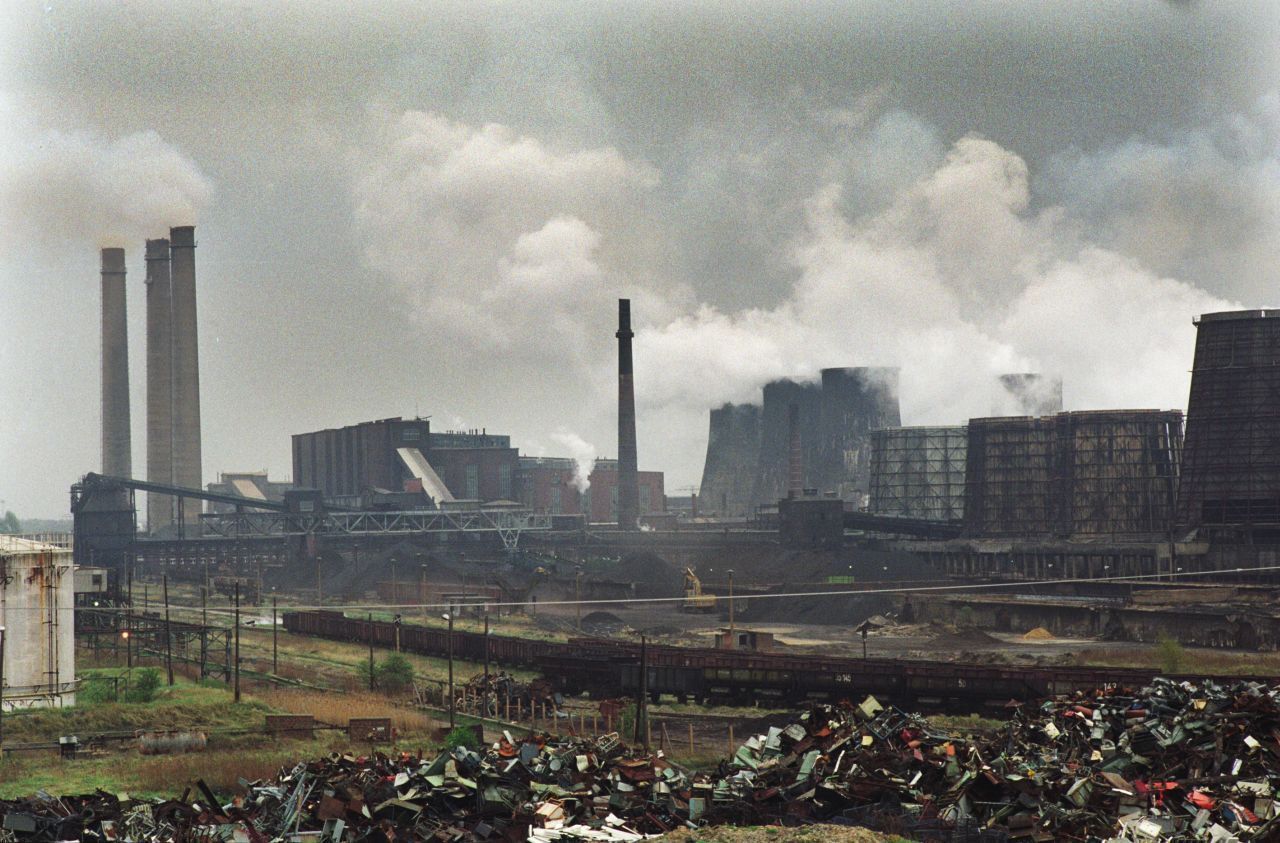
Bitterfeld, East Germany

The merger of East and West Germany exposed the truth about environmentalism under socialism. Estimates suggest that 42 percent of East German rivers and streams were unable to be processed for drinking water, and almost half of East German lakes were unable to sustain fish or other higher forms of life. At most a third of industrial sewage and half of domestic sewage was treated before being dumped into rivers and lakes, while 40 percent of the population lived in conditions for which West Germany would have issued smog warnings. Only one East German power plant had sulfur-scrubbing capabilities for its stack. Even the East German Environment Minister admitted in 1990 that their environmental policy “did not exist.”

In 1990, Greenpeace labeled Bitterfeld, East Germany, as “the dirtiest place in the most polluted country in the world.”40 Sulfur dioxide permeated the air at levels five times that of West Germany, and 75 percent of the trees were dead. A Bitterfeld chemical plant put 10 times as much mercury into the Saale River each day as a comparable West German plant would dump into the Rhine River in a year. Unfortunately, the situation in East Germany was not unique; most Soviet satellite countries in Eastern Europe experienced the same environmental degradation.

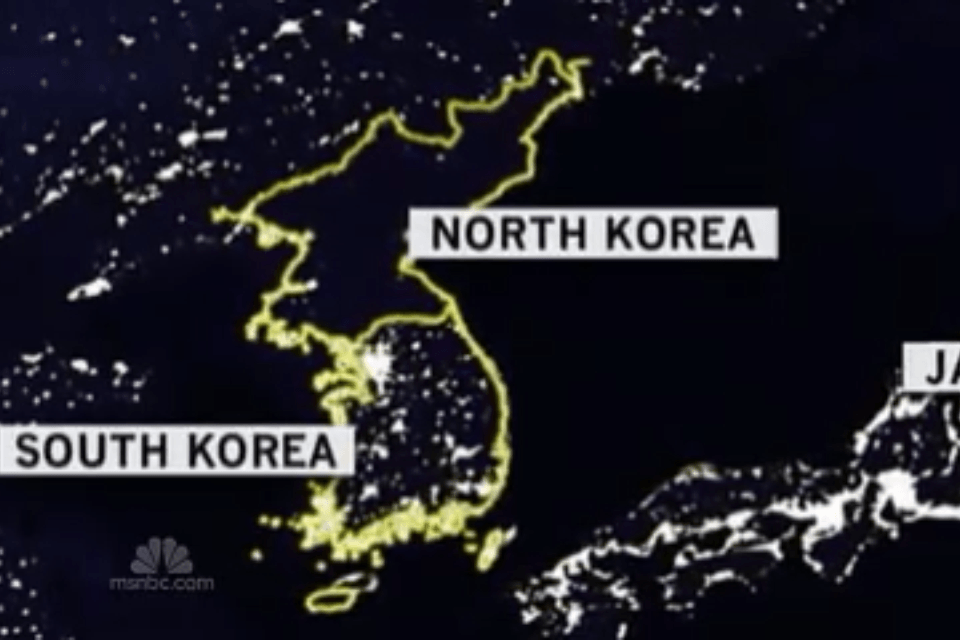
The two Koreas seen from space at night.

North Korea has not fared any better under its brand of socialism. Environmental disasters plague the North, whereas South Korea thrives in abundance. Air pollution is extreme due to both the extensive combustion of coal without sulfur scrubbers and winds that blow polluted air in from China. Cutting of firewood for home heating and cooking has led to serious deforestation and concomitant soil erosion. Large cities have sewage treatment, but wastewater in rural areas is still deposited untreated into rivers. Any effort at environmental protection becomes subservient to production and the desire for full employment. Despite 25 years of technological advancement since the end of East Germany, present-day conditions in North Korea are really no better.

So why doesn’t the environmental movement see that capitalist societies are cleaner than socialist countries and gravitate toward capitalist solutions? Some environmentalists do; however, the concern over carbon dioxide has subverted common sense. Capitalist nations emit fewer pollutants but more carbon dioxide. By contrast, socialist societies are less technologically developed and, consequently, they emit less carbon dioxide. For example, per capita emissions of carbon dioxide in South Korea are almost four times as great as in North Korea. In a world in which carbon dioxide is the only currency, environmentalists are enamored with the small carbon-dioxide footprint that socialism affords. When carbon-dioxide emissions are labeled as the greatest threat to humanity, North Korea becomes a world leader in environmental sustainability, and socialism is the tool by which global compliance can be afforded.

Socialism works for the environmentalist because of several qualities. First, socialism is a collective state, thereby making personal preferences subservient to the state’s determination of what is good for the collective.  Moreover, property rights are held only by the state, and individuals must surrender all they own to the state. This actually has an additional backhanded benefit in that if no one owns that polluting factory or that river into which toxic waste is being dumped, there is no one to blame. The state will not self accuse.

Moreover, the authoritarian underpinnings of socialism allow no tolerance for dissent to be raised about what the state is—or isn’t—doing to protect the environment. Coercion is a necessary ingredient for socialism, and concomitantly many environmental policies, to be advanced. Further, its authoritarian base allows it to dictate policy, the outcome that environmentalists desire.

But the real issue is that socialism lags behind capitalist societies in the production of both wealth and technology. Socialists inherently see the restriction of energy and its availability as necessary to further their collective ideals. Without affordable, abundant energy, democracy may never have developed in Europe and Southeast Asia and led to Western Europe, Japan, South Korea, and the United States becoming leaders in innovative thinking. Availability of inexpensive energy leads to remarkable increases in industry and worker efficiency, in wages and available free time, and in living standards and human health. Ultimately, this has allowed capitalists to develop the ability to be good environmental stewards. Indeed, the air and water in capitalist countries are much cleaner than in their socialist counterparts.

It stands to reason that the availability of free time afforded by capitalism has allowed civilization to become more environmentally conscious. Environmental issues are the least of one’s concerns if one is in dire need of food, clothing, shelter, and safety. The abject poverty of many nations is looked upon with admiration by some environmentalists, even though poor countries pay little attention to their environmental health. It is criminal that environmentalists are willing to pay poor countries to remain in their current condition rather than develop the technology to further expand their economies and lift themselves from poverty. Remember, carbon dioxide is environmentalists’ currency, and delimiting its emission is their overarching goal.

The irony is that the model touted by these so-called eco-socialists is the biggest obstruction to environmental stewardship. While socialism purports to enhance the wellbeing of its citizenry, it in reality does just the opposite. Even advocates of socialism admit to its environmental failures. As James Wanliss eloquently wrote:

The environment under socialism fares no better. It is incontestable that pollution is horrendous in many of the poorest countries with the lowest levels of political and economic freedom. By contrast, countries with the greatest levels of political and economic liberty tend to be the cleanest and the wealthiest.

With merger of the two Germanys and the failure of Soviet communism, the appeal of ecologically motivated authoritarianism waned, although the ideas remained. It has re-emerged today and is modeled after modern day China rather than the Soviet Union. Although they eschew full centralized control, environmentalists see an authoritarian state as the key to allow governments to subordinate individual rights and democratic methods. Unfortunately, this type of regime can only return a society to the environmental degradation of East Germany or North Korea. Since greenhouse gases such as carbon dioxide are now the only concern of most environmentalists, they ignore the filth and degradation that actually accompany socialist societies.

The Importance of Freedom

The key ingredient that separated West from East Germany and still separates South from North Korea is freedom. Freedom is the elixir that fuels innovation, supports a diversity of thought, and allows people to become who they want to be, not what the state demands they must be. When the government guarantees equality of outcomes, it also stifles the creativity, diversity, ingenuity, and reward systems that allow people and countries to grow, develop, and prosper.

Energy availability is a necessary ingredient for freedom. Oppression—and indeed socialism is an oppressive political economic system—flourishes when citizens remain poor and deprived of technology. Freedom thrives when citizens have both the time and the ability to travel, communicate, innovate, and organize to better their lives or to fight a common enemy.

Both versions of The Experiment have proven this. Unfortunately, forgetful, unobservant, and ideological politicians in the U.S. are again touting the supposed benefits of socialism. They believe that capitalism is greedy and evil—and socialism, if “properly implemented,” will take us forward to realizing a better future. “Trust me, this time it will be different,” they say.

The next experiment is underway—in Venezuela. It is showing, once again, that those who turn toward the sirencall of socialism always crash upon its rocks.

And let’s not forget Brazil

Pipedreams vs. Pipelines


From Globe and Mail ‘This is a project that would unify all Canadians’: Calls to reconsider Energy East pipeline

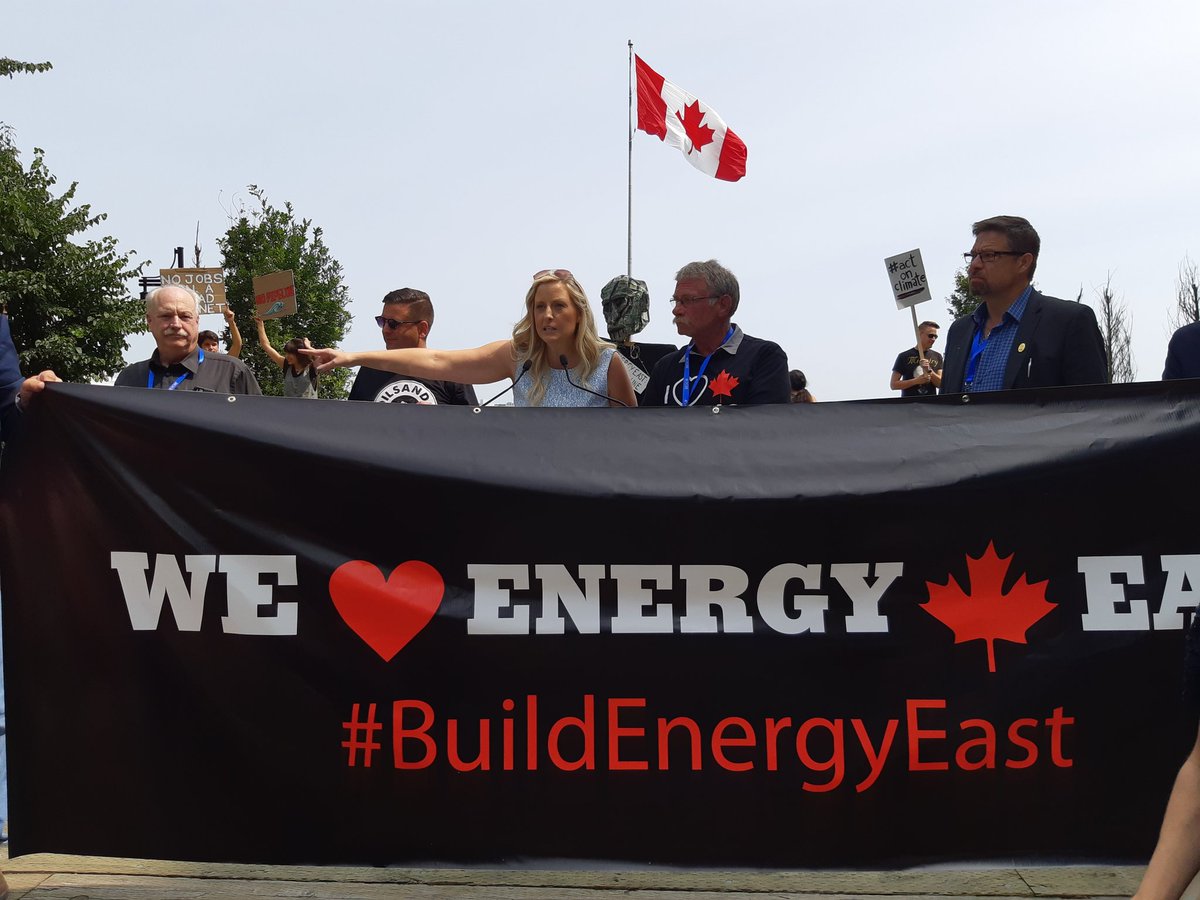
A pro-Energy East pipeline rally was met with a counter-protest Friday afternoon in Halifax, with both sides vocal about their position.

“I’m here today because I’m concerned about climate change and the impact that the Energy East pipeline would have on climate change,” said Emma Norton.

The proposed Energy East pipeline was cancelled last fall but some are hoping government will reconsider the project.

Those in favour of the project say Canada has the highest environmental standards of any major oil and gas producer in the world and want to see more Canadian energy.

“Saudi Arabia, Russia, Iran are not going to ship one less barrel of oil if Canada shuts down our energy industry so it’s not a choice about oil or no oil, the global economy has a growing global demand for oil and gas,” said Jason Kenney, leader of the United Conservative Party in Alberta.

“The question is whether Canada produces more of that or if we let the Saudis and these other dictatorships monopolize global energy markets. That’s not good for the environment, that’s not good for the globe.”

Susanne Sexton is with the group that organized the pro-Energy East rally and says Canada needs jobs.

“This is a project that would unify all Canadians and when tax dollars and those workers are going to be hired to build this and people that are pulling the resources out of the ground, they’re building schools, they’re building hospitals, they’re providing money to go into social problems to provide to our elderly and our least able to care for themselves. Why are they against that?” she said.

Those against the project say they’re concerned about the potential environmental risks.

“The message is that we cannot build pipelines. We cannot continue to extract fossil fuels from the ground because they contribute to climate change and that’s a very urgent issue that we need to address,” said Norton.

Background: How Climate Pipedreams Killed Energy East

From Financial Post I helped plan Energy East, and I know the government’s excuses are bunk The former head of TransCanada’s pipeline strategy says Canada cannot afford to ignore the lessons of Energy East’s demise by Dennis McConaghy. Excerpts in italics with my bolds.

I was a senior officer of TransCanada Pipelines when the Energy East project was conceived and developed commercially, up to the mid-summer of 2014 when I retired (I continue to be a shareholder but obviously I am no longer a company insider).

Two things are clear to me. One: the termination of the Energy East project is a major economic loss for Canada, removing an important option for providing market access for growing production from Canada’s oil sands resource, including direct access to eastern Canadian crude oil markets. Two: The Trudeau government should be stepping up to accept some real culpability for contributing to TransCanada’s decision to abandon the project, instead of resorting to various sophistries and distortions. The real lessons to be learned from the Energy East termination cannot be ignored if this country is to ever have a regulatory and public-policy regime conducive for private capital to take on the risks of major hydrocarbon infrastructure.

The vast majority of the $1 billion in Energy East development costs went to pursuing regulatory approval.

Understand some basic facts about this project. It was conceived and developed as an all-Canadian route-alternative to access not only domestic crude oil markets in eastern Canada but also to gain tidewater access to other global markets for Canadian oil sands production, that would not otherwise be accessible. Moreover, it would convert existing underutilized gas-pipeline capacity between Alberta and eastern Ontario, thereby providing significant competitive advantage. The project successfully gained support from a diverse group of Canadian production interests, even as other pipeline projects such as Keystone XL, Northern Gateway and the Trans Mountain expansion were already in advanced stages of development, including pursuit of regulatory approval.

Since TransCanada first filed with the National Energy Board in late 2014, the project has had to cope with litany of regulatory dysfunctions ranging from protracted information requests beyond the initial filing, recusal of the original NEB panel to be replaced by a panel of limited pertinent regulatory experience, failure to use the existing regulatory record prior to the recusal, inadequate security arrangements for attempted public hearings and, worst of all, the recent decision to “re-scope” the issues to be addressed in the hearing itself.

From when TransCanada first conceived this project internally in late 2011, accumulated development costs have exceeded $1 billion, the vast majority relating to the pursuit of regulatory approval. No private sector entity would ever have expended such a vast amount of capital seeking regulatory approval if it had known the dimension of the regulatory and political risk.

The last straw was the re-scoping decision taken by the current NEB panel, and supported by the Trudeau government. This decision concerned whether carbon emissions generated by the production process of the oil to be moved by Energy East were consistent or not with Ottawa’s carbon policy. To be clear, these are not emissions generated by the Energy East pipeline directly, but are emissions TransCanada is not responsible for. The real issue of course is whether incremental crude oil production in Canada is consistent with national carbon policy. That is not an issue to be dealt with by regulators but rather by democratically elected politicians.

Dennis McConaghy was formerly the executive vice-president of pipeline strategy and development at TransCanada Pipelines.

The French Connection in the Sabotage

There is plenty of evidence that Quebecers, collectively, did everything they could to stand in the way of Energy East, which was to cross Quebec territory.

A campaign by the Montreal Metropolitan Community, a regional organization of municipal politicians representing more than 80 area cities and towns, opposed the project on the ground its risks far outweighed its benefits.

Quebec contributed to the regulatory overkill that ultimately sunk the $15.7 billion project. It piled on with its own list of conditions. As Fournier himself puts it in his letter, the province “adopted seven principles to examine the Energy East project, the same principles Ontario adopted, inspired by those of British Columbia.”

Quebec’s hostility to Energy East came in other ways, too. TransCanada had to cancel plans for a second marine terminal for Energy East at Cacouna, Que., to allay community concerns about impact on beluga whales. The NEB hearings on Energy East were suspended after violent protests in Montreal. Eventually the whole review went back to square one and was beefed up to win back public trust. The inclusion of upstream and downstream climate change impacts this summer ultimately became the regulatory overreach that went too far.

Now the Political Climate is Changing

Quebec’s sabotage of Energy East is not surprising considering the two-term Premier joined the province into California’s cap-and-trade scheme. He was also keen to be photographed with Al Gore at the Paris COP. What is new is a parliamentary election on October 1 with the opposition leading in the polls. Meet the man committed to action rather than pipedreams. Source: Globe and Mail. Excerpts in italics.

François Legault, the man who has a serious chance of becoming the next Quebec premier and arguably the most conservative one in at least 50 years, has spent nearly as much time as a professional politician as he did a business executive.

He seems genuinely surprised at the suggestion “businessman” would take second place to “politician” on his résumé. He starts doing the math out loud on what came after he founded Air Transat.

“I started in politics in 1998. I was 41. So that’s 21 years in business, 18 in politics? Remember, I took two years off in there,” he says in an interview, exhaling in relieved self-affirmation. “For me, I’m still more a businessman. I’m more a pragmatic guy. I like economics and finance. Those are the main reasons I’m in politics.”

Mr. Legault is a bit fussy about labels. He doesn’t like to be called a federalist, even if he believes Quebec’s place is within Canada. He wants to limit spending, cut taxes and immigration levels and seriously improve the business environment in Quebec, but denies he’s all that right-wing.

Now, with 10 months until the next election, the 60-year-old Mr. Legault may be on the cusp of getting his hands on some economic levers. Three polls in a row have showed him in first place.

The PQ is polling a distant third and has set aside the promise of a quick sovereignty vote. “At each and every election, the ballot question ends up being on the sovereignty of Quebec,” Mr. Legault says. “For us, it’s clear. Our project is within Canada. This will be the first election in years that the real issue will be a worn-out, corrupt government, not the sovereignty of Quebec.

Mr. Legault was raised in the western Montreal suburb of Sainte-Anne-de-Bellevue where his father was the postmaster and his mother a part-time cashier at the A&P store. He is married and has two sons in their 20s; he says he can still compete with them on the tennis court but “only for about 20 minutes.”

He studied accounting and worked as an auditor and in finance before borrowing $50,000 in 1986 to help found Air Transat. He cashed out with $10-million when he entered politics 12 years later. “The reason I can be independent today is because of business,” he says.

And now from the Montreal Gazette Let’s revisit Energy East and get Canada off Saudi oil  Our limited  capacity to move oil to the east and west coasts is costing us billions, and transferring large chunks of that cash to despots.

Canada’s spat with Saudi Arabia raises an obvious question. Why is Canada, sitting on the world’s third-largest oil reserves, importing some 87,000 barrels of oil per day from Saudi Arabia, a country with a terrible civil rights record?

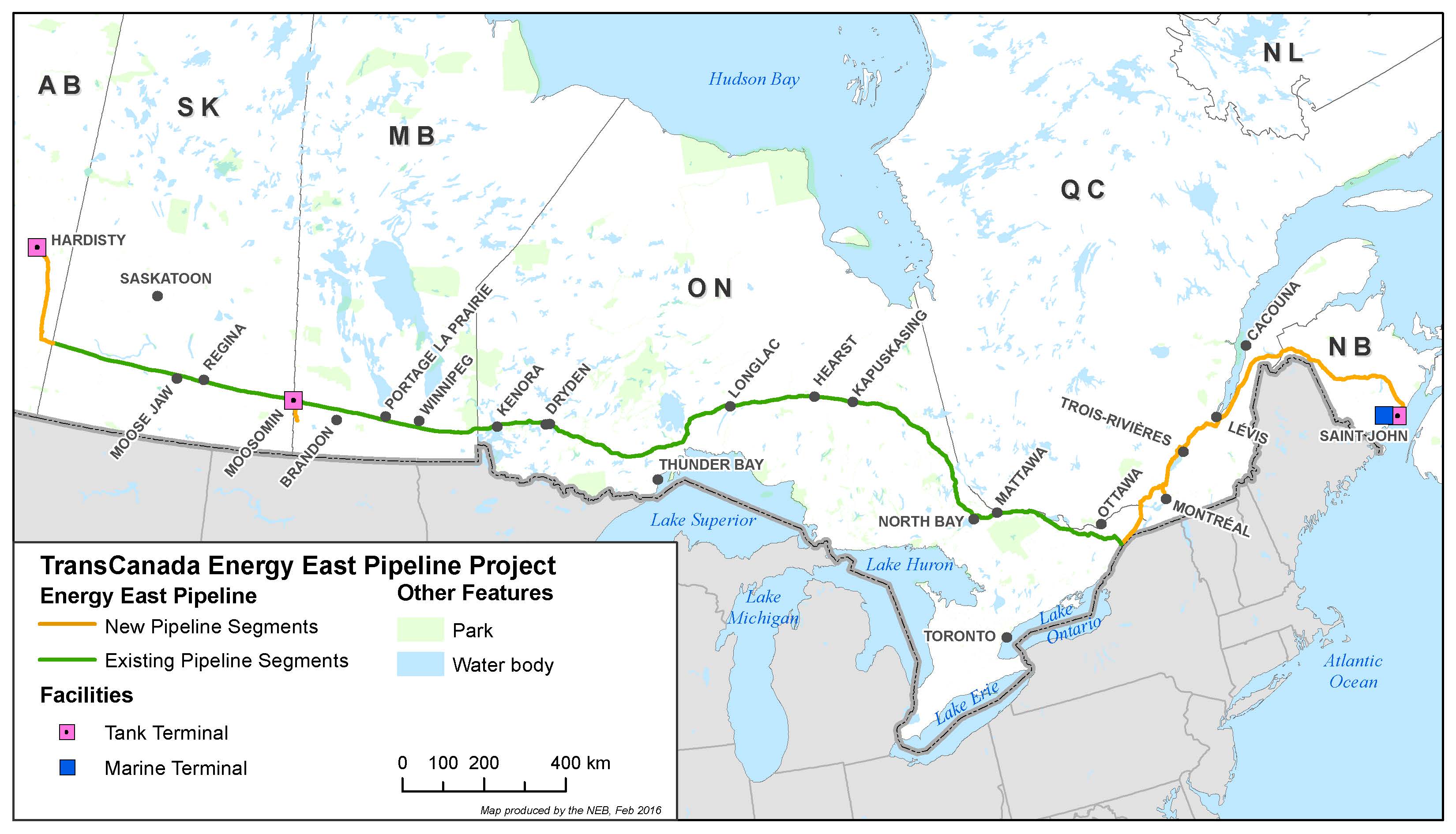
Saudi Arabia is some 9,625 kilometres from Quebec, where Saudi oil is imported to Canada. Wouldn’t it be nice if Eastern Canada got its oil from a democratic country with an excellent record on civil rights and environmental protection, like, say, Canada? It wouldn’t be hard. A simple pipeline would completely obviate Canada’s need to import oil from the Middle East.

TransCanada’s proposed (now cancelled) Energy East pipeline would have carried Canadian oil over about 4,500 km, using mostly existing pipeline capacity currently used to transport natural gas from Alberta to Ontario and Quebec. With a capacity to carry 1.1 million barrels of oil per day, the pipeline would have dwarfed what Canada imports from Saudi Arabia (not to mention Algeria’s 85,000 barrels per day and Nigeria’s 74,000 barrels per day). So what happened to it?

In October 2017, TransCanada withdrew its application from the National Energy Board (NEB) for the proposed $15.7-billion Energy East and Eastern Mainline pipeline projects — about five months after the NEB announced the government would consider “upstream” and “downstream” greenhouse gas emissions in the project evaluation process. The new rule targets greenhouse gases emitted during oil production (not transportation) and after the oil leaves the pipeline and is refined and consumed (again, nothing to do with oil transportation).

Two studies by the Canadian Energy Research Institute (CERI) document the potential benefits of building Energy East. In 2014, CERI estimated the project would generate an additional $34 billion to the GDP, an additional 321,000 one-year/full-time equivalent jobs across Canada in construction and operation, and an additional $7.6 billion in total tax revenues for Canada. In a 2018 report, CERI models the costs and benefits of displacing imported oil with Canadian oil. This “made in Canada” scenario estimates refinery cost-savings of $23 million per year while displacing 100 per cent of foreign oil. CERI also estimates that using Canadian oil rather than imported oil would lower greenhouse gas emissions by 2 million tonnes of carbon-dioxide equivalent per year.

In any sane world, Canada, with oil reserves estimated at 171 billion barrels (10 per cent of the world’s total reserves), would not need to import oil from foreign powers with strong records of religious oppression, gender oppression, international destabilization, public beheadings and other activities Canadians shouldn’t support with their oil and gasoline purchases.

Rather than looking at the failure of Energy East, and simplifying (and clarifying) environmental assessment to invite investment in such projects, the Trudeau government took an already onerous and somewhat arbitrary environmental assessment process and made it even more so. The government’s new criteria for energy projects includes consideration of “gender” impacts and use of the “traditional knowledge” of Aboriginal people. Neither of these requirements lends itself to rigorous definition.

Canada’s limited capacity to move oil to the East and West Coast is costing Canadians billions of dollars per year, and transferring large chunks of that money into the hands of despots. Our governments must do whatever’s needed to break Canada’s oil transport bottlenecks.

Aside:  Loading Upstream and Downstream GHG emissions onto Pipeline Environmental Assessments

The was the argument used by Trudeau government to destroy the Energy East pipeline.  The same gambit is used by US activists attempting to prevent pipeline approvals issued by the Federal Energy Regulatory Commission (FERC).  The article linked below gets into the details, but traditionally a project such as constructing a pipeline was assessed on the environmental impact of its installation and operation.  Climatists have pushed and in instances succeeded in arguing that the fuels flowing through the pipeline cause climate change by emissions generated in the production beforehand and consumption by end users and must be estimated before approving.

During the Obama administration FERC with majority Democratic appointees blocked pipelines on this basis.  But now majority Republican appointees are taking the traditional more narrow scope, leaving out GHG calculations before and after transport along with Social Cost of Carbon (SCC).  In fact, FERC has no jurisdiction to regulate sites producing or burning fossil fuel products  The legal pushback is strenuous as noted in this article from The Legal Intelligencer FERC’s Hard Look at Pipeline Construction and GHG Emissions.

Summary

Winds of energy pragmatism are starting, but whether they can blow down the believers’ house of cards remains to be seen.  “The Force is Strong in Them,”  unfortunately.

Environment Minister Catherine McKenna with Justin Trudeau in the choir.

States Cracking Down on Energy Disrupters

Anti-fossil fuel activists and pipeline protesters are dismayed as the penalties for obstructing lawful commerce are getting serious in the case of energy infrastructure. The story of developments in several US states is reported in the pro-protester website truthout Under Louisiana Bill, Peaceful Protesters Could Face 20 Years in Prison Excerpts in italics with my bolds.

On April 12, 2018, in the chambers of the Louisiana State House of Representatives, Rep. Major Thibaut Jr. stepped up to the microphone before the Speaker to introduce seemingly benign House Bill 727. According to his testimony, the bill was humble — almost technical — in scope and aimed primarily to add “pipelines” to the list of what the state considers “critical infrastructure.” It had faced no opposition in committee, Thibaut added, and had “over sixty-something authors.”

“It’s a good bill,” he said, then motioned for favorable passage. Ninety-seven legislators voted yay, three voted nay, and just like that, all 4.6 million residents of Louisiana took a step toward losing their First Amendment rights. Should the bill become law, it would impose severe penalties on peaceful protesters engaged in nonviolent civil disobedience actions at sites considered “critical infrastructure” by Thibaut’s bill. In fact, simply planning to take such an action, considered “conspiracy” by HB 727, could be punishable by fees of up to $10,000 and prison sentences as long as 20 years.

With the crack of a gavel, Louisiana joined the growing number of states across the nation with similar “critical infrastructure” bills moving swiftly through the courts and onto governors’ desks.

The first appeared in Oklahoma in May 2017. According to the bill’s author, Rep. Mark McBride, it was an attempt to keep Oklahoma from paying costs related to any Diamond Pipeline protests. The law beefed up penalties for protesters who trespassed on property containing a “critical infrastructure facility.” The definition of such facilities varies by state but tends to include energy-industry sites like pipelines, refineries and electrical power facilities.

Shortly after Oklahoma signed the bill into law, the American Legislative Exchange Council (ALEC), a corporate-funded group that holds annual meetings with state legislators and lobbyists to vote on “model” legislation, took the measure up itself at its summit in Nashville, Tennessee, in December 2017. ALEC calls its model bill “The Critical Infrastructure Protection Act,” claiming the bill drew its “inspiration” from laws enacted in 2017 by the State of Oklahoma.

Since the ALEC Summit, bills like Louisiana’s HB 727 have cropped up all over the country. In Ohio, where construction on the Rover pipeline resulted in repeated spills of toxic drilling material, Senate Bill 250 suddenly appeared. Its language reflects the ALEC-inspired bill, aiming to “prohibit criminal mischief … on a critical infrastructure facility.” It would also impose fines on organizations “complicit” with said activity.

In Iowa, Senate Study Bill 3062 penalizes those who’d commit “sabotage” of critical infrastructure facilities with fines of up to $100,000 and 25 years in jail.

In March 2018, lawmakers in Minnesota introduced HF 3693, which would, among other things, criminalize anyone who “recruits, trains, aids, advises, hires, counsels, or conspires with” a trespasser at an infrastructure site. Minnesota courts could use the law to punish these “conspirator” groups or individuals with a full year in jail and/or a $3,000 fine.

Louisiana House Bill 727, introduced in late March, is even more severe than the original ALEC-inspired legislation. If enacted, the law could potentially penalize people who never even set foot on one of its protected sites. Under the bill as written, simply discussing a possible trespass action could result in prison sentences of five years and fines up to $10,000. Actually damaging pipeline infrastructure could lead to 15 years in jail, and it could lead to 20 years if the damage interrupts construction site operations or endangers human life.

It remains unclear how the conspiracy clause of this bill would be enforced in Louisiana, should the measure become law. In a phone interview with Truthout, Alicia Cooke of the volunteer climate activist group 350 New Orleans wondered aloud, “How do you prove that someone is conspiring to trespass on property? Versus conspiring to gather near property?”

Now that the Louisiana bill has passed through the House, it will travel to the Senate for debate. Meanwhile, in Ohio, Iowa and Minnesota, state lawmakers are pushing their versions of the ALEC-inspired bill through committees and legislative chambers.

Protester Alicia Cooke is arrested at a Bayou Bridge Pipeline construction site in St. James Parish on Thursday, May 24. (Louisiana Bucket Brigade)

“It’s the ultimate irony,” said Cooke. “We’re considering critical infrastructure to be pipelines, oil refineries, and oil wells. But we’re not considering our own water, our own forests, our own wetlands to be critical infrastructure.”

Cooke, who continues to organize with 350 New Orleans against the bill, said she felt sad about it all, adding, “It just shows what we’ve chosen to prioritize in Louisiana.”

Rolfes, however, sees reason for hope. “Resistance to fossil fuels in general and oil specifically is growing,” she said. “Although it’s disheartening to see these bills, it shows you the status of their industry. Their future is on shaky footing.

August 22, 2018  First Felony Arrests Near Bayou Bridge Construction Made Under New Louisiana Law Penalizing Pipeline Trespass  Source: DeSmogBlog

Comment

Protesters intend to stop fossil fuel usage because of their belief in global warming/climate change.  Acts of civil disobedience are by definition legal transgressions and incur penalties.  Energy infrastructure is essential to our civilized society, and everyone is at risk if supply of fuels and power are restricted or blocked.

The problem here is people disrupting others’ lives due to their fears of the future (unfounded IMO). There are rules  and places for legal protests to attempt to convince others of your concerns.  The First Amendment does not permit trespassing on property where access is prohibited, and penalties are appropriate since the possibility of vandalism is involved. States are wise to prepare against eco-terrorism until CO2 hysteria loses its grip on impassioned believers.

See also: Upping the Stakes for Ecoterrorists

Highlights of EPA’s Affordable Clean Energy Rule (ACE)

With 60 days for public comment before the rule goes into force, expect a lot of howling from those who wanted the Clean Power Plan despite its illegality (why the Supremes stopped it). Here are some excerpts from the overview in Powermag intended to inform energy providers. Trump Emissions Plan Aims to Boost Coal-Fired Power

What Coal Generators Should Know About the EPA’s Proposed ACE Rule

The EPA, in an impact analysis of the Trump plan reviewed by The Washington Post, said the plan would affect more than 300 U.S. power plants and provide operators with incentives to keep coal plants operating rather than replacing them with natural gas or renewable energy projects.

The agency also has acknowledged the rule likely will lead to an increase in airborne pollutants that could contribute to health issues, although EPA officials have said other regulations are in place to handle those.

Mandy Gunasekara, principal deputy assistant administrator for the Office of Air and Radiation at the U.S. Environmental Protection Agency (EPA) said the new rule would require states to submit their plans to the EPA for regulating power plants over a three-year period after the proposal is finalized, which is expected next year. It specifically asks for “patterns of performance” for existing coal plants. The EPA would then have one year to determine whether a state’s plan is sufficient. If the EPA determines it is not, the agency would then design a plan for that state, according to Gunasekara.

“Instead of [the federal government] putting out a strict standard of performance, we’re allowing the states to determine that strict standard of performance,” Gunasekara told the MEGA audience, including POWER. “No two coal plants are the same. It should be up to the states to ensure that everyone has access to reliable and affordable energy in that state.”

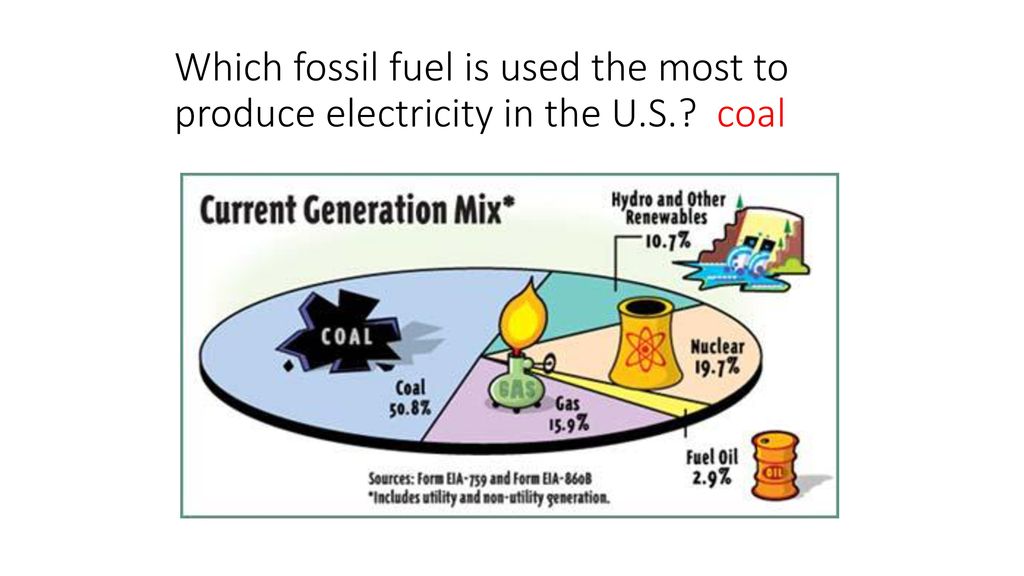
Source: 2017 EIA statistics.

‘Ensure Coal Has a Place on the Grid’

Replacing the CPP has been one of Trump’s priorities. “The president has constantly recognized the importance of coal,” said Steven Winberg, assistant secretary of fossil energy for the DOE, who also spoke Tuesday morning at MEGA. “We need to ensure that coal has a place on the grid.”

Said Winberg: “We need to get moving on the next generation of coal plants that are cleaner, more efficient, and have a small footprint. We’re looking at 50-to-350-MW plants that are much more efficient. And they need to be able to ‘load follow’ due to the increased amount of intermittent power [mostly wind and solar] coming onto the grid. Coal plants have traditionally [provided] baseload power, and new plants need to be able to load follow.”

Gunasekara said the ACE rule is really “presenting guidelines for states to address CO2 from coal plants. States can determine the best system for emissions reduction.” She said the plan is designed to encourage coal plant operators to focus on “heat rate efficiency improvements,” and decide “whether a technology works, or whether it doesn’t.”

EPA Sticking to Endangerment Finding

EPA Assistant Administrator for the Office of Air and Radiation Bill Wehrum told reporters in a press briefing on August 21 that the ACE rule “is a regulation of GHGs, no doubt about it.” But the rule seeks to bring the EPA back to its “core function” of regulating emissions from “things that emit—in this case power plants—and not regulate other aspects of the industry like the electricity grid.” He added: “So we are not regulating dispatch of power plants, we are not trying to impose a requirement to implement renewable energy resources. Those are things the Clean Power Plan did.”

However, with the ACE rule, the EPA also isn’t proposing to rescind the “endangerment finding,” in which the Obama-era EPA found GHGs are a danger to public health and welfare, Wehrum said. “We’re not proposing to find that power plants do not contribute to come to that endangerment. We are proposing, though, to revise [the Clean Power Plan] to bring it back within the legal authority that we have under the Clean Air Act,” Wehrum said.

Asked whether combating climate change is a priority for the EPA, Wehrum said that Congress “made the decision for us under this part of the Clean Air Act.” But Congress also said that states have primary authority for regulating their emissions. “So we have a responsibility to set up a framework; states have a responsibility to regulate, and Congress gave states a lot of latitude to decide what it is they’re going to do. And so we are faithfully implementing the law this way.”

Coal groups have been vocal in their support of the administration’s effort. The American Coalition for Clean Coal Electricity (ACCCE), a trade group representing coal producers, earlier this year said, “The CPP is illegal because the rule greatly exceeds EPA’s authority to regulate carbon dioxide (CO2) emissions from fossil-fueled power plants under section 111(d) of the Clean Air Act. Even if the CPP were determined to be lawful (which it is not), it would establish bad environmental policy that would have substantial adverse energy and economic impacts.”

Michelle Bloodworth, who was named the new president and CEO of the ACCCE in July, told the Times: “I certainly think we are supportive of what the administration is doing and we applaud their efforts.”

Thomas J. Pyle, president of the Institute for Energy Research, also applauded the president’s plan, saying in a statement: “The Clean Power Plan (CPP) grew EPA power in unprecedented and harmful ways, marking a clear deviation from the agency’s traditional role by grossly misapplying the Clean Air Act. The ‘Affordable Clean Energy Rule’ proposed by the Trump Administration corrects some of the CPP’s worst flaws. By reining in the EPA, the ‘Affordable Clean Energy’ rule limits the negative economic impacts a back door federal renewable mandate would have on American families. However, we still maintain that only a full repeal of the Obama era regulation will fully protect ratepayers.”

Environmentalists attacked the new proposal from all sides. Lissa Lynch, staff attorney for federal policy in the Climate & Clean Energy Program at the Natural Resources Defense Council, said: “The Clean Power Plan replacement proposed today by Acting EPA Administrator [Andrew] Wheeler demonstrates the Trump EPA’s unflagging commitment to propping up polluters. The proposal is designed to require power plants to do nothing to reduce their carbon pollution, and it could even result in greater climate-polluting emissions – a worse than do-nothing replacement for the Clean Power Plan.

Winberg, though, countered that argument, saying coal remains important to the U.S. He said the nation must focus on “upgrading the coal fleet, transforming technology, and reducing the cost of CO2.” He acknowledged the nation “has an aging coal fleet, and we need to do something about that. Coal is going to be part of the U.S. energy mix for decades to come. Boosting U.S. energy production is important for national security, and we are seeing a new focus on policies that level the playing field for coal.”

Footnote:

The ACE plan was well received by CAGW (Citizens Against Government Waste)

Citizens Against Government Waste Applauds EPA Affordable Clean Energy Plan  August 22, 2018

WASHINGTON: Today, Citizens Against Government Waste (CAGW) applauded the Environmental Protection Agency (EPA) for proposing the Affordable Clean Energy (ACE) rule. The rule would reverse the Obama administration’s 2015 Clean Power Plan, which was blocked by the Supreme Court in 2016 due to regulatory overreach.

Full text of proposed EPA rule:  Emission Guidelines for Greenhouse Gas Emissions from Existing Electric Utility Generating Units

See also the world context regarding coal power Climate Change Battle Report

Taxing Carbon More Dangerous Than Not

A new study has fossil fuel activists twisting in the wind. The paper is Risk of increased food insecurity under stringent global climate change mitigation policy

The paper is behind a paywall, but some detail is available from carbonbrief Global carbon tax in isolation could ‘exacerbate food insecurity by 2050’ Excerpts in italics with my bolds and some comments.

The research finds that using a blanket “carbon tax” to restrict global warming to 2C above pre-industrial levels – which is the limit set by the Paris Agreement – would put an additional 45 million people at risk of hunger by 2050.

The new study, published in Nature Climate Change, zooms in on how implementing a uniform tax on greenhouse gas emissions from agriculture and other types of land use, in particular, could impact food security worldwide.

The introduction of a carbon tax could threaten food security in three main ways, the researchers say.

First, the tax would raise the cost of food production, especially for carbon-intensive products such as meat.

Second, the tax would raise the costs associated with agriculture expansion, which would lead to higher land rents.

Third, the tax would incentivise the production of biofuels – which would compete with food crops for space, further driving up land rates.

All three of these consequences could drive up food prices, which would be costly for the world’s lowest earners – who spend up to 60-80% of their income on food.

The new study compares how levels of hunger would differ in a world with climate change alone to a world with climate mitigation, including a uniform carbon tax.

The results show that a blanket carbon tax “would have a greater negative impact on global hunger and food consumption than the direct impacts of climate change”, the scientists say in their research paper.

Instead, policies that can help slash emissions from agriculture while aiding development should be prioritised, says lead author Dr Tomoko Hasegawa, a researcher at the International Institute for Applied Systems Analysis (IIASA) and Japan’s National Institute for Environment Studies. In a statement, she said:

Carbon pricing schemes will not bring any viable options for developing countries where there are highly vulnerable populations. Mitigation in agriculture should instead be integrated with development policies.”

To understand the impacts of mitigation efforts, the researchers compared a world where warming is limited to 2C to a world where no efforts to tackle climate change are made before 2050.

The former scenario assumes that the world shifts from a reliance on fossil fuels to low-carbon sources of energy, and that a uniform carbon price is rapidly introduced “across all sectors and regions” and is steadily increased in the coming decades.

(The scenarios use three different “socio-economic pathways” to make assumptions about how factors, such as population growth, are likely to change by 2050.)

The results show that, by 2050, the risk of hunger in some of the world’s least developed countries could be higher in the scenarios with mitigation than in the scenarios without mitigation – despite the fact that these scenarios expect greater declines in crop yields.

In the scenarios without mitigation, the number of people at risk of hunger by 2050 is expected to increase by 5-56 million.

In the scenarios with mitigation, an additional 13-170 million people could face hunger. The increase in those at risk is expected to be largest in sub-Saharan Africa and parts of South Asia, including India and Bangladesh.

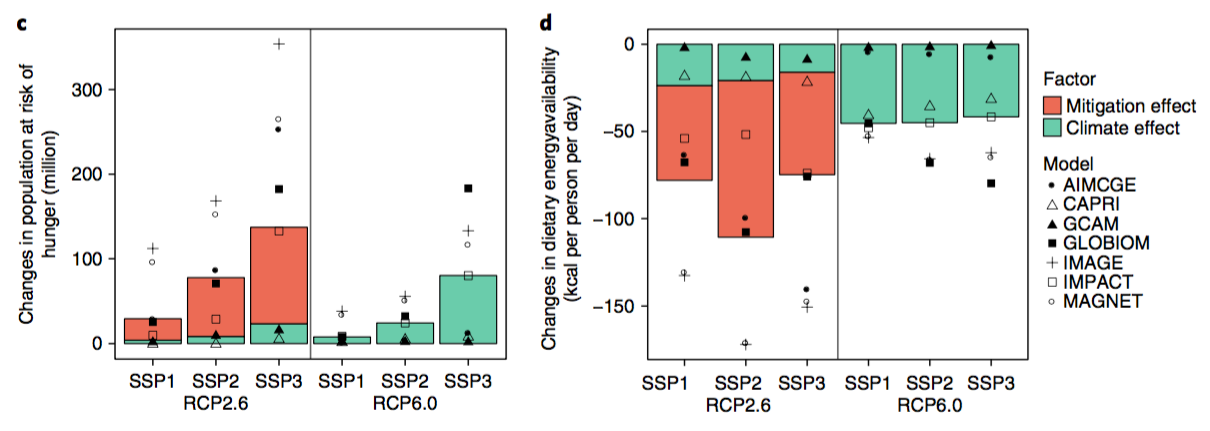
The charts below show the expected changes in the number of people at risk of hunger (left) and the number of calories consumed per person per day (right) by 2050 under the mitigation (RCP2.6) and “no-mitigation” (RCP6.0) scenarios.

The expected changes in the number of people at risk of hunger (left) and the number of calories consumed per person per day (right) by 2050 under a mitigation (RCP2.6) and “no-mitigation” (RCP6.0) scenario. The average impacts of climate change (green) and mitigation via the introduction of a carbon tax (orange) are shown. Symbols show the results from different models Source: Hasegawa et al. (2018).

Comment Regarding Climate Direct Effects upon Food Security

The impacts shown in green are hypothetical, though assumed as baselline truth by the researchers. The supposition is: Climate change could threaten global food security by increasing the chance of staple crop failures in many parts of the world, such as across Africa and the US.

The fact is, staple crops are booming with increasing CO2 and the warm temperatures enjoyed by plants and humans alike. Some researchers have been working frantically to claim CO2 damages plant productivity, despite overwhelming evidence to the contrary. One line of attack claims CO2 doesn’t make plants grow larger in the face of other limiting conditions like moisture or soil nutrients. True enough, but reducing CO2 is not the cause or the answer when that happens.  See Researchers Against CO2 for the details

Another line of attack is claiming the plants are larger but are not as nutritious. Studies showed that plants can have lower concentrations of some nutrients owing to their large size from CO2 enrichment, but the take up of soil nutrients was not diminished by more CO2 or warmth. See CO2 Destroys Food Nutrition! Not.

Summary

In their research paper, the scientists say the findings “should not be interpreted to downplay the importance of future GHG emissions mitigation efforts, or to suggest that climate policy will cause more harm than good”.

Nothing could be farther from the obvious implications of this analysis.  The supposed crop failures are nowhere to be seen with every year setting new records for productivity.  So the future negative effects from rising CO2 are totally speculation.  While the economic impacts from taxing carbon pose a real and present danger to food security.

H/T GWPF BENEFITS OF GLOBAL WARMING: RECORD HARVESTS REPORTED IN NUMEROUS COUNTRIES


Climate Change Battle Report

Anyone paying attention knows this summer the media has assaulted the public with many climate scares, both old and new. Each week we see new ones like “marine heat waves” added to threats that 2018 summer temperatures will be repeated and increased until 2022. All sorts of dire consequences are proclaimed, and for what purpose? It can only be the intent to recruit us to join the “fight against climate change.”

Curious as to what jurisdictions might be doing, I went searching for news about actions to strike blows against the climate change nemesis. Media headlines frequently announce that this or that nation, province or city is stepping up to “Fight Climate Change.”  The results are informative.

What Actions Count as Fighting Climate Change

For example a report Ireland will raise carbon tax to tackle climate change. In the text it is announced the nation is not reducing emissions on schedule, and is taking three actions: Setting and raising a tax on carbon, spending more on fuel efficiencies, renewables and climate adaptation projects, and divesting from fossil fuel companies.

Then there is an article Mexico and Canada Join Growing Under2 Climate Coalition  Excerpts in italics with my bolds.

The growing Under2 Coalition is a global pact of cities, states and countries pledging to limit the increase in global average temperature to below 2 degrees Celsius, the level of potentially catastrophic consequences.

With Canada and Mexico’s endorsements, the Under2 Coalition now includes 170 jurisdictions on six continents that collectively represent more than 1.18 billion people and $27.5 trillion GDP – equivalent to 16 percent of the global population and 37 percent of the global economy.

The governments in the Under2 coalition, like California, are leading the fight against climate change. They know that investing in clean growth will help all members reach their ambitious climate change goals and grow their countries’ economies. I applaud their leadership in reducing emissions and supporting clean innovation. Canada is proud to endorse their actions today,” said Minister McKenna.

Coalition members pledge to limit greenhouse gas emissions to 2 tons per capita or 80-95 percent below 1990 levels by 2050.

This action builds on landmark legislation Governor Brown signed in October 2015 to generate half of the state’s electricity from renewable sources by 2030 and double the rate of energy efficiency savings in California buildings. Governor Brown has also committed to reducing today’s petroleum use in cars and trucks by up to 50 percent within the next 15 years; make heating fuels cleaner; and manage farm and rangelands, forests and wetlands so they can store carbon.

What is the Climate Battleground

Some of these actions are purely symbolic virtue signaling and will have no effect on either CO2 emissions or global warming. Divestment for example is a transfer of shares to other investors with no impact upon the value of the target companies. The virtue is not free, in that the portfolio loses diversity (energy being counter cyclical to other businesses), and other industries often generate lower returns. And if the reinvestment is into renewables, those companies’ performance depends on government subsidies that are presently being withdrawn. Another sham is purchasing carbon free electricity credits from a grid mostly supplied by coal and gas plants.

In short there seem actually to be Three Lines of Attack
1.Adaptation and Resilience
2.Improving Energy Efficiencies
3.Transition to Zero Carbon Energy

The first two are worthy initiatives. History proves that future periods are likely to be both colder and warmer than the present, and cold times are the greater threat to human life and prosperity. Prudent public officials should invest in robust infrastructure and reliable, affordable energy. The rub is powering a modern society with windmills and solar panels.

How Goes the Transition Away from Fossil Fuels

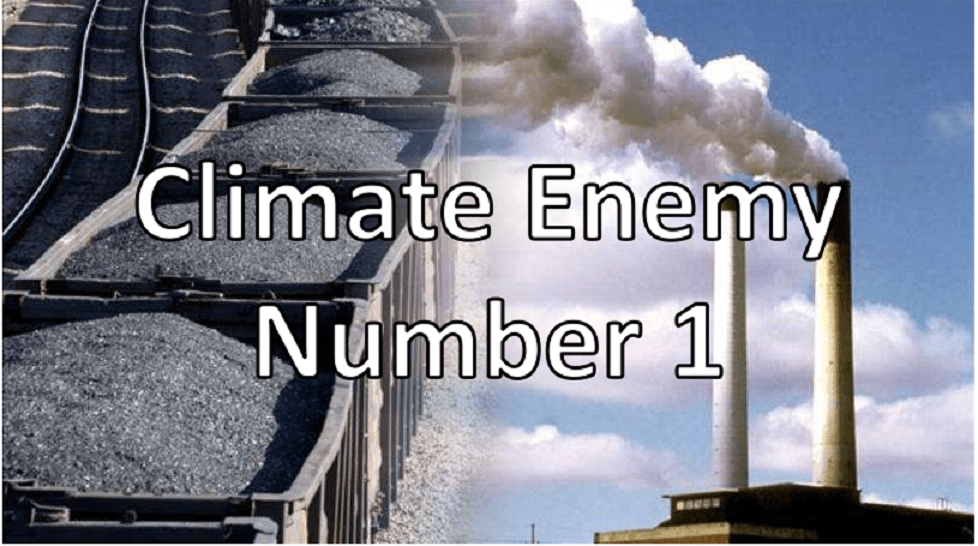
The first objective in the Great Green Transition is to stop the use of Coal, Climate Enemy #1. An update report on that front comes from Vijay Jayaraj, Aug 18, 2018, at Townhall The Dawn of Climate Realism: Coal Surges Amid Climate Rhetoric  Excerpts in italics with my bolds.

Many countries have been at the crisscross of warfare between anti-coal establishments and the traditional coal industry. Despite the elite-empowered and politically motivated worldwide campaign to phase out coal, demand for coal is on the rise!

Coal has been “enemy No. 1” for the climate establishment. In fact, it would seem that the entire global warming movement is hinged upon the singular aim to eliminate coal from use.

Catastrophic Anthropogenic Global Warming (CAGW) is a notion that cites a popular scientific hypothesis and concludes that the global temperatures have risen, or will soon rise, to dangerous levels in the post-industrialized era due to human activity.

The proponents of CAGW believe that the primary contributor to this increase in temperature is the combustion of coal and the subsequent release of carbon dioxide gas into the atmosphere.

However, peer-reviewed scientific journals by hundreds of scientists render many of these claims dubious at best. Here are just three of them.

Firstly, contrary to the claim that carbon dioxide is the primary driver of global warming, global temperatures have not risen proportionately to carbon dioxide concentration in the atmosphere. In other words, an increase in carbon dioxide emission has not resulted in an increase in temperature.

Secondly, most of the current “consensus” on climate change is based on forecasts from computer climate models. But the wide divergence between observed temperature and model predictions makes it apparent that the models were programmed incorrectly to be over-dependent on carbon dioxide concentration to predict temperature changes.

In what was a major embarrassment to United Nations Intergovernmental Panel on Climate Change (IPCC), top climate scientists admitted these flaws in the climate models when they failed to reflect real-world temperatures during the last 19 years. The same was widely publicized and even testified to the U.S. House Committee on Science, Space & Technology.

Thirdly, contrary to the claim that recent warming is historically unprecedented, today’s temperature levels are similar to the temperatures the earth experienced in the first and eleventh centuries. Also known as Roman Warm Period and Medieval Warm Period, these were times when, though as warm as today or warmer, the earth’s ecosystems flourished. The notion that “today’s temperature levels are at unprecedented levels” is completely false.

Despite these (and many more) straight-forward evidences against the CAGW hypothesis, the climate establishment continues to advocate for the ban of coal and coal-fired power plants. Global climate treaties like the Paris Agreement were set out to target and close down coal plants in developing countries.

But to their surprise, coal use is rising.

This financial year, Coal India—India’s largest state-controlled coal mining company—saw its first-quarter profits jump 61 percent and its coal production rise 15.23 percent. India has a long-term vision to increase its coal output and has been vocal about “carbon imperialism”—a term it uses to define the attitude of the anti-coal climate establishment.

In 2017, coal accounted for 60.4 percent of total energy consumption in China. The country’s coal production outputs for the first seven months of 2018 was 1.98 billion tons, 3.4 percent higher than the same period last year. China’s coal imports surged this July and hit a record high (29 million tons), beating the previous highest recorded monthly volume import (January 2014).

But the surge in coal is not just limited to Asia.

Russia’s coal production of 410 million tons was its highest since the Soviet era and is expected to reach 420 million tons this year. The coal industry is set to expand in the coming years with massive infrastructure upgrades.

U.S. coal output reached a 16-year high in 2017 (701 million tons), after a change in leadership that saw the lifting of heavy restrictions on coal from the previous administration. Coal output in 2017 was 40.8 million tons higher than in 2016, and India was the top importer of U.S. coal in Asia (13 million tons).

The trend continued in 2018, and the month of April recorded the highest coal export in five years. U.S exports to India reached 6.2 million tons in just the first half of 2018, which is nearly the entire export (6.8m tons) to India in 2017! And coal is expected to do fairly well in the U.S. despite the disruption from the natural gas boom.

The situations for coal in India, China, and the U.S. are prime examples of the coal industry’s strength. It can also be said that the climate rhetoric has failed to break the world’s dependence on coal. And for good reason. Coal remains among the cheapest, and technically simplest, sources of the abundant, affordable, reliable electricity indispensable to the modern industry and technology that are indispensable to lifting and keeping whole societies out of poverty.

Leaders across the globe understand the indispensable role of coal in their economies. They are also beginning to understand the exaggerated nature of climate-change dangers promoted heavily in the mainstream media.

The climate establishment’s doomsday prophecies failed to come true in the last 20 years, which saw global temperature remain largely stable. Arctic ice remained stable, global agricultural outputs increased, more people rose out of poverty, and the forests in Europe grew instead of shrinking.

Clearly, there is no reason why the coal industry should slow down, and it won’t. Overblown climate-change rhetoric is leading rapidly to the downfall of the climate establishment, and nations are moving past it at a rapid pace.

Postscript:

Children’s Climate Lawsuit Tossed

Now this is interesting. This week another children’s climate lawsuit has been dismissed, this time in Seattle Washington, hotbed of climatists as rabid as California. According to AP, Judge Michael Scott gave away his personal bias by telling the plaintiffs not to be discouraged by his ruling granting the motion to dismiss from defendant Governor Inslee. Methinks that leftward justices in the lower courts are realizing they can no longer make policy from the bench and expect higher courts to let it pass. With Gorsuch sitting on the highest court, and Kavanaugh soon to be added, liberal grandstanding opinions may become much rarer.

The story from Washington Examiner Washington judge throws out children’s climate change lawsuit Excerpts in italics with my bolds.

A judge in Washington state on Tuesday dismissed a climate change lawsuit filed against the state by a group of child activists.

King County Superior Court Judge Michael Scott ruled in favor of the State of Washington’s motion to dismiss the lawsuit, Aji P. v. State of Washington. The 13 young activists in the suit argue that the state is violating their constitutional rights through actions that cause climate change.

Judge Scott ruled that issues brought up in the case are political questions that cannot be resolved by a court, and must be addressed by Congress and the president.

Attorneys representing the children said they would make a formal statement on the judge’s decision on Wednesday morning. An initial statement by Our Children’s Trust, the group representing the children, suggested Judge Scott erred in his decision.

“Given the significance of the Court’s decision and the pronounced departures from proper judicial procedure and consideration of Plaintiffs’ claims, Our Children’s Trust will issue a formal statement regarding the decision tomorrow,” the initial statement read.

The child plaintiffs in the lawsuit said they were both “saddened” and heartbroken” by the judge’s decision.

The same group of child activists has also sued the federal government on the same constitutional grounds in Juliana v. United States. But that lawsuit has had better luck in federal appeals court, which rejected the Trump administration’s several attempts to have the case thrown out.

More recently, the Supreme Court rejected a last-ditch attempt by the Trump administration to block the climate change lawsuit filed by children, meaning the lawsuit will have its day in court later this fall.

“The Government’s request for relief is premature and is denied without prejudice,” read the high court’s decision.

The case will be heard in federal district court in October.

Note: The article omits the caution directed by the supremes in their decision not to intervene.  The brief unsigned order said the Trump administration’s request was premature. The court did, however, note that the claims made in the ambitious lawsuit are “striking” and the question of whether they can be considered by a jury “presents substantial grounds for difference of opinion.”  As such, the lower court should take those concerns into account in handling the case, the order said.

“Without prejudice” suggests the highest court is open to hearing the case should the lower court get it wrong.

Footnote: The Fable of Political Success

A provincial political leader won the parliamentary election and on the day to take the oath was greeted by the outgoing premier.  Wishing him well, his predecessor gave him three envelopes, explaining it was a tradition.  The envelopes contained advice to be consulted later on if difficulties were encountered.

Not long after taking office, criticisms started up, and the new premier opened the first envelope.  It explained:  “Blame it on the previous administration.”  He followed that advice pointing to past financial mismanagement, and the difficulty undoing bad policies and programs he had inherited.

That calmed things down for awhile, but a year later the excuses were wearing thin.  So he turned to the second envelope which gave the advice:  “Blame it on the federal government.”  A new campaign of announcements focused on delays and shortfalls of federal funding, poor coordination and liaison by federal counterparts, and counterproductive federal policies.

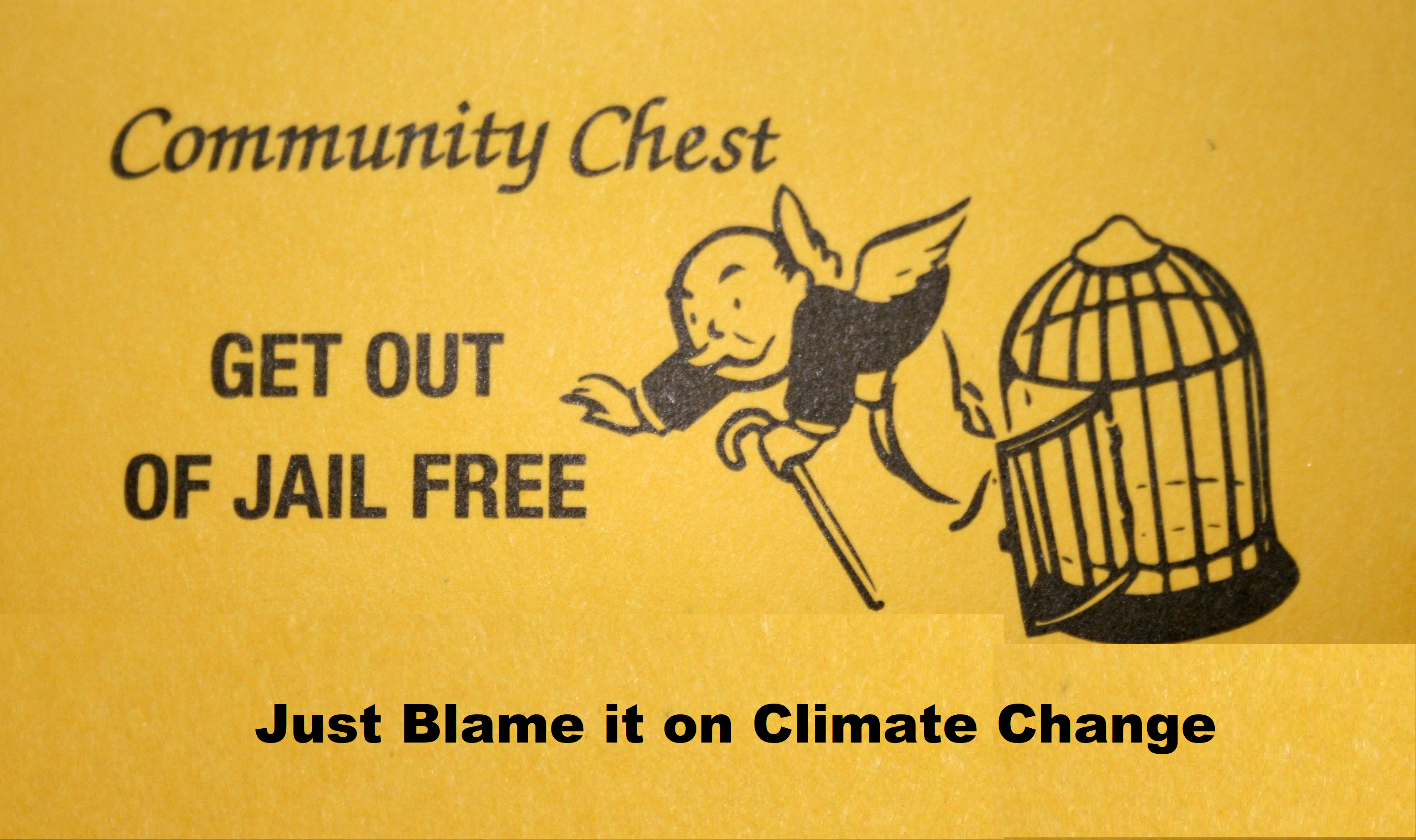
This quieted critics for more than a year, but alas it too began to fall on deaf ears.  It was time to open the third envelope:  ” Blame it on climate change, or else prepare three envelopes.”


Methane Waste Prevention Circus

Circus

In the middle ages, theologians strenuously debated the number of angels dancing on a pinhead. Now we have lawyers and judges going around in circles in order to prevent methane emissions. This circus show is a direct result of the embedded green bureaucracy in government, together with a segment of the population mobilized by fear of global warming/climate change.

The courtroom drama started when the Obama administration in its midnight hours gave environmentalists a Christmas gift with a new Methane Waste Prevention Rule issued by BLM (Bureau of Land Management). It demonstrated how federal agencies were enslaved by green ideologues in order to choke any energy developments with a slew of regulations and penalities. In fact, folks like the EDF (Environmental Defense Fund) are traumatized by fear of “greenhouse gases”, and methane in particular. Their real mission is to keep fossil fuels in the ground, thereby securing an imaginary future where the climate is always favorable and never changes.

This hysteria has been deliberately instilled and maintained by climatists (alarmists/activists) and produces a circus whenever they feel threatened (which is often). This is a case in point, and a cautionary tale for anyone trying to reconcile conservation and development.

Aside: In 1978 Billy Martin was Manager of the New York Yankees baseball team during a particularly turbulent time with players, coaches, the owner and fans. The Yankees were known by the NYC borough housing their stadium; overnight they went from the “Bronx Bombers” to the “Bronx Zoo.” The long-running soap opera prompted this comment from third baseman Graig Nettles: “When I was a kid I wanted to be either a ball player or work in a circus. Now I get to do both!”

Harvard Law School has a record of the series of acts in this soap opera here Methane Waste Prevention Rule

The schedule of Acts in the Methane Waste Prevention Circus (synopsis only; details at linked website)

History Before Trump Era (BTE)
On November 18, 2016 BLM published the Waste Prevention Rule with an effective date of January 17, 2017 and additional compliance deadlines set for January 17, 2018.

Three days before publication (November 15, 2016), but after the rule was signed, industry and states filed challenges to the rule in the District of Wyoming.

On January 17, 2017 the District of Wyoming denied a request for a preliminary injunction (leaving the rule in effect during the litigation).

Trump Common Era (TCE)
On February 3, 2017 The US House of Representatives passed a Congressional Review Act resolution to disapprove the rule, which would have voided the rule and barred any other “substantially similar” rule in the future.

On March 28, 2017 President Trump’s Executive Order on Promoting Energy Independence and Economic Growth directed the BLM to review the rule.

On May 10, 2017 the US Senate voted down the House of Representatives’ Congressional Review Act resolution, with three Republicans voting no.

On June 15, 2017 BLM announced that it was postponing the 2018 compliance dates for an indefinite period of time (as long as litigation is pending), “pursuant to the Administrative Procedure Act” in a notification in the Federal Register.

On July 5, 2017 California and New Mexico challenged BLM’s postponement of the compliance dates.

On July 10, 2017 several environmental groups also challenged BLM’s postponement. The Northern District of California granted a motion to relate these two cases on July 12, 2017 and North Dakota and several industry groups were later allowed to intervene in the consolidated cases.

On September 7, 2017 the Northern District of California denied a request to transfer the litigation challenging BLM’s postponement to the District of Wyoming.

On October 4, 2017 the Northern District of California determined BLM’s June 15, 2017 postponement was unlawful, granting summary judgment in the case that vacated the postponement notification and reinstated the rule’s January 17, 2018 compliance date.

Also on October 4, 2017 BLM proposed a rule to delay the 2018 compliance dates in the Obama-era rule until January 17th, 2019. The agency accepted comments until November 6, 2017.

On October 27, 2017 industry groups asked the District of Wyoming to issue a preliminary injunction on the rule’s January, 2018 compliance deadlines to keep them from going into force while litigation is pending.

On October 30, 2017 the District of Wyoming agreed to a Trump administration request to slow the litigation by postponing briefing deadlines as BLM goes through its rulemaking process to repeal, revise, or rescind the rule pursuant to Executive Order 13783.

On November 2, 2017 Democratic lawmakers wrote a letter to Secretary Zinke opposing BLM’s attempts to repeal, revise, or rescind the rule.

In the last week of November 2017 environmental groups filed briefing with the District of Wyoming opposing the industry groups’ October 27, 2017 preliminary injunction request.

On December 4, 2017 BLM filed a notice of appeal to the Ninth Circuit of the October 4, 2017 Northern District of California decision finding the June 2017 BLM delay unlawful.

On December 8, 2017 BLM published a final rule delaying the 2018 compliance dates until 2019. Often referred to as the “Suspension Rule,” this was the final version of the rule BLM proposed on October 4, 2017.

On December 19, 2017 New Mexico and California sued BLM over its December 8, 2017 final rule to suspend the methane rule’s 2018 compliance dates, delaying them until 2019. A coalition of environmental groups also sued over the December 8 rule. Both lawsuits were filed in the District Court for the Northern District of California and were consolidated in January 2018.

On December 29, 2017, the U.S. District Court for the District of Wyoming granted a request from industry groups and Wyoming and Montana to stay litigation in light of the final Suspension Rule BLM issued on December 8, 2017.

On January 5, 2018 the American Petroleum Institute moved to intervene in the December 19 lawsuits in the Northern District of California, saying the rule would be economically damaging. On January 9, 2018 the states of North Dakota and Texas also moved to intervene on behalf of BLM. Both of these motions were granted on February 26, 2018.

In the week of February 12, 2018 BLM released a proposed rule (the Revision Rule) to replace the 2016 Waste Prevention Rule.

On February 22, 2018 the Northern District of California issued a preliminary injunction preventing BLM’s December 8, 2017 Suspension Rule from taking effect. This order also denied a January 9th request by BLM, North Dakota and Texas to transfer the case to the U.S. District Court for the District of Wyoming.

On March 7, 2018 U.S. District Court for the District of Wyoming agreed to resume industry and state challenges to the rule, lifting a stay issued on December 29, 2017 and setting a briefing schedule for pending motions.

Also on March 14, 2018 BLM announced it would voluntarily dismiss its appeal to the Ninth Circuit of the October 4, 2017 ruling from the Northern District of California, finding BLM had violated the Administrative Procedure Act by postponing 2018 compliance dates. The Ninth Circuit granted its motion to dismiss on March 15, 2018, ending the substantive portion of this case.

On April 4, 2018 the US District Court for the District of Wyoming agreed to suspend key provisions of the Waste Prevention Rule. The court stayed the case pending BLM’s completion of rulemaking process for the Revision Rule.

On April 5th and 6th, 2018 California, New Mexico, and environmental groups filed notices of appeal to the 10th Circuit Court of Appeals of District of Wyoming’s April 4, 2018 order staying implementation of provisions of the Waste Prevention Rule.

On April 23, 2018 BLM filed a notice of appeal to the Ninth Circuit of the February 22, 2018 order denying a motion to transfer venue and granting a preliminary junction.

On April 30, 2018 the District of Wyoming denied appellants’ April 6, 2018 motion to stay its April 4th decision. By denying the motion, the court left in place its suspension of key provisions of the rule and stay of the case pending completion of the regulatory process for the Revision Rule.

On May 11, 2018 Environmental Defense Fund sued Interior and BLM for BLM’s failure to respond to FOIA requests “to produce records relevant to efforts to suspend, delay, repeal and/or revise the Waste Prevention, Production Subject to Royalties, and Resource Conservation final rule.”

On June 4, 2018 the Tenth Circuit denied a request from California, New Mexico and environmental groups to stay the April 4th order of the District of Wyoming (suspending key portions of the rule and staying litigation at the district court level) pending the Tenth Circuit’s consideration of their appeal of the order. In the same ruling, the Tenth Circuit also denied Wyoming, Montana, and industry groups’ motion to dismiss the appeal of the April 4th order entirely.

On June 20, 2018 BLM filed a motion to voluntarily dismiss its appeal to the Ninth Circuit filed on April 23, 2018. This leaves in place the February 22, 2018 preliminary injunction of BLM’s Suspension Rule.

On July 30, 2018, environmental groups, California, and New Mexico filed a brief with the 10th Circuit asking the court to overturn the District Court’s decision to enjoin the Methane Waste Prevention Rule.

Currently Running Methane Circus Performances

Four cases related to the Waste Prevention Rule and the Administration’s efforts to delay, suspend, or roll it back are currently active:

  • Wyoming v. U.S. Dep’t of the Interior, No. 2:16-CV-00285 consolidated with Western Energy Alliance, et al. v. Sally Jewell, 2:16-CV-0280. (D. Wyo.) — challenging the original Waste Prevention Rule,
  • California and New Mexico v. Zinke, No. 3:17-CV-03804 consolidated with Sierra Club et al., v. Zinke. No. 3:17-CV-03885 (N.D. Cal.) — challenging BLM’s June 15, 2017 notification of postponement of the rule’s compliance dates,
  • California and New Mexico v. BLM, No .3:17-cv-07186 consolidated with Sierra Club et al v. BLM 3:17-cv-07187 (N.D. Cal.) — challenging BLMs December 8, 2017 Suspension Rule delaying the Waste Prevention Rule’s 2018 compliance dates, and
  • EDF v. Dept. of Interior, No. 1:18-cv-01116 (D.D.C) -– a FOIA suit against BLM regarding requested documents relating to its efforts to delay, suspend, and rollback the Waste Prevention Rule.

I searched a lot to find out what is the root of the legal conflict. Almost everything in the media is from alarmist sources and avoids the details and differences between what is proposed in 2016 and 2018. The most informative source IMO is the legal brief submitted by the energy producers April 23, 2018 Comments on BLM 2018 Revisions to Waste Prevention Rules Excerpts below in italics with my bolds.

To Whom it May Concern: Western Energy Alliance (the Alliance) and the Independent Petroleum Association of America (IPAA) appreciate the opportunity to provide comments on the Bureau of Land Management’s (BLM) proposed revisions of certain provisions of the Methane and Waste Prevention rule, or 2016 rule. The 2016 rule as promulgated exceeded BLM’s authority under the Mineral Leasing Act (MLA), and that the decision to re-evaluate the rule is required. The proposed revision rule more accurately captures the scope of BLM’s waste minimization authority, and will better ensure federal mineral interests are adequately protected without excessively burdening federal lands development with overreaching regulations.

IPAA represents thousands of independent oil and natural gas exploration and production companies, as well as the service and supply industries that support their efforts. Independent producers drill about 95% of American oil and natural gas wells, and produce about 54% of American oil and more than 85% of American natural gas. The Alliance represents over 300 companies engaged in all aspects of environmentally responsible exploration and production of oil and natural gas in the West. Alliance members are independents, the majority of which are small businesses with an average of 15 employees.

The 2016 Waste Prevention Rule Exceeds BLM’s Statutory Authority

The 2016 rule exceeds BLM’s statutory authority under the MLA and must be revised. The United States District Court for the District of Wyoming expressed significant concern with the rule. The court described BLM as having “hijacked the EPA’s authority under the guise of waste management” and stated that “the BLM cannot use overlap to justify overreach.”1 Given such a strong warning of the legal vulnerability of the rule, it is logical and necessary that BLM move to substantively revise it to more accurately reflect the agency’s statutory authority. Our comments on the 2016 rule, which are attached hereto as Appendix B and reincorporated in full by reference herein, provide an overview of our concerns with the technical and legal vulnerabilities of the 2016 rule. Many of those concerns went unaddressed and are subject to the ongoing litigation referenced above. This letter raises further concerns with the 2016 rule.

The stated primary goal of the 2016 rule was to reduce methane emissions from oil and gas operations. During that rulemaking process, BLM repeatedly emphasized that the methane reductions achieved by the Proposed Rule justified its provisions. As the Wyoming court noted, however, BLM only has “authority to regulate the development of federal and Indian oil and gas resources for the prevention of waste.” Id. at 15 (emphasis in original). Therefore, some emissions reductions may occur as a result of an otherwise lawful measure to prevent the “waste” of gas pursuant to BLM’s authority under the MLA. But BLM’s obligation to promulgate reasonable waste prevention measures does not confer any authority to regulate air quality. The Wyoming court also made clear that the “protection of air quality . . . is expressly within the ‘substantive field’ of EPA and states pursuant to the Clean Air Act.” Thus, in the context of the 2016 rule, BLM lacks authority to require the oil and gas industry to reduce methane (or other air) emissions.

The only way BLM could justify the 2016 rule was to incorporate global climate change benefits. As the Wyoming court put it, “the Rule only results in a ‘net benefit’ if the ‘social cost of methane’ is allowed to be factored into the analysis . . . [and] [t]he Court questions whether the ‘social cost of methane’ is an appropriate factor for BLM to consider in promulgating a resource conservation rule pursuant to its MLA authority.”The social cost of methane was formally withdrawn by Executive Order No. 13783, Promoting Energy Independence and Economic Growth, meaning it is no longer a suitable metric for rulemaking.

Under the MLA, produced gas is “wasted” only if it could have been economically captured and marketed or put to beneficial use on the lease. Thus, to establish that a proposed waste prevention measure is a “reasonable precaution” against “waste” and authorized under the MLA, BLM must demonstrate that the gas can be economically captured by the operator or beneficially used on the lease. If a waste prevention measure renders gas capture or use uneconomic, then BLM has no authority to impose it.

The reality is that without duplicative and burdensome federal rules, industry has made tremendous progress in addressing issues associated with venting, flaring, and methane emissions. According to EPA’s most recent greenhouse gas inventory, between 1990 and 2016, methane emissions from petroleum and natural gas systems declined 14% while natural gas production increased 50%. In the 2016 inventory (published in 2018), petroleum system methane emissions declined 3% since 1990, and methane from natural gas systems declined 16% since 1990. These decreases come despite a 71% and 48% increase in production, respectively, since 2005. Most important, the most recent EPA data, which applies more accurate calculation methodologies, show that emissions from associated gas venting and flaring decreased 36% from 2015-2016. See 2018 GHG Inventory Report at 3-64. In fact, EPA revised petroleum system methane emission estimates going back to 1990, resulting in an average decrease of 28% for a given year relative to previous estimates due to the “recalculation of associated gas venting and flaring emissions using a basin-level approach.” Id. at ES-6 (the same recalculation results in increased CO2, however). EPA’s new data reveals that the 2016 rule was premised on inaccurate information regarding the volume of methane emissions attributable to venting and flaring, and is therefore, an arbitrary and capricious agency action that was premised on faulty logic and without adequate support on the record. EPA’s new and updated data further supports the agency’s rationale for the Proposed Rule.

Conclusion

In closing, we reiterate the tremendous progress that America’s oil and natural gas industry has made, and will continue to make, in addressing venting, flaring, and methane emissions. EPA’s most recent data concerning such emissions demonstrates that despite a significant increase in production in recent years, emissions continue to decline, including specifically methane emissions from venting and flaring. In this respect, the fundamental premise upon which the 2016 rule was based is not accurate and warrants a reconsideration of the rule. The 2016 rule exceeded BLM’s authority, made numerous and fundamentally flawed assumptions in its assessment of both the cost of compliance to industry and the benefits derived from the rule, and was an unlawful, arbitrary and capricious agency action. Accordingly, BLM was required to make substantial revisions to that rule, and we believe the Proposed Rule is a vast improvement and consistent with the agency’s statutory authority in most respects.

Footnote:

This is another example of using regulations and legal techniques to add layers of complication and cost with the intent of stopping energy extraction:  “Leave it in the ground.” A previous post showed how this is an activist strategy with deep commitment and deep pockets supporting it.  Just look how quickly legal teams acted to obstruct a more balanced rule, and put sand in the gears of deregulation.  In fact a circus should be more fun instead of a  continual battleground with slings and arrows.

Battle of Agincourt.

Background

Methane Gets a Bad Rap  More Methane Madness

Methane is Natural not Pollution Carbon Sense and Nonsense

Game Plan against Fossil Fuels Climatist Revolutionaries

Note:   Here is the proposed rule:
A Proposed Rule by the Land Management Bureau on 02/22/2018